Showing posts with label 1883. Show all posts

Wednesday, February 21, 2018

The Ladies' Paradise

The Ladies' Paradise by Emile Zola. 1883/2012. Oxford University Press. 438 pages. [Source: Library]

First sentence: Denise had come on foot from the Gare Saint-Lazare. She and her two brothers had arrived on a train from Cherbourg and had spent the night on the hard bench of a third-class carriage. She was holding Pepe by the hand, and Jean was walking behind her, all three exhausted from the journey, frightened, and lost in the midst of the vast city of Paris.

Premise/plot: Denise Baudu and her two brothers have come from the country to the big city believing that their uncle will make room in his heart and his home for them. That is not the case. But Denise is able to be hired on as a sales girl at the Ladies Paradise, a one-stop-shopping-palace that is bedazzling. At first she struggles enormously. The others hate her, tease her, torment her. Because of how her fellow sales girls treat her, she barely makes any commissions and doesn't receive a salary. She is working to support herself and her two brothers. And one of her brothers is selfish and greedy and a PEST. Denise's boss is Octave Mouret; he is the charismatic "genius" behind the Ladies' Paradise. His presence gets Denise a bit flustered--first from severe shyness and embarrassment, then from attraction. The attraction is mutual, though not from the start. Mouret is not used to being flustered himself. It doesn't take much chasing, much effort, on his part to get what he wants: until Denise.

My thoughts: I LOVED this one. I did. It is different from the recent BBC adaptation. It is set in Paris, not London, and the mentalities and moralities reflect that difference. That is not to say that The Ladies Paradise is a smutty, sensual read. It isn't. Anything that occurs of that nature happens off the page or behind the scenes.

Other than Denise and Mouret, there are very few characters in common. Mouret does have a wealthy love interest in the book. But she is a widow who has for years had various lovers come and go. Mouret is one of those lovers, but he's never seen as a suitor. And the idea of marriage hasn't occurred to either.

Another difference is Denise's uncle. In the adaptation, he is sweet, gentle, and stubborn bachelor. He's even given a love story of his own. In the book, he's married with a wife and daughter. He is even MORE stubborn than in the show. And he's selfish and thoughtless. He's so focused in on "saving" his business that he doesn't care about his family. His daughter has spent most of her life engaged to a storekeeper, an apprentice of her father, this of her father's doing. He keeps the two from wedding, and the guy falls madly, deeply, passionately in love with a hussy salesgirl from across the street. This does NOT end well.

Is it a romance? I would say yes. It is perhaps a slow-moving romance. But once the romance starts, it really gets started. If I'd read this as a young teen, I'm sure I would have read my copy until it was battered and falling apart.

Quotes:

Mouret describes himself:

'What! Do I enjoy myself! What's this nonsense you're saying? You're in a sorry state! Of course I enjoy myself, even when things go wrong, because then I'm furious at seeing them go wrong. I'm a passionate fellow; I don't take life calmly, and perhaps that's just why I'm interested in it.' (67)
Mouret's potential investor makes an observation about the Paradise:

'You sell cheaply in order to sell a lot and you sell a lot in order to sell cheaply....But you must sell, and I repeat my question: whom will you sell to? How do you hope to keep up such colossal sales? (74)
Mouret on selling:
"You can sell as much as you like when you know how to sell! There lies our success." (75) 
If he could have found a way of making the street run right through his shop, he would have done so. (236)
One of the customers:
You're right, there's no system in this shop. You lose your way, and do all sorts of silly things. (260)
Mouret on life and love:
'Of course, I've never lived so intensely...Ah! Don't laugh, old man, the moments when you seem to die of suffering are the briefest of all!' (322)

© 2018 Becky Laney of Becky's Book Reviews

Sunday, April 28, 2013

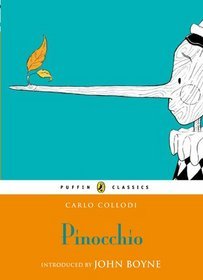
Sunday Salon: Reading Pinocchio (1883)

Pinocchio. Carlo Collodi.  1883. 272 pages.

I've now read Pinocchio twice. It's certainly an odd little classic with dozens of morals within. While the book Pinocchio is many things, it's never boring.

Pinocchio, as a character, is rotten from the start: selfish, pleasure-loving, foolish, rebellious, ungrateful, disrespectful, slow to learn, slow to listen, slow to change. Living by the motto of if I want to do it, it must be right! Who are you to tell me it's wrong or it's a mistake or I'm hurting someone else!

But Pinocchio doesn't know best, he doesn't "know" much of anything of the world and its many dangers. He knows nothing about consequences natural or supernatural. (There are so many fantasy elements in Pinocchio.)

Pinocchio's creation revealing his naughtiness:
Now that he had found a name for his puppet, he set to work on the head, briskly carving out hair, forehead, and eyes. Once the eyes were finished, he stood back, amazed. They were moving. First they looked around a bit, then they stared at him, so intently that he felt quite annoyed.
"Hey! What are you looking at, wooden eyes?" he asked.
There was no reply.
Next he carved the puppet's nose. The moment it was finished, it began to grow. It grew and grew, so that in just a few minutes it was the longest nose he'd ever seen. Poor Geppetto kept trying to whittle it down, but the more he tried, the longer that mischievous nose became.
Next, he carved the puppet's mouth, but it wasn't even finished before it began to laugh and jeer at him.
"Stop laughing," Geppetto snapped. He might as well have been talking to a brick wall. "Stop laughing," he shouted, "or else!"
The mouth fell silent, but stuck its tongue out instead. Geppetto thought it wise to pretend he hadn't noticed. He went on to carve the puppet's chin, neck, shoulders, stomach, arms, and hands.
The moment the hands were finished, Geppetto felt something being whisked off his head. He looked up, and what do you think he saw? His yellow wig in the hand of his half-finished puppet.
"Pinocchio!" he yelled. "Give that back this instant!" The puppet did nothing of the sort. Instead he plonked the wig onto his own head, where it sank down over his eyes.
This was such insulting behavior that Geppetto felt more miserable than he'd ever felt in his life.
"You naughty, naughty boy!" he said. "You're not even finished yet, and already you show your father no respect! I'm disappointed in you, I really am." And as he said this, he wiped away a tear.
Last of all Geppetto carved the puppet's legs and feet. The moment they were finished, he received a sharp kick on the end of his nose.
"It serves me right, I suppose," he sighed. "I should have known that would happen. No use complaining now." (15-16)
Though there are plenty of moral lessons in the text, obvious moral instructions, the book can also be quirky and delightful and very unique.

Have you read Pinocchio? What did you think? Do you like the book or movie better? 


© 2013 Becky Laney of Becky's Book Reviews
Tuesday, March 19, 2013

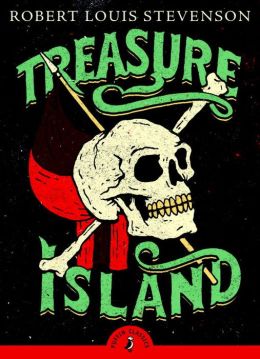
Treasure Island (1883)

Treasure Island. Robert Louis Stevenson. 1883. 311 pages.

I was surprised by how much I liked Treasure Island. I didn't really expect it to be my kind of book. And, in a way, it still isn't. (I'm not going to feel the same devotion to Jim Hawkins that I feel for Anne Shirley.) But it is a GOOD adventure story. Plenty of drama, action, adventure, surprise, and danger. It is a life-or-death adventure book abounding with good guys and bad guys.

Jim Hawkins is our hero. Though he isn't always confident in his abilities to be A HERO, Hawkins is the hero that he needs to be when it counts, the hero he needs to be in order to save the day. Jim Hawkins' father owned an inn. One day a former pirate (Billy Bones) comes for an extended stay at the inn. He hires the young boy (Jim) to be on the lookout for a one-legged pirate (Long John Silver). He does NOT want to meet up with this pirate--or really any other pirate for that matter. But he is found by a few pirates before long. Jim's life is messy in that his own father is dying and this pirate is dying; the same doctor sees after both men. The pirate brought with him a sea chest (with a treasure map). Having this chest at the inn brings danger and excitement. Eventually it takes Hawkins to sea with others--some good guys, some bad guys--all in search for this treasure on an island. Of course, the good guys aren't aware that the others are "bad" and have murderous intentions. But readers learn this information right along with Hawkins...

While the novel is interesting before they reach the island, the book REALLY becomes interesting once they reach the island.

Read Treasure Island
  • If you like watching pirate movies or reading pirate stories
  • If you like adventure stories
  • If you like coming-of-age stories

© 2013 Becky Laney of Becky's Book Reviews

Wednesday, July 04, 2012

The Princess and Curdie (MG)

The Princess and Curdie. George MacDonald. 1883. 272 pages.

Curdie was the son of Peter the miner. He lived with his father and mother in a cottage built on a mountain, and he worked with his father inside the mountain.

The Princess and Curdie is the sequel to George MacDonald's The Princess and the Goblin. It is set several years after the events of the first book. And those are years that Curdie has spent away from Princess Irene--the young princess and the great-great-great-great-grandmother Irene. He hasn't completely forgotten the Princess and her father, the King. But he's a growing boy, a busy boy, and well, he needs a bit of a wake up call perhaps.

He has his own encounter with the old woman--the grandmother Irene. And it changes EVERYTHING. For she gives him a very unique gift--with the touch of his hand, he can know what a man or woman truly is: if they are truly human, or if there is a "beast" inside. If it sounds confusing, well, it is in a way. It definitely requires you to suspend your disbelief, to fully engage in this FANTASY world. This one excerpt will do a better job than I ever could in describing what this book is like, and what to expect from this adventure-fantasy-quest.
'Curdie,' she said in answer to his eyes, 'you have stood more than one trial already, and have stood them well: now I am going to put you to a harder. Do you think you are prepared for it?'
'How can I tell, ma'am,' he returned, 'seeing I do not know what it is, or what preparation it needs? Judge me yourself, ma'am.'
'It needs only trust and obedience,' answered the lady.
'I dare not say anything, ma'am. If you think me fit, command me.'
'It will hurt you terribly, Curdie, but that will be all; no real hurt but much good will come to you from it.'
Curdie made no answer but stood gazing with parted lips in the lady's face.
'Go and thrust both your hands into that fire,' she said quickly, almost hurriedly.
Curdie dared not stop to think. It was much too terrible to think about. He rushed to the fire, and thrust both of his hands right into the middle of the heap of flaming roses, and his arms halfway up to the elbows. And it did hurt! But he did not draw them back. He held the pain as if it were a thing that would kill him if he let it go—as indeed it would have done. He was in terrible fear lest it should conquer him.
But when it had risen to the pitch that he thought he could bear it no longer, it began to fall again, and went on growing less and less until by contrast with its former severity it had become rather pleasant. At last it ceased altogether, and Curdie thought his hands must be burned to cinders if not ashes, for he did not feel them at all. The princess told him to take them out and look at them. He did so, and found that all that was gone of them was the rough, hard skin; they were white and smooth like the princess's.
'Come to me,' she said.
He obeyed and saw, to his surprise, that her face looked as if she had been weeping.
'Oh, Princess! What is the matter?' he cried. 'Did I make a noise and vex you?'
'No, Curdie, she answered; 'but it was very bad.'
'Did you feel it too then?'
'Of course I did. But now it is over, and all is well. Would you like to know why I made You put your hands in the fire?' Curdie looked at them again—then said:
'To take the marks of the work off them and make them fit for the king's court, I suppose.'
'No, Curdie,' answered the princess, shaking her head, for she was not pleased with the answer. 'It would be a poor way of making your hands fit for the king's court to take off them signs of his service. There is a far greater difference on them than that. Do you feel none?'
'No, ma'am.'
'You will, though, by and by, when the time comes. But perhaps even then you might not know what had been given you, therefore I will tell you. Have you ever heard what some philosophers say—that men were all animals once?'
'No, ma'am.'
'It is of no consequence. But there is another thing that is of the greatest consequence—this: that all men, if they do not take care, go down the hill to the animals' country; that many men are actually, all their lives, going to be beasts. People knew it once, but it is long since they forgot it.'
'I am not surprised to hear it, ma'am, when I think of some of our miners.'
'Ah! But you must beware, Curdie, how you say of this man or that man that he is travelling beastward. There are not nearly so many going that way as at first sight you might think. When you met your father on the hill tonight, you stood and spoke together on the same spot; and although one of you was going up and the other coming down, at a little distance no one could have told which was bound in the one direction and which in the other. Just so two people may be at the same spot in manners and behaviour, and yet one may be getting better and the other worse, which is just the greatest of all differences that could possibly exist between them.'
'But ma'am,' said Curdie, 'where is the good of knowing that there is such a difference, if you can never know where it is?'
'Now, Curdie, you must mind exactly what words I use, because although the right words cannot do exactly what I want them to do, the wrong words will certainly do what I do not want them to do. I did not say you can never know. When there is a necessity for your knowing, when you have to do important business with this or that man, there is always a way of knowing enough to keep you from any great blunder. And as you will have important business to do by and by, and that with people of whom you yet know nothing, it will be necessary that you should have some better means than usual of learning the nature of them.
'Now listen. Since it is always what they do, whether in their minds or their bodies, that makes men go down to be less than men, that is, beasts, the change always comes first in their hands—and first of all in the inside hands, to which the outside ones are but as the gloves. They do not know it of course; for a beast does not know that he is a beast, and the nearer a man gets to being a beast the less he knows it. Neither can their best friends, or their worst enemies indeed, see any difference in their hands, for they see only the living gloves of them. But there are not a few who feel a vague something repulsive in the hand of a man who is growing a beast.
'Now here is what the rose-fire has done for you: it has made your hands so knowing and wise, it has brought your real hands so near the outside of your flesh gloves, that you will henceforth be able to know at once the hand of a man who is growing into a beast; nay, more—you will at once feel the foot of the beast he is growing, just as if there were no glove made like a man's hand between you and it.
'Hence of course it follows that you will be able often, and with further education in zoology, will be able always to tell, not only when a man is growing a beast, but what beast he is growing to, for you will know the foot—what it is and what beast's it is. According, then, to your knowledge of that beast will be your knowledge of the man you have to do with. Only there is one beautiful and awful thing about it, that if any one gifted with this perception once uses it for his own ends, it is taken from him, and then, not knowing that it is gone, he is in a far worse condition than before, for he trusts to what he has not got.'
'How dreadful!' Said Curdie. 'I must mind what I am about.'
'Yes, indeed, Curdie.'
'But may not one sometimes make a mistake without being able to help it?'
'Yes. But so long as he is not after his own ends, he will never make a serious mistake.'
'I suppose you want me, ma'am, to warn every one whose hand tells me that he is growing a beast—because, as you say, he does not know it himself.'
The princess smiled.
'Much good that would do, Curdie! I don't say there are no cases in which it would be of use, but they are very rare and peculiar cases, and if such come you will know them. To such a person there is in general no insult like the truth. He cannot endure it, not because he is growing a beast, but because he is ceasing to be a man. It is the dying man in him that it makes uncomfortable, and he trots, or creeps, or swims, or flutters out of its way—calls it a foolish feeling, a whim, an old wives' fable, a bit of priests' humbug, an effete superstition, and so on.'
'And is there no hope for him? Can nothing be done? It's so awful to think of going down, down, down like that!'
'Even when it's with his own will?'
'That's what seems to me to make it worst of all,' said Curdie.
'You are right,' answered the princess, nodding her head; 'but there is this amount of excuse to make for all such, remember—that they do not know what or how horrid their coming fate is. Many a lady, so delicate and nice that she can bear nothing coarser than the finest linen to touch her body, if she had a mirror that could show her the animal she is growing to, as it lies waiting within the fair skin and the fine linen and the silk and the jewels, would receive a shock that might possibly wake her up.'
'Why then, ma'am, shouldn't she have it?'
The princess held her peace.
'Come here, Lina,' she said after a long pause.
From somewhere behind Curdie, crept forward the same hideous animal which had fawned at his feet at the door, and which, without his knowing it, had followed him every step up the dove tower. She ran to the princess, and lay down flat at her feet, looking up at her with an expression so pitiful that in Curdie's heart it overcame all the ludicrousness of her horrible mass of incongruities. She had a very short body, and very long legs made like an elephant's, so that in lying down she kneeled with both pairs. Her tail, which dragged on the floor behind her, was twice as long and quite as thick as her body. Her head was something between that of a polar bear and a snake. Her eyes were dark green, with a yellow light in them. Her under teeth came up like a fringe of icicles, only very white, outside of her upper lip. Her throat looked as if the hair had been plucked off. It showed a skin white and smooth.
'Give Curdie a paw, Lina,' said the princess.
The creature rose, and, lifting a long foreleg, held up a great doglike paw to Curdie. He took it gently. But what a shudder, as of terrified delight, ran through him, when, instead of the paw of a dog, such as it seemed to his eyes, he clasped in his great mining fist the soft, neat little hand of a child! He took it in both of his, and held it as if he could not let it go. The green eyes stared at him with their yellow light, and the mouth was turned up toward him with its constant half grin; but here was the child's hand! If he could but pull the child out of the beast! His eyes sought the princess. She was watching him with evident satisfaction.
'Ma'am, here is a child's hand!' said Curdie.
'Your gift does more for you than it promised. It is yet better to perceive a hidden good than a hidden evil.'
Curdie sets out on his mission/quest to visit the city of Gwyntystorm--where the King and Princess Irene live. He doesn't know exactly why he's going--what the desired outcome is. But he trust that he's been sent for a reason, for a higher purpose and that is more than enough for him.

I will warn you that Irene, the heroine from The Princess and the Goblin, does not appear until the novel is halfway over. This isn't her story, this isn't her adventure. The adventure belongs more to Curdie and Lina than anyone else. 

This is more fantasy than fairy tale. There is definitely a struggle between good and evil. But I definitely liked it. At times I even loved it.


Read The Princess and Curdie
  • If you're a fan of George MacDonald
  • If you enjoy children's classics
  • If you enjoy children's fantasy
  • If you enjoy C.S. Lewis and J.R.R. Tolkien
  • If you enjoy adventurous fantasy novels with quests; the ongoing struggle between good and evil
© 2012 Becky Laney of Becky's Book Reviews