Showing posts with label YA Sports. Show all posts

Sunday, August 02, 2026

51. Rash


51. Rash. Pete Hautman. 2006. 256 pages. [Source: Bought] [5 stars, YA dystopia, YA fiction, YA futuristic; YA Sports]

First sentence: Gramps, who was born in 1990, once told me that when he was my age the only way to wind up in prison in the USSA (back when it had only one S) was to steal something, kill somebody, or use illegal drugs.

Premise/plot: Rash by Pete Hautman is set roughly in the 2070s. Bo Marsten, our protagonist, is having a hard time of it. His father and brother are incarcerated. (Then again, almost a third of the population is. The work force of the USSA is almost primarily prison labor. Would anyone work if not forced???) He's young; he's rash even. He is madly in love lust with Maddy. But Maddy, well, she doesn't exactly feel exclusive with Bo. In fact, she's often with his "enemy" Karlohs Mink. (Even confiding his secrets to Karlohs! The audacity!) In a time when even insults are illegal and could land you with big legal trouble--especially if it's your third "mistake," Bo's fate seems inevitable. To add insult to injury, Karlohs fakes the whole school into believing that Bo has given him a literal rash. No one believes Bo is innocent--except perhaps his family and his school assignment, Bork; It is an A.I. assignment--to create one that will pass as sentient.

When Bo is sentenced to prison--a McDonald's making pizzas--he finds himself struggling to survive in a world that is unfair.

My thoughts: I read Rash TWICE in 2006. I absolutely loved, loved, loved it. I listened to it on audio in 2010, I believe, according to my blog. I wanted to reread it now that my blog is about to turn TWENTY YEARS OLD at the end of the month (August).

Rash is dark and complex. Though the complexity isn't perhaps super super obvious. On one hand, it can read as a dark comedy. Look what society will come to if safety and niceness are the only priority. When personal freedom is almost nonexistent, especially freedom of expression. When almost every natural human emotion or feeling is discouraged, how can one live...and stay out of trouble. Self is smothered. Common sense is nonexistent. And there are some over-the-top moments--like when BO is being chased by literal polar bears. GRAMPS is the voice of reason AND yet comedic relief too.

On the other hand, it examines the justice or injustice system. If almost everything is illegal and it's almost impossible to avoid prison time in the first place, HOW does one rejoin society afterwards. Is one doomed to keep getting locked back up? Will families be forever broken? Will healing and reconciliation ever happen? Most of the crimes in the book are over-the-top ridiculous.

I will say that it ALSO showcases belief systems. GRAMPS world view was shaped by his upbringing, his experiences. He's witnessed GREAT, great change--none of it for the better. Bo loves his Gramps, but, he's been raised in a completely, totally different society with different values, morals, and laws. Bo has a hard time grasping how life could be any different. HE doesn't see what is glaringly wrong with society like readers can. It was definitely not an accident that the original audience for this YA novel would have been born in the 1990s just like Gramps.

This novel definitely has layers. One could almost pick ANY aspect of it and deep dive.


© 2026 Becky Laney of Becky's Book Reviews

Thursday, August 12, 2021

87. Along for the Ride


Along for the Ride. Rachel Meinke. 2021. [August] 352 pages. [Source: Library]

First sentence: "Excuse me?" a voice asked behind me. I turned to see a young girl, a bright smile on her face. "Could you take our picture?"

Premise/plot: Katelyn Jackson, our heroine, has a pop star for a brother. Everyone is swooning over Connor Jackson. As for Katelyn she's a bit annoyed that her life is almost always being put on hold so the family can focus on Connor. Take this summer. She'll be going on the road with him--the whole family is--and well, her soccer is almost an afterthought. But how much can she really complain when Skyline (her favorite, favorite, favorite band) is an opening act for her brother. Jesse (22), Aaron (20), Ross (18) and Zach (17? 16?) are a brother act. (Last name Matthews) And Katelyn gets all swoon-y thinking of Zach. Going on tour with her brother means she'll get a chance to get to know Zach (and all his brothers). Yet life doesn't always run smoothly...

My thoughts: This one is sporty-sport teen romance. (The sport is soccer). If you are only looking for sports, all the romance stuff might not suit. If you are only looking for romance, the sports talk might not suit. The sports does balance the book; if it was just Katelyn being along for the ride and watching the same acts night after night after night, it might be a little too repetitive.

Expect *some* melodrama. There's a scene that is a little over the top that makes Katelyn super unlikable. But. In a way that is real life. Sometimes people are just in a MOOD. And you need to learn how to look for cues and clues. Zach learns this the hard way when approaching Katelyn when she's in a FOUL, FOUL MOOD. Sometimes it's best to just back away slowly and not engage.

The book does tend toward the fluffier/sillier side. But it was a quick read.


© 2021 Becky Laney of Becky's Book Reviews

Tuesday, January 02, 2018

Fierce

Fierce: How Competing for Myself Changed Everything. Aly Raisman. 2017. 368 pages. [Source: Library]

First sentence: I'm sitting on the floor of the airy warm-up gym in the Rio Olympic Arena and fiddling with the fraying white rug beneath my feet, grateful for a distraction.

Premise/plot: Fierce is an autobiography by Olympic gymnast, Aly Raisman. She won medals in London and Rio. She also appeared on Dancing with the Stars.

My thoughts: I love, love, love, LOVE watching gymnastics. It is easier to follow the sport during Olympic years because that is when they broadcast it on TV. But in a perfect world where EVERY sport I cared about was aired on TV and all the sports I didn't care about weren't, I'd watch gymnastics each and every season. I have read quite a few biographies now. This one was very good. She's honest and open about her life--the good, the not so good. She has a lot to say to young girls--really, to women of ALL ages. Her voice should be heard.


© 2018 Becky Laney of Becky's Book Reviews

Thursday, December 15, 2016

Ghost

Ghost. Jason Reynolds. 2016. 192 pages. [Source: Library]

First sentence: Check this out. This dude named Andrew Dahl holds the world record for blowing up the most balloons...with his nose.

Premise/plot: Castle Cranshaw (aka GHOST) narrates Jason Reynolds' Ghost. He's a seventh grader who 'accidentally' finds himself on one of the city's greatest track teams, the Defenders. One minute he's watching from the sidelines eating his sunflower seeds, and, the next he's out on the track trying to beat the newbie, Lu, in the 100 meter. At first, before the race, the coach is surprised and unhappy. After the race, the coach is eager to have him on the team. Very eager. Ghost's mom is skeptical about the whole sports team thing. But she reluctantly agrees on one condition: he has to stay out of trouble. (And he has to keep up with his school work.)

My thoughts: The book covers a short span of time--less than month--but from cover to cover it kept me engaged. So engaged that I was upset when it ended. Note I did not say HOW it ended, but that it ended at all. I had become attached to all the characters: Ghost, Lu, Patty, Sunny, and especially the COACH. (I did like his Mom well enough, it's just that she was working so hard and so long--working in the hospital cafeteria, taking nursing classes on the side--that we didn't get a lot of scenes with her. Another notable, for me, was Mr. Charles, the store owner who sheltered Ghost and his mom when they were running for their lives, the man who has remained a part of his life because he sells him sunflower seeds every single day after school.)

To sum it up: I LOVED, LOVED, LOVED this one. Even though I don't really "like" sports books. I think those looking for character-driven novels can claim this one. Yet, at the same time, I think maybe just maybe those looking for action-driven novels can equally claim this one.

© 2016 Becky Laney of Becky's Book Reviews

Sunday, October 11, 2015

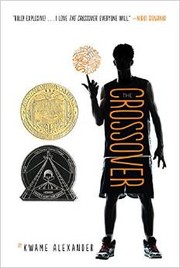
The Crossover (2014)

The Crossover. Kwame Alexander. 2014. HMH. 240 pages. [Source: Library]

First, I owe this book an apology. I've been purposefully avoiding it, despite it winning a Newbery, simply because it was about basketball. You see, I don't necessarily "like" reading sports books. I wasn't trusting enough, perhaps, that a book could be about basketball and so much more than basketball at the same time.

The Crossover is an award-winning verse novel starring Josh Bell (aka, Filthy McNasty) and his family. Josh and his brother Jordan (aka, JB) both play basketball. Their father, at one time, played professional basketball. But an injury ended all that, and now his focus, his full-time focus, is on his boys, his family. Their mother's almost full-time focus is on the health of her husband who absolutely refuses to go to the doctor. Though, of course, she loves watching her sons play basketball too.

The novel has its ups and downs...especially for Josh. Things are changing, always changing, and he doesn't like it. His brother is distancing himself from the family, from him, and even from the game itself at times, because he's head over heels in love with 'the new girl.' The more besotted his brother becomes, the more disgruntled Josh becomes. And Josh's choices, well, they aren't perfectly good and right. (Whose are?) Still, the two brothers will be tested as never before when their mother's fears prove correct...

I wasn't expecting such an emotional journey. But that's exactly what I got. This one has depth and substance to it. The characterization was very well done. And the narrative verse worked really well.

© 2015 Becky Laney of Becky's Book Reviews

Wednesday, August 12, 2015

Missing in Action

Missing in Action. Dean Hughes. 2010/2015. Random House. 240 pages. [Source: Review copy]

I definitely enjoyed reading Dean Hughes' Missing in Action. I think anyone who enjoys stories set during World War II or anyone who enjoys baseball stories will be able to appreciate this coming-of-age story.

Jay Thacker has recently moved from Salt Lake City to Delta, Utah. Jay and his mom are staying with his grandparents--his maternal grandparents. It is a bit of an adjustment for him--not that his life was perfect before--but starting over isn't always easy no matter one's past. Jay's father--who was half-Navajo--is a soldier currently listed as "missing in action." Jay is confused by this. Is his dad alive or dead? Is he a prisoner of war? Should he feel guilty if he starts moving on in his life? of thinking of his father as dead? how long should he cling to hope that he's alive? He doesn't want his dad to be dead, but, he's been missing-in-action for two or three years--a LONG time not to have heard. Still. There's always a chance that he is still alive...and Jay isn't one to rule that out. (Is his mom?)

So. Jay is new in town, and, he starts playing baseball with the other kids--the other boys. He loves playing with the others, he does, but, he doesn't like that he's called "Chief" because he's Indian. He feels that there is some stigma attached to being Indian, and, he doesn't want to 'be' anything...other than himself. Are these friendships real?

Complicating things in a wonderful way, Jay begins working with Ken, a Japanese-American teen, one of many being held at an Internment Camp in the desert. If his Dad happens to be alive, chances are, he is in a Japanese prisoner of war camp. Wouldn't be friendly with Ken be a betrayal to his Dad? Then again, Ken isn't like Jay thought he "ought" to be. Ken is great at baseball, great at dancing, and so very American. Ken is easily one of the best characters in the novel. It's hard not to love him. Jay learns a lot about friendship from his time working side-by-side with Ken on his grandfather's farm.

Missing in Action is a great coming-of-age story focusing on identity and friendship. It's easy to recommend this one.

© 2015 Becky Laney of Becky's Book Reviews

Tuesday, October 28, 2014

The Right Fight (2014)

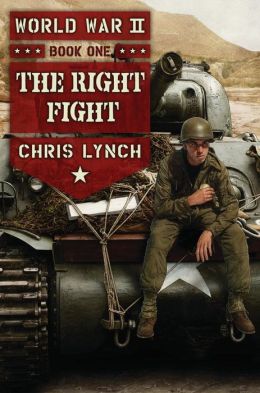
The Right Fight. Chris Lynch. 2014. Scholastic. 192 pages. [Source: Library]

 I enjoyed Chris Lynch's The Right Fight. Roman, the protagonist, loves, loves, LOVES baseball. But he loves his country even more. That is why he enlisted even before America entered the war--the second world war. The book chronicles his early experiences in the war as a tank driver. Readers see him through training, war games, and going overseas, his various assignments and missions. (Most of the book sees him in North Africa). Readers experience it from his point of view and from a few letters as well. One sees how his fellow soldiers--the men in his tank specifically--form a family. One also sees the many (often-ugly) sides of war.

I enjoyed this one. I thought there was a good balance of action (war) and characterization. I liked getting to know Roman, his fiancee, his war buddies.


© 2014 Becky Laney of Becky's Book Reviews
Wednesday, March 14, 2012

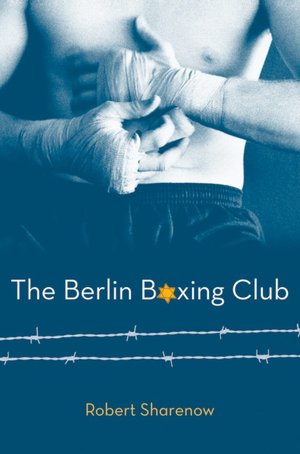
The Berlin Boxing Club (YA)

The Berlin Boxing Club. Robert Sharenow. 2011. HarperCollins. 416 pages.

As Herr Boch finished the last lecture of the school year, I sketched one final caricature of him into the margins of my notebook.

For someone who does not like sports novels--who claims to not like sports novels--I sure did love Robert Sharenow's The Berlin Boxing Club. Perhaps I just require HEART in my sports novels?

The Berlin Boxing Club is set in Berlin during the mid-to-late 1930s. The hero of the novel is a young Jewish boy, Karl Stern. When readers first meet Karl, he does not even identify himself as being Jewish. It's not that he's trying to hide the fact from his peers, acting one way at home, another way in public. He just does not see himself as being ethnically or religiously Jewish. His sister and father look Jewish--though Karl still argues that they don't particularly act stereotypically Jewish--so it's a shock to him that he's forced to wear this Jewish identity. And being Jewish in Nazi Germany, well, it's nothing anyone wants to be. The new laws being so strict, so harsh. (Karl ends up being kicked out of school, getting beat up by bullies, etc. And that's just the start of it, but I won't go much beyond that in this review.)

Karl also does NOT see himself as athletic. He does NOT see himself as a fighter. But when his father's friend, Max Schmeling, offers to train him, offers him a membership at the Berlin Boxing Club, well, Karl finds himself wanting/needing this. His father would have preferred that Max pay money for the painting he bought at his gallery, but this does seem to be a once-in-a-lifetime opportunity. So Karl has to do a great deal of training to get himself in shape before he even steps into the boxing club, Max gave him a list of exercises, a training regimen. Will Karl have the stamina and motivation to continue, to live up to his potential....

So The Berlin Boxing Club is about so much more than boxing. It is even much more than just a novel about "the fights" between Joe Louis and Max Schmeling. It is a book about fighting to survive in desperate times. It is about how difficult it was to be Jewish in Nazi Germany. It's a thought-provoking read, very emotional, very compelling!

Read The Berlin Boxing Club
  • If you're interested in reading about this time period, Nazi Germany in the 1930s
  • If you're interested in reading Jewish fiction
  • If you're looking for a companion read to The Book Thief
  • If you're looking for a sports book with heart and soul

© 2012 Becky Laney of Becky's Book Reviews

Thursday, March 08, 2012

The Running Dream (YA)

The Running Dream. Wendelin Van Draanen. 2011. Random House. 336 pages.

My life is over. Behind the morphine dreams is the nightmare of reality. A reality I can't face.

Jessica was a great runner, a star of her school's track team. But one day on the bus ride back from a meet, something horrible happens. Someone crashes into their bus. Lucy, her teammate, dies, and Jessica loses her leg. The novel is about how she copes with that loss. How the loss of a leg, at first, is the loss of a dream. But how through that loss she's able to see some things more clearly than before. Like how much her teammates really do care about her. So much that they sacrifice their time and energy and put all their heart and soul into fund raising for her. Like how she sees another classmate for the first time, a classmate in a wheel chair for quite another reason. Rosa was always so easy to ignore before, but now she's seeing her as a real person worth knowing.

So The Running Dream is a novel about hopes and dreams and perseverance. It is an emotional novel, of course. But it isn't purely inspirational. Jessica is, in many ways, just an ordinary girl with ordinary problems. Like how the guy she has a crush on doesn't really see her like that--not really. And how she struggles with keeping up in math, etc.

Read The Running Dream
  • If you're interested in sports stories with heart
  • If you're looking for an emotional, inspirational read
  • If you're looking for YA novels about friendship and family


© 2012 Becky Laney of Becky's Book Reviews
Tuesday, February 28, 2012

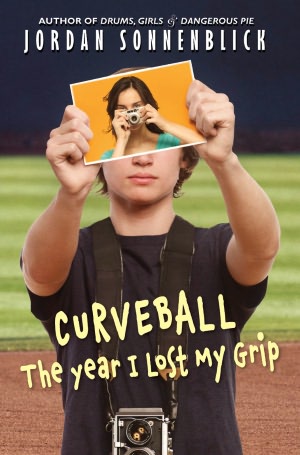
Curveball: The Year I Lost My Grip (MG/YA)

Curveball: The Year I Lost My Grip. Jordan Sonnenblick. 2012.  Scholastic. 304 pages.

The first picture is a wide-angle shot, taken through the chain-link fence of the backstop behind home plate. There's a boy standing on a pitcher's mound in full uniform: green and gold. His cap is pulled low over his eyes, and his unruly black hair sticks out below the brim in all directions. He leans in toward home plate, his throwing arm dangling loose at his side. He must be looking in to get his sign from the catcher.

I expected Curveball: The Year I Lost My Grip to be good--really good. Why? Well, Jordan Sonnenblick rarely--if ever--disappoints. He's an amazing writer; he's great at writing characters that I just love. His stories tend to be emotional and compelling. Though almost always they have a lightness to them as well. Curveball The Year I Lost My Grip did not disappoint. While I'm not sure that it is my favorite, favorite Sonnenblick novel--he's written so many that I just love!!! It is easy to recommend this one.

The hero of Curveball is Peter Friedman. The summer before his freshman year in high school, he plays his last baseball game. The injury in his arm is so severe that doctors tell him he'll never, ever be able to play the game he loves so much. So who is he if he's not a great pitcher and catcher? Who is he if he's not a great athlete? Well. He'll have plenty of time to figure that all out.

One of the main characters in Curveball is Peter's grandfather. I just LOVED him. I think there aren't enough--could never be enough--YA books that highlight the special relationship between grandparent and grandchild. Inter-generational stories make me happy, very happy. Even when they're sad. Even when they're bittersweet. Peter and his grandfather are incredibly close. And so it's not all that surprising that Peter's interest in photography becomes all that much stronger. (His grandfather was a professional.)

So Peter's interest in photography leads him to take a class where he meets a girl that wows him...

This YA book has it all. Great characters, good storytelling. It's just an enjoyable read!

Read Curveball The Year I Lost My Grip
  • If you're interested in baseball
  • If you're interested in photography
  • If you like realistic romances
  • If you're a fan of Jordan Sonnenblick
  • If you like coming-of-age stories with a strong emphasis on friendship

© 2012 Becky Laney of Becky's Book Reviews
Saturday, January 14, 2012

A Diamond in the Desert (MG)

A Diamond in the Desert. Kathryn Fitzmaurice. 2012. February 2012. Penguin. 256 pages.

Gila River was the place where my eight-year-old sister, Kimi, learned to go to the bathroom with a white cotton pillowcase pulled over her head. It was Mama who came up with the idea after a week of Kimi refusing to go.
The pillowcase, Mama said, took the place of the walls and doors that weren't in the latrine, and gave some privacy from others sitting close by trying to use the bathroom, too.
"No one will see you through it," Mama promised. "Yes, you'll be able to breathe. The air can get in."
Then she stood for three long minutes with the pillowcase over her own head to prove this.
"But what if it takes me more than three minutes in the latrine?" said Kimi.
Mama didn't answer. Instead, she pulled the pillowcase back over her head, sat down on the concrete floor, knees bent, shoulders curled in. Stayed there until the desert bats came out and the sky turned dark orange.
Kimi walked a circle around her, and you could see her deciding that this idea might work.
"Can you still breathe?"
And each time Kimi asked, Mama nodded. But I don't think Mama was taking all that time to show Kimi she could breathe. I think Mama was hiding the sadness she didn't want Kimi to see. (1-2)

I loved, loved, loved this book. It was such a GREAT book. I absolutely LOVED the writing--it was so beautiful, so practically perfect in every way.

I LOVED the characters. I did. As much as I enjoyed the main character--the narrator--a young boy named Tetsu, I just LOVED a minor character called Horse. Oh, how I loved him--I really felt for him. I felt for so many of the characters.

And the story itself was just wonderfully compelling. A Diamond in the Desert is set in a Japanese internment camp in Arizona during World War II. Tetsu's family is just one of many, many Japanese families forced to live in an internment camp after the bombing of Pearl Harbor in 1941.

At this particular camp, Gila River, Tetsu is one of many who joins a baseball team. Playing baseball is one of the ways they can still feel normal. Many, many things have changed since America entered the war, and they may not have many freedoms, many joys, in this camp. But baseball. Well, it encourages them, gives them hope.
Kyo's Papa brought a bat to the field one night. He picked up small rocks from the pile of cleared-away stones, then threw them one by one into the air like they were baseballs, hitting them as far as he could.
Kyo, Ben, and I, we started running after them.
We fielded those rocks like we were playing a World Series game, and we didn't care how many times we crashed into each other, or how dirty we got, or even about skinned elbows.
We didn't care about the mess hall closing for dinner or torn pants, or the hole in my shoe getting bigger.
We just wanted to make the greatest catches ever in the whole history of baseball. And that night, each of us did. (84)
But. This book is not just about boys playing baseball. It is SO MUCH MORE than that. This book has heart and soul. This book has depth. It is just so rich. It's beautiful, capturing your heart almost from the start. This is a book that completely wowed me.

Read A Diamond in the Desert
  • If you are looking for a great children's book; the quality of this one is amazing!
  • If you enjoy historical fiction
  • If you enjoy stories set during World War II
  • If you are looking to read more about the Japanese Internment camps in the U.S.
  • If you're a baseball fan
  • If you're NOT a baseball fan


© 2012 Becky Laney of Becky's Book Reviews

Monday, June 20, 2011

Front and Center (YA)

Front and Center. Catherine Gilbert Murdock. 2009. Houghton Mifflin Harcourt. 256 pages.

Here are ten words I never thought I'd be saying...

Dairy Queen and The Off Season

D.J. Schwenk, our heroine, is excited to be going back to school. (No, it's not August or September.) But she's been away from home tending to one of her older brothers, Win, after he was seriously injured playing college football. What excites D.J. most--besides returning to a familiar routine--is the fact that it is basketball season. She loves the game, she does. And when she's not worried about pleasing her coach and her family and her teammates and herself and any college coaches or scouts that may be watching her every little move, she's quite good at it. But it's not without pressure. For her coach--wanting only what is best for her--is encouraging her to start looking ahead to college, to start calling different coaches at different universities and seeing what scholarship possibilities there may be for her when the time comes. Yes, she's only a junior, but the time to act is now. If she puts it off until next year, well, chances are that there will be fewer opportunities. But what bothers D.J, what bothers Coach K, what bothers her brother, Win, is D.J.'s inability to vocalize on the court. She sees what needs to be done, but she doesn't speak up. She has all the skills needed to be a great player, but there is something holding her back. And the sooner she finds her voice, the better.

D.J. doesn't like being the 'front and center' of attention. She doesn't like the way one of her best friends, Beaner, is looking at her. He wants more from her than friendship. And while part of her wants a distraction from her heartbreak--her disappointing relationship with Brian Nelson--another part of her knows that she could never, ever feel anything close to romantic love for Beaner. He's great for laughs, great for hanging out with, he's a good guy, a nice guy, but. He's no Brian. Now she tries to talk herself into the relationship, using his very differences from Brian to show that he has to be a better match for her. But still. D.J. knows that it won't really work out.

I loved all three books in the series. I loved D.J. I loved her family. I loved how these novels were about D.J. finding herself and getting to be more comfortable in her own skin. Each book we see a vulnerable D.J. get just a little bit stronger, a little bit better, a little more confident. These novels have heart. They may be about sports--football and basketball--but they are character-driven too!

© 2011 Becky Laney of Becky's Book Reviews
Thursday, June 24, 2010

Audiobook Week: Rash by Pete Hautman


Rash by Pete Hautman. Narrated by Andy Paris. 2006. Recorded Books. 6 hrs. 33 minutes.

First sentence:
Gramps, who was born in 1990, once told me that when he was my age the only way to wind up in prison in the USSA (back when it had only one S) was to steal something, kill somebody, or use illegal drugs.
Synopsis:

Consumption of alcohol: Illegal.

Football and other "violent" sports: Illegal.

Ownership of guns, chain saws, and/or large dogs: Illegal.

Body piercings, tattoos: Illegal.

It's late in the twenty-first century, and the United Safer States of America (USSA) has become a nation obsessed with safety. For Bo Marsten, a teenager who grew up in the USSA, it's all good. He knows the harsh laws were created to protect the people. But when Bo's temper flares out of control and he's sentenced to three years of manual labor, he's not so down with the law anymore.

Bo's forced to live and work in a factory in the Canadian tundra. The warden running the place is totally out of his mind, and cares little for his inmates' safety. Bo will have to decide what's worse: a society that locks people up for road rage, or a prison where the wrong move could make you polar bear food.

A few months before I started blogging, I read Pete Hautman's Rash. I loved it so much that I found myself rereading it a few months later. That was in December of 2006. It took two posts for me to 'properly' convey my enthusiasm. It's been four years since I first read Rash. That is one of the reasons why I wanted to give Rash a listen this week.

What is it about? It's about a teen guy, Bo, who is in trouble with the law. It is set in the future--in the 2070s, I believe--so in trouble with the law means something entirely different. It's a fascinating novel; the little details make it quite a thought-provoking read. The premise being--what would a safer future look like? But just because this is a premise-driven novel doesn't mean that it isn't a compelling read.

The audio book is narrated by Andy Paris. And I think he did a great job with this one. I loved the voices he did for each character. Especially Bork and Gramps. Unfortunately, the audio book of this one is out of print. And it is not available on audible either.

There were several things I noticed this time around.
  • I just now realized that the 'figurative' bear chasing Bo during his track races became all-too-literal once he's imprisoned. And while imagining a bear chasing him helped Bo run a bit faster, it is nothing in comparison to the real thing.
  • The emphasis on sports. When I read the book, it was easy for me to not focus on the sports. Hearing the book, it became more difficult for me to ignore the fact that this is very much a boy book, a sports book.
  • Just how dysfunctional Bo's family is. The strained relationships between members of his family.
  • Though it's set in the future--though so many things are unfamiliar, so strange to modern readers--it is very much a coming of age story. The problems Bo has are universal, timeless.
  • It's a very strange, one-of-a-kind book.

© Becky Laney of Becky's Book Reviews

Monday, January 04, 2010

Food, Girls, And Other Things I Can't Have (YA)


Food, Girls, And Other Things I Can't Have. By Allen Zadoff. 2009 [September 2009] Egmont USA. 320 pages.

My name is Andrew Zansky. I'm fifteen years old, and I weigh 307 pounds.

What harm can a little lie do? What about a bunch of little lies? Can they change who you are? Make you unrecognizable even to yourself? Andrew, our narrator, never expected to be found out. About any of his little lies. Especially since some of these lies were ones he was telling himself, that he believed to be true. Who is Andrew? What is his story?

Andrew doesn't want to be "the fat boy" who is always getting picked on, teased, and bullied. He wants to be the one who gets the girl for a change. So when a fairy godmother* of a football player (O) takes him under his wing, under his protection, gets him a tryout for the football team, teaches him what he needs to know about girls, sports, parties, and how to be one of the team, well, life becomes a bit of a fairy tale for a while. Until Andrew starts asking himself some tough questions...

A good coming-of-age story is enjoyable. And while Food, Girls, and Other Things I Can't Have has more than its fair share of predictable moments and insights, it is still enjoyable. What is it about? It's about a boy wanting oh-so-much more than what he has. It's about a boy not knowing what he really wants or needs. And because that is true for so many of us--so many of us have felt confused and frustrated in our lives be it past or present--it makes him--his story--easy to relate to.

*Okay, so he's not really a fairy godmother type. He's the captain of the football team. The most popular guy in school. But he does in a way appear to Andrew to be the means of how he gets all his wishes, all his dreams.

© Becky Laney of Becky's Book Reviews
Friday, October 23, 2009

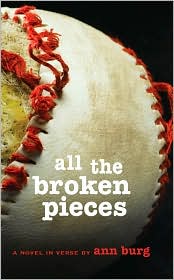
All the Broken Pieces (MG)


Burg, Ann E. 2009. All the Broken Pieces: A Novel In Verse. Scholastic. 220 pages.

My name is Matt Pin
and her name, I remember,
is Phang My.
His name
I will never say,
though forever I carry his blood
in my blood,
forever his bones
stretch in my bones.
To me,
he is nothing.
If he stumbled on me now,
I wonder,
would he see himself in my eyes?
And I?
Would I recognize the dragon
who went beyond the mountain
and never came back?


Thus opens All The Broken Pieces by Ann E. Burg. A verse novel about so much more than Vietnam and baseball. It's been two years since Matt has come to America and been placed with a new family: a new mom and dad and brother. But time isn't healing everything. Sometimes silence speaks volumes. How can his new family help Matt the most? How can they start him on the right path, the path to healing and peace? How can they support him best?

The verse is incredibly well-written. It was so powerful and compelling. It had so many wow-moments for me. Little poems that I just had to read over and over again because they resonated so deep and strong.

My top drawer
is full of pencils, new,
used, half-used, and
all-the-way-to-the-eraser-cap used.
I never get rid of pencils.
I never get rid of anything.
Who knows?
Even a stub
is worth something.

If bombs fall here,
if something terrible
ever happens
that I get sent away,
I'll stuff everything
I can fit
into my pockets.

Even the broken pieces
are worth something
to me. (58-59)
What did I love about this one? It had heart and soul. I loved Matt. I ached for him really. He was hurting so deeply, yet he didn't know how to reach out for help. He needed love so desperately, and yet he was afraid that his new family didn't love him enough. He thought his mother loved him, but she gave him away. That's how he sees it. Can Matt learn the power of love? And what that love sometimes means.

So yes, this book is about baseball. Because baseball is one of the things that helps Matt most. And being on a team, being a part of the team helps heal him in so many ways. Even if it means struggling a bit to find that place on the team.

I think this one works really, really well. I just loved it.

Other reviews: Kids Lit, A Year of Reading, Reading Junky's Reading Roost, Semicolon, Musings of a Book Addict.

© Becky Laney of Becky's Book Reviews

Wednesday, August 12, 2009

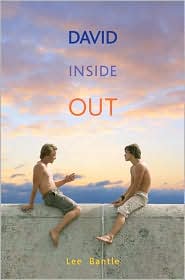
David Inside Out (MG, YA)


Bantle, Lee. David Inside Out. Henry Holt. 184 pages.

Driving along Minnehaha Parkway on my way to see Kick, I felt like Archie going over to Veronica's. Not because she lived in a massive stone house and I mowed lawns for cash. Or because I was prone to Archie-type screwups. I felt that way because our relationship was two-dimensional. And that was the test. Could I make it to the third dimension with her?

Will he or won't he? That's the big question. Will David admit to himself, to his family, to his friends, to the world that he is gay. When the novel opens, David is trying his best to deny his homosexuality. He's trying his best to "make it to the third dimension" with a girl. The girl, in this case, is nicknamed Kick. And she's a good friend to both David and Eddie. Who's Eddie? Well, he's the newly-out-of-the-closet best friend of David. His friend's coming out is making David uncomfortable. Perhaps because his own thoughts, his own desires make him uncomfortable. David tries to be straight--tries not to notice guys in the locker room and the showers; he tries not to fantasize about guys at all. But he's forcing it. And it's just not working. No matter how many times he tells himself no...he can't stop the feelings, the desires, the thoughts.

David's not the only one questioning his sexuality. One day in class, he receives an anonymous note:

Want to get it on with a guy?
Wear your red jersey on Friday.
Wait on the steps outside after school.
I'll meet you.
Don't tell anyone!!!
Don't show this note to anyone!!!
I am not messing with you. (54)


Could this mystery-note be from Sean, one of his teammates? He hopes it is. But will he have the courage to even show up? What if it's a joke, a prank?

This is a coming-of-age novel about coming to terms with who you are and what you want.


Other reviews: Shooting Stars Mag, Reviewabook123, Guys Lit Wire,

© Becky Laney of Becky's Book Reviews
Thursday, July 10, 2008

No Cream Puffs


Day, Karen. 2008. No Cream Puffs.

This isn't what we usually do. If we have time after lunch, we shoot baskets with the boys in the gym. Today we're lined up in front of the mirror in the girls' bathroom. I stand to the side and twist my mood ring around and around my finger. My mess of curly blond hair is a disaster compared to the new feathered style everyone else has. "This is plushy pink." Casey Cunningham pulls a tube of lip gloss out of her purse and opens it. The sweet smell of cotton candy fills the bathroom. She rolls it onto her lips. "It's new."
She rolls it onto Gina's lips and then reaches for Sara, who stands next to me, holding her new purse with both hands. I'm next.
Casey snaps the cap on the lip gloss and puts it back in her purse. I feel the tops of my ears burn; she left me out on purpose. I glance at Sara, but she won't look at me.
"You smell like a circus," I blurt. Their lips sparkle under the lights. Could my lips look like that too?
"I'm sorry, Madison." Casey looks at me, eyes wide. "I didn't think baseball players wore lip gloss."
(1-2)

Set in the summer of 1980, No Cream Puffs is the story of Madison Mitchell, a twelve-year-old baseball player who hates to be called a tom boy. So what if she likes to play sports? Does that make her a boy not a girl? NO. She's a girl alright. Her developing breasts (which she tries to disguise whenever she plays ball) and a crush on a teammate prove that.

No Cream Puffs is a sports story. No doubt about it. There's baseball games, baseball practice, and plenty of baseball talk. But it is more than that. Much more. It's the story of a girl who feels uncomfortable with herself, her body, her life. A girl who doesn't feel comfortable with her identity. She doesn't want to be solely defined as "the girl" (the only girl) who plays in a baseball league of boys. But as the girl she does get attention at all the games especially by the media who want to turn her into something she's not. It's a story about family. A story about friendship. A story about growing up. Here we see the first glimpses of a young girl changing into a young woman. Her first crushes. This age is often (or should I say always) awkward and painful. Madison's experiences are authentically so. I loved Madison's voice. And I loved her story.

I really loved this book. Karen Day knows how to do real, to do authentic. Everything just feels right about this one.

http://www.klday.com/index.html
© Becky Laney of Becky's Book Reviews
Monday, April 07, 2008

Wicked Cool Overlooked Books: Going for the Record


Swanson, Julie. 2004. GOING FOR THE RECORD. Grand Rapids, MI: Eerdmans. ISBN 0802852734.

Leah Weiczynkowski is seventeen years old. She's a soccer player who has wonderful news for her father: she's just made the Region II Under-18 Olympic Developmental Program team with an opportunity in August of making the National team. But her father has news of his own: during the week she was away at soccer camp, he was diagnosed with terminal cancer and he only has three months to live.

Leah, of course, is in a state of shock and disbelief. She doesn't want to accept the news--and does everything she can to deny it. He doesn't look that sick. Maybe the doctors were wrong. Maybe he'll be miraculously healed. Maybe they're some kind of cure or alternative treatment that will save his life. She goes to the bookstore and finds all of these self-healing, positive-thinking books and she also goes to the nutrition store and buys all these alternative type drugs. But her father will have none of it. He is past the stage of denial....he knows that whether or not he is ready to die...or whether or not his family is ready for him to die...that he really has no choice in the matter.

Leah's father signs a living will stating that he does not want any life-saving measures to be taken. He wants to die at home away from the hospital. He is in the hospice program. They have nurses come to the house regularly to care for him. They give him pain killers to ease his pain and keep him comfortable.

Leah doesn't know how to react or how to live her life with her father dying in front of her eyes. Practicing soccer three or four hours a day...driving around with friends....shopping at the mall...etc...all seem pointlessly unsignificant in the scope of things. She doesn't want to lose a moment of time with her father. But at the same time, he's urging her not to give up her dreams to sit home and watch him die. He wants her to go to soccer camp and try to make the National team--after all, hasn't that what she's been working hard for all these years? During this time she's very angry. She's angry and acting out against her friends.

She goes to camp, but with a heavy heart, a few days into camp...she's called home. Her father's failing. He is not quite ready to die yet. But this close call forces Leah out of denial. The whole family is hoping, praying, begging that he will be able to live long enough to see the birth of his first grandchild due the first week of September. All of the family--Leah's older brother Paul, and her pregnant sister Mary--come home to say goodbye. Her uncles and aunts say their goodbyes. But eventually Leah and her mom are left at home with him watching him die.

A few weeks before his close call, the father and daughter have a chat about how he is ready to die...and how he's ready to go home and be with Jesus. And although Leah's relunctant to let him go...to give him permission to go...the more pain she sees her father in...the weaker he gets...the more disoriented and disconnected he is from reality...she begins to realize the kindest thing in the world would be to let her father go...to not pray for his recovery...but pray that God would take him...that God would spare him another day of pain.

He survives several days past the birth of his grandchild...but as soon as he hears news of its birth...he begins to let go...he disconnects himself from the world...and his family. His condition starts to deteriorate quickly. It was true that he was fighting to hold on to life for the birth...and now he has no reason to keep fighting...he can just let go.

After his death, she's very depressed--naturally--and she is hesitant to enter social life. She has no interest in ever playing soccer again. She does patch things up with her friend Clay...but mainly this is a slow healing process for her.

This is one of the hardest books I've ever read. It is a very accurate, realistic, honest look at how it feels to watch someone you love very deeply die. The book had me close to tears in several places. The feelings were just so true--so honest. My grandfather died of bladder cancer and was in hospice...and reading those chapters about his last few weeks...were just so right. The author just got everything right in those scenes. Anyway, it was a powerful well written novel.

http://www.julieaswanson.com/

© Becky Laney of Becky's Book Reviews
Tuesday, November 27, 2007

Deadline


Crutcher, Chris. 2007. Deadline.

My plan was to focus my senior year on information I could use after graduation when I set out for Planet Earth from the Pluto that is Trout, Idaho, population 943. My SATs said I wasn't even close to brain-dead and I was set to be accepted at any college I chose, as long as I chose one that would accept me.

Thus begins Deadline. Our narrator is Ben Wolf. From the very beginning--page 2 to be exact--we know that Ben is dying presumably of cancer. "Doc Wagner left a phone message a few days after my routine cross-country physical . . .there was gravity in his voice, so I decided I'd better scout ahead to see if his message was PG-13 and suited for all, or R-rated and just for me. Turned out to be X." He opts out of seeking treatment and decides to live life with all the zest and zeal he can muster. He also decides NOT to tell his parents, his brother, his coaches, his friends, his teachers. He'll carry the burden of his impending departure all on his own.

One of the first things he decides is to go out in style. If he is going to die young, he might as well be brave and try out for football. He's a short guy. A small guy. But he's always envied his younger brother's skills on the football field. Now is his last chance to go for it all--both on and off the field. Football. He also has his eyes on one other thing--his dream girl, Dallas Suzuki.

School. Football. Dating. His dysfunctional family. He starts out thinking that he is going to protect his friends, his family, his loved ones by keeping this big secret. That they're too fragile to handle the truth. That it would ruin their lives to have to watch him die and know what's coming. And as a reader, you can see there are reasons why he would think that. His mother is a basket case. She has tons of issues all her own. And she's barely holding onto her sanity most of the time--not all the time though. And his father is so concerned with taking care of his wife that things do get a bit neglected at times.

If there is a theme in Deadline it would be that everything is complicated. Life is complicated. People are complicated. Relationships with friends, families, lovers, etc. are complicated. Nothing is as simple as it appears. Lies. Secrets. Regrets. Everyone has them. Everyone is carrying a burden--be it of shame, guilt, anger, or confusion. Ben isn't the only one keeping secrets. And it is through his relationships--his conversations--that he learns some of life's greatest lessons.

Two relationships stand out. One is with an older man, the town drunk. Ben gets the notion he needs to "save" this man from himself and stop him from self-destructing. The problem is that some burdens can't be eased--not in this lifetime--not without divine intervention. The other relationship is with Dallas. Dallas has a few secrets of her own--about her family, about her past--she comes clean with Ben. But Ben has trouble being honest with her. Will she--can she--forgive him for lying by omission?

I didn't love everything about this book. I'll admit to some personal biases. The conversations he has with Hey-Soos or Jesus, his 'imaginary' guide were troublesome for me. Not everyone will find the messages and 'truths' to be troublesome, however, and there are many many views of spirituality and the afterlife. Just because I didn't click with this particular aspect doesn't mean I disliked the novel. And it won't stop me from recommending it to people.

Deadline is similar to Before I Die. Both have teen narrators that are facing death. Both decide to live life to the fullest why they can. Their philosophies are different. Very, very different. But both are independent and strong-willed. Both have complicated families--dysfunctional families--they're leaving behind. Both want to find love and romance before they die. One is on the surface more honest and forthcoming and the other. I can see strengths and weaknesses in both. Before I Die made me cry at the end, I didn't have that response with Deadline. What was missing for me in both books--and this is a personal thing I would imagine--is that I had a hard time liking--really liking--the characters. I thought Crutcher's were better developed. I thought there was more depth, more development. I think Ben was a bit more self-aware and definitely less self-destructive than Tessa. I think he did better at dealing with what life had thrown him. But that's not to say that Before I Die doesn't have strengths of its own. I can see why they are both powerful depictions.

Tuesday, November 06, 2007

Boy Toy


Lyga, Barry. 2007. Boy Toy.

I think one of the strong trends of 2007 is "difficult" books where the author is taking you on a journey to some ugly, scary, all too realistic places. Child abuse. Sexual abuse. Racism. Bullies. Hate crimes. Alcoholism. Drug abuse. Rape. Suicide. Insanity. Often times these books are well written, achingly or hauntingly beautiful. But they are tragic. More often than not they're depressing. (Or at the very least have depressing elements for some part of the story, beginning, middle, or end.) And they all have one thing in common: they are infuriating. You read the book and want to throw it across the room. Why? Because you hate a character or two. Maybe it's the alcoholic mother who abandons her child for days or weeks on end. Maybe it's the stepfather who is physically abusive. Maybe it's the policeman or social worker who turns a blind eye to a child in need. As a reviewer, it is sometimes hard for me to capture how good yet how painful these are to read. The writing can range from excellent to good, but none of the books can be said to be "enjoyable" because the story is so sorrowful, so tragic, so melodramatically melancholy. How can I "enjoy" being a witness to a crime? I can't. I am not one to take pleasure in even a fictional character being raped or abused whether the abuse is physical, sexual, or verbal. Yet the writing can be so good that you can't put it down. Or in some cases, the story is too difficult to take in one sitting, yet you feel compelled to finish it. To know what happens next. No matter if it ends well or tragically. You've just got to know.

Because these books are "difficult" to read, they're often labeled as powerful and brilliant. And most of the time, they are. (It would be a book by book thing for me. I can't make a blanket statement about this sort of thing.) They're often the choice when it comes to choosing awards and making 'best of' lists. It would be interesting to see if this translates into popularity. If given the option does an individual seek out something light, something funny, something enjoyable, something that feels good, something that satisfies without challenging...or do they seek out something more, something to make them think, question, challenge, reevaluate. And is one choice really "better" than the other? The book Speak by Laurie Halse Anderson is a good example of a book that is both serious and relevant. It has very heavy overtones in it--a young girl silenced by rape, a girl misunderstood by her peers and teachers, a girl labeled by those around her, a girl in need of help. Yet the book is readable, it has its funny moments. It's a book that makes you think, but it's a popular book as well.

Boy Toy fits into this category of being difficult. Only time will tell if it's a popular choice. It is the story of how sexual abuse affected a twelve year old boy.

Ten Things I Learned At the Age of Twelve

1. The Black Plague was transmitted by fleas that were carried throughout Europe by rats.
2. If you first paralyze it, you can cut open a frog and watch its lungs continue to inflate and deflate.
3. There are seven forms of the verb to be: am, being, been, is, was, were, and are.
4. In order to divide fractions, you invert the divisor to arrive at the reciprocal, which is then multiplied by the dividend. (Mixed fractions must first be converted to improper fractions.)
5. In Salem, the witches weren't burned at the stake--they were pressed to death under big rocks...or hanged.
6. Islam was founded in the year 610. It is the third of three world religions worshiping the same God.
7. Each point on a "coordinate plane" (created by the joining of an x-axis and a y-axis) can be described by an ordered pair of numbers.
8. Monotheism is a belief system centered on a single deity, while polytheism subscribes to belief in multiple deities.
9. The area of a circle can be determined by using the formula Pi r 2.
10. How to please a woman.


The book is segmented. The narrative is not chronological. It opens with a brief chapter where his abuse is 'discovered' by adults. It then jumps ahead to his senior year in high school. It later flashes back to the abusive time in his life. So it goes backwards and forwards, and so on. The narrative is easy to follow. It isn't confusing, but it is difficult in the sense that reading about sexual abuse is difficult. Our narrator is Josh Mendel. When he was twelve, his history teacher, first name Eve, seduced him over a period of weeks and months. Their relationship continued until Josh 'inadvertently' gets found out at a birthday party of a friend. At the same time as his abuse is occurring, his parents have been having marital problems as well. They fight ALL the time. And they rarely notice him at all. His life did change as a result of the abuse, and as a result of the trial that followed. Even though his name was supposed to be anonymous, he feels "exposed" to his classmates at school. The administration. The teachers. The students. Everyone "knows" his secrets. So he's carrying a very heavy burden. The book is a look at his life five years later. The truth is that he still feels guilty and ashamed and alone. He doesn't want to talk about his feelings, his emotions. He doesn't want to be reminded of his past, yet he can't escape it. He doesn't want to face it. But it's not going away. It is with him always.

The book is good. Good in the sense that the characters are well developed. That the writing is intense but good. Powerful yet not overwhelming. And the book isn't just about abuse. It's about growing up, finding the courage to fall in love, and playing baseball. It isn't all dark. There's enough light to give it contrast.

So I would recommend it. But it's not for everyone.