Showing posts with label audio books. Show all posts

Wednesday, May 13, 2026

35. The Bad Beginning


35. The Bad Beginning. (A Series of Unfortunate Events #1) Lemony Snicket. Illustrated by Brett Helquist. 1999. 162 pages. [Source: Library] [j fantasy, mg fantasy, j fiction, mg fiction, 5 stars]

First sentence: If you are interested in stories with happy endings, you would be better off reading some other book. IN this book, not only is there no happy ending, there is no happy beginning and very few happy things in the middle.

Premise/plot: The three Baudelaire orphans--Violet, Klaus, and Sunny--star in Lemony Snicket's over-the-top Series of Unfortunate Events. The book opens with the three learning that their parents are gone and so is their home--in a mysterious fire. They soon find themselves "living" with their "closest" relative, Count Olaf.

I listened to the audio book narrated by Tim Curry and a full cast. I've also seen the feature film and a few episodes of the series.

My thoughts: I love the writing, the narration. The story itself is extreme and over-the-top. I loved the movie--which I believe combines the plot of the first three books. I do plan on reading more in the series.


© 2026 Becky Laney of Becky's Book Reviews

Sunday, March 08, 2026

29. Farmer Boy


29. Farmer Boy. Laura Ingalls Wilder. Illustrated by Garth Williams. 1933. 372 pages. [Source: Library] [3 stars, audiobook, children's classic, historical fiction]


First sentence: It was January in northern New York State, sixty-seven years ago. Snow lay deep everywhere. It loaded the bare limbs of oaks and maples and beeches, it bent the green boughs of cedars and spruces down into the drifts. Billows of snow covered the fields and the snow fences.

Premise/plot: Farmer Boy is the second book (technically) in the Little House series by Laura Ingalls Wilder. (The first book is Little House in the Big Woods). The book (fictionally) chronicles Almanzo Wilder's childhood. (Presumably based on stories he told his wife through the years.) I believe it covers roughly one year of his life. It begins and ends in (different) winter(s). The focus, as you can imagine, is on his farm life. He spends a lot of time with horses, cows, pigs, and various crops like corn, wheat, pumpkins, etc. There's also a chapter on cutting ice. (I couldn't help but think of Almanzo hauling ice in the television show).

My thoughts: I must have read the original series a dozen times growing up. And I did always enjoy Almanzo entering the story in The Long Winter. But I never read the second book. Never. I just didn't see the appeal. It was about a boy, a farm boy, a boy who spent way too much time with livestock and crops. 

Was I right to skip it? Probably. It is all subjective, I know. Plenty of girls--plenty of kids--go through a horse phase, where they read anything/everything with horses. That never happened to me. I never went through a horse phase. And this book is only about a step above watching grass grow. In my opinion.

 I do think it provided a window into the past. And in some ways, two windows into the past. Readers can get a glimpse into Almanzo's childhood. (If my math serves, roughly 1866/1867). But readers also get a glimpse into the 1930s. People certainly viewed the world different in 1866 than they do now...and same with the early 1930s. You can't expect today's values and viewpoints to be present in a book written in 1933...especially when that book was telling the story of a boy growing up in the 1860s.

ETA: This was my first time to reread Farmer Boy. Technically, I listened on audio. I still don't love it. But it does have some of the same vibes as Little House in the Big Woods.

© 2026 Becky Laney of Becky's Book Reviews

Monday, December 01, 2025

121. Anne's House of Dreams


Anne's House of Dreams. L.M. Montgomery. 1919. 227 pages. [Source: Bought]

First sentence: “Thanks be, I’m done with geometry, learning or teaching it,” said Anne Shirley, a trifle vindictively, as she thumped a somewhat battered volume of Euclid into a big chest of books, banged the lid in triumph, and sat down upon it, looking at Diana Wright across the Green Gables garret, with gray eyes that were like a morning sky.

 ETA: I don't know how many times I've read this series--dozens??? scores???? My most recent read through is December 2025...and I listened to the audio book. It is just as magical as when I first discovered the series in the late 1980s. 

Premise/plot: Anne Shirley marries Gilbert Blythe in this oh-so-lovely, oh-so-charming book by L.M. Montgomery. Technically, it is the sequel to Anne of the Island! Anne of Windy Poplars was written in the 1930s, decades after Anne's House of Dreams. In this Anne book, the happily married couple settle down in their first home together near Four Winds Harbor and Glen St. Mary. 

Anne's House of Dreams introduces many new characters--some of my favorites I admit--Captain Jim, Miss Cornelia, Leslie Moore, Owen Ford. Marshall Elliot. Susan Baker. Who would ever want to forget their stories? Captain Jim's life-book. Leslie Moore's tragic past but enduring spirit. Miss Cornelia. She's got to be one-of-a-kind. Just a truly spirited character with so much heart and full of gumption. Practically everything out of her mouth is quotable. She sure is great at banter!

My thoughts: I love and adore this one!!! I love how emotionally satisfying it is. The Anne books may have sweet moments, but they pack in reality as well. No one can make me cry like L.M. Montgomery.

Quotes: 

“Stoutness and slimness seem to be matters of predestination,” said Anne.
Jane was not brilliant, and had probably never made a remark worth listening to in her life; but she never said anything that would hurt anyone’s feelings — which may be a negative talent but is likewise a rare and enviable one.
“I’ve heard you criticise ministers pretty sharply yourself,” teased Anne. “Yes, but I do it reverently,” protested Mrs. Lynde. “You never heard me NICKNAME a minister.” Anne smothered a smile.
Their happiness was in each other’s keeping and both were unafraid. 
“Miss Cornelia Bryant. She’ll likely be over to see you soon, seeing you’re Presbyterians. If you were Methodists she wouldn’t come at all. Cornelia has a holy horror of Methodists.”
“I know we are going to be friends,” said Anne, with the smile that only they of the household of faith ever saw. “Yes, we are, dearie. Thank goodness, we can choose our friends. We have to take our relatives as they are, and be thankful if there are no penitentiary birds among them. Not that I’ve many — none nearer than second cousins. I’m a kind of lonely soul, Mrs. Blythe.” There was a wistful note in Miss Cornelia’s voice.
“Were you able to eat enough pie to please her?” “I wasn’t. Gilbert won her heart by eating — I won’t tell you how much. She said she never knew a man who didn’t like pie better than his Bible. Do you know, I love Miss Cornelia.”

“Our library isn’t very extensive,” said Anne, “but every book in it is a FRIEND. We’ve picked our books up through the years, here and there, never buying one until we had first read it and knew that it belonged to the race of Joseph.”
A woman cannot ever be sure of not being married till she is buried, Mrs. Doctor, dear, and meanwhile I will make a batch of cherry pies.
“I wonder why people so commonly suppose that if two individuals are both writers they must therefore be hugely congenial,” said Anne, rather scornfully. “Nobody would expect two blacksmiths to be violently attracted toward each other merely because they were both blacksmiths.”
The p’int of good writing is to know when to stop.
There’s only the one safe compass and we’ve got to set our course by that — what it’s right to do.
Logic is a sort of hard, merciless thing, I reckon.
“Since you are determined to be married, Miss Cornelia,” said Gilbert solemnly, “I shall give you the excellent rules for the management of a husband which my grandmother gave my mother when she married my father.” “Well, I reckon I can manage Marshall Elliott,” said Miss Cornelia placidly. “But let us hear your rules.” “The first one is, catch him.” “He’s caught. Go on.” “The second one is, feed him well.” “With enough pie. What next?” “The third and fourth are — keep your eye on him.” “I believe you,” said Miss Cornelia emphatically.
Cats is cats, and take my word for it, they will never be anything else.


© 2025 Becky Laney of Becky's Book Reviews

Tuesday, October 07, 2025

108. Harry Potter and the Order of the Phoenix


108. Harry Potter and the Order of the Phoenix. J.K. Rowling. 2003. 912 pages. [Source: Library] [4 stars] [mg fiction; mg fantasy; series book]

First sentence: The hottest day of the summer so far was drawing to a close and a drowsy silence lay over the large, square houses of Privet Drive.

ETA for 2025: I am listening to the Harry Potter series on audio book narrated by Stephen Fry. Is this a long book? YES. Is it a very long book? Also YES. Am I attached to the characters? VERY MUCH SO. If the book gets tedious it's because some of the characters are tedious, if that makes sense. I do sometimes feel that Harry Potter is insufferable at times. His attitude, I mean, particularly when it comes to friendships and "dating" if you will. But I am liking this one more each time I reread it.

Premise/plot: Harry Potter and his friends struggle to keep things together as a new year at Hogwarts begins. Lord You-Know-Who has returned. But the Ministry of Magic (among others) are determined to bury their heads in the sand. (Perhaps because they are more involved with You-Know-Who than they'd like to admit. Perhaps because they would rather believe that Harry Potter (and company, the Order of the Phoenix) is lying than that HE has returned. You could argue either.) The staff and students are on high alert--namely from Dolores Umbridge (and those whom she represents as High Inquisitor). The year won't be easy. The foundation of Hogwarts is being shaken about. 

Meanwhile, Harry Potter is continuing to have dreams and visions. His scar is still bothering him. He's beginning to realize that he and You-Know-Who share an unbreakable bond. 

My thoughts: It is so easy to feel overwhelmed by the weight of the books in these series. The pacing is all over the place for me. On the one hand, the books never fail to have about one hundred pages of the most intense, fast-paced, action-packed DRAMA. On the other hand, so much time is spent getting to that point. Like you've got eight plus months of more mundane chronicling of school life--always taking a chapter or two for the Christmas holidays--and then BOOM end of school year, BIG show down. In the middle of the book, I'm always am I sure I want to keep reading. At the end of the book, it's like this is why I do keep reading. 

Lighter moments are definitely getting harder to come by. ETA: I am rereading the series. I definitely appreciated this one MUCH more the second time around. I have all the feels for the ending of this one. The last half of the book is SO intense and emotional. Sirius Black is one of my favorite characters. This one does feature some big reveals--for those reading it the first time around. 


© 2025 Becky Laney of Becky's Book Reviews

Thursday, March 27, 2025

33. Sunrise on the Reaping


33. Sunrise on the Reaping. Suzanne Collins. 2025. 382 pages. [Source: Library] [audio book!] [4 stars, YA dystopia, YA thriller, YA fiction, series book]

First sentence: "Happy birthday, Haymitch!" The upside of being born on reaping day is that you can sleep late on your birthday.

My thoughts (preview): Is Sunrise on the Reaping a necessary addition to the Hunger Games series? Maybe. Maybe not. Readers will most likely come to the book knowing both a) how Haymitch's story ends (as revealed in the Hunger Games book series) and b) Haymitch's Hunger Games story (the 50th Hunger Games). At the very, very, very least they will know Haymitch was the victor for Twelve during his year. There remains no way to keep suspense in the story. 

Premise/plot: Readers who have [long] been fans of the Hunger Games will get Haymitch's backstory in greater depth. There are plenty of details to be filled in that haven't been revealed already. 

My thoughts: I am SO CONFLICTED.

On the one hand, this is set roughly twenty-five (twenty-four) years before the first Hunger Games book. Readers catch glimpses of what life was like in Twelve when Haymitch was a teen. They get to know him before he'd touched a drop of alcohol. Readers see how life in the Capital is as well. MAGS. MAGS. MAGS. (You might say I was thrilled to get to see Mags again). Readers also meet a VERY young Effie Trinket. Another familiar character is PLUTARCH and, of course, President Snow.

On the other hand, there is something futile and hopeless about Sunrise on the Reaping. There is no suspense. EVERYTHING we know about Haymitch in the "present" (aka Hunger Games trilogy) leaves no doubt that the book cover-to-cover will be futile, meaningless, hopeless. No possibility for a smidgen of happiness or peace. 

The plot itself is BRUTAL, brutal, more brutal, all bleak all the way. 

There are no surprises. I mentioned twice now how the book lacks suspense. I think this is the nature of the Games. ALL the books that feature Hunger Games are going to follow a set pattern, formula, rigidity. There is nothing new under the sun. What allows for more unique storytelling is before and after. And again, readers know how the story is going to end--Haymitch bitter, angry, disturbed, apathetic, drunk, a waste. But what the book does is strip away the possibility of a happier Haymitch AFTER the third book. Perhaps this is because this is something the movie gives him that the book never intended? Perhaps this is Suzanne Collins way of saying IGNORE THE MOVIES, Haymitch is *mine*.

Several things to note: FIRST it seems that there is nothing new under the sun. I wouldn't be surprised if every year of the Games there's a few kids [at least] who try to rebel against the system and break the games and make a stand and whatnot. Katniss was not the first. Just the last.

Second, the book's greatest strength will be in CHARACTERS and RELATIONSHIPS. Readers know that the game will be brutal, bloody, bleak, ugly, horrific, psychologically damaging, twisted. But it is in how the main character is in relationship with others in the arena that matters. 


© 2025 Becky Laney of Becky's Book Reviews

Tuesday, December 04, 2018

Me? Listen to Audio?! #43

The Small House at Allington. Anthony Trollope. Dramatised by Michael Simmons Roberts. Directed by Gary Brown. Aired on BBC Radio. Starring Scarlett Alice Johnson as Lily Dale and Samuel Barnett as Johnny Eames. 3 one hour episodes.

I really enjoyed this one. It is an adaptation. And I am fairly sure they didn’t stick too closely to the actual book when it comes to minor characters and minor plot points. But it was a FUN listen. It is always a treat to revisit this series. I’ve now listened to The Warden, Barchester Towers, Doctor Thorne, and Framley Parsonage.


The Opera Companion. Bryony Lavery. Originally aired 2004 on BBC Radio. 45 minutes.


Stars Derek Jacobi as Albie and Nichola McAuliffe as Marguerite.

Will two shy opera-lovers bond over opera? Is this the beginning of a fine romance? Or is their “love” doomed from the start since these two will be battling it out over an arm rest.

I accidentally listened to this one. It automatically started playing after The Small House At Allington. It was a happy accident. It was a hoot. Well, it was a hoot until it wasn’t. 

© 2018 Becky Laney of Becky's Book Reviews

Saturday, November 03, 2018

Me? Listen to Audio?! #40 (My Victorian Year #46)

 Agnes Grey. Anne Bronte. 1847. Read for Librivox by Libby Gohn. 7 hours and 3 minutes.

I read Agnes Grey in mid-October. Almost immediately after reading it I decided that it would be great to listen to on audio book. (Can you tell I got attached to the characters?!) I am glad I did. It was great fun to hop back into the story. I don't quite understand people who don't reread books. Why make friends with characters if you never go back to hang out with them again?!

Premise/plot: Agnes Grey is a young woman who challenges herself to leave home and become a governess. Her family needs income, true, but her parents are not telling her to work or even wanting her to work. The Bloomfields are her first family and the Murrays are her second. Neither situation is ideal.

The Bloomfield children are out-of-control. Master Tom and Mary Ann rule the schoolroom and they know it. Agnes Grey has been given no authority to discipline the children. The parents expect her to rule without power or authority. Any misstep, any fault, any misbehavior--no matter how big or small--is her fault by default. She shouldn't call herself a governess if she can't manage naughty children. She learns quickly not to run to the parents with tales of misbehavior OR even with pleas for support. She'll receive no support from either parent. She doesn't last long at this first job, though the fact that she lasts more than a month or two says something about her fortitude.


The Murray children are much older. There are two young ladies: Miss Rosalie and Miss Matilda. Rosalie is 'out' in society and FLIRTATIOUS. Matilda is a year or two younger. Her biggest fault is her love of swearing. These two don't "misbehave" in the same way as the Bloomfields. No throwing themselves on the floor and rolling about, for example. But they don't apply themselves to lessons. And the parents don't mind. They want their daughters to outwardly conform and if they learn a little now and then--almost by accident--so much the better. But no biggie if they never learn to think. This second job lasts for several years.

While staying with the Murrays, Agnes Grey meets a curate, Edward Weston. These two occasionally speak with one another. What little she knows about him is enough to warm her heart and make her giddy. She doesn't hope that he like-likes her in return. But she has heart-eyes for him for sure.

Will Agnes Grey remain in the schoolroom for ever? Do governesses ever get happily ever after endings?

My thoughts: I loved, loved, LOVED, LOVED, LOVED this one. Agnes Grey is a true kindred spirit. And her ideals are my ideals. I too would find Edward Weston swoon-worthy. She's a good woman who often finds herself in difficult circumstances. She has strong values, strong morals, strong beliefs. She knows right from wrong. She believes that children should be trained--disciplined. Boys and girls need to learn right from wrong, need to have their behavior corrected, need to apologize when they've misbehaved, need to learn kindness and compassion, need to take responsibility for what they say and do.

One of my favorite characters is Nancy Brown, a poor cottager that receives visits from Agnes Grey and Mr. Weston. Both read Scripture to her. 

© 2018 Becky Laney of Becky's Book Reviews

Friday, October 26, 2018

Me? Listen to Audio?! #39

Rainbow Valley. L.M. Montgomery. 1919. Read for Librivox by Karen Savage. 7 hours and 25 minutes.

I really enjoyed listening to L.M. Montgomery's Rainbow Valley. Karen Savage is an excellent reader. It is easy to take Rainbow Valley for granted in the Anne series, to not fully appreciate the gift it offers readers. But I really do enjoy it. It isn't Anne's story--and I'm perfectly okay with that. I love all of the many child-narrators in Rainbow Valley.

My review from 2016

First sentence: It was a clear, apple-green evening in May, and Four Winds Harbour was mirroring back the clouds of the golden west between its softly dark shores.

Premise/plot: Rainbow Valley is about the Blythe children and their best friends, the Meredith children. The Merediths are in interesting bunch! The father is a Presbyterian minister. The mother is dead and very much missed. The children are wild and wonderful. Over half the book centers on the adventures of Jerry, Faith, Una, and Carl. The other half focuses on the Blythe children: Jem, Walter, Nan and Di, Shirley, and Rilla. 

Why you should still read it even though it isn't about Anne: Montgomery is a great storyteller who excels at characterization. The Meredith children, particularly Faith, are great characters to spend time with. Mary Vance is another LIVELY character. Love her or hate her, you can't forget her! This one also has some lovely scenes with Walter about the 'Pied Piper' he hears calling in Rainbow Valley. Reading Rainbow Valley deepens the bond you feel for certain characters. The memories the two families create and share in Rainbow Valley--the place--are important in Rilla of Ingleside. Rilla of Ingleside is not to be missed. It is one of the BEST in the series.

My thoughts: I really loved the courtship in this one of the children's father!!! It was super-sweet and fun. I love this book not so much for its connection to Anne, as it is I just LOVE L.M. Montgomery in general. She's a wonderful writer whose birthday is very close to my own!

© 2018 Becky Laney of Becky's Book Reviews

Monday, October 08, 2018

Me? Listen to Audio?! #38 My Victorian Year #40

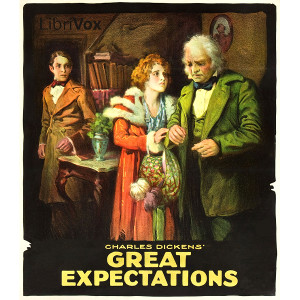
Great Expectations. Charles Dickens. 1860. Read for LibriVox by Mil Nicholson. 20 hours, 13 minutes. [Source: Librivox]

First sentence: My father's family name being Pirrip, and my Christian name Philip, my infant tongue could make of both names nothing longer or more explicit than Pip. So, I called myself Pip, and came to be called Pip.


Note: This was my fourth time to "read" the novel. The first and second times were in high school and college where I rushed through at lightning speed because I was a procrastinator. I remembered nothing. The third time I savored the novel and it finally CLICKED for me. The fourth time was as an audio book. Audio is always slightly different for me. I have a love/hate relationship with it. Sometimes listening doesn't feel like it should count as reading, then again sometimes it does. I was engaged with this audio for the most part--give or take a few interruptions. What I miss most about listening--as opposed to reading--is the inability to mark quotes. For that reason, I am referring back to my first review of the novel.


Premise/plot: Can any Charles Dickens' novel easily--painlessly--be condensed into a couple of sentences that summarizes the plot and introduces the characters in an enticing, compelling way? I say NO. But I'll try. (Because I'm stubborn like that!)

Pip is a young man being raised by his older sister and his brother-in-law--the Gargerys. Mrs. Joe isn't all that nice to him, but, Joe--a blacksmith--is a godsend. The novel opens with some excitement. Pip has been approached--in a cemetery--by a shady character, a grown man, a man readers learn to be an escaped convict. He wants a file--to rid him of his chains--and some food. He's depending on Pip for both. Does Pip have a choice in helping him? Not really. (Though Pip is used to threats since he lives with his sister.) Some time later, Pip is given another opportunity. This time an eccentric old lady, Miss Havisham, wants Pip to be a companion for her and her adopted daughter, Estella. Does Pip have a choice? Again I'll say not really. The meeting is memorable and life-changing. Both his meeting of Miss Havisham and of Estella will change him for better or worse. It is this meeting that brings about his angst--his discontent. After meeting these two, he's no longer content in his home being raised by Joe and Mrs. Joe. He's no longer content being barely literate. He's no longer content with the idea of apprenticing to Joe and following in his footsteps. He wants what seems to be impossible: to be a gentleman--to walk, talk, act, live as a gentleman. But never say never, right? One day--in the middle of his apprenticeship to Joe--his life takes another turn. A lawyer approaches him with glad tidings: he's now a man with expectations. The catch: his benefactor wants to remain anonymous. His life from that moment on will change dramatically. He's being given the opportunity to become a new man. But does new always mean better? And what about those he leaves behind? Joe and Biddy, in particular. (Biddy is a young woman who has come to live with the family after Mrs. Joe is seriously injured. Biddy is of their class but has some education.) He's thrust into a whole new world, and, his manners and morals can sometimes lag behind. Pip goes to live with the Pockets; he becomes best-best friends with Herbert Pocket. Herbert christens him "Handel." The two go through much together; their friendship is deep and sincere. Life seems to be going swell, going according to Pip's grand plan, when Pip learns an unsettling truth. He learns the identity of his benefactor. Pip is shaken, confused, and ANGSTy once again. What is he to do now?! The foundation of his hopes and dreams has collapses. His big plan of marrying Estella seems to be truly impossible now. But not just that plan but all his plans seem to be off-track now. Who can he depend on in this crisis? From this point on, in my opinion, the novel shifts from being a coming-of-age story to a dramatic MYSTERY. So much ACTION and DRAMA are packed into the last hundred or so pages.

My thoughts: I recommend reading Great Expectations at a steady pace. It is not one to rush through in one or two days. If you do, chances are you won't remember what you read, and the novel won't stir up your emotions. It is not one to read slowly hit-or-miss style. If you don't read in it every day or every other day, you might not remember much either. The greatest danger may be that you won't connect with the characters or care about them. And unless you become attached to a character or two, the book won't stay with you. This was my third time to read the novel. In high school, I waited until the day before it was due to open it. It was a NIGHTMARE reading experience. I hated every minute of it. In college, I don't think I made the same mistake twice. I don't think I procrastinated. I think my sin in that instance was holding a grudge and reading it with a closed mind and heart. Since graduating college, I've read Dickens voluntarily. And this year I decided to read Great Expectations--as if for the first time. The goal: to read it with fresh eyes, open heart, open mind, looking for what made Great Expectations GREAT.

What was great about Great Expectations? I really enjoyed the characters, the themes, and the contrasts. What kind of contrasts? Love and hate, foolishness and wisdom, bitterness and forgiveness, friends and enemies, pride and humility. For example, we have two characters that live for revenge and thrive on bitterness to a certain degree. Abel Magwitch and Miss Havisham. Miss Havisham may be the more memorable of the two. She is living in a her worst moment, perpetuating the agony of it. She was jilted at the altar, and from that moment on her life stopped. Instead of moving on with her life, instead of finding a reason to keep living, she became filled with hate, pain, anger, bitterness. Not far behind her is Abel Magwitch. He has an enemy and there is this constant need to get him, to get revenge, to come out on top, to win no matter what. And this enemy haunts him--taunts him. Abel has his good side, as does Miss Havisham. But their worldview is tainted more by hate than love, more by this need to hurt others than to love.

What unites this novel is Pip. And a large part of Pip's identity is his undying, never changing love for Estella. It's unrequited love at that. Pip loves Estella. Estella does not love Pip. Estella loves Estella. I'm not sure if Dickens was trying to enter into the debate of nature versus nurture or not. But Estella has been raised to hate, raised to hurt. Miss Havisham thinks she's protecting Estella from having her heart broken by showing her day in and day out what happens from trusting a man. But in reality, Estella doesn't have a heart to hurt. She doesn't even have a heart to love the woman who raised her. Pip has trouble seeing the real Estella. His Estella is an idealized version, perhaps a version of who she could be if she'd been raised differently, if she'd allow herself to be human, if she'd allow herself to be vulnerable.

"You must know," said Estella, condescending to me as a brilliant and beautiful woman might, "that I have no heart,—if that has anything to do with my memory." I got through some jargon to the effect that I took the liberty of doubting that. That I knew better. That there could be no such beauty without it. "Oh! I have a heart to be stabbed in or shot in, I have no doubt," said Estella, "and of course if it ceased to beat I should cease to be. But you know what I mean. I have no softness there, no—sympathy—sentiment—nonsense."
Then, Estella being gone and we two left alone, she turned to me, and said in a whisper,— "Is she beautiful, graceful, well-grown? Do you admire her?" "Everybody must who sees her, Miss Havisham." She drew an arm round my neck, and drew my head close down to hers as she sat in the chair. "Love her, love her, love her! How does she use you?" Before I could answer (if I could have answered so difficult a question at all) she repeated, "Love her, love her, love her! If she favors you, love her. If she wounds you, love her. If she tears your heart to pieces,—and as it gets older and stronger it will tear deeper,—love her, love her, love her!" Never had I seen such passionate eagerness as was joined to her utterance of these words. I could feel the muscles of the thin arm round my neck swell with the vehemence that possessed her.
"Hear me, Pip! I adopted her, to be loved. I bred her and educated her, to be loved. I developed her into what she is, that she might be loved. Love her!" She said the word often enough, and there could be no doubt that she meant to say it; but if the often repeated word had been hate instead of love—despair—revenge—dire death—it could not have sounded from her lips more like a curse. "I'll tell you," said she, in the same hurried passionate whisper, "what real love is. It is blind devotion, unquestioning self-humiliation, utter submission, trust and belief against yourself and against the whole world, giving up your whole heart and soul to the smiter—as I did!" When she came to that, and to a wild cry that followed that, I caught her round the waist. For she rose up in the chair, in her shroud of a dress, and struck at the air as if she would as soon have struck herself against the wall and fallen dead.
"Herbert," said I, laying my hand upon his knee, "I love—I adore—Estella." Instead of being transfixed, Herbert replied in an easy matter-of-course way, "Exactly. Well?" "Well, Herbert? Is that all you say? Well?" "What next, I mean?" said Herbert. "Of course I know that." "How do you know it?" said I. "How do I know it, Handel? Why, from you." "I never told you." "Told me! You have never told me when you have got your hair cut, but I have had senses to perceive it. You have always adored her, ever since I have known you. You brought your adoration and your portmanteau here together. Told me! Why, you have always told me all day long. When you told me your own story, you told me plainly that you began adoring her the first time you saw her, when you were very young indeed." "Very well, then," said I, to whom this was a new and not unwelcome light, "I have never left off adoring her. And she has come back, a most beautiful and most elegant creature. And I saw her yesterday. And if I adored her before, I now doubly adore her."
"O Estella!" I answered, as my bitter tears fell fast on her hand, do what I would to restrain them; "even if I remained in England and could hold my head up with the rest, how could I see you Drummle's wife?" "Nonsense," she returned,—"nonsense. This will pass in no time." "Never, Estella!" "You will get me out of your thoughts in a week." "Out of my thoughts! You are part of my existence, part of myself. You have been in every line I have ever read since I first came here, the rough common boy whose poor heart you wounded even then. You have been in every prospect I have ever seen since,—on the river, on the sails of the ships, on the marshes, in the clouds, in the light, in the darkness, in the wind, in the woods, in the sea, in the streets. You have been the embodiment of every graceful fancy that my mind has ever become acquainted with. The stones of which the strongest London buildings are made are not more real, or more impossible to be displaced by your hands, than your presence and influence have been to me, there and everywhere, and will be. Estella, to the last hour of my life, you cannot choose but remain part of my character, part of the little good in me, part of the evil. But, in this separation, I associate you only with the good; and I will faithfully hold you to that always, for you must have done me far more good than harm, let me feel now what sharp distress I may. O God bless you, God forgive you!"
Favorite character: I think my favorite character was definitely Joe Gargery. Joe loved Pip unconditionally. Joe loved Pip even when Pip was being a brat or a snob--which was often especially in the first half of the book. Pip did nothing to earn Joe's unconditional love and support. Pip often thought of Joe as a fool, as ridiculous, as an embarrassment. But this reader saw him differently. I didn't need a late hour epiphany to see how awesome and amazing Joe was.

Favorite relationship: I really LOVED Herbert and Handel's friendship. I love how these two supported one another, confided in one another, wanted the best for one another. Herbert knew Pip--his strengths, his weaknesses--and loved him as a brother. That brotherly love was returned. When Pip came of age, he thought of Herbert first. How can I use my wealth to help Herbert get a start in life? When Pip's world started crashing in, I loved that Pip thought first of what this meant to Herbert and only secondly to what it meant for him and his dreams. I loved how these two seemed to understand one another. In hard, dangerous times or easy-going good times, these two were there for each other.

Favorite scene: I think one of my favorite scenes is between Pip and Miss Havisham. He is an adult now; he knows at last who his benefactor was; his own dreams are gone--his illusions shattered. He's come to ask for her help: he is not asking for money for himself, but money for his friend, Herbert, in setting him up in a career. His maturity in this scene effected me.
"If I give you the money for this purpose, will you keep my secret as you have kept your own?" "Quite as faithfully." "And your mind will be more at rest?" "Much more at rest." "Are you very unhappy now?" She asked this question, still without looking at me, but in an unwonted tone of sympathy. I could not reply at the moment, for my voice failed me. She put her left arm across the head of her stick, and softly laid her forehead on it. "I am far from happy, Miss Havisham; but I have other causes of disquiet than any you know of. They are the secrets I have mentioned." After a little while, she raised her head, and looked at the fire Again.
"It is noble in you to tell me that you have other causes of unhappiness, Is it true?" "Too true." "Can I only serve you, Pip, by serving your friend? Regarding that as done, is there nothing I can do for you yourself?" "Nothing. I thank you for the question. I thank you even more for the tone of the question. But there is nothing." She presently rose from her seat, and looked about the blighted room for the means of writing. There were none there, and she took from her pocket a yellow set of ivory tablets, mounted in tarnished gold, and wrote upon them with a pencil in a case of tarnished gold that hung from her neck.
She read me what she had written; and it was direct and clear, and evidently intended to absolve me from any suspicion of profiting by the receipt of the money. I took the tablets from her hand, and it trembled again, and it trembled more as she took off the chain to which the pencil was attached, and put it in mine. All this she did without looking at me. "My name is on the first leaf. If you can ever write under my name, "I forgive her," though ever so long after my broken heart is dust pray do it!" "O Miss Havisham," said I, "I can do it now. There have been sore mistakes; and my life has been a blind and thankless one; and I want forgiveness and direction far too much, to be bitter with you."


© 2018 Becky Laney of Becky's Book Reviews

Saturday, September 01, 2018

Me? Listen to Audio?! #33

The Pilgrim's Progress. John Bunyan. 1678/1899. Read by MaryAnn for Librivox. 13 hours. 


The version of The Pilgrim's Progress that I listened to had three parts. The first part was a Life of Bunyan. (I believe the reader mentioned it was condensed?) The second and third parts were The Pilgrim's Progress. Though some might think of The Pilgrim's Progress being all about Christian's pilgrim journey, the book almost always, always includes his wife's journey as well. Her name is Christiana.

I have read the book quite a few times in my life--most recently in 2017. One thing that is hard to ignore when you're listening to it are all the Scripture references. When you're reading the text and you see all the cross references to Scripture, it is super-easy to ignore. Like a foot note notation is easy to ignore. When you're listening to it, however, it makes you stop and pause. Bunyan's book is packed with theology. Impossible to ignore theology. His allegory may be a "dream" but it's a dream of someone who inhaled and exhaled Scripture like it was oxygen. This is good to keep in mind for several reasons. One being that any person can claim to have a vision and have that vision published. But how often do modern day visionaries have Scripture proofs like Bunyan?!?!

I do like Christian's journey better. I can't help it.


© 2018 Becky Laney of Becky's Book Reviews

Saturday, July 28, 2018

Me? Listen to Audio?! #29

This week I listened to a BBC Radio Drama adaptation of Anthony Trollope's Dr Thorne.

Doctor Thorne. Anthony Trollope. 1858. Adapted by Michael Symmons Roberts. Produced by Charlotte Riches. Directed by Susan Roberts. Three one hour episodes. First broadcast 2014?

Episode one, two, three. 

Doctor Thorne is one of my favorites in Anthony Trollope's Barchester series. Doctor Thorne is raising his niece, Mary, and she's being pursued by Frank Gresham. But his parents--in particular his mother--disapprove. Mrs. Gresham feels that if her son were to marry Mary Thorne then the world would end--might as well end. She makes it her number one priority to keep these two apart. It will take a lot of work on her part--feelings will be hurt. But should a mother be that interfering?! Frank doesn't think so. He'd rather be with Mary than with any other woman. And he's willing to fight to keep her in his life...

I would definitely recommend this!

© 2018 Becky Laney of Becky's Book Reviews

Saturday, July 21, 2018

Me? Listen to Audio?! #28

Uglies. Scott Westerfeld. Read by Carine Montbertrand. 2006. Recorded Books. 12 hrs and 22 minutes.

I'm stubborn. I am. If I wasn't so stubborn I wouldn't stick with good books with bad narrators.

I have very good memories--happy, happy--memories of first reading Scott Westerfeld's Uglies. When Rose Brock tells you that you should read a book, you should read it. It will be fabulous.

My memories of the audio book won't be so happy. I didn't mind her Tally voice. But almost every other single voice she does is incredibly annoying, obnoxious, irritating. Her Shay voice is the absolute worst character voice I've ever heard for any audio book.

I believe the book has been done with other narrators. That would be a GREAT thing. Every book deserves a good audio book adaptation.

My original original review:

Set three to four hundred years in the future, Uglies, a dystopia, focuses on a global community of pretty people. Tally Youngblood introduces readers to this picture-perfect community where appearances are not a matter of one's genes but a matter of extensive plastic surgeries planned by the Community of Morphological Standards. Tally and Shay are best friends awaiting their sixteenth birthdays and their surgeries after which they'll leave Uglyville behind and join the New Pretties. But Shay doubts that the "Pretty Committee" is as concerned with equality and justice as it appears, suspecting that ulterior motives may lay behind the surface. Days before her sixteenth birthday, Shay runs away leaving a cryptic message for her friend to find the way to Smoke, the rebel community of "ugly" outsiders. When the authorities discover Shay's disappearance, Tally is asked to make the hardest decision of her life: betray Shay and the rebel community to the authorities or face living life ugly.

Uglies is a fast-paced novel taking a typical YA topic--self esteem, conformity, and the perception of beauty--and treating it in a new and ultimately satisfying way by speculating about where current values of beauty and perfection might lead us as a society if taken to the extreme. By setting Uglies in the future instead of a contemporary high school, Westerfeld is able to provide reflection and commentary on a serious topic in a new and original way.

© 2018 Becky Laney of Becky's Book Reviews

Saturday, July 14, 2018

Me? Listen to Audio?! #27

Celebrated Crimes, Volume III: Mary Stuart. Alexandre Dumas. Translated by George Burnham Ives. Before 1870. Read by John Van Stan for Librivox. 6 hours and 25 minutes.

This week I listened to volume three of Alexandre Dumas' Celebrated Crimes. (For the record, I have not read or listened to volumes one or two). The subject of the volume is Mary Stuart, Queen of Scots.

First sentence: Some royal names are predestined to misfortune: in France, there is the name "Henry". Henry I was poisoned, Henry II was killed in a tournament, Henry III and Henry IV were assassinated. As to Henry V, for whom the past is so fatal already, God alone knows what the future has in store for him.

In Scotland, the unlucky name is "Stuart". Robert I, founder of the race, died at twenty-eight of a lingering illness. Robert II, the most fortunate of the family, was obliged to pass a part of his life, not merely in retirement, but also in the dark, on account of inflammation of the eyes, which made them blood-red. Robert III succumbed to grief, the death of one son and the captivity of other. James I was stabbed by Graham in the abbey of the Black Monks of Perth. James II was killed at the siege of Roxburgh, by a splinter from a burst cannon. James III was assassinated by an unknown hand in a mill, where he had taken refuge during the battle of Sauchie. James IV, wounded by two arrows and a blow from a halberd, fell amidst his nobles on the battlefield of Flodden. James V died of grief at the loss of his two sons, and of remorse for the execution of Hamilton. James VI, destined to unite on his head the two crowns of Scotland and England, son of a father who had been assassinated, led a melancholy and timorous existence, between the scaffold of his mother, Mary Stuart, and that of his son, Charles I. Charles II spent a portion of his life in exile. James II died in it. The Chevalier Saint-George, after having been proclaimed King of Scotland as James VIII, and of England and Ireland as James III, was forced to flee, without having been able to give his arms even the lustre of a defeat. His son, Charles Edward, after the skirmish at Derby and the battle of Culloden, hunted from mountain to mountain, pursued from rock to rock, swimming from shore to shore, picked up half naked by a French vessel, betook himself to Florence to die there, without the European courts having ever consented to recognise him as a sovereign. Finally, his brother, Henry Benedict, the last heir of the Stuarts, having lived on a pension of three thousand pounds sterling, granted him by George III, died completely forgotten, bequeathing to the House of Hanover all the crown jewels which James II had carried off when he passed over to the Continent in 1688—a tardy but complete recognition of the legitimacy of the family which had succeeded his. In the midst of this unlucky race, Mary Stuart was the favourite of misfortune.
The introduction reminded me of the lovely Horrible Histories songs about the Stuarts, "The Blue Blooded Blues."

I found this a difficult one to listen to. I like history. I like biography. I like to think of myself of having a good attention span when it comes to both. It may not be Dumas' fault. It may be the reader of the audio book, John Van Stan, or this reader.

I may still be willing to read the book at some point.

© 2018 Becky Laney of Becky's Book Reviews

Saturday, July 07, 2018

Me? Listen to Audio?! #26

The Three Musketeers (Version 2) Alexandre Dumas. Translated by William Robson. Read by Mark F Smith for Librovox. 1844. 26 hours and 40 minutes.

Is The Three Musketeers the longest audio book I've tackled to date? I think it might just be. I didn't find the length intimidating. Quite the contrary actually. It was comforting to know what I would be listening to as I work each day. It was comforting to know that I wouldn't have to make a decision--at least not about that.

Athos, Portos, Aramis, and D'Artagnan star in this action-packed adventure story set in France in the 1620s. Every other chapter or so there seems to be a crisis for them to face--a challenge to face together, of course.

I do not think any of the movie adaptations I've seen cover the whole book, the whole story, all the characters.

I was only planning on listening to this one for the Paris in July experience. But listening made me want to read the book. I think I'll enjoy reading it even more than listening to it.

© 2018 Becky Laney of Becky's Book Reviews

Saturday, June 30, 2018

Me? Listen to Audio #25

Cyrano de Bergerac. Edmond Rostand. 1897. Translated by Anthony Burgess. Adapted for BBC 3 Radio Drama. Directed by David Timson. Starring Kenneth Branaugh as Cyrano, Jodhi May as Roxane, Tom Hiddleston as Christian. Two hours and fifteen minutes.

I love, love, love, LOVE this play. I do. The radio dramatization was GREAT. I would even dare to say it's one of the BEST dramas I've listened to. That doesn't surprise me, and it shouldn't surprise you either. How could it fail to be great when it stars Kenneth Branaugh and Tom Hiddleston?!?!?!

The story is simple. Cyrano de Bergerac is in love with his cousin, Roxane. The problem? He lacks the courage to tell her so because he feels his nose--his hideous, ugliness--will prevent her from ever loving him in return. Also standing in his way is the fact that Roxane declares herself head over heels in love with oh-so-handsome Christian de Neuvillette. How does Christian feel about Roxane? He loves her of course. Why? Because she's beautiful. (At least Cyrano knows Roxane, and, his love isn't based on her beauty alone.) Roxane asks Cyrano to watch over Christian and be his friend. (Christian has just joined the same regiment.) Cyrano tells Christian that Roxane does love him, but, instead of that being the end of it...it is just the start. For Roxane is determined that the man she loves will be brilliant and exceptionally well-spoken. He must win her heart through his words. The problem? Christian's idea of wooing is to say "I love you" and go in for a kiss. NOT WHAT ROXANE WANTS AT ALL. The solution is for Cyrano to give Christian the words to speak to win her heart for once and all. But is that a real solution?! Is a happily ever after possible in this love triangle?!

Favorite quotes:
Cyrano: I have a different idea of elegance. I don't dress like a fop, it's true, but my moral grooming is impeccable. I never appear in public with a soiled conscience, a tarnished honor, threadbare scruples or an insult that I haven't washed away. I'm always immaculately clean, adorned with independence and frankness. I may not cut a stylish figure, but I hold my soul erect. I wear my deeds as ribbons, my wit is sharper than the finest mustache, and when I walk among men I make truths ring like spurs. (40)
Cyrano: Look at me and tell me what hope this protuberance might leave me! I have no illusions. Sometimes, in the blue shadows of evening, I give way to tender feelings. I go into a garden, smelling the fragrance of spring with my poor monstrous nose, and watch a man and a woman strolling together in the moonlight. I think how much I, too, would like to be walking arm in arm with a woman, under the moon. I let myself be carried away, I forget myself--and then I suddenly see the shadow of my profile on the garden wall. (50)
Ragueneau: How can you treat poetry with such disrespect?
Lise: I'll treat poetry however I please!
Ragueneau: I shudder to think of what you might do with prose! (62)
Cyrano: I'll now put down on paper the love letter that I've already written within myself a hundred times. I have only to look into my soul and copy the words inscribed in it. (66)
Cyrano: My poor girl, you're so fond of fine words and gracious wit--what if he should prove to be an uncultured savage?
Roxane: Impossible. He has the hair of one of d'Urfe's heroes!
Cyrano: His speech may be as crude as his hair is elegant.
Roxane: No, there's delicacy in everything he says. I feel it.
Cyrano: Yes, all words are delicate when they come from lips adorned with a shapely mustache...But what if he's a fool?
Roxane: [stamping her foot] Then I'll die! There, are you satisfied? (78)
Cyrano: Shall we complete each other? We'll walk together: you in the light, I in the shadow. I'll make you eloquent, you'll make me handsome. (102)
Roxane: Your words are hesitant tonight. Why?
Cyrano (pretending to be Christian): Because of the darkness, they must grope their way to your ears.
Roxane: My words have no such difficulty.
Cyrano: They go straight to my heart, a goal too large to miss, whereas your ears are small. And your words travel swiftly because they fall, while mine must slowly climb.
Roxane: But they seem to be climbing better now.
Cyrano: They've finally become accustomed to that exercise.
Roxane: It's true that I'm speaking from high above you.
Cyrano: Yes, and it would kill me if you let a harsh word fall on my heart from that height. (126)
Cyrano: After all, what is a kiss? A vow made at closer range, a more precise promise, a confession that contains its own proof, a seal placed on a pact that has already been signed; it's a secret told to the mouth rather than to the ear, a fleeting moment filled with the hush of eternity, a communion that has the fragrance of a flower, a way of living by the beat of another heart, and tasting another soul on one's lips! (133)
Roxane: I've adored you since the evening when under my window, you began to reveal your soul to me in a voice I'd never heard you use before, and when I read your letters it was like hearing that same voice. I could feel its tenderness enveloping me! Finally I had to come to you, no matter what the danger! Penelope wouldn't have calmly stayed home with her weaving if Ulysses had written to her as you've written to me! She would have become as ardent as Helen of Troy, thrown her work aside, and gone off to join him! (184)
Roxane: Ah, how many things have died, and how many have now been born! Why were you silent for fourteen years, knowing that he hadn't written that letter, and that the tears on it were yours?
Cyrano: The blood was his. (218)


© 2018 Becky Laney of Becky's Book Reviews

Saturday, June 23, 2018

Me? Listen to Audio? #24

This week I listened to Anne's House of Dreams. I started a few other things on BBC Radio 4, but nothing hooked me. This happens with books too, but I think it's more frustrating with audio books. Usually it's me--a timing thing.

Anne's House of Dreams. L.M. Montgomery. 1917. Read by Karen Savage for Librivox. 7 hours and twenty-three minutes.

I love, love, love this novel. It is in the Anne series, of course. It begins with the wedding of Anne and Gilbert and it spans the first few years of their marriage. They are no longer living in Avonlea but have settled near Four Winds Harbor and Glen St. Mary.
 
Anne's House of Dreams introduces many new characters--some of my favorites I admit--Captain Jim, Miss Cornelia, Leslie Moore, Owen Ford. Marshall Elliot. Susan Baker. Who would ever want to forget their stories?

Favorite quotes:

“Stoutness and slimness seem to be matters of predestination,” said Anne.
Jane was not brilliant, and had probably never made a remark worth listening to in her life; but she never said anything that would hurt anyone’s feelings — which may be a negative talent but is likewise a rare and enviable one.
“I’ve heard you criticise ministers pretty sharply yourself,” teased Anne. “Yes, but I do it reverently,” protested Mrs. Lynde. “You never heard me NICKNAME a minister.” Anne smothered a smile.
Their happiness was in each other’s keeping and both were unafraid. 
“Miss Cornelia Bryant. She’ll likely be over to see you soon, seeing you’re Presbyterians. If you were Methodists she wouldn’t come at all. Cornelia has a holy horror of Methodists.”
“I know we are going to be friends,” said Anne, with the smile that only they of the household of faith ever saw. “Yes, we are, dearie. Thank goodness, we can choose our friends. We have to take our relatives as they are, and be thankful if there are no penitentiary birds among them. Not that I’ve many — none nearer than second cousins. I’m a kind of lonely soul, Mrs. Blythe.” There was a wistful note in Miss Cornelia’s voice.
“Were you able to eat enough pie to please her?” “I wasn’t. Gilbert won her heart by eating — I won’t tell you how much. She said she never knew a man who didn’t like pie better than his Bible. Do you know, I love Miss Cornelia.”

“Our library isn’t very extensive,” said Anne, “but every book in it is a FRIEND. We’ve picked our books up through the years, here and there, never buying one until we had first read it and knew that it belonged to the race of Joseph.”
A woman cannot ever be sure of not being married till she is buried, Mrs. Doctor, dear, and meanwhile I will make a batch of cherry pies.
“I wonder why people so commonly suppose that if two individuals are both writers they must therefore be hugely congenial,” said Anne, rather scornfully. “Nobody would expect two blacksmiths to be violently attracted toward each other merely because they were both blacksmiths.”
The p’int of good writing is to know when to stop.
There’s only the one safe compass and we’ve got to set our course by that — what it’s right to do.
Logic is a sort of hard, merciless thing, I reckon.
“Since you are determined to be married, Miss Cornelia,” said Gilbert solemnly, “I shall give you the excellent rules for the management of a husband which my grandmother gave my mother when she married my father.” “Well, I reckon I can manage Marshall Elliott,” said Miss Cornelia placidly. “But let us hear your rules.” “The first one is, catch him.” “He’s caught. Go on.” “The second one is, feed him well.” “With enough pie. What next?” “The third and fourth are — keep your eye on him.” “I believe you,” said Miss Cornelia emphatically.
Cats is cats, and take my word for it, they will never be anything else.


© 2018 Becky Laney of Becky's Book Reviews

Saturday, June 16, 2018

Me? Listen to Audio #23

I listened to three audio books this week.

Winnie the Pooh. A.A. Milne. 1926. Read by Stephen Fry, Judi Dench, Jane Horrocks, Geoffrey Palmer, Finty Williams, Robert Daws, Michael Williams, and Steven Webb. 2009. Listening Library. 2 hours and 5 minutes. [Source: Library]

Here is Edward Bear, coming downstairs now, bump, bump, bump, on the back of his head, behind Christopher Robin. It is, as far as he knows, the only way of coming downstairs, but sometimes he feels that there really is another way, if only he could stop bumping for a moment and think of it. And then he feels that perhaps there isn't. Anyhow, here he is at the bottom, and ready to be introduced to you. Winnie-the-Pooh.
When I first heard his name, I said, just as you are going to say, "But I thought he was a boy?"
"So did I," said Christopher Robin.
"Then you can't call him Winnie?"
"I don't."
"But you said--"
"He's Winnie-ther-Pooh. Don't you know what 'ther' means?"
"Ah, yes, now I do," I said quickly; and I hope you do too, because it is all the explanation you are going to get.
(1-2)

I love, love, love, LOVE the book. With as much passion as I love the book, I hate this audio book adaptation of it. Each character is read by a different actor. The problem is that while I enjoyed some of the readers in their roles, I didn't enjoy everyone. Specifically, the reader reading for Piglet was like nails on a chalkboard with every single syllable. It was pure TORTURE to listen to Piglet. What makes this offense worse in my opinion is that Piglet is my favorite character. That's not the audio books only offense--just its biggest. The audio book also fails in that they don't get the songs right. They just don't. There is ONE way to do the songs--and that's the Jack Gilford way.

Fahrenheit 451. Ray Bradbury. 1953. Read by Scott Brick. 2004. Six hours. [Source: Library]

It was a pleasure to burn.

I like Scott Brick as a narrator. I do. It wasn't that long ago I listened to Ender's Game which also was read--at least in part--by Scott Brick. As for the book itself, I LOVE, LOVE, LOVE Ray Bradbury's book. It is a book that I love to reread every year or two.

"People don't talk about anything."
"Oh, they must!"
"No, not anything. They name a lot of cars or clothes or swimming pools mostly and say how swell! But they all say the same things and nobody says anything different from anyone else..." (31)
"We need not to be let alone. We need to be really bothered once in a while. How long is it since you were really bothered? About something important, about something real?" (52)
Who knows who might be the target of the well-read man? Me? I won't stomach them for a minute. (58)
Ask yourself, What do we want in this country, above all? People want to be happy, isn't that right right? Haven't you heart it all your life? I want to be happy, people say. Well, aren't they? Don't we keep them moving, don't we give them fun? That's all we live for, isn't it? For pleasure, for titillation? And you must admit our culture provides plenty of these. (59)
Did you listen to him? He knows all the answers. He's right. Happiness is important. Fun is everything. (65)
"We cannot tell the precise moment when friendship is formed. As in filling a vessel drop by drop, there is at last a drop which makes it run over; so in a series of kindnesses there is at last one which makes the heart run over." (71)
Every hour so many damn things in the sky! How in hell did those bombers get up there every single second of our lives! Why doesn't someone want to talk about it! We've started and won two atomic wars since 1990! Is it because we're having so much fun at home we've forgotten the world? Is it because we're so rich and the rest of the world's so poor and we just don't care if they are? Is that why we're hated so much? Do you know why? I don't, that's sure! Maybe the books can get us half out of the cave. God, Millie, don't you see? An hour a day, two hours, with these books, and maybe. (73-4)
It’s been a long time. I’m not a religious man. But it’s been a long time.’ Faber turned the pages, stopping here and there to read. ‘It’s as good as I remember. Lord, how they’ve changed it in our parlors these days. Christ is one of the family now. I often wonder if God recognizes His own son the way we’ve dressed him up, or is it dressed him down? He’s a regular peppermint stick now, all sugar-crystal and saccharine when he isn’t making veiled references to certain commercial products that every worshiper absolutely needs.’ (81)
"You're a hopeless romantic," said Faber. "It would be funny if it were not serious. It's not books you need, it's some of the things that once were in books. The same things could be in the 'parlor families' today. The same infinite detail and awareness could be projected through the radios and televisors, but are not. (82)
 Do you know why books such as this are so important? Because they have quality. And what does the word quality mean? To me it means texture. This book has pores. It has features. This book can go under the microscope. You'd find life under the glass, streaming past in infinite profusion. The more pores, the more truthfully recorded details of life per square inch you can get on a sheet of paper, the more 'literary' you are. That's my definition, anyway. Telling detail. Fresh detail. The good writers touch life often. the mediocre ones run a quick hand over her. The bad ones rape her and leave her for the flies. So now do you see why books are hated and feared? They show the pores in the face of life. The comfortable people want only wax moon faces, poreless, hairless, expressionless. we are living in a time when flowers are trying to live on flowers, instead of growing on good rain and black loam. (83)
Anne of the Island. L.M. Montgomery. 1915. Read by Karen Savage. Librovox. Six hours, forty-five minutes.

"Harvest is ended and summer is gone," quoted Anne Shirley, gazing across the shorn fields dreamily.

I continued my journey with Anne this week. It was DELIGHTFUL. I adore Anne; we are kindred spirits. Here are some of my favorite quotes:

Great one-liners...

It is never pleasant to have our old shrines desecrated, even when we have outgrown them.
We mustn’t let next week rob us of this week’s joy.
But FEELING is so different from KNOWING. My common sense tells me all you can say, but there are times when common sense has no power over me. Common nonsense takes possession of my soul.
Exaggeration is merely a flight of poetic fancy. 
Facts are stubborn things, but as some one has wisely said, not half so stubborn as fallacies. 
“All life lessons are not learned at college,” she thought. “Life teaches them everywhere.”
We are never half so interesting when we have learned that language is given us to enable us to conceal our thoughts.
“People who send word they are coming on Saturday shouldn’t come on Friday,” said Aunt Jamesina.
“Words aren’t made — they grow,” said Anne.
“Will you please define what gumption is, Aunt Jimsie?” asked Phil. “No, I won’t, young woman. Any one who has gumption knows what it is, and any one who hasn’t can never know what it is. So there is no need of defining it.”
Fun with Anne:
Talk of being lonesome! It’s I who should groan. YOU’LL be here with any number of your old friends — AND Fred! While I shall be alone among strangers, not knowing a soul!” “EXCEPT Gilbert — AND Charlie Sloane,” said Diana, imitating Anne’s italics and slyness. “Charlie Sloane will be a great comfort, of course,” agreed Anne sarcastically; whereupon both those irresponsible damsels laughed. Diana knew exactly what Anne thought of Charlie Sloane; but, despite sundry confidential talks, she did not know just what Anne thought of Gilbert Blythe.
“Miss Ada’s cushions are really getting on my nerves,” said Anne. “She finished two new ones last week, stuffed and embroidered within an inch of their lives. There being absolutely no other cushionless place to put them she stood them up against the wall on the stair landing. They topple over half the time and if we come up or down the stairs in the dark we fall over them. Last Sunday, when Dr. Davis prayed for all those exposed to the perils of the sea, I added in thought ‘and for all those who live in houses where cushions are loved not wisely but too well!’ There! we’re ready, and I see the boys coming through Old St. John’s. Do you cast in your lot with us, Phil?”
“You LOVE it,” said Miss Patty with emphasis. “Does that mean that you really LOVE it? Or that you merely like the looks of it? The girls nowadays indulge in such exaggerated statements that one never can tell what they DO mean. It wasn’t so in my young days. THEN a girl did not say she LOVED turnips, in just the same tone as she might have said she loved her mother or her Savior.” Anne’s conscience bore her up. “I really do love it,” she said gently. “I’ve loved it ever since I saw it last fall. My two college chums and I want to keep house next year instead of boarding, so we are looking for a little place to rent; and when I saw that this house was to let I was so happy.”
“No, I shall never try to write a story again,” declared Anne, with the hopeless finality of nineteen when a door is shut in its face. “I wouldn’t give up altogether,” said Mr. Harrison reflectively. “I’d write a story once in a while, but I wouldn’t pester editors with it. I’d write of people and places like I knew, and I’d make my characters talk everyday English; and I’d let the sun rise and set in the usual quiet way without much fuss over the fact. If I had to have villains at all, I’d give them a chance, Anne — I’d give them a chance. There are some terrible bad men in the world, I suppose, but you’d have to go a long piece to find them — though Mrs. Lynde believes we’re all bad. But most of us have got a little decency somewhere in us. Keep on writing, Anne.”
Trotting along behind her, close to her heels, was quite the most forlorn specimen of the cat tribe she had ever beheld. The animal was well past kitten-hood, lank, thin, disreputable looking. Pieces of both ears were lacking, one eye was temporarily out of repair, and one jowl ludicrously swollen. As for color, if a once black cat had been well and thoroughly singed the result would have resembled the hue of this waif’s thin, draggled, unsightly fur. Anne “shooed,” but the cat would not “shoo.” As long as she stood he sat back on his haunches and gazed at her reproachfully out of his one good eye; when she resumed her walk he followed. Anne resigned herself to his company until she reached the gate of Patty’s Place, which she coldly shut in his face, fondly supposing she had seen the last of him. But when, fifteen minutes later, Phil opened the door, there sat the rusty-brown cat on the step. More, he promptly darted in and sprang upon Anne’s lap with a half-pleading, half-triumphant “miaow.” “Anne,” said Stella severely, “do you own that animal?” “No, I do NOT,” protested disgusted Anne. “The creature followed me home from somewhere. I couldn’t get rid of him. Ugh, get down. I like decent cats reasonably well; but I don’t like beasties of your complexion.” Pussy, however, refused to get down. He coolly curled up in Anne’s lap and began to purr. “He has evidently adopted you,” laughed Priscilla. “I won’t BE adopted,” said Anne stubbornly.
“It seems funny and horrible to think of Diana’s being married,” sighed Anne, hugging her knees and looking through the gap in the Haunted Wood to the light that was shining in Diana’s room. “I don’t see what’s horrible about it, when she’s doing so well,” said Mrs. Lynde emphatically. “Fred Wright has a fine farm and he is a model young man.” “He certainly isn’t the wild, dashing, wicked, young man Diana once wanted to marry,” smiled Anne. “Fred is extremely good.” “That’s just what he ought to be. Would you want Diana to marry a wicked man? Or marry one yourself?” “Oh, no. I wouldn’t want to marry anybody who was wicked, but I think I’d like it if he COULD be wicked and WOULDN’T.

Fun with Davy
“When I’m grown up I’m not going to do one single thing I don’t want to do, Anne.” “All your life, Davy, you’ll find yourself doing things you don’t want to do.” 
“But if you DID want to catch a man how would you go about it? I want to know,” persisted Davy, for whom the subject evidently possessed a certain fascination. “You’d better ask Mrs. Boulter,” said Anne thoughtlessly. “I think it’s likely she knows more about the process than I do.” “I will, the next time I see her,” said Davy gravely. “Davy! If you do!” cried Anne, realizing her mistake. “But you just told me to,” protested Davy aggrieved. 
Dear anne, please write and tell marilla not to tie me to the rale of the bridge when I go fishing the boys make fun of me when she does. Its awful lonesome here without you but grate fun in school. Jane andrews is crosser than you. I scared mrs. lynde with a jacky lantern last nite. She was offel mad and she was mad cause I chased her old rooster round the yard till he fell down ded. I didn’t mean to make him fall down ded. What made him die, anne, I want to know. mrs. lynde threw him into the pig pen she mite of sold him to mr. blair. mr. blair is giving 50 sense apeace for good ded roosters now. I herd mrs. lynde asking the minister to pray for her. What did she do that was so bad, anne, I want to know. 
“I — I want to say a bad word, Anne,” blurted out Davy, with a desperate effort. “I heard Mr. Harrison’s hired boy say it one day last week, and ever since I’ve been wanting to say it ALL the time — even when I’m saying my prayers.” “Say it then, Davy.” Davy lifted his flushed face in amazement. “But, Anne, it’s an AWFUL bad word.” “SAY IT!” Davy gave her another incredulous look, then in a low voice he said the dreadful word. The next minute his face was burrowing against her. “Oh, Anne, I’ll never say it again — never. I’ll never WANT to say it again. I knew it was bad, but I didn’t s’pose it was so — so — I didn’t s’pose it was like THAT.” “No, I don’t think you’ll ever want to say it again, Davy — or think it, either. And I wouldn’t go about much with Mr. Harrison’s hired boy if I were you.” “He can make bully war-whoops,” said Davy a little regretfully. “But you don’t want your mind filled with bad words, do you, Davy — words that will poison it and drive out all that is good and manly?” “No,” said Davy, owl-eyed with introspection. “Then don’t go with those people who use them. And now do you feel as if you could say your prayers, Davy?”
“Our new teacher is a man. He does things for jokes. Last week he made all us third-class boys write a composishun on what kind of a wife we’d like to have and the girls on what kind of a husband. He laughed fit to kill when he read them. This was mine. I thought youd like to see it. “‘The kind of a wife I’d like to Have. “‘She must have good manners and get my meals on time and do what I tell her and always be very polite to me. She must be fifteen yers old. She must be good to the poor and keep her house tidy and be good tempered and go to church regularly. She must be very handsome and have curly hair. If I get a wife that is just what I like Ill be an awful good husband to her. I think a woman ought to be awful good to her husband. Some poor women haven’t any husbands. “‘THE END.’”
Mrs. Lynde was awful mad the other day because I asked her if she was alive in Noah’s time. I dident mean to hurt her feelings. I just wanted to know. Was she, Anne?
The new minister was here to tea last night. He took three pieces of pie. If I did that Mrs. Lynde would call me piggy. And he et fast and took big bites and Marilla is always telling me not to do that. Why can ministers do what boys can’t? I want to know.
The mention of age evidently gave a new turn to Davy’s thoughts for after a few moments of reflection, he whispered solemnly: “Anne, I’m going to be married.” “When?” asked Anne with equal solemnity. “Oh, not until I’m grown-up, of course.” “Well, that’s a relief, Davy. Who is the lady?” “Stella Fletcher; she’s in my class at school. And say, Anne, she’s the prettiest girl you ever saw. If I die before I grow up you’ll keep an eye on her, won’t you?” “Davy Keith, do stop talking such nonsense,” said Marilla severely. 

Fun with Mrs. Lynde:
Mrs. Lynde’s letter was full of church news. Having broken up housekeeping, Mrs. Lynde had more time than ever to devote to church affairs and had flung herself into them heart and soul. She was at present much worked up over the poor “supplies” they were having in the vacant Avonlea pulpit. “I don’t believe any but fools enter the ministry nowadays,” she wrote bitterly. “Such candidates as they have sent us, and such stuff as they preach! Half of it ain’t true, and, what’s worse, it ain’t sound doctrine. The one we have now is the worst of the lot. He mostly takes a text and preaches about something else. And he says he doesn’t believe all the heathen will be eternally lost. The idea! If they won’t all the money we’ve been giving to Foreign Missions will be clean wasted, that’s what! Last Sunday night he announced that next Sunday he’d preach on the axe-head that swam. I think he’d better confine himself to the Bible and leave sensational subjects alone. Things have come to a pretty pass if a minister can’t find enough in Holy Writ to preach about, that’s what.
“Poor Atossa laid in her coffin peaceful enough,” said Mrs. Lynde solemnly. “I never saw her look so pleasant before, that’s what. Well, there weren’t many tears shed over her, poor old soul. The Elisha Wrights are thankful to be rid of her, and I can’t say I blame them a mite.” “It seems to me a most dreadful thing to go out of the world and not leave one person behind you who is sorry you are gone,” said Anne, shuddering. “Nobody except her parents ever loved poor Atossa, that’s certain, not even her husband,” averred Mrs. Lynde. “She was his fourth wife. He’d sort of got into the habit of marrying. He only lived a few years after he married her. The doctor said he died of dyspepsia, but I shall always maintain that he died of Atossa’s tongue, that’s what. Poor soul, she always knew everything about her neighbors, but she never was very well acquainted with herself. Well, she’s gone anyhow; and I suppose the next excitement will be Diana’s wedding.” 
 Anne and Gilbert:
“I hope no great sorrow ever will come to you, Anne,” said Gilbert, who could not connect the idea of sorrow with the vivid, joyous creature beside him, unwitting that those who can soar to the highest heights can also plunge to the deepest depths, and that the natures which enjoy most keenly are those which also suffer most sharply.
“But there must — sometime,” mused Anne. “Life seems like a cup of glory held to my lips just now. But there must be some bitterness in it — there is in every cup. I shall taste mine some day. Well, I hope I shall be strong and brave to meet it. And I hope it won’t be through my own fault that it will come. Do you remember what Dr. Davis said last Sunday evening — that the sorrows God sent us brought comfort and strength with them, while the sorrows we brought on ourselves, through folly or wickedness, were by far the hardest to bear? But we mustn’t talk of sorrow on an afternoon like this.
As a companion, Anne honestly acknowledged nobody could be so satisfactory as Gilbert; she was very glad, so she told herself, that he had evidently dropped all nonsensical ideas — though she spent considerable time secretly wondering why.
But Gilbert’s visits were not what they once were. Anne almost dreaded them. It was very disconcerting to look up in the midst of a sudden silence and find Gilbert’s hazel eyes fixed upon her with a quite unmistakable expression in their grave depths; and it was still more disconcerting to find herself blushing hotly and uncomfortably under his gaze, just as if — just as if — well, it was very embarrassing. Anne wished herself back at Patty’s Place, where there was always somebody else about to take the edge off a delicate situation. At Green Gables Marilla went promptly to Mrs. Lynde’s domain when Gilbert came and insisted on taking the twins with her. The significance of this was unmistakable and Anne was in a helpless fury over it.
“There is something I want to say to you.” “Oh, don’t say it,” cried Anne, pleadingly. “Don’t — PLEASE, Gilbert.” “I must. Things can’t go on like this any longer. Anne, I love you. You know I do. I — I can’t tell you how much. Will you promise me that some day you’ll be my wife?” “I — I can’t,” said Anne miserably. “Oh, Gilbert — you — you’ve spoiled everything.” “Don’t you care for me at all?” Gilbert asked after a very dreadful pause, during which Anne had not dared to look up. “Not — not in that way. I do care a great deal for you as a friend. But I don’t love you, Gilbert.” “But can’t you give me some hope that you will — yet?” “No, I can’t,” exclaimed Anne desperately. “I never, never can love you — in that way — Gilbert. You must never speak of this to me again.” There was another pause — so long and so dreadful that Anne was driven at last to look up. Gilbert’s face was white to the lips. And his eyes — but Anne shuddered and looked away. There was nothing romantic about this. Must proposals be either grotesque or — horrible? Could she ever forget Gilbert’s face? “Is there anybody else?” he asked at last in a low voice. “No — no,” said Anne eagerly. “I don’t care for any one like THAT — and I LIKE you better than anybody else in the world, Gilbert. And we must — we must go on being friends, Gilbert.”
“Do you call it idiotic to refuse to marry a man I don’t love?” said Anne coldly, goaded to reply. “You don’t know love when you see it. You’ve tricked something out with your imagination that you think love, and you expect the real thing to look like that. There, that’s the first sensible thing I’ve ever said in my life. I wonder how I managed it?” “Phil,” pleaded Anne, “please go away and leave me alone for a little while. My world has tumbled into pieces. I want to reconstruct it.” “Without any Gilbert in it?” said Phil, going. A world without any Gilbert in it! Anne repeated the words drearily. Would it not be a very lonely, forlorn place? Well, it was all Gilbert’s fault. He had spoiled their beautiful comradeship. She must just learn to live without it.
Gilbert Blythe and Christine Stuart were nothing to her — absolutely nothing. But Anne had given up trying to analyze the reason of her blushes. As for Roy, of course she was in love with him — madly so. How could she help it? Was he not her ideal? Who could resist those glorious dark eyes, and that pleading voice? Were not half the Redmond girls wildly envious? And what a charming sonnet he had sent her, with a box of violets, on her birthday! Anne knew every word of it by heart. It was very good stuff of its kind, too. Not exactly up to the level of Keats or Shakespeare — even Anne was not so deeply in love as to think that.
Yet just before she left Patty’s Place for Convocation she flung Roy’s violets aside and put Gilbert’s lilies-of-the-valley in their place. She could not have told why she did it. Somehow, old Avonlea days and dreams and friendships seemed very close to her in this attainment of her long-cherished ambitions. She and Gilbert had once picturedout merrily the day on which they should be capped and gowned graduates in Arts. The wonderful day had come and Roy’s violets had no place in it. Only her old friend’s flowers seemed to belong to this fruition of old-blossoming hopes which he had once shared.
The Arts graduates gave a graduation dance that night. When Anne dressed for it she tossed aside the pearl beads she usually wore and took from her trunk the small box that had come to Green Gables on Christmas day. In it was a thread-like gold chain with a tiny pink enamel heart as a pendant. On the accompanying card was written, “With all good wishes from your old chum, Gilbert.” Anne, laughing over the memory the enamel heart conjured up the fatal day when Gilbert had called her “Carrots” and vainly tried to make his peace with a pink candy heart, had written him a nice little note of thanks. But she had never worn the trinket. Tonight she fastened it about her white throat with a dreamy smile.
There is a book of Revelation in every one’s life, as there is in the Bible. Anne read hers that bitter night, as she kept her agonized vigil through the hours of storm and darkness. She loved Gilbert — had always loved him! She knew that now. She knew that she could no more cast him out of her life without agony than she could have cut off her right hand and cast it from her.
And the knowledge had come too late — too late even for the bitter solace of being with him at the last. If she had not been so blind — so foolish — she would have had the right to go to him now. But he would never know that she loved him — he would go away from this life thinking that she did not care. Oh, the black years of emptiness stretching before her! She could not live through them — she could not! She cowered down by her window and wished, for the first time in her gay young life, that she could die, too. If Gilbert went away from her, without one word or sign or message, she could not live. Nothing was of any value without him. She belonged to him and he to her. In her hour of supreme agony she had no doubt of that. He did not love Christine Stuart — never had loved Christine Stuart. Oh, what a fool she had been not to realize what the bond was that had held her to Gilbert — to think that the flattered fancy she had felt for Roy Gardner had been love. And now she must pay for her folly as for a crime.
He had come quite often to Green Gables after his recovery, and something of their old comradeship had returned. But Anne no longer found it satisfying. The rose of love made the blossom of friendship pale and scentless by contrast. And Anne had again begun to doubt if Gilbert now felt anything for her but friendship. In the common light of common day her radiant certainty of that rapt morning had faded.
“Have you any unfulfilled dreams, Anne?” asked Gilbert. Something in his tone — something she had not heard since that miserable evening in the orchard at Patty’s Place — made Anne’s heart beat wildly. But she made answer lightly. “Of course. Everybody has. It wouldn’t do for us to have all our dreams fulfilled. We would be as good as dead if we had nothing left to dream about. What a delicious aroma that low-descending sun is extracting from the asters and ferns. I wish we could see perfumes as well as smell them. I’m sure they would be very beautiful.” Gilbert was not to be thus sidetracked. “I have a dream,” he said slowly. “I persist in dreaming it, although it has often seemed to me that it could never come true. I dream of a home with a hearth-fire in it, a cat and dog, the footsteps of friends — and YOU!”

© 2018 Becky Laney of Becky's Book Reviews