Showing posts with label 1999. Show all posts

Wednesday, May 13, 2026

35. The Bad Beginning


35. The Bad Beginning. (A Series of Unfortunate Events #1) Lemony Snicket. Illustrated by Brett Helquist. 1999. 162 pages. [Source: Library] [j fantasy, mg fantasy, j fiction, mg fiction, 5 stars]

First sentence: If you are interested in stories with happy endings, you would be better off reading some other book. IN this book, not only is there no happy ending, there is no happy beginning and very few happy things in the middle.

Premise/plot: The three Baudelaire orphans--Violet, Klaus, and Sunny--star in Lemony Snicket's over-the-top Series of Unfortunate Events. The book opens with the three learning that their parents are gone and so is their home--in a mysterious fire. They soon find themselves "living" with their "closest" relative, Count Olaf.

I listened to the audio book narrated by Tim Curry and a full cast. I've also seen the feature film and a few episodes of the series.

My thoughts: I love the writing, the narration. The story itself is extreme and over-the-top. I loved the movie--which I believe combines the plot of the first three books. I do plan on reading more in the series.


© 2026 Becky Laney of Becky's Book Reviews

Tuesday, September 09, 2025

99. Harry Potter and the Prisoner of Azkaban


99. Harry Potter and the Prisoner of Azkaban. 1999. 435 pages. [Source: Library] [4 stars] [MG speculative fiction]

First sentence: Harry Potter was a highly unusual boy in many ways. For one thing, he hated the summer holidays more than any other time of year. For another, he really wanted to do his homework but was forced to do it in secret, in the dead of night. And he also happened to be a wizard.

This is my third time reading Harry Potter and the Prisoner of Azkaban. I listened on audio book; the narrator was Stephen Fry.

Premise/plot: Harry Potter and his friends are preparing for a third year at Hogwarts. This one starts out in some ways extremely similar to the other two books in the series, but quite different as well. After an INCIDENT with his "family," Harry Potter runs away... Around this same time the magic world is shook by the escape of a prisoner from Azkaban--Sirius Black. Everyone is so distracted/concerned about his escape, that Harry Potter's so-called illegal use of magic is overlooked or quickly pardoned. Most of this school year is concerned with the missing Sirius Black. It is thought that Harry Potter is in even more danger than usual...

Plenty of adventures and misadventures are to be found in the day to day lives of Harry Potter and company. 

My thoughts: I certainly did not expect Scabbers--Ron Weasley's rat--to enter into the story in this fashion. I wasn't surprised by other elements of this one. I've learned to expect just about anything/everything from other characters--particularly adults, mostly professors, etc.

My original rating was three stars; I've since come to enjoy this one more. If I'm being honest, the second half I'd give an enthusiastic five stars. I absolutely LOVE, LOVE, LOVE, LOVE, LOVE, LOVE, LOVE the last section of this one where ALL THE action happens with Harry, Sirius Black, Ron, Hermione, etc. I loved the 'redo' they get. I don't know why exactly but Sirius Black is one of my favorite characters in the series. I couldn't begin to tell you why--he just is. I loved learning more about James and Lily Potter. I loved learning more about the friendships and relationships from their younger school days. The first half isn't bad by any stretch. 


© 2025 Becky Laney of Becky's Book Reviews

Monday, August 26, 2024

64. Harry Potter and the Prisoner of Azkaban

64. Harry Potter and the Prisoner of Azkaban. 1999. 435 pages. [Source: Library] [3 stars] [MG speculative fiction]


First sentence: Harry Potter was a highly unusual boy in many ways. For one thing, he hated the summer holidays more than any other time of year. For another, he really wanted to do his homework but was forced to do it in secret, in the dead of night. And he also happened to be a wizard.

Premise/plot: Harry Potter and his friends are preparing for a third year at Hogwarts. This one starts out in some ways extremely similar to the other two books in the series, but quite different as well. After an INCIDENT with his "family," Harry Potter runs away... Around this same time the magic world is shook by the escape of a prisoner from Azkaban--Sirius Black. Everyone is so distracted/concerned about his escape, that Harry Potter's so-called illegal use of magic is overlooked or quickly pardoned. Most of this school year is concerned with the missing Sirius Black. It is thought that Harry Potter is in even more danger than usual...

Plenty of adventures and misadventures are to be found in the day to day lives of Harry Potter and company. 

My thoughts: I certainly did not expect Scabbers--Ron Weasley's rat--to enter into the story in this fashion. I wasn't surprised by other elements of this one. I've learned to expect just about anything/everything from other characters--particularly adults, mostly professors, etc. 

I liked this one okay. I didn't hate it. But it also wasn't all that thrilling. Well, it had its thrilling moments towards the end. But for the most part it is all ho-hum. Hermione is super busy taking a million classes at once. Hermione has a "mean" cat. I guess the only other positive thing is that we get a few glimpses of who Harry's parents--their characters/personalities/relationships/etc.


© 2024 Becky Laney of Becky's Book Reviews

Saturday, February 18, 2023

40. Harry Potter and the Prisoner of Azkaban


Harry Potter and the Prisoner of Azkaban. 1999. 435 pages. [Source: Library]

First sentence: Harry Potter was a highly unusual boy in many ways. For one thing, he hated the summer holidays more than any other time of year. For another, he really wanted to do his homework but was forced to do it in secret, in the dead of night. And he also happened to be a wizard.

Premise/plot: Harry Potter and his friends are preparing for a third year at Hogwarts. This one starts out in some ways extremely similar to the other two books in the series, but quite different as well. After an INCIDENT with his "family," Harry Potter runs away... Around this same time the magic world is shook by the escape of a prisoner from Azkaban--Sirius Black. Everyone is so distracted/concerned about his escape, that Harry Potter's so-called illegal use of magic is overlooked or quickly pardoned. Most of this school year is concerned with the missing Sirius Black. It is thought that Harry Potter is in even more danger than usual...

Plenty of adventures and misadventures are to be found in the day to day lives of Harry Potter and company. 

My thoughts: I certainly did not expect Scabbers--Ron Weasley's rat--to enter into the story in this fashion. I wasn't surprised by other elements of this one. I've learned to expect just about anything/everything from other characters--particularly adults, mostly professors, etc. 

I liked this one okay. I didn't hate it. But it also wasn't all that thrilling. Well, it had its thrilling moments towards the end. But for the most part it is all ho-hum. Hermione is super busy taking a million classes at once. Hermione has a "mean" cat. I guess the only other positive thing is that we get a few glimpses of who Harry's parents--their characters/personalities/relationships/etc.


© 2023 Becky Laney of Becky's Book Reviews

Monday, September 13, 2021

114. When Zachary Beaver Came To Town


When Zachary Beaver Came to Town. Kimberly Willis Holt. 1999/2003. 256 pages. [Source: Library]

First sentence: Nothing ever happens in Antler, Texas. Nothing much at all. Until this afternoon, when an old blue Thunderbird pulls a trailer decorated with Christmas lights into the Dairy Maid parking lot. The red words painted on the trailer cause quite a buzz around town, and before an hour is up, half of Antler is standing in line with two dollars clutched in hand to see the fattest boy in the world.Since it’s too late in the summer for firecrackers and too early for the Ladybug Waltz, Cal and I join Miss Myrtie Mae and the First Baptist Quilting Bee at the back of the line. Miss Myrtie Mae wears a wide-brimmed straw hat. She claims that she’s never exposed her skin to sun. Even so, wrinkles fold into her face like an unironed shirt. She takes her job as town historian and librarian seriously, and as usual, her camera hangs around her neck.

Premise/plot: In the summer of 1971, Zachary Beaver came to town; he came to Antler, Texas, a super small town. For better or worse, he came as a sideshow act--an act labeling him the fattest BOY in the world. Toby Wilson, Cal McKnight, and Tara Stalling are just a few among the many that have gathered together and payed a few bucks to see this 'fattest boy in the world' with their very own eyes. Days later it appears that Zachary has been abandoned there in town in his trailer...and thus begins an unforgettable summer.

My thoughts: I really loved When Zachary Beaver Came to Town. The characterization was amazing. We get to know what feels like the whole town. The characters have depth and substance. I cared about them all. It's not unusual to care about the main characters--but to care about all the characters, to feel that they are all "real" "breathing" "living" human beings...that is much rarer. The book is sad without drowning in sadness. I guess what I'm trying to say (and probably failing) is that the weight of the sadness is balanced with light, hope, and even humor. It is a book that celebrates FRIENDSHIP. And specifically how friends forgive each other and support each other. 

I also loved the writing.

Quotes:

Scarlett Stalling walks toward the line, holding her bratty sister Tara’s hand. Scarlett looks cool wearing a bikini top underneath an open white blouse and hip huggers that hit right below her belly button. With her golden tan and long, silky blond hair, she could do a commercial for Coppertone.
Scarlett doesn’t go to the back of the line. She walks over to me. To me. Smiling, flashing that Ultra Brite sex appeal smile and the tiny gap between her two front teeth. Cal grins, giving her the tooth, but I lower my eyelids half-mast and jerk my head back a little as if to say, “Hey.”
Then she speaks. “Hey, Toby, would ya’ll do me a favor?”

Sheriff Levi Fetterman drives by, making his afternoon rounds. He slows down and looks our way. His riding dog, Duke, sits in the passenger seat. Duke is Sheriff Levi’s favorite adoptee. Anytime someone in Antler finds a stray cat or dog, they call the sheriff to pick up the animal and take it to the pound. Sheriff Levi can’t bear to dump a dog, and because of that he has a couple dozen living on his one-acre place a mile out of town. However, cats are a different story. They go straight to the pound.
 
It seems weird, standing here, staring at someone because they look different. Wylie Womack is the strangest-looking person in Antler, but I’m so used to seeing his crooked body riding around town in his beat-up golf cart that I don’t think about him looking weird.
 
Dad might as well be from Pluto as from Dallas. People in Antler see it as the same thing. The funny thing is, now it seems like Dad belongs here more than Mom. I don’t think she ever counted on him settling in Antler when he passed through years ago, looking for a place to raise worms.
 

Mom is known as the singing waitress. She makes up songs for the customers, and if they’re a pain, she makes up songs about them. Her voice is high and strong with just the right twang. She may sing songs about honky-tonk angels while serving Bowl-a-Rama specials, but in her mind she’s probably on the stage of the Grand Ole Opry.
In the cafe, next to the picture of the Lord’s Supper, Ferris hung a huge banner above the soda fountain counter—Good Luck, Opalina!
Ferris comes out from behind the counter, limping to the door and turning the Open sign around to face the front. The talk around town is his limp was a self-inflicted wound so he didn’t have to serve in the Korean War. Ferris claims it was a pure coincidence that he was cleaning his gun the day before he was to report for active duty.
Before that happened, Ferris wanted to be a preacher. He even went a semester to a Bible college in Oklahoma. Now he never goes to church, but Mom says he knows the Bible from Genesis to Revelation.
 
Ferris’s chalkboard hangs near the kitchen window behind the counter. Today’s Special: Honey Fried Chicken, Corn Fritters, and Mustard Greens. Beneath the menu is the daily Bible verse. “It is an honor for a man to cease from strife: but every fool will be meddling.” Proverbs 20:3. Mom says some people wear their religion on their sleeves. Ferris posts his on the chalkboard.
Southern gospel music plays from the jukebox, but the sound of bowling balls hitting pins in the next room can still be heard. From the kitchen window, Ima Jean stares at us through her steamed-up cat-eyed glasses. With the back of her hand, she wipes them in a circular motion.
Ferris does a double take when he sees Dad. “How ya doing, Otto? Haven’t seen you in a long time.”
Dad nods toward Ferris. “Doing fine. Yourself?”
Ferris strokes his beard stubble. “Couldn’t be better. Sure do miss your woman, though.”
Dad glances at the Good Luck, Opalina! sign hanging over the counter.  

While we wait, Malcolm’s little brother, Mason, and four other chubby third graders show up with sticks in their hands. Unlike Malcolm, Mason is tough and the leader of his bully pack. Each kid takes a side of the trailer and starts hitting it with sticks. Over their pounding, Mason yells, “Hey, fat boy! Show your face!”
Something boils inside me. I remember when kids like them beat up on me just because they could. I wouldn’t snitch, and since Dad was against it, I wouldn’t fight back either. But today is different. Today we’re soldiers, fighting for Zachary.


© 2021 Becky Laney of Becky's Book Reviews

Monday, March 04, 2019

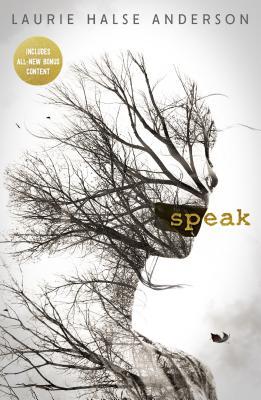
Speak

Speak. Laurie Halse Anderson. 1999. 224 pages. [Source: Library]

First sentence: It is my first morning of high school. I have seven new notebooks, a skirt I hate, and a stomachache.

Premise/plot: In To Kill A Mockingbird, Scout receives some great advice from her father.
"First of all," he said, "if you can learn a simple trick, Scout, you'll get along a lot better with all kinds of folks. You never really understand a person until you consider things from his point of view--"
"Sir?"
"--until you climb into his skin and walk around in it." (30)
Speak invites readers to "climb into the skin" of a victim of sexual assault and "walk around in it." But whether you've been there yourself or not--Melinda, our heroine--is worth getting to know. Her story is powerful and compelling.

Speak places high school life under the microscope. In minute detail, the reader sees what high school is like perhaps from a perspective that is new to them. (Or perhaps one that feels all-too-familiar). The teachers. The students. The classmates. The classes. The cafeteria. The bus rides. Melinda isn't happy, and it shows, but she's an example of how appearances can be deceiving. Labeled a trouble maker by a few of her teachers and some of the administration, despised by most of her classmates, she would be easy to brush off, to cast aside as just another lazy, rebellious teen. A teen that needs discipline, punishment, stern lectures, but never a teen that needs compassion and mercy and understanding. But there is always more going on underneath the surface. Always.

My thoughts: I think Speak should be required reading for any adult who is working with teens or who plans to work with teens. As for requiring it for teens within the classroom setting, I'm not so sure. For one, any time a book is required it loses its power. If you "have" to read it, then it strips away most of your natural inclinations to like it. I certainly never "liked" any of my assigned reading. The message of Speak might lose its resonance if it is forced. Especially if it is dissected and analyzed for hidden messages and symbolism. That being said, I do feel it's a true must-read. And it does have much that would be discussion-worthy.

What do I love about Speak? Well, it's authentic. And it's thought-provoking. If you're an adult, it makes you remember (or is prone to making you remember) your own high school days. Rather those days were painful and you're still a bit bitter or if you were one of the rare who actually remember high school "as the best time of your life." It's all in the details. The small things. The small daily interactions of how you relate with others, and how they relate to you. All the little things that add up to create the big picture. I didn't read it as a teen. The book was published when I was in college. But I would hope that the book would help those teens who are going through some of these situations not feel so alone, so isolated. I would hope that they'd feel understood. And for those teens that are bullies, I hope that the book would make them think about their actions a little more, take time to think about how these "little" things are adding up to big-time misery for those that are 'beneath' them. I'm not naive enough to think that this book will have the same impact on every one who reads it. It is just one book after all. But I hope that those who do read it, it will have a strong enough impact that the story will stay with them for a while.

Quotes:
I have entered high school with the wrong hair, the wrong clothes, the wrong attitude. (4)
The first ten lies they tell you in highschool
1. We are here to help you.
2. You will have enough time to get to your class before the bell rings.
3. The dress code will be enforced.
4. No smoking is allowed on school grounds.
5. Our football team will win the championship this year.
6. We expect more of you here.
7. Guidance counselors are always available to listen.
8. Your schedule was created with your needs in mind.
9. Your locker combination is private.
10. These will be the years you look back on fondly. (6)
Mr. Neck makes a note in his book. "I knew you were trouble the first time I saw you. I've taught here for twenty-four years and I can tell what's going on in a kid's head just by looking in their eyes. No more warnings. You just earned a demerit for wandering the halls without a pass." (9)
Homework is not an option. My bed is sending out serious nap rays. I can't help myself. The fluffy pillows and warm comforter are more powerful than I am. I have no choice but to snuggle under the covers. (16)
It's Nathaniel Hawthorne Month in English. Poor Nathaniel. Does he know what they've done to him? We are reading The Scarlet Letter one sentence at a time, tearing it up and chewing on its bones. (100)
It is easier to floss with barbed wire than admit you like someone in middle school. (108)
Mother: "That's the point, she won't say anything! I can't get a word out of her. She's mute."
Guidance Counselor: "I think we need to explore the family dynamics at play here."
Mother: "She's jerking us around to get attention."
Me: [inside my head] Would you listen? Would you believe me? Fat chance. (114)
Mr. Freeman: "Art without emotion is like chocolate cake without sugar. It makes you gag." (122)
Ten More Lies They Tell You In High School
1. You will use algebra in your adult lives.
2. Driving to school is a privilege that can be taken away.
3. Students must stay on campus for lunch.
4. The new textbooks will arrive any day now.
5. Colleges care about more than your SAT scores.
6. We are enforcing the dress code.
7. We will figure out how to turn off the heat soon.
8. Our bus drivers are highly trained professionals.
9. There is nothing wrong with summer school.
10. We want to hear what you have to say. (148)


© 2019 Becky Laney of Becky's Book Reviews

Wednesday, June 28, 2017

The Pianist

The Pianist. Wladyslaw Szpilman. Translated by Anthea Bell. 1946/1999. 222 pages. [Source: Library]

First sentence: I began my wartime career as a pianist in the Cafe Nowoczesna, which was in Nowolipki Street in the very heart of the Warsaw ghetto.

Premise/plot: In 1946, I believe, Wladyslaw Szpilman published a memoir sharing his story of how he survived the war. The book was later translated into English and began to include extracts from the diary of Captain Wilm Hosenfeld. The book did inspire a film, and, the film won lots of awards. As for the contents of the book, the life he led during the war, the near-death encounters he experienced, the physical and emotional trials--shocks--he endured, I'm near speechless. His style is matter-of-fact. It is rich in detail that would have been fresh on his mind, but, his intention was not to shock or manipulate to gain sympathy. It is very unemotional. It isn't a book of feelings or emotions. It isn't a diary he recorded day-by-day that captures the in-the-moment horrors of the war.

My thoughts: I read this one before I watched the movie. I am glad I read it first. If it had packed the emotional punch of the movie though, I'm not sure I could have endured it. It isn't that the movie portrays things differently. In fact, one of the things I noticed almost immediately was how true-to-the-book it was. It was that by visualizing it--seeing it, hearing it--changes things. For example, the violence, the destruction, the horror of it all. If you've seen the movie, chances are you know what I'm talking about. There are dramatic, traumatic scenes that words just can't do justice to. At times I watched the movie almost in shock that humans could treat each other like this, that so much hatred could exist, that the world could be unjust. But then I'd switch from the movie to the news, and, it was all reaffirmed.

The movie is not devoid of hope, nor should it be. If its about humanity--it shows us at our best and at our worst. There is good to be found as well as evil. There are kind, generous, loving people as well as monsters.


© 2017 Becky Laney of Becky's Book Reviews

Monday, January 30, 2017

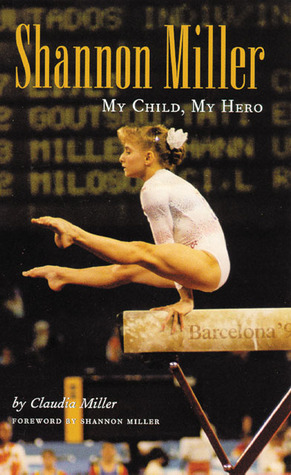
Shannon Miller: My Child, My Hero

Shannon Miller: My Child, My Hero. Claudia Ann Miller. 1999. 320 pages. [Source: Library]

First sentence: I gazed in near disbelief as my daughter Shannon sat stunned on a blue mat on the floor of the cavernous Georgia Dome with more than thirty thousand fans gasping in the stands and millions more watching on the television.

Premise/plot: The book is Claudia Miller's biography of her daughter, Shannon Miller, a world-famous, super-decorated gymnast from the 1990s. The book shares her experiences (as a mother, as gymnastics judge, as a Christian Scientist) as much as Shannon's experiences. This is good in that it gives readers a behind the scenes glimpse into the daily lives of the Millers. This is bad in that it shifts the focus from Shannon Miller herself at times. (It reads more like an autobiography of Claudia Miller than a biography of Shannon Miller).

Readers do learn in great detail about Shannon Miller's life practically from the first time she ever jumped on a trampoline in the early 1980s until 1998 when the book was published. More time is spent on the 1992 Olympics than the 1996 Olympics. Every meet--no matter how big, no matter how small--gets some attention in this one. One cannot help but be struck by how much WORK went on behind the scenes. A lot of attention is paid to her coaches, her training, her injuries, etc.

I was surprised in a way HOW much of this one focuses on the fact that Shannon and Claudia are Christian Scientists. Every time (practically) that Shannon consulted a Christian Science practitioner, readers hear of it in this biography.

My thoughts: I definitely liked this one. Shannon Miller was definitely my favorite, favorite gymnast from this time period. I followed the sport of gymnastics as closely as I could at this time. I was interested in learning more.

You can tell this one is written by her biggest, biggest fan, her mom. You can tell when she gets defensive or upset. For example, she got upset that Kerri Strug got all the media attention at the 96 games. She felt her daughter deserved more attention and more recognition. (And her bitterness had not dissipated two years later when this book was published.)

© 2016 Becky Laney of Becky's Book Reviews

Sunday, December 18, 2016

Letters From Father Christmas

Letters From Father Christmas. J.R.R. Tolkien. 1976/1999. 160 pages. [Source: Library]

First sentence: Dear John, I heard you ask daddy what I was like and where I lived. I have drawn me and my house forr you. Take care of the picture. I am just off now for Oxford with my bundle of toys--some for you. Hope I shall arrive in time: the snow is very thick at the North Pole tonight. Your loving Father Christmas.

Premise/plot: The earliest letter from 'Father Christmas' to the Tolkien children is 1920. The latest letter is dated 1943 to his daughter, Priscilla. The letters speak of Father Christmas' affairs--his adventures and misadventures. Little details about the Tolkiens slip through, of course. He refers to their letters in which they mention pets and toys, etc. He speaks of Polar Bear, his greatest assistant. He speaks of red elves--some. But Father Christmas has a war to fight of his own--against the goblins! (Christmas is almost sabotaged several times!)

My thoughts: I like this one. It is an interesting collection shared with readers. Original letters and pictures (illustrations) are shared. But each letter is also typed up making it easier to read. (Father Christmas has very, very shaky writing. And Polar Bear, well, English is NOT his first or even second language. And he writes with such big paws.) His longest letter is from 1932, and this features, I believe, the first mention of the GOBLINS.

My Dearest Priscilla,
I am so glad you did not forget to write to me again this year. The number of children who keep up with me seems to be getting smaller: I expect it is because of this horrible war, and that when it is over things will improve again, and I shall be as busy as ever. But at present so terribly many people have lost their homes: or have left them; half the world seems in the wrong place. And even up here we have been having troubles. I don't mean only with my stores: of course they are getting low. They were already last year, and I have not been able to fill them up, so that I have now to send what I can instead of what is asked for. But worse than that has happened.
I expect you remember that some years ago we had trouble with the Goblins; and we thought we had settled it. Well, it broke out again this autumn, worse than it has been for centuries. We have had several battles, and for a while my house was besieged. In November it began to look likely that it would be captured and all my goods, and that Christmas Stockings would all remain all over the world. Would not that have been a calamity? It has not happened--and that is largely due to the efforts of Polar Bear-- (142, December 22, 1941)


© 2016 Becky Laney of Becky's Book Reviews

Monday, November 28, 2016

Breach of Promise

A Breach of Promise. (William Monk #9) Anne Perry. 1999. 384 pages. [Source: Review copy]

First sentence: Oliver Rathbone leaned back in his chair and let out a sigh of satisfaction.

Premise/plot: A Breach of Promise is the ninth book in the William Monk mystery series by Anne Perry. In this one, Oliver Rathbone takes up a difficult, near-impossible-to-win case. His client, Killian Melville, is being sued for breach of promise. His friendship with Zillah Lambert was taken--by her family--as a romantic relationship. A whole wedding was PLANNED without him ever having said "I love you" or "Will you marry me?" Everything was assumed by Zillah's parents. Melville was late to catch on that he was "trapped." The case goes to trial, and, Rathbone calls on Monk to help him find something--anything--to help his client. Surely there is some reason why Melville refuses to marry her and claims that he CANNOT ever marry. Hester Latterly is nursing a patient that surprisingly enough is not directly connected in any way with the crime!!! But both Rathbone and Monk are depending on her to help them "make sense" of this case.

My thoughts: I loved this one. I LOVED, LOVED, LOVED it. It ends with Monk decisively choosing to ask Hester something BIG. Now, have I been wanting these two together for many books? Yes and no. No, in that I personally *like* Rathbone better. And I think Oliver was just as much in love with Hester as Monk was/is. Also, I really ADORE Oliver's dad. And the thought of Hester being in that family and getting MORE of both Oliver and his Dad would have made me quite happy. That being said, it was obvious for several books now that Hester for whatever reason loves Monk. I don't know why she prefers Monk to Rathbone. I don't. But she does. So yes, I am glad that Monk stopped being stupid and argumentative enough to pop the question. If the two are destined to be together, I'd rather it be settled sooner rather than later.

Now, for the case itself. It was a twist upon twist. And I forbid myself to cheat even a little. So that helped. I think the series is guilty a bit of having modern opinions taken up by the historical characters and proclaimed a bit smugly. At times. But overall, I really found myself enjoying this one cover to cover.

© 2016 Becky Laney of Becky's Book Reviews
Wednesday, September 30, 2015

26 Fairmount Avenue

26 Fairmount Avenue. Tomie dePaola. 1999. Penguin. 80 pages. [Source: Library]

Did I enjoy reading Tomie dePaola's 26 Fairmount Avenue? Yes. I think I appreciated it more upon rereading than I did the first time I read it a decade ago. This autobiographical early chapter book is about his moving to 26 Fairmount Avenue. It is not a simple transition, or, an easy move. Because life happens, things--big things, little things--keep happening to prevent work on the new house and to prevent their move. This building of the new house is always in the background. Meanwhile, he's growing up and having plenty of firsts. One of the incidents in the book is of his going to see Snow White at the theatre with his family. It captures what he thought as he saw the story unfold on screen. The intensity of it--how mesmerizing it was. And yet, HOW UNLIKE THE BOOK. So he is both drawn to it and repulsed by it. Finding it amazing and magical, and yet feeling it was missing something. This resonated with me. I liked the flow of the narrative. It has a comfy-cozy feel to it.

I don't think I've read the others in this series. I may need to seek them out soon.

© 2015 Becky Laney of Becky's Book Reviews

Monday, September 21, 2015

Betty Crocker Kids Cook

Betty Crocker Kids Cook. 1999/2015 (spiral-bound) Houghton Mifflin Harcourt. 160 pages. [Source: Review copy]

I enjoyed skimming through Betty Crocker Kids Cook. I don't "review" cook books often, but, I do enjoy looking at ones specifically designed to appeal to children and teens. This one is written with kids of all ages in mind. It features recipes that kids can cook on their own with just a little guidance, and some more difficult recipes that may take more cooperation with an adult.

The recipes fall into five categories: breakfast, lunch, snack, dinner, and desserts. The book includes simple instructions and guidelines for general cooking and baking. (The end papers illustrate the tools of the trade.) The "Just the Basics" section even includes the current nutritional guidelines, MyPlate.

The recipes themselves seem straightforward and reader-friendly. As an adult, I appreciate them listing the nutritional information for each recipe. (Serving size, number of calories, number of carbohydrates, amount of fat, amount of fiber, etc. It also includes the number of carbohydrate exchanges (choices) a serving is. Most of the recipes, though certainly not all, are carbohydrate heavy I noticed. Some recipes look delicious, very delicious, but are certainly not healthy enough to be eaten all that often, in my opinion.

The recipes that looked most appealing to me include:

  • Super-Tasty Sweet Potato Bacon Biscuits (p. 23)
  • Surprise! Confetti Pasta Salad (p. 60)
  • Impossibly Easy Mini Chicken Pot Pies (p. 98)
  • Cheese-Stuffed Meatballs and Spaghetti (p. 112)
  • Bottom of the Cereal Box Cookies (p. 140)
Do you have a favorite cookbook for children or teens?

© 2015 Becky Laney of Becky's Book Reviews

Saturday, September 19, 2015

Pizza Pat

Pizza Pat. Rita Golden Gelman. Illustrated by Will Terry. (A Bright & Early Book) 1999. Random House. 32 pages. [Source: Bought]

This is Pat.
This is the tray that Pat bought.
This is the dough, all stretchy and floppy,
that lay in the tray that Pat bought.
This is the sauce, all gooey and gloppy,
that covered the dough, all stretchy and floppy,
that lay in the tray that Pat bought.

Premise: Pat's making pizza! Pat looks like he loves pizza. Loves to make it, and loves to eat it. But will Pat get to eat THIS oh-so-yummy pizza? You'll just to have to read this one to see for yourself.

My thoughts: I loved it. I'm not sure I loved, loved, loved it. But I loved it a LOT more than I ever imagined possible. Why? Well, I'm not the biggest fan of The House That Jack Built. I'm just not. But this pizza-themed story, well, it was just FUN.

This one would pair well, in my opinion, with More Spaghetti, I Say! which also happens to be by Rita Golden Gelman.

© 2015 Becky Laney of Becky's Book Reviews

Saturday, April 25, 2015

Ramona's World (1999)

Ramona's World. Beverly Cleary. 1999. HarperCollins. 240 pages. [Source: Library]

Ramona's World is the last book in the series. Ramona is in fourth grade now. And she's definitely got a big crush on Yard Ape. (There's been no mention at all of Henry Huggins lately or of Mary Jane for that matter.)

"Ramona Spreads the News" Ramona starts fourth grade. She's anxious to spread the news that she's a big sister. Her baby sister, Roberta, is oh-so-cute and oh-so-little. Ramona meets the new girl, Daisy, and hopes that they can become BEST friends.

"The Role Model" Does Ramona like spelling? Does Ramona like teachers that emphasis how important spelling is? Does she like teachers that pick on and point out all her spelling mistakes word by word in front of the whole class? She does not! She is not liking her new teacher very much. But Roberta can make her day better. Roberta copies Ramona and sticks out her tongue and makes cute faces.

"At Daisy's House" Ramona and Daisy get to know each other better and decide to be best friends.

"The Invitation" Beezus has a new best friend, Abby. Abby is having a boy-girl party and invites Beezus, of course. Beezus is excited and anxious and sneaks out to get her ears pierced.

"The Princess and the Witch" Ramona gets into trouble at Daisy's house, but, it isn't her fault, not really.

"The Party" Beezus attends a party, and Ramona goes with her Dad to drop her off. Her Dad has been teaching Beezus how to dance. Does the party go well?

"The Grown-Up Letter" Ramona sends off a letter when she sees something that bothers her in the paper. She impresses her teacher when she gets a reply.

"Peas" Ramona's picture day

"Ramona Sits" Ramona cat-sits Daisy's cat. It is NOT a fun week. Seven days feels like forever. Especially when her Mom leaves her in charge of Roberta too--for a whole FIFTEEN MINUTES.

"The Valentine Box" Valentine's Day. Will she treasure Yard Ape's valentine?

"Birthday Girl" Ramona turns 10, has a party, shares her cake with boys, and learns something surprising about her old nemesis, Susan.

Part of me was sad to see an end to the series. I have loved visiting with Ramona so very much. The series did a good job at aging up the characters, however. Something that you can really appreciate better if you read the series all at once.

Do you have a favorite book in the series? Mine would probably be Ramona the Pest or Ramona the Brave or Ramona Quimby, Age 8.

© 2015 Becky Laney of Becky's Book Reviews

Tuesday, May 13, 2014

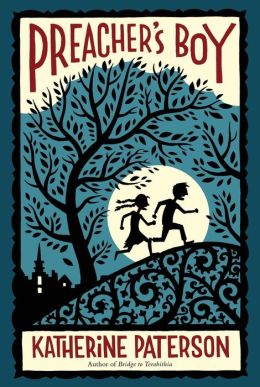
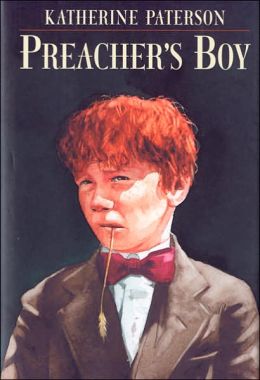
Preacher's Boy (1999)

Preacher's Boy. Katherine Paterson. 1999/2013. Houghton Mifflin Harcourt. 176 pages. [Source: Review copy]

Is the end near?! That's the question Robbie Hewitt faces in Katherine Paterson's Preacher's Boy. The year is 1899. The novel follows the troubles of one mischievous boy, our narrator, Robbie. Well, what can one say about him? If you've read Tom Sawyer, you know EXACTLY what kind of boy he is. He's always getting IN and OUT of trouble. Since it seems impossible to stay mad at him, I suppose, you could call him charming too. How much trouble can a boy get into in one year?! Quite a bit.

Robbie likes pranks, and this book tells about several of them. Readers know what to expect from Robbie from the very start:
"On Decoration Day, while everyone else in town was at the cemetery decorating the graves of our Glorious War Dead, Willie Beaner and me, Robert Burns Hewitt, took Mabel Cramm's bloomers and run them up the flagpole in front of the town hall. That was the beginning of all my troubles. It wasn't that we got caught. In fact, I've often thought since that would have been the best thing in the world." 
One of the stories in this novel is that Robbie becomes worried about "the end of the world." He isn't worried about where he'll end up. He's not sure there is a heaven or a hell. But. He is worried about missing out on LIFE. He makes a list of ALL the things he wants to do BEFORE THE END. It's a dreamer's list, in many ways, but that is part of the charm. For example, he knows it would be RIDICULOUS to write down OWN AN AUTOMOBILE. But he can't stop himself from writing down RIDING IN AN AUTOMOBILE.

This one has some interesting characters. I wouldn't ever say this one lacks plot, and by "plot" I mean ACTION. But to me the charm of this one is in the characters themselves. I liked Robbie. I liked seeing Robbie struggle. I liked seeing tension in his relationship with Elliot, his older brother with special needs. Robbie LOVES his brother, but, he doesn't always LIKE him. He struggles with his place in the family. It isn't just that his father is the preacher and EVERYONE in town watches him and judges him. It is that he feels out of sorts in his family. He feels Elliot gets all the attention, all the love and support. I thought most of Robbie's family was well-drawn. I liked getting to know Robbie, his dad, and Elliot. (I can't say that his mother and sisters came into the story much.) Robbie was also challenged a bit when he met a strange-but-bossy girl with problems of her own.

I liked the setting. I liked the writing. I liked the characters. Overall, I'd definitely recommend this historical coming-of-age novel.

© 2014 Becky Laney of Becky's Book Reviews

Wednesday, February 12, 2014

Midnight Falcon (1999)

Midnight Falcon. David Gemmell. 1999. Del Rey. 448 pages. [Source: Library]

I am so glad I happened to reread Sword in the Storm by David Gemmell. I had almost forgotten how very good it was. After reading the first book, I knew I would need to read the sequel, Midnight Falcon.

The hero of Midnight Falcon is a young man named Bane; he is the illegitimate son of Connavar. Bane's life has been far from easy especially since the death of his mother. Few would call him friend, but, few would want him as an open enemy. Bane is strong, fast, and a skilled warrior with some anger issues, perhaps, but with a developing sense of justice. It didn't take me long to love Bane. Yes, he might be a bit rough about the edges, but, he's a good guy.

The novel opens with Bane and Banouin (Vorna's son) traveling to Stone, deep within the Stone Empire. It is the first time for both of them to be traveling this far from home. Bane absolutely loves and respects Vorna, one of the few people in his tribe who have loved and supported him. He's always been welcome in their home, and, he's more than happy to help her son, who's a bit weak, a bit different, make it safely to Stone. But something will come between these two friends. The two befriend a beautiful young woman and her father. The two are trying to outsmart the Stone Knights hunting down followers of the Source, a "tree worshiping" cult forbidden in Stone by the emperor. The two have taken refuge in a little town on the outskirts of the empire. Bane and Banouin are welcomed into their home, and they enjoy each other's company for a day or two. Bane falls madly in love with the young woman; he wants to stop for her on his way back home; he wants to take her back with him as his wife. Bane and Banouin leave one morning, Banouin is acting very peculiar indeed. Turns out, Banouin has had his first ever vision, and he knows that this father-and-daughter will be slaughtered by Stone soldiers (or knights) that very morning. Bane eventually gets this information out of his friend, he rushes back, but he's a little too late. He's not in time to save lives, just in time to have his own life taken. His wounds should be the death of him, without the intervention of the Seidh they would have been. But he recovers and finds purpose. He knows the man who killed his love. He will do whatever it takes to kill him. That means for Bane years of training under a gladiator, Rage, and years fighting as a gladiator in Stone. He needs the training and the experience.

Two-thirds of this one is spent in the Stone Empire. Readers meet new characters, like Rage and his granddaughter. I absolutely loved, loved, loved Rage. I love how Rage and Bane bond, I do. I like seeing this relationship develop. Connavar was NOT a father to Bane, but, Rage can be. He teaches Bane a lot more than fighting skills and discipline. I liked spending time with "the enemy." I liked a glimpse of the Stone Empire: its luxury and its corruption.

The last third of the book sees Bane traveling back home and preparing for the ultimate battle to come. Will the Rigante and the other Keltoi tribes come together to defeat the Stone Armies?! 

The ending of Midnight Falcon was bittersweet. It would have to be bittersweet since it's about two armies battling it out. War means death. I won't lie this book is violent, there are fights and battles large and small. For a book with so much action, it has great characterization. I think readers would definitely need to have read Sword in the Storm first.  

© 2014 Becky Laney of Becky's Book Reviews
Tuesday, February 21, 2012

Bud, Not Buddy (MG)

Bud, Not Buddy. Christopher Paul Curtis. 1999. Random House. 245 pages.

Here we go again. We were all standing in line waiting for breakfast when one of the caseworkers came in and tap-tap-tapped down the line. 

Some novels have me at hello. Bud, Not Buddy wasn't like that--for me. It was a novel that had to grow on me. It was a quiet novel, in a way, that in the end proved most satisfying. Chapter by chapter I came to know Bud Caldwell better, and I started to care about him. By the end, the novel felt just right, so perfectly right. It is easy to see why this one won awards!!!

Bud, Not Buddy is set in the 1930s during the Depression. It is set in Flint, Michigan, for the most part. Though this novel will see Bud setting out on quite a journey. He's an orphan, just eleven, in search of one simple thing: a father, a family, he's never known, never hoped to know. So what led him to begin this journey? Well, he had to run away from his last placement in a foster home. The family had a son who was a few years older, and, this boy was cruel and mean, and his parents were stupid enough to believe their son an angel. Could he have gone back to the Home? Maybe, maybe not. But isn't this ending worth it?!

Read Bud, Not Buddy:
  • If you are looking for a historical read with plenty of heart and a good, satisfying ending
  • If you are looking for books set during the Depression that are realistic but not depressing
  • If you are looking to read a great Newbery winner with memorable characters

© 2012 Becky Laney of Becky's Book Reviews

Saturday, February 18, 2012

Alas, Babylon

Alas, Babylon. Pat Frank. 1959/1999. HarperCollins. 325 pages.

In Fort Repose, a river town in Central Florida, it was said that sending a message by Western Union was the same as broadcasting it over the combined networks. This was not entirely true. It was true that Florence Wechek, the manager, gossiped. Yet she judiciously classified the personal intelligence that flowed under her plump fingers, and maintained a prudent censorship over her tongue. The scandalous and the embarrassing she excised from her conversation. Sprightly, trivial, and harmless items she passed on to friends, thus enhancing her status and relieving the tedium of spinsterhood. If your sister was in trouble, and wired for money, the secret was safe with Florence Wechek. But if your sister bore a legitimate baby, its sex and weight would soon be known all over town.

Alas, Babylon was an apocalyptic novel written in 1959 during the Cold War. It imagines the ultimate what-if of the time. What if the USSR used nuclear warfare and took out all our bases and major cities?

Mark Bragg is in the know. He's received just enough warning to send his wife, Helen, his son, Ben Franklin, and his daughter, Peyton, to his brother, Randy, in Fort Repose, Florida. Of course, he doesn't know for sure that Fort Repose will be safe enough, but it has to be safer than Omaha. He knows his own fate all too well. His will be among the first hit--or targeted. This isn't Mark's story. And readers only catch a glimpse of his story through his brief conversation with Randy--and through what Randy chooses to reveal about him. 

Randy Bragg is the hero of Alas, Babylon. He is our narrator. He receives a telegram from his brother that reads "Alas, Babylon" and he knows it's just a matter of time. Will it be today? Will it be tomorrow? How soon is 'the end'? He learns that his brother is sending his family to him, that he is to protect them to the best of his ability. But how do you really, truly prepare for something like this? How can you know exactly what you'll need? He does go to the store, he does go shopping, he does try, but he's just not able to comprehend what the loss of most (if not all) major cities in Florida will mean.  (The loss of electricity, no gasoline deliveries, no food deliveries, no mail, no radio, no television, no newspapers, no way to learn what is happening on any street but you're own). And of course, it's not just Florida. Other states, other cities, will be effected as well.

For an apocalyptic novel, Alas, Babylon is rich in hope. I'm not saying that it's not a serious novel with a serious subject. I'm not saying that it's not bleak either. Bad things do happen. And life does change...seemingly forever. There are no easy answers on what to do next. I'm reminded of a scene from Babylon 5, season two, "Confessions and Lamentations" in which Delenn and Lennier learn that "faith manages." But there is much to admire in Randy Bragg and the other men and women we meet in Pat Frank's Alas, Babylon. Like their courage, their resourcefulness, their determination, etc.

While part of the novel is spent on politics--the right and wrongs of it--and war--the right and wrongs of it--much of the novel is focused on surviving, on moving forward. Part of the novel also has to do with race relations as well. Randy was not elected before "the day" because he was too open-minded and not quite Southern enough. In other words, he was not a racist. In other words, he didn't think integration was the work of the devil. (Half of the characters in Alas, Babylon are black. And I don't think it's unfair to conclude that without the help of his black neighbors, Randy Bragg wouldn't have managed as well).

There were many, many memorable scenes in Alas, Babylon. My personal favorite may just be this commentary from librarian.
Alone of all the people in Fort Repose, Alice continued with her regular work. Every morning she left the Wechek house at seven. Often, ignoring the unpredictable dangers of the road, she did not return until dark. Since The Day, the demand for her services had multiplied. They slowed when they overtook her, shouted a greeting, and waved. She waved back and pedaled on, a small, brave, and busy figure. Watching the car chuff past,  Alice reminded herself that this evening she must bring back new books for Ben Franklin and Peyton. It was a surprise, and a delight, to see children devour books. Without ever knowing it, they were receiving an education. Alice would never admit it aloud, but for the first time in her thirty years as librarian of Fort Repose she felt fulfilled, even important.
It had not been easy or remunerative to persist as librarian in Fort Repose. She recalled how every year for eight years the town council had turned down her annual request for air conditioning. An expensive frill, they'd said. But without air conditioning, how could a library compete? Drugstores, bars, restaurants, movies, the St. Johns Country Club in San Marco, the lobby of the Riverside Inn, theaters, and most homes were air conditioned. You couldn't expect people to sit in a hot library during the humid Florida summer, which began in April and didn't end until October, when they could be sitting in an air-conditioned living room coolly and painlessly absorbing visual pablum on television. Alice had installed a Coke machine and begged old electric fans but it had been a losing battle.
In thirty years her book budget had been raised ten percent but the cost of books had doubled. Her magazine budget was unchanged, but the cost of magazines had tripled. So while Fort Repose grew in population, book borrowings dwindled. There had been so many new distractions, drive-in theaters, dashing off to springs and beaches over the weekends, the mass hypnosis of the young every evening, and finally the craze for boating and water-skiing. Now all this was ended. All entertainment, all amusements, all escape, all information again centered in the library. The fact that the library had no air conditioning made no difference now. There were not enough chairs to accommodate her readers. They sat on the front steps, in the windows, on the floor with backs against walls or stacks. They read everything, even the classics. And the children came to her, when they were free of their chores, and she guided them. And there was useful research to do. Randy and Doctor Gunn didn't know it, but as a result of her research they might eat better thereafter. It was strange, she thought, pedaling steadily, that it should require a holocaust to make her own life worth living. (187-188)

Read Alas, Babylon
  • If you're a fan of apocalyptic fiction
  • If you're a fan of science fiction and are looking for a classic 
  • If you're a fan of survival stories
  • If you're a fan of compelling thrillers
  • If you want to know the fate of armadillos in Florida
© 2012 Becky Laney of Becky's Book Reviews

Wednesday, January 25, 2012

The Long Night of Centauri Prime

Babylon 5: Legions of Fire: The Long Night of Centauri Prime. Peter David. 1999.

Prologue: The Drakh felt sorry for him. Londo Mollari would have been surprised to learn that such considerations went through the Drakh's mind. Had the Drakh's sentiments been relayed to him, he would have been even more surprised to learn precisely why the Drakh felt sorry for him. 


Chapter one: When Londo saw the creature emerging from the chest of the Drakh, it was all he could do not to scream.

The Long Night of Centauri Prime is the first in a must-read trilogy of books for Babylon 5 fans. For this trilogy answers so many questions! This trilogy addresses so many prophecies and visions seen in the show! Because it is a continuation of the story, the drama, I feel it is a must read for anyone who watched the show from start to finish.

Is this book all about Londo? Yes and no. It is about what happens to him after he becomes emperor of Centauri Prime. It is from his perspective--for the most part. But to say it is all about him, well, that just wouldn't be the case. It features characters we've met before (Vir, Timov, Mariel, etc.) and introduces new characters (Shiv'kala, Durla, Senna, etc.) It also reintroduces the technomages.

Centauri Prime is in very bad condition. And what they need is a good leader, a strong leader, a leader not under the influence.

I loved so many things about this one. I did. I loved how Peter David captured the characters just right. Especially in how he depicts Londo and Vir. Their separate scenes are good, some are even great, but to see these two together again, well, there's just something wonderful about it all. My favorite new character was Senna. 

Read The Long Night of Centauri Prime
  • If you're a fan of Babylon 5
  • If you're a fan of science fiction
  • If you're a fan of science fiction focusing on politics and war, good and evil
  • If you want to know what happens to Londo after he becomes emperor, after his nightmarish reign begins,
  • If you want to know what happened to Londo's wives
  • If you want to know what happens to Vir.  If you LOVE Vir, this book will make you LOVE, LOVE, LOVE him.
  • If you want to see the long-term effects of the Shadow War
And now to share some quotes:

When Londo first meets Senna...

"She simply uses words now, not stones. It is a funny thing about words. They cannot harm you unless you allow them to...unlike rocks, which tend to act as they wish." (35)

Londo and Vir speaking about Durla:

"Well, here's a late development. I do not like him, Londo. This Durla. Not one bit." Vir was speaking in a whisper, albeit an angry one.
"Durla? What is wrong with Durla?" Londo sounded almost shocked.
"Look, don't take this wrong, but...in some ways, he reminds me of you. That is, the way you used to be."
"He doesn't remind me of me at all."
"Are you kidding? All those things he was saying about what he wants us to be? Doesn't that sound like something you might have said once?"
"No. I never would have said any such thing."
Vir rolled his eyes in annoyance as Londo guided him down one of the large corridors. "Where are we going?" he asked.
"On a tour. Much work has been down on the palace since you were last here." He glanced at Vir. His vision appeared a bit bleary. "So let me understand this: you say that Durla reminds you of me, and on that basis you don't like him. I suppose I should be insulted, no?" (89)

Vir on lying:

As Zack checked through the computers, Vir's mind was racing. Lying simply was not his strong suit. He felt tremendously uncomfortable and very exposed whenever he was trying to do it. One would have thought that, working with Londo for so long as he had, he would have acquired a knack for it. The one thing he had going for him was that he tended to babble to the point where people would accept whatever he was saying, just to shut him up. With one lie, he was ineffective. With an avalanche of lies, he could squeak by. (101)

Yet another starring Vir!

"Nervous?" laughed Vir. "Why would you say that?"
"Well, when you're nervous about something, you tend to flap your hands about a bit...kind of like you're doing right now."
"What? Oh, this. No, no...I'm just having some minor circulation problems, so I'm trying to get the blood flowing." He flailed his hands for a moment, then said, "Well, that seems to have done it," and folded his arms tightly across his chest. (105)

And another...

Time flies when you're having fun. Or when you're having...well...whatever it is that I have. (214)

Mariel and Vir:

"You made me laugh. It's not always easy for a man to get a woman to laugh, but you managed it so easily. You had a charming facade you created back then, although I could see through it rather easily, of course."
"What...facade would that be?"
"An air of barely controlled panic."
"Ah. Well," and he laughed uncomfortably, "you saw right through that, I guess. Clever you." (217)


© 2012 Becky Laney of Becky's Book Reviews

Friday, June 03, 2011

Our Only May Amelia (MG)

Our Only May Amelia. Jennifer L. Holm. 1999. HarperCollins.

My brother Wilbert tells me that I was the first ever girl born in Nasel, that I was A Miracle. 

While it wasn't always easy to keep up with all seven of May Amelia's brothers, I really did enjoy this historical novel very much. May Amelia, our heroine, feels like she doesn't belong. It seems that she's always disappointing someone in her family--be it her father, mother, brother, cousin, or grandmother. She's grown up with brothers--doing the things that boys do--but each year she's expected to act more like a lady--a proper lady--and less like a tomboy. And if you took the time to ask her, she'd tell you truthfully, that she does NOT want to be a lady. She doesn't want to be silly and boy-crazy. She sees the way "young ladies" act around her older brothers. And it disgusts her. No, May Amelia is much too sensible to be a proper lady.

This family novel has its quiet and loud moments. It has plenty of drama, but at the same time it is focused on the characters, the family dynamics, how May Amelia relates to each member of her family for better or worse. Dramatic events include, for example, the arrival of her paternal grandmother, "Grandmother Patience," and her mother going into labor while the family's boating on the river.
Trust me, Grandma Patience is anything but patient. Her true name might be Grandmother Cranky Pants. The scenes were she lets loose and speaks her mind--well, let's just say they made me boo and hiss. She was not my favorite family member. I much preferred getting to know some of May Amelia's aunts and uncles. 

I thought this historical novel was well-written. I thought the characters were well-developed. I enjoyed watching May Amelia mature through the novel.

Set in 1899, Washington State.

© 2011 Becky Laney of Becky's Book Reviews