Showing posts with label Scholastic. Show all posts

Friday, November 11, 2022

148. Making Bombs for Hitler


Making Bombs for Hitler. Marsha Forchuk Skrypuch. 2012/2017. 191 pages. [Source: Review copy]

First sentence: The room smelled of soap and the light was so white that it made my eyes ache. I held Larissa's hand in a tight grip. I was her older sister, after all, and she was my responsibility. It would be easy to lose her in this sea of children, and we had both lost far too much already.

Premise/plot: Lida, our protagonist, is a Ukrainian child sent to a work labor camp [concentration camp]. Having been warned that [younger] children are at greater risk, she ages herself by several years. Hoping that if she is perceived as old enough to work, to be useful, the greater the chance that she'll survive the Nazis. Most of the book describes her experiences with various jobs in that Nazi concentration camp. The book ends with her dealing with the aftermath of the war. It would be a mistake to think that survivors get a "happily ever after" starting the moment the camps are liberated. 

My thoughts: I am not doing justice to this compelling coming of age war novel. It was such an intense read. It was interesting--to me at least--to get an Ukrainian perspective. It is more common to see a Jewish perspective of the concentration camps perhaps. The novel opens in 1943. But don't expect a lot of dates. This one is a little vague on specific details. For example, while we spend almost all of the book with the characters in a work camp [concentration camp], readers never learn which camp. This isn't a deal breaker for me. It isn't. But I was curious. [Probably more curious than the intended original audience]. 

I would recommend this one. It is intense. But sometimes you just a book that will keep you on the edge of your seat, a book a little bit outside your comfort zone.


© 2022 Becky Laney of Becky's Book Reviews

Thursday, July 04, 2019

Now You Know What You Eat

Now You Know What You Eat. Valorie Fisher. 2019. [October 15] Scholastic. 40 pages. [Source: Review copy]

First sentence: How to read this book:
a + b = c  a combination of a and b equals c
a - b = a without b equals c
a } b a comes from or can be found in B.

Premise/plot: Now You Know What You Eat is a fascinating concept book for young readers. There are plenty of details packed into the illustrations. It does rely mainly on the illustrations and photographs. There is no central narrative text, just text boxes accompanying some of the illustrations. So the premise, what is it? On each page or two page spread, a food is highlighted. For example, vanilla ice cream cone, oatmeal raisin cookie, peanut butter and jelly sandwich, macaroni and cheese, pizza, vegetable soup, potato chip, etc. On the spread (or single page), illustrations/photographs reveal what is in that food and how it is made.

What ingredients make up an ice cream cone? What ingredients make up vanilla ice cream?

Some examples are more detailed than others. One of the more detailed pages is for oatmeal raisin cookies. Readers can learn where individual ingredients come from and then how to make those ingredients into a homemade cookie.

The page on peanut butter and jelly spends a good amount of time explaining the growing process of peanuts.

It has plenty of information including a nutrition guide, a page on vitamins and minerals, and a glossary of words to know.

My thoughts: I enjoyed this one. I love that it uses play food in the photographs. Not every illustration is a photograph, mind you. There isn't "play food" to represent a vanilla orchid, for example! But much of the finished food products are photographs of play food. Even the author (aka "book creator")  includes a photograph of a PLAY DOLL instead of her actual picture.

Kids are curious. And this book feeds on that natural curiosity. I found this one a very fun and satisfying read! It would have been GREAT fun if they'd included a spread on lunchables. (I understand why they wouldn't/couldn't. But still.) Also why was there no page on CHICKEN NUGGETS?!?! Fisher could have easily swapped out DILL PICKLES or VEGETABLE SOUP for a spread on chicken nuggets.


© 2019 Becky Laney of Becky's Book Reviews

Tuesday, June 11, 2019

Love and the Rocking Chair

Love and the Rocking Chair. Diane and Leo Dillon. 2019. [October 15] Scholastic. 40 pages. [Source: Review copy]

First sentence: Many years ago, a young couple stood in a sea of chairs, searching for just the right one. "Look at that chair over there. It's perfect for the baby's room," the young woman said.

Premise/plot: Love and the Rocking Chair celebrates generations of a family and the legacy of a rocking chair passed on through the years. The book opens with a young couple expecting a baby and looking for just-the-right rocking chair. The chair is used when he is a baby and as he continues to grow. It is a chair he chooses to use in his own nursery when he's all grown up and expecting a child of his own...

My thoughts: Love and The Rocking Chair is a picture book for older readers. Dare I say it's a picture books written specificially with adults in mind?! It's a lovely book, don't get me wrong. But it's a book packed with sentiment and wisdom that only age can truly appreciate.

Love and the Rocking Chair is a bittersweet read. On the one hand, captured within this gem of a book are scenes of a family through the years. Babies being rocked. Toddlers being read to. Children imagining and playing. Children growing up, getting older, moving on, etc. On the other hand, it captures some heartbreaking moments as well. The husband/father getting old/sick, the wife/mother and the son standing together by a casket mourning. The wife/mother/grandmother wishing that her husband could be by her side to see his granddaughter. It's TOUGH, TOUGH I tell you on the heart strings.

It captures what life is--the way things are, the way things will always be in this world. LOVE is always present. Every single spread captures what it means to love and be loved. That's a difficult thing perhaps to capture in a meaningful way.

Text: 5 out of 5
Illustrations: 4 out of 5
Total: 9 out of 10


© 2019 Becky Laney of Becky's Book Reviews

Wednesday, April 24, 2019

World at War: Resistance

Resistance. Jennifer A. Nielsen. 2018. Scholastic. 385 pages. [Source: Review copy]

First sentence:  Two minutes. That's how long I had to get past this Nazi.

Premise/plot: Resistance is set in Poland during the Second World War. Our heroine, Chaya Lindner, is a courier for the resistance. She's Jewish, but she's able to pass as Polish. She slips in and out of Jewish ghettos thanks to her forged papers, appearance, and COURAGE. She is able to smuggle in food, weapons, forged papers, information, and other black market items. She is able to smuggle out children. It's dangerous work. She's known that from day one. But she's fully committed to the cause--saving lives, resisting Nazis, killing Nazis. She is not alone.

When Chaya first meets Esther, she has doubts--BIG DOUBTS. Esther doesn't look like she's capable of helping the cause--far from it. Chaya is convinced that working with Esther will put them--the resistance cell--all in danger. People could die because of Esther. But is Chaya wrong about Esther? Only time will tell.

My thoughts: What a book! Those three words don't say nearly enough. Yet I always hesitate to say that I love, love, love a book that is so dark and intense. Though these characters are fictional, the story of resistance is not. There were real men, women, children who were part of the Jewish/Polish resistance. Many--though not all--died. To resist could lead to death. To not resist would lead to death. There were no easy, safe choices. This is an emotional read starring two very different heroines.

"I wonder if this will ever end."
"The war?"
"The hatred. I remember my father saying that he'd finally come to believe the world had moved past its hatred of Jews, and then this happened."
"Maybe when the world opens its eyes to what has been done to us, they will realize how destructive hate can be."
Esther shrugged again. "Maybe. But they'll forget again, in time. And when they forget, this will all start once more."
I put an arm around her and used it to straighten her posture, "Enough of us must survive the war to tell our stories, and every story will matter. When they remember our stories, they will forget their hatred." (160)

"Why do the Nazis feel they can commit such violence against us? How do they justify it?"
I shrugged. "Because they believe we are less than human. Like animals."
"Exactly! They herd us into train cars like cattle, give our rabbis and scholars the work of oxen, feed us less than what is given to their dogs. And they kill us with no more regard than they'd give to slaughtering a farm animal. But there is something a human can do that an animal never can."
"Create art." I considered that for a moment. "So you sing because--"
"It's proof of my humanity. It allows me, just for the length of that song, to remember who I really am, no matter what surrounds me." (272)

"I loved my father, Chaya. I still do. But being in the Judenrat was an impossible situation. I remember at the beginning, he thought he could help the people here, and he did a lot of good. But very soon, the choices weren't between good and bad, they were between bad and awful."
"A choiceless choice," I mumbled. "There is no winning, only a decision as to how we will lose." (296)
 

© 2019 Becky Laney of Becky's Book Reviews

Wednesday, April 10, 2019

World at War: Courageous

Courageous. Yona Zeldis McDonough. 2018. [Nov] Scholastic. 192 pages. [Source: Review copy]

First sentence:  Aiden looks up. The sky that had been blue and cloudless only minutes ago is now dark and menacing.

Premise/plot: Courageous is a historical middle grade novel set in Britain focusing on Operation Dynamo (aka Dunkirk). Aiden has been scared of the sea ever since his older brother, Trevor, died during the war. This is a slight problem since his family's line of business is a sea one--fishing. When the call comes for every little boat to do her part--for the civilians to take action and help rescue the troops trapped in France, Aiden's parents say NO, NO WAY, NEVER, NOT GOING TO HAPPEN. Which is upsetting news for Aiden because his sole surviving brother, George, is one of the men needing rescuing. Their last letter from George--conveniently received earlier that day--places him right there at Dunkirk. Aiden sneaks out of the house and attends a village meeting. A few want to join in the effort--but just as many it seems wants to stay at home and not risk it. Aiden decides that he can play the stubborn game too. He will take his family's boat on his own--nearly on his own, with the help of his best friend, Sally--and go to France. It won't be easy--his parents lock him in his room. But stubborn is stubborn even if stubborn is not necessarily smart. (Too bad he's not smart enough to take food or extra patrol.) 

Will Aiden and Sally be able to save George and other soldiers? Or will Aiden and Sally give up their lives in a heroic effort to do so?

My thoughts: I wish this one was not written in third person PRESENT tense. That's the first thought that comes to mind. The second is: how old is Aiden supposed to be?!

I am glad that civilians risked their lives and their livelihoods to come to the aid of the troops. It was a risky affair. If I come across as slightly cranky/skeptical it has more to do with this fictional story than the historical account.

I found this story full of conveniences--a few too many for my liking.


© 2019 Becky Laney of Becky's Book Reviews

Thursday, March 21, 2019

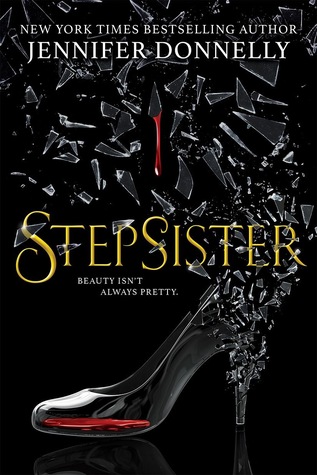
Stepsister

Stepsister. Jennifer Donnelly. 2019. Scholastic. 352 pages. [Source: Review copy]

First sentence of the prologue: Once upon always and never again, in an ancient city by the sea, three sisters worked by candlelight. 

First sentence from chapter one: In the kitchen of a grand mansion, a girl sat clutching a knife. Her name was Isabelle. She was not pretty.

Premise/plot: Stepsister is a retelling of the fairy tale Cinderella told from the point of view of one of the stepsisters. But is it more than that?

The prologue sets the stage: a battle is coming, a battle between FATE and CHANCE. (There are three FATE sisters, but, primarily this novel features the crone. Chance is Marquis de la Chance.) The setting is a French village--primarily.

Chance has stolen a map--a map of a particular mortal, Isabelle. He's hoping that HER map can be changed. That the destiny that Fate has written her--or drawn for her--can be thwarted. The Crone angered that Chance has dared to steal from her--from them--sets out on a journey to find the girl and make sure that Chance doesn't give the girl any ideas of trying to fight back or change her story, her destiny. Which is exactly what Chance hopes to do with a little help.

The novel opens AFTER the ball. Isabelle has witnessed the pain, the agony, the humiliation of her sister, Octavia (aka "Tavi"). Their mother's insistence that the girls cut their bodies--their feet--in order to fit into the glass slipper is about to lead Isabelle to a similar fate.
How many times had she cut away parts of herself at her mother's demand? The part that laughed too loudly. That rode too fast and jumped too high. The part that wished for a second helping, more gravy, a bigger slice of cake. If I marry the prince, I will be a princess, Isabelle thought. And one day a queen. And no one will dare call me ugly ever again. (11)
As you might have guessed, neither girl--neither stepsister--fools the prince, not for longer than a few seconds, a few minutes anyway.

Stepsister is the story of what happens next....what happens in the small village where everyone knows what you did, what you tried to do. It was bad enough everyone calling you ugly...now they think you're evil and twisted too.

Can Isabelle write her own story? Can she find the strength, courage, and heart to be true to herself and become the person she's always wanted to be?

My thoughts: I love, love, love this one. Not because it is premise-driven. Not because it is a "feminist" retelling of a fairy tale. No, I love it because of the characters. I love Isabelle and Tavi. I love their relationship and conversations. I don't love their mother; if you thought she was only cruel to Cinderella, you'd be wrong. But though in some ways she's true to the evil stepmother stereotype, she's also a dimensional character. One you wouldn't want as a mother, as a neighbor, as a friend, or even an acquaintance--but one that must have a back story somewhere that would explain why she is the way she is. I don't love her--or even remotely like her--but there were a few scenes where I almost, almost, almost pitied her. I also enjoy seeing Isabelle and Tavi interact with a neighbor, Hugo. I could go on about all the characters I enjoyed meeting, but to do so would be to spoil the plot. That wouldn't be fair. The book isn't even released yet.

I also love it because of the writing.
Isabelle had a strong will. She did not know that this was a good thing for a girl to have because everyone had always told her it was a terrible thing. Everyone said a girl with a strong will would come to a bad end. Everyone said a girl's will must be bent to the wishes of those who know what's best for her. Isabelle was young, only sixteen; she had not yet learned that everyone is a fool. (12)
One by one they'd all disappeared, each loss like the swipe of a carver's knife. Whittling her down. Smoothing her edges. Making her more like the girl Maman wanted her to be. Isabelle had cut off her toes, but sometimes she could still feel them. Maman had cut out her heart. Sometimes she could still feel that, too. (40)
The wolves in the woods have sharp teeth and long claws, but it's the wolf inside who will tear you apart. (43)
History books say that kings and dukes and generals start wars. Don't believe it. We start them, you and I. Every time we turn away, keep quiet, stay out of it, behave ourselves. The wrong thing, the cowardly thing, the easy thing. You do it fast. You put it behind you. It's over, you tell yourself as you hurry off. You're finished with it. But it may not be finished with you. (46)
Envy, resentment, shame--Maman had rubbed these things against Isabelle's heart, and Tavi's until they were raw. Maman was subtle; she was clever. She'd started early. She'd started small. She knew that even tiny wounds, left untended, can fester and swell and turn a heart black. (66)
Most people will fight when there is some hope of winning, no matter how slim. They are called brave. Only a few will keep fighting when all hope is gone. They are called warriors. Isabelle was a warrior once, though she has forgotten it. (75)
Fear is the most misunderstood of creatures. It only wants the best for you. It will help you if you let it. Isabelle understood this. She listened to her fear and let it guide her. He's faster than you! It shouted as the chicken thief rushed her. So she retreated under low-hanging tree branches, which scratched his face and poked his eyes, slowing him. He's stronger than you! her fear howled. So she led him over the tree's knobby roots and made him trip. (88)
Pretty hooks you fast and kills you slowly. (124)
Call a girl pretty once, and all she wants, forevermore, is to hear it again. (124)
Pretty's a noose you put around your own neck. Any fool can tighten it on you and kick away your footing. (125)


© 2019 Becky Laney of Becky's Book Reviews

Tuesday, March 19, 2019

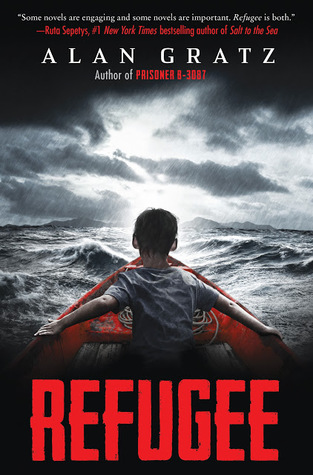
Refugee

Refugee. Alan Gratz. 2017. Scholastic. 352 pages. [Source: Review copy]

First sentence: Crack! Bang!

Premise/plot: Refugee has three narrators and three settings. Josef Landau's story takes place in Germany and at sea in 1939; Isabel Fernandez's story takes place in Cuba and at sea in 1994; Mahmoud Bishara's story takes place in Syria and surrounding regions in 2015. Refugee is about three families who had no choice but to flee their countries.

There are many stories about Jews trying to escape Hitler. Josef Landau and his family make it aboard a ship bound for Cuba. You would think that they'd feel safe and secure; confident that at last they've managed to escape Hitler. But Josef's father's time in a camp has made it impossible for him to trust. Josef wants to believe the best....

Isabel and her family have wanted to leave Cuba for years--probably as long as Isabel has been alive. But when protests take an ugly turn and Castro relents and 'allows' people to leave the island, her family jumps at the chance. (It may be her father's ONLY chance to survive. To return to Cuba would at the very least mean imprisonment if not death since he was an active participant in the violent protests.) But they know they are not safe until they've literally walked on dry land in the States. To be "rescued" at sea would be a cruel punishment.

Mahmoud's family is desperate to leave Syria. Many--if not most are. They have no choice but to leave everything behind and set out on a long journey to an uncertain future. Their goal is Europe--the European Union. So few countries in the world are accepting refugees...

These three stories share a common theme.

My thoughts: Refugee is an intense, compelling, engaging read. I read it one sitting; the book would not let me put it down. The situations are dramatic and tense. The characters are well drawn. You can't help getting emotionally involved in their lives and stories. Within a few chapters, how could anyone fail to be drawn into the story?

Refugee is a story that you know is intentionally written to get you to think or rethink where you stand on important issues of immigration and refugees. One could make the argument that it is an issue-driven novel, a "problem" novel.

Refugee is a story whose characters live and breathe. How could it be anything other than a character-driven novel? Or, for that matter how can it be anything other than a plot-driven novel? I mean the ACTION is packed into this one. Each story is a matter of life-and-death. Each chapter pushes you closer and closer. WILL THE FAMILIES FIND SAFETY? Will these characters that you've come to love SURVIVE?


© 2019 Becky Laney of Becky's Book Reviews

Thursday, March 07, 2019

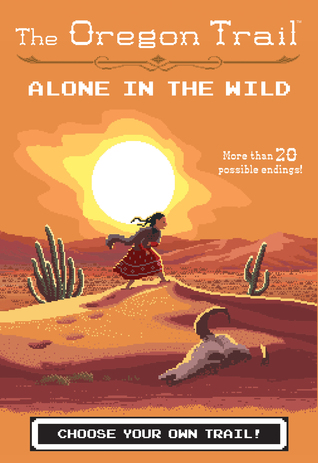
Alone in the Wild

Alone in the Wild (The Oregon Trail #5) Jesse Wiley. 2019. Scholastic. 160 pages. [Source: Review copy]

First sentence: It's 1849, and you and your family are settlers on the journey of a lifetime on the Oregon Trail. So far, the trip has been filled with challenges: runaway oxen, bandits, illness, dangerous wildlife, broken wagon parts, and more. You're lucky you've all made it to South Pass, Wyoming--your halfway point.

Premise/plot: This is a stand alone title in the Oregon Trail Choose Your Own Adventure series by Jesse Wiley. In this one, the reader finds himself/herself ALONE after the fording of a river goes wrong. There are twenty possible endings but only one where you are a) alive and b) reunited with parents. (Not to be confused with the ending where you're a) barely alive and b) reunited with your parents but they're likely to die soon too.) How wisely will you choose?

My thoughts: I loved reading all four books last year in the series. I would recommend all the books.  I enjoyed this stand-alone adventure. I wouldn't mind having even MORE stand-alone adventures. There are still plenty of scenarios left unexplored at this point.

© 2019 Becky Laney of Becky's Book Reviews

Tuesday, February 26, 2019

The First Woman Doctor

The First Woman Doctor: The Story of Elizabeth Blackwell, M.D. Rachel Baker. 1944/1972. Scholastic. 188 pages. [Source: Bought]

First sentence: Three little girls in long, gray Quaker-like gowns, and white dimity bonnets, were walking with their governess and talking quite seriously.

Premise/plot: The First Woman Doctor is a biography of Elizabeth Blackwell, M.D. Over half of the book focuses on her struggle to get higher education. At the time no college or university were accepting women into their programs. A woman doctor?! a woman surgeon?! The idea was laughable, right?! Sure women can be nurses--but nursing isn't a skilled profession! Blackwell is confident, bold, determined, stubborn, diligent. She will be a doctor. She will get an education. Some way, some how she will prove herself. The other half of the book focuses on her life as a doctor. She was determined to help other women become doctors and nurses. She was also determined to help those in the poorest community, the ones who needed medical care the most and were unable to get it.

My thoughts: I enjoyed this one for the most part. The last few chapters were VERY rushed. Most of the biography focuses on four or five years of her life. But the last few chapters speeds through DECADES at a pace that is dizzying and slightly confusing. One gets a good idea of who she was as a person. I do wish that some of the relationships were better explored. This one does a LOT of name-dropping but no 'characterization.'

This biography was originally written in 1944. I wonder if any young girls read this and were inspired to become doctors? It would be nice to think so. 


© 2019 Becky Laney of Becky's Book Reviews

Wednesday, February 20, 2019

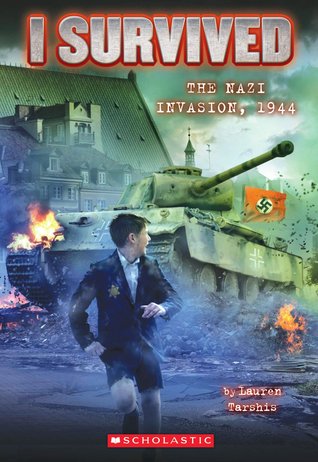
World at War: I Survived The Nazi Invasion 1944

I Survived The Nazi Invasion, 1944. Lauren Tarshis. 2014. Scholastic. 112 pages. [Source: Review copy]

First sentence: All across Europe, Jewish people were being hunted. Millions were already dead. But eleven year old Max Rosen was determined to stay alive.

Premise/plot: Can Max and his sister, Zena, survive the Holocaust? Can they avoid being shot by Nazis? rounded up by Nazis? blown up by Nazis? bombed out by Nazis? Is hiding out in the forests of Poland the best plan? How about joining the Resistance fighters?

My thoughts: I did like this "I Survived..." title better than the one I read earlier in the year. I did like Max and his sister, Zena. I was relieved they survived. But I'm also a little surprised that their father, their Papa, managed to escape a train bound for a concentration camp...and make his way to his kids hiding out in the Forest. I haven't really heard any stories of people who successfully escaped off the train and actually made it to safety. When the novel opens, he's been gone a little over a month--a month since his arrest. It just seems a bit too convenient that this happy reunion happened. Not that I wanted this book to be tragic.

© 2019 Becky Laney of Becky's Book Reviews

Monday, January 07, 2019

Lost in the Antarctic

Lost in the Antarctic: The Voyage of the Endurance. Tod Olson.  2019. Scholastic. 224 pages. [Source: Review copy]

First sentence: The ship didn't stand a chance, and Frank Hurley knew it. He'd been in the engine room with the carpenter, trying desperately to keep the water out.

Premise/plot: If you're looking for a compelling read, I'm happy to recommend Tod Olson's Lost In the Antarctic. It is an action-packed adventure story. And it's nonfiction. Every bit of this one is true. It opens with a bit of a teaser set in October 1915. Readers get a tiny glimpse of the fate of the ship Endurance before the story gets properly started--in early 1914.

My thoughts: I loved, loved, LOVED this one. This is the way I like to do bleakity-bleak let me tell you. It has all the bleak elements--desperation, despair, near-impossible odds, tense relationships--yet it stops just short of tragedy. The miraculous thing about this one is that all humans aboard the ship survived until rescued. You might have noticed I said ALL HUMANS. The animals aboard the vessel were less fortunate. The book contains a number of passages that animal lovers would find revolting.

I first read of the Endurance in Jennifer Armstrong's SHIPWRECK AT THE BOTTOM OF THE WORLD (1998). It was required reading in a library science literature class. I believe it was chosen as representing compelling narrative nonfiction for young people. I couldn't find a copy of the book in print form (all checked out), but the library did have it on available to check out on audio. It was my first audio book. It was SPELLBINDING and COMPELLING and FASCINATING. I found it unforgettable. Especially the plink, plink, plink of the amputated frostbitten toes.

I'd have to reread Shipwreck at the Bottom of the World to see how it compares to Lost in the Antarctic--which one is 'better' from a literary standpoint--but I'm happy to recommend either or both.

Original audience born circa....2007 to 2011.

© 2019 Becky Laney of Becky's Book Reviews

Friday, December 21, 2018

What Is Inside THIS Box?

What Is Inside This Box? (Monkey and Cake #1) Drew Daywalt. Illustrated by Olivier Tallec. 2019. Scholastic. 56 pages. [Source: Review copy]

First sentence: Hello, Monkey. Hello, Cake. What do you have? I have a box. It is a big box.

Premise/plot: Monkey believes that inside this box there is a magic cat. Open the box, the cat is not there. Close the box, it is. Cake, however, believes that inside the box there is a magic dinosaur. Who is right? And does it matter?

My thoughts: This early reader is unique and quirky--at least on the surface. At first glance, this one is over-the-top silly. But I don't think it's meant to be taken solely that way. I think it is supposed to get readers thinking deeper. If that isn't the case, why would there be a note to readers asking them questions like...
  • Do you believe in things you can't see?
  • Do people you know believe in things you don't believe in?
  • What do you believe in?
So this book addresses an abstract subject in a silly, light-hearted way. How much sillier can you get than a talking piece of cake?

I do not want to over think this book. I do not want to over think this book. I do not want to over think this book. I'm tempted to though. Let's just leave it as if taken too seriously--taken too far, this one is a theological mess.

© 2018 Becky Laney of Becky's Book Reviews

Thursday, November 29, 2018

Board book: I Love Classical Music

I Love Classical Music: My First Sound Book. Marion Billet. 2019. Scholastic. [Source: Review copy]

First sentence: Wolfgang Amadeus Mozart. The Turkish March. Watch the tigers move to the rhythm. Antonio Vivaldi. Spring from the Four Seasons. Look at the flowers and bugs spring to life!

Premise/plot: This board book "introduces" little ones to six selections of classical music from famous composers. The songs and artists included are as follows: Mozart's The Turkish March, Vivaldi's Spring, Strauss' The Radetzky March,  Schubert's The Trout Quintet, Tchaikovsky's Dance of the Mirlitons, and Paganini's The Campanella.

My thoughts: One of my favorite things about this one is that there is an off/on switch. Board books with batteries are tricky. On the one hand, they are usually fun. On the other hand, the batteries won't last all that long. The more beloved a book is, the quicker the battery dies. Then it is just SAD, SAD, super-sad. Little fingers can touch the 'buttons' on each spread to start and stop the music. Each song lasts under a minute.

© 2018 Becky Laney of Becky's Book Reviews

Tuesday, September 11, 2018

Soof

Soof. Sarah Weeks. 2018. Scholastic. 208 pages. [Source: Review copy]

First sentence: I saw a white rabbit with one bent ear hopping over a giant spoon filled with whipped cream. That's what it looked like to me anyway. I'd been lying on my back in the bed of my father's rusty old pickup truck all morning, watching clouds.

Premise/plot: Soof is a companion novel to So B. It. Heidi is NOT the narrator of Soof. Heidi is an adult now--a married woman with a child on the way. Aurora, the daughter of Ruby and Roy, is our narrator. She's heard stories about Heidi from the womb practically. Her mother crediting Heidi's "luck" for her daughter's miraculous conception. Aurora doesn't have a problem with a far-away-Heidi. There's no competition so long as Heidi stays far-away. But with Heidi coming to visit, well, Aurora is feeling out of sorts. She does NOT understand how Ruby can love Heidi like a daughter. Aurora has her own way of seeing the world and coping with the world, a way that makes her seem odd or quirky. Her mother worries that she might be autistic, might be "on the spectrum." She has taken Aurora to countless doctors trying to find a reason for her daughter's social awkwardness. (You can imagine how Aurora feels about her mother's anxiety. Aurora does NOT want to be explained, she wants to be loved unconditionally.)

Aurora's best friend is a dog named DUCK. Consider yourself warned.

My thoughts: I love, love, love the cover. I do. I'm not sure that I love the text. Aurora is not Heidi. She's her own person. I know in my head that that is a good thing. To compare Aurora and Heidi would be a mistake their parents--and readers--should avoid.

My favorite part of the book comes at the very end when Aurora makes her very first (non-related human) friend, Rosemary.  Though Rosemary only stars in two or three pages at best, I instantly loved her. I'm left imagining how incredibly awesome the whole book would have been if she'd been there from the beginning.

Over half of the novel focuses on life without DUCK and how Aurora is struggling with the loss of her best friend. Perhaps because she's lost her coping mechanism--her furry friend--she's unable to handle Heidi's visit.

It was nice to visit with Heidi again. But she's all grown up and practically a stranger. Readers learn, for example, that Bernadette is all better--she's able to leave her apartment and she's even got a steady boyfriend. Heidi is married, as I mentioned, but we learn nothing about whom she married. So many stories that this adult reader wanted to hear. But the novel is from Aurora's point of view. And Aurora is hostile to Heidi. I hope that Ruby and Heidi are confiding in each other and getting properly caught up. Unfortunately, we're not there to eavesdrop.


© 2018 Becky Laney of Becky's Book Reviews
Wednesday, August 22, 2018

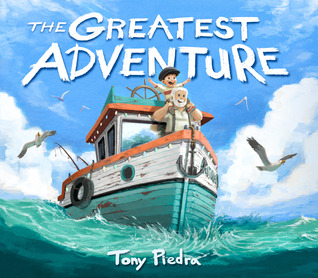
The Greatest Adventure

The Greatest Adventure. Tony Piedra. 2018. Scholastic. 40 pages. [Source: Review copy]

First sentence: Eliot was a great adventurer. After it rained, he sailed the high seas. And in the shadows, he tracked the trails of wild beasts.

Premise/plot: Eliot is a little boy on a quest for BIG adventures. He won’t be satisfied until he has a REAL adventure. Will his grandfather help him out? Can these two adventurous souls set out on an adventure of their own?

My thoughts: I really liked this one. I was charmed by it. I think in large part because of the illustrations. I liked Eliot. I liked the grandpa. I liked how these two got to know each other better. And I just found the story satisfying.

Text: 4 out of 5
Illustrations: 5 out of 5
Total: 9 out of 10

© 2018 Becky Laney of Becky's Book Reviews
Friday, August 03, 2018

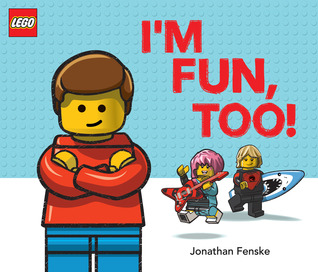
I'm Fun, Too!

I'm Fun, Too! (A Classic Lego Picture Book). Jonathan Fenske. 2018. Scholastic. 32 pages. [Source: Review copy]

First sentence: It is no fun being NO FUN. Look at the NEW guys......with their FANCY HAIR, and FANCY CLOTHES, and FANCY FACES. Everyone wants to play with THEM.

Premise/plot: This picture book is narrated by an ordinary, plain, classic LEGO minifigure. He feels less than until he realizes that he has it good after all. He has potential and promise. He can do anything, be anything: the world is his to build.

My thoughts: I really LOVED this one. I did. It works on so many levels. I loved it as a straightforward story. It was fun--and funny. My favorite part was when the guy in the chicken suit started complaining.
It would be so fun to have such a TASTY TREAT. But I can't even hold a cone.
I also loved it as a moral. There are many, many, many, many picture books about building self-esteem and loving yourself for who you are. But this one is unique. Perhaps because it stars LEGO minifigures it comes across as super-fun and not super-preachy. It doesn't read like a dinky book. IT is just an--dare I say it--AWESOME story.

But this one does more than just celebrate individuality and build self-esteem. It also shows the importance of gratitude, kindness, and imagination.

I also like that it contrasts the generations of imaginative play. "Old" versus "new" or "plain" versus "fancy."

Text: 5 out of 5
Illustrations: 5 out of 5
Total: 10 out of 10

© 2018 Becky Laney of Becky's Book Reviews
Thursday, July 19, 2018

Unicorn Magic

Unicorn Magic. Sabina Gibson. 2018. Scholastic. 32 pages. [Source: Review copy]

First sentence: Periwinkle lived in the Forever Forest with her unicorn friends. Every unicorn in the land was born with a magical power.

Premise/plot: Periwinkle, the blue unicorn, is sad, sad, super-sad because she doesn't think she has any magical powers. Her friend, Birdie, cheers her up by telling her to 'believe in magic and follow your heart.' Periwinkle is thankful for the friendship--and the advice--it's advice she passes on to all of her friends who just so happened to be facing their own discouragements that morning. Will her words be taken to heart?

My thoughts: Unicorn Magic may be an absolute must for little unicorn lovers. I would recommend it to unicorn-lovers for the illustrations alone. There is something mesmerizing about them. But does it have a wider appeal? I'm not sure. I'm not. Reading picture books is super-subjective after all.

For me I found the message to be predictable and generic. I'm just thankful it didn't include a SONG to sing the message at me with the turn of every page. Do we really need to hammer in the message that all of life's problems can be solved by 'following one's heart'? OR that all the magic you need to succeed comes from deep within?

I liked one theme in this one--friends encourage one another. But the other themes not so much.

Text: 2 out of 5
Illustrations: 4 out of 5
Total: 6 out of 10

© 2018 Becky Laney of Becky's Book Reviews

Wednesday, June 27, 2018

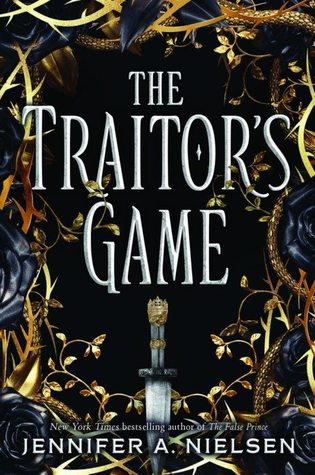
The Traitor's Game

The Traitor's Game. Jennifer A. Nielsen. 2018. Scholastic. 388 pages. [Source: Library]

First sentence: The truth of where I've been for the past three years wasn't what anyone believed.

Premise/plot: The Traitor's Game is Jennifer Nielsen's newest fantasy novel. Kestra, our heroine, has never had an easy life despite what her enemies think. And her enemies are many make no mistake about that. But is Simon, our hero, her enemy? Appearances can be deceiving.

The Traitor's Game has two narrators: Kestra and Simon. Simon is in on the plot to kidnap Kestra, to force her to betray her family by doing their bidding. They are holding her friend, her servant, Darrow, prisoner. He will be killed if she fails at her mission. What is the mission: to find a legendary blade--the Olden Blade--a knife that can supposedly kill Lord Endrick himself. (As it is now with his magic he's virtually immortal and absolutely evil through and through.) Her father, Lord Dallisor, serves Lord Endrick. Kestra's family is on the "wrong" side as far as Simon and his associates are concerned. Simon is NOT working alone; he is not giving orders but taking orders. So is Trina. The difference between the two is that Simon has empathy and Trina not so much.

Kestra does not love her father. They mutually loathe one another. But that doesn't mean she's automatically ready to betray her family, her country, and sever all ties with home. Even if she does think Lord Endrick needs to be stopped by someone somehow someway. She'll cooperate--up to a certain point at least--but trust Trina or Simon enough to join their rebellion?! She's not ready to go there.

The Traitor's Game is an action-packed fantasy with mystery and danger.

My thoughts: I enjoyed this one. I did. I liked both Simon and Kestra. Dual narration doesn't always work for me, but in this case it did. The world-building was good, nothing neat and tidy about it. It never info-dumped in my opinion. In fact it added to the suspense of the novel. The suspense comes from the mystery surrounding the different races/nations. It does not come from the romance--which is as it should be in my opinion. This book did not need the suspense to come from will she or won't she end up kissing Simon.

I will definitely read the next book when it comes out.

© 2018 Becky Laney of Becky's Book Reviews
Tuesday, May 08, 2018

Exo

Exo. Fonda Lee. 2017. Scholastic. 384 pages. [Source: Review copy]

First sentence: The boy was watching them. Donovan had seen him before: number 53 by his jersey, ginger-haired, stocky.

Premise/plot: Love science fiction? Looking to start a new series? Exo is a futuristic science fiction novel for young adults. It's set on Earth a hundred years after a successful alien invasion. There are a few stubborn humans still fighting for independence and freedom; humans who want their planet back. But Donovan, our hero, isn't one of them. He's an exocel; he's been hardened--quite literally--by alien technology, by Zhree technology. He can armor up and down in a second. His enemies claim the exos are not human at all, and that they are traitors. Soon after the novel opens, Donovan finds himself in trouble. He's been kidnapped by the enemy, by a terrorist group Sapience. He's not killed perhaps because of whose son he is. (His father is Prime Liason between the humans and the aliens. His mother, well, I'll leave that for readers to discover.) What will Donovan learn in his captivity? Will his allegiance be swayed?

My thoughts: I found this a quick read. I do enjoy science fiction. I'm not sure alien invasion is my absolute favorite and best sub-genre of science fiction. But I enjoyed this one. I did. I definitely liked Donovan. Science fiction can sometimes be action-driven or premise-driven. Science fiction can sometimes be so science-fiction-y that characterization just doesn't matter all that much. I would not say that is the case with Exo. Yes, there is plenty of action. But Donovan and his parents are definitely fleshed out well.

This is the first book. I would love to learn more about the aliens who have taken over Earth. Are they as benevolent and good as Donovan thinks? Are they keeping secrets from the humans? Is life truly better after the invasion? Do they truly know what is best for us?


© 2018 Becky Laney of Becky's Book Reviews

Friday, May 04, 2018

A Girl Named Misty

American Girl: A Girl Named Misty: The True Story of Misty Copeland. Kelly Starling Lyons. 2018. Scholastic. 48 pages. [Source: Review copy]

First sentence: Misty Copeland loved to dance.

Premise/plot: A Girl Named Misty is an early chapter book biography of Misty Copeland, an accomplished African American ballerina. It is one of the new books in the nonfiction series by AmericanGirl. Other titles include A Girl Named Hillary and A Girl Named Rosa.

 My thoughts: I enjoyed this one! I know I've said this a thousand times--and a thousand times I've meant it--but biographies have come a LONG way since I was in elementary school. I won't say I wish I'd read it as a child because that would be impossible for several reasons. One being that Misty Copeland would have still been in elementary school herself. The second being that there's still the problem of time travel! But I am so happy that nonfiction books have improved greatly in recent decades. That there are more choices than ever before in terms of subjects.


© 2018 Becky Laney of Becky's Book Reviews