Footsteps in the Dark. Georgette Heyer. 1932/2019. Sourcebooks. 432 pages. [Source: Review copy]
First sentence: "And I suppose this is the approach-course," said Charles Malcolm. "Full of natural hazards." His wife, Celia, replied with dignity: "That is the tennis-court.' Charles made a derisive noise. "All it needs," she said, eyeing him, "is a little leveling." "All it needs," said Charles rudely, "is a hay-cutter and a steam-roller. And this is the place you wouldn't sell!"
Premise/plot: Is the house haunted or not--that is the question driving Georgette Heyer's Footsteps in the Dark. Local legend has it that the place is haunted by THE MONK. But is it? Or is there a human element to the mischievous happenings?
This mystery stars four main characters. Charles and Celia Malcolm are the married couple. Celia has a brother, Peter, and a sister, Margaret Fortescue. (There's also an aunt.) They work together to try to solve the mystery. Secret passages, tunnels, doors. Weird/spooky howls. And always, always mysterious footsteps in the dark. The men definitely think there's someone in the community with ulterior motives--someone who wants them to sell the property. But who?
My thoughts: Footsteps in the Dark is not Georgette Heyer's finest mystery novel. It's a bit scattered. It can be hilarious--in a dry, witty way--at times. But for the most part, it isn't quite a page-turner. At least not until the very, very end. The last third of the novel ZOOMS. I ultimately found it worth it--but for those with little patience, I'd recommend her other mystery novels.
© 2019 Becky Laney of Becky's Book Reviews
Showing posts with label Source Books. Show all posts
Thursday, May 23, 2019
Friday, April 26, 2019
Duplicate Death
Duplicate Death. (Inspectors Hannasyde and Hemingway #7) Georgette Heyer. 1951/2019. Sourcebooks. 400 pages. [Source: Review copy]
First sentence: There were several promising-looking letters in the pile laid on Mrs. James Kane's virgin breakfast-plate on Monday morning, but, having sorted all the envelopes with the air of one expectant of discovering treasure-trove, she extracted two addressed to her in hands indicative either of illiteracy or of extreme youth.
Premise/plot: Duplicate Death should never, ever, ever be read before They Found Him Dead. Trust me--please. The novel opens and closes with the stars of They Found Him Dead now happily married and the parents of four children. (Patricia Allison and James "Jim" Kane). Why the novel opens and closes with them remains a mystery to me.
Timothy HARTE is madly in love with a young woman, Miss Beulah Birtley. Miss Birtley is working for a difficult woman, Mrs. Haddington; Mrs. Haddington has a beautiful daughter, Cynthia. If it was up to Mrs. Haddington--which it isn't--Cynthia and Timothy would make a match of it. Both young people are at a bridge party at the Haddington house--though I don't quite remember if Miss Birtley is a "guest" or "staff" at the time--when a murder occurs. The investigators from the case are Hannasyde and Hemingway. Both remember Timothy Harte from their previous acquaintance. Both are listed among the suspects, though neither tops the list of SUSPECTS. A second murder throws the investigation off--for a while.
My thoughts: It annoys me that the jacket copy is INACCURATE for this one. Is it really so terribly hard to get a name right? Timothy KANE is not a character in the book. He doesn't exist. Not existing, he doesn't have a fiancee who's a prime suspect. However, Timothy HARTE does exist and does have a fiancee, though she's not really a prime suspect. Also the book stresses the friendship between Timothy KANE and the inspectors; I would say that is misleading as well. Fourteen years--give or take--have gone by without them speaking to each other or "hanging out." I doubt that the Inspectors were thinking of or missing Timothy in all those years. And probably the same could be said for Timothy. They were acquaintances that were on friendly terms--nothing more, nothing less.
All that being said, I liked this one well enough.
© 2019 Becky Laney of Becky's Book Reviews
First sentence: There were several promising-looking letters in the pile laid on Mrs. James Kane's virgin breakfast-plate on Monday morning, but, having sorted all the envelopes with the air of one expectant of discovering treasure-trove, she extracted two addressed to her in hands indicative either of illiteracy or of extreme youth.
Premise/plot: Duplicate Death should never, ever, ever be read before They Found Him Dead. Trust me--please. The novel opens and closes with the stars of They Found Him Dead now happily married and the parents of four children. (Patricia Allison and James "Jim" Kane). Why the novel opens and closes with them remains a mystery to me.
Timothy HARTE is madly in love with a young woman, Miss Beulah Birtley. Miss Birtley is working for a difficult woman, Mrs. Haddington; Mrs. Haddington has a beautiful daughter, Cynthia. If it was up to Mrs. Haddington--which it isn't--Cynthia and Timothy would make a match of it. Both young people are at a bridge party at the Haddington house--though I don't quite remember if Miss Birtley is a "guest" or "staff" at the time--when a murder occurs. The investigators from the case are Hannasyde and Hemingway. Both remember Timothy Harte from their previous acquaintance. Both are listed among the suspects, though neither tops the list of SUSPECTS. A second murder throws the investigation off--for a while.
My thoughts: It annoys me that the jacket copy is INACCURATE for this one. Is it really so terribly hard to get a name right? Timothy KANE is not a character in the book. He doesn't exist. Not existing, he doesn't have a fiancee who's a prime suspect. However, Timothy HARTE does exist and does have a fiancee, though she's not really a prime suspect. Also the book stresses the friendship between Timothy KANE and the inspectors; I would say that is misleading as well. Fourteen years--give or take--have gone by without them speaking to each other or "hanging out." I doubt that the Inspectors were thinking of or missing Timothy in all those years. And probably the same could be said for Timothy. They were acquaintances that were on friendly terms--nothing more, nothing less.
All that being said, I liked this one well enough.
'Look here, I--the thing is--there are things in my life you don't know anything about!'
'Good God, I should hope there were!' retorted Timothy. "I've only known you a month!'
'And some of them you wouldn't like!'
'I daresay. Come to think of it, I can tell you of one thing in your young life I don't like right now, and that's Mr. Daniel Seaton-Carew.'
'I have no wish to appear boastful,' returned young Mr. Harte, 'but from my earliest days it has been said of me by all who know me best that I talk enough for two, or even more.'
'Seaton-Carew is considered to be rather an attractive type.'
'What does he attract? Pond-life?'
'Wireless programmes are neither primarily or secondarily intended for cultured persons,' replied Timothy, quite unruffled. 'Too often they appear to be intended either for the entirely witless, or for those desirous of acquiring without effort a little easy knowledge. I remember that someone once gave a fifteen minute talk on the Battle of Waterloo. A sobering thought.'
The Chief Inspector groaned. 'Any line on it at all?'
'Might be, might not. Doesn't sound like a cinch, from the first report. There were forty-nine people in the house at the time--'
'What?'
'Fifty-five, counting the servants,' said the Superintendent.
'What you [Pershore] want to do is to hire a hall, and give a series of lectures on police work,' interposed Hemingway. 'You'll probably make a lot of money: people will pay to listen to anything! I wouldn't, of course, but that's because I have to listen to you, and even the Department wouldn't expect me to pay for doing what I can't help. Now you stop trying to annoy me, and tell me what's been happening here without any trimmings!'
'Good God!' said Mr. Harte, staring at him between narrowed eyelids. 'You're the Sergeant!'
'Well, I was once, but I've been promoted,' he replied. 'Did you happen to know me when I was a Sergeant, sir?'
'Of course I did!' said Timothy, rising, and going towards him, with his hand held out. 'You probably don't remember me, but don't you remember the Kane case?'
'Perhaps you are confusing popularity with usefulness. Unattached men, Chief Inspector, are greatly in demand amongst hostesses.'
If you were to have given Mr. Godfrey Poulton the choice between having a sewer-rat loose in his house or the late Seaton-Carew, it's my belief he'd have chosen the rat.
The only thing that would surprise me about his case would be if I was able to get a real lead.
Ever add two and two together and get five for an answer? No, you wouldn't because you've got no imagination, but it's what I can see myself doing. All the same, taking your bit of dirt with what I gathered from Lady Nest's way of carrying on, I think this'll bear looking into.
'Look here, I don't mind you making two and two five, but when you start making it six, your'e going too far, Sandy!' expostulated Hemingway.
© 2019 Becky Laney of Becky's Book Reviews
Friday, August 24, 2018
The Conqueror
The Conqueror by Georgette Heyer. 1931/2008. Sourcebooks. 469 pages. [Source: Review copy]
First sentence: There was so much noise in the market-place, such a hubbub of shouting and chaffering, that Herleva dragged herself to the window of her chamber and stood peeping down through the willow-slats that made a lattice over the opening.
Premise/plot: The Conqueror is a historical novel about William the Conqueror. It begins with his birth and ends with his coronation in December of 1066. It is not told from his perspective; it is told from the perspective of one of his loyal men--servants, warriors--Raoul.
My thoughts: Would The Conqueror conquer me or would I conquer The Conqueror? I knew from the start it would be a close call. Indeed it was. If I have biases, I thought they would work in favor of The Conqueror. I love history. I love historical fiction. I often enjoy novels about 'the royals.' It was also written by Georgette Heyer. I love and adore her, right?!?! (I can honestly say that if this was the first Heyer novel I picked up, I would never pick up another one.)
I didn't care about the characters for the most part. I don't blame Raoul, not really. One developed character cannot make a good novel. And essentially that's what we get. We may learn enough about Raoul to find him believable as a human being, but, the other characters not so much. Duke William, aka William the Conqueror remains distant, disconnected, unknowable, unlikable. Scenes vary--alternate--from battle scenes to groups of his men sitting around talking about how distant the Duke is. And perhaps that is how it should be. He's the ruler of Normandy. He's an illegitimate son. He's not overly liked or popular in some circles. Every person is a potential threat, a potential enemy, a potential betrayer. Raoul has proved himself loyal where other men had failed him. Raoul is easily part of his inner circle, but Raoul isn't necessarily an equal-equal either.
The one relationship I liked was between Raoul and Edgar.
Duke William has one thing--possibly two--on his mind. He's an ambitious, greedy man who lusts for the throne of England from a relatively early age. I'm not convinced that Heyer wants us to like him. Actually, I'm not sure of what Heyer intended. I doubt her intentions were to put readers to sleep. I doubt her intentions were to make a 470 page novel feel like 2,000 pages. Were we supposed to be cheering William on throughout the novel? Were we supposed to find the battle scenes thrilling? And his quest to be the next king of England noble and admirable?
I felt relief upon finishing the novel.
© 2018 Becky Laney of Becky's Book Reviews
First sentence: There was so much noise in the market-place, such a hubbub of shouting and chaffering, that Herleva dragged herself to the window of her chamber and stood peeping down through the willow-slats that made a lattice over the opening.
Premise/plot: The Conqueror is a historical novel about William the Conqueror. It begins with his birth and ends with his coronation in December of 1066. It is not told from his perspective; it is told from the perspective of one of his loyal men--servants, warriors--Raoul.
My thoughts: Would The Conqueror conquer me or would I conquer The Conqueror? I knew from the start it would be a close call. Indeed it was. If I have biases, I thought they would work in favor of The Conqueror. I love history. I love historical fiction. I often enjoy novels about 'the royals.' It was also written by Georgette Heyer. I love and adore her, right?!?! (I can honestly say that if this was the first Heyer novel I picked up, I would never pick up another one.)
I didn't care about the characters for the most part. I don't blame Raoul, not really. One developed character cannot make a good novel. And essentially that's what we get. We may learn enough about Raoul to find him believable as a human being, but, the other characters not so much. Duke William, aka William the Conqueror remains distant, disconnected, unknowable, unlikable. Scenes vary--alternate--from battle scenes to groups of his men sitting around talking about how distant the Duke is. And perhaps that is how it should be. He's the ruler of Normandy. He's an illegitimate son. He's not overly liked or popular in some circles. Every person is a potential threat, a potential enemy, a potential betrayer. Raoul has proved himself loyal where other men had failed him. Raoul is easily part of his inner circle, but Raoul isn't necessarily an equal-equal either.
The one relationship I liked was between Raoul and Edgar.
Duke William has one thing--possibly two--on his mind. He's an ambitious, greedy man who lusts for the throne of England from a relatively early age. I'm not convinced that Heyer wants us to like him. Actually, I'm not sure of what Heyer intended. I doubt her intentions were to put readers to sleep. I doubt her intentions were to make a 470 page novel feel like 2,000 pages. Were we supposed to be cheering William on throughout the novel? Were we supposed to find the battle scenes thrilling? And his quest to be the next king of England noble and admirable?
I felt relief upon finishing the novel.
© 2018 Becky Laney of Becky's Book Reviews
Wednesday, June 21, 2017
Return to the Secret Garden
Return to the Secret Garden. Holly Webb. 2016 (November). 240 pages. [Source: Library]
First sentence: The children marched down the street in a long line of twos, and only one of them looked back.
Premise/plot: Emmie Hatton, our heroine, is an orphan. The book opens--in London, 1939--with her orphanage being evacuated to the countryside. All are sent to Misselthwaite Manor. Emmie is upset. You might think naturally so. After all, the children are being sent to the countryside for their safety, in anticipation of London being bombed. It's not just orphans facing this potentially traumatic move. But Emmie is upset by the fact that she can't take "her" cat, Lucy, with her. She's been told that animals are being put down--killed--because there isn't enough food and resources. So to say that Emmie's distraught at the idea of being separated from Lucy isn't that much of a stretch. Life at Misselthwaite Manor is nice enough. She soon finds a DIARY in her bedroom. She reads it: it tells of a lonely miserable girl named Mary. A girl who learned to jump rope. A girl who found a key. A girl who went in search of a door...in a wall. A girl who slowly but surely made friends and found her place to belong. Emmie wants that to be her story as well. So she sets off to find the door. She too finds the Secret Garden. She too makes friends with the gardener, the birds, the flowers. But will she find a family in her new 'temporary' home?
My thoughts: Return to the Secret Garden is written for a much younger audience than the original The Secret Garden, in my opinion. The text is much simpler; the vocabulary much more accessible. Also there isn't as much complexity and depth to the story or to the characters. It definitely is NOT action-driven. I'm not sure I'd call it theme-driven either. But it is very much about belonging and finding a place to call your own. It was nice to revisit some of the original characters. It may not have been the exact book I was hoping for. But it was a pleasant enough, quick enough read.
It would be interesting to see--perhaps as a young adult or adult book--a more direct sequel to the book that focuses on Mary, Colin, and Dickon before, during, and immediately after the Great War, the War to End All Wars. It might prove to be a devastating book--one that you'd have to put in the freezer. But it would be worth reading...at least in the hands of the right author.
© 2017 Becky Laney of Becky's Book Reviews
First sentence: The children marched down the street in a long line of twos, and only one of them looked back.
Premise/plot: Emmie Hatton, our heroine, is an orphan. The book opens--in London, 1939--with her orphanage being evacuated to the countryside. All are sent to Misselthwaite Manor. Emmie is upset. You might think naturally so. After all, the children are being sent to the countryside for their safety, in anticipation of London being bombed. It's not just orphans facing this potentially traumatic move. But Emmie is upset by the fact that she can't take "her" cat, Lucy, with her. She's been told that animals are being put down--killed--because there isn't enough food and resources. So to say that Emmie's distraught at the idea of being separated from Lucy isn't that much of a stretch. Life at Misselthwaite Manor is nice enough. She soon finds a DIARY in her bedroom. She reads it: it tells of a lonely miserable girl named Mary. A girl who learned to jump rope. A girl who found a key. A girl who went in search of a door...in a wall. A girl who slowly but surely made friends and found her place to belong. Emmie wants that to be her story as well. So she sets off to find the door. She too finds the Secret Garden. She too makes friends with the gardener, the birds, the flowers. But will she find a family in her new 'temporary' home?
My thoughts: Return to the Secret Garden is written for a much younger audience than the original The Secret Garden, in my opinion. The text is much simpler; the vocabulary much more accessible. Also there isn't as much complexity and depth to the story or to the characters. It definitely is NOT action-driven. I'm not sure I'd call it theme-driven either. But it is very much about belonging and finding a place to call your own. It was nice to revisit some of the original characters. It may not have been the exact book I was hoping for. But it was a pleasant enough, quick enough read.
It would be interesting to see--perhaps as a young adult or adult book--a more direct sequel to the book that focuses on Mary, Colin, and Dickon before, during, and immediately after the Great War, the War to End All Wars. It might prove to be a devastating book--one that you'd have to put in the freezer. But it would be worth reading...at least in the hands of the right author.
© 2017 Becky Laney of Becky's Book Reviews
Wednesday, July 08, 2015
Ross Poldark
Ross Poldark. (Poldark #1) Winston Graham. 1945/2015. Sourcebooks. 400 pages. [Source: Review copy]
It was windy. The pale afternoon sky was shredded with clouds; the road, grown dustier and more uneven in the past hour, was scattered with blown and rustling leaves.
The novel opens* with the book's hero, Ross Poldark, returning to Cornwall in the fall of 1783. He's returning from war, learning that his father is dead--and that his father hasn't left him much money to work his estate (Nampara) with--also that the woman he thought was his one true love is engaged to another man--Ross' cousin, Francis. But Ross Poldark is resilient--stubborn--someone who knows what he wants and has the gumption to fight for what he wants. Mainly, he will not give up on his home and his mine to try to find a life elsewhere. He may be tempted to want to "fight for" Elizabeth. But mainly the battle is internal: more of a fighting to get her out of his mind and heart.
Is the novel a romance? Yes and no. Yes. Ross Poldark thinks he's madly in love with Elizabeth. And yes, the novel does chronicle his romance with Demelza towards the end. But in many ways, it is not a romance novel. Readers meet dozens of characters from all social classes, and, we follow their stories. For example, the dramatic relationship of Jinny and Jim Carter or Verity and Captain Blamey. Readers spend a lot of time with the lower classes, seeing the effects of poverty up close. And there is a sense of injustice at times at how they're treated and the very lack of opportunities that keep them trapped right where they are. At times--in certain situations--Ross is understanding and becomes something of their champion. (Not that this becomes his full-time job, righting the wrongs, fighting injustice, giving voice to those without. It doesn't. But he is a hard worker; he does dirty his own hands and work alongside others.) The more he "becomes one of them" the less his own class wants to do with him--or so it seems. There are always exceptions!
Ross can be impulsive in his wanting to do the right thing. For example, when he brings home a thirteen-year-old Demelza to be his servant. Does the girl desperately want to escape her own miserable home life where she's often beaten? Yes. Very much. Once Ross sees the scars on her back and learns her story, he wants to protect her. So he offers a job. But how will everyone else respond? Will her father let her go without a fight? without trouble? Not likely! And what will his own class think of this decision? They find it strange and unusual!
Readers get to spend a lot of time with Demelza, Jud, and Prudie. (And I was pleasantly surprised to find that Prudie and Jud actually like Demelza in the book and aren't trying to rid themselves of her every five minutes.)
(The novel closes in December of 1787).
Do I have favorite characters? Yes. I really LOVE Verity. And, of course, Ross and Demelza come to mind as well. If I didn't care about them, then I couldn't like the book overall. And I definitely liked it. I loved, loved, loved some scenes of this one. I didn't love every single scene, every single chapter equally. But there were places I just adored this story.
*The first chapter opens with Ross Poldark returning. Technically, the book has a prologue which introduces readers to Joshua Poldark, Ross' father, who is dying.
© 2015 Becky Laney of Becky's Book Reviews
It was windy. The pale afternoon sky was shredded with clouds; the road, grown dustier and more uneven in the past hour, was scattered with blown and rustling leaves.
The novel opens* with the book's hero, Ross Poldark, returning to Cornwall in the fall of 1783. He's returning from war, learning that his father is dead--and that his father hasn't left him much money to work his estate (Nampara) with--also that the woman he thought was his one true love is engaged to another man--Ross' cousin, Francis. But Ross Poldark is resilient--stubborn--someone who knows what he wants and has the gumption to fight for what he wants. Mainly, he will not give up on his home and his mine to try to find a life elsewhere. He may be tempted to want to "fight for" Elizabeth. But mainly the battle is internal: more of a fighting to get her out of his mind and heart.
Is the novel a romance? Yes and no. Yes. Ross Poldark thinks he's madly in love with Elizabeth. And yes, the novel does chronicle his romance with Demelza towards the end. But in many ways, it is not a romance novel. Readers meet dozens of characters from all social classes, and, we follow their stories. For example, the dramatic relationship of Jinny and Jim Carter or Verity and Captain Blamey. Readers spend a lot of time with the lower classes, seeing the effects of poverty up close. And there is a sense of injustice at times at how they're treated and the very lack of opportunities that keep them trapped right where they are. At times--in certain situations--Ross is understanding and becomes something of their champion. (Not that this becomes his full-time job, righting the wrongs, fighting injustice, giving voice to those without. It doesn't. But he is a hard worker; he does dirty his own hands and work alongside others.) The more he "becomes one of them" the less his own class wants to do with him--or so it seems. There are always exceptions!
Ross can be impulsive in his wanting to do the right thing. For example, when he brings home a thirteen-year-old Demelza to be his servant. Does the girl desperately want to escape her own miserable home life where she's often beaten? Yes. Very much. Once Ross sees the scars on her back and learns her story, he wants to protect her. So he offers a job. But how will everyone else respond? Will her father let her go without a fight? without trouble? Not likely! And what will his own class think of this decision? They find it strange and unusual!
Readers get to spend a lot of time with Demelza, Jud, and Prudie. (And I was pleasantly surprised to find that Prudie and Jud actually like Demelza in the book and aren't trying to rid themselves of her every five minutes.)
(The novel closes in December of 1787).
Do I have favorite characters? Yes. I really LOVE Verity. And, of course, Ross and Demelza come to mind as well. If I didn't care about them, then I couldn't like the book overall. And I definitely liked it. I loved, loved, loved some scenes of this one. I didn't love every single scene, every single chapter equally. But there were places I just adored this story.
*The first chapter opens with Ross Poldark returning. Technically, the book has a prologue which introduces readers to Joshua Poldark, Ross' father, who is dying.
© 2015 Becky Laney of Becky's Book Reviews
Tuesday, January 21, 2014
Lady of the English (2011)
Lady of the English. Elizabeth Chadwick. 2011. Sourcebooks. 544 pages. [Source: Library]
Lady of the English is set during the dispute between Empress Matilda (Henry I's daughter) and King Stephen (Henry I's nephew). These two cousins (through their armies) fought bitterly for the throne of England starting in 1135. Last year, I read one adaptation of that conflict--though it was a bit ridiculous, Passionate Enemies by Jean Plaidy. Lady of the English is told mainly through two perspectives: Empress Matilda (the mother of Henry II) and Queen Adeliza (the widow of Henry I, Matilda's stepmother). Half the book is focused on Matilda's struggle with Stephen, her complicated relationship with her husband, Geoffrey of Anjou, her trying (but not too hard) to balance being a mother with being a strong political/military force to be reckoned with. Readers do spend time with her son, Henry, who would in good time become the next King. The other half of the book is focused on Adeliza's second marriage with William d'Aubigny. Adeliza was a supporter of Matilda; her husband a supporter of King Stephen. But these two were devoted to one another and had quite a large family, especially considering that she was the "barren" wife of Henry I. If Lady of the English is considered a "romance" novel, it would be because of this match.
The battle between Stephen and Matilda is not resolved in this novel. The novel just seems to stop suddenly in the middle of the story. I'd love the chance to read the rest of the story through Matilda's perspective!
I enjoyed this one for the most part. Lady of the English is not a "clean" read, however, there is so much history, so much historical detail, that it is easy to overlook the small percentage of smut when all is considered.
© 2014 Becky Laney of Becky's Book Reviews
Lady of the English is set during the dispute between Empress Matilda (Henry I's daughter) and King Stephen (Henry I's nephew). These two cousins (through their armies) fought bitterly for the throne of England starting in 1135. Last year, I read one adaptation of that conflict--though it was a bit ridiculous, Passionate Enemies by Jean Plaidy. Lady of the English is told mainly through two perspectives: Empress Matilda (the mother of Henry II) and Queen Adeliza (the widow of Henry I, Matilda's stepmother). Half the book is focused on Matilda's struggle with Stephen, her complicated relationship with her husband, Geoffrey of Anjou, her trying (but not too hard) to balance being a mother with being a strong political/military force to be reckoned with. Readers do spend time with her son, Henry, who would in good time become the next King. The other half of the book is focused on Adeliza's second marriage with William d'Aubigny. Adeliza was a supporter of Matilda; her husband a supporter of King Stephen. But these two were devoted to one another and had quite a large family, especially considering that she was the "barren" wife of Henry I. If Lady of the English is considered a "romance" novel, it would be because of this match.
The battle between Stephen and Matilda is not resolved in this novel. The novel just seems to stop suddenly in the middle of the story. I'd love the chance to read the rest of the story through Matilda's perspective!
I enjoyed this one for the most part. Lady of the English is not a "clean" read, however, there is so much history, so much historical detail, that it is easy to overlook the small percentage of smut when all is considered.
© 2014 Becky Laney of Becky's Book Reviews
Tuesday, December 24, 2013
Lady of Quality (1972)
Lady of Quality. Georgette Heyer. 1972. Sourcebooks. 300 pages. [Source: Review Copy]
It is finished. My gloriously grand goal of reading all of Georgette Heyer's romance novels in one year, in order of publication! And it ended on a wonderful note as well. Lady of Quality is among the best of her romances. If you enjoy the friction of Much Ado About Nothing and Pride and Prejudice, you may just adore Lady of Quality. Oh how the sparks fly between the hero and heroine! These two who simply can't stand to be in the same room together, right?!
Miss Annis Wychwood is almost thirty years old. And in that time, the Regency period, thirty might as well have been sixty. Spinster is spinster no matter if you're thirty, blond, and witty or wrinkly, gray, and stubborn. But Annis is comfortable in her singleness. Or at least she prefers to see herself as comfortable. It helps that in Annis' situation, she's wealthy enough to have her own house and household. (By household I mean servants and such). If Annis had to live under her brother's roof, well, it would be a different story altogether. She does NOT get along with her brother, Geoffrey, though she does get along in a way with her sister-in-law. Yes, folks might think it a bit strange that she'd rather be independent and living on her own--and a good day's travel away from her brother and his wife--but they've become accustomed to it. But when our novel opens, Annis is about to do something a bit more unexpected, a bit more shocking.
Lucilla Carleton is just a young thing--not even eighteen--when she decides to run away from her aunt. (Her aunt is her primary guardian.) Her aunt wants her to marry the son of her father's best friend. A man, Ninian, that she's practically grown up with. It's not that she doesn't like him. But she doesn't like him like him. At least she says as much. As does he when given the opportunity. (The two like to bicker about how they don't want to be together.) Annis comes across this bickering pair on her way to Bath. Their carriage (or vehicle) has broken down--a problem with one of the wheels. Annis is too much of a lady to leave the poor girl in distress. She invites the young woman to come with her, to stay with her. Through their trip and the first day back at home, Annis hears all about Lucilla, her aunt, Ninian, and his over-bearing parents the Lord and Lady Iverley. Lucilla has runaway it's true but it's because her aunt is passive aggressive. She manipulates through tears and pleas and looks.
What is Annis to do? Welcome her home to this girl she barely knows yet instantly likes? Or send her packing with much tears of distress? She decides that the girl must write a letter to an aunt. She'll be allowed to stay with Miss Wychwood in Bath, it's true, but it's a temporary solution to the girl's problem. But this nice letter home has unattended results. Her aunt being of the nervous sort on the best of days writes a letter--a tear-soaked and illegible letter to the girl's legal guardian--Lucilla's Uncle Oliver. Oliver Carleton.
The last thing Annis expected was to be visited by Oliver Carleton. A man (from London) with the reputation of the worst sort. A truly grumpy, stubborn sort of man who speaks without thinking of the consequences, who enjoys speaking the truth, the whole truth, and nothing but the truth come what may. Obey society's nicety-nice rules? Not a chance! A man with a sharp but witty tongue comes to Bath to get to the bottom of this mess. He doesn't want Lucilla. He's not there to take her away, he's there to investigate this woman, this stranger who has interfered and butted into his business, his family.
Let the fun begin.
Oliver and Annis. Oh the sparks will fly. Despite her claims of being ancient and spinsterly, Oliver can't help thinking that she's entirely unsuitable for chaperoning his niece. She should be the one being courted and pursued and wooed by men. She's beautiful. She's witty. She's intelligent. There's just a certain something about her that he can't ignore. Annis never in a million years thought she'd feel this way, this maddeningly confusingly wonderful feeling. She can't stand him; and yet, she keeps hoping she'll see him again.
© 2013 Becky Laney of Becky's Book Reviews
It is finished. My gloriously grand goal of reading all of Georgette Heyer's romance novels in one year, in order of publication! And it ended on a wonderful note as well. Lady of Quality is among the best of her romances. If you enjoy the friction of Much Ado About Nothing and Pride and Prejudice, you may just adore Lady of Quality. Oh how the sparks fly between the hero and heroine! These two who simply can't stand to be in the same room together, right?!
Miss Annis Wychwood is almost thirty years old. And in that time, the Regency period, thirty might as well have been sixty. Spinster is spinster no matter if you're thirty, blond, and witty or wrinkly, gray, and stubborn. But Annis is comfortable in her singleness. Or at least she prefers to see herself as comfortable. It helps that in Annis' situation, she's wealthy enough to have her own house and household. (By household I mean servants and such). If Annis had to live under her brother's roof, well, it would be a different story altogether. She does NOT get along with her brother, Geoffrey, though she does get along in a way with her sister-in-law. Yes, folks might think it a bit strange that she'd rather be independent and living on her own--and a good day's travel away from her brother and his wife--but they've become accustomed to it. But when our novel opens, Annis is about to do something a bit more unexpected, a bit more shocking.
Lucilla Carleton is just a young thing--not even eighteen--when she decides to run away from her aunt. (Her aunt is her primary guardian.) Her aunt wants her to marry the son of her father's best friend. A man, Ninian, that she's practically grown up with. It's not that she doesn't like him. But she doesn't like him like him. At least she says as much. As does he when given the opportunity. (The two like to bicker about how they don't want to be together.) Annis comes across this bickering pair on her way to Bath. Their carriage (or vehicle) has broken down--a problem with one of the wheels. Annis is too much of a lady to leave the poor girl in distress. She invites the young woman to come with her, to stay with her. Through their trip and the first day back at home, Annis hears all about Lucilla, her aunt, Ninian, and his over-bearing parents the Lord and Lady Iverley. Lucilla has runaway it's true but it's because her aunt is passive aggressive. She manipulates through tears and pleas and looks.
What is Annis to do? Welcome her home to this girl she barely knows yet instantly likes? Or send her packing with much tears of distress? She decides that the girl must write a letter to an aunt. She'll be allowed to stay with Miss Wychwood in Bath, it's true, but it's a temporary solution to the girl's problem. But this nice letter home has unattended results. Her aunt being of the nervous sort on the best of days writes a letter--a tear-soaked and illegible letter to the girl's legal guardian--Lucilla's Uncle Oliver. Oliver Carleton.
The last thing Annis expected was to be visited by Oliver Carleton. A man (from London) with the reputation of the worst sort. A truly grumpy, stubborn sort of man who speaks without thinking of the consequences, who enjoys speaking the truth, the whole truth, and nothing but the truth come what may. Obey society's nicety-nice rules? Not a chance! A man with a sharp but witty tongue comes to Bath to get to the bottom of this mess. He doesn't want Lucilla. He's not there to take her away, he's there to investigate this woman, this stranger who has interfered and butted into his business, his family.
Let the fun begin.
Oliver and Annis. Oh the sparks will fly. Despite her claims of being ancient and spinsterly, Oliver can't help thinking that she's entirely unsuitable for chaperoning his niece. She should be the one being courted and pursued and wooed by men. She's beautiful. She's witty. She's intelligent. There's just a certain something about her that he can't ignore. Annis never in a million years thought she'd feel this way, this maddeningly confusingly wonderful feeling. She can't stand him; and yet, she keeps hoping she'll see him again.
© 2013 Becky Laney of Becky's Book Reviews
Wednesday, December 18, 2013
Charity Girl (1970)
Charity Girl. Georgette Heyer. 1970/2008. Sourcebooks. 282 pages. [Source: Review copy]
Charity Girl is a pleasant but not outstanding historical romance. Viscount Desford (first name, Ashley) "rescues" a young "orphan" girl named Charity. Cherry has been staying with her aunt, but, she's had enough and is desperate enough to travel on her own to London in search of a grandfather she's never met. He takes her with him to London, drives straight to her grandfather's residence and discovers much too late that he has left town. He decides right then and there to take her to Henrietta's house and place her in her keeping. Henrietta is his good, good friend. The families, at one time at least, were hoping the two lifelong friends would make a match of it. He begins the search for the grandfather on his own. The whole book focuses in on his search to find her family, find someone who cares about her. Now and then readers learn of Henrietta and Cherry and what they've been doing, but, not that often. His adventures aren't packed with action and excitement so much as dialogue and travel updates. By the end, there is some life to be found in the novel. Cherry's father whom everyone believed to be dead returns and he's always a step or two before or a step or two behind Desford. I enjoyed this one well enough to keep reading. It wasn't a slow read for me. But it lacks some of the liveliness and fun of previous Heyer novels. It didn't WOW me.
© 2013 Becky Laney of Becky's Book Reviews
Charity Girl is a pleasant but not outstanding historical romance. Viscount Desford (first name, Ashley) "rescues" a young "orphan" girl named Charity. Cherry has been staying with her aunt, but, she's had enough and is desperate enough to travel on her own to London in search of a grandfather she's never met. He takes her with him to London, drives straight to her grandfather's residence and discovers much too late that he has left town. He decides right then and there to take her to Henrietta's house and place her in her keeping. Henrietta is his good, good friend. The families, at one time at least, were hoping the two lifelong friends would make a match of it. He begins the search for the grandfather on his own. The whole book focuses in on his search to find her family, find someone who cares about her. Now and then readers learn of Henrietta and Cherry and what they've been doing, but, not that often. His adventures aren't packed with action and excitement so much as dialogue and travel updates. By the end, there is some life to be found in the novel. Cherry's father whom everyone believed to be dead returns and he's always a step or two before or a step or two behind Desford. I enjoyed this one well enough to keep reading. It wasn't a slow read for me. But it lacks some of the liveliness and fun of previous Heyer novels. It didn't WOW me.
© 2013 Becky Laney of Becky's Book Reviews
Wednesday, September 04, 2013
Bath Tangle (1955)
Bath Tangle. Georgette Heyer. 1955/2011. Sourcebooks. 368 pages. [Source: Review Copy]
I may not have loved Bath Tangle the first time I read it, but I REALLY loved it this time!!! One thing I'm learning by rereading all the Heyer romances is that timing is everything, that there is a right mood and a wrong mood for reading. This time, I was definitely in the right mood to enjoy Bath Tangle from cover to cover.
Heyer is sometimes compared to Jane Austen. Bath Tangle shares some similarities with Pride and Prejudice and Persuasion. The feisty relationship between Ivo, the Marquis of Rotherham, and Serena is in some ways like that of Elizabeth and Darcy. Ivo and Serena were at one point--perhaps five to seven years before the start of Bath Tangle?--engaged to be married. I wouldn't say there is regret on her part, at least not that she'd ever admit, however, there is enough regret on his side--which he hides under some pride. There are hints at Persuasion, but just subtly. The start of Bath Tangle even reminds me a tiny bit of Sense and Sensibility: it starts with a death (Serena's father) and is all about family adjustments. Serena and her step-mother Fanny are out of a home because of an inheritance; and there is some family tension. However, they are not poor.
Serena is close to her step-mother, Fanny, who is several years younger. The two decide to keep house together. Fanny does not want to go back to live with her parents. And Serena does not want to have to live with a fussy aunt. They can chaperon one another. The two eventually decide to go to Bath to finish out their year of mourning. Bath Tangle is about their time there and the men and women they meet. Hector is one of the gentleman they meet. He and Serena flirted years ago; he thought she was THE ONE. She is very pleased to see him again. She has very fond memories of being worshiped. The two do not announce their engagement, but they do come to an agreement. Emily is a young woman that Serena and Fanny spend some time with. Emily is the fiancee of Ivo. Fanny thinks the marriage would be a huge mistake. Serena thinks that Emily just needs time and training, that she can be made to be worthy of Ivo. Mrs. Floore is a very interesting character, as well, she is Emily's grandmother.
The "tangle" of the title is very appropriate for the relationships in Bath Tangle are very messy. Even though Ivo is not present in a great many scenes, I felt his presence was still FELT throughout much of the novel. I really thought the tension between Ivo and Serena was great. Loved all the arguing. Loved how he understood her better than Hector! The last third of the novel was practically perfect.
Bath Tangle is a romantic comedy. The love lives of most of the characters are settled by the end of the novel.
I also appreciated the historical detail in this one. There is some time spent discussing Glenarvon by Caroline Lamb, which was quite a sensation in 1816. Also there is discussion of the wedding (or upcoming wedding) of Princess Charlotte and Prince Leopold.
© 2013 Becky Laney of Becky's Book Reviews
I may not have loved Bath Tangle the first time I read it, but I REALLY loved it this time!!! One thing I'm learning by rereading all the Heyer romances is that timing is everything, that there is a right mood and a wrong mood for reading. This time, I was definitely in the right mood to enjoy Bath Tangle from cover to cover.
Heyer is sometimes compared to Jane Austen. Bath Tangle shares some similarities with Pride and Prejudice and Persuasion. The feisty relationship between Ivo, the Marquis of Rotherham, and Serena is in some ways like that of Elizabeth and Darcy. Ivo and Serena were at one point--perhaps five to seven years before the start of Bath Tangle?--engaged to be married. I wouldn't say there is regret on her part, at least not that she'd ever admit, however, there is enough regret on his side--which he hides under some pride. There are hints at Persuasion, but just subtly. The start of Bath Tangle even reminds me a tiny bit of Sense and Sensibility: it starts with a death (Serena's father) and is all about family adjustments. Serena and her step-mother Fanny are out of a home because of an inheritance; and there is some family tension. However, they are not poor.
Serena is close to her step-mother, Fanny, who is several years younger. The two decide to keep house together. Fanny does not want to go back to live with her parents. And Serena does not want to have to live with a fussy aunt. They can chaperon one another. The two eventually decide to go to Bath to finish out their year of mourning. Bath Tangle is about their time there and the men and women they meet. Hector is one of the gentleman they meet. He and Serena flirted years ago; he thought she was THE ONE. She is very pleased to see him again. She has very fond memories of being worshiped. The two do not announce their engagement, but they do come to an agreement. Emily is a young woman that Serena and Fanny spend some time with. Emily is the fiancee of Ivo. Fanny thinks the marriage would be a huge mistake. Serena thinks that Emily just needs time and training, that she can be made to be worthy of Ivo. Mrs. Floore is a very interesting character, as well, she is Emily's grandmother.
The "tangle" of the title is very appropriate for the relationships in Bath Tangle are very messy. Even though Ivo is not present in a great many scenes, I felt his presence was still FELT throughout much of the novel. I really thought the tension between Ivo and Serena was great. Loved all the arguing. Loved how he understood her better than Hector! The last third of the novel was practically perfect.
Bath Tangle is a romantic comedy. The love lives of most of the characters are settled by the end of the novel.
I also appreciated the historical detail in this one. There is some time spent discussing Glenarvon by Caroline Lamb, which was quite a sensation in 1816. Also there is discussion of the wedding (or upcoming wedding) of Princess Charlotte and Prince Leopold.
© 2013 Becky Laney of Becky's Book Reviews
Tuesday, August 06, 2013
Cotillion (1953)
Cotillion. Georgette Heyer. 1953/2007. Sourcebooks. 362 pages. [Source: Review Copy]
Cotillion was one of the first Georgette Heyer novels I ever read. I appreciated it even more as a reread. When I (first) read Cotillion, I didn't know Heyer yet; I didn't LOVE Heyer yet. I didn't know her style, her wit, her techniques. Now I do. And it made quite the difference. In my first review, I complained about the slow start. Now, I see Cotillion as being a joy from the very start! I now love it cover to cover!!!
I love how Cotillion begins: with some confusion and a bit of a fuss. A room full of men talking about their eccentric great-uncle, about his money and his will, about his ward, Miss Kitty Charing. Almost all the men in the room feel they know the reason they were invited to visit. Great-Uncle Matthew wants one of his great-nephews to propose to Miss Kitty. The happy couple will receive an inheritance. Otherwise, he will leave his money to charity. Not all the men are eligible. At least one is married already. Not all the men are willing. Three potential suitors are noticeably missing from the party. One of the three is a soldier, he never is part of the story. The other two, however, are key players! Freddy Standen and Jack Westruther. Several proposals are given that weekend...
Freddy Standen is late in arriving. In fact, Miss Kitty encounters him only because she is running away from home. (The whole situation is so embarrassing for her!) He was clueless about the weekend, about the reason for the family get together. Miss Kitty has an aha moment. She does something surprising: she proposes to him. She convinces him that a FAKE betrothal would be just the thing. She could go with him to London, to stay with his family; she could see the sights, she could go shopping, she could go to parties, she could have a life. The betrothal would only last a month or so at most. Just enough for her to have a great time away from home. Perhaps just long enough to make a certain other 'cousin' jealous. He says yes. It's a reluctant yes; Freddy isn't as clever at scheming as Miss Kitty. (And this is Miss Kitty's very first scheme! But it won't be her last...)
Cotillion was enjoyable from start to finish!!! The ending is oh-so-satisfying!!! I enjoyed Miss Kitty and I adored Freddy! I would definitely recommend this one.
© 2013 Becky Laney of Becky's Book Reviews
Cotillion was one of the first Georgette Heyer novels I ever read. I appreciated it even more as a reread. When I (first) read Cotillion, I didn't know Heyer yet; I didn't LOVE Heyer yet. I didn't know her style, her wit, her techniques. Now I do. And it made quite the difference. In my first review, I complained about the slow start. Now, I see Cotillion as being a joy from the very start! I now love it cover to cover!!!
I love how Cotillion begins: with some confusion and a bit of a fuss. A room full of men talking about their eccentric great-uncle, about his money and his will, about his ward, Miss Kitty Charing. Almost all the men in the room feel they know the reason they were invited to visit. Great-Uncle Matthew wants one of his great-nephews to propose to Miss Kitty. The happy couple will receive an inheritance. Otherwise, he will leave his money to charity. Not all the men are eligible. At least one is married already. Not all the men are willing. Three potential suitors are noticeably missing from the party. One of the three is a soldier, he never is part of the story. The other two, however, are key players! Freddy Standen and Jack Westruther. Several proposals are given that weekend...
Freddy Standen is late in arriving. In fact, Miss Kitty encounters him only because she is running away from home. (The whole situation is so embarrassing for her!) He was clueless about the weekend, about the reason for the family get together. Miss Kitty has an aha moment. She does something surprising: she proposes to him. She convinces him that a FAKE betrothal would be just the thing. She could go with him to London, to stay with his family; she could see the sights, she could go shopping, she could go to parties, she could have a life. The betrothal would only last a month or so at most. Just enough for her to have a great time away from home. Perhaps just long enough to make a certain other 'cousin' jealous. He says yes. It's a reluctant yes; Freddy isn't as clever at scheming as Miss Kitty. (And this is Miss Kitty's very first scheme! But it won't be her last...)
Cotillion was enjoyable from start to finish!!! The ending is oh-so-satisfying!!! I enjoyed Miss Kitty and I adored Freddy! I would definitely recommend this one.
© 2013 Becky Laney of Becky's Book Reviews
Monday, July 29, 2013
The Grand Sophy (1950)
The Grand Sophy. Georgette Heyer. 1950/2009. Sourcebooks. 372 pages. [Source: Review Copy]
The first time I read it, I found Sophy Stanton-Lucy to be a delightful, sometimes mischievous, matchmaker. I was not as delighted the second time around. I still think The Grand Sophy is a fun book, however. It's just that I've read better Heyer novels perhaps.
Sophy Stanton-Lucy is going to stay with her aunt, uncle, and cousins while her father travels. She is a young woman of marriageable age. She's just the right age to be a companion to her cousin, Cecelia Rivenhall. Almost everyone from the family loves and adores her. She has a way of livening things up, bringing joy with her wherever she goes. She's hardly predictable! There are a few people, however, who have reservations about her. One is her cousin, Charles Rivenhall. He isn't quite sure that Sophy is a good influence on her cousins. Why would any proper young lady bring a pet monkey with her? She's just so different from all the society ladies. Charles' fiancee Eugenia Wraxton is another who has doubts. The difference between the two is this: Charles is won over, quite won over by his cousin, and Eugenia, well, let's just say that the more the novel goes on, the more she comes to hate or disapprove of Sophy. Charles comes to see Eugenia in a new light. She can lecture on and on and be quite interfering. He also sees that his own family does not quite "like" to spend time in Eugenia's company. The contrast between Eugenia and Sophy is oh-so-evident.
Most of The Grand Sophy focuses on the adventures and misadventures of Sophy and her cousins. Cecelia's love life, for example, leads to many of these adventures. There are quite a few men interested in courting her. And Sophy is often around for these encounters. She is very observant, a bit wiser than Cecelia perhaps, and she has plans and designs on how to help her favorite (Lord Charlbury) win Cecelia's heart in the end.
It was a fun, light novel, a good historical romance. It might not be my absolute favorite Georgette Heyer novel, but, it was a good read all the same. Do you have a favorite Heyer novel?
© 2013 Becky Laney of Becky's Book Reviews
The first time I read it, I found Sophy Stanton-Lucy to be a delightful, sometimes mischievous, matchmaker. I was not as delighted the second time around. I still think The Grand Sophy is a fun book, however. It's just that I've read better Heyer novels perhaps.
Sophy Stanton-Lucy is going to stay with her aunt, uncle, and cousins while her father travels. She is a young woman of marriageable age. She's just the right age to be a companion to her cousin, Cecelia Rivenhall. Almost everyone from the family loves and adores her. She has a way of livening things up, bringing joy with her wherever she goes. She's hardly predictable! There are a few people, however, who have reservations about her. One is her cousin, Charles Rivenhall. He isn't quite sure that Sophy is a good influence on her cousins. Why would any proper young lady bring a pet monkey with her? She's just so different from all the society ladies. Charles' fiancee Eugenia Wraxton is another who has doubts. The difference between the two is this: Charles is won over, quite won over by his cousin, and Eugenia, well, let's just say that the more the novel goes on, the more she comes to hate or disapprove of Sophy. Charles comes to see Eugenia in a new light. She can lecture on and on and be quite interfering. He also sees that his own family does not quite "like" to spend time in Eugenia's company. The contrast between Eugenia and Sophy is oh-so-evident.
Most of The Grand Sophy focuses on the adventures and misadventures of Sophy and her cousins. Cecelia's love life, for example, leads to many of these adventures. There are quite a few men interested in courting her. And Sophy is often around for these encounters. She is very observant, a bit wiser than Cecelia perhaps, and she has plans and designs on how to help her favorite (Lord Charlbury) win Cecelia's heart in the end.
It was a fun, light novel, a good historical romance. It might not be my absolute favorite Georgette Heyer novel, but, it was a good read all the same. Do you have a favorite Heyer novel?
© 2013 Becky Laney of Becky's Book Reviews
Thursday, June 20, 2013
Arabella (1949)
Arabella. Georgette Heyer. 1949/2009. Sourcebooks. 312 pages.
I definitely enjoyed rereading Arabella by Georgette Heyer. Arabella is being treated to a season in London by her godmother. On her way, she runs into a little difficulty. She accidentally meets one of society's most eligible but oh-so-impossible-to-catch bachelors--wealthy of course--Mr. Robert Beaumaris. When she overhears a conversation not to her liking, she impulsively tells a few big lies. She's wealthy too. She understands what it is like to be chased for one's money. She hates all the fuss, too. Of course, at the time she had no idea who he was or how "important" he was in society. She just thought he was arrogant and insufferable! But when her godmother makes much of him, invites him to her debut party, well, Arabella begins to grasp the situation better!
Arabella is enjoyable as a heroine. I also really liked Mr. Beaumaris. I loved getting his point of view! It was fun to see him chase her!
© 2013 Becky Laney of Becky's Book Reviews
I definitely enjoyed rereading Arabella by Georgette Heyer. Arabella is being treated to a season in London by her godmother. On her way, she runs into a little difficulty. She accidentally meets one of society's most eligible but oh-so-impossible-to-catch bachelors--wealthy of course--Mr. Robert Beaumaris. When she overhears a conversation not to her liking, she impulsively tells a few big lies. She's wealthy too. She understands what it is like to be chased for one's money. She hates all the fuss, too. Of course, at the time she had no idea who he was or how "important" he was in society. She just thought he was arrogant and insufferable! But when her godmother makes much of him, invites him to her debut party, well, Arabella begins to grasp the situation better!
Arabella is enjoyable as a heroine. I also really liked Mr. Beaumaris. I loved getting his point of view! It was fun to see him chase her!
© 2013 Becky Laney of Becky's Book Reviews
Labels:
1949,
2009,
adult romance,
books reviewed in 2013,
classics,
Georgette Heyer,
review copy,
romance,
Source Books
Tuesday, June 04, 2013
The Foundling (1948)
The Foundling. Georgette Heyer. 1948/2009. Sourcebooks. 439 pages.
I remember struggling through The Foundling when I first read it in 2010, but this time I enjoyed it much more. The romance isn't strong in this one. It is a 'coming of age' story in a way. Gilly (our hero) is in his twenties but so inexperienced in the real world that he's got a lot to learn before he becomes a "real man." This book is about his adventure into manhood, how he learned how capable he really is in interacting with the world. How he doesn't have to rely on his servants and staff for every single little thing.
Gilly's adventure starts when he decides to "help" his cousin, Matthew, deal with blackmailers. He will go in his cousin's place and handle the situation himself. It worked surprisingly well, but, it wasn't without consequences! For in his journey he picks up TWO unpredictable charges. A young man who is running away from his tutor, and, a young woman who is without any sense whatsoever. He also makes a very determined enemy.
If you're looking for romance and only for romance, The Foundling may prove quite disappointing. This is about his journey: the places he goes, the places he stays, the people he meets, the dangers he meets, the dangers he overcomes. Readers meet several interesting characters: some good guys, some not-so-good guys.
There are better Heyer novels that I would recommend first, but this one is enjoyable enough.
© 2013 Becky Laney of Becky's Book Reviews
I remember struggling through The Foundling when I first read it in 2010, but this time I enjoyed it much more. The romance isn't strong in this one. It is a 'coming of age' story in a way. Gilly (our hero) is in his twenties but so inexperienced in the real world that he's got a lot to learn before he becomes a "real man." This book is about his adventure into manhood, how he learned how capable he really is in interacting with the world. How he doesn't have to rely on his servants and staff for every single little thing.
Gilly's adventure starts when he decides to "help" his cousin, Matthew, deal with blackmailers. He will go in his cousin's place and handle the situation himself. It worked surprisingly well, but, it wasn't without consequences! For in his journey he picks up TWO unpredictable charges. A young man who is running away from his tutor, and, a young woman who is without any sense whatsoever. He also makes a very determined enemy.
If you're looking for romance and only for romance, The Foundling may prove quite disappointing. This is about his journey: the places he goes, the places he stays, the people he meets, the dangers he meets, the dangers he overcomes. Readers meet several interesting characters: some good guys, some not-so-good guys.
There are better Heyer novels that I would recommend first, but this one is enjoyable enough.
© 2013 Becky Laney of Becky's Book Reviews
Monday, June 03, 2013
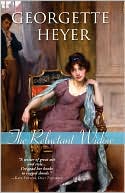
Reluctant Widow (1946)
The Reluctant Widow. Georgette Heyer. 1946/2008. Sourcebooks. 316 pages.
I am so glad I'm rereading the Georgette Heyer books this year, and trying to do it in chronological order too! I remembered this one as being really good. But I didn't remember how delightful and different it was! It is not really like any of Heyer's other romance novels! It definitely has a strong mystery element to it.
The heroine, Elinor Rochdale, was quite enjoyable! When we first meet her, she's intending to be a governess. But a case of mistaken identity changes all that! She is waiting to meet someone to take her to her new place of employment. The man who meets her thinks she is the answer to his advertisement! His advertisement is NOT for a governess. She learns this much too late. But she decides to HEAR the offer. This man, this stranger, wants her to marry his cousin. It's delightfully complicated in the retelling. But he is very persuasive...
I shared more details in my first review...
Essentially I loved it just as much as I did the first time I read it. It was one I loved, loved, loved. I would definitely recommend this one!
© 2013 Becky Laney of Becky's Book Reviews
I am so glad I'm rereading the Georgette Heyer books this year, and trying to do it in chronological order too! I remembered this one as being really good. But I didn't remember how delightful and different it was! It is not really like any of Heyer's other romance novels! It definitely has a strong mystery element to it.
The heroine, Elinor Rochdale, was quite enjoyable! When we first meet her, she's intending to be a governess. But a case of mistaken identity changes all that! She is waiting to meet someone to take her to her new place of employment. The man who meets her thinks she is the answer to his advertisement! His advertisement is NOT for a governess. She learns this much too late. But she decides to HEAR the offer. This man, this stranger, wants her to marry his cousin. It's delightfully complicated in the retelling. But he is very persuasive...
I shared more details in my first review...
Essentially I loved it just as much as I did the first time I read it. It was one I loved, loved, loved. I would definitely recommend this one!
© 2013 Becky Laney of Becky's Book Reviews
Wednesday, May 29, 2013
Envious Casca (1941)
Envious Casca. Georgette Heyer. 1941/2010. Sourcebooks. 396 pages.
Envious Casca is locked-room murder mystery set during the Christmas holidays! Joseph Herriard has taken it upon himself to invite the whole family to his brother's house for Christmas. His brother, Nathaniel, is quite upset by the party, even before it gets properly started! And many of his guests are just as unenthusiastic as he is! The guests include Nathaniel's longtime business partner (Edgar Mottisfont), Nathaniel's niece (Paula) and her guest--a playwright (Willoughby), Nathaniel's nephew (Stephen) and his fiancee (Valerie), and a distant family cousin (Mathilda). Joseph and his wife, Maud, already live with Joseph at his estate, Lexham Manor. It soon becomes apparent to the reader that few of the guests can tolerate one another. Oh, some are better at pretending they can, but, the truth is all the guests are disgruntled for various reasons. (Most of the group HATE Stephen's girlfriend. Most of the group have little interest in hearing Willoughby read his new play aloud; and most definitely they have NO interest in giving him money to produce it!) It is several hours after this (unpleasant) reading that Nathaniel's body is discovered behind locked doors.
I definitely enjoyed this mystery. I enjoyed Heyer's writing and characterization. There were many little things that made me love this one! (For example, Maud and her library book!!!) This was my first introduction to Inspector Hemingway, and I enjoyed meeting him very much! I definitely want to read more in this series. And a locked room mystery can be quite enjoyable.
© 2013 Becky Laney of Becky's Book Reviews
Envious Casca is locked-room murder mystery set during the Christmas holidays! Joseph Herriard has taken it upon himself to invite the whole family to his brother's house for Christmas. His brother, Nathaniel, is quite upset by the party, even before it gets properly started! And many of his guests are just as unenthusiastic as he is! The guests include Nathaniel's longtime business partner (Edgar Mottisfont), Nathaniel's niece (Paula) and her guest--a playwright (Willoughby), Nathaniel's nephew (Stephen) and his fiancee (Valerie), and a distant family cousin (Mathilda). Joseph and his wife, Maud, already live with Joseph at his estate, Lexham Manor. It soon becomes apparent to the reader that few of the guests can tolerate one another. Oh, some are better at pretending they can, but, the truth is all the guests are disgruntled for various reasons. (Most of the group HATE Stephen's girlfriend. Most of the group have little interest in hearing Willoughby read his new play aloud; and most definitely they have NO interest in giving him money to produce it!) It is several hours after this (unpleasant) reading that Nathaniel's body is discovered behind locked doors.
I definitely enjoyed this mystery. I enjoyed Heyer's writing and characterization. There were many little things that made me love this one! (For example, Maud and her library book!!!) This was my first introduction to Inspector Hemingway, and I enjoyed meeting him very much! I definitely want to read more in this series. And a locked room mystery can be quite enjoyable.
© 2013 Becky Laney of Becky's Book Reviews
Friday, May 24, 2013
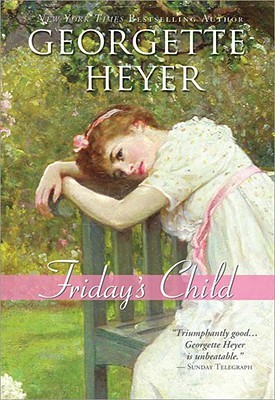
Friday's Child (1944)
When we first meet Lord Sherington* he is proposing to Miss Isabella Milborne. He marries a few chapters later, but, his wife is NOT Miss Milborne. After a brutal rejection, he decides to marry the first woman he sees. He happens across an old friend from childhood days, a Miss Hero Wantage. She is much younger than he is--just seventeen! But she's willing, more than willing, to be his wife. How did these two happen to meet? Well, she's running away from home! So Sherry and Hero set off together to London to arrange their marriage. He settles her into a hotel room, and, then begins to go about the necessary details of arranging a super-quick wedding!
Sherry wanted to marry so he could inherit now instead of later. At first he thinks his marriage won't really change anything at all in his daily life. But, of course, he was mistaken! Hero is completely clueless about how a proper young wife should behave, what things are socially acceptable and socially encouraged, and what things are NOT to be done. Hero absorbs everything, she's very observant but not exactly discerning. She's impulsive too! So if she wants to try something, she does!
Hero's closest friends are her husband's closest friends: Gil, Ferdy, and George. And they all adore "Kitten." In fact, sometimes they understand her better than her own husband. They are quicker to perceive things! They can "read" her better and sometimes they interfere in the marriage to help things run smoother. They often explain things to Sherry in such a way that he finally gets it. Sherry, however, feels that they interfere too much!
While Hero is aware of her feelings for Sherry, will her husband ever realize how he truly feels about his young wife?!
I enjoyed Friday's Child. It is not my absolute favorite Georgette Heyer regency, but, it is quite enjoyable!!!
*Throughout the novel, he's simply "Viscount" or "Sherry" or "Anthony"
© 2013 Becky Laney of Becky's Book Reviews
Thursday, January 03, 2013
The Black Moth (1921)
The Black Moth. Georgette Heyer. 1921/2009. Sourcebooks. 355 pages.
One of my goals for 2013 is to read through Georgette Heyer's romance novels chronologically. Her first romance, her first novel, is The Black Moth. I definitely enjoyed The Black Moth. I enjoyed the characters, the dialogue, the plot, the richness of the details.
The Black Moth is the story of two brothers. John Carstares (sometimes called Jack Carstares OR Anthony Ferndale, also Earl of Wyndam) took the blame when his younger brother, Richard, cheated at cards. The older brother left the country in disgrace, the younger brother took his place in the family and in society. He married and had a son. But is Richard happy knowing that his "happy" life is founded on a lie? Is he happy with his oh-so-beautiful wife, Lady Lavinia? He certainly doesn't like her family depending on him all the time to save them from debt and disgrace. (Why does her family like to spend so much money, to gamble, etc?! Why is the whole family so me-me-me?!) The Black Moth follows the personal lives of BOTH brothers.
John, meanwhile, has returned to England and has become a highwayman. He is extremely particular in who he robs, mind you. And though he might appear a villain, anyone who spends more than a few minutes in his company will think him a good gentleman. His true identity is uncovered by one of his closest friends (from the past), Sir Miles O'Hara; I love Miles and his wife, Molly. Carstares is given plenty of time to appear heroic in the novel. For he saves a young woman from true harm, from being kidnapped...he's wounded in the process. And as he's recuperating in her family's home, the two fall in love with one another. But that love isn't without complications, of course, for his true name would bring disgrace and perhaps ruin her reputation. Unless his name was cleared first...but he couldn't ask his brother after all these years....
I enjoyed reading about both brothers. Poor Richard has quite a wife!!! One can't help enjoying reading about Lady Lavinia. She's so dramatic and selfish and silly. Her scenes with her two brothers and her scenes with Harry Lovelace offer something certainly! And one of Lavinia's brothers is certainly a CHARACTER. His 'real' name, I suppose, is Tracy. But he, like our hero, likes to have plenty of names to match any and every situation. He is John's rival for the affections of Diana.
This one has drama, romance, and some action...
A scene between Lavinia and her brother, Tracy, (Duke of Andover)
One of my goals for 2013 is to read through Georgette Heyer's romance novels chronologically. Her first romance, her first novel, is The Black Moth. I definitely enjoyed The Black Moth. I enjoyed the characters, the dialogue, the plot, the richness of the details.
The Black Moth is the story of two brothers. John Carstares (sometimes called Jack Carstares OR Anthony Ferndale, also Earl of Wyndam) took the blame when his younger brother, Richard, cheated at cards. The older brother left the country in disgrace, the younger brother took his place in the family and in society. He married and had a son. But is Richard happy knowing that his "happy" life is founded on a lie? Is he happy with his oh-so-beautiful wife, Lady Lavinia? He certainly doesn't like her family depending on him all the time to save them from debt and disgrace. (Why does her family like to spend so much money, to gamble, etc?! Why is the whole family so me-me-me?!) The Black Moth follows the personal lives of BOTH brothers.
John, meanwhile, has returned to England and has become a highwayman. He is extremely particular in who he robs, mind you. And though he might appear a villain, anyone who spends more than a few minutes in his company will think him a good gentleman. His true identity is uncovered by one of his closest friends (from the past), Sir Miles O'Hara; I love Miles and his wife, Molly. Carstares is given plenty of time to appear heroic in the novel. For he saves a young woman from true harm, from being kidnapped...he's wounded in the process. And as he's recuperating in her family's home, the two fall in love with one another. But that love isn't without complications, of course, for his true name would bring disgrace and perhaps ruin her reputation. Unless his name was cleared first...but he couldn't ask his brother after all these years....
I enjoyed reading about both brothers. Poor Richard has quite a wife!!! One can't help enjoying reading about Lady Lavinia. She's so dramatic and selfish and silly. Her scenes with her two brothers and her scenes with Harry Lovelace offer something certainly! And one of Lavinia's brothers is certainly a CHARACTER. His 'real' name, I suppose, is Tracy. But he, like our hero, likes to have plenty of names to match any and every situation. He is John's rival for the affections of Diana.
This one has drama, romance, and some action...
A scene between Lavinia and her brother, Tracy, (Duke of Andover)
She stamped angrily. 'Oh, where's the good in being flippant?'A scene between Lavinia and her husband, Richard...
'My dear Lavinia, where's the good in being anything else? The situation strikes me as rather amusing. To think of the worthy Richard so neatly overturning all my plans!'
'If it had not been for you, I might never have married him. Why did you throw them both in my way? Why did I ever set eyes on either?'
'It should have been a good match, my dear, and, if I remember rightly, no one was more alive to that fact than yourself.'
'Still,' he continued reflectively, 'I admit that for the smart lot we are, we do seem rather to have bungled the affair.' (63)
'Richard, I was coming in search of you! Tracy has invited me to Andover for a week--he purposes to ask several people to stay, and there will be parties--and entertainment! You will let me go? Say yet, Dicky--say yes, quickly!'Read The Black Moth
Carstares bowed to his Grace, who stood watching them from the stairs. The bow was returned with exaggerated flourish. Carstares looked down at his wife.
'So soon, Lavinia?' he remonstrated, and indicated her mourning. She shook his hand off impatiently.
'Oh, Dicky, does it matter? What can it signify? I do not ask you to come--'
'No,' he said half-sadly, half-amusedly. 'I notice that, my dear.'
'No, no! I did not mean to be unkind--you must not think that! You don't think it, do you, Dick?'
'Oh, no,' he sighed.
'Good Dicky!' She patted his cheek coaxingly. 'Then you will allow me to go--ah, but yes, yes, you must listen! You know how dull I am, and how silly--'tis because I need change, and I want to go to Andover. I want to go!'
'Yes, dear, I know. But my father is not yet dead six weeks and I cannot think it seemly--'
'Please, Dick, please! Please do not say no! Twill make me so unhappy! Oh you will not be so unkind? You will not forbid me to go!'
'I ask you not to, Lavinia. If you need a change, I will take you quietly to Bath, or where you will. Do not pain me by going to Andover just now.'
'Bath! Bath! What do I want with Bath at this time of the year? Oh, 'tis kind in you to offer, but I want to go to Andover and I want to see all the old friends again. And I want to get away from everything here--'tis all so gloomy--after--after my lord's death!'
'Dearest, of course you shall go away--but if only you would remember that you are in mourning--'
'But 'tis what I wish to forget! Oh, Dicky, don't don't, don't be unkind.'
'Very well, dear. If you must go--go.'
She clapped her hands joyfully.
'Oh thank you, Dicky! And you are not angry with me?'
'No, dear, of course not.' (66-7)
- If you enjoy historical romances (this one is set in the Georgian period)
- If you enjoy clean historical romance
- If you're a fan of Georgette Heyer
Labels:
1921,
2009,
adult romance,
books reviewed in 2013,
classics,
Georgette Heyer,
review copy,
romance,
Source Books
Saturday, August 11, 2012
Pride and Pyramids
Pride and Pyramids: Mr. Darcy in Egypt. Amanda Grange and Jacqueline Webb. 2012. Sourcebooks. 320 pages.
Elizabeth Bennet ran down the stairs of the Darcys' London home with a lightness that belied her thirty-five years.
You may enjoy Pride & Pyramids more than I did. (I was a bit disappointed in the end.) In this Austen-and-Egypt inspired novel, Mr. Edward Fitzwilliam's enthusiasm for a trip to Egypt inspires the whole Darcy family to join in the fun, excitement, and danger of the adventure. Not just Mr. and Mrs. Darcy, but all of their children--and they have oh-so-many children. Also along for the trip is Sophie Lucas, Charlotte's younger sister who is recovering from a broken heart. The family has also hired Mr. Inkworthy, an artist, to paint, sketch, and draw for the trip.
The book has an interesting premise. What if the Darcy family became interested in Egyptology, what if they were adventurous to want to go to an archaeological dig themselves, what if they were in search of a previously-undiscovered tomb full of treasure, etc. But for me this remained an almost book. It had some potential, but it never wowed.
Read Pride & Pyramids
© 2012 Becky Laney of Becky's Book Reviews
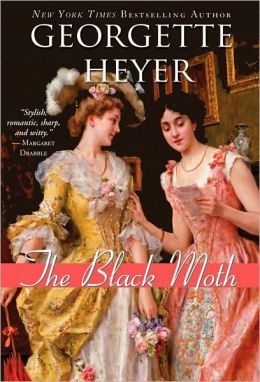
Elizabeth Bennet ran down the stairs of the Darcys' London home with a lightness that belied her thirty-five years.
You may enjoy Pride & Pyramids more than I did. (I was a bit disappointed in the end.) In this Austen-and-Egypt inspired novel, Mr. Edward Fitzwilliam's enthusiasm for a trip to Egypt inspires the whole Darcy family to join in the fun, excitement, and danger of the adventure. Not just Mr. and Mrs. Darcy, but all of their children--and they have oh-so-many children. Also along for the trip is Sophie Lucas, Charlotte's younger sister who is recovering from a broken heart. The family has also hired Mr. Inkworthy, an artist, to paint, sketch, and draw for the trip.
The book has an interesting premise. What if the Darcy family became interested in Egyptology, what if they were adventurous to want to go to an archaeological dig themselves, what if they were in search of a previously-undiscovered tomb full of treasure, etc. But for me this remained an almost book. It had some potential, but it never wowed.
Read Pride & Pyramids
- If you are a fan of Amanda Grange and/or Jacqueline Webb
- If you are interested in Egypt and archaeology of the nineteenth century
- If you like Pride and Prejudice and can't get enough of adaptations, retellings, sequels, etc. This one is unique.
- If you want a little supernatural mixed in
© 2012 Becky Laney of Becky's Book Reviews
Saturday, August 04, 2012
Mansfield Park Revisited
Mansfield Park Revisited. Joan Aiken. 1985/2005. Sourcebooks. 201 pages.
The sudden and unexpected death of Sir Thomas Bertram, while abroad engaged on business relating to his various properties in the West Indies, could be a cause of nothing but sorrow, dismay, and consternation to the baronet's friends in England.
I just LOVE, LOVE, LOVE Joan Aiken's Mansfield Park Revisited. I do. I love the characters, the story, and most of all the redemption. Susan Price, Fanny's younger sister, is the heroine of Joan Aiken's Mansfield Park Revisited. When the novel opens, Edmund and Fanny are on their way to the West Indies with their youngest child.
Susan's day are soon brightened up by the arrival of two people to the neighborhood. A sadder-but-wiser, Mary Crawford, whose health is in decline, and her ever-faithful brother, Henry. Though Susan never knew either Crawford personally, she can't help but be drawn to them--particularly Mary. She knows the two have history with those she loves best--Fanny, Edward, Tom, etc., but she can't help believing that these two have changed for the better through the years. These two are not seeking society in the neighborhood, just a quiet, peaceful place to simply be.
Aiken is great at relationships, and I definitely enjoyed seeing Susan interact with Mary Crawford, Henry Crawford, Tom Bertram, Lady Bertram, Julia Yates, etc. Readers don't know much about Susan from Austen's novel, but, Aiken did a great job giving her life in this sequel. While readers do know more about Mary and Henry Crawford from Austen's Mansfield Park, I can't help believing that Henry Crawford has been misunderstood until Aiken set the story straight. (I do LOVE Henry Crawford.) Mary's redemption was a beautiful thing as well. Aiken did not rewrite the past--or try to justify it exactly--but she has through circumstance after circumstance brought Mary to a reflective, repentant place and given her an opportunity to blossom into a sensitive, perceptive, loving person.
I loved every page of this one. I loved spending time with these characters. It was just a wonderful treat.
My first review.
Read Mansfield Park Revisited
© 2012 Becky Laney of Becky's Book Reviews
The sudden and unexpected death of Sir Thomas Bertram, while abroad engaged on business relating to his various properties in the West Indies, could be a cause of nothing but sorrow, dismay, and consternation to the baronet's friends in England.
I just LOVE, LOVE, LOVE Joan Aiken's Mansfield Park Revisited. I do. I love the characters, the story, and most of all the redemption. Susan Price, Fanny's younger sister, is the heroine of Joan Aiken's Mansfield Park Revisited. When the novel opens, Edmund and Fanny are on their way to the West Indies with their youngest child.
Susan's day are soon brightened up by the arrival of two people to the neighborhood. A sadder-but-wiser, Mary Crawford, whose health is in decline, and her ever-faithful brother, Henry. Though Susan never knew either Crawford personally, she can't help but be drawn to them--particularly Mary. She knows the two have history with those she loves best--Fanny, Edward, Tom, etc., but she can't help believing that these two have changed for the better through the years. These two are not seeking society in the neighborhood, just a quiet, peaceful place to simply be.
Aiken is great at relationships, and I definitely enjoyed seeing Susan interact with Mary Crawford, Henry Crawford, Tom Bertram, Lady Bertram, Julia Yates, etc. Readers don't know much about Susan from Austen's novel, but, Aiken did a great job giving her life in this sequel. While readers do know more about Mary and Henry Crawford from Austen's Mansfield Park, I can't help believing that Henry Crawford has been misunderstood until Aiken set the story straight. (I do LOVE Henry Crawford.) Mary's redemption was a beautiful thing as well. Aiken did not rewrite the past--or try to justify it exactly--but she has through circumstance after circumstance brought Mary to a reflective, repentant place and given her an opportunity to blossom into a sensitive, perceptive, loving person.
I loved every page of this one. I loved spending time with these characters. It was just a wonderful treat.
My first review.
Read Mansfield Park Revisited
- If you love Mansfield Park, if you like Mansfield Park; even if you were bored with it, you may just find something to love in this historical romance
- If you love Jane Austen
- If you like historical romance
© 2012 Becky Laney of Becky's Book Reviews
Saturday, May 19, 2012
Mr. Darcy's Diary
Mr. Darcy's Diary. Amanda Grange. Sourcebooks. 2007. 320 pages.
Monday, 1st July
Have I done the right thing in establishing Georgiana in London, I wonder? The summer is proving to be very hot, and when I visited her this morning, I found her lacking her usual energy. I think I will send her to the coast for a holiday.
Do I have a favorite Amanda Grange novel? I'm not sure. I definitely LOVED this one, Mr. Darcy's Diary!!! The first Amanda Grange "diary" I read was Colonel Brandon's Diary. I've since read Mr Knightley's Diary, Wickham's Diary, and Henry Tilney's Diary. (I'd love to make time to read Captain Wentworth's Diary and Edmund Bertram's Diary.)
I also JUST discovered there will be *new* Amanda Grange this year!!! Pride & Pyramids: Mr. Darcy in Egypt which releases in July. Also Dear Mr. Darcy: A Retelling of Pride and Prejudice which releases in August. I believe this gives an insider's look on Darcy's correspondence (as opposed to his diaries).
So I have high expectations for Amanda Grange. And she has never once disappointed me!!! She gets her Austen characters just right. True, I don't love *all* her books equally. But that is in part because I don't love all of Jane Austen's characters equally. And since her characters are so very true-to-the-book and yet so vividly brought to life all at the same time, it is only natural that I have a similar reaction. At least to a certain degree. I will say this, she can make me appreciate characters that I have been indifferent to in the past. And she can make me appreciate even more characters that I already love and adore.
I loved many, many things about Mr. Darcy's Diary. The thing I love most is how it gives a new perspective on Darcy's relationship with Charles Bingley. In Jane Austen's Pride and Prejudice, readers don't really get a chance to know--really know--Charles Bingley all on his own. I loved reading the scenes with Charles Bingley and Mr. Darcy. You really do get an impression of him, a clearer impression of him. And even though Bingley is far, far from perfect, I can't help smiling at his scenes. As for Mr. Darcy, well, that's only to be expected that there's a high degree of charm to be found. True, he can be smug and arrogant, a bit blinded to reality, but, his transformation is all that much more wondrous as seen slowly through the course of these diary entries.
Read Mr. Darcy's Diary
© 2012 Becky Laney of Becky's Book Reviews
Monday, 1st July
Have I done the right thing in establishing Georgiana in London, I wonder? The summer is proving to be very hot, and when I visited her this morning, I found her lacking her usual energy. I think I will send her to the coast for a holiday.
Do I have a favorite Amanda Grange novel? I'm not sure. I definitely LOVED this one, Mr. Darcy's Diary!!! The first Amanda Grange "diary" I read was Colonel Brandon's Diary. I've since read Mr Knightley's Diary, Wickham's Diary, and Henry Tilney's Diary. (I'd love to make time to read Captain Wentworth's Diary and Edmund Bertram's Diary.)
I also JUST discovered there will be *new* Amanda Grange this year!!! Pride & Pyramids: Mr. Darcy in Egypt which releases in July. Also Dear Mr. Darcy: A Retelling of Pride and Prejudice which releases in August. I believe this gives an insider's look on Darcy's correspondence (as opposed to his diaries).
So I have high expectations for Amanda Grange. And she has never once disappointed me!!! She gets her Austen characters just right. True, I don't love *all* her books equally. But that is in part because I don't love all of Jane Austen's characters equally. And since her characters are so very true-to-the-book and yet so vividly brought to life all at the same time, it is only natural that I have a similar reaction. At least to a certain degree. I will say this, she can make me appreciate characters that I have been indifferent to in the past. And she can make me appreciate even more characters that I already love and adore.
I loved many, many things about Mr. Darcy's Diary. The thing I love most is how it gives a new perspective on Darcy's relationship with Charles Bingley. In Jane Austen's Pride and Prejudice, readers don't really get a chance to know--really know--Charles Bingley all on his own. I loved reading the scenes with Charles Bingley and Mr. Darcy. You really do get an impression of him, a clearer impression of him. And even though Bingley is far, far from perfect, I can't help smiling at his scenes. As for Mr. Darcy, well, that's only to be expected that there's a high degree of charm to be found. True, he can be smug and arrogant, a bit blinded to reality, but, his transformation is all that much more wondrous as seen slowly through the course of these diary entries.
Read Mr. Darcy's Diary
- If you love Jane Austen
- If you love Austen's characters, if you want to spend more time with them, if you want newer, fresher perspectives on their inner lives
- If you enjoy clean Austen retellings/adaptations
- If you're a fan of Amanda Grange
- If you love the book or movie, Pride and Prejudice
© 2012 Becky Laney of Becky's Book Reviews
Subscribe to:
Posts (Atom)


