Showing posts with label 1921. Show all posts

Saturday, January 12, 2019

The Black Moth

The Black Moth. Georgette Heyer. 1921/2009. Sourcebooks. 355 pages. [Source: Review Copy]
Where have all the good men gone
And where are all the gods?
Where's the streetwise Hercules to fight the rising odds?
Isn't there a white knight upon a fiery steed?
Late at night I toss and I turn
And I dream of what I need ... ~ Bonnie Tyler, "Holding Out For a Hero"
First sentence: Chadber was the name of the host, florid of countenance, portly of person, and of manner pompous and urbane.

Premise/plot: The Black Moth was Georgette Heyer's first novel; it is a historical romance set in the Georgian period. There are many, many characters and the relationships between the characters can be complicated at times. To clarify, NOT complicated for the reader to understand. But instead complicated to summarize in a review.

But. Essentially it's the story of two brothers: John Carstares and Richard Carstares. (John is also called JACK, Anthony Ferndale, Earl of Wyndam,Wyndam, Mr. Carr, to name a few). Richard, the younger brother, cheated at cards. John thought he was being a hero when he took the blame--the dishonor. He left the country and disappeared from public view. Richard married the woman--Lavinia--that they were both in love with. Richard has been plagued with his wife and HER BROTHERS ever since. One of those brothers is a dashing womanizer, the 'black moth' of which the title speaks. His real name is Tracy Clare Belmanoir, Duke of Andover. (He has aliases as well.)

The novel opens with Jack back in England. He's taken up an eccentric hobby: highway robbery. (Though he is far more principled, I imagine, than an actual highway robber.) Only a few know his real identity--at least so far--but he does have some business to handle. His father has died and he is the heir. He wants Richard to keep everything, but Richard is disgusted by his brother's endless generosity. He is determined to come clean and go public. There's only one thing stopping him, perhaps two: his wife and his lack of backbone.

The Black Moth has a love triangle: Both TRACY and JACK fall for the same woman, Diana...

My thoughts: I can't believe it's been six years since I last read Georgette Heyer!!! I do hope to reread many--if not most--of her romance novels in 2019! I'm not sure I'll take the same approach--chronological--but I might.

I enjoyed this one. I loved, loved, loved Jack. And the romance between Jack and Diana is great. Jack definitely qualifies a sweep-you-off-your-feet, larger-than-life, HERO. But his heroic qualities shine bright because of the blackness of the villain, Tracy.

Diana would definitely have ample cause to join the #metoo movement. She finds herself TWICE kidnapped. Tracy's idea of "wooing" is extreme--no matter the century. There's no excuse for his behavior. Actions speak louder than words. He may profess great, deep, abiding love for Diana. That he HAS to have her to live. He can't live without her. But if he really loved her, he wouldn't kidnap her, hold her hostage, threaten her. It matters little whether the marriage ceremony is before or after the consummation--to him. He boasts that her FAMILY will be so THRILLED to get him as a son-in-law--any family would--that it doesn't matter if he "ruins" her. They'll welcome him with open arms and consider themselves lucky and blessed. 

Does Tracy get away with too much? Yes. Probably. He does NOT get the girl. But he doesn't ever get punished or ostracized because of his behavior. He gets to stay a dashing, daring social darling--though a known rake--and the happy couple allows him. After all, they will be in-laws in a fashion. Lady Lavinia--Richard's wife--is his sister.

This one certainly has characters that you can just LOVE. But it also has characters that you love-to-hate and hate-to-love.

The writing tends to the witty side. And when Heyer isn't delighting us with dialogue...she's giving us ACTION and DRAMA.

A scene between Lavinia and her brother, Tracy, (Duke of Andover)

She stamped angrily. 'Oh, where's the good in being flippant?'
'My dear Lavinia, where's the good in being anything else? The situation strikes me as rather amusing. To think of the worthy Richard so neatly overturning all my plans!'
'If it had not been for you, I might never have married him. Why did you throw them both in my way? Why did I ever set eyes on either?'
'It should have been a good match, my dear, and, if I remember rightly, no one was more alive to that fact than yourself.'
'Still,' he continued reflectively, 'I admit that for the smart lot we are, we do seem rather to have bungled the affair.' (63)
A scene between Lavinia and her husband, Richard...

'Richard, I was coming in search of you! Tracy has invited me to Andover for a week--he purposes to ask several people to stay, and there will be parties--and entertainment! You will let me go? Say yet, Dicky--say yes, quickly!'
Carstares bowed to his Grace, who stood watching them from the stairs. The bow was returned with exaggerated flourish. Carstares looked down at his wife.
'So soon, Lavinia?' he remonstrated, and indicated her mourning. She shook his hand off impatiently.
'Oh, Dicky, does it matter? What can it signify? I do not ask you to come--'
'No,' he said half-sadly, half-amusedly. 'I notice that, my dear.'
'No, no! I did not mean to be unkind--you must not think that! You don't think it, do you, Dick?'
'Oh, no,' he sighed.
'Good Dicky!' She patted his cheek coaxingly. 'Then you will allow me to go--ah, but yes, yes, you must listen! You know how dull I am, and how silly--'tis because I need change, and I want to go to Andover. I want to go!'
'Yes, dear, I know. But my father is not yet dead six  weeks and I cannot think it seemly--'
'Please, Dick, please! Please do not say no! Twill make me so unhappy! Oh you will not be so unkind? You will not forbid me to go!'
'I ask you not to, Lavinia. If you need a change, I will take you quietly to Bath, or where you will. Do not pain me by going to Andover just now.'
'Bath! Bath! What do I want with Bath at this time of the year? Oh, 'tis kind in you to offer, but I want to go to Andover and I want to see all the old friends again. And I want to get away from everything here--'tis all so gloomy--after--after my lord's death!'
'Dearest, of course you shall go away--but if only you would remember that you are in mourning--'
'But 'tis what I wish to forget! Oh, Dicky, don't don't, don't be unkind.'
'Very well, dear. If you must go--go.'
She clapped her hands joyfully.
'Oh thank you, Dicky! And you are not angry with me?'
'No, dear, of course not.' (66-7)
 A scene between Lavinia and Tracy...
'In love? You? Nonsense! Nonsense! Nonsense! You do not know what the word means. You are like a--like a fish, with no more of love in you than a fish, and no more heart than a fish, and--'
'Spare me the rest, I beg. I am very clammy, I make no doubt, but you will at least accord me more brain than a fish?'
'Oh, you have brain enough!' she raged. 'Brain for evil! I grant you that!'...
'Altogether she's as spirited a filly as you could wish for. All she needs is bringing to heel.'
'Does one bring a filly to heel? I rather thought--'
'As usual, my dear Lavinia, you are right: one does not. One breaks in a filly. I beg leave to thank you for correcting my mixed metaphor.' (75)
Diana meets Tracy
Then came his Grace of Andover upon the stage.
He drew Diana's attention from the first moment that he entered the Pump Room--a black moth amongst the gaily-hued butterflies. (83)
Frank to Tracy
'If you will not try the straight and narrow way, I can only hope that you will fall very deeply and very honestly in love; and that the lady will save you from yourself.'
Jack to his servant, Jim
'I have conceived a dislike--nay, a veritable hatred--for puce. I will wear blue.' (150)
© 2019 Becky Laney of Becky's Book Reviews

Friday, December 09, 2016

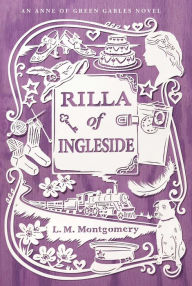
Rilla of Ingleside

Rilla of Ingleside. L.M. Montgomery. 1921. 277 pages. [Source: Bought]

First sentence: It was a warm, golden-cloudy, lovable afternoon. In the big living-room at Ingleside Susan Baker sat down with a certain grim satisfaction hovering about her like an aura; it was four o’clock and Susan, who had been working incessantly since six that morning, felt that she had fairly earned an hour of repose and gossip.

Premise/plot: Rilla of Ingleside chronicles "the great war" from the perspective of Rilla Blythe, Anne and Gilbert's youngest child. When the war begins, she's fourteen or so. But she grows up fast, in part because of the war, because of the changes the war brings, how it effects her family and community. And also in part because she takes on more responsibility. She not only does junior red cross work, I believe, but she fosters a 'war baby.' She takes on essentially a newborn baby 'orphaned' by the war. The mother has died. The father is a soldier--who knows where, who may or may not come back. She is to have 'the raising' of the baby to herself. Rilla is especially fond of Walter, her favorite brother, and Ken, the man she hopes to marry one day. The novel provides a behind the scenes glimpse of what daily life was like during the war, during that time period.

My thoughts: LOVE, LOVE, LOVE this one. It's such a solid and strong--and incredibly emotional--finish to a great series.
All cats are mysterious but Dr. Jekyll-and-Mr. Hyde—”Doc” for short — was trebly so. He was a cat of double personality — or else, as Susan vowed, he was possessed by the devil. To begin with, there had been something uncanny about the very dawn of his existence. 
“The only thing I envy a cat is its purr,” remarked Dr. Blythe once, listening to Doc’s resonant melody. “It is the most contented sound in the world.”
Dog Monday was the Ingleside dog, so called because he had come into the family on a Monday when Walter had been reading Robinson Crusoe. He really belonged to Jem but was much attached to Walter also. He was lying beside Walter now with nose snuggled against his arm, thumping his tail rapturously whenever Walter gave him an absent pat. Monday was not a collie or a setter or a hound or a Newfoundland. He was just, as Jem said, “plain dog” — very plain dog, uncharitable people added. Certainly, Monday’s looks were not his strong point.
“There’s no use thinking about what you’re going to do — you are tolerably sure not to do it.”
The new day is knocking at the window. What will it bring us, I wonder.

“What does it matter if there’s going to be a war over there in Europe? I’m sure it doesn’t concern us.” Walter looked at her and had one of his odd visitations of prophecy. “Before this war is over,” he said — or something said through his lips—”every man and woman and child in Canada will feel it — you, Mary, will feel it — feel it to your heart’s core. You will weep tears of blood over it. The Piper has come — and he will pipe until every corner of the world has heard his awful and irresistible music. It will be years before the dance of death is over — years, Mary. And in those years millions of hearts will break.”

“Susan, I keep thinking today of once when he cried for me in the night. He was just a few months old. Gilbert didn’t want me to go to him — he said the child was well and warm and that it would be fostering bad habits in him. But I went — and took him up — I can feel that tight clinging of his little arms round my neck yet. Susan, if I hadn’t gone that night, twenty-one years ago, and taken my baby up when he cried for me I couldn’t face tomorrow morning.”

Nobody missed Dog Monday at first. When they did Shirley went back for him. He found Dog Monday curled up in one of the shipping-sheds near the station and tried to coax him home. Dog Monday would not move. He wagged his tail to show he had no hard feelings but no blandishments availed to budge him. “Guess Monday has made up his mind to wait there till Jem comes back,” said Shirley, trying to laugh as he rejoined the rest.
A baby by day was dreadful enough; a baby by night was unthinkable.
Even the most thoughtful and watchful of parents do not see everything that goes on under their very noses.
I wonder if those of us who have lived half our lives in the old world will ever feel wholly at home in the new.

No matter how much we value what our lessons have brought us we don’t want to go on with the bitter schooling.
“I wonder,” said Miss Oliver, “if humanity will be any happier because of aeroplanes. It seems to me that the sum of human happiness remains much the same from age to age, no matter how it may vary in distribution, and that all the ‘many inventions’ neither lessen nor increase it.”
The job isn’t finished — it isn’t really begun. The old world is destroyed and we must build up the new one. It will be the task of years. 
“Is it Rilla-my-Rilla?” he asked, meaningly. Emotion shook Rilla from head to foot. Joy — happiness — sorrow — fear — every passion that had wrung her heart in those four long years seemed to surge up in her soul for a moment as the deeps of being were stirred. She had tried to speak; at first voice would not come. Then—”Yeth,” said Rilla.

© 2016 Becky Laney of Becky's Book Reviews
Friday, January 23, 2015

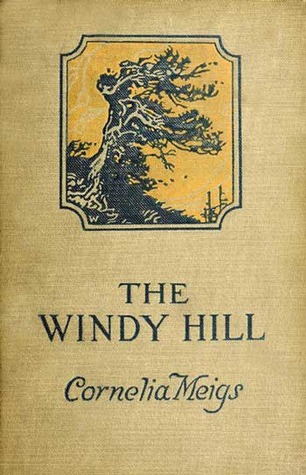
Windy Hill (1921)

The Windy Hill. Cornelia Meigs. 1921. 210 pages. [Source: Bought]

The Windy Hill by Cornelia Meigs is a 1922 Newbery Honor book. She received two more Newbery Honors for Clearing Weather and Swift Rivers. Her Invincible Louisa won the Newbery in 1934. (I plan on reading Invincible Louisa in February.)

Oliver and Janet are staying with their cousin Jasper. In the past, they've loved spending time with him. He's a real favorite. But. This visit there is something a bit off. Jasper isn't acting like himself at all. They're worried about him, and rightly so it turns out.

The book opens with Oliver escaping or running away. Jasper has arranged for them both (Oliver and Janet) to meet someone--a cousin their own age, a girl. It's the last bit that decides it for Oliver. So off he goes in bit of a mood. But he meets someone very interesting. Two people actually. A man he calls Beeman, and a girl around his own age. And the 'Beeman' is quite a storyteller. They become friends, and, he brings Janet to meet them both. They eventually confide in him their worries about Jasper...

Did I enjoy The Windy Hill? For the most part, yes. I liked the Beeman's stories best of all. These stories are adventure-packed. They also turn out to be true family stories. The book itself has some excitement--or action. The characters do more than sit around listening to stories. It concerns a flood. So plenty of drama is to be had. 

Windy Hill was a quick read. It was enjoyable enough. Perhaps not a 'must' read, but nice all the same.

© 2015 Becky Laney of Becky's Book Reviews
Sunday, April 14, 2013

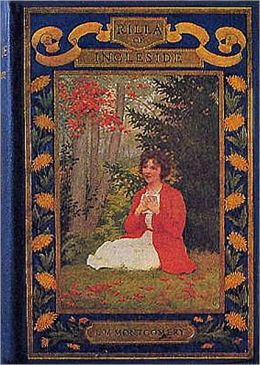
Sunday Salon: Reading Rilla of Ingleside (1921)

Rilla of Ingleside. L.M. Montgomery. 1921. 280 pages.

IT was a warm, golden-cloudy, lovable afternoon. In the big living-room at Ingleside Susan Baker sat down with a certain grim satisfaction hovering about her like an aura; it was four o'clock and Susan, who had been working incessantly since six that morning, felt that she had fairly earned an hour of repose and gossip. 

 I LOVE, LOVE, LOVE Rilla of Ingleside. It is beautiful, heartbreaking, wonderful, memorable, and compelling. It is everything it should be. It closely follows World War I--from the Canadian home front; and at times it shows just how ugly and frightening war can be. It's a patriotic novel, however. Rilla of Ingleside is also an unforgettable coming of age story. Readers watch Rilla mature from a laughter-loving fourteen year old girl into a strong, resilient young woman ready for life and love. This is Rilla's story from cover to cover. Rilla is forced to say goodbye to three brothers (Jem, Walter, Shirley), two childhood friends (Jerry, Carl), and her young love (Kenneth Ford) as they go off to war and uncertain futures. And she has to do with a smile on her face and no tears. Will she ever see any of them again? Will they return whole? Will life ever be the same for any of them again?

But Rilla is ever-busy. Not only is she doing work for the Red-Cross, she's adopted a war orphan! Though she's just fourteen, this young baby boy will be HER responsibility. For Rilla who has never really "liked" babies or found them cute and adorable, this is a challenge...at least at first. But as he starts to grow and change...her heart melts.  

My favorite characters were Rilla, Susan Baker, Walter, Miss Oliver, and Dog Monday. If you've read this one, don't you agree that the Dog Monday parts are incredibly moving?

From chapter one:
There was a big, black headline on the front page of the Enterprise, stating that some Archduke Ferdinand or other had been assassinated at a place bearing the weird name of Sarajevo, but Susan tarried not over uninteresting, immaterial stuff like that; she was in quest of something really vital.
Well, that is all the notes and there is not much else in the paper of any importance. I never take much interest in foreign parts. Who is this Archduke man who has been murdered?" "What does it matter to us?" asked Miss Cornelia, unaware of the hideous answer to her question which destiny was even then preparing. "Somebody is always murdering or being murdered in those Balkan States. It's their normal condition and I don't really think that our papers ought to print such shocking things. 
Wherever Rilla Blythe was, there was laughter.  
There was another occupant of the living-room, curled up on a couch, who must not be overlooked, since he was a creature of marked individuality, and, moreover, had the distinction of being the only living thing whom Susan really hated. All cats are mysterious but Dr. Jekyll-and-Mr. Hyde–"Doc" for short–were trebly so. He was a cat of double personality–or else, as Susan vowed, he was possessed by the devil. To begin with, there had been something uncanny about the very dawn of his existence. Four years previously Rilla Blythe had had a treasured darling of a kitten, white as snow, with a saucy black tip to its tail, which she called Jack Frost. Susan disliked Jack Frost, though she could not or would not give any valid reason therefor.
"Take my word for it, Mrs. Dr. dear," she was wont to say ominously, "that cat will come to no good."
"But why do you think so?" Mrs. Blythe would ask.
"I do not think–I know," was all the answer Susan would vouchsafe.
"The only thing I envy a cat is its purr," remarked Dr. Blythe once, listening to Doc's resonant melody. "It is the most contented sound in the world."
Rilla is the only one of my flock who isn't ambitious. I really wish she had a little more ambition. She has no serious ideals at all–her sole aspiration seems to be to have a good time.
 From chapter two,
Rilla was the "baby" of the Blythe family and was in a chronic state of secret indignation because nobody believed she was grown up. She was so nearly fifteen that she called herself that, and she was quite as tall as Di and Nan; also, she was nearly as pretty as Susan believed her to be. She had great, dreamy, hazel eyes, a milky skin dappled with little golden freckles, and delicately arched eyebrows, giving her a demure, questioning look which made people, especially lads in their teens, want to answer it. Her hair was ripely, ruddily brown and a little dent in her upper lip looked as if some good fairy had pressed it in with her finger at Rilla's christening. Rilla, whose best friends could not deny her share of vanity, thought her face would do very well, but worried over her figure, and wished her mother could be prevailed upon to let her wear longer dresses. She, who had been so plump and roly-poly in the old Rainbow Valley days, was incredibly slim now, in the arms-and-legs period. Jem and Shirley harrowed her soul by calling her "Spider." Yet she somehow escaped awkwardness. There was something in her movements that made you think she never walked but always danced. She had been much petted and was a wee bit spoiled, but still the general opinion was that Rilla Blythe was a very sweet girl, even if she were not so clever as Nan and Di.
Rilla loved Walter with all her heart. He never teased her as Jem and Shirley did. He never called her "Spider." His pet name for her was "Rilla-my-Rilla"–a little pun on her real name, Marilla...
 Dog Monday was the Ingleside dog, so called because he had come into the family on a Monday when Walter had been reading Robinson Crusoe. He really belonged to Jem but was much attached to Walter also. He was lying beside Walter now with nose snuggled against his arm, thumping his tail rapturously whenever Walter gave him a pat. Monday was not a collie or a setter or a hound or a Newfoundland. He was just, as Jem said, "plain dog"–very plain dog, uncharitable people added. Certainly, Monday's looks were not his strong point. Black spots were scattered at random over his yellow carcass, one of them blotting out an eye. His ears were in tatters, for Monday was never successful in affairs of honour. But he possessed one talisman. He knew that not all dogs could be handsome or eloquent or victorious, but that every dog could love. Inside his homely hide beat the most affectionate, loyal, faithful heart of any dog since dogs were; and something looked out of his brown eyes that was nearer akin to a soul than any theologian would allow. Everybody at Ingleside was fond of him, even Susan.
"There's plenty of time for you to be grown up, Rilla. Don't wish your youth away. It goes too quickly. You'll begin to taste life soon enough."
"Taste life! I want to eat it," cried Rilla, laughing. "I want everything–everything a girl can have. I'll be fifteen in another month, and then nobody can say I'm a child any longer. I heard someone say once that the years from fifteen to nineteen are the best years in a girl's life. I'm going to make them perfectly splendid–just fill them with fun."
"There's no use thinking about what you're going to do–you are tolerably sure not to do it."
"Oh, but you do get a lot of fun out of the thinking," cried Rilla.
"You think of nothing but fun, you monkey," said Miss Oliver indulgently, reflecting that Rilla's chin was really the last word in chins. "Well, what else is fifteen for?"
From chapter three,
"The new day is knocking at the window. What will it bring us, I wonder.... "I think the nicest thing about days is their unexpectedness," went on Rilla. "It's jolly to wake up like this on a golden-fine morning and day-dream for ten minutes before I get up, imagining the heaps of splendid things that may happen before night."


© 2013 Becky Laney of Becky's Book Reviews
Thursday, January 03, 2013

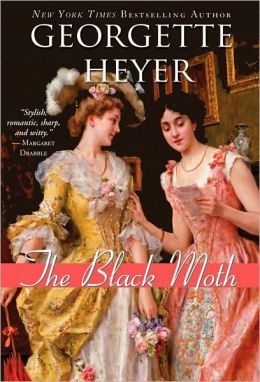
The Black Moth (1921)

The Black Moth. Georgette Heyer. 1921/2009. Sourcebooks. 355 pages.

One of my goals for 2013 is to read through Georgette Heyer's romance novels chronologically. Her first romance, her first novel, is The Black Moth. I definitely enjoyed The Black Moth. I enjoyed the characters, the dialogue, the plot, the richness of the details.

The Black Moth is the story of two brothers. John Carstares (sometimes called Jack Carstares OR Anthony Ferndale, also Earl of Wyndam) took the blame when his younger brother, Richard, cheated at cards. The older brother left the country in disgrace, the younger brother took his place in the family and in society. He married and had a son. But is Richard happy knowing that his "happy" life is founded on a lie? Is he happy with his oh-so-beautiful wife, Lady Lavinia? He certainly doesn't like her family depending on him all the time to save them from debt and disgrace. (Why does her family like to spend so much money, to gamble, etc?! Why is the whole family so me-me-me?!) The Black Moth follows the personal lives of BOTH brothers.

John, meanwhile, has returned to England and has become a highwayman. He is extremely particular in who he robs, mind you. And though he might appear a villain, anyone who spends more than a few minutes in his company will think him a good gentleman. His true identity is uncovered by one of his closest friends (from the past), Sir Miles O'Hara; I love Miles and his wife, Molly. Carstares is given plenty of time to appear heroic in the novel. For he saves a young woman from true harm, from being kidnapped...he's wounded in the process. And as he's recuperating in her family's home, the two fall in love with one another. But that love isn't without complications, of course, for his true name would bring disgrace and perhaps ruin her reputation. Unless his name was cleared first...but he couldn't ask his brother after all these years....

I enjoyed reading about both brothers. Poor Richard has quite a wife!!! One can't help enjoying reading about Lady Lavinia. She's so dramatic and selfish and silly. Her scenes with her two brothers and her scenes with Harry Lovelace offer something certainly! And one of Lavinia's brothers is certainly a CHARACTER. His 'real' name, I suppose, is Tracy. But he, like our hero, likes to have plenty of names to match any and every situation. He is John's rival for the affections of Diana.

This one has drama, romance, and some action...

A scene between Lavinia and her brother, Tracy, (Duke of Andover)
She stamped angrily. 'Oh, where's the good in being flippant?'
'My dear Lavinia, where's the good in being anything else? The situation strikes me as rather amusing. To think of the worthy Richard so neatly overturning all my plans!'
'If it had not been for you, I might never have married him. Why did you throw them both in my way? Why did I ever set eyes on either?'
'It should have been a good match, my dear, and, if I remember rightly, no one was more alive to that fact than yourself.'
'Still,' he continued reflectively, 'I admit that for the smart lot we are, we do seem rather to have bungled the affair.' (63)
A scene between Lavinia and her husband, Richard...
'Richard, I was coming in search of you! Tracy has invited me to Andover for a week--he purposes to ask several people to stay, and there will be parties--and entertainment! You will let me go? Say yet, Dicky--say yes, quickly!'
Carstares bowed to his Grace, who stood watching them from the stairs. The bow was returned with exaggerated flourish. Carstares looked down at his wife.
'So soon, Lavinia?' he remonstrated, and indicated her mourning. She shook his hand off impatiently.
'Oh, Dicky, does it matter? What can it signify? I do not ask you to come--'
'No,' he said half-sadly, half-amusedly. 'I notice that, my dear.'
'No, no! I did not mean to be unkind--you must not think that! You don't think it, do you, Dick?'
'Oh, no,' he sighed.
'Good Dicky!' She patted his cheek coaxingly. 'Then you will allow me to go--ah, but yes, yes, you must listen! You know how dull I am, and how silly--'tis because I need change, and I want to go to Andover. I want to go!'
'Yes, dear, I know. But my father is not yet dead six  weeks and I cannot think it seemly--'
'Please, Dick, please! Please do not say no! Twill make me so unhappy! Oh you will not be so unkind? You will not forbid me to go!'
'I ask you not to, Lavinia. If you need a change, I will take you quietly to Bath, or where you will. Do not pain me by going to Andover just now.'
'Bath! Bath! What do I want with Bath at this time of the year? Oh, 'tis kind in you to offer, but I want to go to Andover and I want to see all the old friends again. And I want to get away from everything here--'tis all so gloomy--after--after my lord's death!'
'Dearest, of course you shall go away--but if only you would remember that you are in mourning--'
'But 'tis what I wish to forget! Oh, Dicky, don't don't, don't be unkind.'
'Very well, dear. If you must go--go.'
She clapped her hands joyfully.
'Oh thank you, Dicky! And you are not angry with me?'
'No, dear, of course not.' (66-7)
 Read The Black Moth
  • If you enjoy historical romances (this one is set in the Georgian period)
  • If you enjoy clean historical romance
  • If you're a fan of Georgette Heyer
© 2013 Becky Laney of Becky's Book Reviews

Tuesday, February 07, 2012

We

We. Yevgeny Zamyatin. Translated by Mirra Ginsburg. 1921/1972*. HarperCollins. 233 pages.

I shall simply copy, word for word, the proclamation that appeared today in the One State Gazette... 

We is a dystopian novel. I've been wanting to read it for almost as long as I've been blogging.

What did I think of We?

I found the novel interesting but not necessarily comprehensible. I struggled to make sense of this one. (I think I followed about a third of it.) I'm sure I missed much of what was going on simply because I was trying to make sense of this world, this society. Could the problem--for me--be this society's emphasis on math and logic?

The narrator of We is a state mathematician named D-503. (I did figure out that men have a consonant and an odd number; women have a vowel and an even number). Everything is calculated and precise and governed or regulated. Even intimate relationships. D-503 has two registered partners--O-90 and I330. O-90 desperately wants a child, a dream that isn't likely to come true. And I330 is a big, big tease who manipulates men in oh-so-many ways. Perhaps because D-503 cannot understand her at all, cannot predict anything about her, she fascinates him, enslaves him.

So one of D-503's projects is working on the spaceship, Integral. One State has plans to conquer the universe. Perhaps because of what he does, I-330 sees an opportunity to use him to get what she wants...
A human being is like a novel: until the last page you don't know how it will end. Or it wouldn't be worth reading... (162)

Read We
  • If you are looking for a literary quality to your science fiction
  • If you enjoy a challenge as you read; if you enjoy complexity
  • If you are looking to read a science fiction classic
  • If you are interested in Russian literature from this time period
*It was first translated into English (according to Wikipedia) in 1924, this translation by Mirra Ginsburg was done in 1972. 

© 2012 Becky Laney of Becky's Book Reviews
Friday, February 19, 2010

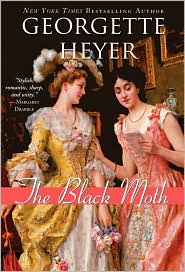
The Black Moth


The Black Moth. Georgette Heyer. 1921/2009. Sourcebooks. 355 pages.

Prologue: Clad in his customary black and silver, with raven hair unpowdered and elaborately dressed, diamonds on his fingers and in his cravet, Hugh Tracy Clare Belmanoir, Duke of Andover, sat at the escritoire in the library of his town house, writing.

Chapter one: Chadber was the name of the host, florid of countenance, portly of person, and of manner pompous and urbane.


Loved this one. I had my doubts--I'm not sure why--but I ended up just loving it. Why did I have doubts? Well, for some reason I thought that since this was Georgette Heyer's first novel it would perhaps be clumsy or awkward. Not quite as good as the others that I've come to love. Is it her best work? Probably not. But it's good. It's fun. It's fun in a dashing kind of way.

The characters. So many to love, so many to love to hate. Jack Carstares, Earl of Wyndam, our proper hero. Richard, his younger brother with a secret. Lavinia, Richard's wife, the woman I ended up loving to hate! Tracy, Lavinia's "devil" of a brother who thinks kidnapping is the way to get your heart's desire. Diane, the lovely woman adored by two men--one a highwayman, one a kidnapper. Miles, a good friend who has always believed in his friend no matter what. And so many more!

The writing. So much to love. It's detailed, but not in a heavy way. More in a witty kind of way. Take this description of Lavinia, "She was ever thus -- not two minutes the same." For those readers who mind the details, you'll find much to appreciate! I found it richly detailed and the world depicted by Heyer was just fascinating.

This book is loosely connected with These Old Shades.

© Becky Laney of Becky's Book Reviews