Showing posts with label YA Science Fiction. Show all posts

Thursday, August 06, 2026

55. The Future of Us


55. The Future of Us. Jay Asher and Carolyn Mackler. 2011. 356 pages. [Source: Library] [4 stars, YA fiction, YA science fiction, coming of age]

First sentence: I can't break up with Graham today, even though I told my friends I'd do it the next time I saw him.

Premise/plot: Emma Nelson and Josh Templeton are about to step into the twilight zone. This YA coming of age novel (set in May 1996) is told with dual narrators--Emma and Josh. It starts with a disc--a cd rom to be more precise. Josh gives Emma the gift of AOL since his family doesn't believe in this newfangled internet. Emma downloads it, connects to it, and discovers Facebook, discovers HERSELF on Facebook, discovers her FRIENDS on Facebook. Suddenly, Emma and Josh have a way to glimpse their future selves through their future Facebook posts. Josh is content enough with what he sees. He doesn't seem to get invested in "fixing" the future. Whatever will be will be. Emma, on the other hand, becomes obsessed with micromanaging her future self. Even if her only glimpses of that future are through FB posts and what pictures she's uploaded and shared in the future. She is not once content with what she sees. The more she obsesses with the future, the more discontent she becomes in the now. Josh warns her NOT to play god, to not become so focused on the future, on fixing the future, on preventing "unhappy" outcomes, that she doesn't live now. She should be true to herself in the NOW. Not let her future or potential future self decide where she should go to college, which career she should choose, where she wants to live (or not live). Will Emma ever learn to let go and relax???? And will Josh learn how to navigate the complexities of friendship???

Josh's future self seems happy enough, content enough, settled down with kids with a woman, Sidney Mills, that is allegedly "out of his league." He is in one class with her now...and since finding out that allegedly they have a happily ever after he's been a little braver. He speaks up for her when her ex puts her down. He makes eye contact and smiles. She asks for his number. She seems to potentially be interested in him. Meanwhile, Josh knows KNOWS that he wants more than friendship with Emma. She is the one he wants to date. Maybe there's something there; maybe there is NOT. But he wants to see. But Emma is SO obsessed with her future husbands that she isn't really thinking of Josh like that. (And she doesn't ever have to think of Josh like that, for the record. Maybe she'll never ever ever return his feelings.)

My thoughts: I first read this one in December 2011. It is an interesting WHAT IF. I love, love, love the 1996 setting. I do. I love the social and technological references. Friends. Seinfeld. Macarena. Dave Matthews. Green Day. I could go on and on and on. I think the authors do a good job of the 90s setting. And since it's been a while since 2011--when the book released, when the future selves of Emma and Josh exist--it's a good reflection of that time as well.

I enjoyed the dual narration. Josh and Emma are SO different in many ways. Josh seems more mature and thoughtful perhaps. But Emma's home life hasn't been the most awesome. She is all the angst and all the drama. Josh is calmer, for the most part. He seems to stabilize the chaos that is Emma.

Josh does seem less self-centered and selfish. He notices in the future that his older brother, David, is gay and in a relationship--according to Facebook. He realizes just how much he doesn't know about his older brother and that makes him sad that his brother is hiding this--though perhaps David didn't realize it in 1996?

There were things I definitely liked about this one. There were definitely some things I didn't like as much. It was mature in some ways. It is not a clean read. It isn't graphic, mind you, but there's much discussion of sex.

I do think it would make a GREAT teen movie OR miniseries. 

Note: I've been reading reviews and I agree with most of what is written on the lower stars. EMMA IS SUPER SUPER SUPER SUPER annoying as a heroine. The 90s reference are surface-level for the most part. YET I think if the reader is engaged in the premise and loved 1996 and wants to feel nostalgic, I think that is certainly possible. I do think the dual narrators are a bit disjointed. Yet, that isn't a terribly bad thing in my opinion. TWO different writers. A male perspective. A female perspective. They are DIFFERENT people with different morals/values. They process the world completely differently. So it makes sense that flipping narration is a bit jumpy.


© 2026 Becky Laney of Becky's Book Reviews

Saturday, August 01, 2026

50. Knife of Never Letting Go


50. The Knife of Never Letting Go. (Chaos Walking #1) Patrick Ness. 2008. 512 pages. [Source: Library]

First sentence: The first thing you find out when yer dog learns to talk is that dogs don’t got nothing much to say. About anything.

The Knife of Never Letting Go is a science fiction novel for young adults. (What kind of science fiction? It's the colonizing other planets sort. Also the trying to survive sort. And the encountering alien sort.)

Here are a few things you should know before picking it up.

1) It is science fiction. It is set on another planet, aka "New World." The planet has a handful of small settlements, including Prentisstown, the hometown of our narrator/hero. The planet's biggest settlement is Haven.

2) Todd is our narrator. He is a few weeks away from his thirteenth birthday. He "becomes a Man" on his thirteenth birthday. He is an orphan being raised by two men, Cillian and Ben.

3) There are NO WOMEN in Prentisstown. Todd has been taught all his life that there was a plague or virus that killed all the women of the settlement.

4) A virus (perhaps the same virus that allegedly killed all the women?) has made it so that all the men can hear one another's thoughts all the time. This is called NOISE. It isn't just men, though, they can hear thoughts of animals too. Manchee is Todd's dog. And he's a bit too forthright to say the least!

5) The book is thriller-esque. It's essentially one big action-sequence from cover to cover. Well, perhaps it takes three or four chapters to get him on his way. But once he gets started...he stays going. It's an intense, action-packed book.

6) He doesn't go alone. Manchee, his faithful dog that he once didn't even want, is with him....but more importantly he meets Viola.

7) Viola basically "dropped from the sky" and right into his path. Viola is the sole survivor of the settler's scout ship. Her parents died in the crash. The ships with thousands of more settlers is about seven or so months behind the scout ship. Todd cannot hear Viola's noise. Viola is the first female he can remember seeing--apart from reading the memories of the men in his settlement--which is not the same thing I think you'll agree.

8) Both Viola and Todd are in GREAT DANGER. Why?????? Well, it has to do with SECRETS and SCHEMES and PLOTS. The mayor of Prentisstown is ambitious and manipulative....to pick two of his tamer qualities.

9) Todd has some internal conflict going on inside....he cannot bring himself to kill. So while I might have spent a good deal of time emphasizing the ACTION, ACTION, ACTION aspect of this one, that doesn't mean it is without characterization and complexity.

10) Be warned it doesn't really have an ending.

11) It has profanity. A good deal of profanity. For some people it may be off-putting enough to pass on the book. For others that might be a big non-issue.

12) Poor grammar is part of the world-building. This may or may not bother readers!  

The first time I read it, I was meh. I was bothered by the poor grammar and the profanity. The second time I read it, I definitely liked it much better. The third time I read it, I loved it. I was fully engaged and absorbing the world-making and the depths of the characters. I was paying attention to the relationships, the conversations, all the feels. Things that were both spoken and unspoken. 

I have been listening to a lot of Preacher Boys on YouTube. His podcast deals a lot with abuse in the Independent Fundamental Baptist denomination. Or "denomination" as the case may be since technically each church is independent and there is no infrastructure binding the churches together. As I was reading The Knife Of Never Letting Go, I couldn't help thinking that one or two of the settlements might portray a what if--what if an IFB church decided to colonize space and set up their own theocracy?!

So that was one thing running through my mind this time around, but also I thought of all the changes we've gone through the past few decades--in particular the internet, social media, and media itself. All the bits about NOISE felt like it could be talking about our society--in some ways.

This third read was definitely more thoughtful and philosophical. I found myself making lots of notes.

Quotes:

  • The loud is a different kind of loud, because swamp loud is just curiosity, creachers figuring out who you are and if yer a threat. Whereas the town knows all about you already and wants to know more and wants to beat you with what it knows till how can you have any of yerself left at all?
  • Men lie, and they lie to theirselves worst of all.
  • Noise ain’t truth, Noise is what men want to be true, and there’s a difference twixt those two things so big that it could ruddy well kill you if you don’t watch out.
  • The Church is why we’re all here on New World in the first place, of course, and pretty much every Sunday you can hear Aaron preaching about why we left behind the corrupshun and sin of Old World and about how we’d aimed to start a new life of purity and brotherhood in a whole new Eden. That worked out well, huh?
  • Praying Noise comes from inside, it’s got a special feel to it, a special purply sick feel like men are bleeding it out, even tho it’s always the same stuff but the purply blood just keeps on coming. Help us, save us, forgive us, help us, save us, forgive us, get us outta here, please, God, please, God, please, God, tho as far as I know no one’s never heard no Noise back from this God fella.
  • Noise is like grey fire behind him and you can’t pick out anything in it and he might be up to something, mightn’t he? The sermon might be covering for something and I’m beginning to wonder if I know what that something is.
  • Men’s minds are messy places and Noise is like the active, breathing face of that mess. It’s what’s true and what’s believed and what’s imagined and what’s fantasized and it says one thing and a completely opposite thing at the same time and even tho the truth is definitely in there, how can you tell what’s true and what’s not when yer getting everything?
  • The Noise is a man unfiltered, and without a filter, a man is just chaos walking.
  • But a knife ain’t just a thing, is it? It’s a choice, it’s something you do. A knife says yes or no, cut or not, die or don’t. A knife takes a decision out of your hand and puts it in the world and it never goes back again.
  • “History ain’t so important when yer just trying to survive,” I say, spitting it out under my breath. “That’s actually when it’s most important,” Hildy says, standing at the end of the table.
  • “Men’s thoughts, Todd,” she says. “Men. And you notice he said he was going to ask the eldermen to come seek out your advice?” I get a horrible thought. “Did the women all die here, too?” “Oh, there’s women,” she says, fiddling with a butter knife. “They clean and they cook and they make babies and they all live in a big dormitory outside of town where they can’t interfere in men’s business.”
  • He shakes his head. “What d’you think’s been driving you on? What d’you think’s got you this far?” “Fear,” Viola says. “Desperayshun,” I say. “No,” he says, taking us both in. “No, no, no. You’ve come farther than most people on this planet will do in their lifetimes. You’ve overcome obstacles and dangers and things that should’ve killed you. You’ve outrun an army and a madman and deadly illness and seen things most people will never see. How do you think you could have possibly come this far if you didn’t have hope?”
  • “Everything on this planet talks to each other,” he says. “Everything. That’s what New World is. Informayshun, all the time, never stopping, whether you want it or not. The Spackle knew it, evolved to live with it, but we weren’t equipped for it. Not even close.
  • And too much informayshun can drive a man mad. Too much informayshun becomes just Noise. And it never, never stops.
  • “War is a monster,” he says, almost to himself. “War is the devil. It starts and it consumes and it grows and grows and grows.” He’s looking at me now. “And otherwise normal men become monsters, too.”
  • Doing what’s right should be easy. It shouldn’t be just another big mess like everything else.
  • She hurts. I know all this. I know it’s true. Cuz I can read her. I can read her Noise even tho she ain’t got none. I know who she is. I know Viola Eade. And I look at her sitting there and she looks across the river and we wait as the dawn fully arrives, each of us knowing. Each of us knowing the other.
  • Hope may be the thing that pulls you forward, may be the thing that keeps you going, but that it’s dangerous, too, that it’s painful and risky, that it’s making a dare to the world and when has the world ever let us win a dare?
  • “God works thru men,” Aaron says. “So does evil,” Viola says.


© 2026 Becky Laney of Becky's Book Reviews

Monday, June 23, 2025

61. Snowglobe


Snowglobe. (Snowglobe Duology #1) Soyoung Park. Translated by Joungmin Lee Comfort. 2024. 384 pages. [Source: Library] [YA Dystopian; New Adult]

First sentence: In the living room, Grandma is sunk in her chair in front of her favorite TV show, a heavy quilt draped over her lap. I look down at the weather ticker scrolling away along the bottom of the screen.

I read the description of this one and that was enough of a hook to get me. I'm not sure I could do the book justice by trying to summarize it. You should know it is set in a futuristic dystopia. The world building was FANTASTIC. The characters were well-developed, fleshed out. The plot was both simple and complex. 

It stars a sixteen year old, Jeon Chobahm, who wants to be part of their world--Snowglobe. The residents of Snowglobe seemingly have it all. The residents are actors, directors, celebrities if you will. They are the only people on earth to live in a warm climate. The rest of the world is in perpetual winter or ice age. Her dream is to be a director, to be direct one of the shows of Snowglobe. 

Be careful what you wish for. She'll be presented with an opportunity. Does she have the right to say no? Maybe? maybe not? Regardless, she does NOT want to miss this opportunity. She runs straight for it. It is only afterwards when she begins to suspect that the Snowglobe she knows through the screen isn't the real Snowglobe.

I am so glad I borrowed this one from the library. It was such a fascinating/engaging read. Usually dystopian novels require a LOT of suspension of disbelief. You almost read with an eye-roll. It may be very entertaining, but equally obnoxious. Some are so heavy-handed and ridiculous hitting you over the head with a couple of hammers that there's no fun to be had. This one I completely became absorbed in. I didn't feel manipulated or preached at.


© 2025 Becky Laney of Becky's Book Reviews

Thursday, November 14, 2024

94. The 100

The 100 (The 100#1) Kass Morgan. 2013. 323 pages. [Source: Library] [3 stars, YA dystopia, YA fiction, YA romance]

First sentence: The door slid open and Clarke knew it was time to die.

My thoughts (preview): I picked this one up to reread it after binge-watching the television show The 100. I watched ALL the seasons. It had its ups and downs. It had its wild moments. (Though nothing like Riverdale, which I gave up on after three or four seasons). There were things I loved. There were things I didn't love. But what I appreciated MOST of all, were the character arcs. The characters that are sent down to earth, are NOT the same by any stretch of the imagination by the end of the series. 

Premise/plot: 100 teenage prisoners--all nearing their eighteenth birthdays--are sent to Earth to recolonize it after a hundred plus years after nuclear war. Will it be safe? Who knows! They are prisoners who would be executed upon reaching their eighteenth birthday anyway. That's what the powers that be reason anyway. The space colony is beginning to falter and sacrifices must be made. 

Clarke, Bellamy, and Wells provide perspective from earth. Glass provides perspective from the space ship. Each has a back story of how they became prisoners. (The other main character from earth, though we don't have her perspective, is Octavia). 

My thoughts: I am curious about the timing between the book series and the television series. The two share a premise but are 99% different. Clarke, Bellamy, Wells, and Octavia exist mostly in name only. Is that fair to say? I don't care if it isn't. Clarke and Wells--they keep that Clarke is seriously angry at Wells who is the son of the Chancellor. Bellamy and Octavia--they keep the brother-sister relationship being super protective. But everything else is gone...gone with the wind. 

For example, in the book Clarke's parents are BOTH dead. Both were executed. The powers that be are definitely bordering on evil. In the show, Clarke's father was executed trying to be a hero and warn everyone of imminent danger. Clarke's mother is alive and remains the main perspective from the orbiting space colony. She is our perspective into the powers that be. There is a large cast of characters on board ship and on earth. (In the book, there might be two or three other characters mentioned on earth--out of the one hundred. And two or three other characters mentioned on ship--out of thousands.) 

Glass and her boyfriend Luke do not exist on the television show. Their story is interesting perhaps because it did not make the cut. Glass is ARRESTED because she gets pregnant. The father that she named (there is a twist) is EXECUTED for getting her pregnant. Apparently, population control is so strong that it becomes illegal for anyone to have any child without permission.

 If I had recently read the book before starting the series, I might have cheered when differences occurred. Wells is SUPER, SUPER, SUPER, SUPER, SUPER, SUPER incredibly creepy and a huge jerk. I probably would have been angry that they turned Bellamy into season-one Bellamy.


© 2024 Becky Laney of Becky's Book Reviews

Monday, October 07, 2024

80. The Dead and the Gone

The Dead and the Gone. Susan Beth Pfeffer. 2008. 336 pages. [Source: Library] [4 stars] [YA dystopian; YA Science fiction; YA Fiction]


First sentence: At the moment when life as he had known it changed forever, Alex Morales was behind the counter at Joey's Pizza, slicing a spinach pesto pie into eight roughly equal pieces.

The dead & the gone is the companion novel to Susan Beth Pfeffer's Life As We Knew It. While Miranda's story--set in Pennsylvania--chronicles her life from May through March of that decisive year, Alex's story--set in New York City--chronicles his life from May through December. Both are family-oriented. Miranda's life being closely tied to her mom and two brothers; Alex's life being closely tied to his two younger sisters, Brianna and Julie. But Alex's story is stronger in many ways. For Alex is the head of the family--for better or worse. Alex is the one making life-and-death decisions. His mom vanished on May 18th--the day the asteroid struck the moon. His dad may or may not have survived the first terrible week. Having been in Puerto Rico for a funeral, he's unable to make contact with his family. And, well, the coasts were hit hard--again and again. So even surviving the first tsunamis might not mean much in the long term. His older brother, Carlos, is in the Marines. He was far from home when it happened, and while he's able to send word--by phone or mail--a few times throughout the book. He's not the one in charge. He's not the one responsible for making the tough decisions on how to best survive. So while Miranda has to grow-up, it is a gradual growing into adulthood. She still has her relaxed moments. There is never one moment for Alex to relax. He carries a heavy weight day and night.

I enjoyed rereading Life As We Knew It and the dead & the gone back to back. There are things I love about both books. Things I appreciate about both books. One thing that makes the dead & the gone a very different story is the focus on faith and community. The dead & the gone is faith-oriented. Alex and his family are Catholics. They all attend Catholic school. They all regularly attend mass. They take their faith, their spirituality, their religion very seriously. The words mean something. The faith means something to them. Something real. Something personal. While each of the siblings has their own reaction--response--to the crisis, none loses their faith, none lose hope completely. I loved seeing this Catholic community in action. I loved seeing the Catholic church reaching out in love and compassion--with great hope and faith--to their community, to their parishioners. There were so many great scenes of this faith-in-action. Where people were responding with their hearts in faith as opposed to acting out of fear and anxiety. It's courageous and wonderful.

The dead & the gone has a broader outlook as well. While the electricity isn't reliable on a day-by-day basis in the dead & the gone, it is certainly more stable than in Life As We Knew It. Alex is connected to the larger world. He hears--for better or worse--more about the world at large. He is more aware of what is going on in other states. While Miranda and her family may go weeks or months without contact to other survivors, Alex is out of the house most days--at least before the flu epidemic comes. He's not as isolated as Miranda. Does not being so isolated help him cope? Maybe. But every day, every week is a struggle. Alex does things he'd NEVER thought he'd be doing.

Is Alex more of a hero than Miranda? I'm not sure that is exactly fair. Miranda has her courageous moments too. (I'm thinking of the woodstove mishap.) But. Alex's story has power no doubt about it.
I would definitely recommend both books.

"Give the scientists some time and they'll figure out what to do."
"This is too big for the scientists," Lorraine said. "Only God can save us now."
"Then He will," Alex said. (13)

God save their souls, Alex prayed. God save ours. It was the only prayer he could think of, no matter how inadequate it might be. It offered him no comfort, but he repeated it unceasingly. As long as he prayed he didn't have to think. He didn't have to remember. He didn't have to decide. He didn't have to acknowledge he was entering a world where no one had laid out the rules for him to follow, a world where there might not be any rules left for any of them to follow. (65)

"She says you've been having bad dreams."
"Aren't you?" Julie asked. "Isn't everyone?"
Alex burst out laughing. "Only sane people," he said. "Okay, maybe not Bri. But everyone else is."
"Are things going to get better?" Julie asked. "Is that why you listen to the news all the time, because someday things are going to get better?"
Alex shook his head. "That's not why I listen," he replied. "That's why I pray but not why I listen."
"Do you think God listens?" she asked.
"Bri thinks so," Alex said. "Father Franco thinks so." (81)

It was hard being alone in the apartment staring at an unringing phone, haunted by the food in the kitchen, which he wouldn't allow himself to touch, haunted even more by the image of his mother drowning in the subway that very first night. He tried reading. He tried praying. He tried push-ups. He tried counting the cans of soup. He listened to the radio, using up the twenty-dollar batteries. The world was coming to an end. Well, that was nothing new. (123)

"And what's so special about you that you deserve compassion?" Father Mulrooney said. "You have shelter. You have food. You have family and friends. I'm supposed to feel pity for you because of a cut cheek?"
"You don't understand at all," Alex said. "I have shelter for as long as no one thinks about it. Once they do, once they realize my father is gone, they can throw us out. I have food only if I get lunch here. We're down to almost nothing at home, and I have to make sure my kid sister eats. She is my family right now, because my parents are both gone and my older brother is in the Marines somewhere and I sent my other sister to live at a convent with strangers. My cheek was cut because I got caught in a food riot, with my kid sister, and we ended up with no food anyway. I'm not asking you to pity me. I pity me enough for the two of us. But when one of your students asks you for food, you shouldn't say no and feel righteous about it. That's not what Christ would have done, and you know it." (133)

"What do you have planned for tomorrow?"
Alex shrugged. "The usual," he said. "Checking on the elderly, studying theology, fighting for survival. Same old, same old." (151)

"I know it's wrong to feel that way about God and I know it's wrong to not feel anything. I hate it. I don't hate God. I hate not loving Him." (184)


© 2024 Becky Laney of Becky's Book Reviews

Tuesday, September 10, 2024

68. Life As We Knew It

68. Life As We Knew It. Susan Beth Pfeffer. 2006. 337 pages. [Source: Library] [MG Fiction, YA Fiction] [5 stars]

First sentence: Lisa is pregnant.

Premise/plot: As the world is ending--or seeming to--Miranda, our heroine, keeps readers up to speed with her private journal. It starts several days--perhaps a week?--before an asteroid hits the moon. After the asteroid hits the moon, things change drastically, dramatically, and perhaps permanently. Can the human race survive? Will Miranda and her family? 

My thoughts: This novel is bleakity-bleak. However, it is not as bleak as it could be, or perhaps should be. But if it was more bleak would it have any readers reading and recommending it? It isn't as bleak as it could be because it isn't always realistic. One glaring instance is the magical well water that Miranda and her family rely on for months, long months without any electricity whatsoever. Or generators. Wells depend on electricity. What is sad or perhaps ironic is that one person in her family makes the comment how lucky they are to be on well water since the town's water supply depends on electricity and many are without water. Chances are they depend on electricity in different ways.

Even though some of the scenarios are unrealistic--each reader probably could point out one way that sticks out to him/her--the novel does a great job with its characters. This one is without a doubt a disaster/survival novel. It is premise-driven. But it is also very much about family dynamics. The focus is narrow--very narrow. The immediate family of Miranda. But just because there are few characters doesn't mean it isn't great at developing those characters. And it's rare, when you think about it, for a middle grade novel to focus ON family instead of friends and classmates. 

I have reviewed this one so many times because this is one that I keep rereading. 

My favorite quotes:

“Sometimes when Mom is getting ready to write a book she says she doesn’t know where to start, that the ending is so clear to her that the beginning doesn’t seem important anymore. I feel that way now only I don’t know what the ending is, not even what the ending is tonight” (16).

“For a moment I thought about all the people throughout history who saw Halley’s Comet and didn’t know what it was, just that it was there and frightening and awe inspiring. For the briefest flick of a second, I could have been a 16 year old in the Middle Ages looking up at the sky, marveling at its mysteries, or an Aztec or an Apache. For that tiny instant, I was every 16 year old in history, not knowing what the skies foretold about my future.” (18)

“And then it hit. Even though we knew it was going to, we were still shocked when the asteroid actually made contact with the moon. With our moon. At that second, I think we all realized that it was Our Moon and if it was attacked, then we were attacked.” (18-19)
“What about desserts?” I asked. “If the world comes to an end, I’m going to want cookies.” “We’re all going to want cookies if the world comes to an end,” Mrs. Nesbitt agreed. “And chips and pretzels. If the world is coming to an end, why should I care about my blood pressure?” “Okay, we’ll die fat,” Mom said. “Grab what you can grab and ram it into your wagons. But remember if we actually need this stuff, we’re going to be a lot more grateful for a can of soup than for a box of stale cookies.” “Speak for yourself,” Mrs. Nesbitt said. (34)
 “I guess I always felt even if the world came to an end, McDonald’s would still be open.” (46)
“Lately I’ve been trying not to know what’s going on. At least that’s the excuse I’ve been giving myself for not caring about all the stuff that’s happening outside of my little section of Pennsylvania. Who cares about earthquakes in India or Peru or even Alaska?
Okay that’s not fair. I know who cares. Matt cares and Mom cares and if there were any baseball involved, Jonny would care, too. Knowing Dad, he cares. Mrs. Nesbitt, too.
I’m the one not caring. I’m the one pretending the earth isn’t shattering all around me because I don’t want it to be. I don’t want to know there was an earthquake in Missouri. I don’t want to know the Midwest can die, also, that what’s going on isn’t just tides and tsunamis. I don’t want to have anything more to be afraid of.
I didn’t start this diary for it to be a record of death.” (70-71)
“We have clean sheets to sleep on, a clean house, clean clothes, clean dishes. We spent the evening laughing. It wasn’t 90 degrees in the house when we went to bed. We weren’t hungry. We’re not worried about Dad. I know what it feels like to be kissed by a boy. If I could, I would relive this day over and over. I can’t imagine a more perfect one.” (95-96)
“I can’t decide which is worse, no electricity or unreliable electricity. I wonder if I’ll ever have to decide which is worse, life as we’re living or no life at all.” (119)
“Here’s the funny thing about the world coming to an end. Once it gets going, it doesn’t seem to stop.” (120)
“I told Mom I was doing history (she never would have believed me if I said math) and stayed in bed all morning.” (191)

“I know I’m going to have to be strong for the next couple of weeks. No more whining. No more picking fights. I’ll have to do whatever Mom asks me and not protest and not complain. I know I can do it. But for that one moment I felt so weak, so helpless. I felt nothing but fear and despair and the most awful need to be anyplace else. I told myself it was hunger, but I knew that was a lie.
As long as Mom was all right, I could fool myself into thinking we’d all be all right.” (206)
“It’s funny how sorry I feel for Jon these days. I’m 2 1/2 years older than him and I feel like got those 2 1/2 years to go to school and swim and have friends and he got cheated out of them. And maybe he’ll live 2 1/2 years longer than me, or 20 years or 50, but he’ll still never have those 2 1/2 years of normal life.

Every day when I go to sleep I think what a jerk I was to have felt sorry for myself the day before. My Wednesdays are worse than my Tuesdays, my Tuesdays way worse than my Tuesday of a week before. Which means every tomorrow is going to be worse than every today. Why feel sorry for myself today when tomorrow’s bound to be worse?
It’s a hell of a philosophy, but it’s all I’ve got.” (275)


“But I hope when I get closer to death, however old I might be, that I can face it with courage and good sense the way Mrs. Nesbitt does.” (234)

“A while ago Jonny asked me why I was still keeping a journal, who I was writing it for. I’ve asked myself that a lot, especially in the really bad times.
Sometimes I’ve thought I was keeping it for people 200 years from now, so they can see what our lives were like.
Sometimes I’ve thought I’m keeping it for that day when people no longer exist but butterflies can read.
But today, when I am 17 and warm and well fed, I’m keeping this journal for myself so I can always remember life as we knew it, life as we know it, for a time when I am no longer in the sunroom.” (337)


© 2024 Becky Laney of Becky's Book Reviews

Thursday, April 11, 2024

39. The Ballad of Songbirds and Snakes


The Ballad of Songbirds and Snakes. Suzanne Collins. 2020. [May] 439 pages. [Source: Library]

First sentence: Coriolanus released the fistful of cabbage into the pot of boiling water and swore that one day it would never pass his lips again.

ETA: I just reread The Ballad of Songbirds and Snakes after watching the movie adaptation--twice. The movie (obviously) resonated with me. It helped in the reread that I knew exactly what was coming in regards to the end. Though to be fair the end is ambiguous both in the book and film. There are definitely differences between the book and film. I highlighted--digitally--some scenes that were different. One thing that stands out, for example, is that Sejanus asks Coriolanus to TRADE tributes. Lucy Snow definitely comes across more as a possession, an asset, an object than a love interest. There are a million and one red flags...not only in his relationship with Lucy Snow but also with his non-friend-friend Sejanus. There are MORE characters in the book than there are in the film. 

My original review:

Premise/plot: The Ballad of Songbirds and Snakes is a prequel (of sorts) to Suzanne Collins' The Hunger Games. The protagonist (he is not a hero) is a young (very young) Coriolanus Snow. He comes from a previously wealthy (high class) family that has fallen (hard and fast) on hard times. His only hope of a better life--a more prosperous future--is a scholarship to university. And that may be completely out of his control. Twenty-four students will become mentors to the twenty-four tributes coming to the Capital for this year's Hunger Games. (It's the TENTH hunger games.) The victor's mentor will receive a scholarship. The Hunger Games are still relatively new. Those viewing (and participating) still remember the hard, bitter, horrifying, traumatic times of actual war. Capital's economy certainly hasn't recovered from the actual war. (There is nothing lavish and luxurious as readers (and viewers) may remember from the original trilogy of books.) The Hunger Games are still in their infancy, still being shaped and formed by master minds. (People like Dr. Gaul...and her students...)

Coriolanus's tribute is from district twelve. Her name is Lucy Gray Baird. She's a singer with charisma, a bit of star quality. She has a little something special that makes her stand out from others. He sees this as her greatest strength. Perhaps the two of them can manipulate things along--here and there--and with a little luck she may win it all. Hooray for his bright future....

But things don't always go according to plan...even when they seem to... It seems there's always someone watching just a smidge cleverer.

Readers also meet his classmates. In particular Sejanus Plinth who is essentially "new money." His family has the funds but they are new to Capital. Sejanus still thinks of himself as belonging to District 2 and being one of the people. Which makes things super tricky when he has to participate (as a mentor) in the Hunger Games. He feels one with the tributes--whether they see him as one of them or not. He cannot accept that these tributes are animals, monsters, incapable of thought and feeling. There is no "us" and "them."

Throughout the book, Coriolanus struggles with his ambitions and his conscience. You might think of the old imagery of an angel on one side and a devil on the other. 

My thoughts: I don't feel like my time has been completely wasted. It hasn't. I just wish the book had been shorter. I really don't understand *why* the part after the conclusion of the Hunger Games had to go on so long. The first half of the novel was compelling enough. It was interesting to see the great contrast between these primitive earlier Hunger Games and the later Games which are depicted in the trilogy. Worlds of difference between Capital then and now, between the Games then and now. I liked how Coriolanus and Sejanus both--in their own ways--disapproved of how the tributes were being treated. There are moments when Snow comes across as well--human.

S
P
O
I
L
E
R
S

I almost wish that Lucy Gray had lost in the games OR been murdered by the powers that be soon after. I really HATED how that story resolved. I think Snow could still have turned all dark side and evil as a result of someone else killing Lucy (the supposed love of his life). Their scenes together reminded me of the DARK and DEPRESSING scenes of Oliver Twist. (The murder of Nancy).


© 2024 Becky Laney of Becky's Book Reviews

Monday, April 01, 2024

38. Snowglobe


Snowglobe. (Snowglobe Duology #1) Soyoung Park. Translated by Joungmin Lee Comfort. 2024. 384 pages. [Source: Library] [YA Dystopian; New Adult]

First sentence: In the living room, Grandma is sunk in her chair in front of her favorite TV show, a heavy quilt draped over her lap. I look down at the weather ticker scrolling away along the bottom of the screen.

I read the description of this one and that was enough of a hook to get me. I'm not sure I could do the book justice by trying to summarize it. You should know it is set in a futuristic dystopia. The world building was FANTASTIC. The characters were well-developed, fleshed out. The plot was both simple and complex. 

It stars a sixteen year old, Jeon Chobahm, who wants to be part of their world--Snowglobe. The residents of Snowglobe seemingly have it all. The residents are actors, directors, celebrities if you will. They are the only people on earth to live in a warm climate. The rest of the world is in perpetual winter or ice age. Her dream is to be a director, to be direct one of the shows of Snowglobe. 

Be careful what you wish for. She'll be presented with an opportunity. Does she have the right to say no? Maybe? maybe not? Regardless, she does NOT want to miss this opportunity. She runs straight for it. It is only afterwards when she begins to suspect that the Snowglobe she knows through the screen isn't the real Snowglobe.

I am so glad I borrowed this one from the library. It was such a fascinating/engaging read. Usually dystopian novels require a LOT of suspension of disbelief. You almost read with an eye-roll. It may be very entertaining, but equally obnoxious. Some are so heavy-handed and ridiculous hitting you over the head with a couple of hammers that there's no fun to be had. This one I completely became absorbed in. I didn't feel manipulated or preached at.


© 2024 Becky Laney of Becky's Book Reviews

Saturday, July 22, 2023

137. The Chaperone


The Chaperone. M. Hendrix. 2023. [June] 448 pages. [Source: Library] [YA Fiction; dystopia]

First sentence: I hear it while I'm in my room getting ready for Sunday Visitation.

Premise/plot: The Chaperone is YA dystopian. The premise is that a 'New America' has arisen and is super strict. (Think SHINY HAPPY PEOPLE documentary-ish). Stella Graham, our protagonist, is a high schooler who has lived under the care and guidance of a chaperone--as most young girls do--from the time she came of age [aka her period started]. This one begins with the death of her first chaperone, Sister Helen. (That's not a spoiler. It's literally the second sentence of the novel.) 

Stella has grown up in New America. She doesn't remember a Before. She has nothing to compare it to. No one talks about it--at least not in a fair, representative way. Perhaps they talk about it in a revisionist way. New America is AWESOME, don't you know. It's so wonderful that young girls, women are respected, valued, cherished, protected. There are rules for women [girls] and rules for men [boys]. The only tiny glimpse of 'before' she's been exposed to are a few books that her chaperone has encouraged her to read. 

Sister Laura is her new chaperone...and under her "care" and "guidance" well Stella becomes an independent thinker. She goes from a rule-follower to rule breaker like in a day. [Okay, perhaps I exaggerate. Let's be fair. Three days.] 

Will Stella submit to all the rules and conform??? Or will she find a way to be independent, expressive, and FREE according to her own definition?

My thoughts: I do have thoughts. First, I don't fault The Chaperone for being written with a hammer instead of a pen. That's the way of many dystopian novels. Exaggerate to the point of absurdity. Take an inkling of a perceived problem and magnify it by ten thousand. Hammer your world view for a couple of hundred pages. So I don't fault it for that. 

It is exactly what you think it will be. Conservative values and views magnified by a million and taken to the point of absurdity so they are unrecognizable. This isn't switch and bait. Again, can't fault it for that. I like it when a book delivers on a premise.

What I don't necessarily enjoy/appreciate about this one is the characterization and timing. I think Stella's coming of age is inevitable. The novel would be very short indeed if it wasn't about Stella's journey from rule-follower to rule-breaker. I think it was too instant to be believable. I don't know that the book takes into account how thoroughly "normal" and "ordinary" Stella's upbringing would have seemed. You can't be raised in something--immersed for sixteen to eighteen years in something--and not have it be a foundational, as natural as breathing, way of life. New America formed before her parents were married. She's known no other way of life. Her friends have not known another way of life. Sneaking a few books over the past few years doesn't seem "enough" to push from committed believer to total skeptic. (Not that the book is a god/religion thing). And the catalyst we're supposed to buy into...is her being left unchaperoned for like five or ten minutes. (I think at a library? some public place?) Sister Laura "hid" from view. She had Stella in view, but Stella could not see her. Stella's response was panic, worry, despair. After this initial "trauma" Stella has a complete and total realization--hey I believe nothing and I want out. Again, I just don't buy it. Too instant. Too fast. Not enough time spent wavering, doubting, considering, reasoning with one self. Just GIRL POWER. MUST RAISE UP AND ROAR. I think I would have found Stella more compelling if there was an actual-actual struggle, a journey--a metamorphosis. 

I also found it a bit shaky on WHY. I'll try to explain. If Stella had been being courted by Mateo (or another boy she found cute, attractive, desirable, ideal), would she have been eager to leave New America? If she had been allowed to 'follow her heart' and get to know the boy of her dreams, would she have ever considered leaving New America? If she hadn't been being courted or pursued by young men [and men] she had NO interest in, no attraction, no desire, just pure yuck factor, would the story have played out differently? Would she have EVER realized that New America was less than ideal if her hormones hadn't been influencing her? That is, if she'd been in control of WHO she dated/courted....if she'd been allowed a say in whether or not she said I do or I don't....would it have been an issue???? 

This wasn't so much about god (or God) or a particular religion or practice of religion. (Again, don't care one way or another. Perhaps it's better that it wasn't so much geared that way). But Stella's idea of freedom mainly consists in freedom to express one's sexuality, to act on sexual desires, to be free to be sexual on one's own term. 

I thought the world-building had potential. I thought it was more often than not shallow and one-dimensional....as opposed to immersive and believable. Again, I thought there could be potential with the premise/concept. Just it felt a little too instant and convenient. 


© 2023 Becky Laney of Becky's Book Reviews
Friday, June 16, 2023

118. World's Fair 1992


World's Fair 1992. Robert Silverberg. 1970. 256 pages. [Source: Bought] [Adult science fiction]

First sentence: Against the night sky, the nearly completed World's Fair Satellite gleamed like a shiny new penny. You could see it even with low-powered field glasses as it moved in its stately orbit around the Earth: a giant copper-hued globe, the biggest space satellite ever constructed. The Fair's opening day--October 12, 1992--was only some six weeks away. And in very much less time than that, Bill Hastings was going to be up there to begin his year in space.

Premise/plot: Bill Hastings won an essay contest and his prize is a year in space. The year? 1992/1993. The job? He'll be an assistant working on the Mars Pavilion of the World's Fair. There are six or seven scientists--slightly different specialties--working there maintaining the exhibit. There are a handful of "Old Martians" on display. Some of the scientists are unhappy with the circumstances. But do the ends justify the means? Perhaps. (The ends being greater research opportunities. The means being "kidnapping" Martians from Mars and putting them on display for tourists to the World's Fair.) Hastings makes friends with the scientists. His essay topic was about possible life on Pluto.

My thoughts: If my summary seems odd, then there's a good reason. This book is a bit odd. The main conflict is one of ethics. Bill Hastings is observing other scientists wrestle with this dilemma. As they seek to colonize other planets. (And by colonize, I mean visit. I don't necessarily mean visit with the goal of setting up colonies....at least not right away). Perhaps I mean explore not colonize? (Colonization is such a loaded topic, a word with a lot of baggage--for better or worse. And this fair is celebrating Christopher Columbus "discovering" America and establishing colonies. So in part, I think there's a definite intention to address this topic. Hastings was not involved in any way with the decision to bring living Martians to the World's Fair to be exhibited. But he is involved when the powers-that-be decide to go to PLUTO and seek out "alien life" on Pluto to bring back to set up as an exhibit. And this is where the book, for me, starts to lose its way. The first half is a dull-ish read set on the World's Fair Satellite. There were conversations about Mars, Martians, science, etc. But essentially, dulls-ville. The second half is when Bill becomes a member of an exploring team on a mission to Pluto--the first manned mission to Pluto. The book ends soon after he returns. Bill has become disenchanted with the World's Fair by that point. 

I think the setting and initial premise had potential. I'm not sure it works as a novel written from one point of view. I could see it working as a shorter novella or even short story. Or I could see it working as a collection of short stories set at the World's Fair Satellite--stories with many perspectives or points of view. I could see it working as a mystery or thriller. For example, if the "evil" billionaire genius was the focus of an assassination, or assassination attempt. Or maybe if it was about Bill Hastings discovering something horrible about the World's Fair and working to bring it to light. 


© 2023 Becky Laney of Becky's Book Reviews

Friday, May 26, 2023

107. An Ocean of Stars


An Ocean of Stars. Becca Mionis. 2023. 421 pages. [Source: Library] [Link to cover image] [Young Adult]

First sentence: "Xanorra Nepier, the council will see you now."

Premise/plot: The synopsis from GoodReads starts off strong, "Girl, meet boy. He’s the reason you’re lost in space." The heroine, Xan (or Xanorra), is the "sole survivor" (so she thinks) of a "space pirate" attack. Her escape pod was damaged and--for better or worse--she was rescued by the attacking ship. Captain Omen (his first name is literally Captain) has been raised by A.I. robots. At least within his own memory, he's never seen--or interacted with--another human being. (His birthday messages from his parents do reveal that his parents did hold him as a baby--before shipping him off into space.) So Captain and Xan are the sole humans on board this vessel. And the ship's A.I. robots are one-minded. MISSION, MISSION, MUST FULFILL THE MISSION. And the mission doesn't include Xan. At all. Not even a little bit. Xan's presence on the ship distracts Captain, to say the least. Can she teach him to be human and less robotic? What will the come to mean to one another?

My thoughts: Science Fiction. Set in space. Some romance. What's not to love? This one started off strong, in my opinion, the hero was giving off a mix of Sheldon Cooper and Beast (from Beauty and the). The banter was of decent quality. There was some suspense and tension. But the more I read, the more disappointed I ultimately became. (I am not saying all readers will.) As the story progressed, my vibes switched from Beauty and the Beast to Isaac Asimov...and while I appreciate some of his work...I didn't really want super-creepy-robots intruding on the story. But ultimately, I think I was mainly disappointed by the lack of ending. It didn't even particularly end in a dramatic cliff-hanger way. It just ended with a whimper. 

I liked some things. I didn't like other things. I think it depends on your expectations on if this one is for you.

© 2023 Becky Laney of Becky's Book Reviews

Wednesday, May 10, 2023

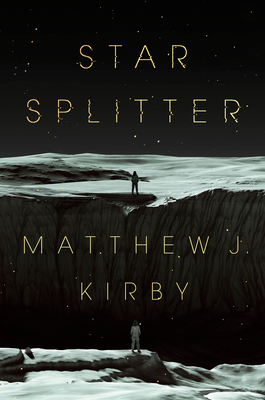
97. Star Splitter


Star Splitter. Matthew J. Kirby. 2023. [April] 320 pages. [Source: Library]

First sentence: I don't care how many prep classes you take, or how many counseling sessions you go through, or how many waivers you sign, none of it actually prepares you to be burned apart by a laser, atom by atom. But Jessica Mathers was one of the most prepared travelers I ever had the privilege to meet. Not eager, but prepared. I've seen pretty much the full spectrum of human reaction to teleportation and talked countless travelers through their emotional and psychological barriers. I have a pretty spectacular record, too, with a voluntary abort rate of 8.2 percent; my department average usually hovers near fifteen. Some people just can't be talked into the machine come departure time.

Premise/plot: This young adult science fiction novel opens and closes in Earth's orbit on the OS Liverpool. Jim Kelly is a liason for ISTA. He is NOT a main character per se, just part of the framework. Jessica Mathers is--right or wrong--full of angst. Her scientist/explorer parents left her on earth six years ago while they went off adventuring. Now she's to join them on some planet (Carver 1061c)--for a year--to "help" them. She is NOT happy with the idea. She has a love-hate relationship with her parents. They will both be "printed" (have their bodies printed) on a ship, DS Theseus. But Jessica wakes up ALONE on a ship that is not in orbit at all, but crashed on the planet below (she's nicknamed it Hades). There are graves outside the lander. She hasn't a clue WHY she's alone and things did not go off according to plan, but someone....a familiar-yet-not-familiar someone...has the answers to all of her questions. If the person is willing to share...

My thoughts: This one alternates between "before" and "after." Both "before" and "after" sections have a vague, suspenseful, creepy Twilight-Zone feeling to them. Readers may be being given clues to piece together, but it isn't one puzzle--but two. 

I kept reading because of the suspense and creepiness. Definitely Twilight Zone vibes. But in true Twilight Zone fashion, there weren't really any answers to any of the questions--not really. Especially as to the WHY. Some of the more matter of fact questions are answered. But not any that would help anyone--characters or reader--make sense of this world. 

I honestly don't know how I feel about this one. I kept reading it. I had to know how it all fit together. But I'm not sure it was ultimately satisfying. And I'm not sure that I want it to be ultimately satisfying. Maybe I'm okay with not having answers. But definitely ambiguous in nature.


© 2023 Becky Laney of Becky's Book Reviews

Wednesday, June 22, 2022

76. See You Yesterday


See You Yesterday. Rachel Lynn Solomon. 2022. 432 pages. [Source: Library]

First sentence: "This has to be a mistake." I pull the extra-long twin sheets up over my ears and mash my face into the pillow. It's too early for voices. Much too early for an accusation.

Premise/plot: How would you like to live your first day of college over again? How would you like to be stuck in a time loop of living your first day of college over and over and over and over and over again. Barrett Bloom, our heroine, finds herself doing just that. And she's not alone. Miles Kasher-Okamoto, a fellow student, is also trapped in this time loop only he's been trapped for months. The first day brings its hardships--for both of them. Barrett, a would be journalist major, finds herself goofing up an interview to work for the school paper. Again and again and again. And that's just the start of it. Turns out, some timelines she actually accidentally sets fire to a fraternity! Not to mention how her day begins: she learns that her frenemy from high school has been assigned to be her roommate! Yikes! Miles, well, Miles receives a phone call from his brother, Max, to come pick him up from rehab. (We do know more about Barrett's challenges because this is her pov.)

Though some loops find them doing their own thing, most loops these two are together either brainstorming for a way out or living like there is no tomorrow. Will these two ever find a way to stop looping through time? 

My thoughts: I love, love, love the premise of this one. Stargate SG-1's Window of Opportunity is one of my most favorite episodes of all time. And I'm sure there's other time loop fiction--in books and on the screen--that I could mention. It's a sub-sub-sub-sub-genre perhaps. But it's good fun. (At least if you're not the one caught up in it.) See You Yesterday has a very rom-com feel. I do like them as individuals and as a couple. It isn't rushed. Though the calendar may always, always, always say September 21, these two have had a LOT of time to get to know each other. It is also a very human relationship. They are able to be vulnerable with each other and come to trust one another. This isn't built in a day--well, technically maybe, but still. The development is there which is nice. This isn't truly insta-love. 

I also like that it isn't just a romance novel. For sure, the romance story plays a big role in it. But it is also about all sorts or relationships. (Including her relationship with her frenemy--a close friend turned enemy.) It is also about self-care in a way. Barrett has to learn to make peace with her past and move forward in a healthy way. She has to work through her complicated/complex feelings. (And so does Miles about his own issues.)


© 2022 Becky Laney of Becky's Book Reviews

Monday, May 02, 2022

54. This is Not the Real World


This is Not the Real World. (This is Not the Jess Show #2). Anna Carey. 2022. [May] 304 pages. [Source: Review copy]

First sentence: The gondola glided between buildings, and that same song filtered in right as we slipped under the third arched bridge.

First impressions: I fell hard for the premise of the first book, This is Not the Jess Show. That first book did not disappoint. I thought it was a fabulous premise-driven YA novel that was just fun. I was so excited to see the sequel is being published this May. I would love for it to be just as great as the first book.

Premise/plot: Jess Flynn has escaped the lie. But life is far from ideal in the real world especially when your boyfriend, Kipps, is still seventeen and under contract with Like-Life Productions. The two along with some friends (who helped them in the previous book) are hiding out...but the fact that they haven't been caught yet...perhaps leads to some mistakes in judgment. 

After a very special celebration--the worst happens (relatively speaking). Will Jess sacrifice her own freedom in the real world to return to the lie she escaped? Will she return to her 90's obsessed television show? 

My thoughts: I enjoyed this one. Did I enjoy it as much as book one? Probably not. Not that I didn't enjoy it at all. But it's hard for a premise-driven book to still carry that some momentum with a second book. I still cared about the characters, still had questions about the world--on and off of the set. This one had some twists and turns, but obviously not as many as the first book.

Definitely recommend for those that enjoyed the first book. 

© 2022 Becky Laney of Becky's Book Reviews

Sunday, March 06, 2022

34. Wakers


Wakers. Orson Scott Card. 2022. 400 pages. [Source: Library]

First sentence: Because he was a teenager, and teenagers take pleasure in exploring wacky ideas, Laz Hayerian had wondered since the sixth grade whether we are the same person when we wake up that we were when we went to sleep. Specifically, he wondered if he was the same person, because sometimes his dreams persisted in memory as if they had been real events. Did dream memories change him the way real memories did? 

Premise/plot: Laz, our protagonist, wakes up in a coffin-like box alone in a warehouse of clones or would-be-clones. The other coffins/beds are either empty or with dead clones. He finds his way to an exit only to discover that he is alone. Not just alone, but a long-long-long-long time alone. From what he can deduce, humans haven't been living in this town/city for years--decades. So he has to find clothes, food, water, shelter. And a way to protect himself against wild animals--including pack dogs that have had generations without human ownership, care, or interaction.

Some of this plays out day by day by day by day by day. But some plays out in what would be a montage sequence. After months on his own, he goes back to his beginning...and discovers that out of all the clones (or would-be-clones) there is one--a young teen girl about his own age--that is not dead, whose coffin-bed is still functioning. She is his only chance of a companion...but being the last two people doesn't mean that she's his Eve and he's her Adam. 

Both have different powers that make them "weird." He can side-step into different time-streams (think of them as being alternate realities). She can see other time-streams (sorta; she can see all the options and how they would play out in time-streams). Their weird gifts complement each other. She seems to know all about his gift; he has no clue about hers. 

Long story short--these two carry a heavy burden, if "the world" (aka "the human race") is to be saved, they will have to work together and find a way to use their gifts in a way that they have never ever been used before.

My thoughts: If I had to sum up this book in one word--TEDIOUS. But of course, I am going to let it go at just one word. In all honesty, this four hundred page book felt like it had a thousand pages, each one just as slow and boring as watching grass grow. 

The first third of the book had survival vibes. It was all about Laz using a long-abandoned remnants of modern society to try to survive. He had no answers to his questions. He didn't even know what questions to ask. He spent a LOT of time in his head and we readers were along for the ride. After Laz was joined by Ivy, well, the questions doubled, the answers remained elusive. But the tedium quadrupled. Seriously, you would think the fact that he now has human companionship would make the book more interesting, the plot move faster, but, nope. The dialogue was SO tedious and weighted with science-y science talk. Theoretical. Hypothetical. Speculative. Even when readers discover that the survival of the human race depends on these two, the plot stays as thick and sluggish as can be.

I think if you were looking for a premise-driven novel, you'd be disappointed by the slow pace. The world building is not as substantive as the premise would call for. We learn nothing about how this future world works. The development of the world, the peopling of the world, its strengths and flaws. The premise remains shallow.

I think if you were looking for an action/plot-driven novel, you'd be disappointed. It is very little action, all dialogue. And there is nothing compelling about the pacing. At all. I am not saying that there might not be a few readers who get super excited about the speculative theoretical nature of all this science-y science talk. Maybe there are.

I think you were looking for a character-driven novel, you'd be disappointed. We get to know two characters. And I won't lie and say that these two characters lack development. They are developed. It is just that that development doesn't necessarily make them fascinating, interesting, compelling, relatable, enjoyable. Neither is conventionally likeable. Perhaps that isn't fair. Ivy and Laz relate to each other. Ivy and Laz like each other. Ivy and Laz trust each other.

Quote: "When you invent a story to explain all the known facts, then of course the known facts will fit the story," said Laz, "It's a reciprocal arrangement."


© 2022 Becky Laney of Becky's Book Reviews

Wednesday, February 02, 2022

18. The Last Cuentista


The Last Cuentista. Donna Barba Higuera. 2021. 336 pages. [Source: Library]

First sentence: Lita tosses another pinon log onto the fire. Sweet smoke drifts past us into the starry sky. Her knees crack as she sits back down on the blanket next to me. The cup of hot chocolate with cinnamon she's made me sits untouched this time.

Premise/plot: Petra Peña, our heroine, might just be humanity's last chance to stay connected with our troubled past. The Collective has seemingly won the ultimate victory--making nauseating sacrifices all for a 'good cause.' What better way to protect humanity's future than to completely annihilate any memory of our past. (Even wiping away memories of the planet Earth.) But perhaps I'm rushing things a bit?

The novel opens with a few spaceships getting ready to leave Earth behind. Earth's destruction literally being days (perhaps less than one???) away. The deed being done by a comet. It will take hundreds of years to arrive on Sagan, the new planet believed to be capable of supporting life. Petra, her family, and the other families selected will be making the journey in stasis.

But the humans guarding the sleepers, well, they have thoughts, opinions, ideas that are radically dangerous. Dangerous might not be the right word--deadly might suit better. If memories cannot be totally erased and new programming rewritten, well then, OOPS, that's just a necessary sacrifice.

Petra seems to be the only one to retain her memories. Memories packed with stories, stories, and more stories. Being found out--or found out too soon--may be costly. It will take wisdom to know when to make her move, to act against the Collective... And even then resistance may prove futile. And even if dozens of things go right, well, the odds may not be in her favor. An unexplored planet with a million uncertainties. Still, she's humanity's last chance to REMEMBER, to reflect.

 My thoughts: Newbery Medal 2022. It's impossible to read Newbery winners with a completely open mind and low expectations. (Which, in my opinion, is how most books should be read for the highest degree of enjoyment.)

On the one hand, it celebrates stories, storytelling, and storytellers. It celebrates the notions that stories not only entertain but they inform as well. Stories help us make sense or process the world around us. Ourselves. Others. Life. Stories matter because even fiction (or in this case folklore) can contain truths that make us better. Maybe better isn't the right word. Stories contain truths that can give us an opportunity to think, engage, learn, grow, reflect, etc. Emotions and feelings can be chaotic, messy, overwhelming...stories help us manage life.

The book is political in that many, many science fiction stories are political. The book is essentially a dystopia set on a spaceship and another planet. Dystopias are almost always political because they show us power gone sour. The Collective is BAD news obviously. But how did the Collective come to be? That we really don't have a lot of answers for. Except that we know that the Collective is built on this one idea that knowledge of the past, our history, is irrevocably dangerous to our survival. Wipe out ALL memories of our mistakes, conflicts, tragedies, abuses, injustices, wars, etc., and humanity has a chance. In the same way that the futuristic society of The Giver celebrates SAMENESS. The Collective fears DIFFERENCES.
It asks the question--what is the value--is there value--in history? The Collective perhaps started out rewriting or revising history before changing tactics to annihilating and destroying.

I would argue that history always matters. Whether it be denial or revision, you can't learn from the past that you disconnect from. 

On the other hand, I really HATED the ending. Or non-ending if you will. I don't like endings where you are CLUELESS what happens and what it means. It might as well be written in a foreign language as far as I'm concerned. I've read the last few pages a few times, and still, I'm like what does it mean? what happened? what is about to happen? was it good? was it bad?

© 2022 Becky Laney of Becky's Book Reviews

Thursday, September 09, 2021

110. This Is Not the Jess Show


This is Not the Jess Show. Anna Carey. 2021. [February] 304 pages. [Source: Library]

First sentence: Three things happened the week I found out. Titanic won a bunch of Oscars, and my sister and I stayed up late to watch because we'd never miss a chance to see Leo in a tux. Meanwhile every news anchor was talking about the president, and everywhere I went people repeated that phrase, how he "didn't have sexual relations with that woman." I probably should have cared (president, impeachment, important stuff) but another, more pressing matter, had consumed me: I'd fallen in love with my best friend. Tyler.

Premise/plot: What if your whole life was a lie?!?!?! Jessica Flynn begins to question--to doubt--EVERYTHING as her life begins to unwind slowly but surely. It starts small--hearing voices yelling, chanting. Catching a glimpse of something that seems off/odd. But it isn't until HER dog is seemingly replaced with a look alike that she is like SOMETHING is wrong and NO ONE will tell me the truth. Just enough is "off" with her reality to make her start questioning everything. And once the questions start, there's no going back...

My thoughts: Part of me wishes that This is Not the Jess Show had been set in JUNE 1998--or should that be "June 1998"--so that Jess could go see THE TRUMAN SHOW with her friends. Though probably the powers that be--Life-Like Productions? Like-Life Productions?--would have banned that film from their universe. Still it would have been great.

The Truman Show is one of my favorite, favorite, favorite movies. I don't think it gets enough love. Perhaps the intended audience of this YA novel--tweens and teens--haven't seen it or heard of The Truman Show. For better or worse? On the one hand, This Is Not The Jess Show is a total and complete copycat of The Truman Show. On the other hand, it is a total and complete copycat of The Truman Show. Except instead of the "star" of the show being an adult--she's a teen girl--a minor.

Still, I loved so many things about it. It reminded me of The Truman Show, The Twilight Zone, and Margaret Peterson Haddix's awesome book, Running Out of Time. I did enjoy all the 90s references.

One of her conversations with Ty.

I wanted to go back into the bathroom and reapply my lip gloss and pinch color into my cheeks.
“Who knew Jen Klein was obsessed with Chumbawamba?” His finger rested on some CD spines in the middle of the stack. “I didn’t even realize they had other bad songs.”
“I actually wouldn’t mind that stupid song if it wasn’t so lazy,” I said, stepping toward him. “Have you ever listened to the lyrics? It’s the same two verses over and over again. He says the same line three dozen times.”
“But also, what is the guy in the song even doing?” Ty was still smiling as he said it. “He drinks four drinks in a row, all different. Like, I’m no bartender dude, but I’m pretty sure mixing a whiskey drink and a vodka drink and a lager drink, then chasing it down with hard cider, is not going to be good.”
Did I love him? Was it possible to love someone you’d never even kissed?
“You hiding out in there?” Ty asked, glancing over my shoulder into the bathroom. He had on this green flannel that he was obsessed with and a vintage Tears for Fears tee shirt underneath, the fabric faded from so many wears.
“Maybe. Don’t tell anyone.”
“You kept my secret about that weird cat statue.”
“The statue! I forgot about that.” I laughed.
“That’s how good you are at keeping secrets.”
When I was younger, my mom bought this abstract cat statue and displayed it on a pedestal in our den. Ty and I were rolling around inside a refrigerator box, pretending it was a carnival ride, when we slammed right into it, knocking it to the floor. I put the head back on with Crazy Glue. You could only tell it was broken if you held it an inch from your face.
“What is that?” he asked, peering at the pink stuff in my cup.
“Some weird lemonade  drink. Wanna try?”
“With that rave review?”

One of her conversations with "Patrick" (aka Kipps)

I guess it’s kind of obvious we’re not in the ’90s, huh?”
“Who else was going to say it? You think we’re going to run into some therapist who’s going to sit me down and, like, gently break the news to me?” I asked.
Kipps pressed his lips into a straight line.
“So, Bill Clinton? He’s not the president?”
“No, he’s dead,” Kipps said.
“Alanis Morissette? Puff Daddy?”
Kipps cringed. “I don’t know? I think they might be alive still? People don’t really listen to Alanis Morissette anymore, no offense. Not when Izzy Pike is making music.”
“That means…” I tried to do the math in my head. “Ew. How old is Scott Wolf? Like…70?”
I couldn’t shake the visual. Scott Wolf, my Scott Wolf. Old. Wrinkled. GRAY.
“Who is Scott Wolf?” Kipps said.
“Bailey from Party of Five?”
It was useless. I kept imagining him with saggy jowls and stooped shoulders. Scott Wolf with a grandpa pancake butt and white hair. “Gross. That is truly repulsive.”

© 2021 Becky Laney of Becky's Book Reviews

Saturday, August 28, 2021

102. Thrive


Thrive (The Overthrow #3) Kenneth Oppel. 2021. [May] 416 pages. [Source: Library]

First sentence: High overhead, the winged cryptogen circled tightly, its golden wing glingtin in the sunlight that shafted through the clouds.

Premise/plot: Thrive is the third book Kenneth Oppel's Overthrow series. In the first book, Anaya, Seth, and Petra learned that they were the immune to the deadly dangerous alien plants that rained down as seeds. This being in part due to the fact that they were half-alien. It was quite a shock. In the second book, they faced dangers from within and without. Various governments of the world locked away these hybrids--including Seth, Petra, and Anaya--for experimental tests. (Also because the powers that be didn't trust them to be on the human side of the coming battle). In the third book, the battle is upon us. The aliens have arrived. And our protagonists can communicate telepathically with them.... There's a good chance that the aliens in contact with them are rebels within the invading army. But even joining forces these alien rebels and the humans may face quite an opponent....

My thoughts: I did find Thrive more action-packed and interesting than the second book in the series. (The second book was so boring.) I got hooked on the story in the first book and was hoping that the third story would end on a high enough note that I had an overall positive experience. I think it managed that fine.

I do think things were perhaps a little too easy and somewhat convenient. Not that I was cheering for the aliens to win, mind you, it's just that it was very tied up in a bow. By the end of the book, the world was ready to resume without any notable lingering effects of near-destruction. It was like the action of the past few months meant very little. And I just don't know how realistic that is.

I think what annoyed me most was Petra's being so clinging to Seth. I guess she developed a super crush on him in book one (that was not reciprocated) and it has just lingered on in books two and three. But by book three, I was so OVER it. He is not into you. He doesn't care about you like that. He barely cares about you at all. Like at all. Seth annoyed me the most. I wanted to yell and scream at him most of the time. (As opposed to yelling at Petra only half the time). HE was so stupid and lacking in common sense. The fact that two out of three of the protagonists were making clumsy decisions that could have had serious impacts on the fate of Earth and HUMANITY...and we still managed to "win" without too much trouble did make it seem a little unrealistic. 

© 2021 Becky Laney of Becky's Book Reviews

Tuesday, August 24, 2021

92. Hatch


Hatch. (The Overthrow #2) Kenneth Oppel. 2020. [September] 384 pages. [Source: Library]

First sentence: This wasn't normal rain.

Premise/plot: Hatch is the sequel to Kenneth Oppel's Bloom. In the first book, readers met three teens who seemed to be completely immune to the alien invasion--of plants. Now in the second book, these three are joined by many others who are half human and half alien. There are three types of aliens: those that live on land, on water, and in the air--jumpers, swimmers, and flyers. As their bodies continue to undergo strange and 'alien' transformations, these teens--including our three Anaya, Petra, and Seth--are kept under lock and key by the government who wants to use them for tests and experiments.

My thoughts: I found the first book, Bloom, to be action-packed and full of thrills and chills. It was exciting, intense, scary. This second book has a much slower pace, perhaps as slow as molasses. The focus for the first half seems to be the mundane, trivial moments of life as a captive of the government. I have no doubt that plenty of exciting, intense, terrifying things are happening outside. But we don't get to see that. Nope, we're stuck in the cafeteria chatty-chatting with others. The second half does seem to offer more excitement to readers. But this one is definitely unevenly paced.


© 2021 Becky Laney of Becky's Book Reviews

Thursday, August 19, 2021

90. Bloom


Bloom (The Overthrow #1) Kenneth Oppel. 2020. [March] 320 pages. [Source: Library]

First sentence: Anaya woke up blind.

Premise/plot: Anaya Riggs, Seth Robertson, and Petra Sumner had a couple of things in common before the rain came. After the rain, well, one thing stood out: they are all somehow immune to the alien plant--three distinct forms, all black, all terrifying--that bloomed from the seeds the rain brought. The plant seems impossible to destroy or kill. And if it isn't stopped...well...it's not looking good for the survival of the human race. Many fear that the plants are just the first step of the invasion...

Bloom is an action-packed horror novel with an alien theme.

My thoughts: I had REALLY bad timing. When I started reading this one, I had no idea that the weather would be RAINY for several days in a row. The book itself is intense and suspenseful. Everything you could ask for in speculative fiction: mystery, suspense, action, action, more action, and tons of world building. Not a love triangle in sight.

There are two more books in the series. I'll be reading them soon!

© 2021 Becky Laney of Becky's Book Reviews