Showing posts with label speculative fiction. Show all posts

Monday, December 16, 2024

103. Velveteen Rabbit

103. The Velveteen Rabbit. Margery Williams. Illustrated by William Nicholson. 1922/2014. Random House. 48 pages. [Source: Review copy] [5 stars] [fantasy, children's classic]


 First sentence: THERE was once a velveteen rabbit, and in the beginning he was really splendid. He was fat and bunchy, as a rabbit should be; his coat was spotted brown and white, he had real thread whiskers, and his ears were lined with pink sateen.

Premise/plot: Do you know what it is to be real? One little Christmas bunny will learn this and plenty of other life lessons in Margery Williams' classic tale The Velveteen Rabbit.

The Velveteen Rabbit opens with a young boy receiving a rabbit for a Christmas present. All is lovely for the rabbit that first day. But the toy is quickly forgotten. He becomes one toy of many, many, many toys. He's not exactly special to the boy or the other toys. In fact, I'd say the other toys bully him a bit. All except for the Skin Horse, the oldest toy in the nursery. It is this horse that tells the Rabbit all about being real, what it takes to be real, what it feels like, how it changes you, etc.

"Real isn't how you are made," said the Skin Horse. "It's a thing that happens to you. When a child loves you for a long, long time, not just to play with, but REALLY loves you, then you become Real." "Does it hurt?" asked the Rabbit. "Sometimes," said the Skin Horse, for he was always truthful. "When you are Real you don't mind being hurt." "Does it happen all at once, like being wound up," he asked, "or bit by bit?" "It doesn't happen all at once," said the Skin Horse. "You become. It takes a long time. That's why it doesn't often happen to people who break easily, or have sharp edges, or who have to be carefully kept. Generally, by the time you are Real, most of your hair has been loved off, and your eyes drop out and you get loose in the joints and very shabby. But these things don't matter at all, because once you are Real you can't be ugly, except to people who don't understand." "I suppose you are real?" said the Rabbit. And then he wished he had not said it, for he thought the Skin Horse might be sensitive. But the Skin Horse only smiled. "The Boy's Uncle made me Real," he said. "That was a great many years ago; but once you are Real you can't become unreal again. It lasts for always." (5-8)

My thoughts: The Velveteen Rabbit is one of my favorite Christmas books. I love the nursery magic. I love the ending. It was originally published in 1922. The story and illustrations in this edition are original. This is a beautiful edition of the book. One of the best I've seen.

The Velveteen Rabbit was published several years before A.A. Milne's Winnie the Pooh and House at Pooh Corner. Chances are if you enjoy one, you'll enjoy the other.

Do you have a favorite toy-come-to-life fantasy?


© 2024 Becky Laney of Becky's Book Reviews

Wednesday, November 06, 2024

92. Uglies

Uglies. Scott Westerfeld. 2005. 425 pages. [Source: Library] [4 stars] [YA dystopia, YA fiction, YA speculative fiction]

First sentence: The early summer sky was the color of cat vomit.

My thoughts (preview): I first read this one the year it released. It was LOVE, LOVE, LOVE. I thought it was fabulous. I reread it as an audio book in 2018 and hated the narrator. I didn't blame the book, just the narrator for throwing me out of the story. Now that there is a movie adaptation, I was curious to revisit the book. 

From the original review in 2007 for my blog: 

I have nothing but good memories surrounding Uglies. My first introduction to Miss Tally Youngblood, trickster fifteen year old, was in the fall of 2005. From the early summer sky was the color of cat vomit to I'm Tally Youngblood...make me pretty, I was hooked. So much so that I went out to buy my own copy of the book the very next morning.  

From the original non-blog review in 2005:

Set three to four hundred years in the future, Uglies, a dystopia, focuses on a global community of pretty people. Tally Youngblood introduces readers to this picture-perfect community where appearances are not a matter of one's genes but a matter of extensive plastic surgeries planned by the Community of Morphological Standardss. Tally and Shay are best friends awaiting their sixteenth birthdays and their surgeries after which they'll leave Uglyville behind and join the New Pretties. But Shay doubts that the "Pretty Committee" is as concerned with equality and justice as it appears, suspecting that ulterior motives may lay behind the surface. Days before her sixteenth birthday, Shay runs away leaving a cryptic message for her friend to find the way to Smoke, the rebel community of "ugly" outsiders. When the authorities discover Shay's disappearance, Tally is asked to make the hardest decision of her life: betray Shay and the rebel community to the authorities or face living life ugly.

Uglies is a fast-paced novel taking a typical YA topic--self esteem, conformity, and the perception of beauty--and treating it in a new and ultimately satisfying way by speculating about where current values of beauty and perfection might lead us as a society if taken to the extreme. By setting Uglies in the future instead of a contemporary high school, Westerfeld is able to provide reflection and commentary on a serious topic in a new and original way.

My thoughts: The book is decidedly better than the movie--no surprise. Though I will admit that possibly movie-Shay is better than book-Shay. I don't know if I found book-Shay super-incredibly annoying the first time around, but in this recent reread and in the audio book reread, I found her almost insufferable. The plot is DIFFERENT. I haven't decided which changes were for the best and which weren't. Some things do seem to make better sense. But mostly it just felt rushed and like there wasn't much depth or substance. I also think that it might make for a better animated adaptation. It was hard for the concept of "pretties" and "uglies" to come across since this everyone is already glam. 

I definitely don't love-love-love it the same way all these years later. 

© 2024 Becky Laney of Becky's Book Reviews

Tuesday, September 10, 2024

69. Amazing Maurice and His Educated Rodents

The Amazing Maurice and His Educated Rodents. Terry Pratchett. 2001. HarperCollins. 242 pages. [Source: Library] [Animal Fantasy; MG Fiction] [4 stars]

First sentence: Rats! 
They fought the dogs and killed the cats, and--
But there was more to it than that. As the Amazing Maurice said, it was just a story about people and rats. And the difficult part of it was deciding who the people were, and who were the rats.
But Malicia Grim said it was a story about stories.
It began--part of it began--on the mail coach that came over the mountains from the distant cities of the plain.

Premise/plot: What is this one about? Maurice has a scheme to get rich. He travels with a human piper, Keith, and 'his' educated rodents (rats). (Both the rats and the cat can talk.) They go from town to town--or village to village--though never in places too close together. First, they'll be an outbreak of rats. Then Keith will appear as a rat piper to save the day and lead the rats away. For a fee, of course. They split the money between them.

Readers see their "last" adventure in the town of Bad Blintz. All does not go according to plan...

My thoughts: I loved The Amazing Maurice and His Educated Rodents. I just LOVED it. I loved the characters. Maurice, the cat, and many of the rats--including Hamnpork, Dangerous Beans, Peaches, Darktan, Sardines, etc. And the humans, Keith and Malicia. I loved seeing these characters interact with one another. I loved the story too! It was such a great adventure story. And the writing--of course--I just loved it! Terry Pratchett is a new favorite of mine!!!


One of my favorite things about this one is Mr. Bunnsy Has An Adventure. These rats LOVE the book Mr. Bunnsy Has An Adventure. And many of the chapters begin with a quote from this book.

One day, when he was naughty, Mr. Bunnsy looked over the hedge into Farmer Fred's field and saw it was full of fresh green lettuces. Mr. Bunnsy, however, was not full of lettuces. This did not seem fair. (1)

Mr. Bunnsy had a lot of friends in Furry Bottom. But what Mr. Bunnsy was friendly with more than anything else was food. (20)

The important thing about adventures, thought Mr. Bunnsy, was that they should not be so long as to make you miss mealtimes. (49)

There were big adventures and small adventures, Mr. Bunnsy knew. You didn't get told what size they were going to be before you started. Sometimes you could have a big adventure even when you were standing still. (79)
I would definitely recommend this one!

Favorite quotes: 

There's always a plot. You just have to know where to look.

Malicia leaned against the wall with incredible nonchalance. There was not a click. A panel in the floor did not slide back. "Probably the wrong place," she said. "I'll just rest my arm innocently on this coat hook." A sudden door in the wall completely failed to happen. "Of course, it'd help if there was an ornate candlestick," said Malicia. "They're always a surefire secret-passage lever. Every adventurer knows that." "There isn't a candlestick," said Maurice. "I know. Some people totally fail to have any idea of how to design a proper secret passage," said Malicia. She leaned against another piece of wall, which had no effect whatsoever.

Cats don't go around feeling sorry! Or guilty! We never regret anything! Do you know what it feels like, saying, 'Hello food, can you talk?' That's not how a cat is supposed to behave!

If you don't turn your life into a story, you just become a part of someone else's story.

A good plan isn't one where someone wins, it's where nobody thinks they've lost.

"We don't want to be like the first mouse!" shouted the rats. "Right! What mouse do we want to be like?" "The second mouse, Darktan!" said the rats, like people who'd heard this lesson dinned into them many times. "Right! And why do we want to be like the second mouse?" "Because the second mouse gets the cheese, Darktan!"


© 2024 Becky Laney of Becky's Book Reviews
Wednesday, May 10, 2023

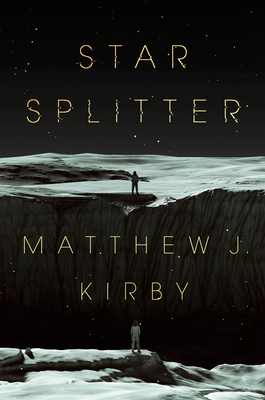
97. Star Splitter


Star Splitter. Matthew J. Kirby. 2023. [April] 320 pages. [Source: Library]

First sentence: I don't care how many prep classes you take, or how many counseling sessions you go through, or how many waivers you sign, none of it actually prepares you to be burned apart by a laser, atom by atom. But Jessica Mathers was one of the most prepared travelers I ever had the privilege to meet. Not eager, but prepared. I've seen pretty much the full spectrum of human reaction to teleportation and talked countless travelers through their emotional and psychological barriers. I have a pretty spectacular record, too, with a voluntary abort rate of 8.2 percent; my department average usually hovers near fifteen. Some people just can't be talked into the machine come departure time.

Premise/plot: This young adult science fiction novel opens and closes in Earth's orbit on the OS Liverpool. Jim Kelly is a liason for ISTA. He is NOT a main character per se, just part of the framework. Jessica Mathers is--right or wrong--full of angst. Her scientist/explorer parents left her on earth six years ago while they went off adventuring. Now she's to join them on some planet (Carver 1061c)--for a year--to "help" them. She is NOT happy with the idea. She has a love-hate relationship with her parents. They will both be "printed" (have their bodies printed) on a ship, DS Theseus. But Jessica wakes up ALONE on a ship that is not in orbit at all, but crashed on the planet below (she's nicknamed it Hades). There are graves outside the lander. She hasn't a clue WHY she's alone and things did not go off according to plan, but someone....a familiar-yet-not-familiar someone...has the answers to all of her questions. If the person is willing to share...

My thoughts: This one alternates between "before" and "after." Both "before" and "after" sections have a vague, suspenseful, creepy Twilight-Zone feeling to them. Readers may be being given clues to piece together, but it isn't one puzzle--but two. 

I kept reading because of the suspense and creepiness. Definitely Twilight Zone vibes. But in true Twilight Zone fashion, there weren't really any answers to any of the questions--not really. Especially as to the WHY. Some of the more matter of fact questions are answered. But not any that would help anyone--characters or reader--make sense of this world. 

I honestly don't know how I feel about this one. I kept reading it. I had to know how it all fit together. But I'm not sure it was ultimately satisfying. And I'm not sure that I want it to be ultimately satisfying. Maybe I'm okay with not having answers. But definitely ambiguous in nature.


© 2023 Becky Laney of Becky's Book Reviews

Wednesday, February 01, 2023

18. Poster Girl


Poster Girl. Veronica Roth. 2022 [October] 288 pages. [Source: Library]

First sentence: When she thinks of the time before, she thinks of the photo shoot. The woman who applied Sonya's makeup smelled of lilies of the valley and hair spray. When she leaned close to dust Sonya's cheeks with blush, or to cover up a blemish with a fingertip dotted beige, Sonya stared at the freckles on her collarbone. When she finished, the woman slicked her hands with oil and ran them through Sonya's hair to make it sleek. 

Premise/plot: Poster Girl is dystopian fiction [for adults, I make this distinction because Veronica Roth has written books for both young adults and adults, and some adult readers are very opinionated when it comes to NOT wanting to 'accidentally' read YA].

Sonya Kantor, our heroine, was literally the poster girl for the now-overturned government. She's spent years--a decade? a little over a decade???--imprisoned in the Aperture paying for her "sins" and her family's sins. And by sins I mean political beliefs and views. Of course personal blends with political and political blends with personal. She was a teenager following in the steps of her parents. Other kids--younger kids--whose parents were involved in this now-overturned government--have been released from the Aperture and returned to society (often with new names, new identities). But not Sonya. 

Sonya is given the opportunity for release, for freedom, or so-called "freedom," if she'll help find a missing person, a child--an illegal second child. But tracking down this mystery will raise more questions than it may answers, and the truth may just SHOCK Sonya and disrupt her life forever...

My thoughts: There is world-building. I didn't include many details of the world-building because it is easier to understand while reading than to try to summarize succinctly and explain to someone else. I would not do justice to the two governments, the revolution, the warring ideas and beliefs, in just a few sentences. This one has a LOT to say about technology, about policing ideas, morals, values, behavior, etc.

I enjoyed this one. It was a fast-paced read with some action, plenty of mystery. There's an attempt at light romance that just didn't make sense to me (at all). The romance was the weakest element, but there were plenty of stronger ones. I do almost wish that a little more time had been spent on personal relationships--just another fifty or so pages might have helped me like it (even) more.


© 2023 Becky Laney of Becky's Book Reviews

Wednesday, January 04, 2023

4. Twice in a Lifetime


Twice in a Lifetime. Melissa Baron. 2022. 325 pages. [Source: Library]

First sentence: The text came through at 8:33 PM.

Premise/plot: Personally I was reminded of The Lake House (a romantic comedy). Isla, our heroine, is out of sorts. She's grieving the loss of her mother (to cancer). She's in a tense non-relationship with her father. She's quit one job and is getting settled into another. She's moved from a big city to the country. Also, she suffers from general anxiety, depression, and suicidal thoughts. Every day is a battle, a struggle. The novel opens with Isla getting a text from the future. Yes, the future. Ewan Park--a man who has either lost grip with reality OR really is who he says he is, her future husband--is contacting her via text message. She's skeptical (has she not seen the Lake House???) but hesitant. She doesn't want to block this number. He makes her feel less lonely and miserable. He makes her feel good about herself. But yet can she truly believe his outrageous claims??? But at one point, his texts become warnings. And then they stop--abruptly. 

Will Ewan and Isla ever get their happily ever after?

My thoughts: Is it premise-driven???? Yes. At least mostly. This one is definitely all about the magic of being able to reach out and seeking to connect with your one-true-love. Love is not bound by time--if you have a magic cottage. Is it character-driven???? Again, yes, mostly. It is more feelings-and-emotions driven than traditional character-driven. Isla's headspace--her mental health, her extra-special-mental-health needs--takes up so much of this one. Ewan is mainly portrayed as her savior--literally and figuratively. [Cue a Celine Dion song, perhaps???] If readers do not enjoy Isla, Ewan, or Isla-and-Ewan together as a couple, then the premise alone may not be enough to "save" this one and make it worth your time. This one is DEFINITELY not plot-driven, not really. It's a romance first and foremost. 

Is it clean???? NO. I am probably in the small majority of readers who prefer their romance without graphic love songs. I realize I'm the minority. Plenty of readers will not have a problem with the content of this one. For those few who like me prefer clean-and-sweet romance [Christian or not] this one definitely needs a warning before you become too attached to the characters. 

This book might be triggering for some. Isla is struggling almost every waking moment of every day with severe mental problems. She is truly in trouble--this is no joke--her life depends on her getting help. The book has its dark-and-bleak moments. Isla's headspace turns to despair, and, since the author wants us right there alongside the main character feeling what she feels, well, it could be triggering for some readers.

Did it work for me? It wasn't a perfect read for me. I was definitely hooked and had to keep reading--I read this one over two or three days.


© 2023 Becky Laney of Becky's Book Reviews

Monday, September 12, 2022

111. Widowland


Widowland. C.J. Carey. 2022. 432 pages. [Source: Library]

First sentence: A biting east wind lifted the flags on the government buildings in a listless parody of celebration. All the way from Trafalgar Square and down Whitehall, they rippled and stirred, turning the dingy ministerial blocks into a river of arterial red. The splash of scarlet sat savagely on London's watercolor cityscape: on the dirt-darkened Victorian facades and dappled stone of Horse Guards, the russet Tudor buildings and ruddy-bricked reaches of Holborn, and around the Temple's closeted, medieval squares. It was a sharp, commanding shout of color that smothered the city's ancient grays and browns and obliterated its subtleties of ochre and rose. 

Premise/plot: Widowland is alternative history. The premise is that England and Germany arrived at an alliance in 1940. The book focuses on the upcoming coronation of King Edward VIII and Queen Wallis. The heroine, Rose Ransom, has been ranked (all women are ranked) high and is enjoying certain privileges that many do not. The purer your 'stock' and the prettier your face, the more life has to offer you. She has been tasked with several things, however, primarily she spends her time REWRITING classic literature to fall into line with the new order. You wouldn't want anyone to stumble into a book, start to think for himself, and start a revolution. (Or herself). At the same time, she's sent on a secret mission to the 'Widowlands' to find disgruntled women who are using graffiti to voice their discontent. Usually the graffiti is comprised of quotes from literature. 

While the main 'action' occurs in the spring of 1953, you do get some idea of how things have gone in those thirteen years. Primarily, reading--for men, women, boys, and girls--is not encouraged all that widely. Well, certain books which fit into a certain agenda are okay. But reading for pleasure, reading books that encourage thinking independently, well, no one wants to be caught reading. Self-censorship is high because one doesn't want to be informed against for being too different, too suspicious, too outside the accepted ideals. Blend in at all costs, never be noticed. But women, as  you might expect, do have it worse--relatively worse. They exist for one reason and one reason only....and thinking is not it. 

As she is doing her job, Rose starts to think for herself...and well...that's not without risks.

My thoughts: I enjoyed this speculative novel. I enjoy a good alternative history, something that asks a good what if. And this one was intelligently done, in my opinion. Unlike some of the more frothy and trivial what-ifs that imagine if America had a royal family--that George Washington was America's first king, this one explores a much darker what if. 

I found it an interesting, absorbing read. 


© 2022 Becky Laney of Becky's Book Reviews

Thursday, July 22, 2021

66. The Lion of Mars


The Lion of Mars. Jennifer L. Holm. 2021. 259 pages. [Source: Library]

First sentence: The trip to Mars was the hardest thing they'd ever experienced. That's what the grown-ups said. The small, cramped ship. The constant fear of something going wrong. The knowledge that they could never return to Earth. But honestly, it sounded like a cakewalk compared to sharing a bedroom with Albie.

Premise/plot: Bell is the youngest child (11) living on the American settlement on Mars--the year 2091. The others are Albie (17), Flossy (16), Vera (15), and Trey (14). Life is good so long as it stays boring. B-O-R-I-N-G. Because when life is NOT boring, that means there's TROUBLE and DANGER. It means possible injuries, illness, or even death. Sadly, for Bell, life doesn't stay boring. Perhaps it starts with a few broken rules, perhaps the excitement was inevitable.

The rules are simple: do not go outside without a buddy; use the alarm bell in an emergency; keep a glow stick in your pocket; rovers are off-limits for children; do not go beyond the flag; no contact with foreign countries, ever.

Some rules are made to be broken. Lives may depend on rules being broken...

My thoughts: I never really thought of Jennifer L. Holm as a science fiction writer. But The Lion Of Mars works really well. I loved the world-building. I loved the storytelling and narrative. I loved the character development. I loved the pacing of it. It is at its heart a coming of age novel, it just happens to be set on Mars.

Quotes: 

"Summer squash," he said.
"Socksy!" I said.
Phinneus chuckled. "I don't think I'll ever get tired of hearing you say that."
"Socksy" was my very own slang for "great." When I was little, I hated wearing socks. To encourage me, the grown-ups would give me a piece of candy every time I put on a sock. After a while, I would put on a sock, walk up to them, and announce, "Socksy!" just to get candy. In my head, "socksy" meant "great!" because candy was great. It just sort of stuck. (26)

I spent hours poring over the animal book. I loved learning about Earth animals. They were awesomely strange. Like giraffes. Why didn't they tip over with those long necks? Or snakes. How did they move, since they didn't have legs? And penguins. Did they really live on floating pieces of ice? But the lions were my favorite. How could I not love the big cats? They were social and lived in a group called a pride. They helped each other and raised their cubs communally. They sounded just like us. All our grown-ups had raised us together. One sentence stood out to me: Lions who are rejected by their pride do not survive long. (52)

"Bell," Sai said, "Trey told me what happened on the train. It was very, very brave of you to walk through the tunnel by yourself to get help." But he was wrong. I hadn't been brave. "I almost gave up. I was scared the whole time," I confessed. His eyes met mine and he nodded. "That's what bravery feels like," he said. (141)

"How could a rock that size make such a big crater?" I asked. Sai looked down at me. "Something doesn't need to be big to have an impact," he said, and smiled. "Kind of like you." (169)

© 2021 Becky Laney of Becky's Book Reviews

Monday, July 12, 2021

60. The Knife of Never Letting Go


The Knife of Never Letting Go. (Chaos Walking #1) Patrick Ness. 2008. 512 pages. [Source: Bought]

First sentence: The first thing you find out when yer dog learns to talk is that dogs don’t got nothing much to say. About anything.

The Knife of Never Letting Go is a science fiction novel for young adults. (What kind of science fiction? It's the colonizing other planets sort. Also the trying to survive sort. And the encountering alien sort.)

Here are a few things you should know before picking it up.

1) It is science fiction. It is set on another planet, aka "New World." The planet has a handful of small settlements, including Prentisstown, the hometown of our narrator/hero. The planet's biggest settlement is Haven.

2) Todd is our narrator. He is a few weeks away from his thirteenth birthday. He "becomes a Man" on his thirteenth birthday. He is an orphan being raised by two men, Cillian and Ben.

3) There are NO WOMEN in Prentisstown. Todd has been taught all his life that there was a plague or virus that killed all the women of the settlement.

4) A virus (perhaps the same virus that allegedly killed all the women?) has made it so that all the men can hear one another's thoughts all the time. This is called NOISE. It isn't just men, though, they can hear thoughts of animals too. Manchee is Todd's dog. And he's a bit too forthright to say the least!

5) The book is thriller-esque. It's essentially one big action-sequence from cover to cover. Well, perhaps it takes three or four chapters to get him on his way. But once he gets started...he stays going. It's an intense, action-packed book.

6) He doesn't go alone. Manchee, his faithful dog that he once didn't even want, is with him....but more importantly he meets Viola.

7) Viola basically "dropped from the sky" and right into his path. Viola is the sole survivor of the settler's scout ship. Her parents died in the crash. The ships with thousands of more settlers is about seven or so months behind the scout ship. Todd cannot hear Viola's noise. Viola is the first female he can remember seeing--apart from reading the memories of the men in his settlement--which is not the same thing I think you'll agree.

8) Both Viola and Todd are in GREAT DANGER. Why?????? Well, it has to do with SECRETS and SCHEMES and PLOTS. The mayor of Prentisstown is ambitious and manipulative....to pick two of his tamer qualities.

9) Todd has some internal conflict going on inside....he cannot bring himself to kill. So while I might have spent a good deal of time emphasizing the ACTION, ACTION, ACTION aspect of this one, that doesn't mean it is without characterization and complexity.

10) Be warned it doesn't really have an ending.

11) It has profanity. A good deal of profanity. For some people it may be off-putting enough to pass on the book. For others that might be a big non-issue.

12) Poor grammar is part of the world-building. This may or may not bother readers!  

The first time I read it, I was meh. I was bothered by the poor grammar and the profanity. The second time I read it, I definitely liked it much better. The third time I read it, I loved it. I was fully engaged and absorbing the world-making and the depths of the characters. I was paying attention to the relationships, the conversations, all the feels. Things that were both spoken and unspoken. 

I have been listening to a lot of Preacher Boys on YouTube. His podcast deals a lot with abuse in the Independent Fundamental Baptist denomination. Or "denomination" as the case may be since technically each church is independent and there is no infrastructure binding the churches together. As I was reading The Knife Of Never Letting Go, I couldn't help thinking that one or two of the settlements might portray a what if--what if an IFB church decided to colonize space and set up their own theocracy?!

So that was one thing running through my mind this time around, but also I thought of all the changes we've gone through the past few decades--in particular the internet, social media, and media itself. All the bits about NOISE felt like it could be talking about our society--in some ways.

This third read was definitely more thoughtful and philosophical. I found myself making lots of notes.

Quotes:

  • The loud is a different kind of loud, because swamp loud is just curiosity, creachers figuring out who you are and if yer a threat. Whereas the town knows all about you already and wants to know more and wants to beat you with what it knows till how can you have any of yerself left at all?
  • Men lie, and they lie to theirselves worst of all.
  • Noise ain’t truth, Noise is what men want to be true, and there’s a difference twixt those two things so big that it could ruddy well kill you if you don’t watch out.
  • The Church is why we’re all here on New World in the first place, of course, and pretty much every Sunday you can hear Aaron preaching about why we left behind the corrupshun and sin of Old World and about how we’d aimed to start a new life of purity and brotherhood in a whole new Eden. That worked out well, huh?
  • Praying Noise comes from inside, it’s got a special feel to it, a special purply sick feel like men are bleeding it out, even tho it’s always the same stuff but the purply blood just keeps on coming. Help us, save us, forgive us, help us, save us, forgive us, get us outta here, please, God, please, God, please, God, tho as far as I know no one’s never heard no Noise back from this God fella.
  • Noise is like grey fire behind him and you can’t pick out anything in it and he might be up to something, mightn’t he? The sermon might be covering for something and I’m beginning to wonder if I know what that something is.
  • Men’s minds are messy places and Noise is like the active, breathing face of that mess. It’s what’s true and what’s believed and what’s imagined and what’s fantasized and it says one thing and a completely opposite thing at the same time and even tho the truth is definitely in there, how can you tell what’s true and what’s not when yer getting everything?
  • The Noise is a man unfiltered, and without a filter, a man is just chaos walking.
  • But a knife ain’t just a thing, is it? It’s a choice, it’s something you do. A knife says yes or no, cut or not, die or don’t. A knife takes a decision out of your hand and puts it in the world and it never goes back again.
  • “History ain’t so important when yer just trying to survive,” I say, spitting it out under my breath. “That’s actually when it’s most important,” Hildy says, standing at the end of the table.
  • “Men’s thoughts, Todd,” she says. “Men. And you notice he said he was going to ask the eldermen to come seek out your advice?” I get a horrible thought. “Did the women all die here, too?” “Oh, there’s women,” she says, fiddling with a butter knife. “They clean and they cook and they make babies and they all live in a big dormitory outside of town where they can’t interfere in men’s business.”
  • He shakes his head. “What d’you think’s been driving you on? What d’you think’s got you this far?” “Fear,” Viola says. “Desperayshun,” I say. “No,” he says, taking us both in. “No, no, no. You’ve come farther than most people on this planet will do in their lifetimes. You’ve overcome obstacles and dangers and things that should’ve killed you. You’ve outrun an army and a madman and deadly illness and seen things most people will never see. How do you think you could have possibly come this far if you didn’t have hope?”
  • “Everything on this planet talks to each other,” he says. “Everything. That’s what New World is. Informayshun, all the time, never stopping, whether you want it or not. The Spackle knew it, evolved to live with it, but we weren’t equipped for it. Not even close.
  • And too much informayshun can drive a man mad. Too much informayshun becomes just Noise. And it never, never stops.
  • “War is a monster,” he says, almost to himself. “War is the devil. It starts and it consumes and it grows and grows and grows.” He’s looking at me now. “And otherwise normal men become monsters, too.”
  • Doing what’s right should be easy. It shouldn’t be just another big mess like everything else.
  • She hurts. I know all this. I know it’s true. Cuz I can read her. I can read her Noise even tho she ain’t got none. I know who she is. I know Viola Eade. And I look at her sitting there and she looks across the river and we wait as the dawn fully arrives, each of us knowing. Each of us knowing the other.
  • Hope may be the thing that pulls you forward, may be the thing that keeps you going, but that it’s dangerous, too, that it’s painful and risky, that it’s making a dare to the world and when has the world ever let us win a dare?
  • “God works thru men,” Aaron says. “So does evil,” Viola says.


© 2021 Becky Laney of Becky's Book Reviews

Friday, February 19, 2021

19. Blackout


Blackout. Connie Willis. 2010. 610 pages. [Source: Bought]

First sentence: Colin tried the door, but it was locked.

I thought I'd start with a word of warning. When you get to the end of Blackout, you're going to NEED to have a copy of All Clear ready to go. Because, chances are, you're going to want to pick it up right away. There is no 'real' ending in Blackout. There is no resolution. There's no peace to be had. Usually I might say that's not such a positive thing in a book, but in this case, I'm forgiving.

You might also find it helpful to know that Blackout can be read as part of a series of time travel books by Connie Willis.  

Premise/plot: Several time travelers find themselves TRAPPED in the past in Connie Willis' thrilling novel Blackout. Time travel has its dangers--of course--but the net is supposed to have safety features built in to protect time and time travelers. But the 'logic' of the net is changing, and, the systems seem to be failing. Though it seems like a few people are aware of this calamity-in-the-making (Mr. Dunworthy surely has his suspicions? Why else would he be rearranging all the scheduled comings and goings of the historians?) The historians themselves are being kept in the dark, out of the loop. 

There are three main characters--three main narrators--in Blackout. Each is a historian, a time traveler. Each has plans for multiple assignments in the twentieth century. Each is experiencing frustration as these drops are rearranged and rescheduled. The historians are Merope who is 'observing' the evacuation of children from London to the country. She 'becomes' Eileen O'Reilly and works as a nurse or maid in one of the homes. Under her care are two very, very wild children. Of course, she's responsible for more than two children. Her employer has taken in many children--over a dozen, I think? But those two are the ones that make her life more than a little unpleasant. Her assignment is for the spring of 1940. Polly "Sebastian" is a historian observing the London Blitz in the fall of 1940. Her assignment has her working in a shop on Oxford Street. She is curious in observing how the Blitz effects people. How they are able to cope with the bombs falling over their heads. How they are able to cope with the terror of it all--knowing each and every night that they could die. The third historian is Michael Davies. Since he was supposed to observe Pearl Harbor first, he's got an implant to give him an American accent. But with the shuffling of assignments, he's now observing the Dunkirk evacuation in June 1940. His research has him observing heroes. He's looking to observe the qualities that make someone brave and heroic, what makes a person risk their lives to save others.

If all went according to plan, these three would NOT have met--in the past. Their assignments in 1940 would not have overlapped in time or place. But not all went according to plan...and now these three are going to need each very, very much if they're going to survive...

My thoughts: I really love Connie Willis' time travel novels. Blackout and All Clear perhaps would have perhaps been better as one CHUNKY book. The two are essentially one book with one story. These two can be read on their own without previously reading the other two books. (Again each of those two could be read as stand alone novels.)  

I love historical fiction. I love historical fiction set during the second world war. I love historical fiction set in England.

I love time travel stories. This one is INTENSE.

© 2021 Becky Laney of Becky's Book Reviews

Tuesday, March 17, 2020

43. Brightly Burning

Brightly Burning. Alexa Donne. 2018. 394 pages. [Source: Library] [YA Fiction; YA Science Fiction; Space Opera]

First sentence: The gravity stabilizers were failing again.

Premise/plot: Stella Ainsley is an orphan now fully grown—if you consider eighteen grown. She is a part-time teacher, part-time engineer aboard a starship. Not the finest of those orbiting earth, far from it. Those that call the Stalwart home are hard workers, farmers mainly, but the lowliest class. Stella wants off. She doesn’t want to work as an engineer, at least not her first choice. She wants to teach. But a job transfer to another ship isn’t looking likely—either as an engineer or a teacher. But one application succeeds. The Rochester, a private ship orbiting the moon, is in need of a governess for a child. Stella says yes. On the Rochester she meets Jessa and her older brother, Hugo. Their meeting is strange and awkward. She saves his life! It seems the Rochester holds more than a few secrets. But it is wonderful and only sometimes terrifying. Could Stella have found her happily ever after?! Or will the truth tear two lovers apart forever.

My thoughts: I love, love, love this one. I first read it in 2018. I recently read Donne’s second novel—also a space opera retelling of a classic, this time Austen’s Persuasion. I believe that one must be set earlier in this world she created. Reading it made me *need* to reread this one. It didn’t disappoint. I think I may love it even more.

I would love to see this filmed!!!


© 2020 Becky Laney of Becky's Book Reviews

Friday, March 13, 2020

41. Eve of Man

Eve of Man. Giovanna Fletcher & Tom Fletcher. 2018. 400 pages. [Source: Library] [Science Fiction; YA Science Fiction; speculative fiction; YA Romance]

First sentence: On the first day no one really noticed. Perhaps there was a chuckle among the midwives at the sight of all those babies wrapped in blue blankets, not a pink one in sight.

Premise/plot: Eve, our heroine, is a miracle. Fifty years had passed since the last girl was born. Fifty years of anxiety, panic, fear, and dread. Is humanity truly dying and doomed? Eve, by being born, became the savior or potential savior of the world. The fate of mankind rests in her womb, her becoming the mother of all.

Eve has grown up locked away in a tower, cared for by the powers that be. Her only companion is a hologram named Holly. She’s not a computer program, not exactly. She’s piloted by several teams of young men. One man being the programmer that works the hologram magic. The other that pilots. His words become her words. His facial expressions become hers. His body language, his mannerisms—hers. Eve has a way of distinguishing between them.

Bram, our hero, is Eve’s favorite Holly. It isn’t until they accidentally meet in real life, for the briefest of moments, that everything changes. His eyes, she knows those eyes. She learns his name. She begins to think of him not as Holly but as Bram. But talking to the hologram Holly requires pretense on both sides. She knows that she is to go along with the program. He knows he is to keep to the script. But can they talk to each other and keep up the lies? Both begin to question the system. Both begin to see that the powers that be are corrupt. Can they find a way out?!

My thoughts: I loved the premise. I’ve read similar premise-driven books in the past. Though in that one it was there was only one man, one Adam, if you will. But essentially both books asked if there was any room for love, for family, when the fate of the world rested on your reproductive system.

I thought the relationship between Eve and Bram was great. Definitely kept me reading. All my questions weren’t answered but I am hoping there is a sequel.


© 2020 Becky Laney of Becky's Book Reviews

Thursday, March 12, 2020

40. The Night Gardener

The Night Gardener. Jonathan Auxier. 2014. 350 pages. [Source: Library] [mg fiction; ya fiction; mg historical; ya historical; mg speculative fiction; ya speculative fiction]

First sentence: The calendar said early March, but the smell in the air said late October.

Premise/plot: Molly and her brother Kip are orphans (shhh! don’t tell Kip) desperate for work. Hence why they accepted this job at a super spooky, stuff-of-nightmares estate. Molly will cook, clean, organize, manage everything. Kip will garden. But from day one there are warning signs that something is amiss, that in fact something wicked this way comes. Will Molly and Kip survive this job?!

My thoughts: I have read this one so many times that I have lost count. I know I read it twice the year it came out, 2014. This has become one of my absolute favorite novels. It just gets better and better every time I revisit it. Perhaps my reviews get worse as I have already said it all?! I know there is nothing I can say that will actually do the book justice. It’s a lovely, delightful, well written, atmospheric coming of age novel set in Victorian England. It’s creepy, haunting, character-driven AND premise-driven. If you could have ANYTHING you want in exchange for a drop of your soul, would you risk it?!?!?!


© 2020 Becky Laney of Becky's Book Reviews

Tuesday, March 03, 2020

35. A Boy and His Dog at the End of the World

A Boy and His Dog at the End of the World. C.A. Fletcher. 2019. 365 pages. [Source: Library] [post-apocalyptic; science fiction; speculative fiction; adult fiction]

First sentence: Dogs were with us from the very beginning.

Premise/plot: A Boy and His Dog at the End of the World is a post-apocalyptic novel set After. The world’s population has plummeted from 7 billion to a mere 7,000. Humanity’s mysterious sterility almost certainly dooming the race. Griz, our hero, calls it The Gelding. It’s been several generations, perhaps a couple hundred years even, since then. Griz is keeping a journal, writing to a long-dead unknown boy, a boy she knows only from a photograph. (The photo captures a happy beach moment: a brother and sister with their dog.) Griz picked up the faded relic from Before when he was scavenging with his family. Griz loves, loves, loves, loves to pick up books to bring back to their island. Griz especially loves dystopian and post-apocalyptic novels though the authors always get it wrong—how the world ends, how society collapses.

Griz essentially has it fairly good. Two dogs that are loyal, loving, and helpful. A father and some brothers and sisters. True, Griz‘s mom has suffered a traumatic brain injury and has never recovered much cognitive function. But Life is hard, busy, risky—but there is family.

So the book mainly is about what happens when a blue-eyed, Red-haired stranger named Brand comes to the island to trade....

My thoughts: The narrative is written in first person. Griz has been raised in part by books, but life has changed so very very much since Before. Griz definitely is naive in some ways...not prepared for a dangerous, unpredictable adventure off his home island. But who could possibly be ready for what comes next?!?!

Jess and Jip are the two family dogs...and a catalyst for most of the action. What will one boy do to get his dog back home?!?!?!

I found this a compelling, action-packed read. Griz is a fully fleshed, well-rounded, oh-so-human character. The book doesn’t rely solely on the post-apocalyptic premise or the action and adventure elements. Griz’s narrative voice is strong and compelling. It had me hooked from the start.

Is it for the faint of heart dog lover?! I am not sure. Life After has not in any way been kind to man’s best friend. Not so much this present generation, but the ones that came before as society was saying a very long goodbye to life as we know it. A few places here and there might prove disturbing.

For that matter...this is very much a book for adults and possibly older teens transitioning to adult books. Griz may be young, but a young protagonist doesn’t mean it’s automatically for kids.


© 2020 Becky Laney of Becky's Book Reviews

Tuesday, January 28, 2020

17. Son

Son. (The Giver #4) Lois Lowry. 2012. 393 pages. [Source: Library] [dystopia; speculative fiction]

First sentence: The young girl cringed when they buckled the eyeless leather mask around the upper half of her face and blinded her. It felt grotesque and unnecessary, but she didn’t object. It was the procedure. She knew that.

Premise/plot: Claire is a Vessel, a birthmother, that was her assignment given at the Ceremony of Twelves. At fourteen she gives birth—or should I say delivered of—her Product. There is no he or she, no baby—just a product. They are not mothers but vessels. No maternal feelings or bonds allowed or encouraged. Claire is a misfit indeed since she can’t stop thinking about *her* baby, her son, number 36. Claire shocked the system in that she didn’t give birth naturally, her product had to be cut out of her. Claire is rejected from the program and reassigned to the fish hatchery. She pursues a connection with her son, wanting more, always more. Love may be a strange phenomenon in this cold and cruel community, but Claire is infected all the same. When Jonas takes the baby (toddler really since this is his second December), Claire is overwhelmed with emotion.

Son has three parts. The first and third sections are set in familiar communities. The first is where Jonas and Gabe escaped from. The third is the Village where Jonas lives as Leader—happily married to Kira. The second is a community new to readers. This is where Claire spends five to seven years, preparing herself for her journey to find her son. She will do antibiotics to find him and know he’s okay.

My thoughts: In the Giver, I, as a reader, was so focused on Jonas and his story, on the horror of the releases—new and young—that I didn’t think much about the other assignments, particularly the birthmothers. Son changes that. Claire’s story starts two to three years prior to The Giver.

This is an emotional read!!! I definitely love the series. The Giver remains my absolute favorite. One thing worth noting is that every single book has a different narrator, different style, different message, different tone. No two books are alike. Son unites the series and does a lovely job completing the story. 


© 2020 Becky Laney of Becky's Book Reviews

Monday, January 27, 2020

16. Messenger

Messenger. (Giver #3) Lois Lowry. 2004. 169 pages. [Source: Library] [Speculative Fiction; Dystopia; Fantasy; Children's Book]

First sentence: Matty was impatient to have the supper preparations over and done with.

Premise/plot: Matty, a character whom we first met in Lois Lowry’s Gathering Blue, now lives in the Village, a near perfect utopia—it seems. The Village has a long, long history of welcoming all refugees: the abused, the downhearted, the broken, and imperfect. Matty has been living with The Seer (aka Christopher, Kira’s father). But in the past few months, changes have been happening. People are less welcoming, less kind, less helpful, less compassionate, less empathetic and are becoming increasingly ruder and more selfish and self-absorbed. There is even talk of closing Village to outsiders (refugees) and building a wall. Matty has come of age since Gathering Blue and he is definitely the hero of this one.

The Messenger introduces readers to The Leader of Village. Readers will recognize him and the book where we first met him...

Of the three books in the series, this one is the most supernatural. While technically still post-apocalyptic, it is definitely magical in the supernatural sense.

My thoughts: Lest you conclude that this is a politically driven novel in response to a certain president, it was published in 2004. I had forgotten much of the plot, but I couldn’t help but see how relevant it is to the times.

Perhaps I unintentionally block the plot of this one?! It has a very Giving Tree feel to it. It is decidedly sad.

I do wonder if Matty was intended to be a Christ figure?! This story does not end with resurrection just a substitutionary atonement of sorts. I don’t want to read too much into it, but don’t want to ignore the obvious either. 


© 2020 Becky Laney of Becky's Book Reviews

Friday, January 24, 2020

15. Gathering Blue

Gathering Blue. (The Giver #2) Lois Lowry. 2000. 240 pages. [Source: Library] [Speculative Fiction; Dystopia; children's fiction; mg fiction]

First sentence: “Mother?”

Premise/plot: Gathering Blue is a coming of age dystopian novel. It isn’t an in your face dystopia. It’s much more subtle, quiet even. Readers know that this community is a remnant of a civilization. There is one remaining building that has survived the centuries since the collapse. The community has a primitive feel to it—for a futuristic dystopia. The men hunt in packs; the women weave. If you cannot work hunting, gathering, planting, weaving, then you are essentially kicked out and left for the beasts. Kira, our heroine, has a twisted leg—she was born ‘a cripple.’ Some wanted her to be sent away, left for the beasts. But her mother and grandfather fiercely fought to keep her. Kira was being trained by her mother to weave, to dye thread, to embroider when her mother died. Now that she’s on her own the fight to kick her out has resurfaced. One woman demands Kira’s land should be hers. Kira’s fate depends on her defense attorney. Will she be saved? Can she take over her mother’s job?

My thoughts: Is it fair to compare this one to Lois Lowry’s The Giver? Probably not. Especially if you’re supposed to be wearing your book reviewer hat. Though this isn’t a review copy, so I suppose I can be as subjective as I please! I love, love, love The Giver and it gives off deliciously creepy vibes from page one. Something is way, way off and you know it. Gathering Blue has a post-apocalyptic feel to it. Civilization has been set back hundreds if not thousands of years because of a catastrophic collapse. The creepiness creeps up on you in this one. I didn’t see the potential evil in their midst—the secrets, the lies, the crimes. I just got the sense the people were ignorant and ‘uncivilized.’

Readers get a glimpse of one place that might be ‘beyond’ the sophisticated though evil civilization presented in The Giver.


© 2020 Becky Laney of Becky's Book Reviews

Monday, January 13, 2020

8. The No. 2 Feline Detective Agency

The No. 2 Feline Detective Agency. Mandy Morton. 2014/2017. 272 pages. [Source: Library] [Genres: Animal Fantasy; Mystery]

First sentence: Hettie Bagshot sat at her desk and stared at her phone, willing it to spring to life.

Premise/plot: It isn’t at all unusual for cats to star in mysteries, to “help” their humans solve mysteries. But this isn’t your usual mystery with a cat. There are no humans—only cats. Cats that walk, talk, run businesses, drive cars, cook and bake, drink tea, and...murder. Hettie and Tilly are a detective pair new to the field, their first case takes them to a senior living facility where a couple of graves have been robbed. Can these two find the missing bodies before the robber strikes again? Is all as it seems at this nursing home?! Are other cats in danger?!

My thoughts: I have very mixed feelings on this one. I do love mysteries. If this book starred humans as murderers and victims, I probably wouldn’t hesitate to zoom through it without much thought. But since it only stars cats in this alternate reality, I struggled. Why?! Because I love cats. I do. And I try my best to not read SAD books where cats (or dogs or really any pet) die. I wouldn’t describe this book as terribly sad, just terribly weird. Cats should not be plotting murders and killing each other. I did read this one at a quick pace, but I am not sure you could say I enjoyed it.


© 2020 Becky Laney of Becky's Book Reviews

Monday, February 18, 2019

Ruled Britannia

Ruled Brittania. Harry Turtledove. 2002. 576 pages. [Source: Library]

First sentence: Two Spanish soldiers swaggered up Tower Street toward William Shakespeare. Their boots squelched in the mud. One wore a rusty corselet with his high-crowned morion, the other a similar helmet with a jacket of quilted cotton. Rapiers swung at their hips.

Premise/plot: What if the English navy had not defeated the Spanish Armada in 1588? What if instead of Queen Elizabeth reigning in the year 1597 she was instead locked away in the Tower? Turtledove gives us alternate history in his novel Ruled Britannia. It is told primarily from two perspectives: William Shakespeare and Lope de Vega.

Shakespeare has a choice to make. Should he commit treason against Spain and write a play that could potentially help overthrow Spain's rule and restore Elizabeth to the throne? Or should he play it safe and write a play memorializing King Philip II of Spain? Perhaps he'll be crafty and do both....but which one will get performed upon the King's death?!

Lope de Vega is in awe of William Shakespeare. He can nearly always be found watching his plays, watching the actors on and off stage, hanging around and conversing. He's a soldier on a mission: be on the lookout for any treason, any subversive meanings in the plays he watches. Some higher ups are suspicious of Shakespeare--but not de Vega, not really. Shakespeare doesn't care who rules so long as he can write, right?!

My thoughts: I imagine that Ruled Brittania was an absolute joy to write. Turtledove claims--and I have no reason to doubt--that he repurposed many, many lines from actual Shakespeare plays into "new" Shakespeare plays in this alternate history. In addition to Shakespeare, he used other contemporary playwrights from the time to craft his new plays and dramas. He obviously felt it was important to bring Shakespeare to life--and so he relied on Shakespeare's own words to flesh out his character and his dialogue. Like William Shakespeare, Lope de Vega is a real historical figure--a Spanish playwright from this time period who--at least according to the author's note--sailed on the Spanish Armada and returned to Spain to have a successful career.

Did I enjoy reading it as much as Turtledove enjoyed writing it? Probably not. In fact, I found it MUCH too long--tedious even. I was interested in the bare bones of this one. I wanted to know WHAT happened overall--would Shakespeare's play about Boudica (alternate spellings Boudicca, Boadicea, Boudicea) rebelling against the Roman Empire happen? Would it be successful? Would Elizabeth reign once more?

There were dozens of characters that peopled this novel that I just did not care about at all--not even slightly. I imagine that some--perhaps many--were actual historical figures. I just didn't care. Perhaps if the author's note was placed FIRST, I might have tried to care harder. Perhaps if there was a list of characters--noting which were historical and which were fictional. Perhaps if there were footnotes indicating which lines came from which actual Shakespeare plays or noting the other sources used?

One thing I know without a doubt...the chapters were unreasonably LONG...insufferably long. "Short" chapters were around thirty-five pages long. WHY TORTURE READERS?! You take a perfectly good premise--an entertaining one--and practically do everything possible to drain all the enjoyment of actually reading it?!

© 2019 Becky Laney of Becky's Book Reviews