Showing posts with label books read in 2022. Show all posts

Sunday, December 18, 2022

180. Can This Be Christmas?


 Can This Be Christmas? Debbie Macomber. 1998. 91 pages. [Source: Library]

First sentence: A robust version of "Little Drummer Boy" played in the background as Len Dawber glanced at his watch--for at least the tenth time in five minutes.

Premise/plot: Can This Be Christmas is a short holiday-themed novella by Debbie Macomber. A group of [restless] passengers are stranded at a depot [train, I believe] on Christmas Eve. No one is where they want to be. Most--though not all--are separated from family and loved ones. All are in different stages in life. 

Can these strangers find the 'true' meaning of Christmas?

My thoughts: It was short and sweet. It is not a romance. [Though a few passengers are in relationships.] Because Can This Be Christmas is packaged as a bonus story in longer collections that are romances, your expectations might be different. In fact, I believe GoodReads has MIXED all reviews of Can This Be Christmas with the reviews of her new novel A Perfect Christmas which has Can This Be Christmas as a bonus story. This is probably doing neither book any favors. But it is especially unfair to readers who are confused and trying to make up their minds whether to read it! 

This is a general "feel-good" comfy-cozy Christmas novella. There are MANY characters and MANY stories. It is set over the course of one day and night--Christmas Eve/Christmas. It reminded me of a L.M. Montgomery short story I read once.

© 2022 Becky Laney of Becky's Book Reviews

Tuesday, December 13, 2022

178. Alcatraz Versus the Knights of Crystallia


Alcatraz Versus the Knights of Crystallia. Brandon Sanderson. 2009. 299 pages. [Source: Library]
 

First sentence: So there I was, hanging upside down underneath a gigantic glass bird, speeding along at a hundred miles an hour above the ocean, in no danger whatsoever.

Premise/plot: This is the third book in the Alcatraz fantasy series. IN this one, Alcatraz and company arrive at last in the Free Kingdoms, in Nalhalla. Alcatraz wrestles with fame and ego in this one. Though raised in the Hushlands in a Librarian-controlled nation, he's FAMOUS in Nalhalla already, even starring in his own book series. (The book series being written by the Prince himself). Open up one of his books, and his theme music plays. You don't really get more famous than Alcatraz Smedry, of course, it's not really, truly HIM that is famous, more an idea of him. Also in this one, Bastille is put on trial. Will she be stripped of knighthood? How long will her punishment last? I should also not forget to mention that the LIBRARIANS want to come to peaceful terms and end the war at last. But Alcatraz and his friends suspect the WORST. But so many people want peace that they seem willing to give the Librarians the benefit of the doubt....

My thoughts: This one is an action-packed read full of fun and humor. I love this series. And I think I enjoyed this third book even more than the first two books. Folsom was a great new character to introduce--loved his talent, by the way. And it was nice to meet a librarian who wasn't evil for a change!!!

ETA: I reread this one in December 2022. I've reread the first three books in the series. I am enjoying the reread so much. The last time I read this book was 2016. It's been just long enough that there is so much that is 'new' to me. These books are holding up well, in my opinion.

© 2022 Becky Laney of Becky's Book Reviews

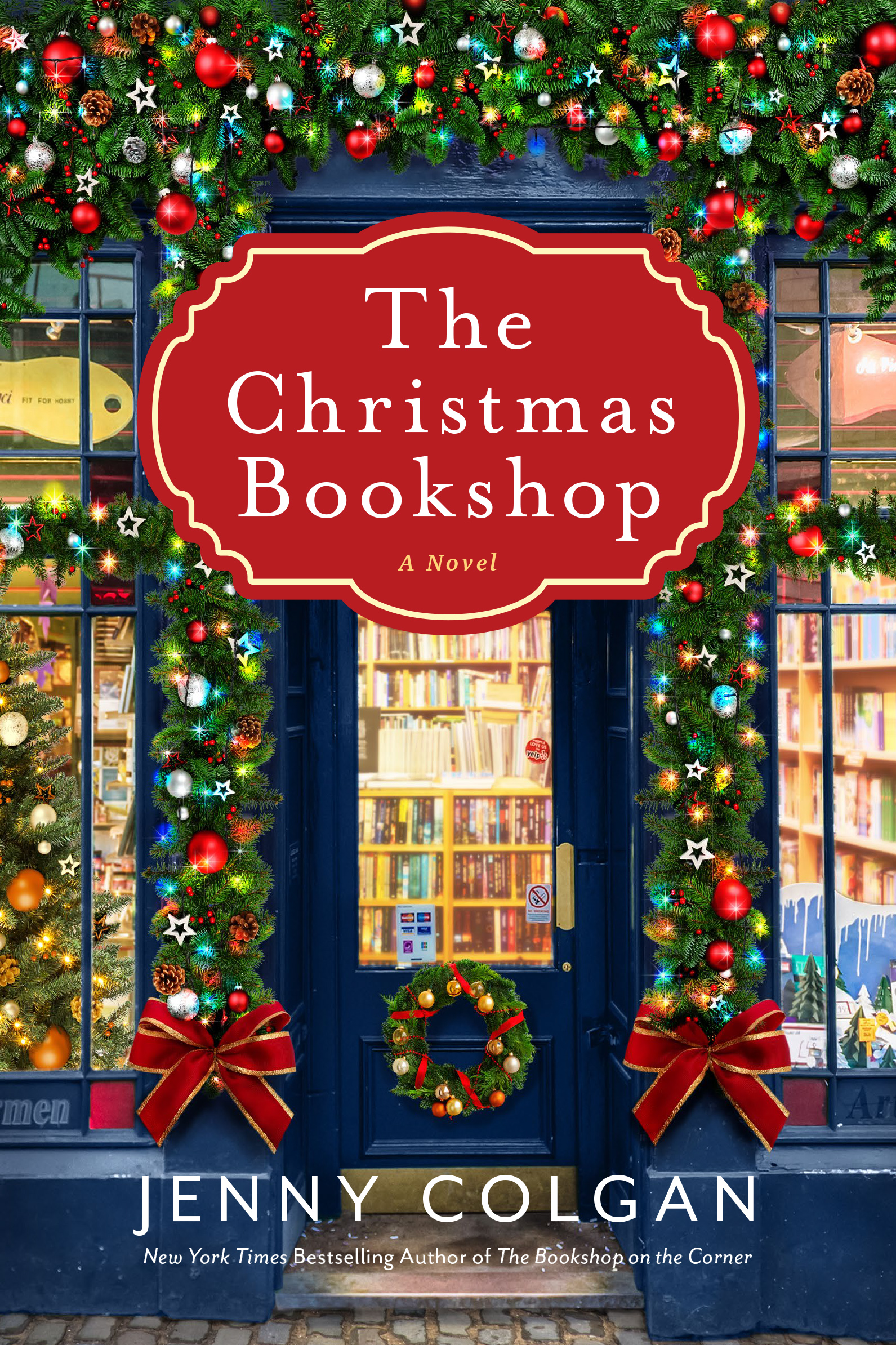
177. The Christmas Bookshop


The Christmas Bookshop. Jenny Colgan. 2021. 336 pages. [Source: Library]

First sentence: "But it's August!" said Carmen into the phone, putting down her book. "August! It's almost sunny outside! I have sandals on! Ice-cream vans patrol the land! I put sunblock on last week and almost needed it! How can I possibly get my head round what you're asking me?"

Premise/plot: Carmen, our protagonist, is whiny and wearisome. She has recently lost her job at a department store. She shudders at the idea of living with her mom (again). She dreads the idea of living with her (older) sister too. For whatever reason, Carmen hates Sofia. Because she is married? Because she has kids? Because Carmen hates just about everybody? Sofia isn't thrilled that Carmen is coming to stay--at their mother's request--either. [And after having met Carmen, I can understand why.] Sofia knows a client who owns a bookshop that is failing. It needs to show profits by the end of the year--Christmas time--if it's to stand even a small chance. Carmen doesn't really want this job. But she doesn't like the alternative either. If she's around the house, then she might--shudder--have to watch her two nieces and a nephew. She only has a small amount of time to turn this messy, chaotic bookshop into a profitable bookshop. Having no experience in this particular area...you might think it would take some effort. [But, nope. Easy as one, two, three.] 

Since running a new-to-you bookshop in a new-to-you city doesn't take all that much energy and effort, we've got a love triangle too. Blair is a "celebrity" author who visits the bookshop. Oke is a customer who really loves trees. 

My thoughts: This book was so incredibly DULL. The characters were anything but complex, interesting, likeable. The relationships were blah. Carmen was just such an unlikable protagonist. I don't know so much if she changes a little here and there by the end of the novel, or if all the other characters have just adapted to her and made a place for her in their lives.


© 2022 Becky Laney of Becky's Book Reviews

Monday, December 12, 2022

176. Call Me Mrs. Miracle


Call Me Mrs. Miracle. Debbie Macomber. 2010. 253 pages. [Source: Library]

First sentence: Jake Finley waited impatiently to be ushered into his father's executive office--the office that would one day be his.

Premise/plot: Call Me Mrs. Miracle is a holiday romance novel by Debbie Macomber. Jake Finley is managing the toy department. He's gone with his instinct and ordered an [insane] number of a particular robot toy. [His father is NOT at all happy.] It will take a miracle to sell them all by Christmas. Holly Larson is raising her nephew, Gabe, while his father is in Afghanistan. The two aren't quite bonded yet. She's struggling. He's struggling. Everything seems messy and chaotic. It would take a miracle for them to have a truly magically great Christmas. The toy he wants [you guessed it THE ROBOT] is way out of her budget. Enter Mrs. Miracle....

My thoughts: I liked this holiday-themed romance. I liked the characters. I did not see the big surprise coming. It was lovely.


© 2022 Becky Laney of Becky's Book Reviews

175. When Christmas Comes


When Christmas Comes. Debbie Macomber. 2004. 256 pages. [Source: Library]

First sentence: What do you mean you won't be home for Christmas?

Premise/plot: Emily Springer wants more than anything to spend Christmas with her college-age daughter. [The daughter wants NOT to spend Christmas with her mother.] Charles Brewster wants to avoid his mother this Christmas [at the very least]. He's tired of getting pressured by his mother to find a nice girl and settle down. [His brother, Ray, also gets pressured by their mother.] These two meet up at some sort of trading spaces site. They decide to switch homes for the holiday. He'll go to Leavenworth. She'll go to Boston. Both will be in for a couple of big surprises over Christmas vacation.

My thoughts: This one was vaguely familiar to me. I then realized that it was because I'd seen the movie based on this book. [Trading Christmas] This sweet holiday read [mostly clean or at the very least off screen only] features several couples falling in love over Christmas.

I liked this one. It was cute.


© 2022 Becky Laney of Becky's Book Reviews

174. The Golden Dreydl


The Golden Dreydl. Ellen Kushner. Illustrated by Ilene Winn-Lederer. 2007. 126 pages. [Source: Review copy]

First sentence: It was the holiday season, but Sara was not happy. Riding home from school in the bus was pure torture. Sara stared out the window at all the colored lights decorating the houses on street after street....Sometimes people left their curtains open, and Sara could see right into their living rooms, where big trees glittered and shone. 

Premise/plot: First and foremost potential readers need to know this is a spin on The Nutcracker. Sara, our protagonist, is about to go on a little adventure with her "gift" from an eccentric relation. It is a Chanukah themed fantasy novel for children. 

Sara is not looking forward to Chanukah. She doesn't want to celebrate with her family. She definitely doesn't want to play dreydl with all of her cousins--some older, some younger. She's just a super-crank. But when her great-aunt comes with gifts, well, things get interesting. Sara receives a golden dreydl. It doesn't make her want to play dreydl, more, but it is lovely all the same. 

But that night when every one else is sleeping....well....Sara has an adventure of her own...and it all begins with the transformation of the Golden Dreydl into a girl. They arrive in a fantasy land, of sorts, with demons, peacocks, a fool, and King Solomon and the Queen of Sheba. There is also much talk of a Tree of Life.

Sara is given a quest, of sorts, to save the girl from the demons/demon king. She has the Fool to help her. A few riddle games are played. First, between Sara and the Fool, and, then later between the Demon King and Sara and the Fool.

My thoughts: As I said, this one is a spin off of The Nutcracker. There is music that goes with this one. I highly recommend listening to the music.


© 2022 Becky Laney of Becky's Book Reviews

Friday, December 09, 2022

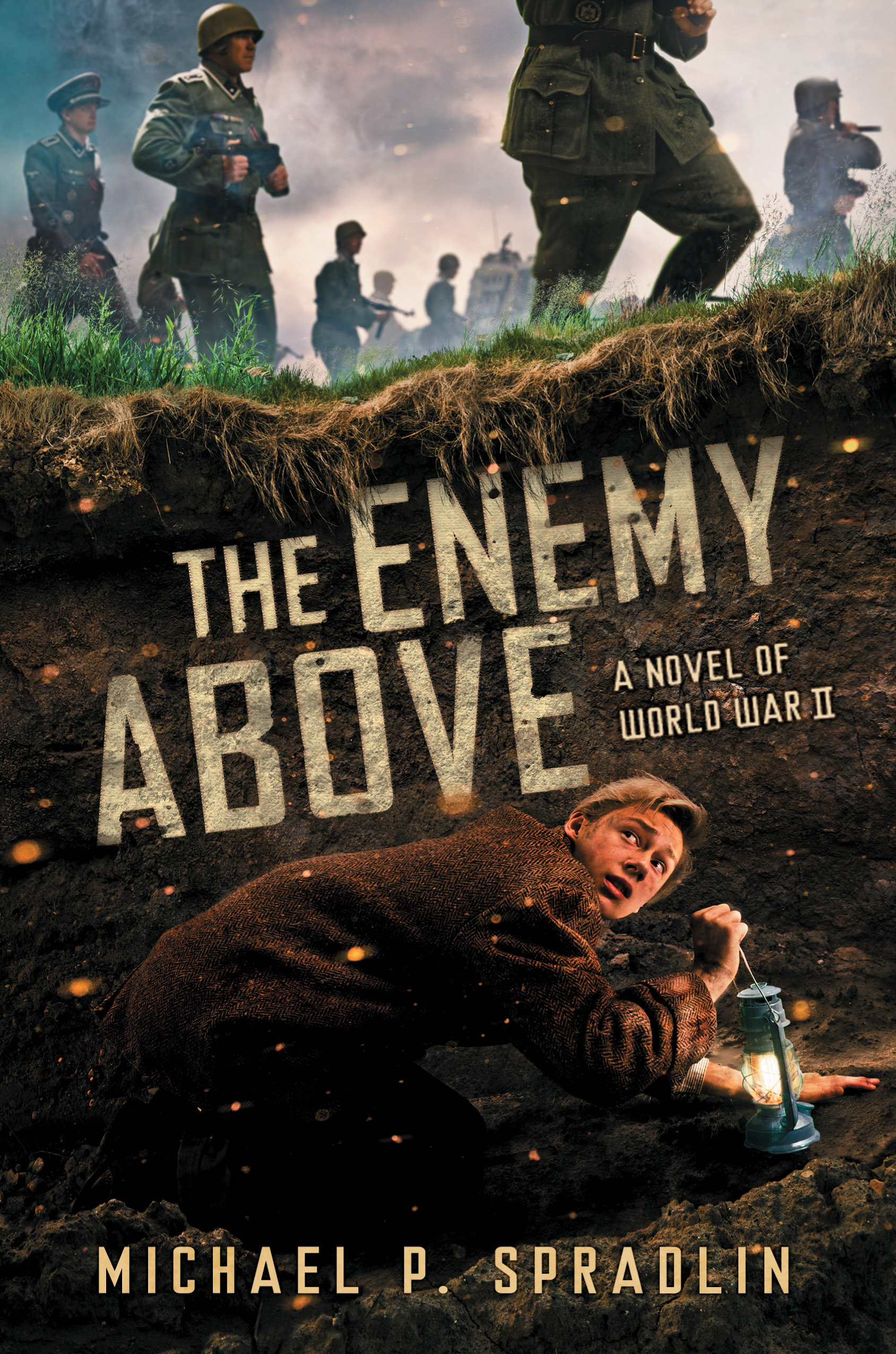
173. The Enemy Above


The Enemy Above. Michael P. Spradlin. 2016. 240 pages. [Source: Review copy]

First sentence: At first, Anton thought the rumble was a summer storm.

Premise/plot: Anton, our twelve-year-old protagonist, is coming of age during the second world war. Both fronts--the Germans and the Soviets--are closing in on his family's farm in Ukraine. Both sides pose real risks to Anton and his grandmother...and to the community at large. In particular, the Jewish community. There's not enough time to actually, actually flee with any hope of success. But there may just be enough time to find a hiding place in plain sight. The caves below may just prove a refuge to a community. But it isn't a cozy-safe-refuge. War is literally raging above. And there are those who will go to any lengths to hunt down Jews. 

Can Anton keep his grandmother safe?

My thoughts: This one is compelling, intense, action-packed. There are so many, many close-call moments. so many chapters end in a cliff-hanger. Emotions build as the novel unfolds. There is always this question of CAN Anton save his grandmother? Can he save himself? 

I was not at all expecting a dual narrative. It was so ODD and unusual that readers get a Nazi [Major Karl Von Duesen] viewpoint. We get both the HUNTER and the HUNTED perspectives. The flipping/switching back and forth during very intense scenes was something. I definitely don't like *being* in Karl's mind. 

This one does not tie things in bows. While some war novels have some amount of light to counterbalance the dark, this one doesn't. I think that is fair and realistic. 


© 2022 Becky Laney of Becky's Book Reviews

172. Prisoner of War


Prisoner of War. Michael P. Spradlin. 2017. 272 pages. [Source: Review copy]

First sentence: When my mom died, my home became a war zone. And my father was the enemy. Surly and resentful, he took out his anger on me. It's ironic that to escape one war, I ran away and found another. But it wasn't a war I chose. It was chosen for me.

Premise/plot: Henry Forrest enlists in the Marines though he is underage. With a little help from his grandfather, he lies about his age and joins up. [I believe he is fourteen, possibly fifteen.] He comes of age during the war. What he couldn't predict when he enlisted was that he'd end up a prisoner of war...

My thoughts: I don't read much world war II fiction set on the Pacific front. Well, in comparison to the European front, I should add. This one was heartbreaking and wonderful at the same time. I loved the relationships in this book. I loved Henry's relationships/friendships with his fellow marines and/or fellow prisoners. I loved, loved, loved the found-family aspect of this one. It kept some hope alive in the novel. I loved the ending.


© 2022 Becky Laney of Becky's Book Reviews

171. Scribbles, Sorrows, and Russet Leather Boots


Scribbles, Sorrows, and Russet Leather Boots: The Life of Louisa May Alcott. Liz Rosenberg. 2021. 432 pages. [Source: Library]

First sentence: "On a dismal November day, I found myself, and began my long fight," Louisa May Alcott wrote about her entrance into the world on November 29, 1832. She called her birth day "dismal," though records show a mild autumn all across the United States. Louisa must have been thinking of the family's mood, the inner rather than the outer weather. 

Premise/plot: What you see is exactly what you get: a MG biography of Louisa May Alcott. There are illustrations [by Diana Sudyka] at the start of each chapter. This is in part a straight forward biography of Louisa May Alcott. For many chapters, this is seeing her as a daughter, sister, student. Much [oh-so-much] is said about her parents, her siblings, and how she was raised. Bronson Alcott, well, he was a CHARACTER to say the least. Her mother, also, had her moments. I can't imagine it was an "easy" or "easygoing" childhood for any of the children. Once she comes of age and is a published author--though success wasn't immediate or continuous--the book softens a bit into biography + literary commentary. Her works are introduced and discussed--both unsuccessful and successful. 

My thoughts: I have decided that sometimes it may be better not to know too much about an author. That's not to say I disliked this biography. It's just that if you have a warm, cozy, comfy view of Louisa May Alcott--probably from reading Little Women a little too literally--then that happy, rosy image will be shattered/crushed. Her life is a bit dismal, in some ways. 

I didn't really like her parents. Bronson was definitely WAY, WAY, WAY above my maturity level. I detested him. I wasn't as angry perhaps with Abby [aka Marmee] because I could pity her for having to put up with her husband AND shouldering so much in life. But she has her own issues. 

I do think the book shares just enough details to flesh Louisa May Alcott out. 

I appreciated that this book doesn't seem to have an agenda. So many books about Louisa May/Jo March seem to focus so much on questioning her sexuality, her gender identity, her private life. This book does not do that.

Overall, I'd describe this one as incredibly SAD. 

© 2022 Becky Laney of Becky's Book Reviews

170. A Town Divided by Christmas


A Town Divided by Christmas. Orson Scott Card. 2017. 134 pages. [Source: Library] 

First sentence: When Spunky was invited to a meeting in The Professor's office, she didn't know what to expect. She had taken two classes from him, but she didn't major in genetics or even in a biological field--she was an economics post-doc, shopping for a tenured faculty position somewhere on plane Earth, preferably a place with flush toilets, clean water, and a good internet connection.  It didn't ease her confusion when she arrived at The Professor's office at the same time as Elyon Dewey.

Premise/plot: Spunky and Elyon--a reluctant pair--head to Good Shepherd, North Carolina, to do research. Can they find a gene [or genome???] to "prove" that some people are homebodies? This small town has a good track record. While plenty have left over the decades, almost all seem to come back home and settle down again. This "science" will involve getting genetic samples, data input, and interviews. [Elyon is not trusted with interviews.] Both will have to "settle" down in this super small town while they are working for The Professor. Both are a bit surprised with how things unfold...

Elyon who has very little social skills find himself falling in love with a young woman....and Spunky likewise is finding herself falling head over heels in love with someone as well. Everyone teases about how this is so similar to a Hallmark movie.

My thoughts: This one was an almost for me. Perhaps it would be more of a sell if it was actually a Hallmark movie. I didn't quite "get" the science-y grant side of this one. Elyon reminded me of Sheldon Cooper. Spunky and her love interest, Eggie, are Hallmark material.

I wish more had been about the two battling churches/battling nativities. We learn a little. But at least to my reckoning, this situation was never resolved--or resolved satisfactorily. Spunky and Elyon seem to learn a "secret" that no one else knows, but this doesn't lead anywhere. It's more of an afterthougt/aftertaste. There isn't any "love" or "forgiveness." Unless I fell asleep and missed it completely.


© 2022 Becky Laney of Becky's Book Reviews

Monday, December 05, 2022

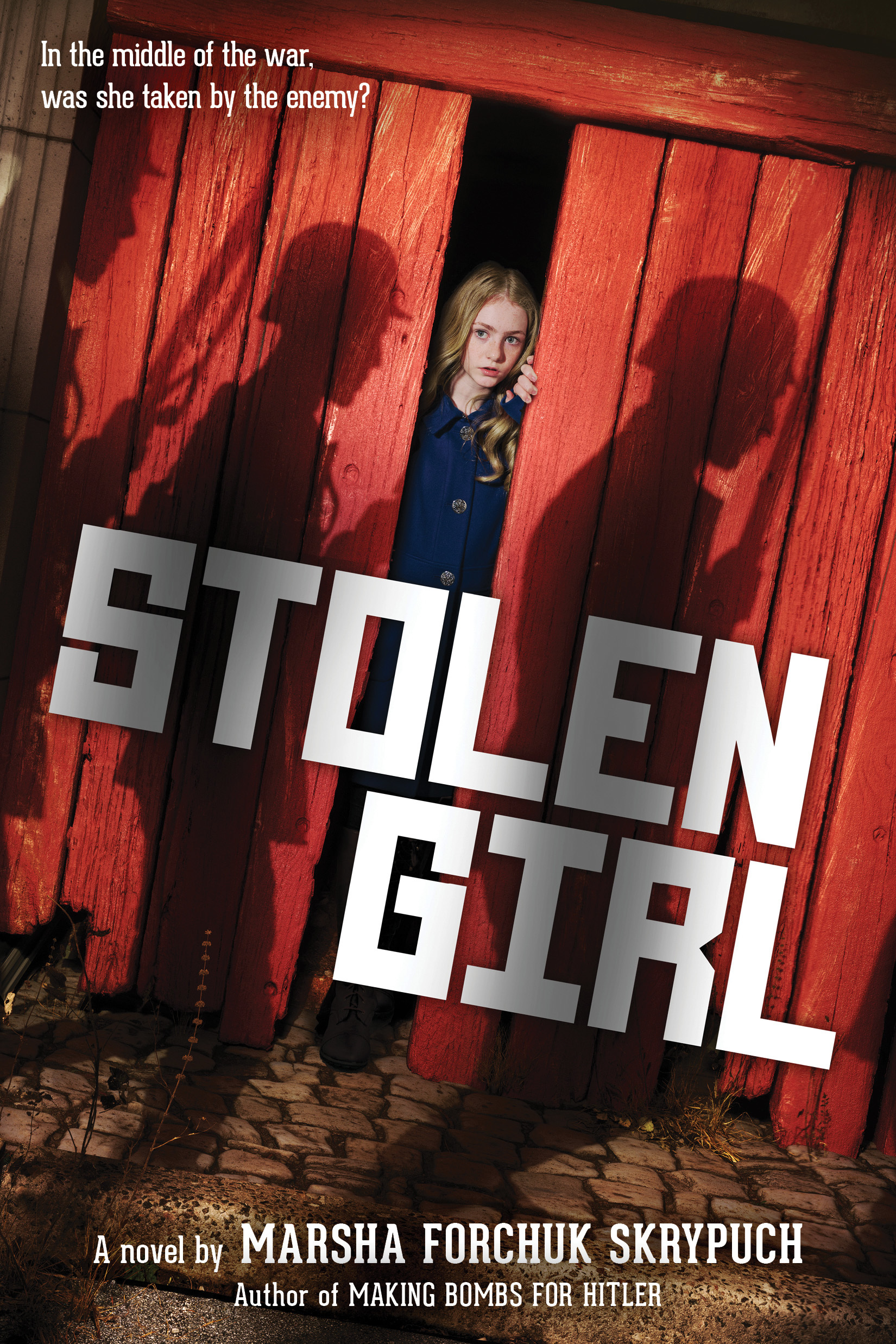
168. Stolen Girl


Stolen Girl. Marsha Forchuk Skrypuch. 2010. 208 pages. [Source: Review copy]

First sentence: The woman who said she was my mother was so ill on the ship from Europe that she wore a sickness bag around her neck almost the whole time.

Premise/plot: Stolen Girl is a companion novel to Marsha Forchuk Skrypuch's Making Bombs for Hitler. Making Bombs for Hitler is Lida's story. Lida is separated from her sister, Larissa, very early on in the novel. The War Below is Luka's story. Lida and Luka meet in a Nazi slave camp in Making Bombs for Hitler. Stolen Girl is the story of Larissa/Nadia. She was "stolen" hence the title by the Nazis. She was brainwashed into thinking she was German [not Ukrainian]. She was "raised" by German Nazis for several years. She even forgot her name and her sister. The novel is set in Canada, for the most part. Nadia has been adopted and she's adapting to life in a new country all the while battling nightmares and flashes of terrifying memories. Will she ever remember who she is? 

My thoughts: In some ways, and this is just my opinion, Stolen Girl is less action-packed than the previous novels. That's not to say it's not intense in its own way. It is just the suspense/tension comes in flashbacks. These flashbacks are blended with the "present" coming of age story, Nadia/Larissa learning English, attending school, making friends, having struggles, etc. Readers definitely get more of a glimpse of PTSD in this one. War has effects LONG after peace has come. That's something to keep in mind always.


© 2022 Becky Laney of Becky's Book Reviews

167. Murder at Morrington Hall


Murder at Morrington Hall (Stella and Lyndy Mystery #1) Clara McKenna. 2019. 304 pages. [Source: Library]

First sentence: "Americans are different, Mother."

Premise/plot: An arranged marriage between Viscount Lyndhurst "Lyndy" and Stella Kendrick doesn't get off to the best of starts when the vicar who was to marry them is found murdered. Of course, there's also the little hiccup of the bride-to-be not knowing she was crossing an ocean to marry a stranger--all arranged by her father. Between murder, theft, more theft, there's plenty going on besides courtship. 

My thoughts: I didn't know this one would focus so much on horses and horse racing. Good news, for those who like cozy mysteries AND horses, this is a good fit, perhaps. This being a  change from the traditional cozy mystery + cats, cats, and more cats. It is set in England in 1905. You've got visiting Americans clashing with British aristocrats on top of the mystery...

The mystery was a little all over the place to be honest. But by the end, things came together just fine. I do think it felt a lot longer than three hundred pages. A lot longer. I felt all the characters were a bit one dimensional.


© 2022 Becky Laney of Becky's Book Reviews

Sunday, December 04, 2022

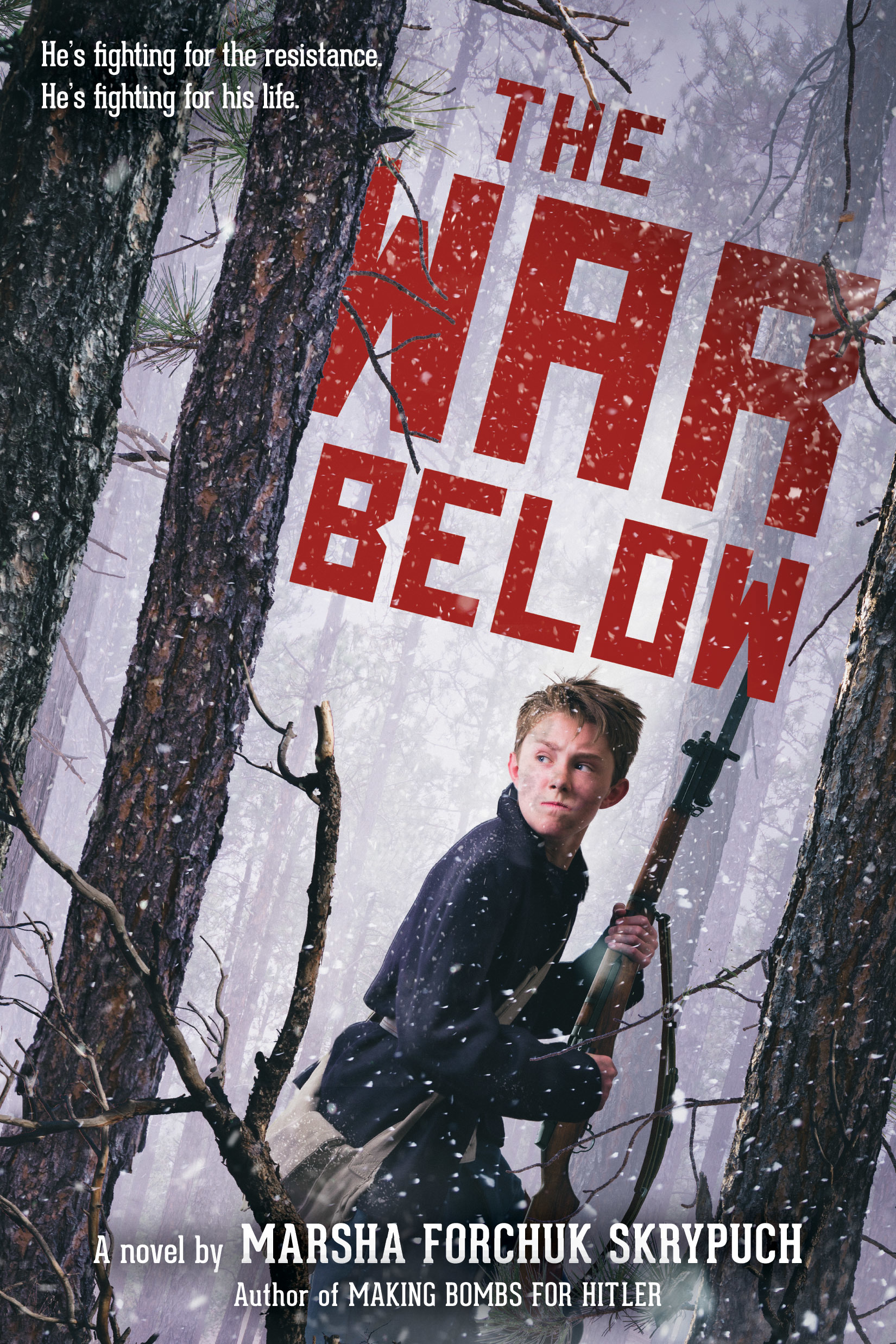
166. The War Below


The War Below. Marsha Forchuk Skrypuch. 2014. 256 pages. [Source: Review copy]

First sentence: The corpses around me provided an odd sort of comfort. Those people had been my friends and fellow captives. We had worked alongside each other during long, harsh months in the Nazi slave camp, helping each other when we could. 

Premise/plot: The War Below is a companion book to Skrypuch's Making Bombs for Hitler. Luka, a side character in Making Bombs for Hitler, now has his own book. The War Below chronicles Luka's time after his escape from the Nazi camp. He faces dangers from the Soviets and the Nazis. The risks abound, but freedom is everything. Well, survival is everything. It won't be easy. Every single day...and night...poses risks and dangers. It seems almost impossible, always out of reach. But as long as there is life there is hope. 

My thoughts: I really LOVED this one. To be fair, I went into this book already love, love, loving Luka. I was already 1000% invested in his story. And though I knew--from reading Making Bombs for Hitler--that Lida and Luka would find each other again after the war, this one still kept me turning pages. 

Both books are so well-written. Definitely recommended. Yes, they are intense, super-intense. But they are so GOOD. 

© 2022 Becky Laney of Becky's Book Reviews

Thursday, December 01, 2022

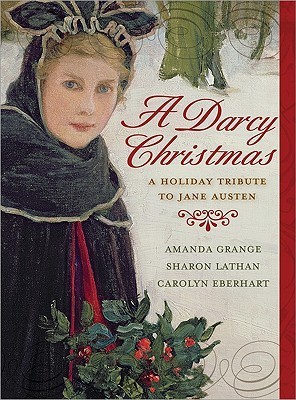
165. A Darcy Christmas


A Darcy Christmas: A Holiday Tribute to Jane Austen. Amanda Grange, Sharon Lathan, Carolyn Eberhart. 2010. 290 pages. [Source: Library]

First sentence(s):

From Mr. Darcy's Christmas Carol by Carolyn Eberhart: Old Mr. Darcy was dead to begin with. There is no doubt whatsoever about that. The clergyman, the clerk, the undertaker, and the chief mourner had all signed the register of his burial. His son signed it. And Fitzwilliam Darcy's name was as good as his father's before him. Old Mr. Darcy was as dead as a doornail.

From Christmas Present by Amanda Grange: It is a truth universally acknowledged, that a married man in possession of a good fortune, must be in want of an heir, and Mr. Darcy of Pemberley was just such a man. Moreover, he was soon to have that want satisfied, for his wife, Elizabeth, was expecting their first child.

From A Darcy Christmas by Sharon Lathan: He set the painting onto the sofa, assuring it was well supported before stepping away. He gazed at the canvas, a smile spreading as he looked upon his family. His family. The family created by him and his wife, just as he had dreamt for so many lonely years. They stood on the portico of Pemberley flanked by their precious children on the steps. All of them were smiling at the artist. A sentimental man by nature, he silently examined the newest portrait of his family and lost himself in happy memories.

 Premise/plot: A Darcy Christmas is a collection of three novellas. Each novella is a holiday-themed retelling/adaptation of Pride and Prejudice. 

My thoughts: "Mr. Darcy's Christmas Carol" was surprisingly fun. I had my doubts--as you might have your doubts about weaving these two stories together--but I thought it worked. It does a slight variation on the original. What if Jane and Charles Bingley got their happily ever after--after Lydia was "rescued" by Mr. Darcy's intervention--but Mr. Darcy's pride was still in the way of his declaring his love (the second time). This is what that first Christmas might have been like. If he'd been visited by the spirits of Christmas past, present, future.

"Christmas Present" was a great novella by Amanda Grange. I've enjoyed many of her Austen adaptations in the past. This one did not disappoint. She got the characters just right. It felt authentic like what a Darcy Christmas might have *really* been like. Elizabeth and Darcy are expecting their first child, and Charles and Jane just had their first child. So the families are coming together--the extended families--to celebrate. I really enjoyed this one!

"A Darcy Christmas" is a collection of holiday short stories following the Darcy family through twenty or so years of marriage. (I believe we see their twenty-third Christmas as a couple? Although I might have lost track of the last few stories.) Since we only catch glimpses of the family--on Christmas Eve/Christmas--it's hard to precisely follow these stories. We do know that (almost) every Christmas sees Elizabeth either with a new baby or pregnant. (Perhaps these stories do connect to Lathan's previous novels about Elizabeth and Darcy. If that is the case, then the stories might make more sense when it comes to keeping up with their family, friends, etc. Especially in the case of her children's love interests.)


© 2022 Becky Laney of Becky's Book Reviews

164. Don Quixote


Don Quixote. Miguel de Cervantes Saavedra. Translated by Edith Grossman. 1605. 940 pages. [Source: Bought]

First sentence: Somewhere in La Mancha, in a place whose name I do not care to remember, a gentleman lived not long ago, one of those who has a lance and ancient shield on a shelf and keeps a skinny nag and a greyhound for racing.

Premise/plot: Don Quixote has an impossible dream. [That would be a short and sweet summary, though not particularly accurate.] In a world of his own making, Don Quixote IS a knight; a real-life, honest-to-goodness knight like those in his favorite books. Every day offers an opportunity for thrilling quests. The world may think him mad, foolish, insane, delusional, out of his wits. But to Don Quixote, he thinks the world is under an enchantment. They cannot see the truth. They are the fools for being blind to 'the truth' not he. 

Sancho Panza is Don Quixote's squire. Is he more or less foolish than his master? His dream is different than Quixote's dream. He isn't brave, dashing, daring, adventurous. In some ways, he's the exact opposite of Quixote in every way. But Quixote has promised that he'll give Sancho an insula to govern if he goes with him as a squire. And, I suppose, this hope of future power is his dream. Maybe. Mostly, I think Sancho Panzo dreams of a comfortable life--food to eat, soft bed to rest, and NO brutal beatings. 

These two are out on the road [except for when they are not]. Ever-restless [except for when they are not.] 

 My thoughts: The book is in two volumes. The first was published in 1605. The second was published in 1615. There are highs and lows in each volume. When it is good, it is very good. When it is dull, it is very dull, incredibly dull. 

There are dozens--if not hundreds--of asides. The narrative branches out into little side stories. These stories have very little if anything to do with the main narrative. Don Quixote keeps running into people who like to tell random stories. Sometimes not even their own stories. The main narrative is a platform of sorts for other stories the author wanted to tell/publish. 

At times this is a story easy to love. At other times, it's really not.

Quotes:

In short, our gentleman became so caught up in reading that he spent his nights reading from dusk till dawn and his days reading from sunrise to sunset, and so with too little sleep and too much reading his brains dried up, causing him to lose his mind.

The truth is that when his mind was completely gone, he had the strangest thought any lunatic in the world ever had, which was that it seemed reasonable and necessary to him, both for the sake of his honor and as a service to the nation, to become a knight errant and travel the world with his armor and his horse to seek adventures and engage in everything he had read that knights errant engaged in, righting all manner of wrongs and, by seizing the opportunity and placing himself in danger and ending those wrongs, winning eternal renown and everlasting fame.

“Oh, Señor!” said the niece. “Your grace should send them to be burned, just like all the rest, because it’s very likely that my dear uncle, having been cured of the chivalric disease, will read these and want to become a shepherd and wander through the woods and meadows singing and playing, and, what would be even worse, become a poet, and that, they say, is an incurable and contagious disease.”
 
According to what I have heard, true love is not divided and must be voluntary, not forced. If this is true, as I believe it is, why do you want to force me to surrender my will, obliged to do so simply because you say you love me?
 
“Even so, I want you to know, brother Sancho,” replied Don Quixote, “that there is no memory that time does not erase, no pain not ended by death.”
 
“Have I acted so badly with you, Sancho,” Don Quixote responded, “that you wish to see me dead so soon?” “That’s not the reason,” Sancho replied, “but I don’t like keeping secrets, and I wouldn’t want them to spoil because I kept them too long.”
 
“It is your fear, Sancho,” said Don Quixote, “that keeps you from seeing or hearing properly, because one of the effects of fear is to cloud the senses and make things appear other than they are; if you are so frightened, withdraw somewhere and leave me alone; alone I suffice to give victory to the army to whom I shall proffer my assistance.”
 
“Your grace, come back, Señor Don Quixote, I swear to God you’re charging sheep! Come back, by the wretched father who sired me! What madness is this? Look and see that there are no giants or knights, no cats or armor or shields either parted or whole, no blue vairs or bedeviled ones, either. Poor sinner that I am in the sight of God, what are you doing?”
 
Sancho came so close that his eyes were almost in his master’s mouth; by this time the balm had taken effect in Don Quixote’s stomach, and just as Sancho looked into his mouth, he threw up, more vigorously than if he were firing a musket, everything he had inside, and all of it hit the compassionate squire in the face.

You should know, Sancho, that a man is not worth more than any other if he does not do more than any other.

“I don’t know how you can speak of righting wrongs,” said the bachelor, “for you have certainly wronged me and broken my leg, which won’t ever be right again; and in rectifying my injuries, you have injured me so much that I’ll go on being injured for the rest of my life; it was a great misadventure for me to run across a man who is seeking adventures.”
 
“There’s no reason to waste time and money making that face,” said Sancho. “What your grace should do instead is uncover yours and show it to those who are looking at you, and right away, without any images or shields, they’ll call you The Knight of the Sorrowful Face; believe me, I’m telling you the truth, because I promise your grace, Señor, and I’m only joking, that hunger and your missing teeth give you such a sorry-looking face that, as I’ve said, you can easily do without the sorrowful picture.”
 
“Fate has willed that I cannot help listening to you, and so continue.”
 
If your misfortune were one that had all doors closed to any sort of consolation, I intended to help you weep and lament to the best of my ability, for it is still a consolation in affliction to find someone who mourns with you.
 
The Knight of the Forest, who heard the Knight of the Sorrowful Face speak in this way, did nothing but look at him, and look at him again, and look at him one more time, from head to toe;
 
A knight errant deserves neither glory nor thanks if he goes mad for a reason.       
 
The great achievement is to lose one’s reason for no reason, and to let my lady know that if I can do this without cause, what should I not do if there were cause?
 
“Do not waste your time, Señora, in offering anything to this woman, since it is her custom never to give thanks for anything that is done for her, and do not encourage her to respond, unless you wish to hear her tell a lie.”
 
The poet can recount or sing about things not as they were, but as they should have been, and the historian must write about them not as they should have been, but as they were, without adding or subtracting anything from the truth.
 
 “Trust in God, Sancho,” said Don Quixote, “that everything will turn out well and perhaps even better than you expect; not a leaf quivers on a tree unless God wills it.”
 
Historians who make use of lies ought to be burned.

History is like a sacred thing; it must be truthful, and wherever truth is, there God is; but despite this, there are some who write and toss off books as if they were fritters.

“There is no book so bad,” said the bachelor, “that it does not have something good in it.”

The best sauce in the world is hunger, and since poor people have plenty of that, they always eat with great pleasure.

“Once or twice,” responded Sancho, “if I remember correctly, I’ve asked your grace not to correct my words if you understand what I mean by them, and when you don’t understand, to say: ‘Sancho, you devil, I don’t understand you,’ and if I can’t explain, then you can correct me; I’m so plaint. . . .” “I do not understand you, Sancho,” said Don Quixote, “because I do not know what I am so plaint means.” “So plaint means,” responded Sancho, “That’s just the way I am.”

 
We must slay pride by slaying giants; slay envy with generosity and a good heart; anger with serene bearing and tranquility of spirit; gluttony and sleep by eating little and watching always; lust and lasciviousness by maintaining our fealty toward those whom we have made mistresses of our thoughts; sloth by wandering everywhere in the world, seeking those occasions when we may become famous knights as well as Christians.

 “Oh, well, if none of you understand me,” responded Sancho, “it’s no wonder my sayings are taken for nonsense. But it doesn’t matter: I understand what I’m saying, and I know there’s not much foolishness in what I said, but your grace is always sentencing what I say, and even what I do.” “Censuring is what you should say,” said Don Quixote, “and not sentencing, you corrupter of good language, may God confound you!”

“Is that the kind of talk appropriate to this place?” “Señor,” responded Sancho, “each person must talk of what he needs no matter where he is; here I remembered about my donkey, and here I talked about him; if I remembered about him in the stable, I’d talk about him there.”

“You cite so many witnesses, Sancho, and so many particulars, that I cannot help but say that you must be telling the truth. But proceed, and shorten the story, because you are on the way to not concluding for another two days.” “You’re on the way to not finishing your story until you’re in the next world.” “I’ll stop when I’m less than halfway there, God willing,”

Be a father to virtues and a stepfather to vices. Do not always be severe, or always mild, but choose the middle way between those two extremes; this is the object of wisdom. Visit the prisons, the slaughterhouses, and the market squares, for the presence of the governor in these places is of great importance: it consoles the prisoners, who can hope for a quick release; it frightens the butchers, who then make their weights honest; it terrifies the market women, and for the same reason.    

 And this doctor says about himself that he doesn’t cure diseases when they’ve arrived but prevents them so they won’t come, and the medicines he uses are diet and more diet until the person’s nothing but skin and bones, as if being skinny weren’t a worse ailment than having a fever.
 
“What did you get from your governorship?” asked Ricote. “I got,” responded Sancho, “the lesson that I’m not good for governing unless it’s a herd of livestock, and that the riches you can gain in governorships come at the cost of your rest and your sleep and even your food, because on ínsulas the governors have to eat very little, especially if they have doctors who are looking out for their health.”
 
Trying to restrain the tongues of slanderers is the same as trying to put doors in a field.
 
“You should know, Sancho,” said Don Quixote, “that love shows no restraint, and does not keep within the bounds of reason as it proceeds, and has the same character as death: it attacks the noble palaces of kings as well as the poor huts of shepherds, and when it takes full possession of a heart, the first thing it does is to take away fear and shame; lacking them, Altisidora declared her desires, which gave rise in my bosom to more confusion than compassion.”
 
I often stop to look at your grace from the tips of your toes to the last hair on your head, and I see more things to drive her away than to make her fall in love; I’ve also heard that beauty is the first and principal quality that makes people love, and since your grace doesn’t have any, I don’t know what the poor maiden fell in love with.”  
 

“Look, Sancho,” responded Don Quixote, “I say proverbs when they are appropriate, and when I say them they fit like the rings on your fingers, but you drag them in by the hair, and pull them along, and do not guide them, and if I remember correctly, I have already told you that proverbs are brief maxims derived from the experience and speculation of wise men in the past, and if the proverb is not to the point, it is not a maxim, it is nonsense.


© 2022 Becky Laney of Becky's Book Reviews

Tuesday, November 29, 2022

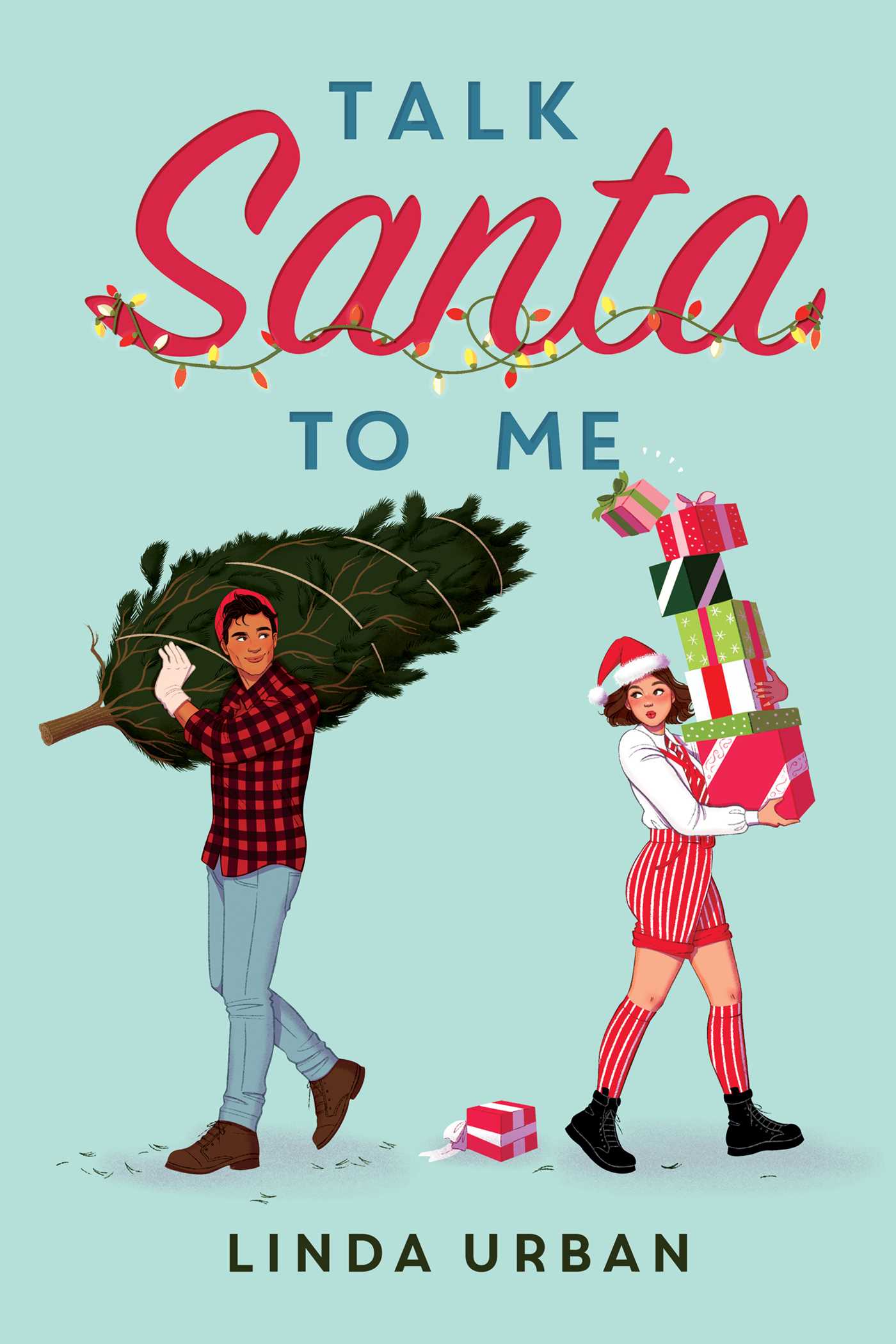
163. Talk Santa to Me


Talk Santa to Me. Linda Urban. 2022. 280 pages. [Source: Library]

First sentence: I was born in a stable. A deluxe model, indoor-outdoor stable, with a light-up roof star and grass-mat flooring (discontinued item). My mom had been carrying a three-foot shepherd from the stockroom when the first serious labor pain hit. I've always been impulsive, Mom says, and once I got the notion that I had outgrown my current quarters, boom. She knew I was moving out.

Premise/plot: Our heroine Francie (full name Frankincense) works at her family's Christmas-themed shop. Her grandfather was a GREAT Santa. Absolutely all kinds of amazing. He even started a Santa school to train others how to be Santa. But since he died, well, things aren't quite the same in the family or the family business. Francie's dad is doing his best to continue the legacy, but, his sister has her own ideas of how to maintain the business (and being loyal to tradition and the argument that's the way we've always done it fall on deaf ears). Francie impulsively jumps in during an emergency and finds herself taking on the job as Santa's Intern on a local cable broadcast. The video goes viral--at least locally--and soon Francie finds herself answering thousands of letters to Santa. It's all SO MUCH. But the family's business/reputation may just depend on her PR work as Santa's Intern. 

Meanwhile, Francie is falling head over heels in love with Hector a classmate who just happens to work at the neighboring tree lot. As these two [relatively] shy teens get to know one another, a little Christmas magic happens. 

My thoughts: I thought this one was the perfect blend of super-sweet and funny. I loved seeing all the letters to Santa. We get plenty of those letters and her responses. I enjoyed seeing all the Christmas-y elements included in this one. Plenty of scenes take place during the weeks leading up to Christmas. It felt--to me at least--properly Christmas-y. I loved that Francie deep down cared about her family and was processing her grief. It added a level of depth. All of them were experiencing grief differently and they weren't always incredibly kind and thoughtful with each other. But you do get the sense that they do care about one another. Even "mean" Aunt Carol wasn't a one-dimensional villain (like she'd likely be in a holiday movie). The romance wasn't perfectly perfect--but it was so sweet and light and good. I could see how someone wanting something steamier might find this one to be too "young." But to me, it was perfect.

The back story of Francie trying to redeem her "first kiss" experience was definitely a back story. I'm glad it wasn't the sole plot point. This one so easily could have gone down a couple super-predictable paths. a) She could have had a fake boyfriend whom she would end up actually falling in love with. b) She could have had an enemies-to-friends-to-lovers romance with the boy that gossiped about her way back when. I'm so glad we didn't get either of those stories. 

I do think this would make a fun movie.

Quote:


Dear Santa’s Intern:
I hear you know Santa really well. Could you tell him not to bring me any pants this year? Two times already this year I asked for a paintball gun and two times I didn’t get one, but I did get pants. Pants are not a good gift. Except for one time during recess, I have been pretty good this year and I already said sorry and Henry said okay.
Your friend,
Logan

© 2022 Becky Laney of Becky's Book Reviews

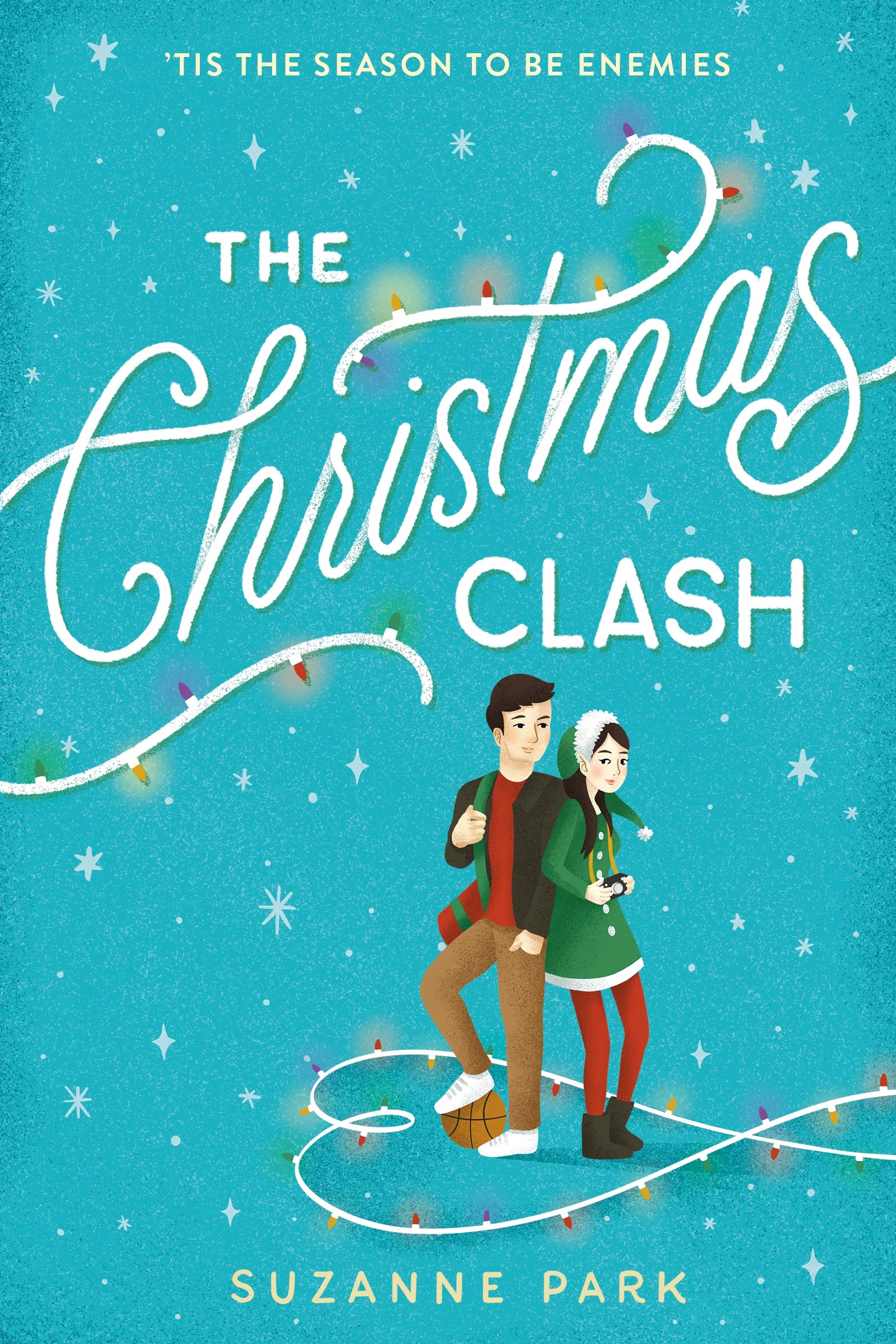
162. The Christmas Clash


The Christmas Clash. Suzanne Park. 2022. 368 pages. [Source: Library]

First sentence: The projectile pacifier grazed my left ear. "I'm so sorry, would you mind grabbing his binky off the floor? Little Timmy's got quite a temper when he's hungry." Important note: Timmy was not in fact very little. I suspected he was five, maybe six.

Premise/plot: Chloe Kwon, our heroine, works as a photographer at the Santa Land feature at her local mall [Riverwood]. Her parents have a restaurant in the mall as well. Peter Li, our hero, works at the virtual reality North Pole experience at the mall. His parents have a restaurant in the mall too. The Kwons hate the Lis; the Lis hate the Kwons. But Chloe and Peter have found out something shocking: they do not in fact hate each other. Rather, Chloe might just like-like Peter, and it's mutual. But this isn't solely a "forbidden" romance with warring families. Riverwood Mall is very likely to be demolished to make way for condos. It isn't just their seasonal side jobs at risk but their whole families livelihood. Can Peter and Chloe by working together form a resistance with other mall tenants and find a way to save the mall????

My thoughts: This would make a PERFECT holiday movie. Everything about this one screams out for a film adaptation. So good news if you like holiday movies, you'll fall for this novel as well. And perhaps it's nice to get it in book-form for a change. 

Was it a perfect read? No. I'm not going to lie and say it was perfectly perfect in regards to storytelling, characterization, plotting, etc. But I could visualize much of this one. And it felt like a movie that I'd watch through beginning to end. It might sell better as a movie.


© 2022 Becky Laney of Becky's Book Reviews

161. Cinderella's Dress


Cinderella's Dress. Shonna Slayton. 2014. 320 pages. [Source: Library]

First sentence: Nadzia tucked the cleaning rag into her apron in exchange for her feather duster.

Premise/plot: Except for the prologue which has a more "once upon a time" feel to it, Cinderella's Dress is set in the mid-to-late 1940s. (It opens in 1944, and, I believe, wraps up around 1947?) Kate Allen, our heroine, discovers that she may just be the next keeper for Cinderella's magical dresses. At the start of the novel, Kate is clueless. Cinderella a real person??? A real person with magical dresses??? She hadn't a thought to such things. Ridiculous, right? But when Elsie and her husband Adalbert show up in New York City during the Second World War with a trunk they've risked their lives smuggling out of war-torn Europe, well, she gives it some consideration. Elsie claims to be the current keeper. The trunk holds the dresses, THE DRESSES. But magic is a tricky, tricky thing. Meanwhile as Kate is processing all this possible magic that is somehow, someway connected to her family, her life unfolds in all its messiness. Her mother wants her to be a a) model b) actress c) model-actress. She has big plans for her daughter to make it big, big, big. Kate's goals, however, are to become a window dresser at a department store. To design the windows that make crowds oooh and aaah. The kind of window displays that draw customers in and keep them spending money. But she'll face some discrimination--because that is man's work, of course--and she's so very young, still a teenager. 

Getting her hand on THOSE DRESSES may just be the break she needs in the window dressing business, but flashing her family's secrets may just lead to a life-and-death situation.

My thoughts: I liked this one okay. I did. I didn't hate it. I just felt Kate was a bit stupid at times. The plot depended on her being so stupid, so maybe it isn't solely her fault. But still. I liked elements of this one certainly. I found Elsie's story to be heartbreaking. Not that that was the focus of the story, it wasn't, but I couldn't help but feel saddened watching that back story unfold. Elsie and Adalbert are so in love, yet, her dementia is taking her away from him and everyone else as well.


© 2022 Becky Laney of Becky's Book Reviews

Sunday, November 27, 2022

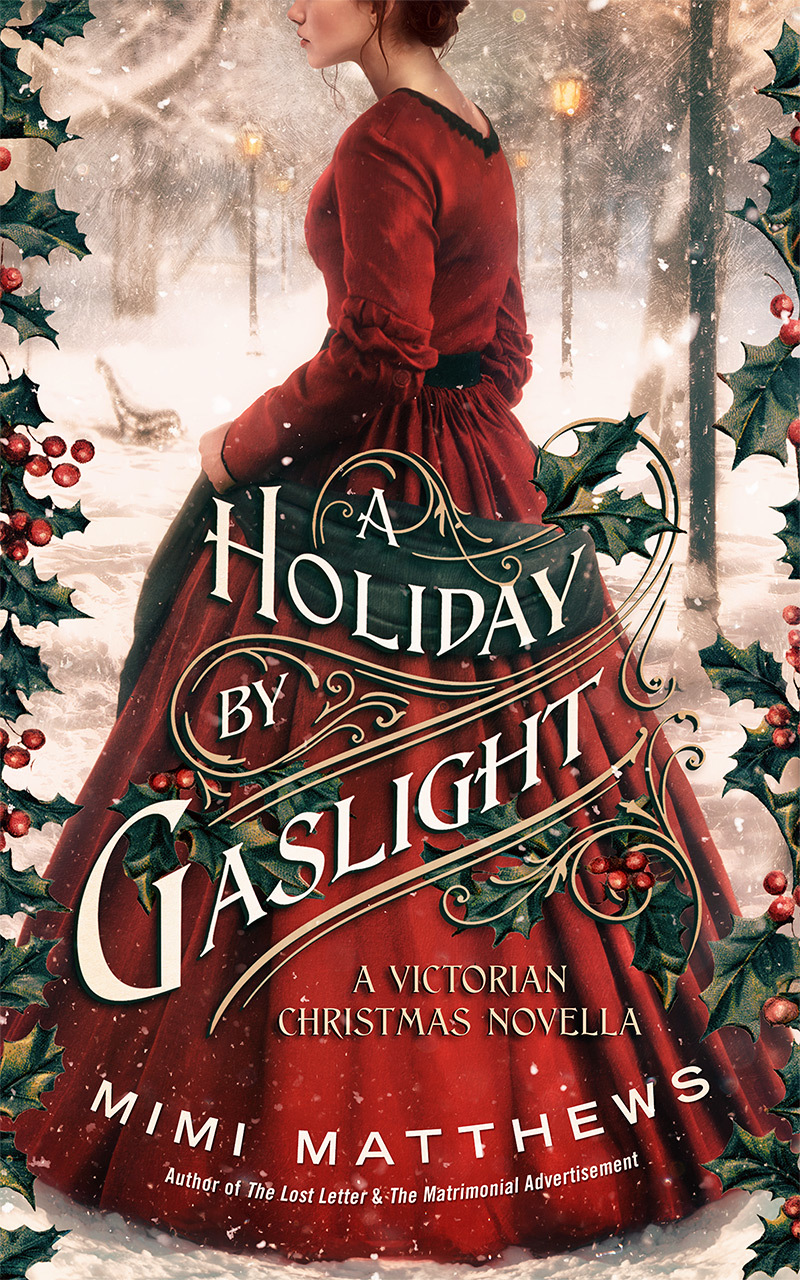
160. A Holiday by Gaslight


A Holiday by Gaslight by Mimi Matthews. 2018. 175 pages. [Source: Bought]

First sentence: An icy late November breeze rustled the bare branches of the trees along the Serpentine.

Premise/plot: Sophie Appersett has been following her parents' lead when it comes to "romance". They are hoping the [semi-arranged] match between Sophie and Mr. Edward Sharpe, London merchant will be just the thing. To be fair, they see Mr. Sharpe and see moneybags. Sophie, well, she is hoping to see more than that. But seeing the real deal, getting to know the real person, takes a bit of effort. Both Sophie and Edward, well, they're not the best at letting down their guards with one another and being real, true, genuine. 

Sophie's father has spent all her dowry on getting their country home fitted for gaslight. And his plans may just extend beyond that...

He has been invited [along with his parents and a friend] to spend Christmas with them in the country...

My thoughts: It was playful and fun. It was sweet. It was clean--nothing to my recollection beyond a kiss or two. If holiday romances are your thing, then this one may just be all delight.

I definitely enjoyed this one. I have read Mimi Matthews in the past. This one didn't quite live up to my full-length-novel expectations. I think if my expectations had been lowered to begin with--it is more of a novella--it would have satisfied.


© 2022 Becky Laney of Becky's Book Reviews

Wednesday, November 23, 2022

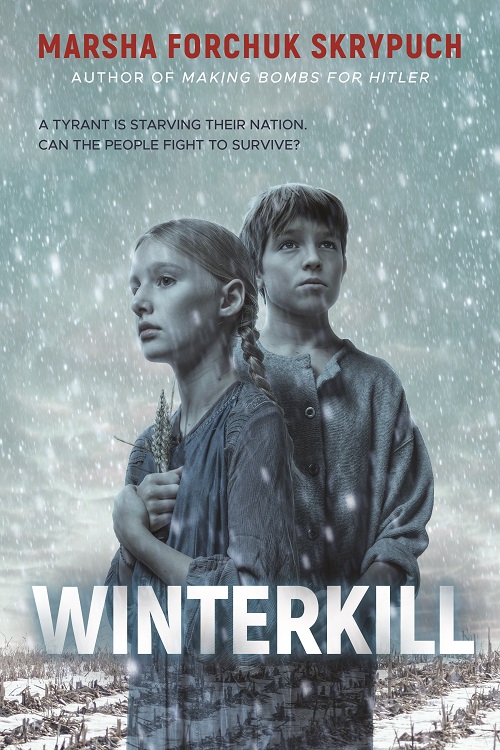
159. Winterkill


Winterkill. Marsha Forchuk Skrypuch. 2022. [September] 288 pages. [Source: Library]

First sentence: Tato and I had just entered the village after inspecting our wheat field.

Premise/plot: Marsha Forchuk Skrypuch's newest historical novel is set in [Soviet] Ukraine in the early 1930s. Nyl [and his family, his friends, his community, his country] will soon be in the fight of their lives. Not a fight with weapons, perhaps, but a fight all the same. The Soviets [Communists] are there with Stalin's "five year plan." And compliance, well, it isn't optional. No matter how wary, skeptical, or concerned--one "must" comply. Even if complying defies all logic, all reason, all common sense. Nyl and his family are farmers. They farm. It's a HARD life, no doubt, no question. Packed with plenty of concern and worry in any year. But since Stalin, well, the biggest fears and worries have changed. 

The novel opens with foreigners--Canadian Communists--who have come to live the glorious life under Stalin taking inventory of their farm. Nyl [and family] are mostly nervous and wary. What could this mean for them down the road? They didn't expect "down the road" to occur literally within a day's time. Life for Nyl [and his family, friends, community] will NEVER, EVER, EVER be the same.

And as the novel unfolds, it only goes one direction from there--and it isn't up. Skrypuch is writing about the Holodomor. The powers that be have decided to starve the Ukrainians and erase them--quite literally--from the landscape. Genocide by starvation. This, of course, was phrased with a million promises. Well, "promises," I suppose. 

 My thoughts: The cover might not be bleak enough for the contents. This is INTENSE. This is bleak. This is based on history. And I'm going to guess MOSTLY unknown history. I learned so much. It was heartbreaking knowledge. Truly heart-smashing-and-shattering. It was brutal. Yet I feel it was an important story to tell. History is sometimes horrifying, brutal, terrible. But I think it would be worse to cover it up, to hush it up, to deny, to ignore. 

While this one may not be for every single reader--it is BRUTAL, I tell you--it is so very well-written. It was impossible to put down. It was a book that will leave a mighty big impression on me.

© 2022 Becky Laney of Becky's Book Reviews