Showing posts with label novella. Show all posts

Thursday, December 26, 2024

108. The Christmas Box

The Christmas Box. Richard Paul Evans. 1993. 128 pages. [Source: Bought] [4 stars, family, Christmas, sentimental]

First sentence: It may be that I am growing old in this world and have used up more than my share of allotted words and eager audiences.

Premise/plot: Richard Paul Evans' wrote this book for his daughters. It is a story of a man who realizes--just in time--that love is the most important thing always and forever. A business man realizes he is squandering all of his daughter's childhood in his attempt to be a success. 

My thoughts: It's been years since I've read this book and years since I watched the film adaptation. I do think there are probably some key differences between the two? But again, it's been years. This is a sweet, sentimental holiday story. It isn't so much a romance as it is a family reconciliation story. It is a short, bittersweet novella. 


© 2024 Becky Laney of Becky's Book Reviews

Wednesday, October 09, 2024

81. We'll Prescribe You a Cat

We'll Prescribe You A Cat. Syou Ishida. Translated by E. Madison Shimoda. 2023. 297 pages. [Source: Library] [novellas; international fiction; adult fiction; cats] [4 stars]

First sentence: Shuta Kagawa stood at the end of a shadowy alley, gazing up at a multipurpose building. After getting thoroughly lost, he had finally arrived. 

Premise/plot: We'll Prescribe You a Cat is a collection of loosely connected novellas. Each story features a character that is a little lost, a little out-of-sorts. The character is seeking--though word-of-mouth recommendations--a Clinic for the Soul. Each character believes it is a mental health clinic with doctors and nurses, etc. But the prescriptions ALL turn out to be CATS. Some "patients" are prescribed a cat for a week; others for two weeks. The twist is that this location can *only* be found by those in need. Most people can't find it, or see it. (Think Twilight Zone). 

My thoughts: I love the premise of this one. It is a collection of novellas. The first story by far is the best story (in my opinion). I really was LOVING the first two-thirds of this one. The last two or three novellas, however, left me a bit puzzled and confused. I certainly seemed to be missing the plot in making sense of the story. Perhaps because they were going for a reincarnation theme???? I honestly don't know. I really don't. But the premise is strong. There are cats everywhere. Certainly a good read.


© 2024 Becky Laney of Becky's Book Reviews

Monday, December 18, 2023

192. Zanna's Gift


Zanna's Gift. Orson Scott Card. 2020. [November] Originally published in 2004? 250 pages. [Source: Review copy]

First sentence: There are many ways to lose a child, and none of them is merciful. But like all unbearable things it can be borne, and in the weeks before Christmas 1938, the Pullmans were learning how.

Premise/plot: Zanna's Gift is a LOVELY Christmas novel. Zanna, the youngest of the Pullman family, has a special way to memorialize her older brother, Ernest, after his unexpected death at fifteen.

The best way to read Zanna's Gift is without knowing a thing about it. I promise you. I'm doing you a favor by NOT summarizing the plot and sharing what Zanna's GIFT was and how it was a gift that kept giving and giving. 

My thoughts: LOVE. I loved this one absolutely and completely from start to finish. It was one of those perfectly perfect EXPERIENCES. It feels like more than just a book, a story, a fictional work. THESE CHARACTERS ARE REAL. How it hasn't been adapted into a movie if it was truly published originally in 2004 is beyond me. It would make an excellent movie. 

I would recommend this one to people who aren't necessarily readers. Of course I recommend it to readers who read anything and everything. But for those who are reluctant to pick up books, please consider reading this wonderful amazing book. 

If you LOVE Christmas, this is an absolute must. I could easily see it becoming a book that you feel you HAVE to read each and every year.

 ETA: I've read this one three times? four times? I love this book so much.


© 2023 Becky Laney of Becky's Book Reviews

Friday, April 28, 2023

86. Kill Joy


Kill Joy. Holly Jackson. 2021. 130 pages. [Source: Library]

First sentence: For this murder mystery game you will be playing the role of Celia Bourne.

Premise/plot: Kill Joy is a prequel to Holly Jackson's A Good Girl's Guide to Murder. (I didn't know this when I started it). Six teens gather together for a murder mystery party with a 1920s theme. It is narrated by Pippa Fitz-Amobi. She enjoys dressing up, following the (fake) clues, and solving the (fake) murder. 

My thoughts: I read this one because I needed a K title for my Alphabet Soup challenge. I wasn't paying the closest attention to the fact that it was a novella and a prequel novella at that. I think prequels written several years after book one (A Good Girl's Guide to Murder) are mainly read by those who've already read the big book, the main book. It is written for fans of the book, the series. There is less characterization, perhaps. 

This one is weak on characterization (mind you, I think if I'd read book one first, I wouldn't have this complaint), and it's also weak on story. It is literally just six teenagers hanging out together and play-acting a murder mystery. It isn't that suspenseful. There are no twists and turns. It's fairly ho-hum and meh. 

That being said, I do want to read the series now simply because I think there's promise there in that direction.


© 2023 Becky Laney of Becky's Book Reviews

Sunday, December 18, 2022

180. Can This Be Christmas?


 Can This Be Christmas? Debbie Macomber. 1998. 91 pages. [Source: Library]

First sentence: A robust version of "Little Drummer Boy" played in the background as Len Dawber glanced at his watch--for at least the tenth time in five minutes.

Premise/plot: Can This Be Christmas is a short holiday-themed novella by Debbie Macomber. A group of [restless] passengers are stranded at a depot [train, I believe] on Christmas Eve. No one is where they want to be. Most--though not all--are separated from family and loved ones. All are in different stages in life. 

Can these strangers find the 'true' meaning of Christmas?

My thoughts: It was short and sweet. It is not a romance. [Though a few passengers are in relationships.] Because Can This Be Christmas is packaged as a bonus story in longer collections that are romances, your expectations might be different. In fact, I believe GoodReads has MIXED all reviews of Can This Be Christmas with the reviews of her new novel A Perfect Christmas which has Can This Be Christmas as a bonus story. This is probably doing neither book any favors. But it is especially unfair to readers who are confused and trying to make up their minds whether to read it! 

This is a general "feel-good" comfy-cozy Christmas novella. There are MANY characters and MANY stories. It is set over the course of one day and night--Christmas Eve/Christmas. It reminded me of a L.M. Montgomery short story I read once.

© 2022 Becky Laney of Becky's Book Reviews

Thursday, December 01, 2022

165. A Darcy Christmas


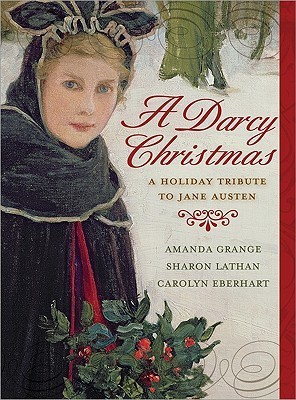
A Darcy Christmas: A Holiday Tribute to Jane Austen. Amanda Grange, Sharon Lathan, Carolyn Eberhart. 2010. 290 pages. [Source: Library]

First sentence(s):

From Mr. Darcy's Christmas Carol by Carolyn Eberhart: Old Mr. Darcy was dead to begin with. There is no doubt whatsoever about that. The clergyman, the clerk, the undertaker, and the chief mourner had all signed the register of his burial. His son signed it. And Fitzwilliam Darcy's name was as good as his father's before him. Old Mr. Darcy was as dead as a doornail.

From Christmas Present by Amanda Grange: It is a truth universally acknowledged, that a married man in possession of a good fortune, must be in want of an heir, and Mr. Darcy of Pemberley was just such a man. Moreover, he was soon to have that want satisfied, for his wife, Elizabeth, was expecting their first child.

From A Darcy Christmas by Sharon Lathan: He set the painting onto the sofa, assuring it was well supported before stepping away. He gazed at the canvas, a smile spreading as he looked upon his family. His family. The family created by him and his wife, just as he had dreamt for so many lonely years. They stood on the portico of Pemberley flanked by their precious children on the steps. All of them were smiling at the artist. A sentimental man by nature, he silently examined the newest portrait of his family and lost himself in happy memories.

 Premise/plot: A Darcy Christmas is a collection of three novellas. Each novella is a holiday-themed retelling/adaptation of Pride and Prejudice. 

My thoughts: "Mr. Darcy's Christmas Carol" was surprisingly fun. I had my doubts--as you might have your doubts about weaving these two stories together--but I thought it worked. It does a slight variation on the original. What if Jane and Charles Bingley got their happily ever after--after Lydia was "rescued" by Mr. Darcy's intervention--but Mr. Darcy's pride was still in the way of his declaring his love (the second time). This is what that first Christmas might have been like. If he'd been visited by the spirits of Christmas past, present, future.

"Christmas Present" was a great novella by Amanda Grange. I've enjoyed many of her Austen adaptations in the past. This one did not disappoint. She got the characters just right. It felt authentic like what a Darcy Christmas might have *really* been like. Elizabeth and Darcy are expecting their first child, and Charles and Jane just had their first child. So the families are coming together--the extended families--to celebrate. I really enjoyed this one!

"A Darcy Christmas" is a collection of holiday short stories following the Darcy family through twenty or so years of marriage. (I believe we see their twenty-third Christmas as a couple? Although I might have lost track of the last few stories.) Since we only catch glimpses of the family--on Christmas Eve/Christmas--it's hard to precisely follow these stories. We do know that (almost) every Christmas sees Elizabeth either with a new baby or pregnant. (Perhaps these stories do connect to Lathan's previous novels about Elizabeth and Darcy. If that is the case, then the stories might make more sense when it comes to keeping up with their family, friends, etc. Especially in the case of her children's love interests.)


© 2022 Becky Laney of Becky's Book Reviews

Sunday, November 27, 2022

160. A Holiday by Gaslight


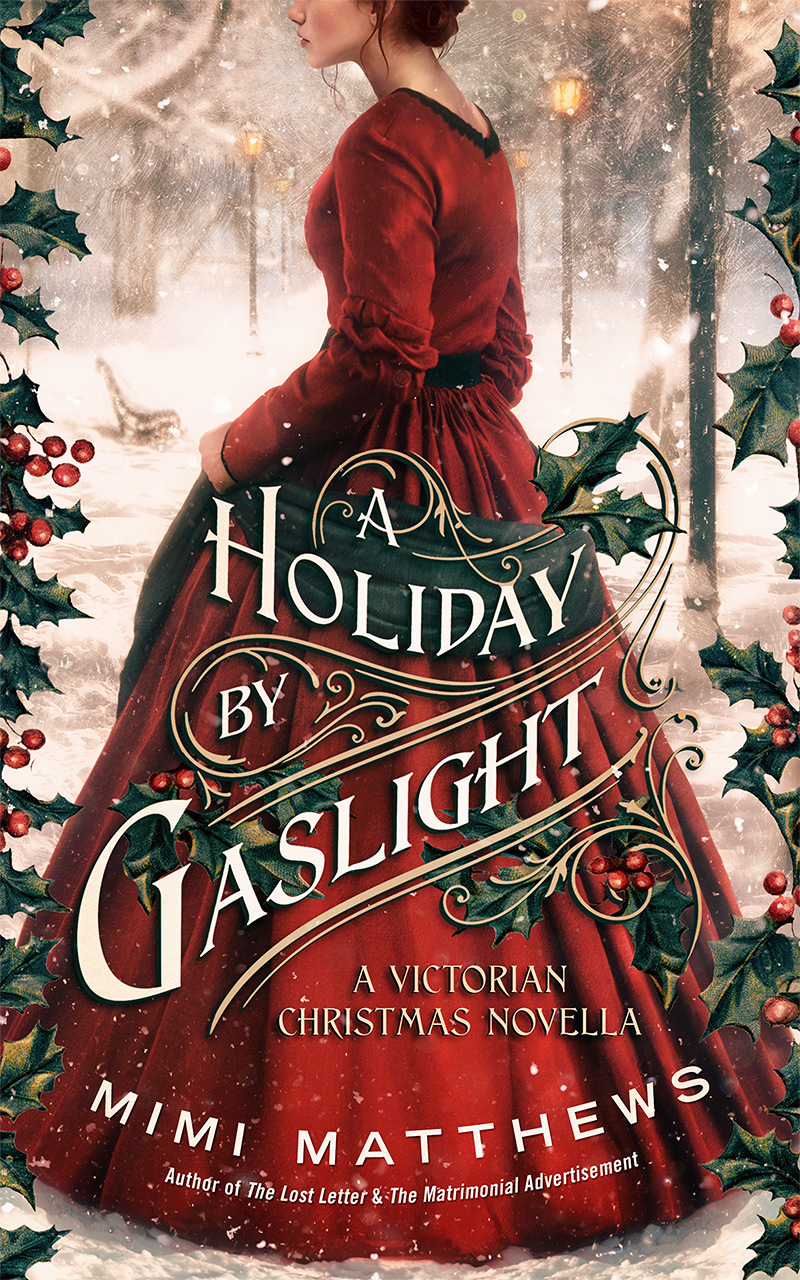
A Holiday by Gaslight by Mimi Matthews. 2018. 175 pages. [Source: Bought]

First sentence: An icy late November breeze rustled the bare branches of the trees along the Serpentine.

Premise/plot: Sophie Appersett has been following her parents' lead when it comes to "romance". They are hoping the [semi-arranged] match between Sophie and Mr. Edward Sharpe, London merchant will be just the thing. To be fair, they see Mr. Sharpe and see moneybags. Sophie, well, she is hoping to see more than that. But seeing the real deal, getting to know the real person, takes a bit of effort. Both Sophie and Edward, well, they're not the best at letting down their guards with one another and being real, true, genuine. 

Sophie's father has spent all her dowry on getting their country home fitted for gaslight. And his plans may just extend beyond that...

He has been invited [along with his parents and a friend] to spend Christmas with them in the country...

My thoughts: It was playful and fun. It was sweet. It was clean--nothing to my recollection beyond a kiss or two. If holiday romances are your thing, then this one may just be all delight.

I definitely enjoyed this one. I have read Mimi Matthews in the past. This one didn't quite live up to my full-length-novel expectations. I think if my expectations had been lowered to begin with--it is more of a novella--it would have satisfied.


© 2022 Becky Laney of Becky's Book Reviews

Thursday, November 10, 2022

147. The Strange Case of Dr. Jekyll and Mr. Hyde


The Strange Case of Dr. Jekyll and Mr. Hyde. Robert Louis Stevenson. 1886. 54 pages. [Source: Bought]

First sentence: Mr. Utterson the lawyer was a man of a rugged countenance that was never lighted by a smile; cold, scanty and embarrassed in discourse; backward in sentiment; lean, long, dusty, dreary and yet somehow lovable. At friendly meetings, and when the wine was to his taste, something eminently human beaconed from his eye; something indeed which never found its way into his talk, but which spoke not only in these silent symbols of the after-dinner face, but more often and loudly in the acts of his life. He was austere with himself; drank gin when he was alone, to mortify a taste for vintages; and though he enjoyed the theatre, had not crossed the doors of one for twenty years. But he had an approved tolerance for others; sometimes wondering, almost with envy, at the high pressure of spirits involved in their misdeeds; and in any extremity inclined to help rather than to reprove. “I incline to Cain’s heresy,” he used to say quaintly: “I let my brother go to the devil in his own way.” In this character, it was frequently his fortune to be the last reputable acquaintance and the last good influence in the lives of downgoing men.

Premise/plot: Mr. Utterson is our primary narrator. He is the lawyer who has dealings first with Dr. Henry Jekyll and to a certain extent Mr. Edward Hyde. [He is the lawyer who has helped Jekyll prepare his will.] The novella is a suspenseful mystery--of sorts. Readers learn of a "wicked" Mr. Hyde that is unpleasant--at best--and a murderer--at worst. Whether he is a true "terror" or just a ghastly unpleasant fellow that just gives off super-creepy-vibes Mr. Utterson is at first not prepared to say. [At first being the key word.] He is a lawyer who seems so proud of his I-don't-judge-others persona; his live-and-let-live or you-do-you vibes. But Mr. Hyde does creep him out more than most of the other fellows in his acquaintance. (We get to know several with whom he has to do.) 

Mr. Utterson is a curious fellow. He is determined to figure out the relationship between the "good" Dr. Jekyll, his client, and the "creepy" Mr. Hyde. WHY is Dr. Jekyll prepared to leave his whole estate to Mr. Hyde? HOW do they know one another? WHAT is Jekyll thinking in risking his own reputation? Mr. Hyde is mentioned in his will. Mr. Hyde has a key to his place. He obviously either a) genuinely likes him and accepts him or b) he is being coerced or blackmailed by Hyde. Mr. Utterson, for the longest time, is inclined to think just that. Surely the good Dr. Jekyll is being blackmailed. And though Mr. Utterson usually is NOT his brother's keeper, he tries to "help" in this instance. He starts investigating or snooping. He'll follow clues about Dr. Jekyll's life...he'll follow clues about Mr. Hyde's life....he'll just keep searching any and every clue until he has the answers he's looking for.

And that leads him to a better acquaintance with Dr. Lanyon. Dr. Lanyon is/was a friend of Dr. Jekyll. And, yes, that is awkward but factual. They were friends--once upon a time. At one point they are mere civil acquaintances--close friends no more. Dr. Jekyll does, at one point, reach out to him--a plea calling upon their past [close] friendship. Dr. Lanyon, for better or worse, does respond to that cry for help--that plea. And because he does so, well, he acts as the catalyst of the story. He supplies almost all the missing puzzle pieces that Mr. Utterson, the lawyer, needs to see the big picture. Utterson would have not connected all the dots without knowing Dr. Lanyon. 

I said for better or worse for a reason. It is to the readers' gain that Dr. Lanyon does answer his friend's cry for help. For the sake of the story, Dr. Lanyon doing what he does, going where he goes, seeing what he sees...and living long enough to set it down on paper and make arrangements that his narrative is given to Mr. Utterson...well, it benefits the mystery/suspense angle of the novella. There is no big reveal without Dr. Lanyon. 

Yes, this is fiction. I never really suspended my disbelief for a second in this horror/thriller/mystery. But let's say, for a second, this was "real," by saying yes to his friend, Dr. Lanyon is making a big mistake--in terms of what is best for his own self interests. Being there for his friend in this moment of great need directly leads to Dr. Lanyon's death.

Now, don't ask me WHY Dr. Lanyon HAD to die. Just don't. Because I think the answer is more related to *using* the character as a plot device. The character's death means that a) Mr. Utterson can read this narrative and have his curiosity satisfied. There were two documents--Dr. Lanyon's narrative and Henry Jekyll's narrative--that were dependent on their deaths. Mr. Utterson can only get all the answers if both are dead. Both documents are conditional. If Mr. Utterson isn't allowed the answers, the readers aren't allowed the answers either. The whole book would be pointless. 

Sometimes authors just kill off characters because they think it makes poetic sense, almost. [Like I'll never understand WHY Victor Hugo killed off Jean Valjean. In a million years I'll never have the answer. There was no "need" coming from within the story itself. But that is neither here nor there.] Here readers are asked to suspend their disbelief. So you witness something super traumatic. You don't die of "shock" then and there in the moment. But you go home and suddenly know that you've only got a few more weeks to live??? Like the shock of living with the aftermath of the trauma is literally going to kill you? Like goodbye world, I'll just sit here getting weaker and weaker. I mean it's just silly. Still, I suppose it's all about getting the information into the hands of Mr. Utterson--and subsequently the readers. Therefore Dr. Lanyon had to die or the book would be too short. [I am jesting a little.] 

My thoughts: Dr. Jekyll and Mr. Hyde contains a plot twist that almost ALL readers will know in advance. Almost all. Many if not most. It does make me curious HOW the original audience--those reading the novella in the first year or two--would have read the story. Would it have been shocking? Would it have been thrilling? Would it have kept them guessing? What would they have thought going into the last few chapters? Would they have suspected the two men were one in the same? Or would they have thought like Mr. Utterson that it was a case of blackmail? Would they have felt disgusted by both Dr. Jekyll and Mr. Hyde? Would they have felt any pity? Does knowing the *big* plot twist in advance change the way the novella is read and understood? What have we lost? What have we gained? 

I do think that the moral implications would probably have been greater felt or appreciated by the original audience of this one. I think modern/contemporary audiences would see it merely as spooky/supernatural/horror.

Sin always takes you further than you intended to go, keeps you longer than you intended to stay, and costs you more than you intended to pay. (Erwin Lutzer, How You Can Be Sure You Will Spend Eternity with God, 38)
Our sins are often as dear to us as our children! We love them, hug them, cleave to them and delight in them! To part with them, is as hard as cutting off a right hand or plucking out a right eye! But it must be done. The parting must come. J.C. Ryle, Holiness

We would often be sorry if our wishes were gratified. John Milton. 

© 2022 Becky Laney of Becky's Book Reviews

Wednesday, May 11, 2022

58. Inheritance (American Royals 0.5)


Inheritance: American Royals Prequel. Katharine McGee. May 2022. 84 pages. [Source: Library]

First sentence: Royals: they're just like us. You don't actually believe such an absurdity do you? It's just a myth that tabloids use to sell magazines--accompanied by photos of the Washington twins shooting pool at a dive bar, or of Princess Louise of France blowing on the polish of her fresh manicure. Surely you realize that those photos are staged.


Inheritance is a prequel novella. It covers the events of ONE night. This one significant, life-altering night has been referred to in countless flashbacks in the first two books. Beatrice, the heir apparent, is at a royal function. Sam(antha) and her twin brother, Jeff, are "home alone" (aka without their parents) celebrating their high school graduation. Of course, they are anything but home alone. They are hosting a huge party where a lot of drama happens. Daphne. Nina. Ethan. Liam. Sam. Jeff. These are among the guests that night. Beatrice is the odd one out--as she so often is--and she's entangled (a bit) with a guard, Connor.

Is it worth reading? Yes or no.

Yes, if you are looking to refresh your memory before the third book releases later this year. You can in a relative short number of pages be reminded of the main characters--their names, their motives, some of their drama. 

Yes, if you can get it from the library. 

No, if you have to spend your own money to buy it. There is nothing new (really) revealed in this prequel that hasn't been touched on or hinted at in the flashbacks. A few details of the greater, wider world might be presented. Then again, it could just be that those details were of so little importance, so insignificant that they were easily forgotten in flashbacks. But my guess is some of the world's details are being slightly fleshed out in this prequel. These details are being placed because they will be of importance in the third book.


© 2022 Becky Laney of Becky's Book Reviews

Tuesday, October 26, 2021

133. A Christmas Waltz


A Christmas Waltz. Josi S. Kilpack. 2020. [November] 130 pages. [Source: Library]

First sentence: The dark-haired man with the red satin waistcoat began walking toward her from the other side of the ballroom.

Premise/plot: Marta, our heroine, comes to look forward to waltzing with David every year at her family's Yuletide Ball. Their first waltz occurs when she's newly 'out' and just sixteen. She's yet to experience the season in London, and this first dance fills her with all the feels. The two seem to have a connection. Emphasis on seem. For while the dance is oh-so-wonderful, that's all it remains--a memory of a dance. When given opportunities through the years to take the relationship further, deeper, he passes. Content, at least temporarily, to keep it just a nice, cozy memory to pull out now and then. Every single Christmas, these two waltzes. Years pass. Circumstances change. Yet one thing never changes. No matter where they find themselves in their lives, they make their way to each other on the dance floor every Christmas.

My thoughts: A Christmas Waltz is a bittersweet historical novella. On the one hand, it is sweet how these two find joy and comfort in each other's company year after year. A few minutes together each year to share one's private thoughts and dreams. 

On the other hand, because Marta is almost romanticizing and idealizing this relationship with David, she's making her life more bitter the rest of the year. Because her husband doesn't stand a chance against this perfect, idealized, dreamy, swoony connection. Granted, from what Marta tells David about her husband, he doesn't care...at all. He doesn't care if his wife is happy or unhappy. He is not physically present--all that often--and emotionally there's no connection at all. Still there are plenty of romance novels out there where wives and husbands fall in love with each other after the fact, putting aside previous loves and daydreams, working through misunderstandings, finding common ground and building a future together despite not having all the feels when they say I do.  

The book definitely reminded me of Storybook Love:

We've got a storybook love and that's all and that's all
A fantasy world where we love one another
A storybook love and that's all and that's all
A boy and a girl who hardly know each other
But I feel you lookin at me
And in your eyes it's plain to see
One day soon we both will be much more than friends
But until then
It's a storybook love
And that's all and that's all
A fantasy world where we love one another
A storybook love and that's all and that's all
A boy and a girl who hardly know each other
But I already know
How much I'm gonna love you so
I feel it inside me even though it hasn't happened yet
So all we get
Is a storybook love and that's all and that's all
A fantasy world where we love one another
A storybook world and that's all and that's all
A boy and a girl who hardly know each other

© 2021 Becky Laney of Becky's Book Reviews

Wednesday, July 07, 2021

58. The Captain's Daughter: Essential Stories


The Captain's Daughter: Essential Stories. Alexander Pushkin. TRANSLATED BY ANTHONY BRIGGS. (New translation copyrighted 2021). 224 pages. [Source: Review copy]

First sentence: Alexander Pushkin (1799–1837) is the father of modern Russian culture, the man who reformed the Russian literary language, and, in a short lifetime of less than thirty-seven years, left a legacy of outstanding works in several genres, some of them newly invented.

Premise/plot: This book features the novella, The Captain's Daughter, and two short stories The Stationmaster and The Queen of Spades. It also features a spoiler-heavy introduction. The book, as a whole, introduces new readers to this Russian author. 

The Captain's Daughter (1836) takes up the bulk of the book. Pyotr Grinyov, our hero, has many adventures and misadventures. But those misadventures may just be his salvation in the end. The novel soon has him underway to his first military posting. It is remote, rural, far from ideal--as far as he's concerned. 

I could be like the introduction and spoil every little detail of the novel. But I won't. I refuse to play that game. No, I'll simply share that it's told in first person and he's recounting his adventures/misadventures. The incidences in his life--some apparently minor, others not so much--that has led him to where he is. 

The title gives away that at some point there will be a captain and a captain's daughter...but I will leave it to readers to connect the dots to predict how it will turn out.

The Stationmaster (1831) is another first hand narrative. If the narrator is clearly named, I personally missed it. But essentially he is recounting three separate visits to this out of the way station. On his first visit, he meets a beguiling, beautiful, flirtatious young woman, Dunya, who is the station master's daughter. On the second visit, he reintroduces himself to the father and learns that the daughter has long been gone. The father is distraught about the circumstances and fears the worst. The third visit has the potential to be the most depressing ever ending (for a non Thomas Hardy book), but a twist makes it only slightly sad or mildly happy.

The Queen of Spades (1834) is the final short story. Hermann, our anti-hero, stars in this short story. His friend tells the story of his grandmother--an elderly countess. This story--a story of a SECRET that every gambler would kill for--leads to obsession and.... well, let's just say it doesn't end well for most of the characters.
 

My thoughts:  Let's begin with the introduction. On the one hand, it did contain some useful tidbits about who Pushkin was, when he lived, when he wrote, what he wrote, how his work was received, who he influenced, etc. On the other hand, why did the introduction have to SPOIL the novel and each story. It's like being handed a balloon, and then having the person handing it to you pop it with a pin and a grin. Seriously.

Now on to the Captain's Daughter. I loved this one. I did. It didn't have me at hello. It took a chapter (or two). But once I settled into the novel, it was love. It was SO enjoyable and not at all intimidating. Perhaps because of its length, perhaps because of its narrative style, perhaps because Pushkin was just that good at setting, characters, pacing, storytelling. I liked how the story blended in an actual historical figure, Yemelyan Pugachov, a revolutionary imposter. You know how reading Russian lit sometimes feel like WORK how it takes a LOT of effort to get a reward. This wasn't like that. It didn't feel like work and there was still a lovely reward.

Now on to The Stationmaster. I liked this one. It actually reminded me of L.M. Montgomery in some ways. It wasn't a thrilling story. There wasn't any adventure or action in it. But the characters felt real. In comparison with The Captain's Daughter it wasn't as satisfying. But it also was just a fraction of the length with just a few characters.

Finally....my thoughts on the Queen of Spades. I am SO GLAD this wasn't my first exposure to Pushkin. If this one short story was all I ever read of Pushkin, it would leave a bad taste in my mouth. (Yes, I know books aren't for eating.) I could see how it could appeal to some literary types. This one gives off major literary (elite) vibes. But it just wasn't for me. 

Overall, I would recommend this book to those wanting to read Russian literature and not knowing quite where to begin. It can be daunting to hand off Anna Karenina, War and Peace, or The Brothers Karamazov, or Crime and Punishment. (I've not read War and Peace, I have read all the others). I also like that he is an EARLY novelist and credited with really transforming the Russian language. (I'll take the editor's word on that.) He switched from writing poetry (he was writing at the same time as the Romantics like Byron) to prose when the public taste changed. 

The Captain's Daughter--the novella--is SO good. Definitely recommend it. The other stories are bonuses as far as I'm concerned. 


© 2021 Becky Laney of Becky's Book Reviews

Wednesday, December 09, 2020

149. Fire Watch


Fire Watch. Connie Willis. 1982. 26 pages. [Source: Online]

Fire Watch was first published in a magazine-- Isaac Asimov's Science Fiction Magazine, Feb 1982, and is reprinted in the collection Fire Watch (first published by St Martin's Press in 1985), and won the 1982 Nebula and 1983 Hugo awards for best novelette. It can be read online.

My review of Fire Watch--the short story collection--was posted in 2012. 

First sentence: September 20 - Of course the first thing I looked for was the fire watch stone. And of course it wasn't there yet. It wasn't dedicated until 1951, accompanying speech by the Very Reverend Dean Walter Matthews, and this is only 1940. I knew that. I went to see the fire watch stone only yesterday, with some kind of misplaced notion that seeing the scene of the crime would somehow help. It didn't.

Premise/plot: Mr. Bartholomew, a student historian, is sent to St. Paul's to serve in the Fire Watch at St. Paul's in 1940. His practicum was supposed to have him traveling with St. Paul--not visiting St. Paul's during the Blitz. His roommate, Kivrin, has been there, done that. Her practicum didn't go as planned either. But she urges him to give Dunworthy a chance--not to hate his guts just because of a mix up. 

Initially he struggles A LOT with his time travel assignment. It is hard work--harder when you are out of your element and unprepared for the culture shock and how to go about fitting in with the locals. But soon he finds himself CARING deeply and passionately about St. Paul's--determined to protect the cathedral from going up in flames because of bombs--and the people he's meeting. The past becomes all too real for him--way more than just statistics, numbers, facts. 

My thoughts: I believe this technically is the first work within Willis' futuristic world where historians LEARN the past first hand--up close and oh-so-personal--via time travel. The character of Kivrin is revisited in 1992's Doomsday Book. Her story may occur before this novella. But the world has developed-grown-shifted a bit when her story is revisited. Kivrin's character isn't developed all that deeply in Fire Watch. Mr. Dunworthy has evolved as well. 

The page numbers for the quote below come from the paperback edition I reviewed previously. As I mentioned I read it this time online. 

There are no guidelines for historians, and no restrictions either. I could tell everyone I'm from the future if I thought they would believe me. I could murder Hitler if I could get to Germany. Or could I? Time paradox talk abounds in the history department, and the graduate students back from their practica don't say a word one way or the other. Is there a tough, immutable past? Or is there a new past every day and do we, the historians, make it? And what are the consequences of what we do, if there are consequences? And how do we dare do anything without knowing them? Must we interfere boldly, hoping we do not bring about all our downfalls? Or must we do nothing at all, not interfere, stand by and watch St. Paul's burn to the ground if need be so that we don't change the future? All those are fine questions for a late-night study session. They do not matter here. I could no more let St. Paul's burn down than I could kill Hitler. No, that is not true. I found that out yesterday in the Whispering Gallery. I could kill Hitler if I caught him setting fire to St. Paul's. (12-13) 

I am looking forward to rereading all the time travel adventures. I am over halfway through a reread of The Doomsday Book.

© 2020 Becky Laney of Becky's Book Reviews

Sunday, December 22, 2019

A Vow For Christmas

A Vow for Christmas. (Spinster Mail-Order Brides #7) Linda Carroll-Bradd. 2019. 92 pages. [Source: Review copy]

  First sentence: “Nay, sir, you canna come inside.” Vika shoved a shoulder hard on the apartment door, leveraging her weight against that of the landlord, Mister Zeleny. She jammed a booted foot at the base. “I’ve three more days until the rent is due.”

Premise/plot: Chad Rutherford is a widower advertising for a bride in Linda Carroll-Bradd's new historical romance novel. Set in Colorado in 1881, it stars a "spinster" mail-order bride, Vika Carmichael, and a widower, Chad Rutherford. They marry hours within meeting. But will this marriage of convenience prove to be a love match?

My thoughts: Say what you will, I LOVE, LOVE, LOVE a good predictable, oh-so-satisfying, formulaic romance novel. Particularly if it's historical romance. I was not surprised by any plot twists. Did I care?! NOT for a minute. I found this one giddy-making from start to finish. The kind of book you read with a super-silly grin on your face. It is a nice touch that this one is holiday-themed. Of course, it wouldn't have to be holiday-themed to be enjoyable. It's not the fact that these two marry close to Christmas that makes it oh-so-magical, at least not for me. It's the happily ever after.

Is it clean? Is it smutty? It's neither. It's not super-squeaky clean. There are descriptive kisses, all after the vows if that matters to you. But it's so far from smutty that some readers (not me) will be disappointed perhaps.


© 2019 Becky Laney of Becky's Book Reviews