Showing posts with label Henry Holt. Show all posts

Monday, May 23, 2016

The Girl in the Tower

The Girl in the Tower. Lisa Schroeder. 2016. Henry Holt. 256 pages. [Source: Library]

I definitely enjoyed reading this children's fantasy novel. Violet has spent almost all of her entire life locked away in a tower. Though she didn't grow up alone. Her and her mother have been locked away together in this tower. The two are visited by Maggie and George almost daily, they bring food among other things--news, forbidden luxuries like books or pen and paper. George, the palace gardener, even finds a way to help Violet escape the tower and find time in a secret garden, depending on the season. So Violet's life hasn't been completely absent of joy, but, it is difficult for the both of them who do long for freedom and reunion. Violet has never known her father. He left his pregnant wife at the castle, or near the castle, as her time of delivery was imminent. He returned the next day, I believe, or perhaps the next-next day, to find no real trace of them. They'd vanished. Of course, readers know what happened. But not all of what happened.

So the villain in this one is "Queen Bogdana." In her quest to be beautiful, I believe, she's willing to do anything--no matter how cruel or evil. And it is this quest that leads to Violet's unhappiness.

This has a very fairy-tale feel about it. And for young readers who can't get enough of fairy tales and adaptations and retellings and such this one will please and satisfy. It is a lovely well-written book. I thought the illustrations were charming.

© 2016 Becky Laney of Becky's Book Reviews

Sunday, November 22, 2015

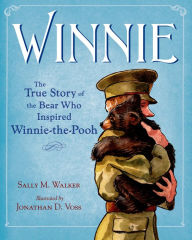
Winnie

Winnie: The True Story of the Bear Who Inspired Winnie the Pooh. Sally M. Walker. Illustrated by Jonathan D. Voss. 2015. Henry Holt. 40 pages. [Source: Library]

First sentence: When Harry Colebourn looked out of the train window, he couldn't believe what he saw: a bear at the station!

Premise/plot: This picture book is the 'true story' of the real bear named Winnie that was eventually given to the London Zoo. The book ends by introducing readers to a young Christopher Robin who enjoys visiting Winnie at the zoo.

My thoughts: Most of the picture book takes place during World War I. You probably can't think of many picture books about World War I or set during World War I, I know I can't think of any others at the moment! Harry Colebourn is a soldier, a Canadian soldier, and the war is in the background. As an adult reader, I felt the war was rightly in the background. I'm not sure if young readers will read the book in quite the same way. Winnie, the bear, is a friend, companion, mascot, not just to one soldier--though Harry is his favorite--but to a regiment. When Harry's called to fight overseas in Europe, Winnie is left in the care of the London Zoo. An author's note fills in the details of Winnie's life after the publication of A.A. Milne's classic children's book.

Text: 4.5 out of 5
Illustrations: 4.5 out of 5
Total: 9 out of 10  

© 2015 Becky Laney of Becky's Book Reviews

Monday, November 09, 2015

Beatrix Potter and Her Paint Box

Beatrix Potter and Her Paint Box. David McPhail. 2015. Henry Holt. 40 pages. [Source: Library]

First sentence: Beatrix Potter was born on July 28, 1866, in London, England.

Premise/plot: David McPhail has written a picture book biography about Beatrix Potter, author-illustrator of dozens of picture books including Peter Rabbit. The book focuses on her childhood through the publication of her first few books.

My thoughts: I enjoyed this one very much. I really liked the illustrations. And I thought the text was very reader-friendly. It wasn't text-heavy. It was just the right amount of text for the target audience. Overall, a very nice biography.

Text: 4 out of 5
Illustrations: 4 out of 5
Total: 8 out of 10

© 2015 Becky Laney of Becky's Book Reviews

Monday, August 31, 2015

Fab Four Friends

Fab Four Friends: The Boys Who Became The Beatles. Susanna Reich. 2015. Henry Holt. 32 pages. [Source: Review copy]

I love the Beatles, have spent several decades loving the Beatles, so I was quite excited to read Susanna Reich's picture book biography of the fab four. She introduces each Beatle individually, starting with John, of course. As each one meets John and joins the band, his story is then told in some detail. It is a partial biography, not a full one. The book concludes circa 1963 with the Beatles just beginning to become HUGE in England. (Think Love Me Do and Please, Please Me.)

The details are age-appropriate, in case you're curious. If you're familiar with the Beatles--as a group, or as individuals--then you know that there is plenty that could have been said, could have been shared, for a mature adult audience. The book captures them at their innocent best.

I've read a handful of books about the Beatles--mainly biographies--over the years, and this one did a good job with the basics. I liked the simple approach for a younger audience. Though this one would definitely be a picture book for older readers, and not a book ideal for preschool read aloud.

The Illustrations are by Adam Gustavson. I spent time looking at each spread of this picture book, absorbing the details in the text and in the illustration. I've spent plenty of time looking at photographs of the Beatles--I had a new Beatles calendar for several years in a row. So what did I think of the illustrations? I liked them for the most part. There were one or two that I thought were practically perfect. But I couldn't really say that of each and every page. Still, I liked the illustrations overall.

If used in a classroom, this one would pair well with the first Beatles Anthology album. Students could listen to "early" recordings of the Beatles.


© 2015 Becky Laney of Becky's Book Reviews

Tuesday, August 25, 2015

Finding Serendipity

Finding Serendipity. Angelica Banks. 2015. Henry Holt. 288 pages. [Source: Library]

I enjoyed meeting Tuesday McGillycuddy and her dog Baxterr, the stars of Angelica Banks' Finding Serendipity. The novel takes place on the last day of school/first day of summer vacation. On the way home from school--she's roller skating, by the way--she stops to make a wish at a fountain. She'd never tell the wish aloud, who would? But the reader learns that the wish is that her oh-so-famous mother Serendipity Smith would finish the final novel in her oh-so-popular series. (Vivienne Small and the Final Battle.) Her father welcomes her home with baked goodies, but, Tuesday is too excited about her mother possibly finishing the series to enjoy a snack or even dinner. Her mother is upstairs in her office writing...and mustn't be disturbed. But when it becomes late--past her bedtime perhaps--the two open the door to discover an empty room and an open window. The Dad? Well, he's not worried. But Tuesday, well, she's super-worried! Where did her Mom disappear to?

Tuesday, for better or worse, decides to GO in search of her mom. And that journey starts at the typewriter her mom uses in her office. Before she knows what's happening, Tuesday's own story, her own adventure, has begun...and her oh-so-faithful dog, Baxterr is by her side, of course.

Tuesday's adventure is something....and the "world" she visits is fun in a dangerous sort of way. But I won't be sharing the details of her adventures there and who she meets... That wouldn't be nice of me at all!

I liked this one. I did. It was a quick, light read. It is a bit cutesy, I admit.
© 2015 Becky Laney of Becky's Book Reviews

Thursday, April 23, 2015

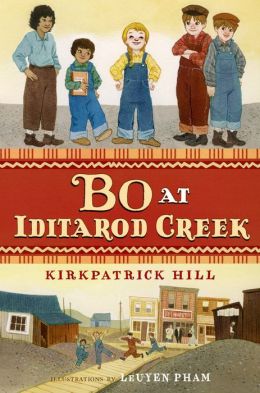
Bo at Iditarod Creek (2014)

Bo at Iditarod Creek. Kirkpatrick Hill. Illustrated by LeUyen Pham. 2014. Henry Holt. 288 pages. [Source: Library]

I really did enjoy the first book in the series. And I wanted to love this one just as much. But it was more of an almost book for me.

I still love Bo as a narrator. She still has a very unique voice to her. And the illustrations by LeUyen Pham are oh-so-wonderful which is probably why I like Bo so much.

In this second book in the series, Bo and her new brother, Graf, go with their fathers Jack Jackson and Arvid Ivorsen to a new community: Iditarod Creek. They go where there's work, to keep it simple. So there are new characters to meet, new opportunities and situations. In fact, there might even be a THIRD child added to the family.

The setting is unique, especially for a children's book. Historical fiction set in Alaska in 1929 and 1930. The world Bo is growing up in is probably a strange one to most readers. Bo is a six (or seven) year old girl growing up without many girls her own age, and without many ladies around in general. It's not exactly a "proper" or "traditional" upbringing. But what Bo has in abundance is LOVE and understanding. Both Jack and Arvid take time to talk with Bo, to love her, to teach her.

One word of warning this book has racial slurs, matter-of-fact, this is the way it was language. So if you're reading this aloud to young(er) children, you should know what's coming.


© 2015 Becky Laney of Becky's Book Reviews

Monday, February 02, 2015

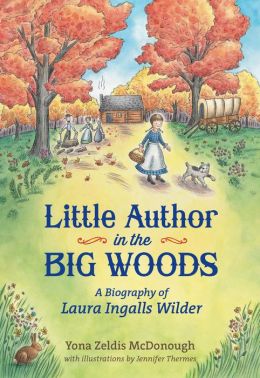
Little Author in the Big Woods

Little Author in the Big Woods. Yona Zeldis McDonough. 2014. Henry Holt. 176 pages. [Source: Library]

I expected to love this biography of Laura Ingalls Wilder. It did not disappoint even slightly. It is written for an audience ready to appreciate the Little House novels. That was a nice touch, I thought. For children who already love the original Little House books, this book is great for telling more of the whole story. Readers can see for themselves the similarities and differences between the books and her real life. There were details she left out or changed. There were periods of her life she didn't write about. Readers also get a fuller story for her whole life birth through death. Some details, of course, I'd read before, but, there were a handful of things that I'd not read before, or, that I don't remember reading before!

It is a quick read. It is an interesting read too! I love the subject, of course, I must have read the books dozens of times growing up. (Long Winter and These Happy Golden Years are my favorites in the series.) I also love the cute title of this one!!!

It is easy to recommend this one! It just says, read me! read me!

© 2015 Becky Laney of Becky's Book Reviews

Wednesday, August 27, 2014

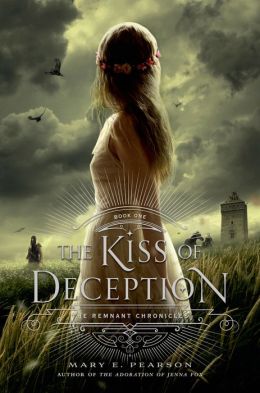
The Kiss of Deception (2014)

Kiss of Deception. (The Remnant Chronicles #1) Mary E. Pearson. 2014. Henry Holt. 489 pages. [Source: Library]

Kiss of Deception was an excellent fantasy. It is probably one of the best fantasies I've read all year. From start to finish, it held my attention. I really enjoyed the mystery aspect of it that held up for three-quarters of the book. The mystery being who is who.

Kiss of Deception has multiple narrators. Princess Lia is our heroine, our runaway bride. Some chapters are narrated by "The Prince," and other chapters are narrated by "The Assassin." To add to the delight OR possibly add to the confusion, there are chapters narrated by Rafe and Kaden. Readers know that Rafe could be the Prince OR the Assassin. Likewise, readers know that Kaden could be either the Prince or the Assassin. The first third of the novel focuses more on all three being on the go. The Princess has runaway, taking her maid Pauline with her. The Prince is chasing after her. The Assassin is chasing after her too. Of course, he has been hired by someone to kill her. And the Prince's motivations are vague. What happens when these two men find her hiding in a small country town? What happens when she begins to get to know these two men, Rafe and Kaden, over the course of a week or two?

Kiss of Deception was definitely suspenseful in places. There's a bit of an intrigue mixed dangerously OR delightfully with romance. Readers learn that there is so much to learn about the world in which this novel is set. There is a hint of depth to it. I wanted more--in a good way. It wasn't that this novel was inadequate, it was that what we know is so small in comparison to what we don't know. And there's this wanting to see more, know more. If fantasy worlds feel fake, then, the wanting is completely different. It isn't curiosity but frustration.

I felt this novel was well-written. I enjoyed the world-building. I enjoyed the characterization.

© 2014 Becky Laney of Becky's Book Reviews

Wednesday, February 19, 2014

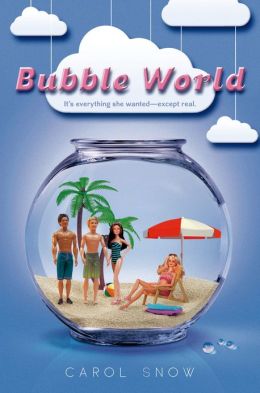
Bubble World (2013)

Bubble World. Carol Snow. 2013. Henry Holt. 352 pages. [Source: Library]

I liked many things about Bubble World. I didn't think it was the most amazing novel ever, but, as a whole, I thought it was an intriguing world. Especially if you consider the characters as products of their environment.

The main character of Bubble World is a young teen girl named Freesia (Francine). Think of some of the scenes from Clueless (especially in terms of closets and friends) and you wouldn't be wrong. Her perfect island life is what it is: completely superficial and ridiculous. It becomes apparent from the start that Freesia has never really had any uncomfortable stressful moments in her life; all ease, all pleasure, all the time. Take her school, for example, no homework, no tests, the language teachers switch to English whenever a student asks, they can have classes indoor or outdoor, again depending on what the student wants, and the whole point seems to be eating, drinking, and talking. Some of the classes Freesia takes are foreign languages, but, other courses are on applying eyeliner. It sounds over-the-top because it is. In Freesia's defense, this is her normal, this is the only life she knows, she's never questioned it because she's never been encouraged to ask real questions, her slight questions always always go in her favor. Freesia's life is essentially boundary-and-authority free. It turns out that it's not a life at all, for better or worse, when glitches occur throwing Freesia out of her perfect world, she lands in reality and it is not good news for anyone.

Her parents have spent three years or so with their daughter in a virtual reality box in a recliner, essentially dead to them as far as interactions go. Their daughter being gone is their normal. And they want to help her get back to her perfect life very, very quickly. It becomes apparent to readers that Freesia and Angel (the younger sister) have questionable parents. They seem just as selfish and clueless as Freesia at times. Sure, they live in the "real world" but the father is so stuck in the past and stuck in his ways and doesn't really care about anything but shoe insoles that it's hard to find a good role model in him. And the mother is all about promotion and popularity. She vlogs, I believe. And her online reputation is ALL that matters to her. She is definitely exploiting her daughter, in my opinion, while ignoring the basic needs of her other daughter. What the whole family needs--besides some common sense--are communication skills. Long story short, Freesia is forced due to various circumstances to spend a week or two in the real world and the shock of it all is fierce. She attends public school. She meets real teachers with real expectations (of sorts). She meets people her own age. There are so many awkward moments. She just doesn't have a clue on how to live: how to talk, how to walk, how to make friends, how to actually work. Being in the real world is putting pressure on her giving her her first opportunity to learn and grow. (For an example of an awkward moment: Freesia is completely, completely overwhelmed by stairs. She just cannot walk down them, she's too terrified. She scoots down stairs on her bottom one step at a time, and she crawls on her hands and knees back up stairs.)

The world-building was nicely done, in my opinion. The characters were shallow and stupid, but, that was part of the whole premise. Teens were drugged before entering the game, erasing their memory, and they were kept happy with drugs during the game, and the only world they knew was the created world with the shallow, materialistic focus. Their parents were essentially paying someone to brainwash their children and make them incapable of real life. For some money, they could essentially stop parenting their children, they could let go of all their responsibilities.
© 2014 Becky Laney of Becky's Book Reviews

Monday, July 15, 2013

Four Nonfiction Biographies (2013)

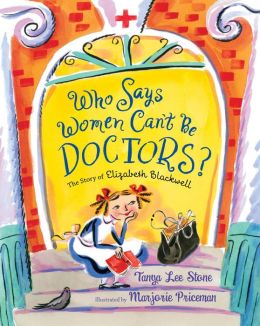
Who Says Women Can't Be Doctors? The Story of Elizabeth Blackwell. Tanya Lee Stone. Illustrated by Marjorie Priceman. 2013. 40 pages. [Source: Library]

I'll bet you've met plenty of doctors in your life. And I'll bet lots of them were women. Well, you might find this hard to believe, but there once was a time when girls weren't allowed to become doctors. Back int he 1830s, there were lots of things girls couldn't be. Girls were only supposed to become wives and mothers. Or maybe teachers, or seamstresses. Being a doctor was definitely not an option. What do you think changed all that? Or should I say....WHO?

I love this picture book biography of Elizabeth Blackwell. I love the narrative! It isn't just sharing simple information with readers; it is telling a vibrant, exciting story. Elizabeth Blackwell has PERSONALITY in this one. And that is what I love most in this one. History comes alive in this one! The illustrations by Marjorie Priceman are just perfect: so bold, so colorful, so expressive! (Especially the illustration showing Elizabeth Blackwell with her acceptance letter.)

This picture book biography would make a great read aloud.

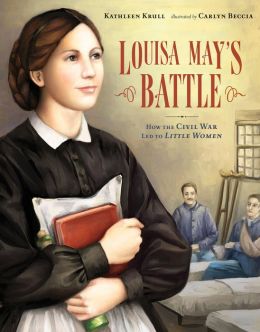
Louisa May's Battle: How the Civil War Led to Little Women. Kathleen Krull. Illustrated by Carlyn Beccia. 2013. Walker Books. 48 pages. [Source: Library]

For older readers, Louisa May's Battle is an interesting biographical story starring Louisa May Alcott. (The book is not a complete biography; it focuses specifically on Louisa May Alcott's life in the 1860s as she first becomes a nurse during the Civil War, and then becomes an author first publishing Hospital Sketches and later Little Women.)

Before the Civil War, there weren't many women nurses. But the war gave women the opportunity to fill an urgent need, and also the opportunity to prove themselves capable and skilled. For women who met these qualifications: at least thirty, very plain, unmarried, strong, and two reference letters proving their moral quality, there was an opportunity to serve their country well during a time of great need. Louisa May Alcott was one woman who answered the call.

After several months nursing, Louisa May Alcott became very ill. She was unable to keep nursing; it took her months in bed to recover her health. After she recovered, she wrote Hospital Sketches. This was her first publication. This book was very significant. And its success in part led her to write another book: Little Women.

I enjoyed Kathleen Krull's newest biography.

Look Up! Henrietta Leavitt, Pioneering Woman Astronomer. Robert Burleigh. Illustrated by Raul Colon. 2013. Simon & Schuster. 32 pages. [Source: Library]

Night after night, Henrietta sat on her front porch, gazing up at the stars. How high? How high is the sky? She wanted to know everything about the wonderful bigness of all she saw. The more she looked up, the bigger the sky seemed to get. It seemed endless!

Look up! is a picture book biography of the astronomer Henrietta Leavitt. The story is of a little girl who loved the night sky, who loved the stars, who followed her dream and persevered academically in a man's field. Most astronomers, at the time, being men, of course. But she knew what she wanted, and she knew she could do it. Henrietta's job--she got paid thirty cents an hour--was not to gaze through the telescope. Her job was to examine, to study, the photographs taken by others. She was good at her job, and through her measuring, through her detailed study, she made an important discovery, a discovery having to do with measuring distances and the vastness of galaxies.

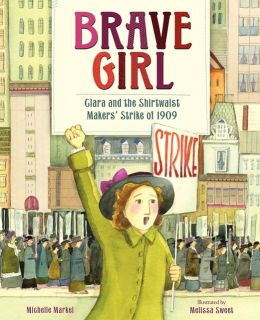
Brave Girl: Clara and the Shirtwaist Makers' Strike of 1909. Michelle Markel. Illustrated by Melissa Sweet. 2013. HarperCollins. 32 pages. [Source: Library]

A steamship pulls into the harbor, carrying hundreds of immigrants--and a surprise for New York City. The surprise is dirt poor, just five feet tall, and hardly speaks a word of English. Her name is Clara Lemlich. This girl's got grit, and she's going to prove it. Look out, New York!

Brave Girl is a picture book biography of Clara Lemlich, a young woman who led women factory workers to strike. This picture book focuses on the social injustices of the times, and how important it was for workers to be able to form unions, and make a stand together for what they believed to be right and fair. Clara's story is inspiring. Her determination and strength seem incredible. "She wants to read, she wants to learn! At the end of her shift, though her eyes hurt from straining in the gaslight and her back hurts from hunching over the sewing machine, she walks to the library. She fills her empty stomach with a single glass of milk and goes to school at night. When she gets home in the late evening, she sleeps only a few hours before rising again."

Definitely recommended.

© 2013 Becky Laney of Becky's Book Reviews

Thursday, September 06, 2012

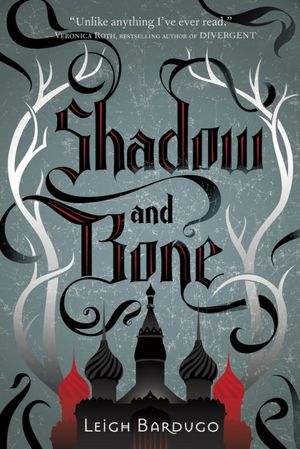
Shadow and Bone (YA)

Shadow and Bone. Leigh Bardugo. 2012. Henry Holt. 368 pages.

The servants called them malenchki, little ghosts, because they were the smallest and the youngest, and because they haunted the Duke's house like giggling phantoms, darting in and out of rooms, hiding in cupboards to eavesdrop, sneaking into the kitchen to steal the last of the summer peaches. 

I really enjoyed Shadow and Bone. I'm not sure that I loved it. But I definitely liked it. The prologue was very promising. Almost too promising. Because I'm not sure the prologue matches the rest of the novel. Readers are introduced to two young children, a boy (Mal) and a girl (Alina) who have a very close, very special bond. The novel starts when these two are all grown up. Readers learn that he has become a soldier and that she has become a mapmaker. The two are about to venture into a dangerous unknown, the unsea, the Fold. Not alone, of course, they are just two of the people taking part in this expedition. But it will change their lives, for better or worse. For in fighting for her life, for the life of her best friend and not-so-secret, secret crush, Mal, her power is revealed. She is a sun-summoner. This puts her on one path and Mal on another...and it is the start of a dangerous, exciting adventure.

I found this one entertaining; it was easy to read. The world-building isn't the absolute best I've ever read. I didn't really try to match this fantasy world with the real world, to find parallels between the fictional world and the real world in terms of legends, mythologies, etc. I've read reviews that do, that find fault with this book for getting it wrong. I didn't read the book with that in mind. I wouldn't know how to read the book with that in mind. Did I find the story entertaining? Yes, for the most part. Did I like the characters? Yes. I thought Bardugo did a good job with Alina, the Darkling, and Mal. Several other minor characters had potential as well. Did it work as a romance? Well, it had potential. The Darkling was a fascinating character, in my opinion. And Mal, well, he was heroic enough certainly. The romance didn't wow me, but, I don't have to be wowed to enjoy the novel. It's good enough if the romance doesn't annoy me.

Read Shadow and Bone
  • If you enjoy fantasy novels
  • If you enjoy fantasy novels with a love triangle
  • If you enjoy dark fantasy with a showdown potential between good and evil
© 2012 Becky Laney of Becky's Book Reviews

Wednesday, March 21, 2012

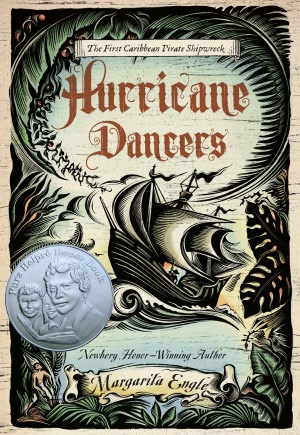
Hurricane Dancers (YA)

Hurricane Dancers: The First Caribbean Pirate Shipwreck. Margarita Engle. 2011. Henry Holt. 160 pages.

Historical setting: Spanish ships reached the western Caribbean Sea in 1492, searching for Asia and spices. Instead, the explorers found peaceful islanders, and enslaved them. By 1510, the Bahamas, Hispaniola, Puerto Rico, and Jamaica had been conquered. Only Cuba, the largest Caribbean isle, was still free. It was a time of hurricanes on an island of hope.

If you're a fan of Margarita Engle, then you're going to want to read one of her latest verse novels, Hurricane Dancers: The First Caribbean Pirate Shipwreck. I have read and enjoyed so very many of her verse novels in the past that when I hear of a new one, I get a little thrill. Her work is something that I just look forward to. I have found her historical verse novels set in Cuba to be so good, so fascinating, so amazing. Hurricane Dancers did not disappoint. Though I'm not sure it is my favorite, favorite. (I don't think I could name a favorite, by the way.)

So Hurricane Dancers has five narrators: Quebrado (our main hero), Bernandino de Talavera (one of our villains), Alonso de Ojeda (another of our villains), Narido and Caucubu (a young couple madly in love with one another, but their parents don't approve).

Quebrado

I listen
to the song
of creaking planks,
the roll and sway
of clouds in sky,
wild music
and thunder,
the groans
of wood,
a mourning moan
as this old ship
remembers
her true self,
her tree self,
rooted 
and growing,
alive,
on shore.

Read Hurricane Dancers

If you're a fan of Margarita Engle
If you're looking for a good book set in Cuba in the sixteenth century
If you're a fan of verse novels
If you're a fan of historical fiction
If you're looking for a good multicultural book
If you're looking to read a Pura Belpre Honor Book
If you're looking for a good coming-of-age story

© 2012 Becky Laney of Becky's Book Reviews

Monday, March 12, 2012

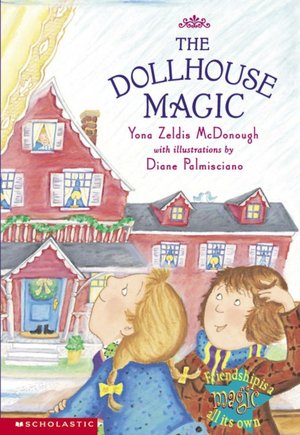
The Dollhouse Magic (MG)

The Dollhouse Magic. Yona Zeldis McDonough. Illustrated by Diane Palmisciano. 2000. Henry Holt. 86 pages.


Of all the streets in town, Lila and Jane Finney like Cheshire the very best. It's not because of the large old oaks whose spreading branches arch and nearly meet in the air, creating, in spring and summer, a most beguiling canopy overhead. Nor is it the well-tended flower beds, though these are filled with an ongoing seasonal display: tulips and daffodils in spring; roses, lilies, and marigolds in summer; asters and mums in the fall. It is not even because of the way the street ends in a lush, grassy circle, in the center of which is a handsomely carved old stone fountain. No, as attractive as all these things are, what Lila and Jane love most is a house on Cheshire Street, a three-story dollhouse with real clapboard siding and a cedar shingle roof that sits in Miss Amanda Whitcomb's front window. 

It all depends on your expectations. On what you want this one to be. Is that fair to a book? Well, I'm not sure it is. But it's one of those things that just happens naturally.

So The Dollhouse Magic is historical fiction for young readers. (I'm thinking second to fourth graders, though that all depends on reading levels of course.) The Dollhouse Magic is set during the Great Depression (1930s). Readers are introduced to two sisters, Lila and Jane, there are other siblings in the family, but Lila and Jane are the stars of this one. The book is about their "adventures" visiting Miss Amanda Whitcomb's dollhouse. It definitely IS an adventure for them. It's quite a thrill to be allowed to play with this dollhouse, to look at all the furniture and dolls. And the dollhouse is perhaps the main attraction at the beginning, but, the two do become very friendly with this old woman. They enjoy the treats she shares. Perhaps they don't realize just how special she is...until...well, you can guess what happens next.

What I didn't quite like about The Dollhouse Magic is how manipulative it is. Yes, I know that people die. I know that is natural. And yes, I know that people even die on Christmas Eve. But. Why oh why oh why does it have to happen in this happy little book...especially without any warning. It's not like we see Miss Whitcomb getting weak or sick. It just didn't seem fair or right.

I would have HATED this ending as a kid. I would have. I'm not all that fond of it as an adult. So my question for you is this... if a character is going to die in a book, do you want some foreshadowing or hinting along the way? Do you want or need time to prepare? Or do you like being surprised? Should sad books come with warnings?

© 2012 Becky Laney of Becky's Book Reviews

Friday, June 10, 2011

Ruby Red (YA)

Ruby Red. Kerstin Gier. 2011. Henry Holt. 336 pages.

I first felt it in the school canteen on Monday morning. For a moment it was like being on a roller-coaster when you're racing down from the very top. It lasted only two seconds, but that was long enough for me to dump a plateful of mashed potatoes and gravy all over my school uniform. I managed to catch the plate just in time, as my knife and fork clattered to the floor.

Gwyneth Shephard has been waiting and watching knowing that at any minute her cousin, Charlotte, could disappear. For Charlotte has the gene, the time traveling gene that has been passed down through the women in the family. Charlotte has had several dizzy spells the last week, but so far, she's remained in her own time.

How does her family "know" that Charlotte is the one? Well, according to the prophecy--or the prediction--the one will have been born on October 7th. Gwyneth, who was born on October 8th, has nothing to worry about. She's not the one.

Does she want to be the one? She's never really given it that much thought. Every member of her family has their own eccentricity, their own "gift." Even if those gifts are just laughable--such as her great-aunts visions. No one takes those visions seriously. And no one--outside her best friend--takes Gwen's gift seriously, Gwen's gift of seeing ghosts.

So what will happen to this very strange, very dysfunctional family when the "wrong" girl vanishes into the past? For Gwyneth it is beyond confusing. She never knows when it will happen, when she'll be pulled back into the past, at what year she'll travel to, what dangers she may be facing, how long she'll stay before returning to her own time. What Gwyneth needs most are answers to her questions.

But answers are hard to come by. For the guardians like to keep their secrets. And Gideon her traveling companion? Well, what does she really know about him? Except for the fact that he feels cheated or disappointed. So they're not off to the best of starts...

I liked Ruby Red. I'm not sure I loved it. It made me curious, I won't lie. But there are still so many questions. I do feel this is just the beginning, that this was just the prologue for all that is to come. So it's got some promise, some potential. But on it's own, well, it doesn't quite satisfy. It leaves me wanting the next book. (Which is NOT a bad thing necessarily!)


© 2011 Becky Laney of Becky's Book Reviews

Saturday, May 28, 2011

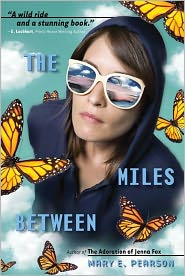
The Miles Between (YA)

The Miles Between. Mary E. Pearson. 2009. Henry Holt. 272 pages. 

I was seven the first time I was sent away. This raised eyebrows, even among by parent's globe-trotting friends, and I was brought back home in short order. Rumors are embarrassing, you know? A nanny was employed, but that only partially solved their problem. I was still in the house. I was seen and heard. When I turned eight years old, it seemed reasonable enough to send me off again. And they did. They never kept me at any one place for long. 

Des (Destiny) Faraday, our narrator, doesn't have many friends. Then again, she doesn't want any friends. Readers meet her on October 19th, a day that Des has come to dread year after year, though readers aren't quite sure why. Wanting to take control of her life, Des rips the page right off her calendar. Things seem to be off on a shaky start. Until she meets a stranger. Until she asks for one fair day in the universe. Until she finds a car with a running engine. Until she finds three companions that need escape from Hedgebrook Academy--a boarding school--just as much as she does. Can one day of freedom on the road change lives? Perhaps.

I enjoyed The Miles Between. It was emotional--very emotional in places. Though the novel only covers one day, there is so much growth and development. Destiny is changed by this day--and it's a wonderful thing to see. And the writing is lovely. I would compare it to Jellicoe Road by Melina Marchetta, but I think The Miles Between is an easier read, a less-intimidating read.

There are so many different ways of being good. It's all about perspective. (35)

The world before us is a postcard, and I imagine the story we are writing on it. (45)

© 2011 Becky Laney of Becky's Book Reviews

Friday, February 04, 2011

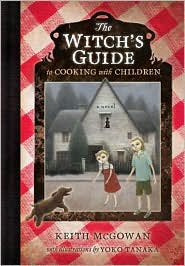
The Witch's Guide to Cooking With Children (MG)

The Witch's Guide to Cooking With Children. Keith McGowan. 2009. Henry Holt. 192 pages.

I love children. Eating them, that is. I've eaten quite a few children over the centuries. You may wonder where I get them all. The answer is: I get them the traditional way. From parents, of course. 

The book begins with a little excerpt from Fay Haladerry's "How to Cook and Eat Children." This mystery novel stars two children--an eleven-year old boy, Solomon, an eight-year-old girl, Connie. These two first get suspicious of their new community when they see a local dog chewing (or perhaps burying?) a human bone. Of course, they don't know right then and there that it is human. But a trip to the library soon has these kids convinced that there is something strange about one of their neighbors, a woman named Fay Haladerry. Readers, of course, know more than our hero and heroine for most of the novel. For they realize early on that a) this woman is a witch--the witch--from Hansel and Gretel and b) that Sol and Connie's parents have it in for them. They see the first few failed attempts. They have a better idea of who to trust and who not to trust.

This book has an interesting premise, a playful premise. Throughout the book, readers get a glimpse into this witch's book. And these scenes may prove the highlight for readers interested in this twisted fairy tale. But, for me, the novel lacks substance when it comes to characterization. The story in many ways seems one-dimensional. Sol and Connie don't deserve to be cooked and eaten--not by any stretch of the imagination--but they do lack the depth needed for this reader (this adult reader) to really care about them as individuals. The book lacks complexity in a way. Beyond the premise, beyond the playful twist to a traditional fairy tale, it isn't as great as the book cover might suggest.

© 2011 Becky Laney of Becky's Book Reviews

Thursday, June 24, 2010

The Water Seeker (MG)


The Water Seeker. Kimberly Willis Holt. 2010. May 2010. Henry Holt. 320 pages.

Jake Kincaid was known as the dowser. With a forked branch, he'd made his way from the Arkansas Territory to Missouri, stopping at farms to find waters for new wells. His plan was to raise enough money so he could do what he wanted and never pick up the branch again. But the dowsing was a gift. And a gift might be abandoned, but it will always be there, waiting to be claimed.

Is there an easy way to describe Kimberly Willis Holt's newest book The Water Seeker? I'll try my best to do it justice. Amos' father, Jake, is a trapper. One year Jake returned to discover that his wife has died, but that he has a son. Jake takes the infant and travels to see his brother (Gil) and sister-in-law (Rebecca). He leaves Amos there with the promise that he'll be back as often as he can. He's not completely turning over the care of his son, but he's a trapper and his life is a traveling life. Delilah, Amos' mother, had a great talent for drawing. Though he never knew his mother, he does have her gift. He also has a gift passed down from his father--the gift of dowsing. But he's embarrassed to let anyone know. After all, his father hates this gift. And would rather do anything but use it. But sometimes a man has no choice. He has to do things he hates in order to support his family.

One year Jake returns--and not alone--to learn that Rebecca has died and that Gil and Amos have moved in with a neighboring family. So Jake decides to take his son--then about six--with him. Jake has married an Indian woman, Blue Owl, and the three will be a real family and start a new life. But life is never that easy. They arrive at Jake's cabin and find that Daisy, Delilah's sister, and Homer, her husband, have been living there. Since Jake knows the family background, he can't knowingly send these two away. So the family expands. And keeps expanding--soon Amos has a cousin, Finn.

America is changing too. Its landscape. Its culture. Its "destiny." As much as Jake would love to keep trapping--that just isn't a possibility these days. So Jake decides to try his hand at scouting. He has been recruited to help lead a wagon west on the Oregon trail. The whole family--Jake, Blue Owl, Amos, Daisy, Homer, Finn--set out on a new adventure together. An exhausting, dangerous journey that will take them from Independence, Missouri, to Willamette Valley in Oregon.

The Water Seeker covers decades of American history, from the 1830s to the 1850s. When Amos begins his journey across America, he is about fourteen, his cousin, Finn, is six. So Amos grows up--in so many ways--during this difficult journey. He learns life lessons, has his first heartache, and learns what true love is all about.

The Water Seeker is a complex novel. The characters--and there are so many!--are all well-developed. I loved getting to know them all. There were so many people that loved Amos through the years, so many people who were part of his family--traditional or not. I loved meeting the different families on the wagon train. I loved the realism of it all. Heading west was not easy. It was dangerous. Bad things happened. They just did. One of the lessons Amos learns is that life may be hard, but it's good too. Some things make the journey worth it.

I really enjoyed The Water Seeker. I think Holt is a good storyteller, a good writer. If you love historical fiction, then this one might be for you. I think it would also appeal to adult readers who love historical fiction. Even if they don't usually read children's books. I think there is enough complexity, enough story, enough heart to satisfy.

Other reviews: Kids Lit,

© Becky Laney of Becky's Book Reviews

Friday, June 04, 2010

The Firefly Letters (MG/YA)


The Firefly Letters: A Suffragette's Journey to Cuba. Margarita Engle. 2010. Henry Holt. 160 pages.

I absolutely loved The Firefly Letters. I found it so amazing, so beautiful, so right. This isn't the first Margarita Engle novel I've read--she writes verse novels set in Cuba; all historical. (I've read The Poet Slave of Cuba, The Surrender Tree, and Tropical Secrets.) But I must admit that this one is definitely my favorite so far.

The Firefly Letters is told in verse through three narrators--primarily. Cecilia, a young slave woman still mourning her lost home, her lost family. Elena, the daughter of a wealthy slave owner. Fredrika, a Swedish woman, far from home and on a mission. How are these three connected? How do their stories connect? Fredrika is staying--as a guest--at Elena's home. Cecilia is her translator--she's a slave that has learned to speak English, a valuable asset. Why is Fredrika in Cuba? What brings her around the world? She's a writer. And her mission is to write about Cuba--to write the truth--which means shedding light on the evils of slavery. Her mission brings her into close contact with all sorts of people. How will knowing Fredrika change these two young women? Will Frederika's strange, outlandish ideas of freedom, of equality, make an impact?

This story has staying power. Here is one of my favorite poems--narrated by Cecilia.
Imagine my nervousness
having to translate while Fredrika
scolds the schoolmistress
for keeping girls in class
only one hour per day
and for teaching them nothing
but embroidery, lacemaking,
and saints' lives
while boys study all day long
learning mathematics and science.

Elena looks so astounded
sitting in her classroom,
surrounded by giggling girls
in silk dresses with lace ruffles,
while Fredrika scolds and I translate,
all the time thinking
that one hour of school
is more than any slave girl
can hope to receive in a lifetime. (61-62)
The book is based in part on the life of Fredrika Bremer.

© Becky Laney of Becky's Book Reviews

Friday, May 21, 2010

Poetry Friday: Borrowed Names


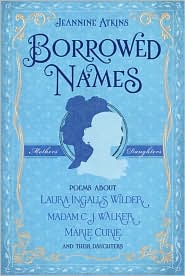
Borrowed Names: Poems About Laura Ingalls Wilder, Madam C.J. Walker, Marie Curie. Jeannine Atkins. 2010. March 2010. Henry Holt. 224 pages.

I liked this one. It was strange, but in a good way. All three women--Laura Ingalls Wilder, Madam C.J. Walker, Marie Curie--were born in 1867; all three women were mothers. The poems are about these three women--their relationships with their daughters, their personal lives, their careers. What were these successful women really like? What kind of relationships did they have with their daughters?

Laura Ingalls Wilder was the only woman whose story I was familiar with. I did enjoy getting to know these other two women. All three women had very different different experiences, different hardships, different strengths and weaknesses.

© Becky Laney of Becky's Book Reviews

Monday, May 17, 2010

Once (MG)


Once by Morris Gleitzman. 2010. March 2010. Henry Holt. 176 pages.

Once I was living in an orphanage in the mountains and I shouldn't have been and I almost caused a riot. It was because of the carrot.

Once is a holocaust novel. It stars a young Jewish boy, Felix. He loves stories. You might could even say he gets a bit carried away with the stories--with crafting a story. If Felix has a fault, it would be his innocence. Is innocence really a fault? It might be in dangerous times such as these. Because Hitler's got the power. And Felix, well, Felix doesn't understand what that means exactly for him, for his family, for all European Jews.

When we first meet Felix, he is living in a Catholic orphanage. He doesn't know why his parents--booksellers--left him there in the care of nuns. He doesn't understand that there is an enemy to be feared. That this enemy does more than just burn books. It's a hard lesson to learn, but can he learn it in time?

What I appreciated most about this one was the writing. He begins each chapter with the word once. And these are some powerful sentences--sentences that make you want to read more.

Here are a few examples:

Once I escaped from an orphanage in the mountains and I didn't have to do any of the things you do in escape stories. Dig a tunnel. Disguise myself as a priest. Make a rope from nun robes knotted together. I just walked out through the main gate. (29)

Once I escaped from an underground hiding place by telling a story. (99)

There is something about this one that just worked for me.

© Becky Laney of Becky's Book Reviews