Showing posts with label borrowed book. Show all posts

Sunday, May 22, 2022

62. Meet the Malones


Meet the Malones. (Beany Malone #1) Lenora Mattingly Weber. 1943. 282 pages. [Source: Borrowed from a friend]

First sentence: MARY FRED MALONE had just bought a horse. He was black and his name was Mr. Chips and Mary Fred was riding him home.

Premise/plot: Meet the Malones is the first in a series of books that chronicles the [fictional] Malone family. Elizabeth, Mary Fred, Johnny, and Beany. The book is set during the Second World War in Colorado. Elizabeth's husband, Don, is overseas fighting. Their father, a journalist, has gone to Hawaii. The family is mostly on their own--except for when they aren't. Nonna, the grandmother, is a FIERCE force to be reckoned with when she does arrive. She does change the family dynamics quite a bit. 

The point of view in this one is all Mary Fred. She has her first misadventure with "love" in this one. As this "mop-squeezer" is swept off her feet by the super-popular football player who typically dates "queens." Elizabeth returns home with a newborn son to care for! The whole family helps out...not just with Elizabeth but with other children in need. There is a real spirit of hospitality and compassion in this one. (Though that may not extend all the way to the neighbor's dog.)

My thoughts: I enjoyed this one very much! I enjoyed getting to know the family. At times I was left wanting more--which overall I think is better than reverse. Each chapter is a "snapshot." Some focus more on family life at home, their relationships with each other. Others focus more on school OR the community. You do get a sense of how life on the home front is during the war. The war is never far from their minds, they are always thinking of ways they can help out the war effort and encourage/support those serving. 

Quotes:

  • The young Malones made their own decisions about lamb chops and life.  He was the delight of his English Lit teacher, gray-haired, gray-eyed, gray-garbed Miss Hewlitt.
  • ‘The highest price you can pay for a thing is to get it for nothing.’ That’s the trouble with this generation; they want everything—” 
  • Mary Fred said softly, “I read some place where courage is fear that has said its prayers.” 
  • “Rabbits,” groaned Beany. “Why do people always poke rabbits at children when they’re too young to defend themselves?” “They’re beautiful blankets,” Elizabeth insisted. 
  • Shame was different from grief or anxiety. You could share those with the ones you loved.
  • Elizabeth said earnestly, “I don’t think they ought to end stories like that for children. It gives them the wrong idea. There’s happiness in love—oh, happiness that shakes you and enriches you, but love and marriage isn’t a happy-ever-after thing. Love and marriage has so much ache and emptiness and hurt with the happiness.” 
  • Elizabeth detained them for one last word of admonition. “Now listen, gals, be sure you go out there to this soldiers’ dance with only one idea—not to have a good time yourselves but to give them one. Because you’ve got other good times ahead of you. But these kids—we don’t know what’s ahead for them.”
  • “I didn’t bring you here to gloat over you,” he said quietly, as he swerved the car around and started home. “I wanted you to see for yourself. You’re always talking about Nonna and her being like a fairy godmother. I’m not up on my fairy tales but it seems to me I read about some old woman who fed a girl a poisoned apple and it stuck in her throat and she lay in a coma until something jolted her and it fell out. I wanted to jolt you.”


© 2022 Becky Laney of Becky's Book Reviews

Monday, April 15, 2019

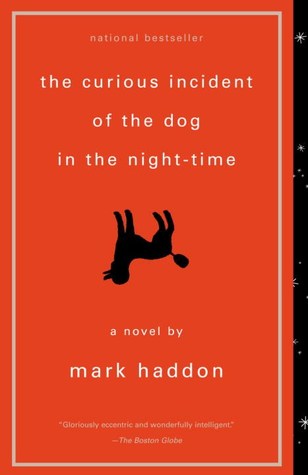
The Curious Incident of the Dog in the Night

The Curious Incident of the Dog in the Night Time. Mark Haddon. 2003/2004. 226 pages. [Source: Borrowed] 

First sentence: It was 7 minutes after midnight.

Premise/plot: Christopher Boone, our (relatively) young hero, discovers a dead dog in his neighbor's yard. He is determined to figure out WHO killed the dog (and possibly WHY). This also involves another new endeavor--besides 'becoming' a detective--that of becoming a writer. He is going to write a true story--he does not understand lies or fiction--of what happens. His journey soon expands beyond the one mystery to one of far greater importance.

My thoughts: How could I have not known that this one involved a dead dog?!?! I partially blame myself for not taking care of myself and "guarding" my emotions. The dog is violently, senselessly murdered...and this is what drives the story for the first few chapters. This is a book that made me lose my temper; I was this close to screaming at the book in frustration and anger. Not just for the injustice towards the dog--but for injustice in general for how Christopher is treated. 

The writing is excellent, for the most part; but the story is depressing.

Quotes:
Prime numbers are what is left when you have taken all the patterns away. I think prime numbers are like life. They are very logical but you could never work out the rules, even if you spent all your time thinking about them. (12)
A lie is when you say something happened which didn't happen. But there is only ever one thing which happened at a particular time and a particular place. And there are an infinite number of things which didn't happen at that time and that place. And if I think about something which didn't happen I start thinking about all the other things which didn't happen. For example, this morning for breakfast I had Ready Brek and some hot raspberry milk shake. But if I say that I actually had Shreddies and a mug of tea I start thinking about Coco Pops and lemonade and porridge and Dr. Pepper and how I wasn't eating my breakfast in Egypt and there wasn't a rhinoceros in the room and Father wasn't wearing a diving suit and so on and even writing this makes me feel shaky and scared...(19)

© 2019 Becky Laney of Becky's Book Reviews
Thursday, June 29, 2017

Hidden Figures

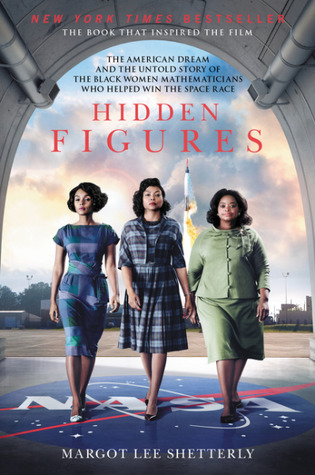
Hidden Figures. Margo Lee Shetterly. 2016. 349 pages. [Source: Borrowed from Friend]

First sentence: "Mrs. Land worked as a computer out at Langley," my father said, taking a right turn out of the parking lot of First Baptist Church in Hampton, Virginia.

Premise/plot: Margot Lee Shetterly goes on a search to tell the stories of the women 'computers' of NASA (NACA) in her book, Hidden Figures. It is a story grounded in science, math, engineering, and politics. How did women contribute to the space race? Or how much did women contribute to the space race? What were the challenges they faced as women, as African-Americans? The book is packed with information, and, many stories. Primarily it focuses on Dorothy Vaughan, Mary Jackson, Katherine Johnson, and Christine Darden. But there were dozens of others involved. And the book does a great job of balancing the general with the specific.

My thoughts: I read this one in two or three days. It was a great read. If you loved the movie, I'd definitely recommend the book. Though I think the book is probably better. I think the movie was true to the spirit of the book, but, not as true to the individual stories. In other words, I think they made three composites that represented many different women. I think they might have also tightened the time frame of the story. The book spans from the early 1940s through the early 1980s! Whereas the book seems to be just about the Mercury Seven and the very early days of getting man into orbit.

© 2017 Becky Laney of Becky's Book Reviews

Sunday, March 26, 2017

Advanced French for Exceptional Cats

Advanced French for Exceptional Cats. Henry N. Beard. 1992. 96 pages. [Source: Borrowed]

First sentence: The Exceptional Cat Le Chat Exceptionnel

Premise/plot: If you and your cat loved the first book, it's time to expand your knowledge. The phrases taught in this one go above and beyond your basic, practical needs with a few exceptions.
I don't mind Bach and Mozart as long as there is no singing.
Je veux bien ecouter Bach et Mozart pourvu que personne ne chante.
I nap, therefore I am.
Je fais un somme, donc je suis.
In this one the cat travels to France--to Paris--for part of this one. Most of the phrases are complex. There are sections on dining out, philosophy, music, etc.

My thoughts: I liked it. I like both books in the series.

© 2017 Becky Laney of Becky's Book Reviews
Sunday, March 19, 2017

French for Cats

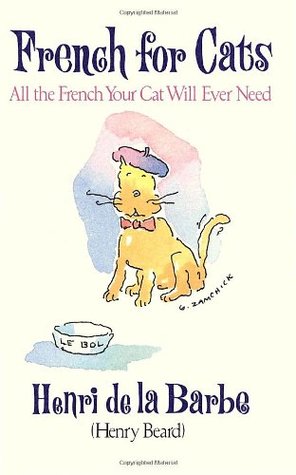
French for Cats. Henry N. Beard. 1991. 96 pages. [Borrowed]

First sentence: The Cat Le Chat

Premise/plot: Love cats? Want to learn French? Want to remember the French you learned in school? French for Cats is a phrase book for cat lovers. It is an illustrated phrase book with clever moments.

I meow
Je miaule
I purr
Je Ron Ronnie
I sleep
Je dors
Some phrases are short and very practical. Others are much more complex.
I wish that the lawn mower would run over the neighbor's cat.
Je voudrais que la tondeuse a Gabon ecrase le chat du voisin.
My thoughts: I like this one. I do. I had French in high school and college, but it's been twenty years. This book is a quick, cute read!

© 2017 Becky Laney of Becky's Book Reviews
Sunday, March 12, 2017

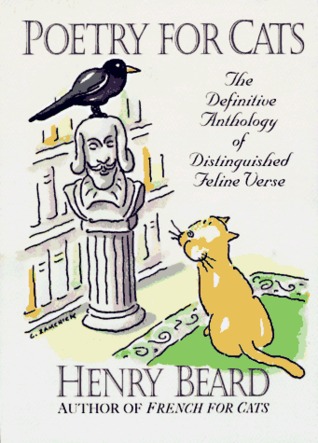
Poetry for Cats

Poetry for Cats: The Definitive Anthology of Distinguished Feline Verse. Henry Beard. 1994. 96 pages. [Source: Borrowed.]

Premise/plot: Ever wonder what kind of poetry cats would write? What about the cats of famous poets?! In Henry Beard's Poetry for Cats he writes in the style (and punctuation) of some really famous poets from the perspective of their cats.
To go outside, and there perchance to stay/ Or to remain within: that is the question...William Shakespeare's cat
Vet, be not proud, though thou canst make cats die/ Thou livest but one life, while we live nine,/ And if our lives were half as bleak as thine,/ We would not seek from thy cold grasp to fly. John Donne's cat
How do I break thee? Let me count the ways. Elizabeth Barrett Browning's cat
If you can disappear when all about you/ Are madly searching for you everywhere,/ And then just when they start to leave without you,/ Turn up as if you always were right there;/ If you can shed your hair in any season,/ And cough up half of all that you devour,/ And rush from room to room without a reason,/ Then sit and stare at nothing for an hour; Rudyard Kipling's cat
Do not go peaceable to that damn vet,/ A cat can always tell a trip is due,/ Hide, hide, when your appointment time is set. Dylan Thomas's cat
My thoughts: I thought this one was very well done overall. I would have loved to see a list at the end pointing readers back to the original poems being parodied. I knew some of them--maybe even half of them. But I wasn't equally familiar with all of the poets being imitated. For cat lovers with an English degree, this is a very fun treat!

My favorite poem was without a doubt the one by Rudyard Kipling's cat! The whole poem is wonderful! I wish I could share it all. I thought the poem by Geoffrey Chaucer's cat was clever. "She thinketh that no Canterbury mous/ Be worth an expeditioun from hir hous,/" It also includes words like yschlept and sawgh. If you've attempted the original, how could you help grinning at this imitation? And it is easier to unpack, by the way!

I won't focus on each poem, but many of them are worth reading and rereading.

A few might be worth sharing with the whole family, but this isn't necessarily kid-appropriate book.

© 2017 Becky Laney of Becky's Book Reviews
Wednesday, November 11, 2015

Let the Hurricane Roar (1932)

Let the Hurricane Roar. Rose Wilder Lane. 1932. 118 pages. [Source: Borrowed]

After reading Pioneer Girl by Laura Ingalls Wilder earlier this year, I was curious to read Rose Wilder Lane's Let the Hurricane Roar. If memory serves me, Rose Wilder Lane borrowed freely from her mother in terms of character and plot. That is while she was reading and editing and preparing her mother's manuscript to be sent off for possible publication, she was beginning to write her own pioneer-inspired novels, one of which is Let the Hurricane Roar. It has been a good six months or so since I read Pioneer Girl, so I don't remember the details clearly. This mother-and-daughter team were definitely writing at the same time about the same things, though I suppose for different audiences. Little House in the Big Woods was published in 1932, I believe, and Let the Hurricane Roar was published in 1933.

Let The Hurricane Roar is a historical fiction with a touch of romance. One could possibly say that it "celebrates" the pioneer spirit, but, it doesn't so much celebrate it and honor it as it does present it realistically. Life was hard, tough, at times seeming bleak and hopeless. The only thing abounding was often pride, stubbornness, gumption, if you will, and diligence. In short supply? Money and neighbors and life's luxuries.

Molly and David are the main characters of the novel. These two head out west, and it isn't long before Molly finds herself with child. Fearing to leave their new claim unsettled, she becomes enthusiastic about going with him to the claim and having the child all by herself. Who needs neighbors, friends, family, a midwife or a doctor? Molly proves to be just as proud and stubborn and spirited as her husband. (David DOES play the fiddle. And the two do endure several blizzards.)

To sum it all up, the book is more an account of horrible things happening to them within the first two or three years of settling their claim than anything else. That's not to say that the book lacks characterization. But it does lack characters, in some ways, since Molly and David are essentially on their own. Swedish neighbors, I believe, appear midway through and then depart again. And Molly does visit the nearest town in one or two chapters. But essentially it's just the three of them! (The baby doesn't do much if I'm honest.)

I liked it okay. It wasn't a great book that I simply loved and delighted in. But it was a solidly good read for anyone interested in pioneers.

© 2015 Becky Laney of Becky's Book Reviews

Friday, April 15, 2011

No Different Flesh

The People: No Different Flesh. (The New Chronicle of  THE PEOPLE) Zenna Henderson. 1967. Avon. 225 pages.

Meris watched the darkness rip open and mend itself again in the same blinding flash that closed her eyes.

No Different Flesh is the second People book by Zenna Henderson. It's a collection of loosely connected stories about The People. If you enjoy science fiction, I'd recommend both books. Both are well-written. Both are fantastic. (Much better than what you might think based on the book covers alone!)

The novel does begin on a dark and stormy night. Meris and Mark are a married couple grieving the loss of a child. After the storm, Mark discovers a young child. Where did this little one come from? Why are her clothes so out-of-this-world? Is she not talking because of shock? Or does she not speak English? One mystery is soon solved when the girl's father arrives within a few days. But for Mark and Meris, it's only the beginning of the wonder, of the mystery. For this child and her father are of The People. And soon they are joined by others of their Group. And the stories begin. And Mark and Meris are very happy to be included in these gatherings. The framework of this novel isn't as strong as in the first book. But the stories are just as fascinating, just as wonder-making.

The stories included in this one are: No Different Flesh, Deluge, Angels Unawares, Troubling of the Water, Return, and Shadow on the Moon.

My favorite would probably be "Deluge" and "Angels Unawares." In Deluge,  readers learn about The Home--the origin planet for The People, a planet that was dying, a planet The People were forced to leave; we witness everything through the eyes of one family. In Angels Unawares, readers follow one member of that family to her new home, Earth.

I enjoyed the stories. I enjoyed the characters. I even enjoyed the structure--how many stories we have, and how many different narrators we have.

© 2011 Becky Laney of Becky's Book Reviews

Thursday, April 14, 2011

The Pilgrimage

The Pilgrimage: The Unforgettable SF Masterpiece of the Strangers Among Us: The First Book of The People. Zenna Henderson. 1961. 255 pages.

The window of the bus was a dark square against the featureless night.

I enjoyed this science fiction novel very much! The novel opens with a young woman, Lea, contemplating suicide. But fate--in the form of a woman--intervenes. Karen reaches out to Lea at her most vulnerable moment and persuades her to take the first baby step towards life, towards hope. She encourages her to wonder. Karen takes her home, takes her to The People. The People are gathering nightly--they have decisions of their own to make, decisions just as important perhaps--but they are gathering to tell stories, to record their stories, their histories, their journeys. Lea, an outsider, hears things that are almost to incredible to believe.

Who are The People? Where did they come from? How can they do the things they do? Read and see for yourself!

I enjoyed the stories. I enjoyed the characters. I enjoyed the storytelling. Many of these stories could be described as coming-of-age stories. I'd definitely recommend this one.

Another review: Necromancy Never Pays.

© 2011 Becky Laney of Becky's Book Reviews

Monday, December 06, 2010

The Crossing: How George Washington Saved...

The Crossing: How George Washington Saved The American Revolution. Jim Murphy. 2010. Scholastic. 96 pages. 

On April 19, 1775, British and American soldiers clashed in a bloody battle in Massachusetts. Part of it happened in the village of Lexington, while the other part took place fifteen miles away in Concord. these first shots that started the American Revolution were the result of many years of anger, frustration, and growing hostility over how Great Britain governed and taxed its American colonies.

 I've read several of Jim Murphy's books this year--including An American Plague, Blizzard, and Pick and Shovel Poet--and I've enjoyed them all. What I enjoy about his work is how he makes any subject interesting--how he makes any subject appealing. His books are so reader-friendly. (They don't read like a text book. They read like a story.)

In The Crossing, Murphy focuses on George Washington. How Washington's leadership abilities effected the Revolution--how his choices--for better or worse--impacted the war between America and Britain. Sometimes Washington's decisions were smart ones, other times not so much. Of course, Washington had to work with the soldiers he had available at any given time. (And those soldiers didn't always do exactly what Washington had in mind.)

This is a short book. It doesn't focus on the whole war. It doesn't focus on each and every battle. But I think it is a nice introduction to the subject.

© Becky Laney of Becky's Book Reviews

Monday, November 29, 2010

Nonfiction Monday: Candy Bomber

Candy Bomber: The Story of The Berlin Airlift's "Chocolate Pilot". Michael O. Tunnell. 2010. Charlesbridge. 120 pages.

When I was a boy I would watch beautiful silver airplanes fly high in the sky, going to faraway places with strange-sounding names. I didn't know then that when I grew up I would fly one of those silver birds myself. I never imagined I would fly food to boys and girls so they would not starve.

Candy Bomber is a thoroughly satisfying read. Should a nonfiction book be charming and satisfying? Should a nonfiction book make you feel good? Why not! it's a good story--a true story--of how one man started "Operation Little Vittles" during the Berlin Air Lift. The story of how Gail S. Halvorsen became inspired to drop chocolates, candy, and gum--via handkerchief parachutes--to the children of West Berlin. (All the while delivering more nourishing food--as he and many others did each and every day.)

I loved this one, I did. I loved learning about the Berlin Airlift. I loved learning about "Operation Little Vittles" and "Uncle Wiggly Wings." I loved seeing how the project grew through the months. How this "little" project grew in support--with volunteers providing candy, gum, chocolate, and, yes, even handkerchiefs. But more than anything--perhaps--I loved hearing how this program impacted the children. The book quotes from some of the many letters he received and even shares some of the artwork he received from kids.

I would definitely recommend this one. It has so much heart and substance.

© Becky Laney of Becky's Book Reviews

Friday, November 26, 2010

Enchanted Glass (MG/YA)

Enchanted Glass. Diana Wynne Jones. 2010. HarperCollins. 292 pages.

When Jocelyn Brandon died--at a great old age, as magicians tend to do--he left his house and his field-of-care to his grandson, Andrew Brandon Hope. Andrew himself was in his thirties. The house, Melstone House, was a simple matter of making a Will. But it had been old Jocelyn's intention to pass the field-of-care on in the proper way, personally. 

I am NOT a fan of this cover! If I wasn't already a fan of Diana Wynne Jones, if I didn't already know that she can tell some great stories, then I'm not sure I would have ever given this one a try. (What do you think? Do you like the cover? Isn't the UK cover a thousand times better?!)

I enjoyed so many things about Enchanted Glass. I liked "Professor" Hope. I liked Mr. Stock. And Mrs. Stock. (Oh how these two hate each other. One is the gardener, the other the housekeeper. BOTH of course have minds of their own. And think that they always, always know best. This gets quite comical.) I liked Aidan too. Who is he?! Well, that's a good question. One that Andrew eventually gets around to asking. You see, this young boy turns up one day--on a Monday--asking, in a way, for sanctuary. He's being stalked by evil creatures, you see, and his grandmother (who's recently died) always told him to see help at Melstone House if ever he was in trouble. He's just one of three visitors that turned up on that busy, busy Monday. And "Professor" Hope allows them all to stay--in one way or another. He hires an assistant (secretary) despite not really wanting one. He grants her a one month trial period. He hires an assistant groundskeeper, too, though this time on a week's trial. He likes to please people. But don't assume that he doesn't have his own tricks. He can manipulate people as well.

The story centers on Andrew Hope and Aidan Cain. And all the strange people (some human, others not quite) in their lives. Melstone House and its surrounding woods has an interesting history. There's something almost magical about the place. Something that Andrew will need to learn all about...he'll need to... if he hopes to protect those close to him.

I really enjoyed it. I just LOVED the first half. (I found it amusing and charming and lovely). The second half wasn't--in my opinion--as wonderful as the beginning. (Though I suppose you could say most of the action occurs in the second half. The confrontation between good and evil and such.) I didn't like the ending. There was something about it--which, of course, I can't say without spoiling it--that I didn't like at all.

© Becky Laney of Becky's Book Reviews

Wednesday, November 24, 2010

Bright Young Things (YA)

Bright Young Things. Anna Godbersen. 2010. HarperCollins. 400 pages.

It is easy to forget now, how effervescent and free we all felt that summer. Everything fades: the shimmer of gold over White Cove; the laughter in the night air; the lavender early morning light on the faces of skyscrapers, which had suddenly become so heroically tall. Every dawn seemed to promise fresh miracles, among other joys that are in short supply these days. And so I will tell you, while I still remember, how it was then, before everything changed--that final season of an era that roared. 

I enjoyed Anna Godbersen's Bright Young Things. It's set in the summer of 1929--the novel actually starts in May--and is told through three narrators. Three young women--three very different young women--with different dreams, hopes, fears, and weaknesses.

Letty Larkspur dreams of fame. She can sing. She can dance. She wants to be a star. She has come to New York City with her very best friend, Cordelia, but one little argument separates these two friends. Now, on her own in a strange city, Letty is finding life challenging--but in a good way, mostly. Can she make it on her own? Can she charm her way into the good life?

Cordelia Grey is running away from home. It's a good thing her best friend, Letty, has always wanted to 'escape' to New York, has always dreamed of being a star. But, to tell the truth, she isn't going to New York to support her best friend in her pursuit of stardom. No, Cordelia has dreams of her own. She wants to find her father. She thinks her father is Darius Grey. An infamous character if ever there was one. (He's in the "import" business. He's taking full advantage of the Prohibition to make his fortune.) Will she find her father welcoming? Will he be happy to see her? Will knowing him change her life for the better? And can she ever hope to get along with her older half-brother, Charlie?

Astrid Donal is Charlie's girlfriend. Though, she claims to love him--and he claims to love her--this isn't the perfect relationship. There are jealousies on both sides, friction and tension. Astrid meets Cordelia on her first night at the mansion. And Astrid takes to her right away--true this distraction gets her out of a difficult argument with Charlie--but the two become good friends very quickly. What does Astrid want most in life? Perhaps not to be like her mother. Astrid is tired of her mother's selfishness. How her mother uses men and their money. There's definitely more to Astrid than what appears. Yes, she's a "flapper." But she's so much more than that.

I enjoyed this one. I liked the setting--the atmosphere. I liked the characters too. It was interesting to see the relationships develop, the story develop. There is romance and mystery and fashion.

© Becky Laney of Becky's Book Reviews
Tuesday, November 23, 2010

Alcatraz Versus the Shattered Lens (MG/YA)

Alcatraz Versus The Shattered Lens. Brandon Sanderson. 2010. Scholastic. 304 pages.
 
So there I was, holding a pink teddy bear in my hand. It had a red bow and an inviting, cute, bearlike smile. Also, it was ticking.
"Now what?" I asked.
"Now you throw it, idiot!" Bastille said urgently.

Alcatraz Smedry is back for his fourth adventure. (Alcatraz would want me to tell you it is yet another volume in his biography--not a fantasy novel at all.) The first three volumes are Alcatraz Versus the Evil Librarians, Alcatraz Versus the Scrivener's Bones, and Alcatraz Versus the Knights of Chrystallia. While we still don't know how Alcatraz ends up tied to an altar of outdated encyclopedias, readers do finally see how Alcatraz ended up a hero in the Free Kingdoms. For in this fourth adventure story, it is up to Alcatraz and his friends (and family) to save the kingdom of Mokia from the invading army of Evil Librarians. Can Alcatraz make the most of his talents? Can he lead a country--a kingdom--into battle? Can he handle the responsibility?

I love Alcatraz Smedry. I do. He is a great narrator!
If you've ever thought that books are boring, it's because you don't know how to read them correctly. From now on, when you read a book, I want you to scream the words of the novel out loud while reading them, then do exactly what the characters are doing in the story.
Trust me, it will make books way more exciting. Even dictionaries. Particularly dictionaries. So go ahead and try it out with this next part of this book. If you do it right, you'll win the bonus prize. (37)

Change. It's important to change. I, for instance, change my underwear every day. Hopefully you do too. If you don't, please stay downwind.
Change is frightening. Few of us ever want things to change. (Well, things other than underwear.) But change is also fascinating--in fact, it's necessary. Just ask Heraclitus. (56)

In the year 1288, if you were to pass by an old acquaintance on the way to Ye Old Chain Mail Shoppe and call him "nice," you'd actually be calling him an idiot.
If it were the year 1322 instead -- and you were on your way to the bookshop to pick up the new wacky comedy by a guy named Dante -- when you call someone "nice" you would be saying that they were timid.
In 1380, if you called someone "nice," you'd be saying they were fussy.
In 1405, you'd be calling them dainty.
In 1500, you'd be calling them careful.
By the 1700s -- when you were off to do some crowd surfing at the new Mozart concert -- you'd be using the word nice to mean "agreeable."
Sometimes, it's difficult to understand how much change there is all around us. Even language changes, and the same word can mean different things depending on how, where, and when it was said. The word awful used to mean "deserving of awe" -- full of awe. The same as awesome. Once, the word brave meant "cowardly." The word girl meant a child of either gender.
(So next time you're with a mixed group of friends, you should call them "girls" instead of "guys." Assuming you're not too brave, nice, nice, nice, or nice.)
People change too. In fact, they're always changing. We like to pretend that the people we know stay the same, but they change moment by moment as they come to new conclusions, experience new things, think new thoughts. Perhaps, as Heraclitus said, you can never step in the same river twice...but I think a more powerful metaphor would have been this: You can never meet the same person twice. (224-5)
I loved this one. I thought it was a great addition to a fun series of fantasy novels. If you're looking for action, adventure, fantasy, and humor...then consider reading the Alcatraz books! They're great fun!!!

© Becky Laney of Becky's Book Reviews
Monday, November 22, 2010

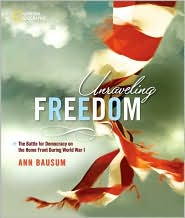
Nonfiction Monday: Unraveling Freedom

Unraveling Freedom: The Battle for Democracy on the Home Front During World War I. Ann Bausum. 2010. November 2010. National Geographic. 96 pages.

In the spring of 1917, as the United States prepared to declare war on Germany and enter the fight that would become known as World War I, perhaps as many as a quarter of all Americans had either been born in Germany or had descended from Germans. 

If you can enjoy a book about war, then I can definitely say that I enjoyed this one. The focus? On America's homefront during World War I. Bausum explores how individual freedoms--rights--were "unraveled" for the sake of creating a safer (better) America. With the war, differences--any differences--could make you a suspect--at least to your neighbors if not the government. Many things were now seen as being un-American. It went beyond suspecting those of German ancestry. It went beyond suspecting European immigrants.

Bausum could have easily kept the focus on one American war. Instead, she chooses to look at the pattern of how wars have a way of "unraveling" freedom and democracy. How fighting for those principles we love, often means compromising those freedoms--at least during wartime. She specifically makes a connection between the sinking of the Lusitania and World War I with the terrorist attacks of 9/11 and the Afghanistan/Iraq wars.

I found the book fascinating. The section on the Lusitania was heartbreaking, for example. If you're looking for a quick, compelling read, then I'd definitely recommend this one! I loved so many things about it--the layout, style, and format. It's just a beautifully detailed book. The use of color, space, photographs and other images and illustrations wowed me; everything just works well.

The back matter includes a guide to wartime presidents, a timeline, notes and acknowledgments, bibliography, resource guide, citations, index, and illustration credits. 
 

© Becky Laney of Becky's Book Reviews
Saturday, November 20, 2010

The Haunting of Charles Dickens (MG)

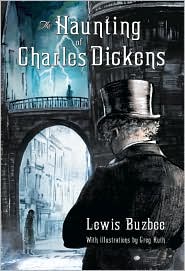
The Haunting of Charles Dickens. Lewis Buzbee. With illustrations by Greg Ruth. 2010. October 2010. Feiwel & Friends. 368 pages.

London. Mid-summer night nearly upon us. Meg Pickel stood, as she had every night for six months now, at the edge of her family's roof-garden, and stared into the City, towards the massive black dome of St. Paul's Cathedral.

Meg, our heroine, is searching for her missing brother, Orion, while Mr. Charles Dickens, our heroine's godfather, is "searching" for his next novel. Can they succeed if they work together? Read and see for yourself in The Haunting of Charles Dickens by Lewis Buzbee.

I really enjoyed reading Steinbeck's Ghost. So I was excited to see Lewis Buzbee's next novel. While Steinbeck's Ghost had a modern day hero "discovering" Steinbeck through his works, The Haunting of Charles Dickens goes beyond that. Meg knows Charles Dickens. Or she knows certain aspects of him at least. He is more than an author she loves and adores. He is her friend. Readers "meet" Charles Dickens--as envisioned by Lewis Buzbee. (I'm not convinced Buzbee's Dickens resembles the actual Charles Dickens, but that's another story. Readers meet a kid-friendly Dickens minus some of his flaws.) It's a book about social injustices.
"We're all haunted, my friends," Mr. Dickens practically sang. "By what we forget. Now that we are un-forgetting, we must cease to be haunted. We must act...We must find Orion, Campion," he said. "You and Julia and myself, and Meg--Meg most of all--we must find Orion!"
Her father stood awkwardly and moved away from Mr. Dickens, his back to him. Aunt Julia leaned forward, suspended. Mr. Dickens waited. Her father turned.
"Charles, don't be so melodramatic. This isn't one of your novels."
"Not yet it isn't!" (83)
To call this head-dress a hat would be a gross injustice to all hats. What the lady wore on her head seemed quite undecided; it could not choose whether it wanted to be a very small piece of architecture or a rather large piece of French pastry. It was a head-dress, Meg thought, of considerable ambition. Along with its ambition, and its height--which matched its ambition--were the golden ornaments that hung about it, hiding here and there in the massive structure like sparrows in a hedge. (182)
I thought there were times when the writing worked well--Buzbee's descriptions were a nice touch. But it's not a perfect novel. There were times the writing seemed forced--like it was trying too hard, if that makes sense. (I'm not sure the Beatles references exactly fit.) But. I enjoyed reading this imagined behind-the-scenes story of Our Mutual Friend. And I enjoyed the illustrations. So while I didn't love, love, love it, I did like it.


© Becky Laney of Becky's Book Reviews
Friday, October 29, 2010

The Memory Bank (MG)

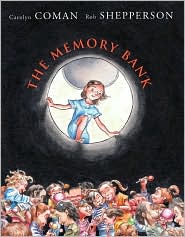
The Memory Bank. Carolyn Coman. Illustrations by Rob Shepperson. 2010. October 2010. Scholastic. 288 pages.

"Don't forget your whistle!" Hope reminded Honey--every morning of every day. Honey needed that whistle, in case of emergency, in case things went terribly wrong. Hope and Honey Scroggins were the closest of sisters, had been right from the start. Truly, they were lucky to love each other so! Not so lucky when it came to their parents, though. Mr. and Mrs. Scroggins were simply awful people.

The Memory Bank is told through words and pictures. (Though not to the extent that The Invention of Hugo Cabret is.) It reminded me--in a way--of several Lois Lowry novels--The Willoughbys and The Giver. It stars a young girl, Hope, who is doing the best she can to cope with incredibly cruel parents. How cruel? One day they leave Hope's younger sister, Honey, on the side of the road. They tell Hope to forget her. And they mean it. Not a word about Honey is allowed. Hope is an only child now. There is nothing good about Mr. and Mrs. Scroggins. Fortunately--for everyone--they enter into the story very little.

For Hope becomes terribly depressed. She stops living life--and starts dreaming it. It's just too painful to be awake. To live her "new" life. She'll spend most hours of the day and night sleeping. She dreams of her sister mostly. While her parents don't notice--or don't care--someone does notice. The powers that be of The World Wide Memory Bank. (They notice that she's not contributing her quota of memories.) And while the strangers that arrive in her home to arrest her seem intimidating at first, Hope soon realizes that there's hope at last for a better life.

It's an interesting book. The "fight" between the World Wide Memory Bank and the Clean Slate Gang. The connection between memories and dreams. I found it an entertaining read.

© Becky Laney of Becky's Book Reviews
Thursday, September 02, 2010

The Adventures of Nanny Piggins (MG)


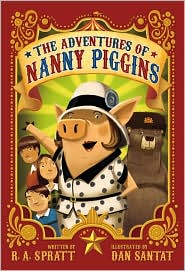
The Adventures of Nanny Piggins. R.A. Spratt. Illustrated by Dan Santat. Little Brown. 239 pages.

Mr. Green desperately needed to find a new nanny for his children. In the four weeks since their last nanny left, he found himself actually having to talk to them, provide them with meals, and pay attention to them himself. And all this just had to stop. He had a job at a law firm helping rich people avoid paying their taxes. He could not be expected to look after his children as well.

Nanny Piggins wasn't always a nanny. She's formerly of the circus. She was the flying pig act. She's used to being shot out of a cannon. So even though she doesn't have any training in looking after children, she figures she can handle these three kids without much trouble. Derrick. Samantha. Michael.

Can a pig make for a good nanny? You be the judge. This children's fantasy is very silly, very over-the-top. I found it an enjoyable read. Believable? Not for a second. The character development just isn't there. But is it good for a few laughs? Yes! Nanny is a fun-loving, chocolate-loving, pie-baking wonder. Each chapter leads to a new adventure. And the adventures seem to get more extreme as the novel progresses!

If you enjoyed Lois Lowry's The Willoughbys, then you'll probably enjoy this one.


© Becky Laney of Becky's Book Reviews
Wednesday, July 28, 2010

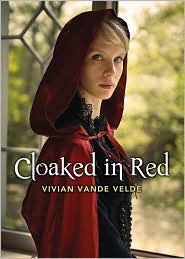
Cloaked in Red (MG)


Cloaked in Red. Vivian Vande Velde. 2010. October 2010. Marshall Cavendish. 128 pages.

From the author's note: Everyone knows the story of Little Red Riding Hood, the girl with the unfortunate name and the inability to tell the difference between her grandmother and a member of a different species.
The question is: Why do we all know it?
If you look at "Little Red Riding Hood," it's a perfect example of the exact opposite of a good story.


I loved this one. I did. I just LOVED it. Vivian Vande Velde gives readers EIGHT different "Little Red Riding Hood" stories. Each supposed to be 'better' than the original. With more heart and substance. And she definitely succeeded in my opinion. I enjoyed reading these stories. One area in which Vivian Vande Velde excels is in creating great first lines.

The Red Cloak: Once upon a time, after fashion was discovered but before people had makeovers on TV, there was a young girl named Meg.

The Red Riding Hood Doll: Once upon a time, before department stores and designer labels, there was a young seamstress named Georgette.

Little Red Riding Hood's Family: Once upon a time, long after people had found out that their families could sometimes be an embarrassment, but before there were advice columnists you could complain to, there was a girl named Roselle.

Granny and the Wolf: Once upon a time, before online dating services, there was a granny who had an unwelcome suitor.

Deems the Wood Gatherer: Once upon a time, before eyeglasses were invented, there was a nearsighted but good-hearted man named Deems.

Why Willy and His Brothers Won't Ever Amount to Anything: Once upon a time, after books were invented but before TV and movies, there was a girl named Isolda Adeline Genevieve Trenthausen.

The Little Red Headache: Once upon a time, before superhighways and hotel chains, a wolf was journeying through the woods.

Little Red Riding Hood's Little Red Riding Hood: Once upon a time, before malls, boutiques, or online clothing catalogs, there was a fairy godmother who was having trouble finding something to wear to the naming-day ceremony for her goddaughter.

The focus shifts in each story. Sometimes focusing on the human characters: the young girl, the grandmother, the woodcutter; other times focusing on the red riding hood (cloak) or the wolf. Many stories do have a twist--as you'd expect in a collection of fairy tale retellings.

© Becky Laney of Becky's Book Reviews
Monday, July 26, 2010

Nonfiction Monday: Sugar Changed the World


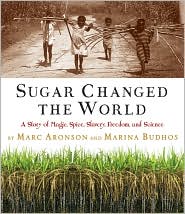
Sugar Changed the World: A Story of Magic, Spice, Slavery, Freedom and Science. Marc Aronson and Marina Budhos. 2010. November 2010. Houghton Mifflin Harcourt. 176 pages.

It was a typically hot, dry day in Jerusalem.

Before reading this book, I had not given much thought to the history of sugar. I had not made the connection between sugar and some of the cruel injustices of the world. I speak of the connection between sugar and slavery.
"Sugar created a hunger, a need, which swept from one corner of the world to another, bringing the most terrible misery and destruction, but then, too, the most inspiring ideas of liberty.
Sugar changed the world." (8)
The book is divided into four sections: "From Magic to Spice," "Hell," "Freedom," and "Back to Our Stories: New Workers, New Sugar." The book spans the centuries and explores many different cultures and societies.

I found the book rich in detail. I would definitely recommend this one.

© Becky Laney of Becky's Book Reviews