Showing posts with label family. Show all posts

Tuesday, November 11, 2025

115. The Teacher of Nomad Land


115. The Teacher of Nomad Land. Daniel Nayeri. 2025. 192 pages. [Source: Library] [4 stars, historical fiction, world war II, family]

First sentence: Baba was a teacher. Dead now. Babak sits in the courtyard of their house cradling the slab of stone that will mark his grave beside Mama, already dead. He is thirteen. Sana is eight, standing behind him. She says, "That was our last parent."

Premise/plot: The Teacher of Nomad Land is historical fiction set in Iran--1941 to be precise--in Iran. Long story short, Babak is determined that he and his sister, Sana, will survive--someway, somehow--and that they'll stick together no matter what. But how are two kids on their own to survive? Babak thinks he might like to be a teacher like his dad--but will teaching others to read and write--or to speak another language be valued enough that others will give them food and protection? Maybe. Maybe not. Their lives are complicated a bit when they join with a Jewish orphan (Ben) who is being chased by a lone Nazi, Vulf. Soon all three are being pursued...

My thoughts: The Teacher of Nomad Land isn't so much a book you enjoy-enjoy as it is a book you experience. My experience was complicated by the fact that I had to check it out several times and wait on holds to start it up again. I think this book is best experience over two to three sittings. But I would definitely recommend this one!

Quotes:
Stories emerge everywhere like flowers from a grave

Everywhere, Babak can see the need for a teacher, and in himself the desire to be one. But he doesn't know what to say. What should he say to a kid committed to being this unpleasant? What is there to say that is true all the time?

Life if full of such lessons, and with so few fathers to teach them.


© 2025 Becky Laney of Becky's Book Reviews

Tuesday, March 04, 2025

22. The Secret of Honeycake


22. The Secret of Honeycake. Kimberly Newton Fusco. 2025. 368 pages. [Source: Library] [j historical fiction, j fiction] [5 stars]

First sentence: One thing you don't know about me yet is I am very quiet.

My thoughts (preview): I LOVE, LOVE, LOVE, LOVE, LOVE, LOVE, LOVE this book. Is it my favorite children's book of 2025 so far???? YES. 

Premise/plot: Bronte and Hurricane (our heroine) are orphans. Their mother has died of tuberculosis and it seems Bronte is following in her mother's footsteps. She has also become ill enough to need to be sent away to a resting hospital for treatment. Hurricane is miserably unhappy because she's being collected by a great aunt (Aunt Claire)--a total stranger, and her servant, Mr. Keats. Those are the bare-bone basics setting up this historical coming of age novel...

My thoughts: I absolutely loved this one. I did. I loved the writing--the narrative style. I loved the characters. Hurricane's inner voice was one I really enjoyed. I liked seeing her come of age and learn to speak up for herself. I loved the relationships. I loved how nothing was instant. It isn't like she moves to a strange house, with strange relatives, in a strange city and wakes up bright and cheerful and ready to go the next day. I like the 'slow thawing' in terms of relationship building. I liked the focus on friendship--with people and animals. I liked seeing how Aunt Claire has her own 'coming of age' journey. I ADORED Mr. Keats. He was easily my favorite part? Maybe. Mostly. I absolutely loved how this 'found family' came to be.


© 2025 Becky Laney of Becky's Book Reviews

Monday, January 06, 2025

2. We Are Wolves


2.  We Are Wolves. Katrina Nannestad. 2020. 320 pages. [Source: Library] [historical fiction, mg historical fiction, world at war, 4 stars]

First sentence: 'Hitler is a toad!'

Premise/plot: We Are Wolves is set in Germany [or is it East Prussia????] during the last year[s] of the second world war. Liesl Wolf is the oldest child and her mother makes her promise to take care of her younger brother, Otto, and younger sister, Mia, no matter what. No matter the cost, they must, must, must stay together. While she yearns for the war to be over, at what cost to the German people will it be over. The end of the war may just bring ever increasing danger. 

Most of the novel is Liesl relatively "on her own" taking care of her siblings--no matter the cost. There are other children--some German, some not--also living a "wild" life as they are trying to survive day by day. It is a dangerous landscape--dangers from soldiers, dangers from other children, dangers from the elements or human sickness and disease. 

My thoughts: We Are Wolves is an almost for me. I'll clarify: it is an almost love for me. I have read previous books by the author that I loved more. The book was compelling enough. It kept me turning pages. I was invested in the characters and the story. I do think in some ways that the book doesn't do full justice to the "Wolfskinder." The author wrote that she wanted to keep it kid-friendly and on the lighter side so she didn't deep dive into the darker horrors and terrors of [young] children left to tend to themselves with very few resources [if any] in a harsh environment on every level. I get that. I do. But at times the rosiness kept it from fully feeling authentic. The tied-with-a-bow ending felt a little too good to be true. Though, of course, I was hoping that everything would work out.


© 2025 Becky Laney of Becky's Book Reviews

Tuesday, December 10, 2024

100. Let It Glow

Let It Glow. Marissa Meyer and Joanne Levy. 2024. 292 pages. [Source: Library] [mg fiction, winter holidays, 3 stars, friendship, family]

First sentence: "You're getting to be such a pro with those chop-sticks," my grandmother said. 

Premise/plot; Aviva and Holly are identical twins [both adopted] who have never met....until one day at a retirement/assisted living center. Aviva's grandmother (Bubbe) and Holly's grandfather (Gramps) are [or soon will be] residents there. The senior center is having a "Christmas pageant." Aviva is excited to participate though not sure if she'll feel comfortable being the only Jewish kid participating. Holly has no intentions of participating--though behind the scenes work might not be horrible. But when these two meet, they know what has to be done: a hair cut and the old switcheroo. Holly will learn all about Hanukkah from Aviva's family and Aviva will learn all about Christmas from Holly's family. The problem? Well, Aviva has spent almost half the book firmly criticizing her family for NOT being Jewish enough, for never celebrating Hanukkah, for never observing anything at all. When the family finally concedes and says YES, YES, YES we will do that this year, Aviva jumps ship to go celebrate Christmas. The logic is missing. Aviva goes from being highly critical of all things Christmas--she's OFFENDED by a plate of Christmas cookies, for example...to jumping at the opportunity to celebrate Christmas. It also doesn't make sense that Holly would abandon her mom and Gramps when he is not in the best of health. 

My thoughts: As an adult reader, I am overthinking most of the plot of this one. It just seems to be lacking in logic. I wish the twins could have gotten to know each other without switching places. The song the girls write may pass as good fun for younger readers, but, not necessarily for me. 

I liked this one well enough. I think the "flaws" that I see, the intended audience probably wouldn't think twice about.


© 2024 Becky Laney of Becky's Book Reviews

Tuesday, September 10, 2024

68. Life As We Knew It

68. Life As We Knew It. Susan Beth Pfeffer. 2006. 337 pages. [Source: Library] [MG Fiction, YA Fiction] [5 stars]

First sentence: Lisa is pregnant.

Premise/plot: As the world is ending--or seeming to--Miranda, our heroine, keeps readers up to speed with her private journal. It starts several days--perhaps a week?--before an asteroid hits the moon. After the asteroid hits the moon, things change drastically, dramatically, and perhaps permanently. Can the human race survive? Will Miranda and her family? 

My thoughts: This novel is bleakity-bleak. However, it is not as bleak as it could be, or perhaps should be. But if it was more bleak would it have any readers reading and recommending it? It isn't as bleak as it could be because it isn't always realistic. One glaring instance is the magical well water that Miranda and her family rely on for months, long months without any electricity whatsoever. Or generators. Wells depend on electricity. What is sad or perhaps ironic is that one person in her family makes the comment how lucky they are to be on well water since the town's water supply depends on electricity and many are without water. Chances are they depend on electricity in different ways.

Even though some of the scenarios are unrealistic--each reader probably could point out one way that sticks out to him/her--the novel does a great job with its characters. This one is without a doubt a disaster/survival novel. It is premise-driven. But it is also very much about family dynamics. The focus is narrow--very narrow. The immediate family of Miranda. But just because there are few characters doesn't mean it isn't great at developing those characters. And it's rare, when you think about it, for a middle grade novel to focus ON family instead of friends and classmates. 

I have reviewed this one so many times because this is one that I keep rereading. 

My favorite quotes:

“Sometimes when Mom is getting ready to write a book she says she doesn’t know where to start, that the ending is so clear to her that the beginning doesn’t seem important anymore. I feel that way now only I don’t know what the ending is, not even what the ending is tonight” (16).

“For a moment I thought about all the people throughout history who saw Halley’s Comet and didn’t know what it was, just that it was there and frightening and awe inspiring. For the briefest flick of a second, I could have been a 16 year old in the Middle Ages looking up at the sky, marveling at its mysteries, or an Aztec or an Apache. For that tiny instant, I was every 16 year old in history, not knowing what the skies foretold about my future.” (18)

“And then it hit. Even though we knew it was going to, we were still shocked when the asteroid actually made contact with the moon. With our moon. At that second, I think we all realized that it was Our Moon and if it was attacked, then we were attacked.” (18-19)
“What about desserts?” I asked. “If the world comes to an end, I’m going to want cookies.” “We’re all going to want cookies if the world comes to an end,” Mrs. Nesbitt agreed. “And chips and pretzels. If the world is coming to an end, why should I care about my blood pressure?” “Okay, we’ll die fat,” Mom said. “Grab what you can grab and ram it into your wagons. But remember if we actually need this stuff, we’re going to be a lot more grateful for a can of soup than for a box of stale cookies.” “Speak for yourself,” Mrs. Nesbitt said. (34)
 “I guess I always felt even if the world came to an end, McDonald’s would still be open.” (46)
“Lately I’ve been trying not to know what’s going on. At least that’s the excuse I’ve been giving myself for not caring about all the stuff that’s happening outside of my little section of Pennsylvania. Who cares about earthquakes in India or Peru or even Alaska?
Okay that’s not fair. I know who cares. Matt cares and Mom cares and if there were any baseball involved, Jonny would care, too. Knowing Dad, he cares. Mrs. Nesbitt, too.
I’m the one not caring. I’m the one pretending the earth isn’t shattering all around me because I don’t want it to be. I don’t want to know there was an earthquake in Missouri. I don’t want to know the Midwest can die, also, that what’s going on isn’t just tides and tsunamis. I don’t want to have anything more to be afraid of.
I didn’t start this diary for it to be a record of death.” (70-71)
“We have clean sheets to sleep on, a clean house, clean clothes, clean dishes. We spent the evening laughing. It wasn’t 90 degrees in the house when we went to bed. We weren’t hungry. We’re not worried about Dad. I know what it feels like to be kissed by a boy. If I could, I would relive this day over and over. I can’t imagine a more perfect one.” (95-96)
“I can’t decide which is worse, no electricity or unreliable electricity. I wonder if I’ll ever have to decide which is worse, life as we’re living or no life at all.” (119)
“Here’s the funny thing about the world coming to an end. Once it gets going, it doesn’t seem to stop.” (120)
“I told Mom I was doing history (she never would have believed me if I said math) and stayed in bed all morning.” (191)

“I know I’m going to have to be strong for the next couple of weeks. No more whining. No more picking fights. I’ll have to do whatever Mom asks me and not protest and not complain. I know I can do it. But for that one moment I felt so weak, so helpless. I felt nothing but fear and despair and the most awful need to be anyplace else. I told myself it was hunger, but I knew that was a lie.
As long as Mom was all right, I could fool myself into thinking we’d all be all right.” (206)
“It’s funny how sorry I feel for Jon these days. I’m 2 1/2 years older than him and I feel like got those 2 1/2 years to go to school and swim and have friends and he got cheated out of them. And maybe he’ll live 2 1/2 years longer than me, or 20 years or 50, but he’ll still never have those 2 1/2 years of normal life.

Every day when I go to sleep I think what a jerk I was to have felt sorry for myself the day before. My Wednesdays are worse than my Tuesdays, my Tuesdays way worse than my Tuesday of a week before. Which means every tomorrow is going to be worse than every today. Why feel sorry for myself today when tomorrow’s bound to be worse?
It’s a hell of a philosophy, but it’s all I’ve got.” (275)


“But I hope when I get closer to death, however old I might be, that I can face it with courage and good sense the way Mrs. Nesbitt does.” (234)

“A while ago Jonny asked me why I was still keeping a journal, who I was writing it for. I’ve asked myself that a lot, especially in the really bad times.
Sometimes I’ve thought I was keeping it for people 200 years from now, so they can see what our lives were like.
Sometimes I’ve thought I’m keeping it for that day when people no longer exist but butterflies can read.
But today, when I am 17 and warm and well fed, I’m keeping this journal for myself so I can always remember life as we knew it, life as we know it, for a time when I am no longer in the sunroom.” (337)


© 2024 Becky Laney of Becky's Book Reviews

Friday, April 19, 2024

43. The Mystery of Locked Rooms


The Mystery of Locked Rooms. Lindsay Currie. 2024. 256 pages. [Source: Library] [Middle grade realistic fiction]

First sentence: "Angle it the other way!" West screeches, holding his mirror up in the air. Sweat beads on his forehead, and his eyes are wild with excitement. We're going to beat the clock this time. We have to. "Toward the door!"

Premise/plot: Sarah Greene and her friends West and Hannah love, love, love, love, love to do escape rooms. "The Deltas" find it super-thrilling to work together to beat the most challenging of escape rooms. However, their attention turns slightly away from "escape rooms" to an old abandoned fun house built in the 1950s. It is rumored that this never-opened-to-the-public fun house contains hidden treasure. Sarah is desperate for treasure to save her family. (Of course she is). Working together, these three ignore all the warnings and no trespassing signs to break into the fun house and find the treasure. What they find is essentially a series of escape rooms. If they find their way out of the house, will there be treasure in their hands?

My thoughts: I finished this one by sheer will power. I want to be very clear that this is my subjective opinion. I personally could not suspend my disbelief. And that is what this book depends on to thrive, to succeed. Readers need to believe wholeheartedly in this adventure: that a seventy-year old abandoned house--a fun house--is no worse for wear and ready to entertain those who love challenging puzzles. One thing that personally annoyed me is how personal and omniscient the messages to the three children are. This is never explained how the house seems to know everything--you'd think that a clue/message hidden in a house long, long, long abandoned would not be omniscient to know if it was the first, second, third, etc. choice of the kids. 

The fun house itself does not make sense. It seems that it wouldn't be efficient for multiple people to visit. For example, if you have to break down a wall to reveal a secret room (via trapeze) that doesn't seem like it would be cost-efficient, if you have to re-set up that little trick every time someone comes. 

And I can't forget for one second that escape rooms did not exist in the 1950s. The idea that sixteen escape rooms have been sitting abandoned with traps ready to spring for seventy plus years is too much for me personally. 

I also found the ending disappointing. 

 Other readers probably won't overthink the plot mechanics. I think the book does offer strengths--the three characters are developed. I like the give and take of their relationship(s). 


© 2024 Becky Laney of Becky's Book Reviews

Tuesday, February 20, 2024

25. Heroes


Heroes. Alan Gratz. 2024. 272 pages. [Source: Library]

First sentence: "It's an attack!" Stanley cried. "Enemy airplanes--dozens of them. Coming in low over the water!" 

Premise/plot: Frank and Stanley are best friends living on [one of the islands] of Hawaii in December 1941. When the novel opens, these two are bonding over comic book superheroes. In fact, these two want to write and illustrate their own comic book series. So many ideas. So much potential. But that near-perfect day is soured when bullies enter the scene. Stanley stands up to the bullies, and Frank, well, Frank is too scared to stand up for what's right and just. The next day, December 7, will be a big day. Frank must find a way to repair his relationship with Stanley. The two will be going on a tour of a battleship. But Frank's confession of a deep, dark secret takes second place to the drama-trauma of the Japanese attack on Pearl Harbor. Can Frank and Stanley be heroes when it counts the most? 

My thoughts: I LOVED, LOVED, LOVED, LOVED, LOVED, LOVED, LOVED, LOVED, crazy-loved this historical novel for children and middle grade. Definitely my best read of the year--granted it is February. I loved Frank. I loved Stanley. I loved all the talk of superheroes and origin stories and comic books. I loved the creativity. I loved the HEART and substance of this one. I thought the book was great at SHOWING and not telling. Of course, that is my perspective. I loved the narrative. The writing was outstanding.

 I already want to reread this one.

© 2024 Becky Laney of Becky's Book Reviews

Thursday, February 15, 2024

22. Mrs. Quinn's Rise to Fame


Mrs. Quinn's Rise To Fame. Olivia Ford. 2024. 384 pages. [Source: Library]

First sentence: It was a December night, the sort which usually makes being inside feel wonderfully cozy, but tonight it didn't. 

Premise/plot: Mrs. Quinn's Rise to Fame is a "coming-of-old-age" story. (To be clear, "coming of old age" is on the publisher description of the book. I didn't come up with the phrase). Jenny Quinn loves, loves, loves, LOVES to bake. But as much as baking has saved her--in a way--she can't help feeling a little out of sorts and empty. She decides somewhat impulsively that it's time to do something "risky," and apply to a television show--Britain Bakes. She keeps her application and audition secret from her husband, Bernard. The two have been married almost sixty years, but, there are a few things he doesn't know about her. And it is one very big secret that is eating away at her one bite at a time. 

My thoughts: I mostly enjoy Great British Bake-Off. I don't always love the un-funny, often crude jokes. Some of the hosts have been absolutely awful. But the contestants and the baking are very enjoyable to follow. I also LOVE, LOVE, LOVE, LOVE Call the Midwife. Mrs. Quinn's Rise to Fame was a good fit for me. 


© 2024 Becky Laney of Becky's Book Reviews

Sunday, January 21, 2024

8. Light and Air


Light and Air. Mindy Nichols Wendell. 2024. [January] 218 pages. [Source: Library] [J Historical; MG Historical; 1930s; tuberculosis; coming of age]

First sentence: The doors of the small white schoolhouse burst open. Children spilled out into the golden afternoon like bees whose hive had been disturbed.

Premise/plot: Hallelujah Grace Newton (aka "Glory") struggles after tuberculosis tears their family apart. Her mom has a life-threatening active case of tuberculosis (they were clueless until she started coughing up blood). Her and her dad both test positive for the disease, but both have clear lungs and are deemed "safe" to go about their lives. But how can you go on with your life when everyone knows you have TB? when you miss your mother so much you actually ache? when your always-distant father seems a million miles away instead of a hundred? Halle risks everything to go and see her mother...even her own life....

My thoughts: This historical coming of age novel is set in 1935/1936 in New York. Most of the book is set at a sanitarium--a special hospital where tuberculosis patients received special care and attention. 

This was a quick read. I enjoyed it. Liked meeting the cast of characters. There was plenty of heart to be found. Halle definitely ached: she missed her mother whose life was in danger and her father who was seemingly choosing to be absent literally and emotionally. This one is a little heavy. (I'm not sure how I would have handled this one as a kid. If I would have been too anxious about the characters--with good reason--or if I would have had to "put it in the freezer."


© 2024 Becky Laney of Becky's Book Reviews

Monday, October 09, 2023

170. Farther than the Moon


Farther than the Moon. Lindsay Lackey. 2023. [September] 336 pages. [Source: Library] [MG Fiction, Realistic Fiction]

First sentence: The moon hovered above them, a silver-white orb in the black Colorado sky. Its light illuminated the treetops on the mountainside behind the house and washed the two boys' small faces in a pale glow.

 Premise/plot: Houston Stewart loves, loves, loves, loves his brother, Robbie. The two dream of being astronauts. But as things are, Robbie is unlikely to get to see his dream come true. He has cerebral palsy is wheelchair bound and is nonverbal. Like it or not, there are limitations to what he can physically do. That doesn't stop the boys from dreaming and scheming together. The book follows Houston's adventures and misadventures at JARP, Junior Astronaut Recruitment Program, a camp. His brother, of course, always wanted to go too. But now they'll be separated for weeks--and it will be hard for both. 

My thoughts: This is a coming-of-age novel that celebrates FAMILY and LIFE. It doesn't shy away from harder topics. But it isn't overly melodramatic. I enjoyed getting to know all the characters and spending time with them.  


© 2023 Becky Laney of Becky's Book Reviews

Thursday, August 17, 2023

144. Thee, Hannah!


Thee, Hannah! Marguerite de Angeli. 1940. 98 pages. [Source: Library] [children's classic; j fiction]

First sentence: Hannah stopped talking for a moment to listen to the night watch cry out the time. She heard the cry again, going on down the block, "Nine o'clock," and went on talking. 

My thoughts, part one: Thee, Hannah may have the dimensions of a picture book, but it is not a picture book. It is not an early chapter book. Yes, it has illustrations--occasionally--but consider it more a novel in a very odd format.

Premise/plot: Hannah, our heroine, is a Quaker. Hannah spends most of the novel feeling out of sorts about that. Why can't she dress like others? Why can't she talk like others? Why can't she be more like others? She isn't necessarily questioning faith--just how that faith is lived out. And not questioning in a twentieth-century or twenty-first century way. Hannah is not deconstructing. She's just wanting to wear a different kind of bonnet, a bonnet more like her friends wear. She dreams about owning a red dress, for example. Or having a sash like her friend has. The book doesn't have much of a plot--not really. It's just Hannah being Hannah day after day, week after week, month after month. It does offer a glimpse of the Quaker way of life in the nineteenth century. But is that a plot? Maybe. Maybe not. The most eventful event of the novel is when Hannah helps a runaway slave. (Her family--like many Quakers--were part of the underground railroad). 

My thoughts: I like historical fiction, generally. I like classics, mostly. I wasn't expecting this to be so text-heavy because of the [deceptive] picture book format. Maybe this was not an unusual format or layout in 1940. The novel is definitely a quiet, simple book. Definitely character driven and not plot-driven. Will the novel be easy to sell to children in 2023? I doubt it. I think the book could still be enjoyed by readers of various ages, but it will be a special reader that will be the best match. 

I do think that religion and spirituality are rarely tackled in modern writing and publishing. So it was nice that faith was so matter-of-fact in this story.


© 2023 Becky Laney of Becky's Book Reviews

Friday, July 21, 2023

136. The McNifficents


The McNifficents. Amy Makechnie. 2023. 320 pages. [Source: Library] [MG Fiction; Animal Fantasy]

First sentence: IN A LARGE PINK FARMHOUSE at 238 Marigold Lane lives a most unusual nanny: Lord Tennyson, a short, middle-aged gentleman with white whiskers and a royal pedigree. If he could speak, it would be with dignity and a touch of an English accent. If he wore clothing, he imagines he’d wear a suit of gray silk and a striped bow tie. But he does neither because Lord Tennyson is a dog, a miniature schnauzer to be exact, who wears only a blue-and-green collar that has teeth marks in it from when Sweetums was going through a particularly bad biting phase.
Despite his distinguished appearance and pedigree, he was not spending his morning caring for a dignitary’s son or the daughter of the president. Rather, his duty was herding the unruly McNiff children from the old pink farmhouse into the old red farm truck for the first swim of summer vacation. There were six of them: two boys and four girls. As you can imagine, getting all of them to and from the lake was not an easy task.

My thoughts (preview): I fell in love with the book cover. I did. It looked like it would be an awesome book that I would just click with from the start. The premise also sounds awesome: a DOG as a nanny; six naughty children having adventures/misadventures for hundreds of pages. I was disappointed. There is a good possibility it is all on me. I think the timing was off. I tried so many times to read this one and get hooked, get invested. I kept waiting for it to come naturally. For me to be able to read smoothly, naturally, to fall in love with the characters and story. Never happened....for me.

Premise/plot: A SENIOR miniature Schnauzer is a "nanny" for six horribly, naughty children. The McNiffs need Lord Tennyson (the dog) to help teach them how to be loving, caring, decent human beings. They need a lot of help because they are so not there yet. The children couldn't get along if their lives depended on it. There is fussing, fighting, arguing, grudges, revenge, sneakiness. The parents are mostly absent. The dog is the narrator.

My thoughts (conclusion): I really HATED the melodrama of the next-to-last chapter. I realize that he is a senior dog. I realize that dogs die. But to have this melodramatic death scene (turns out to be near-death not actual death), was just CRUEL. I think this nearly losing Lord Tennyson is the climax of their behavior. This is the first glimpse of hope that the kids can unite for something--or someone. But still. 

I *wanted* more than just naughty children. Personally. I do think it was just bad timing on my part. Maybe if I'd read it a few months from now or a year or two from now, it would be the right time and place for me to love this one.


© 2023 Becky Laney of Becky's Book Reviews

Saturday, July 15, 2023

133. The Probability of Everything


The Probability of Everything. Sarah Everett. 2023. [June] 336 pages. [Source: Library] [Middle Grade Fiction]

First sentence: We first noticed the asteroid because my little sister, Lo, kept trying to eat it. It was a Sunday morning in April, and the three of us--me, Mom, and Dad--were sitting at the dining table, discussing a news story Dad was reading on his tablet. 

My thoughts (preview): This book has mostly five and four star reviews on GoodReads. Clearly many people have read it and enjoyed it. BUT. I was not one of those. One of the reasons why I personally did not enjoy this one--not even a little bit--is that it is all switch and bait. In other words, Kemi Carter, the protagonist, is a completely unreliable narrator. Readers can take nothing--absolutely nothing--at face value. I don't like being gaslighted for 80 to 90% of the novel. Some readers may be like WOW the author really fooled us, how clever! Not me. I'm like, where's the book that was promised?!?!

Premise/plot: The framework of the book is that this "book" is a letter written to be found in the future--either by humans who survived the asteroid OR aliens? OR another species that evolves out of the atoms? Something like that. It is written directly to the reader. 

From the prologue, "Dear Reader, If you are reading this, then chances are that our world has ended. I don't know what that makes you? . . . All that matters is that you've found this. All that matters is that you now know we existed."

Kemi Carter loves, loves, loves science and math. She's supposedly, supposedly all about the facts. (Except for when she isn't, apparently).

Most of the novel is her "preparing" for the end of the world by creating a time capsule to be buried before the asteroid strikes earth.

My thoughts (conclusion): Perhaps some readers don't mind being tricked. But other readers may. Or at the very, very least I mind. Every reader has his/her own way of choosing what to read next. They make decisions based on jacket copy, descriptions, book cover, sample excerpt (like from Amazon), or even other reviews. When most--if not all--lead the reader to certain conclusions, it seems tricky to have the actual-actual book be about something completely different. Not only are you not getting what you wanted to read, you're getting something that you may very well NOT want to read. In fact, for those that tend to overthink (hint: me again): perhaps that's why the trickery exists in the first place. To get more people to read your book than otherwise would have because of the subject matter being what it is.

As I said at the start, I am definitely in the minority here. Most people seem to think this one is wonderful, brilliant, clever, etc.


© 2023 Becky Laney of Becky's Book Reviews

Sunday, July 02, 2023

125. Beneath the Wide Silk Sky


Beneath the Wide Silk Sky. Emily Inouye Huey. 2022. [October 18] 336 pages. [Source: Library] [MG Historical Fiction]

First sentence: I jumped as the rat streaked across the edge of the chicken pen.

Premise/plot: Set in Hawaii during the early days of the Second World War. This middle grade coming of age novel opens in early December 1941 in the days leading up to the attack on Pearl Harbor. Sam Sakamoto, our heroine, loves photography. She has big dreams. Big, big dreams that her family doesn't quite support--not because they don't love her or want the best for her. She has an older brother, an older sister, and a father. (The mom died before the novel started). The book is from her perspective...as she witnesses firsthand prejudice, discrimination, racism. Fear + mob mentality is not the best mix. It isn't just coming from the masses, however, it's also coming from higher up--the government itself.

My thoughts: I loved this one. I did. I did NOT at all do it justice. Sam is such a lovely narrator. I loved her voice. I loved seeing the world through her eyes. I loved getting to know her family, her friends, her community better. I loved seeing her life at home and at school. I loved the tension and conflict. It was handled so well. This one is INTENSE yet it never felt--to me at least--melodramatic. There were some hard situations--particularly when it comes to race relations, her sister is dating a white boy--but I had to keep reading.


© 2023 Becky Laney of Becky's Book Reviews

Monday, June 19, 2023

119. Someplace to Call Home


Someplace to Call Home. Sandra Dallas. 2019. 240 pages. [Source: Library] [Middle Grade Historical]

First sentence: The battered old Model T Ford sputtered and stalled. With a sigh, sixteen-year-old Tom Turner guided it to the side of the dirt road. He slid out of the worn seat on the driver's side and stood next to the vehicle, stopping a moment as he heard a hissing sound. He shook his head. "The transmission's bad, and it looks like we blew a tire, too."

Premise/plot: Hallie, Tom, and Benny are orphans traveling the road during the Great Depression and Dust Bowl. When their car breaks down in Kansas, they have no choice but to camp out until they can fix it. The farmer whose land they are on talks with them. It isn't instant friendship or kinship. But he offers Tom a chance, an opportunity. That's what Tom wants--all of them want--opportunities to work, to earn money, to survive. The family soon becomes neighborly. Benny befriends their daughter--both have similar mental/developmental differences. They bring out the best in each other. They bless one another with friendship. Hallie and the mother take turns teaching the children since the school system refuses to educate them because of their disability. Hallie does go to school sometimes. She loves learning and sees it as a great opportunity. Are the children accepted? Not really. Not at first. They are seen as "squatters" and "vagrants" and "thieves." The fact that Tom--who is very skilled mechanically--is taking away a job from an unskilled person is offensive to some. 

The book is set in the 1930s, of course, and in Kansas. 

My thoughts: Ultimately this one is such a feel-good read. I absolutely loved, loved, loved it. I thought everything about it was wonderful. I loved the relationships that developed. I loved the unfolding of the story. I highly recommend this one!


© 2023 Becky Laney of Becky's Book Reviews

Saturday, June 03, 2023

110. Home Away From Home


Home Away From Home. Cynthia Lord. 2023. 224 pages. [Source: Library] [Middle Grade]

First sentence: "GPS says the road is coming up," I announced from the back seat of the rental car.

Premise/plot: Mia visits her Grandma most summers. This summer is slightly different, however. Mia will be staying (by herself) for a month. Her mother (and stepfather/mother's boyfriend) are preparing to sell the house. Mia didn't want to be a part of renovating, packing, etc. There have been changes since last summer. Mia meets a new neighbor, a boy around her own age, Cayman. They share an interest in birds--an eagle's nest (with baby eaglets) is on his property. They love to visit the birds. A visiting bird--a rarely sighted bird for the state of Maine--has been spotted by the pair for several days. Mia can't resist posting pictures and descriptions online at a bird-watching hobby site. But will her posts lead to disaster for the bird(s)?

My thoughts: This is a coming of age story. I loved seeing her relationship with her grandmother and with her new friend. It is a LOT about birds, however. So if bird-watching isn't your thing then perhaps parts of this one may seem a little dull. Still, I think even if you aren't a fan of watching birds for fun (or education), the coming of age aspects still offer something to readers.

I do enjoy Cynthia Lord's novels for the most part. I am glad I read this one.


© 2023 Becky Laney of Becky's Book Reviews

Saturday, April 15, 2023

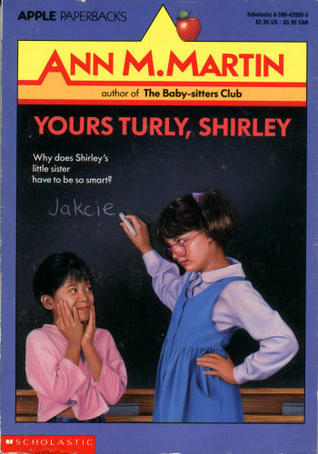
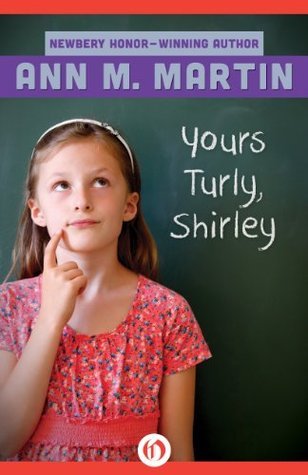
78. Yours Turly, Shirley


Yours Turly, Shirley. Ann M. Martin. 1988. 128 pages. [Source: Library]

First sentence: Bzzzz! Shirley Basini's alarm clock went off and Shirley rolled over, grabbed it, and threw it at the wall. Shirley's clock looked like a baseball and you were supposed to throw it at the wall. That was the only way to turn it off.

Premise/plot: Shirley Basini, our protagonist, has dyslexia and is in fourth grade. She knows her diagnosis. Her parents know. Her teacher(s) know. Everyone knows. But knowing isn't exactly the same as understanding. She's been warned that if she doesn't improve throughout the year, she'll be held back to repeat fourth grade. She knows this from day one. Yours Turly, Shirley, is in part, Shirley's experiences in fourth grade--her ongoing struggle to improve academically and learn to manage/cope with her dyslexia.

The novel is also Shirley's new little sister. The family has decided to adopt a child from Vietnam. At first, they think they'll be receiving/adopting a three year old baby boy. As the date to pick him up from the airport draws closer, however, they learn surprise surprise that it will be an eight year old girl. They decide to rename her Jackie. 


Jackie is super-smart, super-intuitive, super savvy. She starts the school year in first grade, speed runs learning English (and other subjects presumably?). By the middle of the year, they [the powers that be at school] decide to move her to third grade to be with her peers [children her own age]. Jackie loves, loves, loves to read. And the library is her favorite place.

All isn't perfectly, perfect for Jackie, however. The students--even her own big sister--tease her for pronouncing her "r's" as "l's." Granted, her big sister doesn't do it nearly so often as everyone else. But the one time she does it is in front of a lot of people--at a spelling bee. Besides being teased for talking different/weird, she's teased for being "yellow" or "slope eyes." (These words come straight from the book. I'm just mentioning what the book says). Shirley who was halfway to hating her little sister for being smarter and better, now swoops in to save her. (But does Jackie need saving? Maybe. Maybe not. The two girls take a stand together--and speak up loudly about the teasing.) 

Each chapter is a month of the school year. 

Ann M. Martin wrote this during the same time she was writing The Babysitter's Club books. This one is not a series book but a standalone. 

My thoughts: I am conflicted. I am. It is dated. I wasn't in fourth grade in 1988/89. But I was in elementary school. I don't think if I'd read it as a child I would have questioned the representation of those with learning differences (aka dyslexia) OR being Vietnamese-American. I don't know how realistically or authentically either comes across as...now...or perhaps even then. I don't know that there is ever only one "right" way to depict something. Jackie is a gifted, super-smart, people-pleaser. Shirley is a class clown who makes other students laugh and teachers groan. The book is told from Shirley's point of view exclusively. 

I do not have dyslexia. I can't judge if the "skills" and "techniques" being shown in this one were generally helpful or not so much. I use quotes because really the only thing she learns from the resource teacher is that if you love the content of what's in books, you will do anything to keep reading. You will teach yourself the skills needed so that you can find out what happens next. The resource teacher begins by reading aloud book after book after book. She reads aloud a little here or there. Taking on the part of one character in the book and reading that one character's dialogue. Soon, he [the teacher] has her reading books all on her own. She now has a long list of authors whom she loves and adores. She's now eager to read books for fun, to read all the books in series, to keep finding new authors, new series, etc. 

As a reader, I loved all the name-dropping. Even more so since I was in elementary school at this time. These books, these authors, these series...were the ones I myself was reading at the time. So it was a treat to see this aspect of the book.


© 2023 Becky Laney of Becky's Book Reviews

Tuesday, April 04, 2023

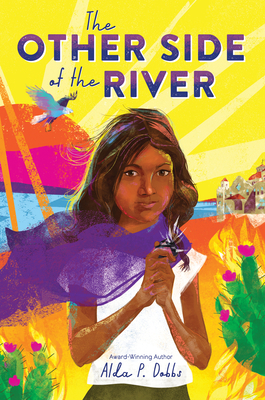
69. The Other Side of the River


The Other Side of the River (Petra Luna #2) Alda P. Dobbs. 2022. [January] 368 pages. [Source: Library]

First sentence: It was early, dark still, when crashing sounds startled me awake. I sat up amid the darkness, tense, ready to run. My heart thrashed inside me. Had I heard a cannon blast? 

Premise/plot: The Other Side of the River is the sequel to Barefoot Dreams of Petra Luna. It picks up right where Barefoot left off. Petra Luna is with her grandmother, younger sister, baby brother, in a refugee camp. She's trying to find work--any kind of work--to help support her family. This book has them moving to San Antonio and trying to establish new lives in America.

My thoughts: I loved, loved, loved the first book. The second book was wonderful as well. These two books seem so seamless--like they belong together to tell a single story. I loved following her story. I loved the setting. It was engaging and thought-provoking. 

© 2023 Becky Laney of Becky's Book Reviews

Thursday, February 16, 2023

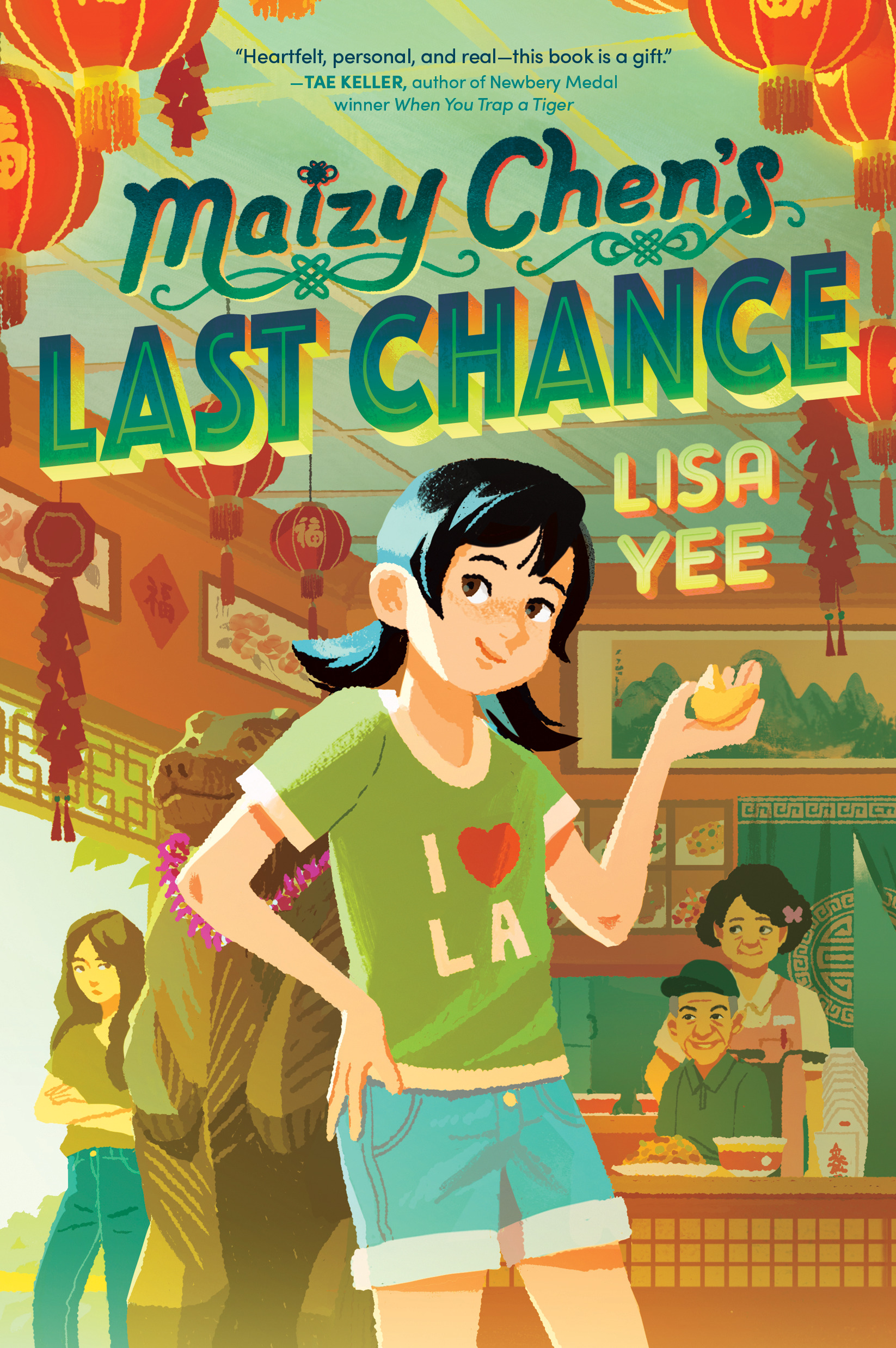
37. Maizy Chen's Last Chance


Maizy Chen's Last Chance. Lisa Yee. 2022. 276 pages. [Source: Library]

First sentence: The pies were fake, but my grandparents didn't know that. Not at first, anyway. My mother had invited them to watch her work on a Tasty Flaky Pie Crust commercial. 

Premise/plot: Maizy Chen and her mom go "home" to Last Chance, Minnesota, to visit her [maternal] grandparents, Opa and Oma. Opa [her grandfather] is in poor health. Though Oma isn't ready to say it out loud, he is dying. They've come to help out, mend fences, etc. This is the first time that Maizy is spending time with her grandparents. And she finds herself loving them and their "Lucky" stories. (Lucky is her second-great-grandfather, I believe. Her grandfather's grandfather.) He is the one who started Golden Palace in Last Chance. The restaurant has been in the family ever since.

Maizy Chen's Last Chance is a coming-of-age story focusing on family, friendship, and larger life lessons. For example, she's hearing about discrimination and prejudice in the Lucky stories of the past. AND ahe's learning first hand about discrimination and prejudice as she walks the streets in town. (Well, as she is encountering the townsfolk. Not everyone, of course, but there are a few rude people who are directly or indirectly hateful.) Race plays heavily in this NEWBERY honor book. 

My thoughts: I loved so many things about this one. I liked Maizy getting to know--really, truly know--her grandparents. Particularly she bonds with her Opa. I love their scenes together. I love all the family scenes really. Though she doesn't always understand all the complexity--the tension--of her family relationships. She also starts making a few friends. I enjoyed her writing the fortunes for the family restaurant. I loved her interest in researching the paper sons. 

There were times, however, I felt it was slightly info-dump-y. I loved so many things about this one. But there were places here and there where I wished it was a little less heavy. (Though the mystery in the middle was a plus.)

Overall, I liked this one.


© 2023 Becky Laney of Becky's Book Reviews

Monday, February 06, 2023

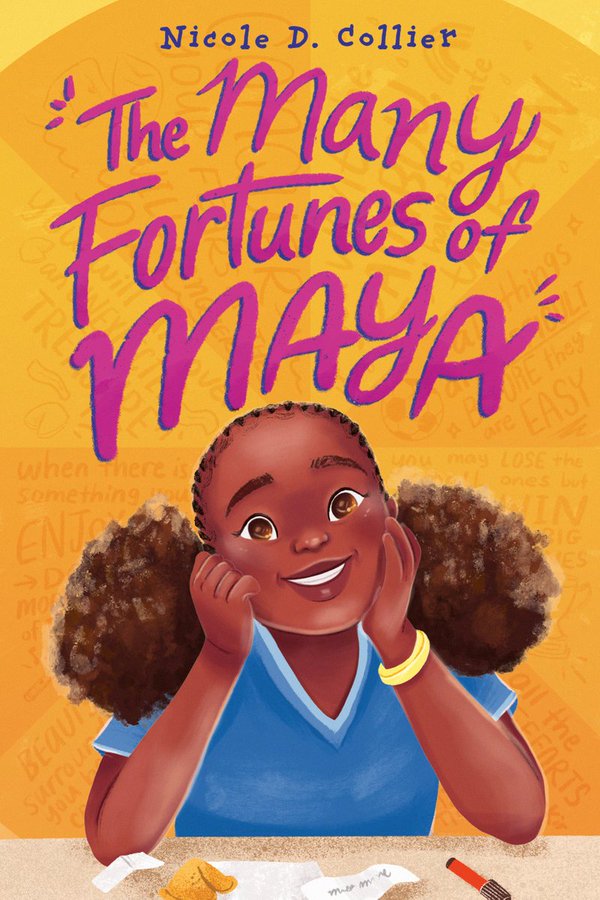
24. The Many Fortunes of Maya


The Many Fortunes of Maya. Nicole D. Collier. 2023. [January] 240 pages. [Source: Library]

First sentence: Even though I've never seen one in person, wood thrushes are my favorite bird of all time. 

Premise/plot: Maya J. Jenkins has a vision of how she wants this summer to go. And it all begins with her winning MVP at the soccer banquet. She'll be a super-start at soccer camp. She'll prove her value and worth to everyone. She'll easily get invited to play on teams. She'll spend time with her closest friends with no friction. Her parents will quit fighting. But no matter how much she envisions this happily-ever-after or best-case-scenario version of events, reality is far, far, far different. And it all starts to fall apart over a few days. Her best friend gets MVP and, I believe, the very next day she learns that her parents will be doing a trial separation for the summer. Fortunately, she has a super-amazing-incredible Uncle to help her out. [Actually, her mother, her father, and her uncle are all really great at helping Maya or "MJ" out.]

This is the summer where Maya will begin to question who she is and what she wants....for example, does she really WANT soccer to be 'her thing'??? Does she want it be a time-consuming obsession??? Or is she merely 'friends' with soccer? What if she thinks about what she wants instead of what her parents want??? What if 'her thing' is music??? [Like her Uncle]

My thoughts: I enjoyed this coming of age middle grade novel. I love the focus on family and friendship. I think there's enough sports that those who seek out sports in their fiction will be satisfied yet for those who avoid sports won't be super-annoyed at all the sports talk. It's a hard balance between the two! I loved the level of characterization. The relationships felt so well done in this one. I particularly loved how she had a good, solid, close relationship with her parents and her uncle. It was great to see adults who clearly love her and value her work together to take care of her. 

I definitely enjoyed this one. 


© 2023 Becky Laney of Becky's Book Reviews