Showing posts with label 1940. Show all posts

Thursday, January 01, 2026

1. The Long Winter (Audiobook)


1. The Long Winter (Little House #6) Laura Ingalls Wilder. 1940. 334 pages. [Source: Library][audiobook, historical fiction, classic]

 First sentence: The mowing machine's whirring sounded cheerfully from the old buffalo wallow south of the claim shanty, where bluestem grass stood thick and tall and Pa was cutting it for hay.

Premise/plot: The Ingalls family--and the whole community/territory--face a brutal, harsh, and terribly long winter full of blizzards. 

This first chapter is called "Make Hay While the Sun Shines" and if it's found within a book called THE LONG WINTER, the reader knows what to expect even if the characters don't. The book opens with Ma and Pa and family getting ready for harvest and winter. Laura is helping out Pa. Mary and Carrie are helping out Ma. Laura is especially pleased that she's old enough (around 14 now) to help Pa and do outdoor chores.

The Ingalls family is living in their claim shanty. This would be the first fall/winter they've been there. And they know it will be tough, but when the first blizzard comes in October, they know that it wouldn't only be tough to survive but impossible to survive if they were to try to stay on their homestead. Fortunately, Pa owns property in town. A place where they can be nice and warm and cozy for the winter. Or so they think.

What no one could know is just how hard, how long, how tough this winter was going to be. Some folks are prepared--the Wilder boys for instance--but most are not. Most are relying on the train making regular stops in town. The trains are essential for stocking the stores of supplies. But when almost every day brings a blizzard--with clear days coming only one at a time and never on a predictable schedule--it soon becomes clear that the trains will not be saving the day. Not til spring. The town's survival, the Ingalls' family survival, is a big if at this point.

Cold. Hunger. Starvation. No supplies. What's not to love?

My thoughts: The Long Winter has always been one of my favorites of the Little House series. I'll admit it tends to make you cold and hungry. But that's not a bad thing, right? I didn't think so. Only two books can trick my mind and body--okay maybe three--into thinking it's cold and hungry. One, of course, is The Long Winter. The other two are by Susan Beth Pfeffer. I think one of the reasons I love The Long Winter is that it introduces Almanzo Wilder onto the scene. True, there was Farmer Boy, but not every reader takes the time to read Farmer Boy. I spent forty plus years avoiding it. I read it earlier this year for the first time. But this Almanzo is a man--a young man it's true--19 years of age. And he's acting "manly" alright when it's time to save the day. I love every scene Almanzo is in. Laura first meets him when she's lost and trying to find her Pa in the slough of hay. Here is the description: "His blue eyes twinkled down at her as if he had known her a long time." Anyway, I love this book.

Is it my favorite and best from the series? Probably. I do love These Happy Golden Years. So those two are my favorite and best. But I really LOVE, LOVE, LOVE this one so much.

ETA: I listened to The Long Winter--a book I've read dozens of times--on audio narrated by Cherry Jones. The audio book is a little over seven hours.


© 2026 Becky Laney of Becky's Book Reviews

Thursday, December 26, 2024

107. The Long Winter

107. The Long Winter (Little House #6) Laura Ingalls Wilder. 1940. 334 pages. [Source: Library]

 First sentence: The mowing machine's whirring sounded cheerfully from the old buffalo wallow south of the claim shanty, where bluestem grass stood thick and tall and Pa was cutting it for hay.

Premise/plot: The Ingalls family--and the whole community/territory--face a brutal, harsh, and terribly long winter full of blizzards. 

This first chapter is called "Make Hay While the Sun Shines" and if it's found within a book called THE LONG WINTER, the reader knows what to expect even if the characters don't. The book opens with Ma and Pa and family getting ready for harvest and winter. Laura is helping out Pa. Mary and Carrie are helping out Ma. Laura is especially pleased that she's old enough (around 14 now) to help Pa and do outdoor chores.

The Ingalls family is living in their claim shanty. This would be the first fall/winter they've been there. And they know it will be tough, but when the first blizzard comes in October, they know that it wouldn't only be tough to survive but impossible to survive if they were to try to stay on their homestead. Fortunately, Pa owns property in town. A place where they can be nice and warm and cozy for the winter. Or so they think.

What no one could know is just how hard, how long, how tough this winter was going to be. Some folks are prepared--the Wilder boys for instance--but most are not. Most are relying on the train making regular stops in town. The trains are essential for stocking the stores of supplies. But when almost every day brings a blizzard--with clear days coming only one at a time and never on a predictable schedule--it soon becomes clear that the trains will not be saving the day. Not til spring. The town's survival, the Ingalls' family survival, is a big if at this point.

Cold. Hunger. Starvation. No supplies. What's not to love?

My thoughts: The Long Winter has always been one of my favorites of the Little House series. I'll admit it tends to make you cold and hungry. But that's not a bad thing, right? I didn't think so. Only two books can trick my mind and body--okay maybe three--into thinking it's cold and hungry. One, of course, is The Long Winter. The other two are by Susan Beth Pfeffer. I think one of the reasons I love The Long Winter is that it introduces Almanzo Wilder onto the scene. True, there was Farmer Boy, but not every reader takes the time to read Farmer Boy. I spent forty plus years avoiding it. I read it earlier this year for the first time. But this Almanzo is a man--a young man it's true--19 years of age. And he's acting "manly" alright when it's time to save the day. I love every scene Almanzo is in. Laura first meets him when she's lost and trying to find her Pa in the slough of hay. Here is the description: "His blue eyes twinkled down at her as if he had known her a long time." Anyway, I love this book.

Is it my favorite and best from the series? Probably. I do love These Happy Golden Years. So those two are my favorite and best. But I really LOVE, LOVE, LOVE this one so much.

© 2024 Becky Laney of Becky's Book Reviews

Tuesday, September 10, 2024

70. Batman The Golden Age, volume 1

Batman The Golden Age, Volume 1. Bill Finger, Gardner F. Fox, Whitney Ellsworth, et al. 2016. 411 pages. [Source: Library] [4 stars]

First sentence: "Well commissioner, anything exciting happening these days?" "No...except this fellow they call the "Bat-Man" puzzles me!"

Premise/plot: Batman The Golden Age is an omnibus of original Batman (and Robin) comics which originally appeared in Detective Comics and Batman comics. The first issue in the omnibus is Detective Comics #27 from May 1939, and the last issue in the omnibus is Detective Comics #45 from November 1940. All comics predate the Second World War as you can see. There are a variety of villainous villains--including Cat Woman and the Joker--but only one sidekick, Robin the BOY WONDER.The comics are formulaic, as you can imagine, and Batman is never to be outwitted or defeated.

My thoughts: I enjoyed this so much more than I thought I would. Now I don't see myself turning into someone who reads comic books--and superhero action comic books at that--regularly. I do think this is more for adults perhaps. (I wonder if kids would seek out Batman comics on their own???) I say that merely because it would be rare indeed for an entire issue--each issue has multiple stories--to not offend someone in someway these days. But there is something  right in the fact that Batman rarely changes. Action with a hefty side of cheese.

 Some of the stories were GREAT, absolutely worth the read. A few weren't so great. Plenty were just meh. Still I'm glad I read this one.

© 2024 Becky Laney of Becky's Book Reviews

Thursday, August 17, 2023

144. Thee, Hannah!


Thee, Hannah! Marguerite de Angeli. 1940. 98 pages. [Source: Library] [children's classic; j fiction]

First sentence: Hannah stopped talking for a moment to listen to the night watch cry out the time. She heard the cry again, going on down the block, "Nine o'clock," and went on talking. 

My thoughts, part one: Thee, Hannah may have the dimensions of a picture book, but it is not a picture book. It is not an early chapter book. Yes, it has illustrations--occasionally--but consider it more a novel in a very odd format.

Premise/plot: Hannah, our heroine, is a Quaker. Hannah spends most of the novel feeling out of sorts about that. Why can't she dress like others? Why can't she talk like others? Why can't she be more like others? She isn't necessarily questioning faith--just how that faith is lived out. And not questioning in a twentieth-century or twenty-first century way. Hannah is not deconstructing. She's just wanting to wear a different kind of bonnet, a bonnet more like her friends wear. She dreams about owning a red dress, for example. Or having a sash like her friend has. The book doesn't have much of a plot--not really. It's just Hannah being Hannah day after day, week after week, month after month. It does offer a glimpse of the Quaker way of life in the nineteenth century. But is that a plot? Maybe. Maybe not. The most eventful event of the novel is when Hannah helps a runaway slave. (Her family--like many Quakers--were part of the underground railroad). 

My thoughts: I like historical fiction, generally. I like classics, mostly. I wasn't expecting this to be so text-heavy because of the [deceptive] picture book format. Maybe this was not an unusual format or layout in 1940. The novel is definitely a quiet, simple book. Definitely character driven and not plot-driven. Will the novel be easy to sell to children in 2023? I doubt it. I think the book could still be enjoyed by readers of various ages, but it will be a special reader that will be the best match. 

I do think that religion and spirituality are rarely tackled in modern writing and publishing. So it was nice that faith was so matter-of-fact in this story.


© 2023 Becky Laney of Becky's Book Reviews
Saturday, April 15, 2023

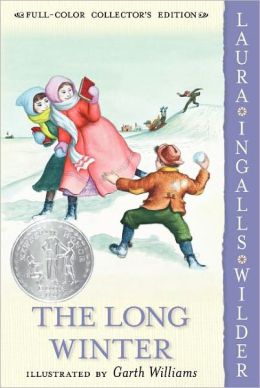
77. The Long Winter


The Long Winter (Little House #6) Laura Ingalls Wilder. 1940. 334 pages. [Source: Library]

First sentence: The mowing machine's whirring sounded cheerfully from the old buffalo wallow south of the claim shanty, where bluestem grass stood thick and tall and Pa was cutting it for hay.

Premise/plot: The Ingalls family--and the whole community/territory--face a brutal, harsh, and terribly long winter full of blizzards. 

This first chapter is called "Make Hay While the Sun Shines" and if it's found within a book called THE LONG WINTER, the reader knows what to expect even if the characters don't. The book opens with Ma and Pa and family getting ready for harvest and winter. Laura is helping out Pa. Mary and Carrie are helping out Ma. Laura is especially pleased that she's old enough (around 14 now) to help Pa and do outdoor chores.

The Ingalls family is living in their claim shanty. This would be the first fall/winter they've been there. And they know it will be tough, but when the first blizzard comes in October, they know that it wouldn't only be tough to survive but impossible to survive if they were to try to stay on their homestead. Fortunately, Pa owns property in town. A place where they can be nice and warm and cozy for the winter. Or so they think.

What no one could know is just how hard, how long, how tough this winter was going to be. Some folks are prepared--the Wilder boys for instance--but most are not. Most are relying on the train making regular stops in town. The trains are essential for stocking the stores of supplies. But when almost every day brings a blizzard--with clear days coming only one at a time and never on a predictable schedule--it soon becomes clear that the trains will not be saving the day. Not til spring. The town's survival, the Ingalls' family survival, is a big if at this point.

Cold. Hunger. Starvation. No supplies. What's not to love?

My thoughts: The Long Winter has always been one of my favorites of the Little House series. I'll admit it tends to make you cold and hungry. But that's not a bad thing, right? I didn't think so. Only two books can trick my mind and body--okay maybe three--into thinking it's cold and hungry. One, of course, is The Long Winter. The other two are by Susan Beth Pfeffer. I think one of the reasons I love The Long Winter is that it introduces Almanzo Wilder onto the scene. True, there was Farmer Boy, but not every reader takes the time to read Farmer Boy. I spent forty plus years avoiding it. I read it earlier this year for the first time. But this Almanzo is a man--a young man it's true--19 years of age. And he's acting "manly" alright when it's time to save the day. I love every scene Almanzo is in. Laura first meets him when she's lost and trying to find her Pa in the slough of hay. Here is the description: "His blue eyes twinkled down at her as if he had known her a long time." Anyway, I love this book.

Is it my favorite and best from the series? Probably. I do love These Happy Golden Years. So those two are my favorite and best. But I really LOVE, LOVE, LOVE this one so much.

© 2023 Becky Laney of Becky's Book Reviews
Thursday, April 13, 2023

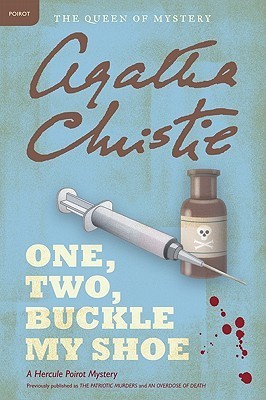
74. One, Two, Buckle My Shoe


One, Two, Buckle My Shoe. Agatha Christie. 1940. 224 pages. [Source: Library]

First sentence: Mr. Morley was not in the best of tempers at breakfast.

Premise/plot: Hercule Poirot goes to the dentist. Several hours later, he learns that the dentist--his dentist--has been found dead. Was it suicide? Was it murder? Can Hercule Poirot find out who hated this dentist enough to murder him--if it was murder at all? Why was he killed? Or why did he kill himself? Poirot tracks down who had motive and opportunity to commit this crime...

My thoughts: I didn't like this Agatha Christie novel at all. I don't know that I'd go so far as to say it's my least favorite Christie novel of all time. But it's probably bottom five material. I just didn't care for how this one unfolded. I don't mean I didn't care for how it resolved or how all was resolved. I meant the way that the suspects entered the story, the way the clues unfolded, it was just odd. Odd can be a good thing in a mystery. (But not always). 

Have you read this one? What did you think?


© 2023 Becky Laney of Becky's Book Reviews

Tuesday, April 11, 2023

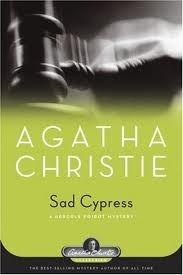
72. Sad Cypress


Sad Cypress. Agatha Christie. (Hercule Poirot #22). 1940. 256 pages. [Source: Library]

First sentence: "Elinor Katharine Carlisle. You stand charged upon this indictment with the murder of Mary Gerrard upon the 27th of July last. Are you guilty or not guilty?"

Premise/plot: Harriet Vane had Lord Peter Wimsey, and Elinor Katharine Carlisle has Peter Lord. Though her hero is not an amateur detective, but a country doctor. Still, Peter Lord, who fell in love with Elinor at first sight, has the wisdom to seek the best of the best to clear her name: Hercule Poirot. He wants Poirot to find evidence that will acquit her of murder. Is love blinding him? Is the woman he loves guilty of murder? It seems that she had opportunity to kill her aunt (supposedly out of greed) and Mary (supposedly out of jealousy). But Lord and Poirot doubt the supposed motives. They see other possibilities.  

My thoughts: I loved this one. I just LOVED it. I loved the characterization! I loved the story! While Peter Lord is no Lord Peter, I did enjoy him very much! I was quite surprised by how pleased I was that Elinor had someone on her side. Not that Elinor was completely lovable. She was flawed--very flawed. But still. By the end, I was seeing her through Peter Lord's eyes, I was seeing her with love.

"One does not practice detection with a textbook! One uses one's natural intelligence." (196)
"One must understand with the cells of one's brain before one uses one's eyes."(196)
"One always likes to know exactly what lies have been told one."
"Did Welman tell you a lie?"
"Definitely."
"Who else has lied to you?"
"Everybody. I think: Nurse O'Brien romantically; Nurse Hopkins stubbornly; Mrs. Bishop venomously; You yourself--"
"Good God!" Peter Lord interrupted him unceremoniously. "You don't think I've lied to you, do you?"
"Not yet," Poirot admitted.
Dr. Lord sank back in his chair. He said, "You're a disbelieving sort of fellow, Poirot." (198)

ETA: I first read this one in 2011. So it has been quite a while. I haven't reread many Christie novels. So it's always tricky for me to match plot points and characters with titles. I don't always even remember if it's Miss Marple or Hercule Poirot. I read this one for the 1940 Book Club. As soon as I realized it was THIS MYSTERY, I was so excited. I remembered loving these characters! 


© 2023 Becky Laney of Becky's Book Reviews
Wednesday, September 20, 2017

Verdict of Twelve

Verdict of Twelve. Raymond Postgate. 1940/2017. 208 pages. [Source: Review copy]

First sentence: The Clerk of Assize had to have some way of relieving the tedium of administering the same oath year after year.

Premise/plot: Verdict of Twelve is a classic mystery originally published in 1940 in Britain. This mystery has four parts. In the first part, readers meet the twelve jurors. Backstories--some quite detailed--are given for all members of the jury. In the second part, the crime is laid out for readers. This isn't the trial itself. This is a behind-the-scenes glimpse just for readers. In the third part, I believe, the trial occurs and the jury deliberates. The fourth and final part is an epilogue revealing if the jury got it right or wrong.

A young boy dies of poisoning. His aunt stands accused of the crime. Is there enough reasonable doubt to rule her not guilty? That is the question. The defense will argue that four people equally had motive, means, and opportunity. The aunt, the two servants, the boy himself. (The aunt and two servants would inherit a good bit of money if he died. All of the people in the house had access to ivy dust from the ivy plants. All had opportunity to mix ivy dust into the salad dressing.) The defense targets the boy himself--the victim. They argue the boy was trying to murder his aunt, but wasn't smart enough, clever enough to pull it off successfully.

My thoughts: This one was a fascinating yet troubling read. There are scenes from this mystery that may haunt me for years to come. I definitely liked it and would recommend it. While the focus is closely on the twelve jurors, it is a very different type of read than Twelve Angry Men by Reginald Rose.
© 2017 Becky Laney of Becky's Book Reviews
Friday, March 20, 2015

The Long Winter

The Long Winter. Laura Ingalls Wilder. Illustrated by Garth Williams. 1940. 335 pages. [Source: Library]

Out of all the Little House books, I probably reread the Long Winter most. There is just something about it that I love. The book opens with the Ingalls family preparing reasonably for the coming winter. Their plans don't take into account an early winter, a long winter, and a hard winter. Once there was a touch of winter in October, it was there to stay. The "good" weather being merely not-currently-in-a-four-day-blizzard. Some days the Ingalls and their neighbors are blessed with two days in between blizzards.

So, to begin back at the beginning, the Ingalls family moves to town after the first blizzard in October. It becoming obvious to Ma and Pa that they likely would not survive if they stayed at their claim. They take what provisions they've got, and everyone moves to town. But the provisions that they've got, that they've carefully planned and prepared won't be enough under these conditions. No one foresaw that there would be no trains coming to town during the winter months bringing food and fuel and such. Every person in town feels the stress of it. How will they survive? Will they survive?

This is the book where Laura and Almanzo first meet.

I love the intensity of this one. It's a book you experience. The cold. The hunger. The angst. 

© 2015 Becky Laney of Becky's Book Reviews

Wednesday, March 11, 2015

Emil & Karl (1940)

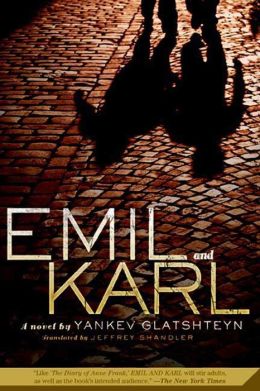
Emil and Karl. Yankev Glatshteyn. Translated from the Yiddish by Jeffrey Shandler. 1940/2006. Roaring Book Press. 208 pages. [Source: Review copy]

I love the idea of loving Emil and Karl by Yankev Glatshteyn. Emil and Karl was written in 1940 in Yiddish. It is set in Austria. It is the first--or at least among the very first--book written for children about the persecution Jews were experiencing from the Nazis.

Emil and Karl have always, always been best friends. Emil's Jewish. Karl's the son of socialists. Both are "orphans" in a way because of the Nazis. The book opens with intensity: readers first glimpse of Karl is haunting. Karl's mother has been taken away by the Nazis. He's witnessed this: not only the arrest, but the beating too. He's alone in the apartment, feeling very alone, very frightened, very worried. For they told him they'd be back to take him too. He doesn't know what to do next, where to go, who to trust. He decides to run to Emil's house. Emil's world has also been devastated within the past day or two. His father was taken and killed. His mother is grieving and shattered.

Karl and Emil are very much on their own it seems. The two stick together no matter what. They'll face danger and be put into difficult situations time and time again. There are many scenes that stay with you.

But while I find the premise of this one fascinating, it isn't the absolute best book about the holocaust. It may be among the first, but, that doesn't make it among the best of the best. Worth reading? I think so if you already have an interest in the subject. But if you only read one book on the subject, I'd have to recommend you go with another book.

© 2015 Becky Laney of Becky's Book Reviews
Wednesday, February 11, 2015

Debby (1940)

Debby. Siddie Joe Johnson. Illustrated by Ninon MacKnight. 1940.  Longmans, Green and Co. 214 pages. [Source: Bought]

Debby hesitated at the edge of the clearing. It was their own half-acre, that clearing, and held the new trailer house, shining so brightly in the June morning sunlight.

I loved, loved, LOVED Siddie Joe Johnson's Debby. This children's book is set in South Texas. Though it has a 'historical' feel about it now, at the time it was published in 1940, it would have been considered contemporary.

Debby is the heroine. The move is recent. Her father needed to get away from the city for health reasons. The family will be living in a trailer home for a year. He'll be recuperating and writing a book. Will Debby like it in the country? Will she like Texas? Yes, and YES! She'll have many adventures. She'll make plenty of good, good friends.

The book spans the months of June through December. During those months, Debby grows up a bit, makes new friends, and discovers plenty. There is just something pleasant and satisfying and lovely and SIMPLE (in a good way, I promise) about this one. Readers get the summer adventures, the starting-school adventures, and the holiday adventures. (I love that there are chapters about Thanksgiving and Christmas.)

Debby LOVES Mr. and Mrs. Sanders their closest neighbors. And Mrs. Sanders loves, loves, loves having Debby around. This couple never had children, and, they take great delight in Debby. Mrs. Sanders inherited a doll named Deborah. It is this doll which is depicted on the cover. You might suppose since the doll is on the cover, that, the doll would play a prominent role in the book. That the book might even read like Hitty or Miss Hickory. But. It doesn't. Sure, the doll is mentioned in two or three chapters. But the book is about so much more. I was wanting a doll-story. But what I got was even more satisfying in the end.

I would definitely recommend this one! I loved everything about it: the end papers, the illustrations throughout the book, the writing itself.

© 2014 Becky Laney of Becky's Book Reviews
Saturday, January 24, 2015

Seuss on Saturday #4

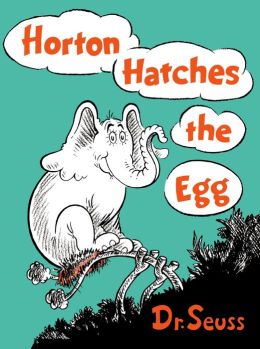
Horton Hatches An Egg. Dr. Seuss. 1940/1968. Random House. 64 pages. [Source: Library]

First sentence:
Sighed Mayzie, a lazy bird hatching an egg:
"I'm tired and I'm bored
And I've kinks in my leg
From sitting, just sitting here day after day.
It's work! How I hate it!
I'd much rather play!
I'd take a vacation, fly off for a rest
If I could find someone to stay on my nest!
If I could find someone, I'd fly away--free..."
Plot/Premise: Mayzie does not want to hatch her own egg. So Horton, the elephant, steps in and does the job for her. It isn't that he loves the work either. But..."an elephant's faithful one-hundred percent!" He said that he'd take care of the egg, and he will. Because he always means what he says and says what he means. He's faithful through and through. What will happen when the egg hatches? Will Horton's steadfastness be rewarded?

My thoughts: I love this one. I do. I have loved this one since childhood. I'm not sure I could choose which Horton book I like best: Horton Hatches an Egg or Horton Hears a Who. Both illustrate great lessons. I don't mind the lessons so much in either one of these!

His previous book, The King's Stilts, was about balancing work and play. And again, we see those themes at work in Horton Hatches An Egg. Mayzie is an incredibly selfish and lazy bird. She tricks the good-hearted Horton into sitting on her nest and hatching her egg. She lies to him as well, promising that she'll only be gone for a short amount of time, she has every intention of coming back soon. Horton is a great contrast. He endures much, suffers much. But he's calm and steadfast. He's diligent and faithful--disciplined.

I love the surprise ending. Do you?

Have you read Horton Hatches An Egg? Did you like it? love it? hate it? Do you prefer it to Horton Hears A Who? Or do you--like me--love both books almost equally? I'd love to hear your thoughts!

If you'd like to join me in reading or rereading Dr. Seuss' picture books (chronologically) I'd love to have you join me! The next book I'll be reviewing is McElligot's Pool. 


© 2015 Becky Laney of Becky's Book Reviews

Sunday, November 23, 2014

Where There's A Will (1940)

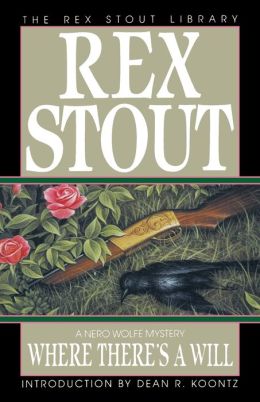
Where There's A Will. Rex Stout. (Nero Wolfe #8) 1940. Bantam. 258 pages. [Source: Bought]

I always begin Nero Wolfe mysteries wanting to love them. I do love, love, love Archie Goodwin and Nero Wolfe. And I have certainly loved plenty of them in the past. Some more than others, of course. But at the very least, the mysteries generally serve as entertainment or distraction. Where There's A Will is not one of my favorites.

Wolfe and Goodwin are in need of clients, wealthy clients preferably. That isn't exactly unexpected. They almost always are in need of clients according to Goodwin. The book opens with the two meeting a family--dysfunctional family, don't you know?! This high-status family is in mourning. Three sisters (and their lawyers) come to Wolfe upset about their brother's will. Each had been under the assumption that they'd be left a million dollars each. They'd been left nothing, or almost nothing. They were disappointed, perhaps a bit ashamed at how angry they were. But the very fact that their brother's mistress received so very, very much is infuriating. Especially since he was married. The widow is outraged. Will Nero Wolfe go about trying to persuade this mistress woman to share the inheritance? Before that case gets a proper chance to be taken up, there comes a great shock. The brother's death was no accident. Someone murdered him. Now someone else in the family comes to Wolfe and begs him to take the case and solve the murder.

Can Wolfe solve the murder? Will Goodwin reach the same conclusion as Wolfe--in the same amount of time?

© 2014 Becky Laney of Becky's Book Reviews
Friday, February 21, 2014

Reread #8 The Long Winter

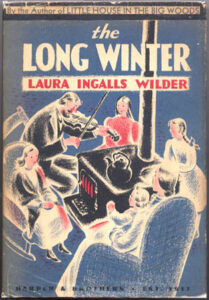
The Long Winter. Laura Ingalls Wilder. 1940. 334 pages. [Source: Library]

While I enjoy almost all of the Little House books by Laura Ingalls Wilder, I must admit that The Long Winter is probably my favorite and best. (I still have never read Farmer Boy.) I think one of the reasons why I love it so much is that it's one of the books that you experience. When Pa, Ma, Mary, Laura, Carrie, and Grace are hungry and cold, YOU feel hungry and cold alongside them. This is also the novel that introduces Almanzo.

The Long Winter is set in 1880/1881. It is a fictional account of one of the hardest (longest) winters. It is definitely a book about hardship and survival and the human spirit. It's very intense in places.

I first reviewed it in February 2008.

The first chapter is called "Make Hay While the Sun Shines" and if it's found within a book called THE LONG WINTER, the reader knows what to expect even if the characters don't. The book opens with Ma and Pa and family getting ready for harvest and winter. Laura is helping out Pa. Mary and Carrie are helping out Ma. Laura is especially pleased that she's old enough (around 14 now) to help Pa and do outdoor chores.

The Ingalls family is living in their claim shanty. This would be the first fall/winter they've been there. And they know it will be tough, but when the first blizzard comes in October, they know that it wouldn't only be tough to survive but impossible to survive if they were to try to stay on their homestead. Fortunately, Pa owns property in town. A place where they can be nice and warm and cozy for the winter. Or so they think.

What no one could know is just how hard, how long, how tough this winter was going to be. Some folks are prepared--the Wilder boys for instance--but most are not. Most are relying on the train making regular stops in town. The trains are essential for stocking the stores of supplies. But when almost every day brings a blizzard--with clear days coming only one at a time and never on a predictable schedule--it soon becomes clear that the trains will not be saving the day. Not til spring. The town's survival, the Ingalls' family survival, is a big if at this point.

Cold. Hunger. Starvation. No supplies. What's not to love?

© 2014 Becky Laney of Becky's Book Reviews

Thursday, March 14, 2013

The Corinthian (1940)

The Corinthian. Georgette Heyer. 1940/2009. Sourcebooks. 261 pages.

 In The Corinthian, we've got a bachelor, Sir Richard Wyndham, who happens to rescue a damsel in distress, Penelope Creed. Penelope set on running away from her aunt--who is encouraging her into a loveless marriage with her cousin Fred--is disguised as a boy. Richard, while on his way home and a bit drunk at that, sees Pen climbing out her window--by way of her bed sheets of course. He "catches" her just in time. Granted, this "she" is dressed as a he. But there's no fooling Richard. A bit amused at the situation, and wanting to run away himself to avoid an unpleasant appointment the next day, he decides to help out. She wants to escape London--and her aunt--and travel to Bristol (or near Bristol anyway). She's got a childhood friend, Piers, who she fancies herself madly in love with. Five (or so) years ago, these two promised themselves to each other. Hearing this tale, Richard decides to join in the journey and ensure her safety. The two will go together. He will act as her tutor-uncle-cousin and 'protect' her along the way. (Each identity is used on their journey at various stages.) Their journey is rarely boring--they get in and out of trouble along the way.

This one is a delightful romantic comedy. I LOVE, LOVE, LOVE this one! I love Pen Creed. I love Sir Richard. The dialogue is just too much fun in this Regency romance!

A scene between Pen and Richard:
"Were you locked in your room?" enquired Sir Richard.
"Oh no! I daresay I should have been if Aunt had guessed what I meant to do, but she would never think of such a thing."
"Then--forgive my curiosity!--why did you climb out of the window?" asked Sir Richard.
"Oh, that was on account of Pug!" replied Pen sunnily.
"Pug?"
"Yes, a horrid little creature! He sleeps in a basket in the hall, and he always yaps if he thinks one is going out. That would have awakened Aunt Almeria. There was nothing else I could do."
Sir Richard regarded her with a lurking smile. "Naturally not. Do you know, Pen, I owe you a debt of gratitude?"
"Oh!" she said again. "Do you mean that I don't behave as a delicately bred female should?"
"That is one way of putting it, certainly."
"It is the way Aunt Almeria puts it."
"She would, of course."
"I am afraid," confessed Pen, "that I am not very well-behaved. Aunt says that I had a lamentable upbringing, because my father treated me as though I had been a boy. I ought to have been, you understand."
"I cannot agree with you," said Sir Richard. "As a boy you would have been in no way remarkable; as a female, believe me, you are unique."
She flushed to the roots of her hair. "I think that is a compliment."
"It is," Sir Richard said, amused.
"Well, I wasn't sure, because I am not out yet, and I do not know any men except my uncle and Fred, and they don't pay compliments. That is to say, not like that." (68-69)
Fred Griffin in conversation with Sir Richard:
"What, sir, would you think of a member of the Weaker Sex who assumed the guise of a man, and left the home of her natural protector by way of the window?"
"I should assume," replied Sir Richard, "that she had strong reasons for acting with such resolution."
"She did not wish to marry me," said Mr. Griffin gloomily.
"Oh!" said Sir Richard.
"Well, I'm sure I can't see why she should be so set against me, but that's not it, sir. The thing is that here's my mother determined to find her, and to make her marry me, and so hush up the scandal. But I don't like it above half. If she dislikes the notion so much, I don't think I ought to marry her, do you?"
"Emphatically not!"
"I must say I am very glad to hear you say that, Sir Richard!" said Mr. Griffin, much cheered. "For you must know that my mother has been telling me ever since yesterday that I must marry her now, to save her name. But I think she would very likely make me uncomfortable, and nothing could make up for that, in my opinion."
"A lady capable of escaping out of a window in the guise of a a man would quite certainly make you more than uncomfortable," said Sir Richard.
"Yes, though she's only a chit of a girl, you know. In fact, she is not yet out. I am very happy to have had the benefit of the opinion of a Man of the World. I feel that I can rely on your judgment."
"On my judgment, you might, but in nothing else, I assure you," said Sir Richard. "You know nothing of me, after all. How do you know that I am not now concealing your cousin from you?"
"Ha-ha! Very good, upon my word! Very good, indeed!" said Mr. Griffin, saluting a jest of the first water. (124)

Read The Corinthian
  • If you enjoy Regency romances
  • If you enjoy historical romance
  • If you enjoy historical romance with a touch of drama, mystery, and murder...
  • If you enjoy Georgette Heyer
© 2013 Becky Laney of Becky's Book Reviews
Thursday, June 07, 2012

One, Two Buckle My Shoe

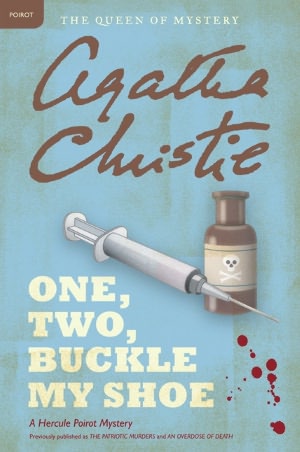
One, Two Buckle My Shoe. Agatha Christie. 1940/2011. HarperCollins. 240 pages. 

I have such a hard time rating Agatha Christie novels. Do I rate it based on how it compares to just any book? Or do I just rate it based on how it compares to other mysteries? Or do I just rate it based on how it compares to other Agatha Christie mysteries? Or do I rate it based on how it compares just among the Marple mysteries or the Poirot mysteries as the case may be?

The truth is, I find Christie incredibly readable. I pick up one of her mystery novels, and, I'm almost always hooked. True, some mysteries may take two or three days instead of just one. Depending on so many factors. But. It's oh-so-easy to read Christie's mysteries in just one sitting. To just DELIGHT yourself in the experience of reading a good mystery.

Was One, Two, Buckle My Shoe the best, best, best mystery I've ever read? No, not really. This isn't by any stretch my favorite-favorite Agatha Christie mystery. It isn't even my favorite Hercule Poirot mystery. (And, yes, I do LOVE Poirot, just not as much as Miss Marple.) Yet. When I consider how unwilling I was to put it down, how much I enjoyed reading it while I was reading it, then I can definitely say it was a good book, a good mystery. Even a not-quite-the-best Christie mystery is better than many books...

Hercule Poirot visits the dentist in One, Two, Buckle My Shoe. Hours after his appointment, he receives a call from the Inspector. His dentist, Mr. Morley, is dead. At first, they weren't quite positive if it was murder or suicide. Poirot knew that it was murder--his instinct said it was. But others aren't ready to go that route--they feel suicide is a reasonable conclusion based on the evidence. But Poirot can't fathom why his dentist would do such a thing in such a way?

So Poirot conducts his own investigation, interviews all the patients that were there that day, etc.

This one may not be the best introduction to Agatha Christie or Hercule Poirot, but it is definitely worth a read. 

© 2012 Becky Laney of Becky's Book Reviews

Wednesday, February 23, 2011

Evil Under the Sun

Evil Under the Sun. Agatha Christie. 1940/2006. Black Dog & Leventhal. 224 pages.

When Captain Roger Angmering built himself a house in the year 1782 on the island off Leathercombe Bay, it was thought the height of eccentricity on his part. A man of good family such as he was should have had a decorous mansion set in wide meadows with, perhaps, a running stream and good pasture.

Will Hercule Poirot ever vacation in peace? He doesn't get that opportunity in Evil Under the Sun. He may be on vacation at the Jolly Roger, a hotel resort, but the warning signs are there. Murder is probably inevitable as tensions rise between hotel guests. The victim is Mrs. Arlena Stuart Marshall. The suspects? Well, principally her husband, Captain Kenneth Marshall, her lover, Patrick Redfern, the angry wife, Christine Redfern, and the angry step-daughter, Linda Marshall. Of course, there are other guests at the hotel, but these are the ones with possible motives.

I am still enjoying Agatha Christie. I am still finding myself surprised by her revelations. (Some books there is more of a surprise than others!) But this one wasn't my favorite Hercule Poirot.

© 2011 Becky Laney of Becky's Book Reviews
Tuesday, November 09, 2010

Miss Hargreaves

Miss Hargreaves. Frank Baker. 1940/2009. Bloomsbury. 336 pages.

From the prologue: 'Miss Hargreaves-' I murmured. 'Miss Hargreaves-?' I leant over the rail and looked into the darkness of the Irish Sea. It was night. The lights of our boat were the only lights upon the black water. No answer came from the sea as I murmured that name. And yet, it seemed to me that very faintly in the cold December air, in the wind, I could hear the sighing of my own name. 'Norman - Norman- Norman -'

From chapter one: When I wrote essays at school I was always told to begin at the beginning and end at the end. I'm not at all sure that this story has an end. As for a beginning - well, in my opinion, it really begins - as I began - with my father. Anyway, that's where I'm going to start.

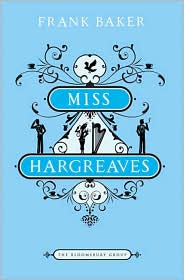
I loved this one. I just LOVED, LOVED, LOVED this one. I will tell you what it is about. And I will try to convey just how much I loved it -- and why. And I hope to convince you to give it a chance -- at least. But I'll start with why I picked it up. I saw this one in the new books at the library. I was drawn to the cover. But. What really made me take it home was this jacket description:
When, on the spur of a moment, Norman Huntley and his friend Henry invent an eighty-three-year-old woman called Miss Hargreaves, they are inspired to mail a letter to their new fictional friend. It is only meant to be a silly, harmless game--until she arrives on their doorstep. She is, to Norman's utter disbelief, exactly as he had imagined her: eccentric and endlessly astounding. He hadn't imagined, however, how much havoc an imaginary octogenarian could wreak on his sleeping Buckinghamshire town. Norman has some explaining to do, but how will he begin to explain to his friends, family, and girlfriend where Miss Hargreaves came from when he hasn't the faintest clue himself? Will his once-ordinary, once-peaceful life ever be the same again? And, what's more, does he want it to be?
After reading that description, how could I not take it home? It screamed read me, read me, read me! (To be honest, even one read me would have worked. After all, I take home many books each week! Still, I knew this one would have to be read.)

So what is it about? It's about Norman. A young man who has a way with words! He's creative, imaginative, a real storyteller. It's not that he lies--not all the time--but he invents the truth as he goes along. Blending truth and fiction--at times. As I said, it's not like he never tells the truth. Seeing Norman interact with his father--oh, how I loved them both--you can see why Norman is the way he is. When Norman and Henry, his best friend, are on holiday, they stumble into an old church. Norman protesting all the way, mind you. But on this impromptu tour, these two invent an old woman, Miss Constance Hargreaves. The man giving the tour believes them--of course, why should he suspect them?--he believes their tale of this woman who was a childhood friend of the dearly departed Mr. Archer, even asks them for her address. The two are having such a great time with this joke that they take her with them when they go. Throughout the rest of their holiday, they continue telling stories about her. They imagine what sort of life she's led, where she'd be living, give her hobbies and pets, etc. In another "spur of the moment" they write her a letter. In this letter, they even ask her to come visit! It's nonsense pure and simple. But nonsense with consequence as Norman learns!

When Norman returns home, he learns just how big a mistake he's made. For he learns that she is coming. There is a Miss Constance Hargreaves coming to visit him! Is truth stranger than fiction? Is Miss Hargreaves a real woman? Or is she Norman's creation?
I walked home about ten with very mixed feelings. Perhaps I ought to try to tell you about them, otherwise you'll be running away with the idea that this is meant to be a funny book. It is not; it is a very serious book; it is an account of the most amazing thing that ever happened to me, a thing that altered the whole course of my life. So please keep that clear. And remember it's true; I haven't made a thing up -- except Miss Hargreaves in the first case. (76)
Mrs. Huntley's description of Miss Hargreaves:
Miss Hargreaves is a fantastic person. You know, I can't help liking her. Of course, I can easily understand how difficult it must be for you, Norman dear. I think one would get quite fond of her, and yet never want to set eyes on her again. (151)
Is it a funny book? It's a witty book. I enjoyed that aspect of it very much. But it isn't only that. Norman's quite right about that! It's quirky and creepy. Miss Hargreaves and Norman would definitely feel right at home in The Twilight Zone.

What did I like about this one? I loved so many things about it! The characters. The relationships. The premise. The story. It just worked really well for me! I found it very compelling! I found it difficult to put down. It's wonderfully quirky and deliciously sinister.

I would definitely recommend this one! I loved it so much and I would love to see other readers pick this one up! Miss Hargreaves deserves to be widely read!

© Becky Laney of Becky's Book Reviews

Thursday, July 23, 2009

The Corinthian


Heyer, Georgette. 1940/2009. The Corinthian. Sourcebooks. 261 pages.

The Corinthian is one of the funner Georgette Heyer novels I've read in recent months. Heyer is great at writing romantic comedies. True, Heyer isn't always the most original author, her books often follow a handful of different patterns. But they're patterns that work time and again. And there's the difference, in my opinion. There is something satisfying and delightful about her books, her characters. So some plot devices are familiar, that doesn't mean the stories and characters themselves are stale and uninteresting. Far from it actually. Her characters are ones that you want to spend time with.

In The Corinthian, we've got a bachelor, Sir Richard Wyndham, who happens to rescue a damsel in distress, Penelope Creed. Penelope set on running away from her aunt--who is encouraging her into a loveless marriage with her cousin Fred--is disguised as a boy. Richard, while on his way home and a bit drunk at that, sees Pen climbing out her window--by way of her bed sheets of course. He "catches" her just in time. Granted, this "she" is dressed as a he. But there's no fooling Richard. A bit amused at the situation, and wanting to run away himself to avoid an unpleasant appointment the next day, he decides to help out. She wants to escape London--and her aunt--and travel to Bristol (or near Bristol anyway). She's got a childhood friend, Piers, who she fancies herself madly in love with. Five (or so) years ago, these two promised themselves to each other. Hearing this tale, Richard decides to join in the journey and ensure her safety. The two will go together. He will act as her tutor-uncle-cousin and 'protect' her along the way. (Each identity is used on their journey at various stages.) Their journey is rarely boring--they get in and out of trouble along the way.

This one is playful and fun. There's some adventure thrown in as well--and a murder!--but at it's heart this is a romantic comedy.

© Becky Laney of Becky's Book Reviews

Thursday, April 23, 2009

Emil and Karl


Glatshteyn, Yankev. 2006. Emil and Karl. Square Fish. (Roaring Book Press) 194 pages.

There is an immediacy and urgency to Emil and Karl. Written in 1938--in Yiddish--it was only recently (2006) translated and published in English. Set in Austria, Vienna to be exact. The Third Reich is in power, yet the horror of World War II has not yet dawned. The full wrath unleashed during the Holocaust--the organized full-scale murdering of the Jewish people*--has yet to begin. Though the hate is strong and ever-present. Meet Emil and Karl. Best friends. One is Jewish. The other is not. But despite it being in Karl's "best interest" to forget about his Jewish friend, Emil, he can't brush him off.

The seriousness of the novel is apparent from the very beginning. When we first meet Karl, he is alone.

"Karl sat on a low stool, petrified. The apartment was as still as death. He looked at the pieces of the broken vase scattered on the floor. Several times he reached out with one hand to pick up an overturned chair lying beside him. The chair looked like a man who had fallen on his face and couldn't get up. But each time Karl tried, he could only lift the chair up a little bit, and then it fell down again. It was even quieter in the kitchen and the bedroom--so quiet he was afraid to go in there. It wasn't that Karl minded being in the apartment by himself. He'd been left alone there more than once before; he could even go to bed by himself without being afraid. He wasn't scared of spooks or devils. Instead, he loved to stare, wide-eyed, into the darkness and make up stories." (1)


Why is he afraid? He witnessed what I imagine would have seemed the unthinkable. He watched them take his mother. He watched them hurt her. He heard their threats. He heard them threaten to come back...for him. In one night, everything in Karl's world is turned upside down.

When he does move, act, it is to go see his friend, Emil. He seeks the comfort of a true friend. What he learns is that Emil too has changed. Emil and Karl have an enemy in common now. Both have been orphaned. Both have only each other. Can these two children find a way to survive in this topsy-turvy ever-dangerous world where hate rules supreme?

What makes Emil and Karl unique--in my opinion--is its urgency. When it was written, this wasn't a distant event in the past. This wasn't historical fiction. This was current events. This was the threat and danger facing the world. And at the time it was written, it was a threat that had not been conquered. There's a suspenseful quality to it. A sense of the unknown. There was no happy ending light at the end of the tunnel to brighten it up. In fact, the worse was yet to come. It's an emotional novel; it's brilliantly and intelligently written to make you feel that you are there, that you are witness.

*I'm not forgetting that the Holocaust also was about murdering other people as well. There were political prisoners as well as the targeting of gays and gypsies.

© Becky Laney of Becky's Book Reviews
If you're reading this post on another site, or another feed, the content has been stolen.