Showing posts with label Agatha Christie. Show all posts

Thursday, August 14, 2025

91. 4:50 From Paddington


91. 4:50 From Paddington. (Miss Marple #8) Agatha Christie. 1957/2007. 288 pages. [Source: Bought]

First sentence: Mrs. McGillicuddy panted along the platform in the wake of the porter carrying her suitcase.

Premise/plot: Poor Mrs. McGillicuddy! She witnesses a crime when she's on a train--the crime takes place on a passing train--and NO ONE believes her. No one but Miss Marple that is! Miss Marple knows her friend did not imagine a man strangling a woman. Since the police aren't going to bother with an investigation, it's up to her and her friends. Miss Marple hires a woman--Lucy Eyelesbarrow--to do the job. Lucy gets hired on at an estate--the nearest estate to where Miss Marple thinks the body might have been thrown off the train--and in her spire time Lucy will hunt for the body. It doesn't take her long--not really, not all things considered. What takes time is identifying the woman. Who was she? What was she doing in England? Is she in any way connected to the family or the estate? Could Lucy be living with a murderer?

My thoughts: I love, love, love this murder mystery. The murder occurs BEFORE Christmas but most of the book occurs in January or thereabouts. Lucy is working for a very eccentric, quirky family. Some of these family members are quite memorable, almost delightful. Miss Marple is staying nearby and posing as Lucy's aunt.

This is a well-written mystery novel that is fun to read and reread. (Though to be honest you should let a few years go by so that the details get a bit fuzzy in between readings.)

Quotes: 
"Well," she said, "it looks as though you were right." She produced her findings and gave the details of their discovery. "Perhaps one ought not to feel so," she said, "but it is rather gratifying to form a theory and get proof that it is correct!" (39)
"At a certain stage one is inclined to think everyone knows a little more than they are willing to tell you." (81)
"If you have not committed a murder, it naturally annoys you if it seems someone thinks that you have," said Inspector Craddock mildly. (129)
"The truth is people are an extraordinary mixture of heroism and cowardice." (144)


© 2025 Becky Laney of Becky's Book Reviews

Thursday, July 03, 2025

67. The Moving Finger


67. The Moving Finger. Agatha Christie. 1942/2007. Black Dog & Leventhal. 208 pages. [Source: Library] [5 stars, adult mystery, classic, romance]

First sentence: I have often recalled the morning when the first of the anonymous letters came.

Jerry Burton, our hero, has taken a house in the country with his sister, Joanna. He's recuperating from an injury, and his doctor has definitely suggested some rest and relaxation. As for Joanna, she's recuperating from a broken heart. But rural village life isn't as uneventful and peaceful as he expected. For soon after his arrival, an anonymous "poison pen" begins a nasty letter campaign. Which is unpleasant enough, he supposes, but things turn deadly after a woman's "suicide" after receiving a vile letter. The victim leaves behind two young sons, an older daughter from her first marriage, a husband, and a rather pretty governess. Megan, the daughter from the first marriage, soon becomes a major player in this Miss Marple mystery. This "suicide" becomes a bit suspicious when a second death occurs--that of a maid--within the home. The question becomes did this maid--on her day off--see something?

I loved this one. I just LOVED it. It wasn't a purely pleasant read for me. I wouldn't exactly say I was praying throughout, but I was certainly wishful with my repeated pleas, please don't let it be Megan, please don't let it be Megan, please don't let it be Megan. Never have I gotten that involved with a mystery. Who is Megan? For better or worse, she's the young woman our hero described thusly, "She looked much more like a horse than a human being. In fact, she would have been a very nice horse with a little grooming" (17). She's largely ignored not only by the village but by her family as well. But there is something about her that Jerry, our hero, can't ignore. He goes out of his way--time and time and time again--to include her. He even invites her to stay with him and his sister after her mother's death. He is the one person, she's found, willing to listen to her.

While Jerry is making friends with Megan--not always an easy task--Joanna, his sister, is trying to make friends with the local doctor. That is an uphill battle. Joanna has never, ever had to work this hard to get a guy to like her.

So this mystery has a romantic element to it which I just loved. It also stars Miss Marple, though she doesn't enter the case until after the second death occurs. Miss Marple finds Jerry Burton a great help in this one! The details he's observed through his stay, makes solving this one so much easier for her! It gives her quite the lead. But she still has to *prove* it.

The Moving Finger is very compelling! I loved it for so many different reasons.

My favorite quotes:

Emily Barton, I think, has a mental picture of men as interminably consuming whisky-and-sodas and smoking cigars, and in the intervals dropping out to do a few seductions of village maidens, or to conduct a liaison with a married woman.
When I said this to Joanna later, she replied that it was probably wishful thinking, that Emily Barton would have liked to come across such a man, but alas, had never done so. (85)

"The police are doing their best."
"If Agnes could be killed yesterday, their best isn't good enough."
"So you know better than they do?"
"Not at all. I don't know anything at all. That's why I'm going to call in an expert."
I shook my head. "You can't do that. Scotland Yard will only take over on a demand from the chief constable of the county. Actually they have sent Graves."
"I don't mean that kind of an expert. I don't mean someone who knows about anonymous letters or even about murder. I mean someone who knows people. Don't you see? We want someone who knows a great deal about wickedness!"
It was a queer point of view. But it was, somehow, stimulating. (141)

"Yes, it was dangerous, but we are not put into this world, Mr. Burton, to avoid danger when an innocent fellow creature's life is at stake. You understand me?"
I understood. (199)


© 2025 Becky Laney of Becky's Book Reviews

Thursday, April 13, 2023

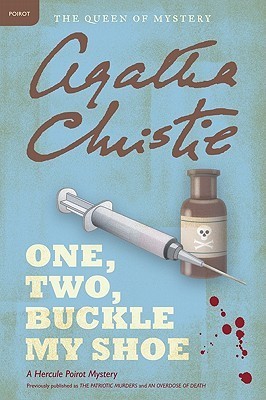
74. One, Two, Buckle My Shoe


One, Two, Buckle My Shoe. Agatha Christie. 1940. 224 pages. [Source: Library]

First sentence: Mr. Morley was not in the best of tempers at breakfast.

Premise/plot: Hercule Poirot goes to the dentist. Several hours later, he learns that the dentist--his dentist--has been found dead. Was it suicide? Was it murder? Can Hercule Poirot find out who hated this dentist enough to murder him--if it was murder at all? Why was he killed? Or why did he kill himself? Poirot tracks down who had motive and opportunity to commit this crime...

My thoughts: I didn't like this Agatha Christie novel at all. I don't know that I'd go so far as to say it's my least favorite Christie novel of all time. But it's probably bottom five material. I just didn't care for how this one unfolded. I don't mean I didn't care for how it resolved or how all was resolved. I meant the way that the suspects entered the story, the way the clues unfolded, it was just odd. Odd can be a good thing in a mystery. (But not always). 

Have you read this one? What did you think?


© 2023 Becky Laney of Becky's Book Reviews

Tuesday, April 11, 2023

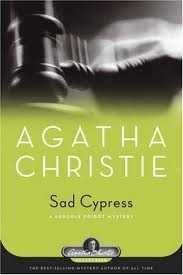
72. Sad Cypress


Sad Cypress. Agatha Christie. (Hercule Poirot #22). 1940. 256 pages. [Source: Library]

First sentence: "Elinor Katharine Carlisle. You stand charged upon this indictment with the murder of Mary Gerrard upon the 27th of July last. Are you guilty or not guilty?"

Premise/plot: Harriet Vane had Lord Peter Wimsey, and Elinor Katharine Carlisle has Peter Lord. Though her hero is not an amateur detective, but a country doctor. Still, Peter Lord, who fell in love with Elinor at first sight, has the wisdom to seek the best of the best to clear her name: Hercule Poirot. He wants Poirot to find evidence that will acquit her of murder. Is love blinding him? Is the woman he loves guilty of murder? It seems that she had opportunity to kill her aunt (supposedly out of greed) and Mary (supposedly out of jealousy). But Lord and Poirot doubt the supposed motives. They see other possibilities.  

My thoughts: I loved this one. I just LOVED it. I loved the characterization! I loved the story! While Peter Lord is no Lord Peter, I did enjoy him very much! I was quite surprised by how pleased I was that Elinor had someone on her side. Not that Elinor was completely lovable. She was flawed--very flawed. But still. By the end, I was seeing her through Peter Lord's eyes, I was seeing her with love.

"One does not practice detection with a textbook! One uses one's natural intelligence." (196)
"One must understand with the cells of one's brain before one uses one's eyes."(196)
"One always likes to know exactly what lies have been told one."
"Did Welman tell you a lie?"
"Definitely."
"Who else has lied to you?"
"Everybody. I think: Nurse O'Brien romantically; Nurse Hopkins stubbornly; Mrs. Bishop venomously; You yourself--"
"Good God!" Peter Lord interrupted him unceremoniously. "You don't think I've lied to you, do you?"
"Not yet," Poirot admitted.
Dr. Lord sank back in his chair. He said, "You're a disbelieving sort of fellow, Poirot." (198)

ETA: I first read this one in 2011. So it has been quite a while. I haven't reread many Christie novels. So it's always tricky for me to match plot points and characters with titles. I don't always even remember if it's Miss Marple or Hercule Poirot. I read this one for the 1940 Book Club. As soon as I realized it was THIS MYSTERY, I was so excited. I remembered loving these characters! 


© 2023 Becky Laney of Becky's Book Reviews

Friday, January 18, 2019

4:50 From Paddington

4:50 From Paddington. (Miss Marple #8) Agatha Christie. 1957/2007. 288 pages. [Source: Bought]

First sentence: Mrs. McGillicuddy panted along the platform in the wake of the porter carrying her suitcase.

Premise/plot: Poor Mrs. McGillicuddy! She witnesses a crime when she's on a train--the crime takes place on a passing train--and NO ONE believes her. No one but Miss Marple that is! Miss Marple knows her friend did not imagine a man strangling a woman. Since the police aren't going to bother with an investigation, it's up to her and her friends. Miss Marple hires a woman--Lucy Eyelesbarrow--to do the job. Lucy gets hired on at an estate--the nearest estate to where Miss Marple thinks the body might have been thrown off the train--and in her spire time Lucy will hunt for the body. It doesn't take her long--not really, not all things considered. What takes time is identifying the woman. Who was she? What was she doing in England? Is she in any way connected to the family or the estate? Could Lucy be living with a murderer?

My thoughts: I love, love, love this murder mystery. The murder occurs BEFORE Christmas but most of the book occurs in January or thereabouts. Lucy is working for a very eccentric, quirky family. Some of these family members are quite memorable, almost delightful. Miss Marple is staying nearby and posing as Lucy's aunt.

This is a well-written mystery novel that is fun to read and reread. (Though to be honest you should let a few years go by so that the details get a bit fuzzy in between readings.)

Quotes: 
"Well," she said, "it looks as though you were right." She produced her findings and gave the details of their discovery. "Perhaps one ought not to feel so," she said, "but it is rather gratifying to form a theory and get proof that it is correct!" (39)
"At a certain stage one is inclined to think everyone knows a little more than they are willing to tell you." (81)
"If you have not committed a murder, it naturally annoys you if it seems someone thinks that you have," said Inspector Craddock mildly. (129)
"The truth is people are an extraordinary mixture of heroism and cowardice." (144)


© 2019 Becky Laney of Becky's Book Reviews

Thursday, August 30, 2018

The Boomerang Clue

The Boomerang Clue. Agatha Christie. 1934. 224 pages. [Source: Bought]

First sentence: Bobby Jones teed up his ball, gave a short preliminary waggle, took the club back slowly, then brought it down and through with the rapidity of lightning.

Premise/plot: Bobby Jones, the vicar's son, is playing a round of golf with a friend when they discover a dying man. Did he fall to his death quite by accident, or was he pushed off the cliff? His death is ruled an accident, but Bobby and his friend, Lady Frances (aka Frankie) disagree. Primarily they disagree because soon after this incident an attempt is made on Bobby's life. There is a murderer about who seems to think that Bobby knows more than he actually does--that Bobby is a threat to him. Frankie and Bobby team up to find the murderer, but the clues are few and far between. They have so little to go on and the man--or woman--they're searching for is DANGEROUS. Will they discover the truth of his identity in time? And will he--or she--be brought to justice?

My thoughts: This one is also titled Why Didn't They Ask Evans? That phrase was the last thing uttered by the victim. Bobby the only one who heard it. (His friend had gone for help already). Who is Evans? What question should they have asked Evans? And for that matter WHO is this dead man? Bobby and Frankie are amateurs at best. This is, as far as I know, their only case.

I will say that this one kept me guessing until the very, very end. I don't know why I was so horrible at solving this one. Well, that's not true. The clues are so teeny tiny and there really isn't much to go on except instincts. And readers' impressions are formed largely from the impressions of the characters themselves. Have you read this one? Did you guess who did it?


© 2018 Becky Laney of Becky's Book Reviews

Saturday, August 25, 2018

Me? Listen to Audio #32

The Murder at the Vicarage. Agatha Christie. 1930. Dramatised in five thirty-minute parts by Michael Bakewell. Directed by Enyd Williams. First broadcast on BBC Radio 4 in 1993. Starring June Whitfield as Miss Marple.

First sentence: It is difficult to know quite where to begin this story, but I have fixed my choice on a certain Wednesday at luncheon at the Vicarage. The conversation, though in the main irrelevant to the matter in hand, yet contained one or two suggestive incidents which influenced later developments.

I almost discovered this one too late. I just had twenty-three hours before it expired on the BBC Radio 4 site!!! Because it is so close to expiring, I won't be sharing the links to each episode.

I had read the book--I've read most of the Miss Marple mysteries--and it was a JOY to listen to this one.

From my review of the book:

Murder at the Vicarage is the first Agatha Christie novel starring Miss Marple. And it was a delight. A pure and simple delight. It is narrated by the vicar, a Mr. Clement. His narrative was just right--for me. It was a perfect blend of humor and charm. And, of course, suspense! Mr. Clement is shocked to discover a dead man in his study. Colonel Protheroe had his moments--he's a man most would find difficult to live with. But no one *really* expected him to be murdered! He was supposed to be having a private meeting with the vicar that evening. But a phone call changes all that...

Inspector Slack is the "official" detective on the case. The man responsible for solving this crime and bringing the murderer to justice....


Miss Marple, one of the elderly women in the community, tells Mr. Clement that there are seven people she suspects capable of the murder. But she's not naming names--at least not yet. Which leaves Mr. Clement trying to guess the identity of the murderer as well.

Chapter by chapter, readers find clues. Can they guess the identity of the murderer before Miss Marple's big reveal?

I found both Mr. Clement and Miss Marple charming. I just LOVED the characterization in this one. The humor, the wit, the drama. It was just a satisfying read.

Here are some of my favorite lines:

"Dear Vicar," said Miss Marple, "you are so unworldly. I'm afraid that, observing human nature for as long as I have done, one gets not to expect very much from it. I daresay idle tittle-tattle is very wrong and unkind, but it is so often true, isn't it?" (23)


Thursday started badly. Two of the ladies of my parish elected to quarrel about the church decorations. I was called in to adjudicate between two middle-aged ladies, each of whom was literally trembling with rage. If it had not been so painful, it would have been quite an interesting physical phenomenon. (40)


"Ah!" said Miss Marple. "But I always find it prudent to suspect everybody just a little. What I say is, you really never know, do you?" (154)


"I remember a saying of my Great Aunt Fanny's. I was sixteen at the time and thought it particularly foolish."
"Yes?" I inquired.
"She used to say, "The young people think the old people are fools--but the old people know the young people are fools!" (282)


At that moment Anne Protheroe entered the room.
She was dressed very quietly in black. She carried in her hand a Sunday paper, which she held out to me with a rueful glance.
"I've never had any experience of this sort of thing. It's pretty ghastly, isn't it? I saw a reporter at the inquest. I just said that I was terribly upset and had nothing to say, and then he asked me if I wasn't anxious to find my husband's murderer, and I said 'Yes.' And then whether I had any suspicions and I said 'No.' And where I didn't think the crime showed local knowledge, and I said it seemed to, certainly. And that was all. And now look at this!"
In the middle of the page was a photograph, evidently taken at least ten years ago--Heaven knows where they had dug it out. There were large headlines.

WIDOW DECLARES SHE WILL NEVER REST TILL SHE HAS HUNTED DOWN HUSBAND'S MURDERER.

Mrs. Protheroe, the widow, of the murdered man, is certain that the murderer must be looked for locally. She has suspicions but no certainty. She declared herself prostrated with grief, but reiterated her determination to hunt down the murderer.

"It doesn't sound like me, does it?" said Anne.
"I daresay it might have been worse," I said handing back the paper. (201-02)


© 2018 Becky Laney of Becky's Book Reviews

Wednesday, May 23, 2018

Thirteen at Dinner

Thirteen at Dinner. Agatha Christie. 1933. 228 pages. [Source: Bought]

First sentence: The memory of the public is short. Already the intense interest and excitement aroused by the murder of George Alfred St. Vincent Marsh, fourth Baron Edgware, is a thing past and forgotten. Newer sensations have taken its place. My friend, Hercule Poirot, was never openly mentioned in connection with the case. This, I may say, was entirely in accordance with his own wishes.

Premise/plot: Thirteen at Dinner is the ninth novel in the Hercule Poirot mystery series by Agatha Christie. It is narrated by Poirot's good friend Captain Hastings. He is recounting for readers a case that Poirot himself was a bit ashamed of being involved in.

It begins with a performance: Hastings and Poirot witness a one-woman show, Carlotta Adams. One of the imitations she does is of actress Jane Wilkinson. Wilkinson has married into the nobility, Lord Edgware, but it has not been a successful match--at all.

Later that evening, Poirot meets Jane Wilkinson for himself. She has come to him--pleading with him. Will he be willing to go to Lord Edgware and ask him to grant her a divorce so she can remarry? If not she doesn't know what she'll do. Poirot agrees to go. Lord Edgware agrees to a divorce promptly. In fact, he claims that he agreed over six months ago letting her know by letter!

The next day Lord Edgware is DEAD. Who murdered him and why?!

My thoughts: If you've read Lord Edgware Dies, you've read Thirteen at Dinner. But. If you're like me, you won't mind a bit rereading this Christie mystery. It is one of my favorites. Why? Not because of the details of the mystery. But because of the WRITING. I love Hastings' narration. I love the banter between Hastings and Poirot. Poirot can be such a hoot! It was a TREAT to reread this one.

Quotes:
"Do you not know, my friend, that each one of us is a dark mystery, a maze of conflicting passions and desires and aptitudes? Mais oui, c'est vrai. One makes one's little judgments--but nine times out of ten, one is wrong."
"Not Hercule Poirot," I said smiling.
"Even Hercule Poirot! Oh! I know very well that you have always a little idea that I am conceited, but indeed, I assure you, I am really a very humble person."
I laughed.
"You--humble!"
"It is so. Except--I confess it--that I am a little proud of my moustaches. Nowhere in London have I observed anything to compare with them. (5-6)
"Stop Poirot!" I cried. "You are making my head spin. "
"No, no, my friend. We are only considering possibilities. It is like trying on the clothes. Does this fit? No, it wrinkles on the shoulder? This one? Yes, that is better--but not quite large enough. This other one is too small. So on and so on, until we reach the perfect fit--the truth." (65)
"I always find alibis very enjoyable," he remarked. "Whenever I happen to be reading a detective story I sit up and take notice when the alibi comes along." (101)
"Between the deliberate falsehood and the disinterested inaccuracy it is very hard to distinguish sometimes.."
"What do you mean?"
"To deceive deliberately--that is one thing. But to be so sure of your facts, of your ideas and of their essential truth that the details do not matter--that, my friend, is a special characteristic of particularly honest persons." (107)
"The positive witness should always be treated with suspicion, my friend. The uncertain witness who doesn't remember, isn't sure, will think a minute--ah! yes, that's how it was--is infinitely more to be depended upon!"
"Dear me, Poirot," I said. "You upset all my preconceived ideas about witnesses." (107-8)
"My good friend," he said. "I depend upon you more than you know."
I was confused and delighted by these unexpected words. He had never said anything of the kind to me before. Sometimes, secretly, I had felt slightly hurt. He seemed almost to go out of his way to disparage my mental powers.
Although I did not think his own powers were flagging, I did realize suddenly that perhaps he had come to depend on my aid more than he knew.
"Yes," he said dreamily. "You may not always comprehend just how it is so--but you do often, and often point the way."
I could hardly believe my ears.
"Really, Poirot," I stammered. "I'm awfully glad, I suppose I've learnt a good deal from you one way or another--"
He shook his head.
"Mais non, ce n'est pas ca. You have learnt nothing."
"Oh!" I said, rather taken aback.
"That is as it should be. No human being should learn from another. Each individual should develop his own powers to the uttermost, not try to imitate those of someone else. I do not wish you to be a second and inferior Poirot. I wish you to be the supreme Hastings. In you, Hastings, I find the normal mind almost perfectly illustrated." (111)
"You are like someone who reads the detective story and who starts guessing each of the characters in turn without rhyme or reason." (112)
"You have a theory, then?"
"A detective, M. Martin, always has a theory. It is expected of him. I do not call it a theory myself. I say that I have a little idea. That is the first stage."
"And the second stage?"
"If the little idea turns out to be right, then I know! It is quite simple, you see." (129)
"Do not antagonize your son! He is of an age to choose for himself. Because his choice is not your choice, do not assume that you must be right. If it is a misfortune, then accept misfortune. Be at hand to aid him when he needs aid. But do not turn him against you." (145)

© 2018 Becky Laney of Becky's Book Reviews

Thursday, September 15, 2016

Agatha

Agatha: The Real Life of Agatha Christie. 2016. 130 pages. [Source: Library]

First sentence: These novelists will stoop to anything for some attention!

Premise/plot: Agatha: The Real Life of Agatha Christie is a graphic novel for adults and perhaps even young adults, if they have read Christie's mysteries and can't get enough! I would say this one is primarily for fans of Agatha Christie. If you've never read Christie, if you've never met Hercule Poirot and Miss Marple, then this isn't the way to be introduced to them. Trust me. What readers get are snippets of Christie's life.

The graphic novel opens in 1926 with the mysterious disappearance of Agatha Christie. It then flashes back to the beginning, to tell a more traditional life story. The flow of this one is start-and-stop. More like you're flipping through a stack of photographs of a person's life than actually taking the time to read a narrative biography.

One sees Agatha Christie as a writer--haunted in a way by her creations. Hercule Poirot and Miss Marple especially have a way of popping up and interacting with Christie. One also sees her as a world-traveler, a wife, and a mother. One catches the barest of glimpses of Christie during World War I and World War II.

My thoughts: I read the HUGE autobiography of Agatha Christie a year or two ago. I LOVED, LOVED, LOVED, LOVED it. Found it absolutely fascinating. Perhaps a little rambling for those who aren't big readers, but, just about perfect for me. This is very condensed and abbreviated.

That being said, I am glad I read this one. I liked it. I may not have loved, loved, loved it. But it is an entertaining read.

© 2016 Becky Laney of Becky's Book Reviews

Wednesday, March 25, 2015

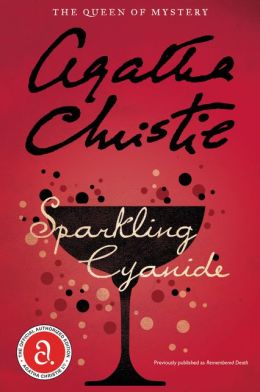
Sparkling Cyanide (1944)

Sparkling Cyanide. (Colonel Race #4) Agatha Christie. 1944/2002. HarperCollins. 288 pages. [Source: Bought]

It's been a while since I've last read Agatha Christie. Though this one did not star Hercule Poirot or Miss Marple, I ended up LOVING it. Though I should add that my 'favorite' Christie mystery is usually--though not always--one of the ones I've most recently read. It's not unusual for my 'favorite' to change frequently.

Rosemary Barton is the victim. That isn't a spoiler. She's been dead almost a whole year when the novel opens. Sparkling Cyanide is written from multiple perspectives: six, I believe. Readers know that one of the six could in fact be the murderer, or at the very least know the murderer and are keeping quiet.

One other thing. Rosemary Barton's death is officially a suicide. It was never taken on as a murder case. Until....

There is so much I CAN'T say about Sparkling Cyanide. I love reading mysteries. I do. Vintage mysteries especially. And Agatha Christie is one of my favorite authors to read. But I can't say I love reviewing mysteries. It's such a tricky thing to attempt. Because spoilers ruin mysteries more often than not. So, I'd definitely recommend Sparkling Cyanide. (It was originally titled Remembered Death in America.)


© 2015 Becky Laney of Becky's Book Reviews

Monday, October 13, 2014

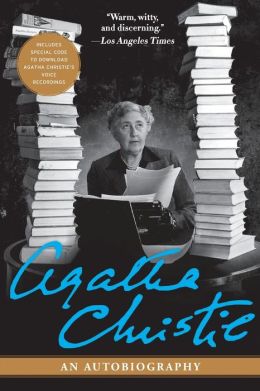
An Autobiography Agatha Christie

An Autobiography. Agatha Christie. 1977/1996. Berkley. 635 pages. [Source: Bought]

Agatha Christie's autobiography has been on my tbr pile for years now. I have looked forward to reading it for so long! I must admit the length had me a little intimidated. But once I started reading this one, I found myself completely absorbed in it. It is truly a fascinating read cover to cover. I think this one could prove appealing to a variety of readers.

Do you love history? I found Agatha Christie's Autobiography to be fascinating. This book is rich in details. Readers learn in great detail about her family and her growing up years. What Christie is describing is a way of life, and the way she saw the world around her. Her thoughts on her parents, grandparents, siblings, the family servants--the cook and the maids and nannies. You get a real sense of what it was to be a child (and teen) growing up in England in the 1890s and 1900s. She was "out" (ready to date) a year or two (or even three) before World War I began.

Are you interested in World War I? in World War II? Christie details what life was like during the war years. She was a nurse for a great part of World War I. She also assisted in dispensing drugs. She fell in love and got married during this time. During World War II she again did her part in the war effort. I believe volunteering in a hospital. She was in and around London during the War. She recalls how she rarely (if ever) took shelter during the raids because she was afraid of being buried alive under all the rubble. She had a grown daughter by that point. A daughter who fell in love, got married, and had a child during this time.
England was at war. It had come. I can hardly express the difference between our feelings then and now. Now we might be horrified, perhaps surprised, but not really astonished that war should come, because we are all conscious that war does come; that it has come in the past and that, at any moment, it might come again. But in 1914 there had been no war for--how long? Fifty years--more? True, there had been the "Great Boer War," and skirmishes on the Northwest frontier, but those had not been wars involving one's own country--they had been large army exercises, as it were; the maintenance of power in far places. This was different--we were at war with Germany. (257)
Are you interested in archaeology? in world-traveling? She spends a good deal of time recalling her travels around the world. She accompanied her first husband on an extended trip--covering several continents. (She left her (quite young) daughter with her mother and sister.) After her divorce--he fell in love with another woman and blamed her for it--she traveled on her own. On one of her trips to the Middle East, she met the man who would become her second husband. He was an archaeologist. While she did not stay with him the duration of all of his digs, she accompanied him on some, and visited on others. Readers learn that Christie LOVED, LOVED, LOVED to travel.

Are you a rehab addict? Christie loved looking at houses, buying houses in need of repair, fixing them up, renting them out, and selling them. She owned many properties at various points in her life. I believe the book said she owned eight during World War II. The book talks about her remodeling and redesigning houses.

Are you interested in writing, in her writing life? You'll find plenty to delight you within her autobiography. She talks about different sides of her writing life. Her novels. Her mystery novels. Her plays. Her short stories. Her poems. She talks about her mistakes and successes. Readers learn about which books she liked best and which book she really, really hated!
It was while I was working in the dispensary that I first conceived the idea of writing a detective story. (289)
People never stop writing to me nowadays to suggest that Miss Marple and Hercule Poirot should meet--but why should they? I am sure the would not enjoy it at all. Hercule Poirot, the complete egoist, would not like being taught his business by an elderly spinster lady. He was a professional sleuth, he would not be at home all in Miss Marple's world. No, they are both stars, and they are stars in their own right. (502)
Do you love to read? Christie shares her thoughts on her favorite writers and books!

I want to emphasize the fact that you do not have to love mysteries in order to find this autobiography of a mystery writer fascinating! I marked so many passages that I wanted to share with you. Too many to actually share. It would overwhelm any post. So just trust me, read this one!

I will choose a quote which happens to bring to mind a certain song from Frozen.
One of the first things that happens when you are attracted to a man and he is to you is that extraordinary illusion that you think exactly alike about everything, that you each say the things the other has been thinking. (228)

© 2014 Becky Laney of Becky's Book Reviews

Thursday, July 18, 2013

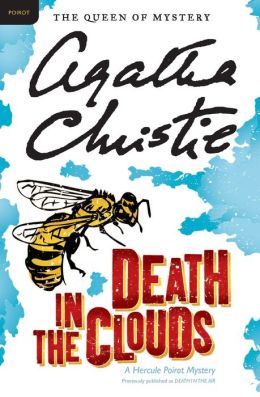
Death in the Clouds (1935)

Death in the Clouds (Death in the Air). Agatha Christie. 1935. 253 pages [Source: Library]

I really enjoyed this Hercule Poirot novel. In this mystery, Poirot is traveling from France to England via airplane. On his trip, one of the passengers dies. For a few seconds at least, it is suspected that a wasp sting is to blame for Madame Giselle's death. But only for a few seconds. A dart is found, a poisoned dart, no doubt. The question is which passenger is a murderer? Poirot has quite a mystery to solve. 

I definitely enjoyed this one! Readers get to know many of the passengers. In particular readers get to know a certain young lady, a hair dresser named Jane Grey. This mystery will take Poirot (and others) back and forth between the two countries. Some clues can only be found in France, for example. Can Poirot solve the crime before the police?

The more I read of Hercule Poirot, the more forgiving I am of his arrogance. Poirot can brag and boast; I'm not sure there is any of his mysteries where he doesn't have a big ego. But Poirot is impressive, and his reputation is well-earned.

Do you have a favorite Hercule Poirot novel? 

© 2013 Becky Laney of Becky's Book Reviews

Tuesday, July 09, 2013

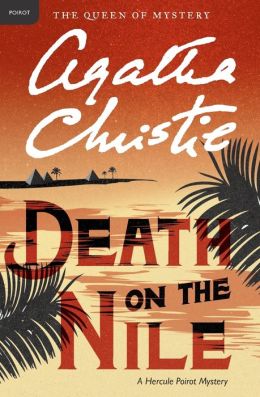
Death on the Nile (1937)

Death on the Nile. Agatha Christie. 1937/2007. Black Dog & Leventhal. 352 pages. [Source: Library]

I LOVED, LOVED, LOVED Agatha Christie's Death on the Nile. It is such a great mystery, very complex! Hercule Poirot and Colonel Race find themselves on board a ship on the Nile, they are in interesting company. Poirot notices the tension between some of his fellow travelers from the very start. And as he takes the time to get to know everyone, to have personal chats with almost every one, his unease only increases. He fears that before the trip is over, murder will have been committed. But who shall the victim be? And who the murderer? Meanwhile, Race is on a mission of his own before a body is even found. He is on the trail of a killer, a radical. He's not sure WHO his man is, just knows that he is almost certainly on board, that is where his clues have led him. When the oh-so-wealthy heiress, Linnet Ridgeway, is murdered on her honeymoon with Simon Doyle, there are plenty of suspects. For not all of the passengers on board are exactly strangers to her....

The first part of this one is set in England, but the rest is all set in Egypt.

This one had me from the start. It was so thrilling! Not only was the plot interesting and surprising and wonderful, the characterization was so well done!!!

My favorite quote:
"Do people interest you too, Monsieur Poirot? Or do you reserve your interest for potential criminals?"
"Madame--that category would not leave many people outside it." (96)
ETA: After reading the book, I wanted to watch the movie adaptation. I really ENJOYED the movie. It stars David Suchet as Hercule Poirot, JJ Feild as Simon Doyle, and Emily Blunt as Linnet Ridgeway, to name just a few. Feild, of course, "is" Henry Tilney. I recognized him right away. And Emily Blunt is equally "Queen Victoria." It was fun to see familiar faces in fascinating roles. If you've read the book recently OR if you remember the characters you'll guess just why. This was my first Poirot adaptation. I've seen plenty of Miss Marple, however.

© 2013 Becky Laney of Becky's Book Reviews

Wednesday, March 13, 2013

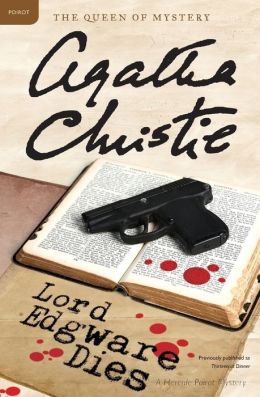
Lord Edgware Dies (1933)

Lord Edgware Dies (OR Thirteen at Dinner). Agatha Christie. 1933. 260 pages.

I absolutely LOVE, LOVE, LOVE this Agatha Christie mystery. It stars both Hercule Poirot and Captain Hastings, a combination I find very hard to resist. The mystery begins with an American celebrity--an actress, Jane Wilkinson--asking Poirot for help. She's not asking him to solve a crime, exactly. She's asking him to go to her husband--whom she hates--and ask him if he'll grant her a divorce. After this consultation, she "carelessly" mentions how she wants her husband to die; at one point she even shares just how she would kill her husband. A few take her seriously pointing out to Poirot that Wilkinson is the type of woman who would kill without thinking it wrong. But Poirot likes to make up his own mind, come to his own conclusions about people's characters and motives.
So when a little time later, Lord Edgware is killed, Poirot becomes interested in the case...

This one was a delightful mystery! I just love Agatha Christie! This may be among my favorite Poirot mysteries!!!

Favorite quotes:
"I always find alibis very enjoyable," he remarked. "Whenever I happen to be reading a detective story I sit up and take notice when the alibi comes along." (122)
"Between the deliberate falsehood and the disinterested inaccuracy it is very hard to distinguish sometimes.."
"What do you mean?"
"To deceive deliberately--that is one thing. But to be so sure of your facts, of your ideas and of their essential truth that the details do not matter--that, my friend, is a special characteristic of particularly honest persons." (128)
"The positive witness should always be treated with suspicion, my friend. The uncertain witness who doesn't remember, isn't sure, will think a minute--ah! yes, that's how it was--is infinitely more to be depended upon!"
"Dear me, Poirot," I said. "You upset all my preconceived ideas about witnesses." (129)
"My good friend," he said. "I depend upon you more than you know."
I was confused and delighted by these unexpected words. He had never said anything of the kind to me before. Sometimes, secretly, I had felt slightly hurt. He seemed almost to go out of his way to disparage my mental powers.
Although I did not think his own powers were flagging, I did realize suddenly that perhaps he had come to depend on my aid more than he knew.
"Yes," he said dreamily. "You may not always comprehend just how it is so--but you do often, and often point the way."
I could hardly believe my ears.
"Really, Poirot," I stammered. "I'm awfully glad, I suppose I've learnt a good deal from you one way or another--"
He shook his head.
"Mais non, ce n'est pas ca. You have learnt nothing."
"Oh!" I said, rather taken aback.
"That is as it should be. No human being should learn from another. Each individual should develop his own powers to the uttermost, not try to imitate those of someone else. I do not wish you to be a second and inferior Poirot. I wish you to be the supreme Hastings. In you, Hastings, I find the normal mind almost perfectly illustrated." (133)
"You are like someone who reads the detective story and who starts guessing each of the characters in turn without rhyme or reason." (135)
Read Lord Edgware Dies
  • If you enjoy murder mysteries with more than one murder
  • If you enjoy Agatha Christie
  • If you love Hercule Poirot and Captain Hastings
  • If you enjoy vintage, British mysteries
© 2013 Becky Laney of Becky's Book Reviews
Thursday, March 07, 2013

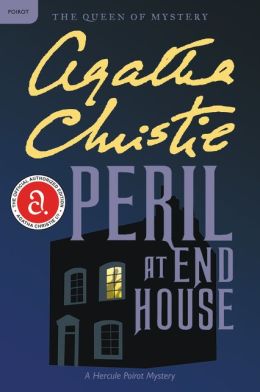
Peril at End House (1932)

Peril at End House. Agatha Christie. 1932. HarperCollins. 287 pages.

It is such a pleasure to read an Agatha Christie mystery. Peril at End House stars Hercule Poirot and Captain Hastings. (I really love it when Hastings is "helping" Poirot solve a case.) This mystery is a hard one for Poirot to solve, though he doesn't realize that until the very, very end! This is a novel that could very easily be spoiled so I won't say much about it except that it was a pure delight to read this one! 

I think I LOVED this one so much because it kept me guessing, and it kept Poirot and Hastings guessing as well! While it's not unusual for a mystery--a crime--to keep Hastings guessing, it was satisfying to see Poirot stumble around a bit!

Favorite quotes:
“Poirot," I said. "I have been thinking."
"An admirable exercise my friend. Continue it.”
“You have a tendency, Hastings, to prefer the least likely. That, no doubt, is from reading too many detective stories.” 
“Evil never goes unpunished, Monsieur. But the punishment is sometimes secret.” 
 Read Peril at End House
  • If you like Agatha Christie
  • If you like classic or vintage mysteries
  • If you like British cozy mysteries
  • If you like Captain Hastings and Hercule Poirot

© 2013 Becky Laney of Becky's Book Reviews
Friday, February 15, 2013

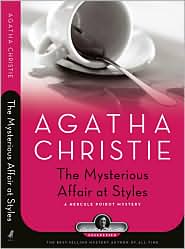
The Mysterious Affair at Styles (1920)

The Mysterious Affair at Styles. Agatha Christie. 1920/2006. Black Dog & Leventhal. 224 pages.

The intense interest aroused in the public by what was known at the time as "The Styles Case" has now somewhat subsided. Nevertheless, in view of the worldwide notoriety which attended it, I have been asked, both by my friend Poirot and the family themselves, to write an account of the whole story. This, we trust, will effectually silence the sensational rumours which still persist.

The Mysterious Affair at Styles was one of my first mysteries to read, my first Agatha Christie. It is also among my first Christie mysteries to reread. This was Christie's first novel, and it stars Hercule Poirot.

Captain Hastings, our narrator, has been invited to the home of an old friend. While he's visiting this family, something horrible happens: a murder. It's not absolutely unexpected, he'd been informed by one of the occupants of the house that the family was a mess and that Mrs. Inglethorp is in danger. But it is a surprise. He decides that it would be wise if he called Hercule Poirot, a Belgian detective he'd met previously. The two are definitely friendly, but, they aren't as close as they are in later books. In this first novel, Hastings is very amateurish and completely unused to Poirot's tricks and methods. Hastings instincts and observations seem to be all wrong. His insights amusing Poirot perhaps. Though it is one of Hastings comments that help Poirot find his missing link...

The presentation and arrangement of the clues is confusing, purposefully confusing I believe since the case is seen entirely through Hastings view point. Since Hastings was having a horrible time solving the case and focusing in on what was important and how the suspects fit into it...readers can at times struggle along with him. Hastings always has an idea, a guess, and he's always seeking confirmation from his hero, Poirot. Since Poirot is reluctant to share his own opinions on the case with Hastings, this can be frustrating to him. Why won't Poirot tell him if he's right or close to being right?

I would recommend this one.

Read The Mysterious Affair at Styles
  • If you enjoy vintage mysteries, cozy mysteries, British mysteries
  • If you enjoy Agatha Christie
  • If you enjoy Hercule Poirot and Captain Hastings

© 2013 Becky Laney of Becky's Book Reviews

Tuesday, October 02, 2012

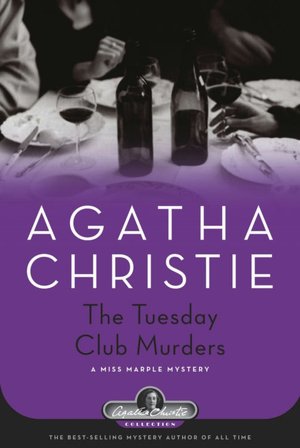
Tuesday Club Murders

The Tuesday Club Murders. Agatha Christie. 1932/2007. Black Dog & Leventhal Publishers. 256 pages.

I enjoyed The Tuesday Club Murders. While short stories are not my favorite, I prefer novels to short stories, I still enjoyed Miss Marple. This one may best be enjoyed one story at a time. There really isn't a need to rush through these stories all at once. There are thirteen stories in all: The Tuesday Night Club, The Idol House of Astarte, Ingots of Gold, The Blood-Stained Pavement, Motive v. Opportunity, The Thumb Mark of St. Peter, The Blue Geranium, The Companion, The Four Suspects, A Christmas Tragedy, The Herb of Death, The Affair at the Bungalow, and Death by Drowning. It wasn't so much that any one story WOWED me, it was more the fact that I enjoyed the cozy atmosphere of the stories as a whole. I liked Christie's writing and her characters. It was a pleasant way to spend my time.  

Read The Tuesday Club Murders
  • If you like short stories
  • If you like mysteries
  • If you like Agatha Christie
  • If you like Miss Marple

© 2012 Becky Laney of Becky's Book Reviews

Wednesday, July 04, 2012

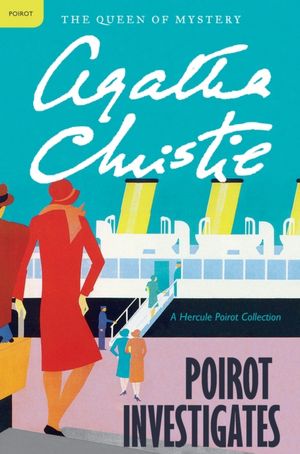
Poirot Investigates

Poirot Investigates. Agatha Christie. 1924/2011. HarperCollins. 256 pages.

I loved Poirot Investigates. Perhaps because I had low expectations? This was my first experience reading Christie's short stories. And since I'm not generally a fan of short stories, I didn't have great expectations for enjoying these fourteen stories. Each story is narrated by Captain Hastings. And he is a character that I tend to love and adore. I've found that Hercule Poirot needs a little help either from Hastings or Ariadne Oliver to help tame his arrogance. I have definitely come to love Hercule Poirot through the mysteries I've read, but, it was a long road for me. It wasn't instantaneous like it was with Miss Marple.

This collection of short stories was originally published in 1925. So it is "early" Poirot. The short stories in this collection are:

The Adventure of the Western Star
The Tragedy at Marsdon Manor
The Adventure of the Cheap Flat
The Mystery of Hunter's Lodge
The Million Dollar Bond Robbery
The Adventure of the Egyptian Tomb
The Jewel Robbery at the Grand Metropolitan
The Kidnapped Prime Minister
The Disappearance of Mr. Davenheim
The Adventure of the Italian Nobleman
The Case of the Missing Will
The Veiled Lady
The Lost Mine
The Chocolate Box

It's not that any one story is amazing or incredible. That's not why I loved this collection. For me it is all about the relationship between Poirot and Hastings. Their conversations. Their friendship. Seeing these two together. There is just something DELIGHTFUL about spending time in their company. 

© 2012 Becky Laney of Becky's Book Reviews

Tuesday, June 26, 2012

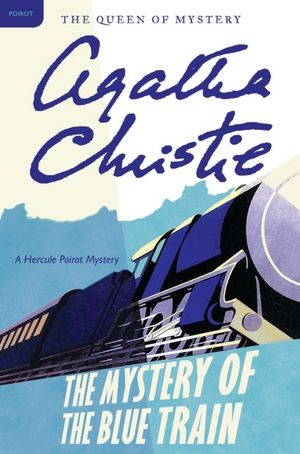
The Mystery of the Blue Train

The Mystery of the Blue Train. Agatha Christie. 1928/2011. HarperCollins. 320 pages.

I have gradually come to appreciate--dare I say even love?--Hercule Poirot. Even so, this one took three or four chapters to take to this one. At first I thought I couldn't even finish it, I just didn't like the flow of the first few chapters, introducing all these people (often nameless), the focus on a piece of jewelry, all this big build-up before introducing the main characters, etc. The story was oh-so-slow to start. But then at one point, everything started to click, started to move, and the novel became much better.

So what is this one about? Well, let's start with the victim, Ruth Kettering. She's in a very unhappy marriage. She's in love with someone else, her husband is in lust with someone else. (Well, to be fair, I think she's in lust with someone else too. Except I think she honestly thinks that that lust is love, while I think the husband, Derek, is more realistic and realizes it is what it is.) Her affair being somewhat mostly private and out of the public's eyes, his not so much, he's "in lust" with an exotic dancer. Ruth's father is an American millionaire, and he is pressuring her to divorce her husband and start over. When the novel really opens, he's gifting her with some very, very, very expensive and oh-so-rare jewels, rubies. These are gems with a PAST and then some. Several weeks, if not several months, go by, and the novel next opens with a train trip. Ruth is on her way to meet her lover, her husband and his mistress just happen to be on the same train, and yet supposedly no one knows this. But perhaps it isn't right to start with the victim? Since the main character, the main character besides Poirot, is a young woman who's just recently inherited money. Katherine. This is truly more her story. For she's on the train as well, and she met Ruth just hours before her death. The two took a liking to one another, and Ruth confided in her a good deal. Even told Katherine how uneasy she felt about this trip, like something horrible was going to happen to her.

It was easy to see why Katherine was so likable. It really was. This Agatha Christie novel was good. I wouldn't say that it's one of the best, best, best mystery novels ever. Christie wrote so many, so many GREAT novels, that it would be hard for this one to make the top five or top ten, but it is definitely a good novel. I liked it!!!

Read The Mystery of the Blue Train
  • If you're a fan of Agatha Christie
  • If you're a fan of Hercule Poirot
  • If you're a fan of British mysteries, especially British mysteries set on a train 

© 2012 Becky Laney of Becky's Book Reviews

Tuesday, June 19, 2012

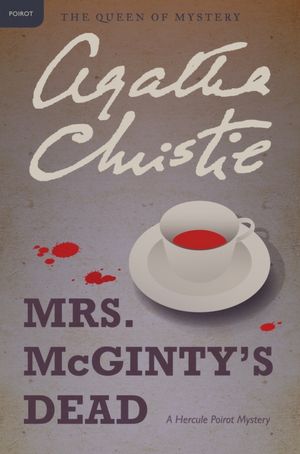
Mrs. McGinty's Dead

Mrs. McGinty's Dead. Agatha Christie. 1952/2011. HarperCollins. 272 pages. 

I definitely LOVED Mrs. McGinty's Dead. I really, really, really LOVED the surprise appearance of Ariadne Oliver. But, of course, the main star of this one is Hercule Poirot. The novel starts off rather unpleasantly with Poirot thinking to himself how wonderful he is, how marvelous he is, and how much he needs someone to talk to so he can show off how wonderful he is. So when he receives an unexpected visit from Superintendent Spence who is asking him to take on a closed case, well, he can't resist. Spence was one of the men who helped convict James Bentley of murder, but, he's having doubts, strong doubts. He believes that if Bentley is executed, well, they'll be executing an innocent man. He's not sure who killed Mrs. McGinty, but he knows that Poirot can solve this case better than anyone else. So Poirot travels to the village of the crime and he learns what only he can learn...

I LOVED this one!!! Loved hearing Mrs. Oliver talk about her writing, loved seeing her "work with" someone who is adapting her character, her main detective, into a play. Loved hearing her grumble and complain about her Finn detective.

This one is a great mystery, and, it was just so much fun to spend time with Christie's characters.

Read Mrs. McGinty's Dead
  • If you're a fan of Agatha Christie, Hercule Poirot, or Mrs. Oliver
  • If you're a mystery lover
© 2012 Becky Laney of Becky's Book Reviews