Showing posts with label books reread in 2018. Show all posts

Thursday, December 20, 2018

The House Without a Christmas Tree

The House Without a Christmas Tree. Gail Rock. 1974. 84 pages. [Source: Bought]

First sentence: Carla Mae and I were sitting in our little kitchen at the old wooden table, with our spoons poised in mid-air. In front of each of us was a hard-boiled egg perched in an egg cup. We both stared intently at the faces we had drawn on our eggs. The longer the stare, the better the hex. "Who's yours today?" she asked. "Billy Wild," I said, making a face.


Premise/plot: The book is set in a small town in 1946. Addie lives with her father and grandmother. Her grandmother is a "character" in all the best ways. Unfortunately, some of her classmates mean it in a bad way. She has a super-complicated relationship with her father. He doesn't understand her; she doesn't understand him. Neither one is good at expressing exactly what they mean to one another.

The plot, of course, appears to mainly be about her wanting a Christmas tree. He said no; he meant no. No, no, no. But the heart wants what the heart wants, and Addie wants a Christmas tree desperately.

My thoughts: I really enjoy rereading this one every few years. It's a lovely quick read. If you enjoy historical fiction OR holiday stories, this one is a treat.

I read it this year with my family tree challenge in mind. Addie--if real--would have been born around the same time as my great-aunts.

© 2018 Becky Laney of Becky's Book Reviews

Friday, December 14, 2018

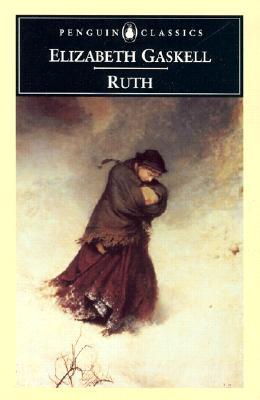
Ruth

Ruth. Elizabeth Gaskell. 1853. 432 pages. [Source: Bought]
First sentence: There is an assize-town in one of the eastern counties which was much distinguished by the Tudor sovereigns, and, in consequence of their favour and protection, attained a degree of importance that surprises the modern traveller.


Premise/plot: Ruth Hilton, a young apprenticed seamstress, makes a mistake when she falls in love with a wealthy young man, Henry Bellingham. The two run away together--to Wales, I believe. When he becomes sick, his mother comes and rescues him from the "evil tramp" Ruth. What will Ruth's future be now? Is there hope for this 'fallen woman'?

Thankfully Elizabeth Gaskell is NOT Nathaniel Hawthorne. And there are plenty of kind, warm-hearted Christian souls who extend grace, compassion, and actual care. Mr. Thurstan Benson (a Dissenting minister) and his sister, Faith, open up their home and their hearts to the pregnant Ruth. She will remain with them for years raising her son Leonard.

Not content to live off of charity, Ruth first becomes a governess and then later a sick nurse. The novel illustrates through its characters--Ruth, Faith, Sally, Thurstan, etc.--faith in action.

My thoughts: I love, love, love Elizabeth Gaskell. This novel is a tragedy. A beautiful, well-written tragedy with unforgettable characters. I had forgotten the sadness and just remembered the goodness. I knew I loved it. I knew I needed to reread it at some point. I knew I considered the characters good friends. I forgot all the sads. The fact that I find it a devastating read--emotionally--only testifies that the characterization is excellent.

Quotes:
  • Well, my dear, you must learn to think and work too; or, if you can't do both, you must leave off thinking.
  • The night before, she had seen her dead mother in her sleep, and she wakened, weeping. And now she dreamed of Mr Bellingham, and smiled. And yet, was this a more evil dream than the other?
  • The future lay wrapped in a golden mist, which she did not care to penetrate; but if he, her sun, was out of sight and gone, the golden mist became dark heavy gloom, through which no hope could come. He took her hand.
  • Low and soft, with much hesitation, came the "Yes;" the fatal word of which she so little imagined the infinite consequences. The thought of being with him was all and everything.
  • Poor Ruth! her faith was only building up vain castles in the air; they towered up into heaven, it is true, but, after all, they were but visions.
  • "In the eye of God, she is exactly the same as if the life she has led had left no trace behind. We knew her errors before, Faith." "Yes, but not this disgrace—this badge of her shame!" "Faith, Faith! let me beg of you not to speak so of the little innocent babe, who may be God's messenger to lead her back to Him.
  • "I think you, Thurstan, are the first person I ever heard rejoicing over the birth of an illegitimate child. It appears to me, I must own, rather questionable morality." 
  • You yourself have not greater sorrow over this young creature's sin than I have: the difference is this, you confuse the consequences with the sin."
  • We are both right: I, in the way in which the child ought to be viewed; you, dear good Faith, for thinking of taking her home with us. God bless you, dear, for it!
  • It is better not to expect or calculate consequences. The longer I live, the more fully I see that. Let us try simply to do right actions, without thinking of the feelings they are to call out in others.
  • My dear Ruth, you don't know how often I sin; I do so wrong, with my few temptations. We are both of us great sinners in the eyes of the Most Holy; let us pray for each other.
  • I cannot abide the way some folk has of denying there's trouble or pain to be met; just as if their saying there was none, would do away with it.
  • There's a right and a wrong way of setting about everything—and to my thinking, the right way is to take a thing up heartily, if it is only making a bed.
  • 'Sally, do you think God has put us into the world just to be selfish, and do nothing but see after our own souls? or to help one another with heart and hand, as Christ did to all who wanted help?'
  •  Everything may be done in a right way or a wrong; the right way is to do it as well as we can, as in God's sight; the wrong is to do it in a self-seeking spirit, which either leads us to neglect it to follow out some device of our own for our own ends, or to give up too much time and thought to it both before and after the doing.
  • Those summer mornings were happy, for she was learning neither to look backwards nor forwards, but to live faithfully and earnestly in the present.
  • I dare not think of happiness—I must not look forward to sorrow. God did not put me here to consider either of these things.
  • The time that has pressed down my life like brands of hot iron, and scarred me for ever, has been nothing to you.
  • "Leonard—when I was very young I did very wrong. I think God, who knows all, will judge me more tenderly than men—but I did wrong in a way which you cannot understand yet"
  •  I declare before God, that if I believe in any one human truth, it is this—that to every woman who, like Ruth, has sinned, should be given a chance of self-redemption—and that such a chance should be given in no supercilious or contemptuous manner, but in the spirit of the holy Christ."I state my firm belief, that it is God's will that we should not dare to trample any of His creatures down to the hopeless dust;
  • Now, let us stand firm on the truth. You have no new fault to repent of. Be brave and faithful. It is to God you answer, not to men.
  • The shame of having your sin known to the world, should be as nothing to the shame you felt at having sinned. We have dreaded men too much, and God too little, in the course we have taken.
  • Any fastidiousness I shall have to get rid of, and I shall be better without; but any true refinement I am sure I shall find of use;    
  • Would you not rather be nursed by a person who spoke gently and moved quietly about than by a loud bustling woman?
  • There is always something aggravating in being told, that the mood in which we are now viewing things strongly will not be our mood at some other time. It implies that our present feelings are blinding us, and that some more clear-sighted spectator is able to distinguish our future better than we do ourselves.
  • Her left hand truly knew not what her right hand did; and Leonard was overwhelmed now to hear of the love and the reverence with which the poor and outcast had surrounded her. 
  • From that day forward Leonard walked erect in the streets of Eccleston, where "many arose and called her blessed."
  •  "We have no right to weigh human lives against each other."
 

© 2018 Becky Laney of Becky's Book Reviews

Thursday, December 13, 2018

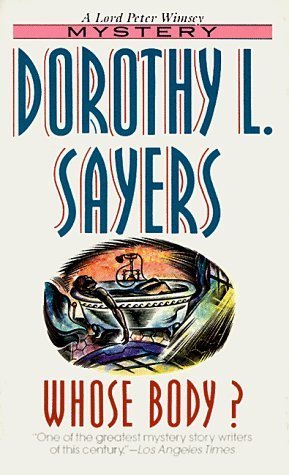
Whose Body?

Whose Body? Dorothy L. Sayers. 1923/1995. HarperTorch. 224 pages. [Source: Bought]

First sentence: "Oh damn!" said Lord Peter Wimsey at Piccadilly Circus.

Premise/plot: Whose Body? is the first novel in a mystery series starring Lord Peter Wimsey as an amateur detective. (He solves crimes with a little help from his butler/valet, Bunter, and in later mysteries with his girlfriend/wife.) In the opening pages of the novel, Lord Peter receives a phone call--or 'phone call--from his mother the Dowager Duchess. A murder has been committed. A naked man has been found in a bath tub of an acquaintance of hers. Is he interested in solving the case and working with Scotland Yard?

My thoughts: As a whole, I love, love, love the series by Dorothy Sayers. That being said, I don't love each and every book in the series equally. I enjoyed this one very much. I found it to be witty and delightful. It was super quotable. I would recommend it as a starting point for reading the series.

Quotes:
  • Exit the amateur of first editions; new motive introduced by solo bassoon; enter Sherlock Holmes, disguised as a walking gentleman. There goes Bunter. Invaluable fellow--never offers to do his job when you've told him to do somethin' else. (5)
  • "Sugg's a beautiful, braying ass," said Lord Peter. "He's like a detective in a novel." (18)
  • "I love trifling circumstances," said Lord Peter. "so many men have been hanged by trifling circumstances." (20)
  •  "Parker, acushla, you're an honour to Scotland Yard. I look at you, and Sugg appears a myth, a fable, an idiot-boy, spawned in a moonlight hour by some fantastic poet's brain. Sugg is too perfect to be possible." (23)
  • "Look here, Wimsey--you've been reading detective stories; you're talking nonsense." (29)
  • Of course, if this were a detective story, there'd have been a convenient shower exactly an hour before the crime and a beautiful set of marks which could only have come between two and three in the morning, but this being real life in a London November, you might as well expect footprints in Niagra. (44)
  • "It's a hard life, valeting by day and developing by night--morning tea at any time from 6:30 to 11, and criminal investigation at all hours. It's wonderful, the ideas these rich men with nothing to do get into their heads." (49)
  • "Have you any Scotch blood in you, Parker?" inquired his colleague, bitterly.
    "Not that I know of," replied Parker. "Why?"
    "Because of all the cautious, ungenerous, deliberate and cold-blooded devils I know," said Lord Peter, "you are the most cautious, ungenerous, deliberate and cold-blooded. Here I am, sweating my brains out to introduce a really sensational incident into your dull and disreputable little police investigation, and you refuse to show a single spark of enthusiasm."
    "Well, it's no good jumping at conclusions."
    "Jump? You don't even crawl distantly within sight of a conclusion. I believe if you caught the cat with her head in the cream-jug you'd say it was conceivable that the jug was empty when she got there."
    "Well, it would be conceivable, wouldn't it?" (51)
  • "There's nothing you can't prove if your outlook is only sufficiently limited. Look at Sugg." (69)
  • Assigning a motive for the murder of a person without relations or antecedents or even clothes is like trying to visualize the fourth dimension--admirable exercise for the imagination, but arduous and inconclusive. (82)
  • "One demands a little originality in these days, even from murderers," said Lady Swaffham. "Like dramatists, you know--so much easier in Shakespeare's time, wasn't it? Always the same girl dressed up as a man, and even that borrowed from Boccaccio or Dante or somebody. I'm sure if I'd been a Shakespeare hero, the very minute I saw a slim-legged young page-boy I'd have said: "Odsbodikins! There's that girl again!" (123)
  • "And in short stories," said Lord Peter, "it has to be put in statement form, because the real conversation would be so long and twaddly and tedious, and nobody would have the patience to read it. Writers have to consider their readers, you see." (158)


© 2018 Becky Laney of Becky's Book Reviews

Dork Diaries: Tales from a Not-so-Fabulous Life

Dork Diaries #1: Tales From A Not-so-fabulous Life. Rachel Renee Russell. 2009. 282 pages. [Source: Borrowed]
First sentence: Sometimes I wonder if my mom is brain dead. Then there are days when I know she is. Like today.

Premise/plot: Nikki Maxwell, the heroine, is a self-professed dork keeping a diary. A diary wasn't her idea--it was a gift, a gift she HATED. But it's a gift that becomes super-practical as the book progresses. If it's practical to keep a log of every angst you experience in your life that is! Nikki has enough angst to spare. She doesn't like her mom, her dad, her younger sister, her new school, etc. The school mean-girl has a locker next to hers--her name is MacKenzie. Nikki would have us believe she is evil through and through. (From what we can gather, she almost is.) The only thing Nikki does love is ART. That's not quite true, she also has a HUGE crush on a boy named Brandon. But is that love? Perhaps.

This first book in the series chronicles her angst in September and October.

My thoughts: There comes a point in every life when reading about middle school angst is too trivial to be authentically enjoyable. A few things annoyed me about Nikki: 1) she hates books and thinks reading is boring. 2) she is super-disrespectful to her parents and dismissive of her sister.

I don't expect every heroine to love, love, love to read or even to like to read. But it's a far cry from being a non-reader with a couple of other hobbies that take up all your free me-time to being anti-book altogether. Yet at the same time a character who doesn't like to read is a beloved heroine in a book. The series--the characters--are getting kids to enjoy reading.

I can understand being embarrassed by parents in front of your peers. Like not wanting your parents to drop you off at school. Like not wanting to be seen hugging your parents. Like wanting your own space and some privacy. But I don't understand how in her own home she can dislike--dare I say hate--her parents so much? Same with the sister. She is so selfish and self-centered. She begrudges her family the air they breathe. Yet. Perhaps she is using her diary to vent. Maybe her worst feelings and reactions are saved for print, for her diary. Maybe she's getting it all out of her system in a way that doesn't hurt others.

The book also is a bit dated. If I had a dollar for every time Tyra Banks and/or the Tyra Banks talk show was mentioned, I'd have enough money to buy the next book in the series. The show was canceled in 2010. I'm guessing that most of the people reading this book today would have been born circa 2008-2010. I would further guess that most kids know her more from America's Got Talent.

All that being said, almost any book that get children--tweens--reading is a good thing. Be that Dork Diaries for later generations or Babysitter's Club for my own generation.

Series books can be satisfying for readers of all ages. There is great comfort to be had in knowing that there is more to come. Binge-reading can be just as giddy-making as binge-watching. 


© 2018 Becky Laney of Becky's Book Reviews

Wednesday, December 12, 2018

Board book: You Are My Cupcake

You Are My Cupcake. Joyce Wan. 2011. Scholastic. 14 pages. [Source: Library]

First sentence:
You are my cupcake
My sticky little gum drop
My mushy little sweet pea
My oven baked cutie pie...
Premise/plot: Do you LOVE, LOVE, LOVE, LOVE your little one? Do you want to spend some quality time with him or her with book in hand? (Or with book in hand until you've memorized it cover to cover.) Joyce Wan's You Are My Cupcake is a great choice, perhaps the best choice. You could read the text, I suppose, or you could SING it. The words fits perfectly perfect to the tune You Are My Sunshine. You might have to do slight adjustment with the last line changing "Baby I could just eat you up!" to "Baby, I could just eat you all up!" But otherwise this one is PERFECT.

My thoughts:  The text is perfectly perfect. The illustrations are super-super-adorable. Share this one with your little one often! It's a perfect book to fit into your daily routine. After all, your little one won't remain your chubby little pumpkin forever.


© 2018 Becky Laney of Becky's Book Reviews

Tuesday, December 11, 2018

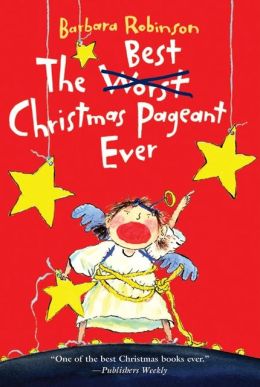
The Best Christmas Pageant Ever

The Best Christmas Pageant Ever. Barbara Robinson. 1972. HarperCollins. 128 pages. [Source: Bought]

First sentence: The Herdmans were absolutely the worst kids in the history of the world. They lied and stole and smoked cigars (even the girls) and talked dirty and hit little kids and cussed their teachers and took the name of the Lord in vain and set fire to Fred Shoemaker's old broken-down toolhouse. The toolhouse burned right down to the ground, and I think that surprised the Herdmans. They set fire to things all the time, but that was the first time they managed to burn down a whole building. I guess it was an accident. I don't suppose they woke up that morning and said to one another, "Let's go burn down Fred Shoemaker's toolhouse"...but maybe they did. After all, it was a Saturday, and not much going on.

Premise/plot: What happens to a small-town church pageant when the WORST kids in the world 'take over' and take all the leading roles in the nativity? Perhaps readers hearts--along with the Herdmans'--will grow three sizes.  (There are six Herdmans in all: Ralph, Imogene, Leroy, Claude, Ollie, and Gladys.)

My thoughts: This one is written in the first person. I don't know that we ever learn her name in the book. Usually that is the kind of thing that drives me CRAZY. Every character needs to have a name. But it doesn't bother me horribly in this one. Perhaps because it keeps the focus on where it belongs--the Herdmans as they discover the true meaning of Christmas for themselves.

The writing is WONDERFUL. It is funny--dare I say hilarious? Yet it's not without substance and heart. The text perhaps has the ability to reveal the self-righteous hypocrite lurking inside the heart of every professing believer OR every "professing" believer.

For whom did Jesus die? Who needs saving? Who is the gospel message for? Is it up to us to judge who is worthy--or unworthy--of hearing the gospel? Is the gospel unable to save the worst offenders, the biggest sinners?

The book itself is NOT preachy. Not in a didactic way. The book is not in any way promoting praying a little prayer, coming up an aisle, signing a pledge card, getting baptized.

The Sunday-school-and-church-attending children of a community are taking part in the annual Christmas pageant. During the pageant itself Scripture is read aloud. Also during the rehearsals, the pageant director reads the full nativity story aloud. Some questions are asked; some are answered. Some questions seem so out-of-the-box that there are no quick and easy answers.

There is a genuineness to this one. The Herdmans have never been "churched." They have not been exposed to any bible stories or songs. They have not heard Scripture read aloud before. They have not read the Bible for themselves. Their questions are not coming from a place of sneering or hostility. They are curious. They want to know. And this knowing brings with it feelings and reactions. Feelings and reactions that seem almost FOREIGN to the churched.

The book truly captures the getting-it moment, the moment when one realizes the true meaning of Christmas.


© 2018 Becky Laney of Becky's Book Reviews

Friday, December 07, 2018

A Christmas Carol

A Christmas Carol. Charles Dickens. 1843. 96 pages. [Source: Bought]

First sentence: MARLEY WAS DEAD, to begin with. There is no doubt whatever about that.

Premise/plot:  Who isn't familiar with the story of Scrooge?! Still, I suppose *something* must be said. Scrooge HATES Christmas. Hate is too soft a word really for the rage he feels when he thinks about the holiday. For Scrooge hating comes as naturally as breathing. He loves no one or no thing--nothing except money and making a profit. But what is driving his obsession with money? what is driving him to live as he does--to make the choices he does? Could there be a secret or two in his past that holds the answers to these questions? Can Scrooge be saved from his own worst enemy--himself?

If Scrooge is to be saved--can he be saved?!--it will take some supernatural intervention. For Scrooge won't be saving himself. For one thing, Scrooge does not see his own need to be saved. Saved from what exactly?!?! Saved from success?! As far as Scrooge is concerned, everything in his life is just as it should be. He in need of help? he in need of saving? Don't be ridiculous.

He will be visited by four ghosts--the first ghost being Marley, his dead business partner of old. The other three ghosts being Christmas spirits past, present, and future. Can these spirits open Scrooge's eyes? Will he start to see--will he start to judge--life differently?

My thoughts: I've read this one quite a few times. I've reviewed it a few times too. My favorite review of it can be found at Operation Actually Read Bible. In that review, I share my spiritual assessment of this Christmas story.

Quotes:
  • The more he thought, the more perplexed he was; and the more he endeavored not to think, the more he thought.
  • Now, being prepared for almost anything, he was not by any means prepared for nothing; 

© 2018 Becky Laney of Becky's Book Reviews

Thursday, December 06, 2018

The Lion, The Witch, and The Wardrobe

The Lion, The Witch, and the Wardrobe. (The Chronicles of Narnia #1) C.S. Lewis. Illustrated by Pauline Baynes. 1950. 186 pages. [Source: Bought]

 First sentence: ONCE THERE WERE FOUR CHILDREN whose names were Peter, Susan, Edmund and Lucy.

Premise/plot: During the second world war, the Pevensie children are evacuated to the country. Peter, Susan, Edmund, and Lucy accidentally discover a magical country--Narnia--within a wardrobe in a spare room. Lucy discovers Narnia first and meets a faun, Mr. Tumnus. Next to enter is the turkish-delight-loving Edmund. He meets the Queen--or the White Witch. But it isn't long before all four children enter Narnia and change the course of its history--not to mention their own lives--forever.

My thoughts: I love, love, love The Lion, The Witch, and the Wardrobe. I had forgotten how SHORT a read it really is. Perhaps because the movie adds so much drama and action. If I had to guess, I'd say that it would take a person longer to watch the movie than to actually read the book. At least if you're a somewhat fast reader like I am. 

I love that the book doesn't focus on battles and blood. Yes, readers know that there is a fierce battle taking place, but Lewis' focus is elsewhere. While the battle rages on, readers are with Lucy, Susan, and Aslan. We are eye-witnesses not to the battle but to Aslan's resurrecting power as he reawakens the statues and assembles his liberated 'army' to join in the battle.

No matter what the movie may be, the book is not action-driven. It is character-driven. It is focused on relationships and feelings. I loved that as a child and I love that now. That being said, the movie is very good.

Quotes:  
  • Daughter of Eve from the far land of Spare Oom where eternal summer reigns around the bright city of War Drobe, how would it be if you came and had tea with me?
  • And really it was a wonderful tea. There was a nice brown egg, lightly boiled, for each of them, and then sardines on toast, and then buttered toast, and then toast with honey, and then a sugar-topped cake.
  • And the tune he played made Lucy want to cry and laugh and dance and go to sleep all at the same time.
  • “It’s—it’s a magic wardrobe. There’s a wood inside it, and it’s snowing, and there’s a Faun and a Witch and it’s called Narnia; come and see.
  • “I see you are an idiot, whatever else you may be,” said the Queen. “Answer me, once and for all, or I shall lose my patience. Are you human?
  • “A door. A door from the world of men! I have heard of such things. This may wreck all. But he is only one, and he is easily dealt with.
  • The more he ate the more he wanted to eat, and he never asked himself why the Queen should be so inquisitive.     
  • “Why don’t they teach logic at these schools? There are only three possibilities. Either your sister is telling lies, or she is mad, or she is telling the truth. You know she doesn’t tell lies and it is obvious that she is not mad. For the moment then and unless any further evidence turns up, we must assume that she is telling the truth.
  • “But do you really mean, sir,” said Peter, “that there could be other worlds—all over the place, just round the corner—like that?
  • “I don’t want to go a step further and I wish we’d never come. But I think we must try to do something for Mr. Whatever-his-name-is—I mean the Faun.
  • “They say Aslan is on the move—perhaps has already landed.” And now a very curious thing happened. None of the children knew who Aslan was any more than you do; but the moment the Beaver had spoken these words everyone felt quite different.
  • At the name of Aslan each one of the children felt something jump in its inside. Edmund felt a sensation of mysterious horror. Peter felt suddenly brave and adventurous. Susan felt as if some delicious smell or some delightful strain of music had just floated by her. And Lucy got the feeling you have when you wake up in the morning and realize that it is the beginning of the holidays or the beginning of summer.
  • “Who is Aslan?” asked Susan. “Aslan?” said Mr. Beaver. “Why, don’t you know? He’s the King. He’s the Lord of the whole wood, but not often here, you understand.
  • “Turn him into stone? If she can stand on her two feet and look him in the face it’ll be the most she can do and more than I expect of her.
  • “Aslan a man!” said Mr. Beaver sternly. “Certainly not. I tell you he is the King of the wood and the son of the great Emperor-beyond-the-Sea. Don’t you know who is the King of Beasts? Aslan is a lion—the Lion, the great Lion. 
  • “if there’s anyone who can appear before Aslan without their knees knocking, they’re either braver than most or else just silly.
  • “Safe?” said Mr. Beaver; “don’t you hear what Mrs. Beaver tells you? Who said anything about safe? ‘Course he isn’t safe. But he’s good. He’s the King, I tell you.
  • “I’m longing to see him,” said Peter, “even if I do feel frightened when it comes to the point.
  • “Didn’t I tell you,” answered Mr. Beaver, “that she’d made it always winter and never Christmas? Didn’t I tell you? Well, just come and see!
  • He was a huge man in a bright red robe (bright as holly berries) with a hood that had fur inside it and a great white beard that fell like a foamy waterfall over his chest.
  • He was so big, and so glad, and so real, that they all became quite still. They felt very glad, but also solemn.
  • People who have not been in Narnia sometimes think that a thing cannot be good and terrible at the same time.
  • “Please—Aslan,” said Lucy, “can anything be done to save Edmund?” “All shall be done,” said Aslan. “But it may be harder than you think.
  • “Here is your brother,” he said, “and—there is no need to talk to him about what is past.” Edmund shook hands with each of the others and said to each of them in turn, “I’m sorry,” and everyone said, “That’s all right.
  • “Oh, you’re real, you’re real! Oh, Aslan!” cried Lucy, and both girls flung themselves upon him and covered him with kisses. 
  • “It means,” said Aslan, “that though the Witch knew the Deep Magic, there is a magic deeper still which she did not know. Her knowledge goes back only to the dawn of time.
  • But if she could have looked a little further back, into the stillness and the darkness before Time dawned, she would have read there a different incantation.
  • She would have known that when a willing victim who had committed no treachery was killed in a traitor’s stead, the Table would crack and Death itself would start working backward.
  • “Does he know,” whispered Lucy to Susan, “what Aslan did for him? Does he know what the arrangement with the Witch really was?
  • “Oughtn’t he to be told?” said Lucy. “Oh, surely not,” said Susan. “It would be too awful for him. Think how you’d feel if you were he.
  • “All the same I think he ought to know,” said Lucy. But at that moment they were interrupted.
  • But if the Professor was right it was only the beginning of the adventures of Narnia.

© 2018 Becky Laney of Becky's Book Reviews

Saturday, November 03, 2018

Small House at Allington

Small House at Allington. Anthony Trollope. 1864. 695 pages. [Source: Bought]
First sentence: Of course there was a Great House at Allington. How otherwise should there have been a Small House?

Premise/plot: The Small House at Allington is the fifth novel in the Barsetshire series by Anthony Trollope. It primarily focuses on the Dale family. Lily and Bell Dale are sisters--both worthy of being heroines. Mrs. Dale has done quite a good job raising them on her own since her husband's death. Of course they are not all alone in the world, the girls have an uncle--Christopher Dale--who is a squire. Also, one mustn't forget cousin Bernard.

Bernard and Bell would make quite a match of it--at least that's what the squire thinks. He'd LOVE to see these two marry and have children. (Bernard is his heir.) But Bell has different plans for her future--and marrying to please an uncle is decidedly not in her plans. Bell hasn't said NO NEVER to the idea of marriage in general, but she wants LOVE.

Lily. John Eames (aka JOHNNY) loves, loves, loves Lily with all his heart and soul. He has wanted to declare his love for her for years. But before he can speak to her from the depths of his heart, Bernard brings home a showy friend, Mr. Adolphus Crosbie. Crosbie makes a first great impression on a young and naive Lily. Soon the two are ENGAGED. Johnny is disappointed--broken-hearted.

When Crosbie realizes that Lily's dear old uncle has absolutely no intentions of blessing his niece financially--either now or at his passing--he reveals his true colors. CAN HE REALLY TRULY COMMIT TO MARRYING LILY KNOWING THAT SUCH A MARRIAGE WON'T MAKE HIM A DIME RICHER?!?! He is self-aware enough to know it's doubtful. But it's a doubt--not a certainty--so when she asks him if he wants out, if he wants his freedom, he doesn't speak honestly. He doesn't admit his doubts. He leaves her believing that the two will marry.

Within a week or two Crosbie finds himself with a choice to make. He has the opportunity to marry up--to marry a somebody. Or the daughter of a somebody. Though his engagement to Lily is known in some circles, he decides to propose to Alexandrina anyway. If she says yes, he can break it off with Lily. If she says no, well, there's always Lily.

When his engagement to Alexandrina is known or made known, it upsets a lot of people. (Including BERNARD and JOHNNY and the SQUIRE.) Lily is not without friends and family. She is beloved by all because she is an absolute angel of a girl. And like an angel, Lily, when she hears of his inconstancy, decides to forgive him wholeheartedly. She doesn't feel angry, lied to, betrayed. He is simply doing what will make him happy. And isn't his happiness more important than her own?! As long as he is being true to himself isn't that all that matters?! No. She loves, loves, loves him still. He is the husband of her heart; the vows may never have been spoken in church but she's keeping them all the same.

Meanwhile, life goes on. Bell is being courted by a local doctor...will she say yes?! Lily certainly hopes so! Johnny is moving up in the world and making new friends. But some of his old friends and acquaintances are getting into messes. (For that matter he gets into a few messes of his own.) Crosbie finds himself not moving up in the world but taking a few steps back. He wanted his marriage to bring him up and take him places...but it's having the opposite effect. (Do we pity him?! NO. This reader does not.)

This novel also--for whatever reason--introduces Plantagenet Palliser. I love him but he doesn't quite seem to belong in this novel.

My thoughts: I love Anthony Trollope. I do. He's a great author. He doesn't always stay "on task" in his writing. He rambles a bit. He has dozens of characters and perhaps not all of them "matter" in a particular novel. But his characters tend to be fully fleshed. He's peopled a community--a village or two--in this series. There are some characters that you want to boo, hiss. But other characters you absolutely want to spend time with because they are your friends.

Quotes:
  • I would have women, and men also, young as long as they can be young. It is not that a woman should call herself in years younger than her father’s family Bible will have her to be. Let her who is forty call herself forty; but if she can be young in spirit at forty, let her show that she is so.
  • “Ten minutes before the time named; and, of course, you must have understood that I meant thirty minutes after it!” That is my interpretation of the words when I am thanked for coming early.
  • Such were his resolutions, and, as he thought of them in bed, he came to the conclusion that few men were less selfish than he was.
  • It is very hard, that necessity of listening to a man who says nothing.
  • When last days are coming, they should be allowed to come and to glide away without special notice or mention. And as for last moments, there should be none such.
  • I have almost more to think of than I know how to manage.
  •  Nothing on earth can I ever love as I have loved you. But I have a God and a Saviour that will be enough for me.
  • I enjoy a snooze after dinner; I do indeed; I like it; but then, when one comes to go to bed, one does it in such a sneaking sort of way, as though one were in disgrace!
  • And my sister, she thinks it a crime — literally a sin, to go to sleep in a chair. Nobody ever caught her napping!
  • There are deeds which will not bear a gloss, — sins as to which the perpetrator cannot speak otherwise than as a reptile; circumstances which change a man and put upon him the worthlessness of vermin.
  • “What are we to do to him?” said Bernard, after a while. “Treat him as you would a rat. Throw your stick at him, if he comes under your feet; but beware, above all things, that he does not get into your house. That is too late for us now.” “There must be more than that, uncle.”
  • A self-imposed trouble will not allow itself to be banished.
  • Love does not follow worth, and is not given to excellence; — nor is it destroyed by ill-usage, nor killed by blows and mutilation.
  • “I don’t know that any good would be got by knocking him over the head. And if we are to be Christians, I suppose we ought to be Christians.” “What sort of a Christian has he been?” “That’s true enough; and if I was Bernard, I should be very apt to forget my Bible lessons about meekness.”
  • There are some things for which a man ought to be beaten black and blue.” “So that he shouldn’t do them again?” “Exactly.”
  •  My belief is that in life people will take you very much at your own reckoning.
  • No one thinks of defending himself to a newspaper except an ass; — unless it be some fellow who wants to have his name puffed.
  • “It was a matter of course,” said Bell. “It always is right in the novels. That’s why I don’t like them. They are too sweet.” “That’s why I do like them, because they are so sweet. A sermon is not to tell you what you are, but what you ought to be, and a novel should tell you not what you are to get, but what you’d like to get.”      
  • But if we are to have real life, let it be real.
  • The speech was respectable, dull, and correct. Men listened to it, or sat with their hats over their eyes, asleep, pretending to do so;
  • “There are circumstances in which what we call Christianity seems to me to be hardly possible.”
  • “All the books have got to be so stupid! I think I’ll read Pilgrim’s Progress again.” “What do you say to Robinson Crusoe?” said Bell. “Or Paul and Virginia?” said Lily. “But I believe I’ll have Pilgrim’s Progress. I never can understand it, but I rather think that makes it nicer.” “I hate books I can’t understand,” said Bell. “I like a book to be clear as running water, so that the whole meaning may be seen at once.” “The quick seeing of the meaning must depend a little on the reader, must it not?” said Mrs Dale. “The reader mustn’t be a fool, of course,” said Bell. “But then so many readers are fools,” said Lily. “And yet they get something out of their reading.
  • All holiday-making is hard work, but holiday-making with nothing to do is the hardest work of all.
  • Who does not know how terrible are those preparations for house-moving; — how infinite in number are the articles which must be packed, how inexpressibly uncomfortable is the period of packing, and how poor and tawdry is the aspect of one’s belongings while they are thus in a state of dislocation? 
  • To have loved truly, even though you shall have loved in vain, will be a consolation when you are as old as I am.
  • Statistics, he thought, might be made as enchanting as ever, if only they could be mingled with love.
  • Ah! how I hate the smile of a woman who smiles by rote! It made Mr Palliser feel very uncomfortable, — but he did not analyse it, and persevered.           


© 2018 Becky Laney of Becky's Book Reviews

Thursday, November 01, 2018

Wives and Daughters

Wives and Daughters. Elizabeth Gaskell. 1866. 649 pages. [Source: Bought]

First sentence: To begin with the old rigmarole of childhood.

Premise/plot: Molly Gibson is a doctor's daughter. Many view her as just a simple, ordinary village girl--nothing extraordinary about her. But to those that see Molly's worth--really see it--she is anything but ordinary.

Molly's world has a way of being turned upside down and shaken about.

Her mother died when she was a child. Her father has done a good job raising her by himself, but, he is a man, a doctor, with just one way of seeing the world. When her father is confronted by reality--his daughter is growing UP and the opposite sex may just start noticing her as a woman--he panics. He packs up his daughter and sends her to a neighbor's house.

Squire Hamley and his wife are happy to take her in--temporarily at least. They have two sons, but no living daughter. Osbourne and Roger are away at school. The squire doesn't want either son to fall in love with a mere doctor's daughter. But his wife takes to Molly like she's her own flesh and blood. She loves her sons--no doubt--but Molly is a faithful friend and companion, an excellent listener. 

While his daughter is being looked after elsewhere, HE meanwhile is courting a woman and contemplating a second marriage. Hyacinth Clare was a governess for a local family. (The family divides its time between the countryside estate and the city.) She married and had a daughter, Cynthia. After her husband's death, she opened up a (pitiful) school. Her daughter has only ever been a burden to her. She is looking for someone--anyone--to "save" her. This marriage doesn't touch her heart, not really. But Mr. Gibson is fooled enough--at least at the start.

After the two marry, the families try to blend together. Mr. Gibson will have to adapt to living with a new wife and a step-daughter. Cynthia and Molly are as different as night and day. Molly and Cynthia love one another--but not because they are peas in a pod. Molly knows that Cynthia is a different creature altogether. Cynthia recognizes that Molly is truly good, the real deal; there is no hypocrisy or phoniness to her. Cynthia recognizes her own nature. She is not "good." She is morally weak. She spends most of her time putting on a front. She doubts if she's capable of being sincere, honest, constant. She blames this on her father's death and her mother's lack of attention. Her mother is selfish, self-centered, self-absorbed, incapable of feeling affection or concern, vain, manipulative.

Molly will have to adapt to living with Cynthia and her step-mother. Living with Cynthia--loving Cynthia--doesn't fill like work, like a full-time job. But Molly cannot see eye to eye with her new mother. At all. There is something tedious or draining about having to get along with her. And Molly is determined to live in peace with her new stepmother--to not add to her father's worries with fights and fusses. Now peace in the household does not depend on Molly. Even if Molly and Cynthia were out of the house altogether that would not guarantee that Mr. and Mrs. Gibson would get along peacefully and smoothly.

Men in the neighborhood notice Cynthia's arrival, of course, and soon there are would-be suitors paying call to the Gibson household. Will Molly find love too?

My thoughts: I first read Wives and Daughters in 2008. I enjoyed it then. I did. It was my first novel by Elizabeth Gaskell. But I loved it even more the second time. I appreciated it more. I noticed more. I've also read more Victorian literature since the first time.

I didn't remember all the details of the novel. I kept expecting Cynthia to have committed a Hardy-esque or Eliot-esque sin. I kept expecting it to come out that Cynthia had had a child with Mr. Preston. (It didn't come out because it didn't happen.) I also kept suspecting that perhaps Miss Clare (aka Mrs. Gibson) perhaps had an entanglement herself with Mr. Preston in the past. I may have a vivid imagination.

I shared quotes from the first half of the novel here.

Quotes:
  • 'I don't think she did take it coolly; I believe I don't quite understand her either, but I love her dearly all the same.' 'Umph; I like to understand people thoroughly; but I know it's not necessary to women.' (395)
  • Oh, Molly, you don't know how I was neglected just at a time when I wanted friends most. Mamma does not know it; it is not in her to know what I might have been if I had only fallen into wise, good hands. (435)
  • How easy it is to judge rightly after one sees what evil comes from judging wrongly! (465)
  • Oh, don't call them lies, sister; it's such a strong, ugly word. Please call them tallydiddles, for I don't believe she meant any harm. (506)
  • My dear, don't repeat evil on any authority unless you can do some good by speaking about it, said Miss Browning, laying her hand on Mrs. Dawes' shoulder. I'm not a good woman, but I know what is good, and that advice is. (508)
  • 'It's all a mystery. I hate to have you mixed up in mysteries.' 'I hate to be mixed up. But what can I do? I know of another mystery which I'm pledged not to speak about. I cannot help myself.' 'Well, all I can say is, never be the heroine of a mystery that you can avoid, if you can't help being an accessory.' (516)
  • People may flatter themselves just as much by thinking that their faults are always present to other people's minds as if they believe that the world is always contemplating their individual charms and virtues. (534)
  • I like everybody to have an opinion of their own; only when my opinions are based on thought and experience, which few people have had equal opportunities of acquiring, I think it is but proper deference in others to allow themselves to be convinced. (604)

© 2018 Becky Laney of Becky's Book Reviews

Tuesday, October 23, 2018

The Fourteenth Goldfish

The Fourteenth Goldfish. Jennifer L. Holm. 2014. Random House. 208 pages. [Source: Library] 

First sentence: When I was in preschool, I had a teacher named Starlily. She wore rainbow tie-dyed dresses and was always bringing in cookies that were made with granola and flax and had no taste.

Premise/plot: When the novel opens Ellie isn't all that close to her Grandpa Melvin. Her mother and grandfather just don't get along all that well. Plus her grandfather is always super-busy with his scientific experiments. But all that changes one day when Melvin's experiment is a little too successful. He was looking for the fountain of youth...

Ellie finds herself going to middle school with her grandfather by her side--as a classmate.

Ellie was having a difficult time in middle school before this family drama began to unfold. But she has a unique opportunity to learn about life--and so does her grandfather. Both have a 'coming of age' experience....

My thoughts: I enjoyed rereading this one. It was fun; it was quick. There is something to be said for fun and quick. Imagine how many books I could read in a year if all books were so well-paced and entertaining. This one reminded me of why I tend to love reading middle grade novels.

I definitely want to read the new sequel which released this year. 

© 2018 Becky Laney of Becky's Book Reviews