Showing posts with label quotes. Show all posts

Saturday, January 19, 2019

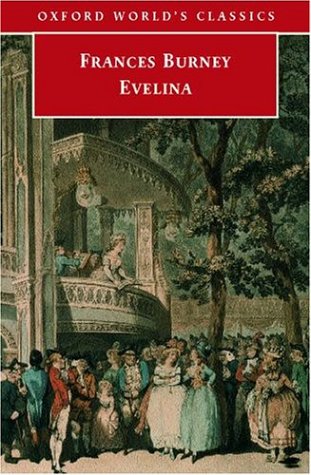
Evelina

Evelina. Fanny Burney. 1778. 455 pages. [Source: Bought]

First sentence: CAN any thing, my good Sir, be more painful to a friendly mind, than a necessity of communicating disagreeable intelligence?

Premise/plot: Fanny Burney's Evelina is an epistolary novel that was first published in 1778. Most of the letters are between Evelina and her guardian, Mr. Villars. Though others are included as well.

Evelina has been raised by Reverend Arthur Villars. She has been happy and content with her lot in life--even if she's never known her mother or father. Her life has been a bit sheltered in the past, but now that she's a young woman she's gaining opportunities to go out into the world. The book is a series of letters chronicling this new-and-exciting-adventure of growing up. It begins when Evelina goes to visit a friend of the family, Lady Howard. But that is just the start of her journey...

My thoughts: I really LOVED this one. There are EIGHTY-FOUR letters in all. A handful of those are lengthy, but most are not. Most just take a few minutes to read. Because the letters tend to be on the short side, it was easy to get swept up in this one saying just one more, just one more, just one more.

The novel is peopled with CHARACTERS. Some of them are oh-so-easy to love. A few of them fall into the hate-to-love or love-to-hate category. (For example, she meets her maternal grandmother and some of her cousins. They are so UNLIKE anyone she's ever met before.) And then there's Evelina's stalker, Clement Willoughby (boo, hiss). I haven't figured out exactly WHAT is going on in his world--I mean his mind--but I know he's TROUBLE. Evelina is in danger several times in this one. Evelina is a super-super-innocent heroine. The men in her life vary in shades of honor. Lord Orville stands in contrast to the villainy of Willoughby.

Evelina would make for a lovely period drama. Jane Austen was NOT the only woman writer in her day, and others deserve attention as well.

Quotes:
A youthful mind is seldom totally free from ambition; to curb that, is the first step to contentment, since to diminish expectation is to increase enjoyment.
I have just had my hair dressed. You can’t think how oddly my head feels; full of powder and black pins, and a great cushion on the top of it.
I believe you would hardly know me, for my face looks quite different to what it did before my hair was dressed. When I shall be able to make use of a comb for myself I cannot tell; for my hair is so much entangled, frizzled they call it, that I fear it will be very difficult.
Indeed, the more forcibly you are struck with improprieties and misconduct in another, the greater should be your observance and diligence to avoid even the shadow of similar errors.
“Indeed,” cried Sir Clement, “I must own myself no advocate for hats; I am sorry the ladies ever invented or adopted so tantalizing a fashion: for, where there is beauty, they only serve to shade it; and, where there is none, to excite a most unavailing curiosity. I fancy they were originally worn by some young and whimsical coquette.”
The play was Love for Love; and though it is fraught with wit and entertainment I hope I shall never see it represented again; for it is so extremely indelicate-to use the softest word...
“O yes, Sir, yes, very frequently: I have no time to read play-bills; one merely comes to meet one’s friends, and shew that one’s alive.” “Ha, ha, ha!-and so,” cried the Captain, “it costs you five shillings a-night just to shew you’re alive! Well, faith, my friends should all think me dead and underground before I’d be at that expense for ‘em. But, now I think of it, I believe I have a bill in my pocket; O, ay, here it is-Love for Love, ay,-true, ha, ha!-how could I be so stupid!” “O, easily enough, as to that, I warrant you,” said the Captain;
Generosity without delicacy, like wit without judgment, generally gives as much pain as pleasure.
How strange it is, Sir, that this man, not contented with the large share of foppery and nonsense which he has from nature, should think proper to affect yet more!
“So Miss,” said Mr. Branghton, “you’re quite in the fashion, I see-so you like operas? Well, I’m not so polite; I can’t like nonsense, let it be never so much the taste.” 
“There is nothing,” answered he, “which requires more immediate notice than impertinence, for it ever encroaches when it is tolerated.”
Indeed the more I reflect upon it, the more angry I am. I was entirely in his power, and it was cruel in him to cause me so much terror.
I felt myself very uneasy in his presence; for I could not look at him, nor hear him speak, without recollecting the chariot adventure; but, to my great amazement, I observed that he looked at me without the least apparent discomposure, though, certainly, he ought not to think of his behaviour without blushing.
The passion he pretends for you has neither sincerity nor honour; the manner and the opportunities he has chosen to declare it, are bordering upon insult.
 She lost her patience, and I my time.
But alas, my dear child, we are the slaves of custom, the dupes of prejudice, and dare not stem the torrent of an opposing world, even though our judgements condemn our compliance!
Nothing is so delicate as the reputation of a woman; it is at once the most beautiful and most brittle of all human things. 
 My heart beat with resentment; I pushed him away from me with all my strength, and demanded how he dared treat me with such insolence? “Insolence!” repeated he. “Yes, Sir Clement, insolence; from you, who know me, I had a claim for protection,-not to such treatment as this.”
 “The long alleys!” repeated Mr. Branghton, “and pray, what had you to do in the long alleys? why, to be sure, you must all of you have had a mind to be affronted!”    
 Where any thing is doubtful, the ties of society, and the laws of humanity, claim a favourable interpretation;
“My dear Ma’am, you must be a little patient; I assure you I have no bad designs, I have not upon my word; but, really, there is no resolving upon such a thing as matrimony all at once; what with the loss of one’s liberty, and what with the ridicule of all one’s acquaintance,-I assure you Ma’am you are the first lady who ever made me even demur upon this subject; for, after all, my dear Ma’am, marriage is the devil.”
“Your opinion, Sir,” answered I, “of either the married or the single life, can be of no manner of consequence to me; and therefore I would by no means trouble you to discuss their different merits.” 
   “Why, really, Ma’am, as to your being a little out of sorts, I must own I can’t wonder at it; for, to be sure, marriage is all in all with the ladies; but with us gentlemen it’s quite another thing!
How little has situation to do with happiness!
She is not, indeed, like most modern young ladies, to be known in half an hour: her modest worth, and fearful excellence, require both time and encouragement to show themselves.
She does not, beautiful as she is, seize the soul by surprise, but, with more dangerous fascination, she steals it almost imperceptibly.”
“You are in the right,” said Mrs. Selwyn, “not to watch time, lest you should be betrayed, unawares, into reflecting how you employ it.” “Egad, Ma’am,” cried he, “if Time thought no more of me than I do of Time, I believe I should bid defiance, for one while, to old age and wrinkles; for deuce take me, if ever I think about it at all.”
         

© 2019 Becky Laney of Becky's Book Reviews

Friday, December 14, 2018

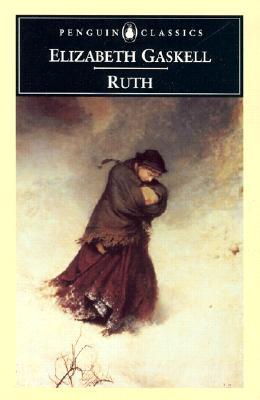
Ruth

Ruth. Elizabeth Gaskell. 1853. 432 pages. [Source: Bought]
First sentence: There is an assize-town in one of the eastern counties which was much distinguished by the Tudor sovereigns, and, in consequence of their favour and protection, attained a degree of importance that surprises the modern traveller.


Premise/plot: Ruth Hilton, a young apprenticed seamstress, makes a mistake when she falls in love with a wealthy young man, Henry Bellingham. The two run away together--to Wales, I believe. When he becomes sick, his mother comes and rescues him from the "evil tramp" Ruth. What will Ruth's future be now? Is there hope for this 'fallen woman'?

Thankfully Elizabeth Gaskell is NOT Nathaniel Hawthorne. And there are plenty of kind, warm-hearted Christian souls who extend grace, compassion, and actual care. Mr. Thurstan Benson (a Dissenting minister) and his sister, Faith, open up their home and their hearts to the pregnant Ruth. She will remain with them for years raising her son Leonard.

Not content to live off of charity, Ruth first becomes a governess and then later a sick nurse. The novel illustrates through its characters--Ruth, Faith, Sally, Thurstan, etc.--faith in action.

My thoughts: I love, love, love Elizabeth Gaskell. This novel is a tragedy. A beautiful, well-written tragedy with unforgettable characters. I had forgotten the sadness and just remembered the goodness. I knew I loved it. I knew I needed to reread it at some point. I knew I considered the characters good friends. I forgot all the sads. The fact that I find it a devastating read--emotionally--only testifies that the characterization is excellent.

Quotes:
  • Well, my dear, you must learn to think and work too; or, if you can't do both, you must leave off thinking.
  • The night before, she had seen her dead mother in her sleep, and she wakened, weeping. And now she dreamed of Mr Bellingham, and smiled. And yet, was this a more evil dream than the other?
  • The future lay wrapped in a golden mist, which she did not care to penetrate; but if he, her sun, was out of sight and gone, the golden mist became dark heavy gloom, through which no hope could come. He took her hand.
  • Low and soft, with much hesitation, came the "Yes;" the fatal word of which she so little imagined the infinite consequences. The thought of being with him was all and everything.
  • Poor Ruth! her faith was only building up vain castles in the air; they towered up into heaven, it is true, but, after all, they were but visions.
  • "In the eye of God, she is exactly the same as if the life she has led had left no trace behind. We knew her errors before, Faith." "Yes, but not this disgrace—this badge of her shame!" "Faith, Faith! let me beg of you not to speak so of the little innocent babe, who may be God's messenger to lead her back to Him.
  • "I think you, Thurstan, are the first person I ever heard rejoicing over the birth of an illegitimate child. It appears to me, I must own, rather questionable morality." 
  • You yourself have not greater sorrow over this young creature's sin than I have: the difference is this, you confuse the consequences with the sin."
  • We are both right: I, in the way in which the child ought to be viewed; you, dear good Faith, for thinking of taking her home with us. God bless you, dear, for it!
  • It is better not to expect or calculate consequences. The longer I live, the more fully I see that. Let us try simply to do right actions, without thinking of the feelings they are to call out in others.
  • My dear Ruth, you don't know how often I sin; I do so wrong, with my few temptations. We are both of us great sinners in the eyes of the Most Holy; let us pray for each other.
  • I cannot abide the way some folk has of denying there's trouble or pain to be met; just as if their saying there was none, would do away with it.
  • There's a right and a wrong way of setting about everything—and to my thinking, the right way is to take a thing up heartily, if it is only making a bed.
  • 'Sally, do you think God has put us into the world just to be selfish, and do nothing but see after our own souls? or to help one another with heart and hand, as Christ did to all who wanted help?'
  •  Everything may be done in a right way or a wrong; the right way is to do it as well as we can, as in God's sight; the wrong is to do it in a self-seeking spirit, which either leads us to neglect it to follow out some device of our own for our own ends, or to give up too much time and thought to it both before and after the doing.
  • Those summer mornings were happy, for she was learning neither to look backwards nor forwards, but to live faithfully and earnestly in the present.
  • I dare not think of happiness—I must not look forward to sorrow. God did not put me here to consider either of these things.
  • The time that has pressed down my life like brands of hot iron, and scarred me for ever, has been nothing to you.
  • "Leonard—when I was very young I did very wrong. I think God, who knows all, will judge me more tenderly than men—but I did wrong in a way which you cannot understand yet"
  •  I declare before God, that if I believe in any one human truth, it is this—that to every woman who, like Ruth, has sinned, should be given a chance of self-redemption—and that such a chance should be given in no supercilious or contemptuous manner, but in the spirit of the holy Christ."I state my firm belief, that it is God's will that we should not dare to trample any of His creatures down to the hopeless dust;
  • Now, let us stand firm on the truth. You have no new fault to repent of. Be brave and faithful. It is to God you answer, not to men.
  • The shame of having your sin known to the world, should be as nothing to the shame you felt at having sinned. We have dreaded men too much, and God too little, in the course we have taken.
  • Any fastidiousness I shall have to get rid of, and I shall be better without; but any true refinement I am sure I shall find of use;    
  • Would you not rather be nursed by a person who spoke gently and moved quietly about than by a loud bustling woman?
  • There is always something aggravating in being told, that the mood in which we are now viewing things strongly will not be our mood at some other time. It implies that our present feelings are blinding us, and that some more clear-sighted spectator is able to distinguish our future better than we do ourselves.
  • Her left hand truly knew not what her right hand did; and Leonard was overwhelmed now to hear of the love and the reverence with which the poor and outcast had surrounded her. 
  • From that day forward Leonard walked erect in the streets of Eccleston, where "many arose and called her blessed."
  •  "We have no right to weigh human lives against each other."
 

© 2018 Becky Laney of Becky's Book Reviews

Monday, November 26, 2018

My Victorian Year #49

I am currently reading RUTH by Elizabeth Gaskell and CAN YOU FORGIVE HER? by Anthony Trollope. I am enjoying both of these books very much. Both are rereads.

Quotes from Can You Forgive Her?
  • “And have I been too liberal, Mrs Greenow? What is a young turkey and a stick of celery when a man is willing to give everything that he has in the world?”
  • “There is nothing on earth, Mrs Greenow, I desire so much, as permission to dry those tears.” “Time alone can do that, Captain Bellfield; — time alone.”
  • “But cannot time be aided by love and friendship and affection?” “By friendship, yes. What would life be worth without the solace of friendship?”
  • “And how much better is the warm glow of love?” Captain Bellfield, as he asked this question, deliberately got up, and moved his chair over to the widow’s side.
  • “You shouldn’t think about handsome men, child,” said Mrs Greenow. “And I’m sure I don’t,” said Jeannette. “Not no more than anybody else; but if a man is handsome, ma’am, why it stands to reason that he is handsome.”    
Quotes from Ruth
  • I want to know how I am to keep remembering how old I am, so as to prevent myself from feeling so young?

© 2018 Becky Laney of Becky's Book Reviews

Saturday, November 17, 2018

My Victorian Year #48

I am currently reading RUTH by Elizabeth Gaskell and CAN YOU FORGIVE HER? by Anthony Trollope. I am enjoying both of these books very much. Both are rereads.

Quotes from Can You Forgive Her?
  • Yarmouth is not a happy place for a picnic. A picnic should be held among green things. Green turf is absolutely an essential.
  • She had a wondrous power of smiling; and could, upon occasion, give signs of peculiar favour to half a dozen different gentlemen in as many minutes. 
  • “You can’t suppose that any girl will like to be drenched with sea-water when she has taken so much trouble with her starch,” said Kate.  “Then she shouldn’t come fishing,” said Mr Cheesacre. “I hate such airs.” 
  • When ladies have made up their minds to dance they will dance let the circumstances of the moment be ever so antagonistic to that exercise.
  • A woman’s life is important to her, — as is that of a man to him, — not chiefly in regard to that which she shall do with it. The chief thing for her to look to is the manner in which that something shall be done. It is of moment to a young man when entering life to decide whether he shall make hats or shoes; but not of half the moment that will be that other decision, whether he shall make good shoes or bad. 
  • Babbling may be a weakness, but to my thinking mystery is a vice. 
 Quotes from Ruth
  • As she ran, she prayed with wild eagerness; she prayed that she might see his face once more, even if she died on the spot before him.
  • It was one of those prayers which God is too merciful to grant; but despairing and wild as it was, Ruth put her soul into it, and prayed it again, and yet again.
  • "In the eye of God, she is exactly the same as if the life she has led had left no trace behind. We knew her errors before, Faith." 
  • "Yes, but not this disgrace—this badge of her shame!" "Faith, Faith! let me beg of you not to speak so of the little innocent babe, who may be God's messenger to lead her back to Him.
  • Teach her (and God will teach her, if man does not come between) to reverence her child; and this reverence will shut out sin,—will be purification."
  • You yourself have not greater sorrow over this young creature's sin than I have: the difference is this, you confuse the consequences with the sin."
  • We are both right: I, in the way in which the child ought to be viewed; you, dear good Faith, for thinking of taking her home with us. God bless you, dear, for it!"
  • It is better not to expect or calculate consequences. The longer I live, the more fully I see that. Let us try simply to do right actions, without thinking of the feelings they are to call out in others.
  • My dear Ruth, you don't know how often I sin; I do so wrong, with my few temptations. We are both of us great sinners in the eyes of the Most Holy; let us pray for each other.
  • I cannot abide the way some folk has of denying there's trouble or pain to be met; just as if their saying there was none, would do away with it. Some folk treats one like a babby, and I don't like it. I'm not meaning you, Master Thurstan
  • "But Sally is not 'people.'" "Oh, I see it must be done; she'll talk as much as all the other persons put together, so that's the reason I call her 'people.' Shall I call her?"
  • There's a right and a wrong way of setting about everything—and to my thinking, the right way is to take a thing up heartily, if it is only making a bed.
  • 'Sally, do you think God has put us into the world just to be selfish, and do nothing but see after our own souls? or to help one another with heart and hand, as Christ did to all who wanted help?' ...because everything may be done in a right way or a wrong; the right way is to do it as well as we can, as in God's sight; the wrong is to do it in a self-seeking spirit, which either leads us to neglect it to follow out some device of our own for our own ends, or to give up too much time and thought to it both before and after the doing.'
  • Just try for a day to think of all the odd jobs as has to be done well and truly as in God's sight, not just slurred over anyhow, and you'll go through them twice as cheerfully. 
  • Those summer mornings were happy, for she was learning neither to look backwards nor forwards, but to live faithfully and earnestly in the present.


© 2018 Becky Laney of Becky's Book Reviews

Saturday, November 10, 2018

My Victorian Year #47

I am currently reading RUTH by Elizabeth Gaskell and CAN YOU FORGIVE HER? by Anthony Trollope. I am enjoying both of these books very much. Both are rereads.

Quotes from Can You Forgive Her?
  • The eschewing of marquises is not generally very difficult. Young ladies living with their fathers on very moderate incomes in or about Queen Anne Street are not usually much troubled on that matter.
  • It’s a very fine theory, that of women being able to get along without men as well as with them; but, like other fine theories, it will be found very troublesome by those who first put it in practice.
  • People always do seem to think it so terrible that a girl should have her own way in anything.
  • I haven’t much of my own way at present; but you see, when I’m married I shan’t have it at all. You can’t wonder that I shouldn’t be in a hurry. A person may wish for a thing altogether, and yet not wish for it instantly.
  • In this world things are beautiful only because they are not quite seen, or not perfectly understood.
  • Poetry is precious chiefly because it suggests more than it declares.
  • You are never cross, though you are often ferocious. 
  • A man never likes having his tooth pulled out, but all men do have their teeth pulled out, — and they who delay it too long suffer the very mischief.
  • I was thinking of something. Don’t you ever think of things that make you shiver?”  “Indeed I do, very often; — so often that I have to do my shiverings inwardly. Otherwise people would think I had the palsy.”
  • “What don’t you understand, aunt?” “You only danced twice last night, and once you stood up with Captain Bellfield.” “But what harm can Captain Bellfield do me?” “What good can he do you? That’s the question. You see, my dear, years will go by.
Quotes from Ruth
  • The daily life into which people are born, and into which they are absorbed before they are well aware, forms chains which only one in a hundred has moral strength enough to despise, and to break when the right time comes—when an inward necessity for independent individual action arises, which is superior to all outward conventionalities.
  • Well, my dear, you must learn to think and work too; or, if you can't do both, you must leave off thinking. Your guardian, you know, expects you to make great progress in your business, and I am sure you won't disappoint him. 
  • The night before, she had seen her dead mother in her sleep, and she wakened, weeping. And now she dreamed of Mr Bellingham, and smiled. And yet, was this a more evil dream than the other? 
  • The poor old labourer prayed long and earnestly that night for Ruth. He called it "wrestling for her soul;" and I think his prayers were heard, for "God judgeth not as man judgeth." 
  • The future lay wrapped in a golden mist, which she did not care to penetrate; but if he, her sun, was out of sight and gone, the golden mist became dark heavy gloom, through which no hope could come. He took her hand. 
  • Low and soft, with much hesitation, came the "Yes;" the fatal word of which she so little imagined the infinite consequences. The thought of being with him was all and everything.
  • I always think it right, for my own morals, to put a little scorn into my manners when such as her come to stay here; but, indeed, she's so gentle, I've found it hard work to show the proper contempt. 
  • Poor Ruth! her faith was only building up vain castles in the air; they towered up into heaven, it is true, but, after all, they were but visions. 
 
© 2018 Becky Laney of Becky's Book Reviews

Saturday, November 03, 2018

Small House at Allington

Small House at Allington. Anthony Trollope. 1864. 695 pages. [Source: Bought]
First sentence: Of course there was a Great House at Allington. How otherwise should there have been a Small House?

Premise/plot: The Small House at Allington is the fifth novel in the Barsetshire series by Anthony Trollope. It primarily focuses on the Dale family. Lily and Bell Dale are sisters--both worthy of being heroines. Mrs. Dale has done quite a good job raising them on her own since her husband's death. Of course they are not all alone in the world, the girls have an uncle--Christopher Dale--who is a squire. Also, one mustn't forget cousin Bernard.

Bernard and Bell would make quite a match of it--at least that's what the squire thinks. He'd LOVE to see these two marry and have children. (Bernard is his heir.) But Bell has different plans for her future--and marrying to please an uncle is decidedly not in her plans. Bell hasn't said NO NEVER to the idea of marriage in general, but she wants LOVE.

Lily. John Eames (aka JOHNNY) loves, loves, loves Lily with all his heart and soul. He has wanted to declare his love for her for years. But before he can speak to her from the depths of his heart, Bernard brings home a showy friend, Mr. Adolphus Crosbie. Crosbie makes a first great impression on a young and naive Lily. Soon the two are ENGAGED. Johnny is disappointed--broken-hearted.

When Crosbie realizes that Lily's dear old uncle has absolutely no intentions of blessing his niece financially--either now or at his passing--he reveals his true colors. CAN HE REALLY TRULY COMMIT TO MARRYING LILY KNOWING THAT SUCH A MARRIAGE WON'T MAKE HIM A DIME RICHER?!?! He is self-aware enough to know it's doubtful. But it's a doubt--not a certainty--so when she asks him if he wants out, if he wants his freedom, he doesn't speak honestly. He doesn't admit his doubts. He leaves her believing that the two will marry.

Within a week or two Crosbie finds himself with a choice to make. He has the opportunity to marry up--to marry a somebody. Or the daughter of a somebody. Though his engagement to Lily is known in some circles, he decides to propose to Alexandrina anyway. If she says yes, he can break it off with Lily. If she says no, well, there's always Lily.

When his engagement to Alexandrina is known or made known, it upsets a lot of people. (Including BERNARD and JOHNNY and the SQUIRE.) Lily is not without friends and family. She is beloved by all because she is an absolute angel of a girl. And like an angel, Lily, when she hears of his inconstancy, decides to forgive him wholeheartedly. She doesn't feel angry, lied to, betrayed. He is simply doing what will make him happy. And isn't his happiness more important than her own?! As long as he is being true to himself isn't that all that matters?! No. She loves, loves, loves him still. He is the husband of her heart; the vows may never have been spoken in church but she's keeping them all the same.

Meanwhile, life goes on. Bell is being courted by a local doctor...will she say yes?! Lily certainly hopes so! Johnny is moving up in the world and making new friends. But some of his old friends and acquaintances are getting into messes. (For that matter he gets into a few messes of his own.) Crosbie finds himself not moving up in the world but taking a few steps back. He wanted his marriage to bring him up and take him places...but it's having the opposite effect. (Do we pity him?! NO. This reader does not.)

This novel also--for whatever reason--introduces Plantagenet Palliser. I love him but he doesn't quite seem to belong in this novel.

My thoughts: I love Anthony Trollope. I do. He's a great author. He doesn't always stay "on task" in his writing. He rambles a bit. He has dozens of characters and perhaps not all of them "matter" in a particular novel. But his characters tend to be fully fleshed. He's peopled a community--a village or two--in this series. There are some characters that you want to boo, hiss. But other characters you absolutely want to spend time with because they are your friends.

Quotes:
  • I would have women, and men also, young as long as they can be young. It is not that a woman should call herself in years younger than her father’s family Bible will have her to be. Let her who is forty call herself forty; but if she can be young in spirit at forty, let her show that she is so.
  • “Ten minutes before the time named; and, of course, you must have understood that I meant thirty minutes after it!” That is my interpretation of the words when I am thanked for coming early.
  • Such were his resolutions, and, as he thought of them in bed, he came to the conclusion that few men were less selfish than he was.
  • It is very hard, that necessity of listening to a man who says nothing.
  • When last days are coming, they should be allowed to come and to glide away without special notice or mention. And as for last moments, there should be none such.
  • I have almost more to think of than I know how to manage.
  •  Nothing on earth can I ever love as I have loved you. But I have a God and a Saviour that will be enough for me.
  • I enjoy a snooze after dinner; I do indeed; I like it; but then, when one comes to go to bed, one does it in such a sneaking sort of way, as though one were in disgrace!
  • And my sister, she thinks it a crime — literally a sin, to go to sleep in a chair. Nobody ever caught her napping!
  • There are deeds which will not bear a gloss, — sins as to which the perpetrator cannot speak otherwise than as a reptile; circumstances which change a man and put upon him the worthlessness of vermin.
  • “What are we to do to him?” said Bernard, after a while. “Treat him as you would a rat. Throw your stick at him, if he comes under your feet; but beware, above all things, that he does not get into your house. That is too late for us now.” “There must be more than that, uncle.”
  • A self-imposed trouble will not allow itself to be banished.
  • Love does not follow worth, and is not given to excellence; — nor is it destroyed by ill-usage, nor killed by blows and mutilation.
  • “I don’t know that any good would be got by knocking him over the head. And if we are to be Christians, I suppose we ought to be Christians.” “What sort of a Christian has he been?” “That’s true enough; and if I was Bernard, I should be very apt to forget my Bible lessons about meekness.”
  • There are some things for which a man ought to be beaten black and blue.” “So that he shouldn’t do them again?” “Exactly.”
  •  My belief is that in life people will take you very much at your own reckoning.
  • No one thinks of defending himself to a newspaper except an ass; — unless it be some fellow who wants to have his name puffed.
  • “It was a matter of course,” said Bell. “It always is right in the novels. That’s why I don’t like them. They are too sweet.” “That’s why I do like them, because they are so sweet. A sermon is not to tell you what you are, but what you ought to be, and a novel should tell you not what you are to get, but what you’d like to get.”      
  • But if we are to have real life, let it be real.
  • The speech was respectable, dull, and correct. Men listened to it, or sat with their hats over their eyes, asleep, pretending to do so;
  • “There are circumstances in which what we call Christianity seems to me to be hardly possible.”
  • “All the books have got to be so stupid! I think I’ll read Pilgrim’s Progress again.” “What do you say to Robinson Crusoe?” said Bell. “Or Paul and Virginia?” said Lily. “But I believe I’ll have Pilgrim’s Progress. I never can understand it, but I rather think that makes it nicer.” “I hate books I can’t understand,” said Bell. “I like a book to be clear as running water, so that the whole meaning may be seen at once.” “The quick seeing of the meaning must depend a little on the reader, must it not?” said Mrs Dale. “The reader mustn’t be a fool, of course,” said Bell. “But then so many readers are fools,” said Lily. “And yet they get something out of their reading.
  • All holiday-making is hard work, but holiday-making with nothing to do is the hardest work of all.
  • Who does not know how terrible are those preparations for house-moving; — how infinite in number are the articles which must be packed, how inexpressibly uncomfortable is the period of packing, and how poor and tawdry is the aspect of one’s belongings while they are thus in a state of dislocation? 
  • To have loved truly, even though you shall have loved in vain, will be a consolation when you are as old as I am.
  • Statistics, he thought, might be made as enchanting as ever, if only they could be mingled with love.
  • Ah! how I hate the smile of a woman who smiles by rote! It made Mr Palliser feel very uncomfortable, — but he did not analyse it, and persevered.           


© 2018 Becky Laney of Becky's Book Reviews

Saturday, October 27, 2018

My Victorian Year #45

I am currently reading Anthony Trollope's Small House at Allington and Elizabeth Gaskell's Wives and Daughters. I am also currently listening to Agnes Grey by Anne Bronte.

Quotes from Small House at Allington:
  • I’ve always had a sort of aptitude for living in a pigsty; — a clean pigsty, you know, with nice fresh bean straw to lie upon.
  • “Are you going to forgive me before I go?” “Forgive you for what?” said she. “For daring to love you; for having loved you almost as long as you can remember; for loving you better than all beside. This alone you should forgive; but will you forgive me for having told it?”
  • Alas! alas! a man cannot so easily repent of his sins, and wash himself white from their stains!
  • “It was a matter of course,” said Bell. “It always is right in the novels. That’s why I don’t like them. They are too sweet.” “That’s why I do like them, because they are so sweet. A sermon is not to tell you what you are, but what you ought to be, and a novel should tell you not what you are to get, but what you’d like to get.”  
  • But if we are to have real life, let it be real.
  • Those slanders always are absurd; but what can we do? We can’t tie up people’s tongues.
  •  Mr Palliser had barely spoken to Mr Crosbie at Courcy, but then in the usual course of his social life he seldom did more than barely speak to anybody.
  • The speech was respectable, dull, and correct. Men listened to it, or sat with their hats over their eyes, asleep, pretending to do so;

Quotes from Wives and Daughters:
  •  'Papa, I should like to get a chain like Ponto's just as long as your longest round, and then I could fasten us two to each end of it, and when I wanted you I could pull, and if you did not want to come, you could pull back again; but I should know you knew I wanted you, and we could never lose each other.' (27)
  • 'I gave her the best advice in my power.' 'Advice! you ought to have comforted her. Poor little Molly!' 'I think that if advice is good it's the best comfort.' (120)
  • 'I did try to remember what you said, and to think more of others, but it is so difficult sometimes; you know it is, don't you?' (136)
  • 'It is difficult,' he went on, 'but by and by you will be so much happier for it.' 'No, I shan't!' said Molly, shaking her head. 'It will be very dull when I shall have killed myself, as it were, and live only in trying to do, and to be, as other people like. I don't see any end to it. I might as well never have lived. And as for the happiness you speak of, I shall never be happy again.' (136)
  • 'I used to think I managed her, till one day an uncomfortable suspicion arose that all the time she had been managing me. Still, it's easy work to let oneself be managed; at any rate till one wakens up to the consciousness of the process, and then it may become amusing, if one takes it in that light.' 'I should hate to be managed,' said Molly, indignantly. 'I'll try and do what she wishes for papa's sake, if she'll only tell me outright; but I should dislike to be trapped into anything.' (160)
  • 'Tell the truth, now and evermore. Truth is generally amusing, if it's nothing else!' (163)
  • Molly knew her father's looks as well as she knew her alphabet; his wife did not; and being an unperceptive person, except when her own interests were dependent upon another person's humour, never found out how he was worried by all the small daily concessions which he made to her will or her whims. (178)
  • 'I wish I could love people as you do, Molly!' 'Don't you?" said the other, in surprise. 'No. A good number of people love me, I believe, or at least they think they do; but I never seem to care much for any one. I do believe I love you, little Molly, whom I have only known for ten days, better than any one.' (219)
  • 'I wish I was good!' 'So do I,' said Molly, simply. 'Nonsense, Molly! You are good...I am not good, and I never shall be now. Perhaps I might be a heroine still, but I shall never be a good woman, I know.' 'Do you think it easier to be a heroine?' 'Yes as far as one knows of heroines from history. I'm capable of a great jerk, an effort, and then a relaxation--but steady, everyday goodness is beyond me. I must be a moral kangaroo.' (220)
  • 'Molly, I cannot have you speaking so to Lady Harriet,' said Mrs. Gibson as soon as she was left alone with her stepdaughter. 'You would never have known her at all if it had not been for me, and don't be always putting yourself into our conversation.' 'But I must speak if she asks me questions,' pleaded Molly. 'Well! if you must, you must, I acknowledge. I'm candid about that, at any rate. But there's no need for you to set up to have an opinion at your age.' 'I don't know how to help it,' said Molly. (293)
  • 'If there is one thing I hate more than another, it is the trying to make out an intimacy with great people.' (293)
  • 'Oh, how good you are, Molly! I wonder, if I had been brought up like you, whether I should have been as good. But I've been tossed about so.' 'Then, don't go and be tossed about no more,' said Molly, softly. (327)

© 2018 Becky Laney of Becky's Book Reviews

Wednesday, October 17, 2018

Agnes Grey

Agnes Grey. Anne Bronte. 1847. 224 pages. [Source: Bought]

First sentence: All true histories contain instruction; though, in some, the treasure may be hard to find, and when found, so trivial in quantity that the dry, shrivelled kernel scarcely compensates for the trouble of cracking the nut.

Premise/plot: Agnes Grey is a young woman who challenges herself to leave home and become a governess. Her family needs income, true, but her parents are not telling her to work or even wanting her to work. The Bloomfields are her first family and the Murrays are her second. Neither situation is ideal.

The Bloomfield children are out-of-control. Master Tom and Mary Ann rule the schoolroom and they know it. Agnes Grey has been given no authority to discipline the children. The parents expect her to rule without power or authority. Any misstep, any fault, any misbehavior--no matter how big or small--is her fault by default. She shouldn't call herself a governess if she can't manage naughty children. She learns quickly not to run to the parents with tales of misbehavior OR even with pleas for support. She'll receive no support from either parent. She doesn't last long at this first job, though the fact that she lasts more than a month or two says something about her fortitude.

The Murray children are much older. There are two young ladies: Miss Rosalie and Miss Matilda. Rosalie is 'out' in society and FLIRTATIOUS. Matilda is a year or two younger. Her biggest fault is her love of swearing. These two don't "misbehave" in the same way as the Bloomfields. No throwing themselves on the floor and rolling about, for example. But they don't apply themselves to lessons. And the parents don't mind. They want their daughters to outwardly conform and if they learn a little now and then--almost by accident--so much the better. But no biggie if they never learn to think. This second job lasts for several years.

While staying with the Murrays, Agnes Grey meets a curate, Edward Weston. These two occasionally speak with one another. What little she knows about him is enough to warm her heart and make her giddy. She doesn't hope that he like-likes her in return. But she has heart-eyes for him for sure.

Will Agnes Grey remain in the schoolroom for ever? Do governesses ever get happily ever after endings?

My thoughts: I loved, loved, LOVED, LOVED, LOVED this one. Agnes Grey is a true kindred spirit. And her ideals are my ideals. I too would find Edward Weston swoon-worthy. She's a good woman who often finds herself in difficult circumstances. She has strong values, strong morals, strong beliefs. She knows right from wrong. She believes that children should be trained--disciplined. Boys and girls need to learn right from wrong, need to have their behavior corrected, need to apologize when they've misbehaved, need to learn kindness and compassion, need to take responsibility for what they say and do.

One of my favorite characters is Nancy Brown, a poor cottager that receives visits from Agnes Grey and Mr. Weston. Both read Scripture to her. 

Quotes:

On being a governess:
My pupils had no more notion of obedience than a wild, unbroken colt. The habitual fear of their father's peevish temper, and the dread of the punishments he was wont to inflict when irritated, kept them generally within bounds in his immediate presence. The girls, too, had some fear of their mother's anger; and the boy might occasionally he bribed to do as she bid him by the hope of reward; but I had no rewards to offer, and as for punishments, I was given to understand, the parents reserved that privilege to themselves; and yet they expected me to keep my pupils in order. (25)
To the difficulty of preventing him from doing what he ought not, was added that of forcing him to do what he ought. (26)
Patience, Firmness, and Perseverance were my only weapons; and these I resolved to use to the utmost. (26)
If I were quiet at the moment, I was conniving at their disorderly conduct, if, (as was frequently the case,) I happened to be exalting my voice to enforce order, I was using undue violence, and setting the girls a bad example by such ungentleness of tone and language. (38)
 You cannot expect stone to be as pliable as clay. (51) [Agnes' mother gives her daughter counsel.]
Rosalie and Agnes
"Oh, I don't mind his being wicked [Sir Thomas Ashby]; he's all the better for that; and as for disliking him--I shouldn't greatly object to being Lady Ashby of Ashby Park, if I must marry; but if I could always be young, I would be always single. I should like to enjoy myself thoroughly, and coquet with all the world, till I am on the verge of being called an old maid; and then, to escape the infamy of that, after having made ten thousand conquests, to break all their hearts save one, by marrying some high-born, rich, indulgent husband, whom, on the other hand, fifty ladies were dying to have." "Well, as long as you entertain those views, keep single by all means, and never marry at all, not even to escape the infamy of old-maidenhood." (77-8)
Agnes and Nancy
"Well, Miss Grey, if it's all the same to you, I'd like to hear that chapter in the First Epistle of Saint John, that says, 'God is love, and he that dwelleth in love dwelleth in God, and God in him.'" With a little searching I found these words in the fourth chapter. When I came to the seventh verse she interrupted me, and with needless apologies for such a liberty, desired me to read it very slowly, that she might take it all in, and dwell on every word; hoping I would excuse her as she was but a simple body. "The wisest person," I replied, "might think over each of these verses for an hour, and be all the better for it; and I would rather read them slowly than not." (87)
Mr. Weston and Nancy
‘“Well,” says he, “you know the first and great commandment—and the second, which is like unto it—on which two commandments hang all the law and the prophets? You say you cannot love God; but it strikes me that if you rightly consider who and what He is, you cannot help it. He is your father, your best friend: every blessing, everything good, pleasant, or useful, comes from Him; and everything evil, everything you have reason to hate, to shun, or to fear, comes from Satan—His enemy as well as ours. And for this cause was God manifest in the flesh, that He might destroy the works of the Devil: in one word, God is love; and the more of love we have within us, the nearer we are to Him and the more of His spirit we possess.”
‘“Well, sir,” I said, “if I can always think on these things, I think I might well love God: but how can I love my neighbours, when they vex me, and be so contrary and sinful as some on ’em is?”
‘“It may seem a hard matter,” says he, “to love our neighbours, who have so much of what is evil about them, and whose faults so often awaken the evil that lingers within ourselves; but remember that He made them, and He loves them; and whosoever loveth him that begat, loveth him that is begotten also. And if God so loveth us, that He gave His only begotten Son to die for us, we ought also to love one another. But if you cannot feel positive affection for those who do not care for you, you can at least try to do to them as you would they should do unto you: you can endeavour to pity their failings and excuse their offences, and to do all the good you can to those about you. And if you accustom yourself to this, Nancy, the very effort itself will make you love them in some degree—to say nothing of the goodwill your kindness would beget in them, though they might have little else that is good about them. If we love God and wish to serve Him, let us try to be like Him, to do His work, to labour for His glory—which is the good of man—to hasten the coming of His kingdom, which is the peace and happiness of all the world: however powerless we may seem to be, in doing all the good we can through life, the humblest of us may do much towards it: and let us dwell in love, that He may dwell in us and we in Him. The more happiness we bestow, the more we shall receive, even here; and the greater will be our reward in heaven when we rest from our labours.” I believe, Miss, them is his very words, for I’ve thought ’em ower many a time. An’ then he took that Bible, an’ read bits here and there, an’ explained ’em as clear as the day: and it seemed like as a new light broke in on my soul; an’ I felt fair aglow about my heart, an’ only wished poor Bill an’ all the world could ha’ been there, an’ heard it all, and rejoiced wi’ me. (92-3)
Mr. Weston and Agnes
I like wild-flowers,’ said he; ‘others I don’t care about, because I have no particular associations connected with them—except one or two.  What are your favourite flowers?’
‘Primroses, bluebells, and heath-blossoms.’
‘Not violets?’
‘No; because, as you say, I have no particular associations connected with them; for there are no sweet violets among the hills and valleys round my home.’
‘It must be a great consolation to you to have a home, Miss Grey,’ observed my companion after a short pause: ‘however remote, or however seldom visited, still it is something to look to.’
‘It is so much that I think I could not live without it,’ replied I, with an enthusiasm of which I immediately repented; for I thought it must have sounded essentially silly.
‘Oh, yes, you could,’ said he, with a thoughtful smile.  ‘The ties that bind us to life are tougher than you imagine, or than anyone can who has not felt how roughly they may be pulled without breaking.  You might be miserable without a home, but even you could live; and not so miserably as you suppose.  The human heart is like india-rubber; a little swells it, but a great deal will not burst it.  If “little more than nothing will disturb it, little less than all things will suffice” to break it.  As in the outer members of our frame, there is a vital power inherent in itself that strengthens it against external violence.  Every blow that shakes it will serve to harden it against a future stroke; as constant labour thickens the skin of the hand, and strengthens its muscles instead of wasting them away: so that a day of arduous toil, that might excoriate a lady’s palm, would make no sensible impression on that of a hardy ploughman.
‘I speak from experience—partly my own.  There was a time when I thought as you do—at least, I was fully persuaded that home and its affections were the only things that made life tolerable: that, if deprived of these, existence would become a burden hard to be endured; but now I have no home—unless you would dignify my two hired rooms at Horton by such a name;—and not twelve months ago I lost the last and dearest of my early friends; and yet, not only I live, but I am not wholly destitute of hope and comfort, even for this life: though I must acknowledge that I can seldom enter even an humble cottage at the close of day, and see its inhabitants peaceably gathered around their cheerful hearth, without a feeling almost of envy at their domestic enjoyment.’
‘You don’t know what happiness lies before you yet,’ said I: ‘you are now only in the commencement of your journey.’
‘The best of happiness,’ replied he, ‘is mine already—the power and the will to be useful.’
Rosalie and Agnes
She left me, offended at my want of sympathy, and thinking, no doubt, that I envied her.  I did not—at least, I firmly believed I did not.  I was sorry for her; I was amazed, disgusted at her heartless vanity; I wondered why so much beauty should be given to those who made so bad a use of it, and denied to some who would make it a benefit to both themselves and others.
But, God knows best, I concluded.  There are, I suppose, some men as vain, as selfish, and as heartless as she is, and, perhaps, such women may be useful to punish them. (122)
Mr. Weston and Agnes

‘I suppose it’s these things, Miss Grey, that make you think you could not live without a home?’
‘Not exactly.  The fact is I am too socially disposed to be able to live contentedly without a friend; and as the only friends I have, or am likely to have, are at home, if it—or rather, if they were gone—I will not say I could not live—but I would rather not live in such a desolate world.’
‘But why do you say the only friends you are likely to have?  Are you so unsociable that you cannot make friends?’
‘No, but I never made one yet; and in my present position there is no possibility of doing so, or even of forming a common acquaintance.  The fault may be partly in myself, but I hope not altogether.’
‘The fault is partly in society, and partly, I should think, in your immediate neighbours: and partly, too, in yourself; for many ladies, in your position, would make themselves be noticed and accounted of.  But your pupils should be companions for you in some degree; they cannot be many years younger than yourself.’
‘Oh, yes, they are good company sometimes; but I cannot call them friends, nor would they think of bestowing such a name on me—they have other companions better suited to their tastes.’
‘Perhaps you are too wise for them.  How do you amuse yourself when alone—do you read much?’
‘Reading is my favourite occupation, when I have leisure for it and books to read.’
From speaking of books in general, he passed to different books in particular, and proceeded by rapid transitions from topic to topic, till several matters, both of taste and opinion, had been discussed considerably within the space of half an hour, but without the embellishment of many observations from himself; he being evidently less bent upon communicating his own thoughts and predilections, than on discovering mine.  He had not the tact, or the art, to effect such a purpose by skilfully drawing out my sentiments or ideas through the real or apparent statement of his own, or leading the conversation by imperceptible gradations to such topics as he wished to advert to: but such gentle abruptness, and such single-minded straightforwardness, could not possibly offend me.
Agnes on Rosalie
And when I saw this, and when I beheld her plunge more recklessly than ever into the depths of heartless coquetry, I had no more pity for her.  ‘Come what will,’ I thought, ‘she deserves it.  Sir Thomas cannot be too bad for her; and the sooner she is incapacitated from deceiving and injuring others the better.’  (137)
Rosalie and Agnes
‘But could you not try to occupy his mind with something better; and engage him to give up such habits?  I’m sure you have powers of persuasion, and qualifications for amusing a gentleman, which many ladies would be glad to possess.’
‘And so you think I would lay myself out for his amusement!  No: that’s not my idea of a wife.  It’s the husband’s part to please the wife, not hers to please him; and if he isn’t satisfied with her as she is—and thankful to possess her too—he isn’t worthy of her, that’s all.  And as for persuasion, I assure you I shan’t trouble myself with that: I’ve enough to do to bear with him as he is, without attempting to work a reform. (177)
Mr. Weston and Agnes
‘I expect to like my parish better a year or two hence, when I have worked certain reforms I have set my heart upon—or, at least, progressed some steps towards such an achievement.  But you may congratulate me now; for I find it very agreeable to have a parish all to myself, with nobody to interfere with me—to thwart my plans or cripple my exertions: and besides, I have a respectable house in a rather pleasant neighbourhood, and three hundred pounds a year; and, in fact, I have nothing but solitude to complain of, and nothing but a companion to wish for.’
He looked at me as he concluded: and the flash of his dark eyes seemed to set my face on fire; greatly to my own discomfiture, for to evince confusion at such a juncture was intolerable.  I made an effort, therefore, to remedy the evil, and disclaim all personal application of the remark by a hasty, ill-expressed reply, to the effect that, if he waited till he was well known in the neighbourhood, he might have numerous opportunities for supplying his want among the residents of F--- and its vicinity, or the visitors of A---, if he required so ample a choice: not considering the compliment implied by such an assertion, till his answer made me aware of it.
‘I am not so presumptuous as to believe that,’ said he, ‘though you tell it me; but if it were so, I am rather particular in my notions of a companion for life, and perhaps I might not find one to suit me among the ladies you mention.’
‘If you require perfection, you never will.’
‘I do not—I have no right to require it, as being so far from perfect myself.’ (186)
 Mr. Weston and Agnes
‘My house is desolate yet, Miss Grey,’ he smilingly observed, ‘and I am acquainted now with all the ladies in my parish, and several in this town too; and many others I know by sight and by report; but not one of them will suit me for a companion; in fact, there is only one person in the world that will: and that is yourself; and I want to know your decision?’
‘Are you in earnest, Mr. Weston?’
‘In earnest!  How could you think I should jest on such a subject?’
He laid his hand on mine, that rested on his arm: he must have felt it tremble—but it was no great matter now.
‘I hope I have not been too precipitate,’ he said, in a serious tone.  ‘You must have known that it was not my way to flatter and talk soft nonsense, or even to speak the admiration that I felt; and that a single word or glance of mine meant more than the honied phrases and fervent protestations of most other men.’
I said something about not liking to leave my mother, and doing nothing without her consent.
‘I settled everything with Mrs. Grey, while you were putting on your bonnet,’ replied he.  ‘She said I might have her consent, if I could obtain yours; and I asked her, in case I should be so happy, to come and live with us—for I was sure you would like it better.  But she refused, saying she could now afford to employ an assistant, and would continue the school till she could purchase an annuity sufficient to maintain her in comfortable lodgings; and, meantime, she would spend her vacations alternately with us and your sister, and should be quite contented if you were happy.  And so now I have overruled your objections on her account.  Have you any other?’
‘No—none.’
‘You love me then?’ said be, fervently pressing my hand.
‘Yes.’ (192)
Happy ending time!
My Diary, from which I have compiled these pages, goes but little further.  I could go on for years, but I will content myself with adding, that I shall never forget that glorious summer evening, and always remember with delight that steep hill, and the edge of the precipice where we stood together, watching the splendid sunset mirrored in the restless world of waters at our feet—with hearts filled with gratitude to heaven, and happiness, and love—almost too full for speech. (192)

© 2018 Becky Laney of Becky's Book Reviews