Showing posts with label books reviewed in 2018. Show all posts

Thursday, April 11, 2019

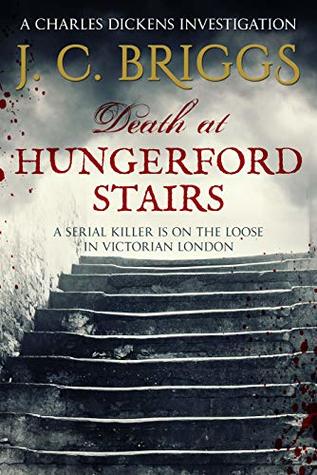
Death at Hungerford Stairs

Death at Hungerford Stairs. (Charles Dickens & Superintendent Sam Jones #2) J.C. Briggs. 2018. Sapere Books.  290 pages. [Source: Review copy]

First sentence: Charles Dickens remembered the rats.

Premise/plot: Death at Hungerford Stairs is the second novel in J.C. Briggs' mystery series starring Charles Dickens. Dickens is an amateur detective (of sorts) assisting the police--namely Superintendent Sam Jones. Dickens and Jones are on the hunt for a serial killer--someone is targeting young boys. Can these two figure out WHO and WHY? How many boys will have to die as they piece together all the clues and track down suspects?

My thoughts: I loved, loved, loved the first book in the series The Murder of Patience Brooke. I loved the characterization and the writing. Did I love, love, love Death at Hungerford Stairs? Yes and no. No, I didn't love, love, love to the same degree. Yes, I still loved the characters and the writing. This one is "packed" with murders, but dare I say it's not an action-driven mystery novel?! I think this one is--for better or worse--a character-driven mystery novel. To me the mysteries are definitely secondary to the characters themselves. Because I have grown attached the characters--and many of the characters introduced in the first book are still around--I am attached to the book. I have to keep reading this series. I have to stay in touch with these characters. I want more, more, more.

Quotes:
Murder was composed of secrets just as any three volume novel. Secrets were the staple of the novelist; they provided the mystery, suspense, and tension. In murder, the identity of the protagonist was secret, the characters in the story--for murder was itself a terrible story--possessed secrets, sometimes harmless ones, sometimes ones that were the key to the mystery, and it was the investigators who must uncover those secrets, and, this was dreadful, too; they must lay bare the lives of all enmeshed in the net of the murderer's making.
Speculation is the thief of time as much as procrastination so let's collar them both.
The omniscient narrator could place his characters where he would. The murderer would be caught, the criminal brought to justice. He had put Fagin in the condemned cell in Newgate; Sikes in a terrible irony had been hanged by his own rope as he attempted to escape. The missing would be found, restitution made and lovers could be united. But life, ah, life.

© 2019 Becky Laney of Becky's Book Reviews

Friday, December 28, 2018

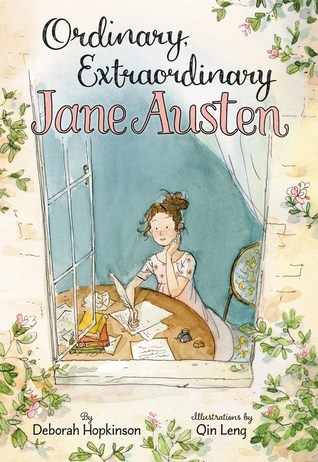
Ordinary, Extraordinary Jane Austen

Ordinary, Extraordinary Jane Austen. Deborah Hopkinson. Illustrated by Qin Leng. 2018. 40 pages. [Source: Library]

First sentence: It is a truth universally acknowledged that Jane Austen is one of our greatest writers. But it might surprise you to know that Jane lived a simple life. She wasn't rich or even very famous in her time.

Premise/plot: Ordinary, Extraordinary Jane Austen is a picture book biography of Jane Austen. The narrative is perfectly suitable for sharing with young readers. Yet it may delight older readers--adult readers--even more. What age is the right age for a person to "meet" Jane Austen?

My thoughts: What a lovely book! I enjoyed this one so much. I love, love, love Jane Austen. Though truth be told, I love Jane Eyre by Charlotte Bronte more than any individual novel by Jane Austen. (With the exception of Persuasion. Persuasion and Jane Eyre are probably too much of a tie to decide which one is my absolute, most favorite book.) I didn't start reading or watching Austen until I was an adult. (Unless you count Clueless as an introduction to Emma. I think I might have even read Emma as a teen, but I can't remember for sure. I think it was my first Austen to buy--and I did buy it because of Clueless.)

I found the writing to be wonderful.
There were plenty of stories for her to read, too. Her father's great library boasted five hundred books (almost all of them by men). Since Jane had little outside schooling, the library was her classroom. And while Jane devoured everything, from history to poetry to biographies, she loved novels best of all. 
The illustrations were PERFECT.

Text: 5 out of 5
Illustrations: 5 out of 5
Total: 10 out of 10


© 2018 Becky Laney of Becky's Book Reviews

Thursday, December 27, 2018

So Many Sounds

So Many Sounds. Tim McCanna. Illustrated by Andy J. Miller. 2018. Abrams. 24 pages. [Source: Review copy]

First sentence: Listen! Do you hear a sound? Noises come from all around. Soft and gentle, loud and clear, oh so many sounds to hear!

Premise/plot: This concept book is written in rhyme. It focuses on the sense of hearing. What sounds does the little boy--our hero--hear throughout the day and into the night?

My thoughts: I love, love, love, LOVE the text of this one. It is LOVELY. It is rhythmic. The descriptive writing is excellent. 
Teapot whistles.
Toaster pops.
Bacon sizzles.
Pancake flops.

and
Sneakers stamp, and classrooms bustle.
Pencils scratch, and papers rustle.
Whispers, giggles, shouts, and slurps,
Munching, crunching, gulps, and burps.
I absolutely love the text as I've mentioned. I wasn't as crazy about the illustrations. In fact the scale of the illustrations bothered me a good deal. The arms of all the people are very large and out of proportion. Hands/arms don't go down to one's ankles. They just don't.

Text: 5 out of 5
Illustrations: 2 out of 5
Total: 7 out of 10

© 2018 Becky Laney of Becky's Book Reviews

Balance the Birds

Balance the Birds. Susie Ghahremani. 2018. Abrams. 32 pages. [Source: Review copy]

First sentence: Here come the birds! Half on the left side, and half on the right. This is how the birds balance!

Premise/plot: Susie Ghahremani is the author of Stack the Cats which I reviewed last year. Like Stack the Cats, Balance the Birds is a math-related concept book for young readers. The concept being taught is weight, size, and logic.

My thoughts: I liked Stack the Cats well enough. It may be about math, but it was also about cats. 

I didn't dislike Balance the Birds. I think that's important to point out. I just didn't love it.

The illustrations are super-bold and colorful. Perhaps a little too colorful for my poor eyes. I think I would have liked this one a little more if the background(s) were different. If they were a shade of sky--white, gray, blue--for example. Instead of sky, we have bright red, bright yellow, light turquoise, dark turquoise.

I did like how the tree is a scale--readers can tell if the birds are balanced by paying attention to the tree.

Text: 3 out of 5
Illustrations: 3 out of 5
Total: 6 out of 10

© 2018 Becky Laney of Becky's Book Reviews
Wednesday, December 26, 2018

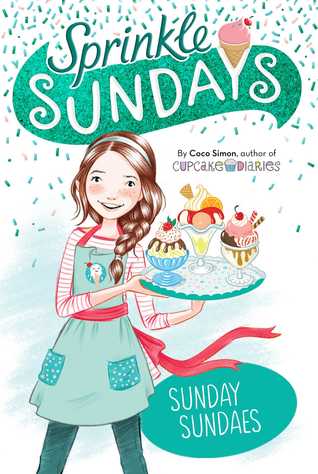
Sprinkle Sundays #1 Sunday Sundaes

Sunday Sundaes. (Sprinkle Sundays #1) Coco Simon. 2018. Simon & Schuster. 160 pages. [Source: Library]

First sentence: A hot August wind lifted my brown hair and cooled the back of my neck as I waited for the bus to take me to my new school. I hoped I was standing in the right spot. I hoped I was wearing the right thing. I wished I were anywhere else.

Premise/plot: When Allie returns from summer camp she learns that her parents are divorcing. She'll be moving with her mom and brother. It's just one town away, but it means she'll see less of her dad, less of her best, best friends (Tamiko and Sierra), and that she'll have to start a new school. If there's a plus to this news it's that her mom will be leaving her old job and starting her dream job. Her mom will be opening an ice cream parlor. Will Allie make new friends? Can she stay in touch with her old friends? Are her parents telling her the truth when they promise that things will be better now than ever before?

My thoughts: I liked this one. I did. Allie loves, loves, loves to read. She loves the library. She's not socially awkward--not in a true sense of the word, she just didn't find her people right away at the new school. Or should I say her KINDRED SPIRITS. Allie's a great kid--who wouldn't want to be her friend?

I really like the premise of this series. Each Sunday, Sierra, Tamiko, and Allie will work together at her mom's ice cream parlor.

The book has a cozy feel to it.

© 2018 Becky Laney of Becky's Book Reviews
Saturday, December 22, 2018

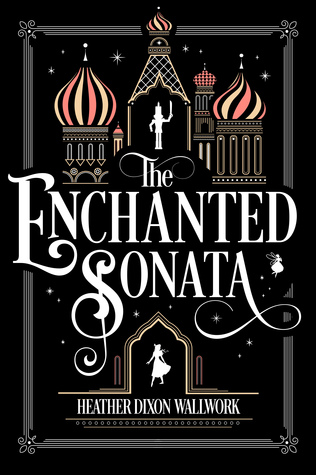
The Enchanted Sonata

The Enchanted Sonata. Heather Dixon Wallwork. 2018. [Oct 23] 375 pages. [Source: Review copy]

First sentence: What makes music...magic?

Premise/plot:  The Enchanted Sonata is a middle grade/young adult retelling of The Nutcracker. It is also a story within a story. Clara, our heroine, is a pianist. She's super-excited that she'll be playing in a fancy recital on Christmas along with some of the best of the best musicians. On Christmas Eve, she receives an unexpected present under the tree--a Nutcracker and a book. The book stars a young girl named Clara and it tells a fantastical story of a kingdom plagued with problems. There is an evil (signal the boo, hiss) musician who has with his magical music enticed the children of the kingdom away. Once he has them where he wants them--away from their homes--he plays another song and turns them into toys. The loss of a kingdom's children PLUS the ever-present danger of giant rats invading the land make for a severely troubled kingdom. The soon-to-be-emperor, Nikolai, finds himself in trouble. The musician turns him into a Nutcracker; however he--for story reasons perhaps--finds himself only partly turned. He remains alive, just a giant toy. As real-life Clara is reading the book, she finds herself IN the book. (The book is also in the book.) There is plenty of action, albeit slightly clunky seeing as how our hero is made of wood. Can Clara find a way of saving the kingdom by reversing the spells?

My thoughts: I enjoyed this one so much! I read it in two days. I found it lovely. I would say it is loosely inspired by The Nutcracker. But it also has other influences--the Pied Piper and perhaps even the Phantom of the Opera. (I'm not sure as I've never read that one. But there is a character that lives in the opera/theatre and makes music in the night.)

I found it to be somewhat predictable but not all the way predictable. (I guessed what would reverse the spell early on, for example.)

I found Clara to be a bit naive--very silly. But she is a young girl who has only dreamed up grand dreams of falling in love.

© 2018 Becky Laney of Becky's Book Reviews
Friday, December 21, 2018

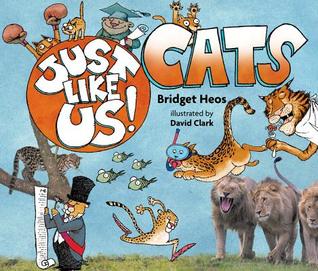
Just Like Us! Cats

Just Like Us! Cats. Bridget Heos. Illustrated by David Clark. 2019. Houghton Mifflin Harcourt. 32 pages. [Source: Review copy]

First sentence: Cats have retractable claws, razor-sharp teeth, and tails for balancing. Humans don't. But in some ways, cats and people are alike.

Premise/plot: Just Like Us! Cats is a nonfiction picture book about cats. You should know, however, this isn't so much focused on house pets as it is wild cats, big cats, prehistoric cats. It is packed with information. Each two-page spread provides one to two paragraphs of insight.

My thoughts: I liked this one. I probably would have enjoyed it more if it featured photographs instead of cartoon-like illustrations. The text was informative though.

© 2018 Becky Laney of Becky's Book Reviews

What Is Inside THIS Box?

What Is Inside This Box? (Monkey and Cake #1) Drew Daywalt. Illustrated by Olivier Tallec. 2019. Scholastic. 56 pages. [Source: Review copy]

First sentence: Hello, Monkey. Hello, Cake. What do you have? I have a box. It is a big box.

Premise/plot: Monkey believes that inside this box there is a magic cat. Open the box, the cat is not there. Close the box, it is. Cake, however, believes that inside the box there is a magic dinosaur. Who is right? And does it matter?

My thoughts: This early reader is unique and quirky--at least on the surface. At first glance, this one is over-the-top silly. But I don't think it's meant to be taken solely that way. I think it is supposed to get readers thinking deeper. If that isn't the case, why would there be a note to readers asking them questions like...
  • Do you believe in things you can't see?
  • Do people you know believe in things you don't believe in?
  • What do you believe in?
So this book addresses an abstract subject in a silly, light-hearted way. How much sillier can you get than a talking piece of cake?

I do not want to over think this book. I do not want to over think this book. I do not want to over think this book. I'm tempted to though. Let's just leave it as if taken too seriously--taken too far, this one is a theological mess.

© 2018 Becky Laney of Becky's Book Reviews

Thursday, December 20, 2018

The House Without a Christmas Tree

The House Without a Christmas Tree. Gail Rock. 1974. 84 pages. [Source: Bought]

First sentence: Carla Mae and I were sitting in our little kitchen at the old wooden table, with our spoons poised in mid-air. In front of each of us was a hard-boiled egg perched in an egg cup. We both stared intently at the faces we had drawn on our eggs. The longer the stare, the better the hex. "Who's yours today?" she asked. "Billy Wild," I said, making a face.


Premise/plot: The book is set in a small town in 1946. Addie lives with her father and grandmother. Her grandmother is a "character" in all the best ways. Unfortunately, some of her classmates mean it in a bad way. She has a super-complicated relationship with her father. He doesn't understand her; she doesn't understand him. Neither one is good at expressing exactly what they mean to one another.

The plot, of course, appears to mainly be about her wanting a Christmas tree. He said no; he meant no. No, no, no. But the heart wants what the heart wants, and Addie wants a Christmas tree desperately.

My thoughts: I really enjoy rereading this one every few years. It's a lovely quick read. If you enjoy historical fiction OR holiday stories, this one is a treat.

I read it this year with my family tree challenge in mind. Addie--if real--would have been born around the same time as my great-aunts.

© 2018 Becky Laney of Becky's Book Reviews
Friday, December 14, 2018

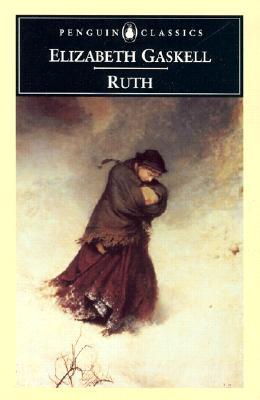
Ruth

Ruth. Elizabeth Gaskell. 1853. 432 pages. [Source: Bought]
First sentence: There is an assize-town in one of the eastern counties which was much distinguished by the Tudor sovereigns, and, in consequence of their favour and protection, attained a degree of importance that surprises the modern traveller.


Premise/plot: Ruth Hilton, a young apprenticed seamstress, makes a mistake when she falls in love with a wealthy young man, Henry Bellingham. The two run away together--to Wales, I believe. When he becomes sick, his mother comes and rescues him from the "evil tramp" Ruth. What will Ruth's future be now? Is there hope for this 'fallen woman'?

Thankfully Elizabeth Gaskell is NOT Nathaniel Hawthorne. And there are plenty of kind, warm-hearted Christian souls who extend grace, compassion, and actual care. Mr. Thurstan Benson (a Dissenting minister) and his sister, Faith, open up their home and their hearts to the pregnant Ruth. She will remain with them for years raising her son Leonard.

Not content to live off of charity, Ruth first becomes a governess and then later a sick nurse. The novel illustrates through its characters--Ruth, Faith, Sally, Thurstan, etc.--faith in action.

My thoughts: I love, love, love Elizabeth Gaskell. This novel is a tragedy. A beautiful, well-written tragedy with unforgettable characters. I had forgotten the sadness and just remembered the goodness. I knew I loved it. I knew I needed to reread it at some point. I knew I considered the characters good friends. I forgot all the sads. The fact that I find it a devastating read--emotionally--only testifies that the characterization is excellent.

Quotes:
  • Well, my dear, you must learn to think and work too; or, if you can't do both, you must leave off thinking.
  • The night before, she had seen her dead mother in her sleep, and she wakened, weeping. And now she dreamed of Mr Bellingham, and smiled. And yet, was this a more evil dream than the other?
  • The future lay wrapped in a golden mist, which she did not care to penetrate; but if he, her sun, was out of sight and gone, the golden mist became dark heavy gloom, through which no hope could come. He took her hand.
  • Low and soft, with much hesitation, came the "Yes;" the fatal word of which she so little imagined the infinite consequences. The thought of being with him was all and everything.
  • Poor Ruth! her faith was only building up vain castles in the air; they towered up into heaven, it is true, but, after all, they were but visions.
  • "In the eye of God, she is exactly the same as if the life she has led had left no trace behind. We knew her errors before, Faith." "Yes, but not this disgrace—this badge of her shame!" "Faith, Faith! let me beg of you not to speak so of the little innocent babe, who may be God's messenger to lead her back to Him.
  • "I think you, Thurstan, are the first person I ever heard rejoicing over the birth of an illegitimate child. It appears to me, I must own, rather questionable morality." 
  • You yourself have not greater sorrow over this young creature's sin than I have: the difference is this, you confuse the consequences with the sin."
  • We are both right: I, in the way in which the child ought to be viewed; you, dear good Faith, for thinking of taking her home with us. God bless you, dear, for it!
  • It is better not to expect or calculate consequences. The longer I live, the more fully I see that. Let us try simply to do right actions, without thinking of the feelings they are to call out in others.
  • My dear Ruth, you don't know how often I sin; I do so wrong, with my few temptations. We are both of us great sinners in the eyes of the Most Holy; let us pray for each other.
  • I cannot abide the way some folk has of denying there's trouble or pain to be met; just as if their saying there was none, would do away with it.
  • There's a right and a wrong way of setting about everything—and to my thinking, the right way is to take a thing up heartily, if it is only making a bed.
  • 'Sally, do you think God has put us into the world just to be selfish, and do nothing but see after our own souls? or to help one another with heart and hand, as Christ did to all who wanted help?'
  •  Everything may be done in a right way or a wrong; the right way is to do it as well as we can, as in God's sight; the wrong is to do it in a self-seeking spirit, which either leads us to neglect it to follow out some device of our own for our own ends, or to give up too much time and thought to it both before and after the doing.
  • Those summer mornings were happy, for she was learning neither to look backwards nor forwards, but to live faithfully and earnestly in the present.
  • I dare not think of happiness—I must not look forward to sorrow. God did not put me here to consider either of these things.
  • The time that has pressed down my life like brands of hot iron, and scarred me for ever, has been nothing to you.
  • "Leonard—when I was very young I did very wrong. I think God, who knows all, will judge me more tenderly than men—but I did wrong in a way which you cannot understand yet"
  •  I declare before God, that if I believe in any one human truth, it is this—that to every woman who, like Ruth, has sinned, should be given a chance of self-redemption—and that such a chance should be given in no supercilious or contemptuous manner, but in the spirit of the holy Christ."I state my firm belief, that it is God's will that we should not dare to trample any of His creatures down to the hopeless dust;
  • Now, let us stand firm on the truth. You have no new fault to repent of. Be brave and faithful. It is to God you answer, not to men.
  • The shame of having your sin known to the world, should be as nothing to the shame you felt at having sinned. We have dreaded men too much, and God too little, in the course we have taken.
  • Any fastidiousness I shall have to get rid of, and I shall be better without; but any true refinement I am sure I shall find of use;    
  • Would you not rather be nursed by a person who spoke gently and moved quietly about than by a loud bustling woman?
  • There is always something aggravating in being told, that the mood in which we are now viewing things strongly will not be our mood at some other time. It implies that our present feelings are blinding us, and that some more clear-sighted spectator is able to distinguish our future better than we do ourselves.
  • Her left hand truly knew not what her right hand did; and Leonard was overwhelmed now to hear of the love and the reverence with which the poor and outcast had surrounded her. 
  • From that day forward Leonard walked erect in the streets of Eccleston, where "many arose and called her blessed."
  •  "We have no right to weigh human lives against each other."
 

© 2018 Becky Laney of Becky's Book Reviews
Thursday, December 13, 2018

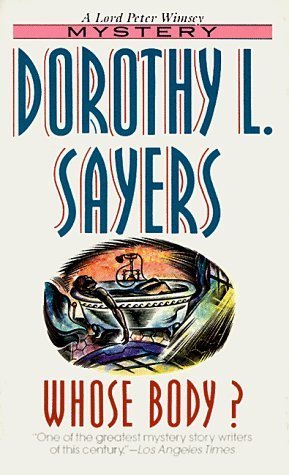
Whose Body?

Whose Body? Dorothy L. Sayers. 1923/1995. HarperTorch. 224 pages. [Source: Bought]

First sentence: "Oh damn!" said Lord Peter Wimsey at Piccadilly Circus.

Premise/plot: Whose Body? is the first novel in a mystery series starring Lord Peter Wimsey as an amateur detective. (He solves crimes with a little help from his butler/valet, Bunter, and in later mysteries with his girlfriend/wife.) In the opening pages of the novel, Lord Peter receives a phone call--or 'phone call--from his mother the Dowager Duchess. A murder has been committed. A naked man has been found in a bath tub of an acquaintance of hers. Is he interested in solving the case and working with Scotland Yard?

My thoughts: As a whole, I love, love, love the series by Dorothy Sayers. That being said, I don't love each and every book in the series equally. I enjoyed this one very much. I found it to be witty and delightful. It was super quotable. I would recommend it as a starting point for reading the series.

Quotes:
  • Exit the amateur of first editions; new motive introduced by solo bassoon; enter Sherlock Holmes, disguised as a walking gentleman. There goes Bunter. Invaluable fellow--never offers to do his job when you've told him to do somethin' else. (5)
  • "Sugg's a beautiful, braying ass," said Lord Peter. "He's like a detective in a novel." (18)
  • "I love trifling circumstances," said Lord Peter. "so many men have been hanged by trifling circumstances." (20)
  •  "Parker, acushla, you're an honour to Scotland Yard. I look at you, and Sugg appears a myth, a fable, an idiot-boy, spawned in a moonlight hour by some fantastic poet's brain. Sugg is too perfect to be possible." (23)
  • "Look here, Wimsey--you've been reading detective stories; you're talking nonsense." (29)
  • Of course, if this were a detective story, there'd have been a convenient shower exactly an hour before the crime and a beautiful set of marks which could only have come between two and three in the morning, but this being real life in a London November, you might as well expect footprints in Niagra. (44)
  • "It's a hard life, valeting by day and developing by night--morning tea at any time from 6:30 to 11, and criminal investigation at all hours. It's wonderful, the ideas these rich men with nothing to do get into their heads." (49)
  • "Have you any Scotch blood in you, Parker?" inquired his colleague, bitterly.
    "Not that I know of," replied Parker. "Why?"
    "Because of all the cautious, ungenerous, deliberate and cold-blooded devils I know," said Lord Peter, "you are the most cautious, ungenerous, deliberate and cold-blooded. Here I am, sweating my brains out to introduce a really sensational incident into your dull and disreputable little police investigation, and you refuse to show a single spark of enthusiasm."
    "Well, it's no good jumping at conclusions."
    "Jump? You don't even crawl distantly within sight of a conclusion. I believe if you caught the cat with her head in the cream-jug you'd say it was conceivable that the jug was empty when she got there."
    "Well, it would be conceivable, wouldn't it?" (51)
  • "There's nothing you can't prove if your outlook is only sufficiently limited. Look at Sugg." (69)
  • Assigning a motive for the murder of a person without relations or antecedents or even clothes is like trying to visualize the fourth dimension--admirable exercise for the imagination, but arduous and inconclusive. (82)
  • "One demands a little originality in these days, even from murderers," said Lady Swaffham. "Like dramatists, you know--so much easier in Shakespeare's time, wasn't it? Always the same girl dressed up as a man, and even that borrowed from Boccaccio or Dante or somebody. I'm sure if I'd been a Shakespeare hero, the very minute I saw a slim-legged young page-boy I'd have said: "Odsbodikins! There's that girl again!" (123)
  • "And in short stories," said Lord Peter, "it has to be put in statement form, because the real conversation would be so long and twaddly and tedious, and nobody would have the patience to read it. Writers have to consider their readers, you see." (158)


© 2018 Becky Laney of Becky's Book Reviews

Wednesday, December 12, 2018

Board book: You Are My Cupcake

You Are My Cupcake. Joyce Wan. 2011. Scholastic. 14 pages. [Source: Library]

First sentence:
You are my cupcake
My sticky little gum drop
My mushy little sweet pea
My oven baked cutie pie...
Premise/plot: Do you LOVE, LOVE, LOVE, LOVE your little one? Do you want to spend some quality time with him or her with book in hand? (Or with book in hand until you've memorized it cover to cover.) Joyce Wan's You Are My Cupcake is a great choice, perhaps the best choice. You could read the text, I suppose, or you could SING it. The words fits perfectly perfect to the tune You Are My Sunshine. You might have to do slight adjustment with the last line changing "Baby I could just eat you up!" to "Baby, I could just eat you all up!" But otherwise this one is PERFECT.

My thoughts:  The text is perfectly perfect. The illustrations are super-super-adorable. Share this one with your little one often! It's a perfect book to fit into your daily routine. After all, your little one won't remain your chubby little pumpkin forever.


© 2018 Becky Laney of Becky's Book Reviews

Friday, December 07, 2018

A Christmas Carol

A Christmas Carol. Charles Dickens. 1843. 96 pages. [Source: Bought]

First sentence: MARLEY WAS DEAD, to begin with. There is no doubt whatever about that.

Premise/plot:  Who isn't familiar with the story of Scrooge?! Still, I suppose *something* must be said. Scrooge HATES Christmas. Hate is too soft a word really for the rage he feels when he thinks about the holiday. For Scrooge hating comes as naturally as breathing. He loves no one or no thing--nothing except money and making a profit. But what is driving his obsession with money? what is driving him to live as he does--to make the choices he does? Could there be a secret or two in his past that holds the answers to these questions? Can Scrooge be saved from his own worst enemy--himself?

If Scrooge is to be saved--can he be saved?!--it will take some supernatural intervention. For Scrooge won't be saving himself. For one thing, Scrooge does not see his own need to be saved. Saved from what exactly?!?! Saved from success?! As far as Scrooge is concerned, everything in his life is just as it should be. He in need of help? he in need of saving? Don't be ridiculous.

He will be visited by four ghosts--the first ghost being Marley, his dead business partner of old. The other three ghosts being Christmas spirits past, present, and future. Can these spirits open Scrooge's eyes? Will he start to see--will he start to judge--life differently?

My thoughts: I've read this one quite a few times. I've reviewed it a few times too. My favorite review of it can be found at Operation Actually Read Bible. In that review, I share my spiritual assessment of this Christmas story.

Quotes:
  • The more he thought, the more perplexed he was; and the more he endeavored not to think, the more he thought.
  • Now, being prepared for almost anything, he was not by any means prepared for nothing; 

© 2018 Becky Laney of Becky's Book Reviews

Thursday, December 06, 2018

The Lion, The Witch, and The Wardrobe

The Lion, The Witch, and the Wardrobe. (The Chronicles of Narnia #1) C.S. Lewis. Illustrated by Pauline Baynes. 1950. 186 pages. [Source: Bought]

 First sentence: ONCE THERE WERE FOUR CHILDREN whose names were Peter, Susan, Edmund and Lucy.

Premise/plot: During the second world war, the Pevensie children are evacuated to the country. Peter, Susan, Edmund, and Lucy accidentally discover a magical country--Narnia--within a wardrobe in a spare room. Lucy discovers Narnia first and meets a faun, Mr. Tumnus. Next to enter is the turkish-delight-loving Edmund. He meets the Queen--or the White Witch. But it isn't long before all four children enter Narnia and change the course of its history--not to mention their own lives--forever.

My thoughts: I love, love, love The Lion, The Witch, and the Wardrobe. I had forgotten how SHORT a read it really is. Perhaps because the movie adds so much drama and action. If I had to guess, I'd say that it would take a person longer to watch the movie than to actually read the book. At least if you're a somewhat fast reader like I am. 

I love that the book doesn't focus on battles and blood. Yes, readers know that there is a fierce battle taking place, but Lewis' focus is elsewhere. While the battle rages on, readers are with Lucy, Susan, and Aslan. We are eye-witnesses not to the battle but to Aslan's resurrecting power as he reawakens the statues and assembles his liberated 'army' to join in the battle.

No matter what the movie may be, the book is not action-driven. It is character-driven. It is focused on relationships and feelings. I loved that as a child and I love that now. That being said, the movie is very good.

Quotes:  
  • Daughter of Eve from the far land of Spare Oom where eternal summer reigns around the bright city of War Drobe, how would it be if you came and had tea with me?
  • And really it was a wonderful tea. There was a nice brown egg, lightly boiled, for each of them, and then sardines on toast, and then buttered toast, and then toast with honey, and then a sugar-topped cake.
  • And the tune he played made Lucy want to cry and laugh and dance and go to sleep all at the same time.
  • “It’s—it’s a magic wardrobe. There’s a wood inside it, and it’s snowing, and there’s a Faun and a Witch and it’s called Narnia; come and see.
  • “I see you are an idiot, whatever else you may be,” said the Queen. “Answer me, once and for all, or I shall lose my patience. Are you human?
  • “A door. A door from the world of men! I have heard of such things. This may wreck all. But he is only one, and he is easily dealt with.
  • The more he ate the more he wanted to eat, and he never asked himself why the Queen should be so inquisitive.     
  • “Why don’t they teach logic at these schools? There are only three possibilities. Either your sister is telling lies, or she is mad, or she is telling the truth. You know she doesn’t tell lies and it is obvious that she is not mad. For the moment then and unless any further evidence turns up, we must assume that she is telling the truth.
  • “But do you really mean, sir,” said Peter, “that there could be other worlds—all over the place, just round the corner—like that?
  • “I don’t want to go a step further and I wish we’d never come. But I think we must try to do something for Mr. Whatever-his-name-is—I mean the Faun.
  • “They say Aslan is on the move—perhaps has already landed.” And now a very curious thing happened. None of the children knew who Aslan was any more than you do; but the moment the Beaver had spoken these words everyone felt quite different.
  • At the name of Aslan each one of the children felt something jump in its inside. Edmund felt a sensation of mysterious horror. Peter felt suddenly brave and adventurous. Susan felt as if some delicious smell or some delightful strain of music had just floated by her. And Lucy got the feeling you have when you wake up in the morning and realize that it is the beginning of the holidays or the beginning of summer.
  • “Who is Aslan?” asked Susan. “Aslan?” said Mr. Beaver. “Why, don’t you know? He’s the King. He’s the Lord of the whole wood, but not often here, you understand.
  • “Turn him into stone? If she can stand on her two feet and look him in the face it’ll be the most she can do and more than I expect of her.
  • “Aslan a man!” said Mr. Beaver sternly. “Certainly not. I tell you he is the King of the wood and the son of the great Emperor-beyond-the-Sea. Don’t you know who is the King of Beasts? Aslan is a lion—the Lion, the great Lion. 
  • “if there’s anyone who can appear before Aslan without their knees knocking, they’re either braver than most or else just silly.
  • “Safe?” said Mr. Beaver; “don’t you hear what Mrs. Beaver tells you? Who said anything about safe? ‘Course he isn’t safe. But he’s good. He’s the King, I tell you.
  • “I’m longing to see him,” said Peter, “even if I do feel frightened when it comes to the point.
  • “Didn’t I tell you,” answered Mr. Beaver, “that she’d made it always winter and never Christmas? Didn’t I tell you? Well, just come and see!
  • He was a huge man in a bright red robe (bright as holly berries) with a hood that had fur inside it and a great white beard that fell like a foamy waterfall over his chest.
  • He was so big, and so glad, and so real, that they all became quite still. They felt very glad, but also solemn.
  • People who have not been in Narnia sometimes think that a thing cannot be good and terrible at the same time.
  • “Please—Aslan,” said Lucy, “can anything be done to save Edmund?” “All shall be done,” said Aslan. “But it may be harder than you think.
  • “Here is your brother,” he said, “and—there is no need to talk to him about what is past.” Edmund shook hands with each of the others and said to each of them in turn, “I’m sorry,” and everyone said, “That’s all right.
  • “Oh, you’re real, you’re real! Oh, Aslan!” cried Lucy, and both girls flung themselves upon him and covered him with kisses. 
  • “It means,” said Aslan, “that though the Witch knew the Deep Magic, there is a magic deeper still which she did not know. Her knowledge goes back only to the dawn of time.
  • But if she could have looked a little further back, into the stillness and the darkness before Time dawned, she would have read there a different incantation.
  • She would have known that when a willing victim who had committed no treachery was killed in a traitor’s stead, the Table would crack and Death itself would start working backward.
  • “Does he know,” whispered Lucy to Susan, “what Aslan did for him? Does he know what the arrangement with the Witch really was?
  • “Oughtn’t he to be told?” said Lucy. “Oh, surely not,” said Susan. “It would be too awful for him. Think how you’d feel if you were he.
  • “All the same I think he ought to know,” said Lucy. But at that moment they were interrupted.
  • But if the Professor was right it was only the beginning of the adventures of Narnia.

© 2018 Becky Laney of Becky's Book Reviews
Monday, December 03, 2018

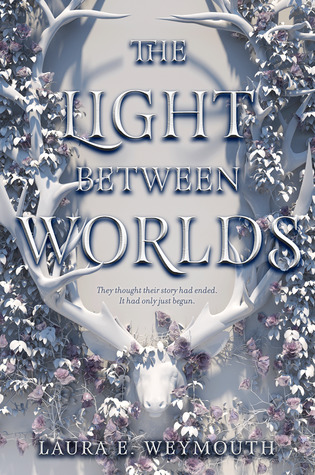
The Light Between Worlds

The Light Between Worlds. Laura E. Weymouth. 2018. HarperCollins. 320 pages. [Source: Library]
First sentence: We're burying Old Nick in the back garden. It's just Jamie and me, and it's raining, and I know he's worried because of the way he stands, head bowed, shoulders tense.

Premise/plot: During the war--the second world war--three British children are transported magically to another world--the Woodlands. Philippa, Evelyn, and Jamie react to this adventure in very different ways. Philippa is uncomfortable, out of sorts. She'd go home instantly if she could. Jamie is up for an adventure, but once he's had it he'll happily return to reality. Evelyn is all in from the start. The Woodlands are HER FOREVER AND EVER AND EVER home. She never wants to go back. This instant bond is unsettling for her brother and sister. Sooner or later, the three will return--return to the exact moment they left, return to being in a London bomb shelter, return to their parents.

The book is set six years AFTER this adventure takes place. Evelyn has had six years to adjust to being back, six long years to reconnect with her life. But she hasn't. She still persists that this world, this reality, is not her home, is not where she belongs. Evelyn is desperate to return to the Woodlands--and she'll never give up trying to get back no matter what this means to her family and friends.

The first half is told from Evelyn's point of view. The second half is told from Philippa's point of view.

My thoughts: I wanted to love The Light Between Worlds. I honestly did. I wanted to be swept up in the fantasy adventure and fall in love with The Woodlands--fall just as hard as Evelyn. I wanted to understand WHY the Woodlands had such a huge hold over her. But I didn't. Perhaps because the Woodlands scenes are a series of flashbacks. Perhaps because instead of experiencing the Woodlands, it's brief flashes of telling--not showing. Perhaps because none of the Woodlands characters are ever really fleshed out. Perhaps because in comparison between this world and that--all of the characterization is spent on this world. Imagining the awesomeness of The Woodlands has been left completely up to the reader--in my opinion. I just couldn't do it. I couldn't make myself build The Woodlands into this awesome, wonderful, inspiring place.

I thought the book was sad. Evelyn was severely depressed, suicidal even. Her depression seemed to follow seasons. Were readers supposed to conclude that all of Evelyn's mental health issues were really not mental health issues just her heart longing to return to the place she called home? Were we supposed to be at peace with Evelyn's self-abuse and melancholy? I know that Philippa was worried--concerned--that her sister might be placed in a mental institution if anyone knew her true state of mind. And since the book was set then--and not now--that would have been its own tragedy of sorts. Either ending--Evelyn staying or Evelyn going--would be tragic and devastating.


© 2018 Becky Laney of Becky's Book Reviews

Thursday, November 29, 2018

Board book: I Love Classical Music

I Love Classical Music: My First Sound Book. Marion Billet. 2019. Scholastic. [Source: Review copy]

First sentence: Wolfgang Amadeus Mozart. The Turkish March. Watch the tigers move to the rhythm. Antonio Vivaldi. Spring from the Four Seasons. Look at the flowers and bugs spring to life!

Premise/plot: This board book "introduces" little ones to six selections of classical music from famous composers. The songs and artists included are as follows: Mozart's The Turkish March, Vivaldi's Spring, Strauss' The Radetzky March,  Schubert's The Trout Quintet, Tchaikovsky's Dance of the Mirlitons, and Paganini's The Campanella.

My thoughts: One of my favorite things about this one is that there is an off/on switch. Board books with batteries are tricky. On the one hand, they are usually fun. On the other hand, the batteries won't last all that long. The more beloved a book is, the quicker the battery dies. Then it is just SAD, SAD, super-sad. Little fingers can touch the 'buttons' on each spread to start and stop the music. Each song lasts under a minute.

© 2018 Becky Laney of Becky's Book Reviews

Thursday, November 22, 2018

Bah! Humbug!

Bah! Humbug! Michael Rosen. Illustrated by Tony Ross. 2017/2018. 192 pages. [Source: Library]

First sentence: "Your Scrooge mask?" Ray Gruber yelled as the family climbed into the car.

Premise/plot:  Harry Gruber is playing Scrooge in his school's production of Charles Dickens' A Christmas Carol. His father, Ray, a real-life Scrooge himself, is not pleased that he "has" to stop everything and attend the performance. Will Ray stop working long enough to watch his son shine as Scrooge? Will he tune in to the needs of his family? Or is he a lost cause?

My thoughts: This one was predictable. I won't lie. But it's predictable in a good way. It juxtaposes several stories. First, we have Rosen's adaptation of A Christmas Carol--the script Harry's performing. Second, we get a behind-the-scenes perspective as Harry is performing--on stage, off stage, in the audience. Third, we get to follow Ray as he undergoes a transformation not unlike Scrooge's.

I enjoyed this one and would recommend it.

© 2018 Becky Laney of Becky's Book Reviews

Wednesday, November 21, 2018

P is for Pterodactyl: The Worst Alphabet Book Ever

P is for Pterodactyl: The Worst Alphabet Book Ever. Raj Haldar and Chris Carpenter. Illustrated by Maria Tina Beddia. 2018. 32 pages. [Source: Library]

First sentence: A is for Aisle. The bread aisle has not been cleaned in aeons, and nine tiny beasts meet to have a feast.

Premise/plot: This book is not your traditional alphabet book. It is choosing to highlight words that "misbehave" in one way or another. Usually misbehaving words start with silent letters or break phonic rules in some way. Some letters are trickier to find examples for than others. Some choices make total sense--others not so much. There is a glossary and word pronunciation guide at the back of the book.

More examples:
  • C is for Czar. Shhh! The fascinating czar is secretly part Czech.
  • E is for Ewe. Eileen the ewe was so euphoric the wolves were eaten, she even gave the eulogy.
  • G is for Gnocchi. The gnome yells, "Waiter! There's a bright white gnat nibbling on my gnocchi!"
  • I is not for Eye. We asked the pirate if he has two eyes, and he said, "aye, aye!"
  • K is for Knight. The noble knight's knife nicked the knave's knee.
  • N is not for Knot. N is for naughty children who will sing a solemn hymn when autumn comes to an end. 
  • P is for Pterodactyl. Ptolemy the psychic pterodactyl struggles with psoriasis. 
  • T is for Tsunami. The charging tsunami washed away all of Tchaikovsky's tchotchkes. 
My thoughts: I enjoyed this one. I did. Granted, I am an adult. I'm not sure this is a picture book for actual children. As in children who are just beginning to read and sound out words. I'm not sure how it would work as a read aloud for a group. Perhaps it has some potential there! If you are planning to read it aloud, I'd recommend practice. (It's always a great idea to pre-read a book before reading it aloud anyway.)

Text: 4 out of 5
Illustrations: 3 out of 5
Total: 7 out of 10

© 2018 Becky Laney of Becky's Book Reviews

Echo's Sister

Echo's Sister. Paul Mosier. 2018. HarperCollins. 240 pages. [Source: Library]
First sentence: Today is the first day of school, and it's gonna be fantastic. I think this as I sit on the toilet in the second-floor bathroom of the Village Arts Academy in New York City, looking at a page in my tiny journal with a list of things to say to all my new classmates.

Premise/plot: "El" is the narrator of Paul Mosier's second novel, Echo's Sister. (She hates her given name, LAUGHTER.) She's twelve and having a bit of a rough time--starting a new school, trying to make new friends, to find her place to fit and belong. But this isn't really that novel. Her perspective changes quite a bit after she learns her younger sister, Echo, has cancer. Talk about a BEFORE and AFTER. Will life ever be the same again? Would she really want it to?

My thoughts: I loved, loved, loved his first book, Train I Ride. I loved this one too. I loved spending time with El's family. I loved the focus on family and friends. I loved how El's new friend was really there for her. I loved the hope. This isn't a happy-happy carefree book. It has substance. But it isn't a sad sob story either. Like life itself--it's balanced.


© 2018 Becky Laney of Becky's Book Reviews
Friday, November 16, 2018

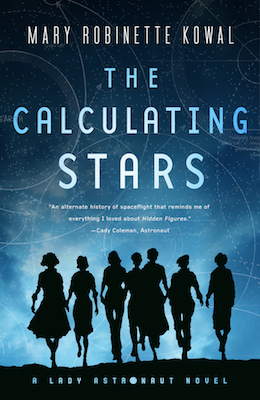
The Calculating Stars

The Calculating Stars (Lady Astronaut #1) Mary Robinette Kowal. 2018. Tor. 432 pages. [Source: Library]
First sentence: Do you remember where you were when the Meteor hit? I've never understood why people phrase it as a question, because of course you remember.

Premise/plot: The Calculating Stars is set in an alternate reality 1950s. There are two what-ifs. One is small. One is big. What if Dewey had won the presidential election instead of Truman? What if a meteor--an extinction event--had struck earth in 1952? The heroine of the book is a former WASP, a current computer for NACA, a wife of an engineer, Nathaniel York. Her name is Elma York and within Kowal's fictional universe she may be better known to the world as LADY ASTRONAUT.

In the weeks following he devastating event, Elma York realizes that the worst is yet to come. It's just a matter of time--mere decades--before the earth becomes uninhabitable. The earth will experience great climate change. The earth will begin to heat up and will keep heating up. If humanity is to survive, it needs to find a way to leave the planet. But can she--and her fellow scientists--convince the powers of the dangers? Or will politics get in the way? (For example, there are a few convinced that the meteor wasn't a meteor but something that originated from the Soviet Union. Yet another example, some are convinced that men should go into space and colonize--but only men. Don't they realize that women would be absolutely essential to any colony? How can you "save" the human race without women?)

The book is about the struggle to get men--and women--into space in an effort to save humanity. It won't be easy. There's the science and engineering aspect of it. There's also the political and social aspect. Issues of sexism and racism play a large role in the novel. It is interesting to consider how some things stay the same--in this alternate reality--and how other things change. (For example, the Soviet Union dissolves; the Korean war ceases; there is no space race between nations. The world comes together as one to solve the problem. Astronauts can come from all nations.)

My thoughts: I didn't love, love, love this one. In many ways it was a compelling read. I loved Hidden Figures. I do have an interest in the history of the space program. I enjoy science fiction. I found it interesting that our hero and heroine are Jewish. But two things kept me from loving it.

I prefer my fiction on the cleaner side. This one had profanity--blasphemy--and smut. Way too much detail is given about Elma and Nathaniel's intimate life. But even this isn't my number one complaint of the book....

My number one complaint is a technical one. Kowal consistently uses WASPs instead of WASP. WASP stands for Women Airforce Service Pilots. PILOTS plural. WASP is already plural--it never needs an S added to it. Never. Every time I saw WASPs in the text, it was like finger nails on a chalkboard. I am not sure how much Kowal actually researched the WASP. I think she spent her time researching other things. (She does have a bibliography, but she lists no books about the WASP.) There was also one place where she mentions a WASP delivering planes overseas during the war. This is not something WASP did. (I think she did this because it was a convenient way to have had two characters met in the past.)

I spent almost four years of my life editing and proofreading oral histories of the WASP. I read up on books about the WASP as job training (in addition to watching documentaries) and often read biographies and autobiographies as well. Writers would come to the special collections library and do research.

© 2018 Becky Laney of Becky's Book Reviews