Showing posts with label 1853. Show all posts

Tuesday, January 26, 2021

7. Ruth


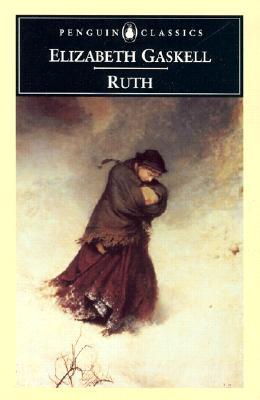
Ruth. Elizabeth Gaskell. 1853. 432 pages. [Source: Bought]

First sentence: There is an assize-town in one of the eastern counties which was much distinguished by the Tudor sovereigns, and, in consequence of their favour and protection, attained a degree of importance that surprises the modern traveller.

Ruth Hilton, a beautiful, young apprenticed seamstress, makes a mistake when she falls in love with a wealthy young man, Henry Bellingham. The two run away together--to Wales, I believe. When he becomes sick, his mother comes and rescues him from the "evil tramp" Ruth. What will Ruth's future be now? Is there hope for this 'fallen woman'?

Why do they run away together? She is late coming home on her afternoon off. She'd been out walking with Mr. Henry Bellingham. When her boss sees that she's walking with a fellow, she's THROWN OUT OF THE HOUSE. No questions or interrogations, no chance to explain. Being an orphan, she has no one to turn to. Granted, he is quite enchanted with her and eager to keep company with her. Granted, he being older and wiser and more aware of how the world works could have taken more care to protect her reputation. But he didn't. Would Ruth have become a fallen woman if she hadn't been pushed out the door with malice??? Didn't her former boss push her DIRECTLY into the arms of Mr. Bellingham? 

The book doesn't make a distinction between kind and tender AND reprobate sinner sin sinner. I don't see Mr. Henry Bellingham as EVIL per se. I think in some ways he was more mature and worldly wise; she was more naive and innocent. But I do get the idea he genuinely cared for and loved her. In other words it wasn't 100% lust on his part. 

So the book skims the surface of their time together. Is it a few weeks, a few months, half a year or more? Readers don't know for sure. Long enough for her to conceive a child. (Which could lend itself to a mere week or two). But their days are full of happiness in one another. Until he becomes ill and requires nursing. She's his full-time nurse and she's tender, loving, and all kinds of wonderful. But someone else writes his mother to come and fetch him. 

His mother sees Ruth as an EVIL TRAMP, a seductress. She WENT AFTER HER SON. She forced him to live a debauched life. The best thing--the only thing--is to keep these two apart forever and ever. Whether Ruth lives or dies is no concern to her. She must reap what she has sown--bear the consequences for her wickedness. Readers can put two and two together and see that her perspective on Ruth is unkind--though not shocking or out of touch with the times.

But their holiday in Wales wasn't all that secluded. Ruth also made acquaintances and friends with others during her stay. One of those is Mr. Benson, a minister. He knows that Ruth is "living in sin" with a young man (though I don't believe these two meet at this point). But he also sees her as a young, naive, deeply troubled young woman who has hit rock bottom. Almost literally. Ruth has lost the will to live. She's sunken to the 'depths of despair' (to borrow a phrase from Anne Shirley). He doesn't see Ruth as reprobate past the point of no return. No, he sees her as a human being in need of a Savior. Mr. Benson knows that ALL have fallen and come short. Mr. Benson knows that NONE are worthy. Mr. Benson knows a mighty, mighty Savior who will graciously welcome her into His Kingdom with open arms. God's grace is AMAZING and his love knows no bounds. What Ruth needs is not stern judgment and to be cast out from society, what Ruth needs is to be welcomed wholly and loved. 

Mr. Thurstan Benson and his sister, Faith, take Ruth with them to their own community (remember Wales was a vacation, a holiday), to their own home. Ruth becomes one with them and gets a new beginning. And a new beginning it is, Ruth has been born again, born from above. She has been forgiven, fully forgiven. And she loves abundantly and graciously. Leonard, her son, is a wonderful little boy. 

Not content to live off of charity, Ruth first becomes a governess and then later a sick nurse. The novel illustrates through its characters--Ruth, Faith, Sally, Thurstan, etc.--faith in action.

The novel is a tragedy--but not for the reasons one might expect. Elizabeth Gaskell is no Nathaniel Hawthorne or Thomas Hardy. The novel's treatment of a woman bearing an illegitimate child is revolutionary for its time--in my opinion. Ruth was treated with GRACE, BOUNTIFUL, OVERFLOWING grace. She was LOVED unconditionally without judgment, without scorn. Mr. Benson loved her with the truth: There is a God who SAVES. There is a God who FORGIVES. There is a God who LOVES, who SEES and HEARS. Even if the world doesn't forgive, even if the world doesn't give second chances, even if the world rejects--there is a God who will never leave nor forsake. 

The novel features many conversations that I imagine would have been shocking, offensive, challenging to the status quo at the time it was published. I imagine that this novel might have been a bit controversial in some circles.What is 'the Christian' way to treat a fallen woman? a single mother? Were the Bensons being too lenient? By extending love and grace to Ruth were they compromising the truth and their witness? 

There were several opportunities for Thurstan Benson to show grace. The most obvious being to Ruth herself and to her son. But a second was when he was wronged by a neighbor. He shows grace both times and advocates for grace in strong language. But there was one opportunity where he did NOT show grace nor give the benefit of the doubt. 

Thurstan Benson, for better or worse, does not see Mr. Bellingham (aka Mr. Donne) as being anything other than a reprobate. He sees him as a SINNER SIN SINNER through and through. Though he graciously sees Ruth as being REDEEMED (her past completely wiped clean; spotless), he doesn't seem to think that God could work a mighty wonder in Henry too. Benson is not civil to him and utterly rejects all of his offers to help with Leonard, to provide for him, to be even a little part in his life. Is it fair of Mr. Benson to offer the grace of the gospel to Ruth but withhold it from Henry Bellingham??? Is Leonard better never knowing his father's name, better never having a relationship with him, better without a cent from his father? I am not saying absolutely that a relationship between Leonard and Henry Bellingham would have been perfectly perfect and the ideal way to end the novel. But in the real world, I would hope that a child would be able to have a relationship with both parents even if one parent isn't a saintly saint saint.

Quotes:

  • "Well, my dear, you must learn to think and work too; or, if you can't do both, you must leave off thinking. Your guardian, you know, expects you to make great progress in your business, and I am sure you won't disappoint him."
  • The night before, she had seen her dead mother in her sleep, and she wakened, weeping. And now she dreamed of Mr Bellingham, and smiled. And yet, was this a more evil dream than the other?
  • Ruth was innocent and snow-pure. She had heard of falling in love, but did not know the signs and symptoms thereof; nor, indeed, had she troubled her head much about them.
  • "My dear, remember the devil goeth about as a roaring lion, seeking whom he may devour; remember that, Ruth."
  • The old man sighed as he watched them away. "The Lord may help her to guide her steps aright. He may. But I'm afeard she's treading in perilous places. I'll put my missis up to going to the town and getting speech of her, and telling her a bit of her danger. An old motherly woman like our Mary will set about it better nor a stupid fellow like me."
  • "Ruth, would you go with me to London? My darling, I cannot leave you here without a home; the thought of leaving you at all is pain enough, but in these circumstances—so friendless, so homeless—it is impossible. You must come with me, love, and trust to me."
  • Low and soft, with much hesitation, came the "Yes;" the fatal word of which she so little imagined the infinite consequences. The thought of being with him was all and everything.
  • "In the eye of God, she is exactly the same as if the life she has led had left no trace behind. We knew her errors before, Faith."
  • "Yes, but not this disgrace—this badge of her shame!" "Faith, Faith! let me beg of you not to speak so of the little innocent babe, who may be God's messenger to lead her back to Him. Did she not turn to God, and enter into a covenant with Him—'I will be so good?' Why, it draws her out of herself! If her life has hitherto been self-seeking, and wickedly thoughtless, here is the very instrument to make her forget herself, and be thoughtful for another. Teach her (and God will teach her, if man does not come between) to reverence her child; and this reverence will shut out sin,—will be purification."
  • "I think you, Thurstan, are the first person I ever heard rejoicing over the birth of an illegitimate child. It appears to me, I must own, rather questionable morality."
  • Oh, Faith! once for all, do not accuse me of questionable morality, when I am trying more than ever I did in my life to act as my blessed Lord would have done."
  • She is about to become a mother, and have the direction and guidance of a little tender life. I fancy such a responsibility must be serious and solemn enough, without making it into a heavy and oppressive burden, so that human nature recoils from bearing it. While we do all we can to strengthen her sense of responsibility, I would likewise do all we can to make her feel that it is responsibility for what may become a blessing.
  • Oh, Father! listen to my prayer, that her redemption may date from this time. Help us to speak to her in the loving spirit of thy Holy Son!
  • Let us try simply to do right actions, without thinking of the feelings they are to call out in others. We know that no holy or self-denying effort can fall to the ground vain and useless; but the sweep of eternity is large, and God alone knows when the effect is to be produced.
  • My dear Ruth, you don't know how often I sin; I do so wrong, with my few temptations. We are both of us great sinners in the eyes of the Most Holy; let us pray for each other. Don't speak so again, my dear; at least, not to me!
  •  Everything may be done in a right way or a wrong; the right way is to do it as well as we can, as in God's sight; the wrong is to do it in a self-seeking spirit, which either leads us to neglect it to follow out some device of our own for our own ends, or to give up too much time and thought to it both before and after the doing.' 
  • Just try for a day to think of all the odd jobs as has to be done well and truly as in God's sight, not just slurred over anyhow, and you'll go through them twice as cheerfully, and have no thought to spare for sighing or crying."  
  • Those summer mornings were happy, for she was learning neither to look backwards nor forwards, but to live faithfully and earnestly in the present.
  • "Now I wish God would give me power to speak out convincingly what I believe to be His truth, that not every woman who has fallen is depraved; that many—how many the Great Judgment Day will reveal to those who have shaken off the poor, sore, penitent hearts on earth—many, many crave and hunger after a chance for virtue—the help which no man gives to them—help—that gentle, tender help which Jesus gave once to Mary Magdalen."
  • "Come, come, Mr Benson, let us have no more of this morbid way of talking. The world has decided how such women are to be treated; and, you may depend upon it, there is so much practical wisdom in the world that its way of acting is right in the long run, and that no one can fly in its face with impunity, unless, indeed, they stoop to deceit and imposition."
  • "Is it not time to change some of our ways of thinking and acting? I declare before God, that if I believe in any one human truth, it is this—that to every woman who, like Ruth, has sinned, should be given a chance of self-redemption—and that such a chance should be given in no supercilious or contemptuous manner, but in the spirit of the holy Christ."
  • I state my firm belief, that it is God's will that we should not dare to trample any of His creatures down to the hopeless dust; that it is God's will that the women who have fallen should be numbered among those who have broken hearts to be bound up, not cast aside as lost beyond recall. If this be God's will, as a thing of God it will stand; and He will open a way."
  • Be brave and faithful. It is to God you answer, not to men. The shame of having your sin known to the world, should be as nothing to the shame you felt at having sinned. We have dreaded men too much, and God too little, in the course we have taken.
  • My child, it is Christ the Lord who has told us of this infinite mercy of God. Have you faith enough in it to be brave, and bear on, and do rightly in patience and in tribulation?"
  • "The world is not everything, Ruth; nor is the want of men's good opinion and esteem the highest need which man has. Teach Leonard this. You would not wish his life to be one summer's day. You dared not make it so, if you had the power. Teach him to bid a noble, Christian welcome to the trials which God sends—and this is one of them.
  • Teach him not to look on a life of struggle, and perhaps of disappointment and incompleteness, as a sad and mournful end, but as the means permitted to the heroes and warriors in the army of Christ, by which to show their faithful following. Tell him of the hard and thorny path which was trodden once by the bleeding feet of One.
  • "God's omnipotence did not need our sin."
  • The most shallow person dislikes to be told that any one can gauge his depth.
  • "I don't know. The wonder comes into my mind sometimes; but never into hers, I think. It is part of her character—part perhaps of that which made her what she was—that she never looks forward, and seldom back. The present is enough for her."
  • "We have no right to weigh human lives against each other." "No! I know we have not. But it's a way we doctors are apt to get into; and, at any rate, it's ridiculous of you to think of such a thing. Just listen to reason."            

© 2021 Becky Laney of Becky's Book Reviews

Friday, December 14, 2018

Ruth

Ruth. Elizabeth Gaskell. 1853. 432 pages. [Source: Bought]
First sentence: There is an assize-town in one of the eastern counties which was much distinguished by the Tudor sovereigns, and, in consequence of their favour and protection, attained a degree of importance that surprises the modern traveller.


Premise/plot: Ruth Hilton, a young apprenticed seamstress, makes a mistake when she falls in love with a wealthy young man, Henry Bellingham. The two run away together--to Wales, I believe. When he becomes sick, his mother comes and rescues him from the "evil tramp" Ruth. What will Ruth's future be now? Is there hope for this 'fallen woman'?

Thankfully Elizabeth Gaskell is NOT Nathaniel Hawthorne. And there are plenty of kind, warm-hearted Christian souls who extend grace, compassion, and actual care. Mr. Thurstan Benson (a Dissenting minister) and his sister, Faith, open up their home and their hearts to the pregnant Ruth. She will remain with them for years raising her son Leonard.

Not content to live off of charity, Ruth first becomes a governess and then later a sick nurse. The novel illustrates through its characters--Ruth, Faith, Sally, Thurstan, etc.--faith in action.

My thoughts: I love, love, love Elizabeth Gaskell. This novel is a tragedy. A beautiful, well-written tragedy with unforgettable characters. I had forgotten the sadness and just remembered the goodness. I knew I loved it. I knew I needed to reread it at some point. I knew I considered the characters good friends. I forgot all the sads. The fact that I find it a devastating read--emotionally--only testifies that the characterization is excellent.

Quotes:
  • Well, my dear, you must learn to think and work too; or, if you can't do both, you must leave off thinking.
  • The night before, she had seen her dead mother in her sleep, and she wakened, weeping. And now she dreamed of Mr Bellingham, and smiled. And yet, was this a more evil dream than the other?
  • The future lay wrapped in a golden mist, which she did not care to penetrate; but if he, her sun, was out of sight and gone, the golden mist became dark heavy gloom, through which no hope could come. He took her hand.
  • Low and soft, with much hesitation, came the "Yes;" the fatal word of which she so little imagined the infinite consequences. The thought of being with him was all and everything.
  • Poor Ruth! her faith was only building up vain castles in the air; they towered up into heaven, it is true, but, after all, they were but visions.
  • "In the eye of God, she is exactly the same as if the life she has led had left no trace behind. We knew her errors before, Faith." "Yes, but not this disgrace—this badge of her shame!" "Faith, Faith! let me beg of you not to speak so of the little innocent babe, who may be God's messenger to lead her back to Him.
  • "I think you, Thurstan, are the first person I ever heard rejoicing over the birth of an illegitimate child. It appears to me, I must own, rather questionable morality." 
  • You yourself have not greater sorrow over this young creature's sin than I have: the difference is this, you confuse the consequences with the sin."
  • We are both right: I, in the way in which the child ought to be viewed; you, dear good Faith, for thinking of taking her home with us. God bless you, dear, for it!
  • It is better not to expect or calculate consequences. The longer I live, the more fully I see that. Let us try simply to do right actions, without thinking of the feelings they are to call out in others.
  • My dear Ruth, you don't know how often I sin; I do so wrong, with my few temptations. We are both of us great sinners in the eyes of the Most Holy; let us pray for each other.
  • I cannot abide the way some folk has of denying there's trouble or pain to be met; just as if their saying there was none, would do away with it.
  • There's a right and a wrong way of setting about everything—and to my thinking, the right way is to take a thing up heartily, if it is only making a bed.
  • 'Sally, do you think God has put us into the world just to be selfish, and do nothing but see after our own souls? or to help one another with heart and hand, as Christ did to all who wanted help?'
  •  Everything may be done in a right way or a wrong; the right way is to do it as well as we can, as in God's sight; the wrong is to do it in a self-seeking spirit, which either leads us to neglect it to follow out some device of our own for our own ends, or to give up too much time and thought to it both before and after the doing.
  • Those summer mornings were happy, for she was learning neither to look backwards nor forwards, but to live faithfully and earnestly in the present.
  • I dare not think of happiness—I must not look forward to sorrow. God did not put me here to consider either of these things.
  • The time that has pressed down my life like brands of hot iron, and scarred me for ever, has been nothing to you.
  • "Leonard—when I was very young I did very wrong. I think God, who knows all, will judge me more tenderly than men—but I did wrong in a way which you cannot understand yet"
  •  I declare before God, that if I believe in any one human truth, it is this—that to every woman who, like Ruth, has sinned, should be given a chance of self-redemption—and that such a chance should be given in no supercilious or contemptuous manner, but in the spirit of the holy Christ."I state my firm belief, that it is God's will that we should not dare to trample any of His creatures down to the hopeless dust;
  • Now, let us stand firm on the truth. You have no new fault to repent of. Be brave and faithful. It is to God you answer, not to men.
  • The shame of having your sin known to the world, should be as nothing to the shame you felt at having sinned. We have dreaded men too much, and God too little, in the course we have taken.
  • Any fastidiousness I shall have to get rid of, and I shall be better without; but any true refinement I am sure I shall find of use;    
  • Would you not rather be nursed by a person who spoke gently and moved quietly about than by a loud bustling woman?
  • There is always something aggravating in being told, that the mood in which we are now viewing things strongly will not be our mood at some other time. It implies that our present feelings are blinding us, and that some more clear-sighted spectator is able to distinguish our future better than we do ourselves.
  • Her left hand truly knew not what her right hand did; and Leonard was overwhelmed now to hear of the love and the reverence with which the poor and outcast had surrounded her. 
  • From that day forward Leonard walked erect in the streets of Eccleston, where "many arose and called her blessed."
  •  "We have no right to weigh human lives against each other."
 

© 2018 Becky Laney of Becky's Book Reviews

Saturday, June 18, 2016

Bleak House

Bleak House. Charles Dickens. 1852-1853. 912 pages.  [Source: Bought]

It has been almost six years since I first read Charles Dickens' Bleak House. Did I enjoy it more the second time? Yes, I think so. I really, really liked it the first time I read it. Though to be honest, there were a few times I almost gave up on it until I discovered a good adaptation of it. But the second time around, I really LOVED IT.

I think the 'romance' worked better for me the second time around because I knew who Esther would choose and I was prepared for it. When I first read the book, I was so under-impressed by the doctor that I forgot him once he went away to sea. I did not see him as the love of her life that she dared not hope return her love. This time I paid for attention and tried to see him through her eyes. I still really, really LOVE John Jarndyce (can I have him, please?!?!) but I've come to accept that she rightly belongs with the doctor.

I also came to a better appreciation for Inspector Bucket. I trusted him more and didn't see him as a villain. 

Read Bleak House
  • If you enjoy Charles Dickens
  • If you enjoy reading classics
  • If you enjoy reading LONG books
  • If you enjoy Victorian literature
  • If you enjoy classic mysteries, Inspector Bucket is one of the first fictional detectives
  • If you enjoy stories about law and inheritance
  • If you enjoy understated romance
  • If you enjoy guardianship stories
  • If you enjoy stories with angelic heroines
  • If you enjoyed watching the miniseries
Read my first review for the particulars of the plot. 

One sentence summary: Bleak House is about a long, often-thought-hopeless, law case that seems to doom all involved with it, perhaps with the exception of John Jardyce and his favorite ward, Esther Summerson.

© 2016 Becky Laney of Becky's Book Reviews

Monday, June 09, 2014

A Child's History of England (1854)

A Child's History of England. Charles Dickens. 1851-1853.  390 pages. [Source: Book I Bought]

What a treat to discover Charles Dickens' A Child's History of England. I enjoyed Dickens style. I liked the action and characterization. It was also rich in description. Here's the first sentence,
"In the old days, a long, long while ago, before Our Saviour was born on earth and lay asleep in a manger, these Islands were in the same place, and the stormy sea roared round them, just as it roars now. But the sea was not alive, then, with great ships and brave sailors, sailing to and from all parts of the world. It was very lonely. The Islands lay solitary, in the great expanse of water. The foaming waves dashed against their cliffs, and the bleak winds blew over their forests; but the winds and waves brought no adventurers to land upon the Islands, and the savage Islanders knew nothing of the rest of the world, and the rest of the world knew nothing of them."
Not that every sentence is that scripted or forced. The book itself is very readable. The chapters are rarely--if ever--boring. That being said, some chapters are more exciting than others.

I recently read Jane Austen's History of England. Dickens is definitely partial and prejudiced in his historical approach as well, even, if his book tries (with varying success) to carry more authority and substance. While I think Austen approached her work in fun with a good amount of playfulness, Dickens takes his subject much more seriously. While one can entertain doubts that Austen truly means every word she wrote in A History of England, Dickens opinions, which are even harsher in some ways, sound genuine enough. For better or worse. I don't have a problem with historians having opinions, and being passionate about the subject. But it's always nice to know that they know it's all so very subjective. Dickens and I would definitely disagree in places!!! Especially when he includes women in his history. And especially about Richard III!

Strengths:
  • Begins around the time of the Romans, ends around 1688 Revolution
  • Covers centuries of stories and legends and facts
  • Mainly focuses on royalty
  • Seeks to explain big subjects simply
  • Written with emphasis on characters and personalities
  • Shows the subjectivity of history
Quotes:
Hengist and Horsa drove out the Picts and Scots; and Vortigern, being grateful to them for that service, made no opposition to their settling themselves in that part of England which is called the Isle of Thanet, or to their inviting over more of their countrymen to join them. But Hengist had a beautiful daughter named Rowena; and when, at a feast, she filled a golden goblet to the brim with wine, and gave it to Vortigern, saying in a sweet voice, ‘Dear King, thy health!’ the King fell in love with her. My opinion is, that the cunning Hengist meant him to do so, in order that the Saxons might have greater influence with him; and that the fair Rowena came to that feast, golden goblet and all, on purpose.
But the Duke showed so little inclination to do so now, that he proposed to Canute to marry his sister, the widow of The Unready; who, being but a showy flower, and caring for nothing so much as becoming a queen again, left her children and was wedded to him.
The King’s brother, Robert of Normandy, seeming quite content to be only Duke of that country; and the King’s other brother, Fine-Scholar, being quiet enough with his five thousand pounds in a chest; the King flattered himself, we may suppose, with the hope of an easy reign. But easy reigns were difficult to have in those days. [The King was William II]
Although King Stephen was, for the time in which he lived, a humane and moderate man, with many excellent qualities; and although nothing worse is known of him than his usurpation of the Crown, which he probably excused to himself by the consideration that King Henry the First was a usurper too — which was no excuse at all; the people of England suffered more in these dread nineteen years, than at any former period even of their suffering history. In the division of the nobility between the two rival claimants of the Crown, and in the growth of what is called the Feudal System (which made the peasants the born vassals and mere slaves of the Barons), every Noble had his strong Castle, where he reigned the cruel king of all the neighbouring people. Accordingly, he perpetrated whatever cruelties he chose. And never were worse cruelties committed upon earth than in wretched England in those nineteen years. The writers who were living then describe them fearfully. They say that the castles were filled with devils rather than with men; that the peasants, men and women, were put into dungeons for their gold and silver, were tortured with fire and smoke, were hung up by the thumbs, were hung up by the heels with great weights to their heads, were torn with jagged irons, killed with hunger, broken to death in narrow chests filled with sharp-pointed stones, murdered in countless fiendish ways. In England there was no corn, no meat, no cheese, no butter, there were no tilled lands, no harvests. Ashes of burnt towns, and dreary wastes, were all that the traveller, fearful of the robbers who prowled abroad at all hours, would see in a long day’s journey; and from sunrise until night, he would not come upon a home. The clergy sometimes suffered, and heavily too, from pillage, but many of them had castles of their own, and fought in helmet and armour like the barons, and drew lots with other fighting men for their share of booty. The Pope (or Bishop of Rome), on King Stephen’s resisting his ambition, laid England under an Interdict at one period of this reign; which means that he allowed no service to be performed in the churches, no couples to be married, no bells to be rung, no dead bodies to be buried. Any man having the power to refuse these things, no matter whether he were called a Pope or a Poulterer, would, of course, have the power of afflicting numbers of innocent people. That nothing might be wanting to the miseries of King Stephen’s time, the Pope threw in this contribution to the public store — not very like the widow’s contribution, as I think, when Our Saviour sat in Jerusalem over-against the Treasury, ‘and she threw in two mites, which make a farthing.’
He had four sons. Henry, now aged eighteen — his secret crowning of whom had given such offence to Thomas à Becket. Richard, aged sixteen; Geoffrey, fifteen; and John, his favourite, a young boy whom the courtiers named Lackland, because he had no inheritance, but to whom the King meant to give the Lordship of Ireland. All these misguided boys, in their turn, were unnatural sons to him, and unnatural brothers to each other. Prince Henry, stimulated by the French King, and by his bad mother, Queen Eleanor, began the undutiful history, First, he demanded that his young wife, Margaret, the French King’s daughter, should be crowned as well as he. His father, the King, consented, and it was done. It was no sooner done, than he demanded to have a part of his father’s dominions, during his father’s life. This being refused, he made off from his father in the night, with his bad heart full of bitterness, and took refuge at the French King’s Court. Within a day or two, his brothers Richard and Geoffrey followed. Their mother tried to join them — escaping in man’s clothes — but she was seized by King Henry’s men, and immured in prison, where she lay, deservedly, for sixteen years. [Henry II and his children]
Nothing can make war otherwise than horrible.
Ah! happy had it been for the Maid of Orleans, if she had resumed her rustic dress that day, and had gone home to the little chapel and the wild hills, and had forgotten all these things, and had been a good man’s wife, and had heard no stranger voices than the voices of little children!
Sir Robert Brackenbury was at that time Governor of the Tower. To him, by the hands of a messenger named John Green, did King Richard send a letter, ordering him by some means to put the two young princes to death. But Sir Robert — I hope because he had children of his own, and loved them — sent John Green back again, riding and spurring along the dusty roads, with the answer that he could not do so horrible a piece of work. The King, having frowningly considered a little, called to him Sir James Tyrrel, his master of the horse, and to him gave authority to take command of the Tower, whenever he would, for twenty-four hours, and to keep all the keys of the Tower during that space of time. Tyrrel, well knowing what was wanted, looked about him for two hardened ruffians, and chose John Dighton, one of his own grooms, and Miles Forest, who was a murderer by trade. Having secured these two assistants, he went, upon a day in August, to the Tower, showed his authority from the King, took the command for four-and-twenty hours, and obtained possession of the keys. And when the black night came he went creeping, creeping, like a guilty villain as he was, up the dark, stone winding stairs, and along the dark stone passages, until he came to the door of the room where the two young princes, having said their prayers, lay fast asleep, clasped in each other’s arms. And while he watched and listened at the door, he sent in those evil demons, John Dighton and Miles Forest, who smothered the two princes with the bed and pillows, and carried their bodies down the stairs, and buried them under a great heap of stones at the staircase foot. And when the day came, he gave up the command of the Tower, and restored the keys, and hurried away without once looking behind him; and Sir Robert Brackenbury went with fear and sadness to the princes’ room, and found the princes gone for ever.
We now come to King Henry the Eighth, whom it has been too much the fashion to call ‘Bluff King Hal,’ and ‘Burly King Harry,’ and other fine names; but whom I shall take the liberty to call, plainly, one of the most detestable villains that ever drew breath. You will be able to judge, long before we come to the end of his life, whether he deserves the character.
Her bad marriage with a worse man came to its natural end. Its natural end was not, as we shall too soon see, a natural death for her.
Henry the Eighth has been favoured by some Protestant writers, because the Reformation was achieved in his time. But the mighty merit of it lies with other men and not with him; and it can be rendered none the worse by this monster’s crimes, and none the better by any defence of them. The plain truth is, that he was a most intolerable ruffian, a disgrace to human nature, and a blot of blood and grease upon the History of England.
Mary was now crowned Queen. She was thirty-seven years of age, short and thin, wrinkled in the face, and very unhealthy. But she had a great liking for show and for bright colours, and all the ladies of her Court were magnificently dressed. She had a great liking too for old customs, without much sense in them; and she was oiled in the oldest way, and blessed in the oldest way, and done all manner of things to in the oldest way, at her coronation. I hope they did her good. She soon began to show her desire to put down the Reformed religion, and put up the unreformed one: though it was dangerous work as yet, the people being something wiser than they used to be. They even cast a shower of stones — and among them a dagger — at one of the royal chaplains who attacked the Reformed religion in a public sermon. But the Queen and her priests went steadily on.
It would seem that Philip, the Prince of Spain, was a main cause of this change in Elizabeth’s fortunes. He was not an amiable man, being, on the contrary, proud, overbearing, and gloomy; but he and the Spanish lords who came over with him, assuredly did discountenance the idea of doing any violence to the Princess. It may have been mere prudence, but we will hope it was manhood and honour. The Queen had been expecting her husband with great impatience, and at length he came, to her great joy, though he never cared much for her.
She was clever, but cunning and deceitful, and inherited much of her father’s violent temper. I mention this now, because she has been so over-praised by one party, and so over-abused by another, that it is hardly possible to understand the greater part of her reign without first understanding what kind of woman she really was... The Queen always declared in good set speeches, that she would never be married at all, but would live and die a Maiden Queen. It was a very pleasant and meritorious declaration, I suppose; but it has been puffed and trumpeted so much, that I am rather tired of it myself... It is very difficult to make out, at this distance of time, and between opposite accounts, whether Elizabeth really was a humane woman, or desired to appear so, or was fearful of shedding the blood of people of great name who were popular in the country. [About Queen Elizabeth]
‘Our cousin of Scotland’ was ugly, awkward, and shuffling both in mind and person. His tongue was much too large for his mouth, his legs were much too weak for his body, and his dull goggle-eyes stared and rolled like an idiot’s. He was cunning, covetous, wasteful, idle, drunken, greedy, dirty, cowardly, a great swearer, and the most conceited man on earth... While these events were in progress, and while his Sowship was making such an exhibition of himself, from day to day and from year to year, as is not often seen in any sty... [About King James I]
Baby Charles became King Charles the First, in the twenty-fifth year of his age. Unlike his father, he was usually amiable in his private character, and grave and dignified in his bearing; but, like his father, he had monstrously exaggerated notions of the rights of a king, and was evasive, and not to be trusted. If his word could have been relied upon, his history might have had a different end... With all my sorrow for him, I cannot agree with him that he died ‘the martyr of the people;’ for the people had been martyrs to him, and to his ideas of a King’s rights, long before.
There never were such profligate times in England as under Charles the Second. Whenever you see his portrait, with his swarthy, ill-looking face and great nose, you may fancy him in his Court at Whitehall, surrounded by some of the very worst vagabonds in the kingdom (though they were lords and ladies), drinking, gambling, indulging in vicious conversation, and committing every kind of profligate excess. It has been a fashion to call Charles the Second ‘The Merry Monarch.’ Let me try to give you a general idea of some of the merry things that were done, in the merry days when this merry gentleman sat upon his merry throne, in merry England. The first merry proceeding was — of course — to declare that he was one of the greatest, the wisest, and the noblest kings that ever shone, like the blessed sun itself, on this benighted earth. The next merry and pleasant piece of business was, for the Parliament, in the humblest manner, to give him one million two hundred thousand pounds a year, and to settle upon him for life that old disputed tonnage and poundage which had been so bravely fought for. 
King James the Second was a man so very disagreeable, that even the best of historians has favoured his brother Charles, as becoming, by comparison, quite a pleasant character.
As you can see, Dickens is very, very, very opinionated! A Child's History of England is an interesting and entertaining read for the history lover.
© 2014 Becky Laney of Becky's Book Reviews
Wednesday, March 06, 2013

Ruth (1853)

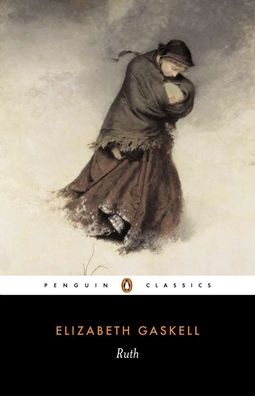
Ruth. Elizabeth Gaskell. 1853. 432 pages.

In high school, I was required to read The Scarlet Letter by Nathaniel Hawthorne. I have issues with the messages in The Scarlet Letter which I share in my review, but essentially I wrote, "I think it would be horrible if The Scarlet Letter was a person's only exposure to Christianity. Because you know what, what this book lacks--really lacks--is the gospel message."

Ruth by Elizabeth Gaskell has some similarities, in a way, to The Scarlet Letter. Both books being about "fallen" women raising illegitimate children. But. The books are so different in quality, tone, depth of characterization, and message. I absolutely LOVED, LOVED, LOVED Ruth.

Ruth Hilton is an orphaned teen working hard as a seamstress, she meets a rich young man, they fall in love. She's out walking with him--innocently walking one Sunday afternoon--when her employer, Mrs. Mason, sees her and throws a fit. Since her employer is her guardian--since she lives with her--Ruth feels she has no where to go. So Mr. Bellingham finds her easy to persuade: she can join him for his trip to London and then Wales.

Who knows how long this connection would have lasted if Mr. Bellingham hadn't happened to become very ill. Ruth nurses him until his mother arrives. When his mother does arrive, Ruth's fate seems certain. The two will not be allowed near each other again. For Ruth is a horribly, evil woman.

Fortunately for Ruth, Mr. Benson has a big, big heart for he knows a big God who is all about grace, forgiveness, and second chances. Mr. Benson does not see Ruth as a "fallen woman." The thought of judging Ruth for her sins never once occurs to him. Ruth needs special care: forgiveness, acceptance, unconditional love. Mr. Benson and his sister, Faith, welcome Ruth into their lives completely. Even knowing that she is going to have a baby.

For better or worse, the Bensons decide that Ruth should become Mrs. Denbigh, a widow. They leave Wales and go back to their home, taking Ruth with them...

Ruth grows up and matures into a beautiful, godly woman. She's a good mother and a hard worker. She is able to work to help support herself and her son. She gets work as a governess, but all cannot remain calm and easy. For Ruth's secret eventually surfaces...

I loved this one so much! I loved the Benson family so much! And Ruth was a great character as well. The novel is beautiful, tragic, and just about perfect.

Read Ruth
  • If you like Elizabeth Gaskell
  • If you hated Scarlet Letter
  • If you enjoy Victorian literature 
© 2013 Becky Laney of Becky's Book Reviews
Thursday, September 30, 2010

Bleak House

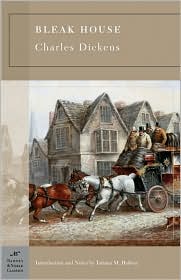
Bleak House. Charles Dickens. 1852-1853. 912 pages.

London. Michaelmas Term lately over, and the Lord chancellor sitting in Lincoln's Inn Hall. Implacable November weather. As much mud in the streets, as if the waters had but newly retired from the face of the earth, and it would not be wonderful to meet a Megalosaurus, forty feet long or so, waddling like an elephantine lizard up Holborn Hill.

How did I feel about Bleak House? Overall, I liked it. I more than liked it. I really, really liked it. What did I like best? The characters, the story, or the writing style? Hard to choose--for me. I think some readers may be so intimidated by the writing style--Dickens way of using a thousand words to paint a picture--that it becomes almost impossible to connect with the characters and enjoy the story.

The characters and story. Esther, a young woman who's clueless about the identity of her parents, becomes a companion to Ada, one of the wards in the legal dispute of Jarndyce and Jarndyce. These two young women--along with Richard, the second ward in the case--are under the guardianship of a Mr. John Jarndyce of Bleak House. Their guardian is kind, compassionate, generous, and an all-around good fellow. He hates, hates, hates Jarndyce and Jarndyce and wants absolutely nothing to do with the matter. Richard loves Ada. He desperately wants to marry her, but Mr. Jarndyce disapproves of the match because Richard doesn't have a way to provide for her. He feels Rick needs to grow up a little and find a career. Unfortunately, Rick doesn't take to this idea of having a profession--of making a living. Though he isn't quite as childish--as shallow--as Mr. Harold Skimpole, a man who borrows freely from anybody and everybody. (He's also fond of philosophizing about how wonderfully childish he is!) Through the course of the novel: Esther discovers the identity of her parents and falls in love; Rick fails at one profession after another until he decides once and for all to devote his entire energy to a law case that his been in the system for several generations, all the while Ada continues to love Rick unconditionally. Then there's the mysterious side of Bleak House. The murderous side. Lady Dedlock has a secret from her husband, Sir Leicester. A secret that Dedlock's lawyer, Mr. Tulkinghorn, discovers, after much unscrupulous searching and digging. There are MANY characters who are despicable. MANY characters who have enemies. MANY characters who have strong motives.

Dickens did a great job with his characters. You'll find characters that you'll absolutely love and adore. You'll find characters that are so enjoyable, so fun, to spend time with. You'll find characters that make you laugh--or at least smirk. You might find a few characters that you love to hate, or hate to love. You'll find characters that are just so despicable, so nasty, so horrid that you hate them--with a passion. There might even be a few that drive you crazy! But I hope that you'll find a few characters that genuinely surprise you! I know a few surprised me! There are so many characters. Some are very important to the plot. Others are very minor. But just because they're minor doesn't mean they're pointless. (For example, I *liked* Mr. Chadband!)

The writing. I won't lie. It took me more than a few chapters to make any sense of this one to begin to like this one. The style of the first chapter is very off-putting. In my opinion. That and the fact that so many characters are introduced in the early chapters.  It's not until the reader is introduced to Esther, Ada, and Richard--not until these three are taken to Bleak House--that it began to work for me. But. I did like this one. I really came to like the style. I came to appreciate his descriptions, his details.

A word from Esther:
I don't know how it is, I seem to be always writing about myself. I mean all the time to write about other people, and I try to think about myself as little as possible, and I am sure, when I find myself coming into the story again, I am really vexed and say, "Dear, dear, you tiresome little creature, I wish you wouldn't!" but it is all of no use. I hope any one who may read what I write, will understand that if these pages contain a great deal about me, I can only suppose it must be because I have really something to do with them and can't be kept out. (102-3)
A description of Sir Leicester:
Sir Leicester is generally in a complacent state, and rarely bored. When he has nothing else to do, he can always contemplate his own greatness. It is a considerable advantage to a man, to have so inexhaustible a subject. (139)
A description of Mr. Smallweed:
Everything that Mr. Smallweed's grandfather ever put away in his mind was a grub at first, and is a grub at last. In all his life he has never bred a single butterfly. (257)
From Lady Dedlock to Mr. Tulkinghorn:
"Of repentance or remorse, or any feeling of mine," Lady Dedlock presently proceeds, "I say not a word. If I were not dumb, you would be deaf. Let that go by. It is not for your ears." (509)
I liked the flavor of Bleak House. It has its difficulties--I suppose. (Though no more than any other classic of its size, its substance). But. I really enjoyed this one. There were so many things that I just loved about it. (For example, Mr. Jarndyce's growlery. I loved that! Don't we all need a place to go when we're out of humor?!)

Is it worth reading?! I think so! I think the characters are very well done--very human, very memorable. I think the writing--especially once the mystery begins--is very suspenseful.

Is it worth watching?! I think many people who might be intimidated by reading the novel would enjoy seeing an adaptation of it. I saw the 2005 adaptation. It was long--fifteen episodes--but I enjoyed it. It definitely has its differences--it's not the book--but I did enjoy the drama. It was DRAMA! It was very compelling.

© Becky Laney of Becky's Book Reviews

Saturday, September 26, 2009

Cranford


Gaskell, Elizabeth. 1853. Cranford. 293 pages.

In the first place, Cranford is in possessions of the Amazons; all the holders of houses, above a certain rent, are women. If a married couple come to settle in the town, somehow the gentleman disappears; he is either fairly frightened to death by being the only man in the Cranford evening parties, or he is accounted for by being with his regiment, his ship, or closely engaged in business all the week in the great neighboring commercial town of Drumble, distant only twenty miles on railroad. In short, whatever does become of the gentlemen, they are not at Cranford. What could they do if they were there? The surgeon has his round of thirty miles, and sleeps at Cranford; but every man cannot be a surgeon.

How did I like Cranford (the book that is!)? Well, I found it charming in some ways--many ways I suppose. It is old-fashioned. It is written with the focus being on characters that are characters--if you know what I mean! If the book has a weakness, it would be that there isn't one great plot. There are a few strains of plot connecting the chapters at times. But overall, these chapters are just loosely connected. Shared characters, of course, and shared tone--heartfelt and genuine. The book is many things. It can be funny. It can be witty. It can be heartbreaking. It can be sweet. Is that enough to interest modern readers? Maybe. Especially with the movie being released recently. But this style of storytelling--as wonderful as it can be--doesn't always mean that the book is hard to put down. There isn't this urgency to read it. That doesn't mean that it isn't interesting in its own way. But it's more here a chapter, there a chapter than anything else.

So what is the book about? Well, it's about friendship. It's about life. There is some talk of gossip and parties and fashion and such. It's about manners, society, and class.

The central character--in many ways--is a little old maid Miss Matty. Though she would never in a million years place herself in the center of the community, she is in many ways the heart of the community. And what this community does to show their support...well...it's really touching. But I'll say no more about that!

This is my second Gaskell novel. I've also read and reviewed Wives and Daughters. While I enjoyed Cranford (it's much, much shorter than Wives and Daughters) I think I prefer Wives and Daughters more.

© Becky Laney of Becky's Book Reviews