Showing posts with label adult nonfiction. Show all posts

Sunday, August 09, 2026

58. Every Time a Bell Rings


58. Every Time a Bell Rings: The Legacy of It's a Wonderful Life, America's Most Beloved Holiday Film. Emily St. James and Lauren Theisen. 2026. 304 pages. [Source: Library] [2 stars, adult nonfiction, essays]

First sentence: Certain movies take on lives of their own.

Premise/plot: Emily St. James and Lauren Theisen have teamed up to write about the holiday movie, It's a Wonderful Life. What should YOU the reader expect?

Each chapter is essentially an essay tackling the film. The essays cover a wide range of topics. Some expected. Some unexpected. What do I mean by unexpected and expected? Obvious and NOT obvious. Points of view that are not traditional, obvious, deducible by reason or logic no matter how many times you view the film. They come from nowhere. The book avoids sticking with the traditional, obvious, literal meaning of the film. Not every essay goes where no person has gone before. Some are more obvious--for example, providing background on the ACTORS, on the DIRECTORS, on other films released the same year. Other essays examine specific elements of the film--Pottersville, for example.

Chapter One: You Are Now In Bedford Falls
Chapter Two: George Bailey's American Dream
Chapter Three: Frank Capra's Last Stand
Chapter  Four: 1946: A Movie Year Like No Other
Interlude
Chapter Five: Harry Bailey, American Hero
Chapter Six: Uncle Billy and the Safety Net
Chapter Seven: Peter Bailey's Son
Interlude
Chapter Eight: Nick, Martini, and Annie
Chapter Nine: The Many Wonderful Weirdos of Bedford Falls
Chapter Ten: Seneca Falls Eighty Years Later
Interlude
Chapter Eleven: Welcome to Pottersville
Chapter Twelve: Henry F. Potter's American Dream
Chapter Thirteen: The Strange Copyright Journey of It's a Wonderful Life
Interlude
Chapter Fourteen: Outside Bedford Falls
Chapter Fifteen: Clarence Odbody, Angel Second Class
Chapter Sixteen: Mary Bailey

The chapters--or essays--vary in topic and subject. Some were informative. Some were speculative. Some were just weird and weirder. The book was--for better or worse--surprisingly or unsurprisingly VERY political. Again, for better or worse, it tried to take today's issues and make It's a Wonderful Life have some comment one way or the other. To be fair, it also tackled some of yesterday's issues--of the 1930s and 1940s--and tried to make It's a Wonderful Life have strong opinions one way or the other. For example, IS the film pushing communism? For all that is being addressed in the book, the book doesn't particularly tackle morality, faith, and spirituality--at least not well for being so front and center in the movie itself.

Some essays try a little too hard. George Bailey is too white and a white male at that. Mary Bailey is not feminist enough. Their traditional family life is too oppressive.

My thoughts: It's a Wonderful Life is a wonderful, wonderful movie. It is timeless and universal. It is spiritual and philosophical. It tackles the harder questions of life. WHO AM I? WHY WAS I BORN? DOES MY LIFE MATTER? DOES MY LIFE HAVE MEANING? WHY AM I HERE? It asks not only what kind of person am I when life is easy and going my way but WHAT KIND OF PERSON AM I WHEN THINGS ARE DIFFICULT AND ANYTHING BUT WONDERFUL. These kinds of questions can be answered by many different faiths, but are often associated--or would have been associated in 1946--with Christianity. In fact, the film opens with not a couple of people praying but the whole town coming together to pray. Which indicates a COMMUNITY with shared values if not specific faiths (or denominations) AND compassion and empathy. When they heard that George Bailey was in trouble, they didn't just say, "Oh, that's too bad." Or "I'll add him to the prayer list at church." Or the equivalent of a prayer emoji. They stopped what they were doing and prayed. There was genuine concern and worry. And they were directing that to God. The movie doesn't go into defining God--or limiting him to one denomination. And their faith wasn't limited just to their prayers.

If the book had fewer essays I might have liked it more. I appreciated the historical chapters best--the ones that focused on the director, the actors, the short story the movie was based on, etc. I liked the politicized chapters least of all. The ones that tried to pull all the "hot" issues of the past four to eight years and make the movie say something about the current times.


© 2026 Becky Laney of Becky's Book Reviews

Friday, August 07, 2026

57. This is Christmas


57. This is Christmas: Song by Song: The Stories Behind 100 Holiday Hits. 2023. 224 pages. [Source: Library] [3 stars, Christmas, music appreciation]

First sentence: When you think of Christmas music, what comes to mind?

Premise/plot: This is Christmas: Song by Song is a nonfiction book bordering on a novelty book. Is this a good match for you? Maybe. Maybe not. With the right expectations you might find yourself lightly entertained. OR if you have an incredibly short attention span and are looking for a light, fluffy, unsubstantial read. OR if you are vaguely curious and want a light, shallow answer to satisfy your curiosity.

The book offers the story (or "story") of 100 holiday hits. Perhaps the clue is in the word HOLIDAY HITS. This isn't a book about the songs themselves. Not really. Which is perhaps fair enough. After all, look at ANY Christmas album and there's a good chance 75 to 90% of the songs are covers of Christmas classics. Whether it's a traditional Christmas hymn/carol--think Silent Night, O Holy Night, God Rest Ye Merry Gentlemen, or a traditional Christmas song--think Sleigh Ride, Rudolph the Red-Nosed Reindeer, Jingle Bells--they've been covered thousands of times if not tens of thousands of times. This book has selected particular covers when it comes to some of these. So it isn't the history of the SONG but trivial, light stories of one particular cover that you may or may not have ever heard of...or liked...or wanted to hear again. There are a handful of songs that are highlighted by their original artist. This is for better or worse. IF you've heard of the song and liked it--and it's been part of your Christmases long, long ago--then it's interesting enough. If you've never heard the song, never heard the artist, then it's just dull and meaningless. Often I found myself wishing that the artist chosen to be highlighted was different.

Essentially everything about this book is subjective.

My thoughts: I think this one--which is arranged chronologically by the particular song (song cover) being released--has the potential to frustrate readers of all ages. For example, I was annoyed by all this "new" music that I'd never heard of and don't care to hear. I can easily, easily, easily imagine a younger reader being annoyed by all the "old" and "ancient" music that he/she had never heard of and don't care to hear. The book covers so many styles and genres that if there was a playlist with these particular versions of songs would be extremely disjointed and not much "fun" for any listener.

I would have personally loved if the book was the HISTORY of Christmas music. WHO introduced the song to the world first? OR which artist(s) made it a HIT in the first year or two of being written. WHICH artist(s) have made it his/her own. WHAT makes a particular rendition resonate with listeners? Even if it meant covering certain songs two or three times.

I also felt that this isn't the 100 "greatest" Christmas songs. Many of the songs were 'original' songs that may or may not be timeless and still played today. No one can denied that Last Christmas is played incessantly every Christmas. BUT some of these songs are VERY taste-specific.


© 2026 Becky Laney of Becky's Book Reviews

Tuesday, April 21, 2026

33. The Pioneer Girl


33. Pioneer Girl: The Annotated Autobiography. Laura Ingalls Wilder. Edited by Pamela Smith Hill. 2014. South Dakota State Historical State Society. 400 pages. [Source: Library] [5 stars, nonfiction, memoir]


Pioneer Girl is a must-read for anyone who grew up loving, or perhaps, LOVING, Laura Ingalls Wilder's Little House books. Pioneer Girl is an annotated autobiography. The book itself is a draft of an autobiography written by Laura Ingalls Wilder circa 1930. Mother and daughter worked with this draft preparing to send it to various publishers (not just book publishers) for a year or two. (There are several draft versions of Pioneer Girl.) Eventually, the focus shifts from writing an adult autobiography to writing a series of historical fiction novels for children. The adult autobiography was "forgotten" as a book itself, and becomes a source--a good source--for mother and daughter to use in their own fiction. I didn't know that Rose Wilder Lane borrowed generously from her mom's autobiography while writing her adult fiction. Lane wrote Free Land and Let the Hurricane Roar (Young Pioneers).

The autobiography shares Laura Ingalls Wilder's earliest memories through her wedding day. (Those earliest memories are of being a toddler in Kansas.) These memories are, of course, in her own words. The writing is natural and casual. Some paragraphs are great at capturing details and specifics of an event. Other paragraphs are more of a rush, a blend, they seem a bit fuzzier, less exact. These are her very personal reflections written first for her daughter, and, then possibly for a larger audience. Wilder has turned reflective. She's older now, feeling that very much. (Her mom died in 1924, her sister, Mary, in 1928. She's wanting to capture these memories, these stories, to hold onto them perhaps.) One also sees the book itself as an act of love, an expression of love, a way of remembering and honoring.

The annotations are wonderful. They provide background and context. The annotations includes notes on a wide variety of subjects a) people b) places c) events d) nature e) culture (songs, dances, fashion), f) writing, editing, and publishing. There are plenty of notes that compare and contrast scenes and events as they appear in Pioneer Girl and as they appear in one of the original novels. Readers see how a memory recorded in Pioneer Girl is shaped and crafted into a finished product with plenty of detail and even dialogue. Readers see how Wilder carefully--oh-so-carefully--crafted the characters of the family. One gets the definite impression that she was purposeful with every scene, every book. It was no accident that Pa is so noble, independent, strong, and bigger-than-life almost.

I learned so much by reading Pioneer Girl. I would definitely recommend it for anyone who has enjoyed spending time with Laura and her family through the years.


© 2026 Becky Laney of Becky's Book Reviews

Tuesday, May 27, 2025

53. The Peepshow


53. The Peepshow: The Murders at Rillington Place. Kate Summerscale. 2024/2025. 320 pages. [Source: Library] [true crime, adult nonfiction, 4 stars]

First sentence: In the evening of Tuesday 24 March 1953, Harry Procter, the star crime reporter of the Sunday Pictorial, drove over to a Victorian terrace in Notting Hill in which the bodies of three young women had been discovered. 

Premise/plot: Kate Summerscale's newest nonfiction book--true crime focused, of course--is about the killings at Rillington Place. It is a story that unfolds through the perspective of several interested in the case--namely Harry Procter and Fryn Tennyson. Procter is a crime reporter who GETS very involved in his stories. Fryn Tennyson Jesse is a [female] crime writer. This isn't a book solely focused on the criminal case alone. It is a story about HOW that story is conveyed to the public. It is a story that focuses on true crime reporting itself. It is about the pros and cons, the possibilities for sensationalism, the possible ethical violations of this type of reporting. It is also about the crimes--the many, many crimes. But it is also about the public's interest in true crime and how crime can be 'entertainment' for the masses. The book does focus more on these crime reporters THAN on the police investigation or the legal aspects of the case.

My thoughts: Kate Summerscale's books are almost always dark, dark, super dark. Her books often have horrifying details of crime that aren't for the casual reader. For those, however, who do have an interest in true crime, her books are always worth reading. I read this one in two days. It was a compelling read for sure. 


© 2025 Becky Laney of Becky's Book Reviews

Tuesday, March 04, 2025

21. Camera Man


21. Camera Man: Buster Keaton, the Dawn of Cinema, and the Invention of the Twentieth Century. Dana Stevens. 2022. 447 pages. [Source: Library] [nonfiction, biography, history, culture] [3 stars]

First sentence from the introduction: I first fell for Buster Keaton twenty-five years ago, when he had just turned one hundred. It was the spring of 1996, and I was spending the year studying at the University of Strasbourg, close to the French-German border in Alsace.

Premise/plot: Camera Man is closer to a book of essays than a 'proper' biography. For better or worse. (I am not saying that it is 'for the worse' for every reader.) The focus is rarely solely on Buster Keaton. He's merely a piece of a puzzle in her discussing broader subjects. Her interest is in history, culture, theatre, film, and to a certain degree how terrible, horrible, and obviously wrong (aka cringe-worthy) 'the past' was about anything and everything since it doesn't align [close enough to suit] with contemporary opinions, values, morals, and beliefs. The book is certainly not celebrating Buster Keaton's legacy, examining his films for what they are, or diving with any depth into the subject of his life (aka proper biography).

My thoughts: This is my third book about Buster Keaton. I read James Curtis' Buster Keaton: A Filmmakers Life and Buster Keaton's own autobiography My Wonderful World of Slapstick. I was disappointed with this one. I wanted more of the focus to be on Buster Keaton--professionally, personally, the work itself. He was ACTOR, DIRECTOR, EDITOR, GAG WRITER, STUNT MAN. Plenty of angles the book could have examined. Though perhaps the author's way of viewing Keatons' work with the lens of who could possibly be offended by this and how outraged should I be on their behalf it is perhaps a blessing in disguise that she limits her discussion of Buster Keaton to what she does. Though the author claims to have fallen for Buster Keaton, it seems more like a shallow fall that she has long since recovered from. She also takes the approach that his life might as well have ended after Steamboat Bill Jr. [And she's no fan of The General. In fact at times I get the idea she isn't really even a fan of slapstick comedy].

While I was mainly disappointed with this one, I will share what I appreciated. The first third of this one--perhaps a little more--where the focus is on the history of vaudeville and Buster Keaton's stage career as a child/young man--was solidly engaging. I had high hopes that her examination of his film career would be equally so. But here the focus shifts to other filmmakers, other films, other actors, film critics. More specifically in what voices were being heard and which were being "suppressed" or "oppressed" and the like. Obviously, the author's feminist world view is central to who she is and how she views the world. So I think depending on YOUR expectations, this one might prove worth reading? It was not for me in the end. I don't want someone telling me how I should react to Buster Keaton's movies.

© 2025 Becky Laney of Becky's Book Reviews

Monday, February 24, 2025

19. My Wonderful World of Slapstick


19. My Wonderful World of Slapstick. Buster Keaton with Charles Samuels. 1960. 340 pages. [Source: Library] [adult biography, adult autobiography; film-making, show business, comedy]

First sentence: Down through the years my face has been called a sour puss, a dead pan, a frozen face, The Great Stone Face, and, believe it or not, "a tragic mask." On the other hand, that kindly critic, the late James Agee, described my face as ranking "almost with Lincoln's as an early American archetype, it was haunting, handsome, almost beautiful." I can't imagine what the great rail-splitter's reaction would have been to this, though I sure was pleased. People may talk it up or talk it down, but my face has been a valuable trade-mark for me during my sixty years in show business. 

Premise/plot: My Wonderful World Of Slapstick is Buster Keaton's autobiography written just six years before his death in 1966. (So it does not cover *all* of his career, but it does cover many years of his career.) Does the book cover anything and everything? Yes and no. There are chapters in his life that remain very much PRIVATE and undisclosed. Keaton is not one to name names--for better or worse.

For example, I am almost completely certain that he never mentions his first or second wives by name. His first wife is called "his future wife" or "my wife"  or "Mrs. Buster Keaton" and the like, but never her actual name or even nickname. She does appear by name in the book, but only because she appears in his filmography because she was his costar in Our Hospitality. There was a good reason he said zip, zilch about his second marriage. (I believe she was fond of lawsuits for ANYTHING and everything, no matter how tangential to the truth). It was his beloved [third] wife, Eleanor, who gets stories.

There are periods of his life where he shares in great detail about his life--both private stories and show business-y stuff. There are periods of his life where the details are harder to come by. Which is fair, in my opinion. He does talk industry both for STAGE and FILM and television. He has stories about people in front of the camera and behind it. He does not go into great detail about his own films. He does not take himself too seriously. It's like he'd rather shift into telling asides and anecdotes than to deep dive into his own brilliance at what he does/what he did. He comes across as very grounded. He says that Charlie Chaplin's problem was that he believed everything that was being said about him, written about him, and began to take himself too seriously and as [an elite] intellectual.

"I never realized I was doing anything but trying to make people laugh when I threw my custard pies and took pratfalls. Like anyone else I enjoy being called a genius. But I cannot take it seriously. Neither does Harold Lloyd, as far as I know. The only one of us who listened and accepted the role of genius intellectual critics thrust upon him was Chaplin. Sometimes I suspect that much of the trouble he's been in started the first time he read that he was a 'sublime satirist' and a first-rate artist. He believed every word of it and tried to live accordingly."

I would have wished for a little more detail about the making of his own films, but perhaps he wanted his films to speak for themselves. Though at the time this was written, his films would not have been readily available for easy viewing. There were revivals of his films--his films being shown again in theatres, etc.,--especially in Europe. He was MUCH BELOVED in Europe, and I believe the book said Keaton was absolutely HUGE, HUGE, HUGE, MEGA-SUPER-POPULAR in Russia. [Which would make sense of the fact that so many Keaton channels on YOUTUBE are Russian.] 

It was his private stories that fascinated me. He writes in one chapter of several different practical jokes that he was in on. If I remember the story correctly, some big studio executive [or similar execs] were coming into town to meet Roscoe Arbuckle, the two came up with a great practical joke: dress Buster Keaton up as his BUTLER and let the comedy follow. He'd be the clumsiest, klutziest butler ever to see if any would recognize him--the theory being that BUTLERS ARE IGNORED--before the big finale. Arbuckle would finally "lose his temper" and let the butler have it to the astonishment of his guests. Meanwhile, Buster would slip out and return as himself--a rising star in his own right--and "meet" the guests. This was just one of many practical jokes he played. Though it was near impossible to pull the same joke twice because word would spread around town. 


It was his outlook on life--though he has repeatedly been called NOT introspective or reflective--that impressed me most. He writes,

"I think I have had the happiest and luckiest of lives. Maybe this is because I never expected as much as I got. What I expected was hard knocks. I always expected to have to work hard. Maybe harder than other people because of my lack of education. And when the knocks came I felt it was no surprise. I had always known life was like that, full of uppercuts for the deserving and undeserving alike. But it would be ridiculous of me to complain. I find it impossible to feel sorry for myself. I count the years of defeat and grief and disappointment, and their percentage is so minute that it continually surprises and delights me."
My thoughts: I absolutely LOVED, LOVED, LOVED, LOVED, LOVED this autobiography. There was just something so grounded and matter of fact about his narrative style. He was amusing and fascinating. I imagine this book covers such a small, small, small fraction of stories he could have told.

Quotes:

  • At any rate it was on purpose that I started looking miserable, humiliated, hounded, and haunted, bedeviled, bewildered, and at my wit's end. Some other comedians can get away with laughing at their own gags. Not me. The public just will not stand for it. And that is all right with me. All of my life I have been the happiest when folks watching me said to each other, "Look at the poor dope, wilya?" Because of the way I looked on the stage and screen the public naturally assumed that I felt hopeless and unloved in my personal life. Nothing could be farther from the fact. As long back as I can remember I have considered myself a fabulously lucky man. From the beginning I was surrounded by interesting people who loved fun and knew how to create it. I've had few dull moments and not too many sad and defeated ones. In saying this I am by no means overlooking the rough and rocky years I've lived through. But I was not brought up thinking life would be easy. I always expected to work hard for my money and to get nothing I did not earn. And the bad years, it seems to me, were so few that only a dyed-in-the-wool grouch who enjoys feeling sorry for himself would complain of them.
  • The cast for our two-reelers was always small. There were usually but three principals--the villain, myself, and the girl, and she was never important. She was there so the villain and I would have something to fight about. The leading lady had to be fairly good-looking, and it helped some if she had a little acting ability. As far as I was concerned I didn't insist that she have a sense of humor. There was always the danger that such a girl would laugh at a gag in the middle of the scene, which meant ruining it and having to remake it.
  • Even when making my two-reelers I worked on the theory that the story was always of first importance. But one thing we never did when making our silent comedies was put the story down on paper. On the other hand I never would agree to start shooting until I had in my mind a satisfactory ending for a story. The beginning was easy, the middle took care of itself, and I knew I could depend on my writers and myself to come up with any gags we might need as we went along.


© 2025 Becky Laney of Becky's Book Reviews

Friday, February 14, 2025

15. Buster Keaton: A Filmmaker's Life


15. Buster Keaton: A Filmmaker's Life. James Curtis. 2022. 810 pages. [Source: Library] [5 stars, adult nonfiction, biography]

First sentence: The man in the pork pie hat is unhappy. His head down, arms akimbo, he paces grimly as a documentary crew captures him on film.

Premise/plot: What you see is what you get: James Curtis' delivers a biography of the legendary 'larger than life' film star Buster Keaton. In some ways, there was not a hat Buster Keaton didn't wear. He did all the jobs--quite literally--in the film business. And, of course, he's quite famous FOR his hats. It IS a full biography--mainly. Starting with his parents upbringing and subsequent marriage through his death and legacy. There's also a strong focus on his entertaining--his work on stage, on film, behind the cameras, in front of the cameras, etc. Some films get their own chapters, I believe. Though many aspects of his life--his work--is covered, the book is never gossip-y or frivolous. It is a serious book about a legendary, one-of-a-kind comic. It is PACKED with details about his silent films especially. Less so, perhaps, with his later work. But I think overall, this one will DELIVER exactly what readers want most, to learn more about the man whose creative genius gave the world unforgettable, incredible FILMS (and shorts). So if the book perhaps focuses a little more on his 'golden era' if you will, I'll allow it.

My thoughts: Yes, the book is LONG, LONG, LONG. However, it was a joyous journey. I began my deep dive into anything-everything Buster Keaton in January. It was a slow start, perhaps, two to three films a week. Nice, steady pace. By the end of January, I was gloriously in all the way and watching almost exclusively Buster Keaton related movies. In some cases, rewatching again, again, again.

As I read through the book, I'd peek to the next chapter to see which film(s) I'd need to see. I think SEEING the films (features, shorts, whatever) BEFORE reading the chapter(s) made a difference. It made me appreciate the book more, encouraged me to go back and watch the film again, and in general made me a nuisance to anyone within reach. DID YOU KNOW THAT....

I found it a fascinating read. I do wish, however, it had MORE PICTURES and LARGER PICTURES. I wouldn't mind it being a thousand pages long (instead of 800) if it meant MORE pictures of Buster.


© 2025 Becky Laney of Becky's Book Reviews

Thursday, October 17, 2024

86. The Menendez Murders (Updated Edition)

The Menendez Murders: The Shocking Untold Story of the Menendez Family and the Killings that Stunned the Nation. (Updated Edition) Robert Rand. 2024. 376 pages. [Source: Library] [4 stars, adult nonfiction, true crime, biography]

First sentence: On the night of August 20, 1989, the last in the lives of Jose and Kitty Menendez, their elegant residential street in Beverly Hills was so still you could hear a leaf drop. That in itself was not unusual or suspicious. People pay a steep price to live in such neighborhoods, and they cherish their peace and quiet. 

Premise/plot: Robert Rand has followed the story from the start--literally. This is an account of just about anything and everything you could ever want to know about the murders, the trials, and the decades of aftermath. He is a news reporter--journalist--who has interviewed so many including many family members and the brothers themselves. He was there in court for the trials. This is a well-organized accounting of everything having to do with the case. One might say it has some bias--some--since the author believed and still believes the abuse claims. But that doesn't make his accounting wrong. He literally details the prosecution and the defense cases from both trials. 

The updated edition tells of the new evidence in the case and the push to have the case re-examined.

My thoughts: I did NOT watch Monsters. It was way too much for me. I found it repulsive. And it makes sense that there's some backlash against the portrayal. I did watch the documentary and several other documentaries from the past few years. I even started watching the first trial (though I realized I don't have that much time to give--at least not now). 

It is hard to read this one--for many reasons. The content is rough, horrific even. That being said, just because it tackles several hard topics doesn't mean that it shouldn't be read. Those who are super-sensitive to descriptions might not want to read it. But I found the book to be thorough and well-researched. 

For those wanting to go beyond a few [social media] shorts on the case, I do recommend it.


© 2024 Becky Laney of Becky's Book Reviews

Monday, March 04, 2024

29. A Murder in Hollywood


A Murder in Hollywood: The Untold Story of Tinseltown's Most Shocking Crime. Casey Sherman. 2024. 304 pages. [Source: Library]

First sentence: Lana Turner paced the pink carpeted floor with a cigarette gripped tightly between her fingers. She took a deep drag into her lungs and blew out a cloud of smoke toward the ceiling of her spacious bedroom. Her fourteen-year-old daughter, Cheryl, was in her own bedroom, sobbing hysterically. 

Premise/plot: Nonfiction with a gossipy twist--that is how I would describe this one. It gives brief biographies of Lana Turner and her immediate family (her parents, her husbands, her daughter) and brief biographies of a series of crime bosses (mob bosses) including Johnny Stompanato. The stories cross paths when Lana Turner entangles herself with Johnny Stompanato. This is a combustive relationship--for sure--leading to murder and scandal. Casey Sherman argues that it was not Lana's fourteen-year-old daughter but Lana herself who killed Johnny. 

My thoughts: This book is troubling and disturbing both in content and narrative style. I'll try to explain. This one goes into great detail--graphic detail--of horrific crimes. Many of these crimes are of the SA of a minor child variety. Of course there are plenty of other crimes as well that do not involve children. But still. This is a HEAVY read that is treated perhaps a little lighter than I would personally like. The book's approach--in my personal opinion--is like gossip, gossip, give me all the gossip, spill all the tea, tell me everything. It doesn't necessarily--to me--seem respectful. The content IS shocking and NOT shocking at the same time. Hollywood is presented as an absolute nightmare. The more power and influence, the more guilty you are of horrendous crimes. Nothing glamorous or glitzy--just very horrific crimes going on and kept hush-hush by the powers that be. 

This one is definitely more graphic than I like to read.


© 2024 Becky Laney of Becky's Book Reviews

Thursday, February 15, 2024

21. Making It So


Making It So. Patrick Stewart. 2023. 469 pages. [Source: Library]

First sentence: We called it t'bottom field, never wondering where, in relation to "t'bottom," t'middle field and t'top field might be. 

Premise/plot: Making It So is Patrick Stewart's memoir. It doesn't get more straight-forward than that. He writes of his family, growing up, friendships and romantic relationships, and his career on stage and on screen. He has spent more time, I believe, on stage--doing live theatre productions--than on screen. But only because there have been decades where he was able to do both. 

My thoughts: I enjoyed this one. Not all chapters are equally enthralling or fascinating. But all chapters were well written. The book covers so much more than just his years playing Jean-Luc Picard or Charles Xavier. He does mention that he watched the WHOLE Star Trek The Next Generation series before starting his memoir. He does talk about THE INNER LIGHT the absolute best episode of TNG. I think I will like it even more now--and I didn't think that was possible.

© 2024 Becky Laney of Becky's Book Reviews

Friday, January 26, 2024

12. Agatha Christie: An Autobiography


An Autobiography. Agatha Christie. 1977/1996. Berkley. 635 pages. [Source: Bought] 

ETA: I reread this one in January 2024. It had been years since I first read this one. I have so many dog-eared pages from both readings. If I was to quote everything I marked to "remember" to come back to, it would be so long. Definitely glad I reread this one.

Agatha Christie's autobiography has been on my tbr pile for years now. I have looked forward to reading it for so long! I must admit the length had me a little intimidated. But once I started reading this one, I found myself completely absorbed in it. It is truly a fascinating read cover to cover. I think this one could prove appealing to a variety of readers.

Do you love history? I found Agatha Christie's Autobiography to be fascinating. This book is rich in details. Readers learn in great detail about her family and her growing up years. What Christie is describing is a way of life, and the way she saw the world around her. Her thoughts on her parents, grandparents, siblings, the family servants--the cook and the maids and nannies. You get a real sense of what it was to be a child (and teen) growing up in England in the 1890s and 1900s. She was "out" (ready to date) a year or two (or even three) before World War I began.

Are you interested in World War I? in World War II? Christie details what life was like during the war years. She was a nurse for a great part of World War I. She also assisted in dispensing drugs. She fell in love and got married during this time. During World War II she again did her part in the war effort. I believe volunteering in a hospital. She was in and around London during the War. She recalls how she rarely (if ever) took shelter during the raids because she was afraid of being buried alive under all the rubble. She had a grown daughter by that point. A daughter who fell in love, got married, and had a child during this time.

England was at war. It had come. I can hardly express the difference between our feelings then and now. Now we might be horrified, perhaps surprised, but not really astonished that war should come, because we are all conscious that war does come; that it has come in the past and that, at any moment, it might come again. But in 1914 there had been no war for--how long? Fifty years--more? True, there had been the "Great Boer War," and skirmishes on the Northwest frontier, but those had not been wars involving one's own country--they had been large army exercises, as it were; the maintenance of power in far places. This was different--we were at war with Germany. (257)
Are you interested in archaeology? in world-traveling? She spends a good deal of time recalling her travels around the world. She accompanied her first husband on an extended trip--covering several continents. (She left her (quite young) daughter with her mother and sister.) After her divorce--he fell in love with another woman and blamed her for it--she traveled on her own. On one of her trips to the Middle East, she met the man who would become her second husband. He was an archaeologist. While she did not stay with him the duration of all of his digs, she accompanied him on some, and visited on others. Readers learn that Christie LOVED, LOVED, LOVED to travel.

Are you a rehab addict? Christie loved looking at houses, buying houses in need of repair, fixing them up, renting them out, and selling them. She owned many properties at various points in her life. I believe the book said she owned eight during World War II. The book talks about her remodeling and redesigning houses.

Are you interested in writing, in her writing life? You'll find plenty to delight you within her autobiography. She talks about different sides of her writing life. Her novels. Her mystery novels. Her plays. Her short stories. Her poems. She talks about her mistakes and successes. Readers learn about which books she liked best and which book she really, really hated!
It was while I was working in the dispensary that I first conceived the idea of writing a detective story. (289)
People never stop writing to me nowadays to suggest that Miss Marple and Hercule Poirot should meet--but why should they? I am sure the would not enjoy it at all. Hercule Poirot, the complete egoist, would not like being taught his business by an elderly spinster lady. He was a professional sleuth, he would not be at home all in Miss Marple's world. No, they are both stars, and they are stars in their own right. (502)
Do you love to read? Christie shares her thoughts on her favorite writers and books!

I want to emphasize the fact that you do not have to love mysteries in order to find this autobiography of a mystery writer fascinating! I marked so many passages that I wanted to share with you. Too many to actually share. It would overwhelm any post. So just trust me, read this one!

I will choose a quote which happens to bring to mind a certain song from Frozen.
One of the first things that happens when you are attracted to a man and he is to you is that extraordinary illusion that you think exactly alike about everything, that you each say the things the other has been thinking. (228)


© 2024 Becky Laney of Becky's Book Reviews

Thursday, November 16, 2023

182. Friends, Lovers, and The Big Terrible Thing


Friends, Lovers, and the Big Terrible Thing. Matthew Perry. 2022. 250 pages. [Source: Library]

First sentence from the prologue: Hi, my name is Matthew, although you may know me by another name. My friends call me Matty. And I should be dead. If you like, you can consider what you're about to read to be a message from the beyond, my beyond.

Premise/plot: Matthew Perry's memoir was published in the fall of 2022. After his recent death I put this one on hold at the library. It is a personal story--with ups and downs. He writes of highs (literally and figuratively) and lows--successes and failures. He writes of his near death experiences. He doesn't shy away from the lowest of lows, of telling stories that make him look horrible.

My thoughts: This one was thought provoking. It was heartbreaking and brutal, but also eye opening in my opinion. I think even if you don't struggle with alcohol, drugs, or smoking (addictions), you can find it relatable. He never quotes Augustine, but you can't help but read this one without thinking of the God-shaped hole that every single person has. He writes of seeking God--and I've shared plenty of quotes below. It reads like the book of Ecclesiastes. He tried EVERYTHING; he kept trying everything. More, more, more--never enough. There was no joy, no happiness, no contentment in anything he was throwing into the void, into the emptiness, into the uncomfortable dread of reality. It isn't always easy to talk about sadness, depression, emptiness and loneliness, but Matthew Perry did in this memoir. Perhaps his book can help others who are experiencing their own battles. He asks many, many questions but I'm not sure he found the answers.

Quotes:

  • My mind is out to kill me, and I know it. I am constantly filled with a lurking loneliness, a yearning, clinging to the notion that something outside of me will fix me. But I had had all that the outside had to offer!
  • Not being able to stop screaming is a very scary state to be in.
  • It is very odd to live in a world where if you died, it would shock people but surprise no one.
  • I'm not the biggest fan of confrontation. I ask a lot of questions. Just not out loud.
  • That said, I don't know how advanced civilization has to be to understand that giving phenobarbital to a baby who just entered his second month of breathing God's air is, at best, an interesting approach to pediatric medicine. But it wasn't that rare in the 1960s to slip the parents of a colicky child a major barbiturate.
  • Maybe it was because I was always trying to fill a spiritual hole with a material thing...I don't know.
  • "God, you can do whatever you want to me. Just please make me famous." Three weeks later, I got cast in Friends. And God has certainly kept his side of the bargain--but the Almighty, being the Almighty, had not forgotten the first part of that prayer as well.
  • You have to get famous to know that it's not the answer. And nobody who is not famous will ever truly believe that.
  • The most unnerving part was, I knew God was omniscient, which meant that he knew, already, what he had in store for me.
  • "God, please help me," I whispered. "Show me that you are here. God, please help me."
  • I had been in the presence of God. I was certain of it. And this time I had prayed for the right thing: help. Eventually the weeping subsided. But everything was different now.
  • He had saved me that day, and for all days, no matter what. He had turned me into a seeker, not only of sobriety, and truth, but also of him. He had opened a window, and closed it, as if to say, "Now go earn this."
  • And I seek the answer every day. I am a seeker. I seek God.
  • I'm this close to dying every day. I don't have another sobriety in me. If I went out, I would never be able to come back. And if I went out, I would go out hard. I would have to go out hard because my tolerance is so high.
  • I want that connection to something bigger than me because I'm convinced it's the only thing that will truly save my life. I don't want to die. I'm scared to die.
  • I've never let myself feel uncomfortable long enough to have a spiritual connection. So, I fix it with pills and alcohol before God can jump in and fix me.
  • I've seen God in my kitchen, of all places, so I know there's something bigger than me. I know it's an omnipresent love and acceptance that means that everything's going to be OK. I know something happens when you die. I know you move on to something wonderful.
  • I am me. And that should be enough, it always has been enough. I was the one who didn't get that. And now I do.
  • Someday you, too, might be called upon to do something important, so be ready for it. And when whatever happens, just think, What would Batman do? and do that.


© 2023 Becky Laney of Becky's Book Reviews

Tuesday, September 26, 2023

163. The Great Halifax Explosion


The Great Halifax Explosion: A World War I Story of Treachery, Tragedy, and Extraordinary Heroism. John U. Bacon. 2017. 418 pages. [Source: Library] 

First sentence: On Thursday, December 1, 2016, the people of Boston slogged through a drizzly day with temperatures in the 40s--neither fall nor winter, the kind of cold that gets deep in your bones and stays there.

Premise/plot: Narrative nonfiction covering the Halifax Disaster of December 1917. The book provides context, context, more context. But there does seem to be a point--not details for the sake of details. For example, it provides several chapters on the history of Halifax--including Halifax's complex relationship with the United States. There's also context about the First World War (aka the War to End all Wars or The Great War). The book chronicles the disaster through the eyes of a dozen or so people. 

My thoughts: I definitely appreciated this one more than the first book I read on this topic. The first book I read, Shattered City, was a bit dry at times and the book wasn't always great at connecting the dots and showing the relevance or significance of the facts it was sharing. 

I don't know exactly why this topic/subject has become of interest to me. It was in a fiction book--Christian fiction--book I read earlier this year. I then came across a movie on Tubi. I'll probably read more on the subject--fiction or nonfiction. 

© 2023 Becky Laney of Becky's Book Reviews

Monday, September 18, 2023

159. Shattered City


Shattered City: The Halifax Explosion and the Road to Recovery. Janet Kitz. 2010. 351 pages. [Source: Library]

First sentence: My interest in the Halifax Explosion began in 1980, sparked by research for an anthropology paper at Saint Mary's University.

Premise/plot: Shattered City is a nonfiction book for adults about the Halifax explosion (which occurred on December 6, 1917). It starts off by explaining the research process and project. Talking about the ways information for the book was gathered and collected, what resources were examined. It then begins chronicling the event. The section of the book that chronicled the day of the disaster was intense yet intriguing. It was packed with what appear to be firsthand accounts. This section is where there is a human element. It isn't so much that there's a consistent cast of [real life] characters to follow, but even spending a few paragraphs with a family is something more personal. The 'aftermath' section which is "the road to recovery," is perhaps less personal, less human-interest, more facts and statistics. (Though not always.) For example, reading about the reconstruction of houses, streets, neighborhoods is less personal and more matter-of-fact. Or reading about the weekly allotment of financial assistance to buy food and how that was determined. But there were also updates on schools for the blind and how adults and children were learning or relearning necessary skills for beginning to live life again. So there were occasional moments of high interest. 

My thoughts: This book should NOT be confused with a movie with the same name. That is how I came across this book. It is not the author's fault--nor the book's fault--that the movie about the Halifax explosion shares the same name. The movie chronicles ONE family and a small cast of characters. It builds up to the explosion over several days. You get attached to the characters. There is intensity and suspense. There is heartbreak. It is super-absorbing and compelling. This book....isn't. The first part is definitely more interesting than the second part. But it is also very technical. I'm not expressing it in the right words. Human interest. This one doesn't always stay focused on a 'human interest' perspective. The facts may be of great interest to the right reader. But if you care more about people than supplies of food or lumber...then you might find yourself a bit bored now and then.


© 2023 Becky Laney of Becky's Book Reviews

Wednesday, September 06, 2023

155. Into Thin Air


Into Thin Air. Jon Krakauer. 1997. 368 pages. [Source: Library] [adult nonfiction]

First sentence: In March 1996, Outside magazine sent me to Nepal to participate in, and write about, a guided ascent of Mount Everest. I went as one of eight clients on an expedition led by a well-known guide from New Zealand named Rob Hall.

Premise/plot: Jon Krakauer shares his [expanded] experiences on a fateful trip to Mount Everest in the spring of 1996. Not all on his expedition 'team' survived their attempt to the summit. The book is slightly confusing in that there were dozens (probably) of different expedition teams led by various people all attempting to climb Mount Everest. The teams weren't exactly taking turns or going in any specific order. So a handful of teams--with six plus people each--could be near one another on the mountain. His story isn't solely focused on his expedition team. It's about those attempting to make the summit on one specific day, May 10, 1996. It turned out to be a very dangerous day in part because of an unexpected storm/blizzard. His story was about--I believe--the risks of commercialization. Is Mount Everest something that should be attempted by just anyone who could pay...or does it require a certain amount of skills, fitness, and experience. Is money more important than safety? That is just the 'big picture' take-away that I got from his journalistic angle (at the beginning). There were and are many other concerns.

My thoughts: The movie was definitely more action-packed and engaging. I am less sure that it is faithful and true to the events. I think here an there that might be some sensationalizing. I think things might be condensed and arranged for the most drama impact. Perhaps. I watched the movie first. Found it very engaging and exciting. I put the book on hold within hours of watching the movie. The book moved at a much slower pace. For better or worse. It was haunting in its own way. I do think the movie might have had fewer characters it was following.


© 2023 Becky Laney of Becky's Book Reviews
Monday, July 17, 2023

134. Dressing Barbie


Dressing Barbie: A Celebration Of the Clothes That Made America's Favorite Doll and the Incredible Woman Behind Them. Carol Spencer. 2019. 160 pages. [Source: Library] [adult nonfiction; history; fashion design; toys; adult collectors]

First sentence:  Barbie quite simply changed my life.

Premise/plot: Carol  Spencer shares her experiences as a fashion designer for Barbie at Mattel. She worked as a designer for Mattel from 1963 through the 1990s. Four decades designing fashion and fashion accessories for Barbie (and friends). The book is packed with back stories and photographs. It is organized by decade. When she started at Mattel, there were four women working as fashion designers. I'm not sure how many more were added to that team through the decades. But she definitely played an important role in styling Barbie. This one provides context for Barbie's style. She gives behind-the-scenes look in various inspirations for various looks. 

MY thoughts: I absolutely loved this one!!!! I enjoyed reading about each of the decades. I don't know that I have a favorite, favorite section. I loved finding out more behind-the-scenes glimpses of memorable and iconic dolls. Like the creation for Totally Hair Barbie, for example. She was responsible for the first MY FIRST BARBIE doll and the subsequent My First Barbie line. One of my the funniest stories is how she shares WHY there were three different fashions with gold and white stripes--a bathing suit and headdress, a holiday dress, and another shorter dress. They accidentally ordered 2,500 yards instead of 250 yards! 

I read this one in one sitting. It was an awesome read. Perhaps not for every single reader. But for those that do love BARBIE or those that love fashion design or history. 

I think this one works as a book that you read cover-to-cover. OR as a reference book that you skim. The photographs are awesome. 


© 2023 Becky Laney of Becky's Book Reviews

Tuesday, April 04, 2023

68. When the Moon Turns to Blood


When the Moon Turns to Blood: Lori Vallow, Chad Daybell, and a Story of Murder, Wild Faith, and End Times. Leah Sottile. 2022. 320 pages. [Source: Library]

First sentence: I remember when they found the bodies.

Premise/plot: Is this a 'true-crime' book covering the case of Lori Vallow's missing [murdered] children? Yes. In part. It is a broader book than that. It seeks to explore the why. I'll clarify--the why in generalities not specifics. Or not only specifics. Why are there [so many] fringe, extremists, end-times-obsessed groups in the United States? Why do people believe and follow such leaders--often charismatic leaders? How do these groups get started? How do they thrive? How do they go unchecked? In particular, on the fringe-border-spaces of the Mormon (LDS church). Why is doomsday prepping such a big thing? Why the focus on the last days? How much is an inherited "us" vs. "them" mentality? Has the past violence in the church--in the early decades of the nineteenth century--unduly influencing the church still? Why the fascination with near death experiences? Why are so many quick to believe new prophecies and new visions? Is there ever a point where strange becomes too strange? What are the dangers of living in a vacuum. I'll clarify that last one--obviously not literal. If you live in a town, a city, a community, where almost every single person--and almost all authoritative positions--are of a particular religion, say LDS (or Mormon), then what are the dangers and risks? Obviously, there would be plenty of benefits. But there would be risks as well for those that are speaking up about the red flags they see, for those whistle blowers, for those saying HEY something is wrong. The past is the past is the past, but if some of those speaking out had been heard, then maybe just maybe the story would have been different. There were definitely instances of "I knew something was wrong" or "I knew something was off" or "this didn't feel right" or "nothing she was saying made sense to me" etc. Several times outsiders [though perhaps fellow LDS] would say, yes, she's strange but she doesn't pose a threat to anyone else. Yes, she's talking utter nonsense, but it's harmless nonsense. [I can't remember if this was a medical person evaluating her mental health OR a police officer determining if she needed to have her mental health evaluated.] 

The book covers OTHER fringe groups over the past hundred, hundred-fifty years. The book covers the legacy of those end-times obsessed, anti-government groups that were all out committed to surviving these last days. The book covers those overlapping spaces between politics and religion that can breed extremists of multiple varieties.

My thoughts: I wasn't expecting a history lesson. I didn't mind a history lesson. But I was expecting a bit narrower focus. I can see why the focus was broadened. In response to the more shallow coverage of the case that separates it out...and turns it into a case of love, lust, passion, obsession. But the case is more complex than that. WAY more complex than that.

© 2023 Becky Laney of Becky's Book Reviews
Sunday, March 05, 2023

48. Waco


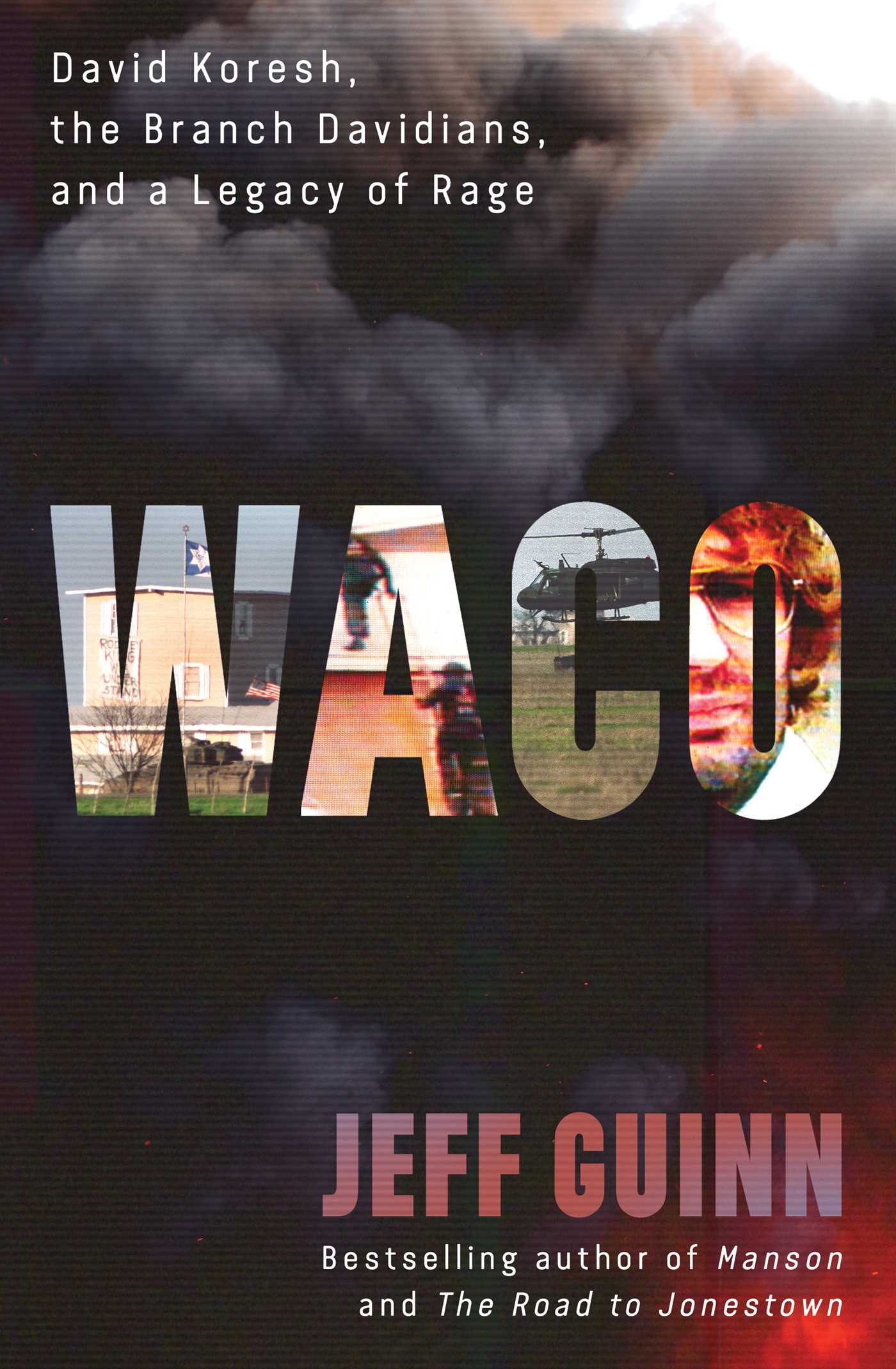
Waco: David Koresh, the Branch Davidians, and a Legacy of Rage. Jeff Guinn. 2023. [January] 400 pages. [Source: Library]

First sentence: Just before dawn on Sunday, February 28, 1993, an eighty-vehicle caravan departed Fort Hood Army base outside Killeen, Texas, heading northeast toward Waco, sixty-five miles away.

Premise/plot: Nonfiction book...about...you guessed it: Waco, David Koresh and the Branch Davidians. (Also the ATF, FBI, law enforcement, CPS, and "government" in general). The story isn't simple nor straightforward. (Perhaps it was naive of me to expect it to be.) The prologue starts moments before the initial raid in late February 1993. The prologue ends on a cliffhanger. It takes hundreds--literally--of pages to get back to that point in time. (That may annoy some readers.)

So this book seeks to provide context, context, and more context. Context on the Seventh Day Adventists. Context on the Davidians. Context on the Branch Davidians. Context on when this sect of a sect of a sect moves to Texas, just outside Waco. Context on about eighty plus years of leadership and ministry of the Branch Davidians. Context on Vernon Wayne Howell (who changed his name to David Koresh). Context on his joining the Branch Davidians in the late 70s/early 80s. His becoming 'the Lamb' and re-visioning things in the 80s and 90s. But also context/history of the ATF and other cooperating government forces. Journalists covering this story over the year. So I'd say about 85% of this one is all background context. Covering decades of history. Is it all necessary to have a basic understanding of the raid????? (I don't know. Some context, for sure, is helpful. This is extreme, in my opinion).

My thoughts: This book is SLOW. Slower than I thought it would be. I expected a bit more action and drama. It's not that action and drama weren't there. It's just that the action-y bits come very late in the game after a lot of history. I almost think I'd be more interested--maintained interest/engagement--if it was a documentary. A documentary with a narrator would be a good fit for me. 

All things considered, this one does have a lot of information. I expected it to have a position, to take a side. It presents both sides. It doesn't take sides. It purposefully doesn't take sides. Even when one of the sides features very disturbing, incredibly disturbing, how can you not be seriously disturbed information. (I will NOT spell out the specifics.) So it was odd that this one went out of its way to stay neutral. To say maybe the government was 100% wrong. Maybe the Branch Davidians were 100% right. Maybe the world would be a better place if the government hadn't decided to interfere. Maybe Waco was the start of a terrible trend of terrorism. Maybe. Maybe. Maybe.


© 2023 Becky Laney of Becky's Book Reviews

Wednesday, March 01, 2023

46. The Woman They Could Not Silence


The Woman They Could Not Silence: The Shocking Story of a Woman Who Dared to Fight Back. Kate Moore. 2021. 537 pages. [Source: Library]

First sentence from the author's note: This is not a book about mental health, but about how it can be used as a weapon. It's a historical book. 

First sentence from the prologue: If she screamed, she sealed her fate. She had to keep her rage locked up inside her, her feelings as tightly buttoned as her blouse. Nevertheless, they came for her. Two men pressed around her, lifting her in their arms, her wide skirts crushed by their clumsy movements--much like her heart inside her chest. Still, she did not fight back, did not lash out wildly, did not slap or hit. The only protest she could permit herself was this: a paralysis of her limbs. She held her body stiff and unyielding and refused to walk to her destiny, no matter how he begged. Amid the vast crowd that had gathered to bear witness, just one person spoke.

First sentence from chapter one: It was the last day, but she didn't know it. In truth, we never do. Not until it is too late. 

Premise/plot: The Woman They Could Not Silence is a biography of Elizabeth Packard. It is the story of how she turned an absolutely horrible and unjust circumstance into an opportunity to change laws and society. Theophilus and Elizabeth Packard, but, not entirely happily. It seems that after some [early] years together [that were mostly quiet and peaceful], Elizabeth began to think, to think for herself, to think above and beyond what her husband wanted. Namely, her husband, a minister, became greatly upset when his wife began to reach different conclusions about religion. Not only did she form contrary opinions to his doctrine, she would talk about her opinions with others--men, women, her own children. Whether he truly and sincerely believed that she was actually insane and must be committed to an insane asylum for her own good, or, if her committal to an insane asylum was just beneficial to him personally, I don't know if we--the readers--can know. But we do know that she was committed against her will--at the will of her husband (and father, and many members of the congregation, there was a petition)--for several years. Being locked away had unintended consequences, it gave her a voice. Or perhaps the better way to phrase it, was instead of taking away her voice, it strengthened it. Instead of silencing her and hampering her circle of influence, it strengthened her voice, impassioned her, and gave her a life-long calling.

The book covers her life--and life's work--from 1860 onward. It discusses the rights--or lack of rights--for women, married women, for those women deemed insane. It covers laws, politics, and religion.

My thoughts: Elizabeth Packard is an author I'd never heard of before. I found her story--this biography--fascinating. It is a complex read. I would recommend for those who enjoy history, biography, legislation and law, politics, and culture.


© 2023 Becky Laney of Becky's Book Reviews

Saturday, February 04, 2023

22. Baking Powder Wars


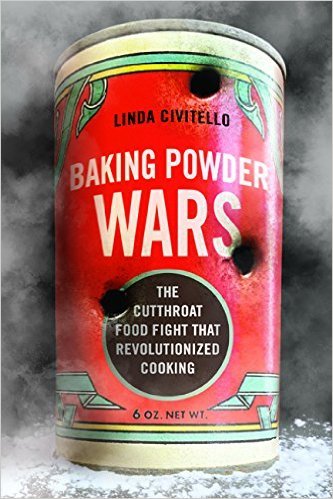
Baking Powder Wars: The Cutthroat Food Fight That Revolutionized Cooking. Linda Civitello. 2017. 264 pages. [Source: Review copy]

First sentence: Business is war. Cooking is chemistry. Food is political.

Premise/plot: At its simplest, Baking Powder Wars is just that a history of the evolution/revolution of baking powder. The book begins pre-baking-powder-era and tells the story of what once was, of how bread [and cakes, etc.] used to be made. It then goes step by step through its evolution/revolution. [If it sounds dramatic, well, it's for good reason. It's a story of industry, corporations, commercialization and advertising, espionage, bribery, politics...and plenty of homemaking and 'domestic arts.' It has some to do with the role of women inside the home, and the role of the home inside society. The author uses baking powder to tell the story of convenience, of our love affair with convenience--fast, easy, cheap, consistent. This book truly offers a little something to every reader. It's got recipes. It's got stories about cookbooks and the role they play in society. It's got tension--as companies (and families who own companies) BATTLE it out literally and figuratively for supremacy. You might think naturally this would involve advertising, media, and market space...but it includes actual politics and politicians. It's also a history of what we eat, where we eat, how we eat, etc. (Bread, quick bread, muffins, pancakes, doughnuts, cakes, cupcakes, etc.) What we eat has definitely evolved through the centuries. It isn't just a story of one product--but of many. (Think Bisquick, Martha White, cake-mixes, etc.)

My thoughts: Until the last little bit--second half of last chapter--this one was actually fairly absorbing. I found that while it covered many subjects and seemed to present facts and factoids almost at random, it was almost always interesting and entertaining. The last half of the last chapter brings readers "up to date" on the families who started the big baking powder companies. These "updates" had nothing to do with food, advertising, cooking, etc. Most of them had to do with RACING. And it was like WHY IS THIS IN HERE? DO I CARE ABOUT RACE CARS? NO, I DO NOT. But so much of this one was interesting to me. 

This one admittedly won't be for every reader. But for those who have an interest in the subject--be it food, cooking, baking, domestic arts, advertising and marketing, business, history of cookbooks, history of supermarkets, history of society/culture "becoming" modern and industrialized...I think this one has a little bit of everything.


© 2023 Becky Laney of Becky's Book Reviews