Showing posts with label memoirs. Show all posts

Friday, March 08, 2024

32. The Girl Who Sang


The Girl Who Sang: A Holocaust Memoir of Hope and Survival. Estelle Nadel. Illustrated by Sammy Savos. 2024. 272 pages. [Source: Library] [graphic novel; graphic memoir; Jewish/Holocaust]

First sentence: Will I ever be free?

Premise/plot: The Girl Who Sang is a MEMOIR [nonfiction autobiography] in graphic novel format. It is set primarily during the Second World War, but the memoir continues through some turbulent aftermath years. After the war, the family of siblings emigrate to the United States. But there is no magical, warm and fuzzy happily ever after story. Love sometimes isn't enough to keep a family of siblings together. 

My thoughts: I loved, loved, loved, loved this one. I don't read many graphic novels--fiction or nonfiction. But this one is a MUST. I found it compelling and haunting. It was SO well done. I have read plenty of books about the Holocaust and the Second World War. I've read fewer graphic novels, however, this is a powerful format for storytelling. Perhaps the story will impact readers more by being in this format.


© 2024 Becky Laney of Becky's Book Reviews

Thursday, November 16, 2023

182. Friends, Lovers, and The Big Terrible Thing


Friends, Lovers, and the Big Terrible Thing. Matthew Perry. 2022. 250 pages. [Source: Library]

First sentence from the prologue: Hi, my name is Matthew, although you may know me by another name. My friends call me Matty. And I should be dead. If you like, you can consider what you're about to read to be a message from the beyond, my beyond.

Premise/plot: Matthew Perry's memoir was published in the fall of 2022. After his recent death I put this one on hold at the library. It is a personal story--with ups and downs. He writes of highs (literally and figuratively) and lows--successes and failures. He writes of his near death experiences. He doesn't shy away from the lowest of lows, of telling stories that make him look horrible.

My thoughts: This one was thought provoking. It was heartbreaking and brutal, but also eye opening in my opinion. I think even if you don't struggle with alcohol, drugs, or smoking (addictions), you can find it relatable. He never quotes Augustine, but you can't help but read this one without thinking of the God-shaped hole that every single person has. He writes of seeking God--and I've shared plenty of quotes below. It reads like the book of Ecclesiastes. He tried EVERYTHING; he kept trying everything. More, more, more--never enough. There was no joy, no happiness, no contentment in anything he was throwing into the void, into the emptiness, into the uncomfortable dread of reality. It isn't always easy to talk about sadness, depression, emptiness and loneliness, but Matthew Perry did in this memoir. Perhaps his book can help others who are experiencing their own battles. He asks many, many questions but I'm not sure he found the answers.

Quotes:

  • My mind is out to kill me, and I know it. I am constantly filled with a lurking loneliness, a yearning, clinging to the notion that something outside of me will fix me. But I had had all that the outside had to offer!
  • Not being able to stop screaming is a very scary state to be in.
  • It is very odd to live in a world where if you died, it would shock people but surprise no one.
  • I'm not the biggest fan of confrontation. I ask a lot of questions. Just not out loud.
  • That said, I don't know how advanced civilization has to be to understand that giving phenobarbital to a baby who just entered his second month of breathing God's air is, at best, an interesting approach to pediatric medicine. But it wasn't that rare in the 1960s to slip the parents of a colicky child a major barbiturate.
  • Maybe it was because I was always trying to fill a spiritual hole with a material thing...I don't know.
  • "God, you can do whatever you want to me. Just please make me famous." Three weeks later, I got cast in Friends. And God has certainly kept his side of the bargain--but the Almighty, being the Almighty, had not forgotten the first part of that prayer as well.
  • You have to get famous to know that it's not the answer. And nobody who is not famous will ever truly believe that.
  • The most unnerving part was, I knew God was omniscient, which meant that he knew, already, what he had in store for me.
  • "God, please help me," I whispered. "Show me that you are here. God, please help me."
  • I had been in the presence of God. I was certain of it. And this time I had prayed for the right thing: help. Eventually the weeping subsided. But everything was different now.
  • He had saved me that day, and for all days, no matter what. He had turned me into a seeker, not only of sobriety, and truth, but also of him. He had opened a window, and closed it, as if to say, "Now go earn this."
  • And I seek the answer every day. I am a seeker. I seek God.
  • I'm this close to dying every day. I don't have another sobriety in me. If I went out, I would never be able to come back. And if I went out, I would go out hard. I would have to go out hard because my tolerance is so high.
  • I want that connection to something bigger than me because I'm convinced it's the only thing that will truly save my life. I don't want to die. I'm scared to die.
  • I've never let myself feel uncomfortable long enough to have a spiritual connection. So, I fix it with pills and alcohol before God can jump in and fix me.
  • I've seen God in my kitchen, of all places, so I know there's something bigger than me. I know it's an omnipresent love and acceptance that means that everything's going to be OK. I know something happens when you die. I know you move on to something wonderful.
  • I am me. And that should be enough, it always has been enough. I was the one who didn't get that. And now I do.
  • Someday you, too, might be called upon to do something important, so be ready for it. And when whatever happens, just think, What would Batman do? and do that.


© 2023 Becky Laney of Becky's Book Reviews

Wednesday, November 10, 2021

138. Friends Forever


Friends Forever. Shannon Hale. Illustrated by LeUyen Pham. 2021. [August] 304 pages. [Source: Library]

First sentence: And this year...I was an eighth grader.

Premise/plot: Friends Forever is the third book in Shannon Hale's autobiographical graphic novel series. (See also Real Friends and Best Friends.) These graphic novels chronicle her middle school (or junior high) years. This third volume is her recollections of being an eighth grader. The book is arranged somewhat thematically. Together the chapters tell the complete story of a young girl with BIG emotions that she didn't always know how to handle. And sometimes it wasn't just big emotions but BIG circumstances as well. 

My thoughts: I would love at some point to read all three books back to back. Enough time has gone by that I only remember loving the books in a general way. I don't remember the specifics or all the whys. I remember appreciating the honesty and vulnerability especially. I believe there were photos of her in the back of the book from that time period. That takes bravery.

So what did I think of this third book? Well. In some ways it made me uncomfortable. I'll try to explain. It made me uncomfortable in that it was so relatable. It was transporting me back emotionally--and I was going kicking and screaming. Any day where you can forget what it was like to live through your eighth grade year is a good day--as far as I'm concerned. I think there is something universal about this awkwardness and insecurity. The experiences included in the graphic novel feel authentic and raw. And overall, I think that's a good thing. While adults may relate by remembering their own experiences--and perhaps they are close(r) in age to Shannon Hale--the target audience isn't remembering. The target audience is currently living through these oh-so-tough years. And I think that's where the opportunity is. As adults we can want to shield kids from darker emotions and experiences. That doesn't make them go away. This book full on acknowledges those darker emotions--the insecurity, the fears, the stress, the worries, the frustration, anger, disappointment, loneliness, uncertainty, depression, despair--that come at home and school and everywhere in between. And the vulnerability on these pages--and the graphic novel does a great job of depicting the emotional angst and despair--is painful. Painfully valid. Painfully relatable.


© 2021 Becky Laney of Becky's Book Reviews

Tuesday, September 07, 2021

108. The Boy Who Failed Show and Tell


The Boy Who Failed Show and Tell. Jordan Sonnenblick. 2021. [February] 224 pages. [Source: Library]

First sentence: The luckiest boy in my class is this kid Kenneth. Last March, when we were in third grade, there was a massive fire in his apartment building. He had to jump from his bedroom window on the seventh floor onto one of those fire-department trampoline things. He almost died! When he came back to school, he had the best Show and Tell in history. Now he is a legend.

Premise/plot: The Boy Who Failed Show and Tell is a memoir by author Jordan Sonnenblick. It focuses on his fourth grade year, I believe. The book is packed with adventures and misadventures at home and school. On the one hand, life is GREAT because he's got a SNAKE and he's taking drum lessons. On the other hand, life is AWFUL because his teacher hates him and is always picking on him.

My thoughts: I really enjoyed this one so much. The narrative voice is everything. The narrative is just right. I found it super relatable--even though I don't love snakes or play the drum.

Favorite quotes:

I wanted to say hi to the drummer, and maybe ask him how he had started playing. But I was too shy. So I just kind of faded away from the edge of the bandstand until I got back to the tables.
Anyway, I don’t know how I can learn to be that guy from a few lessons. I am only a shrimpy, nervous fourth grader. It seems to me that becoming a drummer isn’t just learning a set of skills. Becoming that guy would be more like a transformation: caterpillar me would have to somehow turn into … not a butterfly, exactly. Something cooler and stronger. Something heroic. Like a lion. Or Robert Falcone, but with drumsticks.
That’s what I want from drum lessons. To become a legend in just thirty minutes a week.

Maybe Mr. Fred Stoll is like Batman or Superman. People in the upstairs world think of him as a mild-mannered, cat-owning husband. But once you are allowed into his DRUM CAVE, you see the truth behind the disguise.
He sits down at a stool next to the drum set and gestures for me to pass him and sit on the stool that is actually set up directly in front of the drums—the stool a real drummer would sit on to play this set!
When I sit down, I am kind of excited and also kind of terrified. I want so badly to be able to sit right here and make amazing, thunderous noise, but I don’t even know how to hold a drumstick. Fortunately, that is the first lesson. Mr. Stoll lays two sticks down on the shallow, wide drum between my legs and says, “Lesson one: Pick those up.” I want to ask him how I am supposed to pick them up, but I feel like this is some kind of test.
Mr. Stoll is Obi-Wan Kenobi, I am Luke Skywalker, and I am supposed to use the Force to lift the sticks.

It’s only the second week of school, and Mrs. Fisher has already noticed that my handwriting is not neat. By not neat, I mean it looks like a dying chicken dragged a pencil across the page because it was stapled to his leg.
And that’s when I print. You should see my cursive.
It doesn’t matter that she’s right. What matters is that she compares me to William Feranek in front of the whole class.
“JORR-dan! This spelling paper is sloppy! I will not accept messy work!” I try to tell her that I spelled every word right, but she doesn’t care. “Nobody cares,” she purrs, “if you’ve spelled the words right if nobody can read them.

The song is called “Drive My Car.” The band is the Beatles.
There is a short guitar introduction. Then Mr. Stoll plays a roll on two of the tom-toms before starting to play an amazing beat. I don’t know how he does it all! One hand is on the snare drum, the other is playing a pair of cymbals called the hi-hats, which open and close if you push your left foot down on a pedal, and his right foot is working the pedal that hits the bass drum. Every time the bass drum thumps, it is like a bright blue shock in the center of my chest. There is also a clanking noise on every beat of the song that lights up the inside of my mind in dark red pulses. I have no idea what that sound is, but it makes me feel wild, like I am about to jump up out of my chair and yell.

Mr. Stoll says, “Now I am going to play the song again, but you are going to keep time.” He hands me a weird blocky metal thing that looks like one of the bells you might see around a cow’s neck in a cartoon, and tells me I am going to hold it in one hand and use my other hand to hit it with a drumstick.
“What is this thing called?” I ask.
“A cowbell,” Mr. Stoll replies. Well, that makes sense. “Did you hear the clanking sound on every beat of the song?”
I nod.
“All you have to do is hit the cowbell along with the clanks, and together you and I will be a percussion section.”
I smile. A percussion section sounds like something a professional musician would be in.
“Ready?” he asks.
I nod, and he puts the needle down onto the beginning of the song again.
“I’ll tell you when,” he says.
I try to hit the cowbell in time with the song, but that is much harder than it sounds. I could hear the cowbell on the record perfectly the first time the song played, but as soon as I start making noise, I drown the recorded cowbell out. When my time starts to drift, Mr. Stoll looks over at me and counts out the rhythm: “One! Two! Three! Four!”
This happens a few times, but Mr. Stoll only smiles and keeps counting.
The third time through the record, Mr. Stoll doesn’t play. He just watches me and counts. I think I am starting to feel the rhythm on my own. It feels like lightning flashing in my brain.
I like it.

We work on my double stroke roll for a while after we are finished with the Beatles, and then comes a moment I know I will remember for the rest of my life. Mr. Stoll carefully takes the album, Yesterday and Today, off the player and carefully puts it into its protective paper sleeve, then slides the sleeve inside the cardboard album cover and hands the whole thing to me.

“The Beatles,” he says. “So good. John, Paul, George, and Ringo. Ringo is the drummer. You can learn a lot from these guys. Take this for the week, and practice hitting your dictionary in time with the different songs. You have a record player at home, right?”
I nod. Really, I don’t exactly have a record player, but Lissa does.
“Just promise me you’ll take care of the album. You know how to hold it by its edges, right?”
I nod again, very enthusiastically. I will treat this album like a precious jewel. I will treat this album like gold. I will treat this album like I treat Hectoria. I won’t even think about hurling it across Lissa’s room like a Frisbee, the way I threw her Saturday Night Fever soundtrack record when she wouldn’t stop calling me names that one time.
“Great,” he says. “I trust you.”
My drum teacher trusts me.
I walk out of there feeling so excited I might explode. I am holding “Drive My Car” in my own two hands. And there are ten more Beatles songs on the record, just waiting for me to discover them.


© 2021 Becky Laney of Becky's Book Reviews

Tuesday, February 02, 2021

12. My Remarkable Journey


My Remarkable Journey: A Memoir. Katherine Johnson, Joylette Hylick, and Katherine G. Moore. 2021. [May] 224 pages. [Source: Review copy]

First sentence: The serious look in Daddy’s eyes told me his words were important: “You’re as good as anyone in this town,” he said, peering down at my curious little face. “But you’re no better.”

Premise/plot: My Remarkable Journey is Katherine Johnson's autobiography. Katherine Johnson is a name you've likely become familiar with over the past six to seven years. Hidden Figures, the book, was published circa 2016 and the movie, Hidden Figures, followed. But this is her story in her own words--I believe the coauthors are her daughters. (Her daughters are named Joylette and Katherine, so I'm inferring here, for better or worse.) 

While the memoir covers her career at NASA, it covers so much more than that. She was a daughter, sister, student, friend, teacher, volunteer, mathematician, career woman, wife, mother, and grandmother. The memoir highlights relationships--not just events. 

Another thing worth mentioning is the focus on context, context, context. Her memoir is rooted in the times in which she lived. She goes out of her way to share deeper contexts and elaborate on the times. For example, she provides great detail about race relations, segregation, desegregation, the civil rights movement, the cold war, the space race, etc. If there's a theme of the memoir it would be education, education, education.

My thoughts: I loved this memoir. I found it fascinating, informative, and well crafted. I loved her writing style. I loved learning more about her family--her parents, siblings, husbands, children--and her private life. It was just an absorbing read. 

Journey is a good fit for the title. The book isn't so much about the destination--though, of course, her years at NASA are a fascinating destination--but about the journey. It is about the people who helped her along every step of the way, who helped shape her into the amazing woman she was.


© 2021 Becky Laney of Becky's Book Reviews

Monday, March 16, 2020

42. Ordinary Hazards

Ordinary Hazards. Nikki Grimes. 2019. 325 pages. [Source: Library] [memoir; ya nonfiction; nonfiction; poetry]

  First sentence: I read somewhere that names penetrate the core of our being, and I suppose, this is as good a time as any to confess my name is not the only lie I’ve ever lived with, but Nikki is the first invention for which I accept full responsibility.

Premise/plot: Nikki Grimes’ newest book is a memoir written in verse. Ordinary Hazards tells her story—the darkness and the light in her growing up years.

My thoughts: I have loved, loved, loved Nikki Grimes’ work in the past. I have always found her work to bring on the feels. Her characters are more often than not, oh-so-humanly drawn. Her writing realistic, but often with a strong foundation of hope. No matter how dark, how tough, how painful, there is still reason to hope; where there is life, there is hope.

This memoir is an amazing read. I think perhaps most enjoyed by those that have read her previously. But perhaps not. Maybe this would encourage readers to pick up her other books and seek out everything she’s written?

Quotes:
Algebra should be
ranked under
fatal diseases.
One more equation,
and I’ll die. (253)


© 2020 Becky Laney of Becky's Book Reviews

Monday, November 04, 2019

Enchanted Air

Enchanted Air. Margarita Engle. 2015. 192 pages. [Source: Library]

First sentence: When my parents met, it was love at first sight.

Premise/plot: Enchanted Air is Margarita Engle’s verse memoir. It covers her first fourteen years focusing on the tension she felt between being Cuban and being American. The way she felt visiting Cuba and her mother’s side of the family was different than how she felt growing up in California. Though in both places she was having a love affair with words and stories. But the tension wasn’t merely internal; Cuba was caught in the middle of the conflict between the U.S. and the U.S.S.R. The “Cold War” was heating up emotions. Suddenly to ‘be Cuban’ was a bad thing...but how could such a lovely, amazing, incredible place be bad? Cuba is where her beloved family lives. Cuba is where she rides horses and has adventures. Cuba is where some of her happiest memories are.

My thoughts: I am so excited to read the new follow-up to Enchanted Air. I wanted to reread this one first. I am so happy I did.

Spoken stories are no longer enough/ to fill my hunger./ I crave a constant supply/ of written ones, too./ Each week, I check out/ as many library books as I can carry,/ so many that I feel like a juggler,/ balancing/ stacks/ of entrancing/ pages/ in midair./ When I’ve finished reading/ every book in the children’s section,/ I begin sneaking into the library’s/ grown-up zone, where travel books/ help me dream/of islands. (30).


© 2019 Becky Laney of Becky's Book Reviews

Wednesday, May 29, 2019

World at War: The Girl With the White Flag

The Girl With The White Flag. Tomiko Higa. Translated by Dorothy Britton. 1989. 130 pages. [Source: Bought]

First sentence from the introduction: On June 25, 1945, on the war-ravaged island of Okinawa, a young American army signal corps photographer took a remarkable photograph. It showed a little barefoot girl in tattered clothes waving a piece of white cloth tied to a crooked stick.

First sentence: I was born in Shuri, the ancient capital of Okinawa, which is now part of the city of Naha.

The Girl with the White Flag is the story of the author's childhood in war-time Japan. It begins by giving the reader ample background into the time and culture and place. We meet our heroine, a young girl who throughout the book spans the ages of five through seven. One of the first events she shares with readers is the death of her mother. She then relates what life was like with her father, two older sisters, and her older brother. This portion is hard to navigate. I think in some ways it is just as hard for modern readers to understand the family life--the harshness, the strictness, the discipline, as it is to understand the monstrosities of war and soldiers and starvation. (Or maybe that's just my take on it.)

About halfway through the narrative, the father disappears. He was on his somewhat routine mission of delivering food to the Japanese soldiers, but on this occasion he never returned home. The four children are left to fend for themselves. The American soldiers have just begun their invasion, their battle to capture this island. The children become refugees and the fight to survive has begun. The children ranged in age from 17 to 6. Somewhere along the way, however, two things happen--big things--that make this event even scarier: 1) Their brother dies one night from a stray bullet. 2) Within a few days of burying their brother, our narrator--the six/seven year old girl becomes lost--separated--from her sister.

The book recounts what it was like to be seven and alone and wandering in and out of danger. There was no safe place. Not really. Japanese soldiers weren't "safe." In fact, in her brief encounters with them she was almost killed. No, being near soldiers wasn't safe. The only "safe" soldier was a dead soldier. She did in fact scavenge around the dead soldiers looking for food.

Her will to survive was strong. Her stamina incredible in my opinion. The sights. The sounds. The smells. All surrounded her. Could have potentially traumatized her and paralyzed her into inaction.

If there is power in the Girl with The White Flag it is in its rawness, its simplicity, its boldness when it comes to being straightforward and honest. The story is incredible is powerful because it's true. Here is an eyewitness account of what it means to be seven and a refugee in a war zone. It can be brutal. It can be intense. But there is more to it than that.

I found The Girl with The White Flag to be an incredibly compelling read, a must-read for adults. 

© 2019 Becky Laney of Becky's Book Reviews

Friday, March 01, 2019

Inheritance

Inheritance: A Memoir of Genealogy, Paternity, and Love. Dani Shapiro. 2019. 272 pages. [Source: Library]

First sentence: When I was a girl I would sneak down the hall late at night once my parents were asleep.

Premise/plot: In this memoir, Dani Shapiro shares her experiences with DNA testing. Her results surprised her: it begins with a match for a first cousin she doesn't know. If this stranger is her first cousin, it means that her father--the father who raised her--is not her biological father. She remembers something slightly off her mother said about her conception years ago. Within a matter of days she finds her biological father--a sperm donor. What should she do with this information? Should she try to make contact with him? meet him? have a relationship with him? Does it mean anything mentally, emotionally, spiritually that this man--this stranger--is her father?

My thoughts: I wanted this to be a compelling read. I really did. I tend to watch these kinds of stories on the news. It sounded like it would be fascinating. But for me it wasn't. I found the narrative to be tedious at times. Was there enough material for a full-length book? I'm not sure there was. Was there enough for an essay or article? Definitely.

© 2019 Becky Laney of Becky's Book Reviews

Tuesday, March 21, 2017

Ugly

Ugly. Robert Hoge. 2016. 208 pages. [Source: Library]

First sentence: Imagine you're in art class. The teacher drops a lump of wet, sticky clay on the bench in front of you. "You've got thirty minutes to sculpt a newborn baby's face," she says.

Premise/plot: Ugly is a memoir by Robert Hoge. This very personal story is about growing up 'ugly' or 'different' in Australia in the 1970s and 80s. Readers learn about his life at home and at school. The focus is on his family, his friends, his classmates and teachers. Not everyone was nice....or accepting. But. He made a way, found a way, to be comfortable in his own skin. His journey included some surgeries, but, not as many as you might expect. (I loved, loved, LOVED the ending.) His journey also included sports. 

Perhaps readers have heard the phrase, "He has a face only a mother could love..." Well, in Hoge's case, his mother had a hard time accepting him--and his face--at first. For the first month of his life, she refused to take him home from the hospital and didn't want anything to do with him. She later became loving and accepting--a true supporter--but at first she struggled.

My thoughts: What I appreciate most about it is its warmth AND truth. He tackles a subject that could be very melodramatic and emotional, perhaps even manipulative. You'll be moved, but not with pity. At least I was. I loved, loved, loved the writing. He has a way with words that won me over from the start.

Favorite quotes:
I'm the ugliest person you've never met. (3)
I knew I was ugly. But everyone is uglier than they think. We are all more beautiful too. We all have scars only we can own. (200)

© 2017 Becky Laney of Becky's Book Reviews

Sunday, April 10, 2016

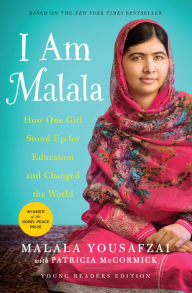
I Am Malala

I Am Malala. Malala Yousafzai with Patricia McCormick. 2014. Little Brown. 240 pages. [Source: Library]

I wish I had known there were essentially two different books called 'I Am Malala.' I read, by mistake, the one adapted for young readers. I would have preferred to read the one written for adults. Not because I have a huge problem with adult nonfiction books being adapted for younger readers, I've never really given it any thought before. I don't have strong feelings one way or the other. But because I'm probably only going to read one, and, I'd want as full a story as possible. Now, I'm curious: how are the two different, and, what was left out of the younger reader's edition. But am I curious enough to seek out the other book and read the same story twice?! See. I'm torn now. I don't think I will...at least not now. But perhaps in a year or two, we'll see. (Has this ever happened to you, what did you decide?!)

So. This one is a biography of Malala Yousafzai. She is a believer in education for girls and women. Her outspokenness, her bravery angered the Taliban in Pakistan. Threats were made on her life, on her father's life. Eventually she was shot in the face on the school bus one afternoon. The book covers several years before the incident. One gets a sense of what life was like in Pakistan at that time--around 2008 or 2009, I believe, is when it opens. One especially gets a sense of what life was like in her household. Her father started several schools for girls; and he believed his daughter should have every opportunity to learn, to study, to be free to be herself. He supported--if not encouraged--her daughter to find her voice, and, to speak up for what she felt was right. Together they decided that it was worth the risk to their own lives.

Education is important. Girls need the chance, the opportunity for education just as much as boys do. An eleven or twelve year old girl should have the opportunity to go to school instead of being married off if her family arranges it. There should be more than one way to raise a girl, more than one option of how her life could go.

Malala is an advocate for education, for girls' education. Her message to the world did not stop after the Taliban shot her. In fact, if anything it magnified--amplified it. Her international audience grew much, much larger. Now everyone knew her, knew her story, knew what she stood for. There would be no stopping her now.

What I enjoyed about this book was how real it was. It could have easily been an issue book from start to finish. A book so passionately driven by one cause--one message--that it almost drowns in it. But that wasn't the case with this one. The way her story was told was very grounded in reality, very humble. This is one girl's story. And, yes, in some ways she is extraordinary. But in other ways she's ordinary too. The way that she describes her family life, the way that she describes having friends, it just felt very down-to-earth and genuine.

I would recommend this one. But as I said I wish I had known that there were two books to choose from. If you've read the adult one and the young adult one, did you notice any differences? Were the differences big?

My favorite quote:
My school was a heaven. Because inside the Khushal School, we flew on wings of knowledge. In a country where women aren't allowed out in public without a man, we girls traveled far and wide inside the pages of our books. In a land where many women can't read the prices in the markets, we did multiplication. In a place where, as soon as we were teenagers, we'd have to cover our heads and hide ourselves from the boys who'd been our childhood playmates, we ran as free as the wind. We didn't know where our education would take us. All we wanted was a chance to learn in peace. (34)
© 2016 Becky Laney of Becky's Book Reviews

Monday, March 07, 2016

Not Without My Daughter

Not Without My Daughter. Betty Mahmoody. 1987. 432 pages. [Source: Library]

I first read Betty Mahmoody's Not Without My Daughter in high school back in the nineties. Up until that point, I'm not sure I'd read any nonfiction "for fun," in other words of my own choice and NOT for a school assignment. And to be honest, most of the nonfiction I'd read before was biographies of dead people I had little interest in to begin with. This book was a quick, compelling, action-and-adventure packed book about a mother and her daughter--and both were still alive. I remember it being a "wow" book for me.

Twenty years later--give or take a few years--I decided to reread this one. I saw My name is Mahtob at the library and it brought this one to mind again. The books are quite different. This one focuses more on Betty's marriage to Moody and Betty's determination to get them both out of Iran no matter what. It was written just a year or possibly two years after their escape. And as they were still very much in hiding at the time it was published, it doesn't give you much of a sense of what happened after they escaped through Turkey.

To catch everyone up in case you're not familiar with Not Without My Daughter or My Name is Mahtob:

In the late 1970s, Betty married an Iranian man nicknamed Moody. At first their marriage was working out well enough. He was a mostly non-practicing Muslim who was becoming more and more Americanized with each passing week. He treated her well--lavishing her with gifts, proud to show her off to anyone and everyone. After the birth of their daughter, Mahtob, things began to change. Not her fault, mind you, but because of the situation in Iran. Now that Iran was at war, now that his country was violent and in turmoil, he felt it was HIS country again. He listened to Iranian radio and read Iranian newspapers all the time. He became more and more unhappy in America, blaming America for all of the problems in Iran. That coupled with job woes meant horrible stress and strain on their marriage. Also the family "hosted" at various times several of his family visiting from Iran, and a visit could last months or even a year...

It was after a visit from one of his "nephews" in 1984 that he determined that the family would go to Iran for a two week vacation. He insisted that they had to go. Fighting against her natural instincts, she agreed that the family could go--for two weeks. At the time she agreed, she was already thinking of divorce. But she was worried about Mahtob, not, what divorce might do to her emotionally, but, what it might mean for her physically. Her father could take her out of the country to Iran--without her permission, essentially kidnap his own daughter--and stay indefinitely without breaking any laws. There was no legal protection in place.

The first few chapters of the book focus on the initial two-week vacation, but, as Betty feared, Moody's vacation was really much more permanent. He told her they were never going back to America, she'd never see her family--her parents, her two sons by a previous marriage, etc.--again. She was to learn to be a proper Iranian wife, the sooner the better. In the meantime, she was essentially held hostage. Not allowed out of the house, not allowed to use the telephone, not allowed to write letters. By this point, Moody's temperament had shifted from unhappy and mean to violent and abusive. The book is at times graphic in detailing the physical abuse of both mother and daughter. I think what hurt worse than the abuse she received at the hands of her husband was watching him abuse Mahtob. That and knowing that his family KNEW of the abuse--heard it, saw it--and did nothing. Moody was out of control and unpredictable.

The rest of the book covers essentially the almost two years they spent trapped in Iran. She had to learn the language, had to learn the city, had to learn the culture, customs, laws, and religion. Her goal was to conform enough on the outside so that her inner rebellion could go undetected as long as possible.

Her family did learn soon after the two weeks was up that the two were trapped in Iran, that Moody would not allow them to leave, that they were being held against their will. Her family did everything they could--on their side--to help their daughter. And through the American interest office of the Swiss embassy, I believe, they did manage to stay in contact some. But no one could think of a legal way for both mother and daughter to leave the country. Betty could divorce him at any time and leave. But leaving Mahtob behind meant leaving her behind forever. A mother give up on her child?! Never.

Is the book Christian? No and yes. It is not published by a Christian publisher, and, there are words in this one that no Christian publisher would ever allow. But Betty was nominally at least a Christian when she married Moody--a variety of Methodist, I believe. For better or worse, she believed that Muslims and Christians worship the same God, and that whether one called him "Allah" or "God" didn't matter much at the end of the day. Mother and daughter prayed together daily in secret--in the bathroom--pleading with God to let them escape Iran and return to America. At times, Betty expressed a great longing to have a Bible--a New Testament--to read. And several times she referred to Jesus as the Son of God. But at the same time, Betty blurred the lines a bit, in matters of doctrine. She began praying to Allah, praying the five daily prayers facing Mecca, began visiting Islamic holy sites and making wishes and vows. If God couldn't help her, maybe Allah would. She writes that Moody couldn't begin to suspect her sincerity in her prayers. So there are little things that might add up to make elements of this one questionable in terms of "is the book Christian?" That being said, I think Christians--especially adult believers--should be able to read the book with discerning, compassionate eyes. Yes, Betty was "unequally yoked;" she did not marry a Christian believer. But having Mahtob was undoubtedly a blessing, and, God did indeed work out all things for good through the circumstances. After Betty escaped, she became a champion for this cause, a spokesperson, a fighter. Never forgetting what it felt like to be trapped, to be separated from her family, her country, she would FIGHT to help reunite other families in similar situations around the world, she would fight to change laws as well, or, to put laws into place. So her experiences, as horrible as they were, have benefited others.

Is the book anti-Muslim? I wouldn't say that it was exactly the Islamic faith she was opposing as much as it was her own controlling, possessive, abusive husband who appeared to have mental health issues. It hurt her to see other women--whether foreign-born or not--in marriages where men were abusive and manipulative. What she wanted to see, perhaps, was a culture where men respected women, and women respected men--both being equal. She didn't like being told that that is just how men are: all men beat their wives. Some are more open about it in front of others, but, this was just something that made men, men. This felt wrong to her, it didn't sit right. Not all men are like that, and women should not have to live in fear of losing their lives. Some of the issues addressed in the book--physical abuse--could have happened anywhere in the world. Her being in a foreign country where she couldn't easily speak the language and where everyone else was a different religion didn't HELP her escape his abuse once it started. But, his being Iranian, his being Muslim, wasn't the root cause of his being abusive either.

That being said, I don't think it would pass the current political correctness test. It was published in 1987. For example, she focuses in on how un-American living conditions were: how unclean the houses were, how bathrooms were a hole in the ground, how "most people" just bathed once or twice a year, how babies didn't wear diapers, how bugs and worms and other vermin were in the food and not even picked out before cooking, how women blew their noses on their chadors. Little things that add up to create the idea that she found living conditions in Iran to be absolutely beneath her and primitive, for lack of a better word. She doesn't go out of her way to be kind and generous about the culture exactly. For what it is, one person's perspective on Iran during the years 1984-1986, I don't think it is hugely unfair or overly offensive. In the movie, I thought it was exaggerated even more. The character openly saying again and again, HOW CAN YOU EXPECT ME TO LIVE WITH SUCH PRIMITIVE PEOPLE?! In the book, it is never that outspoken.

© 2016 Becky Laney of Becky's Book Reviews

Thursday, March 03, 2016

My Name is Mahtob

My Name is Mahtob. Mahtob Moody. 2015. Thomas Nelson. 352 pages. [Source: Library]

I read Not Without My Daughter over twenty years ago. It was one of my 'discoveries' as I was shelf-reading the shelves in my high school library. (Not even nonfiction was safe to assign me! I was prone to getting distracted.) At the time I didn't read a lot of nonfiction, and, I certainly didn't associate nonfiction with "compelling" and "fascinating." But it was a quick read that I remember really getting absorbed in. That being said, do I remember many details?! Of course not! And I don't think that's necessarily a bad thing. It allowed me to pick up My Name is Mahtob with fresh eyes. There was no need to compare and contrast accounts or memories. And as soon as the author said that she had never read her mother's book, I felt a bit relieved if I'm honest.

So how much of the book is focused on her time in Iran? Just a chapter or two. Maybe slightly more. Her experiences certainly shaped her life in one way or another. But perhaps not in the way one would expect. Once back in the United States, her mother wrote a book, her mother went on tour with the book, did book signings, gave lectures, traveled not just around the country, but, to other parts of the world, there was a movie deal, etc. Sometimes Mahtob stayed in school and had a "normal" life though perhaps it's not normal to attend elementary school with a false name--a new name. But she certainly did a fair amount of traveling with her mother, and was a person of interest to the media. Through it all, through several decades, the two lived in fear that her father would retaliate. That more drama would find them. Would her father try to find them? Would Mahtob be kidnapped?

The book focuses on her growing up years--her school-age years, from kindergarten through college, I'd say. A few chapters follow about her adult years--home/family life, working, dating/socializing, etc.

The book focuses on a handful of big things: the effect of her childhood trauma (for lack of a better word), her health problems growing up with Lupus, her vigilance to stay safe and yet deal with the past in a healthy way, and how her Christian faith has shaped/defined her.

Is the book "too" Christian? I think honesty is best. It is published by Christian publishing house. There is no denying that. And the author is a Christian--defines herself as being Christian. Her faith matters to her. And she speaks openly and honestly about being a person of faith, of being a Christian. While unashamedly saying that she *is* a Christian, she stresses the importance of freedom of religion and freedom of speech. How every single person should have the freedom to believe or not believe whatever they want, to worship or not worship as they personally see fit, to make their own choices about how to live, what is right for them. So, yes, she mentions Jesus.

Other reviews I've seen complain about the "Christian" content. That somehow because she mentions God in the pages of her life, in her life story, that the book loses appeal, and, potentially readers. This makes no sense to me.

She certainly didn't ask for fame. And her life might have been different if they'd never gone to Iran to visit her father's side of the family. But this is a memoir, and it should reflect a whole life, a whole person. If there is a message in the book, it is, I think that one person can make a difference, that every individual matters, that choosing forgiveness means choosing joy.

I found this one a compelling read. I am going to try to reread Not Without My Daughter soon.


© 2016 Becky Laney of Becky's Book Reviews

Monday, February 22, 2016

She is Mine

She Is Mine: A War Orphans' Incredible Journey of Survival by Stephanie Fast. 2015. Destiny Ministries. 224 pages. [Source: Review copy]
Stephanie Fast's She is Mine is a compelling, unforgettable memoir of a Korean war-orphan.

Her father, whom she never met, was an American soldier. He returned to the U.S. unaware that he was going to be a father. Her mother, ashamed and embarrassed, returned to her family. Initially beloved of her mother, the author was shunned by the rest of the family and shunned by the community in which she spent her early years. Eventually, her mother gave into the family pressure and abandoned her. The author was--at the age of four--put on a train and sent away. Told that "an uncle" would welcome her at the end of the line, the truth was she would never see her family again, never find her way back "home."

She had the clothes on her back, and, a day's worth of food. But how can a four-year-old survive on her own? But survive she did. The book chronicles the years--three or four years, I believe--she spent surviving, leading an uncertain, always desperate existence. Sometimes wandering in the country, in the fields; sometimes wandering into villages and cities. Usually her encounters with other people were negative. It went beyond her early-years experience of name-calling and "shunning." She was beaten. She was tortured. She was left to die. And yet. There were a few people who treated her kindly, with grace, who emphatically declared you must survive.

The memoir goes to really dark, really ugly places. I won't lie. Some of what she endured is horrifying and the fact that she was able to survive is a miracle.

She is Mine is ABOUT adoption, about the need for adoption, about how life-changing and amazing adoption can be. It's about adoption-as-redemption and redemption-as-adoption.

For anyone who enjoys nonfiction, this one is a must read.
© 2016 Becky Laney of Becky's Book Reviews

Monday, October 26, 2015

Enchanted Air

Enchanted Air. Margarita Engle. Illustrated by Edel Rodriguez. 2015. Simon & Schuster. 208 pages. [Source: Library]

Did I enjoy Margarita Engle's Enchanted Air? A thousand times yes! I don't remember when I first discovered Engle's verse novels, I just remember it was love at first sight from the first book on. Every novel of hers which I've read, I've ended up absolutely loving. I really should treat myself to rereading all of her novels.

Enchanted Air is the author's memoir of her first fourteen years. It is all in verse; wonderful, glorious verse as only she can write. She writes of her travels back and forth from the United States and Cuba. (In addition to writing about other family travels, vacations, if you will.) She writes of various moves within the U.S, all in California, I believe. She writes of summer days and school days. Of belonging, wanting to belong, needing to belong. Of uncertainty, confusion, and on the opposite extreme: JOY. Joy of knowing, of discovering, of loving, of living, of just being. The focus is on herself and on her family. She grew up during the "Cold War." And she shares with readers her experiences; how upsetting and confusing it could be to grow up Cuban American at a time when Cuba was very much THE ENEMY. She also writes about her love of reading, writing, and storytelling.

From "Learning" (p. 134)
At home, I scribble tiny poems
all over the walls of my room.
Inside those miniature verses,
I feel safe, as if I am a turtle,
and the words
are my shell.
"More and More Stories" (p. 82
I find it hard to believe
that I am surviving
a whole summer
without a library
for finding
the familiar
old magic
of books.
But storytelling seems
like magic too--a new form
that is also
ancient
at the same time.
Will I ever be brave enough
to tell old-new tales
in my own way?
From "Refuge" (p. 54)
When I climb a tree, I take a book with me.
When I walk from school, I carry
my own poems, inside my mind,
where no one else
can reach the words
that are entirely
completely
forever
mine.
© 2015 Becky Laney of Becky's Book Reviews

Wednesday, March 18, 2015

Determined (2014)

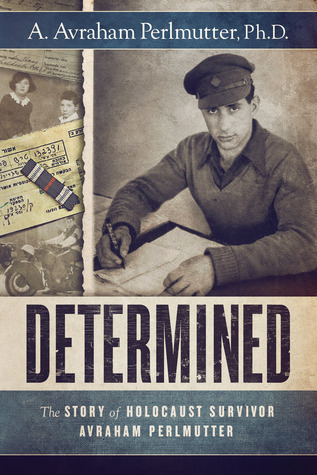
Determined. A. Avraham Perlmutter. 2014. Mascherato Publishing. 172 pages. [Source: Review copy]

For anyone with an interest in World War II and/or the Holocaust, you should consider reading the memoir Determined by A. Avraham Perlmutter. I am always eager to read more, so, I was happy to receive a copy of this for review.

The first third of the memoir focuses on the war itself. On his experience as a Jew during World War II trying to survive. Readers also learn about his family, his background, his childhood, Hitler's rise to power, etc. Everything readers need to know and understand to appreciate his personal story.

The final two-thirds of the memoir focus on his life AFTER the war sharing his experiences in Europe, in Israel, and finally the United States. This section focuses more on moving on with his life and establishing himself. Readers see him as a survivor, a soldier, a student, a husband, a father, and an engineer. The story of his life is so much more than just a surviving-the-war story.

The book includes plenty of photographs and documents to supplement the story.

I'm glad I read this one.
© 2015 Becky Laney of Becky's Book Reviews

Monday, March 09, 2015

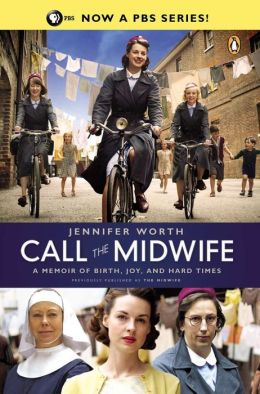
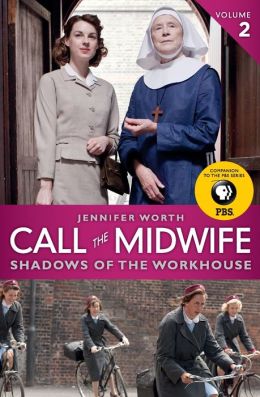
Call the Midwife (2002)

Call the Midwife: A Memoir of Birth, Joy, and Hard Times. Jennifer Worth. 2002/2009. Penguin. 340 pages. [Source: Library]

I have now read all three of Jennifer Worth's memoirs. Yes, I read the first book in the series last because that's how the library fated it. This actually worked out okay because I was familiar enough with the television adaptation. First, I want to mention that I loved, loved, loved, LOVED the tv show. Did I enjoy the books as much, did I enjoy them equally well? Probably not. I loved the show more, I did. I'll be honest about that from the start.

But did I enjoy the books? Yes. I definitely did. But was the first book my favorite? I can't say that it was. There were things I liked/loved about all three books. And. There were things I didn't quite like about all three books.

What didn't I enjoy? Well. In this first book, for example, there are several chapters where the focus is on prostitution, the focus shifts in the narrative because Jenny Lee has met a pregnant prostitute, Mary, who's trying to escape her pimp and find somewhere (relatively) safe to keep her baby. As you might expect, it's a dark, ugly, nightmarish world she's describing. I don't fault her for being realistic and matter of fact. But the amount of detail involved in the telling is a bit much at times. I think it could have been retold with a little less detail and still conveyed the same impact.

What did I enjoy? Well, there was plenty to enjoy! Most of the chapters were enjoyable enough. Many of these chapters have been adapted as episodes for the show--though not all, I believe. And in some cases, the book presents a much fuller picture.

As far as the trilogy goes, there is in some ways a lot less focus on romance when compared to the adaptation. (Jane's romance being an exception in the second book.) But the trilogy is worth reading, maybe not for ALL fans, but for many fans. (I will say that the book is more graphic in description than the tv show.)

© 2015 Becky Laney of Becky's Book Reviews

Monday, March 02, 2015

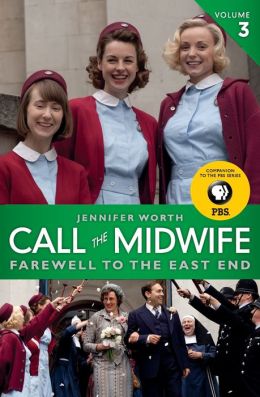
Farewell to the East End

Farewell to the East End. (Call of the Midwife #3) Jennifer Worth. 2009/2013. HarperCollins. 336 pages. [Source: Library]

I still haven't read the first book in the Call The Midwife series by Jennifer Worth, but, I have watched and enjoyed the first two series of the show, an adaptation of the books. I loved the second book, Shadows of the Workhouse. I'm not sure I "loved" the third book, Farewell to the East End. I suppose you could say I found it equally fascinating and disturbing. The stories are definitely darker and heavier--dismal and bleak. Mixed in with stories are a handful of research chapters about various topics.

Highlights (not highlights because of 'hope') include several chapters focused on twins Megan and Mave, several chapters focusing on the Masterson family, several chapters focusing on the Harding family, and several chapters focusing on Chummy.

One of the most haunting stories, in my opinion, is "The Captain's Daughter." Chummy is called aboard a merchant ship to tend a woman with stomach cramps. The woman believes she's just had too many apples. But it soon becomes apparent to Chummy that all is not right. The woman is in fact pregnant and in labor, and, the father could be any of the crew including her own father, the Captain. Chummy learns that she's been on board and servicing the men--keeping them all happy--since the age of fourteen, soon after her mother's death. Chummy is a bit shocked--who wouldn't be--but very practical and down to earth. The birth is challenging and quite memorable.

© 2015 Becky Laney of Becky's Book Reviews

Monday, February 23, 2015

Shadow of the Workhouse

Shadows of the Workhouse (Call the Midwife #2) Jennifer Worth. 2005/2008/2013. HarperCollins. 304 pages. [Source: Library]

I still haven't read the first book in the Call the Midwife series, but, I have seen most of series 1 and 2. I love, love, love the show. And I've seen the episodes adapting all these stories found within Shadows of the Workhouse. Do I recommend reading the books? Yes!!!

Shadows of the Workhouse is the second book in Jennifer Worth's memoir trilogy. The first part focuses on Workhouse Children. In this section, two big stories are related. First, readers meet Jane. Her story has a happy ending, but, it's an emotional struggle making the happy ending all that more triumphant. Second, readers meet Peggy and Frank. Again, these two grew up in the Workhouse. Their story is emotional and complex and not nearly as happy. The second part focuses on The Trial of Sister Monica Joan. (She's accused of theft and put on trial.) The third part of the book focuses on 'The Old Soldier.' Readers meet an old man, a lonely man, Joe Collett, whom Jenny treats daily/weekly. The book focuses on telling his story. Again, there is plenty of heartbreak.

I loved Jane's story. I did. I loved, loved, LOVED it. I thought the whole book was wonderful and thoughtful. Would definitely recommend.

© 2015 Becky Laney of Becky's Book Reviews

Monday, January 05, 2015

El Deafo (2014)

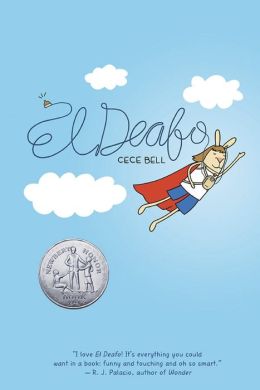
El Deafo. Cece Bell. 2014. Harry N. Abrams. 233 pages. [Source: Library]

I put El Deafo on hold at the library not knowing it was a graphic novel. In a way, I'm glad I didn't know. I don' t read many graphic novels, there are, of course, exceptions to every rule. El Deafo is a coming-of-age memoir in graphic novel format. I loved it. I really loved it. It surprised me in all the right ways.

It begins simply, "I was a regular little kid. I played with my mom's stuff. I watched TV with my big brother, Ashley, and my big sister, Sarah. I rode on the back of my father's bicycle. I found caterpillars with my friend Emma. And I sang. 'We all live in a yellow submarine, a yellow submarine--' But then everything changed." A childhood illness at the age of 4--meningitis--leaves her deaf.

The memoir covers many years of her childhood, from the age of four through her sixth grade year in school. In a way it is about her growing up deaf, growing up different. But in many ways, it is about so much more than that: it's about family and friendship and belonging and struggling to belong. It is about her wanting and needing a 'true' friend. It is about her mishaps in friendships. There are a few untrue friends before there is the one that is true. It is very much about identity: how she sees herself, her struggle to be comfortable with herself, to accept and love herself. Another aspect of El Deafo which I very much enjoyed is Cece's first crush.

In her imagination, she's closer to being there, in that place. She imagines that she is a superhero, El Deafo, the super-hero self stands up for herself to her friends AND her family. Her super-hero self lets others know what she's feeling, when she's mad, when her feelings are hurt, etc. Her superhero self is brave and courageous letting others know that she doesn't need people to talk really loudly or really slowly. Her superhero self lets people know that she hates it when they call her "my deaf friend" or "that deaf kid."

El Deafo is set in the 1970s, I believe. There are plenty of cultural references to place it in that decade. I really enjoyed the scenes where she was watching TV.

So, yes, El Deafo is in my opinion about so much more than growing up deaf. This book is easy to love and oh-so-easy to recommend.

© 2015 Becky Laney of Becky's Book Reviews