Showing posts with label series books. Show all posts

Monday, November 03, 2025

114. Harry Potter and the Deathly Hallows


114. Harry Potter and the Deathly Hallows. (Harry Potter #7) J.K. Rowling. 2007. 759 pages. [Source: Library]  [4 stars]

First sentence: The two men appeared out of nowhere, a few yards apart in the narrow, moonlit lane. For a second they stood quite still, wands directed at each other's chests; then, recognizing each other, they stowed their wands beneath their cloaks and started walking briskly in the same direction.

ETA: The third time around, I LISTENED to the audio book narrated by Stephen Fry. It was a great choice. Will I read the series a fourth time? That's a good question. I think three times might be a reasonably good number of times to have read the series. Time will tell.

Premise/plot: Harry Potter is on his final quest(s) in this final fantasy novel starring Harry Potter and company. (In particular, Ron and Hermione are his companions for most of the novel.) He is preparing day and night (night and day) for that final battle, the big showdown. He's also trying to decipher (uncover, discover) the mysteries of Dumbledore. There's so much he doesn't know, and he's still grieving the loss of his mentor.

My thoughts: This was my SECOND time to read the series. I will say I don't do the absolute best with super-intense action sequences. I more anxiously skim than stay present in the moment. I thought a reread would slow me down so I could appreciate everything more--especially towards the end. But even though I knew how things ended up, I just couldn't handle it! 

When I read the series the first time, I wasn't sure I would ever revisit the series. I did decide to reread and I am so glad I did. I can't say the series will ever be at the top of my favorite series. But I do feel like I better grasp the characters and the story. There were things I noticed the second time around that I didn't quite appreciate or get the first time around. I would imagine the more times you read the books, the more you notice the small things. Also little things might become quite meaningful to you. 

Will I read the series a third time? Only time will tell. Maybe. Maybe not. I still don't own the books. There are so many other series books that I would love to read--some would be new-to-me series, and some would be rereads. So I may not get to it again for a while--if at all.

This last book is quite different from the others in the series. But that is okay--this series grew with its original audience which is nice. 

© 2025 Becky Laney of Becky's Book Reviews

Tuesday, September 09, 2025

99. Harry Potter and the Prisoner of Azkaban


99. Harry Potter and the Prisoner of Azkaban. 1999. 435 pages. [Source: Library] [4 stars] [MG speculative fiction]

First sentence: Harry Potter was a highly unusual boy in many ways. For one thing, he hated the summer holidays more than any other time of year. For another, he really wanted to do his homework but was forced to do it in secret, in the dead of night. And he also happened to be a wizard.

This is my third time reading Harry Potter and the Prisoner of Azkaban. I listened on audio book; the narrator was Stephen Fry.

Premise/plot: Harry Potter and his friends are preparing for a third year at Hogwarts. This one starts out in some ways extremely similar to the other two books in the series, but quite different as well. After an INCIDENT with his "family," Harry Potter runs away... Around this same time the magic world is shook by the escape of a prisoner from Azkaban--Sirius Black. Everyone is so distracted/concerned about his escape, that Harry Potter's so-called illegal use of magic is overlooked or quickly pardoned. Most of this school year is concerned with the missing Sirius Black. It is thought that Harry Potter is in even more danger than usual...

Plenty of adventures and misadventures are to be found in the day to day lives of Harry Potter and company. 

My thoughts: I certainly did not expect Scabbers--Ron Weasley's rat--to enter into the story in this fashion. I wasn't surprised by other elements of this one. I've learned to expect just about anything/everything from other characters--particularly adults, mostly professors, etc.

My original rating was three stars; I've since come to enjoy this one more. If I'm being honest, the second half I'd give an enthusiastic five stars. I absolutely LOVE, LOVE, LOVE, LOVE, LOVE, LOVE, LOVE the last section of this one where ALL THE action happens with Harry, Sirius Black, Ron, Hermione, etc. I loved the 'redo' they get. I don't know why exactly but Sirius Black is one of my favorite characters in the series. I couldn't begin to tell you why--he just is. I loved learning more about James and Lily Potter. I loved learning more about the friendships and relationships from their younger school days. The first half isn't bad by any stretch. 


© 2025 Becky Laney of Becky's Book Reviews

Monday, July 15, 2024

56. Harry Potter and the Sorcerer's Stone

Harry Potter and the Philosopher's Stone. J.K. Rowling. 1997. 345 pages. [Source: Library]

First sentence: Mr. and Mrs. Dursley, of number four, Privet Drive, were proud to say that they were perfectly normal, thank you very much. They were the last people you'd expect to be involved in anything strange or mysterious, because they just didn't hold with such nonsense.

Premise/plot: Harry Potter, our protagonist, is an orphan destined for adventures--and misadventures. Raised by muggles, his aunt and uncle, he is clueless that his parents were involved in magic--witch and warlock. Both attended Hogwarts. Though the Dursleys plan to send Harry to an ordinary school, well, fate (if you will) has other plans. He receives dozens--and dozens and dozens--of invitations to Hogwarts. No matter how much his aunt and uncle want to deny Harry his heritage--his legacy--they are thwarted. (One might sympathize with them if they weren't presented as Roald Dahl style caricatures. After all, if they treated Harry as their own flesh and blood, if they treated him well, if they truly, deeply had his best interests at heart...then one might argue that they are trying to protect Harry.

Much of the book is set at school--Hogwarts--and involves Harry interacting with his closest friends (like Ron and Hermione), his classmates, his professors, his enemies. Harry (and company) get in and out of trouble on multiple occasions. Harry does have a BIG ENEMY (one who is not to be named, perhaps). He does make a brief appearance towards the end of the novel.

My thoughts: I read this series for the first time (ever) in 2023. I did decide I wanted to reread. I definitely enjoyed *more* this time around. There were little details that I may or may not have missed the first time around, but have taken out some meaning now that I've read the whole series. I definitely had greater appreciation for the whole cast of characters. My focus had shifted a bit. While the first time around, I was uncertain on if I even liked it and would continue on with the series, this time around I knew better what to expect and where the story was heading.

Quotes: 

If only the had had mentioned a House for people who felt a bit queasy, that would have been the one for him.

But from that moment on, Hermione Granger became their friend. There are some things you can't share without ending up liking each other, and knocking out a twelve-foot mountain troll is one of them.

 There were a hundred and fort-two staircases at Hogwarts: wide, sweeping ones; narrow, rickety ones; some that led somewhere different on a Friday; some with a vanishing step halfway up that you had to remember to jump. Then there were doors that wouldn't open unless you asked politely, or tickled them in exactly the right place, and doors that weren't really doors at all, but solid walls just pretending. It was also very hard to remember where anything was, because it all seemed to move around a lot. The people in the portraits kept going to visit each other, and Harry was sure the coats of armor could walk.

It does not do to dwell on dreams and forget to live, remember that. 

As much money and life as you could want! The two things most human beings would choose above all-- the trouble is, humans do have a knack of choosing precisely those things that are worst for them.


© 2024 Becky Laney of Becky's Book Reviews

Monday, September 11, 2023

156. Anne of Avonlea


Anne of Avonlea. L.M. Montgomery. 1909. 304 pages. [Source: Bought]

First sentence: A tall, slim girl, "half-past sixteen," with serious gray eyes and hair which her friends called auburn, had sat down on the broad red sandstone doorstep of a Prince Edward Island farmhouse one ripe afternoon in August, firmly resolved to construe so many lines of Virgil. 

Premise/plot: Anne Shirley, a YOUNG Anne Shirley, assumes the responsibilities of school teacher and big sister while resuming her roles as kindred spirit, best friend, and daughter. At the end of Anne of Green Gables, Gilbert gallantly offers the Prince Edward Island school to Anne Shirley so that she can remain closer to home so she can care for (an aging) Marilla while she saves money for college. Anne of Avonlea chronicles about two years. She's a teacher...with some memorable students, notably Paul Irving. She's a friend...Mr. Harrison, a grumpy neighbor, is one new friend. But most importantly perhaps, she becomes a "big sister." Marilla takes in TWO children--twins--Davy and Dora. Davy is a HANDFUL and delight. Never a dull day with his troublesome, mischievous adventures/misadventures. Dora is a saint. By the end of the novel, Anne Shirley is ready to head off to college....

My thoughts: I really LOVE, LOVE, LOVE this one. Is it as good as the first book or last book in the series? Probably not. Is it as good as Anne of the Island? Well. It's a toss-up. Because as much as I love and crazy love and adore aspects of Anne of the Island, Anne of Avonlea is just MARVELOUS. And Anne of the Island has its duller moments. Definitely less comedic. 

Mr. Harrison about Mrs. Rachel Lynde:

"I detest that woman more than anybody I know. She can put a whole sermon, text, comment, and application, into six words, and throw it at you like a brick."
"I never was much of a talker till I came to Avonlea and then I had to begin in self-defense or Mrs. Lynde would have said I was dumb and started a subscription to have me taught sign language."
Fun with Davy:
"Anne," said Davy, sitting up in bed and propping his chin on his hands, "Anne, where is sleep? People go to sleep every night, and of course I know it's the place where I do the things I dream, but I want to know WHERE it is and how I get there and back without knowing anything about it...and in my nighty too. Where is it?"
 "I wish people could live on pudding. Why can't they, Marilla? I want to know."
"Because they'd soon get tired of it."
"I'd like to try that for myself," said skeptical Davy.
Paul Irving to Anne:
"I've prayed every night that God would give me enough grace to enable me to eat every bit of my porridge in the mornings. But I've never been able to do it yet, and whether it's because I have too little grace or too much porridge I really can't decide."

Favorite quotes: 
"You're never safe from being surprised till you're dead."
“One can't get over the habit of being a little girl all at once.” 
“After all," Anne had said to Marilla once, "I believe the nicest and sweetest days are not those on which anything very splendid or wonderful or exciting happens but just those that bring simple little pleasures, following one another softly, like pearls slipping off a string.”
“Anne had no sooner uttered the phrase, "home o'dreams," than it captivated her fancy and she immediately began the erection of one of her own. It was, of course, tenanted by an ideal master, dark, proud, and melancholy; but oddly enough, Gilbert Blythe persisted in hanging about too, helping her arrange pictures, lay out gardens, and accomplish sundry other tasks which a proud and melancholy hero evidently considered beneath his dignity. Anne tried to banish Gilbert's image from her castle in Spain but, somehow, he went on being there, so Anne, being in a hurry, gave up the attempt and pursued her aerial architecture with such success that her "home o'dreams" was built and furnished before Diana spoke again. ”
“…I think,' concluded Anne, hitting on a very vital truth, 'that we always love best the people who need us.” 
“When I think something nice is going to happen I seem to fly right up on the wings of anticipation; and then the first thing I realize I drop down to earth with a thud. But really, Marilla, the flying part is glorious as long as it lasts...it's like soaring through a sunset. I think it almost pays for the thud.” 
“It takes all sorts of people to make a world, as I've often heard, but I think there are some who could be spared,' Anne told her reflection in the east gable mirror that night.” 
"If we have friends we should look only for the best in them and give them the best that is in us, don't you think? Then friendship would be the most beautiful thing in the world." 
"In this world you've just got to hope for the best and prepare for the worst and take whatever God sends."


© 2023 Becky Laney of Becky's Book Reviews

Tuesday, September 07, 2021

107. Dear Miss Kopp


Dear Miss Kopp (Kopp Sisters #6). Amy Stewart. 2021 [January] 320 pages. [Source: Review copy]

First sentence: May 2, 1918 Dear Norma, You’re a terrible correspondent and there’s no excuse for it. Fleurette and I are left stateside while you march off to France. We had a few decent letters when you were in Paris and a passable selection when you arrived at your secret location, but lately you’re sending us nothing but an occasional “I am well” to let us know that you’re alive. Are words also being rationed overseas, even short ones?

Premise/plot: Dear Miss Kopp is the sixth book in the series starring the three Kopp sisters: Constance, Norma, and Fleurette. World War I has the sisters separated--but they are able to keep in touch via letters. This sixth installment is the wartime correspondence of the sisters. Constance is working for the Bureau of Investigation; Norma is overseas in France; and Fleurette is touring the nation still with May Ward. The book has two primary mysteries--one in France, and one in the United States. A few new characters are introduced--as you'd expect. Notably, Norma's friend, Aggie, a nurse. Readers are treated to her letters because she is a much better correspondent than Norma. And the sisters rely on her to keep them up to speed on Norma's adventures and misadventures. Laura--the parrot--is also introduced.

My thoughts: I really LOVE this series. I do. Reading them in order is a must however. If this was your first introduction to the series it would probably be a confusing mess! But if you've read and enjoyed them all, this one is a treat. I don't normally "love" epistolary novels, but it makes sense in this context.

My favorite quotes:

If you ever meet a woman who hasn’t carved out some tiny hiding place in a desk or drawer, be very suspicious. It doesn’t mean she has no secrets: it means her secrets are too large or dangerous to be hidden in her bedroom or sitting-room. Look for a gun under the floor boards in that case, or a body buried in the garden. ~ Constance

Please remember that only in novels do investigations run smoothly, with a new clue turning up in each chapter until the whole is finally revealed. In fact, the usual progress of an investigation is something more like this: Day One: Nothing out of the ordinary. Day Two: Nothing out of the ordinary. Day Three: An idea! The idea is pursued, but leads nowhere. Day Four: A witness is interviewed, but they know nothing. Day Five: Nothing. And on it goes, until one day, you find the answer. And the reason you find it is that you’ve been looking. I promise you that discouragement, boredom, and the questioning of one’s own sanity are the workaday characteristics of any investigation. ~ Constance

© 2021 Becky Laney of Becky's Book Reviews

Monday, June 28, 2021

55. Blades of Freedom


Blades of Freedom: A Tale of Haiti, Napoleon, and the Louisiana Purchase. (Nathan Hale's Hazardous Tales #10) Nathan Hale. 2020. [November] 128 pages. [Source: Review copy]

First sentence: Gather round young and old! Step up and see the hanging! The execution of the spy Nathan Hale is about to begin. And by execution, you mean story time.

Premise/plot: Out of all the Hazardous Tales, Blades of Freedom may be the most complicated/complex. It isn't the story of one man. Or two. Or three. Or four. Or even a dozen. The book's subject matter is so complex that it requires a WHEEL to spin. Each chapter, the wheel is spun and two characters--historical figures?--are chosen. Obviously, this is a plot device. Hale knows exactly how he wants his story spun. Some of the characters are mosquitoes. (I'm not lying.)

It is a LONG, LONG, LONG answer to the question how did America acquire the Louisiana territory. It spans CENTURIES. The subtitle helps clarify a little. (But only a little).

My thoughts: I am going to be a voice of dissent--for better or worse. (Probably worse since this one has so many five stars and four stars). I did not care for this one...at all. Which is sad since I typically love this series and get so excited to read another installment of it. The books have explored some dark, tragic, bleak, horrible, troubling times. None of the books have been happy-happy-cheery-cheery. But this one felt a little bit more extreme. 

I am not for softening history, sugar-coating it, making it all warm and fuzzy for modern readers. Nor am I all about shallow, surface-only story telling. So I'm not saying that Hale should "change" history to keep the series age appropriate. But I can't imagine a kid being emotionally ready--mentally prepared--for the HEAVY, HEAVY, SUPER-HEAVY weight of this one. For better or worse, I just imagine handing this book to a child to be like handing a kid a hundred pound weight like it's nothing.

In some ways--perhaps not all ways--it is a very political tale. To the extent that human rights have been politicized, you could say it is all politics. But rather you slant it all human rights or slant it politics, it is heavy. We have parallel accounts of the French revolution (and its aftermath, namely Napoleon trying to be like Pinky and the Brain and conquer the world) AND the Haitian revolution. You can believe that slavery is wrong, wrong, super-super-wrong, completely unjustifiable; you can believe that it's wrong for the nobility to let the peasants starve without any concern and compassion--and still be blown away by how wrong mass slaughter, mass murder, the brutality of it all really is. It's a BLOODY, BLOODY, BLOODY book. The book explores--to some extent--the mentality of revolutionary politics. Anything is justifiable if you get the desired end results. 

The world view isn't new to me. In fact, Victor Hugo's Les Miserables explores many of the same themes and views. But Hugo wasn't trying to entertain children. If Blades of Freedom was marketed for adults, I wouldn't have any issue with it at all. The themes explored are worthy of thought.

I was also bothered by how the mosquito (mosquitoes) were the heroes of this one. To the extent that Yellow Fever was seen as a SAVIOR and every time someone died of it the readers were supposed to cheer. (Or at least that's how I felt it was being pushed.) Like the mosquitoes were fighting on the right side, and were doing their part to rid the island of evil.

The book also ended in a very ODD place. It was almost like Nathan Hale ran out of paper and said, well, that's good enough. I've reached my goal for page counts. I'm done. 

 The book also explores voodoo. Yes, voodoo. I guess this is inescapable in a way since it's about the history and culture of Haiti. So expect several (a handful?) of scenes with characters drinking animal blood. And then there's Pauline--Napoleon's sister--she is kind of traumatizing in my opinion. If I was a kid, I'd be having nightmares.

 Reading is 100% subjective. Every single reader is different. Some readers may think this is the absolute best book ever. And I do not think every reader has to agree about a book. That is always important to keep in mind. So many people think that their subjective opinion is the one and only valid opinion. It doesn't bother me at all that 87% of readers (so far) have given this one 4 or 5 stars.

© 2021 Becky Laney of Becky's Book Reviews

Monday, June 21, 2021

54. Major Impossible


Major Impossible. (Nathan Hale's Hazardous Tales #9) Nathan Hale. 2019. 128 pages. [Source: Review copy]

First sentence: I've been on this gallows long enough! It is time to execute this spy! 

Premise/plot: The provost and hangman are joined by an eavesdropper leavesdropper, Bill Richmond, in Major Impossible. Nathan Hale, our hero, talks his way out of execution and straight into another tale. This time he's telling the hazardous tale of John Wesley Powell and company as they explore the Colorado River and (discover?) explore the Grand Canyon. There were ten that set out to explore on this expedition. (But how many would make it to the end?)

This story also uses flashbacks--which definitely annoy the hangman, especially at first.

The adventures mainly focus on the "present day" (1869) exploration of the river/canyon AND through the flashbacks events like the civil war.

For those not at all familiar with Nathan Hale and his hazardous tales, the series is a graphic novel series rooted in history. Nathan Hale, our hero, is facing execution by the British in 1776. He's prolonging his would-be execution by telling tales from history. Though to the provost and hangman, these "historical" events are from the future. He's an entertaining storyteller and he always leaves them wanting more, more, more.

The graphic novels aren't without some lighthearted moments (though perhaps the one on the Donner Party is an exception). In this one, some humor comes in as one of the adventurers lose all their clothes but their long john underwear.

My thoughts: I am not the target audience of this one, not really. That's a given. My complaint--really my sole complaint--is that the font size is teeny-tiny. I have to squint my way through the whole book. Seriously hard on the eyes. BUT again I am not the target audience. I do think younger readers--with better vision--will not have a problem reading and enjoying this one.

I have nothing but solidly good feelings about the series as a whole. I really do enjoy sitting down and enjoying Nathan Hale's hazardous tales. I think the series is super fun. I like learning about different historical figures in a fun and entertaining way.

I'm not sure this one is my absolute favorite and best from the series. But I definitely enjoyed it as part of the whole. I do recommend the whole series.

I do think you could read the series out of order.

© 2021 Becky Laney of Becky's Book Reviews

Friday, February 19, 2021

19. Blackout


Blackout. Connie Willis. 2010. 610 pages. [Source: Bought]

First sentence: Colin tried the door, but it was locked.

I thought I'd start with a word of warning. When you get to the end of Blackout, you're going to NEED to have a copy of All Clear ready to go. Because, chances are, you're going to want to pick it up right away. There is no 'real' ending in Blackout. There is no resolution. There's no peace to be had. Usually I might say that's not such a positive thing in a book, but in this case, I'm forgiving.

You might also find it helpful to know that Blackout can be read as part of a series of time travel books by Connie Willis.  

Premise/plot: Several time travelers find themselves TRAPPED in the past in Connie Willis' thrilling novel Blackout. Time travel has its dangers--of course--but the net is supposed to have safety features built in to protect time and time travelers. But the 'logic' of the net is changing, and, the systems seem to be failing. Though it seems like a few people are aware of this calamity-in-the-making (Mr. Dunworthy surely has his suspicions? Why else would he be rearranging all the scheduled comings and goings of the historians?) The historians themselves are being kept in the dark, out of the loop. 

There are three main characters--three main narrators--in Blackout. Each is a historian, a time traveler. Each has plans for multiple assignments in the twentieth century. Each is experiencing frustration as these drops are rearranged and rescheduled. The historians are Merope who is 'observing' the evacuation of children from London to the country. She 'becomes' Eileen O'Reilly and works as a nurse or maid in one of the homes. Under her care are two very, very wild children. Of course, she's responsible for more than two children. Her employer has taken in many children--over a dozen, I think? But those two are the ones that make her life more than a little unpleasant. Her assignment is for the spring of 1940. Polly "Sebastian" is a historian observing the London Blitz in the fall of 1940. Her assignment has her working in a shop on Oxford Street. She is curious in observing how the Blitz effects people. How they are able to cope with the bombs falling over their heads. How they are able to cope with the terror of it all--knowing each and every night that they could die. The third historian is Michael Davies. Since he was supposed to observe Pearl Harbor first, he's got an implant to give him an American accent. But with the shuffling of assignments, he's now observing the Dunkirk evacuation in June 1940. His research has him observing heroes. He's looking to observe the qualities that make someone brave and heroic, what makes a person risk their lives to save others.

If all went according to plan, these three would NOT have met--in the past. Their assignments in 1940 would not have overlapped in time or place. But not all went according to plan...and now these three are going to need each very, very much if they're going to survive...

My thoughts: I really love Connie Willis' time travel novels. Blackout and All Clear perhaps would have perhaps been better as one CHUNKY book. The two are essentially one book with one story. These two can be read on their own without previously reading the other two books. (Again each of those two could be read as stand alone novels.)  

I love historical fiction. I love historical fiction set during the second world war. I love historical fiction set in England.

I love time travel stories. This one is INTENSE.

© 2021 Becky Laney of Becky's Book Reviews

Thursday, January 28, 2021

10. To Say Nothing of the Dog


To Say Nothing of the Dog. (Oxford Time Travel #2) Connie Willis. 1998. 512 pages. [Source: Bought]

First sentence: There were five of us--Carruthers and the new recruit and myself, and Mr. Spivens and the verger. It was late afternoon on November the fifteenth, and we were in what was left of Coventry Cathedral, looking for the bishop's bird stump. Or at any rate I was. 

Premise/plot: Ned Henry narrates the novel. And he does a great job. When we first meet him, he's suffering from time-lag. He's spent too much time--of late--jumping through time. He's not alone. There is someone doing her very, very best to drive EVERYONE in his department crazy. Lady Schrapnell is a woman on a mission--a RICH woman on a mission. And she won't take no for an answer. If Lady Schrapnell volunteers you for a job, well, you stay volunteered until the job is done to her satisfaction. And what does Lady Schrapnell want most of all? The bishop's bird stump. Her project is the rebuilding of Coventry Cathedral--a cathedral destroyed/damaged during World War II. And she HAS to know if the bishop's bird stump was still in the church during the raid. She needs to know if it should be replicated as part of the 'restoration.' So Ned Henry is just one of dozens looking IN THE PAST for the answers as to what happened to the bishop's bird stump.

But that 'mission' becomes almost secondary....when it is 'discovered' that there's been an incongruity. At first they think it's simple, it's easily fixed. One of the time travelers interfered when she shouldn't. But. They'll just send another time traveler to fix that interference, and things should go smoothly. But since the time traveler they send is Ned Henry, since he's suffering from exhaustion and time-lag, since he barely heard his instructions, since he jumped into the Net to avoid being discovered by an angry Lady Schrapnell, nothing is simple. What Ned Henry soon realizes is that his arrival in June 1888 has changed things. His arrival has kept two people from meeting (and subsequently falling in love and marrying), and that's just the start.

But he isn't the only one in the past. He isn't the only time-traveler working to restore things. Verity Kindle. The beautiful Verity Kindle has a role to play as well....

Verity Kindle is the heroine of To Say Nothing of the Dog. She is on a mission of her own. While Ned Henry was given the assignment of finding out the whereabouts of the bishop's bird stump, Verity's assignment is to read Tocelyn's diary. The diary is available to read in the future. But the most relevant pages to the Coventry Cathedral project were damaged. So she's been sent to the oh-so-important summer of 1888 to read the newly written diary entries. She's having about as much success as Ned Henry. In other words, not much luck at all! These two work together as best they can. Verity manages to travel back and forth a few times to the future. Their mission--as they see it has changed a bit. They worry that they've damaged the future and that something horrible may happen as a result. Like Tocelyn, they know, was supposed to marry a "Mr. C". They know this for a fact from future diary entries. Yet here they are and she's engaged to someone else! Their "new mission" is to find the identity of "Mr. C." and make sure they meet when they're supposed to meet....

My thoughts: Read this book. That's all I have to say about that. No, not really. I have plenty to say about this one. But I don't think my review will be able to do this one justice. What is To Say Nothing of the Dog? It's a funny sci-fi mystery with a smidgen of romance.

I have a weakness for time travel. I do. And this one is a great example of a time-traveling sci-fi novel that just works really well. It's smart. It's funny. 

I loved this one. I have always loved this one. It is a delightful time travel novel. I love the humor! I do! It's so very, very funny! And I love the details and the dialogue. This one is just a joy cover to cover!

Quotes:

2 Quotes About the bishop's bird stump:

"Perhaps it was removed for safekeeping," he said, looking at the windows. "Like the east windows."
"The bishop's bird stump?" I said incredulously. "Are you joking?"
"You're right," he said. "It isn't the sort of thing you'd want to keep from being blown up. Victorian art!" He shuddered. (7)

I must be getting light-headed from lack of sleep. No one, even badly shell-shocked, would steal it. Or buy it at a jumble sale. This was the bishop's bird stump. Even the munitions scrap iron drive would turn it down. Unless of course someone recognized its potential as a psychological weapon against the Nazis. (12)

About time-lag:

One of the first symptoms of time-lag is a tendency to maudlin sentimentality, like an Irishman in his cups or a Victorian poet cold-sober. (9)

And isn't this the truth:

There is nothing more helpful than shouted instructions, particularly incomprehensible ones. (153)

Verity Kindle on mystery novels:
"Of course they're usually about murder, not robbery, but they always take place in a country house like this, and the butler did it, at least for the first hundred mystery novels or so. Everyone's a suspect, and it's always the least likely person, and after the first hundred or so, the butler wasn't anymore--the least likely person, I mean--so they had to switch to unlikely criminals. You know, the harmless old lady or the vicar's devoted wife, that sort of thing, but it didn't take the reader long to catch on to that, and they had to resort to having the detective be the murderer, and the narrator, even though that had already been done in The Moonstone. The hero did it, only he didn't know it. He was sleepwalking, in his nightshirt, which was rather racy stuff for Victorian times, and the crime was always unbelievably complicated. In mystery novels. I mean, nobody ever ever just grabs the vase and runs, or shoots somebody in a fit of temper, and at the very end, when you think you've got it all figured out, there's one last plot-twist, and the crime's always very carefully thought out, with disguises and alibis and railway timetables and they have to include a diagram of the house in the frontispiece, showing everyone's bedroom and the library, which is where the body always is, and all the connecting doors, and even then you don't have a prayer of figuring it out, which is why they have to bring in a world-famous detective--"
"Who solves it with little gray cells?" I said.
"Yes. Hercule Poirot, that's Agatha Christie's detective, and he says it isn't at all necessary to go running about measuring footprints and picking up cigarette ends to solve mysteries like Sherlock Holmes. That's Arthur Conan Doyle's detective--"
"I know who Sherlock Holmes is." (205)


Well, it wasn't exactly the ending of an Agatha Christie mystery, with Hercule Poirot gathering everyone together in the drawing room to reveal the murderer and impress everyone with his astonishing deductive powers. And it definitely wasn't a Dorothy Sayers, with the detective hero saying to his heroine sidekick, "I say, we make a jolly good detectin' team. How about makin' the partnership permanent, eh, what?" and then proposing in Latin. (431)
Verity and Ned:

She peered at me. "It isn't fair, you know."
"What isn't?" I said warily.
"Your boater. It makes you look just like Lord Peter Wimsey, especially when you tilt it forward like that." (254)

"The first time I ever saw you, I thought, he looks just like Lord Peter Wimsey. You were wearing the boater and--no, that wasn't the first time," she said accusingly. "The first time was in Mr. Dunworthy's office, and you were all covered in soot. You were still adorable, though, even if your mouth was hanging open." (254)

"Lord Peter took a nap," she said. "Harriet watched him sleep, and that's when she knew she was in love with him."
She sat up again. "Of course, I knew it from the second page of Strong Poison, but it took two more books for Harriet to figure it out. She kept telling herself it was all just detecting and deciphering codes and solving mysteries together, but I knew she was in love with him. He proposed in Latin. Under a bridge. After they solved the mystery. You can't propose till after you've solved the mystery. That's a law in detective novels."
She sighed. "It's too bad. 'Placetne, magistra?' he said when he proposed, and then she said, 'Placet.' That's a fancy Oxford don way of saying yes. I had to look it up. I hate it when people use Latin and don't tell you what they mean..." (259)


© 2021 Becky Laney of Becky's Book Reviews

Tuesday, January 28, 2020

17. Son

Son. (The Giver #4) Lois Lowry. 2012. 393 pages. [Source: Library] [dystopia; speculative fiction]

First sentence: The young girl cringed when they buckled the eyeless leather mask around the upper half of her face and blinded her. It felt grotesque and unnecessary, but she didn’t object. It was the procedure. She knew that.

Premise/plot: Claire is a Vessel, a birthmother, that was her assignment given at the Ceremony of Twelves. At fourteen she gives birth—or should I say delivered of—her Product. There is no he or she, no baby—just a product. They are not mothers but vessels. No maternal feelings or bonds allowed or encouraged. Claire is a misfit indeed since she can’t stop thinking about *her* baby, her son, number 36. Claire shocked the system in that she didn’t give birth naturally, her product had to be cut out of her. Claire is rejected from the program and reassigned to the fish hatchery. She pursues a connection with her son, wanting more, always more. Love may be a strange phenomenon in this cold and cruel community, but Claire is infected all the same. When Jonas takes the baby (toddler really since this is his second December), Claire is overwhelmed with emotion.

Son has three parts. The first and third sections are set in familiar communities. The first is where Jonas and Gabe escaped from. The third is the Village where Jonas lives as Leader—happily married to Kira. The second is a community new to readers. This is where Claire spends five to seven years, preparing herself for her journey to find her son. She will do antibiotics to find him and know he’s okay.

My thoughts: In the Giver, I, as a reader, was so focused on Jonas and his story, on the horror of the releases—new and young—that I didn’t think much about the other assignments, particularly the birthmothers. Son changes that. Claire’s story starts two to three years prior to The Giver.

This is an emotional read!!! I definitely love the series. The Giver remains my absolute favorite. One thing worth noting is that every single book has a different narrator, different style, different message, different tone. No two books are alike. Son unites the series and does a lovely job completing the story. 


© 2020 Becky Laney of Becky's Book Reviews

Friday, January 24, 2020

15. Gathering Blue

Gathering Blue. (The Giver #2) Lois Lowry. 2000. 240 pages. [Source: Library] [Speculative Fiction; Dystopia; children's fiction; mg fiction]

First sentence: “Mother?”

Premise/plot: Gathering Blue is a coming of age dystopian novel. It isn’t an in your face dystopia. It’s much more subtle, quiet even. Readers know that this community is a remnant of a civilization. There is one remaining building that has survived the centuries since the collapse. The community has a primitive feel to it—for a futuristic dystopia. The men hunt in packs; the women weave. If you cannot work hunting, gathering, planting, weaving, then you are essentially kicked out and left for the beasts. Kira, our heroine, has a twisted leg—she was born ‘a cripple.’ Some wanted her to be sent away, left for the beasts. But her mother and grandfather fiercely fought to keep her. Kira was being trained by her mother to weave, to dye thread, to embroider when her mother died. Now that she’s on her own the fight to kick her out has resurfaced. One woman demands Kira’s land should be hers. Kira’s fate depends on her defense attorney. Will she be saved? Can she take over her mother’s job?

My thoughts: Is it fair to compare this one to Lois Lowry’s The Giver? Probably not. Especially if you’re supposed to be wearing your book reviewer hat. Though this isn’t a review copy, so I suppose I can be as subjective as I please! I love, love, love The Giver and it gives off deliciously creepy vibes from page one. Something is way, way off and you know it. Gathering Blue has a post-apocalyptic feel to it. Civilization has been set back hundreds if not thousands of years because of a catastrophic collapse. The creepiness creeps up on you in this one. I didn’t see the potential evil in their midst—the secrets, the lies, the crimes. I just got the sense the people were ignorant and ‘uncivilized.’

Readers get a glimpse of one place that might be ‘beyond’ the sophisticated though evil civilization presented in The Giver.


© 2020 Becky Laney of Becky's Book Reviews

Thursday, September 12, 2019

Max Tilt: Fire the Depths

Max Tilt: Fire the Depths (Max Tilt #1) Peter Lerangis. 2017. HarperCollins. 368 pages. [Source: Library]

First sentence: Before the day he was abandoned, Max Tilt thought life was pretty much perfect.

Premise/plot: When Max’s mom gets sick, his parents leave him in the care of his older cousin, Alex, as they seek treatment out of town. The two (Max and Alex) soon discover that the parents have been horribly irresponsible. The electricity is turned off the second day, I think! The eviction notice has been served and is due to take effect within a week maybe two. Instead of contacting the parents (either Max or Alex’s), the two decide that by selling the contents of the home online and perhaps getting a part-time job they should be able to get the bills paid and stay in the home. One of the items they list brings trouble to their door! The item is an empty trunk that belonged to Jules Verne, THE Jules Verne. The two set out on a quest when they find a hidden text by Verne, the bad guys are never far behind. In fact, they end up keeping close company with the villains for most of the book. Can they best them by the end and get their hands on the lost manuscript?

My thoughts: I liked the premise of this one. Max and Alex are descendants of Jules Verne. They have inherited some of his things and discover a secret, hidden, mystery text. The descendants of Captain Nemo (or descendant) know about this mystery letter/manuscript and have been hunting for it. The two must battle it out in the book. Both claim that they want to save the world.

You have to suspend ALL your disbelief if you want to enjoy this one. It isn’t unusual for this sub genre. In fact it reminds me a bit of The Magician’s Nephew by C.S. Lewis. Two kids without much—if any—adult support set out to save the world. But it wasn’t the adventure quest that had me stumbling. It was the parents leaving Max in such a horrible position. How could they knowingly leave their son knowing that the electric bill is overdue?! Knowing that other utilities will soon follow?! Knowing that the family will be evicted in a few weeks?! It sounds like they are skipping town and abandoning Max. How could they not know about their unpaid bills?! How could they leave knowing?!

Perhaps they expected Alex to take Max home with her?!

I also wondered how the two made it to New York City since both had no money....

But the book did keep me reading. I have plans to read the second book in the series.

© 2019 Becky Laney of Becky's Book Reviews

Thursday, July 25, 2019

Lafayette! (Nathan Hale's Hazardous Tales)

Nathan Hale's Hazardous Tales #8 Lafayette! Nathan Hale. 2018. [October 16] Harry N. Abrams. 128 pages. [Source: Library]

First sentence: This title page would be better with sound effects. Whang! Klang! Shing! Slice! Stab!

Premise/plot: Nathan Hale is still prolonging his life by telling stories to his two executioners. The story he is sharing with them today is of Major General Lafayette, a Frenchman who came to help Americans fight for their independence from Britain, a good friend to many of our founding fathers including George Washington, Alexander Hamilton, Benjamin Franklin, etc. It is set in France, America, and Canada. Nathan Hale's STORY of Lafayette ends with the American Revolution. This book does NOT in any way cover Lafayette's involvement in the French Revolution. What it does cover are many, many battles in the American Revolution.

My thoughts: I really have loved this graphic novel series. Nathan Hale doesn't just tell stories about the American Revolution, though in this case he does. He also tells entertaining, adventure stories from many different wars, conflicts, and battles. OR even episodes in history like the DONNER PARTY, the underground railroad, or the exploration of the Grand Canyon. The series could go on for quite a while since Nathan Hale is in no rush to get to his own execution.

I will say that the size of the font seems to have shrunk since the last time I read and reviewed one of the series. Surely it's not just my eye sight?! Okay. It could be just my eye sight. There were days when I couldn't even read it with squinting. But eventually I did get through all of it! It was a good read though perhaps not as compelling  as some of the other books in the series.

© 2019 Becky Laney of Becky's Book Reviews

Thursday, January 24, 2019

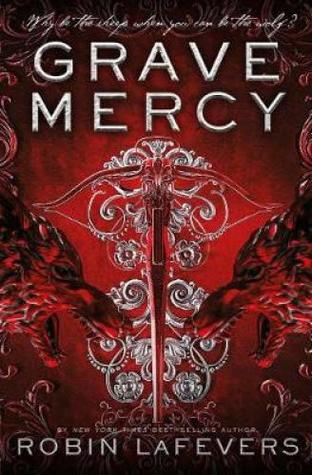
Grave Mercy

Grave Mercy. Robin LaFevers. 2012/2019. Houghton Mifflin Harcourt. 560 pages. [Source: Review copy]

First sentence:
Brittany 1485
I bear a deep red stain that runs from my left shoulder down to my right hip, a trail left by the herbwitch’s poison that my mother used to try to expel me from her womb. That I survived, according to the herbwitch, is no miracle but a sign I have been sired by the god of death himself.
I am told my father flew into a rage and raised his hand to my mother even as she lay weak and bleeding on the birthing bed. Until the herbwitch pointed out to him that if my mother had lain with the god of death, surely He would not stand idly by while my father beat her.
I risk a glance up at my husband-to-be, Guillo, and wonder if my father has told him of my lineage. I am guessing not, for who would pay three silver coins for what I am? Besides, Guillo looks far too placid to know of my true nature. If my father has tricked him, it will not bode well for our union. That we are being married in Guillo’s cottage rather than a church further adds to my unease.
I feel my father’s heavy gaze upon me and look up. The triumph in his eyes frightens me, for if he has triumphed, then I have surely lost in some way I do not yet understand. Even so, I smile, wanting to convince him I am happy—for there is nothing that upsets him more than my happiness.
Premise/plot: I have two words for you: assassin nuns. Of course, our heroine, Ismae isn't a nun in the Catholic church. No, she's in a special nunnery, the nuns live to serve Death whom they call St. Mortain, and she's received very special training. They've taught her to kill, to be an assassin. The nuns are loyal to the Duchess of Brittany, and the victims are often her political enemies--foreign or domestic--those that pose the greatest threat to Brittany's independence.

While we do see her first few jobs carried out, most of the novel focuses on one job in particular. The abbess wants her to team up with Duval, the Duchess' older (half) brother and her most trusted friend and advisor. She's to pose as his mistress, and travel with him to the Duchess' household. There she will "help him" find any possible traitors. He doesn't exactly trust her; he knows exactly what she's capable of, and who she serves. He knows that if given orders, she'd kill him to please her Lord. She doesn't exactly trust him either. Though the marque hasn't appeared on him yet--the special sign or symbol that she sees on her victims before they're killed--she knows that he could be lying to her, that his loyalty to the Duchess could be an act. But both know that it is of the utmost importance to protect the Duchess, and to find any traitors and uncover any conspiracies, if that means working together, so be it. Of course, this means spending a LOT of time with one another...

...the time will come when Ismae must choose who to trust and who to believe...

Politics. Romance. Drama. Dysfunctional Families. Poison. Murder. Betrayal. Mystery. Suspense.


It is set in Brittany in the late 1480s. You can read more about the time period in which this historical novel is set. One of the central characters is Anne of Brittany. Some might feel it is heavy on politics, but, I enjoyed the politics and the tension.

My thoughts: This is my FOURTH time to read Grave Mercy. I love, love, love this one. There is now a fourth book in the series. The first three books have been reissued with new covers in paperback. I plan on rereading all three books before tackling the new book. I am SO excited to reread these. Of course I am looking forward to the newest book as well. 

This one probably won't please every reader. Some may not be able to get past the premise of old or ancient religions continuing to exist under the guise of Christianity. And this one isn't squeaky clean. For those that have no tolerance whatsoever when it comes to sensuality. (I would consider it mild up until the very end when their relationship changes.) But. For those that can, well, this is one COMPELLING read. My favorite character happens to be Duval. I just LOVED him. I did. He was such a swoon-worthy hero!!! And our heroine, Ismae, is quite strong and resourceful. I loved the drama. I loved the history. I loved seeing the court life and family drama play out. I enjoyed the setting, the characters, the writing. It worked really well for me.

Quotes:
"Are you drunk?" I try to put as much scorn into my words as he did.
"No. Yes. Perhaps a little. Definitely not enough." The bleakness is back and he turns to stare into the flames.
I am torn between wanting to leave him to wallow in his despair and wanting to rush to his side and chase that look from his eyes. That I long to do this appalls me, sets panic fluttering against my ribs.
"I suggest you return to your room," Duval says, his gaze still fixed woodenly on the fire. "Unless you have come to practice your lessons of seduction on me?" His mouth twists in bitter amusement. "That could well entertain me till sunrise."
I jerk my head back as if I have been slapped. "No, milord. I had thought only to pray for your soul if Madame Hivern had seen fit to poison you. Nothing more." And with that, I turn and flee the room, then bolt the door against the disturbing glimpse of both his soul and mine. Whatever games are being played here, he is master at them, and I will do well to remember that. (155)
"What is my fair assassin so afraid of? I wonder."
"I'm not afraid."
Duval tilts his head to the side. "No?" He studies me a long moment, then rises out of his chair. I hold my breath as he crosses to my bed. "Are you afraid I will draw closer, perhaps?" His voice is pitched low, little more than a purr. My breath catches in my throat, trapped by something I long to call fear but that doesn't feel like fear at all. (174)
His smile flashes, quick and surprising in the darkness. "When one consorts with assassins, one must expect to dance along the edge of a knife once or twice. I bid you good night." (218)


© 2019 Becky Laney of Becky's Book Reviews

Friday, January 04, 2019

I Survived the Children's Blizzard, 1888

I Survived The Children's Blizzard, 1888 (I Survived #16). Lauren Tarshis. 2018. 144 pages. [Source: Library]

First sentence: A deadly blizzard raged across the prairie, and eleven-year-old John Hale was trapped in a frozen nightmare.

Premise/plot: John Hale is facing his second winter in Dakota territory. It may be his last if he can't outsmart a super-storm.

It may be his second winter, but John Hale still doesn't feel like he belongs there; he still feels like a city boy. (His family was originally from Chicago.) He doesn't have any close friends though that may be because he distances himself from the other students.

Will this storm prove he belongs?

My thoughts: I believe this is the first 'I Survived..." book I've read. Perhaps if I'd read this one in elementary school I would have found it exciting, intense, compelling. Perhaps. Though the fact that it says 'I Survived' right in the title takes away some of the suspense. Readers know that John Hale couldn't possibly die right from the start. Since the suspense element was never really there for me... were there other elements that would lead me to love it? Not really. I liked John Hale well enough. I didn't dislike him. But. He is really the only character that is developed at all. Is it asking too much that at least one other member of his family--perhaps all members of his family--be slightly more developed? More attention is paid to a snake, "King Rattler," than to any member of his family or any of his classmates. Keeping it personal, the more a book includes SNAKE and SNAKE DEVELOPMENT the less likely I am to enjoy it.

I have no other book in the series to compare it to. Perhaps this isn't the best in the series? Perhaps others would be more enjoyable? Perhaps I'm too adult to enjoy these?

© 2019 Becky Laney of Becky's Book Reviews

Wednesday, October 03, 2018

Al Capone Throws Me A Curve

Al Capone Throws Me A Curve. (Al Capone at Alcatraz #4) Gennifer Choldenko. 2018. Random House. 240 pages. [Source: Review copy]

First sentence: Even when you live on a prison island with crafty criminals plotting ways to knock you off, summer is the best time of the year.

Premise/plot: Al Capone Throws Me a Curve is the fourth book in Gennifer Choldenko's series. The first three are  Al Capone Does My Shirts, Al Capone Shines My Shoes and Al Capone Does My Homework.

Moose Flanagan has worries--worries big and small. He's worried about having to "babysit" the warden's daughter, Piper. She's back for the summer, and, if you've read the series you know she is TROUBLE. Whether Piper ever means to get into trouble is up for debate. But Piper and Moose have history. (If you remember, Piper got into BIG, BIG trouble in the last book for circulating counterfeit money.) He's worried about not getting on a baseball team. Scout really wants to play with the older kids--high schoolers, I think?--and he's wanting MOOSE to help him--help them--get on the team. How?! Using his prison connections to celebrity criminals like Al Capone. Moose loves, loves, loves baseball. He does. But he really doesn't like how Scout is always pressuring him about one thing or another. Nothing ever seems enough for Scout. (If Moose didn't live on Alcatraz, would Scout want to be his friend?) Moose is still worried--at times--about his father. After all, it hasn't been all that long since an attempt was made on his life. Will his father be promoted to warden? What will it mean if he is?

But first and foremost Moose is worried about his sister, Natalie. She's turning SEVENTEEN. Their mom may have given up the pretense of her turning ten every year, but, she's far from at peace with Natalie's real age. How does Natalie fit in the real world? How does she fit into their family? How does she fit into their life on the island?

My thoughts: These books are so good. I'm so glad I decided to reread the whole series in preparation for this new one. I came into the book ATTACHED to the characters. For better or worse, reading all the books so close together makes them weightier somehow. I feel like I've been living in Moose's shoes and carrying his burdens.

© 2018 Becky Laney of Becky's Book Reviews

Friday, September 21, 2018

The Grave's A Fine and Private Place

The Grave's A Fine and Private Place. Flavia de Luce #9. Alan Bradley. 2018. 365 pages. [Source: Library]
First sentence: I am on my deathbed. Again.

Premise/plot: The Grave's A Fine and Private Place is the ninth Flavia de Luce mystery novel. Flavia is on a vacation of sorts--a holiday boating trip--when she discovers a dead man floating in the river. She secures a few things from the crime scene--or the body, in this case--and sets to work solving a mystery away from home. She has some help from Dogger along the way. But not everyone she meets in town is prepared for the awesomeness that is Flavia. Not everyone wants the crime to be solved...

My thoughts: I had completely blocked from memory the TRAGEDY that occurred at the end of the last novel. So beginning this one was like discovering it all over again. It was a ROUGH start for that reason. My bad memory is not the author's fault--though I suppose you could blame him for taking the plot in that direction in the first place.

I enjoyed spending time with Flavia for the most part. I wish I'd taken the time to tag the passages that made me smile. Flavia can be quite witty. Some of her jokes fall flat, in my opinion, but overall I do like her.

She IS maturing. I was going to write for better or for worse. But that wouldn't be fair. She's growing up, and no one stays exactly the same. If after eight adventures she hasn't changed at all, then that would be reason for concern. Realistic characters age.

For those new to the series, I would recommend reading them in order. The series is set in England in the early 1950s.

© 2018 Becky Laney of Becky's Book Reviews

Wednesday, September 12, 2018

The Pigeon Needs A Bath

The Pigeon Needs a Bath. Mo Willems. 2014. 40 pages. [Source: Library]

First sentence: Hi! I don't know if you've noticed, but the Pigeon is filthy. So, I could use your help, because: The Pigeon Needs A Bath! (That is a matter of opinion.)

Premise/plot: Does the Pigeon *need* a bath?! Pigeon is going to try his best to convince you, the reader, that he absolutely DOES NOT need a bath. Will this filthy bird ever get in the tub?!

My thoughts: The Pigeon Needs a Bath! is one of those picture books that is practically perfect in every way. Every single page of this one--every word of text, every expression in the illustration--is perfection. It is one of those rare books where you could open it up to any page and find gold at the end of the rainbow.
I don't really need a bath!
I took one last month!
I think it was last month.
"Clean." "Dirty."
They're just words, right?
I feel clean.
Maybe YOU need a bath!
YEAH! When was the last time YOU had a bath?!
Oh. That was pretty recently.
Life is so short. Why waste it on unimportant things?
Like taking a bath!
Text: 5 out of 5
Illustrations: 5 out of 5
Total: 10 out of 10


© 2018 Becky Laney of Becky's Book Reviews

Don't Let the Pigeon Drive the Bus

Don't Let the Pigeon Drive the Bus. Mo Willems. 2003. 40 pages. [Source: Library]

First sentence: Hi! I'm the bus driver. Listen, I've got to leave for a little while, so can you watch things for me until I get back? Thanks. Oh, and remember: DON'T LET THE PIGEON DRIVE THE BUS!

Premise/plot: Don't Let the Pigeon Drive the Bus is the first book in Mo Willem's Pigeon series. Pigeon is Pigeon. To know him is to love him, perhaps?! He addresses readers directly and proceeds to argue! In this one he's trying to persuade you to let him drive the bus.
I'll be your best friend! How 'bout I give you five bucks? What's the big deal!? It's just a bus!!! No fair! I bet your mom would let me. I have dreams, you know! Fine. 
This one earned a Caldecott Honor in 2004.  

My thoughts: Mo Willems is a must-read author. He's created several super-successful series. Pigeon is one of them. Elephant and Piggie is another. I love, love, love, love, crazy-love his Elephant and Piggie series. But I do love Pigeon. I recently read that there will be a new Pigeon book next year!

Text: 4 out of 5
Illustrations: 4 out of 5
Total: 8 out of 10


© 2018 Becky Laney of Becky's Book Reviews

Monday, April 23, 2018

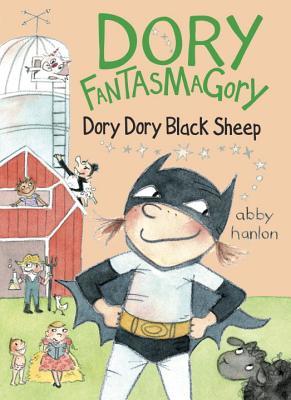
Dory Fantasmagory: Dory Dory Black Sheep

Dory Dory Black Sheep (Dory Fantasmagory #3) Abby Hanlon. 2016. 156 pages. [Source: Library]

First sentence: My name is Dory but everyone calls me Rascal. I am six. I have a lot of freckles. My hair is just messy. This is my nightgown that I try to wear as much as I can. But the most important thing about me is that I have two worlds. One is real and one is imaginary.

Premise/plot: Is Dory the black sheep of her family? Perhaps if you accept the lighthearted definition provided for readers at the beginning of the book: "a member of a family or group who does things a little differently." Dory does things differently. Ask her mom...or teacher...or her older brother, Luke, or her older sister, Violet. (Though her siblings' opinions might be biased!)

Dory does indeed live in two worlds: one real and one imaginary. But she doesn't give equal time and attention to both. In fact, 90% of the time she's in her own world and completely out-of-touch with reality. To use the world miracle lightly and perhaps inappropriately, it's a miracle if Dory stays on task and answers questions when asked.

Because Dory rarely--if ever--stays on task she's having difficulty learning to read. Her reading instruction time at school seems to be completely independent and without much guidance or instruction. Essentially the teacher saying: hey kid, read this book. Dory is paired with a partner, but the partner hasn't any more clue of how to read than Dory does. The teacher doesn't seem concerned with teaching them how to read--the skills and techniques they need to know to progress. Perhaps she just hasn't gotten around to working with their group yet.

Dory doesn't like being in the lowest reading group and being given a basket of "baby books" to read. But when she opens up the book and begins reading the illustrations, well, she supplies a story of her own imagination. A story peopled with her own imaginary friends and characters, and the black sheep of the farm story, well he leaps out of the book and becomes part of Dory's day-in, day-out imagination. Can she get the black sheep back in the book? Does she want to?

Her friends soon get swept up, up, and away with this new story. Even her friend who is able to read LONG chapter books all on her own. Dory's story is more exciting perhaps. 

This is Dory's third adventure. (I reviewed the first chapter book in the series in 2015. And here's my review of the second book in the series.)

My thoughts: One thing is delightful for sure: the illustrations. I LOVE, LOVE, LOVE the illustrations.

 I wanted to love, love, love this one. I didn't quite. Perhaps because I had a hard time NOT taking it seriously. Instead of getting swept up, up, and away by Dory's overactive imagination and delighting in her creative, free spirit, I kept thinking that her mom and her teacher weren't really giving Dory the attention she needed.

Learning to read is important, significant, life-changing. It isn't a cookie cutter process. And every child has his or her own timeframe for learning to read or becoming a fluent reader. There isn't one perfectly-perfect right way to teach reading. But I do think it is something that requires instruction. You just can't leave a child with a basket of books and hope for the best.
We pretend we are reading until she leaves. "If I was the farmer, I would just eat all the animals," whispers George. "If I was the farmer, I would move to the city and get an apartment with an elevator, I say. "If I was the farmer, I would run around naked and put mud all over my body and then stick things to it," says George. "But you would do that anyway," I say. "Yeah..." he says. 
"This little black sheep is kind of cute." I show George the picture. "And he's looking at you," George says. "What do you mean?" I say, and hold the book up closer. "I think his name is Goblin," I say. "Does it say that?" George asks. "I don't know," I say. "I can't read." "Raise your hand if you hate reading!" says George. And we both raise our hands high in the air.
Parenting Dory would be DIFFICULT to say the least. I don't envy her mom the task. But I get the idea that reading aloud to Dory wasn't ever a high priority to her. Perhaps Dory protested every time she tried. Perhaps the struggle wasn't worth it. Perhaps she was busy helping the older children with their homework. Perhaps Dory was so amazing at entertaining herself that she didn't want to interrupt her play, her free time. Perhaps she thinks teaching reading is the teacher's responsibility alone.

But Dory's homework of reading for a certain amount each day is completely independent. Her mom doesn't sit down with her, doesn't listen to her daughter read aloud, doesn't ask her questions about her reading, doesn't witness if her daughter is reading or not. So essentially there are no adults in her life that know Dory is struggling with reading. Dory seems to be all on her own, expected to make progress without any help, encouragement, or instruction.

Does Dory want to learn to read? Yes. Does she stay on task when left on her own to practice? Not really.

The book is cheerful. Dory, for the most part, is happy, happy, happy nearly all the time. She has her real friends and her imaginary friends to keep her company 24/7. Her imagination is over-the-top delightful. And I think Dory is content to make up her own stories instead of reading stories from a book. Her stories seem to be packed more with adventure and excitement.

Dory is a fictional character. I need to keep this in mind. Dory's over-the-top IMAGINATION has the potential to enchant young readers, to make them really excited about reading. Engaging real readers--real children--is more important than a technical behind-the-scenes guide for adults in how to teach children how to read. 

The writing is fun.

Quotes:
But before I get dressed, I have to wake up Mary. Lately, I've had to wake her up with a pan in my hand so she knows I really mean it. She's gotten super lazy now that she stays home when I'm at school. 
Rosabelle has a big thick chapter book in her lap. She looks up and sees me running toward her. We take turns picking each other up. It's like hugging, but more dangerous. 


© 2018 Becky Laney of Becky's Book Reviews