Showing posts with label Historical Fiction. Show all posts

Wednesday, August 12, 2026

60. A Mismatch Made in London


60. A Mismatch Made in London. Melanie Dickerson. 2026. 304 pages. [Source: Library] [5 stars, historical romance, clean romance]

First sentence: I concentrated on putting the finishing touch of red paint on the paper soldier I was making for Matthew.

Premise/plot: Amelia Moore is the oldest daughter of a large family. She's been invited by her aunt and uncle to spend time with them in London for the season in the hopes of making a match and securing her future. Her family isn't poor or destitute, but, there are a LOT of them. After being called a country bumpkin essentially, Amelia gets emotional and is saved by the super, super sweet Juliet Beaumont. The two become friendly--quite friendly. But her brother, Jeremy, who is the "catch of the season" allegedly, has his doubts on Amelia's motives. Did she seek out his sister so that she could spend time with HIM. She is insulted by this insinuation, but, she is the forgiving sort. Jeremy may not be friend material BUT Juliet is sweet and lovely. Being in London is great fun with a good friend by your side. As the two navigate the season--both young and inexperienced in the ways of the world--they will face challenges...and a possible scandal or two.

A Mismatch Made in London is set in England in 1811 during the Regency period. It is a clean romance though there is mention of more adult things. Juliet makes an unwise decision and ends up in danger. I think this was handled well and is realistic. Chaperones were necessary for a reason. But I love that Juliet's closest reassure her she did absolutely nothing wrong to deserve it.

My thoughts: I LOVE, LOVE, LOVE, LOVE, LOVE this one. I didn't like Melanie Dickerson's other historical romance that I read earlier this year inspired by Jane Eyre, but, this one was FABULOUS. It is inspired by Pride and Prejudice AND Northanger Abbey. AND it features the tropes romance with best friend's brother AND enemies to lovers.

I enjoyed all of the characters--particularly Juliet, Amelia, and Jeremy. I loved that Amelia didn't forget her family--her brothers and sisters. She was always thinking of her family. She wasn't swept up and away by city life. And it felt natural. There aren't a lot of side characters, but, the three main characters are well fleshed.

It is technically Christian fiction. BUT I would say it's light, mild. I would say it is more "clean romance" than Christian romance with the intent to share the gospel. It's more like "forgiveness is good" and "be kind to others."


© 2026 Becky Laney of Becky's Book Reviews

Wednesday, August 05, 2026

54. The Good Fortune of Miss Robbins


54. The Good Fortune of Miss Robbins. Melanie Dickerson. 320 pages. [Source: Library] [3 stars, clean romance, historical romance, Jane Eyre wannabe]

First sentence: "Charlotte! A letter came for you!" Hattie Jacobs emerged from the back entrance of Mrs. Southey's School for Young Ladies, waving something over her head.

Premise/plot: Charlotte Robbins, our protagonist, is incredibly excited to start a new chapter of her life as a governess to an earl's niece and nephew. Lord Brookhaven is extremely friendly and sociable from their first meeting. Charlotte was hoping to find love in this new chapter as well though she knows that it couldn't possibly be with the earl himself. But surely there's someone about with whom she could find a happily ever after. BUT when Charlotte is included in Lord Brookhaven's social calendar--a house party--she begins to realize she is in fact falling for the earl. AT the same time, he begins to realize he is falling in love with her. But, dear readers, we are barely a fifth of the way through the novel. Readers still have a couple hundred pages to go before the incredibly obvious and tedious misunderstandings can be cleared up in three or four minutes of conversation.

My thoughts: The book wants to be Jane Eyre without being Jane Eyre. They've upgraded Mr. Rochester to an EARL. They've removed the hidden wife in the attic. Simply not acceptable to have a MARRIED MAN falling in love with another woman, proposing, or trying to marry again unlawfully. They have tried to make the story a little more Charles Dickens...introducing TWO ORPHAN CHILDREN that must be saved and rescued. Charlotte does "inherit" but not from an uncle she's never met--but from an imaginary uncle created by the earl as a guise. This money from an "uncle" (wink, wink) sets her up in London, brings two street orphans into her life, and makes her the catch of the season. As marriage proposals abound, Charlotte is unhappy because Lord Brookhaven is keeping his distance. The truth comes out...and she's livid. And then the nonsense continues because of course it does. Eventually these two have an honest conversation and when he proposes she accepts.

It is published by a CHRISTIAN publisher. There is little to no Christian content. There is 800% more Christian content in the original novel Jane Eyre than in this book. The "improvements" to the story are not really improvements in my opinion.


© 2026 Becky Laney of Becky's Book Reviews

Saturday, April 04, 2026

31. Scarlett


31. Scarlett. Alexandra Ripley. 1991. 884 pages. [Source: Library] [2 stars, historical fiction, sequel, adult fiction, adult romance]

Dear Future Self:

You may have just finished reading Gone With The Wind. You might possibly be wanting just a little bit more to the story. STOP. Don't do it. Don't. I promised to leave myself clues so that I won't reread it again.

First sentence: This will be over soon, and then I can go home to Tara.

Premise/plot: Scarlett O'Hara Hamilton Kennedy Butler loves, loves, loves, loves Rhett Butler. He, however, has stopped giving a damn. Or so he claims. This is the 'sequel' to Gone With The Wind. It covers roughly six to eight years. (That is it covers no more than eight, by my reckoning, and possibly as few as six.) It opens with the funeral of Melanie Wilkes. It ends, well, with much rejoicing on the part of this reader because it is OVER at last.

My thoughts: I first read Scarlett when it released. I was in junior high, I believe. I was excited. I was thrilled. I was eager. I can't remember if I was disappointed, angry, or frustrated....or confused. Probably one of the above.

Does Gone With The Wind need a sequel?

My "no" argument: Margaret Mitchell wrote the LAST chapter of Gone With the Wind FIRST. This was the destination all along. This wasn't an oops. If she'd changed her mind on the ending at any point while she was writing the book, she could have changed the ending. When she saw the success of the book, she could have begun drafting a sequel, talking of a sequel, making plans. From what I remember of the biographies I've read, she did not in any way want or desire a sequel.

My "yes" argument: While the book doesn't "need" a sequel. There's certainly enough life in the characters to allow for creative play.

What I would perhaps STILL like to see is a collection of SHORT STORIES or SHORT NOVELLAS written by a dozen or so authors--perhaps more but not less--that allow for more of the story to unfold. Each author working independently could put their spin on the question WILL SCARLETT O'HARA get Rhett Butler back. What will happen next to Scarlett? What about Rhett? Will he get HIS happily ever after even if that means saying NO to Scarlett forever? At what cost do we want a happy ending if their relationship is toxic?

It might also be AWESOME if an author were to approach the story from decades later. Perhaps told from the point of view of one of Scarlett's children or grandchildren.

Is there anything in Scarlett that works?

I honestly didn't hate the opening chapters. I didn't love, love, love them mind you. But I didn't hate them.

Scarlett reacted just like Scarlett at Melanie's funeral. She's newly discovered that she does in fact love Melanie Wilkes. That Melanie Wilkes was an incredible, incredible woman. But no one--except Rhett--knows of this change of heart. The town has long been skeptic--almost openly hostile--towards Scarlett. She associates with all the wrong people. She was caught alone with Ashley--hugging, nearly an embrace. She doesn't care about what they care about. Melanie interceded standing between Scarlett and polite society. Atlanta was torn between wanting to support Melanie AND despising Scarlett. Now that Melanie has died, Scarlett stands alone. And so being Scarlett, being a proud woman, she accepts standing alone and doesn't want to show her weakness, how broken she feels on the inside. When Ashley plays the fool at the graveside, Scarlett being EVER PRACTICAL acts purely on common sense alone. This will cost her.

Scarlett returning to Tara makes complete and total sense. She returns to Tara just in time to witness Mammy's final days--perhaps weeks. She returned too late to say goodbye to her mother, but, she arrives in plenty of time to say goodbye to Mammy. It isn't simple. Scarlett stays by her bedside night and day, day and night. Barely taking care of herself. She is devoted completely and selflessly caring for her.

I liked Scarlett visiting with some of the country folks--the ones that we especially got to know during the hardest days of the war and directly after. The Fontaines. The Tarletons. Etc.

Rhett returning for Mammy's funeral and lying to her also makes complete sense. Those two had an understanding after bonding after Bonnie's death.

When Scarlett returns to Atlanta because Tara isn't really big enough to live with her sister, Suellen and Will and their kids as well as her first two kids, Wade and Ella, that makes sense as well. Scarlett thinks that Rhett will 'have' to visit Atlanta a few times a year at least to keep up appearances. Atlanta is where her store is, it's where her big fancy house is. She thinks that even if folks don't 'like' her they'll keep on accepting her. She's never been 'cut' by society before. Hated and despised, yes, still invited to all the things, yes. Scarlett reveals that she is still trying to make herself happy with stuff, stuff, and more stuff. She's looking for happiness in all the wrong ways. She's turning to alcohol. She's turning to easy friends that she can buy. However she is also LOOKING to keep her promise to Melanie. And the few interactions we have between India and Scarlett seem true to both women. There is HATE, a hard, rigid HATE that loathes. Scarlett's conversations with Uncle Henry are among my favorite in the book. (That's not saying too much. But it is something).

Scarlett does not stay in Atlanta. Though she might stay in Atlanta for most of a year. At least six months or so. She next goes off in pursuit of Rhett. She goes to Charleston to visit her aunts. (Though I'm still not sure if her aunts were from Charleston or Savannah. Or maybe they divide their time between both????) She isn't with them for a day before she gets herself invited to stay with her mother-in-law. She is welcomed by some of Rhett's immediate family, though others have their doubts. She is introduced to everybody in Charleston. But she has to play a role. Scarlett is absolutely excellent at playing a role. She can even play a role for long stretches of time--months and months. Here she is playing the role of devoted wife who is eager to learn everything about Charleston and make it her forever and ever home. So if that means learning about all the kinds of seafood, then she'll go to market and learn all the best secrets for picking seafood. Rhett is angry, frustrated, confused. But he can't treat Scarlett as he wants because he values his mother too much. So they play pretend. They officially agree to play pretend. Scarlett thinks that if she can get Rhett interested in her again, game over. They'll play happy couple for 'the season' and then she'll go back to Atlanta, or if not Atlanta, anywhere but there.

It is only when their lives are in great danger that Rhett gives into his lust for Scarlett. She assumes this means happily ever after. But this is not to be. Why is this not to be? There are eight million pages left. I jest somewhat.

Scarlett writes a LETTER to Rhett. Rhett does not get the letter. Why? Because his sister decides Rhett deserves better than Scarlett, that Scarlett is TRASH, and so she destroys the letter. This, of course, introduces miscommunication to novel that should be much, much, much shorter.

Scarlett next goes to visit her grandfather--I think in Savannah. I think her aunts are there too. She also visits her uncles and cousins on the O'Hara sides. Her grandfather recognizes something special in her, I believe. I don't know for sure, but I might have preferred the novel IF she'd settled in Savannah and made a new life for herself there. Anything is better than what happens next.

What doesn't work in Scarlett?

Scarlett meets her uncles and cousins and more cousins and more cousins. She's persuaded to take a "short" trip to Ireland--a few weeks--to meet her grandmother. (Gerald's mother). Well, to meet all her relatives. Why do they want to take her to Ireland???? Good question. No one knows. There's no true reason for Scarlett to go anywhere near Ireland. On board the ship, I believe, she discovers that she's pregnant. Does she send word to Rhett? NO. Does she send word to anybody? No. Does she decide to keep it a secret for a few more weeks or months? Yes. It isn't much after that--maybe a few weeks? a month or two? when she hears that RHETT has divorced her. She makes immediate plans to return. She has to tell him about the baby, right?!?!?! But before she leaves Ireland to return to the States, she hears that Rhett has MARRIED AGAIN. I believe she stays in Ireland? Or she might make the shortest of trips back to the States?

Regardless, readers are stuck with Scarlett staying in Ireland for six or so more years. She doesn't just stay in Ireland, mind you, she makes occasional trips about. She meets dozens of people. Are we supposed to care about these people? Maybe. And maybe some readers do. But I found it tedious to have Scarlett coming of age in Ireland. She'll spend a few months LOVING physical labor, working in the fields, the gardens, building the place up, restoring. She's got the role of peasant down wonderfully. She's one with the people. She's in solidarity with them. Earning their like for a bit. BUT when Scarlett's baby is born on Halloween, it's the beginning of the end. The folks just won't accept that Scarlett's baby isn't a witch. Is this logical? No. Of course not. Scarlett moves on from playing the  O'Hara and becomes utterly fascinated by horse racing and the English nobility. Or perhaps the Irish and English nobility? Anyway, she decides she likes rich people stuff again. How could she be happy just working the land when she could be going to all the house parties and meeting all the rich men???

Rhett Butler begins popping up here and there in Scarlett's new world. Maybe Rhett has always been interested in horse racing in England and Ireland? Maybe he is coming because she's there?

Scarlett has an affair with a British soldier. Charles something-or-other, I think. It's weird. It's awkward. She's using him. But to be fair, he doesn't mind at all.

Scarlett gets engaged to some noble. A count? A lord? Somebody. His characterization is thin at best. But again, readers know he won't matter even slightly. We do know that he cares a little too much about Kat (or Cat?) Scarlett's daughter. He thinks Scarlett will give him a son. (She can't.) And he wants it to be feisty and independent like Cat (Kat?). Though will he really want a son that he can't dominate??? I have questions.

Meanwhile, after a famine or drought, the peasants have gone on strike and have turned against everybody. EVERYBODY. Anybody with money is an enemy. Is this oversimplifying it???? Yes. Is it complex in the book? Maybe slightly more than I am giving it credit for. Is it still mostly shallow? YES.

Meanwhile, for the past five or six hundred pages, Scarlett has been having 'revelations' about how life and how to live. But they seem to be more fads than character changes. THAT BEING SAID, Scarlett does seem to have learned to love another human being more than herself. True, she hasn't learned to love more than one person more than herself. But for Cat (Kat?) she does seem to be selflessly inclined to put her daughter first.

Does Scarlett ever think about Wade and Ella? No. No. NEVER. She wouldn't dare feel maternal towards her other children. After taking up a LOT of text about how Scarlett has learned that she will NEVER EVER EVER EVER put Kat (Cat?) in a box and make her do anything she doesn't want to do, never try to shape her into being someone else, of following rules and fitting into society, she has the audacity to lecture Wade about WHO he has to be. Scarlett who has never valued education in the slightest is SHOCKED that Wade refuses to go to college. He must, he must, he must. Why? No one knows. It takes up more pages. Eventually, Will persuades her to let Wade be Wade and stay a farmer at Tara. Ella, well, poor thing she might get five mentions in the entire novel. Though that might be generous. Scarlett does not care even slightly for Wade and Ella.

Does Scarlett fight to maintain friendships? No. IF she's disappointed by a person, then that's it--mostly. She's not able to accept complex people with complex relationships. That being said, I found almost all her cousins annoying too. I don't blame Scarlett for being upset with the main person she's upset with. HE repeatedly lies to her, tricks her, uses her. His lies outweigh his truth.

The ending. Well, it ends. After eight million pages of NOTHING, it ends.

My main problem with the book is that it could have been a book around three hundred pages and it would have been decent. Not great perhaps but it could have been decent. I think the author WANTED a book as long as Gone with the Wind. But Gone with the Wind has PLOT, STORY, CHARACTERS. It has substance and depth. It has complexity. It has moral complexity. It has life. It was well-researched. It lives. Scarlett--the sequel--is SHALLOW and obnoxiously long.


© 2026 Becky Laney of Becky's Book Reviews

Friday, March 06, 2026

28. To Kill a Mockingbird


28. To Kill A Mockingbird. Harper Lee. 1960. 281 pages. [Source: Library][Audiobook, 5 stars, classic, coming of age]

First sentence: When he was nearly thirteen, my brother Jem got his arm badly broken at the elbow.

To Kill A Mockingbird is one of my favorite, favorite books. I love, love, love the movie. And I adore the book as well. It's a simple novel rich in truth. I love the narrative voice of Scout. I think Scout is one of the most memorable narrators ever.

One of the things that I think makes the book work so well is how it is able to be serious and dramatic AND comical. It captures the little every-day moments so well. Family relationships. Community relationships. Nosy neighbors or spooky ones. A good balance of summer-time freedom and the structure of school. It's definitely one of the best coming-of-age stories. At the same time, it is a very honest examination of racism and injustice.

To Kill A Mockingbird has a great, compelling story to tell. And Harper Lee knew how to tell a story. But it isn't the story alone that is unforgettable: it is the characters. Such characterization!!! Such depth!!! Who could not love Scout, Jem, and Atticus?! Who could not love Calpurnia, Dill,  Miss Maudie, and Boo Radley?!

I first reviewed it in October 2007. I also reviewed it in August 2010.

Favorite quotes:
Until I feared I would lose it, I never loved to read. One does not love breathing. (18)
"First of all," he said, "if you can learn a simple trick, Scout, you'll get along a lot better with all kinds of folks. You never really understand a person until you consider things from his point of view--"
"Sir?"
"--until you climb into his skin and walk around in it." (30)
"If you shouldn't be defendin' him, then why are you doin' it?"
"For a number of reasons," said Atticus. "The main one is, if I didn't I couldn't hold up my head in town, I couldn't represent the county in the legislature, I couldn't even tell you or Jem not to do something again."
"You mean if you didn't defend that man, Jem and me wouldn't have to mind you any more?"
"That's about right."
"Why?"
"Because I could never ask you to mind me again. Scout, simply by the nature of the work, every lawyer gets at least once in his lifetime that affects him personally. This one's mine, I guess. You might hear some ugly talk about it at school, but do one thing for me if you will: you just hold your head high and keep those fists down. No matter what anybody says to you, don't you let 'em get your goat. Try fighting with your head for a change...it's a good one even if does resist learning. (76)
Atticus said to Jem one day, "I'd rather you shot at tin cans in the back yard, but I know you'll go after birds. Shoot all the bluejays you want, if you can hit 'em, but remember it's a sin to kill a mockingbird."
That was the only time I ever heard Atticus say it was a sin to do something, and I asked Miss Maudie about it.
"Your father's right," she said. "Mockinbirds don't do one thing but make music for us to enjoy. They don't eat up people's gardens, don't nest in corncribs, they don't do one thing but sing their hearts out for us. That's why it's a sin to kill a mockingbird. (90)
It's when you know you're licked before you begin but you begin anyway and you see it through no matter what. You rarely win, but sometimes you do. (112)
In Maycomb County, it was easy to tell when someone bathed regularly, as opposed to yearly lavations: Mr. Ewell had a scalded look; as if an overnight soaking had deprived him of protective layers of dirt, his skin appeared to be sensitive to the elements. Mayella looked as if she tried to keep clean, and I was reminded of the row of red geraniums in the Ewell yard. (179)
"How could they do it, how could they?"
"I don't know, but they did it. They've done it before and they did it tonight and they'll do it again and when they do it--seems that only children weep. Good night." (213)


© 2026 Becky Laney of Becky's Book Reviews

Wednesday, January 21, 2026

8. By the Shores of Silver Lake


8. By the Shores of Silver Lake. Laura Ingalls Wilder. 1939. 290 pages. [Source: Library] [audiobook, j historical fiction, series book]

First sentence: Laura was washing the dishes one morning when old Jack, lying in the sunshine on the doorstep, growled to tell her that someone was coming. She looked out, and saw a buggy crossing the gravelly ford of Plum Creek. "Ma," she said, "it's a strange woman coming."

By the Shores of Silver Lake is one of five Newbery Honors that Laura Ingalls Wilder received for her historical fiction "Little House" series. (For those that are curious: 1938 for On the Banks of Plum Creek; 1940 for By the Shores of Silver Lake; 1941 for The Long Winter; 1942 for Little Town on the Prairie; 1944 for These Happy Golden Years).

The novel takes the Ingalls family into South Dakota around DeSmet where the rest of the series is set.

As a child, By The Shores of Silver Lake wasn't my favorite of the series. I blame Jack's death for that. But as an adult, I've come to appreciate By The Shores of Silver Lake more, seeing it as more than just a transition between On the Banks of Plum Creek and The Long Winter.

In By the Shores of Silver Lake:
  • Mary goes blind, Laura is "asked" to be her eyes
  • Pa is offered a new job, a job with the railroad, which he takes
  • He goes by wagon, Jack dies BEFORE Pa's departure
  • The rest of the family travels most of the way by train
  • They continue the rest of their journey (a day or two or three) by wagon
  • They settle in for a while, Pa talks about the claim he hopes to claim later that year or whenever his job is finished and he's able to go out seeking a claim of his own
  • Pa's job isn't always safe; he's the paymaster for the railroad, and he has to calm down an angry mob in this one.
  • They meet the Boast family
  • They spend the winter in the 'biggest' house Laura has ever lived in
  • Winter may be lonely (no neighbors, no town) but the spring will see plenty of people come and go. EVERYONE stops at their house on their way west
  • The family learns that there is a school for the blind, they all decide Mary should go there.
  • The family decides to claim land near De Smet, South Dakota
  • Laura catches the tiniest glimpse of Almanzo Wilder's horses
I definitely am enjoying rereading these books. By The Shores of Silver Lake may not be my favorite of the series, but, I'm glad I reread it.

© 2026 Becky Laney of Becky's Book Reviews

Thursday, October 23, 2025

112. Mrs. Porter Calling


112. Mrs. Porter Calling. AJ Pearce. 2023. 313 pages. [Source: Review copy] [adult historical fiction, world war II, 3 stars]

First sentence: Margaret and I had been tap-dancing in the garden for nearly twenty minutes, and I was beginning to feel the strain. It was a Sunday afternoon in April and we were celebrating my twenty-fifth birthday. On current performance I was beginning to show my age.

Premise/plot: Mrs. Porter Calling is the third novel in the Emmy Lake Chronicles by AJ Pearce. All the books in the series are set during the Second World War in London, England. The books are as follows: Dear Mrs. Bird, Yours Cheerfully, Mrs. Porter Calling, and Dear Miss Lake. (Dear Miss Lake is the fourth book; I haven't started reading it yet!)

Emmy Lake, our heroine is a journalist doing her part for the war effort. Her role for the woman's magazine is being its advice columnist. Mrs. Porter the new publisher of the magazine--she inherited it from her uncle, I believe, wants to remake the magazine in her own image with no regard for what the readers want or if there is an audience for her own vision of the magazine. After failing and getting frustrated, Mrs. Porter is determined to sell the magazine. Can the magazine be saved? Can Emmy and her friends save it?

My thoughts: I do like this one more than the second novel in the series. I am looking forward to reading the fourth book in the series. I think I would have enjoyed it more if I'd read the novels closer together. It's been YEARS since I read the first two books in the series.


© 2025 Becky Laney of Becky's Book Reviews

Monday, April 21, 2025

41. Rebellion 1776

41. Rebellion 1776. Laurie Halse Anderson. 2025. 405 pages. [Source: Library] [YA historical; MG historical, 4 stars]

First sentence:  "Take away this puke bucket, girl, and bring me a clean one!"

Premise/plot: Laurie Halse Anderson's newest book is historical fiction--set during the American Revolution--in the city of Boston, Massachusetts. Elsbeth Culpepper, our heroine, is a maid. Her mother is dead; her father is otherwise occupied and it is not a bit unusual, I believe, for young adults to be either hired out or apprenticed out. Her current employer--a Loyalist--flees the city leaving Elsbeth scrambling to find a new job or perhaps a new employer in the same home. She finds work--again as a maid, but essentially all-servants-in-one maid--this time for the Pike family. But there's not much time for relaxation when there's a small pox epidemic in town....and your employer has seven children! 

My thoughts: I enjoyed this one. I did. This isn't my first book to read on a) small pox and b) the Revolution war c) inoculations controversy. Though it has been a while since I've read up on this particular sub-sub-sub genre. It was a good read. It is the kind of historical fiction I like. The type that immerses you in the time and doesn't try to manipulate the past into an indoctrinating sermon for today. Those tend to be both a) obnoxious and b) dated.

I am torn between four and five stars. I am. I found it a compelling read. I enjoyed the depth of the characters. I thought it did really well in world-building for this historical time period. There were some great relationships explored. I'm just not absolutely convinced that it is one I would want to read again and again. (Which is almost how I determine five star reads.) Still I would definitely recommend this one. And I might revisit the rating at some point.


© 2025 Becky Laney of Becky's Book Reviews

Tuesday, September 24, 2024

74. Pearl

74. Pearl. Sherri L. Smith. Illustrated by Christine Norrie. 2024. 144 pages. [Source: Library] [Graphic novel, historical fiction, coming of age, world war II] [4 stars]

First sentence: My great-grandmother was an ama, a pearl diver from the shores of Honshu in Japan. I loved the stories my family would tell about her. Of mermaids and pirates and cities underwater...and the pearl she found when she was a girl--it was round and perfect, the size of her fist. I knew the stories were only half true, but I loved them just the same.

Premise/plot: Amy, our heroine, was born and raised in Hawaii to Japanese-American parents. When her great-grandmother becomes ill--thought to be dying--her family sends her in their place. Then Pearl Harbor happens and it changes everything. Amy finds herself 'stuck' in a country that "her" country is at war with. But as she spends the war years growing up in Japan with her family, she struggles with the idea of home. Which country feels more like home? Where does she belong? Can she be both Japanese and American? Can she forgive America for dropping nuclear bombs on Japan? 

My thoughts: This one is a HISTORICAL, coming-of-age story set mainly in Japan during the Second World War and its immediate aftermath. It is told in graphic novel format. It is told primarily in blue, black, gray, white. I didn't love that jacket flap description of the book and the author and illustration information was blue ink on black background. Fortunately the graphic novel itself was more accessible.


© 2024 Becky Laney of Becky's Book Reviews

Tuesday, February 06, 2024

17. The Frozen River


The Frozen River. Ariel Lawhon. 2023. [December] 432 pages. [Source: Library] [adult historical fiction]

First sentence: The body floats downstream. But it is late November, and the Kennebec River is starting to freeze, large chunks of ice swirling and tumbling through the water, collecting in mounds while clear, cold fingers of ice stretch out from either bank, reaching into the current, grabbing hold of all that passes by. 

Premise/plot: Martha Ballard, a midwife, witnesses much in her community. She often ends up testifying in court sharing her observations and notes. IN The Frozen River, she is struggling with the injustice of it all. A local woman has been gang-assaulted while her husband was away; she's identified the men involved. Martha visited her days later and can testify to her physical and emotional state. But despite both being willing to testify in court--despite the horrendous nature of the crimes--justice seems unlikely within the system at least. One of the perpetrators is the dead man found in the frozen river. The second, well, he holds a position of power. 

The novel chronicles about a year of time, I believe. Much happens within the community. 

My thoughts: The novel is loosely based on a historical figure. This is not the first book about Martha Ballard, a real midwife in early America. The author details how much she changed, rearranged, condensed, and reimagined for her novel. 

This one was LONG. It is definitely more of a journey than a destination, in my opinion. In other words, IF you start the novel and are drawn into the story by the characters, keep reading you'll likely enjoy the book as a whole. I personally would have preferred fewer flashbacks. Flashing back to Martha's past did nothing for me. None of the flashbacks seemed to move the present story forward.


© 2024 Becky Laney of Becky's Book Reviews

Monday, October 16, 2023

174. The Queen and the Knave


The Queen and the Knave (Dread Penny Society #5) Sarah M. Eden. 2023. 368 pages. [Source: Review copy] [adult historical romance]

First sentence: Moirin Donnelly had been called a great many things in her twenty-seven years, but "naive" was not one of them.

Premise/plot: The Queen and the Knave is the final book in the Dread Penny Society clean romance series set in Victorian England. I've read, reviewed, and loved them all. Each novel stars its own heroine (and romantic hero), but characters from ALL the book series are present and part of the continuing story. The novels also include penny dreadful novellas written from the fictional characters. 

This one is all about the SHOW DOWN between the good guys and the bad guys. In many ways, all the books have been leading up to this big show down... This one is more action-based than previous ones. 

My thoughts: I really enjoyed reading this one. I have always looked forward to reading the new book in the series each year. I do think the series resolved well. I wish I had time to reread the whole series and revisit all the couples.

I would recommend if you enjoy [clean] historical romance novels with some mystery and suspense.


© 2023 Becky Laney of Becky's Book Reviews

Thursday, August 17, 2023

144. Thee, Hannah!


Thee, Hannah! Marguerite de Angeli. 1940. 98 pages. [Source: Library] [children's classic; j fiction]

First sentence: Hannah stopped talking for a moment to listen to the night watch cry out the time. She heard the cry again, going on down the block, "Nine o'clock," and went on talking. 

My thoughts, part one: Thee, Hannah may have the dimensions of a picture book, but it is not a picture book. It is not an early chapter book. Yes, it has illustrations--occasionally--but consider it more a novel in a very odd format.

Premise/plot: Hannah, our heroine, is a Quaker. Hannah spends most of the novel feeling out of sorts about that. Why can't she dress like others? Why can't she talk like others? Why can't she be more like others? She isn't necessarily questioning faith--just how that faith is lived out. And not questioning in a twentieth-century or twenty-first century way. Hannah is not deconstructing. She's just wanting to wear a different kind of bonnet, a bonnet more like her friends wear. She dreams about owning a red dress, for example. Or having a sash like her friend has. The book doesn't have much of a plot--not really. It's just Hannah being Hannah day after day, week after week, month after month. It does offer a glimpse of the Quaker way of life in the nineteenth century. But is that a plot? Maybe. Maybe not. The most eventful event of the novel is when Hannah helps a runaway slave. (Her family--like many Quakers--were part of the underground railroad). 

My thoughts: I like historical fiction, generally. I like classics, mostly. I wasn't expecting this to be so text-heavy because of the [deceptive] picture book format. Maybe this was not an unusual format or layout in 1940. The novel is definitely a quiet, simple book. Definitely character driven and not plot-driven. Will the novel be easy to sell to children in 2023? I doubt it. I think the book could still be enjoyed by readers of various ages, but it will be a special reader that will be the best match. 

I do think that religion and spirituality are rarely tackled in modern writing and publishing. So it was nice that faith was so matter-of-fact in this story.


© 2023 Becky Laney of Becky's Book Reviews

Friday, July 14, 2023

132. The Spectacular


The Spectacular. Fiona Davis. 2023. [June] 368 pages. [Source: Library]

First sentence: I still dance in my dreams. But not in my life. In my life, I shuffle around this too-large house, tossing whatever is within reach into the nearest cardboard box, not bothering to wrap anything in newspaper or to make sure the box labeled living room actually contains items from the living room.

Premise/plot: Historical fiction set in New York City in the 1950s. This historical novel has a framework. It is set in 1992--December--and in 1956. Marion, the protagonist, is a dancer who auditions and becomes a Rockette at Radio City Music Hall. Her father (and boyfriend) object strongly. She defies them both and goes for her dream anyway. Her sister, unfortunately, gets caught up in the drama. During one of the shows, her sister is the victim of a mad bomber. (A bomb left in the seat next to her). Marion catches sight of this "Big Apple Bomber" who has been setting off bombs for over fifteen years--since the early 1940s. The police don't take her eyewitness account seriously. But Marion is convinced that she can help solve this case--with or without the support of the police. She recruits a psychologist who is experimenting with something brand new--psychological profiling. Can they profile the type of man likely to commit these crimes and give the police an idea of who to look for?

My thoughts: Do not expect romance. Do expect drama. I enjoyed the mystery. I'm not sure I support the ways in which Marion and Peter (the psychologist) went about solving the crime. I could be wrong, but the way they "gather evidence" seems to violate all the rules and guidelines for what would be admissible in a court of law. (That is not addressed. And what do I know for sure about 1950s New York police departments or the court systems?)


© 2023 Becky Laney of Becky's Book Reviews

Thursday, June 08, 2023

113. Strangers in the Night


Strangers in the Night. Heather Webb. 2023. 432 pages. [Source: Library] [Adults]

First sentence: Every important moment of my life could be measured in notes and captured by a song. That was never truer than the first night I saw her across the room, belonging to someone else.

Premise/plot: Historical fiction starring Frank Sinatra and Ava Gardner. Historical romance [of the graphic sort] starring Frank Sinatra and Ava Gardner. It roughly begins circa 1946. (I say roughly because the prologue is undated.) It follows the "tragic" "star-crossed" lovers across several decades and around the globe. He was a global singing star AND a movie star. She was a movie star. Together they were one hot mess.

My thoughts: Is the book flattering to Frank? Not really--in my own personal opinion. Is the book flattering to Ava? Again, not really--in my own opinion. I do think the book was meant to be flattering to both. I get the impression that the author enjoyed [greatly appreciated] both personalities--flaws and all. I think the "tragic romance" element was supposed to hook readers into sympathizing with these lovers. Was I sympathetic to Frank and Ava as a couple? NO! I thought together they were obviously extremely toxic. Individually, I think there was some toxicity. I will say that I never got the impression that it was all his fault or all her fault. I think they as individuals made repeated bad decisions. There were things he did that I would find unforgivable. There were things she did that I would find unforgivable. 

I do wish that this one had been CLEARER about dates. Each "part" was given a range of years. The first part covers three or four years. That's not so bad, I suppose. But other sections cover DECADES. And there's no specific years mentioned at all. Like "1950 to 1966" or "1966 to 1990." And HOW is that even remotely helpful???? I think the book would have been greatly improved if there were more connections to specific times--dates, months, years, events.

There were some movies mentioned for each. There were a few songs and/or albums mentioned for him. If it had been more historical fiction and less graphic romance novel, perhaps it would have done a better job doing tribute to the life and times. I do think the potential is there to tell great stories in this time period.

© 2023 Becky Laney of Becky's Book Reviews

Friday, April 21, 2023

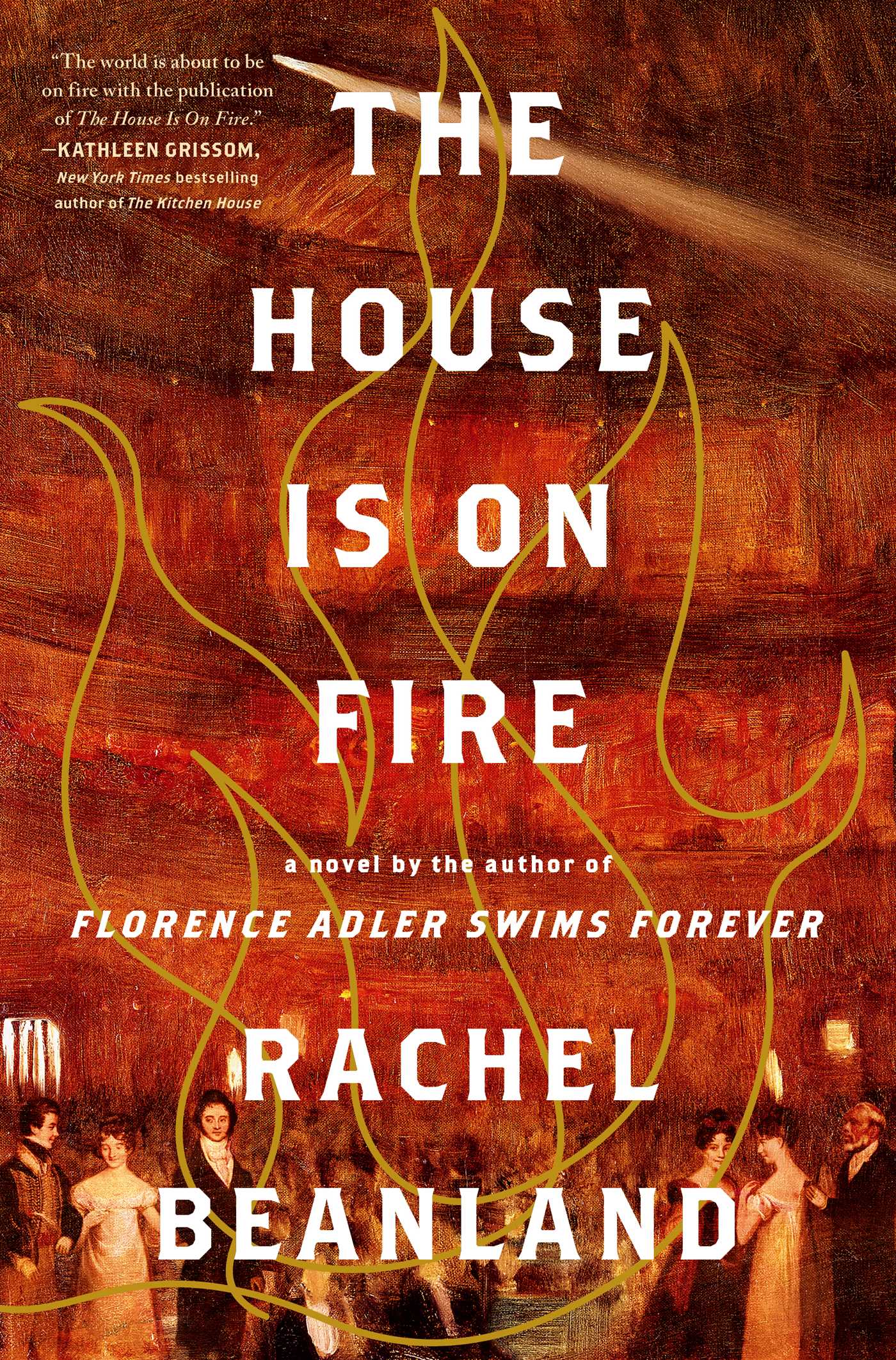
81. The House Is On Fire


The House Is On Fire. Rachel Beanland. 2023. 384 pages. [Source: Library]

First sentence: Sally Campbell's shoes are fashionable but extremely flimsy. She ordered them from Curtis Fairchild's specifically for Richmond's winter season, but now she feels like a fool for thinking she could get away with wearing them on the half-mile walk from her brother-in-law's house to the theater.

Premise/plot: Historical fiction set in Richmond, Virginia, in December 1811. This historical novel based on a true historical event--the 1811 Richmond Theater fire--and features some historical figures. It has four alternating narrators: Sally Campbell (the daughter of Patrick Henry and widow of Robert Campbell); Gilbert Hunt, an enslaved man who rescued dozens of women from the fire by catching them (they were being tossed/thrown out of a third-story window); Cecily, a slave of the Price family (whom is being sexually assaulted by her own half-brother Elliott Price); and Jack Gibson, a young stagehand just getting into show business. 

The theater fire occurred on December 26, 1811. The book chronicles the immediate aftermath from these four perspectives.

My thoughts: I LOVED, LOVED, LOVED, LOVED, LOVED, LOVED this one. Is it perfectly perfect? Probably not. Did I find it incredibly intense and super-compelling? YES. A million times yes. It was torture to keep reading. It was torture to stop. I'll try to explain. This book NEEDED the freezer. The part about the fire itself was terrifying and scary. SO horrifying. I had to know what happened but I was worried about what might happen. The aftermath was perhaps a little less intense, but it was fascinating as well. Cecily and Gilbert's story stayed INTENSE. 

I loved all four narrators. All the characters were well written. Even the ones I didn't really "like" all that much. I would definitely recommend this one.


© 2023 Becky Laney of Becky's Book Reviews

Thursday, March 23, 2023

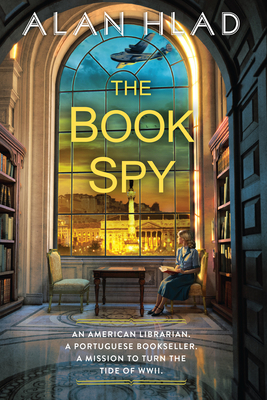
61. The Book Spy


The Book Spy. Alan Hlad. 2023. [January] 304 pages. [Source: Library]

First sentence: On the day librarians were recruited for the war, Maria Alves was microfilming historical newspapers in the Department of Microphotography of the New York Public Library. 

Premise/plot: The Book Spy is a historical fiction novel set during the Second World War. It has a light romance in the background. The focus primarily is on a librarian, Maria Alves, who is one of a handful of librarians--microfilm specialists--recruited for war work. They'll be going to neutral cities in Europe, acquiring Axis publications (newspapers, magazines, books, etc.), microfilming the works, and sending them to the Allies (UK and US) for examination. The cover story is preserving works for the Library of Congress. 

The Book Spy has two narrators. The second narrator is a bookseller (with a BIG secret) named Tiago Soares. The book is primarily set in Lisbon, Portugal. Maria and Tiago meet and become friendly. He helps her acquire the stuff (newspapers, magazines, books, etc.) she needs to do her job. She occasionally helps him with his undercover work. (He helps Jewish refugees.) 

My thoughts: I enjoyed this one. I don't always love dual narration. But in this case, it makes sense. They are both doing their part for the war effort. His story is just as important as hers. It was well-written. The plot is never dull. It isn't overly melodramatic. 

This was my second time reading Alan Hlad. (The first one I read was set during World War I.) I'm definitely enjoying getting to know his work.


© 2023 Becky Laney of Becky's Book Reviews

Wednesday, November 23, 2022

157. Switchboard Soldiers


Switchboard Soldiers. Jennifer Chiaverini. 2022. 464 pages. [Source: Library]

First sentence: Marie glowed with pride and anticipation as her mother took her customary place in front of the gleaming grand piano in the gracious parlor of their Mount Auburn home. 

Premise/plot: Switchboard Soldiers is Chiaverini's newest historical novel. It is set during the first world war, or "the Great War," or "the war to end all wars." The prologue is set in August 1914, but for the most part it spans 1917-1919 [spring 1919]. There are three "main" characters [aka narrators] Grace Banker, Marie Miossec, and Valerie DeSmedt. But there are SO, SO, SO many other characters. The book chronicles the experiences of super-skilled-and-talented [female] telephone operators who served their country. Not only did they need to know the switchboard system well, they needed to be fluent in French. On top of the dangers of war--at the front lines and in a country at war facing bombing attacks--but there was also the dangers of the Great Influenza [aka the 'Spanish' flu]. 

My thoughts: This one had all the elements I typically look for in historical fiction. Yet it is definitely an "almost" from me. I know, in part, this disconnect [pun intended] is my fault. I was reading the library copy and didn't finish in time. I had to wait for my turn to come back around. [Which was about three weeks]. I had marked down my place exactly, but, my interest had cooled by the time I picked it up again. But I do think that alternating narrators might have still allowed for some disconnect. Some. There were SO many names, so many characters, so many off-to-the-side characters. [Like brothers or random soldiers with the potential to be love interests]. I felt a consistent vague-ness. I was never quite sure who was who. Not enough to be actively disgruntled or out of sorts. Just a vague un-easiness that I was not getting the most out of the story because I'd missed too many little things along the way. 


© 2022 Becky Laney of Becky's Book Reviews
Wednesday, November 16, 2022

152. The Picture Bride


The Picture Bride. Lee Geum-yi. Translated by An Seonjae. 2020/2022. 320 pages. [Source: Library]

First sentence: "Miss Willow," The Pusan Ajimae said, "You'll be eighteen next year, won't you? What about going to Powa and getting married?" At that, the eyes of Willow and her mother, Mrs. Yun, grew large. 

Premise/plot: Willow, our heroine, and two others--who become through the years as dear as sisters--travel to Hawaii as picture brides in 1918. These Korean brides will have A LOT of adjustments to make. Not that life was super-easy-going and perfect at home in their Korean village, but, they were sold a fairy tale--literally. A fairy tale it wasn't. Not the land. Not the opportunities. Not the husbands. This is Willow's story--for the most part--but it is also a story of how she tried again [and again] to find a community that would truly be supportive. It is a story of the struggle of a wife and mother. Definitely not a fairy tale with a happily ever after ending.

My thoughts: I found this one so compelling--for the most part. I enjoyed Willow's perspective. I thought the characters, the setting, the story were all well done. I did not personally love the ending. I'll try to explain. I felt it was disjointed. The jump in time of eighteen or so years was just rough. In the last chapter, the characters all suddenly have American-ized names. So you don't know really what is going on and who-is-who. Also there are so many more names to keep track of since the family has apparently expanded. Still, so much is NOT known of that gap in time. And the narrator has changed from Willow to Pearl [her daughter]. It just felt out of sorts. This is just my own feelings about the ending, of course.


© 2022 Becky Laney of Becky's Book Reviews
Tuesday, May 10, 2022

57. Death on a Deadline


Death on a Deadline (Homefront News #2) Joyce St. Anthony. 2022. [November] 304 pages (guess). [Source: Review copy]

First sentence: "Clark Gable is coming to Progress and will be appearing at our war bond drive," Ava Dempsey said. "I have it on good authority."

Premise/plot: Irene Ingram is back for a second adventure in Death on a Deadline. In this murder mystery, the town is getting ready to have a fair, and not just any fair, a fair combined with a war bond drive. Several "stars" from Hollywood will be coming for the multi-day event. But not all the stars will be leaving town with a pulse. Is the murderer one of the town's own??? Or is it one of the other Hollywood stars? (Or "stars" as the case may be.) Irene finds herself right in the middle of another mystery... working side by side with her future father-in-law the chief of police.

My thoughts: I really LOVED both books. I love the small town setting. I love getting to know all the residents of the town. I love the sense of community, sense of place, and sense of time. Both books are set in 1942. This second book being set in June/July of 1942. I would recommend the series if you enjoy war fiction, cozy mysteries, historical fiction, or books with strong character development.


© 2022 Becky Laney of Becky's Book Reviews

Monday, April 18, 2022

47. Katherine

2004 cover
Katherine. Anya Seton. 1954. 512 pages. [Source: Bought]

First sentence: IN the tender green time of April, Katherine set forth at last upon her journey with the two nuns and the royal messenger.

Premise/plot: Katherine de Roet is a young girl on the way to the royal court when Anya Seton's historical novel opens. To be fair, she isn't so much on the way to the royal court to become a part of the royal court as it just so happens that her sister, Philippa, serves the Queen. If all goes well, a marriage will be arranged for young Katherine. She is young and beautiful, but, does not have a dowry. She catches the eye of many, but it is Hugh Swynford who steps up and says, yes, I want to actually marry her (and not just bed her). Katherine is not thrilled. Her heart is just not in marrying this OLD man--no matter his social status. (Not that she's in love with anyone in particular.) Plus these two didn't get off to a mutual good start. He likes what he sees a LITTLE too much, and after a struggle in the garden one day, she's saved from rape by a member of the royal family--John of Gaunt. The Duke takes the poor woman home to his wife, Blanche, who takes pity on the girl and offers her friendship and kindness. But a marriage between the two (Hugh and Katherine) is arranged, and off they go to his (pitiful) estate.
2000 cover

Katherine and the Duke (John of Gaunt) keep crossing paths--not often or frequent, but occasionally. When they do cross paths, they live a lingering impression on one another. Like when the Duke just happens to be passing by her estate when she's gone into labor with her first child and NO ONE on the estate is around to hear her cries and screams. But what really leaves an impression perhaps is her devoted care to his dying wife. 

The novel spans decades and covers a LOT of history. (1360s through the 1390s) Politics. Royal family. Religious history. Conflicts domestic and abroad. This one isn't exclusively a "romance" between Katherine and the Duke. But it does concern their decades long love affair. (She has four children with him, none legitimate until much, much, much later).

My thoughts: I first read this one in September 2011. I enjoyed it then. I enjoyed it now. My biggest advice would be don't go into it thinking that it is a swoon-worthy, super-romantic LOVE STORY that will leave you smiling. The characters are human, and, that's not a "bad" thing. Just that it isn't a superficial romance novel with characters that are too-good-to-be-true and a fairy tale ending.

It probably could go without saying that this is a historical novel based on history; especially the royal family and important figures of the time. Seton's novel is peopled with real people. I am curious how much is fictionalized and how much is "true." But certainly it has to blend in some fiction. 

And now just for fun some additional covers:

1954 cover of Katherine

1957 cover

1955 cover 


1975, 1981, 1983 cover


© 2022 Becky Laney of Becky's Book Reviews

Friday, April 01, 2022

41. Yours Cheerfully


Yours Cheerfully. (The Emmy Lake Chronicles #2) A.J. Pearce. 2021. 304 pages. [Source: Review copy]

First sentence: As Mr. Collins called a start to the Woman's Friend editorial meeting, to anyone watching, it was a perfectly normal Monday-morning affair.

Premise/plot: Yours Cheerfully is the sequel to Dear Mrs. Bird. Both books are set in London (for the most part) during the Second World War. This book is set in the fall/winter of 1941. Emmy Lake, our heroine, managed to keep her job at the magazine Woman's Friend despite some issues that came to light in the previous book. She spends most of this second book not as an advice columnist (if she still does the advice column, she never once shares the letters) but as a journalist writing a series of stories on women factory workers. She makes friends with a handful of workers. Not just smile and nod acquaintances but get up all in your business friendships. She takes it upon herself to agitate (stir things up) the workers and convince them to risk it all for the chance of better working conditions. This isn't just a story to cover. This becomes a dear and precious cause to her. She even risks missing her own wedding (to a soldier) to cover this story. 

My thoughts: I really did enjoy Dear Mrs. Bird. I did not enjoy Yours Cheerfully nearly as much. I did not feel that there was much further character development. And the relationship development was practically non-existent. True, I think it's the readers who are left behind on this one--not Emmy Lake. She's 100% in love with Charles Collins. Not a doubt in her mind about that. But this reader at least, felt that Emmy and Charles' relationship was a little lacking in development. I never really felt like I got to know Charles. Perhaps the romance is inconsequential. Maybe the book exists not as historical romance per se but as historical fiction with the focus almost exclusively on friendships between the women. That is a distinct possibility. If so, I found these friendships to be a little too insta(nt) for me. Like you take public transit and suddenly become near instant besties with a couple of women sitting near you. Granted, maybe some people do make best friends like that--and accumulate dozens if not hundreds of friends--just that quickly.

I did get some North and South vibes--not in terms of romance--but in terms of an opinionated woman so confident and sure that she had all the answers on how to better run (or manage) a factory.

Maybe Emmy Lake was supposed to come across as fierce and strong and independent. I just thought her pushiness might get the other women into serious trouble. Her "helpfulness" might lead to true destitution for women already living in poverty if she wasn't extremely lucky. 

© 2022 Becky Laney of Becky's Book Reviews