Showing posts with label books reread in 2022. Show all posts

Thursday, October 27, 2022

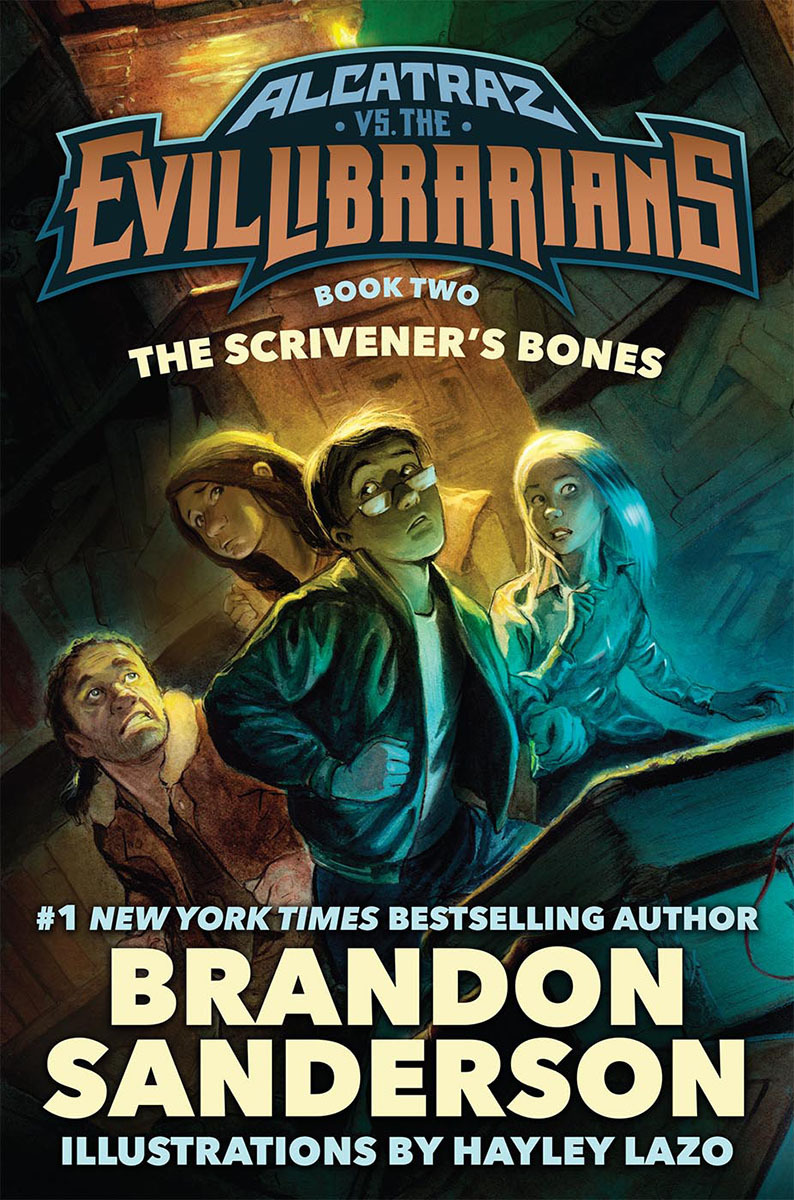
138. Alcatraz Vs. The Evil Librarians: The Scrivener's Bones


The Scrivener's Bones( Alcatraz Versus The Evil Librarians #2) Brandon Sanderson. 2008. 322 pages. [Source: Library]

First sentence: So, there I was, slumped in my chair, waiting in a drab airport terminal, munching absently on a bag of stale potato chips. Not the beginning you expected, is it? You likely thought that I would start this book with something exciting. A scene involving evil Librarians, perhaps -- something with altars, Alivened, or at least some machine guns. I'm sorry to disappoint you. It won't be the first time I do that. However, it's for your own good.

Premise/plot: This is the sequel to Alcatraz Versus the Evil Librarians. Alcatraz Smedry is back for his second adventure. And oh how he loves to manipulate his readers, tease them, taunt them. It's mean and I love it. If you haven't read the first book, you should. Trust me on that. It's funny and clever. And the best entertainment to be had between the covers of a book.

I'd like to make something clear. I have been unfair to you. That is to be expected, liar that I am.
In the first book of this series, I made some sweeping generalizations about librarians, many of which are completely true.
I need to come clean. There are several kinds of librarians. There are the ones I talked about in my last book -- the Librarians, with a capital L. We also call them the Librarians of Biblioden, or the Scrivener's Librarians. Most of what I said about that particular group is, indeed, factual.
However, I didn't take the time to explain that they're not the only kind of librarians. You may, therefore, have assumed that all librarians are evil cultists who want to take over the world, enslave humanity, and sacrifice people on their altars.
This is completely untrue. Not all librarians are evil cultists. Some librarians are instead vengeful undead who want to suck your soul.
I'm glad we cleared that up. (44-45)


In this second adventure, we have Alcatraz and Bastille teaming up with others--new characters, new talents--on a quest trying to track down Grandpa Smedry and Attica Smedry. (Attica being the long-lost-and-often-presumed-dead father of our hero, Alcatraz.) Alcatraz believes that both can be found in the Library of Alexandria. It is here in this ancient library, that they come across the worst sort of librarian: the kind that can take your soul if you take a book. (If you sign a contract to lose your soul, you have ten hours before the dreaded soul-taking takes place. If you don't sign a contract but happen to pick up a book, then you've got ten seconds.) These librarians taunt and tease. Urging you to read this and that. Good news if you give in: You get to read all the books in the library. And we're not just talking ancient scrolls and the like. New books--American books--are being sent over all the time. (Every book ever written.) Bad news: You're doomed to spend eternity there with no hope of ever leaving. And as a curator, you yourself will join their numbers trying to steal other people's souls.

Can Alcatraz find his father and grandfather and escape this threatening-but-oh-so-tempting library with his soul intact? Will his friends? There's danger. There's threats--new and old. There are traps, traps, and more traps. There are daring rescues (or rescue attempts I should say). There are more than a few surprises. It's great fun. You should try it.

My thoughts: I really LOVE revisiting this series. I don't know why I've never taken the time to reread these books. I definitely loved them the first time around and I'm loving them this time around as well. I am so glad a new book in the series is releasing so I can revisit this wonderful series. I do think the narrative style is super appealing to readers of all ages.

© 2022 Becky Laney of Becky's Book Reviews

Tuesday, October 25, 2022

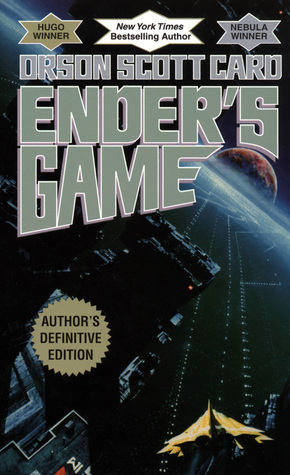
137. Ender's Game


Ender's Game. Orson Scott Card. 1985. 324 pages. [Source: Bought]

First sentence: "I've watched through his eyes, I've listened through his ears, and I tell you he's the one. Or at least as close as we're going to get."

Premise/plot: Andrew Wiggin, aka "Ender," is six years old and potentially the earth's savior. Two wars have been fought and barely won against the aliens known to readers as Buggers. The third war will take much preparation--decades worth of the International Fleet training up children to be commanders and soldiers.

Ender is one such student or trainee. His older brother, Peter, and older sister, Valentine, didn't make it so far as Battle School in space. Ender's life is wearisome and burdensome. He doesn't make friends easily and his biggest fear is being just as violent and out of control as his brother, Peter. He is prone to self-reflection and self-loathing. But in terms of military genius, strategizing, leadership...he excels.

When the time comes to fight the war, will he be ready?

My thoughts: There was a time I loved, loved, loved, loved, loved this novel. The past few times I've revisited the novel, that has lessened a bit. I still love elements of this one. But there are definitely elements about it I do not like at all. The first fourth of the novel, well, it's DISTURBING, uncomfortable, awkward, a bit off. I did NOT remember the use of the n word. I did not remember the jokesy approach to different races (or ethnicities). I did not remember the chokehold scene where Peter is trying to kill his brother. I did not remember some of the crudeness.

One thing that bothers me is Peter. Peter is a psychopath in my opinion. He is cruel to his brother and sister. He is cruel to small animals. He is a bully. He is manipulative. He is egocentric and a narcissist. He dreams of world domination. He is just a sick, sick, sick individual. And I think what readers are outright told about him is just the tip of the iceberg. If Valentine is to be believed about the files and records she's been keeping of her brother. Chances are he might have done even more than she knew about. There was one line that disturbed me where she is telling Ender that you don't know what I had to do to keep Peter from hurting you. Of course, we don't know--she doesn't say. But Card later seems to redeem the character of Peter and seeks to make him sympathetic.

Card does do flawed humans well. I will give him that. Are any of the characters in this one not flawed?!?! I think the most likable characters may be Bean and Petra.


© 2022 Becky Laney of Becky's Book Reviews

Saturday, October 22, 2022

135. Hitty: Her First Hundred Years


Hitty: Her First Hundred Years. Rachel Field. Illustrated by Dorothy P. Lathrop. 1929. 256 pages. [Source: Library]

First sentence: The antique shop is very still now. Theobold and I have it all to ourselves, for the cuckoo clock was sold day before yesterday and Theobold has been so industrious of late there are no more mice to venture out from behind the woodwork. Theobold is the shop cat--the only thing in it is that is not for sale, which has made him rather overbearing at times. Not that I wish to be critical of him. We all have our little infirmaties and if it had not been for his I might not now be writing my memoirs. Still, infirmities are one thing, and claws are another, as I have reason to know.

Premise/plot: Hitty, Her First Hundred Years won the Newbery award in 1930. Who is Hitty? Hitty is a doll. A wooden doll made from the ever-lucky mountain-ash wood. Her story begins when an Old Peddler--old peddlers are so rarely named in books--takes refuge with a family in Maine. Mrs. Preble is awaiting the return of her husband--who is a whaler--and she has the children to care for. One of her children is a young girl named Phoebe. (The other is a boy named Andy.) The Peddler takes refuge in the storm, but ends up staying quite a while with the family. At some point during his visit, he carves this doll--soon named Mehitabel--for the little girl. Phoebe's told she must sew clothes for the doll before she can be played with--and one of the items Phoebe makes is an undergarment--a chemise--with "Hitty" cross-stitched on it.

Hitty's (mis)adventures span the globe and span generations. Sometimes her change of locale is purposeful--when the Preble family takes her on a ship's voyage to the South Seas--and other times it is quite accidental--when Phoebe drops the doll in India and she is "discovered" by a wandering snake charmer. She has many different owners; she has many different adventures. Throughout it all, she tries to hold on to as much grace and dignity as she can. Which isn't always easy. (Like when she's made an idol in the South Seas.)

My thoughts: Hitty--the doll--is a plaything for children, yet, her various owners through the decades are only rarely children who play with her [and love her as a toy]. Many adults own Hitty. A seamstress sees Hitty as an opportunity to experiment with fashion design and fabrics. Another sees a pincushion. Some see an antique to be displayed and valued. Hitty's purpose changes and fluctuates. 

Much the same, Hitty--the book--may have started out its life as a children's book--a winner of the Newbery, no doubt--yet I venture forth a guess that most often her readers in the past few decades--at least--are adults. And perhaps that is for the best. There is without a doubt much value (or potential value) in vintage antiques. But sometimes antiques lose their suitability for children. Or perhaps the better word may just as well be appeal. I think it's a bit of both with the case of Hitty. 

Not all of Hitty is out of sorts or out of fashion. Plenty remains to charm. But there are definitely episodes--or chapters, or parts of chapters--that just are jarring to modern readers. A little cringe here or there. Injuns, savages, Hindoos...these are just a few of the things that might read a bit off. [One of Hitty's owners has a best friend who is a German immigrant, the German speaks very broken English.] 

As I said, Hitty isn't perfectly-perfect for modern readers. But it isn't without charm. Hitty is a wooden doll who sees, hears, thinks, feels, and sometimes even moves. She observes over a century--give or take a few years--of what we would call history. Imagine how much the world would change from 1829 to 1929! Hitty has "lived" life--the good, the bad, the really ugly. [A low point might be her YEARS buried in a horse-hair sofa.] Her misadventures/adventures have taken a lot out of her physically. Just like some might pass her by as an "ugly" doll, some readers might take a pass on Hitty. But I think she'll find friends here and there that do appreciate her for what she is.

© 2022 Becky Laney of Becky's Book Reviews

134. Beavallet


Beauvallet. Georgette Heyer. 1929. 272 pages. [Source: Library]

First sentence: The deck was in shambles.

Premise/plot: Dona Dominica, the daughter of the former governor of Santiago, Don Manuel de Rada y Sylva, is on her way back to Spain--along with her dying father, when their ship the Santa Maria is boarded by English adventurers (pirates) led by the fearless El Beauvallet (Nicholas Beauvallet). The two are taken captive by Beauvallet and brought aboard his ship, Venture. But he promises--and it's not a promise without risk--to return these two safely to Spain. If anyone can land an English ship safely into a Spanish port during these hostile times it would have to be Beauvallet.

At first Dominica hates her captor. She refuses to admit to herself that he is a little charming, a little handsome. She flirts with the other men to drive him crazy. But. Soon she has to admit that there is an attraction between them. And she's shocked to hear him boast recklessly of his honorable intentions to make her an English woman before the year is out. Since she is his captive, you might think this would be easy. Just set sail for England instead of Spain. The lady seems willing enough. But Beauvallet wants the challenge. So he keeps his promise--his first promise--both father and daughter arrive safely in Spain. Beauvallet returns to England, to his family, to his Queen.

But Dominica has not been forgotten. And a few months later, Beauvallet is ready to pursue his lady. To woo her in Spain. With England and Spain so very, very close to war--how can an Englishman, a pirate, a dreaded pirate, safely enter Spain? He has boasted that he will find a way...

Meanwhile, Dominica's father dies and she is taken into her aunt's family. Her aunt!!! Oh what a character Dona Beatrice is! She's a strong, strong woman with a mind of her own. She has a way of bullying all the men in her life including her son, Don Diego. She has determined that he must marry Dominica.

Beauvallet is an exciting and dramatic historical romance set in the Elizabethan era. Beauvallet is a bold adventurer who will risk it all to win his lady love. With his faithful companion, Joshua Dimmock, by his side, Beauvallet is ready for any challenge. 

My thoughts: The book had action, adventure, drama, and romance. I enjoyed Beauvallet very much! If only Beauvallet had been filmed... Errol Flynn would have been perfect--absolutely perfect--as Heyer's hero, Nicholas Beauvallet. It was easy to imagine, which perhaps helped me enjoy the novel more. Beauvallet would never be among my favorite, favorite Heyer romances. Most of my favorite Heyer novels are set in the Regency. This historical romance is set in the Elizabethan period. But it's good fun and well worth the read. 


© 2022 Becky Laney of Becky's Book Reviews

Saturday, September 10, 2022

108. Death on the Nile


Death on the Nile. Agatha Christie. 1937/2007. Black Dog & Leventhal. 352 pages. [Source: Bought]

First sentence: "Linnet Ridgeway!" "That's her!" said Mr. Burnaby, the landlord of the Three Crowns. He nudged his companion.

Premise/plot: All is not fair in love or war. This Hercule Poirot mystery is set on a cruise of the Nile river. It is the honeymoon trip for one happy couple--or should I say one "happy" couple. For this happy couple is being stalked/followed by a disgruntled (and dramatic) ex. She is not happy to see HER former fiance marry a now former friend. She even introduced them! These three aren't the only travelers with struggles, traumas, and dramas of their own. Poirot picked quite a bunch to travel with. (Not that he had much say in the matter.) But when bodies start to fall, well, he has his work to do.

My thoughts: I LOVED, LOVED, LOVED Agatha Christie's Death on the Nile. It is such a great mystery, very complex! Hercule Poirot and Colonel Race find themselves on board a ship on the Nile, they are in interesting company. Poirot notices the tension between some of his fellow travelers from the very start. And as he takes the time to get to know everyone, to have personal chats with almost every one, his unease only increases. He fears that before the trip is over, murder will have been committed. But who shall the victim be? And who the murderer? Meanwhile, Race is on a mission of his own before a body is even found. He is on the trail of a killer, a radical. He's not sure WHO his man is, just knows that he is almost certainly on board, that is where his clues have led him. When the oh-so-wealthy heiress, Linnet Ridgeway, is murdered on her honeymoon with Simon Doyle, there are plenty of suspects. For not all of the passengers on board are exactly strangers to her....

The first part of this one is set in England, but the rest is all set in Egypt.

This one had me from the start. It was so thrilling! Not only was the plot interesting and surprising and wonderful, the characterization was so well done!!!


© 2022 Becky Laney of Becky's Book Reviews

Monday, August 29, 2022

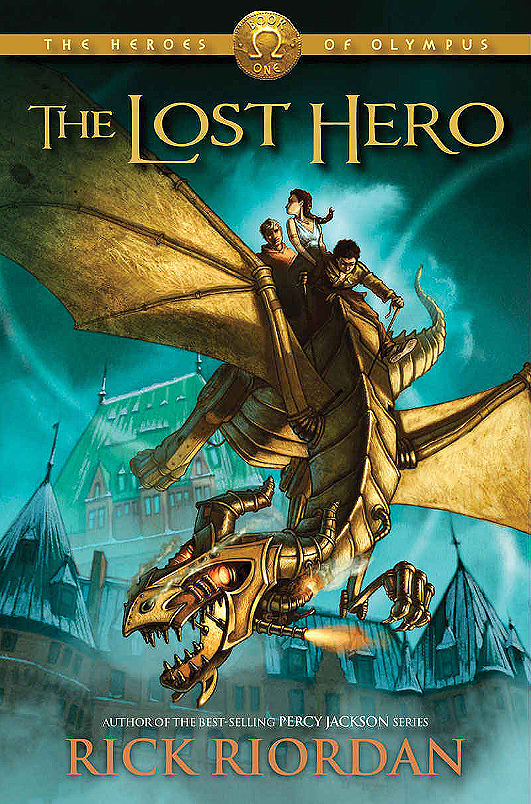
104. The Lost Hero


The Lost Hero. (Heroes of Olympus #1) Rick Riordan. 2010. 553 pages. [Source: Library]

First sentence: Even before he got electrocuted, Jason was having a rotten day.

Premise/plot: Percy Jackson has gone missing. Annabeth discovers three demigods--Jason, Leo, and Piper--while she is searching for Percy. The three soon find themselves at Camp Halfblood. Strange things are afoot (once again). A quest is coming...danger abounds...you now, same old same old. Piper, Leo, and Jason along with a mechanical dragon named Festus (think steampunk) soon find themselves searching for a missing goddess all the while battling giants...

My thoughts: Instead of following one narrator from start to finish, this one alternates between the three protagonists: Jason (who has lost his memory), Leo (who is keeping a secret about fire) and Piper (who is keeping a secret about her dad). The three will have to listen to one another--and work together--if they are to save the world. To be fair, this is only preliminary saving the world, but it is important nonetheless. 

Even though I've read this one before (back in 2011), I have absolutely no memory of it. Reading my review, I apparently loved it. I can't say that my thoughts are gushy now. It was solid enough for what it was--another mythology based quest featuring struggling  kids. I don't know if it is longer than the books in the Percy Jackson series, but it surely felt like it. Having a book with fifty-two chapters is intimidating. I know the other books didn't have that many chapters, though perhaps they just had longer chapters? Either way, I felt this one dragged a bit here and there. I cared about what happened. But I wanted to get there faster.

© 2022 Becky Laney of Becky's Book Reviews

Saturday, August 20, 2022

102. Alcatraz versus the Evil Librarians


Alcatraz versus the Evil Librarians. Brandon Sanderson. 2007. 308 pages. [Source: Library]

First sentence: So, there I was, tied to an altar made from outdated encyclopedias, about to get sacrificed to the dark powers by a cult of Evil Librarians. As you might imagine, that sort of situation can be quite disturbing. It does funny things to the brain to be in such danger -- in fact, it often makes a person pause and reflect upon his life. If you've never faced such a situation, then you'll simply have to take my word. If, on the other hand, you have faced such a situation, then you are probably dead and aren't likely to be reading this.

Premise/plot: It's the story of a boy--Alcatraz Smedry--who receives his inheritance--a bag of sand--on his thirteenth birthday. His parents are dead, and he's been in the foster care system for years. He has difficulties in settling down with families--he's been moved from foster home to foster home--because he has a way of breaking things just by touching them. When we first meet Alcatraz, he accidentally has broken a stove and set the kitchen on fire. Most would say this 'gift' makes Alcatraz extremely unlucky. But, it may just be his saving grace. When a mysterious old man claiming to be his Grandpa Smedry appears the day after his birthday, the boy is in for a shock or two. Fortunately for us readers, we're along for the ride! What follows is one exciting adventure. Grandpa Smedry claims this world is controlled by a cult: a cult of evil Librarians. Evil librarians that have stolen Alcatraz's inheritance: the bag of sand is missing! Can these two team up and reclaim what is rightfully theirs?

My thoughts: Alcatraz versus the Evil Librarians is one of those rare gems of a book where you could open it to practically any page and find treasure. It's funny. It's fun. It's exciting. It's clever. Take for instance, this little treasure found at the beginning of chapter four:

Hushlanders, I'd like to take this opportunity to commend you for reading this book. I realize the difficulty you must have gone through to obtain it -- after all, no Librarian is likely to recommend it, considering the secrets it exposes about their kind.

Actually, my experience has been that people generally don't recommend this kind of book at all. It is far too interesting. Perhaps you have had other kinds of books recommended to you. Perhaps, even, you have been given books by friends, parents, or teachers, then told that these books are the type you "have to read." Those books are invariably described as "important" -- which in my experience, pretty much means that they're boring. (Words like meaningful and thoughtful are other good clues.)

If there is a boy in these kinds of books, he will not go on an adventure to fight against Librarians, paper monsters, and one-eyed Dark Oculators. In fact, the lad will not go on an adventure or fight against anything at all. Instead, his dog will die. Or, in some cases, his mother will die. If it's a really meaningful book, both his dog and his mother will die. (Apparently most writers have something against dogs and mothers.)

Neither my mother nor my dog dies in this book. I'm rather tired of those types of stories. In my opinion, such fantastical, unrealistic books -- books in which boys live on mountains, families work on farms, or anyone has anything to do with the Great Depression -- have a tendency to rot the brain. To combat such silliness, I've written the volume you now hold -- a solid, true account. Hopefully, it will help anchor you in reality.

So, when people try to give you some book with a shiny round award on the cover, be kind and gracious, but tell them that you don't read "fantasy," because you prefer stories that are real. Then come back here and continue your research on the cult of evil Librarians who secretly rule the world.


I think everyone should read this book. Seriously. I love, love, love the narrative style. I love how he speaks directly to the reader. I love his asides about authors and writing.

ETA: This is my third time to read this book. I almost hate to admit it...but I think I love this book more than The Lightning Thief.


© 2022 Becky Laney of Becky's Book Reviews

Sunday, August 14, 2022

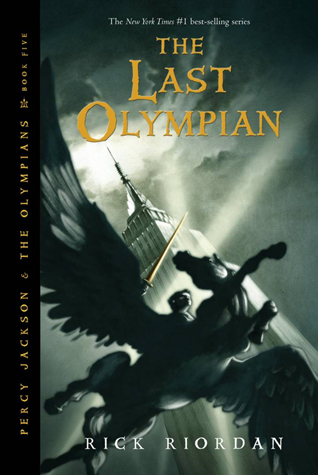
97. The Last Olympian


The Last Olympian. (Percy Jackson #5) Rick Riordan. 2009. 381 pages. [Source: Library]

First sentence: The end of the world started when a pegasus landed on the hood of my car. Up until then, I was having a great afternoon.

Premise/plot: Percy Jackson and his fellow camp-mates from Camp Half Blood fight the ultimate battle against the oh-so-evil Kronus. (Kronus, if you remember, is currently embodying the body of Luke, a former friend turned traitor.) Kronus' side has won over a lot of discontented demigods and minor gods. It seems like a losing battle from page one. But is it enough for Percy to give up all hope and surrender? 

My thoughts: This was my first time to reread the last two books in the series. The first three books in the series got a little more reread love back in the day. Rachel Elizabeth Dare (who plays quite a big part in the last few books) is a character I had completely forgotten about--mostly. In particular, the love triangle that isn't really a love triangle. (Was there ever any doubt that Annabeth was Percy's choice all along?) If there was a love triangle--and I'm not convinced there truly was--then perhaps it was Annabeth, Luke, and Percy. 

I thought it was packed with plenty of action. Think of an Avengers' movie. 

© 2022 Becky Laney of Becky's Book Reviews

Tuesday, August 02, 2022

93. The Battle of the Labyrinth


The Battle of the Labyrinth. (Percy Jackson and the Olympians #4) Rick Riordan. 2008. 361 pages. [Source: Library]

First sentence: The last thing I wanted to do on my summer break was blow up another school.

Premise/plot: Camp Half-blood is in trouble again. To be fair, it's more like destroying Camp Half-blood is step one on the bad guy's to do list. [I suppose you could argue that it isn't a bad guy so much as bad god.] Annabeth, Tyson, Percy, and Grover are teaming up again on a quest. They'll be going underground into the labyrinth. It's super-super dangerous. Those that do manage to come out again are rarely the same. The last person to come out has gone mad--they aren't quite sure how to cure him. But the world's only hope [so we're led to believe] is hidden within the labyrinth. It's a race--who will discover it, acquire it, use it...first. 

My thoughts: All the books are so closely connected. It is definitely best to read them all together. The tension does keep building and building. There is rarely a satisfying moment in the book in terms of suspense and tension. None of the books have that YES moment of success and completion. All the books are leading to the ultimate showdown. Book four still doesn't take readers to that final, ultimate BIG battle between good and evil. I would say book four offers less humor and more intensity. Looking back, The Lightning Thief now has such low stakes--but oh at the time, it felt like such a big quest. 

I do recommend the series. I am rereading the series this summer. 

© 2022 Becky Laney of Becky's Book Reviews

Sunday, July 24, 2022

88. The Titan's Curse


The Titan's Curse. (Percy Jackson and the Olympians #3) Rick Riordan. 2007. 320 pages. [Source: Library]

First sentence: The Friday before winter break, my mom packed me an overnight bag and a few deadly weapons and took me to a new boarding school. We picked up my friends Annabeth and Thalia on the way.
It was an eight-hour drive from New York to Bar Harbor, Maine. Sleet and snow pounded the highway. Annabeth, Thalia, and I hadn't seen each other in months, but between the blizzard and the thought of what we were about to do, we were too nervous to talk much. Except for my mom. She talks more when she's nervous. By the time we finally got to Westover hall, it was getting dark, and she'd told Annabeth and Thalia every embarrassing baby story there was to tell about me.
Thalia wiped the fog off the car window and peered outside. "Oh yeah. This'll be fun."
Westover Hall looked like an evil knight's castle. It was all black stone, with towers and slit windows and a big set of wooden double doors. It stood on a snowy cliff overlooking this big frosty forest on one side and the gray churning ocean on the other.
"Are you sure you don't want me to wait?" my mother asked.
"No, thanks, Mom," I said. "I don't know how long it will take. We'll be okay."
"But how will you get back? I'm worried, Percy."
I hoped I wasn't blushing. It was bad enough I had to depend on my mom to drive me to my battles.

Premise/plot:  The stakes have never been higher in the third adventure in the Percy Jackson fantasy series by Rick Riordan. The quest(s) in this third book make the other quests [in books one and two] seem easy-breezy. 

While The Titan's Curse certainly stars some of our well-known and well-loved cast [from previous books], plenty of new characters--both demi-god, god, and monster--are introduced and play integral roles. Like Bianca and Nico. This is also the first book where readers get a chance to learn about the newly resurrected from the dead, Thalia. [She was technically a tree for all of book one and most of book two.] 

Like the previous two books, this one mainly occurs outside of Camp Half-blood and involves a quest....or should that be quests. Because the stakes have never been higher, there will be BIG consequences if the quest goes anything like the prophecy foretells. And Percy, well, he may have to live with the fall out....

My thoughts: I really enjoyed this one! I did. The only one in the series that I am super familiar with is the first book, The Lightning Thief. Reading book two and three is like reading them again for the very first time. And that is such a delight. I think there are pros and cons to waiting so very long to reread a series you've adored in the past. I am loving the characters. I am enjoying the action. I am remembering all the reasons why I made my mom read this series with me.

© 2022 Becky Laney of Becky's Book Reviews

Sunday, July 17, 2022

86. The Sea of Monsters


The Sea of Monsters. (Percy Jackson and the Olympians #2) Rick Riordan. 2006. 279 pages. [Source: Library]

First sentence: My nightmare started like this. I was standing on a deserted street in some little beach town. It was the middle of the night. A storm was blowing. Wind and rain ripped at the palm trees along the sidewalk. Pink and yellow stucco buildings lined the street, their windows boarded up. A block away, past a line of hibiscus bushes, the ocean churned. Florida, I thought.

Premise/plot: The Sea of Monsters is the sequel to The Lightning Thief. A year has passed since the events of the first [fantasy] novel. Percy will soon be returning to Camp Half-blood and rejoining his friends, frenemies, and perhaps actual enemies. He's been having troubling dreams the past few days--mainly concerning his friend Grover. He senses danger. He just doesn't know how grave the danger is...for all of them. The tree that [helps] protect the camp from monsters is dying; it has in fact been poisoned. To save the camp may require another quest, but, not everyone thinks the camp needs to be saved. (Could their be traitors at camp still???) 

Annabeth, Percy, and TYSON (a new character introduced) team up to save Grover...but their quest is UNofficial. They do not have permission to leave camp let alone permission to go on a quest for the golden fleece. Their quest will not take them all across the United States but down to Florida to THE SEA OF MONSTERS which is off the coast of Florida. They'll face monsters, monsters, and more monsters. But will their quest be successful?

My thoughts: I have so many memories of The Lightning Thief. Every chapter of the first novel is super familiar. But there was something delightful about reading this second novel. It has been so many years since I first read it (it would have been circa 2006), that it was like experiencing this fantasy-adventure-questing novel for the first time...again. That is rare (in my opinion.) 

I liked Tyson. I did. I missed Grover being an active part of their adventure, but I didn't blame Tyson for being a replacement of sorts. Grover is in the book, just, not an active part of the quest. He's the point of the quest. I thought there were some great character-building scenes in this one. I thought we got a chance to better get to know Annabeth. The siren sequence was quite something. Percy truly risked all--not only for Annabeth, but later for Grover and for Tyson.


© 2022 Becky Laney of Becky's Book Reviews

Friday, July 08, 2022

81. The Lightning Thief


The Lightning Thief. Rick Riordan. 2005. 377 pages. [Source: Library]

First sentence: Look I didn't want to be a half-blood. If you're reading this because you think you might be one, my advice is: close this book right now. Believe whatever lie your mom or dad told you about your birth, and try to lead a normal life. Being a half-blood is dangerous. It's scary. Most of the time, it gets you killed in painful, nasty ways. If you're a normal kid, reading this because you think it's fiction, great. Read on. I envy you for being able to believe that none of this ever happened. But if you recognize yourself in these pages--if you feel something stirring inside--stop reading immediately. You might be one of us. And once you know that, it's only a matter of time before they sense it too, and they'll come for you. Don't say I didn't warn you.

Premise/plot: Percy Jackson, our hero, is about to be thrown into quite the adventure. It will be quite the fight for survival. Though he doesn't know it at the start, he's a half-blood. His mother is mortal and his father is a god, one of the big three gods, POSEIDON. And well, his very existence is upsetting the order of things. (You see, the big three had a pact that they would not have any more children with mortals. Things get messy when they did.) Soon after the novel opens, he finds himself at camp with others like himself--other halfbloods. He'll be making some great friends--like Grover and Annabeth. Camp may be interesting, but, not nearly as interesting as the quest he's soon given. Percy and his friends have quite an undertaking before them...an undertaking that may even take them to the underworld....and hopefully back again. 

My thoughts: I would have thought I'd have so many reviews of this up on my blog. I guess I haven't reread it nearly as much as I thought I had. That being said, it was so familiar. Each chapter was like an old friend. I have vivid memories of a handful of scenes (like the casino, for example). I also remembered *who* at camp was going to end up fulfilling a certain prophecy that the oracle gave Percy. So a few of the twists and turns and surprises were no longer twisty-turny. But that's a small sacrifice to make for revisiting with such good friends.

I don't think I've reread the others nearly as much. 


© 2022 Becky Laney of Becky's Book Reviews

Thursday, June 23, 2022

77. Garvey's Choice

Garvey's Choice. Nikki Grimes. 2016. 120 pages. [Source: Library]

First sentence: When I was seven/ and crazy for Mr. Spock,/ a Star Trek lunch box/ was all I craved. Instead, Dad/ bought one blaring the logo/ of some football team/ I'd never heard of./ I shoved that thing in/ the coal black of my closet,/ then celebrated with cake.

Premise/plot: Garvey's Choice is a verse novel. (The verse is written in tanka.) Garvey is an overweight teen who'd much rather sing or read than play sports. There exists between father and son a gap that nothing seems to fill. At least at first. Garvey tries--unsuccessfully--to fill this gap with food. Garvey's dad may talk about sports--a lot--but I don't get the impression that he's actually cruel to his son. The two just aren't speaking the same love languages. 

In the novel, Garvey makes several choices. Will he choose to try out for chorus and risk rejection or humiliation? He ultimately decides that he has nothing to lose and everything to gain. After all, he's already being teased by his classmates; he's already hating lunch time. What he finds out is that he's really talented at singing; and his singing not only makes him happy in the process, but makes others happy too. That and he makes a second friend. Another choice he makes regards his weight. Will he try to lose weight? Should he try to lose weight? How should he go about it? What can he change in his life to be healthier and happier?

This aspect of the verse novel was a bit iffier for me. I hated to see him get in the cycle of dieting in unhealthy ways, ways that are doomed to fail. I was yelling DON'T DO IT. JUST DON'T. 

My thoughts: I think the verses are authentic in that many, many, many, many people turn to food as a way to deal with emotions they don't know how to handle any other way. It's not the best way perhaps, but it is the easy way. I liked how singing took the place of food in some ways as a way to cope with the ups and downs of life.

One of the songs mentioned throughout the book is "Dance with My Father." I encourage you to give it a listen if you pick this one up.

One of my favorite poems: "Summer Lost and Found"

Stories are breadcrumbs.
Just follow the trail of books
and you will find me
lost among the galaxies
of scorched stars and ships to Mars. (4)
And here's another: "Alien"
Over breakfast, Dad
eyes me like an alien
never seen before.
Sometimes, I could swear that he's
hoping to make first contact. (17)

 My new thoughts: I first read this one in February 2017. I reread it in June 2022 because a sequel is coming!!! I am so excited to get another book starring Garvey!!! The poems still resonate. SO much can be communicated in just a few lines.


© 2022 Becky Laney of Becky's Book Reviews

Monday, May 23, 2022

63. One Good Deed


One Good Deed. (Archer #1) David Baldacci. 2019. 416 pages. [Source: Library]
 

First sentence: It was a good day to be free of prison.

Premise/plot: Aloysius Archer is out on parole; he’s been resettled in the small, rural town of Poca City. The community is small enough that everyone know everybody’s business. Ex-cons tend to stick out, but Archer isn’t like other ex-cons. He was innocent of the crime he was convicted of. He is determined to stay out of trouble that might lead him back to prison. In addition to being fresh out of prison, Archer is a war veteran. The novel is set in 1949. America—Archer included—is still very much impacted by the war. One doesn’t simply forget the war and jump back effortlessly into “normal“ life.

So on his first day in town he picks up an unusual job. He is collect the collateral of a debt. Both men—the one who made the loan and the one who took out the loan—are unsavory chaps. Neither man seems “good”. Both seem super dangerous and unreasonable. But he is desperate for a job and this one pays $100. Will accepting this job be the biggest mistake of his life? Will he escape with his life?

My thoughts: I love, love, love historical fiction. I love, love, love mystery novels. When an amateur detective happens to love reading detective novels...I find it giddy making. So much of this one was just happy making. It was a compelling and suspenseful read. But it wasn’t so much about the destination—at least for me. It was every step of the journey. I hope this is the start of a new series. I want to spend more time with Archer!

 ETA: I reread One Good Deed. It has been almost three years since I first read it. I still loved it. I think my favorite thing about it remains the narrative voice. I just LOVED spending time with Archer and seeing the world through his eyes. I thought the pacing was great.

© 2022 Becky Laney of Becky's Book Reviews

Monday, April 25, 2022

52. Cyrano de Bergerac


Cyrano de Bergerac. Edmond Rostand. Translated by Gladys Thomas and Mary F Guillemard. 1897. 240 pages. [Source: Bought]

First sentence: Hollo! You there! Your money!

Premise/plot: Cyrano de Bergerac is in love with his cousin, Roxane. The problem? He lacks the courage to tell her so because he feels his (large) nose will prevent her from ever loving him in return. To be fair, readers can't be sure either. For the most part, he is content loving her from afar. To be in her orbit at all--as a cousin, as a memory from the past, a friend--is enough for him. But when he receives a message from her asking for a private meeting, well, he lets his imagination run away with him--briefly. His heart is uplifted and hope begins to blossom. But when he realizes his mistake the next day, well, once again he puts her needs ahead of his (silly, foolish) hopes and dreams. Of course, Roxane has fallen head over heels with someone she's NEVER spoken to. Of course, Roxane is dreaming of a happily ever after with a super dreamy oh-so-handsome soldier. His name is Christian de Neuvillette. And she has a favor to ask of him--do everything in his power to befriend and protect Christian. And, oh, by the way can you tell him I love and adore him. 


Cyrano tells Christian that Roxane does love him, but, instead of that being the end of it...it is just the start. For Roxane is determined that the man she loves will be brilliant and exceptionally well-spoken. He must win her heart through his words. The problem? Christian's idea of wooing is to say "I love you" and go in for a kiss. NOT WHAT ROXANE WANTS AT ALL. The solution is for Cyrano to give Christian the words to speak to win her heart for once and all. But is that a real solution?! Is a happily ever after possible in this love triangle?!

Cyrano de Bergerac is a five act (French) play by Edmond Rostand written/performed in 1897. It is set in seventeenth century France around the same time as The Three Musketeers. And like The Three Musketeers, it has sword fighting. Lots and lots of sword fighting. The musketeers make a few appearances throughout the play--look for them in the background. It's like playing Where's Waldo.

 My thoughts: I love, love, love Cyrano de Bergerac. I'm not sure I equally adore Roxane. Cyrano is already madly in love with her before Act I. His love for her is never in question, and never in doubt. To him, she is absolute perfection. His longed-for ideal. But is he seeing only what he wants to see? How well does he know the real her? Does he love her because she is beautiful? Does he love her because she is so out of reach and unattainable? Does his love of her have roots from their shared childhood? 

Roxane may or may not be everything Cyrano believes her to be. That's the truth. Christian and Cyrano both think the world of her. As does the MARRIED Duke de Guiche. So maybe there's good reason--besides her outside beauty--for attracting all the guys. Maybe. But maybe not. Again, what do readers know besides the fact that she is a) BEAUTIFUL b) believes in love at first sight c) has preconceived notions of what LOVE is all about d) knows exactly what she wants and doesn't want in a romantic partner. I get the impression that she has mapped out her happily ever after in her imagination and nothing less than perfect will do. (At least at the start.) 


Roxane doesn't see the real worth of Cyrano until it is too late. She has known him most of her life and never actually seen him.  That is incredibly sad. I'm just trying to guess if she really was all that he imagined her to be. Was his love a 'storybook love'-- and the stuff of daydreams only. Surely Roxane had flaws! Who doesn't have flaws?! Surely Roxane would have proved disappointing or irritating at times if they'd lived together closely. 

Christian. How do I feel about him?! I think Cyrano and Christian are using each other--taking advantage of one another. This agreed upon dishonesty isn't all that healthy when all is said and done. Christian realizes--on a fateful day--that he needs more, deserves more. He doesn't want to be loved for his 'fairness' his fineness. He wants to be loved heart and soul for himself. He doesn't want to be an object of lust. Does Christian love Roxane for more than her looks? her body? Does he love her truly heart, soul, mind, body. I'm not sure. Perhaps the play--when scrutinized--reveals how silly "true love" is and how deceptive the human heart can be. Roxane didn't have a clue who Christian was--not really. She never saw him for who he really was. And if Christian had lived instead of died, chances are Roxane would have broken his heart.

Quotes:

A description of Roxane

When one looks at her one thinks of a peach smiling at a strawberry!
Cyrano to Christian
None is a fool who knows himself a fool. And you did not attack me like a fool.
Cyrano to Christian
Will you complete me, and let me complete you? Let me be wit for you, be you my beauty! 
Christian speaks for himself....
CHRISTIAN (sits by her on the bench. A silence): Oh! I love you!
ROXANE (shutting her eyes): Ay, speak to me of love.
CHRISTIAN: I love thee! 
ROXANE: That's The theme! But vary it. 
CHRISTIAN: I. . . 
ROXANE: Vary it!  
CHRISTIAN: I love you so! 
ROXANE: Oh! without doubt!--and then?. . . 
CHRISTIAN: And then--I should be--oh!--so glad--so glad If you would love me!--Roxane, tell me so!  
ROXANE (with a little grimace): I hoped for cream,--you give me gruel! Say How love possesses you? 
CHRISTIAN: Oh utterly! 
ROXANE: Come, come!. . .unknot those tangled sentiments! 
CHRISTIAN: I am grown stupid! 
ROXANE (dryly): And that displeases me, almost as much As 'twould displease me if you grew ill-favored.  
ROXANE: Yes, you love me, that I know. Adieu. (She goes toward her house.) CHRISTIAN: Oh, go not yet! I'd tell you-- 
ROXANE (opening the door): You adore me? I've heard it very oft. No!--Go away!
  Cyrano "saves" the night by speaking for Christian in shadows...
ROXANE: To-day. . . Your words are hesitating.
CYRANO (imitating Christian--in a whisper): Night has come. . . In the dusk they grope their way to find your ear.  
ROXANE: Meseems that your last words have learned to climb. 
CYRANO: With practice such gymnastic grows less hard! 
CYRANO (more and more moved): Stay awhile! 'Tis sweet,. . . The rare occasion, when our hearts can speak Our selves unseen, unseeing! Your eyes Have beams that turn men dizzy!--But to-night Methinks I shall find speech for the first time!
ROXANE: Ay! I am trembling, weeping!--I am thine! Thou hast conquered all of me!
CYRANO: Then let death come! 'Tis I, 'tis I myself, who conquered thee! One thing, but one, I dare to ask--
CHRISTIAN (under the balcony): A kiss
Cyrano on kisses...
A kiss, when all is said,--what is it? An oath that's ratified,--a sealed promise, A heart's avowal claiming confirmation,--A rose-dot on the 'i' of 'adoration,'-- A secret that to mouth, not ear, is whispered,-- Brush of a bee's wing, that makes time eternal,--Communion perfumed like the spring's wild flowers,-- The heart's relieving in the heart's outbreathing, When to the lips the soul's flood rises, brimming!
Cyrano before the last battle
CYRANO: Poets, at last,--by dint of counterfeiting-- Take counterfeit for true--that is the charm! This farewell letter,--it was passing sad, I wept myself in writing it!
CHRISTIAN: Wept? why?
CYRANO: Oh!. . .death itself is hardly terrible,. . . --But, ne'er to see her more! That is death's sting! --For. . .I shall never. . .
Cyrano confesses to Christian
CYRANO: You have. . .written to her oftener than you think. . .
CHRISTIAN: How so?
CYRANO: Thus, 'faith! I had taken it in hand to express your flame for you!.  
CHRISTIAN: But how did you contrive, since we have been cut off, thus. . .to?. . . CYRANO: . . .Oh! before dawn. . .I was able to get through. . . 
CHRISTIAN (folding his arms): That was simple, too? And how oft, pray you, have I written?. . .Twice in the week?. . .Three times?. . .Four?. . . 
 CYRANO: More often still. 
CHRISTIAN: What! Every day? 
CYRANO: Yes, every day,--twice.
Roxane says a little too much...(abbreviated)
ROXANE: 'Tis your fault if I ran risks! Your letters turned my head! Ah! all this month, How many!--and the last one ever bettered The one that went before! Ah! you cannot conceive it! Ever since That night, when, in a voice all new to me, Under my window you revealed your soul-- Ah! ever since I have adored you! Now Your letters all this whole month long!--meseemed As if I heard that voice so tender, true, Sheltering, close! ROXANE: I read, read again--grew faint for love; I was thine utterly. Each separate page Was like a fluttering flower-petal, loosed From your own soul, and wafted thus to mine. Imprinted in each burning word was love Sincere, all-powerful. . . 
CHRISTIAN: At first I loved you only for your face! 
CHRISTIAN (horror-stricken): Roxane! 
ROXANE: And later, love--less frivolous-- Like a bird that spreads its wings, but can not fly-- Arrested by your beauty, by your soul Drawn close--I loved for both at once!
CHRISTIAN: I do not ask such love as that! I would be loved more simply; for..  ROXANE: Ah! how you err! 'Tis now that I love best--love well! 'Tis that Which is thy true self, see!--that I adore! Were your brilliance dimmed. 
ROXANE: I should love still! Ay, if your beauty should to-day depart. . . CHRISTIAN: Say not so!
ROXANE: Ay, I say it!  CHRISTIAN: Ugly? How?

Christian speaks his mind...
CHRISTIAN: I will be loved myself--or not at all! --I'll go see what they do--there, at the end Of the post: speak to her, and then let her choose One of us two!
Cyrano's aside...
CYRANO (aside--drawing his sword): Ay, and let me die to-day, Since, all unconscious, she mourns me--in him!
Cyrano reveals all to Roxane...
CYRANO: His letter! Ah! you promised me one day That I should read it.
ROXANE: What would you?--His letter?
CYRANO: Yes, I would fain,--to-day.  
CYRANO (reading): 'Roxane, adieu! I soon must die! This very night, beloved; and I Feel my soul heavy with love untold. I die! No more, as in days of old, My loving, longing eyes will feast On your least gesture--ay, the least! I mind me the way you touch your cheek With your finger, softly, as you speak! Ah me! I know that gesture well! My heart cries out!--I cry "Farewell"!'  
ROXANE: You read in such a voice--so strange--and yet-- It is not the first time I hear that voice!  
CYRANO: 'Here, dying, and there, in the land on high, I am he who loved, who loves you,--I. . .' 
ROXANE: How can you read? It is too dark to see!  
CYRANO: Roxane! 
ROXANE: 'Twas you! 
CYRANO: No, never; Roxane, no! 
 ROXANE: I see through all the generous counterfeit-- The letters--you! 
CYRANO: No. 
ROXANE: The sweet, mad love-words! You! 
CYRANO: No!  
ROXANE: The voice that thrilled the night--you, you! 
CYRANO: I swear you err. 
ROXANE: The soul--it was your soul!  
CYRANO: I loved you not. 
ROXANE: You loved me not? 
CYRANO: 'Twas he! 
ROXANE: You loved me! 
ROXANE: --Why, why keep silence all these fourteen years, When, on this letter, which he never wrote, The tears were your tears? 
CYRANO (holding out the letter to her): The bloodstains were his.
 Roxane...
I loved but once, yet twice I lose my love!
Cyrano gets the last word in...
I would not bid you mourn less faithfully That good, brave Christian: I would only ask That when my body shall be cold in clay You wear those sable mourning weeds for two, And mourn awhile for me, in mourning him.


© 2022 Becky Laney of Becky's Book Reviews

Wednesday, April 20, 2022

49. Mio, My Son

2015 cover

Mio, My Son. Astrid Lindgren. 1954/2015. NYR Children's Collection. 184 pages. [Source: Library]

First sentence: Did you listen to the radio on October 15th last year? Did you hear the news about a boy who disappeared? This is what it said: "Police in Stockholm are searching for a nine-year-old boy missing from his home, at 13 North Street, since 6.P.M. two days ago. Karl Anders Nilsson has light hair and blue eyes. At the time of his disappearance he was wearing brown shorts, a gray sweater, and a small red cap. Anyone with more information on his whereabouts should contact the police."

Premise/plot: Mio, My Son is a children's fantasy novel. The protagonist, "Andy" (aka Karl Anders Nilsson) is in reality Prince Mio, the son of the King of Farawayland. He is the narrator of his own adventures...

1956, first English translation cover
My thoughts: The narrative voice is quite strong, in my opinion.

Now, I will warn readers that sometimes Mio repeats himself. For example, "I must go there to fight Sir Kato, though I was so scared, so scared." Some readers might find this an unforgivable sin. I don't. Not in this case at least. I didn't find it as annoying as a written stutter, for example. Perhaps because it mainly occurs when Mio is thinking about or talking about Sir Kato. It doesn't occur on every page.

So essentially, the book is Mio's adventures in Farawayland. The first half of the book is mostly light and joyous. Nothing heavy or dark. The second half of the book, however, is much more dramatic and dark. THINK Lord of the Rings only for a much younger audience. Mio has a mission to accomplish, something that only HE, as a royal son, can do. And it is seemingly impossible and very daunting. Mio must make up his mind to be brave and determined and risk everything for his mission.

Mio is not alone. He has a best friend, Pompoo, and a horse, Miramis. And, there is, of course, his father THE KING, who I personally LOVED.

So did I like this one? Did I love it? Did I love, love, LOVE it? I think I definitely loved it. I loved it for the narrative, for the descriptive language, for the imagery. I really loved the imagery of the Bread That Satisfies Hunger and the Well That Quenches Thirst. Also I really liked the Well That Whispers at Night. The first two images reminded me of Scripture. (John 4:13-14; John 6:35) The sacrificial nature of the mission also reminded me of Scripture. I'm not convinced it can only, always be read as an "allegory" (think The Lion, The Witch, and the Wardrobe). But as a Christian reader, I saw how it could be interpreted that way.

I think anyone can appreciate the imagery of the Well That Whispers At Night:

A whisper began deep, deep down in the well. It was such a strange voice, unlike any other voice. It whispered fairy tales. They weren't like any other fairy tales, and they were the most beautiful stories in the whole world. There was almost nothing that I loved more than listening to fairy tales, so I lay down flat on my stomach, leaning over the edge of the well to hear more and more of the voice that whispered. Sometimes it sang too, the strangest and most beautiful songs.
"What strange kind of well is this?" I said to Totty.
"A well full of fairy tales and songs. That's all I know," said Totty. "A well full of old stories and songs that have existed in the world for a long time, but that people forgot a long time ago. It is only the Well That Whispers at Night that remembers them all."
Here's another favorite passage:
I understood then for the first time that I never needed to be afraid of my father the King, that whatever I did he would always look at me kindly, like he was doing now as he stood there with his hand on the Master Rose Gardener's shoulder and with all the white birds flying around him. And when I understood him, I was happier than I'd ever been before in my life. I was so glad that I laughed quite hard.

And yet another favorite passage:

High over our heads, high above on the steep cliff stood Sir Kato's castle. We were on his shore now. We were close to him as never before, and this night was the night of our battle. I wondered if they knew, all those who had waited for thousands and thousands of years. I wondered if they knew that this was the night of the battle, and if they thought about me. Was my father the King thinking of me? I hoped that he was, I knew that he was. I knew that he was sitting alone somewhere far away and thinking of me and was sad and whispering to himself, "Mio, my son!"


© 2022 Becky Laney of Becky's Book Reviews
Monday, April 18, 2022

47. Katherine

2004 cover
Katherine. Anya Seton. 1954. 512 pages. [Source: Bought]

First sentence: IN the tender green time of April, Katherine set forth at last upon her journey with the two nuns and the royal messenger.

Premise/plot: Katherine de Roet is a young girl on the way to the royal court when Anya Seton's historical novel opens. To be fair, she isn't so much on the way to the royal court to become a part of the royal court as it just so happens that her sister, Philippa, serves the Queen. If all goes well, a marriage will be arranged for young Katherine. She is young and beautiful, but, does not have a dowry. She catches the eye of many, but it is Hugh Swynford who steps up and says, yes, I want to actually marry her (and not just bed her). Katherine is not thrilled. Her heart is just not in marrying this OLD man--no matter his social status. (Not that she's in love with anyone in particular.) Plus these two didn't get off to a mutual good start. He likes what he sees a LITTLE too much, and after a struggle in the garden one day, she's saved from rape by a member of the royal family--John of Gaunt. The Duke takes the poor woman home to his wife, Blanche, who takes pity on the girl and offers her friendship and kindness. But a marriage between the two (Hugh and Katherine) is arranged, and off they go to his (pitiful) estate.
2000 cover

Katherine and the Duke (John of Gaunt) keep crossing paths--not often or frequent, but occasionally. When they do cross paths, they live a lingering impression on one another. Like when the Duke just happens to be passing by her estate when she's gone into labor with her first child and NO ONE on the estate is around to hear her cries and screams. But what really leaves an impression perhaps is her devoted care to his dying wife. 

The novel spans decades and covers a LOT of history. (1360s through the 1390s) Politics. Royal family. Religious history. Conflicts domestic and abroad. This one isn't exclusively a "romance" between Katherine and the Duke. But it does concern their decades long love affair. (She has four children with him, none legitimate until much, much, much later).

My thoughts: I first read this one in September 2011. I enjoyed it then. I enjoyed it now. My biggest advice would be don't go into it thinking that it is a swoon-worthy, super-romantic LOVE STORY that will leave you smiling. The characters are human, and, that's not a "bad" thing. Just that it isn't a superficial romance novel with characters that are too-good-to-be-true and a fairy tale ending.

It probably could go without saying that this is a historical novel based on history; especially the royal family and important figures of the time. Seton's novel is peopled with real people. I am curious how much is fictionalized and how much is "true." But certainly it has to blend in some fiction. 

And now just for fun some additional covers:

1954 cover of Katherine

1957 cover

1955 cover 


1975, 1981, 1983 cover


© 2022 Becky Laney of Becky's Book Reviews

Sunday, March 20, 2022

37. Shipwreck at the Bottom of the Sea


Shipwreck at the Bottom of the World: The Extraordinary True Story of Shackleton and the Endurance. Jennifer Armstrong. 1998. Random House. 144 pages. [Source: Library]

Just imagine yourself in the most hostile place on earth. It's not the Sahara or the Gobi Desert. It's not the Arctic. The most hostile place on earth is the Antarctic, the location of the South Pole--what's the difference? The Arctic is mostly water--with ice on top, of course--and that ice is never more than a few feet thick. But under the South Pole lies a continent that supports glaciers up to two miles in depth. Almost the entire southern continent is covered by ice. The mammoth icecap presses down so heavily that it actually distorts the shape of the earth. The ice never melts; it clings to the bottom of the world, spawning winds, storms, and weather that affect the whole planet.

I have read Jennifer Armstrong's Shipwreck at the Bottom of the World four or five times now. The narrative is so strong and compelling, and, yes, even inspiring. It is definitely one of my favorite nonfiction books. And nonfiction isn't something I usually take the time to reread. It is rare for me to keep coming back again and again to a nonfiction book.

Originally published in 1998, Shipwreck at the Bottom of the World won the Orbis Pictus Award in 1999. The book follows "the extraordinary true story of Shackleton and the Endurance." If you are unfamiliar with this story, then you really SHOULD read this one. It is a great introduction to the subject. Chapter by chapter, the book follows Shackleton and his men on their journey to Antarctica. Almost from the start, there are indicators that their goal, their quest, will not be an easy one to achieve. After a series of mishaps--thanks to nature--it becomes a long fight to survive. 


 The story is simple and yet dramatic. I think the story would be gripping no matter who told it. But I do think that Jennifer Armstrong did a wonderful job in painting a very human picture of Shackleton and his crew. I think the ending was beautiful--very moving! This one is a book I think everyone should read. 


© 2022 Becky Laney of Becky's Book Reviews

Friday, February 25, 2022

30. Dune


Dune. Frank Herbert. 1965. 687 pages. [Source: Library]

First sentence: In the week before their departure to Arrakis, when all the final scurrying about had reached a nearly unbearable frenzy, an old crone came to visit the mother of the boy, Paul.

Premise/plot: Dune is a science fiction classic originally published in 1965. At the center of this one is a young man, Paul Atreides. His father is Duke Leto; his mother is Jessica, a Bene Gesserit. Is Paul the one?
Will he fulfill ancient prophecy? Perhaps. Perhaps. All in good time. The novel opens with the family preparing to move planets. Duke Leto has been given the desert planet, Arrakis, aka "Dune." But though this is technically a "gift"--one that he couldn't refuse--it's more of a gift horse. It doesn't take a genius to figure out that once the family arrives their lives will become even more endangered. The powers that be--multiple powers--have decided that Duke Leto should die; all the pieces--the pawns--are in place. It's just a matter of time before the House of Atreides is wiped out completely. His father's fate seems set in stone, however, there is hope for the boy and his mother. If there wasn't hope then this would be a much, much shorter novel. Most of the action occurs AFTER the murder of the Duke as Paul and Jessica flee for their lives and take refuge with the planet natives, the Fremen. Their safety among the natives depend on Paul fulfilling ancient prophecy.

As Paul matures his supernatural abilities deepen. One of his powers seems to be seeing all the possibilities of the future at once. He sees how every decision influences those futures: new futures open up; others disappear. Will Paul be wise enough to use his power for good? What does he have in mind for his followers? his planet? the galaxy?
 
My thoughts: I first read Dune in 2019. (I've copied the premise/plot from that earlier review.) At the time, I thought I would never reread Dune. The new adaptation of Dune had me curious. I knew I would need to refresh my memory with the novel before watching the movie. 

This time around, I really enjoyed the first third to the first half of the novel. I feel it might have been opposite the last time around? The second half may be more action-packed, at least I thought so in my first review, but I felt more of a disconnect. The first half really focuses on the adjustment period--maybe a few weeks??? The second half time has grown fuzzy and uncertain (in my opinion). It's like watching someone's life on fast forward with occasional stops to slow down the action. But I felt a huge disconnect. I didn't feel I got the chance to know ANY of the characters. And I didn't get a good sense of setting or lifestyle. I felt cheated of that time. Perhaps I am completely alone in that. Maybe most readers just don't care how Paul and Jessica adjust to living with the Fremen, what that day-to-day lifestyle looks like. And I'm not saying we need diary-like entries chronicling every day for weeks, months, years. But *some* to just establish relationships and ground the readers in the new-to-us culture/society. I feel it would have gone a long way in making me care. But now, it's like one moment you're just being found/rescued/discovered by this tribe...and then boom the next chapter you have a wife and a child and are thinking about when to make your move politically.

© 2022 Becky Laney of Becky's Book Reviews
Monday, January 24, 2022

14. Fahrenheit 451


Fahrenheit 451. Ray Bradbury. 1953/2011. 194 pages. [Source: Library]

First sentence: It was a pleasure to burn.

Premise/plot: Guy Montag, a fireman, is challenged in his beliefs after meeting a young neighbor girl, Clarisse, who is seventeen and crazy. Though their meetings are brief--she dies soon after--his life is forever changed by the act of actually thinking, observing, engaging.

Guy Montag has his eyes opened--and once they are open--he's quick to see that his society is in BIG, BIG TROUBLE and that most likely it is DOOMED, heading straight for collapse.

My thoughts: Fahrenheit 451 is one of my all-time favorite, favorite, favorite, favorite books. It's not about censorship--not really. Despite what any back cover says.

There is a line in a song from Beauty and the Beast that tackles what this one is about.

Gaston: Lefou, I'm afraid I've been thinking.
Lefou: A dangerous pastime,
Gaston: I know.

It is a nightmarish look at what happens to an entire civilization/culture that embraces the philosophy that IGNORANCE IS BLISS. That a mindless life is a happy life. It shows us the results of several generations CHOOSING for THEMSELVES not to think--to just be entertained quick and easy, fast and mindless. That's why I said it is NOT about censorship. Except for the occasional "oddball" that hasn't been brainwashed by the education system, the parlor families (aka television), the ads and billboards, the majority are happy and content to be mindless. They're not desperate rebels anxious to pick up a book. They don't need the government, the system, the powers that be forbidding them from picking up books and reading. It's almost a non-issue. It's the oddballs that keep the firemen in business.

Mindless, easy entertainment that never challenges or questions--merely entertains has weakened society. Though most wouldn't ever guess it or observe it on their own. They're doomed and clueless.

In addition to entertainment and education (or lack thereof) this one also has MUCH to say about war.

Favorite quotes:

I heard once that a long time ago houses used to burn by accident and they needed firemen to stop the flames. (8)
Sometimes I'm ancient. I'm afraid of children my own age. They kill each other. Did it always use to be that way? My uncle says no. Six of my friends have been shot in the last year alone. (30)
"People don't talk about anything."
"Oh, they must!"
"No, not anything. They name a lot of cars or clothes or swimming pools mostly and say how swell! But they all say the same things and nobody says anything different from anyone else..." (31)

"We need not to be let alone. We need to be really bothered once in a while. How long is it since you were really bothered? About something important, about something real?" (52)

Do you see? Out of the nursery into the college and back to the nursery; there's your intellectual pattern for the past five centuries or more. (55)

School is shortened, discipline relaxed, philosophies, histories, languages dropped, English and spelling gradually neglected, finally almost completely ignored (55)

Who knows who might be the target of the well-read man? Me? I won't stomach them for a minute. Remember, Montag, we're the happiness boys. We stand against the small tide of those who want to make everyone unhappy with conflicting theory and thought. (58)

It didn't come from the Government down. There was no dictum, no declaration, no censorship, to start with, no! Technology, mass exploitation, and minority pressure carried the trick, thank God. Today thanks to them you can stay happy all the time. (58)

Ask yourself, What do we want in this country, above all? People want to be happy, isn't that right right? Haven't you heart it all your life? I want to be happy, people say. Well, aren't they? Don't we keep them moving, don't we give them fun? That's all we live for, isn't it? For pleasure, for titillation? And you must admit our culture provides plenty of these. (59)

The home environment can undo a lot you try to do at school. That's why we've lowered the kindergarten age year after year until now we're almost snatching them from the cradle. (60)

Did you listen to him? He knows all the answers. He's right. Happiness is important. Fun is everything. (65)

"We cannot tell the precise moment when friendship is formed. As in filling a vessel drop by drop, there is at last a drop which makes it run over; so in a series of kindnesses there is at last one which makes the heart run over." (71)

Every hour so many damn things in the sky! How in hell did those bombers get up there every single second of our lives! Why doesn't someone want to talk about it! We've started and won two atomic wars since 1990! Is it because we're having so much fun at home we've forgotten the world? Is it because we're so rich and the rest of the world's so poor and we just don't care if they are? Is that why we're hated so much? Do you know why? I don't, that's sure! Maybe the books can get us half out of the cave. God, Millie, don't you see? An hour a day, two hours, with these books, and maybe. (73-4)

Good God, it isn't as simple as just picking up a book you laid down half a century ago. Remember, the firemen are rarely necessary. The public itself stopped reading of its own accord. (78)

It’s been a long time. I’m not a religious man. But it’s been a long time.’ Faber turned the pages, stopping here and there to read. ‘It’s as good as I remember. Lord, how they’ve changed it in our parlors these days. Christ is one of the family now. I often wonder if God recognizes His own son the way we’ve dressed him up, or is it dressed him down? He’s a regular peppermint stick now, all sugar-crystal and saccharine when he isn’t making veiled references to certain commercial products that every worshiper absolutely needs.’ (81)
I’m one of the innocents who could have spoken up and out when no one would listen to the ‘guilty’, but I did not speak and thus became guilty myself. (82)

It’s not the books you need, it’s some of the things that were once in books. (82)

The magic is only in what books say, how they stitched the patches of the universe together into one garment for us. (83)

And what does the word quality mean ? To me it means texture. This book has pores. It has features. This book can go under the microscope. You’d find life under the glass, streaming past in infinite profusion. The more pores, the more truthfully recorded details of life per square inch you can get on a sheet of paper, the more literary you are. That’s my definition anyway. Telling detail. Fresh detail. The good writers touch life often. The mediocre ones run a quick hand over her. The bad ones rape her and leave her for the flies. (83)

We are living in a time when flowers are trying to live on flowers, instead of growing on good rain and black loam. (83)

The books are to remind us what asses and fools we are. (86)
"Caesarians or not, children are ruinous; you're out of your mind," said Mrs. Phelps.
"I plunk the children in school nine days out of ten. I put up with them when they come home three days a month; it's not bad at all. You heave them into the 'parlor' and turn the switch. It's like washing clothes: stuff laundry in and slam the lid." Mrs. Bowles tittered. "They'd just as soon kick as kiss me. Thank God, I can kick back!" (96)

Mistakes can be profited by. Man, when I was younger I shoved my ignorance in people's faces. They beat me with sticks...if you hide your ignorance, no one will hit you and you'll never learn. (104)

What traitors books can be! You think they're backing you up, and they turn on you. (107)

Oh God, the terrible tyranny of the majority. (108)


© 2022 Becky Laney of Becky's Book Reviews