Showing posts with label 1937. Show all posts

Sunday, December 28, 2025

130. ON the Banks of Plum Creek


130. On the Banks of Plum Creek. Laura Ingalls Wilder. 1937. 340 pages. [Source: Library] [4 stars, historical fiction, children's classic]

First sentence: The dim wagon track went no farther on the prairie, and Pa stopped the horses. When the wagon wheels stopped turning, Jack dropped down in the shade between them. His belly sank on the grass and his front legs stretched out. His nose fitted in the furry hollow. All of him rested, except his ears.

I love Laura Ingalls Wilder's Little House series. I do. And On the Banks of Plum Creek, while not my absolute favorite--that would be The Long Winter or possibly These Happy Golden Years--is worth rereading every few years. One thing I hadn't noticed until this last reread is that the Ingalls' family celebrates three Christmases in this one book!

Plenty of things happen in On The Banks of Plum Creek:
  • the family moves into a sod house
  • the family moves into a wooden house with real glass windows
  • the family gets oxen and horses
  • the girls start school
  • the family attends church
  • crops are planted and lost
  • Pa leaves the family behind twice to go in search of work
  • hard weather is endured
  • Laura gets in and out of trouble (she almost drowns in this one)
On The Bank of Plum Creek opens when the Ingalls family arrives at their new home. They have bought a place, and their first new "home" is a dugout. They are buying it from a Norwegian man, Mr. Hanson, who is moving further west I presume. This is just temporary. Charles (or "Pa" as he's referred to so often it's hard not to join in) has promised to build them a real house, a real home just as soon as he can. The book opens with promises and hopes and dreams. But most of the book will see those hopes and dreams delayed. What Pa needs--what they all need--are good crops, good wheat crops. What Pa gets is grasshoppers. The Ingalls family does struggle a bit in On The Banks of Plum Creek. But they do settle in and get comfortable. Mary and Laura, for instance, start school. It is the first time for them to ever attend school. And they do meet up with some town folks like Nellie Oleson.

Overall, this is a more than enjoyable read. Some of my favorite chapters are "Nellie Oleson," "Town Party," "Country Party," "Going to Church," and "Surprise."

© 2025 Becky Laney of Becky's Book Reviews

Tuesday, July 01, 2025

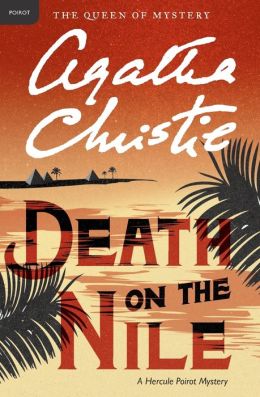
64. Death on the Nile


64. Death on the Nile. Agatha Christie. 1937/2007. Black Dog & Leventhal. 352 pages. [Source: Library] [5 stars, mystery, classic]

First sentence: "Linnet Ridgeway!" "That's her!" said Mr. Burnaby, the landlord of the Three Crowns. He nudged his companion.

Premise/plot: All is not fair in love or war. This Hercule Poirot mystery is set on a cruise of the Nile river. It is the honeymoon trip for one happy couple--or should I say one "happy" couple. For this happy couple is being stalked/followed by a disgruntled (and dramatic) ex. She is not happy to see HER former fiance marry a now former friend. She even introduced them! These three aren't the only travelers with struggles, traumas, and dramas of their own. Poirot picked quite a bunch to travel with. (Not that he had much say in the matter.) But when bodies start to fall, well, he has his work to do.

My thoughts: I LOVED, LOVED, LOVED Agatha Christie's Death on the Nile. It is such a great mystery, very complex! Hercule Poirot and Colonel Race find themselves on board a ship on the Nile, they are in interesting company. Poirot notices the tension between some of his fellow travelers from the very start. And as he takes the time to get to know everyone, to have personal chats with almost every one, his unease only increases. He fears that before the trip is over, murder will have been committed. But who shall the victim be? And who the murderer? Meanwhile, Race is on a mission of his own before a body is even found. He is on the trail of a killer, a radical. He's not sure WHO his man is, just knows that he is almost certainly on board, that is where his clues have led him. When the oh-so-wealthy heiress, Linnet Ridgeway, is murdered on her honeymoon with Simon Doyle, there are plenty of suspects. For not all of the passengers on board are exactly strangers to her....

The first part of this one is set in England, but the rest is all set in Egypt.

This one had me from the start. It was so thrilling! Not only was the plot interesting and surprising and wonderful, the characterization was so well done!!!

ETA: In June 2025 I listened to this one on audio book. It was narrated by David Suchet. 


© 2025 Becky Laney of Becky's Book Reviews

Thursday, April 24, 2025

43. The Hobbit


43. The Hobbit. J.R.R. Tolkien. 1937.  320 pages. [Source: Library] [5 stars, MG Fantasy, fantasy, classic] 

First sentence:  In a hole in the ground there lived a hobbit. Not a nasty, dirty, wet hole, filled with the ends of worms and an oozy smell, nor yet a dry, bare, sandy hole with nothing in it to sit down on or to eat: it was a hobbit-hole, and that means comfort.  

ETA: I listened to the audio book narrated by Andy Serkis. It is a little over ten hours, I believe. IT WAS WONDERFUL, FANTASTIC, A JOY AND DELIGHT. He is a talented voice actor. I loved all his voices, except perhaps for some birds? But I recommend the audio a hundred million percent. I would say the audio book is perhaps better than the book. Perhaps. It definitely HELPS the singing portions! I usually skip the poems/songs when I read. But Serkis actually makes them enjoyable!!!!

Premise/plot: Bilbo Baggins has an unexpected adventure in J.R.R. Tolkien's The Hobbit. When this children's classic opens, Bilbo is decidedly not a burglar. But by the end of it, well, you may have to decide for yourself if he is or isn't... Regardless, Bilbo sets off with THIRTEEN dwarves on a get-rich-or-die-trying quest. They're off to face down a DRAGON, but the dragon won't be the only challenge they face. Will Bilbo return to his beloved shire wiser?!

My thoughts: I love, love, love, love, love, love, love this one. I do. I may even love it a tiny bit more than the Lord of the Rings trilogy. Maybe. It's a tricky thing really because in truth, I just LOVE hobbits. I love spending time with hobbits. I love Tolkien's insights about hobbits. One of the things I love about Tolkien is how quotable he is.

Quotes:

“Good Morning!” said Bilbo, and he meant it. The sun was shining, and the grass was very green. But Gandalf looked at him from under long bushy eyebrows that stuck out further than the brim of his shady hat. “What do you mean?” he said. “Do you wish me a good morning, or mean that it is a good morning whether I want it or not; or that you feel good this morning; or that it is a morning to be good on?” “All of them at once,” said Bilbo.
“What a lot of things you do use Good morning for!” said Gandalf. “Now you mean that you want to get rid of me, and that it won’t be good till I move off.”
He liked visitors, but he liked to know them before they arrived, and he preferred to ask them himself. He had a horrible thought that the cakes might run short, and then he—as the host: he knew his duty and stuck to it however painful—he might have to go without.
“Go back?” he thought. “No good at all! Go sideways? Impossible! Go forward? Only thing to do! On we go!”
He was altogether alone. Soon he thought it was beginning to feel warm. “Is that a kind of a glow I seem to see coming right ahead down there?” he thought. It was. As he went forward it grew and grew, till there was no doubt about it. It was a red light steadily getting redder and redder. Also it was now undoubtedly hot in the tunnel. Wisps of vapour floated up and past him and he began to sweat. A sound, too, began to throb in his ears, a sort of bubbling like the noise of a large pot galloping on the fire, mixed with a rumble as of a gigantic tom-cat purring. This grew to the unmistakable gurgling noise of some vast animal snoring in its sleep down there in the red glow in front of him. It was at this point that Bilbo stopped. Going on from there was the bravest thing he ever did. The tremendous things that happened afterwards were as nothing compared to it. He fought the real battle in the tunnel alone, before he ever saw the vast danger that lay in wait.
“You have nice manners for a thief and a liar,” said the dragon. “You seem familiar with my name, but I don’t seem to remember smelling you before. Who are you and where do you come from, may I ask?” “You may indeed! I come from under the hill, and under the hills and over the hills my paths led. And through the air. I am he that walks unseen.” “So I can well believe,” said Smaug, “but that is hardly your usual name.” “I am the clue-finder, the web-cutter, the stinging fly. I was chosen for the lucky number.” “Lovely titles!” sneered the dragon. “But lucky numbers don’t always come off.” “I am he that buries his friends alive and drowns them and draws them alive again from the water. I came from the end of a bag, but no bag went over me.” “These don’t sound so creditable,” scoffed Smaug. “I am the friend of bears and the guest of eagles. I am Ringwinner and Luckwearer; and I am Barrel-rider,” went on Bilbo beginning to be pleased with his riddling. “That’s better!” said Smaug. “But don’t let your imagination run away with you!”
If more of us valued food and cheer and song above hoarded gold, it would be a merrier world.


© 2025 Becky Laney of Becky's Book Reviews

Wednesday, February 15, 2023

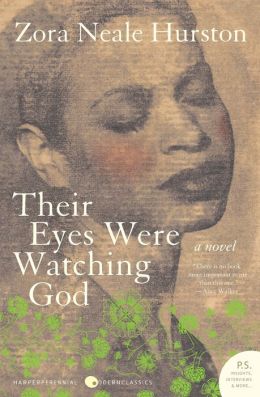
34. Their Eyes Were Watching God


Their Eyes Were Watching God. Zora Neale Hurston. 1937. Harper Perennial Modern Classics. 256 pages. [Source: Bought]

First sentence: Ships at a distance have every man’s wish on board. For some they come in with the tide. For others they sail forever on the horizon, never out of sight, never landing until the Watcher turns his eyes away in resignation, his dreams mocked to death by Time. That is the life of men.
Now women forget all those things they don’t want to remember, and remember everything they don’t want to forget. The dream is the truth. Then they act and do things accordingly. 

ETA: I've read this one so many times. I just absolutely love this one. I believe this is my third time to review it for the blog???? I will say that the more times I read it, the more complex I find it. Teacake and Janie's relationship is *SO* complex. On the one hand, as a reader, I see the abusive nature of it at times. He even takes pride in his ability to "beat" his wife, his woman, Janie. The fact that he's proud that she's publicly seen with bruises visible all over her--is disgusting and revolting. The narration--the narrative--takes this so matter-of-factly. It wasn't DANGER, DANGER, DANGER. No, it was that's just facts. Men beat women they love, end of story. In particular, the narrative points out that while white men oppress black men, black men oppress black women. Almost like a coping mechanism. It is heartbreaking as a reader to see. On the other hand, this is the only relationship [romantic, sexual] relationship in the novel where Janie has agency, has voice. Her first two relationships she had no agency, no voice, no choice. Teacake and Janie were more equals. Janie absolutely loved him heart-soul-body. She didn't really "love" or even like or respect her first two husbands. So contemporary readers have to contemplate was this relationship good? healthy? abusive? bad? Hurston's characters are so human, so flawed. There are no simple answers.

Original review:


I've read Their Eyes Were Watching God a handful of times now. (I first read it in college.) This book by Zora Neale Hurston is just beautiful and compelling. Every time I reread it I'm reminded just how beautiful and how compelling. I never quite forget, mind you. But every time I pick the book up, I'm swept into the story and experience it all over again. (The best kind of book to reread!)

Janie is the heroine of Their Eyes Were Watching God. There is a framework to the story that allows the reader to come full circle with Janie. Readers first see Janie through an outsider perspective, a gossiping group.

So the beginning of this was a woman and she had come back from burying the dead... The people all saw her come because it was sundown. The sun was gone, but he had left his footprints in the sky. It was the time for sitting on porches beside the road. It was time to hear things and talk. These sitters had been tongueless, earless, eyeless conveniences all day long. Mules and other brutes had occupied their skins. But now, the sun and the bossman were gone, so the skins felt powerful and human. They became lords of sounds and lesser things. They passed nations through their mouths. They sat in judgment. (1)
One from the group is Janie's best friend, Pheoby, she leaves the group after a few pages, and goes to her friend bringing a much welcomed plate of food. Then, together, they talk. Janie tells her friend her story--her whole story--framing things just so, explaining and justifying as need arises. It's honest and emotional.
Janie saw her life like a great tree in leaf with the things suffered, things enjoyed, things done and undone. Dawn and doom was in the branches. (8)
 To keep it short: Janie was raised by her grandmother; when she came of age (16 or so), her grandma arranged a marriage for Janie to an older man; when that marriage failed to bloom in love and happiness, Janie is swept off her feet by a traveler passing by; she leaves her first husband and is married to a second; the two settle in Florida and are influential founders of the black community; after the third husband dies, Janie finally, finally, finally falls in love, but, is Tea Cake the love of her life perfectly perfect?! Of course not! Pheoby knew her when she was married to the second husband, when she was Janie Stark. Now, she's come back to that community without Tea Cake, and everyone wants to know EVERYTHING that has happened in the past two years.

Favorite quotes:
'Dat's you, Alphabet, don't you know yo' ownself?' (9)
Oh to be a pear tree--any tree in bloom! With kissing bees singing of the beginning of the world! She was sixteen. She had glossy leaves and bursting buds and she wanted to struggle with life but it seemed to elude her. Where were the singing bees for her? Nothing on the place nor in her grandma's house answered her. She searched as much of the world as she could from the top of the front steps and then went on down to the front gate and leaned over to gaze up and down the road. Looking, waiting, breathing short with impatience. Waiting for the world to be made. (11)
Janie's first dream was dead, so she became a woman. (25)
Her old thoughts were going to come in handy now, but new words would have to be made and said to fit them. (32)
It must have been the way Joe spoke out without giving her a chance to say anything one way or another that took the bloom off of things. (43)
Every morning the world flung itself over and exposed the twon to the sun. (51)
Janie stood where he left her for unmeasured time and thought. She stood there until something fell off the shelf inside her. Then she went inside there to see what it was. It was her image of Jody tumbled down and shattered. But looking at it she saw that it never was the flesh and blood figure of her dreams. Just something she had grabbed up to drape her dreams over. In a way she turned her back upon the image where it lay and looked further. She had no more blossomy openings dusting pollen over her man, neither any glistening young fruit where the petals used to be. She found that she had a host of thoughts she had never expressed to him, and numerous emotions she had never let Jody know about. Things packed up and put away in parts of her heart where he could never fidn them. She was saving up feelings for some man she had never seen. She had an inside and an outside now and suddenly she knew how not to mix them. (72)
All next day in the house and store she thought resisting thoughts about Tea Cake. She even ridiculed him in her mind and was a little ashamed of the association. But every hour or two the battle had to be fought all over again. She couldn't make him look just like any other man to her. He looked like the love thoughts of women. He could be a bee to a blossom--a pear tree blossom in the spring. He seemed to be crushing scent out of the world with his footsteps. Crushing aromatic herbs with every step he took. Spices hung about him. He was a glance from God. (106)
The wind came back with triple fury, and put out the light for the last time. They sat in company with the other in other shanties, their eyes straining against crude walls and their souls asking if He meant to measure their puny might against His. They seemed to be staring at the dark, but their eyes were watching God. (160)
No hour is ever eternity, but it has its right to weep. (184)
Have you read Their Eyes Were Watching God? What did you think?


© 2023 Becky Laney of Becky's Book Reviews

Saturday, September 10, 2022

108. Death on the Nile


Death on the Nile. Agatha Christie. 1937/2007. Black Dog & Leventhal. 352 pages. [Source: Bought]

First sentence: "Linnet Ridgeway!" "That's her!" said Mr. Burnaby, the landlord of the Three Crowns. He nudged his companion.

Premise/plot: All is not fair in love or war. This Hercule Poirot mystery is set on a cruise of the Nile river. It is the honeymoon trip for one happy couple--or should I say one "happy" couple. For this happy couple is being stalked/followed by a disgruntled (and dramatic) ex. She is not happy to see HER former fiance marry a now former friend. She even introduced them! These three aren't the only travelers with struggles, traumas, and dramas of their own. Poirot picked quite a bunch to travel with. (Not that he had much say in the matter.) But when bodies start to fall, well, he has his work to do.

My thoughts: I LOVED, LOVED, LOVED Agatha Christie's Death on the Nile. It is such a great mystery, very complex! Hercule Poirot and Colonel Race find themselves on board a ship on the Nile, they are in interesting company. Poirot notices the tension between some of his fellow travelers from the very start. And as he takes the time to get to know everyone, to have personal chats with almost every one, his unease only increases. He fears that before the trip is over, murder will have been committed. But who shall the victim be? And who the murderer? Meanwhile, Race is on a mission of his own before a body is even found. He is on the trail of a killer, a radical. He's not sure WHO his man is, just knows that he is almost certainly on board, that is where his clues have led him. When the oh-so-wealthy heiress, Linnet Ridgeway, is murdered on her honeymoon with Simon Doyle, there are plenty of suspects. For not all of the passengers on board are exactly strangers to her....

The first part of this one is set in England, but the rest is all set in Egypt.

This one had me from the start. It was so thrilling! Not only was the plot interesting and surprising and wonderful, the characterization was so well done!!!


© 2022 Becky Laney of Becky's Book Reviews

Monday, April 08, 2019

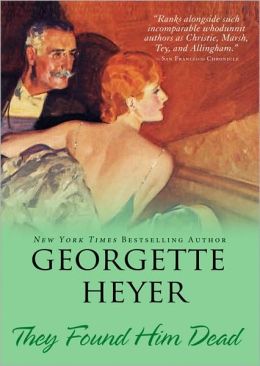
They Found Him Dead

They Found Him Dead. Georgette Heyer. 1937/2019. Sourcebooks. 384 pages. [Source: Review copy]

First sentence: Miss Allison thought that Silas Kane’s sixtieth-birthday party was going off rather better than anyone had imagined it would.

Premise/plot: If you're looking for a mystery novel with QUIRKY characters and multiple murders to solve, then They Found Him Dead should be your next read.

This mystery novel is vibrant and busy! Silas Kane died on his sixtieth birthday party--a tragic accident, so everyone believes except for the exuberant Timothy! He sees MYSTERY and CRIME everywhere he looks. But when Silas Kane's heir, Clement, is murdered just a short time later, others join Timothy in thinking that there is a killer in their midst! Jim Kane is the next heir, and Timothy and Miss Allison are worried that he'll be the next victim. And it appears the danger is very real as several attempts are made on his life...

Can Inspector Hannasyde and Inspector Hemingway solve the case in time? Will Timothy be a big help or a hindrance?


My thoughts: I loved, loved, loved, LOVED this one. It may just be my favorite mystery novel by Georgette Heyer. And while it won't be replacing Daughter in Time by Josephine Tey as my all-time favorite-and-best mystery novel, it is certainly making the list of my favorite mystery novels. I think I can say that I love this one more than most Agatha Christie novels--though I'd have to reread them to see if any can top it.


What did I love about They Found Him Dead? The characterization!!! If you want to win my heart--authors pay attention--it's through characterization. I am all about the characters. This one offers characters to love and characters to love to hate. (For the record, I love, love, love Patricia Allison, Jim Kane, and Timothy Harte. I do not love the attention-seeking Rosemary--Clement Kane's cheating wife.)


It's been just enough time since I first read They Found Him Dead (2013) that I could not remember exactly WHO did it--which was an ideal way to reread it. It was an intense read for me. I kept muttering please don't let it be...please don't let it be... This is something I usually never do since I don't get super-attached to characters most of the time.

Quotes:

Rosemary talking to Clement:
It’s almost as though there’s a providence that steps in when one’s almost desperate. Like that thing Mummy took up last year. Right Thought, or something, where you simply fix your mind on what you want, and utterly believe it’ll come to you, and it does, as long as you don’t do anything about it.’ Clement felt doubtful whether the exponents of whatever this odd creed might be would relish Rosemary’s description of it. Nor did he feel that fixing one’s mind upon the death of a relative could really be called Right Thought. He ventured to say so, but quite mildly, and added that, though he quite understood what Rosemary meant, he thought she should be careful of what she said. One would not like to seem callous.
Timothy on the investigation:
Timothy snorted. ‘I don’t call it making proper inquiries just to ask people where they were, and not to try to prove they weren’t there at all. Why, they didn’t even ask Jim, and he was at the party.’
‘Leave the boy alone,’ said Emily. ‘He’s entitled to his opinion as much as you are to yours. So my son was murdered, was he, Timothy?’ ‘Well, I don’t absolutely know he was,’ replied Timothy with a touch of caution, ‘but I do think it looks jolly suspicious. What’s more, I’m pretty sure Mr Roberts thinks so too.’
‘Who was it who said all along it was murder? You know jolly well it was me! I bet some people are feeling pretty silly now, that’s all!’

Allison on Rosemary:
What sympathy she felt was for Clement and for Trevor Dermott, both helpless in the snare of Rosemary’s beauty, but her pity for them was charged with contempt. She thought them fools to be slaves to Rosemary.
Miss Allison fixed her gaze upon the prospect outside, and thought of all the painful ways there might be of killing Mrs Clement Kane.
 Rosemary talking to Allison:
She sighed. ‘I suppose you want to go to bed. I don’t a bit. I feel as though every nerve in my body was stretched taut. Do you ever get like that?’ ‘Often,’ said Miss Allison.
General quotes:
‘Any ideas on the subject?’ he said. ‘That’s a large question, Mr Kane. Guess we can all of us have ideas, but believe you me, there’s more harm done spreading them about than by keeping them to yourself.’
‘There are two kinds of witnesses I’ve got it in for. There’s the one that says too little, and the one that says too much. You don’t get any forrader with the first, and you get too far with the second.’ ‘Then you won’t like this case,’ said Hannasyde. ‘We’ve got both.’ He smiled a little. ‘The old lady says she supposes I don’t need her to help me solve the problem.’
‘To my way of thinking, a nice young fellow like James Kane doesn’t waltz about murdering his relations.’ ‘I agree; but there’s also the question of motive to be taken into account. He had more than anyone else.’ ‘Too much,’ said the Sergeant briskly. ‘He’s what I might call dripping with motive. I’ve a strong idea, myself, that what we want to look for is something a bit more recherché.
‘A proper mess, that’s what this case is. We don’t know where it started, and if Terrible Timothy’s right, we don’t know where it’s going to end. You don’t know where to take hold of it, that’s what I complain of. It’s more like my missus’s skein of knitting wool, after one of the kittens has had it, than a decent murder case. I mean, you get hold of one end and start following it up, and all it leads to is a damned knot worked so tight you can’t do a thing with it. Then you grab hold of the other end, and start on that, and what you find is that it’s a bit the kitten chewed through that just comes away in your hand, with the rest of the wool in as bad a muddle as ever. 
‘Not prejudiced,’ said the Sergeant firmly. ‘I never let myself get prejudiced. All I say is, that he’s a nasty, slimy, double-faced tick who’d murder his own grandmother if he saw a bit of money to be got out of it.’ ‘Very moderate,’ said Hannasyde, smiling.
‘I do wish you’d try to get it out of your head that I suspect Jim Kane any more than I suspect any of the others. I don’t. I suspect him a good deal less than I suspect some, but I try to be impartial. Have a shot at it yourself.’
Timothy and the detective(s):
‘There’s a lot in it,’ replied the Sergeant gravely. ‘But it’s got a weak spot. That’s what you must learn to do if you’re going to be a detective: find the weak spots in your own theories.’
‘Well, I’m not going to be a detective. My mother wants me to be an explorer. Actually, I expect I shall be a barrister, because if you’re an explorer you seem to me to go to the most lousy places, and muck about with camels and things. I like cars. Oh, I say, what is the weak spot in my theory?’

© 2019 Becky Laney of Becky's Book Reviews

Friday, June 29, 2018

Vintage Murder

Vintage Murder. Ngaio Marsh. 1937. 256 pages. [Source: Bought]

First sentence: The clop and roar of the train was an uneasy element somewhere at the back of the tall man's dreams.

Premise/plot: Inspector Alleyn can't escape work on his vacation to New Zealand. He finds himself in company with a company--a touring theatre company. He socializes with them on the train to their shared destination. He keeps on socializing with them once they arrive. A few are aware of who he is--the famous Inspector--but many are not. At a big party after their opening show, a planned surprise turns deadly. Inspector Alleyn witnesses the 'surprise' along with most of the cast, crew, and invited guests. Will he be able to solve the crime and determine the motive?

My thoughts: This mystery novel is set in New Zealand, in a theatre in New Zealand. For mystery lovers looking for a more 'exotic' setting than the English countryside, this one may prove quite satisfying. Its peopled with quirky characters and I must admit it kept me guessing up until the end. I found it a quick and enjoyable read.
"It's human nature," he said. "Wondering! People spend half their time wondering about each other. That's what sells this detective fiction, I reckon." (97)
© 2018 Becky Laney of Becky's Book Reviews

Saturday, October 07, 2017

Choo Choo

Choo Choo. Virginia Lee Burton. 1937/2017. HMH. 48 pages. [Source: Review copy]

First sentence: Once upon a time there was a little engine. Her name was CHOO CHOO. She was a beautiful little engine. All black and shiny.

Premise/plot: Choo Choo was originally published in 1937. The original illustrations by Virginia Lee Burton have been colorized by Lauren Pettapiece. Choo Choo is the story of a little engine who is a bit naughty. What does she do that is naughty? She decides one day that she does NOT want to pull cars anymore--she wants to run free and go where she wants. This doesn't work out well for her!!!

My thoughts: I haven't decided if Choo Choo is more or less naughty than Thomas the Tank Engine. I do know that I like this one. The text is quite enjoyable. It is a bit text-heavy so this one might be great for train lovers with a longer attention span. (Freight Train is light on text, Choo Choo is NOT.) But the illustrations are what really make this one so delightful.

Text: 4 out of 5
Illustrations: 5 out of 5
Total: 9 out of 10
 
© 2017 Becky Laney of Becky's Book Reviews

Tuesday, October 04, 2016

Mystery in White

Mystery in White. J. Jefferson Farjeon. 1937/2014. 211 pages. [Source: Review copy]

First sentence: The Great Snow began on the evening of December 19th. Shoppers smiled as they hurried home, speculating on the chance of a white Christmas.

Premise/plot: Mystery in White may start out on a train, but, it soon turns into a country house murder mystery with hints of ghosts of Christmas past. A handful of strangers sharing a compartment in a train decide to see if they can walk to the next station instead of waiting out the storm on board the train. Two of these strangers are related--a brother and sister, David and Lydia. Not everyone thinks it's a good idea--in fact some think it's horribly foolish. But soon the company finds themselves seeking shelter at a seemingly abandoned house. The tea is hot, there is evidence that someone was there just minutes before, but now no one. The strength of the storm leaves them with little choice but to stay there for the duration. One of their company has already fallen sick--a fever--and a second has injured an ankle.

My thoughts: The book is a very atmospheric mystery. It is just a satisfying read from beginning to end. The characters are interesting and flawed but a delight to spend time with.

This compelling mystery is now back in print. I definitely recommend it!


© 2016 Becky Laney of Becky's Book Reviews

Sunday, February 22, 2015

Revisiting On the Banks of Plum Creek (1937)

On the Banks of Plum Creek. Laura Ingalls Wilder. 1937. 340 pages. [Source: Library]

I love Laura Ingalls Wilder's Little House series. I do. And On the Banks of Plum Creek, while not my absolute favorite--that would be The Long Winter or possibly These Happy Golden Years--is worth rereading every few years. One thing I hadn't noticed until this last reread is that the Ingalls' family celebrates three Christmases in this one book!

Plenty of things happen in On The Banks of Plum Creek:
  • the family moves into a sod house
  • the family moves into a wooden house with real glass windows
  • the family gets oxen and horses
  • the girls start school
  • the family attends church
  • crops are planted and lost
  • Pa leaves the family behind twice to go in search of work
  • hard weather is endured
  • Laura gets in and out of trouble (she almost drowns in this one)
The book is enjoyable and satisfying. I love the illustrations by Garth Williams. I remember them just as well as I do the text itself.

© 2015 Becky Laney of Becky's Book Reviews
Wednesday, January 14, 2015

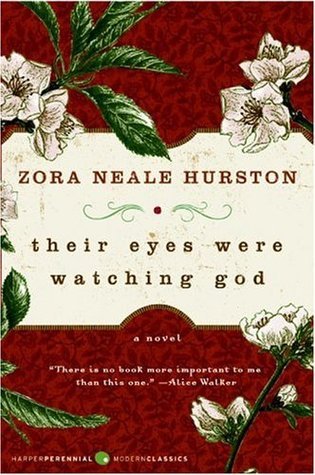
Their Eyes Were Watching God (1937)

Their Eyes Were Watching God. Zora Neale Hurston. 1937. Harper Perennial Modern Classics. 256 pages. [Source: Bought]
Ships at a distance have every man’s wish on board. For some they come in with the tide. For others they sail forever on the horizon, never out of sight, never landing until the Watcher turns his eyes away in resignation, his dreams mocked to death by Time. That is the life of men.
Now women forget all those things they don’t want to remember, and remember everything they don’t want to forget. The dream is the truth. Then they act and do things accordingly. (1)
I've read Their Eyes Were Watching God a handful of times now. (I first read it in college.) This book by Zora Neale Hurston is just beautiful and compelling. Every time I reread it I'm reminded just how beautiful and how compelling. I never quite forget, mind you. But every time I pick the book up, I'm swept into the story and experience it all over again. (The best kind of book to reread!)

Janie is the heroine of Their Eyes Were Watching God. There is a framework to the story that allows the reader to come full circle with Janie. Readers first see Janie through an outsider perspective, a gossiping group.
So the beginning of this was a woman and she had come back from burying the dead... The people all saw her come because it was sundown. The sun was gone, but he had left his footprints in the sky. It was the time for sitting on porches beside the road. It was time to hear things and talk. These sitters had been tongueless, earless, eyeless conveniences all day long. Mules and other brutes had occupied their skins. But now, the sun and the bossman were gone, so the skins felt powerful and human. They became lords of sounds and lesser things. They passed nations through their mouths. They sat in judgment. (1)
One from the group is Janie's best friend, Pheoby, she leaves the group after a few pages, and goes to her friend bringing a much welcomed plate of food. Then, together, they talk. Janie tells her friend her story--her whole story--framing things just so, explaining and justifying as need arises. It's honest and emotional.
Janie saw her life like a great tree in leaf with the things suffered, things enjoyed, things done and undone. Dawn and doom was in the branches. (8)
 To keep it short: Janie was raised by her grandmother; when she came of age (16 or so), her grandma arranged a marriage for Janie to an older man; when that marriage failed to bloom in love and happiness, Janie is swept off her feet by a traveler passing by; she leaves her first husband and is married to a second; the two settle in Florida and are influential founders of the black community; after the third husband dies, Janie finally, finally, finally falls in love, but, is Tea Cake the love of her life perfectly perfect?! Of course not! Pheoby knew her when she was married to the second husband, when she was Janie Stark. Now, she's come back to that community without Tea Cake, and everyone wants to know EVERYTHING that has happened in the past two years.

Favorite quotes:
'Dat's you, Alphabet, don't you know yo' ownself?' (9)
Oh to be a pear tree--any tree in bloom! With kissing bees singing of the beginning of the world! She was sixteen. She had glossy leaves and bursting buds and she wanted to struggle with life but it seemed to elude her. Where were the singing bees for her? Nothing on the place nor in her grandma's house answered her. She searched as much of the world as she could from the top of the front steps and then went on down to the front gate and leaned over to gaze up and down the road. Looking, waiting, breathing short with impatience. Waiting for the world to be made. (11)
Janie's first dream was dead, so she became a woman. (25)
Her old thoughts were going to come in handy now, but new words would have to be made and said to fit them. (32)
It must have been the way Joe spoke out without giving her a chance to say anything one way or another that took the bloom off of things. (43)
Every morning the world flung itself over and exposed the twon to the sun. (51)
Janie stood where he left her for unmeasured time and thought. She stood there until something fell off the shelf inside her. Then she went inside there to see what it was. It was her image of Jody tumbled down and shattered. But looking at it she saw that it never was the flesh and blood figure of her dreams. Just something she had grabbed up to drape her dreams over. In a way she turned her back upon the image where it lay and looked further. She had no more blossomy openings dusting pollen over her man, neither any glistening young fruit where the petals used to be. She found that she had a host of thoughts she had never expressed to him, and numerous emotions she had never let Jody know about. Things packed up and put away in parts of her heart where he could never fidn them. She was saving up feelings for some man she had never seen. She had an inside and an outside now and suddenly she knew how not to mix them. (72)
All next day in the house and store she thought resisting thoughts about Tea Cake. She even ridiculed him in her mind and was a little ashamed of the association. But every hour or two the battle had to be fought all over again. She couldn't make him look just like any other man to her. He looked like the love thoughts of women. He could be a bee to a blossom--a pear tree blossom in the spring. He seemed to be crushing scent out of the world with his footsteps. Crushing aromatic herbs with every step he took. Spices hung about him. He was a glance from God. (106)
The wind came back with triple fury, and put out the light for the last time. They sat in company with the other in other shanties, their eyes straining against crude walls and their souls asking if He meant to measure their puny might against His. They seemed to be staring at the dark, but their eyes were watching God. (160)
No hour is ever eternity, but it has its right to weep. (184)
Have you read Their Eyes Were Watching God? What did you think?

© 2015 Becky Laney of Becky's Book Reviews

Saturday, January 03, 2015

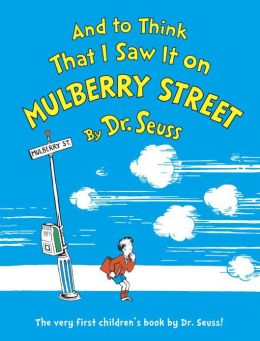
Seuss on Saturday #1

And to Think That I Saw It On Mulberry Street. Dr. Seuss. 1937/1964. Random House. 40 pages. [Source: Library]

First sentence:
When I leave home to walk to school, Dad always says to me, "Marco, keep your eyelids up and see what you can see."
Premise/Plot: While Marco is on his way home, he plans what to say to his father when he asks what he's seen. Marco really sees just a horse and wagon. But what he imagines he sees, well, it gets outlandish. What will he end up telling his father? a pack of lies? or the truth?

My thoughts: It's been years since I read this one. And it is a bit dated when you think about it. For example, as Marco gets carried away with his story, he imagines a reindeer pulling a sled. But he stops himself by adding,
Say--anyone could think of that,
Jack or Fred or Joe or Nat--
Say, even Jane could think of that.
Also of note, it includes a "Chinese man who eats with sticks..." and the illustration of course is not ideal. I'm not mentioning these things to say that the book is "bad" and doesn't belong in your child's library. Just noting that times have changed quite a bit since 1937!!!

Overall, I'd say I liked this one. Didn't necessarily "love" it. But I like it. How many picture books from the 1930s are still in print?! Well, I suppose there's The Story of Ferdinand, Mike Mulligan and His Steam Shovel, Madeline, and The Story of Babar. There may be others as well.

Have you read And To Think I Saw It On Mulberry Street? Did you like it? love it? hate it? I'd love to know what you think of it!

If you'd like to join me in reading or rereading Dr. Seuss' picture books (chronologically) I'd love to have you join me! The next book I'll be reviewing is The 500 Hats of Bartholomew Cubbins.

© 2015 Becky Laney of Becky's Book Reviews

Sunday, October 26, 2014

Dancers in Mourning (1937)

Dancers in Mourning. Margery Allingham. 1937. 337 pages. [Source: Bought]
 When Mr. William Faraday sat down to write his memoirs after fifty-eight years of blameless inactivity he found the work of inscribing the history of his life almost as tedious as living it had been and so, possessing a natural invention coupled with a gift for locating the easier path, he began to prevaricate a little upon the second page, working up to downright lying on the sixth and subsequent folios.
The book appeared at eighteen-and-sixpence, with frontispiece, in nineteen thirty-four and would have passed into the limbo of the remainder lists with thousands of its prototypes had not the quality of one of the wilder anecdotes in the chapters dealing with an India the author had never seen earned it a place in the news columns of a Sunday paper.
This paragraph called the memoirs to the attention of a critic who had not permitted his eminence to impair his appreciation of the absurd, and in the review which he afterwards wrote he pointed out that the work was pure fiction, not to say fantasy, and was incidentally one of the funniest books of the decade.
The public agreed with the critic and at the age of sixty-one William Faraday, author of Memoirs of an Old Buffer (republished at seven-and-six, seventy-fourth thousand), found himself a literary figure.
I was disappointed with this vintage mystery. While I absolutely loved the opening pages, by the end I found the whole book to be a mess. I admit it could be a mood thing. As much as I wanted to like it, even love it, perhaps I didn't have the patience to remember the large cast of suspects. Or perhaps the problem is that the characters aren't well drawn enough, aren't unique enough, to distinguish between. There were three or four characters that I could remember. But for the others, it was who is she again? who is he again? how does he fit into the group again? where did she come from?

Albert Campion has been invited into the inner circle of Jimmy Sutane and his friends. Sutane is in show business--the theater. Uncle William is, I believe, a mutual friend? Regardless, Uncle William is one of Campion's closest friends in the book. Anyway, Sutane invites Campion to his country house. There are many, many people there. Mostly his guests are in show business too--in the same currently running production. But a few are in his employ or in his family. By the end of the day, tragedy will strike and one of the guests will be dead.

The main reason I found this book to be a complete mess is Albert Campion. He is a horrible detective in this one. Why? Because at the party, he falls madly, deeply in LOVE with Jimmy Sutane's wife. He believes that they share a meaningful moment. In fact, he gets so swept up in the moment...he finds himself almost rushing across the room and taking her in his arms. At least he doesn't do that. But. Regardless. His inappropriate interest in Linda--Jimmy's wife--keeps him from using his brain for hundreds of pages. He doesn't want the murder to be solved just in case the murderer is someone that she cares about, just in case bringing the murderer to justice would make her feel bad. It's RIDICULOUS.


© 2014 Becky Laney of Becky's Book Reviews
Friday, September 19, 2014

Reread #38 The Hobbit

The Hobbit. J.R.R. Tolkien. 1937.  320 pages. [Source: Bought]

In a hole in the ground there lived a hobbit. Not a nasty, dirty, wet hole, filled with the ends of worms and an oozy smell, nor yet a dry, bare, sandy hole with nothing in it to sit down on or to eat: it was a hobbit-hole, and that means comfort. 

I love The Hobbit. I do. This is my fourth time to review it. I first read it in May 2008. I also reviewed it in 2012 and 2013. (The 2013 review being of The Annotated Hobbit!)

The Hobbit is an adventure story starring Bilbo Baggins (the hobbit) and thirteen dwarves (led by Thorin). Gandalf introduces the dwarfs to Bilbo, he introduces him as a great burglar. Is he a great burglar? Not really. He's never done anything of the sort before. He's never even thought of doing any such thing. Bilbo have an adventure? Bilbo go on a long journey? The idea that he, a comfort-loving hobbit would leave the safety of his shire to GO and steal from a dragon is ridiculous. Yet. Bilbo finds himself on such a journey. And Bilbo discovers that there is more to him. It's not that he suddenly becomes brave and strong and wise. He doesn't. But he's shaped by the experiences of the journey.

Quotes:
“Good Morning!” said Bilbo, and he meant it. The sun was shining, and the grass was very green. But Gandalf looked at him from under long bushy eyebrows that stuck out further than the brim of his shady hat. “What do you mean?” he said. “Do you wish me a good morning, or mean that it is a good morning whether I want it or not; or that you feel good this morning; or that it is a morning to be good on?” “All of them at once,” said Bilbo.
“What a lot of things you do use Good morning for!” said Gandalf. “Now you mean that you want to get rid of me, and that it won’t be good till I move off.”
He liked visitors, but he liked to know them before they arrived, and he preferred to ask them himself. He had a horrible thought that the cakes might run short, and then he—as the host: he knew his duty and stuck to it however painful—he might have to go without.
“Go back?” he thought. “No good at all! Go sideways? Impossible! Go forward? Only thing to do! On we go!”
He was altogether alone. Soon he thought it was beginning to feel warm. “Is that a kind of a glow I seem to see coming right ahead down there?” he thought. It was. As he went forward it grew and grew, till there was no doubt about it. It was a red light steadily getting redder and redder. Also it was now undoubtedly hot in the tunnel. Wisps of vapour floated up and past him and he began to sweat. A sound, too, began to throb in his ears, a sort of bubbling like the noise of a large pot galloping on the fire, mixed with a rumble as of a gigantic tom-cat purring. This grew to the unmistakable gurgling noise of some vast animal snoring in its sleep down there in the red glow in front of him. It was at this point that Bilbo stopped. Going on from there was the bravest thing he ever did. The tremendous things that happened afterwards were as nothing compared to it. He fought the real battle in the tunnel alone, before he ever saw the vast danger that lay in wait.
“You have nice manners for a thief and a liar,” said the dragon. “You seem familiar with my name, but I don’t seem to remember smelling you before. Who are you and where do you come from, may I ask?” “You may indeed! I come from under the hill, and under the hills and over the hills my paths led. And through the air. I am he that walks unseen.” “So I can well believe,” said Smaug, “but that is hardly your usual name.” “I am the clue-finder, the web-cutter, the stinging fly. I was chosen for the lucky number.” “Lovely titles!” sneered the dragon. “But lucky numbers don’t always come off.” “I am he that buries his friends alive and drowns them and draws them alive again from the water. I came from the end of a bag, but no bag went over me.” “These don’t sound so creditable,” scoffed Smaug. “I am the friend of bears and the guest of eagles. I am Ringwinner and Luckwearer; and I am Barrel-rider,” went on Bilbo beginning to be pleased with his riddling. “That’s better!” said Smaug. “But don’t let your imagination run away with you!”
If more of us valued food and cheer and song above hoarded gold, it would be a merrier world.
© 2014 Becky Laney of Becky's Book Reviews

Sunday, December 01, 2013

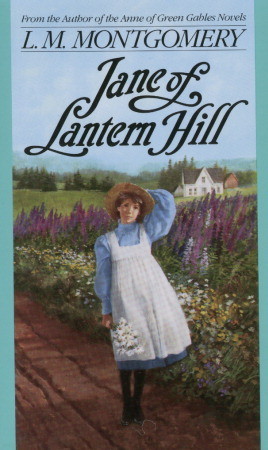
Sunday Salon: Reading Jane of Lantern Hill

Jane of Lantern Hill. L.M. Montgomery. 1937. 274 pages. [Source: Bought]

Jane of Lantern Hill was one of the few L.M. Montgomery books that I had not read before this year. While I found Pat of Silver Bush and Mistress Pat extremely disappointing, I found Jane of Lantern Hill to be practically perfect in every way. (If Pat had been my first introduction to L.M. Montgomery, I'm not sure I'd have ever voluntarily picked up another Montgomery book.) I just loved, loved, loved Jane of Lantern Hill.

Jane is our heroine. She lives with her mother, aunt, and grandmother. All three call her Victoria. It is not a happy home for all live in fear or reverence of the grandmother. Her mother is a forgiven prodigal. She returned home with a three year old daughter. (She did not divorce her husband; divorce is unforgivable.) Jane has always assumed that her father was dead. When she learns the truth, she's one confused child. Her relatives only confuse her more. If he is mentioned at all, it is to say that he did not want her, that he never loved her, that she is nothing to him. So it is with dread that Jane learns she is to spend an entire summer with him. He lives on Prince Edward Island. If he never wanted her, why does he want her now?

Once Jane is reunited with her father, her Dad, then the magic happens. It's a lovely coming-of-age novel about Jane discovering who she is and who she isn't! It's about her getting to know and love her Dad. It's about her finding a home, finding a place to belong, a place in the community. Jane is a great narrator! I can hardly do the book justice by summary.

Jane of Lantern Hill is thoroughly satisfying!

Favorite quotes:
Sometimes Jane thought drearily that there must be something the matter with her when there were so many people she didn't like. 
If any one doesn't like the Bible there's something wrong either with him or with the way he was introduced to it. We must do something about it. The Bible is a wonderful book, my Jane. Full of corking good stories and the greatest poetry in the world. Full of the most amazingly human 'human nature.' Full of incredible, ageless wisdom and truth and beauty and common sense. 
Dad read words as if he tasted them.
© 2013 Becky Laney of Becky's Book Reviews

Tuesday, July 09, 2013

Death on the Nile (1937)

Death on the Nile. Agatha Christie. 1937/2007. Black Dog & Leventhal. 352 pages. [Source: Library]

I LOVED, LOVED, LOVED Agatha Christie's Death on the Nile. It is such a great mystery, very complex! Hercule Poirot and Colonel Race find themselves on board a ship on the Nile, they are in interesting company. Poirot notices the tension between some of his fellow travelers from the very start. And as he takes the time to get to know everyone, to have personal chats with almost every one, his unease only increases. He fears that before the trip is over, murder will have been committed. But who shall the victim be? And who the murderer? Meanwhile, Race is on a mission of his own before a body is even found. He is on the trail of a killer, a radical. He's not sure WHO his man is, just knows that he is almost certainly on board, that is where his clues have led him. When the oh-so-wealthy heiress, Linnet Ridgeway, is murdered on her honeymoon with Simon Doyle, there are plenty of suspects. For not all of the passengers on board are exactly strangers to her....

The first part of this one is set in England, but the rest is all set in Egypt.

This one had me from the start. It was so thrilling! Not only was the plot interesting and surprising and wonderful, the characterization was so well done!!!

My favorite quote:
"Do people interest you too, Monsieur Poirot? Or do you reserve your interest for potential criminals?"
"Madame--that category would not leave many people outside it." (96)
ETA: After reading the book, I wanted to watch the movie adaptation. I really ENJOYED the movie. It stars David Suchet as Hercule Poirot, JJ Feild as Simon Doyle, and Emily Blunt as Linnet Ridgeway, to name just a few. Feild, of course, "is" Henry Tilney. I recognized him right away. And Emily Blunt is equally "Queen Victoria." It was fun to see familiar faces in fascinating roles. If you've read the book recently OR if you remember the characters you'll guess just why. This was my first Poirot adaptation. I've seen plenty of Miss Marple, however.

© 2013 Becky Laney of Becky's Book Reviews
Thursday, June 27, 2013

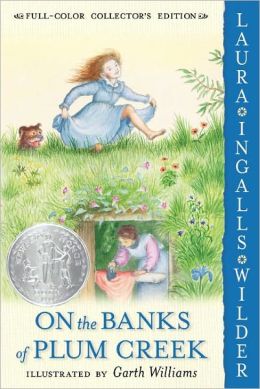
They Found Him Dead (1937)

They Found Him Dead. Georgette Heyer. 1937. Sourcebooks. 325 pages

Some books should be read in a certain order. If only I had read They Found Him Dead before reading Duplicate Death, I think I would have enjoyed Duplicate Death SO much more if I'd met Jim Kane and Patricia Allison and Timothy Harte first in the pages of They Found Him Dead!

This mystery novel is vibrant and busy! Silas Kane died on his sixtieth birthday party--a tragic accident, so everyone believes except for the exuberant Timothy! He sees MYSTERY and CRIME everywhere he looks. But when Silas Kane's heir, Clement, is murdered just a short time later, others join Timothy in thinking that there is a killer in their midst! Jim Kane is the next heir, and Timothy and Miss Allison are worried that he'll be the next victim. And it appears the danger is very real as several attempts are made on his life...

Can Inspector Hannasyde and Inspector Hemingway solve the case in time? Will Timothy be a big help or a hindrance?

What I loved about this mystery novel is the characterization. Even when the characters were despicable--and a few of them were--there is something about them making them a joy to read about! This novel has so many QUIRKY characters. A few of the characters I really did love!

© 2013 Becky Laney of Becky's Book Reviews
Wednesday, April 17, 2013

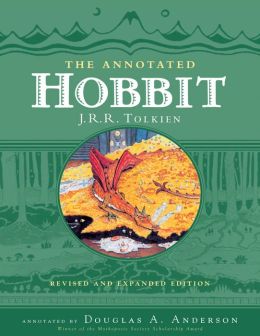
The Annotated Hobbit (2002)

The Annotated Hobbit. Revised and Expanded Edition. J.R.R. Tolkien. Annotated by Douglas A. Anderson. 2002. (1937, original Hobbit pub. date). Houghton Mifflin Harcourt. 416 pages.

The Hobbit is one of my favorite books even though I didn't discover it until I was an adult. It's a children's book that I've read several times as an adult. One of those feel-good books that you can happily, joyfully read each and every year without tiring of it. The Annotated Hobbit makes a lovely present for people who can't get enough of The Hobbit!

After viewing The Hobbit: The Unexpected Journey, I picked up The Annotated Hobbit. It was just what I needed! The film "covers" the first six chapters of the novel: "An Unexpected Party," "Roast Mutton," "A Short Rest," "Over Hill and Under Hill," "Riddles in the Dark," and "Out of the Frying-Pan Into the Fire." The most significant chapter in this annotated edition may just be "Riddles in the Dark." Fans most likely know already that the story of Bilbo's ring varies greatly from the original publication in 1937 and the later editions published after Tolkien wrote The Lord in the Rings, the variations even becoming a part of the story in a way. But this was the first time I was able to read the full, original ending to the story. (This is found in the notes on pages 128-131 and page 134.)

I came to the text needing to "check" the "faithfulness" of the film to the movie. True, I wanted to spend time with the characters, and, of course, I wanted to read it (again) because it's a great story. But. I wanted to see if the movie got it "wrong" or "right." While that was my original intention, I didn't always keep to it. I found the characters and story so irresistible. I was reminded once again of all the lovely little things that I just ADORE about the book. Things that didn't always translate as faithfully as I would have liked in the movie. Of course, some of what I ADORED about the book made it into the film, sometimes very faithful both in tone and detail.

There were some things that are technically "from the book" but taken completely out of proportion and focus, things that were made BIG AND SIGNIFICANT that barely got more than a sentence or two at most in the novel. The thing that stands out, for example, is how the party is HUNTED in the movie. Almost from the start, the journey is perilous because of a specific threat. And every single stage of the journey is equally dangerous and life-threatening. There is a purposeful, intentional darkness (evil) beginning to move in Middle Earth. In the novel, this isn't the case. The party faces danger, yes, sometimes a little danger, sometimes a lot of danger. But it isn't of an intentional hunted sort of danger. More of a being in the wrong place at the wrong time danger. They stumble almost on the trolls. (They also stumble upon the meeting place of the wolves or wargs.) And they face danger from rock slides and bad storms--but this is a natural threat. And yes, the stone giants exist but not so absurdly as in the movie:
There they were sheltering under a hanging rock for the night, and he lay beneath a blanket and shook from head to toe. When he peeped out in the lightning-flashes, he saw that across the valley the stone-giants were out, and were hurling rocks at one another for a game, and catching them, and tossing them down into the darkness where they smashed among the trees far below, or splintered into little bits with a bang. Then came a wind and a rain, and the wind whipped the rain and the hail about in every direction, so that an overhanging rock was no protection at all. Soon they were getting drenched and their ponies were standing with their heads down and their tails between their legs, and some of them were whinnying with fright. They could hear the giants guffawing and shouting all over the mountainsides.
"This won't do at all!" said Thorin. "If we don't get blown off, or drowned, or struck by lightning, we shall be picked up by some giant and kicked sky-high for a football."
"Well, if you know of anywhere better, take us there!" said Gandalf, who was feeling very grumpy, and was far from happy about the giants himself. (104)
The book doesn't exactly stay focused on the danger in any particularly threatening situation. The focus is on the adventure, the quest, the journey. There are plenty of in-between moments in the book. Moments where they might not be physically in danger from an enemy (goblins, trolls, angry elves, giant spiders), but might be facing discouragement, doubt, depression. Not to mention hunger, thirst, and exhaustion!!! 

There were isolated scenes that were especially faithful to the book and lovely to watch! But there were plenty of scenes that were pure interpretation. For better or worse. The film shows that there is more than one way to "read" a book or story.

Reading The Annotated Hobbit was beneficial. It reminded me of the creative process involved in writing and storytelling. Reading the annotations showed me that Tolkien never stopped creating this story. It was NOT "the end" of the story when it was published in 1937. The story kept changing and transforming and evolving through the decades. Tolkien stayed involved in the story. If Tolkien himself kept changing the story as his fantasy world kept growing and expanding, then it only makes sense that the film would be free to do the same.

I personally enjoyed reading almost all of the annotations. Some notes are mainly textual revision notes, letting readers know the differences between the different editions of the text (1937, 1951, 1966, etc.) Other notes tend to be scholarly and focused on literature. But some provide insights on The Hobbit or Middle Earth. (I liked notes about authors that influenced Tolkien.)


© 2013 Becky Laney of Becky's Book Reviews
Monday, March 11, 2013

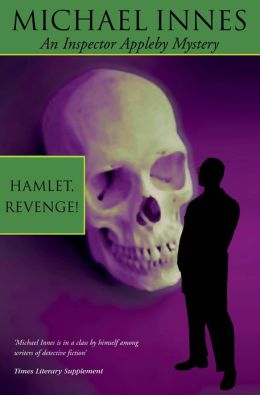
Hamlet, Revenge (1937)

Hamlet, Revenge! Michael Innes. 1937. 312 pages.

Hamlet, Revenge is the first mystery novel I've read by Michael Innes. It was published in 1937 and stars Inspector Appleby. The first half of the novel focuses on Scamnum Court, the family is producing a private showing of Shakespeare's Hamlet. Family, family friends, friendly acquaintances will star in this tragedy. Of course, from the start, readers know that all will not go well. (It is a mystery, after all. But there is plenty of foreshadowing in the introductory chapters.) The second half of the mystery focuses on Inspector Appleby and company as they try to solve the murder(s) that occurred on that tragic weekend.

There are SO MANY suspects in this one. So many characters introduced, and it was almost impossible to remember who was who. The mystery is very detailed, clues abound, and if you've got the attention to give to this one, it would probably be worth your time. It took me a while to get into this novel, but by the end I did care.


Read Hamlet, Revenge
  • If you enjoy mysteries, British mysteries, vintage mysteries
  • If you enjoy mysteries with literature and/or drama and/or academic connection

© 2013 Becky Laney of Becky's Book Reviews

Saturday, January 12, 2013

Brentwood (1937)

Brentwood. Grace Livingston Hill. 1937. 315 pages.

Marjorie Wetherill had always known she was an adopted child. She had been told when she was so young that it meant nothing at all to her. And as the years went by and she was surrounded by love and luxury, she thought little of it.

After the death of her adoptive parents, Marjorie discovers a letter written by her (adoptive) mother; a letter revealing some dark(er) truths about her adoption. Her biological mother wanted her very much--loved her dearly. But her father was sick, in desperate need of medical treatment, as was her twin sister. Mr. Wetherill promised to pay for everything the family would need, to see to everything in exchange for the healthy baby girl. He was very persuasive and she was at her weakest, perhaps. The deal was made; the adoption a reality. The letter later revealed how the birth mother came years later to try to see her, came with the money they'd received only to be turned away, dismissed without a thought. The letter was repentant, begging Marjorie's forgiveness. With that letter came her mother's name and address. And so Marjorie's journey to "her own people" began...

There was one man, Evan, who did NOT want her to go. A man worthy of being booed and hissed. For in his addressing his "darling," his "poor child," his "little girl" he reveals his true colors. He seeks only to possess her so he can control her. Readers are "treated" with his perspective revealing how he wants to "train" her and "mold" her to his liking, how when she is his wife, he'll set her straight and train the foolish notion of independence right out of her. One of the first things he wants to train out of her is her conscience. He doesn't like that she thinks of others--the world at large, the world outside his narrow perception of society. He wants her to be kind and compassionate--but only so that she can put him first and be perfectly obedient to him.

But Marjorie does leave her comfortable life in Chicago. And she finds her family just in time. Her mother and father are both sick. As is one of her younger sisters. They are about to lose their apartment; they have no coal for a fire or gas for a stove; they have no food to cook. They have pawned almost everything they owned. She's there now--for better or worse. And she's going to see to all their needs no matter what the fuss. She is their sister like it or not.

The novel chronicles their first few weeks together as a reunited family. It is Christmas time. And she's determined it will be the BEST Christmas ever...

While the family is large, readers mainly get to know Marjorie, Betty (Marjorie's twin), and Ted. Ted invites Marjorie to go to church with him. His sister, Betty, will not go to church. Marjorie is impressed with the preacher and the sermon. She's full of questions, and through asking those questions and receiving answers, she comes to Christ and realizes her eternal security. She is then most eager to keep company with the young preacher, Gabriel.

Throughout these weeks, Marjorie is trying to decide what is best for herself and her family...where does she belong?!

I enjoyed Brentwood. It definitely had some Christian lessons in it. It clearly had a couple of gospel presentations in it, conversations where characters discuss what it means to be saved, what it means to be born again, how you can know if you're going to heaven or hell, how being good isn't good enough, how trusting in being good enough is anti-gospel. But what I appreciated even more than the obvious lessons where the quieter lessons.

Read Brentwood
  • If you enjoy christian romance novels, clean romance novels
  • If you enjoy historical fiction; though it was written as a contemporary romance--would have been read by its original audience as contemporary. Set in 1930s America
  • If you enjoy adoption stories 
© 2013 Becky Laney of Becky's Book Reviews