Showing posts with label Laura Ingalls Wilder. Show all posts

Tuesday, April 21, 2026

33. The Pioneer Girl


33. Pioneer Girl: The Annotated Autobiography. Laura Ingalls Wilder. Edited by Pamela Smith Hill. 2014. South Dakota State Historical State Society. 400 pages. [Source: Library] [5 stars, nonfiction, memoir]


Pioneer Girl is a must-read for anyone who grew up loving, or perhaps, LOVING, Laura Ingalls Wilder's Little House books. Pioneer Girl is an annotated autobiography. The book itself is a draft of an autobiography written by Laura Ingalls Wilder circa 1930. Mother and daughter worked with this draft preparing to send it to various publishers (not just book publishers) for a year or two. (There are several draft versions of Pioneer Girl.) Eventually, the focus shifts from writing an adult autobiography to writing a series of historical fiction novels for children. The adult autobiography was "forgotten" as a book itself, and becomes a source--a good source--for mother and daughter to use in their own fiction. I didn't know that Rose Wilder Lane borrowed generously from her mom's autobiography while writing her adult fiction. Lane wrote Free Land and Let the Hurricane Roar (Young Pioneers).

The autobiography shares Laura Ingalls Wilder's earliest memories through her wedding day. (Those earliest memories are of being a toddler in Kansas.) These memories are, of course, in her own words. The writing is natural and casual. Some paragraphs are great at capturing details and specifics of an event. Other paragraphs are more of a rush, a blend, they seem a bit fuzzier, less exact. These are her very personal reflections written first for her daughter, and, then possibly for a larger audience. Wilder has turned reflective. She's older now, feeling that very much. (Her mom died in 1924, her sister, Mary, in 1928. She's wanting to capture these memories, these stories, to hold onto them perhaps.) One also sees the book itself as an act of love, an expression of love, a way of remembering and honoring.

The annotations are wonderful. They provide background and context. The annotations includes notes on a wide variety of subjects a) people b) places c) events d) nature e) culture (songs, dances, fashion), f) writing, editing, and publishing. There are plenty of notes that compare and contrast scenes and events as they appear in Pioneer Girl and as they appear in one of the original novels. Readers see how a memory recorded in Pioneer Girl is shaped and crafted into a finished product with plenty of detail and even dialogue. Readers see how Wilder carefully--oh-so-carefully--crafted the characters of the family. One gets the definite impression that she was purposeful with every scene, every book. It was no accident that Pa is so noble, independent, strong, and bigger-than-life almost.

I learned so much by reading Pioneer Girl. I would definitely recommend it for anyone who has enjoyed spending time with Laura and her family through the years.


© 2026 Becky Laney of Becky's Book Reviews

Sunday, March 08, 2026

29. Farmer Boy


29. Farmer Boy. Laura Ingalls Wilder. Illustrated by Garth Williams. 1933. 372 pages. [Source: Library] [3 stars, audiobook, children's classic, historical fiction]


First sentence: It was January in northern New York State, sixty-seven years ago. Snow lay deep everywhere. It loaded the bare limbs of oaks and maples and beeches, it bent the green boughs of cedars and spruces down into the drifts. Billows of snow covered the fields and the snow fences.

Premise/plot: Farmer Boy is the second book (technically) in the Little House series by Laura Ingalls Wilder. (The first book is Little House in the Big Woods). The book (fictionally) chronicles Almanzo Wilder's childhood. (Presumably based on stories he told his wife through the years.) I believe it covers roughly one year of his life. It begins and ends in (different) winter(s). The focus, as you can imagine, is on his farm life. He spends a lot of time with horses, cows, pigs, and various crops like corn, wheat, pumpkins, etc. There's also a chapter on cutting ice. (I couldn't help but think of Almanzo hauling ice in the television show).

My thoughts: I must have read the original series a dozen times growing up. And I did always enjoy Almanzo entering the story in The Long Winter. But I never read the second book. Never. I just didn't see the appeal. It was about a boy, a farm boy, a boy who spent way too much time with livestock and crops. 

Was I right to skip it? Probably. It is all subjective, I know. Plenty of girls--plenty of kids--go through a horse phase, where they read anything/everything with horses. That never happened to me. I never went through a horse phase. And this book is only about a step above watching grass grow. In my opinion.

 I do think it provided a window into the past. And in some ways, two windows into the past. Readers can get a glimpse into Almanzo's childhood. (If my math serves, roughly 1866/1867). But readers also get a glimpse into the 1930s. People certainly viewed the world different in 1866 than they do now...and same with the early 1930s. You can't expect today's values and viewpoints to be present in a book written in 1933...especially when that book was telling the story of a boy growing up in the 1860s.

ETA: This was my first time to reread Farmer Boy. Technically, I listened on audio. I still don't love it. But it does have some of the same vibes as Little House in the Big Woods.

© 2026 Becky Laney of Becky's Book Reviews

Wednesday, January 21, 2026

8. By the Shores of Silver Lake


8. By the Shores of Silver Lake. Laura Ingalls Wilder. 1939. 290 pages. [Source: Library] [audiobook, j historical fiction, series book]

First sentence: Laura was washing the dishes one morning when old Jack, lying in the sunshine on the doorstep, growled to tell her that someone was coming. She looked out, and saw a buggy crossing the gravelly ford of Plum Creek. "Ma," she said, "it's a strange woman coming."

By the Shores of Silver Lake is one of five Newbery Honors that Laura Ingalls Wilder received for her historical fiction "Little House" series. (For those that are curious: 1938 for On the Banks of Plum Creek; 1940 for By the Shores of Silver Lake; 1941 for The Long Winter; 1942 for Little Town on the Prairie; 1944 for These Happy Golden Years).

The novel takes the Ingalls family into South Dakota around DeSmet where the rest of the series is set.

As a child, By The Shores of Silver Lake wasn't my favorite of the series. I blame Jack's death for that. But as an adult, I've come to appreciate By The Shores of Silver Lake more, seeing it as more than just a transition between On the Banks of Plum Creek and The Long Winter.

In By the Shores of Silver Lake:
  • Mary goes blind, Laura is "asked" to be her eyes
  • Pa is offered a new job, a job with the railroad, which he takes
  • He goes by wagon, Jack dies BEFORE Pa's departure
  • The rest of the family travels most of the way by train
  • They continue the rest of their journey (a day or two or three) by wagon
  • They settle in for a while, Pa talks about the claim he hopes to claim later that year or whenever his job is finished and he's able to go out seeking a claim of his own
  • Pa's job isn't always safe; he's the paymaster for the railroad, and he has to calm down an angry mob in this one.
  • They meet the Boast family
  • They spend the winter in the 'biggest' house Laura has ever lived in
  • Winter may be lonely (no neighbors, no town) but the spring will see plenty of people come and go. EVERYONE stops at their house on their way west
  • The family learns that there is a school for the blind, they all decide Mary should go there.
  • The family decides to claim land near De Smet, South Dakota
  • Laura catches the tiniest glimpse of Almanzo Wilder's horses
I definitely am enjoying rereading these books. By The Shores of Silver Lake may not be my favorite of the series, but, I'm glad I reread it.

© 2026 Becky Laney of Becky's Book Reviews

Friday, January 16, 2026

7. The First Four Years


7. The First Four Years. Laura Ingalls Wilder. 1971. 134 pages. [Source: Library] [historical fiction, classic, series book, 3 stars]

First sentence: The stars hung luminous and low over the prairie.

The First Four Years was published several decades after the death of Laura Ingalls Wilder. It was published after the death of Laura and Almanzo's daughter, Rose Wilder Lane. It is based on three hand-written notebooks. The story is believed to have been written in the mid to late forties. It is also believed to have been shelved by Laura Ingalls Wilder after the death of Almanzo. She never went back to work on it again. She never polished it up. She never sent it to the publishers. It is what it is, a first draft.

It has a completely different feel than the other Little House books. It doesn't have chapters, for one thing. But more than that there is an emotional undertone of sadness and regret that makes it pointedly different than its predecessors. It is just very melancholy. Yes, it captures all the horrible things that happened next. Yes, it's probably accurate enough to assume that most if not all farmers experienced this many brutal hardships. The other Little House books often dealt with hard issues as well. But I suppose they felt more balanced. I think she injected enough hope and light to lift them up.

Personally, I'd rather have the "happily ever after" ending of These Happy Golden Years than the brutal hardships of The First Four Years. Not that I'm promoting the unrealistic fairy-tale ending where marriage is problem-free. But to read of all the hardships with the farm, the land, the money problems, the debt, the worries, the health problems, the weather/environment problems, etc. It's just so hard, so brutal, so depressing.


© 2026 Becky Laney of Becky's Book Reviews

Monday, January 12, 2026

6. These Happy Golden Years


6. These Happy Golden Years. Laura Ingalls Wilder. Illustrated by Garth Williams. 1943. HarperCollins. 289 pages. [Source: Library] [5 stars, historical fiction, classic, audiobook]

First sentence: Sunday afternoon was clear, and the snow-covered prairie sparkled in the sunshine. A little wind blew gently from the south, but it was so cold that the sled runners squeaked as they slid on the hard-packed snow.

Why is it that reading These Happy Golden Years makes me giddy? Could it be my actual favorite of the series after all? Perhaps. It has been such a treat for me to reread these Little House books this past month. I've enjoyed visiting with Laura and her family. I've enjoyed watching 'the romance' unfold with Almanzo in Little Town on the Prairie and These Happy Golden Years.

In These Happy Golden Years Laura has accepted--for better or worse--that she is all grown up. In this book, she teaches several different schools. Each teaching term is short--a few months here, a few months there. Her first teaching position lasts eight weeks, and, it is mostly a nightmare for her. She's rooming with Mr. and Mrs. Brewster. And Mrs. Brewster must be suffering from some mental illness. I feel sorry for Mr. Brewster and their baby, Johnny. There's a helplessness in the situation. Laura realizes how blessed she's been for a happy home life. The opening chapters dwell on her homesickness and gratitude. And she owes much to Almanzo Wilder. For HE comes to "rescue" her from the Brewsters every single weekend no matter how cold the weather. And it all comes as such a surprise to her that she'll get to spend her weekends at home.

When she's not teaching school, she's attending it. Every few months, it seems, she receives an opportunity to teach and earn money, and she'll take a teacher's exam, and get another certificate. But teaching isn't the only way she's able to earn money. She really, truly wants to earn money, not for herself, but to help keep Mary in college.

Most of the book focuses on the courtship of Laura and Almanzo. How he comes to take her sledding or for buggy rides. Laura does love his horses.

I love this book! I do.

© 2026 Becky Laney of Becky's Book Reviews

5. Little Town on the Prairie


5. Little Town on the Prairie. Laura Ingalls Wilder. Illustrated by Garth Williams. 1941. 374 pages. [Source: Library] [5 stars, audiobook, historical fiction, children's classic]

First sentence: One evening at supper, Pa asked, "How would you like to work in town, Laura" Laua could not say a word. Neither could any of the others. They all sat as if they were frozen.

I enjoyed rereading Little Town on the Prairie. Is it completely perfect in every way? Probably not. (The idea of Pa joining in a minstrel show performance still doesn't sit well with me. Just like I don't like the dialogue of the Native American in The Long Winter--when he warns them of the winter ahead. But other than that, I don't have any real issue with the book). In this book:

  • The family moves back to their homestead for the summer and fall
  • The Ingalls get a cat AFTER Pa's hair is "cut" by mice in the night!
  • Laura gets a job assisting a seamstress
  • Laura and Carrie and Pa go to a fourth of July celebration; lemonade is involved
  • Blackbirds come and threaten numerous crops; some of the corn is saved and will be dried for winter consumption
  • Mary goes away to college
  • The family moves back to the town for the winter
  • Laura and Carrie attend school
  • Nellie Oleson is one of the 'country' girls attending school
  • Nellie becomes teacher's pet; the new teacher is Eliza Jane Wilder
  • Laura gets her first ride behind Almanzo's horses (she's running late for school, she had to order name cards)
  • A Literary Society (of sorts) is formed in town for the winter
  • The book actually covers TWO winters in town, but, we barely learn anything about the spring/summer/and fall in between the winters.
  • Laura attends several revival meetings and Almanzo asks to see her home each night!
  • Almanzo hints that he wants to take her sledding.
  • Laura gets her teaching certificate
Plenty of lovely things happen. I love the progression of the series. This book just makes me smile as I'm reading it. I often forget just how much I like this one since I love, love, love THE LONG WINTER, and I always associate These Happy Golden Years with having THE romance. I don't give this one enough credit for being OH-SO-GOOD.

I listened to Little Town on the Prairie on audiobook! It was fantastic!


© 2026 Becky Laney of Becky's Book Reviews

Thursday, January 01, 2026

1. The Long Winter (Audiobook)


1. The Long Winter (Little House #6) Laura Ingalls Wilder. 1940. 334 pages. [Source: Library][audiobook, historical fiction, classic]

 First sentence: The mowing machine's whirring sounded cheerfully from the old buffalo wallow south of the claim shanty, where bluestem grass stood thick and tall and Pa was cutting it for hay.

Premise/plot: The Ingalls family--and the whole community/territory--face a brutal, harsh, and terribly long winter full of blizzards. 

This first chapter is called "Make Hay While the Sun Shines" and if it's found within a book called THE LONG WINTER, the reader knows what to expect even if the characters don't. The book opens with Ma and Pa and family getting ready for harvest and winter. Laura is helping out Pa. Mary and Carrie are helping out Ma. Laura is especially pleased that she's old enough (around 14 now) to help Pa and do outdoor chores.

The Ingalls family is living in their claim shanty. This would be the first fall/winter they've been there. And they know it will be tough, but when the first blizzard comes in October, they know that it wouldn't only be tough to survive but impossible to survive if they were to try to stay on their homestead. Fortunately, Pa owns property in town. A place where they can be nice and warm and cozy for the winter. Or so they think.

What no one could know is just how hard, how long, how tough this winter was going to be. Some folks are prepared--the Wilder boys for instance--but most are not. Most are relying on the train making regular stops in town. The trains are essential for stocking the stores of supplies. But when almost every day brings a blizzard--with clear days coming only one at a time and never on a predictable schedule--it soon becomes clear that the trains will not be saving the day. Not til spring. The town's survival, the Ingalls' family survival, is a big if at this point.

Cold. Hunger. Starvation. No supplies. What's not to love?

My thoughts: The Long Winter has always been one of my favorites of the Little House series. I'll admit it tends to make you cold and hungry. But that's not a bad thing, right? I didn't think so. Only two books can trick my mind and body--okay maybe three--into thinking it's cold and hungry. One, of course, is The Long Winter. The other two are by Susan Beth Pfeffer. I think one of the reasons I love The Long Winter is that it introduces Almanzo Wilder onto the scene. True, there was Farmer Boy, but not every reader takes the time to read Farmer Boy. I spent forty plus years avoiding it. I read it earlier this year for the first time. But this Almanzo is a man--a young man it's true--19 years of age. And he's acting "manly" alright when it's time to save the day. I love every scene Almanzo is in. Laura first meets him when she's lost and trying to find her Pa in the slough of hay. Here is the description: "His blue eyes twinkled down at her as if he had known her a long time." Anyway, I love this book.

Is it my favorite and best from the series? Probably. I do love These Happy Golden Years. So those two are my favorite and best. But I really LOVE, LOVE, LOVE this one so much.

ETA: I listened to The Long Winter--a book I've read dozens of times--on audio narrated by Cherry Jones. The audio book is a little over seven hours.


© 2026 Becky Laney of Becky's Book Reviews

Sunday, December 28, 2025

130. ON the Banks of Plum Creek


130. On the Banks of Plum Creek. Laura Ingalls Wilder. 1937. 340 pages. [Source: Library] [4 stars, historical fiction, children's classic]

First sentence: The dim wagon track went no farther on the prairie, and Pa stopped the horses. When the wagon wheels stopped turning, Jack dropped down in the shade between them. His belly sank on the grass and his front legs stretched out. His nose fitted in the furry hollow. All of him rested, except his ears.

I love Laura Ingalls Wilder's Little House series. I do. And On the Banks of Plum Creek, while not my absolute favorite--that would be The Long Winter or possibly These Happy Golden Years--is worth rereading every few years. One thing I hadn't noticed until this last reread is that the Ingalls' family celebrates three Christmases in this one book!

Plenty of things happen in On The Banks of Plum Creek:
  • the family moves into a sod house
  • the family moves into a wooden house with real glass windows
  • the family gets oxen and horses
  • the girls start school
  • the family attends church
  • crops are planted and lost
  • Pa leaves the family behind twice to go in search of work
  • hard weather is endured
  • Laura gets in and out of trouble (she almost drowns in this one)
On The Bank of Plum Creek opens when the Ingalls family arrives at their new home. They have bought a place, and their first new "home" is a dugout. They are buying it from a Norwegian man, Mr. Hanson, who is moving further west I presume. This is just temporary. Charles (or "Pa" as he's referred to so often it's hard not to join in) has promised to build them a real house, a real home just as soon as he can. The book opens with promises and hopes and dreams. But most of the book will see those hopes and dreams delayed. What Pa needs--what they all need--are good crops, good wheat crops. What Pa gets is grasshoppers. The Ingalls family does struggle a bit in On The Banks of Plum Creek. But they do settle in and get comfortable. Mary and Laura, for instance, start school. It is the first time for them to ever attend school. And they do meet up with some town folks like Nellie Oleson.

Overall, this is a more than enjoyable read. Some of my favorite chapters are "Nellie Oleson," "Town Party," "Country Party," "Going to Church," and "Surprise."

© 2025 Becky Laney of Becky's Book Reviews

Friday, December 26, 2025

127. Little House on the Prairie


Little House on the Prairie. Laura Ingalls Wilder. 1935. 335 pages. [Source: Bought] [children's classic]

First sentence: A long time ago, when all the grandfathers and grandmothers of today were little boys and little girls or very small babies, or perhaps not even born, Pa and Ma and Mary and Laura and Baby Carrie left their little house in the Big Woods of Wisconsin. They drove away and left it lonely and empty in the clearing among the big trees, and they never saw that little house again. They were going to the Indian country.

 Premise/plot: Laura Ingalls travels with her family to Indian Territory [aka Kansas], but alas the family must move again by the end of the novel when the government forces them out. 

My thoughts: Though Little House on the Prairie is the name of the television show and seems to represent the "brand" of the "Little House" books because of that, this one--Little House on the Prairie--is not my favorite or best. I'm not sure if it's because the plot is ultimately pointless OR if it's because the content is the most problematic of the whole series. Perhaps a bit of both.

First, I don't hate Little House on the Prairie--this specific book, the series as a whole, or the television series. I am NOT part of the cancel culture that has arisen surrounding this author and series. 

Second, NEWSFLASH, Laura Ingalls Wilder is recalling and chronicling a mindset from sixty to seventy years prior. It was not her job as an author in 1935 to course-correct the "Manifest Destiny" mindset. The "go west, young man" philosophy that would colonize the entirety of the United States--from "sea to shining sea." NEWSFLASH if you were a pioneer settling in the WEST chances are you felt entitled and 'in the right' to settle and 'claim' your property with the government. 

Third, while the book has half-a-dozen (perhaps a few more) scenes that are problematic, the scenes could have been worse. That's not to justify anything. It's not. (The scenes that are there are cringe at best and extremely offensive at worst.) Laura and Pa seem more curious than hateful. That is not justification. Again, that's not my goal. It would be an uphill battle that is ultimately doomed. The fact that Laura is so curious and interested is in part because of her innocence (a small part) and a larger part in that she views the Indians as "other." She is a product of her upbringing. But she would not have been alone. It wasn't that the Ingalls were above and beyond the ultimate propagators of this mindset. They were just one of many. It is a whole culture that contemporary readers are at war with. I think the books and author are often the target. People seem to single her out as if she is solely to blame. 

Fourth, Laura usually depicts Pa as practically perfect in every way. She idealizes him in her books. This one is no different. I, as a reader, don't see Pa as perfect. I see his MUST GO WEST AT ALL COSTS and drag my family around and make their lives as difficult as humanly possible philosophy off-putting. Life can be hard no matter where you live. But Pa's "the grass is always greener on the other side" wanderlust is annoying.

© 2025 Becky Laney of Becky's Book Reviews

Monday, December 15, 2025

124. Little House in the Big Woods


124. Little House in the Big Woods. Laura Ingalls Wilder. 1932. 238 pages. [Source: Library] [5 stars, children's classic, j historical, audio book]

First sentence: Once upon a time, sixty years ago, a little girl lived in the Big Woods of Wisconsin, in a little gray house made of logs.

Premise/plot: Little House in the Big Woods is the first in an autobiographical FICTION series by Laura Ingalls Wilder. Laura Ingalls Wilder is sharing her vivid memories of childhood starting with her Wisconsin years. She writes of Pa, Ma, Mary, and baby Carrie. She writes of grandparents, aunts, uncles, and cousins. She writes of chores, chores, and more chores. She writes of story and song. So many chapters of this one feature an extra-bonus story. Laura recalling Pa recalling a story from his own past, a story from his father's past, a story from his grandfather's past. This one really does capture many of the five senses--the sights, sounds, smells, tastes, etc. of her childhood. It is a personal story, though probably not unique. She is writing of "sixty years ago," a way of life then past, a way of life falling out of [collective] memory perhaps, a way of life that can only be memorialized (is that the right word???) in family stories. Every family has stories. Not all families pass along the stories throughout the generations. The book is an act of love. 

My thoughts:  The series is not without controversy. I know that. You know that. We've lived long enough that Laura Ingalls Wilder--for better or worse--has fallen out of fashion, out of style. At best she's seen as quaint. At worst, well, a racist. I do think Little House in the Big Woods may be the least problematic in the series. The possible offenders being Ma baking a type of bread called "Rye n' Injun bread" and Pa singing a line in a song with the word darky. (The bread is made from rye flour and corn meal.) 

I appreciated many things about this one. I love all the snapshots of day-to-day simple life. I love the snapshots of special memories--like the Christmas chapter, or the one where they go to visit family and make candy. I love the focus on family, on storytelling, on tradition. I wouldn't say the book is overly faith-forward or religious, yet, I think in some ways faith provides the skeleton--the structure--beneath. 

I do read it differently the older I get. Here is the last paragraph that hit me right in the heart:

She thought to herself, "This is now."
She was glad that the cosy house, and Pa and Ma and the firelight and the music, were now. They could not be forgotten, she thought, because now is now. It can never be a long time ago.

Very true to life, in my opinion.


© 2025 Becky Laney of Becky's Book Reviews

Thursday, December 26, 2024

107. The Long Winter

107. The Long Winter (Little House #6) Laura Ingalls Wilder. 1940. 334 pages. [Source: Library]

 First sentence: The mowing machine's whirring sounded cheerfully from the old buffalo wallow south of the claim shanty, where bluestem grass stood thick and tall and Pa was cutting it for hay.

Premise/plot: The Ingalls family--and the whole community/territory--face a brutal, harsh, and terribly long winter full of blizzards. 

This first chapter is called "Make Hay While the Sun Shines" and if it's found within a book called THE LONG WINTER, the reader knows what to expect even if the characters don't. The book opens with Ma and Pa and family getting ready for harvest and winter. Laura is helping out Pa. Mary and Carrie are helping out Ma. Laura is especially pleased that she's old enough (around 14 now) to help Pa and do outdoor chores.

The Ingalls family is living in their claim shanty. This would be the first fall/winter they've been there. And they know it will be tough, but when the first blizzard comes in October, they know that it wouldn't only be tough to survive but impossible to survive if they were to try to stay on their homestead. Fortunately, Pa owns property in town. A place where they can be nice and warm and cozy for the winter. Or so they think.

What no one could know is just how hard, how long, how tough this winter was going to be. Some folks are prepared--the Wilder boys for instance--but most are not. Most are relying on the train making regular stops in town. The trains are essential for stocking the stores of supplies. But when almost every day brings a blizzard--with clear days coming only one at a time and never on a predictable schedule--it soon becomes clear that the trains will not be saving the day. Not til spring. The town's survival, the Ingalls' family survival, is a big if at this point.

Cold. Hunger. Starvation. No supplies. What's not to love?

My thoughts: The Long Winter has always been one of my favorites of the Little House series. I'll admit it tends to make you cold and hungry. But that's not a bad thing, right? I didn't think so. Only two books can trick my mind and body--okay maybe three--into thinking it's cold and hungry. One, of course, is The Long Winter. The other two are by Susan Beth Pfeffer. I think one of the reasons I love The Long Winter is that it introduces Almanzo Wilder onto the scene. True, there was Farmer Boy, but not every reader takes the time to read Farmer Boy. I spent forty plus years avoiding it. I read it earlier this year for the first time. But this Almanzo is a man--a young man it's true--19 years of age. And he's acting "manly" alright when it's time to save the day. I love every scene Almanzo is in. Laura first meets him when she's lost and trying to find her Pa in the slough of hay. Here is the description: "His blue eyes twinkled down at her as if he had known her a long time." Anyway, I love this book.

Is it my favorite and best from the series? Probably. I do love These Happy Golden Years. So those two are my favorite and best. But I really LOVE, LOVE, LOVE this one so much.

© 2024 Becky Laney of Becky's Book Reviews
Sunday, February 04, 2024

15. Little House on the Prairie


Little House on the Prairie. Laura Ingalls Wilder. 1935. 335 pages. [Source: Bought] [children's classic]

First sentence: A long time ago, when all the grandfathers and grandmothers of today were little boys and little girls or very small babies, or perhaps not even born, Pa and Ma and Mary and Laura and Baby Carrie left their little house in the Big Woods of Wisconsin. They drove away and left it lonely and empty in the clearing among the big trees, and they never saw that little house again. They were going to the Indian country.

 Premise/plot: Laura Ingalls travels with her family to Indian Territory [aka Kansas], but alas the family must move again by the end of the novel when the government forces them out. 

My thoughts: Though Little House on the Prairie is the name of the television show and seems to represent the "brand" of the "Little House" books because of that, this one--Little House on the Prairie--is not my favorite or best. I'm not sure if it's because the plot is ultimately pointless OR if it's because the content is the most problematic of the whole series. Perhaps a bit of both.

First, I don't hate Little House on the Prairie--this specific book, the series as a whole, or the television series. I am NOT part of the cancel culture that has arisen surrounding this author and series. 

Second, NEWSFLASH, Laura Ingalls Wilder is recalling and chronicling a mindset from sixty to seventy years prior. It was not her job as an author in 1935 to course-correct the "Manifest Destiny" mindset. The "go west, young man" philosophy that would colonize the entirety of the United States--from "sea to shining sea." NEWSFLASH if you were a pioneer settling in the WEST chances are you felt entitled and 'in the right' to settle and 'claim' your property with the government. 

Third, while the book has half-a-dozen (perhaps a few more) scenes that are problematic, the scenes could have been worse. That's not to justify anything. It's not. (The scenes that are there are cringe at best and extremely offensive at worst.) Laura and Pa seem more curious than hateful. That is not justification. Again, that's not my goal. It would be an uphill battle that is ultimately doomed. The fact that Laura is so curious and interested is in part because of her innocence (a small part) and a larger part in that she views the Indians as "other." She is a product of her upbringing. But she would not have been alone. It wasn't that the Ingalls were above and beyond the ultimate propagators of this mindset. They were just one of many. It is a whole culture that contemporary readers are at war with. I think the books and author are often the target. People seem to single her out as if she is solely to blame. 

Fourth, Laura usually depicts Pa as practically perfect in every way. She idealizes him in her books. This one is no different. I, as a reader, don't see Pa as perfect. I see his MUST GO WEST AT ALL COSTS and drag my family around and make their lives as difficult as humanly possible philosophy off-putting. Life can be hard no matter where you live. But Pa's "the grass is always greener on the other side" wanderlust is annoying.


© 2024 Becky Laney of Becky's Book Reviews
Monday, January 15, 2024

4. Little House in the Big Woods


Little House in the Big Woods. Laura Ingalls Wilder. 1932. 238 pages. [Source: Bought]

First sentence: Once upon a time, sixty years ago, a little girl lived in the Big Woods of Wisconsin, in a little gray house made of logs.

Premise/plot: Little House in the Big Woods is the first in an autobiographical FICTION series by Laura Ingalls Wilder. Laura Ingalls Wilder is sharing her vivid memories of childhood starting with her Wisconsin years. She writes of Pa, Ma, Mary, and baby Carrie. She writes of grandparents, aunts, uncles, and cousins. She writes of chores, chores, and more chores. She writes of story and song. So many chapters of this one feature an extra-bonus story. Laura recalling Pa recalling a story from his own past, a story from his father's past, a story from his grandfather's past. This one really does capture many of the five senses--the sights, sounds, smells, tastes, etc. of her childhood. It is a personal story, though probably not unique. She is writing of "sixty years ago," a way of life then past, a way of life falling out of [collective] memory perhaps, a way of life that can only be memorialized (is that the right word???) in family stories. Every family has stories. Not all families pass along the stories throughout the generations. The book is an act of love. 

My thoughts:  The series is not without controversy. I know that. You know that. We've lived long enough that Laura Ingalls Wilder--for better or worse--has fallen out of fashion, out of style. At best she's seen as quaint. At worst, well, a racist. I do think Little House in the Big Woods may be the least problematic in the series. The possible offenders being Ma baking a type of bread called "Rye n' Injun bread" and Pa singing a line in a song with the word darky. (The bread is made from rye flour and corn meal.) 

I appreciated many things about this one. I love all the snapshots of day-to-day simple life. I love the snapshots of special memories--like the Christmas chapter, or the one where they go to visit family and make candy. I love the focus on family, on storytelling, on tradition. I wouldn't say the book is overly faith-forward or religious, yet, I think in some ways faith provides the skeleton--the structure--beneath. 

I do read it differently the older I get. Here is the last paragraph that hit me right in the heart:

She thought to herself, "This is now."
She was glad that the cosy house, and Pa and Ma and the firelight and the music, were now. They could not be forgotten, she thought, because now is now. It can never be a long time ago.

Very true to life, in my opinion.

© 2024 Becky Laney of Becky's Book Reviews
Saturday, April 15, 2023

77. The Long Winter


The Long Winter (Little House #6) Laura Ingalls Wilder. 1940. 334 pages. [Source: Library]

First sentence: The mowing machine's whirring sounded cheerfully from the old buffalo wallow south of the claim shanty, where bluestem grass stood thick and tall and Pa was cutting it for hay.

Premise/plot: The Ingalls family--and the whole community/territory--face a brutal, harsh, and terribly long winter full of blizzards. 

This first chapter is called "Make Hay While the Sun Shines" and if it's found within a book called THE LONG WINTER, the reader knows what to expect even if the characters don't. The book opens with Ma and Pa and family getting ready for harvest and winter. Laura is helping out Pa. Mary and Carrie are helping out Ma. Laura is especially pleased that she's old enough (around 14 now) to help Pa and do outdoor chores.

The Ingalls family is living in their claim shanty. This would be the first fall/winter they've been there. And they know it will be tough, but when the first blizzard comes in October, they know that it wouldn't only be tough to survive but impossible to survive if they were to try to stay on their homestead. Fortunately, Pa owns property in town. A place where they can be nice and warm and cozy for the winter. Or so they think.

What no one could know is just how hard, how long, how tough this winter was going to be. Some folks are prepared--the Wilder boys for instance--but most are not. Most are relying on the train making regular stops in town. The trains are essential for stocking the stores of supplies. But when almost every day brings a blizzard--with clear days coming only one at a time and never on a predictable schedule--it soon becomes clear that the trains will not be saving the day. Not til spring. The town's survival, the Ingalls' family survival, is a big if at this point.

Cold. Hunger. Starvation. No supplies. What's not to love?

My thoughts: The Long Winter has always been one of my favorites of the Little House series. I'll admit it tends to make you cold and hungry. But that's not a bad thing, right? I didn't think so. Only two books can trick my mind and body--okay maybe three--into thinking it's cold and hungry. One, of course, is The Long Winter. The other two are by Susan Beth Pfeffer. I think one of the reasons I love The Long Winter is that it introduces Almanzo Wilder onto the scene. True, there was Farmer Boy, but not every reader takes the time to read Farmer Boy. I spent forty plus years avoiding it. I read it earlier this year for the first time. But this Almanzo is a man--a young man it's true--19 years of age. And he's acting "manly" alright when it's time to save the day. I love every scene Almanzo is in. Laura first meets him when she's lost and trying to find her Pa in the slough of hay. Here is the description: "His blue eyes twinkled down at her as if he had known her a long time." Anyway, I love this book.

Is it my favorite and best from the series? Probably. I do love These Happy Golden Years. So those two are my favorite and best. But I really LOVE, LOVE, LOVE this one so much.

© 2023 Becky Laney of Becky's Book Reviews
Thursday, January 19, 2023

12. Farmer Boy


Farmer Boy. Laura Ingalls Wilder. Illustrated by Garth Williams. 1933. 372 pages. [Source: Library]

First sentence: It was January in northern New York State, sixty-seven years ago. Snow lay deep everywhere. It loaded the bare limbs of oaks and maples and beeches, it bent the green boughs of cedars and spruces down into the drifts. Billows of snow covered the fields and the snow fences.

Premise/plot: Farmer Boy is the second book (technically) in the Little House series by Laura Ingalls Wilder. (The first book is Little House in the Big Woods). The book (fictionally) chronicles Almanzo Wilder's childhood. (Presumably based on stories he told his wife through the years.) I believe it covers roughly one year of his life. It begins and ends in (different) winter(s). The focus, as you can imagine, is on his farm life. He spends a lot of time with horses, cows, pigs, and various crops like corn, wheat, pumpkins, etc. There's also a chapter on cutting ice. (I couldn't help but think of Almanzo hauling ice in the television show).

My thoughts: I must have read the original series a dozen times growing up. And I did always enjoy Almanzo entering the story in The Long Winter. But I never read the second book. Never. I just didn't see the appeal. It was about a boy, a farm boy, a boy who spent way too much time with livestock and crops.

In January, one of the FB groups I am in is challenging members to read children's classics. The catch??? It has to be a previously unread children's classic. I immediately thought of Farmer Boy. 

Was I right to skip it? Probably. It is all subjective, I know. Plenty of girls--plenty of kids--go through a horse phase, where they read anything/everything with horses. That never happened to me. I never went through a horse phase. And this book is only about a step above watching grass grow. In my opinion.

 I do think it provided a window into the past. And in some ways, two windows into the past. Readers can get a glimpse into Almanzo's childhood. (If my math serves, roughly 1866/1867). But readers also get a glimpse into the 1930s. People certainly viewed the world different in 1866 than they do now...and same with the early 1930s. You can't expect today's values and viewpoints to be present in a book written in 1933...especially when that book was telling the story of a boy growing up in the 1860s.


© 2023 Becky Laney of Becky's Book Reviews
Friday, December 08, 2017

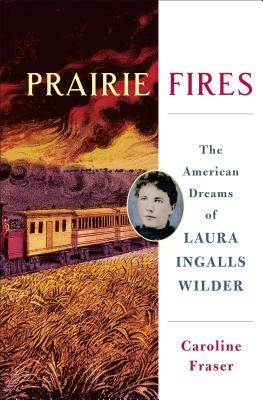
Prairie Fires

Prairie Fires: the American Dreams of Laura Ingalls Wilder. Caroline Fraser. 2017. 640 pages. [Source: Review copy]

First sentence: On a spring day in April of 1924, Laura Ingalls Wilder, a fifty-seven-year-old farm wife in the Missouri Ozarks, received a telegram from South Dakota. Her mother, Caroline Ingalls, had just died. Wilder hadn’t seen her for more than twenty years.

Premise/plot: This book examines the life and works of Laura Ingalls Wilder and places both within the context of American history. Fraser writes, "For those of us seeking to understand the settlement of the frontier, she offers a path, perhaps our best path, to the past."

Is it a biography? Yes and no. If it is a biography, it is a biography of both Laura Ingalls Wilder and Rose Wilder Lane. But I'm leaning more towards it being a history book. The book's focus is on the American story; the personal lives of the Ingalls and Wilder families provide an entry point to this bigger story. Politics. Economics. Policies. Personalities.

Close to a third of the book focuses on the written works of Wilder and Lane. The book provides a behind the scenes glimpse into the writing and publishing process. One definitely gets the sense that the books were crafted with intent and purpose to tell a specific story, to impart certain morals and lessons. Fraser writes, "Her story, spanning ninety years, is broader, stranger, and darker than her books, containing whole chapters she could scarcely bear to examine. She hinted as much when she said, in a speech, “All I have told is true but it is not the whole truth.”"

My thoughts: If I have one complaint about the book, it is this: the chapters are LONG. Overall, I enjoyed reading this one. It is a bit on the dry, scholarly side. It is not a straightforward biography. It is anything but concise. IT is packed with details--not just details about the family--but details about the times in which she lived. These historical "asides" aren't really on the side. They are front and center to the book. If you don't love history, then this one probably isn't for you. That being said, I LOVE history.

© 2017 Becky Laney of Becky's Book Reviews

Monday, June 08, 2015

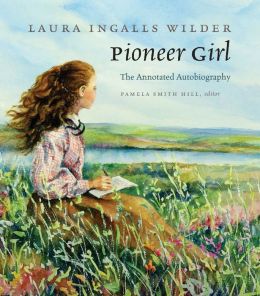
Pioneer Girl (2014)

Pioneer Girl: The Annotated Autobiography. Laura Ingalls Wilder. Edited by Pamela Smith Hill. 2014. South Dakota State Historical State Society. 400 pages. [Source: Library]
Pioneer Girl is a must-read for anyone who grew up loving, or perhaps, LOVING, Laura Ingalls Wilder's Little House books. Pioneer Girl is an annotated autobiography. The book itself is a draft of an autobiography written by Laura Ingalls Wilder circa 1930. Mother and daughter worked with this draft preparing to send it to various publishers (not just book publishers) for a year or two. (There are several draft versions of Pioneer Girl.) Eventually, the focus shifts from writing an adult autobiography to writing a series of historical fiction novels for children. The adult autobiography was "forgotten" as a book itself, and becomes a source--a good source--for mother and daughter to use in their own fiction. I didn't know that Rose Wilder Lane borrowed generously from her mom's autobiography while writing her adult fiction. Lane wrote Free Land and Let the Hurricane Roar (Young Pioneers).

The autobiography shares Laura Ingalls Wilder's earliest memories through her wedding day. (Those earliest memories are of being a toddler in Kansas.) These memories are, of course, in her own words. The writing is natural and casual. Some paragraphs are great at capturing details and specifics of an event. Other paragraphs are more of a rush, a blend, they seem a bit fuzzier, less exact. These are her very personal reflections written first for her daughter, and, then possibly for a larger audience. Wilder has turned reflective. She's older now, feeling that very much. (Her mom died in 1924, her sister, Mary, in 1928. She's wanting to capture these memories, these stories, to hold onto them perhaps.) One also sees the book itself as an act of love, an expression of love, a way of remembering and honoring.

The annotations are wonderful. They provide background and context. The annotations includes notes on a wide variety of subjects a) people b) places c) events d) nature e) culture (songs, dances, fashion), f) writing, editing, and publishing. There are plenty of notes that compare and contrast scenes and events as they appear in Pioneer Girl and as they appear in one of the original novels. Readers see how a memory recorded in Pioneer Girl is shaped and crafted into a finished product with plenty of detail and even dialogue. Readers see how Wilder carefully--oh-so-carefully--crafted the characters of the family. One gets the definite impression that she was purposeful with every scene, every book. It was no accident that Pa is so noble, independent, strong, and bigger-than-life almost.

I learned so much by reading Pioneer Girl. I would definitely recommend it for anyone who has enjoyed spending time with Laura and her family through the years.

© 2015 Becky Laney of Becky's Book Reviews

Friday, March 27, 2015

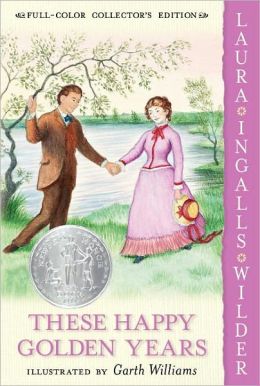
These Happy Golden Years (1943)

These Happy Golden Years. Laura Ingalls Wilder. Illustrated by Garth Williams. 1943. HarperCollins. 289 pages. [Source: Library]

Why is it that reading These Happy Golden Years makes me giddy? Could it be my actual favorite of the series after all? Perhaps. It has been such a treat for me to reread these Little House books this past month. I've enjoyed visiting with Laura and her family. I've enjoyed watching 'the romance' unfold with Almanzo in Little Town on the Prairie and These Happy Golden Years.

In These Happy Golden Years Laura has accepted--for better or worse--that she is all grown up. In this book, she teaches several different schools. Each teaching term is short--a few months here, a few months there. Her first teaching position lasts eight weeks, and, it is mostly a nightmare for her. She's rooming with Mr. and Mrs. Brewster. And Mrs. Brewster must be suffering from some mental illness. I feel sorry for Mr. Brewster and their baby, Johnny. There's a helplessness in the situation. Laura realizes how blessed she's been for a happy home life. The opening chapters dwell on her homesickness and gratitude. And she owes much to Almanzo Wilder. For HE comes to "rescue" her from the Brewsters every single weekend no matter how cold the weather. And it all comes as such a surprise to her that she'll get to spend her weekends at home.

When she's not teaching school, she's attending it. Every few months, it seems, she receives an opportunity to teach and earn money, and she'll take a teacher's exam, and get another certificate. But teaching isn't the only way she's able to earn money. She really, truly wants to earn money, not for herself, but to help keep Mary in college.

Most of the book focuses on the courtship of Laura and Almanzo. How he comes to take her sledding or for buggy rides. Laura does love his horses.

I love this book! I do.

© 2015 Becky Laney of Becky's Book Reviews

Thursday, March 26, 2015

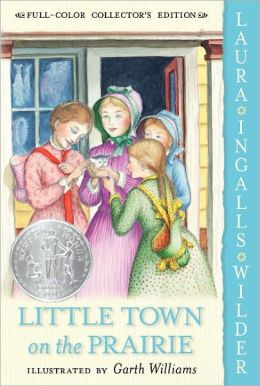
Little Town on the Prairie

Little Town on the Prairie. Laura Ingalls Wilder. Illustrated by Garth Williams. 1941. 374 pages. [Source: Library]

 I enjoyed rereading Little Town on the Prairie. Is it completely perfect in every way? Probably not. (The idea of Pa joining in a minstrel show performance still doesn't sit well with me. Just like I don't like the dialogue of the Native American in The Long Winter--when he warns them of the winter ahead. But other than that, I don't have any real issue with the book). In this book:

  • The family moves back to their homestead for the summer and fall
  • The Ingalls get a cat AFTER Pa's hair is "cut" by mice in the night!
  • Laura gets a job assisting a seamstress
  • Laura and Carrie and Pa go to a fourth of July celebration; lemonade is involved
  • Blackbirds come and threaten numerous crops; some of the corn is saved and will be dried for winter consumption
  • Mary goes away to college
  • The family moves back to the town for the winter
  • Laura and Carrie attend school
  • Nellie Oleson is one of the 'country' girls attending school
  • Nellie becomes teacher's pet; the new teacher is Eliza Jane Wilder
  • Laura gets her first ride behind Almanzo's horses (she's running late for school, she had to order name cards)
  • A Literary Society (of sorts) is formed in town for the winter
  • The book actually covers TWO winters in town, but, we barely learn anything about the spring/summer/and fall in between the winters.
  • Laura attends several revival meetings and Almanzo asks to see her home each night!
  • Almanzo hints that he wants to take her sledding.
  • Laura gets her teaching certificate
Plenty of lovely things happen. I love the progression of the series. This book just makes me smile as I'm reading it. I often forget just how much I like this one since I love, love, love THE LONG WINTER, and I always associate These Happy Golden Years with having THE romance. I don't give this one enough credit for being OH-SO-GOOD.

© 2015 Becky Laney of Becky's Book Reviews

Friday, March 20, 2015

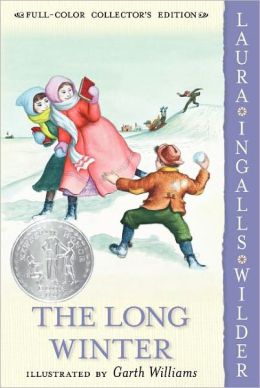
The Long Winter

The Long Winter. Laura Ingalls Wilder. Illustrated by Garth Williams. 1940. 335 pages. [Source: Library]

Out of all the Little House books, I probably reread the Long Winter most. There is just something about it that I love. The book opens with the Ingalls family preparing reasonably for the coming winter. Their plans don't take into account an early winter, a long winter, and a hard winter. Once there was a touch of winter in October, it was there to stay. The "good" weather being merely not-currently-in-a-four-day-blizzard. Some days the Ingalls and their neighbors are blessed with two days in between blizzards.

So, to begin back at the beginning, the Ingalls family moves to town after the first blizzard in October. It becoming obvious to Ma and Pa that they likely would not survive if they stayed at their claim. They take what provisions they've got, and everyone moves to town. But the provisions that they've got, that they've carefully planned and prepared won't be enough under these conditions. No one foresaw that there would be no trains coming to town during the winter months bringing food and fuel and such. Every person in town feels the stress of it. How will they survive? Will they survive?

This is the book where Laura and Almanzo first meet.

I love the intensity of this one. It's a book you experience. The cold. The hunger. The angst. 

© 2015 Becky Laney of Becky's Book Reviews