Showing posts with label YA Historical Fiction. Show all posts

Thursday, January 25, 2024

9. The Blood Years


The Blood Years. Elana K. Arnold. 2023. 400 pages. [Source: Library]

First sentence: When we were very young, Astra and I made a pact. I was six; Astra, not quite ten. It was a sultry, miserable summer day. Father was missing--again--and Mama was in bed--still. Whenever Father disappeared, Mama disappeared, too. Not physically, but in every way that mattered.

Trigger warnings: I don't always give these. This one is HAUNTING. And not for the reasons you might think. I think sensitive readers should be warned. This one does describe--directly and indirectly--sexual abuse/assault. It also indirectly features ANIMAL ABUSE.  Also plenty of death--murder and suicide.

Premise/plot: The Blood Years is historical fiction--young adult--set in Romania (what would be) during the Second World War. It provides a glimpse--vignette???--into Jewish life in Romania. How one didn't have to experience the full extent of Nazi hideousness to experience trauma and devastation. Though to be fair, Rieke (the protagonist) would probably have had a tough adolescence regardless of the Nazis and Soviets. I say this because her family is super-super dysfunctional. Also because I'm not sure you can blame the Nazis for her having tuberculosis.

Rieke and Astra live with their mother, Anna, (she is ever-absent mentally and emotionally) and grandfather (Opa). Anna has loved foolishly and recklessly. She is unable to live without her horrible, hideous, no-good, very bad husband. Astra, well, she seems to be mentally unstable as well. Very hot-cold. Very volatile and temperamental. One never knows what mood/temper she'll be in. If she'll be a fierce opponent and your number one enemy or your best friend. Opa is Opa is Opa. He's solid as a rock--except that he's older and not always in the best of health. Still he seems to have the most sense in the family.

The book chronicles the family's increasing misfortunes as their city experiences turmoil of falling under the control of Nazis, Soviets, Nazis, Soviets, etc. I may have the order wrong. The family suffered under all. 

My thoughts: The book is based loosely on the author's grandmother. It is historical fiction. She was influenced by her grandmother's story, of course, but she was also influenced more compositely by many other stories. She wanted to be true to the time period and represent many experiences/voices. 

This one is a TOUGH, haunting read. Astra and Rieke both experience trauma and abuse. Rieke is four years younger and is put into a GROOMING situation where abuse/assault happens. She is forced to make a HUGE decision. 

s

p

o

i

l

e

r

a

l

e

r

t


What keeps me from recommending this one--personally recommending it--is the animal abuse. The family takes in a stray cat. They care for the cat as much as they can. The cat fends for itself, for the most part, but they have a loving relationship with this cat. When Rieke gets sick, the family feeds her a meaty soup, she then asks where the cat went. If it hadn't been so late in the book, I would have refused to finish it. Obviously, tough decisions would have been being made every single day during this time. I do think unless you are in the same place, it is not fair to be dogmatically critical and judgmental. Yet, at the same time, the book doesn't have to be that direct. It could have left a small unanswered question. It does in other places. For example, when Rieke goes to the hospital and the doctors deflate her lung, and, then she leaves the hospital in the middle of the night--despite her being on bed rest--because they've been tipped off that the Nazis will raid the hospital and kill all the patients--we never get closure on what happens to her lung. Does it ever get re-inflated? What about her tuberculosis? What happens next? She was so close to dying from the disease and the book ends, but, yet apparently lives long enough to have children and grandchildren. 


© 2024 Becky Laney of Becky's Book Reviews

Friday, November 04, 2022

142. Marmee


Marmee. Sarah Miller. 2022. [October] 432 pages. [Source: Library]

First sentence: All day long, Amos’s letter waited in my pocket—the most perfect of Christmas gifts. 

Premise/plot: Little Women retold through Marmee's eyes. That is essentially the bare bones premise of the newest historical fiction novel by Sarah Miller. The book is told through a series of diary entries. Marmee [and her husband, Amos] have kept journals/diaries for years--decades. But this book consists of diary entries December 24, 1861 through December 25, 1868. The Christmas of 1868 is when [the real Louisa May Alcott] presented her [actual real] mother with the novel LITTLE WOMEN. So it is a fitting conclusion.

The book consists of diary entries, as I mentioned above, so there are no chapters--just two sections. One section, I believe, covers most of the war years. The second section, I believe, covers from the Christmas of 1865 [I believe?????? perhaps January of 1865] through Christmas of 1868. I am going to take an educated guess that this may reflect the two sections of Louisa May Alcott's Little Women, which was originally published in two books. 

This new perspective allows us to see the events of Little Women through new eyes. But it also expands the context of the original novel and to look at the bigger picture of what women's lives [typically] were like during this time in American history. Our heroine, like Louisa's real life mother, Abigail May Alcott, has strong opinions and "sharp" edges. Marmee may have a fierce and feisty temper that she tries to conceal--most of the time--but she can also be incredibly empathetic, compassionate, a true advocate. 

My thoughts: I mostly have only gushy things to say about this one. [Mostly]. I love how personal it is. It felt genuinely authentic to the times. For example, though Marmee wouldn't ever openly talk about it--especially with her own children, her own little women--she's had eight pregnancies and only four lived. This is her heartache and burden, yet, she lives and keeps on living. It's just what you do. You stay strong. You face what life gives you. There is no entitlement or presumption that life will be all roses and no thorns.

I loved that they brought the 'loyal servant' Hannah to life--given her quite a back story. And a story that sheds light on the struggles women have faced throughout the centuries. Readers also see the contrast between Marmee and Aunt March--in terms of what it means to live out "faith." Marmee is forever compassionate, loving, helpful. Aunt March, mostly, is more judgmental and rigid. Don't let "those people" get too close to you. If you absolutely have to do something to "help" the "least of these" the "dregs" of society, then keep a good, long distance. 

I never really gave much thought to HOW Marmee would have felt towards the two Laurences--the grandfather and grandson. But reading Miller's Marmee, it makes complete and total sense how she might have seen him as "her" son, or the "son of her heart" early on. She lost her own baby boy--he only lived a few minutes--but if he had lived he would have been almost old enough to fight in the war. It makes sense how she has a son-shaped hole in her heart that is filled by Laurie and then Mr. Brooke [who was so helpful in caring for Mr. March when he was injured.] 

 Yes, we see Marmee as a mother. But we also see her as a WOMAN. So much more than "just" a mother.

I thought it was interesting to see how Marmee reflectively thinks about her four girls, her four little women. I think these insights feel mostly right. 

Quotes:

  • The urge to do and be our best in the face of Amos’s daily sacrifice is irrepressible. I am thankful my girls’ burdens are still so light, that they do not have to bear the added weight I do. Vanity, shyness, and selfishness are all worthy dragons to conquer. Only Jo does not recognize her true burden. The fire in her, what she calls being rough and wild, is not what worries me. I would not tame her of that. The way she flares, though, when something ignites her anger, makes me wince. I have singed too many of the people I love with the sparks of my own temper. Sometimes I believe the flames that burned my face and hand as an infant took up permanent residence within me.
  • Of all the many forms of starvation, the hunger for respect is hardest to cure.
  • If I could only teach people not to be ashamed of asking for what they need! Every belly deserves to be filled, no matter what sin or folly or misfortune has caused it to be empty.
  • The possibility forces me to contemplate whether contentment is not so elusive for other women as it is for me. Before my own hearth, surrounded by my Family, I am entirely satisfied with what I have. These walls contain riches beyond measure. But the moment I consider the world outside, and what is denied to me and others due to the accident of their race or sex, I can hardly sit still for wanting to remedy all that ails our society.
  • What she fears is invisible to me. I have spent most of my life wishing for more ways to make my presence felt in the world, to make my voice heard. For Beth, the prospect of being seen, looked at, watched, is paralyzing. I could better sympathize if it were only strangers that unnerve her so, but any kind of attention makes her curl up within herself. Even on her birthday, with none but those she loves best orbiting her like planets around a cherished sun, she always looks as though she’d like to bolt under the table at the first chance. There is no one I can turn to for counsel.
  • IT is not only that she is afraid—it is that she is ashamed of being afraid.
  • If her mind was so crowded with apprehensions that there was no room for learning, I asked myself, what was the good of schooling? A mind must have space to expand.
  • I do not want her to choose home and hearth because it is the place she dreads least, but because it is is the place she loves most. Home should indeed be a refuge, not the metaphorical bed she cowers under.
  • Oh, my Beth. Her world may be narrow, but those of us fortunate enough to exist within its boundaries have been uncommonly blessed.
  • I cannot help but wonder sometimes if some wisp of the spirit of that stillborn boy inhabits my Jo. There is something in her that most girls—indeed, most women—lack. If not for my other three I would think all girls are born with it, only to have it tamed out of them. It is not solely ambition; Amy has that, and is as prim and feminine as a fashion plate. It is the brash sort of confidence that men have, though being female, Jo is not permitted to feel it as such. She feels only the uncomfortable way she scrapes against the world’s expectations. Life would be smoother for her if we sanded away the edges that do not fit neatly. But then Jo would not be Jo at all.
  • I have at last fitted up a German word of my own. It is made of more than one piece, as all the best German words are. First, Herz. That is the word for heart. Then Mutti. Birte’s children do not call her Mutter, the proper word for mother, but Mutti. You might say it is their family’s way of saying Marmee. And so, Herz-Mutti. That is who I should like to be to Laurie. And so it follows that he may be a Herz-Junge to me. Heart-boy.

I think there are many ways to "read" Little Women. And by read I mean interpret. It is certainly not unheard of to try to make Jo into a forerunner--of sorts--for the lgbt+ community. [That's not how I personally read/interpret Jo's character, by the way]. Marmee's reflections about Jo could definitely be interpreted by today's readers as nodding [agreeing] to this idea of Jo using the pronouns they/them, of being non-binary. Miller doesn't out and out say this--she doesn't. But read between the lines of some of what Marmee writes in her diary entries, and you get the feeling that this might be the modern-day, contemporary conclusion. Also, I get the impression that Jo's asexual. [Again, that's now how I personally read Alcott's text. It's not. But every person has the freedom to read and interpret books--especially classics with the authors long deceased--how they want.] Marmee writes in multiple entries how she has never noticed Jo *desiring* either men or women. Yes, Marmee questions if her daughter might have secret, hidden desires for women, but Marmee has not noticed any interest/leaning in this direction. Marmee questions if her daughter has any sexual desires at all and if that lack of sexual drive might be the reason behind her not wanting to marry at all. She writes a note to her daughter that essentially says there is more to marriage than just physical desire[s]. It's a meeting of the minds and hearts more than the bodies themselves.  

I may not read the original Little Women along these same lines. But overall--big picture BIG--I enjoyed Marmee by Sarah Miller. 


© 2022 Becky Laney of Becky's Book Reviews

Saturday, June 04, 2022

67. The Peach Rebellion


The Peach Rebellion. Wendelin Van Draanen. 2022. 416 pages. [Source: Library]

First sentence from the prologue: It's August sixteenth. My birthday. I wake up before sunup, excited.

Premise/plot: The Peach Rebellion is historical fiction with dual narration. Our two heroines are Peggy Simmons and Ginny Rose Gilley. These two were friends as children, but life has pulled them in different directions, until now. Now eleven years later, these two friends are reuniting. But they've grown and changed in oh so many ways. The Gilley family migrated to California from Oklahoma during the Dust Bowl. Life has been HARD, tremendously hard. The Simmons family isn't rich by any means, but they are rich by comparison. They have their own farm--growing and selling peaches. Neither family is super-excited that the girls are becoming friends again. Another person who shows some dissatisfaction with this new (old) friendship is Lisette Bovee, the banker's daughter. 

The historical setting is California in the summer of 1947.

My thoughts: I wanted to (but didn't) love this one. There were things that I liked about it. I think I liked the characters at their core. I liked Peggy and Ginny Rose. I even grew to tolerate Lisette. (Mostly I wanted to yell at Lisette.) But I definitely did not like the story or the direction the story goes. A different story with these characters I could easily see myself enjoying more. I liked the coming-of-age elements of this one. And how each of the girls is handling the new responsibilities that come with growing up. Including an interest in boys. There is a we're-in-this-together element that I definitely enjoyed.

So what didn't I like about the story itself? I thought it was MORBID. Morbid and weird. The major plot of this one involves, well, something a bit unusual...and dark. In my opinion. Reading is subjective. Maybe other readers won't find it so unpleasant?

S
P
O
I
L
E
R

A
L
E
R
T

Read at your own risk, spoilers ahead.

So in the prologue (when the main characters are around seven), Ginny Rose goes with her father to bury her younger (twins???) brothers who died of disease in one of the migrant camps. (Remember this was during the Dust Bowl, the big migration to California, and during the Great Depression as well.) That's not the morbid part, not really. Now as a teen (seventeen? eighteen?) Ginny Rose is determined (with the help of her friends) to go on a journey to discover the unmarked grave of her brothers and bring home their bodies. Maybe it is 100% me. Maybe teens wouldn't mind at all trekking across the country in a "borrowed" family truck with a couple of shovels on a mission to dig up dead bodies. But for me, well, it isn't so much the desire to give closure to the family by giving them a proper burial and an actual marked grave that is disturbing, but the hands-on and SURPRISE element of it. They are going to sneak out on their own and SURPRISE their family with the bodies in the back of the truck. And that just doesn't sound like something you should just surprise someone with. Or maybe again that's just me???

© 2022 Becky Laney of Becky's Book Reviews

Tuesday, February 15, 2022

25. I Must Betray You


I Must Betray You. Ruta Sepetys. 2022. [February] 336 pages. [Source: Library]

First sentence: Fear arrived at five o'clock. It was October. A gray Friday. If I had known? I would have run. Tried to hide. But I didn't know. Through the dim half-light of the school corridor I spotted my best friend, Luca. He walked toward me, passing the tedious sign shouting from the concrete wall. New men of Romania: Long live communism--the bright future of mankind!

Premise/plot: I Must Betray You is set in (Communist) Romania in 1989. For Christian Florescu, our narrator, his country's freedom (and independence) can't come fast enough. But dare he hope it will come at all? He lives--has grown up--in a country where literally anyone and everyone could be--might me--an informant. Every move you make, every word you speak--might just be used against you or your family. Christian knows this but is helpless...you can't be guarded twenty-four hours a day, seven days a week. There have to be moments where you can just be... But those moments could cost him dearly. 

My thoughts: It is best to go into this novel--yes, it's probably "historical" fiction--knowing as little as possible about the plot. I found this a beautiful text in a haunting way. I found it to be a page-turner. It wasn't that I loved, loved, loved watching the pain go down. (I didn't.) But despite the emotional damage it will do to your heart--assuming you are a sensitive/empathetic reader--it was worth it. I knew very little about this time period. I had no idea how absolutely horrendous it was--not just for a few years, but for decades.  

This one might leave you at a loss for words, and that might just be okay. I do think the characters and the story will resonate with readers long after they finish the book. 

Quotes:

"Philosophy," nodded Bunu. "Soul nourishment. Sit for a spot in philosophy. You see, communism is a state of mind," he would lecture, tapping at his temple. "The State controls the amount of food we eat, our electricity, our transportation, the information we receive. But with philosophy, we control our own minds. What if the internal landscape was ours to build and paint?" Bunu spoke often of vibrant what-ifs. I pondered them in my notebook. How could we paint or sketch creatively? If the West was a box of colorful crayons, my life was a case of dull pencil leads. 

What films had some thick-fingered truck driver smuggled across West Germany, through Austria and Hungary, into Romania? We never knew when videos might arrive. Most illegal movies from the West were dubbed into Romanian by the same woman. No one knew her name, but more than twenty million people knew her voice. She brought us into a secret, forbidden world of inspiration.

How could we expect others to feel our pain or hear our cries for help when all we could do was whisper?

Betrayal. It's undigestible. It instantly changes the frequency of things. Every Romanian carried a world inside them, and mine had quickly gone from dark to black.

From the author's note: "When justice cannot shape memory, remembering the past can be a form of justice." ~ Ana Blandiana


© 2022 Becky Laney of Becky's Book Reviews

Tuesday, December 14, 2021

146. Escape from Chernobyl


Escape from Chernobyl. Andy Marino. 2021. [December] 176 pages. [Source: Library]

First sentence: Yuri Fomichev picks a wooden splinter from his palm.

Premise/plot: For those who enjoy reading about historical disasters--and yes, 1986 is history--Andy Marino's newest book is Escape from Chernobyl. There are a handful of young narrators--Yuri, Alina and Lev, Sofiya--that provide an up close perspective of the disaster as it unfolds hour by hour. [Yuri is cousins with Alina and Lev. He is currently living with them. Sofiya is a neighbor in the same building. She and Yuri are crushing on each other.] All are living WAY too close to the Chernobyl Nuclear Power Plant on the fateful day--April 26, 1986. 

My thoughts: One word: BLEAK. You might be saying WHAT WERE YOU EXPECTING???? True, all true. I have no one but myself to blame. I checked it out from the library. I started reading. I got hooked and had to keep turning pages.

This one is fiction. Don't be fooled by the epilogue where one of the character is catching readers up to the modern day.

Earlier this year, I read Meltdown which was about another nuclear disaster. That one was nonfiction--and awesome. Part of me wishes I'd read a middle grade appropriate nonfiction title on the subject instead. Or perhaps I just wish that they'd been fewer narrators? I don't know. This one was definitely one that I had to finish after I started it. But honestly it's feeling more like an almost for me. 

But for readers--and there definitely are readers of all ages--who LOVE reading about disasters, this one is worth considering.

© 2021 Becky Laney of Becky's Book Reviews

Friday, September 24, 2021

119. Pride and Premeditation


Pride and Premeditation. (Jane Austen Murder Mystery #1) Tirzah Price. 2021. [April] 368 pages. [Source: Review copy]

First sentence: It is a truth universally acknowledged that a brilliant idea, conceived and executed by a clever young woman, must be claimed by a man. Elizabeth Bennet stood in the offices of the optimistically named law firm of Longbourn & Sons and fixed her father's junior partner, Mr. Collins, with her fiercest glare.

Premise/plot: Tirzah Price's spin on Jane Austen's Pride and Prejudice is a delight from start to finish. It is set in the Regency--like the original--but it intentionally plays around with history. Taking something that would be absolutely impossible--a young woman working in a law firm and pursuing a career in law--and makes it instead something rare, unique, out of the ordinary....but not impossible. 

Elizabeth Bennet, our heroine, has ambitions to follow in her father's footsteps. This has her investigating a potential case for Longbourn & Sons. Mr. Bingley has been arrested and charged with murdering his brother-in-law, Mr. Hurst. Elizabeth would like to use this case to prove her abilities. She is determined to investigate the case, follow the clues, and find the real murderer. This has her at odds with Mr. Darcy a lawyer (solicitor) at Pemberley and Associates. If the real murderer is to be found--and Mr. Bingley's innocence proven--it might just take both of them working together despite their personal feelings.

My thoughts: I love, love, love, love, love this adaptation. It is so delightful. It has all the characters from the original novel. (Well, most of them. I can think of a few that are missing.) Some of the original dialogue--all the best bits--reworked to fit this new situation. And it works surprisingly well. Mrs. Bennet is still very active in trying to get her daughters married off. She is still a nervous woman. Mr. Bennet is still favoring Elizabeth. Elizabeth is still super close with Jane who is a calming influence on her.

I would absolutely LOVE to see a film version of Pride and Premeditation. There's even a scene that could easily accommodate a wet shirt scene with Mr. Darcy.


© 2021 Becky Laney of Becky's Book Reviews

Tuesday, July 27, 2021

74. Your Heart My Sky


Your Heart My Sky. Margarita Engle. 2021. [March] 224 pages. [Source: Library]

First sentence: Imagine a year when food suddenly vanishes.

Premise/plot: Your Heart My Sky is a verse novel set in Cuba in 1991. (I will leave it up to you, dear readers, if that classifies it as historical fiction or not.) There are three narrators--Liana, the heroine, Amado, the hero, and Paz, the dog. Cuba is experiencing "el periodo especial en tiempos de paz." Though not in a time of war, food is hard--near impossible--to come by. The rations--what one is legally allowed to buy--are pitiful. No wonder people are desperate to leave the island and risk everything for a chance for a better tomorrow.

Your Heart My Sky is in many ways a bleak novel. Yet in this time of great bleakness--a land void of hope and promise--two young teens fighting to survive fall in love--with a dog, with each other. This is a matchmaking dog if you will...

My thoughts: If you are only looking for romance, then this may not be your easiest source. It doesn't shy away from the hard, uncomfortable places. Here we have a tyrannical government and a suffering people. The poems highlight the day to day suffering of a people. The hard--no, impossible--choices that every person must make. To stay or to go. Their lives are at risk either way. Staying to starve (possibly to be imprisoned, Amado's brother is in prison). Leaving brings its own risks and dangers--there is the possibility of getting caught which would be bad, bad, super-bad. There are many risks on the actual journey--by raft--you never know if you'll make it to America or not. There are no easy answers....

Yet this one also highlights the joys of life--the love and friendship of having a dog AND first love.

The writing, as always, is lovely.

Quote:

Maybe companionship
is the only answer
to all prayers.


© 2021 Becky Laney of Becky's Book Reviews

Wednesday, July 24, 2019

World at War: Lovely War

Lovely War. Julie Berry. 2019. 480 pages. [Source: Library]

First sentence: It is early evening in the lobby of an elegant Manhattan hotel.

Premise/plot: The novel opens during the second world war. A husband has caught his wife having an affair: an impromptu trial results. That husband? His name is Hephaestus. That wife? Her name is Aphrodite. The lover? Ares. If those names sound at all familiar to you--and they should--then it is because they are gods and goddesses. Aphrodite asks to tell a story of LOVE and WAR. That story is set during the Great War, the first World War.

Hazel Windicott, one of our heroines, is a young and talented pianist. She's playing at a dance when a young soldier--a young, about-to-ship-out-overseas soldier--James Alderidge sees her and falls in love with her. The two only share three days together, but oh what wonderful days. Both feel that this could be LOVE, the once-in-a-lifetime true love. He will be serving in France.

Aubrey Edwards, one of our heroes, is a young and talented ragtime (and jazz) musician. (He does play piano, but he doesn't only play piano.) He's a black man serving overseas in France. (He's a soldier and an entertainer.)

Hazel follows her heart across the channel and volunteers in France with the YMCA as an entertainer. She becomes quite chummy with our other heroine, Collette Fournier, another entertainer--a singer/dancer. Her story is quite tragic. She's the sole survivor of her family; she's a Belgian war orphan/refugee. She has known great love and great loss. Her heart has given all it can, or has it?

Hazel knows that it is against all the rules for her and Collette to socialize with the black soldiers. (Probably with any of the soldiers. It wouldn't be proper. But there is a definite extra stigma of prejudice going on as well.) Likewise it is against the rules for black soldiers like Aubrey to sneak out from camp and visit with women. But these three are drawn together--powerfully connected--by music.

Will Hazel and James get their happy ending? Will Aubrey and Collette? What price will the war demand of their love? And what impact will these stories have on the gods and goddesses?

My thoughts: I LOVED, LOVED, LOVED, LOVED, LOVED this one. It was such an incredibly well-told story. I loved the dual settings. We get flashes of England and France during the Great War, the first world war. Our flashes of the second world war perhaps lack some of the perspective, being that they are all within a hotel room in New York. BUT. I think it still works overall pulling readers far enough away to see the bigger picture. There is no war to end all wars; war will always be; war will always destroy and kill, pull apart. Yet where there is love there is hope and goodness. I don't always love, love, love stories within stories, BUT this one was absolute perfection.

James "Jim" Europe and the 15th New York
I love the mythological touch. This is something that I would have never, ever, ever, ever thought of on my own. Adding Greek goddesses to a compelling war story very much grounded in reality. (The characters are fictional, of course, but James Reese Europe, one of the characters, was very much a real person.)

I love the importance and significance of music (and to some degree other arts). The beauty of music, of love, of life, of friendship provide an important--crucial--contrast against the ugly brutality of war. Both Aubrey and James are changed by seeing action at the front, changed by the training (or lack of training in some cases), that they receive while in France. No one can return home from war unchanged. And yet, and yet life still goes on. Beauty remains though perspective changes.
 
I love that hope resonates. It isn't that Aubrey and Collette and James and Hazel are absolutely guaranteed happily-ever-after endings with neat, perfect little bows and ribbons. It isn't that there's a guarantee against sadness, heartbreak, doubts, fears, disappointments, frustrations. But love HOPES and TRUSTS.

I love the writing, the language. It could be giddy-making in a romantic way. It could be quite funny.
"If I'm not a secret," he said, "what am I?"
"You're a brand-new piece of sheet music," she said slowly, "for a song which, once played, I'd swear I'd always known." (48)
"All I'm saying"--Apollo is still chewing--"is that my little flu virus, in its microscopic, contagious way, was a thing of beauty." He smacks his lips. "Annihilation has its own je ne sais quoi. We're all guilty of it. So spare me the sermons."
"I'm not guilty of it," says Aphrodite. "Destruction has nothing to do with me."
The male gods stare, then explode laughing. Aphrodite turns her back on them all.
"Then there's the poetry," says Apollo. "Another reason to love war. Why in the Great War...Not since the Trojan War has a conflict inspired such verse. Here, let me recite for you--"
"No!" Three divine voices sound together, for once in perfect accord.
Apollo looks genuinely surprised. "You don't want me to?" He plucks a ukulele out of the air. "Well, I'll be darned. Anyway," he says, "there was the music. The Great War lit a musical fire that engulfed the world." (59)
I also loved that it was written in five acts. It added just the right amount of DRAMA and TENSION.

© 2019 Becky Laney of Becky's Book Reviews

Wednesday, July 10, 2019

World at War: Climbing the Stairs

Climbing the Stairs. Padma Venkatraman. 2008. 256 pages. [Source: Bought]

First sentence: I still remember the day we celebrated Krishna Jayanthi, the festival of Lord Krishna's birth, at our home in Bombay.

Premise/plot: Set in India during the early years of World War II, Climbing the Stairs is narrated by a charming young woman, 15, Vidya, who dreams of nothing more than going to college and continuing her education. She has an older brother, Kitta, a best friend, Rifka. When the novel begins, Vidya seems to have everything she wants within her grasp. Her parents have agreed that she won't be put on the marriage market quite yet unlike her cousin, Malati. And on a special father-daughter bonding trip, her father even agrees that she should go to college. And then....and then tragedy strikes.

Vidya's life isn't easy. It's in just as much turmoil--it seems--as India itself. There is within India a movement, a freedom movement, to create an independent India free from British rule and oppression. But there is also a call from the British to rise up and join the British ranks--British soldiers--on the field fighting the Axis powers. Yet Vidya's family at least--and presumably many others as well--believe in nonviolence. Affirm that all killing, all war is wrong. It doesn't matter who you're opposing, to take up arms is in itself wrong.


Climbing the Stairs. What does that mean exactly? Well, her grandfather and his family--his large extended family--live in a house. The men live upstairs. The women live downstairs. Women are not allowed in the men's domain. The library--technically speaking--should be off limits to her simply because of her sex, her gender. Women are not valued, not respected. Young women, girls, are seen merely as future wives, future mothers. They have no value except what value is placed on them by the men in their lives--father, brother, husband.

My thoughts: Vidya makes for a charming narrator for many reasons. But one of the reasons that I fell so in love with her as a narrator is the fact that she loves to read, loves to learn. When tragedy forces the family to move from their own home to her paternal grandfather's home, she doesn't give up hope, not completely. Life is very, very different. Very, very unpleasant. And yet, she always finds something to hold onto. And one of her greatest resources is her grandfather's library.

I absolutely loved this historical fiction novel. Definitely recommended.

This was my second time to read this one. It was just as good as I remembered.

© 2019 Becky Laney of Becky's Book Reviews

Wednesday, May 22, 2019

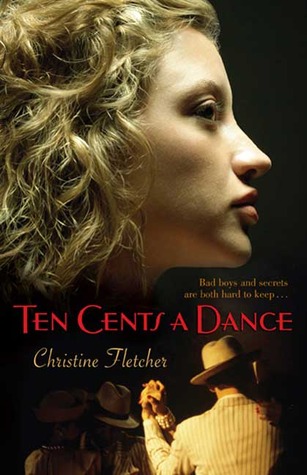
World at War: Ten Cents A Dance

Ten Cents A Dance. Christine Fletcher. 2008. Bloomsbury. 356 pages. [Source: Review copy]

First sentence: We heard the music even before we got to Union Hall.

Premise/plot: The year is 1941, the place Chicago. Ruby Jacinski hates her job--bottling pig feet. Though just sixteen she is the family's sole source of income. (Her mother can no longer work at the packinghouse, and she's in no condition physically to find a job elsewhere.) What does Ruby love? She loves to DANCE. So when someone--a cute, dashing older boy--mentions that she could get a job as a taxi dancer and potentially make $50 a week...well, she's intrigued.

What does a taxi dancer do? She dances or socializes with the customers. A ticket costs ten cents. It's a ticket a dance/song. Five cents is for the dance hall (Starlight in this case). Five cents is hers to keep. Any tip is hers to keep. The customer is nearly, always right. She's to make herself agreeable--to a certain degree. If she goes too far at the dance hall, she's in danger of losing her job. A customer can clock a girl out early with enough money and take her someplace else--another club, a restaurant, etc. Ruby learns that this is even better than dancing.

She has to look her best to appeal to customers. This costs money, of course, for dresses, stockings, shoes, jewelry, accessories, makeup, perfume. But even with these added costs, she is now able to pay the back rent on their place, pay off their debts with the shops, and keep food--even meat--on the table. But she learns there is a secret cost to pay, one that she never considered: the secrets and lies.

Ruby cannot tell her mother the truth about where she works and how she gets the money. She invents a job--telephone operator--a salary--$18 a week--and coworkers. At first the lies come relatively easy to her, but there comes a point in time where it is much too much to juggle.

And then there's that cute, dashing older boy, the one who told her about the job to begin with. His name is Paulie. And he's got a well-earned bad reputation. Some might even call him a mad dog. He's got plans of his own for Ruby, and though adult readers may see where this 'relationship' is going...Ruby's just naive enough to think differently.

How will the war change her future?

My thoughts: This is my third time to read Ten Cents a Dance. I first read it in 2008, and then again in 2014. I really do think this would make an excellent movie. I think the characterization is excellent. It's a compelling read.

© 2019 Becky Laney of Becky's Book Reviews

Wednesday, May 15, 2019

World at War: Crossing Stones

Crossing Stones. Helen Frost. 2009. FSG. 184 pages. [Source: Library]

First sentence: You'd better straighten out your mind, Young Lady.

Premise/plot: Crossing Stones is a historical verse novel set during World War I in a small community. Two families are super-super close: the Jorgensens and the Normans. Everyone expects Muriel Jorgensen to one day marry Frank Norman. Ollie Jorgensen is definitely hoping to one day marry Emma Norman. But plans and expectations have little place in a world turned upside down by war.

Frank isn't at home. He's a soldier getting ready to be shipped overseas when the novel opens. Ollie is a few years younger but his mind is filled with the war too. He wants to be a part of it with Frank. Where Frank goes he wants to follow. That's the familiar way of things.

Muriel wants nothing to do with the war and not because she's like Scarlett O'Hara. Muriel is an opinionated young woman not at all convinced of the merits of this war--or any war. She has little interest in becoming a wife and mother. She may follow in the footsteps of her suffragette aunt.

As for Emma...she's got a brother and an almost sweetheart in the war.

My thoughts: I first read Crossing Stones in October 2009. At the time I loved it. Did I love it just as much the second time around? Not really. Oh, I still liked it. I enjoyed spending time with the characters. My favorite characters are by far Emma and Ollie. I need them to get a happily ever after. Or at least a semi-realistic version of that. After all, if these two do marry they'd likely have children just the right age for being drafted into the second world war. And then there's the Depression to consider. There lives wouldn't be challenge-free by any extent. But. I think Ollie and Emma could handle what life gives them and find a way together.

 But I didn't like Muriel nearly so much this time around. I found her opinionated voice to be pessimistic and at times unfeeling. Muriel is well on her way to an unconventional life. Perhaps she'll become a 'wild' girl in the big city.

War disrupts lives, changing everything. This is very much an anti-war novel. I don't have a problem with the message in general. It just left me sadder this time around.

© 2019 Becky Laney of Becky's Book Reviews

Wednesday, April 24, 2019

World at War: Resistance

Resistance. Jennifer A. Nielsen. 2018. Scholastic. 385 pages. [Source: Review copy]

First sentence:  Two minutes. That's how long I had to get past this Nazi.

Premise/plot: Resistance is set in Poland during the Second World War. Our heroine, Chaya Lindner, is a courier for the resistance. She's Jewish, but she's able to pass as Polish. She slips in and out of Jewish ghettos thanks to her forged papers, appearance, and COURAGE. She is able to smuggle in food, weapons, forged papers, information, and other black market items. She is able to smuggle out children. It's dangerous work. She's known that from day one. But she's fully committed to the cause--saving lives, resisting Nazis, killing Nazis. She is not alone.

When Chaya first meets Esther, she has doubts--BIG DOUBTS. Esther doesn't look like she's capable of helping the cause--far from it. Chaya is convinced that working with Esther will put them--the resistance cell--all in danger. People could die because of Esther. But is Chaya wrong about Esther? Only time will tell.

My thoughts: What a book! Those three words don't say nearly enough. Yet I always hesitate to say that I love, love, love a book that is so dark and intense. Though these characters are fictional, the story of resistance is not. There were real men, women, children who were part of the Jewish/Polish resistance. Many--though not all--died. To resist could lead to death. To not resist would lead to death. There were no easy, safe choices. This is an emotional read starring two very different heroines.

"I wonder if this will ever end."
"The war?"
"The hatred. I remember my father saying that he'd finally come to believe the world had moved past its hatred of Jews, and then this happened."
"Maybe when the world opens its eyes to what has been done to us, they will realize how destructive hate can be."
Esther shrugged again. "Maybe. But they'll forget again, in time. And when they forget, this will all start once more."
I put an arm around her and used it to straighten her posture, "Enough of us must survive the war to tell our stories, and every story will matter. When they remember our stories, they will forget their hatred." (160)

"Why do the Nazis feel they can commit such violence against us? How do they justify it?"
I shrugged. "Because they believe we are less than human. Like animals."
"Exactly! They herd us into train cars like cattle, give our rabbis and scholars the work of oxen, feed us less than what is given to their dogs. And they kill us with no more regard than they'd give to slaughtering a farm animal. But there is something a human can do that an animal never can."
"Create art." I considered that for a moment. "So you sing because--"
"It's proof of my humanity. It allows me, just for the length of that song, to remember who I really am, no matter what surrounds me." (272)

"I loved my father, Chaya. I still do. But being in the Judenrat was an impossible situation. I remember at the beginning, he thought he could help the people here, and he did a lot of good. But very soon, the choices weren't between good and bad, they were between bad and awful."
"A choiceless choice," I mumbled. "There is no winning, only a decision as to how we will lose." (296)
 

© 2019 Becky Laney of Becky's Book Reviews

Thursday, April 12, 2018

Amanda

Amanda. (Sunfire #1) Candice Ransom. 1984. Scholastic. 368 pages. [Source: Library book sale]
First sentence: It had been raining forever, endless rain that dripped down the windowpanes. Amanda Bentley could not stand the cramped hotel room another minute.

Dear Scholastic:
If I thought begging would do any good, I would plead with you to republish the Sunfire romance series originally published in the 1980s. The "name" books were my favorite-and-best books from my middle years--my first introduction to the wonderful genre of historical romance. It's a love that's still going strong, by the way. I know the Sunfire books don't contain vampires, werewolves, fairies, or demons. But why should romance novels contain such in the first place. If they were worth publishing in the first place--which they so clearly were--they are worth republishing.

I have given it a lot of thought. I have. And I think it would be wonderful if the books were republished as e-books for the same price as the original paperback books were released. Granted, I would love to see PRINT copies as well. But I imagine that they would cost more than the lovely $2.95 of the originals! But for an e-book, the thought is IT'S WORTH EVERY PENNY.

Becky

Dear Candice Ransom:

Thank you a million times for being the awesome writer that you are. (Thank you for being awesome in general!) I will forever be a fan of yours--your picture books, your early readers and chapter books, and your novels. My first introduction to your work was through the Sunfire romance series. They were--they are--some of my favorite books ever. You gave me a glorious gift--a love of reading.

I still get giddy thinking about the fact that you know who I am. That in 2009 Winchester came to visit me for a few days.

As long as you keep writing, I'll keep reading.

Becky

Premise/plot: Amanda's hopes and dreams are thwarted by her father's gambling ways and big dreams. He decides to steal away from Boston--with her--and start again. On their journey south, he gets a fever to go WEST, to go to Oregon. Amanda does NOT want to go, yet, she finds herself heading west in a wagon, in a wagon train, all the same. It will be the most challenging time in her life, but will the journey change her for the better?

My thoughts: Is Amanda my favorite Sunfire romance?! Maybe. Perhaps my favorite Sunfire romance is the one I've read most recently. Though I will say Amanda is probably always in my top five.

I enjoy a good wagon train story. Why can't wagon train stories become trendy again?!

Amanda brings to mind the only western that I love. You see, I am allergic to westerns in general. The western that is an exception to the rule is WESTWARD THE WOMEN (1951). 

© 2018 Becky Laney of Becky's Book Reviews

Wednesday, July 05, 2017

Vincent and Theo: The Van Gogh Brothers

Vincent and Theo: The Van Gogh Brothers. Deborah Heiligman. 2017. 464 pages. [Source: Library]

First sentence: Theo's brother Vincent has been living with him for just over a year, and Theo cannot take it anymore.

Premise/plot: Love historical fiction? Love art? Love France? Consider reading Deborah Heiligman's new novel, Vincent and Theo: The Van Gogh Brothers. She tells their story in a compelling way, I think. But it isn't just the story of Vincent and Theo of their dependence on one another. It's also the story of Theo's wife, Jo. Without his sister-in-law's continual effort to keep Vincent's work alive after his death--to keep his work in front of the public, to make his name, his work KNOWN, would the world really have Vincent Van Gogh?!

My thoughts: I really enjoyed reading this one. If enjoyed is the right word. It's emotional, dramatic, and well-researched. The first few chapters begin near the end. But for the most part, the book is arranged chronologically. Each chapter leaves readers with a strong impression; each captures a moment in time. Oh the tension! There's drama, frustration, confusion, heartache, disappointment, loneliness, despair, love, and passion. There's a definite feeling of lost-ness hanging over the novel. Both brothers suffer from mental health issues--among other things.

The book is strongly influenced by his art. There are certain works that really impact how the story is told and arranged. For example, Vincent's picture of the Windmill became a symbol of the bond between the brothers. She states in the author's note that finding this work and realizing its significance was THE moment she found her book.
This walk in the rain seals their friendship, deepens it. Later both brothers will refer to it as a meeting of the minds, of the time they made a pledge to each other. They will always remember this day. Theo will use the walk in argument. So will Vincent. The brothers will come back to it again and again. It is an anchor, a promise of the future, a touchstone. (49)


I would recommend that readers also pick up a copy of Impressionism: 13 Artists Children Should Know by Florian Heine. It does NOT include Vincent Van Gogh, but, it does include many of his contemporaries. He knew several of these artists well; his work was exhibited alongside theirs.

© 2017 Becky Laney of Becky's Book Reviews

Thursday, August 06, 2015

A Little In Love (2015)

A Little In Love. Susan Fletcher. 2015. Scholastic. 288 pages. [Source: Review copy]

I'm dying. There's no use hoping I'll live or telling myself, Keep going, it's only a small wound. There's too much blood on the ground. I'm going to die in this street.

Eponine has always been one of my favorite characters from Les Miserables. I've always felt sympathy for her. And so I was quite excited to see that Susan Fletcher has written Eponine's story in her novel, A Little In Love.

Is an understanding--an appreciation, a love--for the novel Les Miserables a must for picking this one up? I wouldn't say it's a must. I wouldn't want to limit the audience for this one. Certainly this book will mean more to the reader who has at least watched one of the movie adaptations (though I'm not sure all movie adaptations even have Eponine's character? I do not care for the musical, for the most part, but this song gets me every time.*) But the most enthusiastic fan may just be the reader who has read Victor Hugo's Les Miserables--and unabridged at that! But any reader who is drawn to historical fiction set in nineteenth century France will find this of interest.

The framework of this one does make sense. I'm not always a big fan of stories told within a framework. But it is wisely done in this one. The narrator--Eponine herself--is not being melodramatic. She is, in fact, dying. And in a way, the whole book is a flashback showing us moments in her life that have led up to this moment--this heroic, tragic, bittersweet moment. This adaptation does not change the ultimate outcome.

Is it faithful to Victor Hugo's novel? Yes, for the most part. I do think a few details are changed along the way. And I do think plenty has been added, filled out, if you will. The characters we meet in A Little in Love are fleshed out.

So did I like it? love it? I really enjoyed it. It is one I read all at once--like a treat. I admit that I'm probably the ideal reader for this one since Les Miserables is one of my most favorite, favorite books of all time. My 2014 reviewMy 2013 review.

*I think I fell in love with this song a full decade before ever picking up the novel. Why? Well, it's one that skaters really, really, really LOVE to skate to.
© 2015 Becky Laney of Becky's Book Reviews

Wednesday, July 22, 2015

Phantoms in the Snow

Phantoms in the Snow. Kathleen Benner Duble. 2011. Scholastic. 240 pages. [Source: Review copy]

Phantoms in the Snow was a great book set during World War II. Noah, the hero, is a young man who has just lost both parents to small pox. His only living relative is an uncle that he's never met, or can't remember meeting. He's a soldier in the army, a "Phantom" part of a skiing unit. Now Noah was raised by pacifists, and, until their death he's never really thought about how he personally feels about war, and if he should be a part of it or not. He's sent to live with his uncle at a mountain camp, army camp. Once there, his uncle signs him up and lies about his age. Noah begins his training. He first has to learn to ski. He already knows how to shoot. But there's so much about army life that he doesn't know at least not yet. Noah remains conflicted through much of the book. About who he is and what he believes and where he really belongs. He learns a lot about life and about how you should never make assumptions about where another person is coming from, and what life is like for others. Anyway, it's a very strong coming-of-age story. It's a story with a lot of heart, I might add. I cared about Noah. I cared about his uncle. And I cared about a character called Skeeter. Overall, this one is oh-so-easy to recommend.

© 2015 Becky Laney of Becky's Book Reviews

Thursday, May 07, 2015

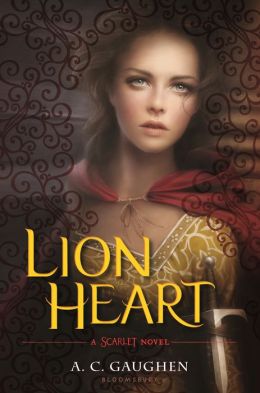
Lion Heart (2015)

Lion Heart (Scarlet #3). A.C. Gaughen. 2015. Bloomsbury. 352 pages. [Source: Review copy]

I read Scarlet and Lady Thief last spring. It was LOVE. I've been waiting for Lion Heart since I finished Lady Thief last spring. I've held the characters close for a whole year in anticipation. I just have to say that I was not disappointed with Lion Heart at all.

If you're looking for a good--a great--retelling of Robin Hood, then you must pick up these three books. They're wonderful. Yes, they build upon the legend, and, a few details will feel familiar to readers--as they perhaps should. But the depth and complexity to the characters is remarkable. I loved, loved, loved getting to know all the characters. Especially Robin Hood and Scarlet (Marian). There are plenty of other characters to love as well. Though perhaps a fewer number in Lion Heart. (I'd forgotten just how Lady Thief ended. So rereading it and rushing into Lion Heart, I felt the loss of a certain character very much.) Still, there are plenty of new characters to get to know in Lion Heart.

Lion Heart definitely has a different feel to it in a way. But I still loved it. Much is required of Scarlet in this one, and, she'll continue to fight for what's right and what's good from cover to cover. I love that she never gives up. I love her determination and fierceness.  

© 2015 Becky Laney of Becky's Book Reviews

Sunday, April 26, 2015

Revisiting Scarlet (2012)

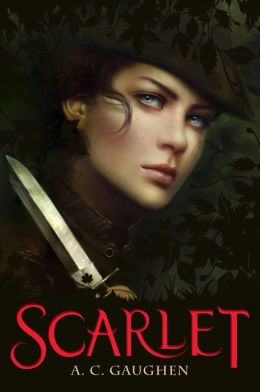
Scarlet. A.C. Gaughen. 2012. Walker. 292 pages. [Source: Library]

I first read Scarlet last year. I really enjoyed it, but, not as much as I ended up enjoying the second book in the series, Lady Thief.

So. Scarlet is a retelling of Robin Hood. The narrator is "Will Scarlet" a young woman posing as one of Robin's men. All of the gang know her secret, though they didn't all learn at once. But most of the villagers don't. Scarlet is a thief with a past, a past that will catch up with her by the end of the novel. Through Scarlet's perspective, readers get to know Rob (Robin Hood), John Little, Much, and Tuck. Readers also get to know about the dangerous and cruel Guy Gisbourne. He's been hired to find Robin Hood and his gang and kill them...

How did I feel about Scarlet the second time I read it? I enjoyed it so much more! I think one of the reasons I love rereading is because I can relax and enjoy how everything comes together. The first time I was focused on the potential of the premise, on the mystery--who was this Scarlet?--and on the action--will The Hood and his gang be able to save everyone?! The second time I was able to focus on the development of characters and relationships. I already had a connection with the characters, a LOVE for them, so that helped this reading experience tremendously.

I'll be rereading Lady Thief before I read the third in the series, Lion Heart, which releases in May.

© 2015 Becky Laney of Becky's Book Reviews

Tuesday, December 30, 2014

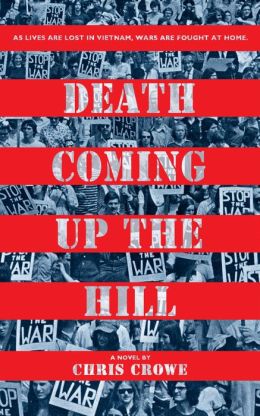
Death Coming Up the Hill

Death Coming Up The Hill. Chris Crowe. 2014. HMH. 208 pages. [Source: Review copy]

At first I was skeptical about Death Coming Up the Hill. A whole verse novel written in haiku?! I struggle with liking verse novels in general. When I do, it is more often an exception than the norm. Why haiku? Why a verse novel? But after reading the author's note, I was a bit more forgiving and appreciative. He shares why he chose to write in haiku. He says he tried writing the story in prose, he tried different things here and there. He liked the characters. He liked the story. But the words, they were stuck. When he tried writing in verse, in haiku, things became unstuck. Furthermore, the number of syllables in Death Coming Up the Hill matches precisely the number of American soldiers killed in Vietnam in 1968. So the author's note did explain the why. That being said, I haven't changed my mind about verse novels.

Death Coming Up the Hill is a coming-of-age love story set in 1968. Ashe is the protagonist. 1968 will bring him joy and sorrow. I'll start with the joy: the new girl in school, Angela Turner, will become his girl; they'll fall madly in love. She will support him. He will support her. Together they have something solid. A further joy, of sorts, is Ashe will get a baby sister, Rosa. Now for the sorrow, Rosa is not his father's child. His mom has had an affair. His parents will split up, and Ashe's family life will go from uncomfortable to unbearable. Plus, there's general angst. Angst about the war in Vietnam. Angst at home in the U.S. His father is at one extreme, his mother at the other. Ashe is growing up and deciding who he is, what he believes, what he wants and needs, what he's willing to do or not do.

As a coming of age novel, it works. As a love story, it works. So in many ways this one works. I personally don't think it's great in terms of poetry and language. But I will be the first to admit that I don't read much poetry, and, that poetry in general is subjective enough to begin with. Do I think that the novel resonates with emotion? Yes. But I don't think it resonates with emotion because of the poetry.

© 2014 Becky Laney of Becky's Book Reviews

Tuesday, October 28, 2014

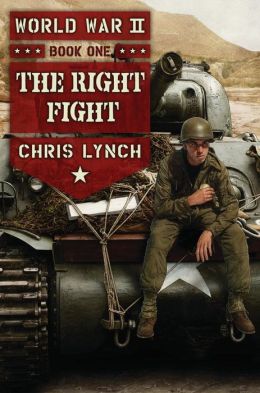
The Right Fight (2014)

The Right Fight. Chris Lynch. 2014. Scholastic. 192 pages. [Source: Library]

 I enjoyed Chris Lynch's The Right Fight. Roman, the protagonist, loves, loves, LOVES baseball. But he loves his country even more. That is why he enlisted even before America entered the war--the second world war. The book chronicles his early experiences in the war as a tank driver. Readers see him through training, war games, and going overseas, his various assignments and missions. (Most of the book sees him in North Africa). Readers experience it from his point of view and from a few letters as well. One sees how his fellow soldiers--the men in his tank specifically--form a family. One also sees the many (often-ugly) sides of war.

I enjoyed this one. I thought there was a good balance of action (war) and characterization. I liked getting to know Roman, his fiancee, his war buddies.


© 2014 Becky Laney of Becky's Book Reviews