Showing posts with label art appreciation. Show all posts

Thursday, May 22, 2025

51. Painting Wonder: How Pauline Baynes Illustrated The Worlds of C.S. Lewis and J.R.R. Tolkien


51. Painting Wonder: How Pauline Baynes Illustrated the Worlds of C.S. Lewis and J.R.R. Tolkien. Katie Wray Schon. 2025. 48 pages. [Source: Library] [5 stars, nonfiction picture book]

First sentence: This little girl will grow up to draw pictures that will wing their way around the world, flying to faraway places. Her pictures will be held in millions of hands--maybe even yours. But who is she? And what will she draw? 

Premise/plot: This isn't the most traditional picture book biography. It is more a picture book biography with a pointed focus on how Pauline Baynes--artist, illustrator--came to illustrate for J.R.R. Tolkien and C.S. Lewis. 

My thoughts: I knew her as the illustrator of the Narnia books--the interior illustrations particularly. Her work isn't always used for the covers. (That's a whole other story. The Narnia books have gone through SO MANY covers.) I did not know that she also illustrated a book cover for Tolkien (paperback Lord of the Rings, one of the editions) and a map  of Middle Earth and a few of his lesser known books that are not connected to Middle Earth. 

I don't know that I absolutely love, love, love, love, love this one. But I do appreciate the story it tells. I did learn quite a bit by reading it. While picture book biographies exist for a LOT of writers/authors, fewer exist that focus on illustrators. (Unless they are author-illustrators). Illustrations are so important for stories and storytelling. 


© 2025 Becky Laney of Becky's Book Reviews

Tuesday, July 16, 2019

I Always Loved You

I Always Loved You. Robin Oliveira. 2014. 343 pages. [Source: Library]

First sentence:  Mary Cassatt lifted two shallow crates of assorted brushes, pigments, palettes, and scraping knives and set them atop the paint-smeared table shoved under the arched, north-facing windows of her untidy studio.

Premise/plow: Love art? Love history? Love art history? Don't require much actual-actual romance in your your historical romance? I Always Loved You is a fictionalized account of the friendship between Edgar Degas and Mary Cassatt. It isn't their story alone--it is the story of a group of artists, an artistic movement. The novel opens in 1877 and closes in 1926.

My thoughts: Impressionism is my absolute favorite art style/period. (Renoir is my FAVORITE AND BEST). I was intrigued by this one, I was, and not just by the premise. I liked looking at the bigger picture--how these people fit into each other's lives, a behind-the-scenes glimpse of artists, for better or worse. And sometimes it was worse. Tempers could be lost; tantrums be thrown. Each person seemed fully obsessed with THE ART, always, only the art. Perhaps with the exception of our narrator, Mary. Mary seemed to actually care equally about people and art.

I thought the novel was beautifully written in places.

  • Only paint was honest. But even a painting could be wiped clean and refined. (5)
  • "Degas provokes and reveals our prejudices. Wouldn't you like to be good enough to unsettle someone in this same way one day?" (14)
  • "Paris is the sanctuary of art," Abigail said. "And it's battleground," Mary said, kissing her friend once more. "The place where artists live or die." (17)
  • "You've painted love," Edgar said. "You must always paint love. You must never paint anything else. You have found it. Your obsession is love." He was right. Here was love--light and color and affection sprung from her brush, desire, and innocence in every stroke, and something more, something real, something absolute. A moment passed, and then another, "And what of you? What will you paint?" Mary said. "I will paint what is real." "And love is not real?" "It is when you paint it," he said. (234)


© 2019 Becky Laney of Becky's Book Reviews

Thursday, July 11, 2019

Degas, Painter of Ballerinas

Degas, Painter of Ballerinas. Susan Goldman Rubin. 2019. Harry N. Abrams. 64 pages. [Source: Review copy]

First sentence: As the young girls adjusted their toe shoes and warmed up for class, Edgar Degas studied them.

Premise/plot: This is a nonfiction picture book for older readers and/or art lovers of all ages. This one focuses both on the ART of Edgar Degas (and the subject of his art: dancers) and the LIFE of Edgar Degas. (Roughly eight pages is devoted to his life--the rest is focused on his art.)

Each spread highlights a piece of art. (Sometimes a spread highlights two pieces of artwork.) There is an overall narrative to the text. But each piece of art also has accompanying sidebar packed with details.

I thought the narrative was lovely! It even included a few quotes.
During his long career from 1852 to 1912, Degas created more than a thousand dance pictures. He learned that ballet training was very much like studying art. It took hard work and hours and hours of practice. Degas drew the same poses again and again, just as the dancers repeated their positions at the barre again and again. "One must repeat the same subject ten times, a hundred times," said Degas. "Nothing in art, not even movement, must seem an accident." (2)
Sometimes Degas invented his own costumes for his paintings. In the classroom, the dancers really wore plain white skirts and tops, but he added blue and pink sashes and black throat ribbons. He needed the accents of color. Once when Degas was giving art lessons to a friend's son, he told the young student to paint the whole canvas in tones of a single color, perhaps gray or brown. "You put a little color on it, a touch here, a touch there," said Degas, "and you will see how little it takes to make it come to life." (14)

My thoughts: I enjoyed this one. It isn't a book to be rushed through and read cover to cover. Though if one wanted to get the big picture...one could certainly do that first. But it is best to be enjoyed a little here and there. The art deserved to be appreciated, which takes time and effort. I loved learning about each piece.

I would definitely recommend this one.


© 2019 Becky Laney of Becky's Book Reviews

Wednesday, September 05, 2018

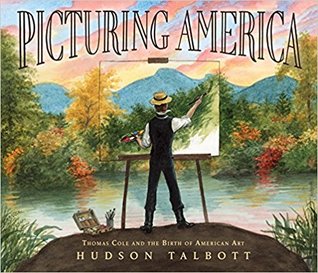
Picturing America: Thomas Cole and the Birth of American Art

Picturing America: Thomas Cole and the Birth of American Art. Hudson Talbott. 2018. Penguin. 32 pages. [Source: Review copy]

First sentence: Thomas Cole was a curious boy.

Premise/plot: Picturing America is a picture book biography of Thomas Cole an American landscape artist. It is an excellent introduction to his art and the man himself. To learn more readers can visit: http://www.explorethomascole.org/  or https://www.wikiart.org/en/thomas-cole

My thoughts: I found Picturing America to be a fascinating book. I am not an art enthusiast. I know very little about art--American or otherwise. I found the book to be a compelling read. Cole makes for an intriguing subject. The more I read, the more I wanted to know.

Text: 5 out of 5
Illustrations: 5 out of 5
Total: 10 out of 10

© 2018 Becky Laney of Becky's Book Reviews

Friday, March 16, 2018

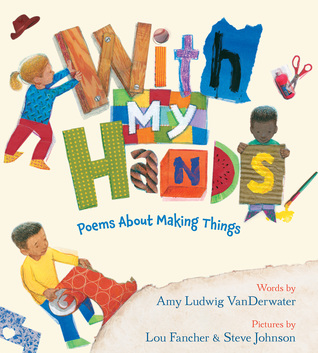
With My Hands

With My Hands: Poems About Making Things. Amy Ludwig VanDerwater.  Illustrated by Lou Fancher and Steve Johnson. 2018. Houghton Mifflin Harcourt. 32 pages. [Source: Review copy]

First sentence: I am a maker.

Premise/plot: With My Hands is a themed collection of poems by Amy Ludwig VanDerwater. The theme of the collection is "making things." What kinds of things? All sorts. Not just artsy things like drawings, paintings, cards, and collages. But all sorts. For example, I wasn't expecting a poem about soap carving or making shadow puppets on the wall! I think there is enough variety to inspire and encourage every young reader to say I want to try that!

My thoughts: I enjoyed this collection very much. It celebrates creativity in all its forms. And it captures the joy of play and creation. I had a few favorite poems in this one. I thought "Card" was a sweet poem celebrating a child's love for his/her dad. (The poem is written in first person. The speaker could be a girl or a boy. But the illustration is of a boy.) But my favorite poem is "Mess."

Mess
Yes. It's a mess.
Do not let it distress you.
I'm making a project
that might just impress you.
Projects are messy--
all makers agree.
And the messiest maker
of projects is....me.

I LOVE, LOVE, LOVE, LOVE, LOVE that poem because it is so me.

I think this book would pair well with Peter Reynold's Happy Dreamer.

© 2018 Becky Laney of Becky's Book Reviews

Friday, January 26, 2018

I Don't Draw, I Color!

I Don't Draw, I Color! Adam Lehrhaupt. Illustrated by Felicita Sala. 2017. Simon & Schuster. 32 pages. [Source: Review copy]

First sentence: Some people are really good at drawing. But my puppies look like mush. My cars look like lumps...or like boxes...or this. Do these look like people to you? I didn't think so. So, I don't draw. I color.

Premise/plot: The star of this charming picture book doesn't draw--he colors. This book celebrates art and individuality.

My thoughts: I really loved this one. Adam Lehrhaupt was one of my favorite discoveries of 2017. I love the joy of this one.

Text: 5 out of 5
Illustrations: 4 out of 5
Total: 9 out of 10


© 2018 Becky Laney of Becky's Book Reviews

Tuesday, October 03, 2017

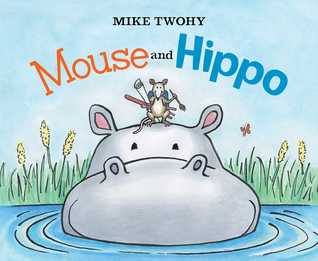
Mouse and Hippo

Mouse and Hippo. Mike Twohy. 2017. Simon Schuster. 32 pages. [Source: Library]

First sentence: Whoa! Oops, excuse me, I had an itch. Your itch was me...and HELP...I can't swim!

Premise/plot: The story opens with a mouse painting the ocean. His easel is set up on a rock...or is it?! Turns out that Mouse's "rock" is really HIPPO. After Hippo saves Mouse from drowning, Mouse volunteers to paint him. But how does a mouse get all of Hippo to fit on his small canvas?! Mouse paints what he sees, and he uses his largest brush to do so. Hippo is delighted--absolutely delighted--with his portrait. Hippo then decides to paint a portrait of Mouse. Hippo paints what he sees--as Mouse did--and Mouse is charmed with the results. (Hippo uses a tiny brush to paint Mouse.)

My thoughts: This book is ALL about perspective. Well, that's an exaggeration. It's equally about friendship, art, and perspective. How do YOU see the world around you? How do you represent what you see on the page--or the canvas--in front of you?

The text of the book is all dialogue. Hippo's words are in black. Mouse's words are in brown. It could work as a traditional read aloud--in the home, at school, at the library. Or. It could be a book a parent and child read together. One could read the part of hippo. The other could read the part of Mouse. I think either way it could work well.

Personally, I LOVED, LOVED, LOVED this one. It made me smile again and again. I thought the illustrations were absolutely perfect. I thought the text was great as well.
Gee--you don't really know how big a hippo is until you try to paint one! 
Text: 5 out of 5
Illustrations: 5 out of 5
Total: 10 out of 10


© 2017 Becky Laney of Becky's Book Reviews

Monday, September 11, 2017

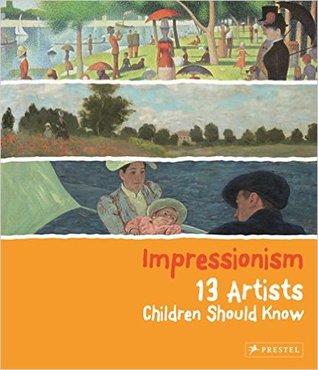
Impressionism: 13 Artists Children Should Know

Impressionism. Florian Heine. 2015. 48 pages. [Source: Library]

First sentence: Impressionist is the name we give to a special kind of painter. The Impressionists first began painting in France during the late 19th century. They had new ideas about the way we should paint.

Premise/plot: This is a nonfiction book for children and young adults about the Impressionists. (Let's be honest, it's also for adults who are intimidated by the subject and are looking for an easy introduction.) It introduces readers to thirteen artists. These artists are: Edouard Manet, Claude Monet, Auguste Renoir, Gustave Caillebotte, Edgar Degas, Berthe Morisot, Camille Pissarro, Mary Cassatt, Max Liebermann, Georges Seurat, Childe Hassam, Paul Signac, and John Singer Sargent. Of the thirteen artists, many--but not all--were French OR spent a part of their life living in France. (Paris was quite the place to be.) At least two pages--if not more--are dedicated to each artist. Readers will see at least one--if not more--work from each artist. The author does a great job of representing an artist's uniqueness.

Edouard Manet, "Music in the Tuileries Gardens" (1862); "Bunch of Asparagus" (1880), "Asparagus" (1880)
Claude Monet, "Impression Sunrise" (1872); "Wheat Stacks, Snow Effect, Morning" (1891); "Water Lilies and Japanese Bridge" (1899)
Auguste Renoir, "Dance at the Moulin de la Galette" (1876)
Gustave Caillebotte, "Paris Street, Rainy Day" (1877)
Edgar Degas, "Ballet Dancers/The Star" (1876/77); "Dancers Practicing at the Bar" (1877); "At the Races" (1877/78)
Berthe Morisot, "Butterfly Hunt" (1874); "Hanging the Laundry Out to Dry" (1875)
Camille Pissarro, "Boulevard des Italiens" (1897)
Mary Cassatt, "The Letter" (1891); "The Boating Party" (1893/94)
Max Liebermann, "The Parrot Man" (1902); "Terrasse Restaurant Jacob in Nienstedten/Elbe" (1902/03)
Georges Seurat, "A Sunday Afternoon on the Island of La Grande Jatte" (1884-86)
Childe Hassam, "Church at Old Lyme" (1905); "The Avenue in the Rain" (1917); "Rainy Midnight" (1890)
Paul Signac, "Portrait of M. Felix Feneon" (1890); "Grand Canal (Venice)" (1905)
John Singer Sargent, "The Daughters of Edward Darley Boit" (1882)

My thoughts: I liked it. I'm not sure I loved, loved, loved it because I thought it was a bit uneven at times. It included at least one artist that wasn't an impressionist at all. I think when you look at the whole book, one does get a sense of what made them unique and set them apart from what had gone before. I also liked that it is packed with information about each artist. And the representations of the art is nice. Most of the time, the pictures are big and you get an idea of the magnificence of the original piece.

Personally, I don't understand why some artists get three pictures and other artists get only one. For example, I think the author chose the two asparagus pieces of Manet just to squeeze in an interesting "I-didn't-know-that-fact." I don't think from a representative artistic point of view that asparagus is more thrilling than say Renoir's incredibly beautiful work. I think the book should have been 12 Artists Children Should Know and given more space to Renoir.

© 2017 Becky Laney of Becky's Book Reviews

Wednesday, July 05, 2017

Vincent and Theo: The Van Gogh Brothers

Vincent and Theo: The Van Gogh Brothers. Deborah Heiligman. 2017. 464 pages. [Source: Library]

First sentence: Theo's brother Vincent has been living with him for just over a year, and Theo cannot take it anymore.

Premise/plot: Love historical fiction? Love art? Love France? Consider reading Deborah Heiligman's new novel, Vincent and Theo: The Van Gogh Brothers. She tells their story in a compelling way, I think. But it isn't just the story of Vincent and Theo of their dependence on one another. It's also the story of Theo's wife, Jo. Without his sister-in-law's continual effort to keep Vincent's work alive after his death--to keep his work in front of the public, to make his name, his work KNOWN, would the world really have Vincent Van Gogh?!

My thoughts: I really enjoyed reading this one. If enjoyed is the right word. It's emotional, dramatic, and well-researched. The first few chapters begin near the end. But for the most part, the book is arranged chronologically. Each chapter leaves readers with a strong impression; each captures a moment in time. Oh the tension! There's drama, frustration, confusion, heartache, disappointment, loneliness, despair, love, and passion. There's a definite feeling of lost-ness hanging over the novel. Both brothers suffer from mental health issues--among other things.

The book is strongly influenced by his art. There are certain works that really impact how the story is told and arranged. For example, Vincent's picture of the Windmill became a symbol of the bond between the brothers. She states in the author's note that finding this work and realizing its significance was THE moment she found her book.
This walk in the rain seals their friendship, deepens it. Later both brothers will refer to it as a meeting of the minds, of the time they made a pledge to each other. They will always remember this day. Theo will use the walk in argument. So will Vincent. The brothers will come back to it again and again. It is an anchor, a promise of the future, a touchstone. (49)


I would recommend that readers also pick up a copy of Impressionism: 13 Artists Children Should Know by Florian Heine. It does NOT include Vincent Van Gogh, but, it does include many of his contemporaries. He knew several of these artists well; his work was exhibited alongside theirs.

© 2017 Becky Laney of Becky's Book Reviews

Thursday, June 08, 2017

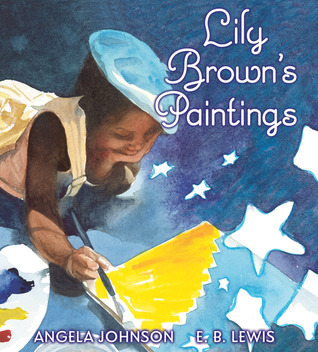
Lily Brown's Paintings

Lily Brown's Paintings. Angela Johnson. 2007. 32 pages. [Source: Review copy]

First sentence: Lily Brown loves her mama, daddy, and baby brother and the world they live in. Sometimes she spins around her room thinking about their world. And it's wondrous. But when Lily Brown paints, her world starts to change.

Premise/plot: Lily lives happily in two worlds. The second world she lives in is one of her own imagination, her own reckoning.
When Lily Brown paints fruit at the corner market, it is striped and polka-dotted. It speaks to people, then laughs out loud. When people put the fruit in bags to take home, the apples sing all the way there.
At the end of the day, when the painting--for now--has all been done, she happily returns to the real world and LOVES it just as much.

My thoughts: What doesn't this picture book celebrate? It celebrates art, freedom of expression, love of life, love of family, JOY, imagination. I'm sure I could think of more if I keep rereading it. It's just a joy to spend time with Lily.

Text: 5 out of 5
Illustrations: 4 out of 5
Total: 9 out of 10


© 2017 Becky Laney of Becky's Book Reviews

Sunday, January 22, 2017

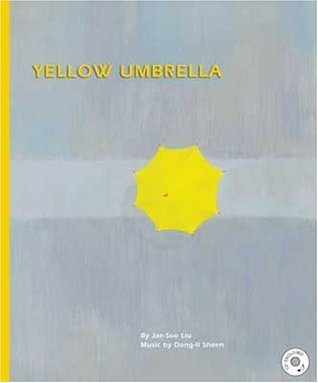
Yellow Umbrella

Yellow Umbrella. Jae-Soo Liu. Music composed by Dong II Sheen. 2002. Kane/Miller. 36 pages. [Source: Review copy]

Yellow Umbrella is a wordless picture book by Jae-Soo Liu that was first published in Korea. One umbrella becomes many, many umbrellas on a rainy day.

The message of the book, according to the author, is "whether they were boys or girls, fat or skinny, short or tall...under their colorful umbrellas, all those physical differences disappeared...It seemed to me that these children were claiming that they were all equal in spite of their physical differences." Readers can find their own meanings in this wordless book, however.

For me, when I "read" this one, what I get is a sense of JOY. The book seems to capture the love of life, the love of play.

The book includes a CD filled with music. The first track is seven minutes, and this is the intended soundtrack for the book. Track two, "Underneath the Sky," is the only music piece with lyrics included.
Everyone hold up your umbrella
Standing underneath the sky
Everyone -- with your umbrella
Listen to the rain
Tracks three through fifteen are expanded versions of the themes or segments from the main track.

If you enjoy piano music, art, or rainy days, this one is too fun to miss.

Music: 4.5 out of 5
Illustrations: 4.5 out of 5
Total: 9 out of 10


© 2017 Becky Laney of Becky's Book Reviews

Wednesday, December 28, 2016

Louise and Andie: The Art of Friendship

Louise and Andie. The Art of Friendship. Kelly Light. 2016. 40 pages. [Source: Library]

First sentence: Art, this is the BEST day ever! I'm so excited to meet our new neighbor. I hope she loves art too.

Premise/plot: Louise and Art are back in a second book! (Though the focus is on Louise and not her adorable, little brother Art!) Louise and Andie, the girl next door, become good friends quickly. But things don't stay wonderful long, soon, these two realize they have artistic differences. Can this friendship be saved?!

My thoughts: Loved this one. I did. I really loved it!!! It is so important--no matter your age--that you learn how to resolve conflict! I love seeing this friendship endure the stress of a big argument. I love that these two are able to work things out and really come to know and appreciate each other better.

Text: 5 out of 5
Illustrations: 5 out of 5
Total: 10 out of 10

© 2016 Becky Laney of Becky's Book Reviews

Saturday, October 29, 2016

The Singing Bones

The Singing Bones. Shaun Tan. 2016. 208 pages. [Source: Library]

First sentence: There are stories, honed by the retelling, simplified by the people who recorded them and transmitted them, old stories, with the edges rubbed off them, like the pebbles on a beach, each story the perfect size and heft to send skimming over the water, or to use to strike an enemy. Folktalkes are like jokes: If they had a beginning, it is lost to us.

Premise/plot: The Singing Bones is a collection of photographs and one-page 'retellings' of Grimm fairy tales or folk tales. The photographs are of sculptures made by Shaun Tan. Gaiman, who wrote the introduction, probably says it better than I ever could: "They [the sculptures] feel primal, as if they were made in a long-ago age of the world, when the stories were first being shaped, and that perhaps the sculptures came first."

There are dozens of photographs. They do take center stage in this book. The words being almost like a brief but necessary interruption. The text does not summarize the fairy tale. The text is definitely on the literary side. The reader has to work to make connections and "see" the bigger story that both photograph and text tell.

My thoughts: I didn't actually love this one personally. But. Just because I don't love, love, love something doesn't mean that I don't recognize ART when I see it. This is a weighty 'literary' book that is definitely interesting and quirky. I think those who love it will really LOVE it.

This quote by Neil Gaiman was fabulous:
People need stories. It's one of the things that make us who we are. We crave stories, because they make us more than ourselves, they give us escape and they give us knowledge. They entertain
us and they change us, as they have changed and entertained us for thousands of years.
© 2016 Becky Laney of Becky's Book Reviews

Thursday, May 26, 2016

The Dot

The Dot. Peter H. Reynolds. 2003. Candlewick Press. 32 pages. [Source: Library]

First sentence: Art class was over, but Vashti sat glued to her chair. Her paper was empty.

Premise/plot: Vashti tells the art teacher, "I can't draw." Her teacher offers a suggestion--simple and pure--"Just make a mark and see where it takes you." So she makes a dot, a single dot. How far will that dot take her?!

My thoughts: I really, really love this one. I do. It is a fine story made great by the ending. I love how Vashti is able to both inspire and encourage another frustrated kid. When she hears, 'I can't draw,' she knows just what to say... I love how the book shows how a simple thing like a change in perspective can change everything. The book also, of course, celebrates expression and creativity.

Text: 5 out of 5
Illustrations: 3 out of 5
Total: 8 out of 10


© 2016 Becky Laney of Becky's Book Reviews
Wednesday, May 25, 2016

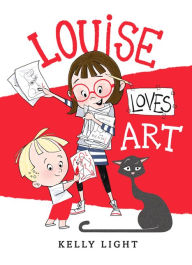
Louise Loves Art

Louise Loves Art. Kelly Light. 2014. 40 pages. [Source: Library]

First sentence: I love art! It's my imagination on the outside. So little time, so much to draw.

Premise/plot: Readers meet Louise, a little girl, who LOVES art. Actually, she loves art and Art. One day Louise creates a masterpiece. But. Before she can properly hang it in the gallery (on the refrigerator), her little brother Art gets a hold of it...with a pair of scissors. What will happen next?!?!

My thoughts: I LOVED, LOVED, LOVED, LOVED this one. I love Louise. I love Art. I love how their characterization comes through both in the text and in the art. I even love their cat. Her masterpiece is a drawing of their cat, and she finally captured his cat-ness. The use of language is wonderful. For example, "I've done it. So fierce! So feline! So fantastic...a masterpiece." I love the little details too. (For example, the "Herman Hermit" Louise passes on her way to the kitchen. The way Art is watching her create at the beginning, and actually drawing alongside her at the end. The use of color). And I love the double meaning of the title. It was very clever to name the little brother, Art!!!

Watch the Emily Arrow video. (I love the doll! Oh, how I wished I had one!!)

Text: 5 out of 5
Illustrations: 5 out of 5
Total: 10 out of 10

© 2016 Becky Laney of Becky's Book Reviews
Friday, June 26, 2015

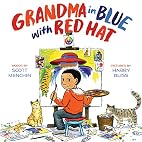
Grandma in Blue with Red Hat (2015)

Grandma in Blue with Red Hat. Scott Menchin. Illustrated by Harry Bliss. 2015. Abrams. 32 pages. [Source: Review copy]

First sentence: Saturday is the best day. Because that's the day I go to art class at the museum. I have been coming here forever.

Premise/plot: The narrator of Grandma in Blue with Red Hat comes to an important realization about art and about his Grandma. He listens to his classmates describe art, what makes art, well, ART. He realizes that his Grandma has all the attributes of a GREAT museum-worthy piece of art. Should he donate his Grandma to the museum?! Or can he honor both his love of art and his love of his Grandma in his own special way?

My thoughts: I liked this one very much! I thought it was very sweet. It gets big and little details just right. I love his relationship with his grandma. I appreciate the focus on art. I also noticed that the narrator has two pet cats, and, that he LOVES to draw them!

Note: Not every teacher *appreciates* illustrated underwear. This one does have a LARGE pair of underwear on display at a museum...in the boy's imagination!

Text: 4 out of 5
Illustrations: 4 out of 5
Total: 8 out of 10

© 2015 Becky Laney of Becky's Book Reviews

Thursday, June 25, 2015

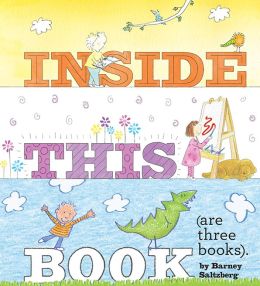
Inside This Book (2015)

Inside This Book (Are Three Books) by Barney Saltzberg. 2015. Abrams. 40 pages. [Source: Review copy]

First sentence: Inside this book is a book I made called...Inside This Book by Seymour.

Premise/plot: Readers meet Seymour, Fiona, and Wilbur three siblings who have all made books. Seymour and Fiona can write--so their books have words and pictures. Wilbur is too little to know how to write, but, he can draw and tell Seymour what to write. The fun began when their mom gave them books with blank pages. The books are called, "Inside This Book," "Inside This Book, Too" and "My Book."

My thoughts: I love the creativity of this one. It is fun to make books, to read them and to share them. I love that each book within Inside This Book is written in a unique voice so that readers get to know each writer. Which book is my favorite? Well, I really loved all three books. But probably I loved "My Book" best. It is the shortest, smallest, and simplest. But it is funny! I can imagine it causing giggles whenever it's read by the family.

Text: 4.5 out of 5
Illustrations: 4.5 out of 5
Total: 9 out of 10

© 2015 Becky Laney of Becky's Book Reviews
Tuesday, October 26, 2010

The Plain Janes (YA)

The Plain Janes. Cecil Castellucci. Jim Rugg. Minx. 176 pages. 

Metro City. Last spring. When it happened, I fell. There was a pop and then nothing. I didn't know what was happening. 

I was surprised by how much I really enjoyed The Plain Janes. I didn't expect to like it so much. I didn't expect it to be so compelling. I was surprised by the depth, the substance, of the characterization.

Jane, our heroine, is just one of many Janes in her new school, new town. And at first, she finds her new world to be uninviting. But. After meeting the other Janes, she finds hope and makes a plan. A plan that will include bending a few rules. She'll start a club--a secret club--called P.L.A.I.N. People Loving Art in Neighborhoods. Her role--while anonymous--brings some great people into her life. But it isn't without some risk.

The focus is on family, friends; life at home and school. I would definitely recommend The Plain Janes.

© Becky Laney of Becky's Book Reviews
Tuesday, August 25, 2009

A Map of the Known World (YA)


Sandell, Lisa Ann. 2009. A Map of the Known World. Scholastic. 273 pages.

Somewhere, things must be beautiful and vivid. Somewhere else, life has to be beautiful and vivid and rich. Not like this muted palette -- a pale blue bedroom, washed out sunny sky, dull green yellow brown of the fields. Here, I know every twist of every road, every blade of grass, every face in this town, and I am suffocating.

Meet Cora Bradley. An unhappy often frustrated teen grieving the death of her brother, Nate, and the loss of her parents. Since the death of her brother, her mother and father have each in their own way disconnected from the family. Cora feels alone. Like her mother and father don't care about her, that they don't see her. Only one thing is known, her art gives her life meaning. The time she spends drawing (and painting and whatever else) is her time to just be. It is through her art that she explores herself--her thoughts, her feelings, her hopes and dreams. Her art is her connection to her soul, if you will. Her art keeps her going.

What Cora didn't know--couldn't know--was that Nate, her brother, was also an artist. How does she discover this? Well, Cora starts to fall for Nate's best friend, Damian. They're in art class together, and though they are far apart in ages--one being a freshman, the other a senior--they find a connection that brings them together. Something more than just shared grief.

This YA novel has some traditional themes, recognizable ones. The theme of loss--anger, confusion, sadness--as our heroine, Cora, is grieving the loss of her older brother who died in a car accident. The theme of art saving the day--you know, where being artistic and creative unleashes all the good things in life and allows the character to thrive and come into her own. (Yes, you'll find the sympathetic art teacher that "gets" the heroine like no one else quite can.) The theme of a small-town girl dreaming of the day when she can get out, find freedom in the world, and be her own person. (Cora can't wait to get out! She wants to see the world, the whole world, she wants to travel, see and do it all.) And there is the theme of unraveling friendships as life-long friends grow apart as they want and need different things in life.


© Becky Laney of Becky's Book Reviews

Monday, July 13, 2009

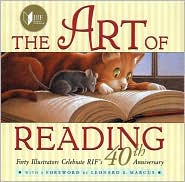
The Art of Reading


The Art of Reading: Forty Illustrators Celebrate RIF's 40th Anniversary. With a Foreword by Leonard S. Marcus. 2005. Dutton (Penguin).

This is a book for those with curious minds. It asks forty illustrators to talk about which books in their lives have inspired them. Sounds simple, but how would you choose just one? (That's what I'd like to know.) But what is the book like? Well, each artist is given two pages. One page for an illustration--at times this is an "inspired-by" piece. And a second page for text--a paragraph or two for talking about reading, drawing, and imagination. Who was inspired by The Lion, The Witch, and the Wardrobe? Pat Cummings. Who was inspired by The Wonderful Wizard of Oz? Robert Sabuda. Who was inspired by Harold and the Purple Crayon? That would be Bryan Collier. It was interesting to me--and it may be to you as well--to see that novels (both children's novels and more adult titles even) can inspire potential artists just as much as picture books. (For example, The Outsiders inspired David Diaz; The Martian Chronicles inspired Brian Selznick; 2001 A Space Odyssey inspired David Wiesner.) I also loved that this book conveyed passion and enthusiasm. It was a book that showed people excited about reading, about books.

I also want to mention that this is a great browsing-type book. If you like art--no matter your age--you'll probably enjoy the illustrations in this one. It features artists paying tribute to their favorite books. So you'll see art that is inspired by particular books.

Which books have 'inspired' you in your life?

© Becky Laney of Becky's Book Reviews