Showing posts with label grief. Show all posts

Friday, February 13, 2026

20. All The Blues in the Sky


20. All the Blues in the Sky. Renee Watson. 2025. 208 pages. [Source: Library] [4 stars, Newbery, verse novel, grief, problem novel]

First sentence: I didn't know
best friends could die.

Premise/plot: After Sage's best friend, Angel, dies, Sage begins attending a grief counseling group with those her own age. She feels that some understand because the people they lost died suddenly, but she's angry that others in the group are included because the people they lost didn't die suddenly. Her logic is that losing someone through hospice isn't the same, couldn't ever be the same. Or losing a grandmother is one thing but losing a best friend another. She rolls her eyes when others share knowing that her pain is greater, better. That's her logic at any account. By the end of the novel--after Sage rages a bit--Sage will have an opportunity to rethink her logic when she learns that her great-aunt is dying.

My thoughts: All the Blues in the Sky was the Newbery this year. It is a verse novel. It was a quick read. It is an emotional read. It checks a lot of the boxes for award winners. It just does. But that doesn't always mean it's a great fit for kids. Not that there's anything objectionable or inappropriate. I just mean kid-appeal. The greater the number of tears shed the better the chances for adults to LOVE it and want to give it all the awards. I'm not sure kid logic works quite like that. THOUGH again if this one is read and loved by kids, that's great.

I personally didn't love Sage's logic. It felt slightly obnoxious. BUT it might be extremely authentic. I do wish that the book focused more on Sage's whole life--and not just her attendance of grief counseling. But again, it's never, never fair to review the book you want instead of the book that is.

Note: I'm not sure if this is a children's book or lower middle grade. But there is a boyfriend and kissing. Which I'm not sure many Newbery medals feature a romantic element.

© 2026 Becky Laney of Becky's Book Reviews

Thursday, May 08, 2025

47. The Trouble with Heroes


47. The Trouble with Heroes. Kate Messner. 2025. 368 pages. [Source: Library] [4 stars, j fiction, coming of age, verse novel, mg fiction, poetry]

First sentence: If I were a better kid, this story would begin with my seventh-grade diploma. Instead it starts with this.

Premise/plot: Finn Connelly is in trouble. Over one summer he has the opportunity to set things right, mostly. He'll be making reparations for knocking over a gravestone in the cemetery. (An arrangement with the daughter of the woman's whose gravestone was knocked over, and I believe agreed upon by the court?). He'll be making up missed hours for PE. He'll be making up a poetry assignment--twenty poems on the subject of HEROES. Mission: climb all forty-six mountains in the Adirondack High Peaks. He'll have 'guides' for most of the climbs--men and women who have volunteered to help him out, men and women who love climbing mountains and/or have an interest in helping the kid out. (I could not tell if the coach was particularly interested in hiking so much as that he wanted to help Finn out.) 

Finn is going to hike and climb....write....and grieve. His firefighter father has recently died and his father had PTSD from serving on 9/11.

My thoughts: It made sense for this to be a verse novel. Not all verse novels pass this 'makes sense' test. He is being forced to 'write poetry' and he discovers that it isn't the worst thing in the world. That the process of writing--of writing poems--can be personally helpful. It is very much a coming of age novel. It was good to watch him grow/change throughout the story. This one does offer a few twists and turns on the way. Perhaps I should have seen one of them coming....but I didn't. 

This 'problem novel' is heavy at times but it also contains lighter moments. Finn loves baking for instance.

© 2025 Becky Laney of Becky's Book Reviews

Saturday, July 15, 2023

133. The Probability of Everything


The Probability of Everything. Sarah Everett. 2023. [June] 336 pages. [Source: Library] [Middle Grade Fiction]

First sentence: We first noticed the asteroid because my little sister, Lo, kept trying to eat it. It was a Sunday morning in April, and the three of us--me, Mom, and Dad--were sitting at the dining table, discussing a news story Dad was reading on his tablet. 

My thoughts (preview): This book has mostly five and four star reviews on GoodReads. Clearly many people have read it and enjoyed it. BUT. I was not one of those. One of the reasons why I personally did not enjoy this one--not even a little bit--is that it is all switch and bait. In other words, Kemi Carter, the protagonist, is a completely unreliable narrator. Readers can take nothing--absolutely nothing--at face value. I don't like being gaslighted for 80 to 90% of the novel. Some readers may be like WOW the author really fooled us, how clever! Not me. I'm like, where's the book that was promised?!?!

Premise/plot: The framework of the book is that this "book" is a letter written to be found in the future--either by humans who survived the asteroid OR aliens? OR another species that evolves out of the atoms? Something like that. It is written directly to the reader. 

From the prologue, "Dear Reader, If you are reading this, then chances are that our world has ended. I don't know what that makes you? . . . All that matters is that you've found this. All that matters is that you now know we existed."

Kemi Carter loves, loves, loves science and math. She's supposedly, supposedly all about the facts. (Except for when she isn't, apparently).

Most of the novel is her "preparing" for the end of the world by creating a time capsule to be buried before the asteroid strikes earth.

My thoughts (conclusion): Perhaps some readers don't mind being tricked. But other readers may. Or at the very, very least I mind. Every reader has his/her own way of choosing what to read next. They make decisions based on jacket copy, descriptions, book cover, sample excerpt (like from Amazon), or even other reviews. When most--if not all--lead the reader to certain conclusions, it seems tricky to have the actual-actual book be about something completely different. Not only are you not getting what you wanted to read, you're getting something that you may very well NOT want to read. In fact, for those that tend to overthink (hint: me again): perhaps that's why the trickery exists in the first place. To get more people to read your book than otherwise would have because of the subject matter being what it is.

As I said at the start, I am definitely in the minority here. Most people seem to think this one is wonderful, brilliant, clever, etc.


© 2023 Becky Laney of Becky's Book Reviews

Wednesday, February 22, 2023

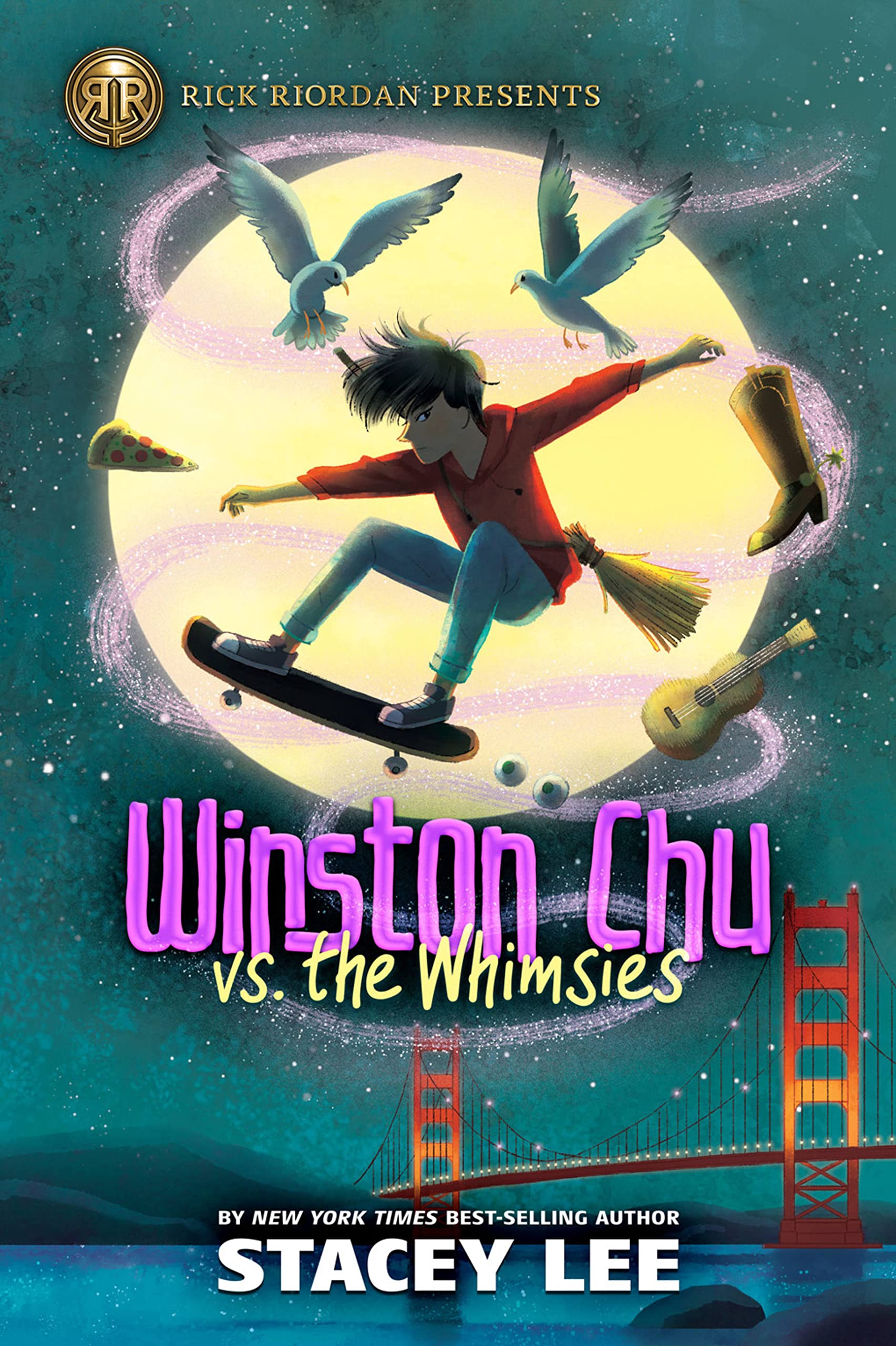
43. Winston Chu vs. the Whimsies


Winston Chu vs. the Whimsies. 2023. [February] 368 pages. [Source: Library]

First sentence: Dad used to say that qi, like the Force, ran strong in our family. That if we nurtured this life energy, we could heal a broken bone, even change the flow of water. Bet he never thought I would use the Chu family qi to bake the most gooeylicious shoofly pie on the planet. 

Premise/plot: Winston Chu loses his pie and gains a broom and dustpan. If I wanted an inadequate, awkward one-sentence summary, that's what I would go with. Winston has a great group of friends, and, he relies on them a great deal since the death of his father, a veteran. His older sister is grieving in her own way. His younger sister can't remember her father at all. Winston--and his friends--encounter a mystical, magical, whimsical here-today-gone-tomorrow shop of oddities with a super-strange-and-suspicious-shop-keeper. He's allowed a magical item--in return for "scaring" away hoodlums--but it will be the first thing he touches. And that something--was it a trick???--was a broom and dustpan. His life--and the lives of his friends--will never be the same again. This broom and dustpan will wreak havoc on their personal lives....and they will have to risk everything to hold onto what matters most.

My thoughts: This was one strange book. I guess I didn't realize it was a changeling story--involving his younger sister and a creepy doll. If I'd more fully known where this fantasy book was heading, I personally wouldn't have picked it up. Of course, it's equally possible that a reader would pick it up simply because they want a changeling story. 

This one wasn't for me. But it might work better for other readers. 


© 2023 Becky Laney of Becky's Book Reviews

Thursday, February 09, 2023

30. Iveliz Explains It All


Iveliz Explains It All. Andrea Beatriz Arango. 2022 [September] 272 pages. [Source: Library]

First sentence: Why is it that principals
love giving second chances?
Love reminding me they were kids too?
Love acting like they're doing me a favor,
doing my mom a favor,
by sitting me down all serious
and asking what they can do?
Well, guess what.
This is seventh grade now,
And I don't need anyone's help but my own.
I've moved on from everything
that happened,
I've made lists and I've made goals,
and if I"m in the principal's office,
you can 100% bet
that it wasn't my fault.

Premise/plot: Iveliz Explains It All is a verse novel that is a Newbery Honor book. Iveliz is writing poems in her diary/journal. (As well as writing lists of goals in her diary). This coming of age novel unfolds a bit like a mystery. Readers aren't quite sure why Iveliz is always [or nearly always] getting in trouble at school, why she always has in-school suspension or actual suspension, why she struggles to keep friends or to make friends in the first place. Readers may not have the answers to these questions by the end of the novel, but, perhaps they will have walked in her shoes and gotten the chance to understand/empathize. 

This verse novel is a "problem" novel. Iveliz, our heroine, is struggling with life in many ways. At home, she struggles to get along with her mother and her grandmother. Her issues with her mother are complex, for sure. Her issues with her grandmother are simpler. She has dementia and stays a bit out of touch with reality. But when she is "with it" if you will, she strongly disagrees with the decision that Iveliz is taking medication for her mental health. At school, she struggles with getting along with anyone/everyone. Even her friend(s) have a hard time dealing with her impulsive [sometimes violent] reactions. 

My thoughts: I'm debating my thoughts and reactions. On the one hand, part of me is curious. What is her diagnosis? What exactly is going on with Iveliz? How strongly is it connected with the trauma that is revealed so incredibly slowly? On the other hand, is it really any of our business? Do we really have to know the specifics in order to be kind and compassionate and empathetic? We are not "owed" an explanation. 

Is this one that will appeal to children? actual children? I'm curious--super curious. So often the books that do win Newbery awards or recognized as honor books don't necessarily appeal to actual children. [They appeal to adults--to teachers, to librarians, to parents.] They often feel "Significant" or "Important." I do think that at the very, very least this one would be a good fit for adults who work with children--teachers, librarians, principals, etc. I think it is a thought-provoking read in that regard. No person can know everything going on in the private, personal lives of their students. This gives a good, long pause. A reminder that so much can be going on underneath the surface. 

Just because I feel adults might be a better fit doesn't mean that I think this one is inappropriate or out of place for younger readers. It's just a slightly heavy novel.


© 2023 Becky Laney of Becky's Book Reviews

Tuesday, November 15, 2022

150. The Twelve Topsy-Turvy, Very Messy Days of Christmas


The Twelve Topsy-Turvy, Very Messy Days of Christmas. James Patterson and Tad Safran. 2022. 288 pages. [Source: Library]

First sentence: What is the worst present you ever received for Christmas? A pair of socks? A pair of scratchy socks? A pair of scratchy socks in a vile color? A pair of scratchy socks in a disgusting color that rub your big toes every step you take? A pair of coarse socks in a foul color that rub your big toes and you're forced to wear them because your grandmother gave them to you and she's coming to stay? That's pretty bad. But for Will and Ella Sullivan, the worst thing they ever got for Christmas was a dead mother.

Premise/plot: Kate Sullivan was dead, to begin with. There is no doubt whatever about that. Since this one is being marketed as "the next Christmas Carol" and an "instant classic" that will become a "must read for every holiday season," I thought it only fitting to introduce it properly. So it's been three--or so--years since she's died. The husband, Henry, has NOT gotten over it. He's been a total and complete wreck ever since. And Will and Ella, well, they've had to mainly raise themselves because of Henry's absent-while-present parenting style. But this Christmas, they are determined to find their dad a new wife. If he is happy then maybe Christmas can be Christmas again. So they write a dating profile for their dad...and begin corresponding with a "Ms. Truelove." The results...well...not quite what anyone expected.

It starts with a partridge in a pear tree. Literally. But it isn't until the FIVE GOLDEN RINGS are delivered to their doorstep that the family realizes with ever-growing DOOM AND GLOOM that things are about to get so much worse.

Essentially the premise is simple: the TWELVE DAYS OF CHRISTMAS literally being delivered to one family's house for the twelve days leading up to Christmas. Just take a minute or two to imagine that...

The book is about how the family reacts to these "gifts" from a "true love." Just WHO IS THIS TRUE LOVE????? And what is the motivation behind these "gifts" that feel like a curse.

My thoughts: I liked this one. I loved some chapters. I didn't quite love other chapters. It was definitely entertaining--for the most part. It is 100% premise-driven. Not many characters are fleshed out. There are plenty of comical scenes.

But for me, personally, this was no Christmas Carol.


© 2022 Becky Laney of Becky's Book Reviews

Thursday, October 27, 2022

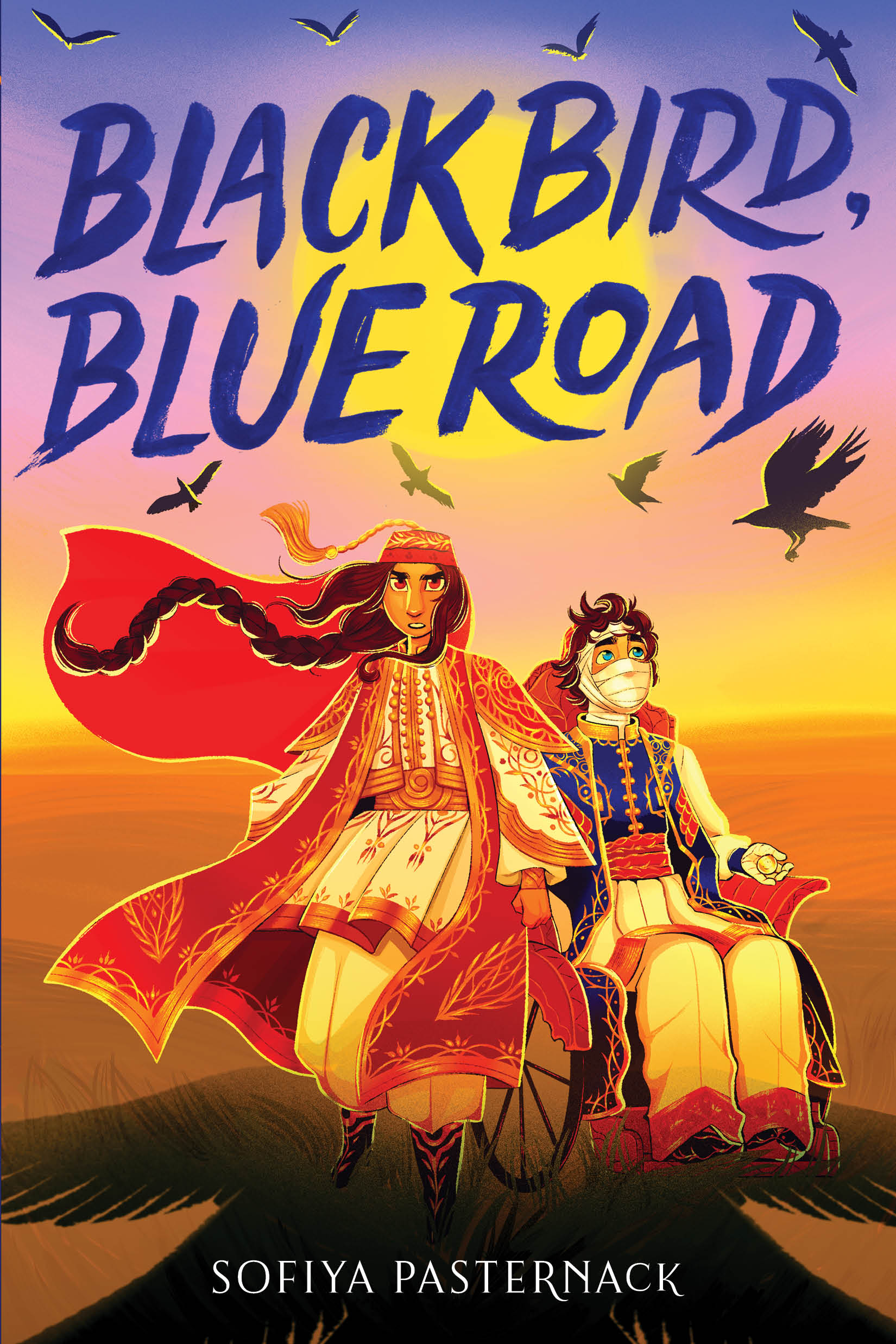
139. Black Bird, Blue Road


Black Bird, Blue Road. Sofiya Pasternack. 2022. [September] 320 pages. [Source: Library]

First sentence: Hello! Come in. Sit down. Don't be scared. This is a very important story, after all, and you shouldn't be afraid to hear it. It's from a very long time ago. A thousand years! In thos days, they used to begin their stories like this: There was one, there was no one. So that's how I'll begin, too. There was one. A girl. Ziva bat Leah, the daughter of a judge and the sister of a prophet. There was no one. No one to believe that Ziva could do the things she set out to do--like find a cure for her brother's illness, or master a demon, or sway the Angel of Death, whom she called malach ha-mavet. Ziva did two of those things, dear listener. Which two? Well. 

Premise/plot: Historical fantasy starring Jewish characters [and community]. Ziva, our heroine, loves, loves, loves her twin brother, Pesah. Everytime someone tells her that her brother is dying, she reacts. NO. No. No. A thousand times no. She is not ready to give up on her brother. He may have leprosy. He may have a gurgling, hagging-nagging cough, but she is not ready to give up on him. She will stand by his side fighting for a cure, clinging to any and every hope for a cure. This ultimately leads her to run away from home--with her brother--in search of a cure. It is an incredible journey. I will refrain from going into specifics of that journey. BUT MY OH MY this book was good.

My thoughts: The first few pages of the prologue grabbed my attention. The first part of the novel (proper) were much slower, in my opinion. But once these two start on their [runaway] journey, this one really takes off. Once these two encounter the half-demon (there was a Jewish name but I don't have a copy of the book in front of me and I didn't take actual notes), Almas, and these three set off in search of a city [Luz] where they can find immortality, the book becomes impossible--absolutely impossible--to put down. They are on a flight to out-run the Angel of Death.


© 2022 Becky Laney of Becky's Book Reviews

Thursday, October 20, 2022

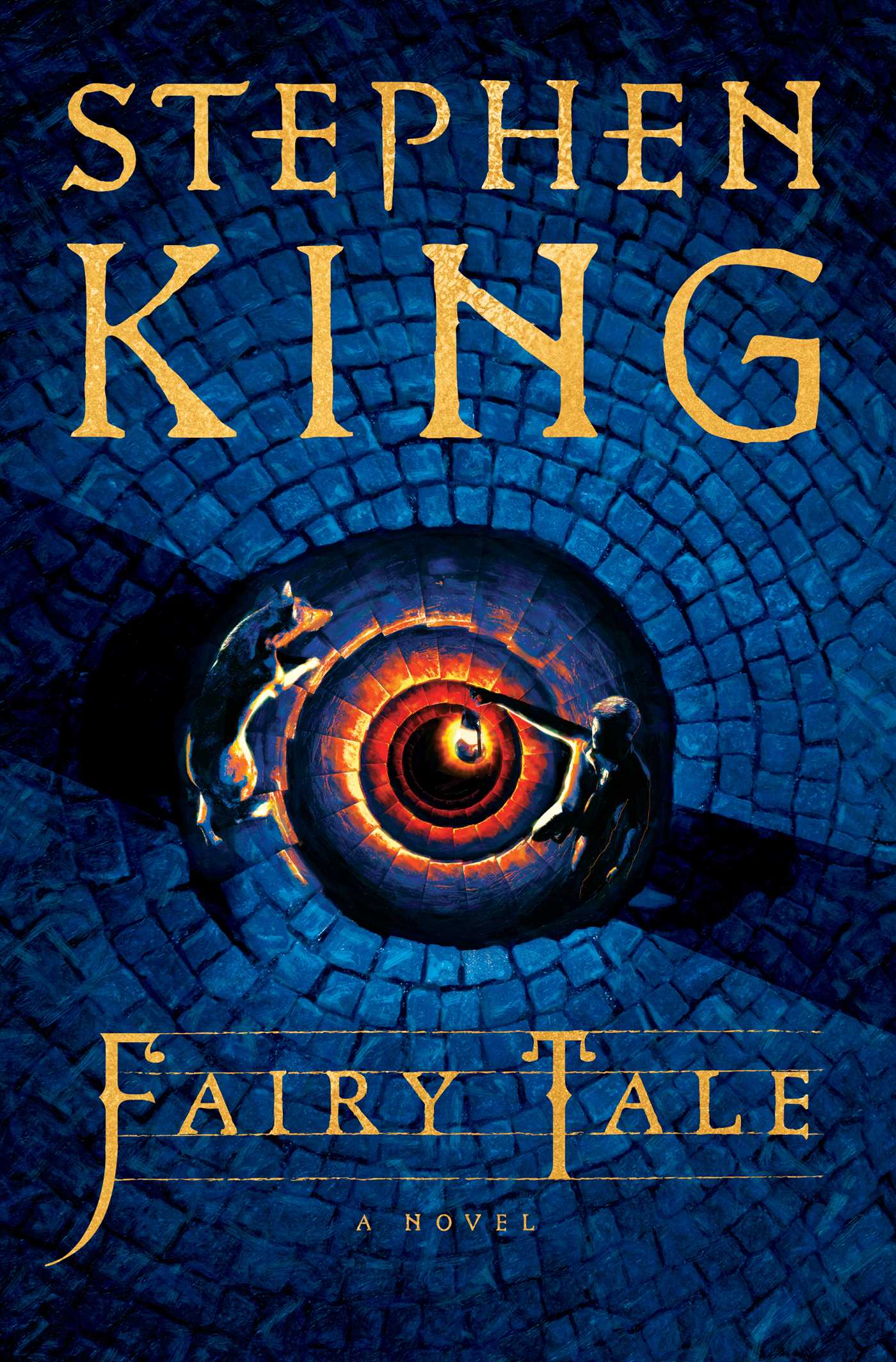
131. Fairy Tale


Fairy Tale. Stephen King. 2022. 608 pages. [Source: Library]

First sentence: I'm sure I can tell this story. I'm also sure no one will believe it. That's fine with me. Telling it will be enough. My problem--and I'm sure many writers have it, not just newbies like me--is deciding where to start. 

Premise/plot: Charlie Reade, our protagonist, has quite a story to tell readers. Though the adventures [or misadventures] start with a neighbor's shed, the story starts much earlier. He opens his story with the story of a bridge, the bridge where his mother died when he was a young kid. The accident not only took his mom's life, but, his father spent years--many, many years--living life inside a bottle. However, when the story opens--Charlie's father is in recovery and miraculously returned to him. Charlie feels--to a certain extent--that he has made a bargain with God. He'll be GOOD, great, compassionate, kind--all the things--if his father is healed of his alcoholism. In part, this is why he goes above and beyond when his literal neighbor is in need. 

Mr. Bowditch is the crankiest, grumpiest neighbor. He's a recluse essentially. But when Charlie hears his neighbor's dog, Radar, howling (barking?) he checks on the situation to find that his neighbor indeed does need help--a great deal of help. He has fallen off the ladder and the situation is dire. He saves his neighbor's life...and the two are forever joined, in a way. The bridge that holds these together--besides a promise to be good--is Radar. Charlie and Radar become best, best, best buddies. Soon these two will be inseparable. There is literally NOTHING that Charlie wouldn't do for Radar...

...which leads us eventually to the super-mysterious shed...and all the adventures and misadventures. 

My thoughts:  Fairy Tale is not your typical Stephen King novel. I'm assuming. Granted I am not qualified to judge that. (I've read Under the Dome and 11/22/63.) The first half is a heart-felt coming-of-age story starring a BOY AND HIS DOG. You've got a story of unlikely friendship between a dying neighbor and a young, athletic [whole life before him] boy. The relationship between Charlie, Mr. Bowditch [Howard], and Radar is just uplifting and enjoyable. The second half is mystery-suspense-thriller-fantasy. Charlie goes through a portal to another realm/another world. 

I wouldn't be surprised if readers are divided as to which half is "better" or "more enjoyable." As for me, I absolutely LOVED the first half. I enjoyed the second half. I did. I kept turning pages. I read this book in THREE DAYS. There wasn't any "slow" part. I wonder if those who are looking for a thriller-y, action-packed fantasy think the first half too slow??? 

The only content warning I would have is language. I think this is typical King in the use of curse/cuss words--like the f word. If you are super-sensitive and try to carefully avoid books that use "crude" language, then this probably isn't for you. I found the story so captivating and the characters so well done that I wasn't bothered. [This isn't always the case. For me, it is almost a book by book, story by story call.]


© 2022 Becky Laney of Becky's Book Reviews

Thursday, October 13, 2022

127. We Own the Sky


We Own the Sky. Rodman Philbrick. 2022. [September] 208 pages. [Source: Library]

First sentence: Aside from the priest and the gravediggers, me and my sister, Jo, are the only ones to witness our dear mother, Eva Morin Michaud, being lowered into her grave. Papa having perished in a mill accident some years previously, the hard, hard loss of our mama makes us orphans. When I begin to cuss the lung ailment that so cruelly took her from us, Jo hushes me. "Wait until the priest is out of earshot," she says, hugging me tight. "Then I shall join you and we'll cuss like pirates. We'll turn the air blue, Davy, I promise." I won't put down what we said, exactly, for fear it'll set this page on fire.

Premise/plot: Jo and Davy (Davy is our narrator) are taken in by their Aunt Ruth, an aviatrix, after their mother's death. Their aunt is part of a flying circus, a daredevil touring group. Both will be working at the circus. (Davy, for example, sells bags of popcorn before finding an act (on the ground) to make his own.) The historical setting for this one is 1924 Maine. The KKK has recently increased its presence there and has become quite popular. They are targeting immigrants. (Think French-Canadian, Irish, Polish, Italian, Jews, etc.) Readers get a behind the scenes look at early aviation, traveling circuses, and the harsh realities of the hateful KKK. 

My thoughts: What a read! I've read a few books with a circus setting, but, never a book featuring daredevil plane stunts. (Jo even trains to DANCE the Charleston on the wings of a plane. You might have heard of wing-walkers, but I'd never heard of anyone dancing.) Life on the road is always interesting. I thought the characterization was solid. I enjoyed getting to know all the characters; it reads almost as a found-family. The book is intense in places, but, everything is well-balanced. 


© 2022 Becky Laney of Becky's Book Reviews

Friday, September 16, 2022

114. Miracle Season


Miracle Season. Beth Hautala. 2022. [August] 320 pages. [Source: Library]

First sentence: Persephone Pearl Clark sat on her porch step one morning in June, the spring sun warm against her back, watching the tendrils of a small vine slowly twist around her finger. 

Premise/plot: If you like a little magic realism with your coming of age drama, Miracle Season might be a great fit for you. Our protagonist, Persephone, is struggling with grief (and anger) in the aftermath of her older brother's horrible accident. Things haven't been the same since that tragic day, but when she stumbles across an unsent application to a reality television show--a show that spotlights small towns and home improvements--she follows her impulse and forges his name. One little lie becomes a dozen or so. As the summer unfolds, she finds friendship and hope in unexpected places, but will her new friends be there for her when the truth comes out?

My thoughts: This one has a healthy--though light--dose of magical realism. I enjoyed getting to know the characters of this town. The story is definitely bittersweet. No amount of hope and love and reconciliation and determination can wipe away the tragedy of that one day. But life does go on, and she has a lot of growing up to do. My heart ached for her. (I take this as a good sign that I was invested in the characters.) There is a CAT. 


© 2022 Becky Laney of Becky's Book Reviews

Monday, September 27, 2021

123. Ground Zero


Ground Zero. Alan Gratz. 2021. [February] 336 pages. [Source: Library]

First sentence: Brandon Chavez was in trouble.*

Premise/plot: Ground Zero has two protagonists and two time periods. Brandon Chavez, one of our protagonists, is nine years old. He's accompanying his dad to work; his dad works at Windows on the World, a restaurant located on the 107th floor in the North Tower of the World Trade Center. The day is September 11, 2001. Reshmina, our other protagonist, is living in Afghanistan with her family in the present day.** Her twin brother, Pasoon, is wanting to join the Taliban. She is angst-y. She doesn't want him involved in the war...at all. She doesn't seem to think the Taliban or the Americans are the "good guys." There are no "good guys." When the fighting hits really close to him--literally--and brings her into contact with an injured American soldier (named Taz), Reshmina has some tough decisions to make. What she decides may decide the fate of her village and her family.

My thoughts: I spent most of the book wanting to curl up into a ball and moan. Reading it felt like I was continually getting punched in the gut again and again and again. With an occasional stab in the heart. If you are not mentally and emotionally bruised after reading this....tell me how you did that...I'm curious.

Both stories are incredibly intense. There's a definite sense of urgency both within and without (if that makes sense.) There is an urgency in the fictional story. In particular with Brandon's story. Readers most likely will know that it is literally a race against the clock once the first plane hits. Brandon, of course, like all the other characters doesn't realize this. His initial urgency is to get back to his dad--even if his dad is a dozen floors above him when the plane hits. There is urgency in the present day story as well as a battle unfolds and civilians are caught up in it. But there is also an urgency that the reader experiences. At least this reader experienced. Almost the equivalent of ripping a band-aid off. I couldn't allow a slower pace--I just couldn't handle it. The only hope for surviving the utter and complete heartbreak was to keep a steady pace. Page after page, keep turning, keep looking ahead. I couldn't imagine just reading this one chapter a day for weeks. (I read this in two days).

Both stories have substance and depth. Both unfold at a compelling pace. There is some emotional reward for investing in both stories. But for sensitive readers this might be too much to handle.


*The text literally says Brandon Chavez wn trouble. I did my best guess as a reader and interpreted that to mean Brandon Chavez was IN trouble. I suppose it could be "won" "win." But neither made sense in context.

**Before the withdrawal of American troops in Afghanistan. So before the summer of 2021.

© 2021 Becky Laney of Becky's Book Reviews

Wednesday, September 15, 2021

116. The Ambassador of Nowhere Texas


The Ambassador of Nowhere Texas. Kimberly Willis Holt. 2021. 320 pages. [Source: Library]

First sentence: My grandmother told me she once watched an abandoned house fold inside itself. The roof had caved in, leaving a hollow shell. “A house needs people, Rylee,” she claimed, “or it will die.” Every time I passed Miss Myrtie Mae’s home, I watched for signs of the roof giving way or the walls collapsing. But even though ivory paint flakes covered the ground like snow and the roof had shed a few shingles, the old house looked as if it were holding its breath, waiting for someone to claim it.

Premise/plot: The Ambassador of Nowhere Texas is set thirty years after the events of When Zachary Beaver Came To Town. It opens in late summer of 2001. Rylee Wilson, Toby's daughter, is the main character. Her best friend, Twig, may or may not be still her best friend. The two just don't seem to be on the same track anymore. No matter how much Rylee still wants things to be the same. A new family will soon be heading to Nowhere...and life for Rylee may never be the same...

When Zachary Beaver Came To Town opens with Miss Myrtie Mae taking pictures, pictures, and more pictures. The Ambassador of Nowhere Texas opens with her estate being settled. (She's recently died.) Who inherits her house--and will they stay and settle down in Antler, Texas??? or will they sell the house??? who will buy it if they do???--makes up a bit of the story. But mainly the focus is on FRIENDSHIP.

My thoughts: I am super thankful that this book exists. The publication of this sequel/companion book motivated me to read When Zachary Beaver Came To Town. I wasn't expecting to love it as much as I did. But I did LOVE it. Primarily because it was so character-driven and the world-building was great. It gave a real sense of time and place. I fell in love with a whole town. Though you may hear that this one can be read as a standalone, I disagree. I mean technically, yes, it could be I suppose. But you'd be missing out on so many squeal-worthy moments of pure glee. (Like when you find out WHO Toby married!!!) Because what we get are snippets here and there that update you on EVERYONE.

The books I love the most seem to be the ones I struggle with the most in the writing of the review. (Even that sentence was a bit awkward). I want to gush enough that you want to read the book--or both books--but I don't want to spoil either book!

Quotes:

“Looking forward to seventh grade?” “Well, I wish Twig was going to be there.” “Rylee, Twig may not be here every day of your life. People come and go even when we don’t want them to.” I wondered who he was talking about, because he’d seen his best friend practically every day of his life. “Seventh grade is going to be great,” he said. “Because you are.” I only wished everyone saw me the same way my dad did.
 
Saying “sorry” was easy for me even if something wasn’t my fault. If someone dropped a pencil or spilled juice, I apologized as if I’d done it myself. Twig would catch me every time, and ask, “Why are you sorry?” One day she said, “Don’t say sorry, say squim.” Twig rarely, if ever, used squim, but it was the first of three words she’d invented.
 
That’s what we’d been since September—tumbleweeds—Joe, Twig, and me. Thinking we were so strong and independent, but we’d learned that we were fragile, too. Maybe we weren’t made of sticks and debris, powered by the wind, but like tumbleweeds, we couldn’t make it alone. We needed each other. Twig was moving at a leisurely pace. She hadn’t even made it halfway down the street. Joe looked over at me, and it was as if we could read each other’s thoughts. He hurried toward his porch and went after his bike while I hopped on mine. We pedaled fast, trying to catch up. Twig didn’t seem to know we were behind her, until I yelled, “Wait up!” She slowed to a stop and glanced over her shoulder. The forced smile from a moment before was missing. In its place was the big one I knew by heart.


© 2021 Becky Laney of Becky's Book Reviews

Monday, September 13, 2021

114. When Zachary Beaver Came To Town


When Zachary Beaver Came to Town. Kimberly Willis Holt. 1999/2003. 256 pages. [Source: Library]

First sentence: Nothing ever happens in Antler, Texas. Nothing much at all. Until this afternoon, when an old blue Thunderbird pulls a trailer decorated with Christmas lights into the Dairy Maid parking lot. The red words painted on the trailer cause quite a buzz around town, and before an hour is up, half of Antler is standing in line with two dollars clutched in hand to see the fattest boy in the world.Since it’s too late in the summer for firecrackers and too early for the Ladybug Waltz, Cal and I join Miss Myrtie Mae and the First Baptist Quilting Bee at the back of the line. Miss Myrtie Mae wears a wide-brimmed straw hat. She claims that she’s never exposed her skin to sun. Even so, wrinkles fold into her face like an unironed shirt. She takes her job as town historian and librarian seriously, and as usual, her camera hangs around her neck.

Premise/plot: In the summer of 1971, Zachary Beaver came to town; he came to Antler, Texas, a super small town. For better or worse, he came as a sideshow act--an act labeling him the fattest BOY in the world. Toby Wilson, Cal McKnight, and Tara Stalling are just a few among the many that have gathered together and payed a few bucks to see this 'fattest boy in the world' with their very own eyes. Days later it appears that Zachary has been abandoned there in town in his trailer...and thus begins an unforgettable summer.

My thoughts: I really loved When Zachary Beaver Came to Town. The characterization was amazing. We get to know what feels like the whole town. The characters have depth and substance. I cared about them all. It's not unusual to care about the main characters--but to care about all the characters, to feel that they are all "real" "breathing" "living" human beings...that is much rarer. The book is sad without drowning in sadness. I guess what I'm trying to say (and probably failing) is that the weight of the sadness is balanced with light, hope, and even humor. It is a book that celebrates FRIENDSHIP. And specifically how friends forgive each other and support each other. 

I also loved the writing.

Quotes:

Scarlett Stalling walks toward the line, holding her bratty sister Tara’s hand. Scarlett looks cool wearing a bikini top underneath an open white blouse and hip huggers that hit right below her belly button. With her golden tan and long, silky blond hair, she could do a commercial for Coppertone.
Scarlett doesn’t go to the back of the line. She walks over to me. To me. Smiling, flashing that Ultra Brite sex appeal smile and the tiny gap between her two front teeth. Cal grins, giving her the tooth, but I lower my eyelids half-mast and jerk my head back a little as if to say, “Hey.”
Then she speaks. “Hey, Toby, would ya’ll do me a favor?”

Sheriff Levi Fetterman drives by, making his afternoon rounds. He slows down and looks our way. His riding dog, Duke, sits in the passenger seat. Duke is Sheriff Levi’s favorite adoptee. Anytime someone in Antler finds a stray cat or dog, they call the sheriff to pick up the animal and take it to the pound. Sheriff Levi can’t bear to dump a dog, and because of that he has a couple dozen living on his one-acre place a mile out of town. However, cats are a different story. They go straight to the pound.
 
It seems weird, standing here, staring at someone because they look different. Wylie Womack is the strangest-looking person in Antler, but I’m so used to seeing his crooked body riding around town in his beat-up golf cart that I don’t think about him looking weird.
 
Dad might as well be from Pluto as from Dallas. People in Antler see it as the same thing. The funny thing is, now it seems like Dad belongs here more than Mom. I don’t think she ever counted on him settling in Antler when he passed through years ago, looking for a place to raise worms.
 

Mom is known as the singing waitress. She makes up songs for the customers, and if they’re a pain, she makes up songs about them. Her voice is high and strong with just the right twang. She may sing songs about honky-tonk angels while serving Bowl-a-Rama specials, but in her mind she’s probably on the stage of the Grand Ole Opry.
In the cafe, next to the picture of the Lord’s Supper, Ferris hung a huge banner above the soda fountain counter—Good Luck, Opalina!
Ferris comes out from behind the counter, limping to the door and turning the Open sign around to face the front. The talk around town is his limp was a self-inflicted wound so he didn’t have to serve in the Korean War. Ferris claims it was a pure coincidence that he was cleaning his gun the day before he was to report for active duty.
Before that happened, Ferris wanted to be a preacher. He even went a semester to a Bible college in Oklahoma. Now he never goes to church, but Mom says he knows the Bible from Genesis to Revelation.
 
Ferris’s chalkboard hangs near the kitchen window behind the counter. Today’s Special: Honey Fried Chicken, Corn Fritters, and Mustard Greens. Beneath the menu is the daily Bible verse. “It is an honor for a man to cease from strife: but every fool will be meddling.” Proverbs 20:3. Mom says some people wear their religion on their sleeves. Ferris posts his on the chalkboard.
Southern gospel music plays from the jukebox, but the sound of bowling balls hitting pins in the next room can still be heard. From the kitchen window, Ima Jean stares at us through her steamed-up cat-eyed glasses. With the back of her hand, she wipes them in a circular motion.
Ferris does a double take when he sees Dad. “How ya doing, Otto? Haven’t seen you in a long time.”
Dad nods toward Ferris. “Doing fine. Yourself?”
Ferris strokes his beard stubble. “Couldn’t be better. Sure do miss your woman, though.”
Dad glances at the Good Luck, Opalina! sign hanging over the counter.  

While we wait, Malcolm’s little brother, Mason, and four other chubby third graders show up with sticks in their hands. Unlike Malcolm, Mason is tough and the leader of his bully pack. Each kid takes a side of the trailer and starts hitting it with sticks. Over their pounding, Mason yells, “Hey, fat boy! Show your face!”
Something boils inside me. I remember when kids like them beat up on me just because they could. I wouldn’t snitch, and since Dad was against it, I wouldn’t fight back either. But today is different. Today we’re soldiers, fighting for Zachary.


© 2021 Becky Laney of Becky's Book Reviews

112. The Shape of Thunder


The Shape of Thunder. Jasmine Warga. 2021. [May] 288 pages. [Source: Library]

First sentence: I like learning things. Especially about math and science, because they help explain why the world is the way it is. A famous mathematician once said, “Mathematics is the music of reason.” I’ve always believed that. The best thing about math is that it makes sense. The actual best thing about math is that everything adds up, all neat and in order.

Premise/plot: Cora and Quinn were best, best friends. But they haven't spoken to each other in months--almost a year. Quinn is at a loss for words knowing that there simply aren't any that would suffice. And Cora? Well, Cora doesn't want to hear anything Quinn has to say. How could she? Something is keeping these two apart--and time alone will tell if these two can find a way back in each other's lives.

Quinn becomes fixated with the idea of time travel. If she could just go back in time and STOP the events of that one fateful day then maybe life would be "fixed" again and everyone could move forward. But if she's going to invent a way to time travel, well, she'll need help. And who better than Cora? She's smart and motivated. Cora may want to time travel just as much as she does.

But how do two girls forever-united, forever-separated invent a way to go back in time????

My thoughts: The Shape of Thunder traces the after-effects of a school shooting. Quinn's brother, Parker, was the shooter. Cora's sister, Mabel, one of his victims. Both are gone now. Yet Cora and Quinn still live next door to each other...forever reminded of how things used to be and how things can never be again.

It is told in alternating chapters. I will say that I thought Cora's family was way more developed than Quinn's family. The characterization is excellent but a bit uneven. I really loved, loved, loved Cora's family--her father and grandmother. Quinn's family isn't that developed--bare bones and more stereotypical than not. I felt that Quinn was very isolated--and not by choice. In a way, this makes Quinn more sympathetic than she might otherwise be. It is easy to pity her because things have been wrong for years in that household.

It is an emotional read, certainly not for everyone. But definitely one that is well written.

Quotes:

“The shape of thunder,” I repeat. I reach for my notebook, and I scribble the quote. I put asterisks around it, which is what I do whenever I’m taking notes in class and my teacher emphasizes a fact so much that it’s obvious it will be on the next quiz.
There’s a faint ringing in my ears. Thunder. Perhaps this is the thing I’ve been missing.
The shape of thunder. What a strange phrase. It doesn’t quite make sense....
It’s more than contradictory; it’s impossible. A thing that doesn’t actually exist, but possibly could. An impossible thing that could actually be possible.
Like finding a wormhole. Like time travel.
Dad points at my notebook. “You like that, huh?”
My heart is racing, but I’m trying to act cool. “It’s a neat quote.”
Dad gives me a knowing look. “I think so, too.”
I clutch my notebook and the book of poems to my chest. “Dad?”
He startles from whatever thought he was having. “Hm?”
“Thank you for the book,” I say. “And for the . . . story.”
Dad grins wide enough that I can see his front two teeth that are crooked. Mabel used to love to tease him about them, but I’ve always liked the way they are. It’s like I wouldn’t have even known they weren’t straight if it hadn’t been pointed out.
And that’s how I feel about Mom leaving. I want to tell Dad that, but I don’t know how without sounding really strange.

© 2021 Becky Laney of Becky's Book Reviews

Sunday, August 22, 2021

91. In the Wild Light


In the Wild Light. Jeff Zentner. 2021. [August] 432 pages. [Source: Library]

First sentence: The human eye can discern more shades of green than of any other color. My friend Delaney told me that. She said it’s an adaptation from when ancient humans lived in forests. Our eyes evolved that way as a survival mechanism to spot predators hiding in the vegetation. There are as many tinges of understanding as there are hues of green in a forest. Some things are easy to understand. There’s a natural logic, a clear cause and effect. Like how an engine works.

Premise/plot: Cash Pruitt is offered a once in a lifetime opportunity: a scholarship to an elite boarding school where his best, best friend, Delaney Doyle, is attending. But it will mean leaving everything--and everyone--he loves behind for a few years. It will mean moving from Tennessee to Connecticut. Just at a time when he wants to be with his Papaw the most. But...ONCE in a lifetime. And everyone is telling him that he'd be a complete fool to pass this up...

In the Wild Light is a coming of age novel that chronicle's Cash's (first) year away at school. It is a GROWING time but also a grieving time.

My thoughts: The characters are oh-so-human. It is an emotional roller coaster of a book. It's tough in some places because the emotions are so genuinely raw. I dare anyone--who's lost a grandparent--to not *feel* that chapter. Not that every page of this one is about punching you in the heart. The strength of this one is in the writing--the narrative--and the characters. BOTH are so well done.

Quotes:

She’s tried to explain how her mind functions, without success. How do you tell someone what salt tastes like? Sometimes you just know the things you know. It’s not her fault we don’t get it. People still treat her like she’s to blame.
Some aren’t okay with not understanding everything. But I’m not afraid of a world filled with mystery. It’s why I can be best friends with Delaney Doyle.

A ray catches a crack in the windshield and illuminates it, a tiny comet. I’ve always loved when the light finds the broken spots in the world and makes them beautiful.

“I got an offer to go to a boarding school up north.”
My heart plummets. With all the press she’s been getting, I knew this day would come.
I swallow, then nod for her to continue. “Oh wow.” The unease in my voice is obvious to my own ears even as the words leave my lips.
“Middleford Academy. In New Canaan, Connecticut.”
“Sounds fancy.” My head swims.
“It’s one of the top five prep schools in America. This lady from Alabama named Adriana Vu, who made hundreds of millions in biotech, went to Middleford. She donated a shitload of money to the school to fund this amazing lab and STEM program. She contacted me and said she’d talked to Middleford and she’d pay for me to go there.”

Ever since I first became aware that the world contains mysteries and incomprehensible wonders, I’ve tried to live as a witness to them. As we came to know each other, I began to see something in Delaney that I’d never seen in another person. I can’t name that thing. Maybe it has no name, the way fire has no shape. It was something ferocious and consuming, like fire.
And I wanted to be close to it, the way people want to stand near a fire.

Where’s my Tess at? No Longmire tonight?” Tess is short for Tesla, which is what he started calling Delaney after she told him that Nikola Tesla was her favorite scientist. Before that, he called her Einstein.
“Tending her half brothers.”
“Y’all are like to have ruint my Saturday night.

Life has given me little reason to feel large, but I see no need to make myself feel smaller.

“Death’s all around us. We live our whole lives in its shadow. It’ll do what it will. So we need to do what we will while we can.”
With that, our conversation dwindles.
I rock and feel on my face the caress of the cool evening air, scented by the damp green of broken vines and cut grass. Beside me, Mamaw and Papaw hold hands but don’t speak.
Above us is an immaculate chaos of white stars and drifting moonlit-silver clouds. I remember how I would sit under the sanctuary of the night sky, into the late hours, waiting for my mama to get home. Or to escape her dopesick moaning and thrashing. Or to avoid the red-rimmed, whiskey-fogged glare of a new boyfriend. Or because I needed to feel like there was something beautiful in this world that could never be taken from me.
Papaw coughs and coughs. Eventually, he collects himself.
I listen to his shallow, uneven respiration. Ask me to number the breaths I wish for you. One more. Ask me a thousand times. The answer will always be one more

I thought the predawn tranquility would help me find some peace. But the quiet is just another clamor in my head, calling me in every direction I can’t choose between.

This must be what it’s like to die. You look around you and see how much of what you love you leave behind.

Delaney nestles herself into my side and asks me, “If you could know everyone who’s ever loved you, would you want to know?”
I think about my answer for a few moments. Would I? Would it be better to know that someone you never thought loved you did love you? Or would it be worse to know that someone you always thought loved you didn’t?
It’s not a question you can answer, like so many she poses, and I go to tell her so. By the time I do, though, she’s sound asleep—soon twitching and jerking as her slumber deepens. Careful not to rouse her, I pull a hoodie out of my backpack and drape it over her. I sit with my ghostly reflection in the finger-smudged window for company, as the new and sprawling American countryside blurs past us in the darkness.

We try to put new students with other new students.” Yolanda scans a paper. “So…Cash. You’ll be rooming with Patrick McGrath III—he goes by Tripp. He’s from Phoenix, Arizona. His father was actually just elected to the US House of Representatives.”
My newly full stomach roils. Hope you’re a good guy, Tripp. Sounds like you’re a rich and powerful one.
“Now for you, Delaney.” Yolanda leafs through her papers. “Here we go. Viviani Xavier. I think I’m saying that right? The X is a sh sound. She comes to us from Rio de Janeiro, Brazil.”
“You better brush up on your Spanish,” I tell Delaney.
“They speak Portuguese in Brazil,” Delaney says. “It’s the language most spoken in South America.”
“Viviani speaks excellent English,” Yolanda says. “You’ll have no trouble communicating.”

“I think of poetry lovers as people who love beautiful things.” He stops to catch his breath. “You love the beauty in this world. Ain’t a reason I can think of you don’t belong in a poetry class.

I’d thought about how funny it would be if when you got to heaven, God could give you a printout with all of your life’s vital statistics. How much hair you produced. How many colds you defeated. How many times you skinned your knees. How many nightmares you endured. How many pancakes you ate.
Every brave thing you did.
Every heartbreak you overcame.
Everyone you mourned.
Everyone you ever loved.
Everyone who ever loved you.

Before I left, Papaw told me that if I’m ever hanging out with a group, I should be the one to suggest getting ice cream, because it’ll always be a good time and it’ll be my doing. So before it’s time to leave, I do exactly that, and he’s right.

But we don’t choose our dreams; they choose us. So instead I dream of doors sealed by death and wake up sweating in the mute darkness, my roommate sleeping in blissful oblivion a few feet away and a world apart.
Memory is a tether. Sometimes you get some slack in the line and you can play it out for a while. You forget and think you’re free. But you’ll always get to the end and realize it’s still there, binding you, reminding you of itself, reminding you that you belong to each other.

Poetry is one of the highest artistic achievements of humankind.
“I told you that there are many things that poetry won’t do. But there are many things poetry will do. Poetry makes arguments. It presents cases for better ways of living and seeing the world and those around us. It heals wounds. It opens our eyes to wonder and ugliness and beauty and brutality. Poetry can be the one light that lasts the night. The warmth that survives the winter. The harvest that survives the long drought. The love that survives death. The things poetry can do are far more important than the things it can’t.”

Life often won’t freely give you moments of joy. Sometimes you have to wrench them away and cup them in your hands, to protect them from the wind and rain. Art is a pair of cupped hands. Poetry is a pair of cupped hands.”

Poets use language in ways I’ve never considered, to describe things I thought defied description.
Dr. Adkins picked poets who write about the world. About rivers and fireflies and formations of geese and deer and rain and wind. Things I love.
By the time I’m done reading at least one poem out of each book (usually more), I’m experiencing a deep calm, like I feel after being on a river, under the sun, in the wind, feeling the spray off my paddle. For those brief moments strolling through the forest of words, everything had disappeared. Papaw wasn’t dying while I was far from him at a place where I didn’t belong, always on the precipice of disappointing him. I had stolen moments of joy from a hungry world that devours them and protected them for a while in cupped hands.
I sit with the feeling for as long as I can before it fades and loses definition, like a cloud formation.
Then I remember the second part of my assignment. To write a poem. This part makes me more apprehensive.

Vi gets to the end of her twig.
“You deserve to do what you love in life.” I pick up another twig and hand it to her.
She gives me a melancholy smile and accepts my offering. “I love my parents, but I think they don’t always know who I am very well.”
“There anything I can do?”
She snaps off a piece of the twig, reaches over, and gently sets it upright in my hair. “Let me grow apple trees on your head so every time we hang out I can have free apples.”
My entire body hums at her closeness and touch. The crackle I felt last night at the game is still present. I sit stone-still. “Anything you want.” I’ve never meant something more.

Sometimes you don’t even realize you are ravenous until you start eating. Dr. Adkins’s story has identified that feeling I get when I read and write poetry: satiety. I didn’t know to call it a hunger until now. I think about my mama. Maybe the Oxys and fentanyl were her attempted cure for a nagging craving she was never able to identify. All she knew was what killed it for a while.
While we talk, the room fills even more with the sumptuous smell of cooking. Alex’s kimchi fried rice adds to the aromatic symphony. We hear Desiree and Alex laughing and talking cheerily in the kitchen. Periodically, one will say something like Nice touch! or Never thought to do that!

Words make me feel strong. They make me feel powerful and alive.
They make me feel like I can open doors.

If only heartbreak were truly what it claims to be, it might not be so bad. But here’s the thing—your heart never gets broken quite enough to stop wanting who broke it.

When he recovers, he says, “Tell you what, Mickey Mouse. You find that right someone, and ever’ minute you spend with them is like a Hawaiian vacation. She’s out there. You’ll figure it out.”
He’s never been to Hawaii.
It feels like he’s bequeathing me an inheritance of the only wealth he possesses—his memories, his quiet joys.

Dignity dies as the body does.
He pulls off his oxygen mask, and it makes a rushing sound, like the advance of wind before a storm. “Tell you a story,” Papaw says in his pale whisper, barely audible above the noise of his mask, as he visibly summons himself from the gloaming. “You was just born. Your mama’s trailer weren’t fit for a baby, so we brought you both home from the hospital. Your mama slept in her old room. Your room.” He pauses to muster his strength and continues. “Your mamaw was wore out too. It was springtime, so I took you out on the porch and sat, just you and me, in the rocker. Had you wrapped up so tight you weren’t but a head poking out of a blanket.” He stops and gathers himself. “Watched you feel the breeze on your face for the first time. Watched you open your little gray eyes and squint out at the trees swaying in the wind. And I says to you, ‘That wind you feel on your face is called wind. Them trees you see are called trees.’ Holiest thing I ever witnessed—you feeling the wind for the first time. Seeing a tree for the first time. Speaking their names to you. Saw the face of God in you that day. Ever’ time you tell a story, it becomes a little more ordinary. So I swore I’d only tell this one the once.” He pauses once more, and with what remains of himself, says, “There was a last time I held you in my arms, and I didn’t even know it.”
He finishes, spent by this effort. He murmurs something else, but I can’t make it out. Something Mickey Mouse.
I wriggle closer to him and pull his arm over me. Let this be the last time you hold me in your arms.
I slip his oxygen mask back on him. He drifts off, and I hold his hand until it goes limp and heavy.
“I love you. I’ll always love you,” I whisper again and again to his unconscious ear, hoping he absorbs it somehow.
Hoping he takes it with him to whatever unmapped land he’s journeying to.
Hoping he returns.
If only once more.

I cried until I was empty—not of feeling but of tears.

I wish our love was enough to keep whole the people we love.

Some people can lift your heart up to the light, reading the truth of you written on it.
I was afraid that being a man meant waging war on what’s beautiful.
I wanted to love the world without taking anything from it.
He knew all this. This is what you remember of the people you love when they’re gone—the ways they knew you that no one else did—even you. In that way, their passing is a death of a piece of yourself.

I don’t know how I’ll do this. I barely managed when I was only cracked. Now I’m broken wide open.

We ordinarily encourage sharing of rooms, to teach students compromise and conflict resolution and to forge lifelong friendships. But you have certainly earned the right to a solo room.”
That sounds pretty great. “What’s the other option?”
“One of your fellow students, who currently resides in a single room, has come forward and asked to be placed as your roommate if you so choose. I believe you know him. Alex Pak. An exceptional young man, from what I gather.”
An ecstatic bloom spreads through me. “Yeah, I know Alex. He is pretty exceptional. Let’s go with that.”

I’ll tell you the truest thing I know: You are not a creature of grief. You are not a congregation of wounds. You are not the sum of your losses. Your skin is not your scars. Your life is yours, and it can be new and wondrous. Remember that.”
“Always.”
“Goodbye for now, Cash.”
“Goodbye for now, Dr. Adkins.”
“My friends call me Bree.”
“Bree?”
She looks at me.
“You said something at Thanksgiving I keep thinking about: that you didn’t inherit your mamaw’s gift for healing. But you did,” I say.

I remember first seeing her across the room at that Narateen meeting. Now we’re gazing at the lights of New York City together.
I wonder where I’d be at this moment, the smaller life I would have led if we’d never spoken.
You can feel when your mind’s building a palace for a memory. A place it lives, glowing and dancing in marble halls. A place you can visit when you need to feel less of the world’s gravity.
I feel my mind building such a palace for Delaney and me.
Sometimes I imagine the two of us at an all-night diner, drawing faces on pancakes with ketchup, drunk on each other, and laughing like nothing beautiful ever dies.
I’ll always love her.
Every wound, every hurt that brought us together—I regret none of it.

I once thought of memory as a tether. I still do, in a way. But now I also see memory as the roots from which you grow toward the sun.
The dreams of closed doors still come, but less now.
I sit with my notebook and pen in the wild light of the day’s end.
In the place where I learned the names of trees and wind, I write.


© 2021 Becky Laney of Becky's Book Reviews

Friday, February 05, 2021

15. Worst-Case Collin


Worst-Case Collin. Rebecca Caprara. 2021. [September] 256 pages. [Source: Review copy]

First sentence: I used to dream about normal stuff like making the swim team, acing my social studies quiz, getting revenge on Liam for pranking me all the time. These days my main goal is to prevent disaster from striking again. Or, at the very least, to be better prepared. Which is harder than it sounds when you're in middle school and calamities of various sorts occur daily.

Premise/plot: Collin, our twelve-year-old protagonist, is a worrier carrying the weight of the world on his shoulders. It wasn't always like this. There was a Before. But he's been living in the After for almost two years now. Life without his mom is barely life. Collin has some great friends--Liam and Georgia--who are clueless about the secrets he's been keeping from them. There's a good reason he hasn't invited them inside his house--ever, ever, ever. But keeping secrets and hiding out can only take you so far...

Worst-Case Collin is a coming of age novel--with a school setting, with a strong theme of friendship--written in verse. It's also what you might call a problem novel. (That is one reason why I am reviewing it here at Becky's Book Reviews instead of Young Readers.)

My thoughts: I have many thoughts. On the one hand, WHAT A STORY. I loved meeting Collin and his friends, Liam and Georgia. I thought his two friends continually offered a ray of hope and happiness. Collin and the reader needed that hope. (I also thought Liam's mom was superb!!! It was so nice to see a good parenting role model.) On the other hand, IT IS HEAVY AND INTENSE. I think it is good heavy and good intense. But also potentially triggering--depending on the reader's home environment. 

Collin is juggling many, many, many emotions: sadness, worry, fear, frustration, anger, regret, bitterness, anxiety, hopelessness, grief, and SHAME. Collin only has a tiny amount of places where he feels safe. On the one hand, he wants to tell someone--anyone--what is going on at home and how things are different since his mom died. On the other hand, he fears what might happen if anyone ever learns the truth. He struggles daily with this dilemma. Can I go on living like this? Will it ever get better? 

Quotes:

Gravity might always win,
but I've got a choice:
fall
or
dive.
I choose to dive.
She bends her knees.
Preferably with style!
She leaps, twists, splashes.

Georgia says
there is space inside
the human heart
for infinite love
and infinite sadness
and all the messiness
in between.


© 2021 Becky Laney of Becky's Book Reviews

Tuesday, November 17, 2020

143. Talent


Talent. B. Lynn Goodwin. 2020. [November] 226 pages. [Source: Review copy]

First sentence: THIS IS THE DAY that could change my life. I’ve been living in the shadow of my big brother, Brian Mason, all of my life, but in five more minutes, I’m going to audition for San Ramos High’s spring production of Oklahoma! I’m reading for Ado Annie, who sings and dances and flirts, but if I don’t get it, maybe I can play Gertie or Ellen or somebody else with lines. 

Premise/plot: Sandee Mason stars in Talent a coming of age YA novel written by B. Lynn Goodwin. Sandee is in an in-between place when the novel opens. Her brother, Brian, is missing in action in Afghanistan. Her parents' attention is hit or miss. Especially her mother's. She misses him too. Every. Single. Day. Not a day goes by when she doesn't want him BACK. But is not knowing better than knowing if the knowing means the worst has happened? That's one of the questions explored in this one.

If you're not super drawn to books about missing soldiers, perhaps you'll be drawn to a secondary aspect of this YA novel: Sandee's interest and participation in HIGH SCHOOL DRAMA. Their school is doing a production of the musical OKLAHOMA. Will Sandee get a role? Or will she be part of the crew? Will the show go on when obstacles come up?


My thoughts: Talent is an interesting read. I can't say it's "enjoyable" because it's about some dark subjects. (Her missing brother, her friend's comatose sister (also a soldier), teen alcoholism, potentially unhealthy relationships). But I cared about Sandee and her problems. It is definitely a "problem novel." 

My least favorite part was her visit with the psychic. But that was minor overall. 

 I believe this one was first published in 2015 by Eternal Press. I'm not sure how widely available it was.  The page counts do differ, so perhaps this newly published version has been edited and isn't exactly the same?


© 2020 Becky Laney of Becky's Book Reviews

Saturday, November 07, 2020

138. Zanna's Gift


Zanna's Gift. Orson Scott Card. 2020. [November] Originally published in 2004? 250 pages. [Source: Review copy]

First sentence: There are many ways to lose a child, and none of them is merciful. But like all unbearable things it can be borne, and in the weeks before Christmas 1938, the Pullmans were learning how.

Premise/plot: Zanna's Gift is a LOVELY Christmas novel. Zanna, the youngest of the Pullman family, has a special way to memorialize her older brother, Ernest, after his unexpected death at fifteen.

The best way to read Zanna's Gift is without knowing a thing about it. I promise you. I'm doing you a favor by NOT summarizing the plot and sharing what Zanna's GIFT was and how it was a gift that kept giving and giving. 

My thoughts: LOVE. I loved this one absolutely and completely from start to finish. It was one of those perfectly perfect EXPERIENCES. It feels like more than just a book, a story, a fictional work. THESE CHARACTERS ARE REAL. How it hasn't been adapted into a movie if it was truly published originally in 2004 is beyond me. It would make an excellent movie. 

I would recommend this one to people who aren't necessarily readers. Of course I recommend it to readers who read anything and everything. But for those who are reluctant to pick up books, please consider reading this wonderful amazing book. 

If you LOVE Christmas, this is an absolute must. I could easily see it becoming a book that you feel you HAVE to read each and every year.

© 2020 Becky Laney of Becky's Book Reviews

Friday, July 24, 2020

97. A Reason To Be

A Reason To Be. Norman McCombs. 2020. 216 pages. [Source: Review copy]

First sentence from chapter one: As a sunbeam broke through the crack in the floor-length windows of his Fifth Avenue brownstone, falling in a long, bright line across his bed, Douglas McCombs turned away and pulled the comforter up over his head. He was in no mood for such a glaring display of optimism. The nerve of the sun, daring to rise on yet another day.

Premise/plot: Douglas McCombs stars in Norman McCombs' A Reason To Be. Can this seventy-year-old man suffering from grief and depression find...a reason to be. For months he's barely-barely-barely had the will to get out of bed let alone live life. But after bumping--literally--into a librarian, he may just have an opportunity to live life again. He's equally interested in the lovely librarian, Suzy, AND doing genealogical research on the McCombs. The chapters alternate between the present and the past. His ancestors have chapters. One chapter per generation.

My thoughts: I knew this one would be a good match for me. It stars an older protagonist. One who has gone through a lot for years--care-taking for his wife suffering from dementia. He has an interest in family history and genealogy. He has an interest in a librarian. Both are allowed the opportunity to find love later in life and get second chances. The alternating chapters was great!!! What an incredible and creative idea. I am sure there are many, many, many genealogists who wish they were that creative and talented. I am sure the past has stories to tell us. But more often than not--it's not possible to find fully-fleshed stories in our family trees.

There is something achingly human about this one. I did get hooked. 

© 2020 Becky Laney of Becky's Book Reviews

Friday, August 23, 2019

Eventown

Eventown. Corey Ann Haydu. 2019. 328 pages. [Source: Library]

First sentence: Jenny Horowitz likes horses and the color pink and asking lots of questions about things I don’t want to talk about.

Premise/plot: Elodee, our heroine, is a twin; her sister is Naomi. Both are in the fifth grade. Both are struggling with their emotions and feelings. Both are trying to support the other. The Lively family as a whole is struggling actually. The parents decide that what is best for them all is a move, a move to the oh-so-perfect town of Eventown. Every one is always happy, friendly, comfortable in Eventown. They live in identical houses, have similar yards, have similar interests and traditions. There is a right way to do community.

Elodee has trouble truly fitting in. Naomi blossoms and shines in this even environment. But Elodee, well, she has questions—dozens of them. Why is there only one song sung in Eventown?! Why is the no television, no internet, no music, no movies?! Why are all the books in the library beautifully bound but blank?!

The school also seems to have its own priorities in the curriculum. Readers can clearly discern that something is afoot. What makes Eventown unique? Why would anyone choose to move there?

My thoughts: I found this to be a compelling, suspenseful read. Suspenseful in a Twilight Zone way. A not-so-subtle creepiness that closes in around you as you turn the pages. At one point, for example, vines surround their house blocking out the light and making it difficult to open the door.

I really enjoyed the characters and relationships. I loved Elodee’s friendship with Veena and her Mom. I also liked her relationship with her dad.

This one reminded me of Lois Lowry’s The Giver. (Also of Orson Scott Card's under-appreciated Worthing Saga). I would not be disappointed if it won an award or two.

I used to think feelings were part of a person, but lately I’ve been thinking they are separate beings, that they come like aliens and invade people’s bodies and cause destruction.


S
P
O
I
L
E
R

This one hints of darkness. The family has a reason—right or wrong—for wanting a new start or beginning. But this beginning comes at a huge price. Do we truly want to forget completely everything that has hurt and challenged us?


© 2019 Becky Laney of Becky's Book Reviews