Showing posts with label Orphans. Show all posts

Wednesday, May 13, 2026

35. The Bad Beginning


35. The Bad Beginning. (A Series of Unfortunate Events #1) Lemony Snicket. Illustrated by Brett Helquist. 1999. 162 pages. [Source: Library] [j fantasy, mg fantasy, j fiction, mg fiction, 5 stars]

First sentence: If you are interested in stories with happy endings, you would be better off reading some other book. IN this book, not only is there no happy ending, there is no happy beginning and very few happy things in the middle.

Premise/plot: The three Baudelaire orphans--Violet, Klaus, and Sunny--star in Lemony Snicket's over-the-top Series of Unfortunate Events. The book opens with the three learning that their parents are gone and so is their home--in a mysterious fire. They soon find themselves "living" with their "closest" relative, Count Olaf.

I listened to the audio book narrated by Tim Curry and a full cast. I've also seen the feature film and a few episodes of the series.

My thoughts: I love the writing, the narration. The story itself is extreme and over-the-top. I loved the movie--which I believe combines the plot of the first three books. I do plan on reading more in the series.


© 2026 Becky Laney of Becky's Book Reviews

Wednesday, March 27, 2024

36. The Luminous Life of Lucy Landry


The Luminous Life of Lucy Landry. Anna Rose Johnson. 2024. 192 pages. [Source: Library]

 First sentence: "What are we going to do with young Lucy?"

Premise/plot: The Luminous Life of Lucy Landry is a children's historical fiction novel set in 1912. Lucy Landry is an orphan being sent to live with a new family--the Martins. The Martins live in a lighthouse and Mr. Martin is the lighthouse keeper. The family is already LARGE. They are strangers to one another. Lucy has a vivid imagination--especially when it comes to her identity and story. She is a girl on a mission. She wants to "complete" her father's mission--as best she can. He wanted to find treasure from a shipwreck. (The name of the ship is escaping my memory). Lucy is terrified of the water and not so fond of ships or boats, but her love of her father may prove stronger.

My thoughts: This one was an almost for me. I wanted to love it. I did. In the actual year 1912, one of the biggest trends in children's literature WAS orphans. THIS is the time of Pollyanna and Anne Shirley and Emily (of New Moon) and Rebecca of Sunnybrook Farm. I'm sure there are dozens more. An orphan with a big imagination sounds like my cup of tea. The opening was giving off big vibes of Emily of New Moon--minus the cats. But I personally failed to bond with the characters. At one point--and I take full responsibility--I blinked and missed a crucial plot point. I spent the last half of the novel slightly confused and out of sorts. Not lost enough to truly have lost the plot. Yet just confused enough to feel something was missing. If I could pinpoint *where* I blinked and missed something, I would go back to the chapter and pick it up again. But I don't know where I lost it. I think I wanted a stronger emotional reaction to this one. I still think this one could largely be all on me--my fault. Your reading experience might be different.

© 2024 Becky Laney of Becky's Book Reviews

Monday, October 17, 2022

129. The Jumping-Off Place


The Jumping-Off Place. Marian Hurd McNeely. Illustrated by William Siegel. 1929. 321 pages. [Source: Review copy]

First sentence: Down on their knees, a boy and girl were taking up the kitchen linoleum. It was a queer time to be at that work--half past eight in the evening--and there was an air of strangeness about the house; an unusual silence, a hollowness and a fragrance of crushed flowers in the air. 

Premise/plot: Four kids (Becky, Joan, Phil, and Dick)--doubly orphaned, first by their parents and then their uncle-guardian--set off for Tripp County, South Dakota, in 1910 to homestead on their Uncle's filed claim. And this is to be accomplished almost always on their own. Yes, there are supportive adults who share advice and sometimes an extra pair of hands, but, hundred percent of the blood, sweat, and tears of farming/homesteading will be on these four youngsters. (The oldest is sixteen or seventeen.) The book chronicles about a year's worth of time--give or take a couple of weeks. We definitely go through [late] spring, summer, fall, winter, and the beginning of another spring. Becky, the oldest sibling, I believe, becomes a "teacher" of sorts in a one-room schoolhouse. She isn't certified, but, she's a) willing b) gone through school herself so she's educated enough to teach younger ones c) wanting to go to "normal college" to get her teacher's certificate. There is the almost obligatory chapter where a blizzard strands kids at school. 

My thoughts: This one was published in 1929. It was recognized with a Newbery Honor in 1930. This book was published half a decade (at least) before Laura Ingalls Wilder began writing her children's stories about the homesteading life. (Some of Wilder's books would be set in South Dakota, though decades earlier.) The 1910 setting is interesting. We've got some modern touches--the kids have lived in a city and had city conveniences before--but we've got hints of the older 'pioneer' lifestyle as well. To original readers, 1910 wouldn't have seemed all that "historical" in all likelihood. Today's readers will definitely consider it 'historical' in nature. Perhaps a bit quaint and dated, perhaps outdated. 

Anytime you have an older book, you'll always have people curious about the content and if it is problematic. This one has at least one instance of the n-word--just so you know that up front. It is in relation to working hard and long hours in the field. The children obviously didn't see anything wrong with this word as a descriptor. (Modern readers, if this book has any, may not agree.) There was not really a presence--or notable presence--of Native Americans or "Indians" in this one. You could argue that their absence from the story raises its own issues. But you won't find any scenes like in Little House On the Prairie. So one could definitely look for ways to talk about context and content with children if you're reading this one with children. 


© 2022 Becky Laney of Becky's Book Reviews

Thursday, October 13, 2022

127. We Own the Sky


We Own the Sky. Rodman Philbrick. 2022. [September] 208 pages. [Source: Library]

First sentence: Aside from the priest and the gravediggers, me and my sister, Jo, are the only ones to witness our dear mother, Eva Morin Michaud, being lowered into her grave. Papa having perished in a mill accident some years previously, the hard, hard loss of our mama makes us orphans. When I begin to cuss the lung ailment that so cruelly took her from us, Jo hushes me. "Wait until the priest is out of earshot," she says, hugging me tight. "Then I shall join you and we'll cuss like pirates. We'll turn the air blue, Davy, I promise." I won't put down what we said, exactly, for fear it'll set this page on fire.

Premise/plot: Jo and Davy (Davy is our narrator) are taken in by their Aunt Ruth, an aviatrix, after their mother's death. Their aunt is part of a flying circus, a daredevil touring group. Both will be working at the circus. (Davy, for example, sells bags of popcorn before finding an act (on the ground) to make his own.) The historical setting for this one is 1924 Maine. The KKK has recently increased its presence there and has become quite popular. They are targeting immigrants. (Think French-Canadian, Irish, Polish, Italian, Jews, etc.) Readers get a behind the scenes look at early aviation, traveling circuses, and the harsh realities of the hateful KKK. 

My thoughts: What a read! I've read a few books with a circus setting, but, never a book featuring daredevil plane stunts. (Jo even trains to DANCE the Charleston on the wings of a plane. You might have heard of wing-walkers, but I'd never heard of anyone dancing.) Life on the road is always interesting. I thought the characterization was solid. I enjoyed getting to know all the characters; it reads almost as a found-family. The book is intense in places, but, everything is well-balanced. 


© 2022 Becky Laney of Becky's Book Reviews

Monday, March 23, 2020

45. Orphan Train

Orphan Train. Christina Baker Kline. 2013. 278 pages. [Source: Library]

First sentence from the prologue: I believe in ghosts. They’re the ones who haunt us, the ones who have left us behind. Many times in my life I have felt them around me, observing, witnessing, when no one in the living world knew or cared what happened.

Premise/plot: Molly and Vivian are the narrators of Orphan Train. Molly is our seventeen year old heroine. She’s about to age out of the foster care system. Her current placement is not working out for anyone. Dina, her foster mother, is openly hostile and threatening. Ralph is trying to appease his angry wife and the defensive Molly. When Molly is caught stealing a library book, it seems like she might be heading to juvie. But her boyfriend seems to convince all concerned parties that she can put in community service hours helping Vivian, our ninety-one year old heroine, clean and organize her attic. The two spend hours together each week; both have stories to tell, to share. But being vulnerable doesn’t necessarily come naturally to either. Molly and Vivian have a lot to learn from each other.

My thoughts: A few days ago I read Orphan Train Girl at the insistence of my mother. I didn’t realize it was a young readers adaptation of a very adult book. I knew I would have to seek out the adult book.

The narrative of the adaptation is jerky, very jumpy and sometimes awkward in transitions. Every chapter has a section from Molly and a section from Vivian. Neither flows particularly well. But. The stories manage to somehow remain compelling and moving. The focus is on being unwanted and unloved, not belonging. I do think the narrator Molly has been aged down to a much younger age.

The adult book is much better crafted. The narrative flows naturally and easily.

The content is quite different. Niamh-Dorothy-Vivian lives through a lot. Her experiences are quite a bit darker, rougher, adult.

The language is definitely not clean.

I can see why both versions exist. The writing is definitely better in the original. Yet I love the adaptation as well. I love the connection between the two which is strong in both.


© 2020 Becky Laney of Becky's Book Reviews

Tuesday, October 30, 2018

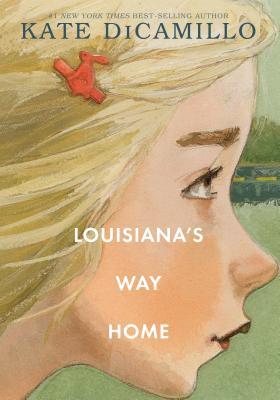
Louisiana's Way Home

Louisiana's Way Home. Kate DiCamillo. 2018. Candlewick Press. 240 pages. [Source: Library]

First sentence: I am going to write it all down, so that what happened to me will be known, so that if someone were to stand at their window at night and look up at the stars and think, My goodness, whatever happened to Louisiana Elefante? Where did she go? they will have an answer. They will know. This is what happened. I will begin at the beginning.

Premise/plot: The character of Louisiana Elefante was first introduced in a lovely little book called Raymie Nightingale. She was a sidekick to the main character. This book is set several years later and it is narrated by Louisiana herself.

Granny has decided that the time has come--the day of reckoning. She has decided that it is time to be moving on. Louisiana learns this the hard way--at 3AM--when she's packed up and put in the car. Soon Louisiana finds herself leaving Florida--not to mention her friends, her pets--behind and entering Georgia. Soon Louisiana finds herself behind the wheel--without a license--when Granny's toothache becomes too unbearable. Her first mission is to find a dentist. This is quickly followed up by finding a place to stay. And then there is her most familiar mission of all--a daily one--finding food to eat. Nothing comes easy for Louisiana--not anymore. (Not that life with Granny in Florida was super-easy, mind you.) But Louisiana finds friends in unlikely places...and her new friends may just be her saving grace.

My thoughts: I loved, loved, LOVED, loved this one. DiCamillo has written a gem of a book. I'm not sure what I loved most: the characterization, the narration, the quotability factor, or the compelling, oh-so-satisfying plot.

This is what happened. We stood on the side of the road. In Georgia. Just past the Florida-Georgia state line. Which is not at all--in any way--a line. Yet people insist that it exists. Think about that. (8)
If you have to choose between smiling and not smiling, choose smiling. It fools people for a short time. It gives you an advantage. (11)
I considered running down the highway, back to Florida. But I did not think I would be able to run fast enough. I have never been able to run fast enough. And by that I mean that no matter where I go, Granny seems to find me. Is that fate? Destiny? The power of Granny? (12)
You have to make small plans. That is one of the things I have discovered in this world. It is pointless to make big plans because you never know when someone is going to wake you up in the middle of the night and says, "The day of reckoning has arrived." Days of reckoning interfere with big plans. So I made small plans. The small plans were: Keep the car on the road. Find a dentist. Never forgive Granny. Although, when I think about it, never forgiving Granny would probably go in the "big plan" category. (34)
She had on her fur coat. Her hair was standing up straight on her head. Suddenly, I saw her like other people might see her and I will not lie to you: it scared me. How can I say this? She did not look trustworthy. She looked like somebody with a curse upon her head. Which, of course, was exactly the case. (46)
Your heart has to be involved with the music, or else there is no point. That is what Granny has always told me, and I believe it to be true. (73)
I sang as if the Blue Fairy from Pinocchio was smiling at me. I sang as if Beverly and Raymie and Archie and Buddy could hear me and would use the song to find their way to me. I sang as if I knew the name of the boy on the roof. I sang as if he knew my name, too. (77)
Whoever Reverend Frank Obertask was, he certainly believed in the power of the written word. And that was fine by me, because I believe in the power of the written word, too. (83)
Granny had always spoken poorly of bologna, but these bologna sandwiches tasted so good that it was just one more reason for me to doubt Granny and the truth of her utterances. And by that I mean this: If you are the kind of person who lies about something as small as bologna, what would stop you from lying about bigger, more important things? (102)
I didn't know if Granny would eat a bologna sandwich. In fact, a bologna sandwich might enrage her. Maybe I was hoping to enrage her. I don't know. But in any case, Burke went into the kitchen and came back out a minute later with two bologna sandwiches wrapped up in a paper towel. I was starting to see what kind of person he was. He was the kind of person who, if you asked him for one of something, gave you two instead. (108)
The next thing I remember is being carried. I smelled something sweet. I said, "What is that smell?" A man's voice answered me. He said, "That's cake, darling." I liked that answer very much. I think that "cake" is a very good word in general and that people should use it as an answer to questions more often. (134)
I ate the whole bowl of ice cream without once letting go of Grandfather Burke's hand. "That's the way to do it," he said. "That's just right." The peanuts on top of the sundae were particularly good. The house smelled like pineapple upside-down cake. Well, the whole world was upside down. But it was still spinning. Wasn't it? (180)
 "I want you to know something, Louisiana. We all, at some point, have to decide who we want to be in this world. It is a decision we make for ourselves. You are being forced to make this decision at an early age, but that does no mean that you cannot do it well and wisely. I believe you can. I have great faith in you. You decide. You decide who you are, Louisiana. Do you understand? (199)
It seems like a good thing to know the star that can keep you from being lost in this world. (216)


© 2018 Becky Laney of Becky's Book Reviews

Thursday, February 16, 2017

Mandy

Mandy. Julie Andrews Edwards. 1971. 320 pages. [Source: Bought]

First sentence: On the outskirts of a pretty country village called St. Martin's Green, there stand a large, white house called St. Martin's orphanage.

Premise/plot: Mandy, the heroine, is a ten year old orphan. Soon after the novel opens, Mandy climbs over the wall near the orphanage and discovers a hidden-away-in-the-woods cottage. She decides the place is hers--and goes about creating a special place inside-and-out where she belongs. She cleans. She gardens. She collects. But most of all: she guards and protects her secret. Mostly.

My thoughts: I love, love, love Mandy. This book is one of my favorites from childhood. Years before I discovered The Secret Garden, I was best friends with Mandy. I think I loved Mandy because she may have been the first heroine who dealt with some of the darker (but natural) emotions like sadness, loneliness, and disappointment.

She was a dreamer. Most of the time she lived in a make-believe world of her own. She loved to read. She exchanged books at the local library at least once a week. The wonders of Robinson Crusoe and Alice in Wonderland and Gulliver's Travels were very real to her and offered far more excitement than the reality of her life could ever provide. (6)
She occasionally experienced sad, disturbing feelings. Sometimes she felt an ache inside that would not go away. It seemed then as though her life were very empty. She would cry for no reason at all, seemingly, and it frightened her when she did. She tried to be brave and put away her feelings.
"I'm having one of my attacks again," she would think, trying hard not to let people see her tears.
Her attempts to keep busy were mostly an effort to fill her life so that she had no time to feel disconsolate. But the nagging sadness was persistent, and it would envelop her when she least expected it.
As Mandy grew, her longings grew stronger and sometimes she felt as though she must surely break apart with so much going on inside her. It was as though she were searching for something though what or where it was she could not say. (7-8)


© 2017 Becky Laney of Becky's Book Reviews

Saturday, February 21, 2015

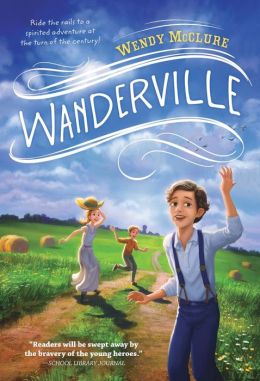
Wanderville (2014)

Wanderville.  Wendy McClure. 2014. Penguin. 224 pages. [Source: Library]

Wanderville is the first in a new historical series for young readers. The book opens in the year 1904. Readers quickly meet a group of 'orphans' destined to head west to Kansas on the 'orphan train.' Jack is not an orphan. But his parents have decided to place him out. This decision, in part, is based on overwhelming grief. Jack's older brother died in a factory fire. Jack escaped death, but, he had to jump out an upper story window to do so. Readers also meet siblings Frances and Harold. These three children meet on the train. The children on the train have different reactions: some are excited and hopeful about the future, some are all nerves and worries. There have been rumors--horrifying rumors. So Jack, Frances, and Harold come to an agreement at some point during their ride, they will NOT stay on the train, they will not be placed out as orphans, they will not face the risks. So. They jump off the train, and, the three of them find a runaway orphan named Alexander. He is a DREAMER. In his mind, the nearby woods are a dream come true. Wanderville. A place where all children longing for freedom and independence find sanctuary....

But this 'free' life comes with risks of it own. Yes, the children are free from authority, but, they essentially survive by a combination of stealing and living off the land. Alexander is a persuasive talker, but, he's also a thief on the run from the law. (The sheriff of the town knows that something is going on.)

Wanderville is a quick read, and it's enjoyable enough. I can't say it was love. But it was entertaining enough for an afternoon's read.

© 2015 Becky Laney of Becky's Book Reviews

Tuesday, February 05, 2013

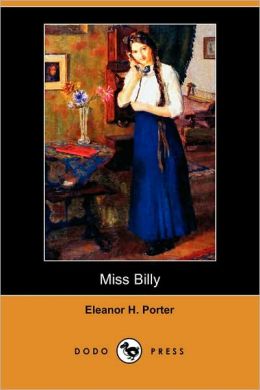
Miss Billy (1911)

Miss Billy. Eleanor H. Porter. 1911. Dodo Press. 208 pages.

Miss Billy (1911) is a pleasant romance by Eleanor H. Porter, an author perhaps better known for her children's novel Pollyanna (1913). Billy becomes an orphan around the age of eighteen. She has no living relatives, but she still needs a family, wants a family. She decides to write one of her father's college friends, a friend she was named after. Her name *is* Billy. Her namesake, William Henshaw, is living with his two younger brothers, Cyril and Bertram. (Also making up the household is Pete, the butler, and Dong Ling the cook.) Her letter reveals her eagerness, her expectation, her hope to come and live with the Henshaw family in Boston. Her letter doesn't reveal her gender. I don't think Billy even thought that her name might be ambiguous enough to cause confusion. They send her the message to come, and then comes the big surprise. What will a houseful of men do with an eighteen year old girl? Well, they'll call their sister to beg her to be chaperon for a night or two perhaps. But then they'll see what spinster relative they can bring into their home along with this newcomer and her cat. Aunt Hannah will suit nicely. The first part of the novel focuses on how Miss Billy changes things up for these three men. How she brings life and excitement to them all, making the house feel more like a home. The second part of the novel, however, focuses on the all-too-absent Billy. For after a big misunderstanding, Billy decides to live elsewhere using college and then European travels as an excuse to stay away from the Henshaw brothers. The third part of the novel is set when Billy is twenty-one or twenty-two, she's return to Boston and bought her own home and is establishing herself quite well. It is the third part of the novel that focuses on Billy's love life...

It is a pleasant, enjoyable novel. Miss Billy is vivacious and lovely. And the three brothers are interesting as well. At least two of the three brothers are unsociable and a bit awkward until helped by Miss Billy. Cyril being thought to be interested only in music; Bertram being thought to be interested only in art; William being thought to be interested only in collecting various objects for his huge collection. There are a few good minor characters as well, including the very domestic music teacher. The only minor character I didn't like is the sister, Kate, who is almost always the source of confusion and misunderstanding...


Read Miss Billy
  • If you like orphan stories (like Anne of the Island, Daddy Long-Legs, etc.)
  • If you like light romances (or clean romances)
  • If you've read Pollyanna and want to read more from Eleanor H. Porter
© 2013 Becky Laney of Becky's Book Reviews

Monday, November 28, 2011

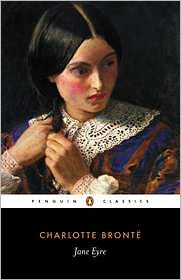
Revisiting Jane Eyre

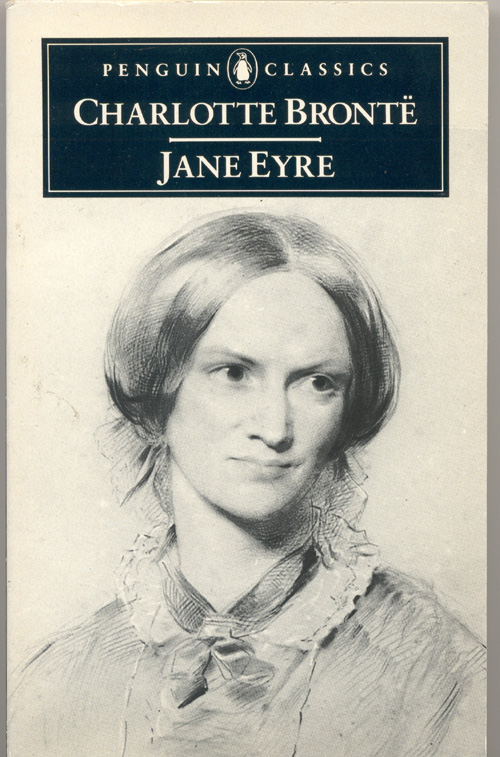
Jane Eyre. Charlotte Bronte. 1847.  300 pages.

There was no possibility of taking a walk that day.

I know not everyone sees value in rereading books. But. I just can't help it. If I love a book once, I'm going to want to revisit it. Again and again and again. After all, if I never wanted to read it again...ever...could I even really say I loved it? Or loved, loved, loved it?

Jane Eyre was a pleasure to reread. It really was. From the first page to the last, it kept me satisfied. There was so much to savor, so much to slowly absorb. I didn't rush this one. I didn't want to rush this one. I wanted to enjoy every moment of this one. Because books as wonderful as Jane Eyre just aren't that easy to find.

Though Jane Eyre has been adapted to films many times, I don't think it's a novel that adapts particularly well. The novel is told in first person. We see EVERYTHING through Jane's eyes. It is a very personal connection the reader has to make with Jane if the novel is to be appreciated and loved. If you don't come to love Jane, if you don't come to understand Jane, if you don't come to see the world through Jane's eyes, if you don't see Mr. Rochester as Jane does, if you don't LOVE him as Jane does, then you're not getting the full experience.

I was disappointed with the 2011 adaptation. Especially with Mr. Rochester. Why? Well, if you didn't already LOVE Mr. Rochester, then you would have no real reason--other than appearance, perhaps?--to love him. By taking the words out of his mouth, by eliminating almost all of his dialogue with Jane, by eliminating the oh-so-crucial gypsy scene, viewers see only a slightly teasing Mr. Rochester with a very deep, very dark secret. We see him only at his very, very worst, for the most part. And the scene after Jane knows the truth, well, it just seems so far removed from anything in the book. It was seeking out that scene in the book, it was wanting to know how the *real* Mr. Rochester treated Jane after the big shocking reveal, that led me to reread the book.

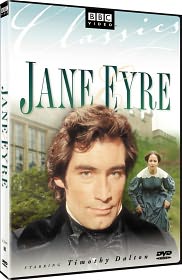
The BBC production (from early 1980s) starring Timothy Dalton and Zelah Clarke is a much, much, much better adaptation. In my opinion. I loved, loved, loved how Jane's relationship with Mr. Rochester developed. I loved their scenes together. I loved the dialogue. I loved how we really got to know both characters through the episodes. (It is over five hours long!) Everything that I loved about the book (almost everything) was present in this adaptation. It just felt right!!!

Do you have a favorite adaptation of Jane Eyre?


My original review.

© 2011 Becky Laney of Becky's Book Reviews

Tuesday, October 18, 2011

Oliver Twist

Oliver Twist. Charles Dickens.  1838. 425 pages.

Among other public buildings in a certain town, which for many reasons it will be prudent to refrain from mentioning, and to which I will assign no fictional name, there is one anciently common to most towns, great or small: to wit, a workhouse; and in this workhouse was born; on a day and date which I need not trouble myself to repeat, inasmuch as it can be of no possible consequence to the reader, in this stage of the business at all events; the item of mortality whose name is prefixed to the head of this chapter.

While Oliver Twist isn't my new favorite Dickens's novel, I must say that I really really enjoyed it. I enjoyed the characters; I enjoyed the storytelling. The recent movie adaptation may have been slightly more compelling, but for me there was something just right about the book.

Oliver Twist is the hero of this one. This young orphan boy has a few misadventures before finding his happily ever after. But those misadventures make for quite a read, I must admit! He meets a lot of interesting characters, some more villainous than others. There are quite a few sympathetic characters, however.

I found Oliver Twist a great read, a surprisingly quick one! Perhaps because I just did not want to put it down! Generally, Dickens is one of those authors whose books I savor over two to three weeks, but that wasn't the case with Oliver Twist!


© 2011 Becky Laney of Becky's Book Reviews

Thursday, January 07, 2010

The First Escape (MG)


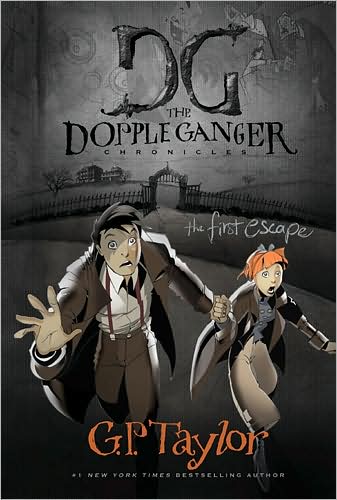
The First Escape. G.P. Taylor. 2008. Tyndale. 288 pages.

In the dining room of Isambard Dunstan's School for Wayward Children, all was not well.

This is a strange book defying all my categories. It's not a traditional novel--roughly half of it is told in graphic (illustrated) form. But it's not a traditional graphic novel either since a good bit of it is in prose. It's published by a Christian publisher, but, for the most part except for one little scene I would say that you'd never be able to tell it was "Christian." What it is, without a doubt, is an action/adventure story.

What I noticed from the start was the writing. Taylor really knows how to set the mood and tone.

Shards of lightning blasted from a black morning sky and burst upon the heath outside. Rain beat and battered against the lead windows that reached upward in vast stone arches. Staring down upon a sheltered gathering of children was the pointed face of Isambard Dunstan himself. The noted explorer's likeness had been captured in stain glass for two hundred years, a look of dread upon his face and a scowl upon his lips. He had left the house to be a home for children abandoned by their parents, but no one who had the misfortune to live there was sure whether his action was a blessing or a curse. (1)
His descriptions have a way of not only telling but showing as well.

A large wooden door swung open and a fat cook barged through.

In her stubby fingers she carried a massive post of brown gruel that steamed and gurgled like the rumblings of a cow's belly. She glanced up at the image of Isambard Dunstan, who scowled at her as she began ladling the food from the dirty tureen into 166 bowls.

Every eye gazed hungrily. Sniveling noses sniffed each bowl as it was passed from one hand to the next. Fingers dipped quickly into the gruel and then popped into mouths as each child waited to begin breakfast.

"No one eats!" screamed the cook, spitting the words from her toothless mouth. "You eat when I eat and not a moment before." The fierce look on her face dared anyone to take one morsel without her permission. If there was one thing Mrs. Omeron hated more than children, it was children who ate before she did. (3-5)

This one just had a way of drawing me in and making me want to read more. He hasn't even introduced the main characters yet but I'm hooked all the same.


Who are the stars of this one? Twins. Sadie. Saskia. Known to everyone at that place as Them. These Dopple twins are about to be put through a series of tests or hardships as they face separation for the first time. One of them is about to be "adopted" by a mysterious woman. The other is left in the "safety" of the school. The truth is both twins are about to face danger. (The remaining twin has the fortune of befriending a boy who just happens to be named Ganger. Erik Ganger.)

The art. This one is heavily illustrated for a traditional novel. Black-and-white illustrations are sprinkled throughout, and almost every chapter has a graphic novel portion that is illustrated in full color. There is very little "tradition" maintained in the layout of this one. (Even pages without any "art" are bordered or framed in black. There are also a sprinkling of pages that are black with white font/white text.) My guess would be this is all part of a master plan to keep this one engaging and appealing to readers.


Did I like this one? Yes and no. I thought it was uneven in a way. I thought it had a very promising start. The writing, the descriptions, the humor. But by the end of the book, I was finding it a bit tiresome. I'm not sure if this is all on me. If my mood just changed or what. It has action, adventure, humor, suspense, a bit of mystery too. All the elements that would make this one work. At least potentially work with its target audience.


© Becky Laney of Becky's Book Reviews

Wednesday, December 30, 2009

The Mostly True Adventures of Homer P. Figg (MG)


Philbrick, Rodman. 2009. The Mostly True Adventures of Homer P. Figg. Scholastic. 224 pages.

My name is Homer P. Figg, and these are my true adventures. I mean to write them down, every one, including all the heroes and cowards, and the saints and the scalawags, and them stained with the blood of innocents, and them touched by glory, and them that was lifted into Heaven, and them that went to the Other Place.

I didn't know what to expect from this one. The cover, well, the cover didn't do much for me. But I enjoyed this one. A lot more than I thought I would. Especially considering the fact that this one is set during the Civil War. The jacket flap describes this one as a "story filled with adventure, humor, and danger" and they do actually get that right. (Sometimes they really don't.)

At the heart of this one is a young boy, Homer, on a quest. His older brother was "volunteered" for the Union army. Sold into by his mean guardian, their mean guardian. Upset--and understandably so--Homer sets off to find his brother. He runs away. But he doesn't get far when danger finds him. Still no matter what happens--no matter who he meets and where he ends up--he is always trying to find his brother. All that other stuff, well, it just happens. What he does to find his brother, to save his brother, well, it's not a stretch to call it a bit heroic.

There were many things I enjoyed about this one. One of the top things is the writing. I love some of the descriptions, the narrative. I found it very appealing, very reader-friendly. (I know sometimes historical fiction can be hard to sell to readers of all ages. But the truth is it doesn't have to be boring.)

Far as I'm concerned, taking a bath is sort of like drowning, with soap. Never could abide it, not since I was a little baby. (119)


© Becky Laney of Becky's Book Reviews

Monday, December 28, 2009

The Fiddler's Gun (YA)


Peterson, A.S. 2009. The Fiddler's Gun. Rabbit Room Press. 293 pages.

The trouble with Phineas Michael Button began the moment she was born.

It continues,
"She had the expected two ears, two eyes, one nose, and dimpled cheeks, but in her father's mind there was a problem. He had twelve children, daughters all, and was convinced that number thirteen would be his long-awaited son. So on the twenty-fifth of September, 1755, when he drew another baby girl from the womb of his long-suffering wife, he declared the discovery of an unacceptable mistake."


Abandoned by her parents, left in an orphanage in Ebenezer, Georgia, Fin, our young heroine has no problem being tough and staying strong. She's needed to be her whole life. But she is not the person the Baab Sisters--especially Hilde--would have her to be. She's not ladylike enough. She's too manly, too strong, too wild in their minds. Maybe a little kitchen duty will do the trick...

At first Fin is angry that she's been thrust into the kitchen, and forced into apprenticing with the orphanage's cook, Bartimaeus. (She's jealous that her best friend, her would-be-could-be husband, Peter, gets the better deal, the better job. He gets apprenticed to a carpenter.) But she soon realizes that this may just be the best thing that ever happened to her. For Bartimaeus --though not a simple man or a perfect man--loves her like she's his own child, his own daughter. He's a man with a past, a history--a dark and tangled mess of a past. But he's a good man, a changed man*.

With increasing hostilities between the colonies and England, it's not an easy time for Fin to come of age. Not with Fin's temperament. Her quick temper leads to...well...a great big dangerous adventure**.

Historical fiction. Action. Adventure. Pirates. Orphans. And a little old war.

What did I enjoy about this one? So very much! I love historical fiction. Usually. And this was no exception. A bit violent at times, yes, but what else would you expect in a sea-adventure filled with pirates?! It was exciting, compelling, hard to put down. It's anything but boring! I cared about Fin from the start. And her companions--especially Jack, Knut, and Tan--became important to me as well. The characters definitely felt human--felt flawed--which is a good thing. I would definitely recommend this one. (Especially if you enjoyed The True Confessions of Charlotte Doyle.)

The story will conclude in a second book, Fiddler's Green. (I want it now!)

You can order a copy of The Fiddler's Gun book through Rabbit Room Press.

*I will say this part of the story was just awesome for me. Peterson was able to connect the story with George Whitefield. True, it's a very small--very tiny--part of the overall story. But still, it made me happy.
**It probably helped that I love films like Pirates of the Caribbean, Captain Blood, and The Sea Hawk. I think having this background helped me visualize the fighting-at-sea scenes.

© Becky Laney of Becky's Book Reviews

Friday, December 18, 2009

Peace, Locomotion (MG)


Woodson, Jacqueline. 2009. Peace, Locomotion. Penguin. 136 pages.

Imagine Peace

I think it's blue because that's my favorite color.

I think it's soft like flannel sheets in the wintertime.

I think Peace is full--
like a stomach after a real good dinner--
beef stew and corn bread or
shrimp fried rice and egg rolls.

Even better

Than some barbecue chicken.

I think Peace is pretty--like my sister, Lili.

And I think it's nice--like my friend Clyde.

I think if you imagine it, like that
Beatles guy used to sing about?

Then it can happen.

Yeah, I think

Peace can happen.

--Lonnie Collins Motion,
aka Locomotion
Peace, Locomotion is a wonderful novel, very beautiful. It's a companion novel to Locomotion--a novel that was a finalist in the National Book Awards. But I haven't read the first book, and I still was able to appreciate it. So I think it is able to stand alone. (Though reading this one made me want to read the other.)

Locomotion is a twelve year old boy in the foster care system. He is separated from his younger sister, Lili. She's in another foster home. They were not able to be placed together. But that doesn't mean that they've stopped loving (and needing) one another. The novel is his letters to his sister. They show how very much he loves her; how very important family is to him. The letters have it all--good, bad, happy, sad. They journal his emotions, his life.

A beautiful little novel about family, about life, and what it means to belong.

It is not a verse novel. Though the book does contain a few poems. (Lonnie considers himself to be a poet.) Definitely recommended!

© Becky Laney of Becky's Book Reviews

Friday, December 19, 2008

A Little Princess


Burnett, Frances Hodgson. 1905 (according to Wikipedia). A Little Princess.

Though it is a tad heavy when it comes to descriptions--just a tad--I found myself thoroughly charmed by the life and adventures of Sara Crewe. Sara, the daughter of a wealthy man, is placed in school--boarding school, I think, where she is cared for rather well. She has everything a girl could want--friends who love to hear her tell stories, a faithful doll named Emily, etc. But when tragedy strikes, little Sara's world changes overnight. During her birthday party, news comes in that her father is dead; he's died and he's without fortune. Sara goes from nice-but-rich girl to nice-but-poor girl. Sara was never a spoiled brat. What changes is all on the outside--no more nice clothes, no nice room, no nice bed with fluffy pillows and blankets, no maid, no horse and carriage, no more lessons. Now she's the maid-and-servant of all. Even the servants use her as a servant and look down upon her. But despite the harshness of her environment, little Sara is a gem of a girl.

It's a classic riches-to-rags-to-riches story. Sara and her friends make for nice companions. I'm glad I gave this one a try. I enjoyed it!

© Becky Laney of Becky's Book Reviews

Sunday, December 14, 2008

Emily of New Moon


Montgomery, L.M. 1923. Emily of New Moon.

Emily--like Anne Shirley--is an orphan. And like Anne, Emily loves words--loves to write. But their stories are different in some ways as well. (Emily's not prone to getting into scrapes as Anne. Emily lacks the calamity of Anne as we first meet her.) Emily is a heroine that is easy to love. She's a dreamer. Yet she can be very practical and straight forward. Very earnest. In the first few chapters, Emily loses her father--he's dying--and her fate is decided. One of her relations--someone from her mother's side of the family--will take her in and raise her. But which one? Emily doesn't know what to hope for. She doesn't know any of them, doesn't love any of them. Yet the family that takes her in--Aunt Laura, Aunt Elizabeth, Cousin Jimmy--will become her family through and through. The book follows her through her first few years at New Moon, the name of her new home. And it involves her adventures--her days at school, her friendships (with Ilse, Teddy, Perry, Lofty John, Dean Priest, etc.), her home life, her letters written to her dead father, her poems, etc.

The book is enjoyable. And Emily is a joy. A real kindred spirit.

© Becky Laney of Becky's Book Reviews

Tuesday, December 02, 2008

The Stowaway


The Stowaway by R.A. and Geno Salvatore. 2008.

The Stowaway is a fantasy novel written by the father-son team of R.A. and Geno Salvatore. (The son, Geno, wrote the story with some insight and input of his father the legendary R.A. Salvatore.) The book is connected--though not so tightly newbies would get lost--to the Drizzt series. I should know because I was able to follow the story without having read the other [adult] titles in the series. Though I'm sure if I'd had that background it would have added just that much more to the story.

We've got a twelve year old narrator who is a captive, he's telling his story--revealing it bit by bit by bit--to his captor, his jailer. "My name does not stand alone," I said, the tremble gone from my voice. "It comes with a story. The tale of an artifact--tied to my soul through no fault or courage or heroism or hard work of my own. An artifict that has led me from one adventure to another, leaving a trail of destruction in it's wake." (6) Here is how his story begins, "I do not know what name my mother gave me. I do not know because every person who knew my name died--killed by a dark creature, a demon called Asbeel--mere days after I first entered the world." (7).

Orphan boy. Chased by demons. Life of adventure at sea. Pirates. An elf friend, Drizzt Do'Urden. What's not to love about this one?

© Becky Laney of Becky's Book Reviews

Monday, June 16, 2008

A Drowned Maiden's Hair

A Drowned Maiden's Hair: A Melodrama

Schlitz, Laura Amy. 2006. A Drowned Maiden's Hair.

<em>On the morning of the best day of her life, Maud Flynn was locked in the outhouse singing "The Battle Hymn of the Republic."</em>

What a first line! It continues, "She was locked in because she was being punished. The Barbary Asylum for Female Orphans was overcrowded; every room in the wide brick building was in use. There were very few places where one could imprison a child who had misbehaved. The outhouse was one such place, and very suitable for the purpose, because the children hated it." That says something doesn't it. Sets the tone, I mean. This is one of those orphan stories. We learn on the next page that there are two women coming, the Misses Hawthorne, who are looking to adopt a cute, well-behaved child. Maud as an independent free-thinker, and as an eleven year old clearly isn't the girl for them, right? The powers that be know that no one would ever voluntarily take Maud off their hands. But they weren't reckoning on the Misses Hawthorne being quite the way they were either.

It is Maud--the loud, singing, often-rebellious, Maud--that the Misses Hawthorne--especially Hyacinth are drawn to that day. It is Maud that is the girl for them. Maud is ecstatic. She's wanted. She's really and truly wanted. She'll have a home, a real home. A home with three guardians, three protectors. It's her dream come true.

But Maud realizes slowly that the dream isn't quite a good one as she'd hoped. There is something not quite right, something secret, something mysterious about the whole affair, the whole ordeal. Maud won't be kept in the dark for long....

Maud is quite a heroine. You can't help but enjoy spending time with her. And I thoroughly enjoyed A Drowned Maiden's Hair. It may not be for everyone. I could imagine it not sitting so well with some types--those that feel spiritualism is not appropriate for children's literature even if these so-called mediums are phonies and no ghosts actually appear. It's an emotional story--a compelling journey of one girl's quest for love, acceptance, and home--with a satisfying conclusion.

© Becky Laney of Becky's Book Reviews


Blogged with the Flock Browser

Thursday, June 12, 2008

The Floating Circus


Zimmer, Tracie Vaughn. 2008. The Floating Circus.

"I shoulda listened to my brother. Right follows Zach like a shadow, but wrong wears me like a skin."

Owen and Zach, two brothers, two orphans from Pittsburgh. When we first meet Owen, he is getting ready to fall into some trouble. Dared to climb a tree to see if he could touch the roof of the orphanage, his attempt is brave but extremely foolish. Now he has lost the use of his left arm. When he overhears two elderly ladies--Miss Jane and Miss Eliza--talking about how no one would want to adopt the pair of them--Owen being both a troublemaker and a somewhat crippled one at that--but how Zach could easily find a home, find a family, if he was alone, if he didn't have his brother around, Owen decides to runaway. If his brother would be better off without him, then maybe it's time that he showed just how much he loved his brother by doing what would be best for him in the long run.

Owen mostly by accident joins a circus boat, the River Palace. He's an assistant to a free black man, Solomon, he helps him take care of the animals on board. It includes a lot of CLEANING as I'm sure you can imagine. Solomon is kind and friendly. Owen and Solomon become easy friends and companions. Most of the others ignore him at least in the beginning.

I don't want to say too much. I hate reading things that spoil the plot even a little bit. But this one is good, really good. If you like historical fiction at all...you really should give this one a try. It was inspired by a real showboat, Rogers and Spalding's Floating Palace.

According to the author's website, the book will be released July 22, 2008.


© Becky Laney of Becky's Book Reviews