Showing posts with label 1847. Show all posts

Monday, October 05, 2020

118. Children of the New Forest


The Children of the New Forest. Frederick Marryat. 1847. 369 pages. [Source: Bought]

First sentence: The circumstances which I am about to relate to my juvenile readers took place in the year 1647. By referring to the history of England, of that date, they will find that King Charles the First, against whom the Commons of England had rebelled, after a civil war of nearly five years, had been defeated, and was confined as a prisoner at Hampton Court.

Premise/plot: Jacob Armitage, a forester, saves the lives of the four Beverley children--Edward, Humphrey, Alice, and Edith--during the English Civil War. He overhears a plot to burn Arnwood--the Beverley estate--and rushes to get the children to safety before the soldiers can arrive. He decides it would be safest to allow people to believe the children died in the fire. As for the children, he'll raise them as his grandchildren in his oh-so-humble cottage hidden deep within the New Forest. He'll teach the children everything they will need to know to survive on their own. 

Most of the action occurs after Jacob's death as the children are a bit older. (The first part reads a bit like Swiss Family Robinson or Robinson Crusoe.) Edward has become a great hunter--though hunting technically isn't allowed in the New Forest. The Parliament--led by Cromwell--has taken possession. Edward doesn't recognize that government--his family long being loyal to Charles I and then his son, Charles II. But he slowly but surely comes to respect the man left in charge--a Mr. Heatherstone. He has a daughter, an oh-so-beautiful daughter, named Patience. After much reservation--years go by since their first meeting--Edward becomes his secretary and takes up residence with the family. But when there's an opportunity to serve the should-be-would-be King (Charles II) will Edward do his duty and continue his family's legacy?

My thoughts: I really enjoyed Marryat's The Children of the New Forest. The first half focuses more on life in the forest--living off the land, hunting, tracking, trapping, building things, catching wild cattle, making. The second half focuses more on relationships and the times. There's a bit of romance in this last part. 

I loved the characterization. I loved spending time with Edward. I wouldn't say the characterization of all characters is equally sophisticated. There is a gypsy character, Pablo, I believe, that is fairly stereotypical. Readers are reminded every time he's mentioned that he is lazy because he's a gypsy; that he's prone to stealing because he's a gypsy; that he has to be tricked into working because he's a gypsy. But despite all the telling, the showing reveals him to be a fiercely loyal character that serves his friends well.

I loved the faith aspect throughout the book. Jacob raised these four kids to love God and to trust in Him always. 


© 2020 Becky Laney of Becky's Book Reviews

Saturday, September 26, 2020

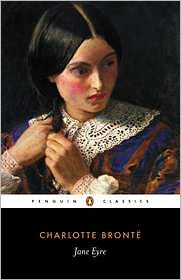
115. Jane Eyre


Jane Eyre. Charlotte Bronte. 1847. 532 pages. [Source: Bought]

First sentence: There was no possibility of taking a walk that day.


Premise/plot: Jane Eyre, our heroine, is an orphan who never in her wildest dreams imagines living happily ever after. Raised by a cruel aunt and taunted by mean-spirited and selfish cousins, she only hopes to escape misery and find contentment--albeit humble. Her adventure--or misadventure--begins after graduating Loward School as she takes the position of governess at Thornfield Hall. There she meets her charming and precocious pupil, Adele, and the brooding Mr. Rochester. The two enjoy each other's company--perhaps because no one else quite understands them. But the two aren't courting--at least not at first. Jane falls for him. But is he falling for her? Could he fall for her? Does she want him to reciprocate her feelings? Could the master of the house and a governess ever marry and live happily ever after?! But it isn't just social class dividing these two--Mr. Rochester has a dark secret from his past that might prove a dangerous obstacle for our loving couple.

My thoughts: I love this book. I do. I absolutely love it. It is one of my favorite books to reread every other year or so.


Quotes:

How all my brain was in tumult, and all my heart in insurrection! Yet in what darkness, what dense ignorance, was the mental battle fought!

Life appears to me too short to be spent in nursing animosity or registering wrongs. We are, and must be, one and all, burdened with faults in this world: but the time will soon come when, I trust, we shall put them off in putting off our corruptible bodies;

A new chapter in a novel is something like a new scene in a play;

“Jane, you offered me your shoulder once before; let me have it now.” “Yes, sir, yes; and my arm.”

“Thank you, Mr. Rochester, for your great kindness. I am strangely glad to get back again to you: and wherever you are is my home—my only home.”

“I ask you to pass through life at my side—to be my second self, and best earthly companion.”

“My bride is here,” he said, again drawing me to him, “because my equal is here, and my likeness. Jane, will you marry me?”

Human beings never enjoy complete happiness in this world. I was not born for a different destiny to the rest of my species: to imagine such a lot befalling me is a fairy tale—a day-dream.

Prejudices, it is well known, are most difficult to eradicate from the heart whose soil has never been loosened or fertilised by education: they grow there, firm as weeds among stones.

Reader, I married him.


© 2020 Becky Laney of Becky's Book Reviews

Friday, March 27, 2020

48. Vanity Fair

Vanity Fair. William Makepeace Thackery. 1847. 867 pages. [Source: Bought] [Classic]

First sentence: While the present century was in its teens, and on one sunshiny morning in June, there drove up to the great iron gate of Miss Pinkerton's academy for young ladies, on Chiswick Mall, a large family coach, with two fat horses in blazing harness, driven by a fat coachman in a three-cornered hat and wig, at the rate of four miles an hour.

 Premise/plot: Becky Sharp is the 'heroine' of Thackery's Vanity Fair. She is an ambitious, selfish soul--a bit like Scarlett O'Hara. (Both hate children. Both marry for the wrong reasons. Both can manipulate men for their own gain.) In contrast to Becky Sharp there is Amelia Sedley, a trusting, kind, loyal soul--a bit like Melanie Hamilton. Vanity Fair follows both young women through many, many, many dramas. Both Amelia and Becky attended Miss Pinkerton's school--that's where they met and became friendly, and that's where our story properly begins.

Becky has one ambition. That's a lie. She has many ambitions but all share a central theme. She wants to get to the tippy-top of society. She wants money, money, money and a place in society. The society that currently snubs her and looks down upon her as a nobody. She wants it ALL: an excellent place to call home, all the materialistic goods she can get her hands on, the admiration of all the men within driving distance.

Amelia has a dream too--to marry the love of her life, George Osborne, and live happily ever after surrounded by adorable children.

Both women face obstacles. 800 pages worth of obstacles I'd say!

Amelia's family suffers a devastating financial loss. The Osborne family who had always pushed the match suddenly withdraws their approval. George is forbidden to marry Amelia. Will George obey his domineering father? Will he marry someone else? Would Amelia be better off finding someone else too? Or will George marry Amelia in spite of his father's threats?

Becky's obstacles are different. She marries--not for love, not really--a man who could potentially be very wealthy. He has a dying aunt, I believe it is an aunt. He could be HEIR to a fortune. And he's a dashing soldier. She could do worse. Much worse. So a secret marriage occurs. But did Becky choose wisely? Or was she too hasty? Should she held out a little longer for a better offer? A richer offer?
Will Rawdon Crawley help her achieve her ambitions?! Will she be the making of him or the breaking of him? Will he come to regret his marriage?

My thoughts: I enjoyed Vanity Fair. It is a long book. It has a few dull chapters here and there. I won't lie. But. Overall I found it a good read. I found the main characters at least easy to keep up with and understand. Becky Sharp is an interesting heroine--far from boring. Amelia isn't exactly boring, it's just that I wanted to yell at her now and then.

Of the men in the book, I really only loved Dobbin. I didn't dislike Rawdon Crawley exactly. But it's hard to actually love a fool. Is he a fool? Perhaps not in all areas of his life. But certainly he's a fool when it comes to love and giving his heart a way. I do, for the record, admire him as a father and brother. So perhaps if he'd not married Becky, if he'd married someone more worthy...then he wouldn't be a fool at all. As for George, I didn't like him even a little bit. It would be like if Elizabeth Bennet ended up marrying George Wickham instead of Darcy!!!!

Quotes:
Although schoolmistresses' letters are to be trusted no more nor less than churchyard epitaphs; yet, as it sometimes happens that a person departs this life who is really deserving of all the praises the stone cutter carves over his bones; who IS a good Christian, a good parent, child, wife, or husband; who actually DOES leave a disconsolate family to mourn his loss; so in academies of the male and female sex it occurs every now and then that the pupil is fully worthy of the praises bestowed by the disinterested instructor. Now, Miss Amelia Sedley was a young lady of this singular species; and deserved not only all that Miss Pinkerton said in her praise, but had many charming qualities which that pompous old Minerva of a woman could not see, from the differences of rank and age between her pupil and herself.
"Revenge may be wicked, but it's natural," answered Miss Rebecca. "I'm no angel." And, to say the truth, she certainly was not. 
All the world used her ill, said this young misanthropist, and we may be pretty certain that persons whom all the world treats ill, deserve entirely the treatment they get.
The world is a looking-glass, and gives back to every man the reflection of his own face.
Frown at it, and it will in turn look sourly upon you; laugh at it and with it, and it is a jolly kind companion; and so let all young persons take their choice.
If Miss Rebecca Sharp had determined in her heart upon making the conquest of this big beau, I don't think, ladies, we have any right to blame her; for though the task of husband-hunting is generally, and with becoming modesty, entrusted by young persons to their mammas, recollect that Miss Sharp had no kind parent to arrange these delicate matters for her, and that if she did not get a husband for herself, there was no one else in the wide world who would take the trouble off her hands.
Joseph much anxious thought and alarm; now and then he would make a desperate attempt to get rid of his superabundant fat; but his indolence and love of good living speedily got the better of these endeavours at reform, and he found himself again at his three meals a day. He never was well dressed; but he took the hugest pains to adorn his big person, and passed many hours daily in that occupation. Like most fat men, he would have his clothes made too tight, and took care they should be of the most brilliant colours and youthful cut.
A woman with fair opportunities, and without an absolute hump, may marry WHOM SHE LIKES. Only let us be thankful that the darlings are like the beasts of the field, and don't know their own power. They would overcome us entirely if they did.
Are not there little chapters in everybody's life, that seem to be nothing, and yet affect all the rest of the history?
A tempest in a slop-basin is absurd. We will reserve that sort of thing for the mighty ocean and the lonely midnight. The present Chapter is very mild. Others—But we will not anticipate THOSE.
She did not pester their young brains with too much learning, but, on the contrary, let them have their own way in regard to educating themselves; for what instruction is more effectual than self-instruction?
Some are made to scheme, and some to love; and I wish any respected bachelor that reads this may take the sort that best likes him.
Some cynical Frenchman has said that there are two parties to a love-transaction: the one who loves and the other who condescends to be so treated. Perhaps the love is occasionally on the man's side; perhaps on the lady's...But this is certain, that Amelia believed her lover to be one of the most gallant and brilliant men in the empire: and it is possible Lieutenant Osborne thought so too.
"If he had but a little more brains," she thought to herself, "I might make something of him"; but she never let him perceive the opinion she had of him; listened with indefatigable complacency to his stories of the stable and the mess; laughed at all his jokes; When he came home she was alert and happy: when he went out she pressed him to go: when he stayed at home, she played and sang for him, made him good drinks, superintended his dinner, warmed his slippers, and steeped his soul in comfort.
If success is rare and slow, everybody knows how quick and easy ruin is. 
One of the great conditions of anger and hatred is, that you must tell and believe lies against the hated object, in order, as we said, to be consistent.
At any rate, never have any feelings which may make you uncomfortable, or make any promises which you cannot at any required moment command and withdraw. That is the way to get on, and be respected, and have a virtuous character in Vanity Fair.
Praise everybody, I say to such: never be squeamish, but speak out your compliment both point-blank in a man's face, and behind his back, when you know there is a reasonable chance of his hearing it again. Never lose a chance of saying a kind word.
By humbly and frankly acknowledging yourself to be in the wrong, there is no knowing, my son, what good you may do.
Those who like to lay down the History-book, and to speculate upon what MIGHT have happened in the world, but for the fatal occurrence of what actually did take place (a most puzzling, amusing, ingenious, and profitable kind of meditation), have no doubt often thought to themselves what a specially bad time Napoleon took to come back from Elba, and to let loose his eagle from Gulf San Juan to Notre Dame.
Did we know what our intimates and dear relations thought of us, we should live in a world that we should be glad to quit, and in a frame of mind and a constant terror, that would be perfectly unbearable.
When attacked sometimes, Becky had a knack of adopting a demure ingenue air, under which she was most dangerous. She said the wickedest things with the most simple unaffected air when in this mood, and would take care artlessly to apologize for her blunders, so that all the world should know that she had made them.
Becky's contempt for her husband grew greater every day. "Do what you like—dine where you please—go and have ginger-beer and sawdust at Astley's, or psalm-singing with Lady Jane—only don't expect me to busy myself with the boy. I have your interests to attend to, as you can't attend to them yourself. I should like to know where you would have been now, and in what sort of a position in society, if I had not looked after you."
On Selfishness—Of all the vices which degrade the human character, Selfishness is the most odious and contemptible. An undue love of Self leads to the most monstrous crimes and occasions the greatest misfortunes both in States and Families.
There are things we do and know perfectly well in Vanity Fair, though we never speak of them: as the Ahrimanians worship the devil, but don't mention him: and a polite public will no more bear to read an authentic description of vice than a truly refined English or American female will permit the word breeches to be pronounced in her chaste hearing.
Ah! Vanitas Vanitatum! which of us is happy in this world? Which of us has his desire? or, having it, is satisfied?—come, children, let us shut up the box and the puppets, for our play is played out.


© 2020 Becky Laney of Becky's Book Reviews

Wednesday, October 17, 2018

Agnes Grey

Agnes Grey. Anne Bronte. 1847. 224 pages. [Source: Bought]

First sentence: All true histories contain instruction; though, in some, the treasure may be hard to find, and when found, so trivial in quantity that the dry, shrivelled kernel scarcely compensates for the trouble of cracking the nut.

Premise/plot: Agnes Grey is a young woman who challenges herself to leave home and become a governess. Her family needs income, true, but her parents are not telling her to work or even wanting her to work. The Bloomfields are her first family and the Murrays are her second. Neither situation is ideal.

The Bloomfield children are out-of-control. Master Tom and Mary Ann rule the schoolroom and they know it. Agnes Grey has been given no authority to discipline the children. The parents expect her to rule without power or authority. Any misstep, any fault, any misbehavior--no matter how big or small--is her fault by default. She shouldn't call herself a governess if she can't manage naughty children. She learns quickly not to run to the parents with tales of misbehavior OR even with pleas for support. She'll receive no support from either parent. She doesn't last long at this first job, though the fact that she lasts more than a month or two says something about her fortitude.

The Murray children are much older. There are two young ladies: Miss Rosalie and Miss Matilda. Rosalie is 'out' in society and FLIRTATIOUS. Matilda is a year or two younger. Her biggest fault is her love of swearing. These two don't "misbehave" in the same way as the Bloomfields. No throwing themselves on the floor and rolling about, for example. But they don't apply themselves to lessons. And the parents don't mind. They want their daughters to outwardly conform and if they learn a little now and then--almost by accident--so much the better. But no biggie if they never learn to think. This second job lasts for several years.

While staying with the Murrays, Agnes Grey meets a curate, Edward Weston. These two occasionally speak with one another. What little she knows about him is enough to warm her heart and make her giddy. She doesn't hope that he like-likes her in return. But she has heart-eyes for him for sure.

Will Agnes Grey remain in the schoolroom for ever? Do governesses ever get happily ever after endings?

My thoughts: I loved, loved, LOVED, LOVED, LOVED this one. Agnes Grey is a true kindred spirit. And her ideals are my ideals. I too would find Edward Weston swoon-worthy. She's a good woman who often finds herself in difficult circumstances. She has strong values, strong morals, strong beliefs. She knows right from wrong. She believes that children should be trained--disciplined. Boys and girls need to learn right from wrong, need to have their behavior corrected, need to apologize when they've misbehaved, need to learn kindness and compassion, need to take responsibility for what they say and do.

One of my favorite characters is Nancy Brown, a poor cottager that receives visits from Agnes Grey and Mr. Weston. Both read Scripture to her. 

Quotes:

On being a governess:
My pupils had no more notion of obedience than a wild, unbroken colt. The habitual fear of their father's peevish temper, and the dread of the punishments he was wont to inflict when irritated, kept them generally within bounds in his immediate presence. The girls, too, had some fear of their mother's anger; and the boy might occasionally he bribed to do as she bid him by the hope of reward; but I had no rewards to offer, and as for punishments, I was given to understand, the parents reserved that privilege to themselves; and yet they expected me to keep my pupils in order. (25)
To the difficulty of preventing him from doing what he ought not, was added that of forcing him to do what he ought. (26)
Patience, Firmness, and Perseverance were my only weapons; and these I resolved to use to the utmost. (26)
If I were quiet at the moment, I was conniving at their disorderly conduct, if, (as was frequently the case,) I happened to be exalting my voice to enforce order, I was using undue violence, and setting the girls a bad example by such ungentleness of tone and language. (38)
 You cannot expect stone to be as pliable as clay. (51) [Agnes' mother gives her daughter counsel.]
Rosalie and Agnes
"Oh, I don't mind his being wicked [Sir Thomas Ashby]; he's all the better for that; and as for disliking him--I shouldn't greatly object to being Lady Ashby of Ashby Park, if I must marry; but if I could always be young, I would be always single. I should like to enjoy myself thoroughly, and coquet with all the world, till I am on the verge of being called an old maid; and then, to escape the infamy of that, after having made ten thousand conquests, to break all their hearts save one, by marrying some high-born, rich, indulgent husband, whom, on the other hand, fifty ladies were dying to have." "Well, as long as you entertain those views, keep single by all means, and never marry at all, not even to escape the infamy of old-maidenhood." (77-8)
Agnes and Nancy
"Well, Miss Grey, if it's all the same to you, I'd like to hear that chapter in the First Epistle of Saint John, that says, 'God is love, and he that dwelleth in love dwelleth in God, and God in him.'" With a little searching I found these words in the fourth chapter. When I came to the seventh verse she interrupted me, and with needless apologies for such a liberty, desired me to read it very slowly, that she might take it all in, and dwell on every word; hoping I would excuse her as she was but a simple body. "The wisest person," I replied, "might think over each of these verses for an hour, and be all the better for it; and I would rather read them slowly than not." (87)
Mr. Weston and Nancy
‘“Well,” says he, “you know the first and great commandment—and the second, which is like unto it—on which two commandments hang all the law and the prophets? You say you cannot love God; but it strikes me that if you rightly consider who and what He is, you cannot help it. He is your father, your best friend: every blessing, everything good, pleasant, or useful, comes from Him; and everything evil, everything you have reason to hate, to shun, or to fear, comes from Satan—His enemy as well as ours. And for this cause was God manifest in the flesh, that He might destroy the works of the Devil: in one word, God is love; and the more of love we have within us, the nearer we are to Him and the more of His spirit we possess.”
‘“Well, sir,” I said, “if I can always think on these things, I think I might well love God: but how can I love my neighbours, when they vex me, and be so contrary and sinful as some on ’em is?”
‘“It may seem a hard matter,” says he, “to love our neighbours, who have so much of what is evil about them, and whose faults so often awaken the evil that lingers within ourselves; but remember that He made them, and He loves them; and whosoever loveth him that begat, loveth him that is begotten also. And if God so loveth us, that He gave His only begotten Son to die for us, we ought also to love one another. But if you cannot feel positive affection for those who do not care for you, you can at least try to do to them as you would they should do unto you: you can endeavour to pity their failings and excuse their offences, and to do all the good you can to those about you. And if you accustom yourself to this, Nancy, the very effort itself will make you love them in some degree—to say nothing of the goodwill your kindness would beget in them, though they might have little else that is good about them. If we love God and wish to serve Him, let us try to be like Him, to do His work, to labour for His glory—which is the good of man—to hasten the coming of His kingdom, which is the peace and happiness of all the world: however powerless we may seem to be, in doing all the good we can through life, the humblest of us may do much towards it: and let us dwell in love, that He may dwell in us and we in Him. The more happiness we bestow, the more we shall receive, even here; and the greater will be our reward in heaven when we rest from our labours.” I believe, Miss, them is his very words, for I’ve thought ’em ower many a time. An’ then he took that Bible, an’ read bits here and there, an’ explained ’em as clear as the day: and it seemed like as a new light broke in on my soul; an’ I felt fair aglow about my heart, an’ only wished poor Bill an’ all the world could ha’ been there, an’ heard it all, and rejoiced wi’ me. (92-3)
Mr. Weston and Agnes
I like wild-flowers,’ said he; ‘others I don’t care about, because I have no particular associations connected with them—except one or two.  What are your favourite flowers?’
‘Primroses, bluebells, and heath-blossoms.’
‘Not violets?’
‘No; because, as you say, I have no particular associations connected with them; for there are no sweet violets among the hills and valleys round my home.’
‘It must be a great consolation to you to have a home, Miss Grey,’ observed my companion after a short pause: ‘however remote, or however seldom visited, still it is something to look to.’
‘It is so much that I think I could not live without it,’ replied I, with an enthusiasm of which I immediately repented; for I thought it must have sounded essentially silly.
‘Oh, yes, you could,’ said he, with a thoughtful smile.  ‘The ties that bind us to life are tougher than you imagine, or than anyone can who has not felt how roughly they may be pulled without breaking.  You might be miserable without a home, but even you could live; and not so miserably as you suppose.  The human heart is like india-rubber; a little swells it, but a great deal will not burst it.  If “little more than nothing will disturb it, little less than all things will suffice” to break it.  As in the outer members of our frame, there is a vital power inherent in itself that strengthens it against external violence.  Every blow that shakes it will serve to harden it against a future stroke; as constant labour thickens the skin of the hand, and strengthens its muscles instead of wasting them away: so that a day of arduous toil, that might excoriate a lady’s palm, would make no sensible impression on that of a hardy ploughman.
‘I speak from experience—partly my own.  There was a time when I thought as you do—at least, I was fully persuaded that home and its affections were the only things that made life tolerable: that, if deprived of these, existence would become a burden hard to be endured; but now I have no home—unless you would dignify my two hired rooms at Horton by such a name;—and not twelve months ago I lost the last and dearest of my early friends; and yet, not only I live, but I am not wholly destitute of hope and comfort, even for this life: though I must acknowledge that I can seldom enter even an humble cottage at the close of day, and see its inhabitants peaceably gathered around their cheerful hearth, without a feeling almost of envy at their domestic enjoyment.’
‘You don’t know what happiness lies before you yet,’ said I: ‘you are now only in the commencement of your journey.’
‘The best of happiness,’ replied he, ‘is mine already—the power and the will to be useful.’
Rosalie and Agnes
She left me, offended at my want of sympathy, and thinking, no doubt, that I envied her.  I did not—at least, I firmly believed I did not.  I was sorry for her; I was amazed, disgusted at her heartless vanity; I wondered why so much beauty should be given to those who made so bad a use of it, and denied to some who would make it a benefit to both themselves and others.
But, God knows best, I concluded.  There are, I suppose, some men as vain, as selfish, and as heartless as she is, and, perhaps, such women may be useful to punish them. (122)
Mr. Weston and Agnes

‘I suppose it’s these things, Miss Grey, that make you think you could not live without a home?’
‘Not exactly.  The fact is I am too socially disposed to be able to live contentedly without a friend; and as the only friends I have, or am likely to have, are at home, if it—or rather, if they were gone—I will not say I could not live—but I would rather not live in such a desolate world.’
‘But why do you say the only friends you are likely to have?  Are you so unsociable that you cannot make friends?’
‘No, but I never made one yet; and in my present position there is no possibility of doing so, or even of forming a common acquaintance.  The fault may be partly in myself, but I hope not altogether.’
‘The fault is partly in society, and partly, I should think, in your immediate neighbours: and partly, too, in yourself; for many ladies, in your position, would make themselves be noticed and accounted of.  But your pupils should be companions for you in some degree; they cannot be many years younger than yourself.’
‘Oh, yes, they are good company sometimes; but I cannot call them friends, nor would they think of bestowing such a name on me—they have other companions better suited to their tastes.’
‘Perhaps you are too wise for them.  How do you amuse yourself when alone—do you read much?’
‘Reading is my favourite occupation, when I have leisure for it and books to read.’
From speaking of books in general, he passed to different books in particular, and proceeded by rapid transitions from topic to topic, till several matters, both of taste and opinion, had been discussed considerably within the space of half an hour, but without the embellishment of many observations from himself; he being evidently less bent upon communicating his own thoughts and predilections, than on discovering mine.  He had not the tact, or the art, to effect such a purpose by skilfully drawing out my sentiments or ideas through the real or apparent statement of his own, or leading the conversation by imperceptible gradations to such topics as he wished to advert to: but such gentle abruptness, and such single-minded straightforwardness, could not possibly offend me.
Agnes on Rosalie
And when I saw this, and when I beheld her plunge more recklessly than ever into the depths of heartless coquetry, I had no more pity for her.  ‘Come what will,’ I thought, ‘she deserves it.  Sir Thomas cannot be too bad for her; and the sooner she is incapacitated from deceiving and injuring others the better.’  (137)
Rosalie and Agnes
‘But could you not try to occupy his mind with something better; and engage him to give up such habits?  I’m sure you have powers of persuasion, and qualifications for amusing a gentleman, which many ladies would be glad to possess.’
‘And so you think I would lay myself out for his amusement!  No: that’s not my idea of a wife.  It’s the husband’s part to please the wife, not hers to please him; and if he isn’t satisfied with her as she is—and thankful to possess her too—he isn’t worthy of her, that’s all.  And as for persuasion, I assure you I shan’t trouble myself with that: I’ve enough to do to bear with him as he is, without attempting to work a reform. (177)
Mr. Weston and Agnes
‘I expect to like my parish better a year or two hence, when I have worked certain reforms I have set my heart upon—or, at least, progressed some steps towards such an achievement.  But you may congratulate me now; for I find it very agreeable to have a parish all to myself, with nobody to interfere with me—to thwart my plans or cripple my exertions: and besides, I have a respectable house in a rather pleasant neighbourhood, and three hundred pounds a year; and, in fact, I have nothing but solitude to complain of, and nothing but a companion to wish for.’
He looked at me as he concluded: and the flash of his dark eyes seemed to set my face on fire; greatly to my own discomfiture, for to evince confusion at such a juncture was intolerable.  I made an effort, therefore, to remedy the evil, and disclaim all personal application of the remark by a hasty, ill-expressed reply, to the effect that, if he waited till he was well known in the neighbourhood, he might have numerous opportunities for supplying his want among the residents of F--- and its vicinity, or the visitors of A---, if he required so ample a choice: not considering the compliment implied by such an assertion, till his answer made me aware of it.
‘I am not so presumptuous as to believe that,’ said he, ‘though you tell it me; but if it were so, I am rather particular in my notions of a companion for life, and perhaps I might not find one to suit me among the ladies you mention.’
‘If you require perfection, you never will.’
‘I do not—I have no right to require it, as being so far from perfect myself.’ (186)
 Mr. Weston and Agnes
‘My house is desolate yet, Miss Grey,’ he smilingly observed, ‘and I am acquainted now with all the ladies in my parish, and several in this town too; and many others I know by sight and by report; but not one of them will suit me for a companion; in fact, there is only one person in the world that will: and that is yourself; and I want to know your decision?’
‘Are you in earnest, Mr. Weston?’
‘In earnest!  How could you think I should jest on such a subject?’
He laid his hand on mine, that rested on his arm: he must have felt it tremble—but it was no great matter now.
‘I hope I have not been too precipitate,’ he said, in a serious tone.  ‘You must have known that it was not my way to flatter and talk soft nonsense, or even to speak the admiration that I felt; and that a single word or glance of mine meant more than the honied phrases and fervent protestations of most other men.’
I said something about not liking to leave my mother, and doing nothing without her consent.
‘I settled everything with Mrs. Grey, while you were putting on your bonnet,’ replied he.  ‘She said I might have her consent, if I could obtain yours; and I asked her, in case I should be so happy, to come and live with us—for I was sure you would like it better.  But she refused, saying she could now afford to employ an assistant, and would continue the school till she could purchase an annuity sufficient to maintain her in comfortable lodgings; and, meantime, she would spend her vacations alternately with us and your sister, and should be quite contented if you were happy.  And so now I have overruled your objections on her account.  Have you any other?’
‘No—none.’
‘You love me then?’ said be, fervently pressing my hand.
‘Yes.’ (192)
Happy ending time!
My Diary, from which I have compiled these pages, goes but little further.  I could go on for years, but I will content myself with adding, that I shall never forget that glorious summer evening, and always remember with delight that steep hill, and the edge of the precipice where we stood together, watching the splendid sunset mirrored in the restless world of waters at our feet—with hearts filled with gratitude to heaven, and happiness, and love—almost too full for speech. (192)

© 2018 Becky Laney of Becky's Book Reviews

Tuesday, January 03, 2017

The Macdermots of Ballycloran

The Macdermots of Ballycloran. Anthony Trollope. 1847. 636 pages. [Source: Bought]

First sentence: In the autumn, 184 — , business took me into the West of Ireland, and, amongst other places, to the quiet little village of Drumsna, which is in the province of Connaught, County Leitrim, about 72 miles w.n.w. of Dublin, on the mail-coach road to Sligo.

Premise/plot: A traveler (presumably the author/narrator) stumbles across an abandoned estate in Ireland named Ballycloran. He learns from residents of the tragic tale of the Macdermot family. From chapter two through the end, the book focuses exclusively on this sad tale. What you should know: The novel is set in Ireland in the 1830s and chronicles the downfall of an impoverished family. The main characters are Thady Macdermot, and his priest, Father John. This one is NOT a mystery but does feature a murder trial.

My thoughts:  The Macdermots of Ballycloran was Trollope's very first novel. In many ways it's darker and bleaker than the Trollope's I've read before. First, the framework of the story lets readers know from the start that things do not go well for the family...at all. Second, the very nature of the story involves a murder. The 'victim' is Captain Myles Ussher. He has been hanging around Feemy Macdermot. And the talk of the surrounding communities is that he has no intention at all of marrying her, or doing right by her. Thady, at first, appears to be too little concerned about his sister's reputation, and, then too much concerned as the case may be.

On the night of the crime, Feemy and Myles have planned to run away together. Not to elope. He's been transferred and she wants to go along with him--can't bear to be separated from him--so even though there's no ring (as you might say) she's willing to live in sin with him...in hopes that one day in the future...there will be a marriage. The brother catches them in the act of running away. Actually, his sister is paralyzed into inaction when she sees him. Thady just sees Myles carrying--or dragging--his sister along. He assumes: Ussher's stealing her away, she's not screaming in protest--he later realizes--but if she was going willingly why wasn't she walking on her own two legs?! He doesn't think or reason. He jumps into action--with a stick in his hand. Two blows later, his sister's lover is dead. WHAT DID HE DO?!?!

He sees no point in denying it. He confesses his crime: to his sister, to his father, to his servant, Pat Brady. He and Pat deliver the body to the police themselves. He does later flee the vicinity trying to decide if he should flee Ireland or remain and face the court. But ultimately he decides to stay and face the consequences--come what may--of his actions. His closest friend and ally is Father John. Father John believes that it was not murder. That he was acting in defense of his sister, that the crime was not premeditated, that the crime is justifiable. Regrettable perhaps, but ultimately justifiable. But what will the jury say?

Two-thirds of the novel focuses on this crime and subsequent trial. There is nothing about the book that is witty or cozy or feel-good. It's a dark look at human nature. Thady's father has absolutely lost what little remains of his mind. His sister, Feemy, is distraught with grief and burdened with secrets that others would guess easily--given enough months. The only steady character is Father John. He, by far, is my favorite.

The novel reminds me--if memory serves--of Thomas Hardy. Actions have consequences, and human nature being what it is dooms us to unhappy ends...most of the time.

The first sentence is truly terrible in terms of hooking readers. The first sentence of the second chapter is much better! "McC — — ‘s story runs thus. About sixty years ago, a something Macdermot, true Milesian, pious Catholic, and descendant of king somebody, died somewhere, having managed to keep a comfortable little portion of his ancestors’ royalties to console him for the loss of their sceptre."

Feemy is a character much addicted to novels--to romances. And she sees Myles Ussher to be a hero from one of her novels. "This, then, was Feemy’s lover, and she certainly did love him dearly; he had all the chief ornaments of her novel heroes — he was handsome, he carried arms, was a man of danger, and talked of deeds of courage; he wore a uniform; he rode more gracefully, talked more fluently, and seemed a more mighty personage, than any other one whom Feemy usually met. Besides, he gloried in the title of Captain, and would not that be sufficient to engage the heart of any girl in Feemy’s position? let alone any Irish girl, to whom the ornaments of arms are always dear."

One of my favorite new words--that I discovered thanks to Trollope--is stirabout. It's a porridge made by stirring oatmeal in boiling water or milk. "The father finished his stirabout, and turned round to the blazing turf, to find consolation there."

The text does feature dialect. Not all the time. But most of the dialogue, I would guess. “And what wor the gentlemen saying about Feemy, Pat?” “Oh, yer honor, how could I know what gentlemin is saying over their punch, together? only they do be sayin’ in Ballinamore, that the Captain doesn’t spake that dacently of Miss Feemy, as if they wor to be man and wife: sorrow blister his tongue the day he’d say a bad word of her!” “Faith he’d better take care of himself, if it’s my sister he’s playing his game with; he’ll find out, though there aint much to be got worth having at Ballycloran now, as long as there’s a Macdermot in it, he may still get the traitment a blackguard desarves, if he plays his tricks with Feemy!”

 Favorite quotes:
A girl should never obey her lover till she is married to him; she may comply with his wishes, but she should not allow herself to be told with authority that this or that should be her line of conduct.
Poverty, to be picturesque, should be rural. Suburban misery is as hideous as it is pitiable. 
“Nonsense, man; — how can you say you are not going to lie, when you know you’ve a lie in your mouth at the moment.” 
The brave soldier goes to meet Death, and meets him without a shudder when he comes. The suffering woman patiently awaits him on her bed of sickness, and conscious of her malady dies slowly without a struggle. A not uncommon fortitude enables men and women to leave their mortal coil, and take the dread leap in the dark with apparent readiness and ease. But to wait in full health and strength for the arrival of the fixed hour of certain death — to feel the moments sink from under you which are fast bringing you to the executioner’s hand; — to know that in twelve — ten — eight — six hours by the clock, which hurries through the rapid minutes, you are to become — not by God’s accomplished visitation — not in any gallant struggle of your own — but through the stern will of certain powerful men — a hideous, foul, and dislocated corse; — to know that at one certain ordained moment you are to be made extinct — to be violently put an end to; — to be fully aware that this is your fixed fate, and that though strong as a lion, you must at that moment die like a dog; — to await the doom without fear — without feeling the blood grow cold round the heart, — without a quickened pulse and shaking muscles, exceeds the bounds of mortal courage, and requires either the ignorant unimaginative indifference of a brute, or the superhuman endurance of an enthusiastic martyr. 

© 2017 Becky Laney of Becky's Book Reviews

Friday, December 26, 2014

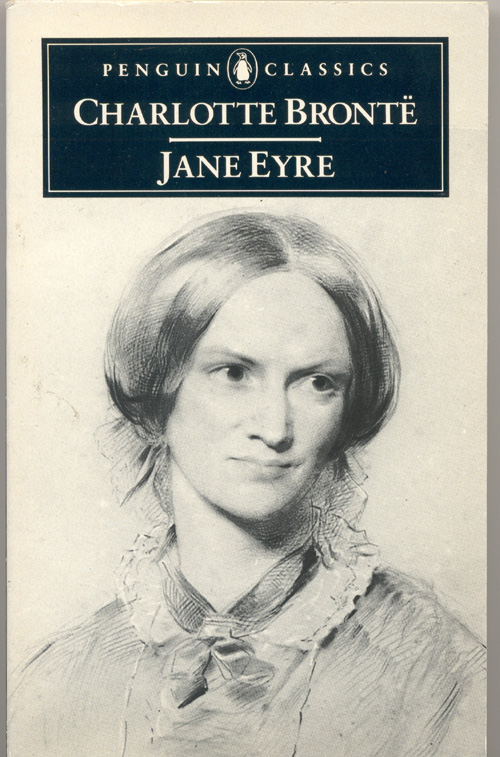
Reread #52 Jane Eyre

Jane Eyre. Charlotte Bronte. 1847.  300 pages. [Source: Own]

There was no possibility of taking a walk that day.

Can a plain, orphan governess find true love and a happily ever after? Yes, if she's willing to speak her own mind, stay true to herself, and fight for the one she loves. Jane's journey to her happily ever after certainly wasn't easy or typical. 

I have many, many posts about Jane Eyre. But surprisingly, only two book reviews! I first reviewed it--for the blog--in September 2008. My second review is from December 2011. In 2012, I reviewed ten film adaptations of Jane Eyre. Each film got its own review, but I then wrote up a post analyzing them all.

It had been a few years since I'd last read Jane Eyre. After watching it so many times, I needed to take a break. But I knew that I would want to include the book in my year of rereading. It is just wonderful to revisit Jane Eyre again and again and again.

Do you love Jane Eyre too? Do you have a favorite scene? a least favorite scene? What is your favorite adaptation? What scenes do you find essential in an adaptation?

Some of my favorite quotes:
He had been looking two minutes at the fire, and I had been looking the same length of time at him, when, turning suddenly, he caught my gaze fastened on his physiognomy. “You examine me, Miss Eyre,” said he: “do you think me handsome?” I should, if I had deliberated, have replied to this question by something conventionally vague and polite; but the answer somehow slipped from my tongue before I was aware—“No, sir.” “Ah! By my word! there is something singular about you,” said he: “you have the air of a little nonnette; quaint, quiet, grave, and simple, as you sit with your hands before you, and your eyes generally bent on the carpet (except, by-the-bye, when they are directed piercingly to my face; as just now, for instance); and when one asks you a question, or makes a remark to which you are obliged to reply, you rap out a round rejoinder, which, if not blunt, is at least brusque. What do you mean by it?” “Sir, I was too plain; I beg your pardon. I ought to have replied that it was not easy to give an impromptu answer to a question about appearances; that tastes mostly differ; and that beauty is of little consequence, or something of that sort.” “You ought to have replied no such thing. Beauty of little consequence, indeed! And so, under pretence of softening the previous outrage, of stroking and soothing me into placidity, you stick a sly penknife under my ear! Go on: what fault do you find with me, pray? I suppose I have all my limbs and all my features like any other man?” “Mr. Rochester, allow me to disown my first answer: I intended no pointed repartee: it was only a blunder.” “Just so: I think so: and you shall be answerable for it. Criticise me: does my forehead not please you?” He lifted up the sable waves of hair which lay horizontally over his brow, and showed a solid enough mass of intellectual organs, but an abrupt deficiency where the suave sign of benevolence should have risen. “Now, ma’am, am I a fool?” “Far from it, sir. You would, perhaps, think me rude if I inquired in return whether you are a philanthropist?”
“You looked very much puzzled, Miss Eyre; and though you are not pretty any more than I am handsome, yet a puzzled air becomes you; besides, it is convenient, for it keeps those searching eyes of yours away from my physiognomy, and busies them with the worsted flowers of the rug; so puzzle on. Young lady, I am disposed to be gregarious and communicative to-night.” With this announcement he rose from his chair, and stood, leaning his arm on the marble mantelpiece: in that attitude his shape was seen plainly as well as his face; his unusual breadth of chest, disproportionate almost to his length of limb. I am sure most people would have thought him an ugly man; yet there was so much unconscious pride in his port; so much ease in his demeanour; such a look of complete indifference to his own external appearance; so haughty a reliance on the power of other qualities, intrinsic or adventitious, to atone for the lack of mere personal attractiveness, that, in looking at him, one inevitably shared the indifference, and, even in a blind, imperfect sense, put faith in the confidence. “I am disposed to be gregarious and communicative to-night,” he repeated, “and that is why I sent for you: the fire and the chandelier were not sufficient company for me; nor would Pilot have been, for none of these can talk. Adèle is a degree better, but still far below the mark; Mrs. Fairfax ditto; you, I am persuaded, can suit me if you will: you puzzled me the first evening I invited you down here. I have almost forgotten you since: other ideas have driven yours from my head; but to-night I am resolved to be at ease; to dismiss what importunes, and recall what pleases. It would please me now to draw you out—to learn more of you—therefore speak.” Instead of speaking, I smiled; and not a very complacent or submissive smile either. “Speak,” he urged. “What about, sir?” “Whatever you like. I leave both the choice of subject and the manner of treating it entirely to yourself.” Accordingly I sat and said nothing: “If he expects me to talk for the mere sake of talking and showing off, he will find he has addressed himself to the wrong person,” I thought. “You are dumb, Miss Eyre.” I was dumb still. He bent his head a little towards me, and with a single hasty glance seemed to dive into my eyes. “Stubborn?” he said, “and annoyed. Ah! it is consistent. I put my request in an absurd, almost insolent form. Miss Eyre, I beg your pardon. The fact is, once for all, I don’t wish to treat you like an inferior: that is” (correcting himself), “I claim only such superiority as must result from twenty years’ difference in age and a century’s advance in experience. This is legitimate, et j’y tiens, as Adèle would say; and it is by virtue of this superiority, and this alone, that I desire you to have the goodness to talk to me a little now, and divert my thoughts, which are galled with dwelling on one point—cankering as a rusty nail.” He had deigned an explanation, almost an apology, and I did not feel insensible to his condescension, and would not seem so. “I am willing to amuse you, if I can, sir—quite willing; but I cannot introduce a topic, because how do I know what will interest you? Ask me questions, and I will do my best to answer them.”  
Besides, I know what sort of a mind I have placed in communication with my own: I know it is one not liable to take infection: it is a peculiar mind: it is a unique one. Happily I do not mean to harm it: but, if I did, it would not take harm from me. The more you and I converse, the better; for while I cannot blight you, you may refresh me.”
The ease of his manner freed me from painful restraint: the friendly frankness, as correct as cordial, with which he treated me, drew me to him. I felt at times as if he were my relation rather than my master: yet he was imperious sometimes still; but I did not mind that; I saw it was his way. So happy, so gratified did I become with this new interest added to life, that I ceased to pine after kindred: my thin crescent-destiny seemed to enlarge; the blanks of existence were filled up; my bodily health improved; I gathered flesh and strength. And was Mr. Rochester now ugly in my eyes? No, reader: gratitude, and many associations, all pleasurable and genial, made his face the object I best liked to see; his presence in a room was more cheering than the brightest fire. Yet I had not forgotten his faults; indeed, I could not, for he brought them frequently before me. He was proud, sardonic, harsh to inferiority of every description: in my secret soul I knew that his great kindness to me was balanced by unjust severity to many others. He was moody, too; unaccountably so; I more than once, when sent for to read to him, found him sitting in his library alone, with his head bent on his folded arms; and, when he looked up, a morose, almost a malignant, scowl blackened his features. But I believed that his moodiness, his harshness, and his former faults of morality (I say former, for now he seemed corrected of them) had their source in some cruel cross of fate. I believed he was naturally a man of better tendencies, higher principles, and purer tastes than such as circumstances had developed, education instilled, or destiny encouraged. I thought there were excellent materials in him; though for the present they hung together somewhat spoiled and tangled. I cannot deny that I grieved for his grief, whatever that was, and would have given much to assuage it. Though I had now extinguished my candle and was laid down in bed, I could not sleep for thinking of his look when he paused in the avenue, and told how his destiny had risen up before him, and dared him to be happy at Thornfield. 
I had not intended to love him; the reader knows I had wrought hard to extirpate from my soul the germs of love there detected; and now, at the first renewed view of him, they spontaneously arrived, green and strong! He made me love him without looking at me.
“He is not to them what he is to me,” I thought: “he is not of their kind. I believe he is of mine;—I am sure he is—I feel akin to him—I understand the language of his countenance and movements: though rank and wealth sever us widely, I have something in my brain and heart, in my blood and nerves, that assimilates me mentally to him. Did I say, a few days since, that I had nothing to do with him but to receive my salary at his hands? Did I forbid myself to think of him in any other light than as a paymaster? Blasphemy against nature! Every good, true, vigorous feeling I have gathers impulsively round him. I know I must conceal my sentiments: I must smother hope; I must remember that he cannot care much for me. For when I say that I am of his kind, I do not mean that I have his force to influence, and his spell to attract; I mean only that I have certain tastes and feelings in common with him.

© 2014 Becky Laney of Becky's Book Reviews

Friday, June 22, 2012

Dombey and Son

Dombey and Son. Charles Dickens. 1846-1848. 880 pages.


DOMBEY sat in the corner of the darkened room in the great arm-chair by the bedside, and Son lay tucked up warm in a little basket bedstead, carefully disposed on a low settee immediately in front of the fire and close to it, as if his constitution were analogous to that of a muffin, and it was essential to toast him brown while he was very new. Dombey was about eight-and-forty years of age. Son about eight-and-forty minutes. Dombey was rather bald, rather red, and though a handsome well-made man, too stern and pompous in appearance, to be prepossessing. Son was very bald, and very red, and though (of course) an undeniably fine infant, somewhat crushed and spotty in his general effect, as yet. On the brow of Dombey, Time and his brother Care had set some marks, as on a tree that was to come down in good time--remorseless twins they are for striding through their human forests, notching as they go--while the countenance of Son was crossed and recrossed with a thousand little creases, which the same deceitful Time would take delight in smoothing out and wearing away with the flat part of his scythe, as a preparation of the surface for his deeper operations.

I definitely enjoyed reading Charles Dickens' Dombey and Son. While I can't say that it's my new favorite Dickens novel, we had a lovely time together. Reading Dickens requires a time commitment, for the most part. While it's true that Oliver Twist is a quick and relatively easy read, the same can't exactly be said for Dickens' other novels. (Of course, excusing The Christmas Carol which is so easy to read it almost doesn't feel like a proper Dickens novel.) I don't mind committing my time, energy, effort to Dickens because I know that in the end it will prove worth it. He may take a couple of hundred pages to get going strong, but by the end, every little detail will come together and magic will happen. Such was the case with Dombey and Son.

How do I feel about Paul Dombey? If I had to choose just one word it would be infuriating. He's so proud, arrogant, narrow-minded, egotistical, pompous, cold-hearted, and cruel. He should not be allowed anywhere near women or children. It's no surprise that his first wife didn't "try" very hard to live. True, I'm speaking in jest for the most part, but Mrs. Chick, Dombey's sister, is not. The opening chapters provide ample opportunities for her to chastise her sister-in-law for dying. And Mrs. Chick does feel it was a weakness in her character that she allowed herself to die.

Dombey has a newborn son, named Paul, of course, what did you expect? He also has a daughter, Florence. It is in his relationship with Florence that the man's true weakness is revealed. For he is a horribly neglectful, sometimes cruel Father who takes great pride in the fact that his daughter is a nobody. That is in his eyes he has no daughter, a girl-child is of no conceivable use to him, so she just doesn't exist to him. He doesn't want anyone around him to act as if she exists either. She's not to be mentioned certainly, and not to be loved either, at least not in a way that's visible to him. For if he sees that someone else is loving and kind to her, it makes him who has no feelings (supposedly) feel guilty for not being a decent human being.

Florence is the heroine of this novel. She may be a little too good to be true--she's practically flawless. But she's good at providing contrast for every other character in the novel. Because without a doubt almost everyone else who plays a role in this thick novel is very flawed and very human. If Florence has a fault it is in being too kind, too forgiving, too selfless. She makes excuses for her father's defects for almost all of the novel. No matter how he treats her, no matter how heartless he is, no matter what he decrees or sets in place, she's in the background trying to make it work out. She's almost blinded by hope that one day surely she'll be loved and accepted by her father.

Florence is beloved by so many people! Her younger brother, Paul, loves and adores her until the very end. Her brother's friend, Mr. Toot, loves and adores her too. And then there's Walter Gay. He may be of a different class than Florence, but, he's THE HERO. And it's so very easy to fall in love with Walter. Walter first meets Florence when they're children. He saves her when she's lost--she'd been kidnapped--and restores her to her family. She remains ever-thankful and full of kindness for him, and not only for him but for his uncle and his friend too. (Uncle Sol, Captain Cuttle). Walter works as a lowly clerk for Mr. Dombey; he's completely beneath the notice of Mr. Dombey.

I won't go into the details of this one--it covers at least a decade if not two--but it was such a treat of a novel! It was a nice blend of light and dark; at times very serious and emotionally compelling but at other times quite comedic. The style is rambling. Readers get plenty of descriptions, details, asides, etc. I always enjoy Dickens' creative names and characterizations. He can be so very quirky!!! In other words, typical Dickens.

Read Dombey and Son
  • If you're a fan of Charles Dickens
  • If you love literature and classics
  • If you're a fan of the Victorian period
  • If you enjoy long novels
© 2012 Becky Laney of Becky's Book Reviews

Monday, November 28, 2011

Revisiting Jane Eyre

Jane Eyre. Charlotte Bronte. 1847.  300 pages.

There was no possibility of taking a walk that day.

I know not everyone sees value in rereading books. But. I just can't help it. If I love a book once, I'm going to want to revisit it. Again and again and again. After all, if I never wanted to read it again...ever...could I even really say I loved it? Or loved, loved, loved it?

Jane Eyre was a pleasure to reread. It really was. From the first page to the last, it kept me satisfied. There was so much to savor, so much to slowly absorb. I didn't rush this one. I didn't want to rush this one. I wanted to enjoy every moment of this one. Because books as wonderful as Jane Eyre just aren't that easy to find.

Though Jane Eyre has been adapted to films many times, I don't think it's a novel that adapts particularly well. The novel is told in first person. We see EVERYTHING through Jane's eyes. It is a very personal connection the reader has to make with Jane if the novel is to be appreciated and loved. If you don't come to love Jane, if you don't come to understand Jane, if you don't come to see the world through Jane's eyes, if you don't see Mr. Rochester as Jane does, if you don't LOVE him as Jane does, then you're not getting the full experience.

I was disappointed with the 2011 adaptation. Especially with Mr. Rochester. Why? Well, if you didn't already LOVE Mr. Rochester, then you would have no real reason--other than appearance, perhaps?--to love him. By taking the words out of his mouth, by eliminating almost all of his dialogue with Jane, by eliminating the oh-so-crucial gypsy scene, viewers see only a slightly teasing Mr. Rochester with a very deep, very dark secret. We see him only at his very, very worst, for the most part. And the scene after Jane knows the truth, well, it just seems so far removed from anything in the book. It was seeking out that scene in the book, it was wanting to know how the *real* Mr. Rochester treated Jane after the big shocking reveal, that led me to reread the book.

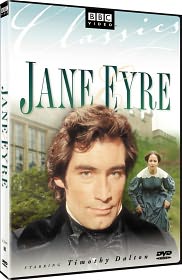
The BBC production (from early 1980s) starring Timothy Dalton and Zelah Clarke is a much, much, much better adaptation. In my opinion. I loved, loved, loved how Jane's relationship with Mr. Rochester developed. I loved their scenes together. I loved the dialogue. I loved how we really got to know both characters through the episodes. (It is over five hours long!) Everything that I loved about the book (almost everything) was present in this adaptation. It just felt right!!!

Do you have a favorite adaptation of Jane Eyre?


My original review.

© 2011 Becky Laney of Becky's Book Reviews

Wednesday, March 25, 2009

Travel the World: England: Wuthering Heights


Bronte, Emily. 1847. Wuthering Heights.

In my effort to give books a second chance, I finished Emily Bronte's Wuthering Heights over the weekend. My question was this, would I love it--or like it even--if I weren't being required to read it. If I could divorce my memories associated with the novel from English class. (Now, before I get jumped on in the comments, I'm not complaining about literature classes. I spent roughly six years studying literature.) But. I have to be honest. I'm still not that thrilled with Wuthering Heights. Heathcliff doesn't make my heart go pitter-pat. (I'd question my mental health if it did). Heathcliff and Catherine? More than a little annoying. I'd be hard-pressed to find a character that I feel sympathetic towards.

The story--in case you don't know--is about a hopeless love affair between two grouchy people. Perhaps grouchy isn't quite the word. Both are tempermental. Both are stubborn. Both are prone to melodrama. Both are selfish. One is more diabolically evil than the other. But neither one is likeable. Heathcliff and Catherine. The novel is about love and hate, revenge, bitterness, cruelty, heartache, greed, power, ambition, and above all manipulation.

I will grant the book this, I didn't fall asleep this go round. One thing that I think really and truly helped me out this time was Bella and Edward. Don't laugh. It was Eclipse where Bella oh-so-dramatically quoted on and on about Wuthering Heights and how the very fact that these two loved each other redeemed everything; it made two unsympathetic people be sympathetic. (The two wrongs make a right philosophy, I suppose.)

I can't believe you're reading Wuthering Heights again. Don't you know it by heart yet?

Not all of us have photographic memories, I said curtly.

Photographic memory or not, I don't understand why you like it. The characters are ghastly people who ruin each others' lives. I don't know how Heathcliff and Cathy ended up being ranked with couples like Romeo and Juliet or Elizabeth Bennet and Mr. Darcy. it isn't a love story, it's a hate story.

You have some serious issues with the classics, I snapped.

Perhaps it's because I'm not impressed by antiquity. He smiled, evidently satisfied that he'd distracted me. Honestly though why do you read it over and over? His eyes were vivid with real interest now, trying --again-- to unravel the convoluted workings of my mind. He reached across the table to cradle my face in his hand. What is it that appeals to you?

His sincere curiosity disarmed me. I'm not sure, I said, scrambling for coherency while his gaze unintentionally scattered my thoughts I think it's something about the inevitability. How nothing can keep them apart -- not her selfishness, or his evil, or even death, in the end...

His face was thoughtful as he considered my words. After a moment he smiled a teasing smile I still think it would be a better story if either of them had one redeeming quality.

I think that may be the point, I disagreed. Their love is their only redeeming quality.


p. 28
The way Catherine spoke about Heathcliff, about love, her tendency to be so melodramatic reminded me so much of Bella. (True, Edward is a better hero than Heathcliff in that he isn't evil incarnate.)

My mind also kept jumping back to Frankenstein and trying to find comparisons between the two. I'm not sure what that was about. Perhaps it was the framework of the story, perhaps it was the harshness of some of the environments, perhaps it was the hopelessness of it all. But while Frankenstein had a soul to it, Wuthering Heights, I felt lacked it.


© Becky Laney of Becky's Book Reviews
If you're reading this post on another site, or another feed, the content has been stolen.