Showing posts with label graphic novels. Show all posts

Friday, June 09, 2023

115. Captain America: The Ghost Army


Captain America: The Ghost Army. Alan Gratz. Illustrated by Brent Schoonover. 2023. [January] 176 pages. [Source: Library] [Middle Grade; Young Adult]

First sentence: TING, TING, TING, TING, PAKOW, RAT-TAT-TAT-TAT, POOM

Premise/plot: Graphic novel set during World War II starring Captain America (aka Steve Rogers) and Bucky Barnes (aka James Buchanan Barnes). There are others you'd probably recognize as well from the Marvel Universe. It is set during World War II, as I mentioned, and the pair are investigating a strange, supernatural phenomenon. The soldiers that they'd killed just hours before have come back to life and are foes once more. Their victory camaraderie broken up by GHOSTS. But ghosts that are held back (restrained) by moving water. This is a [supernatural] mystery worth investigating...and it takes them into a village.

Meanwhile, readers get panels featuring the villainy-villains. A big battle between the two is coming....

My thoughts: I have never read an actual-actual Marvel comic OR graphic novel. This is definitely a graphic novel. (I talk as if I could tell the difference with my eyes blindfolded. I couldn't.) Captain America and Bucky are two great characters that I've loved from the movies alone. I know, I know, I know that the comics can be VERY different from the movie depictions. I do think there are some differences--perhaps big differences--between these characters and the movie characters. They are not cookie cutter copies. How Gratz's and Schoonover's depiction line up against the actual [canon] collection of Marvel comics is a question for someone more well-schooled. Again, not my area of expertise. 

I definitely appreciated the story. It was a little bit over the top, but in a good way.


© 2023 Becky Laney of Becky's Book Reviews

Monday, September 13, 2021

111. Katie the Catsitter


Katie the Catsitter #1 Colleen A.F. Venable. Illustrated by Stephanie Yue. 2021. [January] 229 pages. [Source: Library]

First sentence: Come on. Come on. Perfect.

Premise/plot: Katie, our heroine, is desperate to save enough money so she can afford to go to the same camp as one of her best, best friends. But money is hard to come by--no matter how willing, no matter how desperate. But after several failed attempts (turns out that she kills houseplants!) at earning money, she's offered a job by her upstairs neighbor, Ms. Madeline Lang. The job???? Catsitting. How many cats can one lady in New York City (living in an apartment building) have???? Turns out quite a lot! Katie finds herself taking care of "just" 217 cats!!!

The job pays well--very well! But it isn't without its moments. Turns out these cats are, well, special. As is Ms. Lang herself. This graphic novel for middle graders is set in a world (in New York City to be precise) where superheroes and villains are just as real as you and me. And there's always spottings of both heroes and villains...both on the news...and in person.

Could Ms. Lang have a couple of secrets she's keeping from Katie...and the world?

My thoughts: I liked this one. I did. I really liked it. I LOVED the 217 cats. The world building is fun. This appears to be the first in a series. I like that even though so many things are fantastical about it--superheroes, villains, sidekicks, etc--it is grounded in the real world. Turns out that you can have trouble with friendships no matter what. And Katie is struggling with maintaining her old friendships. It seems her friends may be moving on and moving up...

This was my favorite part of the book:

Bethany,
If you ever wonder how much I value your friendship, please measure it in cats. 217 cats. That's how much I care about you. Can't wait to tell you more about this job, but GOOD NEWS!!!! At this rat I should have the money by nocturnal week!!! You know, if I don't get murdered by lasers or evil cats first.


© 2021 Becky Laney of Becky's Book Reviews

Thursday, September 02, 2021

104. Drama


Drama. Raina Telgemeier. 2012. 238 pages. [Source: Library]

First sentence: Do you think Mr. Madera will let me operate the spotlight again?

Premise/plot: Drama chronicles the misadventures of stage hand, Callie, as she navigates middle school--notably her falling in and out of love with unavailable guys. So the book focuses in almost exclusively on the middle school stage crew as they get ready to produce the play, "Moon Over Mississippi." Callie works on set design and her "baby" of the project is a cannon that shoots confetti--if she can get it to work and keep it working. But everyone IN the play and working ON the play have super-super-melodramatic lives...the book depicts how hard it is for love to actually be requited... Callie herself seems to almost always be crushing on guys crushing on other guys.

My thoughts: One of my favorite things about Raina Telgemeier's previous graphic novels (her graphic memoirs) were how super-relatable they were. That wasn't the case with Drama. For me, I just couldn't relate to any of the characters. It wasn't just that I couldn't see myself in any of the characters and relate to any of the situations. It's that I just didn't connect with any of the characters. I felt it was all drama and little substance. As opposed to her other graphic (memoirs) novels that were all substance.


© 2021 Becky Laney of Becky's Book Reviews

Friday, July 23, 2021

68. The Dire Days of Willowweep


The Dire Days of Willowweep Manor. Shaenon K. Garrity. Illustrated by Christopher J. Baldwin. 2021. [July] 224 pages. [Source: Library]

First sentence: A dark and stormy night! Through windswept torrents I come...seeking my inmost heart's desire. My thirst is unslaked by the disconsolate storm; my need burns through the autumnal chill. Pleeeease can you reconsider my grade?

Premise/plot: Haley, our heroine, is more than a little obsessed with gothic novels. Her teacher--for better or worse--has told her enough is enough is enough. No more book reports on gothic novels. On Haley's walk home from school--in the rain--she crosses a bridge and sees a man (a stranger, of course) drowning. Despite his protests that he doesn't need help, she jumps in to save him. She soon finds herself in over her head...no she doesn't almost drown...but she does find herself in another universe.

Taken to Willowweep Manor, she finds herself LIVING in a world strongly/heavily influenced by gothic romances. She's keeping company with three brothers--Laurence, Cuthbert, and Montague. There's a housekeeper and a ghost in residence. She soon learns that she's in a pocket universe (pocket world???) and that there are leaks from other realities--cracks in the multiverse. An evil is invading Willowweep, and she may be called upon to help...

My thoughts: I really LOVED this graphic novel. For the record graphic novels are not in my top three--or even five--genres that I love and adore. I don't read many per year. But this one, this one is special. It was begging to be read. It is both a PARODY of gothic novels (which I have definitely read my fair share of over the years) and a fun venture into science fiction (with alternate universes!). 

There's a pamphlet guide to running this universe--not very helpful--that features an illustration vibing Miss Minutes in her cheerfulness and quirkiness.

The dialogue between the characters I found amusing and fun. Very light. Not taking itself too seriously. Not trying to be historical. It almost reminds me of Nathan Hale's touch of humor in his graphic novels. 

Haley: I've read about this. You wouldn't be one of those foreboding housekeepers who rules the manor with an iron fist and secretly fondles the mistress's lingerie, would you?
Wilhelmina: The mistress is no longer with us.
Haley: You didn't answer my question.

Montague: What do people in your universe do when reality starts springing leaks?
Haley: I'm not sure. Look at cat pictures until we feel better?

Laurence: We really have a ghost, eh?
Haley: Sort of. What I don't understand is why only I can see her.
Cuthbert: Oh, that's simple! You're a guest at the old manor. They always see ghosts. Especially if they're maidens.

Montague: Are you holding on all right?
Haley: Actually, yeah. This must be one of my maiden powers. I'm not sure what else I can do. Pine? Get the vapors? Tutor unsettling children?
Montague: I'm a choleric antihero, my chief power is having bad ideas.

 I enjoyed reading this one. Read it cover to cover in one sitting. When it was over, I was tempted to reread it--or at least parts of it.

© 2021 Becky Laney of Becky's Book Reviews

Wednesday, July 21, 2021

65. Measuring Up


Measuring Up. Lily LaMotte. Illustrated by Ann Xu. 2020. [October 27] 208 pages. [Source: Library]

First sentence: My life in Taiwan is sweet.

Premise/plot: Cici, our heroine, is reluctant to move to Seattle with her family. She loves how things are in Taiwan. And she'll have to leave her grandmother behind. As she adjusts to life in a new country--new city, new school--she finds her own way to belong. But, of course, her missing her grandmother continues despite the making of new friends. Then Cici has an idea, what if she can win enough money in a cooking contest to buy her grandmother a plane ticket to come visit! (Her grandmother's birthday is coming up!)

But does Cici have what it takes to win BIG?

My thoughts: I definitely loved this graphic novel. I loved Cici's special relationship with her grandmother. I loved how the two bonded over cooking. I loved how they were able to stay in touch. I love how thoughtful, sweet, and sensitive Cici is. Readers see Cici at home, at school, at the library, and yes, at the cooking contest! I loved how the cooking contest is presented throughout the book.

One of my favorite things was how Cici was inspired by Julia Child. Watching her shows and reading her book(s), she walks away with the notion of conviction of courage. "I'm going to try and flip this over, which is a daring thing to do. When you flip anything, you really must have the courage of your convction...the only way to learn how to flip things is to just flip them" (122/123).

This coming of age novel was lovely. Loved the celebration of family, friendship, and new beginnings. Definitely recommended.


© 2021 Becky Laney of Becky's Book Reviews

Monday, June 21, 2021

54. Major Impossible


Major Impossible. (Nathan Hale's Hazardous Tales #9) Nathan Hale. 2019. 128 pages. [Source: Review copy]

First sentence: I've been on this gallows long enough! It is time to execute this spy! 

Premise/plot: The provost and hangman are joined by an eavesdropper leavesdropper, Bill Richmond, in Major Impossible. Nathan Hale, our hero, talks his way out of execution and straight into another tale. This time he's telling the hazardous tale of John Wesley Powell and company as they explore the Colorado River and (discover?) explore the Grand Canyon. There were ten that set out to explore on this expedition. (But how many would make it to the end?)

This story also uses flashbacks--which definitely annoy the hangman, especially at first.

The adventures mainly focus on the "present day" (1869) exploration of the river/canyon AND through the flashbacks events like the civil war.

For those not at all familiar with Nathan Hale and his hazardous tales, the series is a graphic novel series rooted in history. Nathan Hale, our hero, is facing execution by the British in 1776. He's prolonging his would-be execution by telling tales from history. Though to the provost and hangman, these "historical" events are from the future. He's an entertaining storyteller and he always leaves them wanting more, more, more.

The graphic novels aren't without some lighthearted moments (though perhaps the one on the Donner Party is an exception). In this one, some humor comes in as one of the adventurers lose all their clothes but their long john underwear.

My thoughts: I am not the target audience of this one, not really. That's a given. My complaint--really my sole complaint--is that the font size is teeny-tiny. I have to squint my way through the whole book. Seriously hard on the eyes. BUT again I am not the target audience. I do think younger readers--with better vision--will not have a problem reading and enjoying this one.

I have nothing but solidly good feelings about the series as a whole. I really do enjoy sitting down and enjoying Nathan Hale's hazardous tales. I think the series is super fun. I like learning about different historical figures in a fun and entertaining way.

I'm not sure this one is my absolute favorite and best from the series. But I definitely enjoyed it as part of the whole. I do recommend the whole series.

I do think you could read the series out of order.

© 2021 Becky Laney of Becky's Book Reviews

Wednesday, April 01, 2020

49. The Twilight Man: Rod Serling and the Birth of Television

The Twilight Man: Rod Serling and the Birth of Television. Koren Shadmi. 2019. 176 pages. [Source: Library] [graphic novel; biography; adult]

First sentence: Damn.

Premise/plot: Twilight Man is a biography of Rod Serling told in graphic novel format. The framework of the story is simple. Serling is on a flight and chatting up the beautiful woman beside him. He tells his life story to a stranger. Well, most of his life story. His story starts with the war, the Second World War; he was a paratrooper. Most focuses on his career as a writer, producer, director, celebrity.

My thoughts: I discovered The Twilight Zone as a kid. I loved, loved, loved some episodes; others were just okay. The show holds good memories for me. Though kids may find the show enjoyable, this graphic biography is written primarily for adults. I think older teens could read this one. But. I would definitely say the subject matter and language make it an extremely poor fit for a younger audience.

I would say that a familiarity with the Twilight Zone is an absolute must. If it’s been a while since you’ve watched the show, you might want to watch some classic episodes first. You’ll appreciate the illustrations more.

I didn’t love it. I enjoyed it well enough.


© 2020 Becky Laney of Becky's Book Reviews

Monday, November 11, 2019

Best Friends

Best Friends (Real Friends #2) Shannon Hale. Illustrated by LeUyen Pham. 2019. 256 pages. [Source: Library]

  First sentence: In summer, nothing ever seemed to change. The sky stayed blue. The air stayed warm. And friends stayed friends forever.

Premise/plot: I’m tempted to keep it simple and short and merely say Shannon Hale’s newest book should be required reading for humanity. It’s one of those meaning of life books. Those aren’t as common as you might believe. So what is this one about? It is the follow up to her previous graphic novel, Real Friends. Both books are inspired by her childhood. Both books are set in the mid-80s. This one covers her sixth grade year, 1985/86. But it does feature a few flashback sequences to earlier years. A young Shannon is trying to figure out the rules: rules about how to be liked, how to avoid being laughed at, how to make friends, how to keep friends, how to be true to yourself yet not so true as to be deemed a weirdo. Is there a way to stay popular/semi-popular and still be kind? Why does being kind require such bravery? Is lying ever justified?

Throughout it all, she’s also struggling with anxiety, panic attacks, and a bit of OCD. Whether you personally struggle with these exact mental health issues or not—I think the book is an honest and thought provoking way for readers to experience what it is like and perhaps gain a bit of empathy.

Who hasn’t struggled at one age or another with friends—making, keeping, forgiving friends. It can be a traumatic, troubling thing—some may struggle a year or two before finding their people, their crowd, where they actually belong; some may spend decades struggling to find “real” or “best” friends. This book keeps it real, keeps it honest, and stays ever-relevant.

My thoughts: I love, love, love this one so much. It is so honest at times that it stings when bringing up memories from the past—my past. I think no matter where you fit on the spectrum of popular or unpopular, bully or bullied, it will give you food for thought. I hope it is an empathy builder especially for children reading the book. The book is incredibly amazing. I loved the glimpse into Shannon’s past. This one will be hard to beat as a favorite of the year.


© 2019 Becky Laney of Becky's Book Reviews

Thursday, July 25, 2019

Lafayette! (Nathan Hale's Hazardous Tales)

Nathan Hale's Hazardous Tales #8 Lafayette! Nathan Hale. 2018. [October 16] Harry N. Abrams. 128 pages. [Source: Library]

First sentence: This title page would be better with sound effects. Whang! Klang! Shing! Slice! Stab!

Premise/plot: Nathan Hale is still prolonging his life by telling stories to his two executioners. The story he is sharing with them today is of Major General Lafayette, a Frenchman who came to help Americans fight for their independence from Britain, a good friend to many of our founding fathers including George Washington, Alexander Hamilton, Benjamin Franklin, etc. It is set in France, America, and Canada. Nathan Hale's STORY of Lafayette ends with the American Revolution. This book does NOT in any way cover Lafayette's involvement in the French Revolution. What it does cover are many, many battles in the American Revolution.

My thoughts: I really have loved this graphic novel series. Nathan Hale doesn't just tell stories about the American Revolution, though in this case he does. He also tells entertaining, adventure stories from many different wars, conflicts, and battles. OR even episodes in history like the DONNER PARTY, the underground railroad, or the exploration of the Grand Canyon. The series could go on for quite a while since Nathan Hale is in no rush to get to his own execution.

I will say that the size of the font seems to have shrunk since the last time I read and reviewed one of the series. Surely it's not just my eye sight?! Okay. It could be just my eye sight. There were days when I couldn't even read it with squinting. But eventually I did get through all of it! It was a good read though perhaps not as compelling  as some of the other books in the series.

© 2019 Becky Laney of Becky's Book Reviews

Monday, June 10, 2019

Before They Were Authors

Before They Were Authors: Famous Writers as Kids. Elizabeth Haidle. 2019. Houghton Mifflin Harcourt. 64 pages. [Source: Review copy]

First sentence: What makes a writer? Many of us wonder about the stories behind the stories of best selling authors...

Premise/plot: What do you call a nonfiction book that uses the graphic novel format?! This one is nonfiction. It includes brief biographies of ten--yes, ten--writers. (5 Men. 5 Women.) The writers included are Mark Twain, Maya Angelou, Dr. Seuss, Sandra Cisneros, Roald Dahl, J.K. Rowling, Gene Luen Yang, Beatrix Potter, C.S. Lewis, and Madeleine L'Engle. Some of these writers wrote for children--toddlers, preschoolers, grade school students; some of these writers wrote for young adults or even adults.

Each author biography is told over several pages. As I mentioned earlier, it uses the graphic novel/comic book format to tell the stories. Sprinkled throughout the biographies are quotes from the writers.

My thoughts: I love the idea of loving this one. I do. The truth is very few readers are going to agree on which ten authors "should" be included in the book. There are no right answers here. Some seem obvious to me--Dr. Seuss, for example or even J.K. Rowling. There is one "omission" that saddens me. I would have LOVED, LOVED, LOVED to see Beverly Cleary included here. Her story is surely just as interesting as Beatrix Potter's?! Another "omission" that comes to mind is L.M. Montgomery. Also Mo Willems. And Shannon Hale.

Are these ten authors personal favorites of mine? Not really. That's okay. The subtitle isn't Becky's Favorite Writers As Kids.


© 2019 Becky Laney of Becky's Book Reviews

Friday, March 22, 2019

To Kill A Mockingbird Graphic Novel

To Kill A Mockingbird: A Graphic Novel. Original text by Harper Lee. Adapted and illustrated by Fred Fordham. 2018 [October 30] 208 pages. [Source: Library]

First sentence: When he was nearly thirteen my brother Jem got his arm badly broken at the elbow.

Premise/plot: This is a graphic novel adaptation of Harper Lee's To Kill A Mockingbird. It stars unforgettable characters: Scout, Jem, Dill, Atticus, Cal, and Boo Radley--to name just a few. If you've read the novel or watched the movie, then you should definitely consider picking this one up. It is faithful to the spirit of the book--and the text is definitely recognizably Harper Lee's.

My thoughts: I really LOVED this one. I am not saying that I love the graphic novel adaptation more than the original novel. I am not even saying that I love the graphic novel more than the movie. (Fordham's rendering of Atticus does not resemble Gregory Peck in the slightest, by the way.) But the book reminded me of all the reasons why I LOVE, LOVE, LOVE, LOVE, LOVE the (original) book in the first place.

It is faithful to the actual book. It has scenes that are definitely not in the movie adaptation. I think this is important to know. At times with classics one rewatches the movie more than rereads the book. Especially perhaps in the case of To Kill A Mockingbird. Though for the record, my copy of To Kill A Mockingbird is looking a bit tattered. I am not sure how many more times it can hold up to a rereading. I would have bought a replacement copy years ago--if I ever came across it at a used book store. But this isn't one you see about in used bookstores. I think people tend to hold onto their copies forever and ever. It's just that good.

I love the writing. I love the characters. I do enjoy the illustrations.

© 2019 Becky Laney of Becky's Book Reviews

Wednesday, January 09, 2019

World at War: The Faithful Spy

The Faithful Spy: Dietrich Bonhoeffer and the Plot to Kill Hitler. John Hendrix. 2018. Harry N. Abrams. 176 pages. [Source: Review copy]

First sentence: This book follows the life of the man Dietrich Bonhoeffer. But it is equally a story of the German resistance. It is a story that often goes untold.

Premise/plot: This biography of Dietrich Bonhoeffer is told in 'graphic novel' format. As hinted in the above 'first sentence' the book balances the bigger picture with the personal.

The Faithful Spy gives a good overview of Hitler's rise to power and the terrors of the Third Reich and an excellent overview of the German Resistance and a handful of attempts to assassinate Adolf Hitler and overthrow the government. The personal story is that of Dietrich Bonhoeffer. From a young age he acted--thought--as a theologian. He grew up to be a pastor at a dangerous time. The "Christian" church was threatened. One had two choices: give in to Hitler's vision of the future and submit to his reign despite/in spite of one's personal beliefs OR resist and defy and stick to one's principles. Or in other words choose between having the Bible as the authority or Hitler. Bonhoeffer saw no choice--one could not in good conscience choose Hitler over Christ. Where Bonhoeffer did have a choice is to stay or to go. Before the war started, Bonhoeffer with help from friends managed to get to America. He could have waited out the war. He could have spoken out against Hitler from afar. He could have written, studied, taught. But after a few weeks in America he decided that he'd made a big mistake. His place was not one of safety in America, he belonged in Germany. Knowing that it very well could cost him everything--his freedom, his life--he returned to Germany. When opportunity came he joined the resistance and became a spy. He was involved to some degree with the failed attempts at assassination. He was eventually imprisoned, tortured, sentenced to death. But Bonhoeffer could not ignore the plight of 'the other.' To live out his beliefs--to put his doctrine in action--meant defying the Nazis and risking it all.

My thoughts: The Faithful Spy is a compelling read. (I read it in two days.) I haven't read much nonfiction written and illustrated in graphic format. The format worked well. I wouldn't say it added drama to the story--how could it? But it paid tribute perhaps to the natural drama of the story.

The book did not shy away from Dietrich Bonhoeffer as a theologian. Not many books published by a non-Christian (aka secular) publisher openly and unashamedly talk God from cover to cover. This one did. Bonhoeffer was a theologian. He was a believer, a student, a teacher, a preacher, a writer. His story could not be told accurately without talking doctrine, faith, God.

Some readers may not embrace the book because of the religious/spiritual aspects of it. But his legacy is intimately connected with his theology. There were many "spies" and many members of the resistance. Many died in Germany as prisoners. Not all were theologians.

There are other books written about his life that focus solely on his story and not on the bigger picture. I think this is an important book.

Original audience born circa 2000 to 2008.

© 2019 Becky Laney of Becky's Book Reviews

Friday, July 13, 2018

Charlie Brown

Charlie Brown: A Peanuts Collection. Scharles M Schulz. 2018. 96 pages. [Source: Library]
This graphic novel is a blend of new stories starring the Peanuts cast and classic Peanuts strips by Charles M Schulz.

The new stories are "Charlie Brown's Star" by Jeff Dyer, "Public Speaking" by Bob Scott, "Snowball's Chance" by Justin Thompson, "She Love Me, She Loves Me Not," by Jeff Dyer, "Dear Pen Pal" by Vicki Scott, "Blind as a Bat" by Jeff Dyer, "Football Basics" by Vicki Scott, "Fight for Flight" by Shane Houghton, "Spring Training" by Shane Houghton.

Longer stories by Schulz include: "The Carousel," "Poor Chuck," and "Get Well Soon, Charlie Brown."

 My favorite story in this new collection is "Dear Pen Pal." In this one, Sally takes over writing a letter for her big brother. He is writing a pen pal. Sally is quite proud of herself for having learned to write in cursive the letters A through N. But Sally's idea of what should go into a letter is quite different from Charlie Brown's idea. Will this letter ever get written?
Charlie Brown: If you can't write 'Dear Pen Pal,' what can you write?
Sally: "Thank you for the cookies!"
Charlie Brown: But he didn't send me cookies.
Sally: He didn't send you cookies?? Then why in the world are you writing to this kid?! The only reason to write a letter is to thank someone for sending a gift! And the only reason to thank someone for a gift is so they send another one! Until this kid sends you cookies, I don't see any reason I should learn to write the letter "P"!!
I enjoyed the book. Perhaps I'd have loved it even more with less sports. But this one still had some great moments.


© 2018 Becky Laney of Becky's Book Reviews

Friday, July 06, 2018

The Tea Dragon Society

The Tea Dragon Society. Katie O'Neill. 2017. [Oct. 31, 2017] 72 pages. [Source: Library]

First sentence: Once upon a time, blacksmiths were as important as magicians. They made tools for the healers to cure the sick. Shoes to shod the hooves of working animals. Swords for adventurers to slay monsters. The world was forged in iron...Once upon a time.

Premise/plot: Greta is the heroine of Katie O'Neill's The Tea Dragon Society a middle grade graphic novel. It is a fantasy. Greta finds a small, injured dragon. The dragon is a tea dragon. Her father recognizes the dragon and knows the owner. Greta returns the dragon to its owner, Hesekiel. Seeing her interest in the tea dragon, he invites her to visit his tea shop anytime and learn more about tea dragons and how to take care of them. She also meets Minette and Erik. All three have tea dragons. The book is divided into four sections--the four seasons. Will Greta be lucky enough to get a tea dragon of her own one day?

My thoughts: Odd can be good. It can. I'm not sure that I love, love, love this one. It's not quite my cup of tea. But I liked it. So what makes a tea dragon a tea dragon? I can't tell you their origins of how they came to be, but, I can tell you a little bit about them. Tea dragons grow tea leaves off their horns. The tea leaves--when dried and brewed--offer tea drinkers (especially their owners) a magical trip down memory lane. The shared memories of tea dragons and their caretaker are imparted to the leaves themselves. Drink the tea and you'll be taking a trip.

There are many different kinds of tea dragons: Jasmine Tea Dragon, Rooibos Tea Dragon, Chamomile Tea Dragon, Ginseng Tea Dragon, Earl Grey Tea Dragon, Hibiscus Tea Dragon, Ginger Tea Dragon, and Peppermint Tea Dragon. Each has its own personality. I get the idea that no two tea dragons are alike. These dragons offer a rewarding relationship with their owners, but, it isn't easy-going especially in the beginning.

Katie O'Neill has without a doubt spent a great deal of time world-building. This especially comes through in the appendix. 

I love, love, love, love, LOVE tea. I've had all the teas listed above with the exception of Ginseng. (I've never drank Ginseng before.) I've never had a magical trip as a result of tea drinking. But I've made plenty of happy memories. I love to drink tea and read; I also love to drink tea and watch stuff. (For example, I love to watch Call the Midwife with a cup of tea in hand.)

If I had an equally strong attachment to dragons, I imagine this one would have delighted even more.

© 2018 Becky Laney of Becky's Book Reviews

Tuesday, June 05, 2018

Ethel and Ernest

Ethel and Ernest. Raymond Briggs. 1998. 104 pages. [Source: Library]

First sentence: Monday 1928. Tuesday. Wednesday. Ethel! For heaven's sake! Where ARE you? Coming Madam. Thursday. ETHEL! Friday. Saturday. How about coming to the pictures with me?

Premise/plot: Ethel and Ernest is a biographical graphic novel based on the author's own parents. It begins with their courtship in 1928 and ends with their deaths in 1971. Their courtship serves as a prologue. The novel is then broken down into decades: 1930 to 1940, 1940 to 1950, 1950 to 1960, 1960 to 1970, 1970 to 1971.
It is set in London, for the most part, with brief interludes in the countryside.

My thoughts: I recently watched the film adaptation of Ethel and Ernest. It was LOVELY, absolutely lovely. The film was intense and sweet. I don't mean just intensely sweet. It was dramatic but not melodramatic--at least not most of the time. When it ventured there--it was for humor. The book is essentially the same as the film. The film kept to the novel almost word for word most of the time with a few teeny-tiny changes here and there.

Ethel marries late in life--mid-thirties--and she desperately wants a child. You can feel her heartache as she cries out her frustration to her husband. You can feel her joy when she tells him her happy news a couple of scenes later. You can feel his heartache a couple of minutes later when the doctor tells him that that baby had better be the last--Ethel almost didn't make it. (Of course, a few minutes screen time can cover months--if not years.)

One of the melodramatic moments is when Ethel is having a hysterical fit after having her son's hair cut for the first time. It is something that doesn't become FUNNY funny until later in the film--the book. She's broken down when he's a toddler when he's given a short haircut, his curls are GONE. As he grow up--particularly as a teen boy and a young adult, she breaks down multiple times because of his long hair. She wants him to get a hair cut; she wants to see him with short, neat hair. She's always, always, always pushing a comb at him.

Providing drama for two sections of the novel at least are European tensions, the threat of war, and WAR itself. Ethel isn't one for paying attention to world politics UNTIL it invades her home. When the call to evacuate the children of London comes--it hits her hard. It hits both of them hard. One mustn't think that because Ernest doesn't cry--blubber like Ethel, if you will--that he doesn't feel things. Raymond goes off to the country. And the two are left behind with their world literally exploding around them.

The book doesn't just celebrate the BIG moments of life, but the little, everyday ordinary moments of life. The moments that you hardly think worth noting, worth appreciating. It is also great at capturing the little gestures of life. The little things Ernest does for Ethel and Ethel does for Ernest. The little things that glue this couple together in good times and bad. I think it is realistic in that aspect. Neither Ethel or Ernest are perfectly-perfect saints without any quirks or flaws. Ethel is Ethel; Ernest is Ernest; they grow together.

Though it's written by the son, I think he truly tries to keep the point of view of his parents.

The ending--particularly in the film watching it the first time--is crushing emotionally. Not because it's about manipulation but because it's honest and raw.

I think it would be fitting to end with the lyrics of Is It Already Time? I am familiar with the George Strait version. It was written by Aaron Gayle Barker.
The years have been so good to you and I my friend
They brought us to the Autumn wind and left the tears behind
And who'd have dreamed that love could grow so endlessly
And you'd have meant so much to me, is it already time?
And I will always love you so
We'll hold each other close until it's time to go
And we believed we had forever on our side
Is it already time?
And I will always love you so
We'll hold each other close until it's time to go
And we believed we had forever on our side
Is it already time?
And we believed we had forever on our side
Is it already time?

© 2018 Becky Laney of Becky's Book Reviews

Thursday, December 14, 2017

Raid of No Return

Raid of No Return. (Nathan Hale's Hazardous Tales #7) Nathan Hale. 2017. [November] Abrams. 128 pages. [Source: Library]

First sentence: On March 8th, 1862, near the entrance to the Chesapeake Bay, the confederate ironclad CSS Virginia steamed into battle.

Premise/plot: Raid of No Return is part of a graphic-novel historical series written by Nathan Hale and starring Nathan Hale. Nathan Hale is joined by his executioners. He is delaying his execution by telling super-exciting action-packed stories from history, from the future. In this seventh adventure, he is turning to the second world war. This book is ALL about the Doolittle Raid or the Tokyo Raid of 1942. The adventure begins with the Japanese training to attack the United States.

My thoughts: I love, love, love this series. This is a good addition to that series. I love that the book follows all sixteen planes and their crews that took part in the raid. A few of the names were familiar to me, but not all of them. I would definitely recommend this one to anyone who enjoys history. You don't have to "love" graphic novels to be swept up into this story. 

© 2017 Becky Laney of Becky's Book Reviews

Saturday, June 17, 2017

Snoopy Contact!

Snoopy Contact! Charles M. Schultz. 2015. 176 pages. [Source: Library]

First sentence: (Lucy) How can you be happy when you don't know what this year has in store for you? Don't you worry about all the things that can happen? That's better...live in dread...and fear...be sensible... (Snoopy) He he he he he he he.

Premise/plot: Snoopy: Contact! is a collection of Peanuts comic strips. Probably half of the comics in this collection feature Snoopy as a World War I Flying Ace in pursuit of the Red Baron. The other half in this collection focuses on all the characters and takes readers through all four seasons.

One of my favorite Flying Ace strips has Snoopy imagining himself landing behind the trenches having to crawl over/under barbed wire before he's spotted by enemy machine gunners. The barbed wire is really a jump rope in action. That comic is on page 14.

Another favorite strip has Snoopy singing for his dinner. I could really RELATE to this one. Charlie Brown ends the strip saying, "I must admit he's a very satisfying person to cook for." This strip is on page 29. (Page 30 has a great summer-themed strip.)

A little later on readers see Snoopy going through a photo album. What's making him so happy? He's looking at pictures of all the supper dishes he's ever owned. (107)

Ever wondered if Snoopy is the kind of dog to make plans?
(Charlie Brown) Well, Snoopy, what are your plans for today?
(Snoopy) Plans? I hadn't even thought about it. But I suppose I'll sleep a little this morning...then this afternoon, I'll take a short nap, and later on I'll try to get more sleep...those are good plans. (54)
One of my favorite winter-themed strips has Snoopy skating. Snoopy has had to do a lot of his practicing at night...because otherwise he's "surrounded by flocks of admiring girls..." (141).

My thoughts: I really love this collection. Snoopy and Linus are my favorite characters from Peanuts. The book is a quick read. I often found myself wanting to share strips with others.

© 2017 Becky Laney of Becky's Book Reviews

Thursday, June 01, 2017

All Our Yesterdays

All Our Yesterdays. Jason Quinn. 2017. 150 pages. [Source: Library]

First sentence: The Beatles. John, Paul, George and Ringo. Four lads from Liverpool whose sound shook the world...This is their story!

Premise/plot: Love graphic novels? Love The Beatles? Love nonfiction? Have I got a book for you! The Beatles: All Our Yesterdays is a nonfiction graphic novel (for teens). The first few pages and the last few pages cover vast spans of time! Most of this graphic novel focuses on the years 1956-1962. If you exclude the epilogue which takes you from 1963-2016, the book ends with the release of their very first single, "Love Me Do."

My thoughts: The intended teen audience was not born when the Beatles Anthology documentary was released in 1995. So chances are unless their parents--or grandparents--were HUGE Beatles fans, the intended audience has not seen--has not heard--the story of how the Beatles became THE BEATLES. At least not with a rich quality of details. I was a Senior in high school in November 1995, and, I remember that week VERY well. It was MAGIC. I want to say that I rewatched the Beatles Anthology in the summer of 2016--or was it 2015?! Anyway, the details were very fresh in my mind. (I've also read at least three or four adult biographies). I did not personally learn anything new in this one. The story within this graphic novel was familiar to me. But it was FUN to see this story retold this way. I would definitely recommend. As far as content goes, it's THE BEATLES. So don't expect anything to be squeaky clean.
© 2017 Becky Laney of Becky's Book Reviews

Wednesday, April 19, 2017

Annie Sullivan and the Trials of Helen Keller

Annie Sullivan and the Trials of Helen Keller. Joseph Lambert. 2012. 96 pages. [Source: Library]

Premise/plot: Annie Sullivan and the Trials of Helen Keller is a nonfiction graphic novel; it is a biography of Helen Keller's teacher, Annie Sullivan. The first scene in the book is a wordless sequence that continues for several pages: Helen Keller trying to eat off her teacher's plate and being made to eat off her own plate and to eat with a spoon. It's a contest of wills between the two, for sure. The first third of the book--at least--this struggle continues. Annie trying to have a break through with Helen Keller. How do you teach the concept of language, of ideas, of words to someone who can neither hear or see? If there is someone as stubborn as Helen, it is Annie. Together these two will have an impact on the world. The water scene occurs about thirty pages into this one. Instead of using this as the end of the story, Lambert uses this as the beginning of the story. The focus in this graphic novel is truly the EDUCATION of Helen Keller. I found this to be FASCINATING. The climax of this one surrounds the 'trial' of Helen Keller and Annie Sullivan. Sullivan has been writing to her teacher/mentor. She shared a story that Helen Keller wrote, The Frost King. He was so impressed with this story that he tried to get it published in a magazine, only to be humiliated when he was told that the story was 'plagiarized.' Keller and Sullivan stand 'trial' before him and the school board. Were either guilty of knowingly copying a story and passing it off as original?

My thoughts: I really LOVED this one. It wasn't perfect. I would have loved it if the panels of this graphic novel had been larger, and if the font size had been larger. It was hard on the eyes. Especially since you're reading CURSIVE in a tiny print. Cursive and finger spelling. I didn't struggle with the finger spelling. (As a kid, I was so fascinated by The Miracle Worker that I learned the manual alphabet. And that's something I kept in my memory with the exception of x and z.) I read in the author's note that the cursive bits were taken from Sullivan's actual letters. So this isn't a flimsy biography, but a serious one.


© 2017 Becky Laney of Becky's Book Reviews

Friday, January 27, 2017

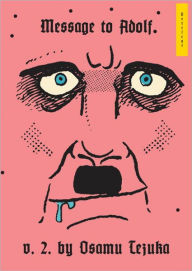
Message to Adolf #2

Message to Adolf, part 2. Osamu Tezuka. 1983/2012. Translated by Kumar Sivasubramanian. Vertical. 608 pages. [Source: Library]

First sentence: Mama, today I killed people.

Premise/plot: The second half of Message to Adolf begins with a letter of 'confession' from Adolf Kaufman to his Japanese mother. This book sees us through World War II and beyond. If there is a main character, it is Sohei Toge. But really there are dozens of characters. All falling somewhere between extremes. Good and evil. Sane and insane. Smart and stupid.

My thoughts: This will cover my thoughts on both books. I can understand that it would be really difficult to read a graphic novel that was 1200+ pages, so it had to be broken up into parts. But there is one story, not two.

Did I like the characters? Not really. I think perhaps with the exception of one or two characters--mainly the women characters--every character made big mistakes. It feels wrong to call these ethical slips, "big mistakes" when we're talking about things like rape, beating up women, and murder. It's not just the "bad guys" that are committing these crimes. But the good guys too. Even the main character--in the first book. My favorite characters were probably Mrs. Kaufman and Mrs. Kamil. One woman ended up running a restaurant and marrying the 'hero' Sehei Toge. The other was a Jewish baker.

Did I like the story or the action? Again the answer is not really. The story is very brutal and violent. This is expected in part. Japan and Germany were at war with the world. I did not expect the Nazis to be portrayed as "nice." The book depicts the casualness, the nothingness, of murder felt by the Nazis. What I wasn't really expecting to see depicted in both books was rape. Two main characters (Adolf Kaufman and Sohei Toge) essentially RAPE women and get away with it for the most part. They never once think, hey, what I did was wrong. While Kaufman really never recovers his boyish innocence--once he joins the Hitler Youth, it's over for him--Toge essentially is depicted as a great guy, the hero we all should be cheering for.

As I mentioned, murder is all too commonly depicted in these books. Because of the brutal violence (scenes of torture, rape, murder, physical abuse) and the sex scenes (some consensual, some definitely NOT) this is definitely an ADULT book.

What was the message of the book? I'm not sure. During the war, the tension (in the plot) came from people wanting to reveal "secrets" that could destroy Hitler and "end the war" and those wanting to protect Hitler and destroy the secret documents and kill anyone who had seen them.

I am sure there is some significance to the book being titled Message to Adolf, but, I'm not quite sure I can guess the author's intent fully. It's easy--for me--to conclude that WAR IS UGLY AND BRUTAL AND MAKES YOU DO HORRIBLE, HORRIBLE THINGS TO OTHER HUMAN BEINGS. But was that the author's message?

© 2017 Becky Laney of Becky's Book Reviews