Showing posts with label autobiography. Show all posts

Monday, February 24, 2025

19. My Wonderful World of Slapstick


19. My Wonderful World of Slapstick. Buster Keaton with Charles Samuels. 1960. 340 pages. [Source: Library] [adult biography, adult autobiography; film-making, show business, comedy]

First sentence: Down through the years my face has been called a sour puss, a dead pan, a frozen face, The Great Stone Face, and, believe it or not, "a tragic mask." On the other hand, that kindly critic, the late James Agee, described my face as ranking "almost with Lincoln's as an early American archetype, it was haunting, handsome, almost beautiful." I can't imagine what the great rail-splitter's reaction would have been to this, though I sure was pleased. People may talk it up or talk it down, but my face has been a valuable trade-mark for me during my sixty years in show business. 

Premise/plot: My Wonderful World Of Slapstick is Buster Keaton's autobiography written just six years before his death in 1966. (So it does not cover *all* of his career, but it does cover many years of his career.) Does the book cover anything and everything? Yes and no. There are chapters in his life that remain very much PRIVATE and undisclosed. Keaton is not one to name names--for better or worse.

For example, I am almost completely certain that he never mentions his first or second wives by name. His first wife is called "his future wife" or "my wife"  or "Mrs. Buster Keaton" and the like, but never her actual name or even nickname. She does appear by name in the book, but only because she appears in his filmography because she was his costar in Our Hospitality. There was a good reason he said zip, zilch about his second marriage. (I believe she was fond of lawsuits for ANYTHING and everything, no matter how tangential to the truth). It was his beloved [third] wife, Eleanor, who gets stories.

There are periods of his life where he shares in great detail about his life--both private stories and show business-y stuff. There are periods of his life where the details are harder to come by. Which is fair, in my opinion. He does talk industry both for STAGE and FILM and television. He has stories about people in front of the camera and behind it. He does not go into great detail about his own films. He does not take himself too seriously. It's like he'd rather shift into telling asides and anecdotes than to deep dive into his own brilliance at what he does/what he did. He comes across as very grounded. He says that Charlie Chaplin's problem was that he believed everything that was being said about him, written about him, and began to take himself too seriously and as [an elite] intellectual.

"I never realized I was doing anything but trying to make people laugh when I threw my custard pies and took pratfalls. Like anyone else I enjoy being called a genius. But I cannot take it seriously. Neither does Harold Lloyd, as far as I know. The only one of us who listened and accepted the role of genius intellectual critics thrust upon him was Chaplin. Sometimes I suspect that much of the trouble he's been in started the first time he read that he was a 'sublime satirist' and a first-rate artist. He believed every word of it and tried to live accordingly."

I would have wished for a little more detail about the making of his own films, but perhaps he wanted his films to speak for themselves. Though at the time this was written, his films would not have been readily available for easy viewing. There were revivals of his films--his films being shown again in theatres, etc.,--especially in Europe. He was MUCH BELOVED in Europe, and I believe the book said Keaton was absolutely HUGE, HUGE, HUGE, MEGA-SUPER-POPULAR in Russia. [Which would make sense of the fact that so many Keaton channels on YOUTUBE are Russian.] 

It was his private stories that fascinated me. He writes in one chapter of several different practical jokes that he was in on. If I remember the story correctly, some big studio executive [or similar execs] were coming into town to meet Roscoe Arbuckle, the two came up with a great practical joke: dress Buster Keaton up as his BUTLER and let the comedy follow. He'd be the clumsiest, klutziest butler ever to see if any would recognize him--the theory being that BUTLERS ARE IGNORED--before the big finale. Arbuckle would finally "lose his temper" and let the butler have it to the astonishment of his guests. Meanwhile, Buster would slip out and return as himself--a rising star in his own right--and "meet" the guests. This was just one of many practical jokes he played. Though it was near impossible to pull the same joke twice because word would spread around town. 


It was his outlook on life--though he has repeatedly been called NOT introspective or reflective--that impressed me most. He writes,

"I think I have had the happiest and luckiest of lives. Maybe this is because I never expected as much as I got. What I expected was hard knocks. I always expected to have to work hard. Maybe harder than other people because of my lack of education. And when the knocks came I felt it was no surprise. I had always known life was like that, full of uppercuts for the deserving and undeserving alike. But it would be ridiculous of me to complain. I find it impossible to feel sorry for myself. I count the years of defeat and grief and disappointment, and their percentage is so minute that it continually surprises and delights me."
My thoughts: I absolutely LOVED, LOVED, LOVED, LOVED, LOVED this autobiography. There was just something so grounded and matter of fact about his narrative style. He was amusing and fascinating. I imagine this book covers such a small, small, small fraction of stories he could have told.

Quotes:

  • At any rate it was on purpose that I started looking miserable, humiliated, hounded, and haunted, bedeviled, bewildered, and at my wit's end. Some other comedians can get away with laughing at their own gags. Not me. The public just will not stand for it. And that is all right with me. All of my life I have been the happiest when folks watching me said to each other, "Look at the poor dope, wilya?" Because of the way I looked on the stage and screen the public naturally assumed that I felt hopeless and unloved in my personal life. Nothing could be farther from the fact. As long back as I can remember I have considered myself a fabulously lucky man. From the beginning I was surrounded by interesting people who loved fun and knew how to create it. I've had few dull moments and not too many sad and defeated ones. In saying this I am by no means overlooking the rough and rocky years I've lived through. But I was not brought up thinking life would be easy. I always expected to work hard for my money and to get nothing I did not earn. And the bad years, it seems to me, were so few that only a dyed-in-the-wool grouch who enjoys feeling sorry for himself would complain of them.
  • The cast for our two-reelers was always small. There were usually but three principals--the villain, myself, and the girl, and she was never important. She was there so the villain and I would have something to fight about. The leading lady had to be fairly good-looking, and it helped some if she had a little acting ability. As far as I was concerned I didn't insist that she have a sense of humor. There was always the danger that such a girl would laugh at a gag in the middle of the scene, which meant ruining it and having to remake it.
  • Even when making my two-reelers I worked on the theory that the story was always of first importance. But one thing we never did when making our silent comedies was put the story down on paper. On the other hand I never would agree to start shooting until I had in my mind a satisfactory ending for a story. The beginning was easy, the middle took care of itself, and I knew I could depend on my writers and myself to come up with any gags we might need as we went along.


© 2025 Becky Laney of Becky's Book Reviews

Tuesday, June 25, 2024

53. My Lost Freedom


My Lost Freedom: A Japanese American World War II Story. George Takei. 2024. 48 pages. [Source: Library] [Nonfiction picture book, World War II]

First sentence: Hi, I'm George Takei, an eighty-seven-year-old actor.

Premise/plot: My Lost Freedom is a picture book biography for older readers. It is an autobiographical picture book of George Takei's time in several Japanese Internment camps during the Second World War. He was a young child--a very young child, just four years old. His earliest memories, his core memories, if you will, were formed in these war years. The picture book shares about this time in American history through a personal lens. It is personal yet broader than that. 

It would be easy to assume that this is a bleak, glummy, downer of a book. But it isn't. The book shares memories of his family life, his friendships, his community. I think he was young enough to not know just how unjust and wrong it was. Know might be a very poor word choice, feel to the depths of his soul might be better but more wordy. I think his memories would be different if he'd been twelve or thirteen when he entered the camp with his family. I also am guessing that his family chose to make the best of an absolutely horrible situation. I think they chose to make it as much a home as possible for their children. 

My thoughts: I didn't know what to expect from this one. I'd read a few books for older readers (middle grade, high school, adult) on this subject. These especially from older perspectives are rightly so angry and bitter. This may be the youngest 'memoir' perspective I've read. It does include plenty of general information about this time period in history.

Easily a five-star read.

© 2024 Becky Laney of Becky's Book Reviews

Friday, January 26, 2024

12. Agatha Christie: An Autobiography


An Autobiography. Agatha Christie. 1977/1996. Berkley. 635 pages. [Source: Bought] 

ETA: I reread this one in January 2024. It had been years since I first read this one. I have so many dog-eared pages from both readings. If I was to quote everything I marked to "remember" to come back to, it would be so long. Definitely glad I reread this one.

Agatha Christie's autobiography has been on my tbr pile for years now. I have looked forward to reading it for so long! I must admit the length had me a little intimidated. But once I started reading this one, I found myself completely absorbed in it. It is truly a fascinating read cover to cover. I think this one could prove appealing to a variety of readers.

Do you love history? I found Agatha Christie's Autobiography to be fascinating. This book is rich in details. Readers learn in great detail about her family and her growing up years. What Christie is describing is a way of life, and the way she saw the world around her. Her thoughts on her parents, grandparents, siblings, the family servants--the cook and the maids and nannies. You get a real sense of what it was to be a child (and teen) growing up in England in the 1890s and 1900s. She was "out" (ready to date) a year or two (or even three) before World War I began.

Are you interested in World War I? in World War II? Christie details what life was like during the war years. She was a nurse for a great part of World War I. She also assisted in dispensing drugs. She fell in love and got married during this time. During World War II she again did her part in the war effort. I believe volunteering in a hospital. She was in and around London during the War. She recalls how she rarely (if ever) took shelter during the raids because she was afraid of being buried alive under all the rubble. She had a grown daughter by that point. A daughter who fell in love, got married, and had a child during this time.

England was at war. It had come. I can hardly express the difference between our feelings then and now. Now we might be horrified, perhaps surprised, but not really astonished that war should come, because we are all conscious that war does come; that it has come in the past and that, at any moment, it might come again. But in 1914 there had been no war for--how long? Fifty years--more? True, there had been the "Great Boer War," and skirmishes on the Northwest frontier, but those had not been wars involving one's own country--they had been large army exercises, as it were; the maintenance of power in far places. This was different--we were at war with Germany. (257)
Are you interested in archaeology? in world-traveling? She spends a good deal of time recalling her travels around the world. She accompanied her first husband on an extended trip--covering several continents. (She left her (quite young) daughter with her mother and sister.) After her divorce--he fell in love with another woman and blamed her for it--she traveled on her own. On one of her trips to the Middle East, she met the man who would become her second husband. He was an archaeologist. While she did not stay with him the duration of all of his digs, she accompanied him on some, and visited on others. Readers learn that Christie LOVED, LOVED, LOVED to travel.

Are you a rehab addict? Christie loved looking at houses, buying houses in need of repair, fixing them up, renting them out, and selling them. She owned many properties at various points in her life. I believe the book said she owned eight during World War II. The book talks about her remodeling and redesigning houses.

Are you interested in writing, in her writing life? You'll find plenty to delight you within her autobiography. She talks about different sides of her writing life. Her novels. Her mystery novels. Her plays. Her short stories. Her poems. She talks about her mistakes and successes. Readers learn about which books she liked best and which book she really, really hated!
It was while I was working in the dispensary that I first conceived the idea of writing a detective story. (289)
People never stop writing to me nowadays to suggest that Miss Marple and Hercule Poirot should meet--but why should they? I am sure the would not enjoy it at all. Hercule Poirot, the complete egoist, would not like being taught his business by an elderly spinster lady. He was a professional sleuth, he would not be at home all in Miss Marple's world. No, they are both stars, and they are stars in their own right. (502)
Do you love to read? Christie shares her thoughts on her favorite writers and books!

I want to emphasize the fact that you do not have to love mysteries in order to find this autobiography of a mystery writer fascinating! I marked so many passages that I wanted to share with you. Too many to actually share. It would overwhelm any post. So just trust me, read this one!

I will choose a quote which happens to bring to mind a certain song from Frozen.
One of the first things that happens when you are attracted to a man and he is to you is that extraordinary illusion that you think exactly alike about everything, that you each say the things the other has been thinking. (228)


© 2024 Becky Laney of Becky's Book Reviews

Wednesday, January 10, 2024

3. Coretta: The Autobiography of Mrs. Coretta Scott King


Coretta: The Autobiography of Coretta Scott King. Coretta Scott King. Illustrated by Ekua Holmes. 2024. [January] 40 pages. [Source: Library] [nonfiction picture book, biography, autobiography, children's nonfiction]

First sentence: I was born on April 27, 1927, in Heiberger, Alabama, at a time and in a place where everything I would eventually become was impossible even to imagine. 

Premise/plot: This is a nonfiction picture book for children [and older readers.] It is adapted from a memoir or autobiography written by Coretta Scott King, civil rights activist and wife of Martin Luther King Jr. 

My thoughts: Without a doubt librarians and teachers will pick this one up and push it, push it, push it. Is that a bad thing? Probably not. Just honestly saying that this is probably more a book adults will encourage children to choose instead of being one of those books that children will choose to pick up and read on their own. No judgment intended. 

As an adult, I appreciated it. I definitely found the illustrations to be wonderful. I liked the text as well.  


© 2024 Becky Laney of Becky's Book Reviews

Monday, July 26, 2021

73. Boy from Buchenwald


Boy from Buchenwald. Robbie Waisman with Susan McClelland. 2021. [May] 288 pages. [Source: Review copy]

First sentence: I remember where I come from.

Premise/plot: Boy from Buchenwald is a memoir of Holocaust survivor Robbie Waisman (Romek Wajsman). It isn't your typical straight forward, strictly chronological memoir. The memoir open with Romek (and other boys from Buchenwald including Elie Wiesel) arriving in France after liberation. Much of the focus is on what happens next, what happens after liberation, how does one move forward with one's life. Physically there is much to recover from--but emotionally and psychologically, there isn't really a time table for that. 

Plenty of this book focuses on the time he spent waiting, waiting, waiting, still waiting to find out any definitive news of what happened to each and every family member. Is he the only one from his family to survive? Or are there a few others--siblings perhaps--that are just in other displaced person camps?

The book contains flashes of his life before liberation. These are italicized mainly. And I think the structure of the book recreates his healing process. He had to come to terms with his whole story and that involved remembering. But remembering wasn't easy--it was overwhelming. The way forward involved coming to terms with all his past--the good, the terrifying, and each and every emotion in between.

My thoughts: At times I felt a little disconnected with this one but perhaps that is because the author himself was struggling to connect his past to his present to his future. I appreciate that this one focuses mainly--though not exclusively--on what happens after liberation. There are plenty of memoirs that focus on what happened during the war years, they leave readers with a happily ever after when the camps are liberated by the Allies. This one chooses a different path--the one less taken perhaps.

How does one move forward? How does one come to terms with what happened all the while moving forward? How does one go about grieving (and healing) when the wounds are that DEEP and the pain and sorrow so strong? How do you learn to trust again? (Or do you?) And what about the feelings of guilt and fear and anger, etc. How can you avoid giving into despair?

As I mentioned this one focuses on the first year or two--perhaps three???--after liberation as he is growing up and learning to live one day at a time.

© 2021 Becky Laney of Becky's Book Reviews

Tuesday, February 02, 2021

12. My Remarkable Journey


My Remarkable Journey: A Memoir. Katherine Johnson, Joylette Hylick, and Katherine G. Moore. 2021. [May] 224 pages. [Source: Review copy]

First sentence: The serious look in Daddy’s eyes told me his words were important: “You’re as good as anyone in this town,” he said, peering down at my curious little face. “But you’re no better.”

Premise/plot: My Remarkable Journey is Katherine Johnson's autobiography. Katherine Johnson is a name you've likely become familiar with over the past six to seven years. Hidden Figures, the book, was published circa 2016 and the movie, Hidden Figures, followed. But this is her story in her own words--I believe the coauthors are her daughters. (Her daughters are named Joylette and Katherine, so I'm inferring here, for better or worse.) 

While the memoir covers her career at NASA, it covers so much more than that. She was a daughter, sister, student, friend, teacher, volunteer, mathematician, career woman, wife, mother, and grandmother. The memoir highlights relationships--not just events. 

Another thing worth mentioning is the focus on context, context, context. Her memoir is rooted in the times in which she lived. She goes out of her way to share deeper contexts and elaborate on the times. For example, she provides great detail about race relations, segregation, desegregation, the civil rights movement, the cold war, the space race, etc. If there's a theme of the memoir it would be education, education, education.

My thoughts: I loved this memoir. I found it fascinating, informative, and well crafted. I loved her writing style. I loved learning more about her family--her parents, siblings, husbands, children--and her private life. It was just an absorbing read. 

Journey is a good fit for the title. The book isn't so much about the destination--though, of course, her years at NASA are a fascinating destination--but about the journey. It is about the people who helped her along every step of the way, who helped shape her into the amazing woman she was.


© 2021 Becky Laney of Becky's Book Reviews

Wednesday, January 29, 2020

18. On the Horizon


On the Horizon. Lois Lowry. Illustrated by Kenard Pak. [April 2020] HMH. 80 pages. [Source: Review copy] [Autobiography; Biography; Children's Nonfiction; World War II; poetry]

First sentence: On December 7, 1941, early on a Sunday morning, Japanese planes bombed Pearl Harbor, in Hawaii.

Premise/plot: Lois Lowry has written an autobiography in verse focusing on the second world war. The book focuses primarily on two horizons--the first being PEARL HARBOR and the second being HIROSHIMA. I say focuses primarily on those two huge events--their impact and legacy--but it doesn't do so exclusively. Lowry and her family spent time in Japan--her father was stationed there for the military--after the war. Nor is the book narrated exclusively through her eyes, her perspective. It is told in three parts or sections. The first and third are more her perspective, the second adopts the viewpoint of those who witnessed the dropping of the atomic bomb.

My thoughts: I loved, loved, loved, loved this one so much. Granted I am partial to Lois Lowry. Granted I have a HUGE collection of World War II books. But I loved, loved, loved it. I hope others do as well. I really enjoyed the verse format of this one. Much more than I was expecting to enjoy it!


© 2020 Becky Laney of Becky's Book Reviews

Monday, November 11, 2019

Best Friends

Best Friends (Real Friends #2) Shannon Hale. Illustrated by LeUyen Pham. 2019. 256 pages. [Source: Library]

  First sentence: In summer, nothing ever seemed to change. The sky stayed blue. The air stayed warm. And friends stayed friends forever.

Premise/plot: I’m tempted to keep it simple and short and merely say Shannon Hale’s newest book should be required reading for humanity. It’s one of those meaning of life books. Those aren’t as common as you might believe. So what is this one about? It is the follow up to her previous graphic novel, Real Friends. Both books are inspired by her childhood. Both books are set in the mid-80s. This one covers her sixth grade year, 1985/86. But it does feature a few flashback sequences to earlier years. A young Shannon is trying to figure out the rules: rules about how to be liked, how to avoid being laughed at, how to make friends, how to keep friends, how to be true to yourself yet not so true as to be deemed a weirdo. Is there a way to stay popular/semi-popular and still be kind? Why does being kind require such bravery? Is lying ever justified?

Throughout it all, she’s also struggling with anxiety, panic attacks, and a bit of OCD. Whether you personally struggle with these exact mental health issues or not—I think the book is an honest and thought provoking way for readers to experience what it is like and perhaps gain a bit of empathy.

Who hasn’t struggled at one age or another with friends—making, keeping, forgiving friends. It can be a traumatic, troubling thing—some may struggle a year or two before finding their people, their crowd, where they actually belong; some may spend decades struggling to find “real” or “best” friends. This book keeps it real, keeps it honest, and stays ever-relevant.

My thoughts: I love, love, love this one so much. It is so honest at times that it stings when bringing up memories from the past—my past. I think no matter where you fit on the spectrum of popular or unpopular, bully or bullied, it will give you food for thought. I hope it is an empathy builder especially for children reading the book. The book is incredibly amazing. I loved the glimpse into Shannon’s past. This one will be hard to beat as a favorite of the year.


© 2019 Becky Laney of Becky's Book Reviews

Wednesday, March 13, 2019

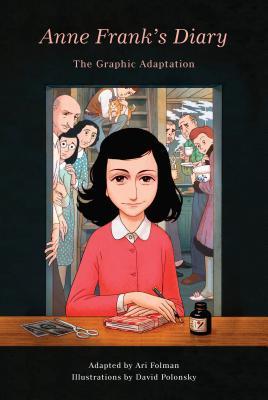
Anne Frank's Diary: The Graphic Adaptation

Anne Frank's Diary: The Graphic Adaptation. Adapted by Ari Folman. Original text by Anne Frank. Illustrated by David Polonsky. 2018. 160 pages. [Source: Review copy]

First sentence: No one would believe me, but at the age of 13, I feel totally alone in this world.

Premise/plot: This is a graphic novel adaptation of Anne Frank's Diary of a Young Girl. It is not unabridged by any means; the text has been condensed/adapted. But much of the text remains recognizably Anne's own words.

My thoughts: I really enjoyed this one. I don't usually enjoy graphic novels....but...every now and then I find myself loving one. Did I love this one? Yes, for the most part. I think the adaptation was well done. It condensed some of the material--which almost by necessity is a bit repetitive--and put the emphasis on some of the more dramatic sections. The book remains a coming-of-age memoir; readers witness Anne's emotional ride through puberty in the midst of war and uncertainty. I liked how the amount of text varied throughout. Sometimes Anne's own words are more powerful than any image could ever hope to be. And sometimes the illustrations really convey Anne's inner life remarkably well. For example, there's a spread where the illustrator is showing how Anne feels about being compared to her "perfect" sister Margot. That was PRICELESS in my opinion. Another great example is an illustration revealing Anne's disgust with her dentist roommate. She finds HIS UNDERWEAR on Kitty--her diary. That would certainly explain a lot if it is true.

I reviewed the definitive edition of her diary earlier this year where I discussed my reactions to Anne's text.

© 2019 Becky Laney of Becky's Book Reviews

Friday, March 01, 2019

Inheritance

Inheritance: A Memoir of Genealogy, Paternity, and Love. Dani Shapiro. 2019. 272 pages. [Source: Library]

First sentence: When I was a girl I would sneak down the hall late at night once my parents were asleep.

Premise/plot: In this memoir, Dani Shapiro shares her experiences with DNA testing. Her results surprised her: it begins with a match for a first cousin she doesn't know. If this stranger is her first cousin, it means that her father--the father who raised her--is not her biological father. She remembers something slightly off her mother said about her conception years ago. Within a matter of days she finds her biological father--a sperm donor. What should she do with this information? Should she try to make contact with him? meet him? have a relationship with him? Does it mean anything mentally, emotionally, spiritually that this man--this stranger--is her father?

My thoughts: I wanted this to be a compelling read. I really did. I tend to watch these kinds of stories on the news. It sounded like it would be fascinating. But for me it wasn't. I found the narrative to be tedious at times. Was there enough material for a full-length book? I'm not sure there was. Was there enough for an essay or article? Definitely.

© 2019 Becky Laney of Becky's Book Reviews

Tuesday, January 02, 2018

Fierce

Fierce: How Competing for Myself Changed Everything. Aly Raisman. 2017. 368 pages. [Source: Library]

First sentence: I'm sitting on the floor of the airy warm-up gym in the Rio Olympic Arena and fiddling with the fraying white rug beneath my feet, grateful for a distraction.

Premise/plot: Fierce is an autobiography by Olympic gymnast, Aly Raisman. She won medals in London and Rio. She also appeared on Dancing with the Stars.

My thoughts: I love, love, love, LOVE watching gymnastics. It is easier to follow the sport during Olympic years because that is when they broadcast it on TV. But in a perfect world where EVERY sport I cared about was aired on TV and all the sports I didn't care about weren't, I'd watch gymnastics each and every season. I have read quite a few biographies now. This one was very good. She's honest and open about her life--the good, the not so good. She has a lot to say to young girls--really, to women of ALL ages. Her voice should be heard.


© 2018 Becky Laney of Becky's Book Reviews

Wednesday, June 28, 2017

The Pianist

The Pianist. Wladyslaw Szpilman. Translated by Anthea Bell. 1946/1999. 222 pages. [Source: Library]

First sentence: I began my wartime career as a pianist in the Cafe Nowoczesna, which was in Nowolipki Street in the very heart of the Warsaw ghetto.

Premise/plot: In 1946, I believe, Wladyslaw Szpilman published a memoir sharing his story of how he survived the war. The book was later translated into English and began to include extracts from the diary of Captain Wilm Hosenfeld. The book did inspire a film, and, the film won lots of awards. As for the contents of the book, the life he led during the war, the near-death encounters he experienced, the physical and emotional trials--shocks--he endured, I'm near speechless. His style is matter-of-fact. It is rich in detail that would have been fresh on his mind, but, his intention was not to shock or manipulate to gain sympathy. It is very unemotional. It isn't a book of feelings or emotions. It isn't a diary he recorded day-by-day that captures the in-the-moment horrors of the war.

My thoughts: I read this one before I watched the movie. I am glad I read it first. If it had packed the emotional punch of the movie though, I'm not sure I could have endured it. It isn't that the movie portrays things differently. In fact, one of the things I noticed almost immediately was how true-to-the-book it was. It was that by visualizing it--seeing it, hearing it--changes things. For example, the violence, the destruction, the horror of it all. If you've seen the movie, chances are you know what I'm talking about. There are dramatic, traumatic scenes that words just can't do justice to. At times I watched the movie almost in shock that humans could treat each other like this, that so much hatred could exist, that the world could be unjust. But then I'd switch from the movie to the news, and, it was all reaffirmed.

The movie is not devoid of hope, nor should it be. If its about humanity--it shows us at our best and at our worst. There is good to be found as well as evil. There are kind, generous, loving people as well as monsters.


© 2017 Becky Laney of Becky's Book Reviews

Tuesday, March 21, 2017

Ugly

Ugly. Robert Hoge. 2016. 208 pages. [Source: Library]

First sentence: Imagine you're in art class. The teacher drops a lump of wet, sticky clay on the bench in front of you. "You've got thirty minutes to sculpt a newborn baby's face," she says.

Premise/plot: Ugly is a memoir by Robert Hoge. This very personal story is about growing up 'ugly' or 'different' in Australia in the 1970s and 80s. Readers learn about his life at home and at school. The focus is on his family, his friends, his classmates and teachers. Not everyone was nice....or accepting. But. He made a way, found a way, to be comfortable in his own skin. His journey included some surgeries, but, not as many as you might expect. (I loved, loved, LOVED the ending.) His journey also included sports. 

Perhaps readers have heard the phrase, "He has a face only a mother could love..." Well, in Hoge's case, his mother had a hard time accepting him--and his face--at first. For the first month of his life, she refused to take him home from the hospital and didn't want anything to do with him. She later became loving and accepting--a true supporter--but at first she struggled.

My thoughts: What I appreciate most about it is its warmth AND truth. He tackles a subject that could be very melodramatic and emotional, perhaps even manipulative. You'll be moved, but not with pity. At least I was. I loved, loved, loved the writing. He has a way with words that won me over from the start.

Favorite quotes:
I'm the ugliest person you've never met. (3)
I knew I was ugly. But everyone is uglier than they think. We are all more beautiful too. We all have scars only we can own. (200)

© 2017 Becky Laney of Becky's Book Reviews

Tuesday, January 31, 2017

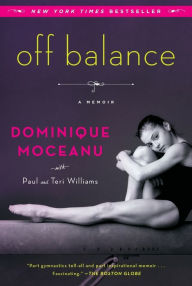
Off Balance

Off Balance. Dominique Moceanu. 2012. 256 pages. [Source: Library]

First sentence: When you have traveled the world, won Olympic gold, and gone through a very public court battle against your parents all by the age of seventeen, surprises don't come easy.

Premise/plot: Off Balance is the autobiography of gymnast Dominique Moceanu. The focus is not just on gymnastics. It is on her many aspects of her life, then and now. For example, here are a few things this one is about: forging a relationship with a sister she was clueless existed, her extremely tense relationship with the Karolyis, her love-hate-love-hate-love-hate relationship with an abusive father, her love-hate relationship with gymnastics, her love-hate relationship with her body, with weight, with food, exposing the harsher side of gymnastics.

My thoughts: I enjoyed reading this one. The chapters alternate, most of the time, between then and now. Readers learn about her parents arranged marriage, her parents coming to the United States, her parents struggle to make ends meet, her early years, her initial interest in gymnastics, the first coach she really, truly loved, loved, loved (in Florida), the move to Texas and the Karolyis gym, her first competitions as a junior and as an elite gymnast, her mistreatment at the hands of the Karolyis and her father, her journey to the Olympics, going on tour with other Olympian gymnasts, finding a new coach, injuries and setbacks, her failed comebacks, the court battle with her parents, her wild years, her settling down with a husband years, etc.

© 2017 Becky Laney of Becky's Book Reviews

Sunday, January 29, 2017

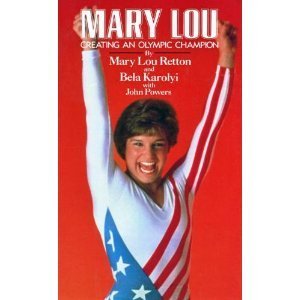
Mary Lou

Mary Lou: Creating an Olympic Champion. Mary Lou Rhetton and Bela Karolyi with John Powers. 1985. 170 pages. [Source: Library]

First sentence: The first time I really began dreaming about the Olympics was in 1976, when Nadia won her three gold medals at Montreal. I was eight years old that summer, and I can remember lying on the living room floor back home in Fairmont, watching the whole thing on television.

Premise/plot: This biography features alternating narratives between Mary Lou Retton and Bela Karolyi. They wrote this biography with John Powers. This book focuses almost exclusively on the sport of gymnastics. Mary Lou's chapters focus on her training and competing. One gets a good sense of the mental and emotional struggles that accompany "becoming" an Olympic champion. Bela's chapters focus on his coaching in Romania and the United States. His narrative goes a bit into politics and why he felt he and his family had to defect from Romania and seek to make America their new home. His personality is a strong one. (So is Mary Lou's, by the way). Both narratives the focus is on working hard all the time and never, ever, ever letting go the fight.

My thoughts: This was one of the books that I checked out from my school library in junior high. I've been watching gymnastics since the late 1980s, and I'm a big, big, big fan of the sport. I've been meaning to reread it for quite a while. I had to interlibrary loan it, but, it was worth it!


© 2017 Becky Laney of Becky's Book Reviews

Thursday, November 17, 2016

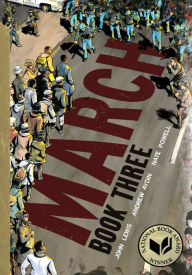
March: Book Three

March Book Three. John Lewis and Andrew Aydin. Illustrated by Nate Powell. 2016. 246 pages. [Source: Library]

First sentence: Y'all better hurry along, now. Sunday School's nearly over, and the main service'll be startin' soon.

Premise/plot: March is the graphic novel autobiography of John Lewis. So far, there are three volumes in this autobiography. Today, I am reviewing book three. It opens in Birminham, Alabama, September 15, 1963, the bombing of a church. This one covers the rest of 1963, 1964, and 1965. The 'past' story line concludes with the 1965 Voting Rights Act becoming a law. The 'current' story line concludes with him deciding to do a graphic novel autobiography.

My thoughts: From start to finish, I personally found this compelling. Not just start to finish book three. Though that is certainly true enough. But start to finish all three books in this autobiography. Even though this third book was longer than the previous two, it didn't feel weighed down by unnecessary elements. If it was weightier in substance--darker, more depressing perhaps--that is for one good reason: it reflects what was happening. The book definitely captures the ongoing struggle of the non-violent fight for freedom: the spirit of determination, the bravery and courage, the stubbornness of men and women and even children taking a stand for something they believed in heart and soul and mind. Yes, this book is violent and bloody, perhaps much more so than the first two volumes even. But it shows readers--of all ages--that this "civil rights movement" was not quick and easy. That it was something that took years--decades even. That it was exhausting. That it took not just a few dozen big names, but hundreds, thousands of people. One can't learn "everything" there is to know about the "civil rights movement" by reading one or two books. This book series showed you how BIG everything was.


© 2016 Becky Laney of Becky's Book Reviews

Thursday, March 03, 2016

My Name is Mahtob

My Name is Mahtob. Mahtob Moody. 2015. Thomas Nelson. 352 pages. [Source: Library]

I read Not Without My Daughter over twenty years ago. It was one of my 'discoveries' as I was shelf-reading the shelves in my high school library. (Not even nonfiction was safe to assign me! I was prone to getting distracted.) At the time I didn't read a lot of nonfiction, and, I certainly didn't associate nonfiction with "compelling" and "fascinating." But it was a quick read that I remember really getting absorbed in. That being said, do I remember many details?! Of course not! And I don't think that's necessarily a bad thing. It allowed me to pick up My Name is Mahtob with fresh eyes. There was no need to compare and contrast accounts or memories. And as soon as the author said that she had never read her mother's book, I felt a bit relieved if I'm honest.

So how much of the book is focused on her time in Iran? Just a chapter or two. Maybe slightly more. Her experiences certainly shaped her life in one way or another. But perhaps not in the way one would expect. Once back in the United States, her mother wrote a book, her mother went on tour with the book, did book signings, gave lectures, traveled not just around the country, but, to other parts of the world, there was a movie deal, etc. Sometimes Mahtob stayed in school and had a "normal" life though perhaps it's not normal to attend elementary school with a false name--a new name. But she certainly did a fair amount of traveling with her mother, and was a person of interest to the media. Through it all, through several decades, the two lived in fear that her father would retaliate. That more drama would find them. Would her father try to find them? Would Mahtob be kidnapped?

The book focuses on her growing up years--her school-age years, from kindergarten through college, I'd say. A few chapters follow about her adult years--home/family life, working, dating/socializing, etc.

The book focuses on a handful of big things: the effect of her childhood trauma (for lack of a better word), her health problems growing up with Lupus, her vigilance to stay safe and yet deal with the past in a healthy way, and how her Christian faith has shaped/defined her.

Is the book "too" Christian? I think honesty is best. It is published by Christian publishing house. There is no denying that. And the author is a Christian--defines herself as being Christian. Her faith matters to her. And she speaks openly and honestly about being a person of faith, of being a Christian. While unashamedly saying that she *is* a Christian, she stresses the importance of freedom of religion and freedom of speech. How every single person should have the freedom to believe or not believe whatever they want, to worship or not worship as they personally see fit, to make their own choices about how to live, what is right for them. So, yes, she mentions Jesus.

Other reviews I've seen complain about the "Christian" content. That somehow because she mentions God in the pages of her life, in her life story, that the book loses appeal, and, potentially readers. This makes no sense to me.

She certainly didn't ask for fame. And her life might have been different if they'd never gone to Iran to visit her father's side of the family. But this is a memoir, and it should reflect a whole life, a whole person. If there is a message in the book, it is, I think that one person can make a difference, that every individual matters, that choosing forgiveness means choosing joy.

I found this one a compelling read. I am going to try to reread Not Without My Daughter soon.


© 2016 Becky Laney of Becky's Book Reviews

Monday, February 22, 2016

She is Mine

She Is Mine: A War Orphans' Incredible Journey of Survival by Stephanie Fast. 2015. Destiny Ministries. 224 pages. [Source: Review copy]
Stephanie Fast's She is Mine is a compelling, unforgettable memoir of a Korean war-orphan.

Her father, whom she never met, was an American soldier. He returned to the U.S. unaware that he was going to be a father. Her mother, ashamed and embarrassed, returned to her family. Initially beloved of her mother, the author was shunned by the rest of the family and shunned by the community in which she spent her early years. Eventually, her mother gave into the family pressure and abandoned her. The author was--at the age of four--put on a train and sent away. Told that "an uncle" would welcome her at the end of the line, the truth was she would never see her family again, never find her way back "home."

She had the clothes on her back, and, a day's worth of food. But how can a four-year-old survive on her own? But survive she did. The book chronicles the years--three or four years, I believe--she spent surviving, leading an uncertain, always desperate existence. Sometimes wandering in the country, in the fields; sometimes wandering into villages and cities. Usually her encounters with other people were negative. It went beyond her early-years experience of name-calling and "shunning." She was beaten. She was tortured. She was left to die. And yet. There were a few people who treated her kindly, with grace, who emphatically declared you must survive.

The memoir goes to really dark, really ugly places. I won't lie. Some of what she endured is horrifying and the fact that she was able to survive is a miracle.

She is Mine is ABOUT adoption, about the need for adoption, about how life-changing and amazing adoption can be. It's about adoption-as-redemption and redemption-as-adoption.

For anyone who enjoys nonfiction, this one is a must read.
© 2016 Becky Laney of Becky's Book Reviews

Monday, October 26, 2015

Enchanted Air

Enchanted Air. Margarita Engle. Illustrated by Edel Rodriguez. 2015. Simon & Schuster. 208 pages. [Source: Library]

Did I enjoy Margarita Engle's Enchanted Air? A thousand times yes! I don't remember when I first discovered Engle's verse novels, I just remember it was love at first sight from the first book on. Every novel of hers which I've read, I've ended up absolutely loving. I really should treat myself to rereading all of her novels.

Enchanted Air is the author's memoir of her first fourteen years. It is all in verse; wonderful, glorious verse as only she can write. She writes of her travels back and forth from the United States and Cuba. (In addition to writing about other family travels, vacations, if you will.) She writes of various moves within the U.S, all in California, I believe. She writes of summer days and school days. Of belonging, wanting to belong, needing to belong. Of uncertainty, confusion, and on the opposite extreme: JOY. Joy of knowing, of discovering, of loving, of living, of just being. The focus is on herself and on her family. She grew up during the "Cold War." And she shares with readers her experiences; how upsetting and confusing it could be to grow up Cuban American at a time when Cuba was very much THE ENEMY. She also writes about her love of reading, writing, and storytelling.

From "Learning" (p. 134)
At home, I scribble tiny poems
all over the walls of my room.
Inside those miniature verses,
I feel safe, as if I am a turtle,
and the words
are my shell.
"More and More Stories" (p. 82
I find it hard to believe
that I am surviving
a whole summer
without a library
for finding
the familiar
old magic
of books.
But storytelling seems
like magic too--a new form
that is also
ancient
at the same time.
Will I ever be brave enough
to tell old-new tales
in my own way?
From "Refuge" (p. 54)
When I climb a tree, I take a book with me.
When I walk from school, I carry
my own poems, inside my mind,
where no one else
can reach the words
that are entirely
completely
forever
mine.
© 2015 Becky Laney of Becky's Book Reviews

Wednesday, June 10, 2015

The Upstairs Room (1972)

The Upstairs Room. Johanna Reiss. 1972.  HarperCollins. 208 pages. [Source: Library]

I am so glad I decided to read Johanna Reiss' The Upstairs Room. This one has been on my list of books I needed to read for quite a while--over a decade at least. It is nonfiction--a biography--set during World War II. The author and her sister were Jews that hid for several years from the Nazis.

Readers meet Annie, the young heroine, and her family. She has several older sisters, a mother and father. The war changes everything for the family. The mother, who was close to death anyway--the Nazis invasion of Holland didn't really change the outcome. The family found hiding places, but, separate hiding places. Annie was placed in a hiding place with one of her sisters. Readers meet the two families that hid the two girls. One family became like a second family to her. I found the book to be a quick read, and quite intense.

The book itself was well-written: both compelling and well-paced. What surprised me a little bit, and what might surprise others as well, is the language. I wasn't expecting (strong) profanity in a Newbery Honor book! I really wasn't. That being said, it wasn't a huge issue for me--as an adult reader. But I could see how it might not work for certain families as a read-aloud choice.


© 2015 Becky Laney of Becky's Book Reviews