Showing posts with label 1998. Show all posts

Monday, August 25, 2025

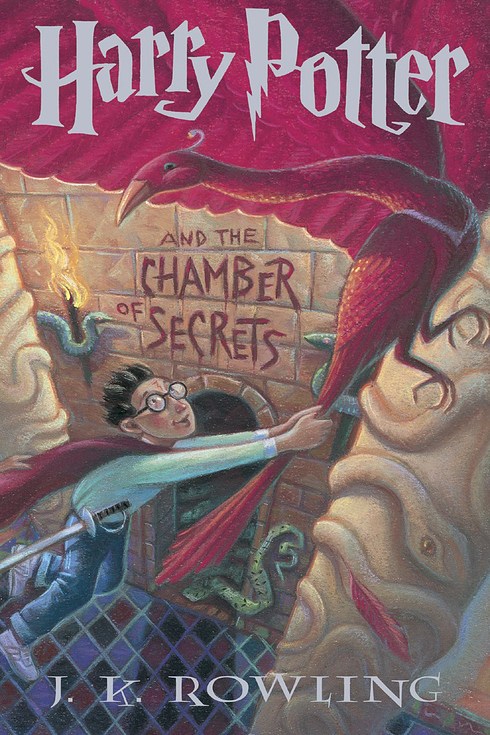
97. Harry Potter and the Chamber of Secrets


97. Harry Potter and the Chamber of Secrets (Harry Potter #2) J.K. Rowling. 1998. 341 pages. [Source: Library] [4 stars]

First sentence: Not for the first time, an argument had broken out over breakfast at number four, Privet Drive. Mr. Vernon Dursley had been woken in the early hours of the morning by a loud, hooting noise from his nephew Harry's room. 

 ETA: This is my third time to read Chamber of Secrets. It was my first time to listen to it on audio. I listened to the Stephen Fry narration. He was a WONDERFUL narrator. Now that I'm reading the series for the third times, certain scenes are standing out to me helping me to remember/distinguish between books.

Premise/plot: Harry Potter is being held captive by his aunt and uncle. He's "forbidden" to continue his studies at Hogwarts. For better or worse, he's "rescued" via flying car driven by a Weasley sibling. [This scene where he's passing all his stuff through the window to a waiting car reminded me of a scene where someone is escaping a cult]. After a lovely time with the Weasleys, time at last to buy supplies for school and head off for Hogwarts for their second year. But...Ron and Harry miss the train. For better or worse, flying car to the "rescue." These two cause quite the disturbance on their way to school....

Ginny Weasley, Harry Potter's biggest fan???, is joining her big brother at Hogwarts.

This school year has its ups and downs. A 'monster' from a secret chamber is terrorizing students and staff. No one knows for sure who is responsible--though Hermione, Harry, and Ron have their suspicions. (But I don't think any of them guessed accurately...)

My thoughts: I definitely enjoyed this one. More than the first book? Maybe. Maybe not. Sometimes. Here's the thing if you're already bonded with the characters, the hard work is mostly done. It is a matter of which story elements you enjoyed more. I truly did love some scenes in this one. But I'm sticking with my original four star rating.


© 2025 Becky Laney of Becky's Book Reviews

Monday, July 07, 2025

69. Shipwreck at the Bottom of the World


69. Shipwreck at the Bottom of the World: The Extraordinary True Story of Shackleton and the Endurance. Jennifer Armstrong. 1998. Random House. 144 pages. [Source: Library] [5 stars, nonfiction, history, biography, adventure, South Pole, survival, AUDIOBOOK]

First sentence: Just imagine yourself in the most hostile place on earth. It's not the Sahara or the Gobi Desert. It's not the Arctic. The most hostile place on earth is the Antarctic, the location of the South Pole--what's the difference? The Arctic is mostly water--with ice on top, of course--and that ice is never more than a few feet thick. But under the South Pole lies a continent that supports glaciers up to two miles in depth. Almost the entire southern continent is covered by ice. The mammoth icecap presses down so heavily that it actually distorts the shape of the earth. The ice never melts; it clings to the bottom of the world, spawning winds, storms, and weather that affect the whole planet.

I have read Jennifer Armstrong's Shipwreck at the Bottom of the World six or seven times now. (Most recently in February 2025). The narrative is so strong and compelling, and, yes, even inspiring. It is definitely one of my favorite nonfiction books. And nonfiction isn't something I usually take the time to reread. It is rare for me to keep coming back again and again to a nonfiction book.

Originally published in 1998, Shipwreck at the Bottom of the World won the Orbis Pictus Award in 1999. The book follows "the extraordinary true story of Shackleton and the Endurance." If you are unfamiliar with this story, then you really SHOULD read this one. It is a great introduction to the subject. Chapter by chapter, the book follows Shackleton and his men on their journey to Antarctica. Almost from the start, there are indicators that their goal, their quest, will not be an easy one to achieve. After a series of mishaps--thanks to nature--it becomes a long fight to survive. 


 The story is simple and yet dramatic. I think the story would be gripping no matter who told it. But I do think that Jennifer Armstrong did a wonderful job in painting a very human picture of Shackleton and his crew. I think the ending was beautiful--very moving! This one is a book I think everyone should read. 

My most recent read--July 2025--was by audio book. The story is compelling as a traditional read, but as an audio read, I felt that it was even more compelling. It resonated more with me as an audio book. The events of the book are truly horrifying and amazing. Horrifying in the amount of hardship and struggle and uncertainty and pain and anguish. Amazing in the fact that ALL the men survived. 


© 2025 Becky Laney of Becky's Book Reviews

Tuesday, March 18, 2025

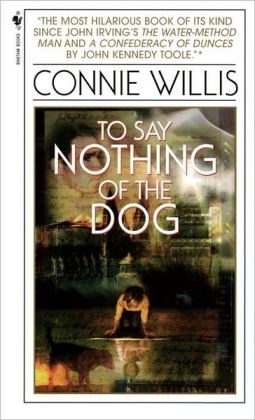
26. To Say Nothing of the Dog


26. To Say Nothing of the Dog. (Oxford Time Travel #2) Connie Willis. 1998. 512 pages. [Source: Bought]

First sentence: There were five of us--Carruthers and the new recruit and myself, and Mr. Spivens and the verger. It was late afternoon on November the fifteenth, and we were in what was left of Coventry Cathedral, looking for the bishop's bird stump. Or at any rate I was. 

Premise/plot: Ned Henry narrates the novel. And he does a great job. When we first meet him, he's suffering from time-lag. He's spent too much time--of late--jumping through time. He's not alone. There is someone doing her very, very best to drive EVERYONE in his department crazy. Lady Schrapnell is a woman on a mission--a RICH woman on a mission. And she won't take no for an answer. If Lady Schrapnell volunteers you for a job, well, you stay volunteered until the job is done to her satisfaction. And what does Lady Schrapnell want most of all? The bishop's bird stump. Her project is the rebuilding of Coventry Cathedral--a cathedral destroyed/damaged during World War II. And she HAS to know if the bishop's bird stump was still in the church during the raid. She needs to know if it should be replicated as part of the 'restoration.' So Ned Henry is just one of dozens looking IN THE PAST for the answers as to what happened to the bishop's bird stump.

But that 'mission' becomes almost secondary....when it is 'discovered' that there's been an incongruity. At first they think it's simple, it's easily fixed. One of the time travelers interfered when she shouldn't. But. They'll just send another time traveler to fix that interference, and things should go smoothly. But since the time traveler they send is Ned Henry, since he's suffering from exhaustion and time-lag, since he barely heard his instructions, since he jumped into the Net to avoid being discovered by an angry Lady Schrapnell, nothing is simple. What Ned Henry soon realizes is that his arrival in June 1888 has changed things. His arrival has kept two people from meeting (and subsequently falling in love and marrying), and that's just the start.

But he isn't the only one in the past. He isn't the only time-traveler working to restore things. Verity Kindle. The beautiful Verity Kindle has a role to play as well....

Verity Kindle is the heroine of To Say Nothing of the Dog. She is on a mission of her own. While Ned Henry was given the assignment of finding out the whereabouts of the bishop's bird stump, Verity's assignment is to read Tocelyn's diary. The diary is available to read in the future. But the most relevant pages to the Coventry Cathedral project were damaged. So she's been sent to the oh-so-important summer of 1888 to read the newly written diary entries. She's having about as much success as Ned Henry. In other words, not much luck at all! These two work together as best they can. Verity manages to travel back and forth a few times to the future. Their mission--as they see it has changed a bit. They worry that they've damaged the future and that something horrible may happen as a result. Like Tocelyn, they know, was supposed to marry a "Mr. C". They know this for a fact from future diary entries. Yet here they are and she's engaged to someone else! Their "new mission" is to find the identity of "Mr. C." and make sure they meet when they're supposed to meet....

My thoughts: Read this book. That's all I have to say about that. No, not really. I have plenty to say about this one. But I don't think my review will be able to do this one justice. What is To Say Nothing of the Dog? It's a funny sci-fi mystery with a smidgen of romance.

I have a weakness for time travel. I do. And this one is a great example of a time-traveling sci-fi novel that just works really well. It's smart. It's funny. 

I loved this one. I have always loved this one. It is a delightful time travel novel. I love the humor! I do! It's so very, very funny! And I love the details and the dialogue. This one is just a joy cover to cover!

Quotes:

2 Quotes About the bishop's bird stump:

"Perhaps it was removed for safekeeping," he said, looking at the windows. "Like the east windows."
"The bishop's bird stump?" I said incredulously. "Are you joking?"
"You're right," he said. "It isn't the sort of thing you'd want to keep from being blown up. Victorian art!" He shuddered. (7)

I must be getting light-headed from lack of sleep. No one, even badly shell-shocked, would steal it. Or buy it at a jumble sale. This was the bishop's bird stump. Even the munitions scrap iron drive would turn it down. Unless of course someone recognized its potential as a psychological weapon against the Nazis. (12)

About time-lag:

One of the first symptoms of time-lag is a tendency to maudlin sentimentality, like an Irishman in his cups or a Victorian poet cold-sober. (9)

And isn't this the truth:

There is nothing more helpful than shouted instructions, particularly incomprehensible ones. (153)

Verity Kindle on mystery novels:
"Of course they're usually about murder, not robbery, but they always take place in a country house like this, and the butler did it, at least for the first hundred mystery novels or so. Everyone's a suspect, and it's always the least likely person, and after the first hundred or so, the butler wasn't anymore--the least likely person, I mean--so they had to switch to unlikely criminals. You know, the harmless old lady or the vicar's devoted wife, that sort of thing, but it didn't take the reader long to catch on to that, and they had to resort to having the detective be the murderer, and the narrator, even though that had already been done in The Moonstone. The hero did it, only he didn't know it. He was sleepwalking, in his nightshirt, which was rather racy stuff for Victorian times, and the crime was always unbelievably complicated. In mystery novels. I mean, nobody ever ever just grabs the vase and runs, or shoots somebody in a fit of temper, and at the very end, when you think you've got it all figured out, there's one last plot-twist, and the crime's always very carefully thought out, with disguises and alibis and railway timetables and they have to include a diagram of the house in the frontispiece, showing everyone's bedroom and the library, which is where the body always is, and all the connecting doors, and even then you don't have a prayer of figuring it out, which is why they have to bring in a world-famous detective--"
"Who solves it with little gray cells?" I said.
"Yes. Hercule Poirot, that's Agatha Christie's detective, and he says it isn't at all necessary to go running about measuring footprints and picking up cigarette ends to solve mysteries like Sherlock Holmes. That's Arthur Conan Doyle's detective--"
"I know who Sherlock Holmes is." (205)


Well, it wasn't exactly the ending of an Agatha Christie mystery, with Hercule Poirot gathering everyone together in the drawing room to reveal the murderer and impress everyone with his astonishing deductive powers. And it definitely wasn't a Dorothy Sayers, with the detective hero saying to his heroine sidekick, "I say, we make a jolly good detectin' team. How about makin' the partnership permanent, eh, what?" and then proposing in Latin. (431)
Verity and Ned:

She peered at me. "It isn't fair, you know."
"What isn't?" I said warily.
"Your boater. It makes you look just like Lord Peter Wimsey, especially when you tilt it forward like that." (254)

"The first time I ever saw you, I thought, he looks just like Lord Peter Wimsey. You were wearing the boater and--no, that wasn't the first time," she said accusingly. "The first time was in Mr. Dunworthy's office, and you were all covered in soot. You were still adorable, though, even if your mouth was hanging open." (254)

"Lord Peter took a nap," she said. "Harriet watched him sleep, and that's when she knew she was in love with him."
She sat up again. "Of course, I knew it from the second page of Strong Poison, but it took two more books for Harriet to figure it out. She kept telling herself it was all just detecting and deciphering codes and solving mysteries together, but I knew she was in love with him. He proposed in Latin. Under a bridge. After they solved the mystery. You can't propose till after you've solved the mystery. That's a law in detective novels."
She sighed. "It's too bad. 'Placetne, magistra?' he said when he proposed, and then she said, 'Placet.' That's a fancy Oxford don way of saying yes. I had to look it up. I hate it when people use Latin and don't tell you what they mean..." (259)


© 2025 Becky Laney of Becky's Book Reviews

Wednesday, February 05, 2025

13. Shipwreck at the Bottom of the World


13. Shipwreck at the Bottom of the World: The Extraordinary True Story of Shackleton and the Endurance. Jennifer Armstrong. 1998. Random House. 144 pages. [Source: Library] [5 stars, nonfiction, history, biography, adventure, South Pole, survival]

Just imagine yourself in the most hostile place on earth. It's not the Sahara or the Gobi Desert. It's not the Arctic. The most hostile place on earth is the Antarctic, the location of the South Pole--what's the difference? The Arctic is mostly water--with ice on top, of course--and that ice is never more than a few feet thick. But under the South Pole lies a continent that supports glaciers up to two miles in depth. Almost the entire southern continent is covered by ice. The mammoth icecap presses down so heavily that it actually distorts the shape of the earth. The ice never melts; it clings to the bottom of the world, spawning winds, storms, and weather that affect the whole planet.

I have read Jennifer Armstrong's Shipwreck at the Bottom of the World five or six times now. (Most recently in 2022). The narrative is so strong and compelling, and, yes, even inspiring. It is definitely one of my favorite nonfiction books. And nonfiction isn't something I usually take the time to reread. It is rare for me to keep coming back again and again to a nonfiction book.

Originally published in 1998, Shipwreck at the Bottom of the World won the Orbis Pictus Award in 1999. The book follows "the extraordinary true story of Shackleton and the Endurance." If you are unfamiliar with this story, then you really SHOULD read this one. It is a great introduction to the subject. Chapter by chapter, the book follows Shackleton and his men on their journey to Antarctica. Almost from the start, there are indicators that their goal, their quest, will not be an easy one to achieve. After a series of mishaps--thanks to nature--it becomes a long fight to survive. 


 The story is simple and yet dramatic. I think the story would be gripping no matter who told it. But I do think that Jennifer Armstrong did a wonderful job in painting a very human picture of Shackleton and his crew. I think the ending was beautiful--very moving! This one is a book I think everyone should read. 


© 2025 Becky Laney of Becky's Book Reviews

Thursday, August 15, 2024

60. Harry Potter and the Chamber of Secrets

Harry Potter and the Chamber of Secrets (Harry Potter #2) J.K. Rowling. 1998. 341 pages. [Source: Library] [4 stars]

First sentence: Not for the first time, an argument had broken out over breakfast at number four, Privet Drive. Mr. Vernon Dursley had been woken in the early hours of the morning by a loud, hooting noise from his nephew Harry's room. 

 ETA: This is my second time to read Chamber of Secrets. I enjoyed it more the second time around. I definitely am already attached to many of the characters. 

Premise/plot: Harry Potter is being held captive by his aunt and uncle. He's "forbidden" to continue his studies at Hogwarts. For better or worse, he's "rescued" via flying car driven by a Weasley sibling. [This scene where he's passing all his stuff through the window to a waiting car reminded me of a scene where someone is escaping a cult]. After a lovely time with the Weasleys, time at last to buy supplies for school and head off for Hogwarts for their second year. But...Ron and Harry miss the train. For better or worse, flying car to the "rescue." These two cause quite the disturbance on their way to school....

Ginny Weasley, Harry Potter's biggest fan???, is joining her big brother at Hogwarts.

This school year has its ups and downs. A 'monster' from a secret chamber is terrorizing students and staff. No one knows for sure who is responsible--though Hermione, Harry, and Ron have their suspicions. (But I don't think any of them guessed accurately...)

My thoughts: I enjoyed this one more than the first book. I enjoyed the mystery. I enjoyed the ghosts. I enjoyed the reveals of character's backstories. It was packed with action. It didn't seem so info-dumpy.


© 2024 Becky Laney of Becky's Book Reviews

Wednesday, March 01, 2023

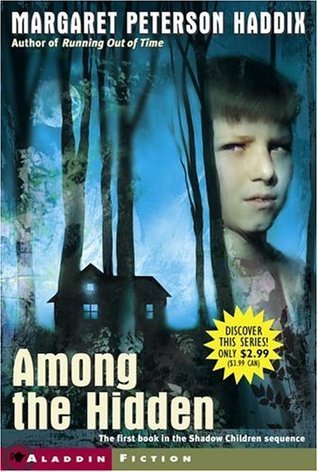
47. Among the Hidden


Among the Hidden. Margaret Peterson Haddix. 1998. 153 pages. [Source: Library]

First sentence: He saw the first tree shudder and fall, far off in the distance. Then he heard his mother call out the kitchen window: "Luke! Inside. Now." He had never disobeyed the order to hide. 

ETA: I really love, love, love Margaret Peterson Haddix. I enjoy rereading her books every now and then. I don't know that my library still has in its collection the whole series. But I'm going to try to read more of her books (again, again) this year.

Premise/plot: Among the Hidden is the first book in Margaret Peterson Haddix's fast-paced futuristic middle grade series. Luke Garner is a shadow child, an illegal third child; his parents are farmers in a rural community which gave him small doses of freedom--if freedom means breathing fresh air outside--now and then. But when the woods around his house are bulldozed to make room for more houses--or apartments--even that small bit of liberty is lost. Luke "lives" his life in the attic and on the stairs. His family fears the Population Police so much that they don't even allow Luke to eat with them in the kitchen. Things seem to be getting progressively worse; so much so that his mother decides to get a job--in a factory, I believe--leaving Luke alone in the house. One day Luke notices that one of the neighbor's has his lights on when no one is supposed to be home. Then he sees a face; could Luke have found another hidden child? Could this child be his friend? Only if Luke dares to disobey his parents and go outside. Is there life outside the attic?

My thoughts: I remember discovering this series a few years after I first started blogging. It was LOVE. I remember that it was winter. While I had the first two or three checked out at the same time, I finished them all in one day and a snowstorm kept me from getting the rest of the series right when I wanted them, no, NEEDED them. Long story short, CHECK OUT ALL THE TITLES AT ONCE. That's my advice to you. I found the series to be fast-paced, compelling, thoughtful. I really loved Luke and his new friend, Jen.


© 2023 Becky Laney of Becky's Book Reviews

Wednesday, February 08, 2023

27. Harry Potter and the Chamber of Secrets


Harry Potter and the Chamber of Secrets (Harry Potter #2) J.K. Rowling. 1998. 341 pages. [Source: Library]

First sentence: Not for the first time, an argument had broken out over breakfast at number four, Privet Drive. Mr. Vernon Dursley had been woken in the early hours of the morning by a loud, hooting noise from his nephew Harry's room. 

Premise/plot: Harry Potter is being held captive by his aunt and uncle. He's "forbidden" to continue his studies at Hogwarts. For better or worse, he's "rescued" via flying car driven by a Weasley sibling. [This scene where he's passing all his stuff through the window to a waiting car reminded me of a scene where someone is escaping a cult]. After a lovely time with the Weasleys, time at last to buy supplies for school and head off for Hogwarts for their second year. But...Ron and Harry miss the train. For better or worse, flying car to the "rescue." These two cause quite the disturbance on their way to school....

Ginny Weasley, Harry Potter's biggest fan???, is joining her big brother at Hogwarts.

This school year has its ups and downs. A 'monster' from a secret chamber is terrorizing students and staff. No one knows for sure who is responsible--though Hermione, Harry, and Ron have their suspicions. (But I don't think any of them guessed accurately...)

My thoughts: I enjoyed this one more than the first book. I enjoyed the mystery. I enjoyed the ghosts. I enjoyed the reveals of character's backstories. It was packed with action. It didn't seem so info-dumpy.


© 2023 Becky Laney of Becky's Book Reviews

Sunday, December 18, 2022

180. Can This Be Christmas?


 Can This Be Christmas? Debbie Macomber. 1998. 91 pages. [Source: Library]

First sentence: A robust version of "Little Drummer Boy" played in the background as Len Dawber glanced at his watch--for at least the tenth time in five minutes.

Premise/plot: Can This Be Christmas is a short holiday-themed novella by Debbie Macomber. A group of [restless] passengers are stranded at a depot [train, I believe] on Christmas Eve. No one is where they want to be. Most--though not all--are separated from family and loved ones. All are in different stages in life. 

Can these strangers find the 'true' meaning of Christmas?

My thoughts: It was short and sweet. It is not a romance. [Though a few passengers are in relationships.] Because Can This Be Christmas is packaged as a bonus story in longer collections that are romances, your expectations might be different. In fact, I believe GoodReads has MIXED all reviews of Can This Be Christmas with the reviews of her new novel A Perfect Christmas which has Can This Be Christmas as a bonus story. This is probably doing neither book any favors. But it is especially unfair to readers who are confused and trying to make up their minds whether to read it! 

This is a general "feel-good" comfy-cozy Christmas novella. There are MANY characters and MANY stories. It is set over the course of one day and night--Christmas Eve/Christmas. It reminded me of a L.M. Montgomery short story I read once.

© 2022 Becky Laney of Becky's Book Reviews

Sunday, March 20, 2022

37. Shipwreck at the Bottom of the Sea


Shipwreck at the Bottom of the World: The Extraordinary True Story of Shackleton and the Endurance. Jennifer Armstrong. 1998. Random House. 144 pages. [Source: Library]

Just imagine yourself in the most hostile place on earth. It's not the Sahara or the Gobi Desert. It's not the Arctic. The most hostile place on earth is the Antarctic, the location of the South Pole--what's the difference? The Arctic is mostly water--with ice on top, of course--and that ice is never more than a few feet thick. But under the South Pole lies a continent that supports glaciers up to two miles in depth. Almost the entire southern continent is covered by ice. The mammoth icecap presses down so heavily that it actually distorts the shape of the earth. The ice never melts; it clings to the bottom of the world, spawning winds, storms, and weather that affect the whole planet.

I have read Jennifer Armstrong's Shipwreck at the Bottom of the World four or five times now. The narrative is so strong and compelling, and, yes, even inspiring. It is definitely one of my favorite nonfiction books. And nonfiction isn't something I usually take the time to reread. It is rare for me to keep coming back again and again to a nonfiction book.

Originally published in 1998, Shipwreck at the Bottom of the World won the Orbis Pictus Award in 1999. The book follows "the extraordinary true story of Shackleton and the Endurance." If you are unfamiliar with this story, then you really SHOULD read this one. It is a great introduction to the subject. Chapter by chapter, the book follows Shackleton and his men on their journey to Antarctica. Almost from the start, there are indicators that their goal, their quest, will not be an easy one to achieve. After a series of mishaps--thanks to nature--it becomes a long fight to survive. 


 The story is simple and yet dramatic. I think the story would be gripping no matter who told it. But I do think that Jennifer Armstrong did a wonderful job in painting a very human picture of Shackleton and his crew. I think the ending was beautiful--very moving! This one is a book I think everyone should read. 


© 2022 Becky Laney of Becky's Book Reviews

Monday, January 24, 2022

13. Big Fish


Big Fish. Daniel Wallace. 1998. 192 pages. [Source: Library]

First sentence: On one of our last car trips, near the end of my father's life as a man, we stopped by a river, and we took a walk to its banks, where we sat in the shade of an old oak tree.

Premise/plot: William Bloom seeks to make the most of his last opportunity to get to know his father--really, truly, honestly--in Daniel Wallace's Big Fish. Edward Bloom is a storyteller, a lover of jokes; he has a story (and then some) for every single occasion. It doesn't matter if everyone has heard them hundreds of times--he LOVES to tell stories. But, William Wallace feels like his father is mostly a stranger. His tales about his own life--Edward's tales about his own life--well they sound more like tall tales (epic exaggerations) than truth. Can William peel back the layers of his father's stories to find the real man? Does he even want to when all is said and done?

My thoughts: I love, love, love, love, love the movie. I do. I discovered it late--only last year--but I have seen it three or four times now and I just love it. It is fantastical, strange, bizarre, and ultimately satisfying. The book and film are quite different. The tall tales are there, but they are different. The book spins tales that the movie doesn't have; the movie spins tales that the book doesn't have. I think the spirit of the book is captured in the film. But the book is perhaps even more ambiguous than the film.

I found the movie to be more satisfying than the book. That being said, the book is definitely readable. It is a quick read--a literary read. It is a blend of tall tales and more serious chapters. There are four chapters titled 'My Father's Death.' These are chapters where William seems to be preparing himself mentally, emotionally, spiritually, to handle the inevitable death of his father. He's imagining how it will play out.


© 2022 Becky Laney of Becky's Book Reviews

Tuesday, June 05, 2018

Ethel and Ernest

Ethel and Ernest. Raymond Briggs. 1998. 104 pages. [Source: Library]

First sentence: Monday 1928. Tuesday. Wednesday. Ethel! For heaven's sake! Where ARE you? Coming Madam. Thursday. ETHEL! Friday. Saturday. How about coming to the pictures with me?

Premise/plot: Ethel and Ernest is a biographical graphic novel based on the author's own parents. It begins with their courtship in 1928 and ends with their deaths in 1971. Their courtship serves as a prologue. The novel is then broken down into decades: 1930 to 1940, 1940 to 1950, 1950 to 1960, 1960 to 1970, 1970 to 1971.
It is set in London, for the most part, with brief interludes in the countryside.

My thoughts: I recently watched the film adaptation of Ethel and Ernest. It was LOVELY, absolutely lovely. The film was intense and sweet. I don't mean just intensely sweet. It was dramatic but not melodramatic--at least not most of the time. When it ventured there--it was for humor. The book is essentially the same as the film. The film kept to the novel almost word for word most of the time with a few teeny-tiny changes here and there.

Ethel marries late in life--mid-thirties--and she desperately wants a child. You can feel her heartache as she cries out her frustration to her husband. You can feel her joy when she tells him her happy news a couple of scenes later. You can feel his heartache a couple of minutes later when the doctor tells him that that baby had better be the last--Ethel almost didn't make it. (Of course, a few minutes screen time can cover months--if not years.)

One of the melodramatic moments is when Ethel is having a hysterical fit after having her son's hair cut for the first time. It is something that doesn't become FUNNY funny until later in the film--the book. She's broken down when he's a toddler when he's given a short haircut, his curls are GONE. As he grow up--particularly as a teen boy and a young adult, she breaks down multiple times because of his long hair. She wants him to get a hair cut; she wants to see him with short, neat hair. She's always, always, always pushing a comb at him.

Providing drama for two sections of the novel at least are European tensions, the threat of war, and WAR itself. Ethel isn't one for paying attention to world politics UNTIL it invades her home. When the call to evacuate the children of London comes--it hits her hard. It hits both of them hard. One mustn't think that because Ernest doesn't cry--blubber like Ethel, if you will--that he doesn't feel things. Raymond goes off to the country. And the two are left behind with their world literally exploding around them.

The book doesn't just celebrate the BIG moments of life, but the little, everyday ordinary moments of life. The moments that you hardly think worth noting, worth appreciating. It is also great at capturing the little gestures of life. The little things Ernest does for Ethel and Ethel does for Ernest. The little things that glue this couple together in good times and bad. I think it is realistic in that aspect. Neither Ethel or Ernest are perfectly-perfect saints without any quirks or flaws. Ethel is Ethel; Ernest is Ernest; they grow together.

Though it's written by the son, I think he truly tries to keep the point of view of his parents.

The ending--particularly in the film watching it the first time--is crushing emotionally. Not because it's about manipulation but because it's honest and raw.

I think it would be fitting to end with the lyrics of Is It Already Time? I am familiar with the George Strait version. It was written by Aaron Gayle Barker.
The years have been so good to you and I my friend
They brought us to the Autumn wind and left the tears behind
And who'd have dreamed that love could grow so endlessly
And you'd have meant so much to me, is it already time?
And I will always love you so
We'll hold each other close until it's time to go
And we believed we had forever on our side
Is it already time?
And I will always love you so
We'll hold each other close until it's time to go
And we believed we had forever on our side
Is it already time?
And we believed we had forever on our side
Is it already time?

© 2018 Becky Laney of Becky's Book Reviews

Wednesday, October 11, 2017

Among the Hidden

Among the Hidden. Margaret Peterson Haddix. 1998. 153 pages. [Source: Library]

First sentence: He saw the first tree shudder and fall, far off in the distance. Then he heard his mother call out the kitchen window: "Luke! Inside. Now." He had never disobeyed the order to hide.

Premise/plot: Among the Hidden is the first book in Margaret Peterson Haddix's fast-paced futuristic middle grade series. Luke Garner is a shadow child, an illegal third child; his parents are farmers in a rural community which gave him small doses of freedom--if freedom means breathing fresh air outside--now and then. But when the woods around his house are bulldozed to make room for more houses--or apartments--even that small bit of liberty is lost. Luke "lives" his life in the attic and on the stairs. His family fears the Population Police so much that they don't even allow Luke to eat with them in the kitchen. Things seem to be getting progressively worse; so much so that his mother decides to get a job--in a factory, I believe--leaving Luke alone in the house. One day Luke notices that one of the neighbor's has his lights on when no one is supposed to be home. Then he sees a face; could Luke have found another hidden child? Could this child be his friend? Only if Luke dares to disobey his parents and go outside. Is there life outside the attic?

My thoughts: I remember discovering this series a few years after I first started blogging. It was LOVE. I remember that it was winter. While I had the first two or three checked out at the same time, I finished them all in one day and a snowstorm kept me from getting the rest of the series right when I wanted them, no, NEEDED them. Long story short, CHECK OUT ALL THE TITLES AT ONCE. That's my advice to you. I found the series to be fast-paced, compelling, thoughtful. I really loved Luke and his new friend, Jen.

© 2017 Becky Laney of Becky's Book Reviews

Saturday, May 20, 2017

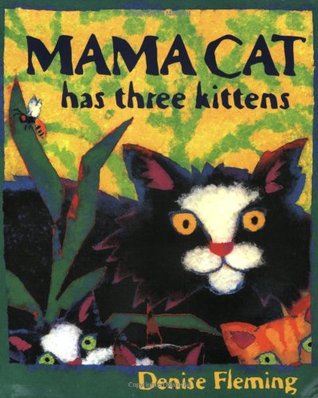
Mama Cat Has Three Kittens

Mama Cat Has Three Kittens. Denise Fleming. 1998. 32 pages. [Source: Library]

First sentence: Mama Cat has three kittens, Fluffy, Skinny, and Boris. When Mama Cat washes her paws, Fluffy and Skinny wash their paws. Boris naps. When Mama Cat walks the stone wall, Fluffy and Skinny walk the stone wall. Boris naps.

Premise/plot: Mama Cat has three kittens. Fluffy and Skinny copy their mother; they excel at their kitty education--their kitten academy. Boris, well, he's BORIS. He excels in one subject: NAPPING. Perhaps with a minor in STEALING THE SHOW.

My thoughts: I LOVED, LOVED, LOVED this one. I like all the cats, but, Boris has the last say! I would definitely recommend this one for parents to share with their little ones. I think cat lovers of all ages can appreciate it.

Text: 5 out of 5
Illustrations: 4 out of 5
Total: 9 out of 10


© 2017 Becky Laney of Becky's Book Reviews

Monday, December 26, 2016

Identifying Barbie Dolls

Identifying Barbie Dolls. Janine Fennick. 1998. 80 pages. [Source: Bought]

First sentence: Collecting Barbie dolls is one of the most popular hobbies today.

Premise/plot: Janine Fennick's book is a nonfiction guide for adults (primarily) about collecting Barbie dolls and caring for your doll collection. She essentially divides Barbie dolls into three categories. (The book was published in 1998; I'd argue there needs to be a fourth category). Her categories are: "The Ponytail Era" (1959-1966), "The Mod Era" (1967-1972), and "The Collectible Era" (1973-present).

The first fifteen pages essentially act as an introduction to doll collecting itself. The remaining three chapters focus on a specific era of doll production.

The writing is both technical and practical. A fun, swinging narrative it is not. If you want to know the difference between a #1 Ponytail and a #2 Ponytail (the first two dolls) this book will tell you ALL you need to know. If you want to know what year Midge got bendable legs, this book is for you.

My thoughts: I'll be honest, though she discusses all three eras, the author's bias for the first two eras is obvious. I wouldn't mind knowing what she thinks of the current state of Barbie. (I am disappointed not with the Fashionista line, but, with the other offerings. Almost all Barbies produced in the past five to seven years have the exact same face, almost the exact same makeup, almost the exact same hair. There is no point anymore to buying *more* dolls. To have two or three dolls with the same face is one thing. Twins! Triplets! But to have sixteen? That's just CREEPY. Instead of buying more dolls, you'd almost be better off just buying fashion accessories. But clothes can be very taste specific. (I always LOVED, LOVED, LOVED sewing my own Barbie clothes. In fact it's probably the number one thing I miss about playing with Barbies.) I miss the 80s and 90s. Yes, the author doesn't really see the point of it all. But I did and do.

Probably the biggest strength of this book is the use of COLOR photographs. So many dolls, so many fashions shared in FULL color. Some of the Barbie biographies (for lack of a better word) just have black and white photographs. Yes, the narrative might be more entertaining. But it's the PICTURES OF BARBIE that makes you want to keep flipping through the pages.

I should also note that I am and always will be a believer that Barbie is meant to be played with and loved. This view puts me at slight odds with the strict collector looking for everything to be in a never been opened box.

© 2016 Becky Laney of Becky's Book Reviews

Tuesday, December 13, 2016

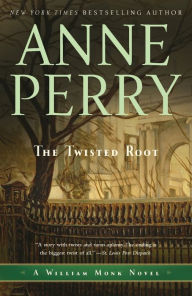
The Twisted Root

The Twisted Root. Anne Perry. (William Monk #10) 1998. 368 pages. [Source: Bought]

First sentence: The young man stood in the doorway, his face pale, his fingers clenched on his hat, twisting it around and around.

Premise/plot: William Monk is hired by Lucius Stourbridge to find his missing fiancée, Miriam Gardner. She disappeared during a garden party without a word. Monk, newly married, takes the case. As he begins work on the case, he stumbles onto a murder case that might just prove relevant to his missing person case. Sergeant Robb has found the body of a coachman. Robb soon is eager to find Miriam too, her probably being the last to see him alive. Meanwhile Hester is not staying at home doing nothing. She is fighting for reform and change in the hospital community. She has noticed that someone has been stealing medicine from the hospital where she volunteers. It turns out the thief has a heart of gold and is a kindred spirit when it comes to caring and nursing veterans.

As so often is the case in Perry's novels, Monk, Hester, and Rathbone's paths and stories all cross. This one definitely has a twist ending.

My thoughts: I really am liking the series again. Silent Cry seems to have been the low point for me. I am glad that Monk and Hester have wed, and equally glad that not any time is devoted to their physical intimacy in the bedroom. I was very, very happy to get one scene between Rathbone and his dad!

© 2016 Becky Laney of Becky's Book Reviews

Monday, October 31, 2016

The Silent Cry

The Silent Cry. Anne Perry. 1998. 368 pages. [Source: Bought]

First sentence: John Evan stood shivering as the January wind whipped down the alley.

Premise/plot: The Silent Cry is the eighth book in the William Monk mystery series by Anne Perry. (Perry has two ongoing Victorian mystery series.) While some books in the series have been disturbing and violent, this one seems even more so. Think of it as historical Law and Order SVU.

My thoughts: What can I say about the crime(s)? Honestly, I hated that aspect of this one. I will just add that it's best you don't accidentally--or purposefully--sneak a peek at the ending. In the case of this book, if you do it will ruin the entire book for you (like it did for me) and you will spend the entire book SCREAMING at the characters. That is if you keep the book in hand at all. In fact, it took me months to pick this one back up. I had been obsessively reading through one or two of Perry's books a month. Until this one. And I found myself not wanting to go on. I wanted to start the next book in the series. Part of me, was, WHAT IF SOMETHING HAPPENS IN THIS BOOK TO MOVE THE HESTER/MONK STORY LINE FORWARD? WHAT IF SOMETHING IMPORTANT HAPPENS IN ONE OF THE KEY RELATIONSHIPS OF THE SERIES. Rathbone and Hester, Hester and Monk, Monk and Rathbone. What if Monk gets a few new memories back and I miss it? So I *made* myself push forward into uncomfortable territory.

I will say this. I think it probably would have been safe to skip this one after all. WITH the exception that we do get one or two lovely scenes between Hester and Rathbone!!!

© 2016 Becky Laney of Becky's Book Reviews

Saturday, December 19, 2015

Seuss on Saturday #51

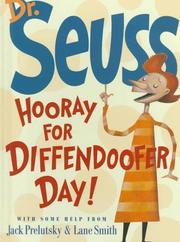
Hooray for Diffendoofer Day! Dr. Seuss and Jack Prelutsky. Illustrated by Lane Smith. 1998. Random House. 64 pages. [Source: Library]

First sentence:
I've always lived in Dinkerville,
My friends all live here too.
We go to Diffendoofer School--
We're happy that we do.
Premise/plot: Diffendoofer School is different from other schools. The teachers teach their students to think. And the teachers are all unique and have their own way of teaching and celebrating knowledge. But one day, the school is threatened by a TEST. If their students don't do well on the test, then, the students will have to go to other schools. Will the students do well on the test? Even if they haven't spent time especially preparing for it?

My thoughts: I liked it. I wish I knew how much of the text was by Dr. Seuss and how much was by Jack Prelutsky. The art is certainly different and unique and complements the text quite nicely.

Have you read Hooray for Diffendoofer Day? Did you like it? love it? hate it? I'd love to know what you thought of it! 

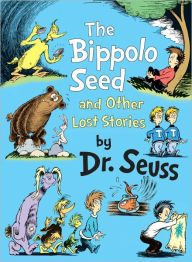
The Bippolo Seed and Other Lost Stories. Dr. Seuss. 2011. Random House. 72 pages. [Source: Library]

The Bippolo Seed and Other Lost Stories contains seven "lost" stories by Dr. Seuss. They include: "The Bippolo Seed," "The Rabbit, the Bear, and the Zinniga-Zanniga," "Gustav, The Goldfish," "Tadd and Todd," "Steak for Supper," "The Strange Shirt Spot," and "The Great Henry McBride." All stories were originally published in magazines in the 1950s.

The Bippolo Seed
First sentence:
One bright sunny day, a young duck named McKluck
Had a wonderful, wonderful piece of good luck.
He was walking along when he spied on the ground
A marvelous thing that is quite seldom found.
Premise/plot: A duck finds a magical bippolo seed, but, unfortunately is led astray by a cat. The bippolo seed grants wishes when planted, but, the cat is strongly encouraging the duck to wish for more and more and more. Nothing good ever comes from such greediness, and such is the case here...

My thoughts: I liked it. I did. It didn't wow me with this is the best story ever. But it was good.

The Rabbit, the Bear, and the Zinniga-Zanniga
First sentence:
Once of upon of a time, way down south,
Lived a very big bear with a very big mouth
And very big teeth in his very big jaws
And very big claws in his very big paws.
Premise/plot: Can a rabbit outsmart a bear?

My thoughts: It didn't make the best first impression on me. But once the story really got started, once the rabbit started talking--quick-talking--it improved. I still can't say I loved, loved, loved it. But it was a nice enough story.

Gustav, The Goldfish
First sentence:
The man who sold Gustav the Goldfish to us
Had warned us, "Take care! When you feed this small cuss
Just feed him a spot. If you feed him a lot,
Then something might happen! It's hard to say what."
Premise/plot: What do you think might happen if you feed a fish too much?!

My thoughts: I really love A Fish Out of Water. Seuss's story came first, of course. Seuss's story rhymes. I don't know which is the "better" of the two. Because one is super-familiar to me, and the other is not.

Tadd and Todd
First sentence:
One twin was named Tadd
And one twin was named Todd.
And they were alike
As two peas in a pod.
Premise/plot: Do both twins like being "as two peas in a pod"? Maybe. Maybe not.

My thoughts: It was okay. I didn't especially dislike it. I just wasn't especially impressed either.

Steak for Supper
First sentence:
When I'm all by myself and there isn't a crowd,
I guess that I sometimes get thinking-out-loud.
Premise/plot: Do you know the consequences of bragging? Read Steak for Supper and find out!

My thoughts: I enjoyed this one. I did. It was very silly and fun. When a boy happens to "think out loud" that his family always has steaks for supper every Saturday night, someone--an Ikka--starts following him. The Ikka is soon joined by others--all with fanciful names, of course. They are all super-excited by the thought of eating STEAK. What will his parents think when they all arrive home?!

The Strange Shirt Spot
First sentence:
My mother had warned me:
"Stay out of the dirt."
But there, there I was
With a spot on my shirt!"

Premise/plot: A boy finds it nearly impossible to remove a stubborn spot from his shirt.

My thoughts: This idea was used again, and, perhaps used better in The Cat and the Hat Comes Back. I love, love, love that book. This one was fun, but, mainly because you could see where the idea came from.

The Great Henry McBride
First sentence:
"It's hard to decide,"
Said young Henry McBride.
"It's terribly, terribly hard to decide.
When a fellow grows up and turns into a man,
A fellow should pick the best job that he can."

Premise/plot: Henry McBride can't pick just one job he wants to have when he's all grown up...so he imagines having lots of jobs.

My thoughts: It was okay. I liked it fine.

Have you read The Bippolo Seed and Other Lost Stories? Did you like it? love it? hate it? I'd love to know what you thought of it! 

If you'd like to join me in reading or rereading Dr. Seuss (chronologically) I'd love to have you join me! The next book I'll be reviewing is Horton and the Kwuggerbug and More Lost Stories and What Pet Should I Get. I'll be doubling up for the rest of the year each Saturday.

© 2015 Becky Laney of Becky's Book Reviews

Wednesday, November 18, 2015

The Great Turkey Walk

The Great Turkey Walk. Kathleen Karr. 1998. 208 pages. [Source: Library]

I enjoyed Kathleen Karr's The Great Turkey Walk so very much! If you're a fan of Richard Peck's historical fiction, you should definitely read this one. It's historical comedy at its best!

Simon Green is the lovable hero of The Great Turkey Walk. After being politely kicked out of school after completing his fourth year in the third grade, he is looking for a purpose, a calling. And it hits him all at once when he's talking to a local turkey farmer. There isn't a market for turkeys in Missouri--that's clear enough--but there IS a market for turkeys out west, in places like Denver, Colorado. Turkeys may be easy to come by here, but, there, it just isn't the case. If Simon can find a way to BUY turkeys cheaply in Missouri and take them where they're needed, he could be RICH. His investor? His former teacher, Miss Rogers, who does indeed want the best for her former student. (He is fifteen or sixteen, I believe. And she knows that he'll never make it through all the grades. He's not even ready for fourth grade work yet.)

Simon doesn't make the journey west alone. And this comedy actually does quite a good job of characterizing them all: his "family" of misfits that come together out of need and stay together out of love.

I loved the narration. I loved the characterization. I loved the humor and the adventure. It was a quick and satisfying read. And there really were turkey walks in the nineteenth century!

© 2015 Becky Laney of Becky's Book Reviews

Sunday, December 07, 2014

Ten Christmas Picture Books

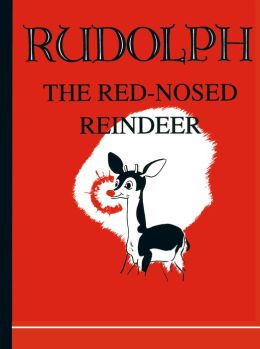
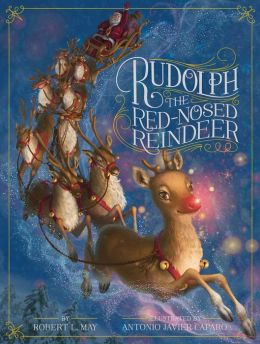
Rudolph the Red-Nosed Reindeer. Robert Lewis May. Illustrated by Denver Gillen. 1939/1990. Applewood Books. 32 pages. [Source: Library]

I enjoyed this one more than I thought I would. This is the original story by Robert L. May with the original illustrations by Denver Gillen. It is so different from the song and the stop-motion animated special. And I think it was the fact that it was different that made me appreciate it more.

The story is told in rhyme. It's essentially one long (perhaps poorly punctuated) poem. Here's how it begins:
Twas the day before Christmas, and all through the hills
The reindeer were playing…enjoying the spills
Of skating and coasting, and climbing the willows…
And hop-scotch and leap-frog (protected by pillows!)
While every so often they'd stop to call names
At one little deer not allowed in their games:--
"Ha ha! Look at Rudolph! His nose is a sight!"
"It's red as a beet!" "Twice as big!" "Twice as bright!"
While Rudolph just wept.
What else could he do?
He knew that the things
they were saying were true!
Readers first meet Rudolph, a young deer who is teased by his peers. He does NOT live at the North Pole. And he's not one of Santa's own reindeer.
What we do learn is that he's a very good, very obedient deer who is expecting Santa to leave him some lovely presents because he's been so very, very good.

Readers then meet Santa and learn of the horrible weather conditions that prove most challenging. Santa starts out on his trip, it isn't until he's delivering presents to Rudolph's house that he notices the brilliant light of his nose.

Santa then decides to wake him up and ask for his help. The rest of the journey goes much easier for Santa!

The book concludes with Santa returning Rudolph to his family, to his hometown. He is now a hero, of course.

I liked this one. I liked some of the rhymes more than others. There are definitely some quirky lines!
Come Dasher! Come Dancer! Come Prancer and Vixen!
Come Comet! Come Cupid! Come Donner and Blitzen!
Be quick with your suppers! Get hitched in a hurry!
You, too, will find fog a delay and a worry!"
And Santa was right. (As he usually is!)
The fog was as thick as a soda's white fizz.
The book is definitely text-heavy. So a longer attention span would be needed for little ones to enjoy this one.

The copy I read was a facsimile edition. A 75th Anniversary edition with new illustrations was released in September 2014.

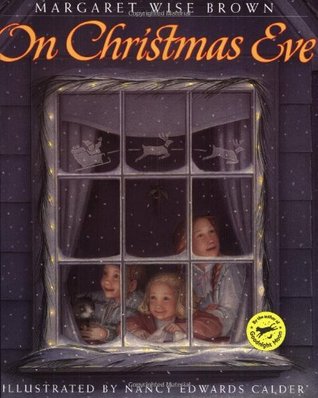
On Christmas Eve. Margaret Wise Brown. Illustrated by Nancy Edwards Calder. 1938/1961/1996. HarperCollins. 32 pages. [Source: Library]

It was the middle of the night. And night of all  nights it was Christmas.

I enjoyed Margaret Wise Brown's On Christmas Eve. It is a descriptive look at what Christmas--at what Christmas Eve--is like for children. It focuses on simple things: what your eyes see, what your ears hear, what your nose smells, what your hands and feet touch. It seeks to capture the emotion of the holiday: the excitement, the waiting, the longing.

Lots of details, lots of adjectives. It's rich in imagery and description. There is also a bit of repetition. The text is lyrical in places.

I can't say that I loved it. But it was very enjoyable. I was also glad to see that one of the presents under the tree was a train. The children are just in awe of the magic of Christmas, of the stockings and packages, of the snow falling outside, of the carolers outside.

It was a sweet story about three siblings.

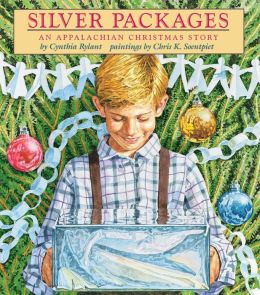
Silver Packages: An Appalachian Christmas Story. Cynthia Rylant. Illustrated by Chris K. Soentpiet. 1987. Scholastic. 32 pages. [Source: Library]

Silver Packages is a picture book for older readers most likely. I wouldn't say it is for an exclusively adult audience. But I think readers need some perspective in order to appreciate the book fully. I think it can resonate with readers, it has the potential. But I don't think the emotional reaction would be--or even should be--automatic. One can't assume that every reader will respond with tears and "this is the best book I've ever read!!!"

Silver Packages is about giving back to the community. In this instance, one very specific community--Appalachia. The book is about the Christmas Train. It starts with one man who wants to show his appreciation for the community that helped him when he needed it. He was injured in an accident, the community took in this stranger and nursed him back to health without asking for anything in return. He decides that he will come every year--by train--and hand out packages to the children who meet the train. These packages are wrapped in silver paper. Every story needs a protagonist. Silver Packages introduces us to Frankie. Readers first meet Frankie as a boy. He's a boy with a dream. He wants to be a doctor. And he really, really, really wants a doctor kit for Christmas. But each year, he's slightly disappointed. He receives a handful of silver packages through the years. Every gift seems to have a toy--something a boy or girl might want--and something a boy or girl might need. The practical gifts include: socks, mittens, hats, scarves, etc. Readers later see Frankie all grown up. He is a doctor. He reflects on his life, on his past Christmases, he has a light-bulb moment. He decides it is his turn to give back to the community in his own special way. It's a book about kindness and gratefulness and community awareness.

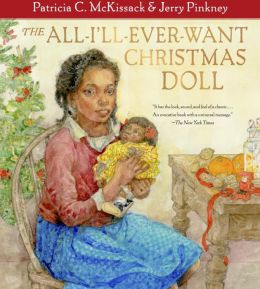
The All-I'll-Ever-Want Christmas Doll. Patricia C. McKissack. Illustrated by Jerry Pinkney. 2007. Schwartz & Wade. 40 pages. [Source: Library]

Christmas always came to our house, but Santy Claus only once in a while.

I haven't read The All-I'll-Ever Want-Christmas Doll in years. It was just as good as I remembered. The book is set during the Depression. A little girl, Nella, knows that her family is poor, that Santy may not come this year at all. Yet, she can't resist writing to him all the same begging for a Baby Betty doll. Her two sisters perhaps think a little less of Nella for her dreaming so big. She shouldn't expect so much from Christmas. But on Christmas morning, there are a few surprises. Each girl gets a Christmas sack filled with walnuts, peppermint candy, an orange, and a box of raisins. But there is one present, one special present remaining: a doll. Nella thinks the doll should be HERS and hers alone. After all, her sisters haven't gone around talking about the doll nonstop, her sisters didn't write Santa a letter begging for the doll. Why should she have to share the doll with them? But does the doll make her happy? Is the doll truly all she'll ever want? She has a few lessons to learn for sure!

I really enjoyed the story and the message.

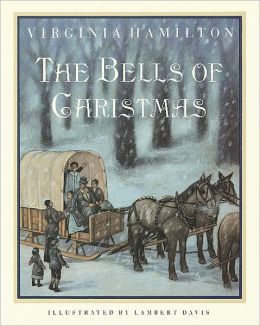
The Bells of Christmas. Virginia Hamilton. Illustrated by Lambert Davis. 1989/1997. Houghton Mifflin Harcourt. 64 pages. [Source: Library]

I didn't dislike Virginia Hamilton's The Bells of Christmas. But I didn't love, love, love it either. I think it depends on what exactly you're expecting from a Christmas book. The Bells of Christmas is very much a celebration of a Christmas long ago. Christmas 1890. Readers meet a young boy, Jason Bell, and experience the holiday through his perspective. We learn about his mom and dad, his brothers and sisters, his cousins, his aunt and uncle, his friend, Matthew. The book is set over a period of several days. Among the things readers learn that Jason's dad is a carpenter, that he wants his sons to join him in his business one day, his dad has only one leg, that his dad wears a peg leg part of the time and is in his wheel chair the rest of the time. Readers also learn that Jason is just a wee bit obsessed with wheels--mainly trains, but, also wagons, etc. The book has plenty of detail and characterization which is a good thing. Jason is waiting for quite a few things: 1) he can't wait for Christmas morning and presents! 2) he can't wait for the Bells to arrive--his uncle and aunt and cousins, 3) he is excited about church, most everyone is performing and participating in some way. (Jason is singing a solo.) The book perhaps seeks to capture one Christmas for one extended family. It is a pleasant, enjoyable book. It isn't quite a chapter book or novel. It isn't quite a picture book.
 
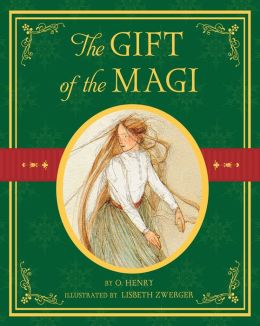
The Gift of the Magi. O. Henry. Illustrated by Lisbeth Zwerger. 1905/2006. Simon & Schuster. 32 pages. [Source: Library]

I've seen adaptations of The Gift of the Magi--who hasn't? (My favorite is Bert and Ernie and Mr. Hooper.) But this is the first time I've read the actual short story. I haven't decided how I feel about it. Is this couple wise or foolish? Or are they at times foolish and at times wise?

The wife, Della, takes extraordinary pride in her long hair. She doesn't seem the vain sort except for when it comes to her hair. And even if she is vain about it, there's no indication it's anything besides a private vanity. The wife apparently has been coveting expensive hair combs as well. The husband, Jim, takes extraordinary pride in the family watch. The narrator uses exaggeration when discussing the woman's long hair and the man's gold watch. I didn't love the narrator. In fact, I think the narrator is a distraction. He won't let the reader forget for a moment that this is a precious story.
Now, there were two possessions of the James Dillingham Youngs in which they both took a mighty pride. One was Jim's gold watch that had been his father's and his grandfather's. The other was Della's hair. Had the queen of Sheba lived in the flat across the airshaft, Della would have let her hair hang out the window some day to dry just to depreciate Her Majesty's jewels and gifts. Had King Solomon been the janitor, with all his treasures piled up in the basement, Jim would have pulled out his watch every time he passed, just to see him pluck at his beard from envy.
The wife can't afford a gift for her husband. The husband can't afford a gift the wife. The wife knows this--or should know this. The husband knows this--or should know this. The wife has saved $1.87. The husband might have saved a small sum as well. Readers don't know one way or the other. Both husband and wife will have something to offer the other, however. Something more than love. For both have decided--quite independently--to give sacrificially. To give up what they supposedly value most: her hair, his watch. And this giving up wasn't to support the family, but, to support the other's vanity.

I think actions can speak more than words. I think the narration took away some of my enjoyment of this one. It felt odd at times. There were sentences that were eloquent and refined and then it would slip into something else.
"It's sold, I tell you--sold and gone, too. It's Christmas Eve, boy. Be good to me, for it went for you. Maybe the hairs of my head were numbered," she went on with sudden serious sweetness, "but nobody could ever count my love for you. Shall I put the chops on, Jim?"
I think I like the adaptations better.

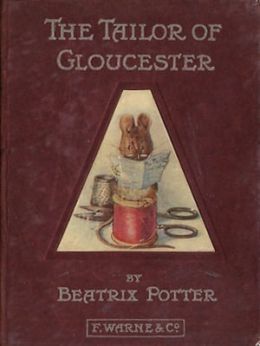
The Tailor of Gloucester. Beatrix Potter. 1903. 58 pages. [Source: Library] 
In the time of swords and periwigs and full-skirted coats with flowered lappets—when gentlemen wore ruffles, and gold-laced waistcoats of paduasoy and taffeta—there lived a tailor in Gloucester.
He sat in the window of a little shop in Westgate Street, cross-legged on a table, from morning till dark.
All day long while the light lasted he sewed and snippeted, piecing out his satin and pompadour, and lutestring; stuffs had strange names, and were very expensive in the days of the Tailor of Gloucester.
I enjoyed rereading Beatrix Potter's The Tailor of Glouchester. In this delightful Christmas tale, readers meet a tailor, a cat named Simpkin, and some lovely mice. It is several days before Christmas. He's working hard to finish a coat and waistcoat for the Mayor of Glouchester. The Mayor is getting married on Christmas day. The tailor has just enough money to finish the coat. Not a penny to spare. He sends his cat, Simpkin, with his money to buy what he needs: a little for himself (food: bread, sausage, milk) a little for his work (one twist of cherry-coloured silk). It is only after the fact that he questions whether he should have sent the cat or gone himself. The cat returns, but, in a mood. The cat is upset for he's discovered that the tailor freed the mice he had captured and hid under the teacups. The cat hides the twist. The man is upset, of course, and sick. He takes to his bed unable to work. The oh-so-thankful mice go to his shop and finish his work for him. But since they are one twist short, they are unable to finish completely. Still, they do what they can, and they do a wonderful job. The cat who spies them at work, I believe, has a change of heart and gives the twist to the old man on Christmas morning. He has just enough time to finish. The Mayor is very, very pleased. And the tailor's luck changes for the better, and his business is much improved. This one is a lovely, delightful read from start to finish.

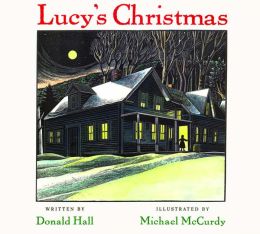
Lucy's Christmas. Donald Hall. Illustrated by Michael McCurdy. 1998. Houghton Mifflin Harcourt. 40 pages. [Source: Library]

I enjoyed reading Lucy's Christmas by Donald Hall. Lucy's Christmas is a picture book set in 1909 in New Hampshire. In the fall of 1909, Lucy and her family start preparing for Christmas. For Lucy, this means starting to make her own gifts for her family and friends. It pays to plan ahead since so many gifts take time, and thought must be placed into each gift. She's not the only one thinking ahead. This year the family is ordering a new stove for the kitchen. The family has spent a lot of time browsing in the Sears catalog. Lucy's choice is the one the family decides upon: the Glenwood Kitchen Range. The focus is not just on gifts: planning, making, giving, receiving. The focus is also on family life and community life. Readers get glimpses of the school and church. Both places are very busy! I enjoyed this glimpse into the past! It was interesting to see the family prepare for the new year--1910. The enthusiasm in the story is sweet. The author's note reveals that this picture book is based on family history.

I really liked this one very much. I liked Lucy and her family. I liked the fact that the church plays such a HUGE role in the Christmas celebrations. There are gifts, it's true. But it's not commercialized and selfish.

Baboushka and the Three Kings. Ruth Robbins. Illustrated by Nicholas Sidjakov. 1960/1986. Houghton Mifflin Harcourt. 32 pages. [Source: Library]

Long ago and far away, on a winter's evening, the wind blew hard and cold around a small hut.

Baboushka and the Three Kings won the Caldecott Medal in 1961. It is Russian folktale with a Christmas setting. The three kings--wise men--come to Baboushka's hut. They only stay a few minutes. Long enough to extend an invitation to the old woman. Will she join them in their procession, in their quest, to find the Babe, the Child? She'd love to join them, she'd love to bring gifts to the Child. But she is not ready to go just yet. Couldn't they all wait until morning? Couldn't they wait for her to finish up a few small, tiny chores first? Couldn't they wait for the storm to clear? Their answer was firm. Their journey to the Child was too important to postpone. They couldn't linger longer. She watched them depart. But they were not easy men to forget. The next morning, she begins a journey of her own. A journey that will take her far. But will her journey lead her to where she wants to go?

It's a simple story, nicely written. "It is no ordinary Babe they seek. Yes! I must go and follow them! To find the new Babe, to offer Him her gift, was now her one yearning. This thought burned in her mind like a candle in the dark." It is also nicely illustrated. The illustrations complement the text well. Both illustrations and text have a different flavor, an authentic flavor, but not exactly American. After several readings, I came to appreciate both a bit more.

In case you're unfamiliar with the story, the book is bittersweet at best. While it is true that Russian children everywhere look forward to Baboushka's gifts each year as her journey continues, it is also true that Baboushka's journey has no happy ending. She never finds the Child. She is never able to give Him her gifts.

Polar Express. Chris Van Allsburg. 1985/2009. Houghton Mifflin Harcourt. 32 pages. [Source: Library]

The Polar Express is one of my favorite Christmas books. It is. The book is a thousand times better than the movie. (Though the soundtrack of the movie isn't bad.) So if you've only seen the movie, you might want to give the book a try to. You might have a different response to it.

The Polar Express is about belief and doubt--in Santa. It's told in the first person, so we never learn the protagonist's name, but it is a little boy with a younger sister named Sarah. One Christmas Eve, the little boy is awakened by The Polar Express. He goes to the North Pole on the Polar Express train, there are other passengers too. All presumably boys and girls on the verge of not-believing. At the North Pole, he sees Santa, reindeer, and elves. He happens to be chosen to receive the first gift of Christmas. He asks for a bell from Santa's reindeer. This gift is not in his possession for long, however, because he has a hole in his pocket. On Christmas day, he receives a special gift under the tree: the bell he had lost. He can hear it. His sister can hear it. But his parents do not. The book ends wonderfully with a message for "all those who truly believe."

I loved this one cover to cover, though I love the ending most of all.


© 2014 Becky Laney of Becky's Book Reviews

Friday, July 11, 2014

Reread #28 To Say Nothing of the Dog

To Say Nothing of the Dog. Connie Willis. 1998. Bantam. 493 pages. [Source: Bought]

I have every intention of rereading all four Oxford time travel books by Connie Willis this year. Earlier in the year, I reread the first book, Doomsday Book. To Say Nothing of the Dog, the second book, is a book I originally read and reviewed in July 2009. While the first book offers drama, drama, more drama, with just a touch of humor now and then, the second book is a romantic comedy. I happen to love both books though they are very different from one another.

Ned Henry is the hero of To Say Nothing of the Dog. He is on a mission, not a mission of his own choosing perhaps, but a big mission all the same. He is one of many time travelers working for Lady Schrapnell on her latest project: restoring Coventry Cathedral. The novel opens with a very overworked Ned Henry beginning to show severe signs of time-lag. What he needs is rest, permission to rest. That isn't likely to happen if Lady Schrapnell learns his whereabouts. For better or worse, Ned Henry is sent to the past--to Victorian times--to recuperate. He's been given another mission too. This time by someone much nicer and calmer than Lady Schrapnell. The problem? Ned Henry wasn't capable of listening and understanding. Now he's in the past without a real clue of WHY he's there and what he's supposed to accomplish.

Verity Kindle is the heroine of To Say Nothing of the Dog. She is on a mission of her own. While Ned Henry was given the assignment of finding out the whereabouts of the bishop's bird stump, Verity's assignment is to read Tocelyn's diary. The diary is available to read in the future. But the most relevant pages to the Coventry Cathedral project were damaged. So she's been sent to the oh-so-important summer of 1888 to read the newly written diary entries. She's having about as much success as Ned Henry. In other words, not much luck at all! These two work together as best they can. Verity manages to travel back and forth a few times to the future. Their mission--as they see it has changed a bit. They worry that they've damaged the future and that something horrible may happen as a result. Like Tocelyn, they know, was supposed to marry a "Mr. C". They know this for a fact from future diary entries. Yet here they are and she's engaged to someone else! Their "new mission" is to find the identity of "Mr. C." and make sure they meet when they're supposed to meet....

I loved this one. I have always loved this one. It is a delightful time travel novel. I love the humor! I do! It's so very, very funny! And I love the details and the dialogue. This one is just a joy cover to cover!

© 2014 Becky Laney of Becky's Book Reviews