Showing posts with label holiday. Show all posts

Thursday, December 12, 2024

102. Christmas Eve Love Story

Christmas Eve love Story. Ginny Baird. 2024. 416 pages. [Source: Library] [3 stars] [adult romance, mostly clean romance, holiday, Christmas, time loops, fantasy]

First sentence: Annie Jones hurried out of the snow and in through the employee entrance at Lawson's Finest in her red knitted pom-pom hat and peacoat, clocking in on her department store app, and---ahh!--almost mowing down Santa.

Premise/plot: Annie Jones is entering the twilight zone. Mostly. This holiday romance features a time loop [on Christmas Eve] where the heroine has twelve chances to make a good 'first impression' on security guard, Braden Tate. Of course, that isn't the only thing she must get right to make it to Christmas morning. There are twelve cycles of Christmas Eves. Some things change. Some things are inevitable. 

My thoughts: I enjoyed this one. I did. Did it *need* to be 416 pages? Probably not. Honestly I think it would have been better at about 350-ish pages. However, the repetitiveness helped me at times get caught back up of the story. The truth is, I started this one in mid-November, it got moved in the library stack, I forgot about it completely, then picked it up yesterday and read the rest of the book. So I read the first half of the book in one sitting and the last half of the book in one sitting--but three weeks in between. Again, I enjoyed this one. If this was a movie, no doubt, I'd watch it--probably again and again depending on how well it's done.


© 2024 Becky Laney of Becky's Book Reviews

Monday, December 18, 2023

192. Zanna's Gift


Zanna's Gift. Orson Scott Card. 2020. [November] Originally published in 2004? 250 pages. [Source: Review copy]

First sentence: There are many ways to lose a child, and none of them is merciful. But like all unbearable things it can be borne, and in the weeks before Christmas 1938, the Pullmans were learning how.

Premise/plot: Zanna's Gift is a LOVELY Christmas novel. Zanna, the youngest of the Pullman family, has a special way to memorialize her older brother, Ernest, after his unexpected death at fifteen.

The best way to read Zanna's Gift is without knowing a thing about it. I promise you. I'm doing you a favor by NOT summarizing the plot and sharing what Zanna's GIFT was and how it was a gift that kept giving and giving. 

My thoughts: LOVE. I loved this one absolutely and completely from start to finish. It was one of those perfectly perfect EXPERIENCES. It feels like more than just a book, a story, a fictional work. THESE CHARACTERS ARE REAL. How it hasn't been adapted into a movie if it was truly published originally in 2004 is beyond me. It would make an excellent movie. 

I would recommend this one to people who aren't necessarily readers. Of course I recommend it to readers who read anything and everything. But for those who are reluctant to pick up books, please consider reading this wonderful amazing book. 

If you LOVE Christmas, this is an absolute must. I could easily see it becoming a book that you feel you HAVE to read each and every year.

 ETA: I've read this one three times? four times? I love this book so much.


© 2023 Becky Laney of Becky's Book Reviews

Wednesday, December 06, 2023

186. The Twelve Topsy-Turvy Very Messy Days of Christmas


The Twelve Topsy-Turvy, Very Messy Days of Christmas. James Patterson and Tad Safran. 2022. 288 pages. [Source: Library]

First sentence: What is the worst present you ever received for Christmas? A pair of socks? A pair of scratchy socks? A pair of scratchy socks in a vile color? A pair of scratchy socks in a disgusting color that rub your big toes every step you take? A pair of coarse socks in a foul color that rub your big toes and you're forced to wear them because your grandmother gave them to you and she's coming to stay? That's pretty bad. But for Will and Ella Sullivan, the worst thing they ever got for Christmas was a dead mother.

Premise/plot: Kate Sullivan was dead, to begin with. There is no doubt whatever about that. Since this one is being marketed as "the next Christmas Carol" and an "instant classic" that will become a "must read for every holiday season," I thought it only fitting to introduce it properly. So it's been three--or so--years since she's died. The husband, Henry, has NOT gotten over it. He's been a total and complete wreck ever since. And Will and Ella, well, they've had to mainly raise themselves because of Henry's absent-while-present parenting style. But this Christmas, they are determined to find their dad a new wife. If he is happy then maybe Christmas can be Christmas again. So they write a dating profile for their dad...and begin corresponding with a "Ms. Truelove." The results...well...not quite what anyone expected.

It starts with a partridge in a pear tree. Literally. But it isn't until the FIVE GOLDEN RINGS are delivered to their doorstep that the family realizes with ever-growing DOOM AND GLOOM that things are about to get so much worse.

Essentially the premise is simple: the TWELVE DAYS OF CHRISTMAS literally being delivered to one family's house for the twelve days leading up to Christmas. Just take a minute or two to imagine that...

The book is about how the family reacts to these "gifts" from a "true love." Just WHO IS THIS TRUE LOVE????? And what is the motivation behind these "gifts" that feel like a curse.

My thoughts: I liked this one. I loved some chapters. I didn't quite love other chapters. It was definitely entertaining--for the most part. It is 100% premise-driven. Not many characters are fleshed out. There are plenty of comical scenes.

But for me, personally, this was no Christmas Carol.


© 2023 Becky Laney of Becky's Book Reviews

Wednesday, November 15, 2023

180 Miracle on 34th Street


Miracle on 34th Street. Valentine Davies. 1947. 136 pages. [Source: Library]

First sentence: If you searched every old folks' home in the country, you couldn't find anyone who looked more like Santa Claus. He was the living, breathing incarnation of the old gent--white beard, pink cheeks, fat tummy and all--and his name was Kris Kringle, too. Whether this was coincidence or design--a sort of stage name he had assumed--his friends at the Maplewood Home for the Aged never knew. Nor did they know exactly how old he was.

Premise/plot: Movie novelization of the classic holiday film of the same name. Both were released in 1947. I believe the note to the reader admits that the book is based on the film's script. If you've seen the movie, you've essentially read the book. Almost. There isn't much substance and depth added above and beyond the movie. While a few scenes we get a wider scope--greater understanding there are a few scenes that are very abrupt or concise. The climax of the movie are all the dramatic court scenes, this showdown of lawyers. In the book, however, the court stuff is kept to a bare minimum. The book definitely has a blink and you miss it ending. The same attention to detail that was found throughout the novel is a bit rushed for the last bit. For those that have not seen the movie, essentially a little girl puts Santa Claus to the ULTIMATE test. Meanwhile, Kris Kringle is on trial himself. Is he sane? insane? A danger to himself or others?

My thoughts: I am glad I've read this one. I have read it twice now. I want to love this one so much. I adore the movie. I am always glad to revisit these characters. If you are able to read this one, you should. But if you are having a hard time tracking it down, relax knowing that the book isn't "better" than the movie in this instance. It isn't a waste of time, mind you. It's not. It just doesn't go deeper than the movie and the plot is the same.


© 2023 Becky Laney of Becky's Book Reviews

Sunday, December 18, 2022

180. Can This Be Christmas?


 Can This Be Christmas? Debbie Macomber. 1998. 91 pages. [Source: Library]

First sentence: A robust version of "Little Drummer Boy" played in the background as Len Dawber glanced at his watch--for at least the tenth time in five minutes.

Premise/plot: Can This Be Christmas is a short holiday-themed novella by Debbie Macomber. A group of [restless] passengers are stranded at a depot [train, I believe] on Christmas Eve. No one is where they want to be. Most--though not all--are separated from family and loved ones. All are in different stages in life. 

Can these strangers find the 'true' meaning of Christmas?

My thoughts: It was short and sweet. It is not a romance. [Though a few passengers are in relationships.] Because Can This Be Christmas is packaged as a bonus story in longer collections that are romances, your expectations might be different. In fact, I believe GoodReads has MIXED all reviews of Can This Be Christmas with the reviews of her new novel A Perfect Christmas which has Can This Be Christmas as a bonus story. This is probably doing neither book any favors. But it is especially unfair to readers who are confused and trying to make up their minds whether to read it! 

This is a general "feel-good" comfy-cozy Christmas novella. There are MANY characters and MANY stories. It is set over the course of one day and night--Christmas Eve/Christmas. It reminded me of a L.M. Montgomery short story I read once.

© 2022 Becky Laney of Becky's Book Reviews

Tuesday, December 13, 2022

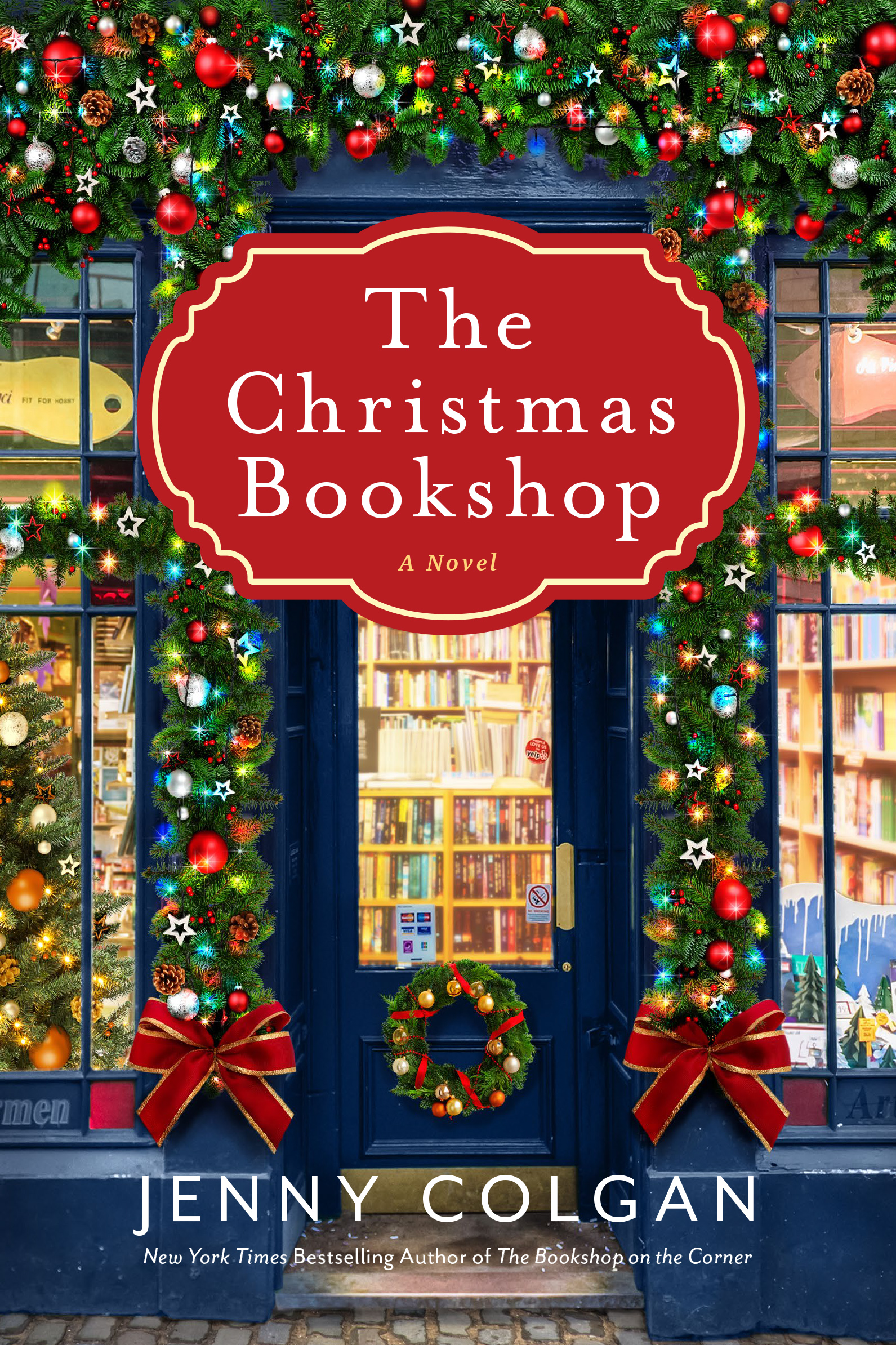
177. The Christmas Bookshop


The Christmas Bookshop. Jenny Colgan. 2021. 336 pages. [Source: Library]

First sentence: "But it's August!" said Carmen into the phone, putting down her book. "August! It's almost sunny outside! I have sandals on! Ice-cream vans patrol the land! I put sunblock on last week and almost needed it! How can I possibly get my head round what you're asking me?"

Premise/plot: Carmen, our protagonist, is whiny and wearisome. She has recently lost her job at a department store. She shudders at the idea of living with her mom (again). She dreads the idea of living with her (older) sister too. For whatever reason, Carmen hates Sofia. Because she is married? Because she has kids? Because Carmen hates just about everybody? Sofia isn't thrilled that Carmen is coming to stay--at their mother's request--either. [And after having met Carmen, I can understand why.] Sofia knows a client who owns a bookshop that is failing. It needs to show profits by the end of the year--Christmas time--if it's to stand even a small chance. Carmen doesn't really want this job. But she doesn't like the alternative either. If she's around the house, then she might--shudder--have to watch her two nieces and a nephew. She only has a small amount of time to turn this messy, chaotic bookshop into a profitable bookshop. Having no experience in this particular area...you might think it would take some effort. [But, nope. Easy as one, two, three.] 

Since running a new-to-you bookshop in a new-to-you city doesn't take all that much energy and effort, we've got a love triangle too. Blair is a "celebrity" author who visits the bookshop. Oke is a customer who really loves trees. 

My thoughts: This book was so incredibly DULL. The characters were anything but complex, interesting, likeable. The relationships were blah. Carmen was just such an unlikable protagonist. I don't know so much if she changes a little here and there by the end of the novel, or if all the other characters have just adapted to her and made a place for her in their lives.


© 2022 Becky Laney of Becky's Book Reviews

Monday, December 12, 2022

176. Call Me Mrs. Miracle


Call Me Mrs. Miracle. Debbie Macomber. 2010. 253 pages. [Source: Library]

First sentence: Jake Finley waited impatiently to be ushered into his father's executive office--the office that would one day be his.

Premise/plot: Call Me Mrs. Miracle is a holiday romance novel by Debbie Macomber. Jake Finley is managing the toy department. He's gone with his instinct and ordered an [insane] number of a particular robot toy. [His father is NOT at all happy.] It will take a miracle to sell them all by Christmas. Holly Larson is raising her nephew, Gabe, while his father is in Afghanistan. The two aren't quite bonded yet. She's struggling. He's struggling. Everything seems messy and chaotic. It would take a miracle for them to have a truly magically great Christmas. The toy he wants [you guessed it THE ROBOT] is way out of her budget. Enter Mrs. Miracle....

My thoughts: I liked this holiday-themed romance. I liked the characters. I did not see the big surprise coming. It was lovely.


© 2022 Becky Laney of Becky's Book Reviews

174. The Golden Dreydl


The Golden Dreydl. Ellen Kushner. Illustrated by Ilene Winn-Lederer. 2007. 126 pages. [Source: Review copy]

First sentence: It was the holiday season, but Sara was not happy. Riding home from school in the bus was pure torture. Sara stared out the window at all the colored lights decorating the houses on street after street....Sometimes people left their curtains open, and Sara could see right into their living rooms, where big trees glittered and shone. 

Premise/plot: First and foremost potential readers need to know this is a spin on The Nutcracker. Sara, our protagonist, is about to go on a little adventure with her "gift" from an eccentric relation. It is a Chanukah themed fantasy novel for children. 

Sara is not looking forward to Chanukah. She doesn't want to celebrate with her family. She definitely doesn't want to play dreydl with all of her cousins--some older, some younger. She's just a super-crank. But when her great-aunt comes with gifts, well, things get interesting. Sara receives a golden dreydl. It doesn't make her want to play dreydl, more, but it is lovely all the same. 

But that night when every one else is sleeping....well....Sara has an adventure of her own...and it all begins with the transformation of the Golden Dreydl into a girl. They arrive in a fantasy land, of sorts, with demons, peacocks, a fool, and King Solomon and the Queen of Sheba. There is also much talk of a Tree of Life.

Sara is given a quest, of sorts, to save the girl from the demons/demon king. She has the Fool to help her. A few riddle games are played. First, between Sara and the Fool, and, then later between the Demon King and Sara and the Fool.

My thoughts: As I said, this one is a spin off of The Nutcracker. There is music that goes with this one. I highly recommend listening to the music.


© 2022 Becky Laney of Becky's Book Reviews

Friday, December 09, 2022

170. A Town Divided by Christmas


A Town Divided by Christmas. Orson Scott Card. 2017. 134 pages. [Source: Library] 

First sentence: When Spunky was invited to a meeting in The Professor's office, she didn't know what to expect. She had taken two classes from him, but she didn't major in genetics or even in a biological field--she was an economics post-doc, shopping for a tenured faculty position somewhere on plane Earth, preferably a place with flush toilets, clean water, and a good internet connection.  It didn't ease her confusion when she arrived at The Professor's office at the same time as Elyon Dewey.

Premise/plot: Spunky and Elyon--a reluctant pair--head to Good Shepherd, North Carolina, to do research. Can they find a gene [or genome???] to "prove" that some people are homebodies? This small town has a good track record. While plenty have left over the decades, almost all seem to come back home and settle down again. This "science" will involve getting genetic samples, data input, and interviews. [Elyon is not trusted with interviews.] Both will have to "settle" down in this super small town while they are working for The Professor. Both are a bit surprised with how things unfold...

Elyon who has very little social skills find himself falling in love with a young woman....and Spunky likewise is finding herself falling head over heels in love with someone as well. Everyone teases about how this is so similar to a Hallmark movie.

My thoughts: This one was an almost for me. Perhaps it would be more of a sell if it was actually a Hallmark movie. I didn't quite "get" the science-y grant side of this one. Elyon reminded me of Sheldon Cooper. Spunky and her love interest, Eggie, are Hallmark material.

I wish more had been about the two battling churches/battling nativities. We learn a little. But at least to my reckoning, this situation was never resolved--or resolved satisfactorily. Spunky and Elyon seem to learn a "secret" that no one else knows, but this doesn't lead anywhere. It's more of an afterthougt/aftertaste. There isn't any "love" or "forgiveness." Unless I fell asleep and missed it completely.


© 2022 Becky Laney of Becky's Book Reviews

Thursday, December 01, 2022

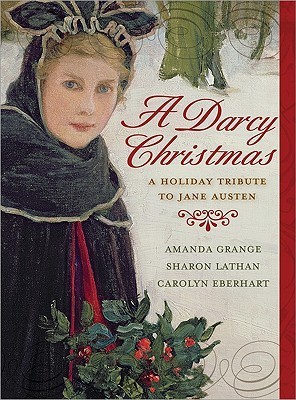
165. A Darcy Christmas


A Darcy Christmas: A Holiday Tribute to Jane Austen. Amanda Grange, Sharon Lathan, Carolyn Eberhart. 2010. 290 pages. [Source: Library]

First sentence(s):

From Mr. Darcy's Christmas Carol by Carolyn Eberhart: Old Mr. Darcy was dead to begin with. There is no doubt whatsoever about that. The clergyman, the clerk, the undertaker, and the chief mourner had all signed the register of his burial. His son signed it. And Fitzwilliam Darcy's name was as good as his father's before him. Old Mr. Darcy was as dead as a doornail.

From Christmas Present by Amanda Grange: It is a truth universally acknowledged, that a married man in possession of a good fortune, must be in want of an heir, and Mr. Darcy of Pemberley was just such a man. Moreover, he was soon to have that want satisfied, for his wife, Elizabeth, was expecting their first child.

From A Darcy Christmas by Sharon Lathan: He set the painting onto the sofa, assuring it was well supported before stepping away. He gazed at the canvas, a smile spreading as he looked upon his family. His family. The family created by him and his wife, just as he had dreamt for so many lonely years. They stood on the portico of Pemberley flanked by their precious children on the steps. All of them were smiling at the artist. A sentimental man by nature, he silently examined the newest portrait of his family and lost himself in happy memories.

 Premise/plot: A Darcy Christmas is a collection of three novellas. Each novella is a holiday-themed retelling/adaptation of Pride and Prejudice. 

My thoughts: "Mr. Darcy's Christmas Carol" was surprisingly fun. I had my doubts--as you might have your doubts about weaving these two stories together--but I thought it worked. It does a slight variation on the original. What if Jane and Charles Bingley got their happily ever after--after Lydia was "rescued" by Mr. Darcy's intervention--but Mr. Darcy's pride was still in the way of his declaring his love (the second time). This is what that first Christmas might have been like. If he'd been visited by the spirits of Christmas past, present, future.

"Christmas Present" was a great novella by Amanda Grange. I've enjoyed many of her Austen adaptations in the past. This one did not disappoint. She got the characters just right. It felt authentic like what a Darcy Christmas might have *really* been like. Elizabeth and Darcy are expecting their first child, and Charles and Jane just had their first child. So the families are coming together--the extended families--to celebrate. I really enjoyed this one!

"A Darcy Christmas" is a collection of holiday short stories following the Darcy family through twenty or so years of marriage. (I believe we see their twenty-third Christmas as a couple? Although I might have lost track of the last few stories.) Since we only catch glimpses of the family--on Christmas Eve/Christmas--it's hard to precisely follow these stories. We do know that (almost) every Christmas sees Elizabeth either with a new baby or pregnant. (Perhaps these stories do connect to Lathan's previous novels about Elizabeth and Darcy. If that is the case, then the stories might make more sense when it comes to keeping up with their family, friends, etc. Especially in the case of her children's love interests.)


© 2022 Becky Laney of Becky's Book Reviews

Tuesday, November 29, 2022

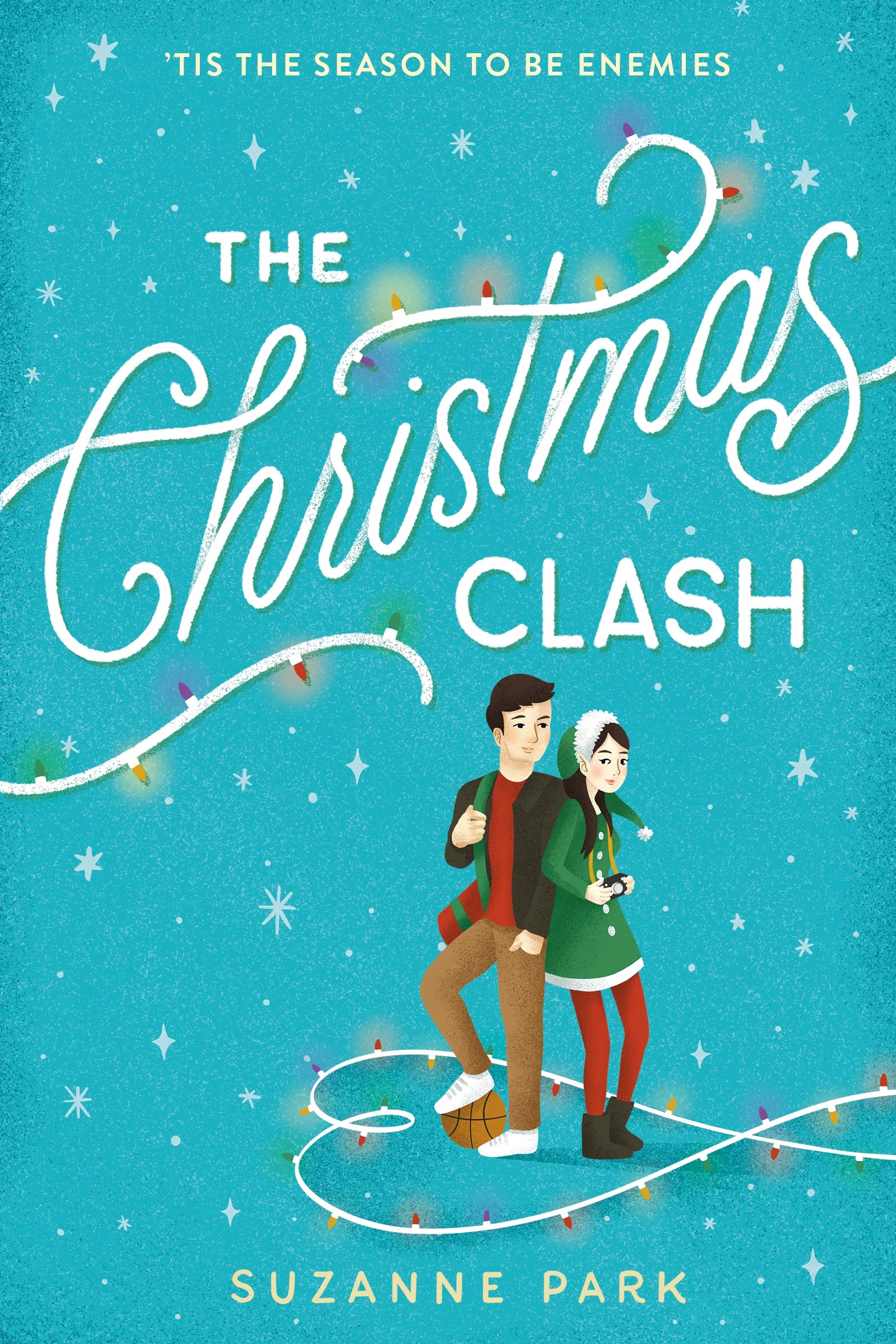
162. The Christmas Clash


The Christmas Clash. Suzanne Park. 2022. 368 pages. [Source: Library]

First sentence: The projectile pacifier grazed my left ear. "I'm so sorry, would you mind grabbing his binky off the floor? Little Timmy's got quite a temper when he's hungry." Important note: Timmy was not in fact very little. I suspected he was five, maybe six.

Premise/plot: Chloe Kwon, our heroine, works as a photographer at the Santa Land feature at her local mall [Riverwood]. Her parents have a restaurant in the mall as well. Peter Li, our hero, works at the virtual reality North Pole experience at the mall. His parents have a restaurant in the mall too. The Kwons hate the Lis; the Lis hate the Kwons. But Chloe and Peter have found out something shocking: they do not in fact hate each other. Rather, Chloe might just like-like Peter, and it's mutual. But this isn't solely a "forbidden" romance with warring families. Riverwood Mall is very likely to be demolished to make way for condos. It isn't just their seasonal side jobs at risk but their whole families livelihood. Can Peter and Chloe by working together form a resistance with other mall tenants and find a way to save the mall????

My thoughts: This would make a PERFECT holiday movie. Everything about this one screams out for a film adaptation. So good news if you like holiday movies, you'll fall for this novel as well. And perhaps it's nice to get it in book-form for a change. 

Was it a perfect read? No. I'm not going to lie and say it was perfectly perfect in regards to storytelling, characterization, plotting, etc. But I could visualize much of this one. And it felt like a movie that I'd watch through beginning to end. It might sell better as a movie.


© 2022 Becky Laney of Becky's Book Reviews

Sunday, November 27, 2022

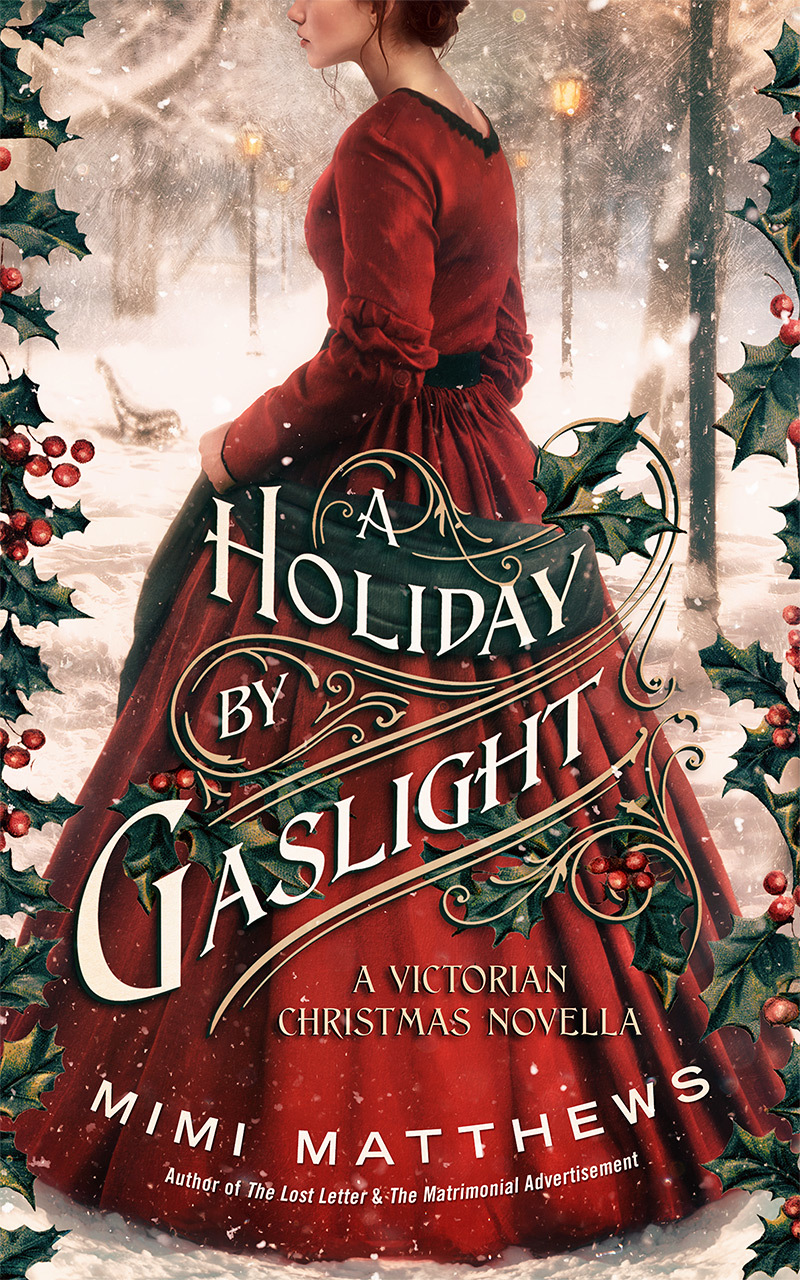
160. A Holiday by Gaslight


A Holiday by Gaslight by Mimi Matthews. 2018. 175 pages. [Source: Bought]

First sentence: An icy late November breeze rustled the bare branches of the trees along the Serpentine.

Premise/plot: Sophie Appersett has been following her parents' lead when it comes to "romance". They are hoping the [semi-arranged] match between Sophie and Mr. Edward Sharpe, London merchant will be just the thing. To be fair, they see Mr. Sharpe and see moneybags. Sophie, well, she is hoping to see more than that. But seeing the real deal, getting to know the real person, takes a bit of effort. Both Sophie and Edward, well, they're not the best at letting down their guards with one another and being real, true, genuine. 

Sophie's father has spent all her dowry on getting their country home fitted for gaslight. And his plans may just extend beyond that...

He has been invited [along with his parents and a friend] to spend Christmas with them in the country...

My thoughts: It was playful and fun. It was sweet. It was clean--nothing to my recollection beyond a kiss or two. If holiday romances are your thing, then this one may just be all delight.

I definitely enjoyed this one. I have read Mimi Matthews in the past. This one didn't quite live up to my full-length-novel expectations. I think if my expectations had been lowered to begin with--it is more of a novella--it would have satisfied.


© 2022 Becky Laney of Becky's Book Reviews

Tuesday, November 15, 2022

150. The Twelve Topsy-Turvy, Very Messy Days of Christmas


The Twelve Topsy-Turvy, Very Messy Days of Christmas. James Patterson and Tad Safran. 2022. 288 pages. [Source: Library]

First sentence: What is the worst present you ever received for Christmas? A pair of socks? A pair of scratchy socks? A pair of scratchy socks in a vile color? A pair of scratchy socks in a disgusting color that rub your big toes every step you take? A pair of coarse socks in a foul color that rub your big toes and you're forced to wear them because your grandmother gave them to you and she's coming to stay? That's pretty bad. But for Will and Ella Sullivan, the worst thing they ever got for Christmas was a dead mother.

Premise/plot: Kate Sullivan was dead, to begin with. There is no doubt whatever about that. Since this one is being marketed as "the next Christmas Carol" and an "instant classic" that will become a "must read for every holiday season," I thought it only fitting to introduce it properly. So it's been three--or so--years since she's died. The husband, Henry, has NOT gotten over it. He's been a total and complete wreck ever since. And Will and Ella, well, they've had to mainly raise themselves because of Henry's absent-while-present parenting style. But this Christmas, they are determined to find their dad a new wife. If he is happy then maybe Christmas can be Christmas again. So they write a dating profile for their dad...and begin corresponding with a "Ms. Truelove." The results...well...not quite what anyone expected.

It starts with a partridge in a pear tree. Literally. But it isn't until the FIVE GOLDEN RINGS are delivered to their doorstep that the family realizes with ever-growing DOOM AND GLOOM that things are about to get so much worse.

Essentially the premise is simple: the TWELVE DAYS OF CHRISTMAS literally being delivered to one family's house for the twelve days leading up to Christmas. Just take a minute or two to imagine that...

The book is about how the family reacts to these "gifts" from a "true love." Just WHO IS THIS TRUE LOVE????? And what is the motivation behind these "gifts" that feel like a curse.

My thoughts: I liked this one. I loved some chapters. I didn't quite love other chapters. It was definitely entertaining--for the most part. It is 100% premise-driven. Not many characters are fleshed out. There are plenty of comical scenes.

But for me, personally, this was no Christmas Carol.


© 2022 Becky Laney of Becky's Book Reviews

Tuesday, December 28, 2021

153. A Christmas Carol


A Christmas Carol. Charles Dickens. 1843. 96 pages. [Source: Bought]

First sentence: MARLEY WAS DEAD, to begin with. There is no doubt whatever about that.

Premise/plot:  Who isn't familiar with the story of Scrooge?! Still, I suppose *something* must be said. Scrooge HATES Christmas. Hate is too soft a word really for the rage he feels when he thinks about the holiday. For Scrooge hating comes as naturally as breathing. He loves no one or no thing--nothing except money and making a profit. But what is driving his obsession with money? what is driving him to live as he does--to make the choices he does? Could there be a secret or two in his past that holds the answers to these questions? Can Scrooge be saved from his own worst enemy--himself?

If Scrooge is to be saved--can he be saved?!--it will take some supernatural intervention. For Scrooge won't be saving himself. For one thing, Scrooge does not see his own need to be saved. Saved from what exactly?!?! Saved from success?! As far as Scrooge is concerned, everything in his life is just as it should be. He in need of help? he in need of saving? Don't be ridiculous.

He will be visited by four ghosts--the first ghost being Marley, his dead business partner of old. The other three ghosts being Christmas spirits past, present, and future. Can these spirits open Scrooge's eyes? Will he start to see--will he start to judge--life differently?

My thoughts: A Christmas Carol is a familiar story--much like the gospels. Is it too familiar a story to pack a punch or two? It doesn't have to be. The truth is--like it or not--we are more like Scrooge than we want to admit. We may not hate Christmas. We may not be super-obsessed with money. We may even consider ourselves good, charitable people. But the truth is that we are all sinners; perhaps I should amend that to we are sinners one and all. At best we can say our pet sins differ from his. All of us need a ghostly encounter to reconcile us with ourselves, the world, and God. I would point out, however, that we need a Holy Ghost encounter, and not one from Marley and the three ghosts of Christmas past, present, and future.

In the first stave, readers are introduced to Scrooge's world. We see him at work and at home. We are witnesses to Scrooge's interactions. Dickens does plenty of telling, but he also does plenty of showing. At the close of Christmas Eve, Scrooge is visited by the ghost of his business partner, Marley. Scrooge is warned of his future fate and promised three spiritual visitors. In the second stave, Scrooge is visited by the first spirit, that of Christmas past. In the third stave, Scrooge is visited by the second spirit, that of Christmas present. In the fourth stave, Scrooge is visited by the third spirit, that of Christmas future. In the fifth stave, it is Christmas morning. Readers are reintroduced to Scrooge; once again, we see him going about his business. Has his outlook on life changed? Is Scrooge a new man?

When I first read A Christmas Carol, I was less than impressed with this "Christ-less" Christmas story. I still loved the Muppet Christmas Carol; I still loved the idea of loving this one. But I found grace to be missing; here was Scrooge a brand new man with a brand new outlook, but no profession or confession of belief or trust in the one true God. The message was not Jesus paid it all; all to him I owe. The emphasis was not that Christ was sufficient--that Scrooge's only hope in life or death was Christ alone. The emphasis seemed to be on outward change, on works. On reflection this time around, I see A Christmas Carol more like the letter of James than any of the four gospels. In spiritual terms, what we're dealing with is not justification--how to be made right with God, how to be saved--but sanctification--how to live life rightly.

My tip for reading A Christmas Carol: try to read it as if for the first time.

 Favorite quotes:

  • Old Marley was as dead as a door-nail. Mind! I don’t mean to say that I know, of my own knowledge, what there is particularly dead about a door-nail. I might have been inclined, myself, to regard a coffin-nail as the deadest piece of ironmongery in the trade. But the wisdom of our ancestors is in the simile; and my unhallowed hands shall not disturb it, or the Country’s done for.
  • There is no doubt that Marley was dead. This must be distinctly understood, or nothing wonderful can come of the story I am going to relate. If we were not perfectly convinced that Hamlet’s father died before the play began, there would be nothing more remarkable in his taking a stroll at night, in an easterly wind, upon his own ramparts, than there would be in any other middle-aged gentleman rashly turning out after dark in a breezy spot—say Saint Paul’s Churchyard for instance—literally to astonish his son’s weak mind.
  • Oh! but he was a tight-fisted hand at the grindstone, Scrooge! a squeezing, wrenching, grasping, scraping, clutching, covetous old sinner! Hard and sharp as flint, from which no steel had ever struck out generous fire, secret, and self-contained, and solitary as an oyster.
  • He carried his own low temperature always about with him; he iced his office in the dog-days; and didn’t thaw it one degree at Christmas.
  • No wind that blew was bitterer than he, no falling snow was more intent upon its purpose, no pelting rain less open to entreaty. Foul weather didn’t know where to have him. The heaviest rain, and snow, and hail, and sleet, could boast of the advantage over him in only one respect. They often “came down” handsomely, and Scrooge never did.
  • Even the blind men’s dogs appeared to know him; and, when they saw him coming on, would tug their owners into doorways, and up courts, and then would wag their tails as though they said, “No eye at all is better than an evil eye, dark master!”
  • Once upon a time—of all the good days in the year, on Christmas Eve—old Scrooge sat busy in his counting-house.
  • Scrooge had a very small fire, but the clerk’s fire was so very much smaller that it looked like one coal. But he couldn’t replenish it, for Scrooge kept the coal-box in his own room; and so surely as the clerk came in with the shovel, the master predicted that it would be necessary for them to part.
  • “I do,” said Scrooge. “Merry Christmas! What right have you to be merry? What reason have you to be merry? You’re poor enough.” “Come, then,” returned the nephew gaily. “What right have you to be dismal? What reason have you to be morose? You’re rich enough.”
  • “Nephew!” returned the uncle sternly, “keep Christmas in your own way, and let me keep it in mine.” “Keep it!” repeated Scrooge’s nephew. “But you don’t keep it.” “Let me leave it alone, then,” said Scrooge. “Much good may it do you! Much good it has ever done you!”
  • “It’s enough for a man to understand his own business, and not to interfere with other people’s. Mine occupies me constantly. Good afternoon, gentlemen!”
  • Darkness is cheap, and Scrooge liked it.
  • “At this time of the rolling year,” the specter said, “I suffer most. Why did I walk through crowds of fellow-beings with my eyes turned down, and never raise them to that blessed Star which led the Wise Men to a poor abode? Were there no poor homes to which its light would have conducted me?”
  • The more he thought, the more perplexed he was; and the more he endeavored not to think, the more he thought.
  • The curtains of his bed were drawn aside, I tell you, by a hand. Not the curtains at his feet, nor the curtains at his back, but those to which his face was addressed. The curtains of his bed were drawn aside; and Scrooge, starting up into a half-recumbent attitude, found himself face to face with the unearthly visitor who drew them: as close to it as I am now to you, and I am standing in the spirit at your elbow.
  • “I am the Ghost of Christmas Past.” “Long Past?” inquired Scrooge, observant of its dwarfish stature. “No. Your past.”
  • “The school is not quite deserted,” said the Ghost. “A solitary child, neglected by his friends, is left there still.” Scrooge said he knew it. And he sobbed.
  • Now, being prepared for almost anything, he was not by any means prepared for nothing;
  • it is always the person not in the predicament who knows what ought to have been done in it, and would unquestionably have done it too.
  • “Forgive me if I am wrong. It has been done in your name, or at least in that of your family,” said Scrooge. “There are some upon this earth of yours,” returned the Spirit, “who claim to know us, and who do their deeds of passion, pride, ill will, hatred, envy, bigotry, and selfishness in our name, who are as strange to us, and all our kith and kin, as if they had never lived. Remember that, and charge their doings on themselves, not us.”
  • It is a fair, even-handed, noble adjustment of things, that, while there is infection in disease and sorrow, there is nothing in the world so irresistibly contagious as laughter and good humor.
  • “Ghost of the Future!” he exclaimed. “I fear you more than any specter I have seen. But as I know your purpose is to do me good, and as I hope to live to be another man from what I was, I am prepared to bear you company, and do it with a thankful heart. Will you not speak to me?”
  • “I will honor Christmas in my heart, and try to keep it all the year. I will live in the Past, Present, and the Future.
  • YES! AND THE bedpost was his own. The bed was his own, the room was his own. Best and happiest of all, the Time before him was his own, to make amends in! “I will live in the Past, the Present, and the Future!” Scrooge repeated, as he scrambled out of bed. “The Spirits of all Three shall strive within me. O Jacob Marley! Heaven and the Christmas-time be praised for this! I say it on my knees, old Jacob, on my knees!”
  • Scrooge was better than his word. He did it all, and infinitely more; and to Tiny Tim, who did NOT die, he was a second father. He became as good a friend, as good a master, and as good a man as the good old City knew, or any other good old city, town, or borough in the good old world. 
  • May that be truly said of us, and all of us! And so, as Tiny Tim observed, God bless Us, Every One! THE END                       


© 2021 Becky Laney of Becky's Book Reviews

Monday, December 20, 2021

150. Scrooge #worstgiftever


Scrooge #worstgiftever. Adapted by Brett Wright. 2016. 112 pages. [Source: Library]

First sentence: Jacob Marley is dead.

Premise/plot: The Christmas Carol adapted and told through text messages with plenty of emojis to spare. 

My thoughts: The book's biggest strength is that it is an absolute breeze to get through. It won't take much of your time as a reader. Of course, that could be because there isn't much substance. To be fair, there are plenty of adaptations of A Christmas Carol--on film especially. The shortest I've seen is under ten minutes. The story lends itself well to adaptation.

The book is essentially a hundred plus pages of gimmick. It is a novelty book cover to cover. If you find the idea of Scrooge and the four visiting ghosts texting hilarious to amusing, then this one might amuse you for most of the book. I personally was over the gimmick relatively early.

Because it has been adapted so many times in so many different ways, people might assume that there isn't all that much there to Dickens' characters. Some adaptations are amazing at depth of character--in particular Scrooge. But some are not--some are barely caricature. For the story to have the ability to MOVE the reader--to resonate with the reader--Scrooge must be fully fleshed out or made human. This "book" lacks ALL characterization. 

Also it is marketed as a children's book--published by Random House's children's division--yet it contains adult-ish abbreviations that aren't quite kid-appropriate (in my opinion). So I wouldn't personally recommend it for kids.


© 2021 Becky Laney of Becky's Book Reviews

Monday, November 22, 2021

142. The Nutcracker Comes To America


The Nutcracker Comes To America: How Three Ballet-Loving Brothers Created a Holiday Tradition. Chris Barton. Illustrated by Cathy Gendron. 2015. Millbrook Press. 36 pages. [Source: Library]

First sentence: When you think of the Nutcracker, you probably think of this. And this. And maybe even this. You probably don't think of this. One hundred years ago, hardly anyone in the United States had ever heard of this old Russian ballet. So how did it become a holiday tradition? Well, our story kicks off in a small Utah town in the early 1900s and it's three brothers doing the kicking.

Premise/plot: The Nutcracker Comes To America is a nonfiction picture book. It is almost a picture book biography--almost. It is the story of the Nutcracker ballet, and it's a story that focuses on three dancing brothers--William (Willam), Harold, and Lew Christensen. Not all three brothers were born loving to dance even though it was the family business, but, they all learned to love dancing and excelled at it. In fact, two of the brothers left their hometown and sought to become professional dancers, first doing Vaudeville and then later New York. The book focuses not just on dancing, but on the lives of the brothers, on their careers, their contributions to the dance world. Notably, their contribution was in popularizing THE NUTCRACKER ballet into a holiday tradition or sensation.

In 1934, one of the brother's has his ballet students perform a few selections from The Nutcracker. Ten years later, 1944, sees the FIRST full-length American production of The Nutcracker. (Note: Fantasia, a Disney film released in 1940, had used several songs from the Nutcracker. So perhaps a few people would have first heard these songs from watching that movie.) This first production is in San Francisco where two of the brothers, I believe, are working. Two more productions follow: one in 1949 and one in 1951. Many different productions began to follow in the 1950s, including, notably, Balanchine's New York City production in 1954. Also of note, to me at least, is that there was a live television broadcast of THE NUTCRACKER in 1957.

It includes plenty of details on the Christensen brothers, on ballet, and specifically on The Nutcracker. The story is worth sharing. This picture book is a great example of why nonfiction picture books can be SO GOOD AND SATISFYING.

I loved The Nutcracker Comes to America. I did. True, I don't think it comes as a big, big surprise to anyone who knows how much I love, love, love The Nutcracker. But still, I loved it.  I loved, loved, loved the illustrations by Cathy Gendron. They were just-right and complemented the text perfectly. I loved the end papers too! I loved everything about this one!!! 

ETA: I first read this one in November 2015. I reread it November 2021. I found it just as fascinating the second time through. I probably should check this one out from the library to read every year.

© 2021 Becky Laney of Becky's Book Reviews

Thursday, December 24, 2020

155. A Christmas Carol Murder


A Christmas Carol Murder (A Dickens of a Crime #3) Heather Redmond. 2020. 320 pages. [Source: Review copy]

First sentence: They hadn’t found the body yet. Old Sal was surely dead. Feathers had caught on candles, igniting the blaze. Maybe a yipping dog had some part in the fiery disaster. The marchioness’s advanced age had surely contributed to the fatal misadventure.

Premise/plot: A Christmas Carol Murder is the third book in Heather Redmond's mystery series starring Charles Dickens as an amateur detective. This one opens in December 1835; Dickens is engaged to be married but not yet married. Soon after the novel opens, a baby is thrust into Dickens' arms--the woman is claiming that the babe is Charles' son. The mother (the woman's sister) is dead--or so it's thought--in a recent fire. Dickens feels sorry for the poor looking baby who'll surely starve without some intervention and care. So Timothy, the baby, is taken back to London and given to some of Dickens' friends. (Characters from earlier books, I'm presuming.) A few days later--or maybe just the next day--Dickens is out Christmas caroling with his friends--including his fiancee--when a DEAD BODY falls from an upstairs window. Thus the caroling gang meets Emmanuel Screws and household. Screws and the dead man--a Mr. Harley--were business partners. Catherine, Charles' fiancee, feels that Mr. Screws though a bit cranky--okay a LOT cranky--is no murderer. Can Dickens solve the murder before another occurs???

My thoughts: I knew this was part of a series, but, I didn't realize it was the third. (The previous books are A Tale of Two Murders and Grave Expectations.) I liked it. I did. I know that I'm missing out on some of the characterization by starting with the third book. But it was easy enough to follow *this* story and focus on this mystery. Dickens is 'Boz' at this point--he's writing and publishing sketches of London life. He has not begun writing (proper) novels just yet. He's also a parliamentary reporter/journalist in this one. I know little enough about this period in Dickens' life so I'm not sure how historically accurate the books may be. (I'm assuming/presuming that a lot of liberties are being taken even if real names are used. I'm relatively sure his wife, for example, didn't get special thrills from coming across dead bodies and working up murder cases.)


© 2020 Becky Laney of Becky's Book Reviews

Monday, December 21, 2020

153. The Romance of A Christmas Carol


The Romance of a Christmas Card. Kate Douglas Wiggin. 1916. 116 pages. [Source: Bought]

First sentence: It was Christmas Eve and a Saturday night when Mrs. Larrabee, the Beulah minister's wife, opened the door of the study where her husband was deep in the revision of his next day's sermon, and thrust in her comely head framed in a knitted rigolette.

Premise/plot: A minister's wife, Reba Larrabee, pens two Christmas cards; the illustrations she's drawn are inspired by a dear friend--and feature her cottage/home. The verses accompanying the pictures--well, one of them at least--is super sentimental and inspirational. (The other is more commercial and is more being pushed on her than true to her). The theme of this one is prodigal 'sons' returning home. 

My thoughts: I found the story a bit confusing at times. I'm not sure if the fault is in the writing--so many characters being introduced in tricky ways--or my own for possibly being distracted while reading. But the theme is that of 'lost' or 'wayward' souls finding their way back home to friends and family. There are two men--David and Dick--who make their way home to this community of Beulah during the Christmas season as a result of these TWO different cards. Dick is the minister's son; David is the brother of Letty, the woman featured in the card. He's left behind TWO children that have been cared for by their aunt since their birth.

© 2020 Becky Laney of Becky's Book Reviews

Friday, December 18, 2020

151. A Christmas Carol


A Christmas Carol. Charles Dickens. 1843. 96 pages. [Source: Bought]

First sentence: MARLEY WAS DEAD, to begin with. There is no doubt whatever about that.

Premise/plot:  Who isn't familiar with the story of Scrooge?! Still, I suppose *something* must be said. Scrooge HATES Christmas. Hate is too soft a word really for the rage he feels when he thinks about the holiday. For Scrooge hating comes as naturally as breathing. He loves no one or no thing--nothing except money and making a profit. But what is driving his obsession with money? what is driving him to live as he does--to make the choices he does? Could there be a secret or two in his past that holds the answers to these questions? Can Scrooge be saved from his own worst enemy--himself?

If Scrooge is to be saved--can he be saved?!--it will take some supernatural intervention. For Scrooge won't be saving himself. For one thing, Scrooge does not see his own need to be saved. Saved from what exactly?!?! Saved from success?! As far as Scrooge is concerned, everything in his life is just as it should be. He in need of help? he in need of saving? Don't be ridiculous.

He will be visited by four ghosts--the first ghost being Marley, his dead business partner of old. The other three ghosts being Christmas spirits past, present, and future. Can these spirits open Scrooge's eyes? Will he start to see--will he start to judge--life differently?

My thoughts: A Christmas Carol is a familiar story--much like the gospels. Is it too familiar a story to pack a punch or two? It doesn't have to be. The truth is--like it or not--we are more like Scrooge than we want to admit. We may not hate Christmas. We may not be super-obsessed with money. We may even consider ourselves good, charitable people. But the truth is that we are all sinners; perhaps I should amend that to we are sinners one and all. At best we can say our pet sins differ from his. All of us need a ghostly encounter to reconcile us with ourselves, the world, and God. I would point out, however, that we need a Holy Ghost encounter, and not one from Marley and the three ghosts of Christmas past, present, and future.

In the first stave, readers are introduced to Scrooge's world. We see him at work and at home. We are witnesses to Scrooge's interactions. Dickens does plenty of telling, but he also does plenty of showing. At the close of Christmas Eve, Scrooge is visited by the ghost of his business partner, Marley. Scrooge is warned of his future fate and promised three spiritual visitors. In the second stave, Scrooge is visited by the first spirit, that of Christmas past. In the third stave, Scrooge is visited by the second spirit, that of Christmas present. In the fourth stave, Scrooge is visited by the third spirit, that of Christmas future. In the fifth stave, it is Christmas morning. Readers are reintroduced to Scrooge; once again, we see him going about his business. Has his outlook on life changed? Is Scrooge a new man?

When I first read A Christmas Carol, I was less than impressed with this "Christ-less" Christmas story. I still loved the Muppet Christmas Carol; I still loved the idea of loving this one. But I found grace to be missing; here was Scrooge a brand new man with a brand new outlook, but no profession or confession of belief or trust in the one true God. The message was not Jesus paid it all; all to him I owe. The emphasis was not that Christ was sufficient--that Scrooge's only hope in life or death was Christ alone. The emphasis seemed to be on outward change, on works. On reflection this time around, I see A Christmas Carol more like the letter of James than any of the four gospels. In spiritual terms, what we're dealing with is not justification--how to be made right with God, how to be saved--but sanctification--how to live life rightly.

Here are a few scriptures to keep in mind as you read A Christmas Carol:


 My tip for reading A Christmas Carol: try to read it as if for the first time.

 Favorite quotes:

  • Old Marley was as dead as a door-nail. Mind! I don’t mean to say that I know, of my own knowledge, what there is particularly dead about a door-nail. I might have been inclined, myself, to regard a coffin-nail as the deadest piece of ironmongery in the trade. But the wisdom of our ancestors is in the simile; and my unhallowed hands shall not disturb it, or the Country’s done for.
  • There is no doubt that Marley was dead. This must be distinctly understood, or nothing wonderful can come of the story I am going to relate. If we were not perfectly convinced that Hamlet’s father died before the play began, there would be nothing more remarkable in his taking a stroll at night, in an easterly wind, upon his own ramparts, than there would be in any other middle-aged gentleman rashly turning out after dark in a breezy spot—say Saint Paul’s Churchyard for instance—literally to astonish his son’s weak mind.
  • Oh! but he was a tight-fisted hand at the grindstone, Scrooge! a squeezing, wrenching, grasping, scraping, clutching, covetous old sinner! Hard and sharp as flint, from which no steel had ever struck out generous fire, secret, and self-contained, and solitary as an oyster.
  • He carried his own low temperature always about with him; he iced his office in the dog-days; and didn’t thaw it one degree at Christmas.
  • No wind that blew was bitterer than he, no falling snow was more intent upon its purpose, no pelting rain less open to entreaty. Foul weather didn’t know where to have him. The heaviest rain, and snow, and hail, and sleet, could boast of the advantage over him in only one respect. They often “came down” handsomely, and Scrooge never did.
  • Even the blind men’s dogs appeared to know him; and, when they saw him coming on, would tug their owners into doorways, and up courts, and then would wag their tails as though they said, “No eye at all is better than an evil eye, dark master!”
  • Once upon a time—of all the good days in the year, on Christmas Eve—old Scrooge sat busy in his counting-house.
  • Scrooge had a very small fire, but the clerk’s fire was so very much smaller that it looked like one coal. But he couldn’t replenish it, for Scrooge kept the coal-box in his own room; and so surely as the clerk came in with the shovel, the master predicted that it would be necessary for them to part.
  • “I do,” said Scrooge. “Merry Christmas! What right have you to be merry? What reason have you to be merry? You’re poor enough.” “Come, then,” returned the nephew gaily. “What right have you to be dismal? What reason have you to be morose? You’re rich enough.”
  • “Nephew!” returned the uncle sternly, “keep Christmas in your own way, and let me keep it in mine.” “Keep it!” repeated Scrooge’s nephew. “But you don’t keep it.” “Let me leave it alone, then,” said Scrooge. “Much good may it do you! Much good it has ever done you!”
  • “It’s enough for a man to understand his own business, and not to interfere with other people’s. Mine occupies me constantly. Good afternoon, gentlemen!”
  • Darkness is cheap, and Scrooge liked it.
  • “At this time of the rolling year,” the specter said, “I suffer most. Why did I walk through crowds of fellow-beings with my eyes turned down, and never raise them to that blessed Star which led the Wise Men to a poor abode? Were there no poor homes to which its light would have conducted me?”
  • The more he thought, the more perplexed he was; and the more he endeavored not to think, the more he thought.
  • The curtains of his bed were drawn aside, I tell you, by a hand. Not the curtains at his feet, nor the curtains at his back, but those to which his face was addressed. The curtains of his bed were drawn aside; and Scrooge, starting up into a half-recumbent attitude, found himself face to face with the unearthly visitor who drew them: as close to it as I am now to you, and I am standing in the spirit at your elbow.
  • “I am the Ghost of Christmas Past.” “Long Past?” inquired Scrooge, observant of its dwarfish stature. “No. Your past.”
  • “The school is not quite deserted,” said the Ghost. “A solitary child, neglected by his friends, is left there still.” Scrooge said he knew it. And he sobbed.
  • Now, being prepared for almost anything, he was not by any means prepared for nothing;
  • it is always the person not in the predicament who knows what ought to have been done in it, and would unquestionably have done it too.
  • “Forgive me if I am wrong. It has been done in your name, or at least in that of your family,” said Scrooge. “There are some upon this earth of yours,” returned the Spirit, “who claim to know us, and who do their deeds of passion, pride, ill will, hatred, envy, bigotry, and selfishness in our name, who are as strange to us, and all our kith and kin, as if they had never lived. Remember that, and charge their doings on themselves, not us.”
  • It is a fair, even-handed, noble adjustment of things, that, while there is infection in disease and sorrow, there is nothing in the world so irresistibly contagious as laughter and good humor.
  • “Ghost of the Future!” he exclaimed. “I fear you more than any specter I have seen. But as I know your purpose is to do me good, and as I hope to live to be another man from what I was, I am prepared to bear you company, and do it with a thankful heart. Will you not speak to me?”
  • “I will honor Christmas in my heart, and try to keep it all the year. I will live in the Past, Present, and the Future.
  • YES! AND THE bedpost was his own. The bed was his own, the room was his own. Best and happiest of all, the Time before him was his own, to make amends in! “I will live in the Past, the Present, and the Future!” Scrooge repeated, as he scrambled out of bed. “The Spirits of all Three shall strive within me. O Jacob Marley! Heaven and the Christmas-time be praised for this! I say it on my knees, old Jacob, on my knees!”
  • Scrooge was better than his word. He did it all, and infinitely more; and to Tiny Tim, who did NOT die, he was a second father. He became as good a friend, as good a master, and as good a man as the good old City knew, or any other good old city, town, or borough in the good old world. 
  • May that be truly said of us, and all of us! And so, as Tiny Tim observed, God bless Us, Every One! THE END                       


© 2020 Becky Laney of Becky's Book Reviews