Showing posts with label Victober. Show all posts

Wednesday, October 17, 2018

Agnes Grey

Agnes Grey. Anne Bronte. 1847. 224 pages. [Source: Bought]

First sentence: All true histories contain instruction; though, in some, the treasure may be hard to find, and when found, so trivial in quantity that the dry, shrivelled kernel scarcely compensates for the trouble of cracking the nut.

Premise/plot: Agnes Grey is a young woman who challenges herself to leave home and become a governess. Her family needs income, true, but her parents are not telling her to work or even wanting her to work. The Bloomfields are her first family and the Murrays are her second. Neither situation is ideal.

The Bloomfield children are out-of-control. Master Tom and Mary Ann rule the schoolroom and they know it. Agnes Grey has been given no authority to discipline the children. The parents expect her to rule without power or authority. Any misstep, any fault, any misbehavior--no matter how big or small--is her fault by default. She shouldn't call herself a governess if she can't manage naughty children. She learns quickly not to run to the parents with tales of misbehavior OR even with pleas for support. She'll receive no support from either parent. She doesn't last long at this first job, though the fact that she lasts more than a month or two says something about her fortitude.

The Murray children are much older. There are two young ladies: Miss Rosalie and Miss Matilda. Rosalie is 'out' in society and FLIRTATIOUS. Matilda is a year or two younger. Her biggest fault is her love of swearing. These two don't "misbehave" in the same way as the Bloomfields. No throwing themselves on the floor and rolling about, for example. But they don't apply themselves to lessons. And the parents don't mind. They want their daughters to outwardly conform and if they learn a little now and then--almost by accident--so much the better. But no biggie if they never learn to think. This second job lasts for several years.

While staying with the Murrays, Agnes Grey meets a curate, Edward Weston. These two occasionally speak with one another. What little she knows about him is enough to warm her heart and make her giddy. She doesn't hope that he like-likes her in return. But she has heart-eyes for him for sure.

Will Agnes Grey remain in the schoolroom for ever? Do governesses ever get happily ever after endings?

My thoughts: I loved, loved, LOVED, LOVED, LOVED this one. Agnes Grey is a true kindred spirit. And her ideals are my ideals. I too would find Edward Weston swoon-worthy. She's a good woman who often finds herself in difficult circumstances. She has strong values, strong morals, strong beliefs. She knows right from wrong. She believes that children should be trained--disciplined. Boys and girls need to learn right from wrong, need to have their behavior corrected, need to apologize when they've misbehaved, need to learn kindness and compassion, need to take responsibility for what they say and do.

One of my favorite characters is Nancy Brown, a poor cottager that receives visits from Agnes Grey and Mr. Weston. Both read Scripture to her. 

Quotes:

On being a governess:
My pupils had no more notion of obedience than a wild, unbroken colt. The habitual fear of their father's peevish temper, and the dread of the punishments he was wont to inflict when irritated, kept them generally within bounds in his immediate presence. The girls, too, had some fear of their mother's anger; and the boy might occasionally he bribed to do as she bid him by the hope of reward; but I had no rewards to offer, and as for punishments, I was given to understand, the parents reserved that privilege to themselves; and yet they expected me to keep my pupils in order. (25)
To the difficulty of preventing him from doing what he ought not, was added that of forcing him to do what he ought. (26)
Patience, Firmness, and Perseverance were my only weapons; and these I resolved to use to the utmost. (26)
If I were quiet at the moment, I was conniving at their disorderly conduct, if, (as was frequently the case,) I happened to be exalting my voice to enforce order, I was using undue violence, and setting the girls a bad example by such ungentleness of tone and language. (38)
 You cannot expect stone to be as pliable as clay. (51) [Agnes' mother gives her daughter counsel.]
Rosalie and Agnes
"Oh, I don't mind his being wicked [Sir Thomas Ashby]; he's all the better for that; and as for disliking him--I shouldn't greatly object to being Lady Ashby of Ashby Park, if I must marry; but if I could always be young, I would be always single. I should like to enjoy myself thoroughly, and coquet with all the world, till I am on the verge of being called an old maid; and then, to escape the infamy of that, after having made ten thousand conquests, to break all their hearts save one, by marrying some high-born, rich, indulgent husband, whom, on the other hand, fifty ladies were dying to have." "Well, as long as you entertain those views, keep single by all means, and never marry at all, not even to escape the infamy of old-maidenhood." (77-8)
Agnes and Nancy
"Well, Miss Grey, if it's all the same to you, I'd like to hear that chapter in the First Epistle of Saint John, that says, 'God is love, and he that dwelleth in love dwelleth in God, and God in him.'" With a little searching I found these words in the fourth chapter. When I came to the seventh verse she interrupted me, and with needless apologies for such a liberty, desired me to read it very slowly, that she might take it all in, and dwell on every word; hoping I would excuse her as she was but a simple body. "The wisest person," I replied, "might think over each of these verses for an hour, and be all the better for it; and I would rather read them slowly than not." (87)
Mr. Weston and Nancy
‘“Well,” says he, “you know the first and great commandment—and the second, which is like unto it—on which two commandments hang all the law and the prophets? You say you cannot love God; but it strikes me that if you rightly consider who and what He is, you cannot help it. He is your father, your best friend: every blessing, everything good, pleasant, or useful, comes from Him; and everything evil, everything you have reason to hate, to shun, or to fear, comes from Satan—His enemy as well as ours. And for this cause was God manifest in the flesh, that He might destroy the works of the Devil: in one word, God is love; and the more of love we have within us, the nearer we are to Him and the more of His spirit we possess.”
‘“Well, sir,” I said, “if I can always think on these things, I think I might well love God: but how can I love my neighbours, when they vex me, and be so contrary and sinful as some on ’em is?”
‘“It may seem a hard matter,” says he, “to love our neighbours, who have so much of what is evil about them, and whose faults so often awaken the evil that lingers within ourselves; but remember that He made them, and He loves them; and whosoever loveth him that begat, loveth him that is begotten also. And if God so loveth us, that He gave His only begotten Son to die for us, we ought also to love one another. But if you cannot feel positive affection for those who do not care for you, you can at least try to do to them as you would they should do unto you: you can endeavour to pity their failings and excuse their offences, and to do all the good you can to those about you. And if you accustom yourself to this, Nancy, the very effort itself will make you love them in some degree—to say nothing of the goodwill your kindness would beget in them, though they might have little else that is good about them. If we love God and wish to serve Him, let us try to be like Him, to do His work, to labour for His glory—which is the good of man—to hasten the coming of His kingdom, which is the peace and happiness of all the world: however powerless we may seem to be, in doing all the good we can through life, the humblest of us may do much towards it: and let us dwell in love, that He may dwell in us and we in Him. The more happiness we bestow, the more we shall receive, even here; and the greater will be our reward in heaven when we rest from our labours.” I believe, Miss, them is his very words, for I’ve thought ’em ower many a time. An’ then he took that Bible, an’ read bits here and there, an’ explained ’em as clear as the day: and it seemed like as a new light broke in on my soul; an’ I felt fair aglow about my heart, an’ only wished poor Bill an’ all the world could ha’ been there, an’ heard it all, and rejoiced wi’ me. (92-3)
Mr. Weston and Agnes
I like wild-flowers,’ said he; ‘others I don’t care about, because I have no particular associations connected with them—except one or two.  What are your favourite flowers?’
‘Primroses, bluebells, and heath-blossoms.’
‘Not violets?’
‘No; because, as you say, I have no particular associations connected with them; for there are no sweet violets among the hills and valleys round my home.’
‘It must be a great consolation to you to have a home, Miss Grey,’ observed my companion after a short pause: ‘however remote, or however seldom visited, still it is something to look to.’
‘It is so much that I think I could not live without it,’ replied I, with an enthusiasm of which I immediately repented; for I thought it must have sounded essentially silly.
‘Oh, yes, you could,’ said he, with a thoughtful smile.  ‘The ties that bind us to life are tougher than you imagine, or than anyone can who has not felt how roughly they may be pulled without breaking.  You might be miserable without a home, but even you could live; and not so miserably as you suppose.  The human heart is like india-rubber; a little swells it, but a great deal will not burst it.  If “little more than nothing will disturb it, little less than all things will suffice” to break it.  As in the outer members of our frame, there is a vital power inherent in itself that strengthens it against external violence.  Every blow that shakes it will serve to harden it against a future stroke; as constant labour thickens the skin of the hand, and strengthens its muscles instead of wasting them away: so that a day of arduous toil, that might excoriate a lady’s palm, would make no sensible impression on that of a hardy ploughman.
‘I speak from experience—partly my own.  There was a time when I thought as you do—at least, I was fully persuaded that home and its affections were the only things that made life tolerable: that, if deprived of these, existence would become a burden hard to be endured; but now I have no home—unless you would dignify my two hired rooms at Horton by such a name;—and not twelve months ago I lost the last and dearest of my early friends; and yet, not only I live, but I am not wholly destitute of hope and comfort, even for this life: though I must acknowledge that I can seldom enter even an humble cottage at the close of day, and see its inhabitants peaceably gathered around their cheerful hearth, without a feeling almost of envy at their domestic enjoyment.’
‘You don’t know what happiness lies before you yet,’ said I: ‘you are now only in the commencement of your journey.’
‘The best of happiness,’ replied he, ‘is mine already—the power and the will to be useful.’
Rosalie and Agnes
She left me, offended at my want of sympathy, and thinking, no doubt, that I envied her.  I did not—at least, I firmly believed I did not.  I was sorry for her; I was amazed, disgusted at her heartless vanity; I wondered why so much beauty should be given to those who made so bad a use of it, and denied to some who would make it a benefit to both themselves and others.
But, God knows best, I concluded.  There are, I suppose, some men as vain, as selfish, and as heartless as she is, and, perhaps, such women may be useful to punish them. (122)
Mr. Weston and Agnes

‘I suppose it’s these things, Miss Grey, that make you think you could not live without a home?’
‘Not exactly.  The fact is I am too socially disposed to be able to live contentedly without a friend; and as the only friends I have, or am likely to have, are at home, if it—or rather, if they were gone—I will not say I could not live—but I would rather not live in such a desolate world.’
‘But why do you say the only friends you are likely to have?  Are you so unsociable that you cannot make friends?’
‘No, but I never made one yet; and in my present position there is no possibility of doing so, or even of forming a common acquaintance.  The fault may be partly in myself, but I hope not altogether.’
‘The fault is partly in society, and partly, I should think, in your immediate neighbours: and partly, too, in yourself; for many ladies, in your position, would make themselves be noticed and accounted of.  But your pupils should be companions for you in some degree; they cannot be many years younger than yourself.’
‘Oh, yes, they are good company sometimes; but I cannot call them friends, nor would they think of bestowing such a name on me—they have other companions better suited to their tastes.’
‘Perhaps you are too wise for them.  How do you amuse yourself when alone—do you read much?’
‘Reading is my favourite occupation, when I have leisure for it and books to read.’
From speaking of books in general, he passed to different books in particular, and proceeded by rapid transitions from topic to topic, till several matters, both of taste and opinion, had been discussed considerably within the space of half an hour, but without the embellishment of many observations from himself; he being evidently less bent upon communicating his own thoughts and predilections, than on discovering mine.  He had not the tact, or the art, to effect such a purpose by skilfully drawing out my sentiments or ideas through the real or apparent statement of his own, or leading the conversation by imperceptible gradations to such topics as he wished to advert to: but such gentle abruptness, and such single-minded straightforwardness, could not possibly offend me.
Agnes on Rosalie
And when I saw this, and when I beheld her plunge more recklessly than ever into the depths of heartless coquetry, I had no more pity for her.  ‘Come what will,’ I thought, ‘she deserves it.  Sir Thomas cannot be too bad for her; and the sooner she is incapacitated from deceiving and injuring others the better.’  (137)
Rosalie and Agnes
‘But could you not try to occupy his mind with something better; and engage him to give up such habits?  I’m sure you have powers of persuasion, and qualifications for amusing a gentleman, which many ladies would be glad to possess.’
‘And so you think I would lay myself out for his amusement!  No: that’s not my idea of a wife.  It’s the husband’s part to please the wife, not hers to please him; and if he isn’t satisfied with her as she is—and thankful to possess her too—he isn’t worthy of her, that’s all.  And as for persuasion, I assure you I shan’t trouble myself with that: I’ve enough to do to bear with him as he is, without attempting to work a reform. (177)
Mr. Weston and Agnes
‘I expect to like my parish better a year or two hence, when I have worked certain reforms I have set my heart upon—or, at least, progressed some steps towards such an achievement.  But you may congratulate me now; for I find it very agreeable to have a parish all to myself, with nobody to interfere with me—to thwart my plans or cripple my exertions: and besides, I have a respectable house in a rather pleasant neighbourhood, and three hundred pounds a year; and, in fact, I have nothing but solitude to complain of, and nothing but a companion to wish for.’
He looked at me as he concluded: and the flash of his dark eyes seemed to set my face on fire; greatly to my own discomfiture, for to evince confusion at such a juncture was intolerable.  I made an effort, therefore, to remedy the evil, and disclaim all personal application of the remark by a hasty, ill-expressed reply, to the effect that, if he waited till he was well known in the neighbourhood, he might have numerous opportunities for supplying his want among the residents of F--- and its vicinity, or the visitors of A---, if he required so ample a choice: not considering the compliment implied by such an assertion, till his answer made me aware of it.
‘I am not so presumptuous as to believe that,’ said he, ‘though you tell it me; but if it were so, I am rather particular in my notions of a companion for life, and perhaps I might not find one to suit me among the ladies you mention.’
‘If you require perfection, you never will.’
‘I do not—I have no right to require it, as being so far from perfect myself.’ (186)
 Mr. Weston and Agnes
‘My house is desolate yet, Miss Grey,’ he smilingly observed, ‘and I am acquainted now with all the ladies in my parish, and several in this town too; and many others I know by sight and by report; but not one of them will suit me for a companion; in fact, there is only one person in the world that will: and that is yourself; and I want to know your decision?’
‘Are you in earnest, Mr. Weston?’
‘In earnest!  How could you think I should jest on such a subject?’
He laid his hand on mine, that rested on his arm: he must have felt it tremble—but it was no great matter now.
‘I hope I have not been too precipitate,’ he said, in a serious tone.  ‘You must have known that it was not my way to flatter and talk soft nonsense, or even to speak the admiration that I felt; and that a single word or glance of mine meant more than the honied phrases and fervent protestations of most other men.’
I said something about not liking to leave my mother, and doing nothing without her consent.
‘I settled everything with Mrs. Grey, while you were putting on your bonnet,’ replied he.  ‘She said I might have her consent, if I could obtain yours; and I asked her, in case I should be so happy, to come and live with us—for I was sure you would like it better.  But she refused, saying she could now afford to employ an assistant, and would continue the school till she could purchase an annuity sufficient to maintain her in comfortable lodgings; and, meantime, she would spend her vacations alternately with us and your sister, and should be quite contented if you were happy.  And so now I have overruled your objections on her account.  Have you any other?’
‘No—none.’
‘You love me then?’ said be, fervently pressing my hand.
‘Yes.’ (192)
Happy ending time!
My Diary, from which I have compiled these pages, goes but little further.  I could go on for years, but I will content myself with adding, that I shall never forget that glorious summer evening, and always remember with delight that steep hill, and the edge of the precipice where we stood together, watching the splendid sunset mirrored in the restless world of waters at our feet—with hearts filled with gratitude to heaven, and happiness, and love—almost too full for speech. (192)

© 2018 Becky Laney of Becky's Book Reviews

My Victorian Year #43

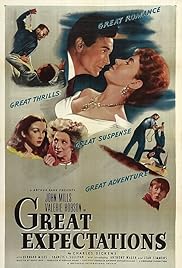
I am still reading Anthony Trollope's Small House at Allington. I will be sharing some quotes from the book. I have finished two books since the last Victorian Year post. The first is Sylvia's Lovers by Elizabeth Gaskell.  The second is Dracula by Bram Stoker. I've also watched an adaptation of Great Expectations (1946).

Great Expectations. 1946. Directed and adapted by David Lean. Starring John Mills, Valerie Hobson, Martita Hunt, Finlay Currie, Alec Guinness, Eileen Erskine, and Bernard Miles.

I feel I should first point out that this is the only adaptation of Great Expectations that I've seen. I have no other film with which to compare it. Is it faithful to the book? Somewhat. It does take liberties. With the ending it takes HUGE liberties. I'm not sure Estella is Estella enough--if that makes sense.

As I was watching it, Mom made the observation that Estella is in many ways similar to Scarlett O'Hara--in her selfish heartlessness. I don't know that Estella deserves a happily-ever-after ending. I would have more respect for Pip, perhaps, if he wasn't so head-over-heels with Estella and blind to her greatest faults. Oh, he knows she has faults. But he seems to ignore/dismiss them. Her insides don't match her outsides--and he seems okay with that, more than okay with that.

But when I really stop and consider Pip--is he a great judge of character in general? He is just as blind when it comes to Joe. The way Pip feels about Joe--the way he's ashamed of him, embarrassed by him, dismissive of him, at times rude to him--if only by default of complete and total ingratitude--makes me angry.

I liked the film okay. I do think they took a few liberties here and there. I'm not sure the film includes all my favorite dialogue-driven scenes. But I'd really have to watch the film again to double-check. (I don't want to.)

Quotes from Small House at Allington
A self-imposed trouble will not allow itself to be banished.
“Ah, that’s so like you. I always said you’d no feeling of real romance. If I cared for a woman I’d give her the coat off my back.” “I’d do better than that,” said Johnny. “I’d give her the heart out of my body. I’d be chopped up alive for a girl I loved; but it shouldn’t be for another man’s wife.”
We saw that he had difficulty in writing it, but the miracle was, that any man could have found it possible to write it.
Love does not follow worth, and is not given to excellence; — nor is it destroyed by ill-usage, nor killed by blows and mutilation.
“Mothers do not often get tired of their children, whatever the children may do of their mothers.”
“I don’t know that any good would be got by knocking him over the head. And if we are to be Christians, I suppose we ought to be Christians.”
“What sort of a Christian has he been?” “That’s true enough; and if I was Bernard, I should be very apt to forget my Bible lessons about meekness.” There are some things for which a man ought to be beaten black and blue.” “So that he shouldn’t do them again?” “Exactly.”

“I don’t know much about being in love with her,” said Johnny, turning very red as he spoke. “But I’d go through fire and water for her, my lord. I knew her years before he had ever seen her, and have loved her a great deal better than he will ever love any one. 
My belief is that in life people will take you very much at your own reckoning.
 There are certain maladies which make the whole body sore.
John Eames had reached his office precisely at twelve o’clock, but when he did so he hardly knew whether he was standing on his heels or his head.
No one thinks of defending himself to a newspaper except an ass; — unless it be some fellow who wants to have his name puffed.

© 2018 Becky Laney of Becky's Book Reviews

Monday, October 15, 2018

Dracula

Dracula. Bram Stoker. 1897/2005. 448 pages. [Source: Bought]

First sentence: 3 May. Bistritz. -- Left Munich at 8.35 PM on 1st May, arriving at Vienna early next morning; should have arrived at 6.46, but train was an hour late.

Premise/plot: This classic Victorian horror novel opens with Jonathan Harker's journal. He is soon to meet Count Dracula. He's yet unaware of how quickly his life is about to be turned topsy-turvy. The good news is that he won't have to face this epic battle between good and evil alone. He'll be surrounded by friends: Abraham Van Helsing, Dr. John Seward, Quincey Morris, Arthur Holmwood (aka Lord Godalming), and his wife, Mina Harker.

They were awakened to the danger through the tragic loss of their dear, dear friend and companion Miss Lucy Westenra.

The novel consists of diaries, journals, letters, records, etc.

My thoughts: I first read Dracula in 2007. That almost seems a lifetime ago. I reread Dracula because I needed a qualifying read for the 2018 #Victober reading challenge. Dracula could fulfill Katie's challenge or Kate's challenge.

Quotes:
  • "You may go anywhere you wish in the castle, except where the doors are locked, where of course you will not wish to go. There is reason that all things are as they are, and did you see with my eyes and know with my knowledge, you would perhaps better understand." (31)
  • What does it all mean? I am beginning to wonder if my long habit of life amongst the insane is beginning to tell upon my own brain. (157)
  • "If I could, I would take on myself the burden that you do bear. But there are things that you know not, but that you shall know, and bless me for knowing, though they are not pleasant things. (190)
  • I suppose a cry does us all good at times--clears the air as other rain does. (206)
  • "My friends, this is much; it is a terrible task, that we undertake, and there may be consequence to make the brave shudder. For if we fail in this our fight he must surely win; and then where end we? Life is nothings; I heed him not. But to fail here, is not mere life or death. It is that we become as him; that we henceforward become foul things of the night like him--without heart or conscience, preying on the bodies of those we love best." (269)


© 2018 Becky Laney of Becky's Book Reviews

Saturday, October 06, 2018

Cyrano de Bergerac

Cyrano de Bergerac. Edmond Rostand. Translated by Gladys Thomas and Mary F Guillemard. 1897. 240 pages. [Source: Bought]

First sentence: Hollo! You there! Your money!

NOTE: I've read Cyrano de Bergerac several times throughout the years. I believe this is the second time I've reviewed it for Becky's Book Reviews. It is, without a doubt, one of my favorite plays. (The only one that might come close is William Shakespeare's Much Ado About Nothing.)

I decided to reread Cyrano de Bergerac for #Victober. One of the challenges is to read a book published in the last ten years of the Victorian period. Cyrano de Bergerac was published in 1897.

I am cutting and pasting the plot summary from my first review.  The "my thoughts" are new.

Premise/plot: Cyrano de Bergerac is in love with his cousin, Roxane. The problem? He lacks the courage to tell her so because he feels his nose--his hideous, ugliness--will prevent her from ever loving him in return. Also standing in his way is the fact that Roxane declares herself head over heels in love with oh-so-handsome Christian de Neuvillette. How does Christian feel about Roxane? He loves her of course. Why? Because she's beautiful. (At least Cyrano knows Roxane, and, his love isn't based on her beauty alone.) Roxane asks Cyrano to watch over Christian and be his friend. (Christian has just joined the same regiment.) Cyrano tells Christian that Roxane does love him, but, instead of that being the end of it...it is just the start. For Roxane is determined that the man she loves will be brilliant and exceptionally well-spoken. He must win her heart through his words. The problem? Christian's idea of wooing is to say "I love you" and go in for a kiss. NOT WHAT ROXANE WANTS AT ALL. The solution is for Cyrano to give Christian the words to speak to win her heart for once and all. But is that a real solution?! Is a happily ever after possible in this love triangle?!

Cyrano de Bergerac is a five act (French) play by Edmond Rostand written/performed in 1897. It is set in seventeenth century France around the same time as The Three Musketeers. And like The Three Musketeers, it has sword fighting. Lots and lots of sword fighting.

 My thoughts: I love, love, love Cyrano de Bergerac. I'm not sure I equally adore Roxane. Cyrano is already madly in love with her before Act I. His love for her is never in question, and never in doubt. To him, she is absolute perfection. His longed-for ideal. But is he seeing only what he wants to see? How well does he know the real her? Does he love her because she is beautiful? Does he love her because she is so out of reach and unattainable? Does his love of her have roots from their shared childhood?

Roxane doesn't see the real him until it is too late. She has known him most of her life and never actually seen him. That is incredibly sad. I'm just trying to guess if she really was all that he imagined her to be. Was his love was a 'storybook love'--the stuff of daydreams only. Surely Roxane had flaws! Who doesn't have flaws?! Surely Roxane would have proved disappointing or irritating at times if they'd lived together closely.

Christian. How do I feel about him?! I think Cyrano and Christian are using each other--taking advantage of one another. This agreed upon dishonesty isn't all that healthy when all is said and done. Christian realizes--on a fateful day--that he needs more, deserves more. He doesn't want to be loved for his 'fairness' his fineness. He wants to be loved heart and soul for himself. He doesn't want to be an object of lust. Does Christian love Roxane for more than her looks? her body? Does he love her truly heart, soul, mind, body. I'm not sure. Perhaps the play--when scrutinized--reveals how silly "true love" is and how deceptive the human heart can be. Roxane didn't have a clue who Christian was--not really. She never saw him for who he really was. And if Christian had lived instead of died, chances are Roxane would have broken his heart.

Quotes:

A description of Roxane
When one looks at her one thinks of a peach smiling at a strawberry!
Cyrano to Christian
None is a fool who knows himself a fool. And you did not attack me like a fool.
Cyrano to Christian
Will you complete me, and let me complete you? Let me be wit for you, be you my beauty! 
Christian speaks for himself....
CHRISTIAN (sits by her on the bench. A silence): Oh! I love you!
ROXANE (shutting her eyes): Ay, speak to me of love.
CHRISTIAN: I love thee! 
ROXANE: That's The theme! But vary it. 
CHRISTIAN: I. . . 
ROXANE: Vary it!  
CHRISTIAN: I love you so! 
ROXANE: Oh! without doubt!--and then?. . . 
CHRISTIAN: And then--I should be--oh!--so glad--so glad If you would love me!--Roxane, tell me so!  
ROXANE (with a little grimace): I hoped for cream,--you give me gruel! Say How love possesses you? 
CHRISTIAN: Oh utterly! 
ROXANE: Come, come!. . .unknot those tangled sentiments! 
CHRISTIAN: I am grown stupid! 
ROXANE (dryly): And that displeases me, almost as much As 'twould displease me if you grew ill-favored.  
ROXANE: Yes, you love me, that I know. Adieu. (She goes toward her house.) CHRISTIAN: Oh, go not yet! I'd tell you-- 
ROXANE (opening the door): You adore me? I've heard it very oft. No!--Go away!
  Cyrano "saves" the night by speaking for Christian in shadows...
ROXANE: To-day. . . Your words are hesitating.
CYRANO (imitating Christian--in a whisper): Night has come. . . In the dusk they grope their way to find your ear.  
ROXANE: Meseems that your last words have learned to climb. 
CYRANO: With practice such gymnastic grows less hard! 
CYRANO (more and more moved): Stay awhile! 'Tis sweet,. . . The rare occasion, when our hearts can speak Our selves unseen, unseeing! Your eyes Have beams that turn men dizzy!--But to-night Methinks I shall find speech for the first time!
ROXANE: Ay! I am trembling, weeping!--I am thine! Thou hast conquered all of me!
CYRANO: Then let death come! 'Tis I, 'tis I myself, who conquered thee! One thing, but one, I dare to ask--
CHRISTIAN (under the balcony): A kiss
Cyrano on kisses...
A kiss, when all is said,--what is it? An oath that's ratified,--a sealed promise, A heart's avowal claiming confirmation,--A rose-dot on the 'i' of 'adoration,'-- A secret that to mouth, not ear, is whispered,-- Brush of a bee's wing, that makes time eternal,--Communion perfumed like the spring's wild flowers,-- The heart's relieving in the heart's outbreathing, When to the lips the soul's flood rises, brimming!
Cyrano before the last battle
CYRANO: Poets, at last,--by dint of counterfeiting-- Take counterfeit for true--that is the charm! This farewell letter,--it was passing sad, I wept myself in writing it!
CHRISTIAN: Wept? why?
CYRANO: Oh!. . .death itself is hardly terrible,. . . --But, ne'er to see her more! That is death's sting! --For. . .I shall never. . .
Cyrano confesses to Christian
CYRANO: You have. . .written to her oftener than you think. . .
CHRISTIAN: How so?
CYRANO: Thus, 'faith! I had taken it in hand to express your flame for you!.  
CHRISTIAN: But how did you contrive, since we have been cut off, thus. . .to?. . . CYRANO: . . .Oh! before dawn. . .I was able to get through. . . 
CHRISTIAN (folding his arms): That was simple, too? And how oft, pray you, have I written?. . .Twice in the week?. . .Three times?. . .Four?. . . 
 CYRANO: More often still. 
CHRISTIAN: What! Every day? 
CYRANO: Yes, every day,--twice.
Roxane says a little too much...(abbreviated)
ROXANE: 'Tis your fault if I ran risks! Your letters turned my head! Ah! all this month, How many!--and the last one ever bettered The one that went before! Ah! you cannot conceive it! Ever since That night, when, in a voice all new to me, Under my window you revealed your soul-- Ah! ever since I have adored you! Now Your letters all this whole month long!--meseemed As if I heard that voice so tender, true, Sheltering, close! ROXANE: I read, read again--grew faint for love; I was thine utterly. Each separate page Was like a fluttering flower-petal, loosed From your own soul, and wafted thus to mine. Imprinted in each burning word was love Sincere, all-powerful. . . 
CHRISTIAN: At first I loved you only for your face! 
CHRISTIAN (horror-stricken): Roxane! 
ROXANE: And later, love--less frivolous-- Like a bird that spreads its wings, but can not fly-- Arrested by your beauty, by your soul Drawn close--I loved for both at once!
CHRISTIAN: I do not ask such love as that! I would be loved more simply; for..  ROXANE: Ah! how you err! 'Tis now that I love best--love well! 'Tis that Which is thy true self, see!--that I adore! Were your brilliance dimmed. 
ROXANE: I should love still! Ay, if your beauty should to-day depart. . . CHRISTIAN: Say not so!
ROXANE: Ay, I say it!  CHRISTIAN: Ugly? How?

Christian speaks his mind...
CHRISTIAN: I will be loved myself--or not at all! --I'll go see what they do--there, at the end Of the post: speak to her, and then let her choose One of us two!
Cyrano's aside...
CYRANO (aside--drawing his sword): Ay, and let me die to-day, Since, all unconscious, she mourns me--in him!
Cyrano reveals all to Roxane...
CYRANO: His letter! Ah! you promised me one day That I should read it.
ROXANE: What would you?--His letter?
CYRANO: Yes, I would fain,--to-day.  
CYRANO (reading): 'Roxane, adieu! I soon must die! This very night, beloved; and I Feel my soul heavy with love untold. I die! No more, as in days of old, My loving, longing eyes will feast On your least gesture--ay, the least! I mind me the way you touch your cheek With your finger, softly, as you speak! Ah me! I know that gesture well! My heart cries out!--I cry "Farewell"!'  
ROXANE: You read in such a voice--so strange--and yet-- It is not the first time I hear that voice!  
CYRANO: 'Here, dying, and there, in the land on high, I am he who loved, who loves you,--I. . .' 
ROXANE: How can you read? It is too dark to see!  
CYRANO: Roxane! 
ROXANE: 'Twas you! 
CYRANO: No, never; Roxane, no! 
 ROXANE: I see through all the generous counterfeit-- The letters--you! 
CYRANO: No. 
ROXANE: The sweet, mad love-words! You! 
CYRANO: No!  
ROXANE: The voice that thrilled the night--you, you! 
CYRANO: I swear you err. 
ROXANE: The soul--it was your soul!  
CYRANO: I loved you not. 
ROXANE: You loved me not? 
CYRANO: 'Twas he! 
ROXANE: You loved me! 
ROXANE: --Why, why keep silence all these fourteen years, When, on this letter, which he never wrote, The tears were your tears? 
CYRANO (holding out the letter to her): The bloodstains were his.
 Roxane...
I loved but once, yet twice I lose my love!
Cyrano gets the last word in...
I would not bid you mourn less faithfully That good, brave Christian: I would only ask That when my body shall be cold in clay You wear those sable mourning weeds for two, And mourn awhile for me, in mourning him.

© 2018 Becky Laney of Becky's Book Reviews
Tuesday, September 04, 2018

2018 Reading Challenges: Victober

Victober
Hosted by Ange, Kate, Katie, and Lucy. (All BookTubers) GoodReads Group page.
When: October 2018
# of books: I'm aiming for 4 (I'd be surprised if I finish that many).


Books Completed:
Great Expectations. Charles Dickens. 1860. Read for LibriVox by Mil Nicholson. 20 hours, 13 minutes. [Source: Librivox]
Dracula. Bram Stoker. 1897/2005. 448 pages. [Source: Bought]
Sylvia's Lovers. Elizabeth Gaskell. 1863/1997. Everyman Paperbacks. 560 pages. [Source: Bought]
 Agnes Grey. Anne Bronte. 1847. 224 pages. [Source: Bought]

Ange's challenge: Read a book by one of the hosts' favourite Victorian authors: Charlotte Bronte, Charles Dickens, Elizabeth Gaskell, or Thomas Hardy. 

I will be reading Sylvia's Lovers by Elizabeth Gaskell (maybe)
I might also be reading something else by Elizabeth Gaskell. (Like Wives and Daughters or Ruth or Cranford)
Great Expectations. Charles Dickens. 1860. Read for LibriVox by Mil Nicholson. 20 hours, 13 minutes. [Source: Librivox]

Kate's Challenge: Read A Victorian book with a proper noun (place name or personal name) in the title.

I will be reading The Small House at Allington by Anthony Trollope. I might also be reading Sylvia's Lovers by Elizabeth Gaskell. Or Romola by George Eliot.

Sylvia's Lovers. Elizabeth Gaskell. 1863/1997. Everyman Paperbacks. 560 pages. [Source: Bought]

Katie's Challenge: Read a book from the first ten years of the Victorian period (1837-1847) and/or a book from the last ten years of the Victorian period. (1891-1901)

I will be reading The Three Musketeers (1844) OR The Old Curiosity Shop by Charles Dickens.

I will be reading Cyrano de Bergerac published in 1897.

I will be trying to find a book by a British or Irish author that fulfills the challenge.

Dracula. Bram Stoker. 1897/2005. 448 pages. [Source: Bought]

Lucy's Challenge: Read a Victorian book written by a woman anonymously or under a pseudonym.

I will be reading Romola by George Eliot. Maybe. This one is on another challenge list. So if it's going to be done in 2018, October seems a logical choice.

 Agnes Grey. Anne Bronte. 1847. 224 pages. [Source: Bought]

General challenge: Read a Victorian book and watch a screen adaptation of it:

I'm not sure yet.

Bonus Group Readalong: Wives and Daughters by Elizabeth Gaskell.

© 2018 Becky Laney of Becky's Book Reviews