Showing posts with label movie review. Show all posts

Sunday, March 14, 2021

Movie Review: When Lions Roared


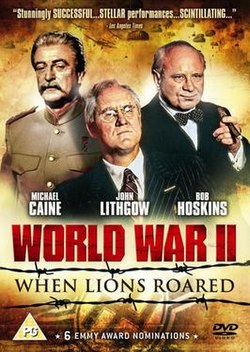
When Lions Roared AKA Then There Were Giants (1994). This is a two part mini-series from 1994 starring Michael Caine as Joseph Stalin, Bob Hoskins as Winston Churchill, and John Lithgow as Franklin Roosevelt. 

The film gives an overview of the Second World War. It isn't a thorough, all-absorbing overview of all aspects of the War. It is like a refresher course on the Second World War, offering highlights to the war as a whole. If you have never, ever read about the war--or watched documentaries about the war--and were completely clueless about the war, then you might find it overwhelming and hard to keep up with the fast-moving pace.

The focus isn't so much on the war itself--the various fronts, operations, battles, victories and losses--as it is focused on the relationship between the three world leaders: Churchill, Roosevelt, and Stalin. The film highlights their differences--for better or worse--and shows them always seeking and straining to work together for the better good.


In other words, this film is very much about the politics of war, the politics of peace, and the POWER of words. 

 It almost felt like a three-man stage play for me. 

For me, what I enjoyed most were the snippets of Churchill's speeches. He is without compare as far as I'm concerned when it comes to speechifying. 

It was amusing to see John Lithgow--as FDR--make so many disparaging comments about Churchill and his speeches--then went on to play Winston Churchill in The Crown.

It is available to watch for free on iMDB TV.


© 2021 Becky Laney of Becky's Book Reviews

Friday, March 12, 2021

Movie Review: The Exception


Today I watched a new-to-me World War II film, The Exception. It stars one of my favorite, favorite, favorite actors--Christopher Plummer. He plays an exiled (Emperor) Kaiser Wilhelm II. The film is based on a novel, The Kaiser's Last Kiss, which I have not read. (I mention this because I like to know if there's a book behind a movie--I haven't looked at the reviews of the book, or the movie for that matter.)

So the main character, Captain Stefan Brandt arrives at his new station in Holland; he is the new bodyguard for the exiled Kaiser. Perhaps it's not his first, second, or third choice for an assignment--but you don't really argue with your superiors--Nazi or not. While there he meets an attractive young maid Mieke (played by Lily James who is just about in every film ever made). The two become entangled. This is a MATURE movie. (I can't remember if it was rated MA or R.) He is to keep an eye out for an English agent that is thought to be in the area.

While there he becomes familiar with the Kaiser and his wife and some of the staff. (None so intimately well as the maid, Mieke.) As these two fall in love, complications arise--many, many complications. Will Brandt prove the exception to the rule? Or is he just like all the others?

I really loved SO MUCH about this movie. If I could change anything about the movie at all, it would be to take out the mature love scenes. If you want to cash in on what sells, then it maybe could have been done with a bit more taste? I know, I know not everyone shares my views on these matters--how much skin is TOO MUCH skin.

I thought the writing was EXCELLENT.


© 2021 Becky Laney of Becky's Book Reviews

Friday, February 26, 2021

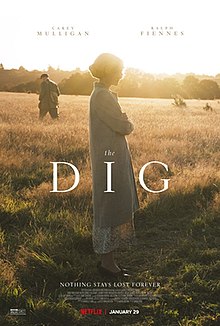
Movie Review: The Dig


The Dig (2021)
Simon Stone (director)
Starring: Carey Mulligan, Ralph Fiennes, Lily James, Johnny Flynn, Ben Chaplin, Ken Scott, etc.

The Dig is based on John Preston's novel of the same name. It released in January 2021. I had some interest in watching this one because I do enjoy period dramas. I didn't know--before I started--that this one was set at the dawn of the Second World War. (1939)

So it's based on a true story--though I'm guessing liberties have been taken. Edith Pretty (our heroine) has hired Basil Brown (our hero) to excavate several large burial mounds on her property. She has a feeling that they could uncover something interesting/wonderful. Though little expect to find such TREASURE. There are many, many, many obstacles to be overcome in the film. 

I found The Dig to be a slower-paced, character-driven thoughtful film. Not that there aren't moments of action--though to mention them here and now would be to spoil things a little bit. 

I found the film to have a heaviness about it. Almost like reading the book of Ecclesiastes, or as my Dad calls it the depressing book that starts with an "E."

It's a grave film--perhaps I've been watching too much Muppet Show. I would say it dances with being a meaning of life film. But I would say that unlike the book of Ecclesiastes it doesn't really offer any answers. (Not that Ecclesiastes is great at that.)

I would say my biggest issue with the film is that it throws in a romance for the fun of it. I am NOT talking about a romance between the hero and heroine. I am referring to an adulterous romance--that was not based in reality, remember many of these characters are real people--between Rory (a fictional cousin and photographer) and Peggy Piggott (a real archaeologist). Not every film needs to have sex scenes and "romance."


© 2021 Becky Laney of Becky's Book Reviews

Tuesday, February 16, 2021

The Student Prince


The Student Prince (1954) starring Edmund Purdom and Ann Blyth and directed by Richard Thorpe. The Student Prince was an operetta by Sigmund Romberg and Dorothy Donnelly written/composed in 1924. 

According to Wikipedia it was based on a German play, Old Heidelberg, by Wilhelm Meyer-Forster which was first performed in 1901. (According to yet another Wikipedia article the play was based on an 1898 novel Karl Heinrich also by Meyer-Forster.) 

There were several silent films--in both German and English--of Old Heidelberg and/or The Student Prince. The operetta was--again according to Wikipedia--the longest running Broadway show in the 1920s--608 performances to Show Boat's 572 performances. 

It was adapted into a musical film in 1954. Mario Lanza provided the voice for the student prince.

I found *some* similarities between The Student Prince and Cinderella. Though I will say The Student Prince is more of an anti-Cinderella tale. Prince Karl Franz, our "hero" is the heir to the throne of Karlsberg (fictional German kingdom). He's all set for an arranged marriage, but his intended bride finds him a bit robotic, cold, uncaring. Deemed to be lacking the important virtue of CHARM, he's sent to attend university/college in Heidelberg. He'll live in an inn, attend classes, and generally mingle with the commoners for however long it takes for him to gain some perspective. Of course, this proves slightly problematic. He falls madly, deeply, passionately in love with the innkeeper's niece, Kathie, who waits on him--and others--primarily serving round after round after round after round after round of beer. (Most of the musical numbers are about drinking, drinking, drinking, and more drinking.) Since their love affair literally can't go anywhere--she's a commoner, he's the heir to the throne--and since he's already engaged to be married--it's a bit "There's No Tomorrow" or "It's Now or Never." When his grandfather (the current king) dies, he assumes the throne, leaves Kathie forever, and is on his way to his wedding. The End.

As I mentioned before this is an anti-Cinderella story as far as I'm concerned. He's an UNcharming prince who does NOT marry a commoner who's in service. Though he may love her, he always must leave her in the end. 

I found him insufferable. I yelled at the screen quite a bit. Mainly because he's very hand-sy and trying to force himself on Kathie for the first half of the movie. He doesn't really change what he wants--but she eventually falls for his act after a few love songs where he "croons" in her ear. (Ouch!!!) Perhaps she was attracted to him all along? Maybe she thought she didn't have a choice and she might as well accept her fate? Maybe because her uncle was unsupportive? Maybe because she had nowhere else to go or way to earn a living? 

Regardless, I was not swept up into this love story. I thought he was a JERK. It was clearly insta-lust presented as insta-love (well, maybe???). Sees a girl swinging beer around and singing, thinks I must grab her and kiss her as soon as possible. WHAT?!?! Who is she to reject my kisses. I must try again and again and again. I will not take NO for an answer. I am A PRINCE. She will be mine! I will pursue her until she quits this job, goes across the river, follow her to her new place of work, and pester her until she's fired, and then follow her after she's fired and SING, SING, SING, SING until she will willingly accepts my kisses. 

Apparently kissing a commoner and drinking beer (lots of beer) with commoners does the trick and he is a forever changed man? (But is he really???? It's not like we know how he is once he's King and married). 

I do think it shows how Cinderella might have gone if there had not been magic and a fairy godmother. 

© 2021 Becky Laney of Becky's Book Reviews

Saturday, February 06, 2021

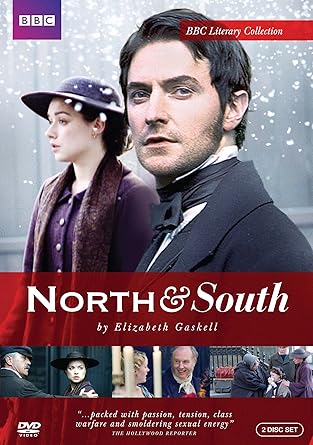
Movie Review: North and South (2004)


North and South
2004
Starring Daniela Denby-Ashe and Richard Armitage
Directed by Brian Percival
Music: Martin Phipps

In December I reread Elizabeth Gaskell's North and South. In January I watched (for the first time) the 1975 adaption of North and South (starring Patrick Stewart). This month I rewatched the 2004 North and South.

Overall, I really love and adore this movie. Is it faithful to the book? Not really. Is it faithful to the spirit/essence of Gaskell's characters? No, not really. But does it tell a whole story and stand on its own? YES, yes, yes. The characters though perhaps miles away from being like what Gaskell actually wrote are so well written--so well cast--that it WORKS. Here's where this adaptation shines. It is all about RELATIONSHIPS and (viewer) INVESTMENT and EMOTIONS/FEELS. 

Though John Thornton and Margaret Hale are not Elizabeth 2.0 and Darcy 2.0 in Gaskell's original novel, in the movie they sort of are. And it's a formula that works well. 

I could point out all the hundreds of ways this adaptation differs from the novel. (The first happening withing a minute or two of the movie's opening. Mrs. Hale (Margaret's mother) does NOT attend Edith's wedding. Mrs. Hale and her sister live in two different social worlds, have different incomes, and different wardrobes. Mrs. Hale is too embarrassed and too proud to either ask to borrow a dress or to appear in a super-shabby dress that is decades out of style as well. Perhaps Margaret is unaware of this reasoning, she's not always intuitive--rarely intuitive--but certainly Gaskell emphasizes this.) To me the biggest difference is the two John Thorntons. 

The question isn't is this a good/great/decent adaptation...the question is this a good/great/awesome/wonderful movie. And while it fails at the first, it exceedingly succeeds at the second. It is a WONDERFUL movie that doesn't need to rely on a book. 

The characters, the actors, the costumes, the MUSIC, the romance....all is perfectly perfect especially if you divorce it almost completely from Gaskell's novel.


© 2021 Becky Laney of Becky's Book Reviews

Monday, January 25, 2021

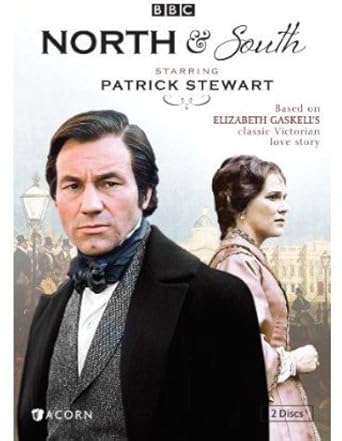
Movie Review: North and South (1975)


North and South (1975)

Directed by Rodney Bennett

Adapted by David Turner

Starring: Rosalind Shanks as Margaret Hale and Patrick Stewart as John Thornton. 

My last read of 2020 was Elizabeth Gaskell's North and South. I've seen the 2004 adaptation of North and South a handful of times. I had never seen the earlier adaptation of North and South done in 1975. I wanted to see it for two reasons, really: 1) It's Patrick Stewart...with hair...and all dressed up; 2) North and South is one of my favorite, favorite books. The 2004 adaptation is solidly good--especially if you've never read the novel, especially if you are just looking for Darcy 2.0, especially if you would watch Richard Armitage in just about anything or everything. But it's not exactly faithful to the book. The question was....is the 1975 adaptation better at staying faithful to the book?

Margaret. In the 2004 adaptation, Margaret Hale is all sweetness and perfection. She's a near-flawless embodiment of a modern woman. In the 1975 adaptation, Margaret is out of her element...most of the time. It was a nice contrast to the bold confidence and superiority of the 2004 Margaret. But many of her scenes she almost fades into the background. I haven't decided if that is a good thing, or a bad thing. In the novel, Margaret is equal parts pride and prejudice. She's opinionated and outspoken--especially within the walls of her own home. She's a blunt-speaker and comes across as a big snob. In her scenes with John Thornton she comes across as cool and aloof...for the most part. (In the 2004 movie she's all confrontation all the time. From the moment they meet she is all  I AM HERE TO TELL YOU THAT YOU'RE DOING EVERYTHING WRONG.) The 1975 Margaret is a bit more reserved. She is feisty occasionally--but it's more of a rare occurrence for her to speak out and bring him down with her wisdom, or so-called wisdom. 

John. I have a love/hate relationship with Richard Armitage's John Thornton. I don't blame him personally. I think the role was written as DARCY 2.0 and he was directed to be DARCY 2.0. Just by his presence--his being there all dressed up and looking at the camera--the film becomes instantly swoon-worthy. The script almost doesn't matter. But the 2004 John Thornton is NOTHING AT ALL like the book hero. Nothing. In the novel he's empathetic, compassionate, hard-working, genuine, honest. He is a business man, true, and he is always looking to make sound business decisions. Margaret is all YOU WORK, HOW GROSS! I COULD ONLY LOVE A MAN OF LEISURE. (That's not true, the Margaret of the novel isn't boy-crazy, she is not looking for love and desperate to find a husband.) Everything I love about the novel is almost absent or crucially changed in the 2004 adaptation. What you get is A SOLID ROMANCE but it's not what Gaskell wrote, not really. So how did Patrick Stewart do???? Well, I liked seeing him all dressed up too!!!! He's a fast talker. He comes across as sharp and intelligent. His love for Margaret almost seems to come out of nowhere--almost. But I don't fault him for that. He doesn't know how to STARE LIKE DARCY and he doesn't have Colin Firth to refer back to as that edition of Pride and Prejudice hadn't been filmed yet. (Nor the 1980 Pride and Prejudice which also has a lot of staring.) I don't know that the on-screen chemistry was amazing between Patrick Stewart and Rosalind Shanks. But I almost preferred the chasteness of that one brief smooch to the more dramatic ending of 2004. It was more in line with the novel. 

THE ENDING. I love the 2004 ending. I do. I would lie if I didn't say it left me grinning from ear to ear every single time. EVERY SINGLE TIME. But I liked the 1975 ending as well. It started off with potential to be close to the novel. Their meeting was not at a train station almost by chance. He came to London to her aunt's home. It was a private conversation. But what I really, really WANT in an adaptation is to keep the THAT MAN and THAT WOMAN speech intact. If you've read the book, you may remember what I mean!!!

The pacing. Some things were super super super rushed in the 1975 adaptation. 

Rearranging conversations. There were some awkward rearrangements that just made little sense. Even when the conversations were clearly inspired by actual scenes from the book, the placement within the movie made them seem strange.  

Conclusion: Neither is faithful enough to properly satisfy me in that regard. But the 2004 is a thousand times more watchable...overall. The time investments seems less worth it for the 1975. I still would *love* a John Thornton that was actually more like the book hero.

© 2021 Becky Laney of Becky's Book Reviews

Wednesday, October 17, 2018

My Victorian Year #43

I am still reading Anthony Trollope's Small House at Allington. I will be sharing some quotes from the book. I have finished two books since the last Victorian Year post. The first is Sylvia's Lovers by Elizabeth Gaskell.  The second is Dracula by Bram Stoker. I've also watched an adaptation of Great Expectations (1946).

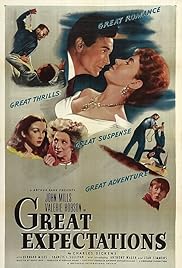
Great Expectations. 1946. Directed and adapted by David Lean. Starring John Mills, Valerie Hobson, Martita Hunt, Finlay Currie, Alec Guinness, Eileen Erskine, and Bernard Miles.

I feel I should first point out that this is the only adaptation of Great Expectations that I've seen. I have no other film with which to compare it. Is it faithful to the book? Somewhat. It does take liberties. With the ending it takes HUGE liberties. I'm not sure Estella is Estella enough--if that makes sense.

As I was watching it, Mom made the observation that Estella is in many ways similar to Scarlett O'Hara--in her selfish heartlessness. I don't know that Estella deserves a happily-ever-after ending. I would have more respect for Pip, perhaps, if he wasn't so head-over-heels with Estella and blind to her greatest faults. Oh, he knows she has faults. But he seems to ignore/dismiss them. Her insides don't match her outsides--and he seems okay with that, more than okay with that.

But when I really stop and consider Pip--is he a great judge of character in general? He is just as blind when it comes to Joe. The way Pip feels about Joe--the way he's ashamed of him, embarrassed by him, dismissive of him, at times rude to him--if only by default of complete and total ingratitude--makes me angry.

I liked the film okay. I do think they took a few liberties here and there. I'm not sure the film includes all my favorite dialogue-driven scenes. But I'd really have to watch the film again to double-check. (I don't want to.)

Quotes from Small House at Allington
A self-imposed trouble will not allow itself to be banished.
“Ah, that’s so like you. I always said you’d no feeling of real romance. If I cared for a woman I’d give her the coat off my back.” “I’d do better than that,” said Johnny. “I’d give her the heart out of my body. I’d be chopped up alive for a girl I loved; but it shouldn’t be for another man’s wife.”
We saw that he had difficulty in writing it, but the miracle was, that any man could have found it possible to write it.
Love does not follow worth, and is not given to excellence; — nor is it destroyed by ill-usage, nor killed by blows and mutilation.
“Mothers do not often get tired of their children, whatever the children may do of their mothers.”
“I don’t know that any good would be got by knocking him over the head. And if we are to be Christians, I suppose we ought to be Christians.”
“What sort of a Christian has he been?” “That’s true enough; and if I was Bernard, I should be very apt to forget my Bible lessons about meekness.” There are some things for which a man ought to be beaten black and blue.” “So that he shouldn’t do them again?” “Exactly.”

“I don’t know much about being in love with her,” said Johnny, turning very red as he spoke. “But I’d go through fire and water for her, my lord. I knew her years before he had ever seen her, and have loved her a great deal better than he will ever love any one. 
My belief is that in life people will take you very much at your own reckoning.
 There are certain maladies which make the whole body sore.
John Eames had reached his office precisely at twelve o’clock, but when he did so he hardly knew whether he was standing on his heels or his head.
No one thinks of defending himself to a newspaper except an ass; — unless it be some fellow who wants to have his name puffed.

© 2018 Becky Laney of Becky's Book Reviews

Thursday, June 08, 2017

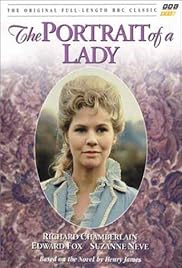
Portrait of a Lady (1968)

Portrait of a Lady (1968) starring Richard Chamberlain, Suzanne Neve, Edward Fox, Ed Bishop, James Maxwell, Rachel Gurney, Sarah Brackett, and Kathleen Byron.

 I recently read and reviewed Henry James' Portrait of a Lady. This is the film adaptation my library had. It is a six-part miniseries from 1968--a BBC production. So even though James is an American author, this is a British production of his work. The book begins and ends in England, so that makes sense to me.

If you are looking for a production that stays true to the original, then this miniseries is for you. It hasn't been that long since I read the book, and, I can tell you that I recognized lines of dialogue as coming straight from the book.

Isabel Archer, the heroine, seeks to see the world and make her own path. At first she is greatly helped by her aunt and cousin. Ralph, the cousin, becomes one of her best friends. He is her biggest advocate. He convinces his father--her uncle--to leave her a lot of money in his will. He does. And she uses that money to see much. Unfortunately, she's now become even more vulnerable. Gilbert Osmond, for example, wants to marry her for her MONEY. Her money will make him a man. Of course, his idea of a perfect wife is a woman with no thoughts, ideas, opinions of her own. And absolutely she must be void of all gumption and independence. Her money may be his salvation. But the marriage may prove her undoing. But Isabel doesn't take marriage lightly. And though she realizes after the fact that her charming suitor is a monster, she's in it for better or worse. But that doesn't mean she won't follow her heart, her conscience. The same conscience that won't let her leave him, is the same one that calls to her that she must attend her dying cousin's deathbed no matter what her husband dictates.

I definitely enjoyed this 1968 production. It is almost six hours in length. I will admit that it looks like an "old" production. You can definitely tell the difference between a BBC production say from the 60s or 70s and one from the 2000s. But I appreciate that nothing has been added to make it more dramatic and appealing. I have not seen the 1996 production, but it describes itself as sensual.

© 2017 Becky Laney of Becky's Book Reviews

Sunday, July 10, 2016

My thoughts on Cyrano de Bergerac


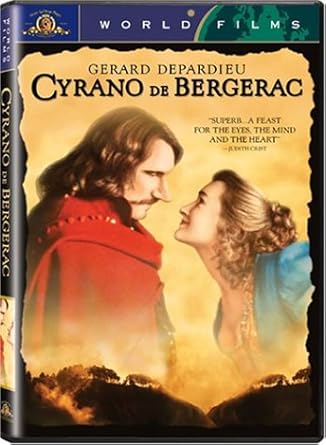
For Paris in July, I watched Cyrano de Bergerac in French with English subtitles. I cannot gush about it enough. It is all kinds of wonderful. And deserves to be watched and rewatched dozens of times at least.

The film was released in 1990. It stars Gerard Depardieu in the lead role of Cyrano de Bergerac. He is PERFECTLY perfect in this role. Anne Brochet stars as Roxane. Vincent Perez stars as Christian de Neuvillette.

Is it faithful to the play? Yes and no. I would say YES because it is true to the spirit of the play/book. Nothing has been changed about the characters themselves. The script-writing keeps to the integrity of the original. I would say NO because a few things were changed. For example, in the play, Roxane is able to ride through the enemy armies unopposed and unchallenged. If questioned, she just spills her heart and speaks of her desperate need to see her husband. She does arrive the day of the big, decisive battle. In the movie, Christian "saves" her from the enemy army and her arrival is far from unopposed. Christian is given something MANLY to do to prove himself.

I would also say that the movie misses an opportunity when it cuts one of the best, best lines from the play. What is that line? Roxane saying I've loved only one man, and I've lost him twice

Cyrano de Bergerac is a serious, dramatic, ROMANTIC play with some very comic lines. But it isn't a comedy or at least not a ha-ha comedy as my friend would say. This production captures the tone of the play exceedingly well. I did try to watch another production, a filming of a stage production from recent years, and it was over-the-top too-much. Every line (of the first forty or so minutes) acted for a belly laugh. Which is, I suppose, okay for Cyrano de Bergerac's confrontation with the actor and all. But how can you connect with Cyrano and see his soul if you're just laughing AT him?

I LOVE, LOVE, LOVE, LOVE the soundtrack to the movie. It is one of my favorite film scores. The music was composed by Jean Claude Petit.


The soundtrack opens with a track called 'Cyrano'


I would definitely recommend this soundtrack. I think it's great music to have on in the background. It is great to read to, for example. It's just hauntingly beautiful.

© 2016 Becky Laney of Becky's Book Reviews

Saturday, March 19, 2016

Thoughts on Miss Potter

For Old Fashioned Charm's Period Drama Challenge, I watched Miss Potter. 

The first time I saw this--which would have been 2006 or 2007--I was disappointed. Probably for shallow enough reasons! Kill off Ewan McGregor's character, really?!?! Did I care that it was a film 'biography' of Beatrix Potter and that it almost had to follow the events of her life? Not then. I knew nothing about Beatrix Potter's private life, private tragedies. And since I was expecting a romance, I was angry when I didn't get one.

The second time was better for me. In part, because I knew what was coming. Also, I've matured a bit in ten years perhaps! And I've also learned a little bit more about Beatrix Potter's life, and, since I knew that she did find love and happiness and did marry...I was better able to 'cope.'

I'm not sure that the film will ever truly be one of my favorite period dramas. But there some lovely scenes in this one. The Christmas scenes, for example, were lovely. I also enjoyed the focus on the friendship between Beatrix and her would-be sister-in-law.

Have you seen this one? What did you think? Do you have a favorite Ewan McGregor movie? a favorite Renee Zellweger movie?

© 2016 Becky Laney of Becky's Book Reviews

Sunday, March 13, 2016

My Thoughts on Lark Rise to Candleford, season 1

First, I just want to say that I'm rewatching this series. I spent one delightful summer watching all the seasons.

So. The show centers around the post office of Candleford essentially. The heroines are Laura Timmins, a new, oh-so-young apprentice, and the older-and-mostly-wiser postmistress Dorcas Lane. Laura comes from the (rural) community of Lark Rise, and she finds quite a bit of difference between the two communities or villages--between those living (and working) in Lark Rise to those in Candleford.

In Lark Rise, viewers come to know Laura's family especially her parents Robert and Emma, but, also her older brother, Edmund. (She has other siblings, but, at least so far in season one they rarely leave an impression.) Then there is the Arless family. There are a LOT of children. But let's be honest. We really only get to know the mother, Caroline, and the oldest son, Alf. Alf is one of Laura's dearest, dearest friends. And let's not forget Queenie and Twister! One could hardly forget them; they may be the show's most eccentric characters. Another character I can't help loving is Margaret Ellison, the reverend's daughter.

In Candleford, viewers come to know Dorcas Lane, of course, and Zillah, the cook. While Dorcas Lane might have many "one weaknesses," Zillah's literally has one weakness: gossip. She can't help listening in on other people's conversations and then repeating what she hears. Thomas Brown is a lovably eccentric character who works at the post office delivering mail--or telegrams--on occasion. He is easy to tease, I suppose. But I do genuinely like him. And then there are the two sisters Ruby and Pearl Pratt. A LOT could be said about them. Including the fact that at least in season one they have identical outfits for each episode. They can sometimes cause a LOT of trouble. And I'm still not quite happy that they broke up Dorcas' new romance. But. I suppose they're not solely to blame.

The squire. There is a LOT I could say about Sir Timothy Midwinter. Let's start with the fact that he's played by one of my favorite, favorite actors BEN MILES. For better or worse, he is only in the first season of Lark Rise to Candleford. Part of me really LOVED having him on the show. And the other part of me realizes that in terms of story, it is probably for the best that he and his wife did move to London. Sir Timothy and Dorcas Lane were childhood sweethearts, in a way, and they've stayed close after he's married someone else, perhaps a bit too close. I don't believe for one second that anything would happen, that either Dorcas or Timothy would let anything happen. But emotionally, it's not good for either one to spend so much time together. I actually really liked Lady Adelaide Midwinter. And I was so happy that she finally conceived!!!

The first season is ten episodes. I think I really enjoyed--if not LOVED--all the episodes. Perhaps my favorite may be the tenth episode. I really loved Zillah in that last episode. Thomas and Margaret finally, finally admit that they like-like each other. Dorcas' plans to sell the post office come to nothing...thanks to Thomas. Dorcas' new romance occurs in episode eight. I rather liked that episode, and, in a way I wish James Delafield had stayed in Candleford. There was a LOT of drama in episode six, when Polly is abandoned by her family. Lady Midwinter wants to adopt her...and Sir Timothy does not. Dorcas is put into an impossible situation! And oh, that ending with the poem!

Essentially, what I love about the show is...everything. I love the characters. I love the relationships. I love the humor. I love the drama. I love the costumes. I love how dependably GOOD the episodes are. I LOVE, LOVE, LOVE, LOVE the theme song!

Last week, I spent a lot of time watching Dr. Quinn. This week was all Lark Rise to Candleford. There is no comparison really. Dr. Quinn seems like such a "weak" show in comparison to LARK RISE. (Sully is still cute, however.)

© 2016 Becky Laney of Becky's Book Reviews

Saturday, May 03, 2014

Thoughts on Three Disney Fairies Movies

While I've seen all the Tinker Bell movies to date, today I'll be discussing my three favorites: Tinker Bell and the Great Fairy Rescue (2010), Secret of the Wings (2012), and Pirate Fairy (2014).

I really love Tinker Bell and the Great Fairy Rescue. Summer camp on the mainland. Tink and all her friends are in for quite an adventure. Tinker Bell knows that she's supposed to stay far away from humans, from the human house. But she's so very curious. One thing she is super curious about is a horseless carriage. She sees Lizzy and her father arrive at the cottage, and, she can't resist wanting to explore just a bit. When Vidia's wings get wet, and the two have to walk back to camp, Tinker Bell's impulsiveness displays itself once again. She finds a fairy house! An oh-so-cute fairy house (made of an oatmeal carton!). She, of course, has to go inside. The door gets stuck--not out of maliciousness, but mechanical problems. Vidia witnesses her friend getting captured by a human girl, a girl named Lizzy. Vidia follows from a distance as Lizzy takes her to her house and attempts to show her "real fairy" to her oh-so-distracted scientific father. Vidia returns to camp to tell everyone that Tink has been captured and put in a cage! A rescue won't be easy since it's raining, but Tink's friends won't let her down...

I love, love, love this one for many reasons. I love seeing Tinker Bell and Lizzy together. I love when they make a book together. Love all the kid art, and how these two find a way to understand each other and communicate. I love how Tinker Bell wants to "fix" the relationship between father and daughter. Even if that puts her own life at risk since she's given at least one or two opportunities to leave.

Secret of the Wings. I love, love, love, LOVE this one! Tinker Bell breaks another rule. She crosses the border and enters Winter! The few minutes she's there, she sees that her wings are all sparkly! Tink needs answers. She'll wait until she's warmed back up, but, go on a search for answers, she will! She'll return to the Winter Woods to seek the Keeper--the writer of all the books--to find out just WHY her wings sparkled. She'll go fully prepared--with new leggings, boots, and coat. While there she discovers something WONDERFUL. She has a sister!!! Periwinkle and Tinker Bell discover each other, but, on that very day, Lord Milori forbids them to ever see one another again. It's too dangerous for them to cross seasons or borders to be together. (Lord Milori is voiced by Timothy Dalton!!!) Tinker Bell will NOT take no for an answer, of course. With the help of her friends, Tinker Bell is determined to get to know her sister better and find a way to change the rule forever.

Love this one. I do. The song the Great Divide is just wonderful!!! I just love this one from start to finish!!!

The newest movie is Pirate Fairy. I love this one so so much! Viewers meet "the Tinker Bell of dust keepers" an oh-so-curious fairy named Zarina. The film opens with it being Zarina's turn to bring the blue pixie dust to the pixie dust tree. Viewers learn that it is the blue dust that takes regular pixie dust from a trickle to a roar. When a small speck of the blue dust is brought home in her hair, Zarina decides it's time to take her secret experiments to a whole new level. The good news: she's done it at last. She creates orange dust and pink dust and purple dust! The bad news? Well, she has quite an accident that leads to her running away for an entire year. When she returns, it won't be as Zarina. She'll be a pirate captain!

Tinker Bell and her friends will need to save the day, but Zarina won't make it easy for them! Hint: She switches their talents! If you haven't seen this one yet, you should!!! I love seeing the crocodile!!!

And, did I mention it stars Tom Hiddleston as James, a young Captain Hook?! There is so much to love about this movie! I adore "Who I Am," I do. But, I love, love, love The Frigate That Flies!!!

© 2014 Becky Laney of Becky's Book Reviews

Saturday, July 13, 2013

Watching Les Miserables

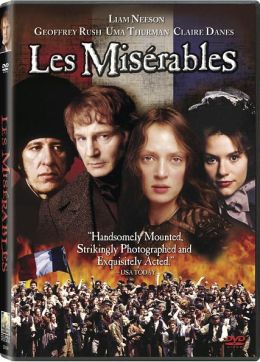
Earlier in the year, I read Victor Hugo's Les Miserables. It was LOVE. I knew I wanted to see several film adaptations. I've since watched four adaptations: the 1935 adaptation starring Fredric March (Jean Valjean), Charles Laughton (Inspector Javert), Cedric Hardwicke (Bishop Bienvenu), Rochelle Hudson (Cosette), Florence Eldridge (Fantine), and John Beal (Marius); the 1952 adaptation starring Michael Rennie (Jean Valjean), Robert Newton (Inspector Javert), Edmund Gwenn (Bishop Courbet), Debra Paget (Cosette), Sylvia Sidney (Fantine), Cameron Mitchell (Marius); the 1998 adaptation starring Liam Neeson (Jean Valjean), Geoffrey Rush (Inspector Javert), Peter Vaughan (Bishop), Claire Danes (Cosette), Uma Thurman (Fantine), Hans Matheson (Marius); the 2012 musical adaptation starring Hugh Jackman (Jean Valjean), Russell Crowe (Inspector Javert), Colm Wilkinson (Bishop), Amanda Seyfried (Cosette), Anne Hathaway (Fantine), and Eddie Redmayne (Marius).

Essentially, I wasn't satisfied with any of the adaptations I saw of this film. There were things I enjoyed about each of the adaptations. But there wasn't one definite version I'd recommend above the others. My least favorite was the musical; the musical was tedious and required you to suspend your disbelief for hours. (Who would really sing a song WHILE being chased by the police? Who would sing when trying to hide?) My favorite characters in the musical would be Eponine (Samantha Barks) and Fantine (Anne Hathaway). In some ways the musical was truer to the book than the others.
I am glad I watched it once, however. The two black and while film adaptations I saw were quite pleasant. The story is horribly condensed in both, and everything is so rushed, but, they were pleasant experiences. They don't do justice to the book...at all. The 1998 film was very nice. I thought Geoffrey Rush was great as Inspector Javert, and Liam Neeson was believable as Jean Valjean. IF this adaptation had followed the book, been a bit longer perhaps, then it could have worked for me.

© 2013 Becky Laney of Becky's Book Reviews

Tuesday, April 09, 2013

Invention of Hugo Cabret (2007)

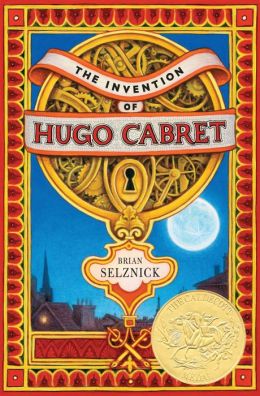
Invention of Hugo Cabret. Brian Selznick. 2007. Scholastic. 525 pages.

I hadn't really planned on rereading Brian Selznick's Invention of Hugo Cabret, but this year I joined the book to movie challenge. I'd been curious about the film, Hugo. This "review" will share what I thought about both the book and the movie.

I found the movie wonderful. I found it very compelling. I was drawn into the story--the time and place. This is a movie (and a book) where setting is just as important if not MORE important than the characters. Because it is set in a train station in Paris, France, in the early 1930s, because it focuses on such an intriguing orphan who is desperate to make sense of the world and fix what needs fixing, because it was a story with such a strong emphasis on friendship and making your own family, it worked for me. The book and the movie are different from one another. The movie adds characters and even gives them story-lines. The movie changes some of the relationships as well. But I thought some of the changes--at least--worked better. I liked the Hugo of the movie better than the Hugo of the book! While the novel's focus on old cinema was interesting, on film it meant SO MUCH MORE. This book was meant to be filmed.

I originally read the book in 2007. I watched the movie a few weeks ago and then decided to reread the book. I definitely preferred the movie to the book. But the book is a very quick read! It takes longer to watch the movie than it does to read the book!

© 2013 Becky Laney of Becky's Book Reviews

Saturday, June 23, 2012

Watching Dickens


 In June I was able to watch two movies adapted from Dickens' novels.

The first movie I watched was Pickwick Papers. I watched the BBC miniseries done in 1985. It stars Nigel Stock as Mr. Pickwick, Clive Swift as Mr. Tupman, Alan Parnaby as Mr. Snodgrass, Jeremy Nicholas as Mr. Winkle, Phil Daniels as Sam Weller, and Patrick Malahide as Mr. Jingle. To name a few. What can I say about this one? Well, the watching experience matches the reading experience. In other words, I was equally bored and amused. For example, some of the adventures of the Pickwick Club bored me in the book, and they likewise bored me in the dramatization. Not all of the adventures are boring, mind you, some are quite funny--very funny. But don't expect each episode of the miniseries to be oh-so-thrilling or laugh out loud funny. What I found was that the miniseries could be just as charming and delightful as the book. A great example would be the characterization of Sam Weller and Mr. Pickwick. Sam Weller is one of the BEST characters in Pickwick Papers. Once he's introduced into the narrative, it's like a brand new book, a much better book! Same with the drama!!! I don't think it would be an easy role to play either! But Phil Daniels does a WONDERFUL job with it!!! I also think Patrick Malahide made an excellent Mr. Jingle. Here is a character that made me want to boo, hiss every time he made an appearance; he was a true villain. Yet. By the end when he's had a transformation thanks to the mercy of Mr. Pickwick, I am able to believe it. Which really, really surprised me. Any actor that can pull off villainy and repentance must be good, right?


I definitely am glad I made time to watch The Pickwick Papers. There were things that I noticed for the first time in the drama. For example, when I was reading the book, I was so caught up in loving Sam Weller that I neglected the characterization of Mr. Pickwick, I didn't realize how much he changes throughout the novel (and the drama). I was so busy laughing with Sam Weller that I missed the heart and soul of a great man, Mr. Pickwick. It is something that I probably would have caught if I had revisited the novel too--but I'm glad I don't have to wait that long. (While I do plan on rereading Dickens, I hope to read every novel at least once before I start indulging in rereads.)

The second adaptation I watched was Our Mutual Friend (1998). Our Mutual Friend is my favorite, favorite, favorite Dickens. I just LOVE the book so much. In fact, if I was tempted to reread Dickens, Our Mutual Friend would be the one I'd most want to indulge in. I just love, love, love Lizzie and Bella and John and Eugene and Mr. and Mrs. Boffin. So I was very, very happy to watch this film. It stars Keeley Hawes as Lizzie Hexam, Paul McGann as Eugene Wrayburn, Anna Friel as Bella Wilfer, and Steven Mackintosh as John Rokesmith. (I recognized "Bella" from A Midsummer's Night Dream and Pushing Daisies. I recognized "Lizzie" from Wives and Daughters and Under the Greenwood Tree. I recognized "John" from The Muppet Christmas Carol.) So was this film giddy-making? Yes and no. It was giddy making except for when it wasn't. The romantic stories following the two couples could be pure giddy-making at times. I just LOVE, LOVE, LOVE both couples (Lizzie and Eugene; Bella and John). But there were many dark elements in this one. Some very dark, very creepy, very unpleasant elements in this one. For example, Silas Wegg (played by Kenneth Cranham) and Mr. Venus (played by Timothy Spall, whom I recognized from Oliver Twist and Enchanted) were faithful to the book (as far as I can recall) but not exactly thrilling. I do think David Morrissey did a fantastic job of being Bradley Headstone!!! Generally speaking, I think this was a wonderful, wonderful production. Thought it was really well done, thought the portrayals were just about perfect. And I loved so many scenes in this movie!!!

Watch Pickwick Papers

  • If you're a fan of Charles Dickens
  • If you are a fan of his first novel, The Pickwick Papers
  • If you're curious to see how Mr. Pickwick, Sam Weller, etc. are portrayed on film
  • If you enjoy Dickens' humor and are patient

Watch Our Mutual Friend

  • If you're a fan of Charles Dickens
  • If you are a fan of the novel, Our Mutual Friend
  • If you enjoy romance, drama, and suspense (this one has quite a few dead bodies)
  • If you enjoy period dramas

© 2012 Becky Laney of Becky's Book Reviews

Friday, June 22, 2012

Jane in the Seventies

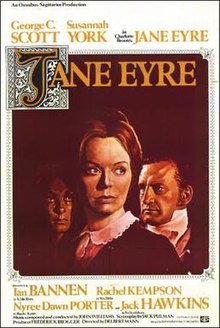
Today I'll be sharing my thoughts on TWO adaptations of Charlotte Bronte's Jane Eyre, both adaptations are from the 1970s, but they are so DIFFERENT from one another. One I'd definitely recommend, the other, well, not so much.

I'll start with the one I wouldn't really recommend, the 1970 adaptation starring George C. Scott and Susannah York. The only thing that *may* save this one from being the worst Jane Eyre ever it is my recent discovery of the 1949 TV episode adaptation of Jane Eyre starring Charlton Heston and Mary Sinclair. And then there is always the 1934 adaptation with Colin Clive and Virginia Bruce. So it would not be an easy automatic decision.

What can I say about this adaptation of Jane Eyre? Susannah York did NOT make a convincing Jane Eyre. While this couple managed to still have a twelve year age difference, it wasn't because she was so young, quite the reverse. She was over thirty and trying to play a young woman of eighteen, nineteen, or twenty. It did NOT work well. In my opinion. She was not convincing in her role as a young, plain governess. And I had a hard time believing in the romance of this couple. George C. Scott, likewise, did not make a convincing Mr. Rochester. In fact, none of the actors--at least the human ones--were quite believable in their roles in this movie. (The horses and Pilot did okay for the most part.) Now, some did better than others. I won't lie. Not everyone was equally horrible. And part of the trouble could have been the script. (The Rivers family are not her cousins, she doesn't receive an inheritance, etc. Also the Reed family does not appear at all.)

I believe there are some issues with some DVD productions being extremely low quality--in terms of picture quality, sound quality, etc. And I do believe that played a role in why I found this one so painful to watch. But only partly. Because better sound quality wouldn't necessarily have made me appreciate the score to this film any better. I found it very intrusive. It just didn't feel like it was written for this movie. 

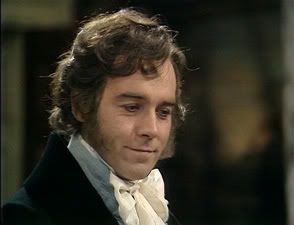
The second adaptation I will be discussing is the BBC adaptation of 1973. This adaptation is shorter than the 1983 adaptation starring Timothy Dalton and Zelah Clarke. But. It is faithful--quite faithful--to the book. A few might even say more faithful. Then again a few might say it wasn't as faithful as it might first appear to be. (For example, this one does have Mr. Rochester dressing up as a gypsy and telling fortunes! However, this Jane is not fooled for even half a second. Before she even goes to see the gypsy, before she even hears him speak, she claims to have known it was Mr. Rochester all along. He's not able to really talk with her in disguise at all. The scene is not as vulnerable perhaps. So on the one hand, Jane's "cleverness" is maintained and she never loses control, but, is that a good thing? Is this interpretation the best one? Here's the 1983 one for comparison.)

Is this adaptation for every viewer? Probably not. It is just over four hours in length. For viewers unfamiliar with other BBC adaptations from the 1970s and 1980s, the production quality may seem low. It doesn't necessarily feel like a proper movie. It doesn't have this grand, sophisticated, polished feel to it. The sets, the scenery, the costumes, the landscapes, the filming isn't as grand. Don't be surprised to find reviews calling it boring and unwatchable. It's all a matter of taste and preference. For viewers who are READERS, for viewers who LOVE, LOVE, LOVE the novel, Jane Eyre. For viewers who passionately care for Bronte's novel and hold Bronte's words in high esteem, it doesn't really get any better than this. (Same with the 1983.) I read a review of the 2011 movie that said it [the 2011 movie] was better because it didn't try to read the book to viewers. And it made me smile a little. It's all a matter of taste. Faithfulness--particularly faithfulness in dialogue between Jane and Edward--is SO VERY VERY VERY important to me. And this one has it, for the most part.

I will say that this adaptation was heavy in narration. And that sometimes the narration was intrusive. The narrator stating what was so clearly obvious to one and all. In a few scenes, this bothered me a lot. I kept thinking it would be near-perfect if the narrator would quiet down and let me watch in peace. But. For the most part. I did like this adaptation.

It stars Sorcha Cusack as Jane Eyre and Michael Jayston as Edward Rochester. While I didn't love, love, love Cusack as Jane Eyre (I liked her well enough but didn't quite love her), I absolutely LOVED, LOVED, LOVED Michael Jayston as Mr. Rochester. With each episode, I came to love him more. And by the time he proposed, well, I was extremely giddy to say the least.

This adaptation got many things right. I loved the romance of this one. They make a very good couple. And while this Jane smiled a little too much, I loved the twinkle in Rochesters eyes.

First Conversation, part one, part two
Second Conversation, part one, part two
Third Conversation
Guests at Thornfield
The Proposal
Conversation After The Proposal (Next Day)
Mr. Rochester as Gypsy
Meeting Mr. Rochester
Fire Scene
After the Big Reveal

© 2012 Becky Laney of Becky's Book Reviews

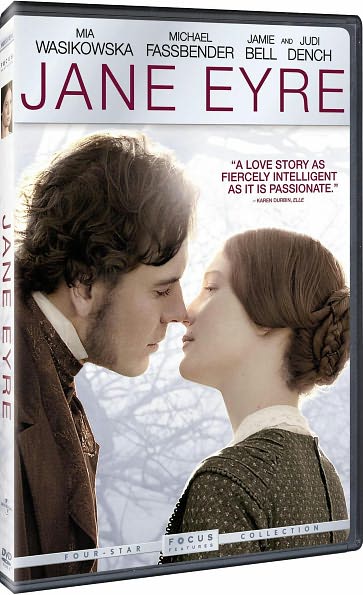
Watching Jane Eyre (2011)

Do I have thoughts and opinions on the newest adaptation of Jane Eyre? Of course, I do!!! But they have calmed down a little since my first viewing of the film last fall.  My first impression was that it was a horrible adaptation. It felt like they shuffled the pages of the script and didn't care to sort them out properly again. I just didn't understand why anyone would want to play around with the timeline and pacing. Why start the movie with Jane Eyre on the run? Why put viewers on the same page with the Rivers family? Why start there?! If you've never read Jane Eyre--never seen a movie version--it could prove VERY confusing to say the least. And I can only guess that it would influence one's impression of Mr. Rochester when we do finally meet him. Knowing from the start that this love story ends badly--with tears, angst, desperation, she's RUNNING away, etc.

Would this movie make any sense at all if you'd never read Jane? Is there enough of a story there for viewers to piece together the proper story? I can never answer that because I've read Jane Eyre and I've seen Jane Eyre countless times. I didn't necessarily find it confusing--in terms of story--more puzzling in terms of WHY did they choose to interpret it this way? The two are not the same, I know!!! The story does feel rushed, in a way, especially if you're more accustomed to a longer adaptation (2006, 1983, 1973). But it doesn't feel AS rushed as it used to feel to me since I've seen other adaptations that were comparable in length (1944, 1996, 1997, 1970). And compared to the hour-long adaptations I've seen (1934, 1949) this one was so much better.

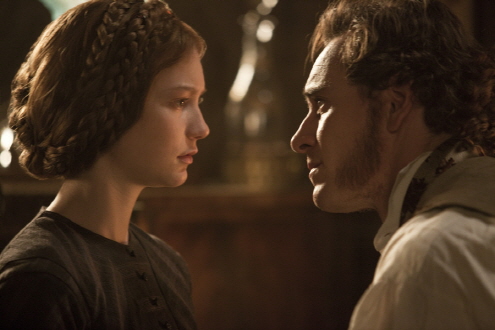
My first impression of Michael Fassbender in the role of Mr. Rochester was not favorable. Seeing it again, I've softened a little. At first, I thought he got so little time on screen that it would be absolutely impossible to like him--or love him--for his character, personality, charisma, whatever you want to call it. But. Now that I've seen some other (shorter) Jane Eyre adaptations, I realize that it's not so horrible after all. Other adaptations--longer adaptations--give you MORE to love, perhaps. They may add different dimensions to the character of Mr. Rochester--for better or worse--and have their own way of interpreting Mr. Rochester, bringing him to life from the pages of a novel. But I think he does try. One reason why I had such a strong dislike for this portrayal was in how he chose to "react" to Jane's resolution to leave. His anger, his violence, his temper was SO out of control, so over the top. But having seen the 1997 film starring Ciaran Hinds, I have a different perspective. His rage doesn't seem as over-the-top to me because Hinds performance was even worse. Granted, I still don't "like" this scene; it still makes me uncomfortable. But I've seen worse now.

My first impression of Mia Wasikowska in the role of Jane Eyre was not the best either. I didn't dislike her by any means. The problem was that she didn't leave much of an impression at all--either good or bad. She just left me indifferent. How do I feel now? Well, I can say with absolute confidence that she is so much better (or better suited) in the role than Susannah York, Mary Sinclair, and Virginia Bruce. She at least feels like she belongs to this story. And while she may not have amazed me with her performance, she does a good job. Nothing in her portrayal of Jane is unbelievable or out of character. Nothing she adds to the role offends in any way.

© 2012 Becky Laney of Becky's Book Reviews
Wednesday, June 20, 2012

Watching Other Janes

Today I thought I would share with you my thoughts on early adaptations of Jane Eyre. The 1934 adaptation starring Colin Clive and Virginia Bruce, and the 1944 adaptation starring Orson Welles and Joan Fontaine.

The 1934 adaptation is almost comical. I'm not sure comedy was the intent, but this adaptation is only an hour and five minutes!!!! If you found some of the newer adaptations rushed (2011, 1996, 1997, etc.) then you may not believe how condensed it can be. There is also something awkward about this adaptation. Virginia Bruce is just not convincing as Jane Eyre. Not in any way. (And I really wish her clothes had fit her. The costumes just do not hang right on her, they just don't fit. OR else they were trying really hard to make them as unflattering to her as possible.) I could talk about all the hundreds of details that just weren't right about this edition, or you could watch for yourself.  But despite all that, I do consider it worth watching...if you're a big Jane Eyre fan! OR if you just want a GOOD laugh!!!!

Jane Eyre meets Mr. Rochester *before* she even meets Mrs. Fairfax or Adele
Jane (in a frilly dress) has her first conversation with Mr. Rochester and sings 
Naughty Adele in a Tree
Jane Puts Out the Fire All On Her Own
Adele being absolutely ridiculous in front of the guests but charming too
Mr. Rochester tricks Jane leading to the...  Proposal
Now this certainly wasn't in the book....OR...this Bertha doesn't quite look crazy

I recently rewatched the 1944 adaptation of Jane Eyre starring Orson Welles and Joan Fontaine. I watched it at the first of the year and liked it, this time I may even have loved it. I think I appreciated Orson Welles' Mr. Rochester even more than before. One thing I've come to appreciate are the scenes between Jane and Edward. Particularly the oh-so-crucial scene between them after the big reveal. Orson Welles got this just right. He wasn't absurdly violent, he wasn't abusive; his heart ache and pain was transparent. He was full of sorrow and regret. Anyway, I thought this adaptation was great in the romance department. Passion, romance, drama, this movie has it in abundance. And this adaptation even features Jane as a child, even takes time to have her become good friends with Helen. True this one doesn't have her cousins or her inheritance. No St. John Rivers to propose marriage giving Jane Eyre an alternative. But. It does have John Sutton as "Dr. Rivers" the man responsible for saving the young Jane from her misery. Is it melodramatic? Yes. Is it entertaining? Yes!!! Is it worth watching?! Definitely!!!

I also appreciate this adaptation because of the childhood scenes we get with Jane, Helen, Mr. Brocklehurst, Mrs. Reed, and Dr. Rivers. I really enjoyed Agnes Moorehead as Mrs. Reed--she was wonderful! And Henry Daniell as Mr. Brocklehurst, well, he's so brilliant at being evil!!! (Helen is played with Elizabeth Taylor, and she is quite angelic.)

Jane Eyre meets Mr. Rochester
The Oh-so-dramatic proposal 
The Happy Ending

I also watched a television adaption from 1949 starring Mary Sinclair as Jane Eyre and Charlton Heston as Edward Rochester. This may just be the worst Jane Eyre ever. It just doesn't work on any level. It's not entertaining; it's not believable as a drama, horror, or comedy. It takes an incredible amount of liberties with the book. There's not one character that is believable or likable in this production. Was it the acting? Was it the script-writing? I'm not sure. But I do think it's sad that the two commercials for Westinghouse products--the first for an electric range with not one but two ovens, and an electric sheet so you don't have to sleep with twelve pounds of blankets to stay warm--are more interesting than the drama itself.

Part one, part two, part three, part four.

© 2012 Becky Laney of Becky's Book Reviews

Sunday, January 29, 2012

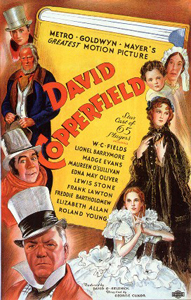
Watching David Copperfield

I recently watched the 1935 adaptation of David Copperfield. And from the start, I knew it was going to be very interesting! I must say I just LOVED the introduction of Aunt Betsey played by Edna May Oliver. It was such a comical scene. Just a delight. And it's surprisingly faithful to the book, I think!

The book is so very, very, LONG and complex. The movie is much simpler, more direct. Which isn't a bad thing. It eliminates many, many things, it's true. And this does effect the characterization. But. I felt it was just one interpretation of events.

In the novel, readers sometimes see things that the young David can't see, can't understand. Readers pick up on things--some small clues, some very, very big clues--about the people in David's life. The movie portrays them exactly as David imagines--or first imagines--them to be.

Dickens' characters were very human, very complex. Many characters had strengths and weaknesses. They weren't all good; they weren't all bad. They had flaws and quirks. In the movie, the characters tended to be less complex. We didn't see their strengths and weaknesses. There just wasn't time to get to know them.

This adaptation just isn't as good as the book. It can't really replace the book...at all. It has its enjoyable moments though!


© 2012 Becky Laney of Becky's Book Reviews

Sunday, July 17, 2011

BBC's Five Children and It

Five Children and It. BBC. 1991. Six thirty minute episodes.

So after reading The Story of the Amulet, I didn't want the adventure to be over. So I decided to begin again! I decided to reread Five Children and It. And in my searching of the library catalog, I discovered that they had a BBC production of this one filmed in 1991. So I braved it.

I watched it this weekend, and, for the most part, I liked it.

I liked it it because it was very faithful to the novel. Yes, two wishes have switched places with one another. And yes, one wish has been left out completely--a choice that I feel was best since it was the "I wish there were Red Indians in England, just the right size for us to fight..." wish. Which leads to this nonsense in the book:
It is wonderful how like an Indian you can make yourselves with blankets and feathers and coloured scarves. Of course none of the children happened to have long black hair, but there was a lot of black calico that had been got to cover school-books with. They cut strips of this into a sort of fine fringe, and fastened it round their heads with the amber-coloured ribbons off the girls' Sunday dresses. Then they stuck turkeys' feathers in the ribbons. The calico looked very like long hair, especially when the strips began to curl up a bit.
'But our faces,' said Anthea, 'they're not at all the right colour. We're all rather pale, and I'm sure I don't know why, but Cyril is the colour of putty.'
'I'm not,' said Cyril.
'The real Indians outside seem to be brownish,' said Robert hastily. 'I think we ought to be really red -- it's sort of superior to have a red skin, if you are one.'
The red ochre cook used for the kitchen bricks seemed to be about the reddest thing in the house. The children mixed some in a saucer with milk, as they had seen cook do for the kitchen floor. Then they carefully painted each other's faces and hands with it, till they were quite as red as any Red Indian need be -- if not redder. (213-14)
So the adventures were very much from the book, and the dialogue, in many places, seemed to come directly from the book. So that was nice.

I liked this adaptation in spite of the bad, bad, bad music. The opening credits and the end credits were especially AWFUL. The end credits had the Sand Fairy singing a song, I was so worried that this song would find its way into my head--into my memory--that I fast forwarded them for the most part. Nothing gets me grabbing for the remote faster than a singing Psammead!!!

As for the special effects, well, I didn't mind the way the Psammead was portrayed. It could have been much, much worse! There were moments I found his interactions with the children charming and just right--in a match the mood/tone of the book way. But then there were moments that annoyed me too. Like the way he "breathed" out his wishes and wiggled his arms. But. For the most part, I was pleased with this aspect of the adaptation.

The other special effects, well, they could have been better perhaps. Or should that be would have been better if they'd been filmed a decade or two later. (I'm thinking of Robert's growing-into-a-giant and the wish for wings.) But the special effects didn't keep me from liking this one. If I had to choose between amazingly wonderful special effects with a script that barely resembled E. Nesbit's book, a script that shares the name and not much else with the novel, then I'd choose the poorer special effects any day.

Have you seen this one? What did you think?

© 2011 Becky Laney of Becky's Book Reviews