Showing posts with label 1975. Show all posts

Friday, September 16, 2022

113. Eight is Enough


Eight is Enough: A Father's Memoir of Life with His Extra Large Family. Tom Braden. 1975. 173 pages. [Source: Review copy]

 First sentence: When I was a boy in Iowa, my ambition was "to become a pullman conductor and see the world." I know that because I wrote it in a diary I kept when I was seven.

Premise/plot: The book calls itself a memoir and who am I to disagree? I see each chapter as more of a vignette or essay. But again, who am I to disagree with the subtitle? Tom Braden was many things--soldier, spy, politician, journalist, husband, and father. He doesn't really recount much of anything besides husband-and-father in this memoir. I had no idea he worked for the CIA (or is it in the CIA???) until I read the afterword; that he was a soldier in World War II, I'm not surprised. Regardless, this book recounts his raising his family in the 1960s and 1970s. Expect anecdotes and some name dropping--as to both husband and wife moved in high circles.

My thoughts: I have very vague memories of catching the TV show in reruns. Very vague. (I think it was before we got the VCR.) But I remember just enough to be interested/intrigued in reading this one. I had no expectations. I didn't know if it would be sincere/sentimental or if it would be more like Erma Bombeck. (Don't laugh, remember I had no idea what to expect.) Some chapters do read like straight up comedy. Others read more like commentary of the times. There were a very few places that I found a bit creepy. But that could just be me not understanding the 60s and 70s.


© 2022 Becky Laney of Becky's Book Reviews

Monday, January 25, 2021

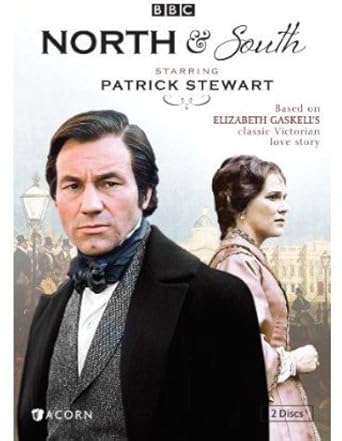
Movie Review: North and South (1975)


North and South (1975)

Directed by Rodney Bennett

Adapted by David Turner

Starring: Rosalind Shanks as Margaret Hale and Patrick Stewart as John Thornton. 

My last read of 2020 was Elizabeth Gaskell's North and South. I've seen the 2004 adaptation of North and South a handful of times. I had never seen the earlier adaptation of North and South done in 1975. I wanted to see it for two reasons, really: 1) It's Patrick Stewart...with hair...and all dressed up; 2) North and South is one of my favorite, favorite books. The 2004 adaptation is solidly good--especially if you've never read the novel, especially if you are just looking for Darcy 2.0, especially if you would watch Richard Armitage in just about anything or everything. But it's not exactly faithful to the book. The question was....is the 1975 adaptation better at staying faithful to the book?

Margaret. In the 2004 adaptation, Margaret Hale is all sweetness and perfection. She's a near-flawless embodiment of a modern woman. In the 1975 adaptation, Margaret is out of her element...most of the time. It was a nice contrast to the bold confidence and superiority of the 2004 Margaret. But many of her scenes she almost fades into the background. I haven't decided if that is a good thing, or a bad thing. In the novel, Margaret is equal parts pride and prejudice. She's opinionated and outspoken--especially within the walls of her own home. She's a blunt-speaker and comes across as a big snob. In her scenes with John Thornton she comes across as cool and aloof...for the most part. (In the 2004 movie she's all confrontation all the time. From the moment they meet she is all  I AM HERE TO TELL YOU THAT YOU'RE DOING EVERYTHING WRONG.) The 1975 Margaret is a bit more reserved. She is feisty occasionally--but it's more of a rare occurrence for her to speak out and bring him down with her wisdom, or so-called wisdom. 

John. I have a love/hate relationship with Richard Armitage's John Thornton. I don't blame him personally. I think the role was written as DARCY 2.0 and he was directed to be DARCY 2.0. Just by his presence--his being there all dressed up and looking at the camera--the film becomes instantly swoon-worthy. The script almost doesn't matter. But the 2004 John Thornton is NOTHING AT ALL like the book hero. Nothing. In the novel he's empathetic, compassionate, hard-working, genuine, honest. He is a business man, true, and he is always looking to make sound business decisions. Margaret is all YOU WORK, HOW GROSS! I COULD ONLY LOVE A MAN OF LEISURE. (That's not true, the Margaret of the novel isn't boy-crazy, she is not looking for love and desperate to find a husband.) Everything I love about the novel is almost absent or crucially changed in the 2004 adaptation. What you get is A SOLID ROMANCE but it's not what Gaskell wrote, not really. So how did Patrick Stewart do???? Well, I liked seeing him all dressed up too!!!! He's a fast talker. He comes across as sharp and intelligent. His love for Margaret almost seems to come out of nowhere--almost. But I don't fault him for that. He doesn't know how to STARE LIKE DARCY and he doesn't have Colin Firth to refer back to as that edition of Pride and Prejudice hadn't been filmed yet. (Nor the 1980 Pride and Prejudice which also has a lot of staring.) I don't know that the on-screen chemistry was amazing between Patrick Stewart and Rosalind Shanks. But I almost preferred the chasteness of that one brief smooch to the more dramatic ending of 2004. It was more in line with the novel. 

THE ENDING. I love the 2004 ending. I do. I would lie if I didn't say it left me grinning from ear to ear every single time. EVERY SINGLE TIME. But I liked the 1975 ending as well. It started off with potential to be close to the novel. Their meeting was not at a train station almost by chance. He came to London to her aunt's home. It was a private conversation. But what I really, really WANT in an adaptation is to keep the THAT MAN and THAT WOMAN speech intact. If you've read the book, you may remember what I mean!!!

The pacing. Some things were super super super rushed in the 1975 adaptation. 

Rearranging conversations. There were some awkward rearrangements that just made little sense. Even when the conversations were clearly inspired by actual scenes from the book, the placement within the movie made them seem strange.  

Conclusion: Neither is faithful enough to properly satisfy me in that regard. But the 2004 is a thousand times more watchable...overall. The time investments seems less worth it for the 1975. I still would *love* a John Thornton that was actually more like the book hero.

© 2021 Becky Laney of Becky's Book Reviews

Friday, October 16, 2020

125. Winter Wheat


Winter Wheat. Jeanne Williams. 1975. 160 pages. [Source: Bought]

First sentence: It was hard to guess where the thatch of the sod house ended and the prairie began. 

Premise/plot: Set in 1874, it stars a Mennonite family living on the prairie in Kansas. Cobie, our heroine and narrator, is sixteen. She is the second oldest daughter--there are five daughters now in the family. Her sister, Rebecca, gets all the attention as oldest. Cobie wishes for a certain neighbor--a school teacher fluent in German and English--would notice her--choose her. This novel chronicles their first year in America, in Kansas, farming--for better or worse. There's some tension between the old and the new, the known and unknown. For example, should the Mennonites (multiple families came over from Russia together) learn English and become American citizens? Or should they continue to mainly and exclusively speak German and NOT become citizens. How much--if at all--should they interact with their non-Mennonite neighbors? 

It has just about what you'd expect in a prairie book: wild fires, grasshoppers, and more oh my!

My thoughts: I bought this book for my mom a few years ago. It looked like her kind of book. It did. When she was recently going through her stacks, she found it and decided to read it. She read it in one sitting. She was enthusiastic about the book. She kept telling me how wonderful it was. I asked her a few questions before making the decision if I'd read it or not...

Does anyone commit suicide? (I asked this because of O Pioneers which has really made me distrustful).

Does anyone freeze to death?

Does anyone avoid freezing to death by cutting into a horse or oxen and climbing inside with their guts?

Does anyone burn to death?

No to all the above. So I decided to read it. 

I wish I could say that I loved, loved, loved it as much as my mom. But I just didn't see what she saw. I liked it well enough. I didn't dislike the characters--well, maybe with the exception of the oldest daughter, Rebecca--and the story was mostly okay. (There was one more question I should have asked about....) But it wasn't a wow read for me. It ended where it should have began maybe?

Note: The reviews on GoodReads are CONFUSING because apparently there's another book with the title Winter Wheat by another author. That book apparently stars a SCHOOL TEACHER IN MONTANA. I almost wish I'd read that one instead. I do wish that GoodReads wouldn't mash books together just because the titles are the same.


© 2020 Becky Laney of Becky's Book Reviews

Friday, March 09, 2018

Too Many Lollipops

Too Many Lollipops. Robert M. Quackenbush. 1975. 32 pages. [Source: Book from my childhood]

First sentence:  One sweltering Sunday Henry the duch had a headache. So he called his doctor. The doctor told him to wear a woolen bonnet, and rest...and EAT A LOT OF LOLLIPOPS. Out shopping on muggy Monday Henry the duck was caught in a flash storm and got a sore throat. The doctor told him to wrap a scarf around it, and rest...AND EAT A LOT OF LOLLIPOPS.

Premise/plot: Will Henry the duck need a new doctor, a better doctor by the end of the week?!?!

My thoughts: Too Many Lollipops is one of my favorite books from childhood. It is definitely one of the more memorable. It has lollipop end papers. The repetitive text which just keeps building and building and it is just DELIGHTFUL. I love the illustrations as well.

Text: 5 out of 5
Illustrations: 4 out of 5
Total: 9 out of 10

© 2018 Becky Laney of Becky's Book Reviews

Thursday, August 03, 2017

Nate the Great and the Lost List

Nate the Great and the Lost List. (Nate the Great #3) Marjorie Weinman Sharmat. Illustrated by Marc Simont. 1975. 80 pages. [Source: Library]

First sentence: I, Nate the Great, am a busy detective. One morning I was not busy. I was on my vacation. I was sitting under a tree enjoying the breeze with my dog, Sludge, and a pancake. He needed a vacation too.

Premise/plot: Claude interrupts Nate's vacation one morning when he loses a list. Can Nate help him find his lost list? It was an important list--a grocery list of items he needs to bring home from the store. He can't REMEMBER a single thing from the list, so without it, he's likely to get in trouble. Nate takes the case, and, thus begins an interesting case. Nate decides to retrace Claude's steps and let the wind show them which direction it is blowing. The wind leads them straight to Rosamond's house, but, she hasn't seen the list--or so she claims. Can Nate the Great solve this case?! Or will he be too distracted by Rosamond's new recipe for pancakes?

My thoughts: I really, really enjoyed this one so much! I am really loving Nate the Great. The writing continues to be so strong. And Nate's letters to his mom just make me smile nearly every time.

© 2017 Becky Laney of Becky's Book Reviews

Monday, March 20, 2017

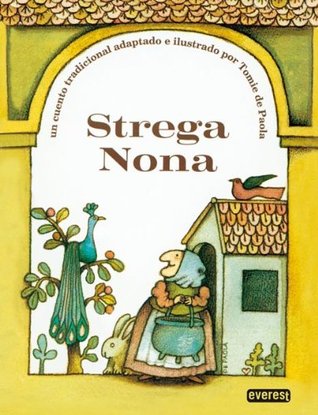
Strega Nona

Strega Nona. Tomie dePaola. 1975. 32 pages. [Source: Library]

First sentence: In a town in Calabria, a long time ago, there lived an old lady everyone called Strega Nona, which meant "Grandma Witch."

Premise/plot: When Strega Nona hires Big Anthony to help out, she warns him NOT to touch the pasta pot. Human nature being what it is, Big Anthony instantly NEEDS to get a hold of that pot. He watches Strega Nona while she's using the pasta pot. He thinks he knows its secret. That's only partially true. When she leaves town for a few days, he brags all about this pot and what it can do. Which leads to TROUBLE. Will Big Anthony regret his disobedience and his boasting?

My thoughts: HOW VERY FUN! I can't believe I am only now discovering this one. I loved the pasta pot. And seeing pasta practically take over the town was awesome! I would pity Big Anthony his tummy ache, but, he did have no business meddling with magic.

Text: 4 out of 5
Illustrations: 4 out of 5
Total: 8 out of 10
© 2017 Becky Laney of Becky's Book Reviews

Saturday, June 18, 2016

Dragon, Dragon and Other Tales

Dragon, Dragon and Other Tales. John Gardner. Illustrated by Charles J. Shields. 1975. 73 pages. [Source: Bought]

Love fairy or folk tales? You should definitely seek out John Gardner's Dragon, Dragon and Other Tales. This book has four original stories with magical, fantastical elements. The four stories are "Dragon, Dragon," "The Tailor and the Giant," "The Miller's Mule," and "The Last Piece of Light."

I can honestly say that I enjoyed all four stories. I'm not sure which story is my most favorite and which is my least favorite. Probably my least favorite is The Tailor and The Giant. Don't expect it to have a lesson or moral, and you may find it intriguing. It's certainly a spin on the theme of courage. As for my favorite, that would probably be Dragon, Dragon or The Miller's Mule.

Dragon, Dragon features a kingdom being terrorized by dragons--or a dragon, I can't remember if there's more than one. The king offers a reward, of course he does, and one by one three sons attempt it. But who will kill the dragon? Perhaps the one that actually follows his father's advice. Just a guess!

The Miller's Mule grew on me as I read it. It certainly kept me guessing as I read it. A miller decides to shoot his old mule; the old mule speaks--begs for his life. The miller spares his life--for better or worse. The mule promises to make him a wealthy man IF and only IF he follows his instructions carefully. The miller agrees...and it seems the mule is out to kill him in revenge....who will best who?

© 2016 Becky Laney of Becky's Book Reviews

Tuesday, March 15, 2016

Tuck Everlasting

Tuck Everlasting. Natalie Babbitt. 1975. FSG. 139 pages. [Source: Library]

First, I do want to say that I am glad I finally read this one. It's not like I've never heard of it before. I've just been slow to getting around to it. And there is something to be said for finally reading a book almost every other reader has read--either because it was their choice or an assignment.

I have to say that the book jacket gave everything away leaving absolutely no mystery whatsoever. Well, that's only partly true. I wasn't aware that this one was set in the 1880s.

The book has a simple premise: Winnie Foster, the 10-year-old-heroine, has a choice to make when she accidentally discovers a spring in the wood that "blesses" or "curses" anyone who drinks from it with immortality. I am purposefully choosing to call it immortality instead of eternal life. To clarify, on her own Winnie would never have come to the conclusion that there was anything special about the woods or the spring water. It is because she meets a boy, Jesse, in the woods drinking from it that leads to her HAVING to make a choice. Is it a choice she actually struggles with--especially after meeting the Tuck family and talking with each of them? I'm not sure it is. Though she likes the family well enough.

Is it a love story? I'm going to say NO. I don't think it is remotely a love story. Jesse, the boy Winnie meets, is 17. He is forever-stuck at the age of 17. And I can completely see why he finds it frustrating and lonely. The only people 'stuck' with him are his parents and his brother. As much as he loves them, I can see why he wants a little bit more from life. How his life might have been made a little bit better perhaps if he could have convinced someone--any girl really--to drink from the fountain of youth. But I'm not convinced that he really "felt" anything for Winnie. He wanted a companion, a soul mate, perhaps. But Winnie was the first person...ever...to stumble across the woods and the spring. She was the wrong age for him. But time could change that...eventually. So this accidental meeting in the wood might work out for him....or not. But a love story it decidedly is not. And even if Jessie liked Winnie--her personality, her character--I'm not sure it would be love to wish that kind of abnormal existence on her.

I also wish I could have read Tuck Everlasting without thinking about Twilight and comparing/contrasting Jesse with Edward. For the record, if I had to choose between them which book to reread again--or again and again, I'd probably go for Tuck Everlasting.

I liked this one. I didn't dislike it. The story was interesting enough. And it was a decidedly quick read!!!

© 2016 Becky Laney of Becky's Book Reviews

Saturday, October 10, 2015

Seuss on Saturday #41

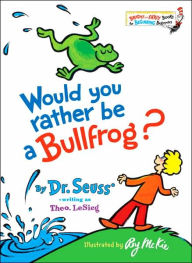
Would You Rather Be A Bullfrog? Theo LeSieg (Dr. Seuss). Illustrated by Roy McKie. 1975. Random House. 36 pages. [Source: Library]

First sentence: Tell me! Would you rather be a Dog...or be a Cat? It's time for you to think about important things like that. 

Premise/plot: The narrator asks readers a long series of questions. All questions are silly--or at the very least playful--but some are sillier than others. Some questions are about which animal you'd rather be. Others are about inanimate objects like...would you rather be a ball or a bat OR would you rather be a door or window.

My thoughts: First time reading this one. Honestly I'm not sure I have a decided opinion on it. I certainly liked it better than I thought I would. But I had low expectations in mind. I wasn't expecting it to be a great find, something I'd been "missing" in my life. It was fun in its way. And I think I liked it well enough. Perhaps it will help me remember the difference between rather and whether.

Have you read Would You Rather Be A Bullfrog? Did you like it? love it? hate it? I'd love to know what you thought of it!

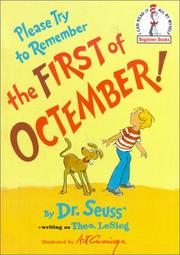
Please Try to Remember the First of Octember. Theo LeSieg (Dr. Seuss). Illustrated by Art Cumings. 1977. Random House. 48 pages. [Source: Library]

First sentence: Everyone wants a big green kangaroo. Maybe, perhaps, you would like to have TWO. I want you to have them. I'll buy them for you... if you'll wait till the first of Octember.

Premise/plot: All your dreams and wishes will come true...on the first of Octember. "You'll get all that you want. You just write out your list. Everyone has an Octember First list. Write slowly now! Don't break your wrist.

My thoughts: Dare I admit I want to write an Octember First list?!?! I had low expectations for this one. I didn't think it would be much of a book. But I really ended up liking it. If you haven't read it yet, you should!

 Have you read Please Try to Remember The First of Octember!? Did you like it? love it? hate it? I'd love to know what you thought of it!

If you'd like to join me in reading or rereading Dr. Seuss (chronologically) I'd love to have you join me! The next book I'll be reviewing is I Can Read With My Eyes Shut.

© 2015 Becky Laney of Becky's Book Reviews

Saturday, September 26, 2015

Seuss on Saturday #39

Because A Little Bug Went Ka-Choo! (Rosetta Stone) Dr. Seuss. Illustrated by Michael Frith. 1975. Random House. 64 pages. [Source: Library]

First sentence: You may not believe it, but here's how it happened. One fine summer morning...a little bug sneezed. Because of that sneeze, a little seed dropped. Because that seed dropped, a worm got hit.

Premise/plot: You never know what may happen with one little sneeze! Cause and effect have never been so much fun as in Seuss's Because A Little Bug Went Ka-Choo!

My thoughts: I love, love, love, LOVE this one. I do. It's always been one of my most favorites. It's just so funny. And I think it's one that just begs to be read again and again and again. Do you have a favorite scene?

Have you read Because A Little Bug Went Ka-Choo! Did you like it? love it? hate it? I'd love to know what you thought of it!

If you'd like to join me in reading or rereading Dr. Seuss (chronologically) I'd love to have you join me! The next book I'll be reviewing is Hooper Humperdink...? Not Him!


© 2015 Becky Laney of Becky's Book Reviews

Saturday, September 19, 2015

Seuss on Saturday #38

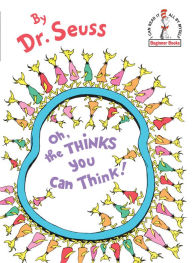
Oh, The Thinks You Can Think. Dr. Seuss. 1975. Random House. 41 pages. [Source: Library]

First sentence: You can think up some birds. That's what you can do. You can think about yellow or think about blue...

Premise/plot: The narrator encourages the reader to THINK and to imagine. My favorite: "You can think about SCHLOPP. Schlopp. Schlopp. Beautiful scholopp. Beautiful schlopp with a cherry on top."

My thoughts: I liked this one fine. Of course, it has lots of silly rhyming. And the whole book is whimsical. And for those readers who can't get enough of Dr. Seuss, this one is worthy of reading. But. Is it a favorite of mine personally? Probably not. But it is good fun all the same.

Have you read Oh, The Thinks You Can Think? Did you like it? love it? hate it? I'd love to know what you thought of it!

If you'd like to join me in reading or rereading Dr. Seuss (chronologically) I'd love to have you join me! The next book I'll be reviewing is Because A Little Bug Went Ka-choo!

© 2015 Becky Laney of Becky's Book Reviews

Friday, April 10, 2015

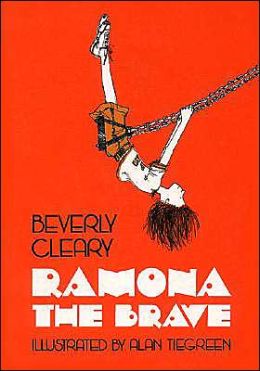
Ramona the Brave (1975)

Ramona the Brave. Beverly Cleary. 1975. HarperCollins. 208 pages. [Source: Library]

Ramona the Brave is the third book in the series. I love it. It has some GREAT moments.

"Trouble in the Park" Ramona can't understand why Beezus is angry with HER for standing up to the big, bad bullies at the park who were teasing her (Beezus). Ramona thought that she was loving her sister by speaking up, but, Beezus is too angry to explain. Readers also learn that Ramona and Howie LOVE to play BRICK FACTORY.

"Mrs. Quimby's Secret" Ramona and Beezus learn that they won't have to share a room together anymore. Their parents have decided to add a room to the house. Mrs. Quimby will WORK OUTSIDE THE HOME to help pay for it.

"The Hole in the House" This chapter has a perfect description of Brick Factory.
They were no longer six-year-olds. They were the strongest people in the world. They were giants. When the driveway was thick with red dust, Ramona dragged out the hose and pretended that a terrible flood was washing away the Brick Factory in a stream of red mud. "Run, Howie! Run before it gets you!" screamed Ramona. She was mighty Ramona, brave and strong. Howie's sneakers left red footprints, but he did not really run away. He only ran to the next driveway and back. Then the two began the game all over again.(38)
"The First Day of School" Ramona doesn't have the best first day experience. She wanted to love first grade as much as kindergarten. (Not that she always loved, loved kindergarten, mind you). She wanted to love her first grade teacher, Mrs. Griggs, as much as the wonderful Miss Binney. It doesn't happen. Sometimes teachers are like that, even Beezus can tell you that. Beezus LOVES her teacher. (Ramona ends up liking him too.)

"Owl Trouble" Poor Ramona! Susan and Ramona have ISSUES over their owls at art time. I feel for Ramona in this situation.

"Parents' Night" The owl-drama continues. And Ramona writes the sweetest heart-felt note to her mom. COME HERE MOTHER. COME HERE TO ME. This chapter is just one reason why I love, love, love Cleary's writing. She KNOWS what it feels like to be a kid.

"Alone in the Dark" Ramona doesn't like her new room. She finds it VERY SCARY. Poor Ramona is FRUSTRATED during the day at school, not liking her teacher and some of her classmates, and she's SCARED to be alone in her room at night. So she's not sleeping all that great either. I believe she mentions how as long as she hears her Dad moving about and knows that he's awake somewhere, it's not too bad, but, then when everyone is asleep but her, it's overwhelming.

"Ramona Says A Bad Word" I LOVE, LOVE, LOVE, LOVE, LOVE this chapter. I do. Ramona's had a horrible time of it throughout the whole book, and, she's had enough of it. She breaks down. She lets loose. GUTS. GUTS. GUTS. GUTS. But why is everyone laughing at her?! She wasn't trying to be funny! She was doing some serious venting!!!
Then Ramona felt her mother's hand on her back. "Ramona," she said gently, "what are we going to do with you?" With red eyes, a swollen face, and a streaming nose, Ramona sat up and glared at her mother. "Love me!" Her voice was fierce with hurt. Shocked at her own words, she buried her face in the pillow. She had no tears left. "Dear heart," said Mrs. Quimby. "We do love you." Ramona sat up and faced her mother, who looked tired, as if she had been through many scenes with Ramona and knew many more lay ahead. "You do not. You love Beezus." There. She had said it right out loud. For years she had wanted to tell her parents how she felt. (140-1)
"Mr. Quimby's Spunky Gal" Ramona encounters a big, bad dog, loses a shoe, and gains a new friend. Ramona makes her own slipper--with a borrowed stapler from Beezus' teacher--and finally feels a little bit brave.

Do you have a favorite cover?

© 2015 Becky Laney of Becky's Book Reviews

Sunday, December 14, 2014

Eight Christmas Books

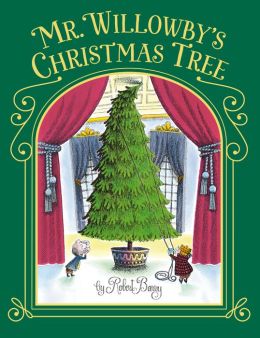
Mr. Willowby's Christmas Tree. Robert E. Barry. 1963. Random House. 32 pages. [Source: Library]

Mr. Willowby's Christmas tree came by special delivery. Full and fresh and glistening green--the biggest tree he had ever seen. He dashed downstairs to open the door--This was the moment he'd waited for.

I loved, loved, loved Mr. Willowby's Christmas Tree. It celebrates giving in a fun and playful way. Mr. Willowby starts off a long chain of giving when he chops off the top of his too-tall Christmas tree. A tree that is splendid in every other way. He gives the tree-top to the upstairs maid. She's delighted. Very delighted. How thoughtful! How cheery! But the tree is too-tall for her small room. The top must go! Chances are you can predict at this point how the story will go. But that doesn't mean it is in any way less delightful. This little tree-top gets passed down and re-trimmed again and again and again and again and again. And it's just WONDERFUL to see how much happiness and cheer it brings to others.

I loved the premise. I loved the writing. The rhyming was delightful. It worked very well for me! I think this one would make a great read-aloud. I also loved how uplifting it is. (After reading Baboushka and the Three Kings, I needed a cheery story!)

Why didn't someone tell me about this wonderful and charming picture book?! Why?! Well, I am glad to have discovered it now!

Which Christmas books would you consider classic? Which would you recommend?

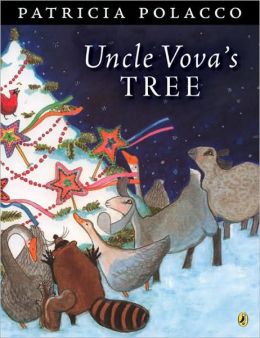
Uncle Vova's Tree. Patricia Polacco. 1989. Penguin. 32 pages. [Source: Library]

Uncle Vova's Tree is rich in detail and tradition. The author, Patricia Polacco, is drawing from her past and recalling some of her childhood Christmases. She writes, "As a child I celebrated Christmas as most American children did, but at Epiphany in January, my brother, my two cousins, my grandparents and I would go to the farm of my Great Uncle Vladimir and Aunt Svetlana to celebrate in the Russian tradition." The book recalls two family gatherings specifically. The first is Uncle Vova's last Christmas. Though of course, most everyone did not *know* it would be his last Christmas. The second is that first Christmas without him. The book definitely has tones of sadness, but, it is ultimately hopeful. Memories, good, strong happy memories, remain.

The book is rich in detail and tradition. It is informative in many ways. Did you know about the tradition of putting hay underneath the tablecloth to remember and honor the stable in Bethlehem where Jesus was born? But in addition to honoring tradition--in this case, Russian tradition--it also celebrates families. Readers meet a family that is close and loving and supportive. Little details make this one work well.

Too Many Tamales. Gary Soto. Illustrated by Ed Martinez. 1993. Penguin. 32 pages. [Source: Library]

Snow drifted through the streets and now that it was dusk, Christmas trees glittered in the windows.

Too Many Tamales is a great family-oriented Christmas story. Maria, our heroine, is helping her mom make tamales. She loves helping her mom, loves being grown-up in the kitchen. But things don't go smoothly with this first batch of tamales. And it is her fault. Mostly. Maria really, really, really wanted to try on her mom's ring. Unfortunately, this-too-big ring falls right into the masa mixture. Hours later, she realizes that she never took the ring off. She doesn't know for sure where the ring is. But she has a strong suspicion that it may very well be in one of the twenty-four tamales. With a little help from her cousins, Maria is in a race to find the ring before her mom--and all the other relatives--realize what has happened. Will she find the ring? Will her mom find out? Will her cousins ever want to eat another tamale?!

I liked this one very much.

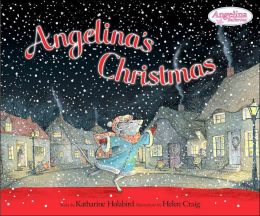
Angelina's Christmas. Katharine Holabird. Illustrated by Helen Craig. 1986. Penguin. 32 pages. [Source: Library]

Christmas was coming, and everyone at Angelina's school was working hard to prepare for the Christmas show.

I enjoyed reading Angelina's Christmas. I enjoyed meeting Angelina and her family. I loved how thoughtful and empathetic Angelina was. She realizes that there is one house in the village that is not decorated. She notices that there is one "old man huddled by a tiny fire." She learns from her parents that this old man is Mr. Bell, a retired postman. She decides that she will do something special for him so he won't be all alone at Christmas time. (And Angelina isn't the only one joining in to help make this Christmas memorable for Mr. Bell.) She makes him cookies, her mom sends along mince pies and fruit, her dad cuts him a Christmas tree. They visit him, Henry, Angelina's brother comes along too. But perhaps even more importantly than showing him kindness through things, they take the time to listen to him, to include him. This one is a lovely book.

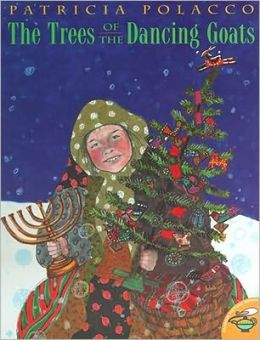
The Trees of the Dancing Goats. Patricia Polacco. 2000. Simon & Schuster. 32 pages. [Source: Library]

At our farm just outside Union City, Michigan, we didn't celebrate the same holidays as most of our neighbors...but we shared their delight and anticipation of them just the same.

I enjoyed reading The Trees of the Dancing Goats by Patricia Polacco. She is sharing yet another holiday memory with young readers in this picture book.

The story focuses on one holiday season when the town is hit by an epidemic, scarlet fever, I believe. The heroine's family is not sick, but, most of their neighbors are. As they are preparing to celebrate Hanukkah, they realize that most of their neighbors are too sick to prepare for and celebrate Christmas. They love their neighbors. They want to do something for them. Working together as a family, they decide to bring Christmas to their neighbors: food, a tree, decorations. Since they don't own any Christmas ornaments, they use animals carved out of wood. One of the animals, as you might have guessed, is a goat. When hung on the tree, it appears to be a dancing goat. Can one family bring Christmas cheer to a community?

I liked this one. I liked the family scenes very much. It is a thoughtful book. I'm glad I finally discovered it!

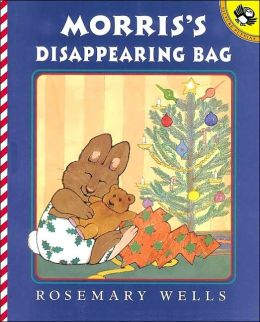
Morris' Disappearing Bag. Rosemary Wells. 1975. Penguin. 40 pages. [Source: Library]

It was Christmas morning. "Wow!" said Morris.

Morris' Disappearing Bag probably isn't my favorite Rosemary Wells, but, this one is enjoyable enough that it's worth reading at least once or twice. Morris stars in this one. He has three older siblings: one big brother, Victor, and two older sisters, Rose and Betty. It is a Christmas book, of course. After all the presents are opened, the three older siblings play with their presents and play with each others presents. Victor got hockey stuff. Betty got a chemistry set. Rose got a beauty kit. They take turns sharing. Much fun is had. But not by all. For Morris has only his present (a teddy bear) to play with. He doesn't get a turn with his siblings' presents. But that changes when Morris discovers a fantastic present under the tree. A bag. A disappearing bag. Whatever is in the bag disappears. His siblings all want a turn, and, he lets them in the bag. While his siblings have disappeared for the day, Morris plays with their stuff before settling into bed with his bear.

Max's Christmas. Rosemary Wells. 1986. Penguin. 32 pages. [Source: Library]

I love watching Max and Ruby. I've seen the adaptation of Max's Christmas plenty of times before I read the book. If you like the show, chances are you'll enjoy reading this book. It is very similar. For those new to these lovable siblings, Ruby is the older sibling. She seems to be raising Max all on her own. (Ruby and Max don't have parents. They have a Grandma, but, she does not live with Max and Ruby.) Max is the younger sibling. He is many things: cute, clever, curious. Yes, he can be mischievous, but, he is also super-observant. I love, love, love them both. I might like Max a tiny bit better than Ruby. But still. I love them both.

In this book, readers join Ruby and Max on Christmas Eve night. Ruby is trying her best to get Max to get ready for bed, to go to sleep. Max is excited, of course. Once he knows that Santa is coming to his house tonight, he wants to see it for himself. So he goes downstairs to wait for Santa....

I liked this one very much.

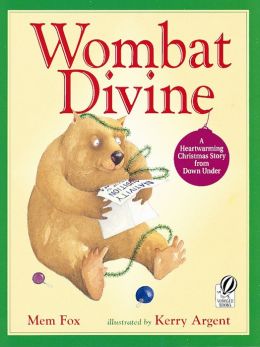
Wombat Divine. Mem Fox. Illustrated by Kerry Argent. 1995/1999. HMH. 32 pages. [Source: Library]

I found Mem Fox's Wombat Divine to be charming. I loved Wombat. He loves, loves, loves Christmas. More than anything, he wants a part in the nativity play. At the auditions, he tries his best. But there are so many parts that he's just not right for. I love the refrain, "Don't lose heart. Why not try for a different part?" which is used throughout the whole auditioning process. He auditions for Archangel Gabriel, Mary, a wise king, Joseph, an innkeeper, and a shepherd. But there's one role that he'd be just perfect playing. Can you guess it?

I liked this one. I thought it was cute and sweet. I liked the writing. I found it unique and oh-so-right.

© 2014 Becky Laney of Becky's Book Reviews

Wednesday, November 06, 2013

The Lion of Justice (1975)

The Lion of Justice. Jean Plaidy. 1975. Fawcett. 320 pages. [Source: Bought]

Nature's takin' over my one-track mind
Believe it or not, you're in my heart all the time
All the girls are sayin' that you'll end up a fool
For the time being, baby, live by my rules

The Lion of Justice is the second book in Jean Plaidy's Norman trilogy. Yesterday, I reviewed the first book in the series, The Bastard King. The Lion of Justice focuses on three of William the Conqueror's sons: William Rufus (William II), Robert (duke of Normandy), and Henry (Henry I). It tells the story of William II's brief reign, his mysterious death in the forest, and Henry I's reign. In part the story is told through his queen.

We meet the future-queen as a young woman named Edith. She is royal: the daughter of the king and queen of Scotland. She is also among the last of the Saxon royal dynasty. The novel opens with Edith and her sister, Mary, going to a convent for safekeeping. They have an aunt there who is convinced that Edith should take vows and become a nun. Edith finds the idea repugnant. Equally repugnant to her is marrying an old man of the William II's choosing. There are two close calls before she is married to King Henry. Readers definitely know more of Henry than she does! One other thing that you should know: he makes her change her name to Matilda; Matilda was his mother's name.

There is a good reason why I quoted Lou Christie's Lightin' Strikes at the start of this review. Henry I is depicted as arrogant and lusty and selfish. He's repugnant. And he's able to fool Matilda for several years at least. She actually believes all his lines. She actually trusts him. He seems a bit surprised that there is any woman so gullible and naive to buy what he's saying. He almost seems relieved when she confronts him to see if it is the truth.

In my opinion, the back of the book LIED. Its description: A DAZZLING PORTRAIT OF A MAN FOR WHOM COUNTLESS MISTRESSES WEREN'T ENOUGH--AND ONE GIRL WAS EVERYTHING. Henry married Matilda because she was Saxon royalty. It was a politically advantageous match for the kingdom's good. He didn't dislike her. But she was never his everything. I get the impression that women were completely interchangeable to him. One being very much like another.

Did I like it? It wasn't so much a matter of liking or not liking. I found it quite readable. I often found Henry infuriating, and I suppose I thought a lot of conversations to Matilda, not that she could hear me. I am glad I read on in the series!

Quotes:
"And what has he ever done but bring trouble and bastards into the realm?"
The young man laughed obediently.
"Come, my fine friend, what is there to laugh at? I am a man beset by brothers, and now Henry has squandered his patrimony and roams the countryside seeking consolation in robbing ladies of their virtue since he cannot rob me of my throne." (22)
It had been at this time that Henry had become so incensed against his brothers. He said they ignored his existence; they forgot that he was also their father's son, and he demanded to know what his inheritance would be.
"The ladies of England," retorted Rufus. "And I doubt Robert would debar you from enjoying the Norman ones when you visit his Duchy." (25)
"No man should enter the Abbey."
"Of a certainty no ordinary man should be allowed in," said Henry. "But I am no ordinary man." (89)
"Why have you come to see me?" she asked.
"Because my inclinations first prompted me and then insisted. They would not be denied."
"The sisters are right. It is unseemly."
"That which is unseemly is often delightful you will discover." (89)
He was laughing at her. He took her hands suddenly and kissed her fingers.
"Then," he said, "You like me well."
"Yes," she answered. "I like you well."
"And when I am King you will be my Queen."
"I could ask nothing more of life."
"Will you be a good wife to me?"
"I will."
"And love me tenderly and bear my children."
"I will."
"Why 'twould seem we are married already. Would there were a priest here who would marry us, and  bridal chamber where I could make you my wife in every truth." (90)
When Henry rode back from Wilton to Winchester he was feeling more than ever dissatisfied with his fate. The Princess Edith was not uncomely; her innocence was amusing and she could give him some diversion which he could not find with his many mistresses. Moreover it was time he was married. He was thirty years of age and he wanted sons. Edith had interested him; he had seen more beautiful women...It was said that he had more bastards than any man in England. (93)
Henry was too clever not to know himself, and that he was the most fitted to rule of all his brothers. (94)
He thought a little of the virginal Princess to whom he had talked of marriage. She was in love with him already. She would be submissive. He liked a little spirit in his women; on the other hand variety was always enticing; and marriage would be a new adventure. (95)
"You always had the right answers. I wonder if Matilda will find it so?" (143)
"Could I be faithless to what is his name...Gerald?"
"Yes I think you might."
"As you will be to Matilda?"
"It seems likely."
"Oh yes," said Nesta, "it seems very likely." (144) 
Well, she who was so innocent of the world would have to learn, and when she did, as she inevitably must, she would after the first shock settle down to be a loving wife and when she produced the heirs of the kingdom she would be a good mother. That should satisfy her so that when he strayed--as he surely would--she would come to accept this state of affairs as a natural course of events. For the time though he feigned to share her ecstatic happiness. (151)
 It was one of those occasions when he wondered what she would feel when she discovered the truth about him, which he supposed she would in due course. When he began bringing his illegitimate children to Court and bestowing favours on them, which indeed he must, he hoped she would not be too badly hurt. It might well be that by the time she would have more understanding of the world. But it was disconcerting when she showed so clearly that she looked upon him as a knight of shining purity. He supposed he was growing fond of her. (163)
© 2013 Becky Laney of Becky's Book Reviews

Wednesday, June 01, 2011

Crocodile on the Sandbank

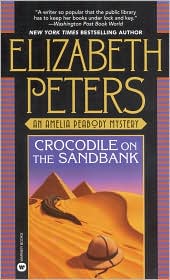
Crocodile on the Sandbank. Amelia Peabody Mystery #1. Elizabeth Peters. 1975/2002. Hachette Books. 272 pages.


When I first set eyes on Evelyn Barton-Forbes she was walking the streets of Rome. 

Amelia Peabody is intelligent, wealthy, stubborn, and ambitious. Not one to be bossed around by just anyone. So when she goes traveling in Egypt with her companion, Evelyn Barton-Forbes, expect some trouble, some conflict. Then again, to be fair, trouble seems to have followed HER to Egypt--or more precisely followed her companion. For Evelyn Barton-Forbes has secrets--not from Amelia Peabody--but from others in their company. And these secrets may be the needed clue to solve the trouble to come.

The real fun begins when Amelia and Evelyn meet two brothers--the Emerson brothers. Radcliffe and Walter. Both Egyptologists, though one likes to get his hands dirty and one wouldn't mind staying inside and just translating texts as opportunities arise. For Walter and Evelyn, well, it's love at first sight. But for Radcliffe (almost always called Emerson) and Amelia (almost always called Peabody), it's anything but love! Or is it?!

So these four meet early in the novel, but the two really have no plans of joining the others on their expedition. Amelia Peabody has detailed plans of her own--but her wandering leads her straight to Emerson and his latest find. Among his discoveries--a mummy. So her intense interest in his work persuade her to change her plans. And when the mystery starts, well, she could hardly walk away from him then....

I'm not sure that I loved this one. I liked it. I really liked it in some places. The tension between Peabody and Emerson is interesting--how their relationship develops from hate to respect to love. (Similar to Elizabeth and Darcy, I think.) I liked the Egyptian setting. And the mystery is nice enough. But I wasn't as charmed as I wanted to be. I enjoyed it. I found it an entertaining read. But I can't really say that Amelia Peabody is my new favorite heroine.

© 2011 Becky Laney of Becky's Book Reviews
Monday, July 20, 2009

Cart and Cwidder (MG)


Jones, Diana Wynne. 1975. Cart and Cwidder. 214.

Overall, I liked this one. It was an enjoyable fantasy novel about a young boy coming-of-age and having adventures. Moril has only known one lifestyle. He's eleven (or twelve) and most of his life--for at least as far back as his memory takes him--he's lived a traveling life. His family lives in a cart--they're all minstrel performers--and they travel around and around and around performing in various villages. They're able to share news from one to the other as well as passing along personal messages from one to the other. They live in the country of Dalemark, and it's not as peaceful and free as one would hope. There's strife and division. There is no king. Just different earls or lords ruling over smaller regions. Divided into North versus South at times. In all his years, he never realized just how dangerous and unpredictable life could be. He took for granted that life would treat his family kindly. That things would stay the same. Okay, maybe they're not wealthy. Maybe they're just surviving with the barest of essentials. Maybe there are times when they're hungrier than they would like. When the money for performing isn't coming is as they'd hoped. Their lives are far from grand--or even comfortable. But there's the security of having his father nearby.

Moril begins to notice things a bit more closely when the family takes in Kialan, a young boy they've promised passage North. (Few people are allowed the freedom to travel from district to district or region to region.) And so it begins...these changes aren't necessarily happy ones. But they're life-changing, character-building ones.

© Becky Laney of Becky's Book Reviews