Showing posts with label fairy tales. Show all posts

Tuesday, September 16, 2025

103. The Fairy Tale Fixers: Cinderella


103. The Fairy Tale Fixers #1: The Fairy Tale Cinderella. Deborah Underwood. Illustrated by Jorge Lacera. 2025. 128 pages. [Source: Library] [graphic novel; j graphic novel; fractured fairy tales; 5 stars]

First sentence: I was in the office. I'd poured myself a cup of joe and put my feet up for a well-deserved rest. Only five minutes till quitting time, and it was Friday: Pancakes for Dinner Night! But then....riinng!

Premise/plot: The Fairy Tale Fixers is a new series by Deborah Underwood. The first 'fairy tale' to be fixed by these two mice is Cinderella. GoodReads lists the names of the characters as "Fairy" and "Mouse," but I can't find the story itself referring to their names. It is written in first person narrative. The fairy tale fixer receives a phone call and reacts with some grumpiness. Heading to the library, he soon meets a mouse from the house where Cinderella lives. This mouse has escaped the story and is seeking a 'fix' to the story so that she can sleep better. The house is TOO noisy, too quarrelsome. Dressed up as a fairy, the fairy tale fixer decides that if Cinderella marries the prince, then the mouse can get some sleep. Acting as the "fairy godmother" in the story, he does his best to make sure Cinderella and the Prince meet. HOWEVER, Cinderella has no interest in the prince...she has a dream....and that dream doesn't include marriage. Can this fairy tale be fixed?

My thoughts: I LOVE, LOVE, LOVE the narrative voice. The fairy tale fixer wears a trench coat and has a bit of an attitude! And he loves pancakes! The story is silly, fun, and clever. I am not one to be critical of Cinderella. I'm not. I don't think the story necessarily "needs" to be fixed for a modern day audience. (I don't.) But this humorous, silly fractured fairy tale is fun.


© 2025 Becky Laney of Becky's Book Reviews

102. Hansel and Gretel


102. Hansel and Gretel. Stephen King. Illustrated by Maurice Sendak. 2025. 48 pages. [Source: Library] [picture book, 4 stars]

First sentence: Once upon a time, long before your grandmother's grandmother was born, a poor broom maker and his wife lived on the edge of a great dark forest with his two children, Hansel and Gretel. The broom maker was an easygoing man; his wife, the children's stepmother, was a shrew who liked to have her way and mostly got it.

Premise/plot: The illustrations are by Maurice Sendak. The narrative text is by Stephen King. The story, obviously, is Hansel and Gretel. This "picture" book features plenty of illustrations, but, it is extremely text-heavy.

My thoughts: I have not read the variations of Hansel and Gretel. I know that Grimm's Fairy Tales have gone through several printings and there are some variations perhaps. I could not begin to tell you how Stephen King's retelling differs from the original. I'm not even going to try to judge that. I could not tell you if this one is "lighter" or "darker" than the original. I just don't know. I can tell you that I enjoyed Maurice Sendak's illustrations. And the narrative text was pleasant enough. I wasn't wowed by the retelling. Then again, I'm not sure that Hansel and Gretel has ever been my favorite fairy tale.


© 2025 Becky Laney of Becky's Book Reviews

Saturday, May 06, 2023

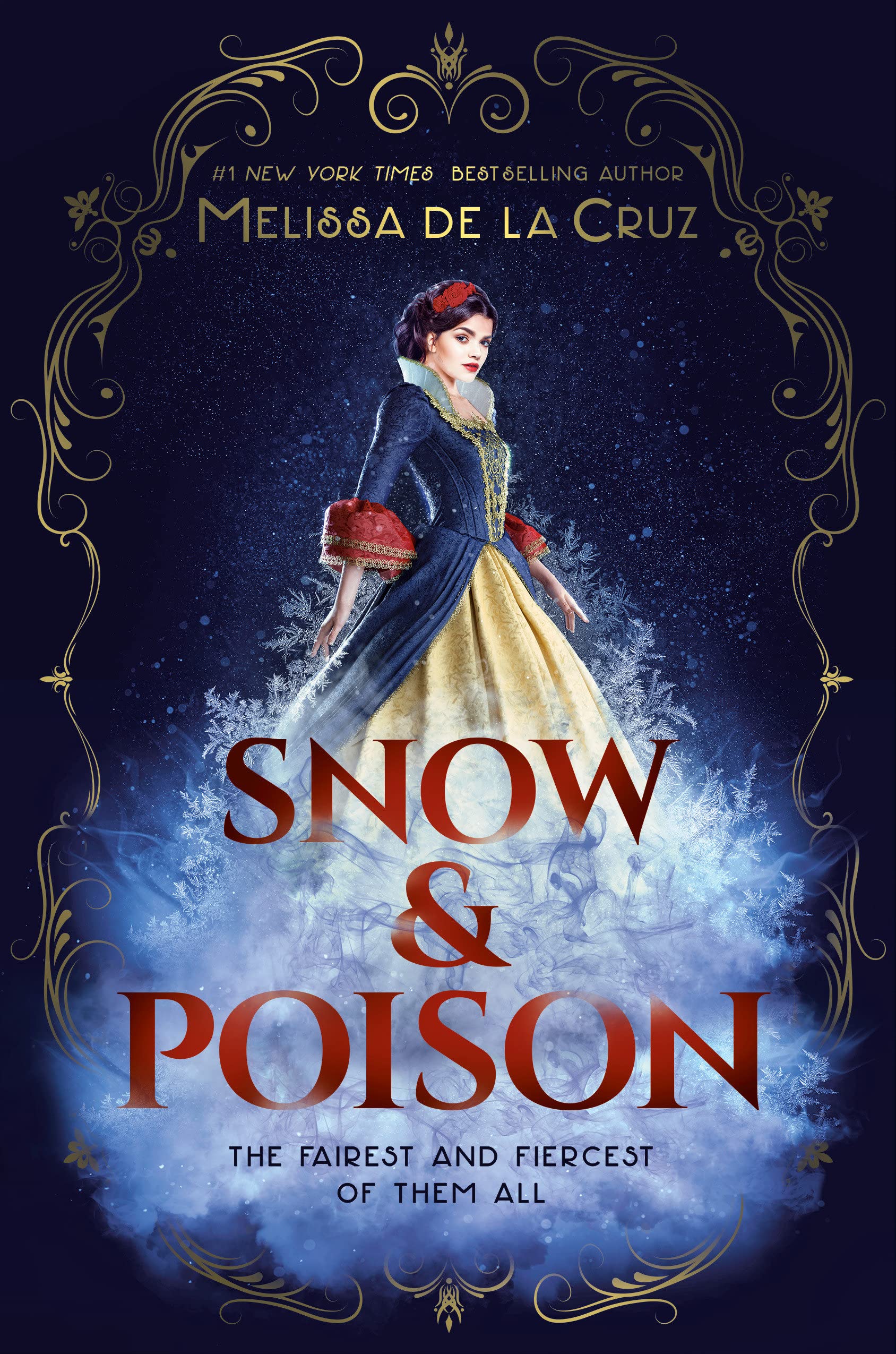
94. Snow and Poison


Snow and Poison (Cinder & Glass #2) Melissa de la Cruz. 2023. [April] 336 pages. [Source: Library]

First sentence: The day had finally come. It was still very early when the sun crested over the Bavarian mountains, its light climbing up the walls of Duke Maximilian's palace to slip through its arched windows. But Sophie had been awake for hours. 

Premise/plot: This retelling of Snow White is set in Bavaria circa 1621. Lady Sophie is coming out in society--making her debut--after her father's marriage ceremony. (Duke Maximilian, her father, is marrying Claudia. On this fateful evening, she falls in love (practically) with one of her dance partners, Prince Philip of Spain. He's technically/officially engaged to a princess of England. (Though it is an arranged marriage and Prince Philip has no say, no knowledge. In fact, when he meets Lady Sophie, I'm not sure he knows that his engagement has been announced or is soon to be announced by his father.) He is equally smitten with her. He has intentions to ask for her hand in marriage. But things get a little out of hand....hence the word POISON in the title.

But who is trying to poison Lady Sophie (aka "Snow White")??? 

My thoughts: If you are expecting a young adult adaption of the original Disney animated classic, then you may be disappointed. If you are expecting more of an "Ever After" treatment, then you'll probably be delighted. (Yes, I know Ever After is a retelling of Cinderella, but same guiding principles). The characters are all fleshed out. The world has a super-hazy touching upon of history. (Very fuzzy, hazy, but who cares if it barely ties into the real world.) I enjoyed the relationships. I loved the relationship between Sophie and Claudia. It was SO well done. I loved the relationship between Sophie and Philip. Disney animated films are often SO lacking in actual character development--especially of Princes. 

How does it compare to Once Upon A Time's treatment of Snow and Charming? Well. That would be super tough. I really LOVE many of the character arcs of Once Upon a Time. I loved all the flashback scenes. It too differs from classic Disney. Will the intended audience have Once Upon A Time in mind when reading???? I'm not sure they will. They'd have been toddling around when the show started and barely tweens when it ended. (And that last season is pretty much a disastrous mess.) 


© 2023 Becky Laney of Becky's Book Reviews
Tuesday, July 20, 2021

64. Red Wolf


Red Wolf. Rachel Vincent. 2021. [July] 368 pages. [Source: Review copy]

First sentence: The dark wood moaned—a deep, eerie sound that was more than just the groan of shifting tree limbs. I turned, and my empty basket swung in the crook of my right elbow as I stared into the wooded expanse that enclosed most of Oakvale.

Premise/plot: Red Wolf by Rachel Vincent is a retelling of the classic folk tale Little Red Riding Hood. Mostly. Adele, the heroine, does have a grandmother living deep, deep, deep in the woods. And the woods can be deadly, so Adele does have to be careful when she's taking her supplies. But this is a YA retelling. Adele is no girl, but a young woman--sixteen. And would it even be a YA book without a love triangle???

Readers can expect horror, romance, drama, and secrets. Of course, a few of those secrets are spilled right in the jacket copy. For better or worse, the book's description tells you right out that Adele is a werewolf and that she comes from a family of werewolves... If I'd been writing that description, I would have chosen to do it differently. That could just be me. I like to know as little as possible--most of the time--about a book. Especially in this genre/sub-genre.

My thoughts: I found Red Wolf a compelling, atmospheric read. If Readers In Peril was still a thing--is it still a thing???--I would definitely recommend reading this one for the reading challenge. It offers a few spooks and a good amount of blood. This genre/sub-genre is not a favorite of mine. I didn't go out seeking a book starring werewolves--or shapeshifters. But I am drawn to fairy tale (and folk tale) retellings. I like seeing how other authors treat old tales. (The show Once Upon A Time is/was one of my favorites.) 

I do think it will appeal to several different audiences. I think adults who are looking for paranormal thrillers may roll their eyes a bit at the love triangle aspect of it. I know love triangles can really upset some readers who are tired to death of it. But the romance elements were never front and center for me. And that may help some readers out. 

What was front and center for me was the whole nurture versus nature aspect of it. Adele is caught up in something she doesn't really understand and she's in over her head. Of course, nature versus nurture has been done a million times before as well.

I liked the openness of the ending. I think it could easily be a stand alone book, and stay a stand alone book. I don't need a tidier ending than what we get here. But I could see how there's just enough room left open so that a series could happen. But again I don't think readers would have to go on to any future books. 

I did find myself yelling at Adele a couple times throughout the book. There were times I saw danger that she was blind to. There were times I found her frustrating. But overall, I was drawn into her world. 

Quote:

The dark wood takes a little more of you every day that you’re out there, until things that seemed unthinkable a week ago suddenly seem acceptable.


© 2021 Becky Laney of Becky's Book Reviews

Thursday, March 21, 2019

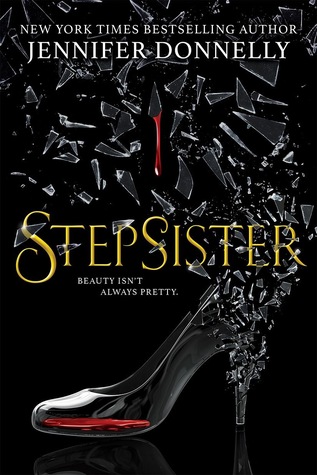
Stepsister

Stepsister. Jennifer Donnelly. 2019. Scholastic. 352 pages. [Source: Review copy]

First sentence of the prologue: Once upon always and never again, in an ancient city by the sea, three sisters worked by candlelight. 

First sentence from chapter one: In the kitchen of a grand mansion, a girl sat clutching a knife. Her name was Isabelle. She was not pretty.

Premise/plot: Stepsister is a retelling of the fairy tale Cinderella told from the point of view of one of the stepsisters. But is it more than that?

The prologue sets the stage: a battle is coming, a battle between FATE and CHANCE. (There are three FATE sisters, but, primarily this novel features the crone. Chance is Marquis de la Chance.) The setting is a French village--primarily.

Chance has stolen a map--a map of a particular mortal, Isabelle. He's hoping that HER map can be changed. That the destiny that Fate has written her--or drawn for her--can be thwarted. The Crone angered that Chance has dared to steal from her--from them--sets out on a journey to find the girl and make sure that Chance doesn't give the girl any ideas of trying to fight back or change her story, her destiny. Which is exactly what Chance hopes to do with a little help.

The novel opens AFTER the ball. Isabelle has witnessed the pain, the agony, the humiliation of her sister, Octavia (aka "Tavi"). Their mother's insistence that the girls cut their bodies--their feet--in order to fit into the glass slipper is about to lead Isabelle to a similar fate.
How many times had she cut away parts of herself at her mother's demand? The part that laughed too loudly. That rode too fast and jumped too high. The part that wished for a second helping, more gravy, a bigger slice of cake. If I marry the prince, I will be a princess, Isabelle thought. And one day a queen. And no one will dare call me ugly ever again. (11)
As you might have guessed, neither girl--neither stepsister--fools the prince, not for longer than a few seconds, a few minutes anyway.

Stepsister is the story of what happens next....what happens in the small village where everyone knows what you did, what you tried to do. It was bad enough everyone calling you ugly...now they think you're evil and twisted too.

Can Isabelle write her own story? Can she find the strength, courage, and heart to be true to herself and become the person she's always wanted to be?

My thoughts: I love, love, love this one. Not because it is premise-driven. Not because it is a "feminist" retelling of a fairy tale. No, I love it because of the characters. I love Isabelle and Tavi. I love their relationship and conversations. I don't love their mother; if you thought she was only cruel to Cinderella, you'd be wrong. But though in some ways she's true to the evil stepmother stereotype, she's also a dimensional character. One you wouldn't want as a mother, as a neighbor, as a friend, or even an acquaintance--but one that must have a back story somewhere that would explain why she is the way she is. I don't love her--or even remotely like her--but there were a few scenes where I almost, almost, almost pitied her. I also enjoy seeing Isabelle and Tavi interact with a neighbor, Hugo. I could go on about all the characters I enjoyed meeting, but to do so would be to spoil the plot. That wouldn't be fair. The book isn't even released yet.

I also love it because of the writing.
Isabelle had a strong will. She did not know that this was a good thing for a girl to have because everyone had always told her it was a terrible thing. Everyone said a girl with a strong will would come to a bad end. Everyone said a girl's will must be bent to the wishes of those who know what's best for her. Isabelle was young, only sixteen; she had not yet learned that everyone is a fool. (12)
One by one they'd all disappeared, each loss like the swipe of a carver's knife. Whittling her down. Smoothing her edges. Making her more like the girl Maman wanted her to be. Isabelle had cut off her toes, but sometimes she could still feel them. Maman had cut out her heart. Sometimes she could still feel that, too. (40)
The wolves in the woods have sharp teeth and long claws, but it's the wolf inside who will tear you apart. (43)
History books say that kings and dukes and generals start wars. Don't believe it. We start them, you and I. Every time we turn away, keep quiet, stay out of it, behave ourselves. The wrong thing, the cowardly thing, the easy thing. You do it fast. You put it behind you. It's over, you tell yourself as you hurry off. You're finished with it. But it may not be finished with you. (46)
Envy, resentment, shame--Maman had rubbed these things against Isabelle's heart, and Tavi's until they were raw. Maman was subtle; she was clever. She'd started early. She'd started small. She knew that even tiny wounds, left untended, can fester and swell and turn a heart black. (66)
Most people will fight when there is some hope of winning, no matter how slim. They are called brave. Only a few will keep fighting when all hope is gone. They are called warriors. Isabelle was a warrior once, though she has forgotten it. (75)
Fear is the most misunderstood of creatures. It only wants the best for you. It will help you if you let it. Isabelle understood this. She listened to her fear and let it guide her. He's faster than you! It shouted as the chicken thief rushed her. So she retreated under low-hanging tree branches, which scratched his face and poked his eyes, slowing him. He's stronger than you! her fear howled. So she led him over the tree's knobby roots and made him trip. (88)
Pretty hooks you fast and kills you slowly. (124)
Call a girl pretty once, and all she wants, forevermore, is to hear it again. (124)
Pretty's a noose you put around your own neck. Any fool can tighten it on you and kick away your footing. (125)


© 2019 Becky Laney of Becky's Book Reviews
Saturday, July 21, 2018

Keep It Short #28

I read two stories in Andrew Lang's Blue Fairy Book: Prince Darling and Blue Beard. I can't imagine two stories being more different from one another!

Prince Darling

First sentence:
ONCE upon a time there lived a king who was so just and kind that his subjects called him “the Good King.” It happened one day, when he was out hunting, that a little white rabbit, which his dogs were chasing, sprang into his arms for shelter. The King stroked it gently, and said to it:
“Well, bunny, as you have come to me for protection I will see that nobody hurts you.”
And he took it home to his palace and had it put in a pretty little house, with all sorts of nice things to eat.

Premise/plot: The good King has a not-so-good son whose worth will have to be tested before he can have his happily ever after. The 'bunny' his father saved was the fairy TRUTH. And TRUTH will do her best to guide the new king--the prince--when the time comes for him to reign. But will he be guided by the truth and rule wisely? OR will he become a selfish, cruel king who needs to be taught a lesson or two?

My thoughts: I really liked this one. It's for stories like this one that I keep reading.

Blue Beard
First sentence:
There was a man who had fine houses, both in town and country, a deal of silver and gold plate, embroidered furniture, and coaches gilded all over with gold. But this man was so unlucky as to have a blue beard, which made him so frightfully ugly that all the women and girls ran away from him.
One of his neighbors, a lady of quality, had two daughters who were perfect beauties. He desired of her one of them in marriage, leaving to her choice which of the two she would bestow on him. They would neither of them have him, and sent him backward and forward from one another, not being able to bear the thoughts of marrying a man who had a blue beard, and what besides gave them disgust and aversion was his having already been married to several wives, and nobody ever knew what became of them.
Blue Beard, to engage their affection, took them, with the lady their mother and three or four ladies of their acquaintance, with other young people of the neighborhood, to one of his country seats, where they stayed a whole week.

Premise/plot: Blue Beard may be ugly but this is no Beauty and the Beast or East of the Sun, West of the Moon.

My thoughts: This may be one of the most disturbing stories I've read so far. I don't particularly like horror stories--and this is a horror story. Would this latest wife of Bluebeard gotten a happily ever after with Bluebeard if she hadn't been so curious and disobeyed her husband? I doubt it. Obviously Bluebeard is a dark, twisted, violent soul. It would have just been a matter of time, in my opinion. Having the knowledge even just for a short time of who her husband really was probably gave her just enough time to contact her brothers and gotten HELP to get out.


© 2018 Becky Laney of Becky's Book Reviews

Saturday, July 14, 2018

Keep It Short #27

I read two tales this week from Andrew Lang's The Blue Fairy Book.

The Goose Girl

First sentence: Once upon a time an old queen, whose husband had been dead for many years, had a beautiful daughter. When she grew up she was betrothed to a prince who lived a great way off. Now, when the time drew near for her to be married and to depart into a foreign kingdom, her old mother gave her much costly baggage, and many ornaments, gold and silver, trinkets and knicknacks, and, in fact, everything that belonged to a royal trousseau, for she loved her daughter very dearly. She gave her a waiting-maid also, who was to ride with her and hand her over to the bridegroom, and she provided each of them with a horse for the journey. Now the Princess’s horse was called Falada, and could speak.
When the hour for departure drew near the old mother went to her bedroom, and taking a small knife she cut her fingers till they bled; then she held a white rag under them, and letting three drops of blood fall into it, she gave it to her daughter, and said: “Dear child, take great care of this rag: it may be of use to you on the journey.”


Premise/plot: A princess' happily ever after is put on hold when a maid revolts and demands to swap places with her. The princess--now dressed as a maid and in fear of her life--becomes a goose girl. the maid--now dressed as a princess and feeling quite smug--becomes a bride. But justice does prevail in the end. Even if things do NOT turn out well for the horse.

 My thoughts: I became familiar with this story because of Shannon Hale's novel adaptation of it.

Toads and Diamonds

First sentence: THERE was once upon a time a widow who had two daughters. The eldest was so much like her in the face and humor that whoever looked upon the daughter saw the mother. They were both so disagreeable and so proud that there was no living with them.
The youngest, who was the very picture of her father for courtesy and sweetness of temper, was withal one of the most beautiful girls ever seen. As people naturally love their own likeness, this mother even doted on her eldest daughter and at the same time had a horrible aversion for the youngest—she made her eat in the kitchen and work continually.


Premise/plot: You reap what you sow. The lovely younger daughter is rewarded for her kindness by a fairy. Every time she speaks diamonds, pearls, jewels come out. The older daughter with the rotten character is also rewarded by a fairy--for her attitude. Every time she speaks toads and snakes come out. There's no hiding her ugliness now.

My thoughts: I think I have read this one several times before. Though I didn't grow up with it, I think it's one of my new favorites.


© 2018 Becky Laney of Becky's Book Reviews

Saturday, July 07, 2018

Keep It Short #26

This week I read two tales from Andrew Lang's The Blue Fairy Book.

Hansel and Grettel

First sentence: Once upon a time there dwelt on the outskirts of a large forest a poor woodcutter with his wife and two children; the boy was called Hansel and the girl Grettel.

Premise/plot:  One day the children overhear their father and stepmother plotting together. The stepmother claims that great famine has driven her to this mad scheme: to lose the two children in the woods so that her and her husband won't starve as quickly. (Should he be worried that he's next?) Hansel comes up with a plan. But will that plan work indefinitely?

Can Hansel save Grettel? Can Grettel save Hansel? Will these two make it out of the woods alive?

My thoughts: This story doesn't really get less creepy no matter how many times you read it. And there are plenty of variations from storybook to storybook. Perhaps it was complete and total overlook on my part but I'd not noticed it was a stepmother and not a mother involved. I'd also never noticed the aid of a white duck who ferries them across--one at a time--a lake so they can return back home.

Last sentence: My story is done. See! there runs a little mouse; anyone who catches it may make himself a large fur cap out of it.

Can I just add, NO thanks.

Snow-White and Rose-Red

First sentence: A poor widow once lived in a little cottage with a garden in front of it, in which grew two rose trees, one bearing white roses and the other red. She had two children, who were just like the two rose trees; one was called Snow-white and the other Rose-red, and they were the sweetest and best children in the world, always diligent and always cheerful; but Snow-white was quieter and more gentle than Rose-red.

Premise/plot: Snow White and Rose Red live a good life but perhaps not a great life. But their luck might change after befriending a bear and welcoming it into their home.

My thoughts: I have read a novel adaptation of this one. But this is the first time I've read the original story. OR it's the first time as an adult blogger that I've read the story and can recall it. The length is just right for a fairy tale, but after reading the novel it feels short.

© 2018 Becky Laney of Becky's Book Reviews

Saturday, June 23, 2018

Keep It Short #25

This week I read two tales from Andrew Lang's Blue Fairy Book.

Little Thumb:
First sentence: There was, once upon a time, a man and his wife fagot-makers by trade, who had several children, all boys. The eldest was but ten years old, and the youngest only seven.

Premise/plot: The man and his wife decide to lose their seven children in the woods or forest. Lose them in such a way that they cannot find their way back home. But Little Thumb overhears the plotting and has a plan. He first uses pebbles along the path, and later breadcrumbs. The breadcrumbs do NOT work so well as pebbles. The children find themselves at the mercy of an ogre and his wife. Will Little Thumb think his way out of danger and save himself and his brothers?

My thoughts: This one was new to me though some of the themes were not.

The Forty Thieves:
First sentence: In a town in Persia there dwelt two brothers, one named Cassim, the other Ali Baba. Cassim was married to a rich wife and lived in plenty, while Ali Baba had to maintain his wife and children by cutting wood in a neighboring forest and selling it in the town. One day, when Ali Baba was in the forest, he saw a troop of men on horseback, coming toward him in a cloud of dust. He was afraid they were robbers, and climbed into a tree for safety. When they came up to him and dismounted, he counted forty of them. They unbridled their horses and tied them to trees. The finest man among them, whom Ali Baba took to be their captain, went a little way among some bushes, and said: “Open, Sesame!” so plainly that Ali Baba heard him.

Premise/plot: Knowing the robbers' secret brings DANGER into the lives of Cassim and Ali Baba....is the danger worth the riches it brings?!

My thoughts: I definitely enjoyed this one! Probably one of my favorites in a while. The book as a whole is mixed. Some stories I LOVE. Others are just okay for me. 

© 2018 Becky Laney of Becky's Book Reviews

Saturday, June 16, 2018

Keep It Short #24

I read two stories this week in the Blue Fairy Book.

The History of Whittington.

First sentence: Dick Whittington was a very little boy when his father and mother died; so little, indeed, that he never knew them, nor the place where he was born.

Premise/plot: This may be the ultimate rags-to-riches story. A poor boy makes his way to London, finds a position as a servant, copes with life's hardships as best he can...and with a little help from his cat...well his luck changes dramatically.

My thoughts: I am very familiar with this one. It is always a joy to revisit it though.

The Wonderful Sheep

First sentence: Once upon a time—in the days when the fairies lived—there was a king who had three daughters, who were all young, and clever, and beautiful; but the youngest of the three, who was called Miranda, was the prettiest and the most beloved.

Premise/plot: Miranda, the youngest princess, angers her father when she reveals her dream. For the record, he asked all his daughters what they dreamed the night before. Her honesty--that she saw the king giving her a cup of water on her sister's wedding day--angers him. Not just a little tantrum, but a gigantic one. He orders her to be killed. Talk about DRAMA.

Here's where the story gets disturbing--near nightmarish. He orders her killer to bring him her heart and tongue. Anyone with any amount of sense knows that the killer will let her go free....so where are the organs to be found.

I could sense trouble coming when the princess brings a black girl, a monkey, and a dog with her. (They do all have names.) This story is crazy-disturbing in that aspect because....it doesn't bode well at all. And it's graphically violent with a dash of racism thrown in. Along with animal cruelty.

So. After all sorts of blood is spilled....Miranda comes across some talking sheep. The leader of the sheep leads her underground into a spooky-crazy, topsy-turvy world where she becomes a queen of sorts. He does tell her of his enchantment....

At the end of all this weirdness....you should know it doesn't even end happily.   

My thoughts: Not a fan. 


© 2018 Becky Laney of Becky's Book Reviews

Saturday, June 09, 2018

Keep It Short #23

I read one fairy tale this week from the Blue Fairy Book.

The Story of Pretty Goldilocks.
First sentence: Once upon a time there was a princess who was the prettiest creature in the world.
 
Premise/plot: If you're looking for a bear or two, you'll be disappointed. Bears it has none, but there is a Prince Charming. Goldilocks is being pursued by a young KING who is madly in love with her. Though he won't go himself to do his own courting. The first messenger returns disappointed. The next messenger is CHARMING; he is a favorite of the king though he has his own enemies--men who envy him perhaps. Charming sets out to win Goldilocks for his king. On his way he saves three animals: a fish, an owl, a raven. Each is grateful and promises to help him in return one day. Goldilocks is still resistant to the King's offer. She puts Charming through a series of tests. As you might have guessed, Charming has some help and does in fact pass every test. Will Goldilocks marry the King or Charming himself?
 
My thoughts: I definitely enjoyed this one. It was a new-to-me fairy tale though it contained a few familiar elements within it. 


© 2018 Becky Laney of Becky's Book Reviews

Saturday, June 02, 2018

Keep It Short #22

This week I read two more stories in the Blue Fairy Book.

The Water-Lily. The Gold Spinners.
First sentence: Once upon a time, in a large forest, there lived an old woman and three maidens. They were all three beautiful, but the youngest was the fairest.

Premise/plot: Is the old woman who she seems to be or is she hiding a dark secret? Do these three maidens need to be rescued? Perhaps. The three maidens spend their days spinning gold flax into yarn. All day. Every day. They are kept in isolation from the outside world. Even when the old woman disappears on one of her trips, the three remain faithful in their work and following all the rules. All but the youngest who dares to be different. She doesn't go seeking a man...but when one stumbles upon their cottage....she's not going to ignore him either. Befriend him, she will--no matter the cost. The old woman will show her true colors...at last.

My thoughts: I liked it. I did. It was a new-to-me story.

The Terrible Head.
First sentence: Once upon a time there was a king whose only child was a girl. Now the King had been very anxious to have a son, or at least a grandson, to come after him, but he was told by a prophet whom he consulted that his own daughter's son should kill him.

Premise/plot: What won't a king do to protect himself from a prophecy about his own death? The prophecy is this: his own grandson will kill him. It appears he has two choices: keep his daughter and his future grandson close by, to ignore the prophecy, to love them as is only natural or right OR to lock up his daughter so that there isn't any chance for her to have a child. He can't--he won't--ignore the prophecy. So it's bad news for his daughter, the princess. But fate is on her side--not her fathers. As is evident again and again and again.
No man ever saw her, and she never saw even the fields and the sea, but only the sky and the sun, for there was a wide open window in the roof of the house of brass....So the Princess would sit looking up at the sky, and watching the clouds float across, and wondering whether she should ever get out of her prison. Now one day it seemed to her that the sky opened above her, and a great shower of shining gold fell through the window in the roof, and lay glittering in her room....Not very long after, the Princess had a baby, a little boy, but when the King her father heard of it he was very angry and afraid, for now the child was born that should be his death.
 After the birth of this grandson, the King decides that his daughter and grandson must be dealt with. He puts them in a brass chest and sends them floating out to sea. Surely they will die and that will be the end of it. He's found a way to live forever. Right?! Makes perfect sense.

They don't die, of course. And when he's old enough to be a man he does go on a quest. Not to kill his grandfather. Not intentionally anyway. He goes on a quest to bring back THE TERRIBLE HEAD of legend. A head that will turn anyone to stone who looks upon it.

My thoughts: So many elements of this one were familiar. I kept expecting the book to give credit where credit is due, to mention the Greek myths it is so clearly based on, but no that never happened. It essentially is the story of Perseus without any proper names of people or places.


© 2018 Becky Laney of Becky's Book Reviews

Saturday, May 26, 2018

Keep it Short #21

This week I read two fairy tales from The Blue Fairy Book.

Felicia and the Pot of Pinks.

First sentence: Once upon a time there was a poor laborer who, feeling that he had not much longer to live, wished to divide his possessions between his son and daughter, whom he loved dearly.

Premise/plot: Felicia's brother Bruno is BAD NEWS. He has no intention of treating his sister well. You would think--perhaps if this wasn't a fairy tale--that he wouldn't begrudge his sister a pot of pinks--a flower pot. I mean it makes a little sense to begrudge a silver ring. But a flower pot?!?!

Felicia has left her home to fetch water so she can water her pot of pinks. She meets someone unexpected on her way--the 'Queen of the Woods.' But when she returns her pot of pinks is GONE. In its place is a CABBAGE. Upon seeing the replacement, she is so upset that she hurls the cabbage out the window. Much to the cabbage's dismay! You see, this is a TALKING CABBAGE. Because of course that makes perfect sense! The next day, she makes amends to the offended cabbage and she learns what happened to her pot of pinks. BRUNO. Felicia is tempted to take revenge--on her brother's hen. Fortunately, the hen is a TALKING hen. And the hen is able to convince her that all is not as it seems. (Felicia should have suspected as much by now, right?!)

Who is Felicia really? And will she get her pot of pinks back? If I've intrigued you, you can read what happens next

My thoughts: I really enjoyed this one! 

The White Cat

First sentence: Once upon a time there was a king who had three sons, who were all so clever and brave that he began to be afraid that they would want to reign over the kingdom before he was dead.

Premise/plot:  The youngest son has the BEST adventure in this fairy tale. So the king, I believe, eventually gives his three sons three TASKS or three TESTS to see who will be his heir. The tests are whimsical, almost nonsensical in nature. Find me the most beautiful dog. Find me a piece of muslin so fine that it could be drawn through the eye of a needle. Bring home the loveliest princess. The last request makes a little bit of sense. The other two, not so much. Each task is given a full year to complete. So this story spans three full years!

As I said, the youngest son has the BEST story. On his journey, he comes across a mysterious castle with a LOVELY mistress--a white cat. He is CHARMED and DELIGHTED and completely CAPTIVATED. He forgets himself--literally. But the White Cat is always ready to help. She sends him back to the king with--you guessed it--the littlest dog, the finest piece of muslin, and the loveliest princess.

My thoughts: I loved, loved, LOVED, LOVED this story. Why did no one tell me about this fairy tale?!?! What other tales have I been missing out on?!


© 2018 Becky Laney of Becky's Book Reviews

Friday, May 18, 2018

Keep It Short #20

I read two fairy tales from The Blue Book this week.

Why the Sea is Salt.
First sentence: Once upon a time, long, long ago, there were two brothers, the one rich and the other poor.

Premise/plot: This one begins on Christmas Eve. The 'poor' brother begs the 'rich' brother for food. The rich brother begrudgingly gives him a ham--not a ham to eat, but a ham to sell. This is implied, I think. The rich man told the brother to take the ham to 'Dead Man's Hall.' On his way, the poor brother meets an old man. The old man gives advice. EVERYONE will want to buy the ham, but only agree to sell if if you can get the hand-mill behind the door. That is some very specific advice. But it's advice the poor man is willing to take. He returns to the old man--whom we now learn is an old woodcutter--and he teaches the poor man how to use the hand-mill. This is the most important aspect of the story--how to properly use the magical hand-mill.

The poor man's life changes with the hand-mill in his life. And the rich brother gets jealous. He NEEDS the hand-mill. It changes hands--for money. But the rich brother doesn't ask for instructions--and regrets it! The hand-mill changes hands again--for money. The poor brother gets paid to take it back!

The hand-mill changes hands one more time...this time to a skipper. Again the instructions are not passed along. We're told that the skipper is afraid the poor man would change his mind and so he rushed away to his boat. This time the hand-mill is asked to grind SALT. But with no instructions on how to stop it...well...you can see why the sea is salt.

My thoughts: What a super-fun story. If I have read this one before, I've completely forgotten it. I have read stories like it. I seem to remember a magical pot or kettle? Anyway, I'd recommend this one!

The Master Cat; or, Puss in Boots
First sentence: There was a miller who left no more estate to the three sons he had than his mill, his ass, and his cat.

Premise/plot: The youngest son is upset that his legacy is a cat. He thinks that the other brothers are better off. But is that true?! No, not really. The cat is a talking cat. And he wants to be a well-dressed cat at that. If he trusts this cat, then his fortunes might change completely. And with very little effort on his part.
The Cat, who heard all this, but made as if he did not, said to him with a grave and serious air: "Do not thus afflict yourself, my good master. You have nothing else to do but to give me a bag and get a pair of boots made for me that I may scamper through the dirt and the brambles, and you shall see that you have not so bad a portion in me as you imagine."
Monsieur Puss came at last to a stately castle, the master of which was an ogre, the richest had ever been known; for all the lands which the King had then gone over belonged to this castle. 
"I have been assured," said the Cat, "that you have the gift of being able to change yourself into all sorts of creatures you have a mind to; you can, for example, transform yourself into a lion, or elephant, and the like."
"That is true," answered the ogre very briskly; "and to convince you, you shall see me now become a lion." Puss was so sadly terrified at the sight of a lion so near him that he immediately got into the gutter, not without abundance of trouble and danger, because of his boots, which were of no use at all to him in walking upon the tiles. A little while after, when Puss saw that the ogre had resumed his natural form, he came down, and owned he had been very much frightened.
"I have been, moreover, informed," said the Cat, "but I know not how to believe it, that you have also the power to take on you the shape of the smallest animals; for example, to change yourself into a rat or a mouse; but I must own to you I take this to be impossible."
"Impossible!" cried the ogre; "you shall see that presently." And at the same time he changed himself into a mouse, and began to run about the floor. Puss no sooner perceived this but he fell upon him and ate him up.    
My thoughts: I enjoyed this one too!


© 2018 Becky Laney of Becky's Book Reviews

Saturday, May 12, 2018

Keep It Short #19

I read two fairy tales from The Blue Fairy Book this week.

Beauty and the Beast
First sentence: Once upon a time, in a very far-off country, there lived a merchant who had been so fortunate in all his undertakings that he was enormously rich.

Premise/plot: A man has three sons and three daughters. But of all his children, there is no one so good, so kind, so wonderful as his youngest daughter nicknamed Beauty. He faces increasing hardships, but Beauty never loses heart or hope. There comes a time when he sets out with new hope: perhaps one of his ships wasn't lost, perhaps one of his cargo ships made it home with loads of treasures, perhaps the family's fortune can be partially restored. But it's not to be. ON his way home from that disappointment, he stumbles across a magnificent castle where his every need is anticipated and every comfort given. He presumes upon his host's goodness. After all, if his host has provided him food, shelter, warmth, who would begrudge him one rose? But it's a presumption all the same. The host--a beast--demands the man give him one of his daughters. Beauty finds herself 'the one' to go.

Beauty finds the Beast to be good and kind but also persistent. Every night he proposes to her. Every night she says no. Every night she dreams of a WONDERFUL prince.

Will Beauty and the Beast find their happily ever after together?

My thoughts: I LOVE, LOVE, LOVE, LOVE, LOVE this story. It is without a doubt my favorite and best fairy tale.

THE MASTER-MAID
First sentence: Once upon a time there was a king who had many sons. I do not exactly know how many there were, but the youngest of them could not stay quietly at home, and was determined to go out into the world and try his luck, and after a long time the King was forced to give him leave to go.


Premise/plot: A prince takes a job as a giant's servant. But does the giant have good intentions? Or is his life in danger? Will he survive this adventure? Perhaps he will with the intervention of the giant's master-maid. She reveals just how to do the tasks the giant gives him. These are simple sounding tasks that are really super-dangerous and near-impossible. When the time to escape comes--and it does--he takes her with him. But will they live happily ever after?

My thoughts: I definitely liked this one. It was a new-to-me story. 

© 2018 Becky Laney of Becky's Book Reviews

Saturday, May 05, 2018

Keep It Short #18

I read several fairy tales this week. I read "The Tale of a Youth Who Set Out to Learn What Fear Was" and "Rumpelstiltzkin."

The Tale of a Youth Who Set Out to Learn What Fear Was

First sentence: A father had two sons, of whom the eldest was clever and bright, and always knew what he was about; but the youngest was stupid, and couldn’t learn or understand anything. So much so that those who saw him exclaimed: “What a burden he’ll be to his father!”


Premise/plot: A young boy thinks that learning what fear is -- what it is to shudder -- will be the means to his making a living. His father thinks he's an absolute idiot. Who is proved right?


My thoughts: I HATED this story. Perhaps hate is too strong a word. But this is one of those stories where I WANTED MY TIME BACK. The sad thing? I knew the story was stupid before I began it. I'd read it before and remembered disliking it. But my stubbornness is rigid: I do not skip stories. If I set out to read a book, I READ a book. Now, I do want to add that I don't hold others to my rules.


Rumpelstiltzkin.

First sentence: There was once upon a time a poor miller who had a very beautiful daughter. Now it happened one day that he had an audience with the King, and in order to appear a person of some importance he told him that he had a daughter who could spin straw into gold.

Premise/plot: All magic comes with a price. Can a young woman outwit her former savior?

My thoughts: I LOVE this one. Do I love it because of Once Upon A Time?! I don't know if I love it *only* because of Once Upon A Time. But certainly Robert Carlyle's performance as Rumple and Mr. Gold has influenced me greatly.

It is easy to skim over this one without giving it much thought. Familiarity with it only makes it all that much easier to read deeply and thoughtfully. But this one has some despicable characters.

The father. What right did he have to use his daughter for his own advantage? To boast, to scheme, to lie, to try to gain favor and esteem. Of course, history shows this to be the norm for centuries. Daughters are property of their fathers. They become the property of their husbands.

The king. He's arrogant, greedy, selfish. I could overlook his greed--to a certain extent--IF he didn't threaten her life if she didn't succeed. He may have a kingdom, but is he a prize of a husband? How could she forget his threats?

The 'little man'. Is he despicable? Yes. No. Maybe. Probably. He is more than willing to help her--for a price. There is always, always a price to be paid for his magic. Three times he is her savior. Yet it costs her something each time: a necklace, a ring, a promise. She doesn't regret the necklace or the ring. Not for a minute. After all, what are they to her in the great scheme of things?! But the third--the promise of her firstborn child--that is a heavy, heavy price to expect anyone to pay. What would he have done with a child? Did he want it for himself? Did he want to raise it? Was his statement true that he valued LIVING creatures more than gold and treasure?


© 2018 Becky Laney of Becky's Book Reviews

Saturday, April 28, 2018

Keep it Short #17

I finished L.M. Montgomery's Short Stories 1909-1922. I was able to read one fairy tale from The Blue Fairy Book. I read "Aladdin and the Wonderful Lamp."

Aladdin and the Wonderful Lamp

First sentence: There once lived a poor tailor, who had a son called Aladdin, a careless, idle boy who would do nothing but play ball all day long in the streets with little idle boys like himself.

Premise/plot: A young Aladdin is fooled by a wicked African magician masquerading as his long-lost uncle. His "uncle" needs him to get his hands on special treasure. He is seeking a lamp. Of course, his plans are ultimately foiled. Aladdin ends up with a magical ring and a magical lamp. Through these magical items his life is forever changed. And for a time his happiness seems perfectly secured and unchallenged. Until the magician figures out that Aladdin is alive and using the lamp. Aladdin will have to fight for his happy ending after all...

My thoughts: The original fairy tale barely resembles the Disney plot. In fact, the only things the story has in common with the Disney story is the name Aladdin, and the fact that the lamp has a genie. (The genie doesn't have a limit on how many wishes it can grant.)

 I liked this story.


© 2018 Becky Laney of Becky's Book Reviews

Saturday, February 03, 2018

Keep It Short #5 My Victorian Year #5

This week I'll be sharing my thoughts on two fairy tales from Andrew Lang's Blue Fairy Book (1887). This week I'll also be counting this for my Victorian Year post.

The Sleeping Beauty in the Wood

First sentence: There were formerly a king and a queen, who were so sorry that they had no children; so sorry that it cannot be expressed.
 
Premise/plot: A forgotten fairy gets her revenge on a young princess. And her rescuer? Well, he's got family issues of his own.
 
My thoughts: I enjoy a good fairy tale. And this one is that--good. The first half felt mostly familiar to me, like I remembered it. The other half, not so much. The fault is mine for not reading fairy tales very often.
 
What struck me this time: 
  • The fairy wasn't the most villainous character in the story. That would be the mother-in-law.
  • The fairy didn't hang around to make sure that the princess would prick her finger. She uttered her curse, and exited the story.
  • It was an old lady, a "good old woman, not knowing..." who had a spindle. 
  • I wasn't expecting a dwarf--let alone a dwarf with "boots of seven leagues..."
  • It was the good fairy that had dragons--they were pulling her chariot.
  • I LOVED the quote, "Fairies are not long in doing their business."
  • The fairy "froze" all the servants so that someone would be there to take care of the princess when she woke up. The king and queen were not frozen. I suppose business went on in the kingdom in some way or another--until the kingdom disappeared from importance and memory.
  • The rescuer-prince was a stranger with issues of his own.
  • He did NOT take the princess home to meet his family. He kept her secret. 
  • Four or five years after this "rescue," he introduces her to the kingdom as his queen, and introduces her to his mother....
Cinderella
 
First sentence: Once there was a gentleman who married, for his second wife, the proudest and most haughty woman that was ever seen.
 
Now this is a story that seems a "tale as old as time..."
 
I've read plenty of variations of this one through my life, but it's been a while since I read this one. I wasn't expecting, for example, TWO balls. I like that in a way. If this fairy tale makes any sense at all--in terms of practicality and realism--it helps that they get acquainted with each other for more than ten minutes in a ballroom and/or ballroom and garden. That being said, I LOVE the musical with "Ten Minutes Ago" and "Do I Love You Because You're Beautiful?" 
 
I also wasn't expecting Cinderella to be THAT good and merciful and kind. "Cinderella, who was no less good than beautiful, gave her two sisters lodgings in the palace, and that very same day matched them with two great lords of the Court." It's one thing to forgive them enough not to do them any harm--banish them from the kingdom, strip them of their wealth or status, etc. It's another to do them active good. 
 
© 2018 Becky Laney of Becky's Book Reviews

Saturday, January 20, 2018

Keep it Short #3

This week I'll be sharing my thoughts on three fairy tales from Andrew Lang's Blue Fairy Book: "East of the Sun and West of the Moon," "The Yellow Dwarf," and "Little Red Riding Hood."

East of the Sun and West of the Moon

First sentence: Once upon a time there was a poor husbandman who had many children and little to give them in the way either of food or clothing. They were all pretty, but the prettiest of all was the youngest daughter, who was so beautiful that there were no bounds to her beauty.


Premise/plot: The youngest daughter marries a White Bear. All goes remarkably well...until curiosity gets the best of her and she takes her mother's advice. But she does truly love her husband, and she's really to do anything--no matter how hard--for a chance to get him back. Will true love prevail?

My thoughts: This is one of my favorite fairy tales. There are different variations, of course. And it has been adapted quite a few times as a novel.

The Yellow Dwarf

First sentence: Once upon a time there lived a queen who had been the mother of a great many children, and of them all only one daughter was left. But then she was worth at least a thousand.
Her mother, who, since the death of the King, her father, had nothing in the world she cared for so much as this little Princess, was so terribly afraid of losing her that she quite spoiled her, and never tried to correct any of her faults. The consequence was that this little person, who was as pretty as possible, and was one day to wear a crown, grew up so proud and so much in love with her own beauty that she despised everyone else in the world. 

Premise/plot: Bellissima is a princess who seems destined to love no one but herself for eternity. Her mother, in a despair of sorts, seeks the advice of the Fairy of the Desert. Things don't go as planned. (Do they ever in a fairy tale?! If only people knew when they were in a fairy tale, then they wouldn't make plans, or as many plans.) To get to the Fairy of the Desert, she has to get past the lions, to get past the lions, she needs a certain cake, when that certain cake goes missing...well, enter the YELLOW DWARF. To save herself from being eaten, she promises that Bellissima will marry HIM. (In retrospect, I wonder if she regrets NOT being eaten?) She returns to her daughter more depressed than ever. Her daughter seeks the advice of the FAIRY OF THE DESERT on how to cheer her mother up. (Second verse, same as the first.) This time to avoid being eaten by the lions, she promises to marry the Yellow Dwarf.) Neither the Queen or Princess want to follow through with this, and, suddenly when faced with the idea of marriage to a Yellow Dwarf, the other candidates start looking amazing. She falls deeply in love....but will their marriage take place?! Not if the Yellow Dwarf has his way. And readers do finally meet the much mentioned Fairy of the Desert.

My thoughts: This story was completely new to me. And I could see why no one would go out of their way to introduce it to me as a child. It is a MESSY story that ends, well, as a tragedy. What I wasn't expecting was the sudden appearance of a mermaid....

 Little Red Riding Hood

First sentence: Once upon a time there lived in a certain village a little country girl, the prettiest creature was ever seen. Her mother was excessively fond of her; and her grandmother doted on her still more. This good woman had made for her a little red riding-hood; which became the girl so extremely well that everybody called her Little Red Riding-Hood. One day her mother, having made some custards, said to her: “Go, my dear, and see how thy grandmamma does, for I hear she has been very ill; carry her a custard, and this little pot of butter.”

Premise/plot: A little girl, while on an errand for her mother, meets a wolf in the woods and the results are predictable.

My thoughts: Who doesn't know the story of Little Red Riding Hood? There are many, many variations of details for this one. So what struck me as I was reading this version were the differences. Like the custard and the pot of butter. I also was NOT expecting Little Red Riding Hood to get naked. She arrives at her grandmother's house, gets naked, hops into bed with her "granny" and then the questions begin.
“Grandmamma, what great arms you have got!”
“That is the better to hug thee, my dear.”
“Grandmamma, what great legs you have got!”
“That is to run the better, my child.”
“Grandmamma, what great ears you have got!”
“That is to hear the better, my child.”
“Grandmamma, what great eyes you have got!”
“It is to see the better, my child.”
“Grandmamma, what great teeth you have got!”
“That is to eat thee up.”
And, saying these words, this wicked wolf fell upon Little Red Riding-Hood, and ate her all up.
There is no heroic rescue for Little Red Riding Hood OR her grandmother. This is THE END.


© 2018 Becky Laney of Becky's Book Reviews

Monday, January 08, 2018

Dream Life For Children

Dream Life for Children. Mattie K. Foster. 1918. 178 pages. [Source: Read online]

First sentence: In a great room of a great house in Philadelphia, looking from a great window, out into the great world, stood, one dreary morning, a wee little boy.

Premise/plot: Dream Life for Children is a collection of eight children's stories by Mattie K. Foster. As the title "Dream Life" alludes these stories are fantastical, the work of an imagination.

The eight stories are: "Eliza," "Papagei, The Wonderful Parrot," "Smashemallup's Victory," "The Mermaid's Ball," "The Snail and the Leaf Fairy," "The Fair Leona," "The Famous Oyster," and "A Dream."

In "Eliza," readers meet a "wee little boy" named Charlie and his doll, Eliza. Upset that his cat, Tom, is missing, he follows the advice of his forceful doll and goes upstairs to the garret to see a picture-cat, Elfrieda. But the garret is locked, and, it seems that the only action of the story will be an unwitnessed fit. But this story is about to enter the Twilight Zone, the garret door is unlocked by the cat who has jumped out of the picture on the wall, and ANYTHING is possible now.

In "Papagei, The Wonderful Parrot," readers meet a parrot, of course, who's newly gifted to the royal family. The Prince takes the parrot along with him on his quest for the PERFECT bride.
Be a maiden clever, she will be good; be a maiden good, she will be beautiful; be she all of these, how easy to be rich.
This story is packed with fairy-tale like adventure and is pure delight from start to finish.

"The Mermaid's Ball" is a satisfying story starting Titans, mermaids, a sea monster, and the moon.

The other stories are more of a mixed bag going from odd to quirky to peculiar to STRANGE, STRANGE, VERY STRANGE.

For example, "Smashemallup's Victory" is a quirky story with action and romance. Lady Fay is under the guardianship of Hardknuckle. Once she has learned words--how to talk--she will be given in marriage. She does not like her potential suitor--an ugly dwarf. But there may be a way to defeat him and learn the parts of speech at the same time.

Some of the stories are so strange, so out there that you couldn't possibly believe that any children's story could be THAT over-the-top strange unless you read it yourself.

My thoughts: I liked the story Eliza. It is several chapters long. I enjoyed Charlie and his attachment to his doll, Eliza. I liked that Charlie is so very attached to her that she is REAL to him for better or worse. (Think Velveteen Rabbit.) The story is imaginative and a bit quirky, but it stars a mesmerizing, steal-the-scene cat. Overall, I really enjoyed it. My favorite story, however, was the one about the prince and the parrot. It was one of the longer stories. Out of all the stories in the entire book, this one was the most broadly appealing. I think any reader could enjoy this one.

I am glad I read this one--even the strange stories. This one won't appeal to all readers, of course. But I think it is interesting to see what was being written for children a hundred years ago.

© 2018 Becky Laney of Becky's Book Reviews