Showing posts with label adult historical fiction. Show all posts

Tuesday, February 24, 2026

24. Gone With The Wind


24. Gone With The Wind. Margaret Mitchell. 1936. 1037 pages. [Source: Library] [5 stars, audio book, classic fiction, historical fiction, adult romance]

First sentence: Scarlett O’Hara was not beautiful, but men seldom realized it when caught by her charm as the Tarleton twins were.

ETA: I listened on audio this one. It was WONDERFUL on audio. Because it was audio, it slowed me down in the 'reading' and it helped me notice details that perhaps I might have skimmed over in a forgetting way. Then again, it has been a few years since I sat down and read this one.

Premise/plot: Scarlett’s “love” for her brainy neighbor, Ashley Wilkes, prevents her from living happily ever after with Charleston-born bad-boy, Rhett Butler. Set during the war between the states and reconstruction, Gone With The Wind showcases the good, the bad, the ugly—and everything in between—of the American south. An example of the good would be Melanie Hamilton Wilkes. An example of the bad would be Scarlett O’Hara Hamilton Kennedy Butler, our “heroine” who excels at math and manipulation. (But fails completely in being a good human.) An example of the ugly...should I pick the racism, the sexism, or both?! 

Even if you've never read the book, I would imagine you've got a fairly good notion of what Gone With The Wind is about. At least on the surface. It's the story of the spoiled-rotten Scarlett O'Hara and her quest to win her heart's desire through any means possible. Scarlett is one that doesn't ask if it's wrong or right. She only lives by this question--does it get me one step closer to what I want? If it does--then look out!

Scarlett. Rhett. Ashley. You probably know the basics. A woman wants what she can't have. She wants it until she can have it. The moment she has it. She doesn't want it anymore. Scarlett is in a perpetual state of frustration. The man in her bed doing her bidding is rarely the man in her heart.

The book is about much more than Scarlett and her quest for love, however. It's a love story, I won't deny it. But there is much more than love at stake in the novel. War. Reconstruction. Civilization. Society. Culture. Class. Race. Money. Politics. Survival. It's a novel of contrasts. The Old South vs. The New South. Conformity vs. Individuality. The haves vs. the have-nots. If asked to sum up Gone With The Wind in one word, most would probably say "Love." I'd say gumption. People who have it; people who don't. What do I mean by gumption? Partly spirit. Partly courage. Partly determination. Partly ambition. People with gumption act. They do what they must when they must.

One of my favorite non-love scenes from the book is Scarlett's conversation with Grandma Fontaine. A wonderful, wonderful character by the way. The setting is after Gerald's funeral. Scarlett is pregnant with Frank Kennedy's baby. (Yes, the movie killed Gerald, her father, off too soon.)
"We bow to the inevitable. We’re not wheat, we’re buckwheat! When a storm comes along it flattens ripe wheat because it’s dry and can’t bend with the wind. But ripe buckwheat’s got sap in it and it bends. And when the wind has passed, it springs up almost as straight and strong as before. We aren’t a stiff-necked tribe. We’re mighty limber when a hard wind’s blowing, because we know it pays to be limber. When trouble comes we bow to the inevitable without any mouthing, and we work and we smile and we bide our time. And we play along with lesser folks and we take what we can get from them. And when we’re strong enough, we kick the folks whose necks we’ve climbed over. That, my child, is the secret of the survival.” And after a pause, she added: “I pass it on to you.”

The old lady cackled, as if she were amused by her words, despite the venom in them. She looked as if she expected some comment from Scarlett but the words had made little sense to her and she could think of nothing to say. (709-710)

It's a novel that goes above and beyond the central character of Scarlett. Even if you hate Scarlett, I'd imagine you'd find some character to love. Be it Melanie. Rhett. Mammy. Uncle Peter. Grandma Fontaine. How could you not? There are so many characters, so many individual stories. Stories of triumph. Stories of loss. Stories of hope. Stories of disappointment. Stories of survival. Stories of failure. There is depth and meaning that the movie doesn't even try to accommodate. Depth and meaning that even diehard fans can't help but learn something new with each rereading.

My thoughts: I have read this one dozens of times. It is nothing like the movie. You probably doubt me on this. The movie is so iconic, so classic, so beloved that surely it does a good to great job adapting the book to the big screen. But no. Scarlett’s character is definitely more complex and many of the events that shape and mold her most are just not to be found on screen. Several relationships that shed light on Scarlett are never developed because the characters never appear on screen at all. True not every character in Mitchell’s novel can make it to the screen. But some exclusions make no sense. For example, Scarlett having Charles’ baby, Wade, and Frank’s baby, Ella. Or take the existence of Will, a Confederate soldier who stays at Tara after the war and ultimately marries Suellen. Or Archie, a prisoner—murderer—freed close to the end of the war to fight for the Confederacy. He is taken in by the kind-hearted open-minded Melanie. But probably my favorite character that is excluded from the movie is Grandma Fontaine. Her scenes with Scarlett (mainly after the war but before her marriage to Rhett) are among my absolute favorites in the entire book. Her observations on Scarlett are spot-on. Her advice, though not taken or understood, is excellent. But it isn’t just an absence of characters, but scenes or events as well. The tones and themes differ as well.

There were so many transformative moments in the book that fundamentally shape and change Scarlett. PIVOTAL moments that forever leave an impact that the movie simply ignores. So the character in the movie lacks ALL THE LAYERS. This time I read it through the lens of Scarlet's MENTAL HEALTH. How did the trauma impact and change her. HOW does she cope with trauma. DOES she ever process her trauma, her grief, her losses. We know that she copes by avoidance AND drinking alcohol, for example, but we also know those aren't working for her.

Hollywood’s “South” does not resemble Mitchell’s South. One could go ahead and argue that Mitchell’s South bares little resemblance to the actual South. But perhaps that is just its limited perspective. Scarlett, the heroine, does a poor job observing and understanding the world around her. She doesn’t bother with anything requiring deep thought or analysis. She also takes selfishness to an extreme. But the novel isn’t told merely or exclusively through her eyes, it includes other perspectives—both of specific characters and a general omniscient narrator. These would be limited as well. It is set during the war and reconstruction and reflect that mindset. It was written by an author who grew up listening to family stories from those who lived through that time. Her growing up years would have not only been shaped by her personal family but through her community, her culture. It was written over a series of years—late twenties to mid-thirties. Would Mitchell’s text have been viewed as (overly) racist when it was published? Would it have been fitting given the time the novel was set historically and the time it was published? That being said, reading the book today begs for discussion. And not just about race, by the way. By all means talk about the problems in the text. But try to keep context in mind. 

My rule is context, context, context. My second rule is that it is better to discuss and employ critical thinking skills than it is to deny, hide, or censor. There are two contexts for reading Gone With The Wind. The first is that of the author. Margaret Mitchell. A Southern woman growing up in turn-of-the-century America. The 1920s and the 1930s. These were the years that Margaret Mitchell was living and working on her novel. This is the culture and mindset of the author and of the original audience. Gone With The Wind is not alone. It doesn't stand out from the crowd. Many books, many authors used the n-word without batting an eye. Many wrote with the mindset that whites are superior--intellectually at least--to blacks. It doesn't make it true then or now. But that is the mindset. The second is that of the setting of the novel. 1860s-1870s America's South. You can't be true to history without going there. It's a fact in America's history. There's no disputing or denying it. It's not pleasant; it's often ugly. But there you have it. You've got to know where you've been so you can measure how far you've come. And so you can measure how far you've still got to go. America--both as a nation and as a people--has never been perfect. Will probably never be perfect.

As a reader, I can enjoy the story without being brainwashed. I can see. I can question. I can realize when I'm being fed bull. Lines where the former slaves still faithful servants are talking about how they've never wanted freedom??? about how they've never wanted money or independence??? I think I know that Mitchell was full of it. I think most readers can make that division. I hope.


The last chapter was written first. Rhett’s leaving Scarlett was set in stone—inevitable. What does this mean for interpreting the novel? Mitchell never intended a sequel. Didn’t want one. Nothing ambiguous as far as she was concerned. Scarlett had lost Rhett. Rhett’s love for Scarlett was gone with the wind. Her happy ending just as much a lost cause as the Confederacy. But readers like ambiguity. Scarlett is not to be discounted just yet. She will live to fight another day. She will not let go easily. But who will prove more stubborn? Can Rhett withstand Scarlett’s manipulations? Is he really ready to walk away from her forever?

I think Scarlett is at a crossroad. I have no doubt she’ll come out standing, stronger than before. I have no doubt that she’ll prove resilient. But will she get him back?! Much tougher. Because what she needs is a complete, total, radical transformation or change of tactics. Aggressive will not win Rhett back. I’m not sure passive-aggressive will win him back. But perhaps passive, passive, passive, aggressive, passive passive will. Her pursuit of him needs to be so subtle, so layered-ly subtle that no one can even suspects she still wants him back. Can Scarlett pull that off? She’s not good at subtle. Another tactic might be to attract him back by being a better mother. It won’t take much for Scarlett to be better than previously. She’s horrible, absolutely horrible. But if she can learn to treat Wade and Ella with kindness, give them affection and attention, spend time getting to know and understand them. Perhaps Rhett will see her as capable of change, of maturity. Perhaps he can see that she is capable of putting others first, of empathy, of being human. Even if that should fail to get him back, she won’t be alone-alone. Maybe she’ll be a super strong single mother who has healthy relationships with her kids. But is Scarlett capable of this? Does Mitchell write her that way? Does it matter what her intentions are? I hate to think of Scarlett staying the same, of her misery and desperation increasing day by day, week by week, etc. 

 What Scarlett needs though she does not know it—more than a return trip to Tara, more than winning Rhett back—is Jesus Christ. She has a god-shaped hole that can’t be filled with alcohol, with money, with power, with lust, with love.


© 2026 Becky Laney of Becky's Book Reviews

Friday, January 16, 2026

7. The First Four Years


7. The First Four Years. Laura Ingalls Wilder. 1971. 134 pages. [Source: Library] [historical fiction, classic, series book, 3 stars]

First sentence: The stars hung luminous and low over the prairie.

The First Four Years was published several decades after the death of Laura Ingalls Wilder. It was published after the death of Laura and Almanzo's daughter, Rose Wilder Lane. It is based on three hand-written notebooks. The story is believed to have been written in the mid to late forties. It is also believed to have been shelved by Laura Ingalls Wilder after the death of Almanzo. She never went back to work on it again. She never polished it up. She never sent it to the publishers. It is what it is, a first draft.

It has a completely different feel than the other Little House books. It doesn't have chapters, for one thing. But more than that there is an emotional undertone of sadness and regret that makes it pointedly different than its predecessors. It is just very melancholy. Yes, it captures all the horrible things that happened next. Yes, it's probably accurate enough to assume that most if not all farmers experienced this many brutal hardships. The other Little House books often dealt with hard issues as well. But I suppose they felt more balanced. I think she injected enough hope and light to lift them up.

Personally, I'd rather have the "happily ever after" ending of These Happy Golden Years than the brutal hardships of The First Four Years. Not that I'm promoting the unrealistic fairy-tale ending where marriage is problem-free. But to read of all the hardships with the farm, the land, the money problems, the debt, the worries, the health problems, the weather/environment problems, etc. It's just so hard, so brutal, so depressing.


© 2026 Becky Laney of Becky's Book Reviews

Thursday, October 23, 2025

112. Mrs. Porter Calling


112. Mrs. Porter Calling. AJ Pearce. 2023. 313 pages. [Source: Review copy] [adult historical fiction, world war II, 3 stars]

First sentence: Margaret and I had been tap-dancing in the garden for nearly twenty minutes, and I was beginning to feel the strain. It was a Sunday afternoon in April and we were celebrating my twenty-fifth birthday. On current performance I was beginning to show my age.

Premise/plot: Mrs. Porter Calling is the third novel in the Emmy Lake Chronicles by AJ Pearce. All the books in the series are set during the Second World War in London, England. The books are as follows: Dear Mrs. Bird, Yours Cheerfully, Mrs. Porter Calling, and Dear Miss Lake. (Dear Miss Lake is the fourth book; I haven't started reading it yet!)

Emmy Lake, our heroine is a journalist doing her part for the war effort. Her role for the woman's magazine is being its advice columnist. Mrs. Porter the new publisher of the magazine--she inherited it from her uncle, I believe, wants to remake the magazine in her own image with no regard for what the readers want or if there is an audience for her own vision of the magazine. After failing and getting frustrated, Mrs. Porter is determined to sell the magazine. Can the magazine be saved? Can Emmy and her friends save it?

My thoughts: I do like this one more than the second novel in the series. I am looking forward to reading the fourth book in the series. I think I would have enjoyed it more if I'd read the novels closer together. It's been YEARS since I read the first two books in the series.


© 2025 Becky Laney of Becky's Book Reviews

Friday, October 17, 2025

110. A Bitter Wind


110. A Bitter Wind. (Billy Boyle #20) James R. Benn. 2025. 379 pages. [Source: Library] [3 stars, world war II, mystery, historical fiction]

First sentence: The body was still warm.

Premise/plot: Billy Boyle (and friends) are back for their twentieth mystery. It opens on Christmas Day 1944. With a literal cliffhanger. Billy and a newly deceased man are quite literally in a precarious situation atop a ledge on a white cliff facing the English channel. Soon, Billy has a couple of murder cases to solve. So he is loaned out for a bit. While solving these crimes, he's forced to go to a war-torn Europe in search of one man who may hold the key to the murders he's trying to solve. The man he's in search of was a prisoner of war but has now escaped and is on the run. It won't be easy to find him, to rescue him, to get OUT and back to England. Many close-calls. Many new allies. Same old enemies. Perils abound. 

My thoughts: I didn't love this one as much as I usually love Billy Boyle mysteries. I do like that each one is different, unique, focusing on a little known fact of history. I do like that each book is based to a certain degree on real history--be it a person, a place, a battle, etc. This one has Billy Boyle traveling from place to place. By the time he returns to the original murder mystery, it feels like the pacing is a bit off.

All that being said, I do love the characters. And I do enjoy the series.

© 2025 Becky Laney of Becky's Book Reviews

Wednesday, October 16, 2024

84. What Time the Sexton's Spade Doth Rust

What Time the Sexton's Spade Doth Rust (Flavia de Luce #11). Alan Bradley. 2024. 298 pages. [Source: Review copy] [adult mystery; series book] [4 stars]

First sentence: The greatest minds in the world are often cranky when they first awaken in the morning, and mine is no exception. If I am to ascend above the ordinary, I require solitude the way a balloon needs helium. 

Premise/plot: What Time the Sexton's Spade Doth Rust is the eleventh book in this historical mystery series. The tenth novel in the series was published in 2019. Flavia de Luce, our heroine, has come of age solving mysteries all the time--ALL the time. Her upbringing is unusual to say the least. The household has shrunk--in some ways--and grown. Though Flavia doesn't see the addition of Undine as a plus. (Though she is down one "annoying" older sister through marriage). Both Undine and Flavia are "strange" "unusual" in their own ways. 

There is a mystery to be solved...but the greatest mystery to be solved does not involve the oh-so-obvious dead body. 

My thoughts: To say that I was absolutely SHOCKED by the twist(s) in this one would be an understatement. I'm not just saying that. I didn't see the reveal coming...at all. And it's the kind of reveal that takes processing and more processing and even more processing. So much so that the actual case of the murder mystery almost seemed inconsequential. There were a few intense scenes for sure. I definitely found it compelling.

The writing is still incredible. It isn't so much the plot itself but the narrative technique itself. I was reminded again why I love(d) the series so much.

The big reveal has left me a little unsettled. I don't know how to best process this and incorporate it with my thoughts on the whole series.

Quotes:

"Why do you insist on following me everywhere?" I asked. "Cause I'm your crocodile," she hissed, snapping her jaws and making a ghastly clicking noise with her throat. "Tick-tock. Tick-tock." 

It's always embarrassing when someone steps over that invisible line and into your private life. Even though they mean well, the line has been broken, and can never again be the impenetrable defense that it once was. I thanked her for her concern but didn't tell her that I wasn't being eaten by loneliness. It was lack of love, and that's no sin either.

"The making of a pot of tea is a blessing," Father once told me in a rare moment of revealing his thoughts. "A blessing upon both the one who prepares it and those who drink it. A small sacrament to be sure, but it must never be done frivolously or unthinkingly."

"They will never be forgotten, Mrs. Skinnett," I said. "They are legends." "I know they are, dear. You don't have to tell me." I looked into her faded blue eyes and recoiled almost physically. I had to brace myself. Their depths were indescribable: beyond compare. In her eyes were other worlds and other times. The past was still alive in her! I could see it! In those pale blue irises were births, deaths, and loves; successes and failures; tragedies and comedies and, yes, hates. I had never seen anything like it, and in a way, I hoped I never would again. 

Feelings are beyond words; beyond action; beyond reason. They are the only true and constant indicators we ever have in this cruel life.


© 2024 Becky Laney of Becky's Book Reviews

Friday, October 11, 2024

83. The Phantom Patrol

The Phantom Patrol (Billy Boyle World War II #19) James R. Benn. 2024. 352 pages. [Source: Library] [4 stars] [adult historical; adult mystery; world war II]

First sentence: The night was cold, cloaked in a deep darkness brought on by a bank of clouds sailing in on the winds and vanquishing the moonlight. Dead leaves, crisp and brittle, swirled in man-sized cyclones on the cobblestones, one so dense that I mistook it for someone sauntering through the graveyard. 

Premise/plot: Billy Boyle and friends return for their NINETEENTH mystery. This one is set in France in December of 1944. This mystery starts out as an investigation of art thieves, and, the body count quickly starts mounting. So in part this one is art-related but also espionage and war-war. It has some INTENSE scenes, for sure. All of the Billy Boyle books feature cameos (for lack of a better word) of real life men and/or women. This one features J.D. Salinger and David Niven...as well as Eisenhower. 

My thoughts: I absolutely LOVE, LOVE, LOVE, LOVE the series. I do. If I didn't love the series, chances are I wouldn't still be incredibly eager and excited for each new release. Seriously, I start thinking about "the new Billy Boyle" book in mid-summer. (It always releases in the fall). I ADORE the characters. I am deeply invested in ALL of the characters--and there are MANY side characters. All that being said, I don't love all nineteen books equally. This one wasn't my favorite of the nineteen. However, I do love the characters in general. His writing is always compelling.


© 2024 Becky Laney of Becky's Book Reviews

Monday, June 03, 2024

50. Maria


Maria. Michelle Moran. 2024. 320 pages. [Source: Review copy]

First sentence: 
Dear Mr. Hammerstein,
It may come as a surprise that I am writing to you, as it appears that the theater industry believes I am dead and can now make up whatever they wish about me. 

Premise/plot: Michelle Moran's newest historical novel is a fictionalized account of the creation of the Broadway musical Sound of Music. Maria von Trapp, on whom the musical is in part based along with her family, was not happy with the script or characterizations. She believed--and tried to convey--just how wrong, how inaccurate, how nonsensical the changes were. She hoped--in vain--that by telling HER story and providing detailed notes (etc) that the script would be changed. This is the story of those interviews. Fran (a fictional character) is meeting with Maria and sharing what she learns knowing that the story is essentially set in stone...the musical is due to open in a matter of weeks. This novel also reveals Mr. Hammerstein's illness--this would be the last musical he would write before his death. 

The novel goes back and forth in time.

My thoughts: I love, love, love the musical Sound of Music. I have read at least one biography of Maria von Trapp. I can't remember if it was a biography written by another or an autobiography or memoir. I knew I *needed* to read this one. I found it a great read. I definitely recommend this one. 

© 2024 Becky Laney of Becky's Book Reviews
Monday, October 23, 2023

176. Where Coyotes Howl


Where Coyotes Howl Sandra Dallas. 2023. [April] 320 pages. [Source: Review copy] [Historical fiction; adult fiction]

First sentence: A ragged curtain snapped against the broken glass of the window in the old shack, which had begun to list. Its boards, the paint scraped off by the wind and sand, were a splintery gray. The door sagged open, its white china knob cracked and yellowed.

Premise/plot:  Are you looking for a book completely devoid of hope and joy? Are you looking for a book where women [and children] are oppressed on every single page? Did you find Romeo and Juliet too cheerful? If you want the 'one ring to rule them all' of bleakness, then Where Coyotes Howl might be a good fit for you. 

The premise is simple enough, Ellen Webster, goes to Wyoming as a school teacher in 1916. She meets and falls head over heels in love with a cowboy, Charlie Bacon. They marry. Life goes downhill after the 'I do's.' Not because they stop loving each other madly. No, because of situations and circumstances. Ellen experiences many tough situations, no doubt, but she witnesses a thousand times worse in the community. 

My thoughts: Is this one realistic? Perhaps. Surely you can find difficult, hard, tragic [how in the world do you experience all that and still keep on breathing] rough stories when doing genealogy. Pioneer stories can be ROUGH. It isn't that I went into this one expecting it to be cheery-happy-lovely-cozy-warm-fuzzy. But personally, I think a chain of hope OR a strong resilience [or both] could make a difference in perspective.

The overwhelming message seems to be that without agency, a woman cannot hope to have even a 1% chance at happiness. Men will abuse, misuse, manipulate. Even if you find the one in a million husband that will be tender and loving and supportive, you still can't be happy because you inevitably will suffer. Without birth control, you are doomed to SUFFER. This one seems very, very, very heavy-handedly pro-choice. The message seems to be that women need full and total control over their own bodies and their lives. A secondary message seems to be that it would be better to be a prostitute than a wife. [Some characters, though not Ellen, have been both. Husbands make life HELL on earth 99.2% of the time.] 

Mental health. Every single character needs help or intervention. Of course, there's no help to be had. Again, embracing the abandon all hope philosophy.

This one needs LOTS of trigger warnings. 

S

P

O

I

L

E

R


A

L

E

R

T

Spousal abuse--verbal, physical, mental, sexual. Child abuse. Miscarriages. Murder. Suicide. Death. Death. Death. Death. Death. Death. 


© 2023 Becky Laney of Becky's Book Reviews
Wednesday, August 23, 2023

148. Canary Girls


Canary Girls. Jennifer Chiaverini. 2023. [August] 432 pages. [Source: Library] [historical fiction; world war I; adult fiction]

First sentence: Lucy rested the heavy sack of vegetables and paper-wrapped meat on her hip, reluctant to set it down at her feet beside her suitcase despite the ache in her arms. 

My thoughts, part one: I love historical fiction (most of the time). I dislike sports (most of the time). If I had known ahead of time that this newest one features sports--football (aka soccer)--so heavily, so front and center, I probably would have passed on reading this one. 

Premise/plot: This newest novel by Jennifer Chiaverini has multiple narrators. Each narrator is affiliated with the same munitions factory. (One is married to the boss, but oversees here and there some of the concerns of the female workers; she is also involved in the sports team, the Thornshire Canaries.) The others work in the Danger Building doing the most dangerous work--involving potentially deadly chemicals. The factory workers are all experiencing health problems--hair turning ginger, skin turning yellow, sore throats, coughs, etc. The list goes on and on of their symptoms. But the pay is good and the motivation--to end the war quickly--is strong. All have loved ones in the war overseas. No sacrifice is too big when it comes to ending the war. Yes, the characters have names. No, the voices are not unique. 

My thoughts: I do enjoy reading fiction and nonfiction about the Great War (aka World War I, the War to End All Wars). I don't necessarily enjoy reading books with multiple narrators particularly when the voices are so similar and all the characterization blends together. I don't know if it is characters blending together OR if all the characters are drawn so shallowly that it seems to blend together. The book is essentially about their friendships--they work together, they sport together, they care about one another. 

I skimmed ALL sport-related sections. 

Obviously, if you like sports fiction OR enjoy watching sports in real life, then perhaps this one would hold greater appeal. 

© 2023 Becky Laney of Becky's Book Reviews

Tuesday, August 22, 2023

147. Rebecca of Salerno


Rebecca of Salerno: A Novel of Rogue Crusaders, a Jewish Female Physician, and a Murder. Esther Erman. 2022. [August] 264 pages. [Source: Review copy]

First sentence: Barcelona, 1195 CE "How beautiful you have grown, Rebecca." Uncle Carlos, my father's younger brother, had rushed to greet us when, after a long, harrowing voyage from England, our feet at last touched land in Barcelona. "But you, Isaac, you have only grown older."

Premise/plot: Rebecca of Salerno was written to be the sequel to Sir Walter Scott's Ivanhoe. Most of the novel is set circa 1205--give or take a year or two. Rebecca, our heroine, is leaving apart from her father (and rest of her family). She's settled in the Jewish community of Salerno. She's gone to medical school. She's a practicing physician and a teacher. She, for the most part, enjoys the community where Jews, Muslims, and Christians can coexist together. Perhaps not always equitably and friendly. But there's some amount of normalcy in coexisting. But this peace is shattered when a crusader is murdered. Rebecca teams up with Rafael, the man who has proposed dozens of times, to solve the crime. I honestly can't remember if Rafael is a fellow doctor, or, if his "job" is more academic. I know there's always talk of them working together to translate various texts--some medical, some not. A rabbi--a visiting rabbi with somewhat radical views, unpopular views--has been arrested and charged with the crime. Rafael and Rebecca believe that he is innocent of the crime, or, at the very least should be considered innocent until proof can be found. The powers that be--a duke, I believe???--just want this bother to be over and done with. Execute already. Who cares who's guilty and who's innocent??? Just kill the person you've already got locked up.

Rebecca and Rafael--but especially Rebecca--believe in justice even when it is uncomfortable and dangerous. What is best for the community at large cannot justify injustice for the individual.

MY thoughts: I don't often read in this time period. I have read Ivanhoe. I'm not sure I'm perfectly convinced that this Rebecca is THE Rebecca from Ivanhoe. Though I will say that I was interested in this Rebecca. She is essentially flawless. Essentially. Her flaw being that she's blind and a bit stupid when it comes to matters of the heart. I have a hard time believing that THE Rebecca would cling so fiercely to the idea of remaining true to Ivanhoe, the so-called love of her life, that she would lock her heart away and never, ever, ever, ever, ever, ever, ever marry. I would imagine that after a year or two, she'd start realizing that there is life out there to be lived. I also think this may be more of a LATER notion. I could be wrong, but I think at this time it was a LOT more common for arranged marriages and matchmaking to happen. That parents would be more likely to choose for their children instead of "love matches" and this idealized notion of "romantic love." Culturally and socially, I imagine that marriage and children would have been fundamental and foundational. Again, I could be wrong. I'm no expert in Jewish communities of the thirteenth century. I think readers can see the fact that she will eventually fall in love with Rafael by the end of the novel coming from the start.

I do wish we'd not jumped from 1195 to 1205. The immediate years following Ivanhoe are jumped over completely. Readers have to wait until the last few chapters for Rebecca to begin talking about her time in England and Ivanhoe. 

© 2023 Becky Laney of Becky's Book Reviews
Thursday, March 23, 2023

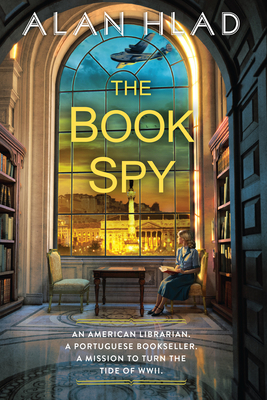
61. The Book Spy


The Book Spy. Alan Hlad. 2023. [January] 304 pages. [Source: Library]

First sentence: On the day librarians were recruited for the war, Maria Alves was microfilming historical newspapers in the Department of Microphotography of the New York Public Library. 

Premise/plot: The Book Spy is a historical fiction novel set during the Second World War. It has a light romance in the background. The focus primarily is on a librarian, Maria Alves, who is one of a handful of librarians--microfilm specialists--recruited for war work. They'll be going to neutral cities in Europe, acquiring Axis publications (newspapers, magazines, books, etc.), microfilming the works, and sending them to the Allies (UK and US) for examination. The cover story is preserving works for the Library of Congress. 

The Book Spy has two narrators. The second narrator is a bookseller (with a BIG secret) named Tiago Soares. The book is primarily set in Lisbon, Portugal. Maria and Tiago meet and become friendly. He helps her acquire the stuff (newspapers, magazines, books, etc.) she needs to do her job. She occasionally helps him with his undercover work. (He helps Jewish refugees.) 

My thoughts: I enjoyed this one. I don't always love dual narration. But in this case, it makes sense. They are both doing their part for the war effort. His story is just as important as hers. It was well-written. The plot is never dull. It isn't overly melodramatic. 

This was my second time reading Alan Hlad. (The first one I read was set during World War I.) I'm definitely enjoying getting to know his work.


© 2023 Becky Laney of Becky's Book Reviews
Friday, February 24, 2023

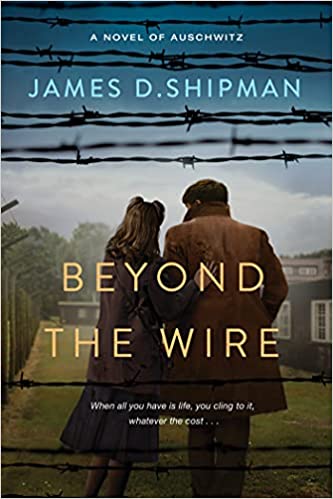
44. Beyond the Wire


Beyond the Wire. James D. Shipman. 2022. 349 pages. [Source: Library]

First sentence: The screams faded. Jakub hunted through the coat of a dead man. He searched with a practiced hand, groping through pockets, fingering seams. He felt something hard. Eyes forward, he tore at the fabric, ripping open a secret pocket. An object fell into his hand, circular and metallic. A watch. He glimpsed a flash of gold. 

Premise/plot: Beyond the Wire is a historical novel set at Auschwitz-Birkenau circa 1944 through 1945. Jakub, our protagonist, has managed to survive the concentration camp...so far. But at great cost. His job, one of the 'cozier' jobs of the camp, is to go through the possessions of the new arrivals--those soon to be gassed/murdered. He is able to steal here and there enough to keep the guards bribed. He can buy extra food. He can buy his way into the women's camp to socialize. Anna, our second protagonist, is Jakob's girlfriend. They meet secretly. He is her protector. But they have secrets from one another... Jakob has been approached multiple times by Roch Laska, a prisoner who is plotting a revolt/revolution. Tomasz, Jacob's best-friend-and-companion, is dead-set against Jakob joining such a plot/scheme. Anna is "for" him joining, by the way. But soon he finds himself mixed in with the rebellion...for better or worse...and it starts with someone who is threatening Anna.

My thoughts: This is a very intense read. The author has a note on which elements of the story are 'true' and which are pure fiction. I believe the main characters--our two protagonists--are fictional. This one is packed with action and heartache.


© 2023 Becky Laney of Becky's Book Reviews

Saturday, October 22, 2022

134. Beavallet


Beauvallet. Georgette Heyer. 1929. 272 pages. [Source: Library]

First sentence: The deck was in shambles.

Premise/plot: Dona Dominica, the daughter of the former governor of Santiago, Don Manuel de Rada y Sylva, is on her way back to Spain--along with her dying father, when their ship the Santa Maria is boarded by English adventurers (pirates) led by the fearless El Beauvallet (Nicholas Beauvallet). The two are taken captive by Beauvallet and brought aboard his ship, Venture. But he promises--and it's not a promise without risk--to return these two safely to Spain. If anyone can land an English ship safely into a Spanish port during these hostile times it would have to be Beauvallet.

At first Dominica hates her captor. She refuses to admit to herself that he is a little charming, a little handsome. She flirts with the other men to drive him crazy. But. Soon she has to admit that there is an attraction between them. And she's shocked to hear him boast recklessly of his honorable intentions to make her an English woman before the year is out. Since she is his captive, you might think this would be easy. Just set sail for England instead of Spain. The lady seems willing enough. But Beauvallet wants the challenge. So he keeps his promise--his first promise--both father and daughter arrive safely in Spain. Beauvallet returns to England, to his family, to his Queen.

But Dominica has not been forgotten. And a few months later, Beauvallet is ready to pursue his lady. To woo her in Spain. With England and Spain so very, very close to war--how can an Englishman, a pirate, a dreaded pirate, safely enter Spain? He has boasted that he will find a way...

Meanwhile, Dominica's father dies and she is taken into her aunt's family. Her aunt!!! Oh what a character Dona Beatrice is! She's a strong, strong woman with a mind of her own. She has a way of bullying all the men in her life including her son, Don Diego. She has determined that he must marry Dominica.

Beauvallet is an exciting and dramatic historical romance set in the Elizabethan era. Beauvallet is a bold adventurer who will risk it all to win his lady love. With his faithful companion, Joshua Dimmock, by his side, Beauvallet is ready for any challenge. 

My thoughts: The book had action, adventure, drama, and romance. I enjoyed Beauvallet very much! If only Beauvallet had been filmed... Errol Flynn would have been perfect--absolutely perfect--as Heyer's hero, Nicholas Beauvallet. It was easy to imagine, which perhaps helped me enjoy the novel more. Beauvallet would never be among my favorite, favorite Heyer romances. Most of my favorite Heyer novels are set in the Regency. This historical romance is set in the Elizabethan period. But it's good fun and well worth the read. 


© 2022 Becky Laney of Becky's Book Reviews

Tuesday, September 20, 2022

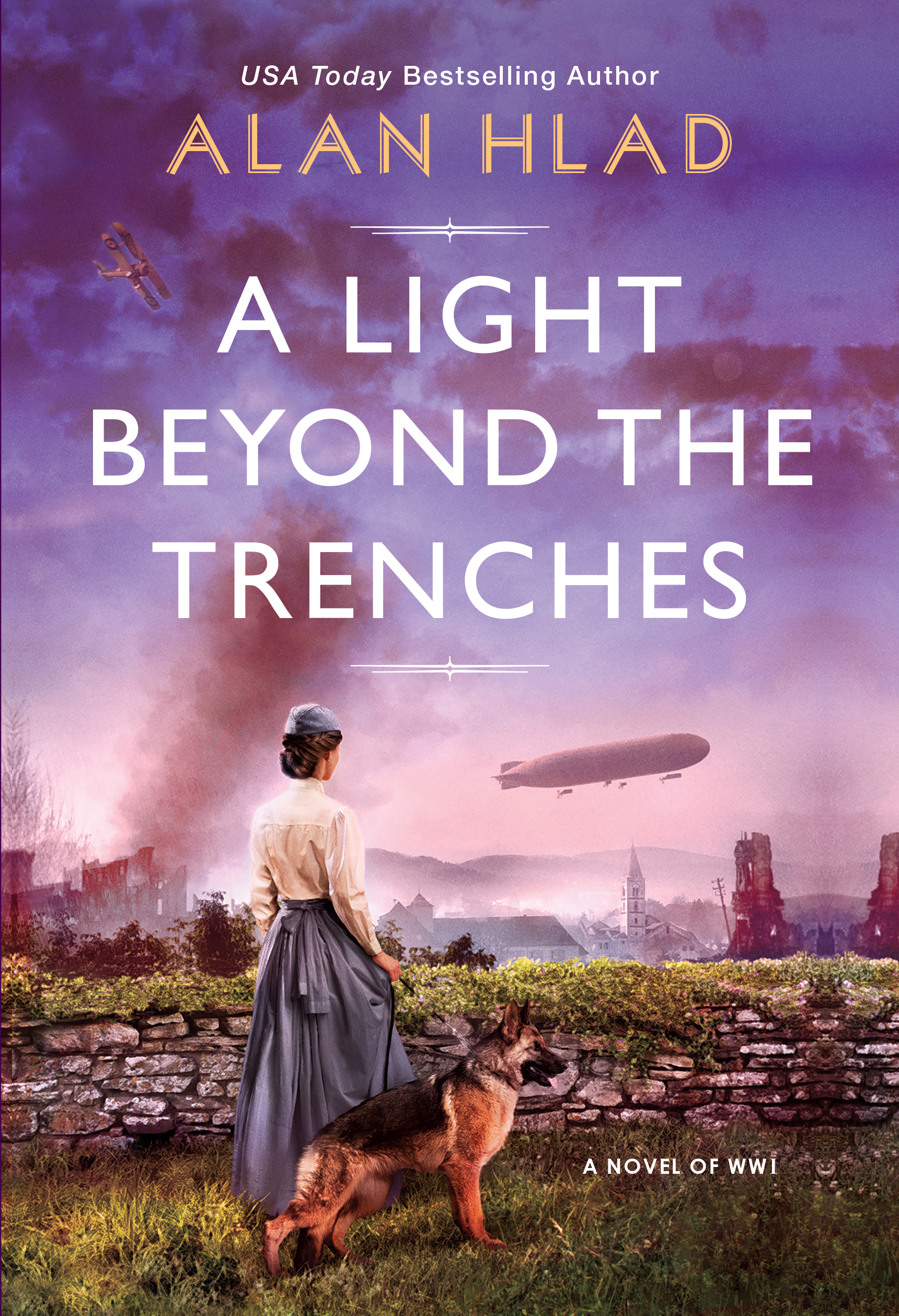
116. A Light Beyond the Trenches


A Light Beyond the Trenches. Alan Hlad. 2022. [March] 362 pages. [Source: Library]

First sentence: On the eve of the war crime, Max Benesch was crouched in a trench on the western front.

Premise/plot: A Light Beyond the Trenches is set (mainly) in Germany during the First World War (aka the Great War, aka The War to End All Wars). There are three primary narrators: Anna, Bruno, and Max. Anna is a Red Cross nurse engaged to a soldier, Bruno. During her time as a nurse, she has the opportunity to become involved in the very first guide dog school. They will be pairing German shepherds with blinded veterans and training them on how to function in the world so they can have some independence. This was a novel idea at the time. Max is a blind veteran who boards with Anna. He is paired with a dog Anna nursed back to health, Nia. Life in Germany during the war is rough--to say the least--starvation seems inevitable with so few supplies and resources. But Anna, Max, and Nia are finding the light in a very dark situation. Bruno's chapters counterbalance that light. He is still on the front.

My thoughts: You don't have to worry about the dog. There's that at least. But I was seriously not expecting this one to be....what it was. It was an intense, emotional read. I found the story unfolding in such a way that I just had to keep saying one more chapter, one more chapter, just one more chapter. It was new to me. I don't think I've read about the first world war from a solely German perspective. I definitely want to read more of this author's work. He was new to me.


© 2022 Becky Laney of Becky's Book Reviews

Sunday, September 18, 2022

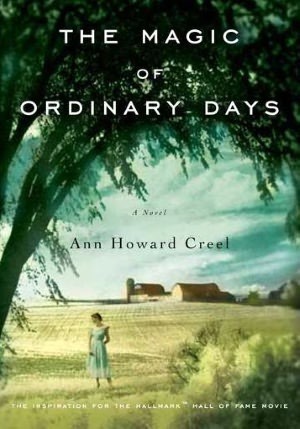
115. Magic of Ordinary Days


Magic of Ordinary Days. Ann Howard Creel. 2001. 304 pages. [Source: Library]

First sentence: I don't often think back to that year, the last year of the war--its days, its decisions--not unless I'm out walking the dawn of a quiet winter morning, when new snowfall has stunned into silence the lands around me, when even ice crystals in the air hold still. On those mornings of frozen perfection, when most living creatures keep to a warm bed or a deep ground hole, I pull on my heaviest old boots and set out to make first tracks through the topcrust and let the early dawn know I'm still alive and appreciating every last minute of her fine lavender light. Then I remember.

Premise/plot: Olivia (Livvy) Dunne finds herself married to a stranger, Ray Singleton--a farmer--after she finds herself in an unfortunate situation: she's pregnant. Her father arranges with another minister to marry off 'poor' Livvy to a good, stable man. The two meet on their wedding day. She asks him WHY he's willing to marry a stranger and IF he'll be able to love the baby. His answer surprises her, he feels it's God's will to bring them together, and, of course, he'll love her baby. It is the raising of a child that makes a father.

The novel chronicles their lives together that first year as she adjusts to an isolated country lifestyle, as she tries to find ways to occupy her time and grasp the fringes of her true dreams. She loves history and archaeology. She loves finding and discovering old things. She loves finding out about the past, imagining herself in that past. Ray is only a little helpful, it is Ray's sister, Martha, who is able to help her the most. For Martha has stories about their parents, grandparents, etc. It is Martha who is able to tell her about the settling of the place, the original structures built, how their family lived and worked and struggled to create a legacy for the family. And Livvy does see how very much Ray loves the farm, the land, the strong connection he feels to the past and present.

Livvy is lonely still, however. She becomes friendly with two Japanese women living at a nearby Japanese internment camp. She actually meets them in her own fields--for they have been hired to help with the harvest. It seems they are an answer to her prayers; they are so nice and friendly and pleasant to talk with. They even volunteer their tailoring services--providing her with a maternity dress and suit. But is the friendship genuine? I think it's as genuine as it can be since Livvy doesn't like being vulnerable and the two sisters almost by necessity don't feel comfortable telling all their secrets either. I'm not even sure Livvy realizes this until the end when she sees that by protecting herself, protecting her heart, always keeping things inside, she's keeping love out too.

Livvy's perspective provides insights to readers about what it was like to live during this time. Livvy tries to keep up with the war through newspapers--though she has to content herself with news that is a day or two old since the delivery is so slow. The travel restrictions also keep Livvy at home with Ray instead of allowing her to visit her family at Christmas and New Years--like she originally planned. ("I'll Be Home for Christmas" would have still been a 'new' Christmas song, having been done in 1943. "Have Yourself a Merry Little Christmas" would have been another 'new' holiday song first introduced in the 1944 musical, Meet Me in St. Louis. "The Christmas Song" was written in 1944, but not recorded until 1946.) 

I really enjoyed this novel. I loved Ray and Livvy. I loved Martha and her daughter too.

My thoughts: I've read the book twice now. But I've watched the movie probably twice that. I love, love, love the movie. I do. I enjoy the book as well. Both are wonderful. I do think the book explores things with a little more depth. But the romance perhaps plays better on the screen. 


© 2022 Becky Laney of Becky's Book Reviews

Monday, August 08, 2022

96. The Lindbergh Nanny


The Lindbergh Nanny. Mariah Fredericks. 2022. [November] 320 pages. [Source: Review copy]

First sentence: I can see the house. But not all of it and certainly not how you get there from here. 

Premise/plot: The Lindbergh Nanny is historical fiction. It opens in February 1931 and closes shortly after the trial (and conviction) of carpenter, Bruno Richard Hauptmann. It follows (closely) the events through the nanny's perspective; her name is Betty Gow. 

My thoughts: This is FICTION. It is important to remember that. Yes, it is inspired by a real event. Yes, some amount of research was done. But this is a blending of fact and fiction. And sometimes the line between the two--fact and fiction--get very blurry. Facts can be embellished and changed. 

The perspective makes sense. Who better to tell the story than the child's nanny? Who better can "give" us readers a behind the scenes glimpse into the whole story--before the kidnapping, the day of the kidnapping, the immediate days following the kidnapping, the weeks, months, years of aftermath as the kidnapping/murder case is investigated. The nanny would know all the major players--both upstairs and downstairs, if you will--and be an eyewitness to all the great dramatic scenes. So the perspective does make perfect sense. 

The protagonist's point of view is that Bruno Richard Hauptmann was guilty. The author crafts a couple of scenes where the Nanny sees HIM, recognizes him, even interacts with him. This is pure fiction. The author does point out in a note that she also believes that Bruno Richard Hauptmann is guilty. She says she is no conspiracy theorist and that justice was done.

I do disagree. I don't violently disagree. (Enough to throw a book against the wall.) But there are hundreds if not thousands of holes in the case and how it was handled from day one through the appeal process. There are legitimate questions that don't have satisfying answers. Enough questions that it is easier to say I DON'T KNOW.

This one was a difficult read because of the content. It was a heartbreaking tragedy. This book does make the players in this tragedy feel more 'real' or 'human.' 

© 2022 Becky Laney of Becky's Book Reviews

Saturday, June 18, 2022

75. The Siren of Sussex


The Siren of Sussex. (Belles of London #1) Mimi Matthews. 2022. [January] 400 pages. [Source: Review copy]

First sentence: Evelyn Maltravers entered the dimly lit shop in Conduit Street. 

Premise/plot: Evelyn Maltravers has come to London for her one and only season. Her older sister had a season that ended in scandal. Until her own season began, Evelyn never really understood how that could happen--how one could find oneself falling truly, madly, deeply for someone that you are "not supposed to" live your happily ever after with. In her sister's case, it was a man too high above her station. In her own case, well, let's not jump ahead just yet...

Evelyn is depending on a HABIT (a riding habit) to help distinguish her this season. She feels she is at her absolute best while riding her horse. Ahmad Malik, a tailor, is THE ONE (in her opinion) to make that habit. He seems to have a perfect understanding of fashion (and function). In their first few meetings, she is overwhelmed with a warm and fuzzy feeling. If she was Disney's Cinderella, she'd be HUMMING. He seems to be dazzled with her as well, though, he seems to see her as his perfect muse. He hatches a plan for her season as well. He'll design EVERYTHING and she'll show it off wherever she goes. (She doesn't so much want to be noticed for her own sake, her own plans. She only wants to be noticed by HIM. Though the more people notice her and talk about her clothes, the more business he'll get for the shop).

But happily ever after won't be easy and straight forward. Technically, she's looking for a (relatively) wealthy gentleman. Technically, he's not looking to marry any woman. He does not own his own shop; his income is uncertain at best. It depends on IF his customers ever pay him. Some do. Some don't. And there's not much he can do to make them pay. (Remember, the bill comes later.) And then there's his race...he's half Indian. He doesn't feel comfortable in white circles or Indian circles. He doesn't "fit" in either. And no matter what he says--his race, his socioeconomic class--she sees her ultimate dream man.  

My thoughts: I read the second book in this series not so long ago. Evelyn is one of a group of friends who love, love, love, love riding horses. All are enjoying--or not enjoying--their London season. All are hoping to find their one true love. I have a feeling that the friends will make appearances in all the books. Friendship is important in this one. It isn't just a romance.

The romance is told from two points of view--his and hers, Evelyn's and Ahmad's. The romance is strong in this one. I think this may be my first interracial Victorian romance. I thought it was tastefully and realistically done. There were a few scenes that I thought might be a little too modern-sounding. Like Evelyn explaining to her friends that it was her responsibility not only to become (more) educated but to educate herself about Indian history and culture. She was hesitant to talk to him and ask him questions because it wasn't his job to "teach her." 

My least favorite aspect of this one was the focus on spiritualism. Evelyn herself isn't a spiritualist. BUT her uncle (who is her guardian and who is paying for her season) is a spiritualist. Her official sponsor (a woman friend of her uncle's) IS also a spiritualist. So almost all of her invitations are from the spiritualist crowd and involve spiritualist activities (crystal balls, seances, mediums, astrologists, etc.) I just didn't care for any of these scenes at all. Spiritualism may have been super popular at this time in history. The idea of communing with the dead, having FAMILIAR SPIRIT GUIDES, etc, may be right on track with what was trending at this time. But it didn't sit right with me. Again, I'm not saying that YOU will have an issue with it. Just sharing how I feel.

 I would not say it is necessarily squeaky clean--far from it. On the one hand, the intimacies are not told graphically. There is some restraint shown. On the other hand, there's no denying the physical intimacies that are occurring even if the book is mostly fade to black. So it depends on what bothers you--if anything--about adult "smutty" books.  

I liked this one but not as much as I did the second book which I crazy loved.

© 2022 Becky Laney of Becky's Book Reviews

Monday, April 18, 2022

47. Katherine

2004 cover
Katherine. Anya Seton. 1954. 512 pages. [Source: Bought]

First sentence: IN the tender green time of April, Katherine set forth at last upon her journey with the two nuns and the royal messenger.

Premise/plot: Katherine de Roet is a young girl on the way to the royal court when Anya Seton's historical novel opens. To be fair, she isn't so much on the way to the royal court to become a part of the royal court as it just so happens that her sister, Philippa, serves the Queen. If all goes well, a marriage will be arranged for young Katherine. She is young and beautiful, but, does not have a dowry. She catches the eye of many, but it is Hugh Swynford who steps up and says, yes, I want to actually marry her (and not just bed her). Katherine is not thrilled. Her heart is just not in marrying this OLD man--no matter his social status. (Not that she's in love with anyone in particular.) Plus these two didn't get off to a mutual good start. He likes what he sees a LITTLE too much, and after a struggle in the garden one day, she's saved from rape by a member of the royal family--John of Gaunt. The Duke takes the poor woman home to his wife, Blanche, who takes pity on the girl and offers her friendship and kindness. But a marriage between the two (Hugh and Katherine) is arranged, and off they go to his (pitiful) estate.
2000 cover

Katherine and the Duke (John of Gaunt) keep crossing paths--not often or frequent, but occasionally. When they do cross paths, they live a lingering impression on one another. Like when the Duke just happens to be passing by her estate when she's gone into labor with her first child and NO ONE on the estate is around to hear her cries and screams. But what really leaves an impression perhaps is her devoted care to his dying wife. 

The novel spans decades and covers a LOT of history. (1360s through the 1390s) Politics. Royal family. Religious history. Conflicts domestic and abroad. This one isn't exclusively a "romance" between Katherine and the Duke. But it does concern their decades long love affair. (She has four children with him, none legitimate until much, much, much later).

My thoughts: I first read this one in September 2011. I enjoyed it then. I enjoyed it now. My biggest advice would be don't go into it thinking that it is a swoon-worthy, super-romantic LOVE STORY that will leave you smiling. The characters are human, and, that's not a "bad" thing. Just that it isn't a superficial romance novel with characters that are too-good-to-be-true and a fairy tale ending.

It probably could go without saying that this is a historical novel based on history; especially the royal family and important figures of the time. Seton's novel is peopled with real people. I am curious how much is fictionalized and how much is "true." But certainly it has to blend in some fiction. 

And now just for fun some additional covers:

1954 cover of Katherine

1957 cover

1955 cover 


1975, 1981, 1983 cover


© 2022 Becky Laney of Becky's Book Reviews

Friday, March 25, 2022

38. A Brilliant Night of Stars and Ice


A Brilliant Night of Stars and Ice. Rebecca Connolly. 2022. 320 pages. [Source: Review copy]

First sentence: Arthur Rostron exhaled slowly, enjoying the last quiet moments he would have on the bridge of the RMS Carpathia before they were underway.

Premise/plot: A Brilliant Night of Stars and Ice is historical fiction at its best. In alternating chapters, the story of a fateful night in April 1912 unfolds for readers. The narration is divided between Arthur Rostron, the captain of the RMS Carpathia, and Kate Connolly, a third class passenger on board the Titanic.

My thoughts: I loved, loved, loved, LOVED this one. I would say though it's definitely marketed as being adult historical fiction, it truly could be for readers of all ages who happen to have an interest in the Titanic and enjoy history. 

I loved so many things about this one. I LOVED the chapters narrated by Arthur Rostron. I absolutely loved the behind the scenes glimpse of the crew of Carpathia heading into unknown dangers racing against time to save the passengers of the Titanic. I loved how all the chapters began with authentic quotes. I loved the writing. I also loved the faith-focus. For example, I loved this prayer from the captain, "Father God, let us get to them. Guide our hands and our feet, our ship and our hearts. Let it be enough."

I also loved the afterword. I was delighted to know that all the characters were real people. Fictionalized, to be sure, to one degree or another. But this is a well-researched novel.

Quotes:

We must be better sailors, better crew, and better men than we have ever been. 
The clarity of the night sky was breathtaking. It would have been something to marvel had the circumstances been different. Each star lit its portion of the sky with a brilliance he'd rarely seen. "A brilliant night of stars," Arthur murmured to himself as he gazed out at it. He swallowed once. "And ice."


© 2022 Becky Laney of Becky's Book Reviews

Saturday, March 19, 2022

36. The Last Kingdom


The Last Kingdom. (The Last Kingdom #1) Bernard Cornwell. 2004. 351 pages. [Source: Library]

First sentence: My name is Uhtred. I am the son of Uhtred, who was the son of Uhtred and his father was also called Uhtred. My father's clerk, a priest called Beocca, spelt it Utred. I do not know if that was how my father would have written it, for he could neither read nor write, but I can do both and sometimes I take the old parchments from their wooden chest and I see the name spelled Uhtred or Utred or Ughtred or Ootred.

Premise/plot: The Last Kingdom opens in 866 in England--or what would eventually become England. The Last Kingdom in some ways about one man's vision of a united England. That man isn't the main character, Uhtred, by the way, but (King) Alfred (the Great). In his own words, "This is the tale of a blood feud. It is a tale of how I will take from my enemy what the law says is mine. And it is the tale of a woman and of her father, a king. He was my king and all that I have I owe to him. The food that I eat, the hall where I live, and the swords of my men, all came from Alfred, my king, who hated me."

This first book, however, sets the scene for what is coming, what is inevitable--after all destiny is all, so we're told as readers over and over and over again. 

The story starts with a YOUNG boy, a young boy of Bebbanburg, a second son renamed (and rebaptized) after his older brother's death. It begins with his being ripped away "from his destiny" and having his life turned upside down. He witnesses the death of his father and the defeat of his father's men. He's captured by the Danes (aka Vikings) and enslaved. But his "slavery" comes to feel over time--weeks, months, years--more like adoption. He loves and is loved by his new family...

But this isn't a happily ever after story.

My thoughts: I watched the television series first. It was compelling. I don't know that every viewer feels the need to binge-watch the show, but I certainly did. But the show goes a million times faster than the book. For better or worse. Uhtred's childhood and teenage years are a complete blur in the show. Blink and you miss it. They rush ahead. The book definitely and decidedly are BETTER than the show in that regards. It's good for building and establishing the world; it's great for CHARACTER development. 

So much is abridged on the show. So much is left out completely. For example, Uhtred going to visit his MERCIAN relatives. (His mother's family were from Mercia. He has living relatives in Mercia. He goes first to MERCIA. He doesn't seek out Wessex and Alfred.) It also gives a much fuller view of Alfred and Uhtred and how these two relate to one another. These two met several different times--perhaps even half a dozen times--when both were boys/young teens. The book also does a great job with Father Beocca.

Definitely I recommend the book. 

Quote: This was what life had led to, a shield wall, and if I survived this then I would be a warrior.


© 2022 Becky Laney of Becky's Book Reviews