Showing posts with label 1974. Show all posts

Friday, May 29, 2026

39. My Brother Sam is Dead


39. My Brother Sam is Dead. James Lincoln Collier and Christopher Collier. 1974. 240 pages. [Source: Library] [3 stars, mg history, mg fiction]

First sentence: It was April, and outside in the dark the rain whipped against the windows of our tavern, making a sound like muffled drums.

Premise/plot: My Brother Sam is Dead is historical fiction for middle grade (and/or upper elementary grades). It is set during the American Revolution. The narrator, Timmy Meeker, spends the duration of the book confused by the complexities of war. He isn't really in favor or support of either side. He wants things to go back to normal. He hates that his brother Sam has been kicked out of the family for his "rebel" views and joining up with the Patriots. He knows his dad leans more towards being a Tory or Royalist. But also at the same time his dad has ALL THE OPINIONS that war is the worst thing on the planet.

My thoughts: This was my first time to read My Brother Sam is Dead. When I started it, I thought I would like it more than I did.

I picked up on the anti-war sentiment from the start. That didn't surprise me. I didn't expect war to be glamorized or idolized. I expected the view point to be war is UGLY, war is MESSY, war is TRAUMATIC, war is HORRIBLE. Many if not most books about war--any war--touch upon this ugliness, this trauma, this raw pain, this sorrow.

My Brother Sam Is Dead was written and published towards the end of the Vietnam War. Anti-war sentiment was high. America was also a few years away from celebrating the bicentennial. I don't know if either of these facts had any impact at all on the story these brothers were telling, were sharing. But it doesn't escape my attention that they might have wanted to remind readers that just because the war happened two hundred years ago, doesn't make it any less ugly, horrifying, terrifying, gross, disgusting, revolting, traumatizing. The "cause" they were fighting for did not negate the reality of war being what it fundamentally is. 

I guess what surprised me, and probably shouldn't have, is the way Tim loses his father and his brother. Not the fact that both died--or either died. BUT the how. It isn't so much that Sam Meeker dies in the novel. It is the how and why. The father's death was sad and unnecessary, but it was the brother's death that turns the novel about.

I do think that adult readers may read the book differently perhaps. I'm not sure. I do know that this is a book that I never would have picked up as a kid or teen.

As an adult, I was seeing things not so much through Tim's eyes but through the eyes of his parents.

© 2026 Becky Laney of Becky's Book Reviews

Wednesday, November 15, 2023

179. The House Without a Christmas Tree


The House Without a Christmas Tree. Gail Rock. 1974. 84 pages. [Source: Bought]

First sentence: Carla Mae and I were sitting in our little kitchen at the old wooden table, with our spoons poised in mid-air. In front of each of us was a hard-boiled egg perched in an egg cup. We both stared intently at the faces we had drawn on our eggs. The longer the stare, the better the hex. "Who's yours today?" she asked. "Billy Wild," I said, making a face. 

The House Without a Christmas Tree is a nice holiday read. Addie Mills is the ten-year-old heroine in the novel. As Christmas approaches, she has one thing on her mind. Will this be the year that her Father gives in her begging--her pleading, her imploring--and buys a Christmas tree? Or will this be another disappointing Christmas season? She can't ever recall having a tree of her very own. She's not sure she completely believes her father's excuse that since they'll be spending Christmas day at her uncle's house--and he has a tree--that there is no need for a tree of their own. Her grandmother is on her side. But both seem a bit timid, and hesitant, to speak their full minds in front of Father.


Here are some other things it's nice to know about Addie:

  • She is best, best friends with Carla Mae.
  • She is worst friends with Tanya Smithers.
  • She definitely does not like-like Billy Wild. (Or does she?)
  • She loves her Grandma, and feels fiercely protective of her.
  • She loves but does not understand her Father at all.
  • She feels very misunderstood by her Father.
  • She's curious about the mother she never knew.
The book is set in a small town in 1946.

 I have read this one a handful of times through the years. I do like revisiting the characters and their complex relationships. There are three more books, I believe, in the series. I have not read them all. But I'd be interested in reading them if I can find them.


© 2023 Becky Laney of Becky's Book Reviews

Thursday, December 20, 2018

The House Without a Christmas Tree

The House Without a Christmas Tree. Gail Rock. 1974. 84 pages. [Source: Bought]

First sentence: Carla Mae and I were sitting in our little kitchen at the old wooden table, with our spoons poised in mid-air. In front of each of us was a hard-boiled egg perched in an egg cup. We both stared intently at the faces we had drawn on our eggs. The longer the stare, the better the hex. "Who's yours today?" she asked. "Billy Wild," I said, making a face.


Premise/plot: The book is set in a small town in 1946. Addie lives with her father and grandmother. Her grandmother is a "character" in all the best ways. Unfortunately, some of her classmates mean it in a bad way. She has a super-complicated relationship with her father. He doesn't understand her; she doesn't understand him. Neither one is good at expressing exactly what they mean to one another.

The plot, of course, appears to mainly be about her wanting a Christmas tree. He said no; he meant no. No, no, no. But the heart wants what the heart wants, and Addie wants a Christmas tree desperately.

My thoughts: I really enjoy rereading this one every few years. It's a lovely quick read. If you enjoy historical fiction OR holiday stories, this one is a treat.

I read it this year with my family tree challenge in mind. Addie--if real--would have been born around the same time as my great-aunts.

© 2018 Becky Laney of Becky's Book Reviews

Tuesday, January 09, 2018

The Widow of Windsor

The Widow of Windsor. Jean Plaidy. 1974. 318 pages. [Source: Bought]

First sentence: Mourning hung heavily over Windsor. The Queen was stunned; now and then her tears would cease and she would ask in a bewildered voice: "It's not true? Tell me it's not true. This time last year he was with us. Oh God, how could this be? I always believed we should go together."

Premise/plot: The Widow of Windsor chronicles the last decades of Queen Victoria's life, starting with the death of Prince Albert in 1861 and ending with her own death in 1901. The book does not focus on Queen Victoria alone, but also on her children, their spouses, and her grandchildren. A marginal story line, in fact, despite the misleading book jacket, is the Queen's relationship with Mr. John Brown. Politics is never far from center stage either.

My thoughts: This one is well worth reading despite the melodramatic jacket copy. The good news is that The Widow of Windsor is NOT the book described in the jacket copy. I have taken to reading Plaidy's jacket copy in a certain voice in my head, starting with "Jean Plaidy who is also Victoria Holt." In the matter of The Widow of Windsor, it's dreadful: "She was the Queen. She was a widow. But she was also a woman...."  How could you not read that in a melodramatic way?!

I enjoyed reading this one very much. I enjoyed learning more about Bertie (Edward VII) and his wife Alix (Alexandra). Scandal was never far away from the Prince of Wales. The book shows him at his best and worst. Queen Victoria's other children are also very much present in the novel, though not all equally.


© 2018 Becky Laney of Becky's Book Reviews

Wednesday, August 02, 2017

Nate the Great Goes Undercover

Nate the Great Goes Undercover. (Nate the Great #2) Marjorie Weinman Sharmat. Illustrated by Marc Simont. 1974. 48 pages. [Source: Library]

First sentence: I, Nate the Great, am a detective. I work hard, I rest hard. Tonight I am resting hard from my last case.

Premise/plot: Nate the Great's latest case involves a "pest" named Oliver. (He's the kid-next-door who always, always catches up with Nate no matter how fast Nate walks.) Oliver is reporting a garbage-snatcher in the neighborhood. He wants Nate to figure out WHO is getting into the garbage and making such a huge mess. This won't be an easy case for him to solve, but, Nate--in addition to loving to eat pancakes--is stubborn or persistent when it comes to being on a case until the case is solved.

My thoughts: I liked this one. In addition to introducing Oliver to readers--I'm relatively sure Oliver didn't appear in the first book--readers meet Nate's new dog, Sludge. Some other characters show up again in this one. (Like Rosamond and her cats). I like the writing very much. There are several notes to his mother. I didn't read these at first, but, I'm glad I read them as I was reviewing the book. Nate is a hoot of a character, I believe.


© 2017 Becky Laney of Becky's Book Reviews
Monday, December 14, 2015

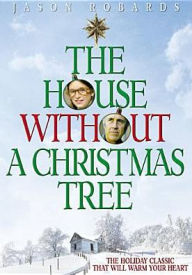
House Without A Christmas Tree

House Without a Christmas Tree. Gail Rock. 1974. 84 pages. [Source: Bought]

Carla Mae and I were sitting in our little kitchen at the old wooden table, with our spoons poised in mid-air. In front of each of us was a hard-boiled egg perched in an egg cup. We both stared intently at the faces we had drawn on our eggs. The longer the stare, the better the hex. "Who's yours today?" she asked. "Billy Wild," I said, making a face. 

The House Without a Christmas Tree is a nice holiday read. Addie Mills is the ten-year-old heroine in the novel. As Christmas approaches, she has one thing on her mind. Will this be the year that her Father gives in her begging--her pleading, her imploring--and buys a Christmas tree? Or will this be another disappointing Christmas season? She can't ever recall having a tree of her very own. She's not sure she completely believes her father's excuse that since they'll be spending Christmas day at her uncle's house--and he has a tree--that there is no need for a tree of their own. Her grandmother is on her side. But both seem a bit timid, and hesitant, to speak their full minds in front of Father.

Here are some other things it's nice to know about Addie:
  • She is best, best friends with Carla Mae.
  • She is worst friends with Tanya Smithers.
  • She definitely does not like-like Billy Wild. (Or does she?)
  • She loves her Grandma, and feels fiercely protective of her.
  • She loves but does not understand her Father at all.
  • She feels very misunderstood by her Father.
  • She's curious about the mother she never knew.
The book is set in a small town in 1946.

© 2015 Becky Laney of Becky's Book Reviews
Saturday, September 12, 2015

Seuss on Saturday #37

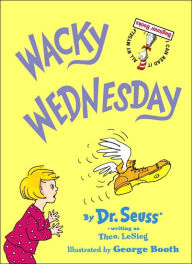
Wacky Wednesday. Dr. Seuss (Theo LeSieg). Illustrated by George Booth. 1974. Random House. 48 pages. [Source: Library]

First sentence: It all began with that shoe on the wall.

Premise/plot: A young boy wakes up to an increasingly wacky world. The text reveals how many "wacky" things are on the page. Readers can try to spot them all if they like.

My thoughts: Very weird. Can't say that I really "liked" it. But I can see it appealing to a certain kind of reader. The focus is on finding the details in the illustrations. If you rush through the text without taking the time to examine each page closely and counting them up for yourself, it's a very dull read.

Have you read Wacky Wednesday? Did you like it? love it? hate it? I'd love to know what you thought of it!

If you'd like to join me in reading or rereading Dr. Seuss (chronologically) I'd love to have you join me! The next book I'll be reviewing is Oh the Thinks You Can Think.

© 2015 Becky Laney of Becky's Book Reviews
Saturday, September 05, 2015

Seuss on Saturday #36

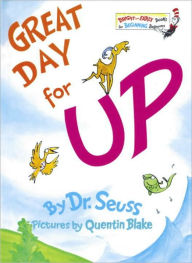
Great Day for Up. Dr. Seuss. Illustrated by Quentin Blake. 1974. Random House. 36 pages. [Source: Library]

First sentence: Up! Up! The sun is getting up. The sun gets up. So UP with you!

Premise/plot: Do you like getting up in the morning? The book is gentle prompting to do just that. "Up" being the prominent word of the entire book. But does the narrator himself end up getting out of bed? Read and see for yourself!

My thoughts: I liked the "twist" ending. I did. Overall, I liked this one fine. I didn't love, love, love it. But it's certainly an entertaining enough read.

Have you read Great Day for UP! Did you like it? love it? hate it? I'd love to know what you thought of it!

If you'd like to join me in reading or rereading Dr. Seuss (chronologically) I'd love to have you join me! The next book I'll be reviewing is Wacky Wednesday!

© 2015 Becky Laney of Becky's Book Reviews
Saturday, August 29, 2015

Seuss on Saturday #35

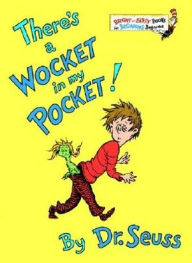
There's a Wocket in my Pocket! Dr. Seuss. 1974. Random House. 30 pages. [Source: Review copy]

First sentence: Did you ever have the feeling there's a wasket in your basket?

Premise/plot: The narrator starts out asking a series of very silly questions. There's no doubt there's more silliness than actual plot to this one. Readers "meet" lots of fanciful creatures in, on, behind, up, and under common household objects in a special sort of house. The narrator warns: some are friendly; some are not.

My thoughts: I like this one. I do. It's one I definitely remember from childhood. And it's one I recommend parents read to their children. It's just a lot of silliness!

Have you read There's a Wocket in My Pocket! Did you like it? love it? hate it? I'd love to know what you thought of it!

If you'd like to join me in reading or rereading Dr. Seuss (chronologically) I'd love to have you join me! The next book I'll be reviewing is Great Day for Up!

© 2015 Becky Laney of Becky's Book Reviews

Thursday, January 16, 2014

Road To Yesterday (1974)

The Road to Yesterday. L.M. Montgomery 1974. McGraw-Hill Ryerson Limited. 252 pages.

The Road To Yesterday is a collection of short stories by L.M. Montgomery set on Prince Edward Island. All of the stories mention the Blythes. The stories cover several decades. In one story, for example, Jem and Walter might be described as young boys. In another story, you might read of Rilla's loving Ken Ford. By the end of the collection, however, World War II has begun or nearly begun. So, yes, this one covers a wide span of years. One hears in passing, almost by chance, of news of the Blythe family, of Susan Baker. But the stories have their own main characters.

The stories include:
An Afternoon with Mr. Jenkins
Retribution
The Twins Pretend
Fancy's Fool
A Dream Come True
Penelope Struts Her Theories
The Reconciliation
The Cheated Child
Fool's Errand
The Pot and the Kettle
Here Comes the Bride
Brother Beware
The Road to Yesterday
A Commonplace Woman

Some stories can be sweet and predictable with a cozy, just-right feel. Other stories are darker and perhaps creepier. And a few are just FUNNY. I love, for example, Penelope Struts Her Theories. A "child expert" who has studied and written books on how to raise children finally gets a chance to put her theories into practice when she decides to adopt a child. Needless to say, she learns a thing or two!

I definitely recommend this one. All of these stories are included in The Blythes Are Quoted. 

© 2014 Becky Laney of Becky's Book Reviews
Sunday, December 15, 2013

Sunday Salon: The Last of the Really Great Whangdoodles

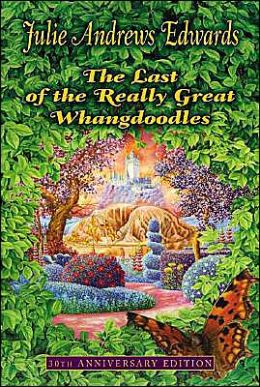
The Last of the Really Great Whangdoodles. Julie Andrews Edwards. 1974. Scholastic. 288 pages. [Source: Bought]

It was a crisp, sunny October afternoon and Benjamin, Thomas, and Melinda Potter were visiting the Bramblewood Zoo. 

Have you read The Last of the Really Great Whangdoodles? What did you think of this children's fantasy novel? I personally loved it a good deal! I enjoyed spending time with Ben, Tom, and Lindy. Their adventures begin with their excursion to the zoo. At the zoo, the children happen to meet a strange man, a professor it turns out. They are resting and discussing among themselves WHAT animal they would take home with them, if they could. This strange man interrupts them and asks if they've ever "considered" a whangdoodle. A what?!?! they essentially respond. That encounter might not have changed their lives too much, been easily forgotten in a week or so, IF, it hadn't been followed up by a trick-or-treating adventure soon after! Lindy was dared by one of her brothers to knock on the door of the local "haunted house." The haunted house, you guessed it, is where this strange professor happens to live. He himself started the rumors so that children would leave him to his work. He's busy making advances in genetics and marveling in studying the nature of DNA...remember this is 1974!

Friendship. These three children find a friend and fellow adventurer in Professor Savant. Someone who challenges them to open up their minds to the world of possibility, a world that allows for just about anything and everything that you can imagine. The four decide to go big, they will work to imagine themselves all the way to Whangdoodleland. Half the book focuses on their time in Whangdoodleland. Readers meet many fanciful creatures...but will they meet...at last...a Whangdoodle?!

If you enjoy fantasy novels with action and adventure and a LOT of imagination, then this one shouldn't be missed!

© 2013 Becky Laney of Becky's Book Reviews

Tuesday, November 05, 2013

The Bastard King (1974)

The Bastard King. Jean Plaidy. 1974. Fawcett Crest. 320 pages. [Source: Bought]

I really enjoyed reading Jean Plaidy's The Bastard King. The Bastard King is a novelization of the life of William I or "William the Conqueror." It was certainly a well-paced read! Especially once he comes of age. His courtship with Matilda was quite unique. (As this horrible histories sketch shows quite clearly!!!) The novel isn't exactly a romance novel, it is grounded in history with a focus on ambition, politics, and manipulation. Matilda and William are very interesting characters even if they don't come across as nice or pleasant or lovable. Readers see the tension between husband and wife increase year after year and decade after decade as the two happen to play favorites with their very large family. He has his favorite child; she has hers. This leads to some complications which lead to some big trust issues!!!

The last part of the novel focuses on William invading England and becoming King William I. The novel is sympathetic to William in many ways, so often books have a bias one way or another on whether or not William had any right to England at all. I thought the ending was a bit rushed, we spent much more time with him before he became King, but still I really liked this one. Enjoying this one gives me hope that I will read other Plaidy novels with pleasure!


William the Conqueror and Normanopoly
Battle of Hastings, News at 1066; Now That's What I Call Miserable, vol. 3
Words We Get From the Normans

© 2013 Becky Laney of Becky's Book Reviews
Monday, June 28, 2010

Z for Zachariah


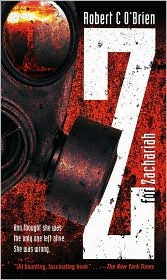
Z for Zachariah. Robert C. O'Brien. 1974. 250 pages.

I am afraid.
Someone is coming.
That is, I think someone is coming, though I am not sure, and I pray that I am wrong.


Ann Burden learns that there are some things worse than loneliness in Robert C. O'Brien's Z for Zachariah. It has been almost a year since Ann's world fell apart, since a week-long war destroyed the world as she knew it. Almost a year since she's seen another person. Ann has been living in a valley. For better or worse, this valley, her home, remained untouched by the nuclear disaster that destroyed the surrounding area, killing everyone and everything. Ann has managed to survive just fine on her own. But her strength will be tested now that a stranger is approaching her valley.
It is still hard for me to realize, even after all this time, that I am not going to be anything, not ever have a job or go anywhere or do anything except what I do here. (131)
I enjoyed Z for Zachariah. I wouldn't say I loved it exactly. But I thought it was interesting and I'm glad I read it. I will say that I thought the jacket description revealed way too much.


© Becky Laney of Becky's Book Reviews