Showing posts with label 1920. Show all posts

Thursday, January 04, 2018

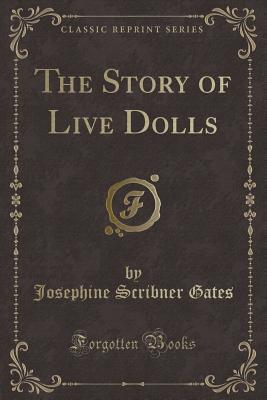
The Story of Live Dolls

The Story of Live Dolls. Josephine Scribner Gates. Illustrated by Mabel Rogers. 1901. 1920. 116 pages. [Source: Read online]

First sentence:  "Look, what's coming!" and with a shout of delight the children of Cloverdale village left their play and rushed into the street.

Premise/plot: Janie is super-excited one June day when she witnesses a spectacular site. The Queen of Dolls rides through town in a carriage pulled by kittens. She's tossing bills as she goes, bills that proclaim that on June 4th--the very next day--ALL the dolls in the town will come alive, and stay alive, for the whole month of June.

Janie rushes to tell her mother. (As I'm sure all the other little girls do). She spends the rest of the day preparing for the big day. But she's not as considerate as she might have been. Poor Dinah! Still, she makes an effort to be a good steward.

Most of the book is about that magical month of June. It isn't all fun and games. There are a few lessons not so subtly tucked away into the text. For example, the Queen of Dolls finds it necessary to have a doll ambulance visit each girls' home to carry off dolls that need a trip to the doll hospital. It's sadly too late for one doll in particular. A doll that was drowned by her owner.

The book reflects an honest enough look at how dolls are treated. Early on in the novel, it's revealed that some of Janie's dolls are--dare I say it, STARK NAKED. She's not the only doll owner about to be judged and found wanting. Still, better to be a naked doll than to have a cracked head, a missing limb, or be DEAD.

Here's the scene where Janie's baby doll, Dollie, comes to life:
"O you dear little mamma, I am so glad you are awake. I want to come into your bed," and up she popped and climbed in under the covers and snuggled up exactly as Janie often snuggled up to her mamma. (14)
Here's the disturbing scene where a doll is declared dead:
One poor little thing lay apart from the others and was dripping wet. Her companions sobbed aloud as they told in low tones of how she was fished out of a water barrel, stone dead. Not even the Queen could bring her to life. (39)
And the agenda comes straight to the point:
She told them how kind they ought always to be to their dolls--just as kind as they wished their mammas to be to them....Her eyes filled with tears as she spoke of the poor little dead one; and she said she could always tell what kind of heart a little girl had by the way she treated her doll. Those who made the sweetest and tenderest mammas were those who had taken the most loving care of their dollies when they were little girls. She wanted them to begin over, and see who could be the best mother during the few weeks that followed. (52-3)
My thoughts: I definitely enjoyed discovering this one. Would I have loved to have my dolls come to life as a child? Probably. Would I have been judged harshly by the Queen of Dolls? It would depend on the doll. There were a few dolls that were a bit out of favor, you might say. I didn't play with them--nor care if they were ever dressed. My mom could tell a few stories on me. BUT thankfully, she's not online.

The story is dated. Dinah is one of the dolls, she's a black cook with a wig askew (though she has a kerchief) and a broken leg that was hastily put on BACKWARDS. That's why I said poor Dinah. I suppose in 1901, when the story was first published, having a black cook in a household was nothing out of the ordinary.

© 2018 Becky Laney of Becky's Book Reviews

Friday, May 31, 2013

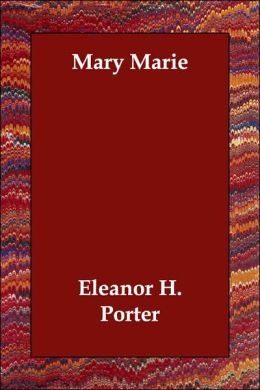
Mary Marie (1920)

Mary Marie. Eleanor H. Porter. 1920. 136 pages.

Eleanor H. Porter is perhaps best known for her novel Pollyanna. The heroine of Mary Marie is thirteen; the book is her "journal." In this "journal" Mary Marie records the details of her life mainly focusing on her parents' divorce. The chapters are arranged to reflect the six months with her mother and the six months with her father. Her father calls her Mary; her mother calls her Marie. This is an ODD book. Are Mary Marie's reflections to be taken seriously? For in her entries, this young woman is EXCITED and THRILLED that her parents are divorcing and that she'll have two homes, two bedrooms, two schools, etc. She's also extremely eager for her mother to remarry. She notes how she wants her journal to have romance in it; a new love story for her mother OR a new love story for her father. She watches her mother closely looking for anything that may indicate a chance for romance. These observations she later shares with her father. When she's living with her father, she's equally observant and keeping her mother informed about what her father is doing. (Her second visit with her father, she has quite the story to report back to her mother since she thinks her father is in love.) Not everything that happens to Mary Marie is positive; readers may sense the confusion even before the heroine admits it. The interesting story is one readers have to piece together themselves: the true thoughts and emotions of each parent. Like The Parent Trap, Mary Marie has a happy ending with the divorce bringing ultimate happiness as the parents fall back in love with one another. But that is not the end of the story. There is an epilogue, a MESSY epilogue. One of those that makes you question everything that went before.

Before I began considering Mary Marie an unreliable narrator, before I began doubting her mental and emotional well-being, I thought the book was unrealistic, superficial, shallow. If one goes with the theory that there is more to the story, that Mary Marie isn't always a reliable narrator--that she's a young woman with emotional issues--then the novel becomes complexly layered.

There were things about Mary Marie that reminded me of Emily Starr.

Favorite quotes:
If I write the story part, I can't be expected to be bothered with looking up how words are spelt, every five minutes, nor fussing over putting in a whole lot of foolish little dots and dashes. 
The sun was slowly setting in the west, casting golden beams of light into the somber old room. That's the way it ought to begin, I know, and I'd like to do it, but I can't. I'm beginning with my being born, of course, and Nurse Sarah says the sun wasn't shining at all. It was night and the stars were out. She remembers particularly about the stars, for Father was in the observatory, and couldn't be disturbed.
No, I didn't listen. I heard. And that's a very different matter. You listen when you mean to, and that's sneaking. You hear when you can't help yourself, and that you can't be blamed for. Sometimes it's your good luck, and sometimes it's your bad luck--just according to what you hear! 
Stories are just like meals. You have to eat them--I mean tell them--in regular order, and not put the ice-cream in where the soup ought to be.

© 2013 Becky Laney of Becky's Book Reviews

Friday, February 15, 2013

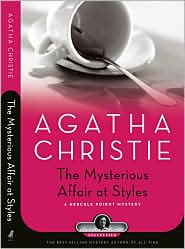
The Mysterious Affair at Styles (1920)

The Mysterious Affair at Styles. Agatha Christie. 1920/2006. Black Dog & Leventhal. 224 pages.

The intense interest aroused in the public by what was known at the time as "The Styles Case" has now somewhat subsided. Nevertheless, in view of the worldwide notoriety which attended it, I have been asked, both by my friend Poirot and the family themselves, to write an account of the whole story. This, we trust, will effectually silence the sensational rumours which still persist.

The Mysterious Affair at Styles was one of my first mysteries to read, my first Agatha Christie. It is also among my first Christie mysteries to reread. This was Christie's first novel, and it stars Hercule Poirot.

Captain Hastings, our narrator, has been invited to the home of an old friend. While he's visiting this family, something horrible happens: a murder. It's not absolutely unexpected, he'd been informed by one of the occupants of the house that the family was a mess and that Mrs. Inglethorp is in danger. But it is a surprise. He decides that it would be wise if he called Hercule Poirot, a Belgian detective he'd met previously. The two are definitely friendly, but, they aren't as close as they are in later books. In this first novel, Hastings is very amateurish and completely unused to Poirot's tricks and methods. Hastings instincts and observations seem to be all wrong. His insights amusing Poirot perhaps. Though it is one of Hastings comments that help Poirot find his missing link...

The presentation and arrangement of the clues is confusing, purposefully confusing I believe since the case is seen entirely through Hastings view point. Since Hastings was having a horrible time solving the case and focusing in on what was important and how the suspects fit into it...readers can at times struggle along with him. Hastings always has an idea, a guess, and he's always seeking confirmation from his hero, Poirot. Since Poirot is reluctant to share his own opinions on the case with Hastings, this can be frustrating to him. Why won't Poirot tell him if he's right or close to being right?

I would recommend this one.

Read The Mysterious Affair at Styles
  • If you enjoy vintage mysteries, cozy mysteries, British mysteries
  • If you enjoy Agatha Christie
  • If you enjoy Hercule Poirot and Captain Hastings

© 2013 Becky Laney of Becky's Book Reviews

Monday, August 22, 2011

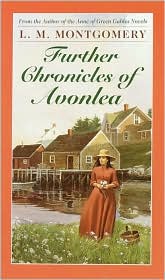
Further Chronicles of Avonlea

Further Chronicles of Avonlea. L.M. Montgomery. 1920/1989. Bantam Classics. 200 pages.

I love L.M. Montgomery. I do. I just love, love, love her books--her novels and her short stories. Chronicles of Avonlea and Further Chronicles of Avonlea are short story collections set on Prince Edward Island during Anne's time. (I get the impression that these stories are set around the time of Anne of Avonlea, Anne of the Island, etc. She has NOT married Gilbert yet.*)

There are fifteen short stories:

Aunt Cynthia's Persian Cat
The Materializing of Cecil
Her Father's Daughter
Jane's Baby
The Dream-Child
The Brother Who Failed
The Return of Hester
The Little Brown Book of Miss Emily
Sara's Way
The Son of His Mother
The Education of Betty
In Her Selfless Mood
The Conscience Case of David Bell
Only a Common Fellow
Tannis of the Flats

This collection features one of the best, best, best short stories, one that practically brings me to tears each and every time: The Brother Who Failed. There is a lot of variety in the stories. Comedy and tragedy and everything in between.

Aunt Cynthia's Persian Cat is the charming story of two sisters, Sue and Ismay, who absolutely hate their aunt's cat, Fatima. But the two are pressured into taking care of the cat while their aunt goes on holiday. One day the cat goes missing, and, well the two are at a loss to know what to do about it. They have to have a Persian cat--the real Fatima or not--to give to their aunt. But how will they find one that is a close enough match...and how will they pay for it?! Sue has been pursued by Max for many, many years. He's proposed over eleven times...he has a solution to the problem...but he wants a different answer to his twelfth proposal...

The Materializing of Cecil is another charming story--another romantic comedy. Charlotte Holmes, our heroine, is an old maid. And she wouldn't mind too terribly being an old maid if anyone had ever wanted her, courted her, etc. If she'd had an opportunity to marry but didn't. So one day--I believe on her fortieth birthday--she tells a little lie to one of the young women in the sewing circle. Before she knows it the whole room is her audience. She spins this tragic tale of a failed love affair. She invents the whole thing, of course, even gives him a name, Cecil Fenwick, and a profession, lawyer. A few months later, however, Charlotte is just shocked--and incredibly embarrassed--that a Cecil Fenwick, a lawyer, has come to town to visit his sister, Mrs. Maxwell. All the details seem to match--that's the odd part. Everyone just knows that this is Charlotte's Cecil. What will she do when she's confronted by Mr. Fenwick?!

Her Father's Daughter is a sadder story, perhaps, because of all the missed opportunities. It's the story of a broken family. Our heroine, Rachel Spencer, has never known her father, David, because her parents quarreled months before she was born. Her parents won't even talk to each other, won't even talk about one another. But Rachel feels the loss. One day she accidentally finds her father and the two share one perfect, perfect day together. She's stumbled across his home in the Cove, and he shows her his place and they talk and laugh, etc. She, of course, wants to come back again, wants to visit him now that she's found him. But he seems to know that her mother will find out about and forbid it. So he tells her not to feel guilty if she can't return, if she can't be a part of his life. Now that Rachel is grown up, now that she's getting married herself, she has a LOT to say about it. And she knows exactly what she wants for her wedding--a wedding with both parents there. Will anyone ever forget her wedding day?!

Jane's Baby isn't my favorite or best. It's about another feud--there are so many feuds it seems in Montgomery's fiction. In this case it is a fight between Miss Rosetta Ellis and Mrs. Charlotte Wheeler. I believe the two are sisters? Anyway, these two are fighting over a baby--an orphaned baby. And Miss Rosetta gets there first. She names the child Cordelia Jane. She takes her home. She loves her dearly and cares for her a few months at least. And then when no one quite expects it, Charlotte kidnaps the baby. She takes the baby home with her, renames it Barbara Jane. But she doesn't let the baby leave her sight for even a minute. She doesn't want Rosetta to have even a few seconds opportunity to get the baby back. But when the baby gets sick, Charlotte knows that Rosetta can help; she may be the only one who can help in time. Will these two women put aside their differences and let this baby have a happy home?

The Dream-Child is definitely a sadder story. It is about a couple who loses their child, David, when he is twenty months old. The two are devastated. But while the husband is deeply saddened by the loss, while he is genuinely in mourning for the child, the wife begins to lose touch with reality. Her loss--her grief, her depression--sends her to a dangerous place. She hears a 'dream-child' call to her by the sea every night. Each night she goes out searching for this child, desperate to reach him in time, fearing that her child doesn't know that his mother is searching--desperately searching--for him. So one night the two are out walking--much like every other night--but this time the crying is real. This time the couple discovers a real toddler. And he DESPERATELY needs a home--a good, safe, loving home. The wife believes that this boy is her boy, that obviously this child has been gifted to her. But the husband wants to find out the truth--where did this baby come from? who are his parents? There is a happy ending--but it is bittersweet, at least to me.

The Brother Who Failed is my favorite, favorite, favorite story of the bunch. It is about the Monroe family. The oldest brother, Robert Monroe, overhears his Aunt Isabel talking to one of his sisters, I believe, about how Robert is a failure, a disgrace to the family. Everyone else in the family has made a success of it, they are somebody. But Robert? What does Robert have going for him except the fact that he's not in debt? Robert doesn't want to believe that his whole family feels this way about him--but part of him fears it just the same. The sister "in conversation" with the mean aunt knows that Robert heard this nonsense. And so she arranges a surprise for Christmas. Readers hear from each member of the family--each brother, each sister--and their testimony speaks volumes!!!! This one is such an emotional story--a true feel-good story. I just LOVED it. You can read the entire story online.

The Return of Hester is a short story about how an older sister, Hester, keeps her younger sister from marrying. Having turned down the love of her life once, the sister agrees to never marry him. This promise being demanded of her while Hester is dying. A few months after Hester's death, this promise is put to the test. Will she ever get her happily ever after?

The Little Brown Book of Miss Emily is a short story narrated by Anne Shirley. There's even mention of Diana! The two young women have never really "liked" Miss Emily. She's old. She's red-faced. She's cranky. How could she have ever been young? How could she have ever been beautiful? So the two are surprised when Miss Emily leaves them something after her death. This chest holds some of Miss Emily's cherished memories--including a little brown book. And the two are forced to realize how much they don't know--can never know--about the people in their lives.

Sara's Way is about a stubborn young girl, Sara, who refuses to consider marriage with the oh-so-perfect Lige Baxter, but who is more than happy to consider marriage with the down-on-his-luck Lige Baxter.

The Son of His Mother is about a mother who will NOT LET GO of her son. Not even a little bit. This woman even hates her son's dog because she sees it as competition for his love, attention, affection. This unpleasant woman demands everything from her son. He must never, ever, ever, ever, ever court a woman--must agree to never even consider marriage. It would be impossible for her to live at all if her son were to think of such a thing... This story is not my favorite or best.

The Education of Betty is an odd story. At least Betty is named Betty and not Renesmee. It's narrated by a man disappointed in love. He sees his best friend, Jack, marry his best girl, Sara. When the story opens, he just knows that Sara is the love of his life. Ten years later, Jack dies leaving Sara a single mom. He proposes again--and is refused again. But he takes an interest in Betty. He tells Sara--let me educate your daughter, let me make all the important decisions about her life, her future, let me shape her. The years go by. She grows up. She becomes a beautiful woman--very smart. Her mother is SHOCKED and a bit disappointed that her daughter has a mind and is capable of actually thinking. And her mom worries that no man will ever want her now that she's been "ruined" by thinking deep thoughts. But someone does want her, of course, do you know who?!

In Her Selfless Mood is about a selfless sister who will do anything to take care of her brother.

The Conscience Case of David Bell is the story of what happens when a revival comes to Avonlea.

Only a Common Fellow is about a not-so-common fellow who lets the woman he loves break her promise to marry him so that she can marry her one true love whom she thought was dead.

Tannis of the Flats is without a doubt the WORST story of the bunch. I thought it a horrible, horrible story. It's rich in phrases like, "There is no worse enemy in all the world than a half-breed. Your true Indian is bad enough, but his diluted descendant is ten times worse."

*L.M. Montgomery wrote and published the Anne books in this order:

Anne of Green Gables (1908)
Anne of Avonlea (1909)
Chronicles of Avonlea (1912) -- not that you have to count it as part of the Anne series, but she is a character in some of the stories
Anne of the Island (1915)
Anne's House of Dreams (1917)
Rainbow Valley (1919)
Further Chronicles of Avonlea (1920) -- again not that you have to count it, but Anne is in a few of the stories
Rilla of Ingleside (1921)
Anne of Windy Poplars (1936)
Anne of Ingleside (1939)

© 2011 Becky Laney of Becky's Book Reviews

Monday, January 03, 2011

The Mysterious Affair At Styles

The Mysterious Affair At Styles. A Hercule Poirot Mystery. Agatha Christie. 1920/2006. Black Dog & Leventhal. 224 pages.

The intense interest aroused in the public by what was known at the time as "The Styles Case" has now somewhat subsided. Nevertheless, in view of the worldwide notoriety which attended it, I have been asked, both by my friend Poirot and the family themselves, to write an account of the whole story. This, we trust, will effectually silence the sensational rumours which still persist.

The Mysterious Affair at Styles was Agatha Christie's first novel. And since I'm new to her work--new to the genre--I thought I would start at the very beginning.

 Hastings, our narrator, is a guest at Styles Court. He finds himself in a bit of a mess. You see, the family is at odds with one another. The (step)mother, Mrs. Emily Inglethorp, has recently remarried a much younger man. And John and Lawrence, the sons, are UNHAPPY. They think she is being used. They think it likely that their inheritance is at risk by this new husband. John has problems of his own--marital problems. Hastings hears it all--for better or worse. He's even warned of the danger Mrs. Inglethorp faces. So when she is found dead--in her locked bedroom--well, Hastings, is one of many anxious to solve this mystery. He calls his friend Hercule Poirot to investigate the crime...

I enjoyed this one very much. I liked the narrator, Hastings. I liked how Hercule Poirot kept him guessing. Hastings--for the most part--was there by Poirot's side during the investigation. And he had more than a few private conversations with Poirot. Conversations about who the murderer was--or who they thought the murderer was. Yet. Hastings isn't able to piece this one together. He, like the reader perhaps, is kept guessing until the big reveal. As for the detective, I really enjoyed Hercule Poirot. I did. I liked the way this story unfolded chapter by chapter. Each chapter reveals a few clues. Each chapter leads you in a certain direction. I thought it was well done. I found it very compelling!

I would definitely recommend this one!

© 2011 Becky Laney of Becky's Book Reviews