Showing posts with label 1922. Show all posts

Monday, December 16, 2024

103. Velveteen Rabbit

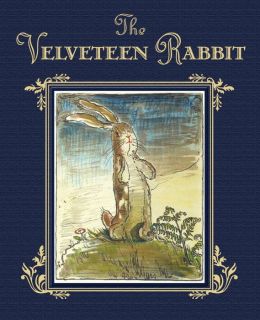
103. The Velveteen Rabbit. Margery Williams. Illustrated by William Nicholson. 1922/2014. Random House. 48 pages. [Source: Review copy] [5 stars] [fantasy, children's classic]


 First sentence: THERE was once a velveteen rabbit, and in the beginning he was really splendid. He was fat and bunchy, as a rabbit should be; his coat was spotted brown and white, he had real thread whiskers, and his ears were lined with pink sateen.

Premise/plot: Do you know what it is to be real? One little Christmas bunny will learn this and plenty of other life lessons in Margery Williams' classic tale The Velveteen Rabbit.

The Velveteen Rabbit opens with a young boy receiving a rabbit for a Christmas present. All is lovely for the rabbit that first day. But the toy is quickly forgotten. He becomes one toy of many, many, many toys. He's not exactly special to the boy or the other toys. In fact, I'd say the other toys bully him a bit. All except for the Skin Horse, the oldest toy in the nursery. It is this horse that tells the Rabbit all about being real, what it takes to be real, what it feels like, how it changes you, etc.

"Real isn't how you are made," said the Skin Horse. "It's a thing that happens to you. When a child loves you for a long, long time, not just to play with, but REALLY loves you, then you become Real." "Does it hurt?" asked the Rabbit. "Sometimes," said the Skin Horse, for he was always truthful. "When you are Real you don't mind being hurt." "Does it happen all at once, like being wound up," he asked, "or bit by bit?" "It doesn't happen all at once," said the Skin Horse. "You become. It takes a long time. That's why it doesn't often happen to people who break easily, or have sharp edges, or who have to be carefully kept. Generally, by the time you are Real, most of your hair has been loved off, and your eyes drop out and you get loose in the joints and very shabby. But these things don't matter at all, because once you are Real you can't be ugly, except to people who don't understand." "I suppose you are real?" said the Rabbit. And then he wished he had not said it, for he thought the Skin Horse might be sensitive. But the Skin Horse only smiled. "The Boy's Uncle made me Real," he said. "That was a great many years ago; but once you are Real you can't become unreal again. It lasts for always." (5-8)

My thoughts: The Velveteen Rabbit is one of my favorite Christmas books. I love the nursery magic. I love the ending. It was originally published in 1922. The story and illustrations in this edition are original. This is a beautiful edition of the book. One of the best I've seen.

The Velveteen Rabbit was published several years before A.A. Milne's Winnie the Pooh and House at Pooh Corner. Chances are if you enjoy one, you'll enjoy the other.

Do you have a favorite toy-come-to-life fantasy?


© 2024 Becky Laney of Becky's Book Reviews

Monday, May 02, 2022

55. The Forsyte Saga


The Forsyte Saga. (The Forsyte Chronicles #1-3). John Galsworthy. 1922. 872 pages. [Source: Bought]

First sentence: Those privileged to be present at a family festival of the Forsytes have seen that charming and instructive sight--an upper middle-class family in full plumage. 

First impressions: I have had The Forsyte Saga on my to-read list for almost twenty years. I saw bits and pieces (at least) of the 2002/2003 adaptation. It made me curious to read the book...at some point....though I bought a physical copy of the book around that time. It had the actors on the cover.

This review will have varying degrees of spoilers throughout. But it's a classic. I don't *think* they are the kind of spoilers that would keep you from reading this one on your own if you want.

Premise/plot: This classic novel chronicles the adventures (and misadventures) of the Forsyte family. It spans three or so generations, give or take. Though chiefly--in all honesty--it really only covers two. But before I begin summarizing--or attempting to summarize--I should probably mention this is three novels published as an omnibus. The three novels are The Man of Property, In Chancery, To Let.

Long story short, Soames Forsyte is married to the beautiful but aloof Irene. The marriage is not a happy one. Tolstoy wrote, "Happy families are all alike; every unhappy family is unhappy in its own way." From her perspective, she despises/hates her husband. It is like she cringes every single time they are in the same room. She finds herself cringing a lot. The idea of speaking with him, being intimate with him in any way--physical, mental, emotional--disgusts her. Not annoys, disgusts. From his perspective, his wife is mysteriously aloof. Perhaps because she is so aloof, he's always trying hard to change things. It's like he's a begging, pleading dog. Please love me, please love me, please love me, why don't you love me. I'm not sure it's her he loves--maybe it is--but he loves the idea of her. He finds her fascinating, mesmerizing, bewitching. It's like he loses all reason when he thinks of her. But he doesn't know her--not really, not as a person, a human being. From his perspective, she's being unreasonable and irrational. WHY does this WOMAN behave in such a way??? From her perspective, he's a monster. Here's the thing, she acts like he's a monster way, way, way, way before he starts doing monstrous things. Like, I get that he does do monstrous things--eventually. But it's like she decides after the honeymoon, NOPE, don't like him, never will. EWWWWW gross. Don't touch me ever again. I'll never open my heart or mind up to you ever. Don't even bother trying because I'm checked out. 

So feeling 100% justified because she finds her husband ewww gross, Irene has an affair with a young architect, Philip Bosinney. An architect who happens to be ENGAGED to marry Soames' cousin, June Forsyte. Also keep in mind that Irene is supposedly good friends with June. But after these two meet one another, well, June and Soames don't stand a chance. (Not that Soames ever stood a chance. Seriously. Irene hates his guts.) But June, well, it's just a matter of time before the lusty affair destroys her chance for wedded bliss. To be fair, is he worth having if he dumps you after getting a good look at your friend???? But what kind of friend--a married friend at that--has an affair with her friend's fiance??? This affair is doomed...and, well, Philip Bosinney doesn't have a happily ever after with anyone...he ends up dead.   

Now, it will be pointed out that when Soames finds out about this humiliation, this affair, this transgression against him and their marriage, well, let's just say that he does act monstrous. There's no justification for his violent "passion." It would make sense if her hatred of Soames started AFTER this assault. But she hated him years before. 

So the two separate--but do not divorce.

Fast forward a decade. Soames wants an heir. He has a spare woman he could marry if he wants to divorce Irene. But if there's a chance that a decade of not seeing him might have dulled her animosity towards him, well, he's willing to extend the hand of friendship. Nope. Still hates him. Perhaps even more now that he's come crawling back asking to see if she'll take him back. Irene takes comfort in another Forsyte--a cousin named Jolyon. These two marry and have a son, Jon. Meanwhile, Soames remarries, a younger woman. They have a daughter, Fleur. Fast forward twenty years this time...and Fleur and Jon meet. Fleur becomes fascinated and mesmerized by Jon. And he's besotted as well. 

Will Fleur and Jon marry??? Or will their families put a great big stop to this relationship.

 My thoughts: I have thoughts and opinions on this one. I don't think I'm the average reader. I think the reader is supposed to sympathize with Irene. Poor, poor Irene. It's not that I sympathize with Soames. I don't. Not really. It's just that I don't think Irene is justified in her affair. To be fair, I'm not saying she needed a scarlet "A" for her chest. But still, the book presents her as if she's an angelic saint, perfectly innocent and pure and just an absolute darling. Soames, well, he's a fool undoubtedly. There are so many things that go right over his head--like the meaning of life. If there is something positive to say about him, however, he is a constant presence in his daughter's life. He loves, loves, loves, loves her. Like undoubtedly he loves her. To be fair, he might be a little too indulgent by not disciplining her. Her character, well, let's just say she's narcissistic, manipulative, a taker. What she wants, she WANTS. She reminds me a bit of Scarlett O'Hara actually. 

I think my favorite characters were Jon (Jolyon III), June (in the few scenes we get), Holly (in the few scenes we get). Now that I think about it, all three of my favorite characters are half-siblings. 

I don't regret my time reading this one. But this was not a novel where I found myself liking the characters. I kept reading because a) I wanted to know what happened next (would these two end up together???) b) I am STUBBORN if nothing else. 


Quotes: 

Love is no hot-house flower, but a wild plant, born of a wet night, born of an hour of sunshine; sprung from wild seed, blown along the road by a wild wind. A wild plant that, when it blooms by chance within the hedge of our gardens, we call a flower; and when it blooms outside we call a weed; but, flower or weed, whose scent and colour are always, wild!

"Love has no age, no limit, and no death."

Marriage without a decent chance of relief is only a sort of slave-owning; people oughtn't to own each other. Everybody sees that now.

"You may think you're very old," he said; "but you strike me as extremely young. To rattle ahead of everything is not a proof of maturity."

"Don't be angry, Jon dear. We can't all see people in the same light, can we? You know, I believe each of us only has about one or two people who can see the best that's in us, and bring it out. For you I think it's your mother. I once saw her looking at a letter of yours; it was wonderful to see her face. I think she's the most beautiful woman I ever saw—Age doesn't seem to touch her."

Monstrous trick, that Fate had played him! Nemesis! That old unhappy marriage! And in God's name-why? How was he to know, when he wanted Irene so violently, and she consented to be his, that she would never love him? Fleur smiled bitterly. "Tell me, didn't she spoil your life too?" June looked up. "Nobody can spoil a life, my dear. That's nonsense. Things happen, but we bob up."


© 2022 Becky Laney of Becky's Book Reviews

Sunday, December 21, 2014

Eight More Christmas Books

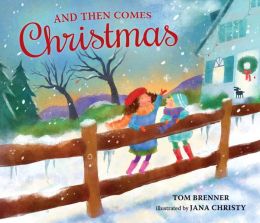
And Then Comes Christmas. Tom Brenner. Illustrated by Jana Christy. 2014. Candlewick Press. 32 pages. [Source: Review copy]

With some picture books, you almost have to read them a few times before you decide if you like them or not. Such is the case with Tom Brenner's And Then Comes Christmas.

And Then Comes Christmas is all about establishing atmosphere and celebrating traditions. Atmosphere is established by description and detail. Phrases like "bare branches rake across the sky" and "romp in snow as smooth as bedcovers." Traditions are celebrated: choosing a tree, decorating a tree, making cookies, wrapping presents, reading stories, attending programs, making crafts, seeing Santa at the mall, etc. Some traditions will likely be familiar. Some may not be. Not every child gets to play in the snow before Christmas--or after Christmas, for that matter! But all children could choose to make paper snowflakes to decorate their windows.

It is a book that slowly and gently counts down to Christmas. (Though not with actual numbers.) There is a certain pattern to it...multiple when/then passages.

I think my favorite when/then passage is:
When elves and reindeer appear in stores, and small trains race through toy villages, and piles of presents nestle in cotton drifts...Then hop from foot to foot, waiting to sit on Santa's knee."
I like this one well enough. But I would hate to have to diagram any of these sentences!

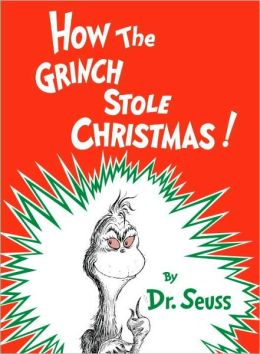
How the Grinch Stole Christmas. Dr. Seuss. 1957. Random House. 64 pages. [Source: Review copy]

I love it. Of course I love it. How could I not? Now, I will admit that I didn't read the actual book until I was an adult. It wasn't one of the Seuss books that I owned growing up. But the christmas special--the cartoon--is one I've seen dozens and dozens of times. The book itself is lovely. If you love one, you'll love the other.

So in case you're unfamiliar with the book or special, The Grinch hates Christmas. His neighbors, the Whos in Who-ville, love Christmas. He is super-cranky this year, and, he decides to steal it. He thinks Christmas is all about the stuff. Take the stuff, do away with it altogether, right? Wrong. The Whos in Who-ville teach the Grinch a lesson about joy.

One of my favorite things about it is it's just SO quotable. Here are a few of my favorite lines:
Every who down in Who-ville liked Christmas a lot...But the Grinch, who lived just north of Who-ville, did NOT!
And THEN they'd do something he liked least of all! Every who down in Who-ville, the tall and the small, would stand close together, with Christmas bells ringing. They'd stand hand-in-hand. And the Whos would start singing. They'd sing! And they'd sing! AND they'd SING! SING! SING!
Then he slid down the chimney. A rather tight pinch. But, if Santa could do it, then so could the Grinch.
Then the last thing he took was the log for their fire! Then he went up the chimney, himself, the old liar.
It came without ribbons! It came without tags! It came without packages, boxes, or bags!"

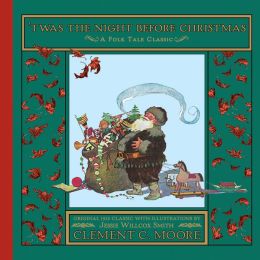
'Twas the Night Before Christmas. Clement C. Moore. Illustrated by Jessie Willcox Smith. 1823/1912. HMH. 32 pages. [Source: Review copy]

I've read 'Twas the Night Before Christmas plenty of times before. But this is the first time I've read the edition of the poem published as a picture book in 1912 with illustrations by Jessie Willcox Smith.

The poem itself is as delightful as it ever is. I think this is a poem that feels familiar no matter what. You don't have to seek it out year after year. It just finds you and sticks. It's just part of the Christmas culture. (I love the Sesame Street play starring Bert and Ernie as featured in Muppet Family Christmas.)

It was interesting to see the illustrations from this time period. (You may see the illustrations at project gutenberg.) Did I love the illustrations? Not particularly.

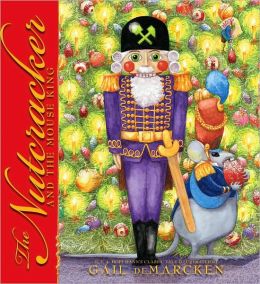
The Nutcracker and the Mouse King. E.T.A. Hoffmann. Adapted by Wren Maysen. Illustrated by Gail de Marcken. 2009. 56 pages. [Source: Review copy]

I am not as familiar with the original story (1816) as I am the story of the ballet. (The two are different.) It's an odd book. I'll be honest. It is just as strange as Alice in Wonderland. (Though, of course, The Nutcracker and the Mouse King came decades before Alice.)

Marie Stahlbaum is the heroine of The Nutcracker and the Mouse King. The book opens with Marie and her brother, Fritz, playing together and waiting, waiting, waiting for all the delights of Christmas. They are waiting to enter the large drawing room where the tree is, and where the presents are. Their mother and father are there as well. As is Godfather Drosselmeier. There is a new doll, Clara, for Marie. There are new toy soldiers for Fritz. And there is a lovely toy castle, Marzipan Castle, for them both. The Nutcracker is a gift for the whole family. Marie does take special interest in it, this interest remains despite the fact that Fritz breaks the Nutcracker when he's showing off.

Marie stays up past her bedtime in the drawing room. This is when things get strange: seeing Godfather Drosselmeier on top of the clock, seeing all the mice attack, seeing the Mouse King, etc. She witnesses a battle. Towards the close of that battle, she throws a slipper at the wicked Mouse King.

Marie awakens in bed the next day. Her mother had found her bleeding on the floor near the tree and toy cupboard. She spends the next few days at least in bed. Spending so much time in bed might seem horrible, and, perhaps Marie found it to be so part of the time at least. But her Godfather tells her strange stories which she believes of course.

Plenty of The Nutcracker and the Mouse King is the Godfather's strange, strange story. This story is about "a king, a queen, some mice, and a young princess named Pirlipat." The story is rich in detail:
Princess Pirlipat was very lovely. She had flawless white skin, with bright blue eyes and flowing locks of golden hair. The generals, noblemen, and ministers of the state all told the king and queen that they had never seen a baby like the princess. Not only was the princess beautiful, but she was also born with two perfect rows of teeth!
The queen insisted that Princess Pirlipat's cradle always be guarded. The royal guards were placed at Pirlipat's door, and directly beside her cradle sat six nurses...and with these six nurses sat six big cats. The nurses had strict orders from the queen to keep one cat in each of their laps and pet them all day and all night so that they would never stop purring. This was indeed strange. No one knew why the queen went to such lengths to protect her princess, but still, every night, the sound of purring cats echoed throughout the castle. But the queen had a very good reason to be on guard, for a curse had been placed on her family.
Readers learn of the family curse, of course. And it's something. The story becomes more and more bizarre as it unfolds. But to Marie, it is completely captivating.

Meanwhile, we have not seen the last of the mice or their dreadful King. Marie knows that sooner or later the final battle will come....

There does come a time when the Nutcracker takes Marie to his magical, fantastic home in Toyland.

So readers see Marie awaken again from yet another dream. Will Marie's ultimate dream come true?

This story is so strange and bizarre and rich in detail--pure fantasy.

The Velveteen Rabbit. Margery Williams. Illustrated by William Nicholson. 1922/2014. Random House. 48 pages. [Source: Review copy]

Do you know what it is to be real? One little Christmas bunny will learn this and plenty of other life lessons in Margery Williams' classic tale The Velveteen Rabbit.

The Velveteen Rabbit opens with a young boy receiving a rabbit for a Christmas present. All is lovely for the rabbit that first day. But the toy is quickly forgotten. He becomes one toy of many, many, many toys. He's not exactly special to the boy or the other toys. In fact, I'd say the other toys bully him a bit. All except for the Skin Horse, the oldest toy in the nursery. It is this horse that tells the Rabbit all about being real, what it takes to be real, what it feels like, how it changes you, etc.
"Real isn't how you are made," said the Skin Horse. "It's a thing that happens to you. When a child loves you for a long, long time, not just to play with, but REALLY loves you, then you become Real." "Does it hurt?" asked the Rabbit. "Sometimes," said the Skin Horse, for he was always truthful. "When you are Real you don't mind being hurt." "Does it happen all at once, like being wound up," he asked, "or bit by bit?" "It doesn't happen all at once," said the Skin Horse. "You become. It takes a long time. That's why it doesn't often happen to people who break easily, or have sharp edges, or who have to be carefully kept. Generally, by the time you are Real, most of your hair has been loved off, and your eyes drop out and you get loose in the joints and very shabby. But these things don't matter at all, because once you are Real you can't be ugly, except to people who don't understand." "I suppose you are real?" said the Rabbit. And then he wished he had not said it, for he thought the Skin Horse might be sensitive. But the Skin Horse only smiled. "The Boy's Uncle made me Real," he said. "That was a great many years ago; but once you are Real you can't become unreal again. It lasts for always." (5-8)
The Velveteen Rabbit is one of my favorite Christmas books. I love the nursery magic. I love the ending. It was originally published in 1922. The story and illustrations in this edition are original. This is a beautiful edition of the book. One of the best I've seen.

The Velveteen Rabbit was published several years before A.A. Milne's Winnie the Pooh and House at Pooh Corner. Chances are if you enjoy one, you'll enjoy the other.

Do you have a favorite toy-come-to-life fantasy?

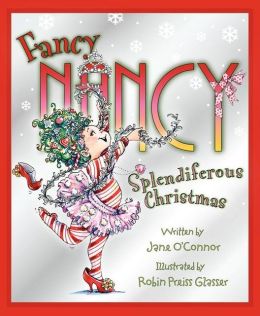
Fancy Nancy: Splendiferous Christmas. Jane O'Connor. Illustrated by Robin Preiss Glasser. 2009. HarperCollins. 32 pages. [Source: Library]

I enjoyed reading Fancy Nancy Splendiferous Christmas. This is actually the first Fancy Nancy book I've read, so it served as a good introduction to the series as well. I liked it very much. I love the illustrations. They were a bit busy, perhaps, but that is part of their charm, I think. I love the amount of detail. Every time I read it, I notice something I hadn't noticed before. There is something almost precious about this book--perhaps because of the illustrations, or even the text. But I don't mind that in a picture book now and then.

In this one, Fancy Nancy and her family are decorating the house for Christmas. They are doing plenty of christmas-y things all together as a family. One of things they are doing is waiting. Waiting is a big part of the holiday, in my opinion. They are waiting for the Grandpa to arrive. When he arrives, they can begin to decorate the tree. They always wait for him. And I imagine every year, she gets a bit impatient because she is oh-so-excited. This year, however, her parents allow her to put on the brand-new tree-topper, something that she picked out and bought with her own money--in the summer...I won't spoil this one. But I ended up liking it very much!
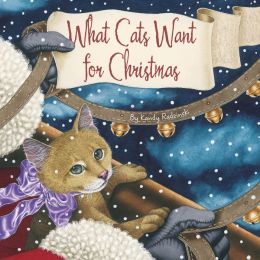
What Cats Want for Christmas. Kandy Radzinski. 2007. Sleeping Bear Press. 32 pages. [Source: Library]

For cat-lovers, this is a charming-enough book to read at Christmas time. The premise is simple: if cats could write letters to Santa, what would they ask for. Each spread shows a cat and his/her letter to Santa. The letters are all written in rhyme. The letters are predictable enough, but, the idea I think is original. I do wish there was more variety in what the letters requested, however. And some letters seem a bit dark and twisted.

I really liked the illustrations. I think I liked looking at the various cats better than reading the letters.

 It's Not About You Mr. Santa Claus. Soraya Diase Coffelt. 2014. Morgan James Publishing. 34 pages. [Source: Review copy]

There are plenty of children who write letters to Santa each year. But how many letters to Santa include the gospel message? In this picture book a young boy does just that.
Dear Mr. Santa Claus,
It's me again--a kid. I know I've written lots of letters to you before with long lists of gifts I wanted for Christmas. Well, not this year. This letter is different. I discovered the real meaning of Christmas has nothing to do with you at all. It is about a very special gift. I want to tell you about this gift. By the way, how are you and Mrs. Santa Claus doing? Have you lost any weight? Did your helpers, the elves, grow any taller? Do you still like cookies and milk? Are you still wearing that red, furry outfit? I've always wondered, what do you wear in the summer time?
It's a simple book with a timeless message. Which timeless message? Well, I suppose I could pick one or two that stand out. First, that Christmas is not about Santa and presents and shopping. It is actually about celebrating Jesus. Second, that the gospel is too good to keep to yourself. The gospel is for sharing.
The real Christmas story began a long time ago, when a Roman emperor named Caesar Augustus ordered that a census be taken. A census is when all the people had to be counted. At that time, A man named Joseph and his wife, Mary had to take a long journey to the city of David, known as Bethlehem, for the census. It wasn't an easy journey as Mary was going to have a baby soon.
The focus of this book is on retelling the Christmas story and communicating the gospel message. Probably leanings toward more retelling.

I was pleasantly surprised by the illustrations. I thought they were very nicely done.

Will this book please every single reader? Probably not. It may not be a perfect fit for every family this holiday season. But I think for some it will be a great find.


© 2014 Becky Laney of Becky's Book Reviews

Sunday, August 24, 2014

The Red House Mystery (1922)

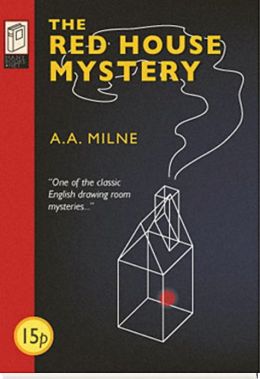
The Red House Mystery. A.A. Milne. 1922. Dover. 156 pages. [Source: Bought]

In the drowsy heat of the summer afternoon the Red House was taking its siesta. 

I loved The Red House Mystery. I did. It was so much fun! I loved meeting Antony Gillingham and his friend Bill Beverley. These two team up to solve a murder mystery. Bill Beverley is staying at the Red House estate--owned by Mark Ablett. He is one of a handful of guests. Antony Gillingham is not of the guests. Not originally. He just happens to be staying at an inn nearby. He hears from someone that Bill Beverley is down visiting. He wants to call on his friend and does so. But his visit does not go as expected. Instead of meeting Bill Beverley and having a lovely chat. He comes across Matthew Cayley--Mark's cousin he later learns--and a dead body! These two men are the first on the crime scene.

I would definitely recommend this one!

Quotes:
"Are you prepared to be the complete Watson?" he asked. "Watson?" "Do-you-follow-me-Watson; that one. Are you prepared to have quite obvious things explained to you, to ask futile questions, to give me chances of scoring off you, to make brilliant discoveries of your own two or three days after I have made them myself all that kind of thing? Because it all helps." "My dear Tony," said Bill delightedly, "need you ask?" Antony said nothing, and Bill went on happily to himself, "I perceive from the strawberry-mark on your shirt-front that you had strawberries for dessert. Holmes, you astonish me. Tut, tut, you know my methods. Where is the tobacco? The tobacco is in the Persian slipper. Can I leave my practice for a week? I can."
"I say," he said, almost pleadingly, "don't tell me that you can see into people's pockets and all that sort of thing as well." Antony laughed and denied it cheerfully. "Then how do you know?" "You're the perfect Watson, Bill. You take to it quite naturally. Properly speaking, I oughtn't to explain till the last chapter, but I always think that that's so unfair. So here goes. Of course, I don't really know that he's got it, but I do know that he had it. I know that when I came on him this afternoon, he had just locked the door and put the key in his pocket." 
"Good man," said Antony at the end of it. "You are the most perfect Watson that ever lived. Bill, my lad," he went on dramatically, rising and taking Bill's hand in both of his, "There is nothing that you and I could not accomplish together, if we gave our minds to it." "Silly old ass." "That's what you always say when I'm being serious. Well, anyway, thanks awfully. You really saved us this time."
"Of course it's very hampering being a detective, when you don't know anything about detecting, and when nobody knows that you're doing detection, and you can't have people up to cross-examine them, and you have neither the energy nor the means to make proper inquiries; and, in short, when you're doing the whole thing in a thoroughly amateur, haphazard way." 
© 2014 Becky Laney of Becky's Book Reviews

Friday, June 01, 2012

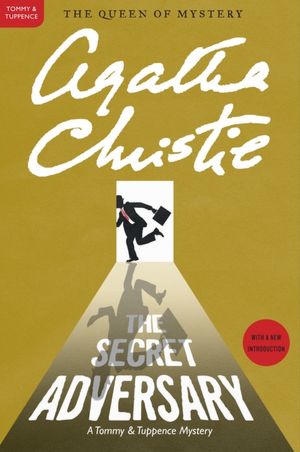
The Secret Adversary

The Secret Adversary. Agatha Christie. 1922/2012. HarperCollins. 352 pages.

 I enjoyed The Secret Adversary. I have read Agatha Christie's novels out of order, without much of a plan. So I've read many of her later novels first. This is my first Tommy and Tuppence novel, however.

I definitely liked it. It has a certain charm to it, I suppose. This first novel introduces readers to the two characters, and introduces a romance between the two. A romance that perhaps seems obvious, but, a somewhat sweet romance nonetheless.

World War I has not been over that long when the novel opens, and both Tommy and Prudence (Tuppence) are continuing to make adjustments now that the war is over and their service has ended. (She was a nurse, I believe.) These two happen to bump into one another one day. And they happen to have a conversation. Their conversation is overheard by a gentleman, a man who assumes Tommy and Tuppence know more than what they in fact do, know a BIG secret somewhat connected to the early days of the War. A secret concerning the identity of Jane Finn. When this man approaches Prudence, all of their lives are changed...

Essentially, Tuppence and Tommy team up (with a few others for help now and then) to solve a mystery, to find out about a woman's identity, to trace her, to trace some important documents. Their adventure is dangerous. Both will risk their lives to find out the truth.

I liked this one. I didn't quite love it. But I did like it.

Read The Secret Adversary
  • If you're a fan of Agatha Christie
  • If you love mystery/spy novels
  • If you want to read one of Christie's earlier novels
  • If you love mysteries with a historical feel to them

© 2012 Becky Laney of Becky's Book Reviews

Thursday, August 13, 2009

The Curious Case of Benjamin Button


Fitzgerald, F. Scott. 1922. The Curious Case of Benjamin Button. 31 pages.

First sentence: As long ago as 1860 it was the proper thing to be born at home.

This short story for those that aren't familiar with it is a life-story with a twist. (Hence why it's curious I suppose!) Benjamin Button is born an old man and he dies a wee babe. He lives his life backward, rarely fitting in with others. Though it's interesting how he has several unique opportunities to bond with his family. As a baby, he bonds with his grandfather. They're both old--or at least both look old. As a college man, he looks about fifty, and he is taken to be the brother of his father. So he has a few years where he and his father can bond well and understand one another. And as an old man, he looks to be school age--just the right age to play with his grandchildren. (I believe--though I could have it wrong--that he attends school or kindergarten alongside a grandson.) However, for the most part, this is much more of a curse than a blessing. Especially when it comes to having relationships. His wife was looking for an older man, a mature one, but what she got was a mysterious man whose continuing youth separated them. The younger he appeared, the more awkward his family life became. There was shame, anger, and frustration mixed in as well.

While it requires you to suspend your disbelief a lot--especially in the beginning--the short story was interesting.

© Becky Laney of Becky's Book Reviews