Showing posts with label Books Reviewed in 2012. Show all posts

Monday, December 24, 2012

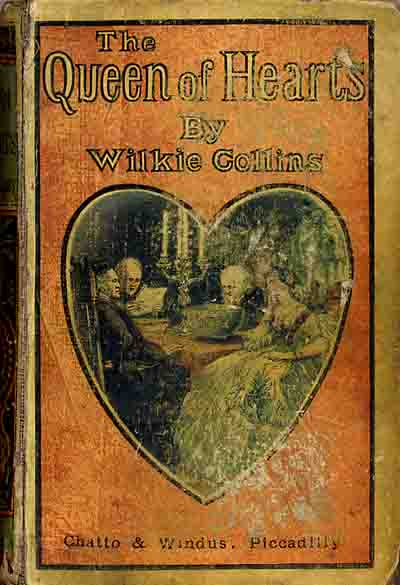
The Queen of Hearts

The Queen of Hearts. Wilkie Collins. 1859. 484 pages.

  Although it took me months to finish reading this collection of short stories by Wilkie Collins, I still found most of it to be delightful. I just LOVED the framework of this book. Three (old) men are entertaining a young lady, Jessie Yelverton. (I believe one of the men is one of her guardians?). As her visit draws to a close, one of the men in hopes of keeping her around just long enough for his son, George, to return home--he would love to have her for a daughter-in-law--proposes that she stay for ten more nights to hear ten stories. The brothers will take turns writing/telling/sharing stories. In between each of the stories, there is narrative linking them all together. The three brothers are Griffith, Owen, and Morgan. The ten stories are: Brother Owen's Story of the Black Cottage, Brother Griffith's Story of the Family Secret, Brother Morgan's Story of The Dream Woman, Brother Griffith's Story of Mad Monkton, Brother Morgan's Story of The Dead Hand, Brother Griffith's Story of the Biter Bit, Brother Owen's Story of the Parson's Scruple, Brother Griffith's Story of A Plot in Private Life, Brother Morgan's Story of Fauntleroy, Brother Owen's Story of Anne Rodway. All of the stories had been previously published in various magazines from 1855 to 1859.

My favorite part of Queen of Hearts was the framework of the narrative. I loved meeting Jessie Yelverton. I loved Griffith, Owen, and Morgan. I loved seeing how she changed their lives for the better. I loved seeing the life she brought back into their lives. And I loved seeing her come to care for these men, too. How much at home she felt with them. She wasn't anxious to depart either. Many of the stories were good; however, some of them were just so long! I felt some of them were definitely long enough to be novellas. 

Read The Queen of Hearts
  • If you enjoy Wilkie Collins
  • If you enjoy short stories
  • If you like mystery, suspense, gothic, or horror
  • If you enjoy romantic comedies

© 2012 Becky Laney of Becky's Book Reviews

Tuesday, July 17, 2012

After Dark

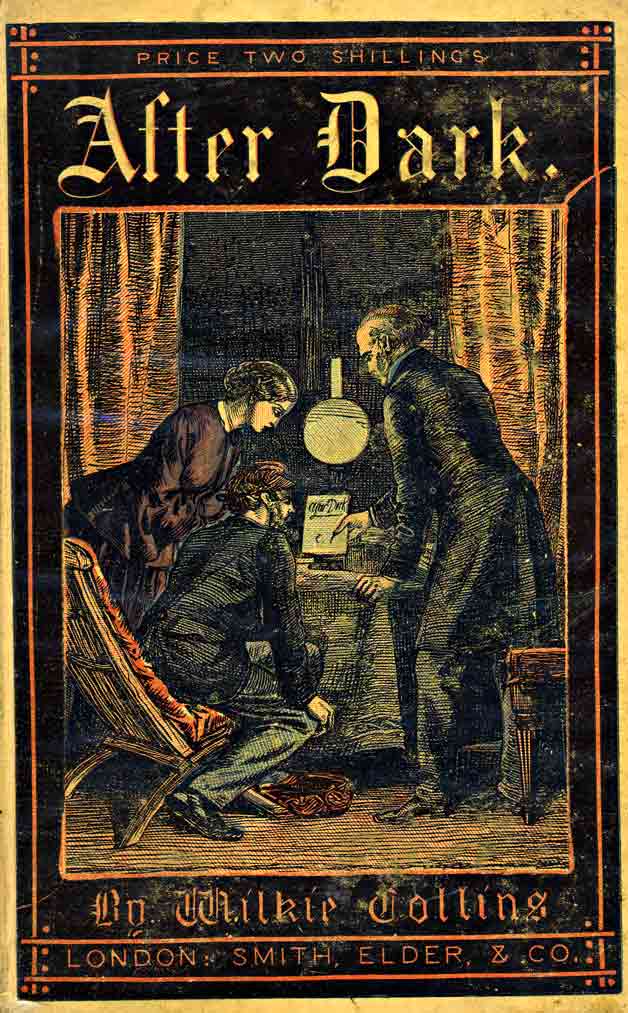
After Dark. Wilkie Collins. 1856. 404 pages.

From "Leaves From Leah's Diary"
26th February, 1827.—The doctor has just called for the third time to examine my husband's eyes. Thank God, there is no fear at present of my poor William losing his sight, provided he can be prevailed on to attend rigidly to the medical instructions for preserving it. These instructions, which forbid him to exercise his profession for the next six months at least, are, in our case, very hard to follow. They will but too probably sentence us to poverty, perhaps to actual want; but they must be borne resignedly, and even thankfully, seeing that my husband's forced cessation from work will save him from the dreadful affliction of loss of sight. I think I can answer for my own cheerfulness and endurance, now that we know the worst. Can I answer for our children also? Surely I can, when there are only two of them. It is a sad confession to make, but now, for the first time since my marriage, I feel thankful that we have no more.
I tend to love Wilkie Collins. And I did enjoy his short story collection, After Dark. But I didn't find all six of the short stories equally compelling. And while I *loved* some of the stories in this book, I didn't love them all. I found them all worthwhile, all entertaining.

There's a framework to After Dark. A portrait-painter, William, suffers damage to his eyesight, the doctor tells him he needs LOTS of time to recuperate if he hopes to be able to see again. He can no longer count on his painting to bring in the income and take care of his family, so, the family is forced to come up with plan B. Plan B just happens to be writing and publishing a book of stories. These are stories that have been told to the painter--usually while his subject is being painted--through the years. He will now recollect the best stories he's ever heard and relate them to his wife, Leah, who will write them down each night...after dark. (That is after her long day's work is through.)

The six stories are:

  • The Traveller's Story of a Terribly Strange Bed (1852)
  • The Lawyer's Story of a Stolen Letter (1854)
  • The French Governess's Story of Sister Rose (1855)
  • The Angler's Story of The Lady of Glenwith Grange (new for After Dark)
  • The Nun's Story of Gabriel's Marriage (1853)
  • The Professor's Story of the Yellow Mask (1855)
Five of the six short stories were reprints, only one story was brand new and written especially for this book.

In my opinion, the best, best, best short story in this collection is The French Governess's Story of Sister Rose. This story has DRAMA and action. It is set during the French Revolution. And in my opinion, this story is a MUST read. Not only if you're a fan of Victorian literature OR a fan of Wilkie Collins, but if you're a fan of historical fiction set during the French Revolution, you should really consider reading this novella. (In my opinion, it is closer to a novella than a proper short story. It has parts and chapters.) So Louis Trudaine made a deathbed promise to his mother to always be there for his sister, Rose, and protect her. Rose has fallen in love with a man Louis feels is unworthy of her, a Charles Danville. The marriage does happen, though not without some unpleasant exchanges on the eve of the wedding. But he never feels quite sure of his sister's husband, and so he chooses to remain nearby even if it means passing up a job opportunity. Years pass--we learn from the narrator--and the Revolution comes. And with it danger, drama, action, betrayal, and so much more. This story is so very, very, very good. It's quite intense and I loved every minute of it.

The Traveller's Story of a Terribly Strange Bed is actually Wilkie Collins first published short story. It is quite creepy! It also happens to be set in Paris, by the way, anyway, the narrator is a young man named Faulkner. His good luck at a gambling house almost proves fatal. For a very, very friendly man convinces him that it is much too risky to leave the house at that time of night and wander the streets carrying his winnings. No, no, it would be much much safer to stay there for the night. But is that the truth? Well, his insomnia may just be a lifesaver!

The Nun's Story of Gabriel's Marriage is another story set in France during the French Revolution. While it isn't as good as The French Governess's Story of Sister Rose, in my opinion, it was interesting to get another story set in France--in Brittany--from Collins. The theme of this one is forgiveness and reconciliation. If you want a story with a couple of BIG twists, this one may prove satisfying.

The Angler's Story of The Lady of Glenwith Grange is another story with a BIG, BIG twist. Ida has promised to always, always, always take care of her younger sister, Rosamond. (Their mother died when Rosamond was a baby.) So when Rosamond marries, it's agreed that Ida will always live with them. The marriage, as you might expect, does not exactly exactly go as planned. And readers...along with Ida...learn why.

The Professor's Story of the Yellow Mask is set in Italy, I believe. It has a larger cast of characters than some of the other stories in the collection. And it has its own share of drama. It is a darker story balanced perhaps in a way by a love story with many, many obstacles. It also has lots of twists and turns and such. That being said, I wasn't thrilled with it.

The Lawyer's Story of a Stolen Letter is a detective story. It was a nice enough story, I suppose, but I wasn't wowed by it. Still, it's enjoyable enough. 


Read After Dark
  • If you're a fan of Wilkie Collins
  • If you're a fan of Victorian literature
  • If you're a fan of mystery, suspense, detective, or sensation stories
  • If you like short stories
  • If you like "shocking" stories with plenty of drama and twists and turns
© 2012 Becky Laney of Becky's Book Reviews
Saturday, April 14, 2012

North and South Revisited (Again)

I've spent a lovely month revisiting Elizabeth Gaskell's North and South. This is a novel that I love and adore. Well, I more than love and adore it. I more than love, love, love it. With each rereading, I love this one even more. And this is a book that deserves to be read again and again and again and again. Because not only does it grow more wonderful with each visit, each rereading will probably bring you new insights as you notice more details. Characters that I merely liked the first time around, became good, good friends by the third reading. And as for the main characters, Margaret Hale and John Thornton, my love for them just grows deeper and deeper and deeper with each visit.

So. If you haven't read this one, what should you expect? A blending of the industrial revolution, family drama, and romance. In equal portions. For better or worse. For those truly looking to read about the industrial revolution, class differences between masters and employees, unions and strikes, economic and social issues, then the added romance may be a bonus that you may or may not want. For those who are looking for the BEST ROMANCE EVER--and you'll get it in North and South, I promise--then you may find all the talk about strikes and workers' rights a bit dry. The first time I read the novel, I admit, I wanted the romance to get started. I didn't want to wait. I didn't want to have to be patient. I wanted it to be giddy-making from start to finish. But. Now, I'm not sure I'd want it any other way. Because everything is just right just as it is. Every little detail, every little thing, adds to the whole, and makes this romance oh-so-perfect. And the more I read North and South, the more I love the "minor" characters like Nicholas Higgins and his two daughters, Bessy and Mary, and Mr. Bell.

So should you see the movie first or read the book first? Well. That is up to you. But regardless of whether you plan on reading the book...ever...you MUST, MUST, MUST see the movie adaptation of this one. It is different from the book. There have been some minor changes that seem more major the more often you read the book. But. It is so, so, so, so, so good. It is one of those miniseries that the very moment it ends you want to put the first disc back in. (I average two viewings for every reading of the novel.) The good news is that the movie makes me love and appreciate the book even more. And reading the book makes me love and appreciate the movie. And the movie ending is OH-SO-MAGICAL.

Why should you reread this one? Well. I know that there are two types of people: those that reread and those that don't. And for those that reread, they don't need convincing as to the merits of rereading, of how most 'great' books only improve with each rereading. How rereading is the most gloriously-rich and slightly-self-indulgent but oh-so-rewarding thing you can do if you're a book lover. And this one DOES deserve a reread because there are details about John Thornton that you just might miss the first time around. And other characters as well. But specifically in terms of Margaret and John. For those that don't reread...I'm tempted to just say why?!?! or you don't know what you're missing or how could you possibly get everything a book has to offer with just one reading?!

Read North and South
  • If you're a fan of the BBC Drama starring Richard Armitage and Daniela Denby-Ashe (not to mention Brendan Coyle)
  • If you're a fan of Elizabeth Gaskell (Wives & Daughters; Cranford; etc.)
  • If you're a fan of Victorian literature 
  • If you're a fan of classics with strong romance and a bit of tragedy (this one is oh-so-bittersweet)
  • If you look for strong characterization and emotion

© 2012 Becky Laney of Becky's Book Reviews

Tuesday, March 27, 2012

A Cat of a Different Color (MG)

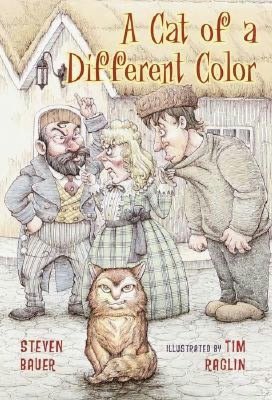
A Cat of a Different Color. Steven Bauer. Illustrated by Tim Raglin. 2000. Random House. 200 pages.

In a village near a silver lake, at the bottom of a range of jagged mountains, three kittens were born in the same litter. Two of them were common enough. They had wide, astonished, watery blue eyes, and gray coats stippled with black, and paws as white as if they'd been dipped in heavy cream, and when the kittens were ten weeks old, those villagers who wanted a pet came round to the house where the kittens had been born and these two were quickly chosen.
Their names were Flumadiddle and Gigamaree, and until they grew to be a year old, they looked so very much alike that sometimes Mr. Mayapple, the man who chose poor Gigamaree, would call, "There you are, you worthless welp!" when he saw Flumadiddle. And sometimes Miss Gagney, who fussed and fiddled over Flumadiddle's feelings, for it was her brother Gigamaree who stalked the streets, while Flumadiddle was a close-to-the-fireside cat, and she knew it was Gigamaree whom Miss Gagney had seen. 
But from the start no one mistook the third cat for anyone but himself. He had fur that seemed to shift in hue in the slightest breeze--fur the color of burning leaves, then fur the color of smoke. His eyes were the palest amber, and the hair on his belly was as whorled as the shapes the villagers' breath made on winter mornings. When he was still a tiny kitten, he'd fallen from a footstool into a large bucket of water, and rather than panicking, he'd seemed quite content to be soaked clear through--which was very odd, for most cats hate even the thought of getting wet. The villagers called him the-cat-who-loves-water, or, in the dialect of that part of the country, Ulwazzer, and because he was so strange, so unlike any cat that anyone had ever seen before, no one would take him home. He was preternaturally calm, they said, and probably possessed, and who wanted a cat who might raise the hair on your neck by yowling in the dark, who might turn on you when least expected, or leap on your face in the night?

I loved this one. I just LOVED, LOVED, LOVED it. It may not be an 'important' book, an 'issue' book, but oh the joy this one brought me!!! It was so charming, so delightful, so funny. It was just the right amount of description too.

A Cat of a Different Color is set in the village of Felicity-by-the-Lake. It is the story of what happens when the town foolishly elects the wrong leader for the job of town mayor. Instead of the most qualified man getting the job, they elect the one who flatters them the most and gives away the tastiest treats. The new mayor is Jeremiah Hoytie. And he's got a wife, Prucilla, and a son, Sam. The couple also has a young distant relation staying with them, Daria Smart. It doesn't take him long for him to start making proclamations and decrees, changing all the rules and lying about it. Some of these proclamations are just over-the-top silly. I don't think I'll ever, ever forget this one:
Proclamation the Fourth: From this day forward, anything which does not belong to you belongs to Prucilla and Jeremiah Hoytie. (116)
The people are not happy about the changes, the new rules, but they're scared to protest, perhaps with good reason. (Who wants to be carried upside down through the town and made to pay a fine?) Fortunately for the town, Ulwazzer, the cat, returns from his roaming...and with a little (human) help is able to save the day...

Read A Cat of a Different Color
  • If you love cats
  • If you love animal fantasies
  • If you love fantasy novels for children
  • If you like funny books (and cats)

© 2012 Becky Laney of Becky's Book Reviews

Friday, March 02, 2012

Inside Out & Back Again (MG)

Inside Out & Back Again. Thanhha Lai. 2011. HarperCollins. 262 pages.

1975: Year of the Cat
Today is Tet,
the first day
of the lunar calendar.


Every Tet
we eat sugary lotus seeds
and glutinous rice cakes.
We wear all new clothes,
even underneath.


Mother warns 
how we act today
foretells the whole year.


Everyone must smile
no matter how we feel.


No one can sweep,
for why sweep away hope?
No one can splash water,
for why splash away joy?

Inside Out & Back Again is a verse novel with wow-factor. If you like compelling novels with great narrators, then it's definitely a must-read. The heroine of the novel is a young girl named Ha. Her family faces a difficult choice, but they make the only choice they feel they can make at the time, they choose to leave war-torn Saigon. They could apply to go anywhere, they could try to find a sponsor in a number of countries, but they choose America. The family ends up in Alabama. For better or worse as Ha herself can tell you. For this sensitive, well-spoken young girl is made to feel ridiculous, stupid, and worthless. She's bullied by many of her classmates. There are days Ha feels that even a war-torn country would be a better place to live than Alabama. But the novel isn't without hope. For Ha's life isn't hopeless, good things can and do happen to her and her family.

I definitely recommend this one!!! I loved it SO MUCH MORE than Dead End in Norvelt. (Have you read both books, which one did you like better?!) I thought the poems were so well-written. Here's one called "Two More Papayas"

Two More Papayas


I see them first.
Two green thumbs
that will grow into
orange-yellow delights
smelling of summer.


Middle sweet
between a mango and a pear.


Soft as a yam
gliding down
after three easy,
thrilling chews. (21)

And one called "First Rule." It is one of many, many, many poems about Ha's experiences learning English/English grammar.

First Rule


Brother Quang says
add an s to nouns
to mean more than one
even if there's 
already an s
sitting there.


Glass
Glasses


All day
I practice
squeezing hisses
through my teeth.


Whoever invented 
English
must have loved
snakes. (118)

Read Inside Out & Back Again
  • If you are interested in Vietnam
  • If you are interested in historical novels
  • If you are interested in verse novels
  • If you are looking for heroines with heart
  • If you are looking to read this year's Newbery honor book
  • If you are looking for books about grieving and healing
  • If you are looking for family books
  • If you are looking for books with school settings and bullying

© 2012 Becky Laney of Becky's Book Reviews
Thursday, February 23, 2012

Enchantress from the Stars (MG)

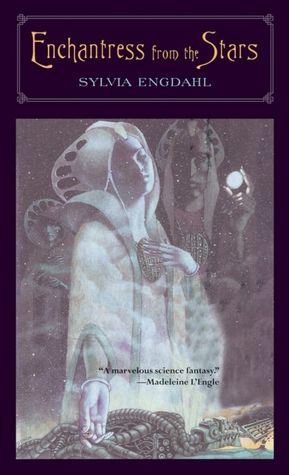
Enchantress from the Stars. Sylvia Louise Engdahl. 1970/2003. Penguin. 304 pages. 

From the prologue: The planet shines below us, cloud-flecked, dazzling against the dark backdrop of space. Down there it is cool and green and peaceful. In a little while we will take the ship out of orbit and leave this world behind, a mere speck in the vast currents of the universe. This world, which we call Andrecia--the third planet of a quite ordinary yellow sun...but that's just coincidence, of course. What difference does it make that just such a planet was my own people's ancestral home?

From chapter one: At the edge of the Enchanted Forest there lived a poor woodcutter who had four sons, the youngest of whom was named Georyn. They were able to earn a meager living by selling wood to the folk of the village, and although there was seldom more than dry bread or thin gruel on their table, they were not miserable.

Oh, how I LOVED Enchantress from the Stars. It was one of those oh-so-magical-practically-perfect-in-every-way books for me. I know not every reader will feel the same connection, the same adoration for this as I do. But. It's one of those books that I could just gush on and on about!!!

What did I love about this one? Everything! I loved the premise. Just loved it! I loved the world-building, the setting, the atmosphere. I loved the storytelling. I loved the characterization!!! I loved Elana. I loved Georyn. I loved Jarel. I even cared a great deal about the Starwatcher and Evrek. I thought this book was just so well written.

Enchantress from the Stars is narrated, primarily, by a young woman named Elana. The novel is reflective, in a way, because the novel is an account of her first 'adventure' on another planet. She's writing her report, giving her side of the story. But this novel is more than just her side of the story. It ventures to include the perspectives of two others--a young man, the woodcutter's youngest son, Georyn, and a young medical officer named Jarel. Both Georyn and Jarel are from Youngling cultures. Georyn is a native to Andrecia; Jarel is from another planet, a planet in a different stage than Georyn's, but a great deal less advanced than Elana's. (He is with the Imperial Exploration Corps). Jarel is just one of many in the first ship sent to "colonize" this planet.

Elana is on a ship with several other agents--including her father--when they learn that Andrecia is being invaded, and a Youngling culture/civilization is being threatened. They can't directly intervene. And they definitely can't reveal themselves. But they can try to influence things subtly, indirectly. Elana is chosen--with some reluctance--to interact with the natives. Well, she's to interact with two brothers--Terwyn and Georyn. These two are on a quest--along with their older brothers--to KILL A DRAGON. Yes, they are on their way to get the king's blessing, the king's permission to enter the Enchanted Forest. They don't know what dangers they'll face, but they know the fiery dragon must be stopped. These brothers see Elana an an enchantress, a faery perhaps. They see her as having great power, great wisdom, great magic.

So Enchantress from the Stars reads as a fantasy novel--a fantasy novel in the style of a fairy tale. But. Of course it also reads as a great science fiction novel with space ships, etc.

Enchantress from the Stars won a Newbery Honor in 1971.

Read Enchantress from the Stars
  • If you love science fiction
  • If you love fantasy
  • If you love fairy tales
  • If you love adventures and quests
  • If you love great writing
  • If you love bittersweet love stories
  • If you're looking for a Newbery Honor

© 2012 Becky Laney of Becky's Book Reviews

Wednesday, February 22, 2012

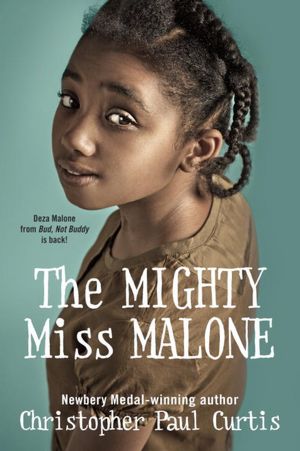
The Mighty Miss Malone (MG)

The Mighty Miss Malone. Christopher Paul Curtis. 2012. January 2012. Random House. 320 pages.

"Once upon a time...."
If I could get away with it, that's how I'd begin every essay I write.
Those are the four best words to use when you start telling about yourself because anything that begins that way always, always finishes with another four words, "...they lived happily everafter." 
And that's a good ending for any story.

The Mighty Miss Malone is in a way a companion novel to Bud, Not Buddy. It is set during the same time period, the late 1930s, during the Great Depression. Deza Malone does get a brief mention in Bud, Not Buddy--she's the young girl that gives Bud his first kiss. But. For the most part, The Mighty Miss Malone does stand alone.

The first chapter introduces readers to the Malone family. Deza takes great care in showcasing her family's strengths. She praises her brother's singing voice, noting how his singing wows just about everyone. And how his gift makes up for some of his faults. She also praises her mom--who works as a maid--and her father. The chapter also shows readers just how well Deza thinks of herself. She WANTS to be a writer so badly, she tries SO HARD to better herself, to learn as much as she can, but sometimes she tries a little too hard. Sometimes she just needs to be herself. As her teacher--who is retiring--tells her. She thinks Deza has great potential. That she could really do so much if she holds onto her dream. But she doesn't lie to Deza either, there will be tough times ahead.

As I mentioned, this novel is set during the Depression. And readers follow Deza on a tough, tough journey. The difficulties begin when her father and his friends go missing from their fishing trip. Days pass. No word. Bodies are found--but not his. And then--a miracle--of sorts. He's returned to them. Broken, bruised, changed in oh-so-many-ways, but alive. But his road to recovery won't be an easy one. And it may separate him--physically and emotionally--from those he loves best...

The Mighty Miss Malone is a bittersweet novel. It's a hope-filled novel, in my opinion. BUT. It is a novel that makes your heart ache. It just does. Some of the things that happen to the Malone family, well, they're crushing. But the Malones are resilient. And love and kisses and hope do seem to make a difference. I think the novel is very realistic and very well-written.

I would definitely recommend this one.


Read The Mighty Miss Malone
  • If you're a fan of Christopher Paul Curtis (he's written some GREAT books including Bud, Not Buddy and The Watsons Go To Birmingham, 1963)
  • If you're a fan of historical fiction
  • If you want to read about the Depression (Bud, Not Buddy and The Mighty Miss Malone are much more reader-friendly than some other titles I could name)
  • If you are interested in seeing poverty realistically portrayed (this novel felt very authentic)

© 2012 Becky Laney of Becky's Book Reviews

Tuesday, February 21, 2012

Bud, Not Buddy (MG)

Bud, Not Buddy. Christopher Paul Curtis. 1999. Random House. 245 pages.

Here we go again. We were all standing in line waiting for breakfast when one of the caseworkers came in and tap-tap-tapped down the line. 

Some novels have me at hello. Bud, Not Buddy wasn't like that--for me. It was a novel that had to grow on me. It was a quiet novel, in a way, that in the end proved most satisfying. Chapter by chapter I came to know Bud Caldwell better, and I started to care about him. By the end, the novel felt just right, so perfectly right. It is easy to see why this one won awards!!!

Bud, Not Buddy is set in the 1930s during the Depression. It is set in Flint, Michigan, for the most part. Though this novel will see Bud setting out on quite a journey. He's an orphan, just eleven, in search of one simple thing: a father, a family, he's never known, never hoped to know. So what led him to begin this journey? Well, he had to run away from his last placement in a foster home. The family had a son who was a few years older, and, this boy was cruel and mean, and his parents were stupid enough to believe their son an angel. Could he have gone back to the Home? Maybe, maybe not. But isn't this ending worth it?!

Read Bud, Not Buddy:
  • If you are looking for a historical read with plenty of heart and a good, satisfying ending
  • If you are looking for books set during the Depression that are realistic but not depressing
  • If you are looking to read a great Newbery winner with memorable characters

© 2012 Becky Laney of Becky's Book Reviews
Friday, February 17, 2012

Rasco and the Rats of NIMH (MG)

Rasco and the Rats of NIMH. Jane Leslie Conly. 1986. HarperCollins. 280 pages.

Mrs. Frisby, a brown field mouse, hummed softly to herself as she folded her son Timothy's clothing: a sweater, a jacket, a red scarf. 

I really LOVED Mrs. Frisby and the Rats of NIMH. Which is why I was so excited to discover there was a sequel written by the author's daughter. I'm not sure I loved Rasco and the Rats of NIMH more than the original novel--it's been too many years since I first read it. But I definitely loved it. I just LOVE the world she has created. I loved the community--society--they've built in Thorn Valley.


This book just made me happy. It was purely satisfying. Granted, not everything that happens in this one is happy. There is a problem to be solved, a crisis to be averted. It will take a community working together--thinking together--to save Thorn Valley from a very human threat: progress. But. It was just a great little novel to spend an afternoon with.

Read Rasco and the Rats of NIMH
  • If you love animal fantasies
  • If you love stories starring mice and/or rats
  • If you love Mrs. Frisby and the Rats of NIMH
  • If you want to revisit the 80s--through a rat's perspective!
  • If you love adventure stories

© 2012 Becky Laney of Becky's Book Reviews
Thursday, February 16, 2012

Dominic (MG)

Dominic. William Steig. 1972. FSG. 150 pages.

Dominic was a lively one, always up to something. One day, more restless than usual, he decided there wasn't enough going on in his own neighborhood to satisfy his need for adventure. He just had to get away. 
He owned an assortment of hats which he liked to wear, not for warmth or for shade or to shield him from rain, but for their various effects--rakish, dashing, solemn, or martial. He packed them, together with his precious piccolo and a few other things, in a large bandanna which he tied to the end of a stick so it could be carried easily over a shoulder.

Read this book. Trust me. It's worth it. It is such a delightful book. It's got adventure and charm. And it's full of quirky characters. And the writing, well, it's just SO enjoyable! So unique!

Dominic wanted more from life, so this dog sets out to have quite an adventure. He knows he made the right decision when he encounters an alligator-witch soon after leaving home. He does NOT want to have his fortune told to him, however. But he does choose to listen to her advice on taking the road to the left...

Who will he meet on the way? Who doesn't he meet?! This is quite a fun little story. A very quick read that just worked really well for me!

Read Dominic
  • If you love delightful children's books; quirky books with plenty of heart
  • If you love adventure stories
  • If you love animal-fantasies
  • If you love satisfying, feel-good stories
  • If you usually hate dog stories because you're worried that the dog will die
  • If you love books with happy endings

© 2012 Becky Laney of Becky's Book Reviews
Wednesday, February 15, 2012

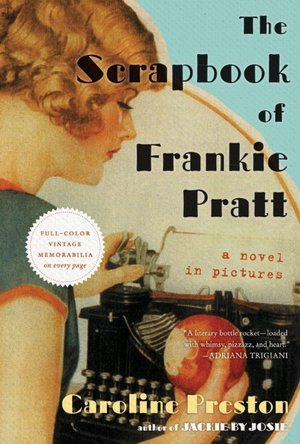
The Scrapbook of Frankie Pratt

The Scrapbook of Frankie Pratt. A Novel in Pictures. Full-Color Vintage Memorabilia On Every Page. Caroline Preston. 2011. HarperCollins. 240 pages.

The Girl Who Wants To Write
A Corona at last --
I've always wanted one!


How this story begins...
Scrapbook was a high school graduation present from mother.
I found Daddy's old Corona portable in the cellar. Mice had chewed the case but it still works.
I sent away for a free instruction booklet on how to type. I will type one page every day.

I don't think I've ever read a novel quite like this one. This 'scrapbook' tells the story of one young woman's life in the 1920s. It starts with her high school graduation and ends with her marriage...almost a decade later. It follows her from her small town to New York...and later Paris. It is a novel about family, friendship, love, and expectations. What does Frankie really want from life? Who does she want to be? What pressures does she face? What obstacles must she overcome...

Read The Scrapbook of Frankie Pratt
  • If you're a fan of historical fiction
  • If you're a fan of romance
  • If you're a fan of graphic novels
  • If you're looking for a good, quick read
The book trailer:


© 2012 Becky Laney of Becky's Book Reviews

Tuesday, February 14, 2012

Pink, More Pink, Even More Pink

Pinkalicious. Victoria Kann & Elizabeth Kann. 2006. HarperCollins. 40 pages.

It was a rainy day, too wet to go outside. Mommy said, "Let's make cupcakes! What color do you want?"
"Pink!" I said. "Pink, pink, pink!"
Mommy put in some pink. 
"More!" I cried. "More, more, more!"
I gobbled up a couple of cupcakes while Mommy and I frosted them. They were so yummy--they were Pinkalicious! 

The star of Pinkalicious just LOVES the color pink. And in this first adventure, she is delightfully munching pink cupcakes. To her surprise--to everyone's surprise--eating so many pink cupcakes turns her to varying shades of pink. But when is enough enough?

I liked this book. I did. It was fun. It was clever. And I liked her little brother, Peter, too. I liked this one the best of all the series.

Purplicious. Victoria Kann & Elizabeth Kann. 2007. HarperCollins. 40 pages.

I was in art class, painting a picture.

In Pinkalicious' second adventure, she learns that kids can be very mean and bossy. It's no secret that the star of this book LOVES the color pink. So when the girls in her class tell her that pink is only for babies, well, it upsets her. She just CAN'T like black like all the others. It's black. But after a few days of this nonsense, she feels that pink is a lonely color.  Will the new girl--who loves purple--cheer her up and cure her blues?!

Goldilicious. Victoria Kann. 2009. HarperCollins. 40 pages.


I was putting flowers on the mane of my pet unicorn. "Pinkalicious, why are you dropping flowers on the rug?" asked Mommy. "I'm not dropping flowers. I am getting Goldie ready for the Unicorn Ball," I said, prancing around the room.
"What unicorn? I don't see any unicorn," said Peter.
"She's right here and she's not ANY unicorn, she is my unicorn. Her name is Goldilicious, Goldie for short. Oh, Goldie--you shouldn't have done that on the floor! You know better. Just neigh when you need to go potty. I'm sorry, Peter, but you are stepping right in it," I said.

This is the third picture book starring Pinkalicious. In my opinion, it is probably the weakest of the series. In this adventure, readers learn about Pinkalicious' (imaginary) unicorn, Goldie. Readers see the two have some adventures together. But these adventures aren't without their difficulties. Peter sees to that. (I would have liked this one more if it hadn't talked about wizards, casting spells, and crystal balls.)

Silverlicious. Victoria Kann. 2011. HarperCollins. 40 pages.


I had a wiggly tooth. It had been wiggling for days. 


In this adventure, Pinkalicious loses a tooth. But not just any tooth. She loses her sweet tooth. Ever since she lost this tooth, she's not been able to enjoy anything sweet. Her family has also noticed how losing this tooth has made her CRANKY and ungrateful. Can Pinkalicious learn her lesson and become a sweet little girl again?

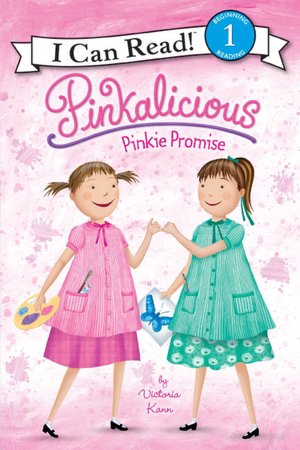
I also read three I Can Read books starring Pinkalicious. I read Pinkalicious: Pink Around the Rink, Pinkalicious School Rules!, and Pinkalicious: Pinkie Promise. I found I actually preferred these early readers to some of the picture book sequels. For example, in School Rules! is an early reader about Goldie and Pinkalicious. Having her imaginary unicorn with her during the school day may help her behave herself because she's having to show him all the rules. Pinkie Promise shows Pinkalicious successfully resolving a conflict with her best friend. She promised her friend that she wouldn't use all her pink paint--she was borrowing her friend's paint--but not only did she use all the pink paint, she also used most of the red and white too. But there is hope for the friendship yet... And in Pink Around the Rink, Pinkalicious turns her new boring white ice skates into one-of-a-kind skates with the help of a pink marker...

Read Pinkalicious (and all its sequels)
  • If you are looking for a fun series to read aloud to little girls
  • If you love the color pink, cupcakes, unicorns, etc.
  • If you are looking for sweet picture books with family-friendly messages and themes 
  • If you like enthusiastic narrators
© 2012 Becky Laney of Becky's Book Reviews
Saturday, February 11, 2012

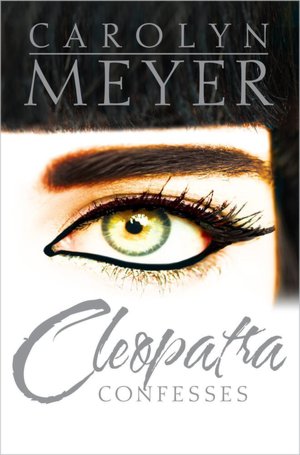
Cleopatra Confesses (YA)

Cleopatra Confesses. Carolyn Meyer. 2011. Simon & Schuster. 304 pages.

From the prologue: My enemy stands at the gates of my city, Alexandria in Egypt. 

From chapter one: I gaze out at the sea and remember a summer day in the reign of my father, King Ptolemy XII. In this memory I am ten years old. It is the season of the Inundation, the time of year when the Nile overflows its banks, flooding the fields and renewing them for planting. 

While Cleopatra Confesses wouldn't be my absolute favorite Carolyn Meyer novel, I can easily say that it was a good book. I found it compelling. True, most readers will know the ultimate fate of Cleopatra. But still, this historical novel for teens focuses on Cleopatra's journey to that event. The novel is divided into sections. We see her as a young child who loves and adores her father. We see her as a young teen who distrusts her older sisters who proclaim themselves queens when their father enters exile. We see her fear for her life, but meet fear with determination, with strength not weakness. We see her happy reunion with her father, we see her share some of the glory with her father, with her brother, as she does become Queen. We see her as she becomes a mature woman who desires love and passion in addition to power. Julius Caesar gets a little attention--a chapter or two. But if you're expecting this to be a love story--though a tragic, slightly unusual love story--between Mark Antony and Cleopatra, you'll be disappointed. Just an epilogue brings readers up to date. I actually was pleased with this. Because the other story has been told again and again and again. But this story that focuses on her early years, on the rivalry between her and her sisters, on her unhappy marriages to her much, much younger brothers, on her early years as Queen, that is the story that is most worth telling. Especially for this audience.

Read Cleopatra Confesses
  • If you're a fan of Carolyn Meyer
  • If you're a fan of historical fiction, particularly historical fiction set in Egypt
  • If you're interested in the Roman Empire
  • If you're a fan of Shakespeare (Julius Caesar and Antony and Cleopatra)
  • If you're interested in politics and power struggles--particularly within families!


© 2012 Becky Laney of Becky's Book Reviews

Thursday, February 09, 2012

Sylvia & Aki (MG)

Sylvia & Aki. Winifred Conkling. 2011. Random House. 160 pages.

Sylvia Mendez imagined her first day of third grade at Westminster School. She would use her freshly sharpened yellow pencils to write her name in cursive at the top of her worksheets. Her just-out-of-the-shoe-box black Mary Janes would glide across the polished linoleum of the hallway. At the end of the day, she would come home and her father would hug her and ask, "What did you learn today?" Then she would tell him about her teacher and her classmates and everything else.
Sylvia never imagined the one that that actually happened even before her first day of school: she was turned away.

This wonderful little book is based on true events. The main characters Sylvia Mendez and Aki Munemitsu are real people, the novel is based on their experiences during World War II.

Sylvia Mendez and her siblings have been told they cannot attend Westminster School because they are Mexican. They will need to attend the Mexican school in the county. Every Mexican--no matter where they live--are to go to the same school. To say that the two schools are anywhere close to equal would be a joke. But Sylvia's father takes his children's education VERY seriously. And the answer the school board gives him just isn't acceptable to him. What he sees is injustice, and he wants it to end. This fight for justice and equality will end in court. And the chapters focused on this trial are fascinating and disturbing. Those chapters alone would make this one a worthy read.

Aki Munemitsu and her family are one of many families of Japanese descent being deported from California after the bombing of Pearl Harbor. Her family is being sent to an internment camp in Arizona. The novel focuses on her experiences during those years.

So how do these two stories connect? Sylvia's father is leasing the farm from Aki's family. Sylvia is living in Aki's house, sleeping in her bedroom. Sylvia discovers Aki's doll, the doll she had to leave behind. Sylvia decides to go with her dad on one of his trips to the internment camp to pay rent. The two girls meet and decide to write one another.

I liked this one. I did. It was a wonderful little novel. I found it informative and fascinating. I learned so much while reading this one. I would definitely recommend it!

Favorite quotes:

After weeks of trying to convince people to sign his letter to the school board stating that Mexican and white children should go to school together, Sylvia's father had collected only eight signatures.
"What are you going to do with the letter?" Sylvia asked her father. She didn't think he would turn it in with so few names.
"I'm going to deliver it," he said. "It would be the right thing to do, even if no one else is willing to sign."
Sylvia rode with her father to the courthouse in Santa Ana on the day he dropped off the letter. Just a couple of blocks from the courthouse Sylvia saw a sign posted in a diner window: NO DOGS OR MEXICANS. The words made her feel sick. She was glad her father had spotted someone he knew on the street and hadn't noticed the sign.
That sign is talking about me, she thought. Dogs and Mexicans and me. The sign gnawed at Sylvia all afternoon and into the evening. Before drifting off to sleep that night, she stared at the ceiling and thought about how those four little words could hurt her so much. Then she recalled the hateful signs she had seen posted in town about the Japanese--hand-lettered signs reading JAPS GO HOME and government-printed notices telling them that they had to go away, to leave their houses, to go to the camps. This made her think of the girl she knew only from a photograph and the few scraps of her life that were left in what was now Sylvia's bedroom.
How did Aki feel when she saw those signs and read those posters? Sylvia wondered. Did Aki feel as hurt as I do now?
Sylvia looked over at her dolls. Carmencita leaned against the corner of one shelf, and Keiko stood in the corner of another.
Sylvia got out of bed and moved Keiko to the shelf next to Carmencita. She placed the dolls side by side, then stood back. How nice they look together--almost like sisters. She rested Keiko's pale china hand in Carmencita's brown cloth one. It seemed right and good to see them so close. I wonder if I will ever meet Aki. Could we ever be friends? (65-6)

Read Sylvia and Aki
  • If you like historical books written for children
  • If you like books written about this time period, the second world war
  • If you like books written about different cultures

© 2012 Becky Laney of Becky's Book Reviews
Tuesday, February 07, 2012

We

We. Yevgeny Zamyatin. Translated by Mirra Ginsburg. 1921/1972*. HarperCollins. 233 pages.

I shall simply copy, word for word, the proclamation that appeared today in the One State Gazette... 

We is a dystopian novel. I've been wanting to read it for almost as long as I've been blogging.

What did I think of We?

I found the novel interesting but not necessarily comprehensible. I struggled to make sense of this one. (I think I followed about a third of it.) I'm sure I missed much of what was going on simply because I was trying to make sense of this world, this society. Could the problem--for me--be this society's emphasis on math and logic?

The narrator of We is a state mathematician named D-503. (I did figure out that men have a consonant and an odd number; women have a vowel and an even number). Everything is calculated and precise and governed or regulated. Even intimate relationships. D-503 has two registered partners--O-90 and I330. O-90 desperately wants a child, a dream that isn't likely to come true. And I330 is a big, big tease who manipulates men in oh-so-many ways. Perhaps because D-503 cannot understand her at all, cannot predict anything about her, she fascinates him, enslaves him.

So one of D-503's projects is working on the spaceship, Integral. One State has plans to conquer the universe. Perhaps because of what he does, I-330 sees an opportunity to use him to get what she wants...
A human being is like a novel: until the last page you don't know how it will end. Or it wouldn't be worth reading... (162)

Read We
  • If you are looking for a literary quality to your science fiction
  • If you enjoy a challenge as you read; if you enjoy complexity
  • If you are looking to read a science fiction classic
  • If you are interested in Russian literature from this time period
*It was first translated into English (according to Wikipedia) in 1924, this translation by Mirra Ginsburg was done in 1972. 

© 2012 Becky Laney of Becky's Book Reviews
Friday, February 03, 2012

The Puppet Masters

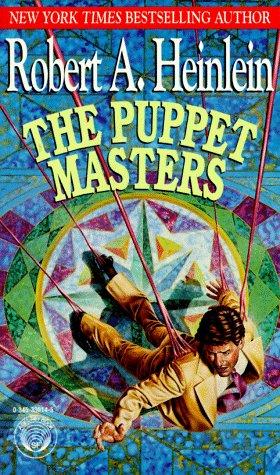
The Puppet Masters. Robert A. Heinlein. 1951. Del Rey. 340 pages.

Were they truly intelligent? By themselves, that is? I don't know and I don't know how we can ever find out. I'm not a lab man; I'm an operator. 

I honestly don't know which Heinlein is my favorite, but it would definitely be either The Puppet Masters or The Door Into Summer. At least of the ones I've read so far. The Door Into Summer is about cold sleep and time travel. The Puppet Masters is about an alien invasion--where the aliens are parasites that take on human hosts. Both books are good--really, really good. Though if you hate science fiction, I doubt either would change your mind. (Connie Willis might change your mind though!)

So. The Puppet Masters is a novel that I think you should definitely try. I am SO SO glad I bought myself a copy.

The narrator of The Puppet Masters is an agent named "Sam." (His real name is revealed, but most people do call him Sam, so that's what I'll call him too.) When the novel opens, he's getting a new assignment. He'll be working with two other agents--his Old Man, and his "sister" "Mary" (that's not her real name either) to investigate the landing of a flying saucer in a small town in Iowa. What they discover changes everything...but it may take some convincing to be believed.

Read The Puppet Masters
  • If you're a fan of classic or vintage science fiction
  • If you're a fan of alien-invasion novels
  • If you're a fan of Robert Heinlein
  • If you like reading about how different authors have envisioned the future. (The novel is set in 2007, I believe).

© 2012 Becky Laney of Becky's Book Reviews

Wednesday, February 01, 2012

Double Star

Double Star. Robert A. Heinlein. 1956. Del Rey. 245 pages.

If a man walks in dressed like a hick and acting as if he owned the place, he's a spaceman. It is a logical necessity. His profession makes him feel like boss of all creation; when he sets foot dirtside he is slumming among the peasants. As for his sartorial inelegance, a man who is in uniform nine-tenths of the time and is more used to deep space than to civilization can hardly be expected to know how to dress properly. He is a sucker for the alleged tailors who swarm around every spaceport peddling "ground outfits."

"The Great Lorenzo" has been hired to impersonate a prominent politician--a Mr. John Joseph Bonforte. This job will take him to Mars and beyond. When he accepts the job, he doesn't really know all the facts. He doesn't know what the job will require--beyond an impersonation at a public/social event. And he doesn't know how long the job will last. He hopes not too long, since he doesn't really like politics, and he doesn't really like the political viewpoints of the person he'll be playing. Even if he asked before leaving Earth, I doubt he'd been told the truth.

So. I'm not quite sure what to think of Double Star. On the one hand, it was relatively clean. (I stopped reading the last two Heinlein novels I picked up from the library because they were, well, perhaps Vir says it best: "That's...that's quite all right, I get the idea. I don't really need to know more than you've told me. In fact, I wouldn't have been upset to know less." The titles of those two were Friday and I Will Fear No Evil.)

And Double Star wasn't exactly boring...it just wasn't thrilling. It was one of those books were the beginning is better than the middle and the end. I'm not sure if that's because of my expectations or his writing. (Is it wrong for me to expect science fiction novels to have developed characters?)

Read Double Star
  • If you're a fan of Robert A. Heinlein
  • If you're a fan of vintage science fiction
  • If you're interested in reading Hugo winners
  • If you're interested in politics
  • If you're interested in space travel

© 2012 Becky Laney of Becky's Book Reviews

Tuesday, January 24, 2012

Charles Dickens: England's Most Captivating Storyteller

Charles Dickens: England's Most Captivating Storyteller. Catherine Wells-Cole. 2011. Candlewick. 32 pages. 

About this 'notebook':

Charles Dickens's books are known and loved the world over. From Ebenezer Scrooge and Mr. Micawber to Oliver Twist and Little Nell, Dicken's characters spring from pages that are rich with detail of life in Victorian times.
With extracts from his novels and correspondence, Charles Dickens: England's Most Captivating Storyteller leads you from the streets of nineteenth century London to the shores of the United States, revealing the lives of the rich and the poor at a time of great social reform and industrial progress. Discover Dickens's extraordinary life, times, and work in this lavish volume.


For those wanting to know more about Charles Dickens and the life and times in which he lived, this short picture book (or notebook) is a treat. Especially if you are not curious enough or patient enough or brave enough to attempt reading a full-length biography.

Each two-page spread gives you the basics, the essentials. And the facts are anything but boring.

The topics are:
  • Childhood
  • Family Life
  • Fame
  • School
  • Prisons
  • Workhouses
  • Orphans
  • London
  • Industry
  • Theater
  • Christmas
  • Social Life
  • America
  • Legacy
There are many, many details included in this book. But one of the most useful features--perhaps--are the book summaries. For one little paragraph, they're surprisingly complete. The only reason that might not be such great news is if you don't want any of the books spoiled for you. Because these summaries have big, big spoilers! Of course, that isn't necessarily a bad thing.

This book was user-friendly. I think that is its greatest strength. The presentation of the facts, the details, makes this an engaging read.

Read Charles Dickens: England's Most Captivating Storyteller
  • If you are a fan of Charles Dickens
  • If you are a fan of Victorian literature
  • If you are a history lover wanting more details about life--for rich and poor--in Victorian England
© 2012 Becky Laney of Becky's Book Reviews

Monday, January 23, 2012

All Our Worldly Goods

All Our Worldly Goods. Irene Nemirovsky. 1947/2008. Vintage Books. Translated from the French by Sandra Smith. (French title: Les Biens de ce Monde.) 265 pages.

They were together, so they were happy.  

What All Our Worldly Goods lacks in characterization, it more than makes up for in beautiful writing. Nemirovsky's novel has great atmosphere: a rich, detailed setting. The characters are more simple than complex human beings, but, I think there are enough presented to get a flavor of what life was like across the generations in the troubled decades between the start of World War I and the beginning of World War II. They're more sketched than developed.

The novel begins with the love story of Agnes and Pierre. These two aren't exactly from the same class. And his mother has arranged his marriage with someone else, a young, rich woman named Simone. But Pierre and Agnes are deeply in love, and Pierre chooses to go against his family's wishes and marry for love not money.

A few years later--after their new family has grown to include a baby boy, Guy--war is declared. Pierre becomes a soldier, and Agnes along with his family must learn to deal with the new reality. The first third of the novel, at least, deals with the first world war. We get to see the war from multiple viewpoints. There were many great scenes--including scenes from Pierre's parents' perspectives--about the war. Pierre does survive the war. Though like many soldiers, many people touched by the war, he's not quite the same innocent as before.

The rest of the novel takes us from the end of the first world war through the beginning of the second world war. When the novel ends, part of France is occupied. These chapters are sketches. Good sketches, for the most part, of how families change, villages change, how life goes on. Readers see Pierre and Agnes' children all grown up. (They also have a daughter, Colette). Part of the novel focuses on the late 1930s and captures the uncertainty of it all. Will there be another war? Can peace be maintained? Can diplomacy stop a war before it begins? Is the war inevitable?

Pierre may be too old to go to war a second time, but his son, Guy, is not. And war once again is changing everything.

My favorite quotes:

It was the very beginning of the war, when the heart bleeds for everyone who dies, when tears are shed for each man sent to fight. Sadly as time goes on, people get used to it all. They think only of one soldier, theirs. But at the start of a war the heart is still tender; it hasn't hardened yet. (55)

The other one...the other war...People said these words in a stunned tone of voice: it was a new phrase. Another war...Twice in one lifetime, it was too much. But everyone was bowed beneath the same destiny, and courage was born out of their communal ordeal. (202)
The war was already trying to create its own legend. It was understood that the women had to prove themselves worthy of the soldiers through their calmness, their courage, their blind confidence that fate would smile on them. For Agnes it was easier; she had played the role before. For four years she had lowered her head, waited, fought back her tears in silence, smiled at young and old; she had hoped. But for the younger women it was all much harder. Stubborn, anxious, passionate, they had believed until now that it was easy to control their destiny. (206) 
The author's story is interesting--though tragic. Irene Nemirovsky was a French novelist of Russian and Jewish heritage who did not survive Auschwitz. I cannot imagine writing this novel at such a time. Can you?


Read All Our Worldly Goods
  • If you are a fan of historical fiction
  • If you are a fan of love stories (though this isn't exactly a traditional romance novel)
  • If you are interested in World War I and/or World War II
  • If you are interested in French village life
  • If you are interested in multigenerational stories or family sagas
  • If you like literary fiction
This was the second book I read for the War Through the Generations reading challenge.

© 2012 Becky Laney of Becky's Book Reviews

Saturday, January 21, 2012

My Family for the War (YA)

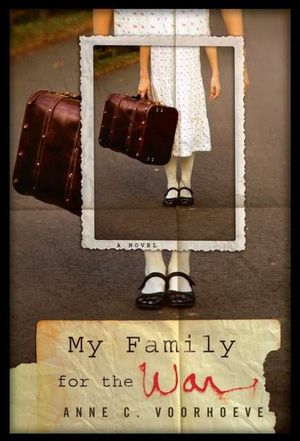
My Family for the War. Anne C. Voorhoeve. Translated by Tammi Reichel. 2012. February 2012. Penguin. 412 pages. 

I would never find another friend like Rebekka Liebich. she crouched on the narrow windowsill, one hand holding tight to the frame, and held the other hand stretched out in front of her, as if that would somehow shorten the distance of almost five feet between her and the trunk of the birch tree. I stood in the courtyard three floors below and would have liked to close my eyes, but I couldn't even manage that. I stared up at her, hypnotized. 

I just LOVED, LOVED, LOVED My Family for the War. I just loved it. It is beautifully written and stars unforgettable characters. I loved the heroine, Franziska Mangold. (Her nickname, in Germany, is Ziska. When she travels to England, she's renamed Frances.) I loved her narrative voice. I found it compelling and haunting. The events of the novel can be dramatic--here and there--but I never felt it was too much. I felt it was done very realistically. It made me think, but more importantly it made me feel.

So. My Family For the War opens with Ziska and her best friend, Bekka, working on their survival plans. The year is 1938. The setting is Berlin, Germany. Bekka and Ziska are Jews. Though I believe both are Christian, their families having converted to the Christian faith several generations previously. But Hitler and his Nazis don't care what a person believes, any one with even a trace of Jewish blood in their family--no matter how past, no matter how distant--is considered Jewish. And to be Jewish in Nazi Germany is a dangerous thing. It is a matter of life and death. Which is why their parents are doing anything and everything to get out of the country--filling out applications to migrate to any country still accepting Jews. Which is why their children don't exactly play. They make plans on how to survive attacks from bullies. Mapping out places to hide, mapping out different ways to get home, always wanting to find places they can disappear. They are not always successful. Ziska comes home beaten and bruised a time or two at least. But it isn't easy to "escape" Germany--not even in 1938. (Though perhaps it is easier in 1938 than it would be after the war officially starts).

One day Bekka tells Ziska about the kindertransports. There is hope for Jewish children under the age of sixteen. England is accepting Jewish children and placing them with foster parents. This option won't save entire families, but it will save some of the children at least. And some adults realize just what this could mean. That this means life, this means a future, for their child. At first, Ziska is angry that her mother would even consider--for half a minute--sending her away to strangers, sending her alone to a strange country where she doesn't speak the language. But Ziska is one of the children who finds herself being rescued through the kindertransports. Bekka is not. At least not yet...the two had hoped to go at the same time, but that didn't work out.

Most of the book follows her life...as Frances. As the young girl who grows into a young woman...in England. She's settled with an Orthodox family. The novel is about her experiences with her foster mom and dad, with her new brother, Gary. The novel is about what it's like to start a new life while being so very unsure about the old one. She is able to communicate with her mother...until the war starts. But then everything changes. Especially when the Germans start bombing England.

As I said, I just LOVED, LOVED, LOVED My Family for the War. I absolutely loved the characters. I really just loved them all. I loved Frances. I loved Gary. (I just loved him, thought he was a GREAT brother. And just the right person to start the healing process for Frances.) I loved Amanda, the foster mom. I just felt for her so much. And to see these two grow together, well, it was magical. And her foster Dad was great as well. And then there are the friends she meets--including one from the kindertransport, Walter. There was so much to love about him as well!!! This novel is just so wonderful, so well-written.

Read My Family for the War
  • If you are looking for a great YA book
  • If you are looking for a great historical novel 
  • If you are looking for a compelling story set during World War II
  • If you are looking to read more about the London Blitz
  • If you are interested in reading Jewish books
  • If you are looking for an emotional, unforgettable read
  • If you are looking to read books in translation, this one was published in Germany in 2007

*All quotes are taken from an ARC. They may not match the final, printed version of the novel.

© 2012 Becky Laney of Becky's Book Reviews