Showing posts with label Candlewick. Show all posts

Thursday, June 13, 2019

Queen of the Sea

Queen of the Sea. Dylan Meconis. 2019. Candlewick Press. 400 pages. [Source: Review copy]

First sentence: A queen does not abandon her people.

Premise/plot: Queen of the Sea is a graphic novel loosely inspired by the Tudors. Loosely. The author purposefully did not make it about Henry VIII, Bloody Mary, and Queen Elizabeth I. Though that would have been an intriguing subject for a graphic novel, that isn't this graphic novel.

Queen of the Sea has a young heroine, Margaret, who has lived on an island, Albion, off another island, also Albion. She doesn't know who her father and mother were, or if they are alive or dead. All she knows is life at the convent. But while you might think life at the convent would offer no variety, no excitement, no adventure...well, you'd be mostly right...but not completely. Plenty happens--for better or worse.

It is a lovely coming of age novel.

My thoughts: I loved it. That's the short version. Did I love it because it's a graphic novel? No. Yes. Maybe. I really, really, really loved the characters and the story. Part of that story is told in the illustrations. So while a novel on the same topic would most likely thrill me just as much, there's a little something special in the illustrations.


I loved the characterization. I loved spending time with Margaret, William, Eleanor, Francis, and some of the sisters. Margaret and Eleanor's relationship is complex--rightly so. This one just had depth and substance to it. 
 
I loved the story and found it compelling. I read this one in one sitting. It was rough there at the end--it's hard for me to sit still that long--but it was worth it. No bookmark needed. Ha!
 
I would definitely recommend this one. Perhaps not to those that love, love, love graphic novels. I think the appeal is the HISTORY and the WORLD-BUILDING. If you don't love history, if you don't find it fascinating, then I'm not sure that this graphic novel would sweep you up, up, and away. But if you do, this is a treat of a book. So give it a try even if graphic novels aren't quite your cup of tea.  


© 2019 Becky Laney of Becky's Book Reviews

Tuesday, June 04, 2019

Beverly, Right Here

Beverly, Right Here. Kate DiCamillo. 2019. Candlewick Press. 256 pages. [Source: Review copy]

First sentence: Buddy died, and Beverly buried him, and then she set off toward Lake Clara.

Premise/plot: The heroine of Beverly, Right Here is Beverly Tapinski who was first introduced in Kate DiCamillo's Raymie Nightingale. (Readers should also make a point of reading Louisiana's Way Home. All three books are set in the late 1970s.)

After the death of her dog, Buddy, Beverly runs away from home. She thinks of herself as an independent loner: someone who doesn't need--or want--anyone. But is that really true? Though Beverly's family has been less than ideal (an absentee dad, an alcoholic mother, countless boyfriends of her mother that have come and gone) she may just piece together a perfect-for-her family.

Iola Jenkins is an old woman who has lost her driving privileges. But she is not done living life on her own terms even if her son thinks she should be. Beverly, though not technically old enough to drive, becomes Iola's driver and "niece." Beverly is hesitant about this new relationship. Why is Iola willing to open up her home to a perfect stranger? But Iola has a lot of lessons to pass along to Beverly. Lessons about trust, friendship, attitude. ALSO how to dance.

Doris and Charles. Beverly buses tables at a local fish restaurant. Doris is the sole cook and Charles the sole dish washer. These two become a little protective of Beverly. Freddie, the sole waitress, talks big, but wouldn't hesitate to cheat Beverly from her fair share of tips.

Elmer. He works at a convenience store. His nose is always in a book. But he's aware of everyone that comes into the shop and has their interests in mind. He must protect little ones from the hand-made comics of hell fire and brimstone that one of the local ladies draws because she is so concerned about being God's Messenger. He also gives the occasional dime so that children can ride the horse in front of the store. He's hesitant--especially at first--to let Beverly into his life. But soon Iola, Beverly, and Elmer are fast friends.

My thoughts: I really LOVED this one. It's a great read, just what you'd expect from a new book by Kate DiCamillo. I loved the relationships of this one. It was just a joy to spend time with Beverly and Iola and Beverly and Elmer. I honestly don't know which character I love more--Iola or Elmer. Both were just WONDERFUL. There is something oh-so-human about this one. Not all the characters are lovely and genuine.

It's a great coming-of-age novel. It has a lot of heart and soul in it.

Quotes (from an ARC):

  • “You don’t even know me,” said Beverly. “I do not,” said Iola. “I could be a criminal.” “Are you?” said Iola. Beverly shrugged. “My husband always did say that I was a fool for trusting people. He said, ‘Iola, you would trust the devil to sell you a pair of dancing shoes.’” 
  • “You can stay with me,” said Iola. She reached over and patted Beverly’s arm. “We will help each other out. We’ll trust each other.” 
  • Iola gave Beverly a nightgown to sleep in—one with pink flowers and lace at the collar. Beverly thought that she would rather die than put it on. And then she put it on. She was making all kinds of questionable decisions: working at a fish restaurant, eating tuna melts, wearing flowered nightgowns.
  • “I never said I would trust you,” said Beverly. “You didn’t say you wouldn’t,” said Iola. She smiled. And that was how they left things. 
  • She didn’t want to ride a horse to nowhere; she wasn’t going to let herself get fooled. 
  • “Just because you can’t stand to think about something don’t mean it ain’t happening, that it ain’t true. People wait on other people. People rely on other people.” 
  • “Imagine if you hadn’t found my trailer. Imagine if I didn’t need someone to drive the Pontiac. Then me and you wouldn’t’ve become friends, and you wouldn’t know how to dance. Oh, I’m glad I needed you. I’m glad you needed me.” “I didn’t really need you,” said Beverly. “Yes, you did, honey,” said Iola. “Yes, you did,” said Elmer from the back seat. “Okay,” said Beverly. “Whatever you people say.”

© 2019 Becky Laney of Becky's Book Reviews

Wednesday, May 01, 2019

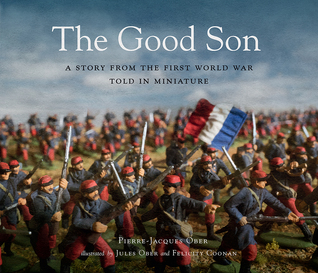
World at War: The Good Son

The Good Son: A Story From the First World War Told In Miniature. Pierre-Jacques Ober. Illustrated by Jules Ober and Felicity Coonan. 2019. Candlewick Press. 104 pages. [Source: Review copy]

First sentence: About one hundred years ago, the whole world went to war. The war was supposed to last months. It lasted years.

Premise/plot: The Good Son is set in France during the first world war. Pierre is a French soldier. Pierre wanting to be a good son decided to go home and visit his mother for Christmas--without permission. It was just two days. But those two days may just cost him his life. For in being a good son, his being a good soldier was called into question. As he awaits his fate he writes a letter home to his mother.

My thoughts: Don't be fooled by the format of this one. It may look like a picture book--its shape and size--but if ideas carried weight this one would weigh a ton. It is impossible to judge a book like The Good Son.

On one hand, it's visually wonderful. It is told in miniature and stars VINTAGE TOY SOLDIERS. The book is illustrated with PHOTOGRAPHS. Artistically one can't help celebrating its mastery. I'd be surprised if this one didn't earn STARS and ACCLAIM by critics.

It isn't just the art. The story is technically brilliant as well. I'm currently reading Les Miserables by Victor Hugo. If anyone knows how to slip in philosophy and BIG IDEAS into a fictional story it's Hugo. Ober makes a good, strong effort in The Good Son. Does war have a point? Is there such a thing as a good or just war? Is all war evil? What is it all for? What price does war cost us as humans? As I mentioned earlier, if ideas have weight, this one would weigh several hundred pounds.

On the other hand, The Good Son makes Jude the Obscure look like a bright, cheery, pep-you-up read. Or perhaps compare it to ANIMAL FARM. For being just 104 pages in length it packs in enough sorrow and despair for one hundred books. This book is bleak, dismal, dark, depressing. It packs a philosophical punch or two. But is it a punch readers can withstand?

© 2019 Becky Laney of Becky's Book Reviews

Tuesday, October 30, 2018

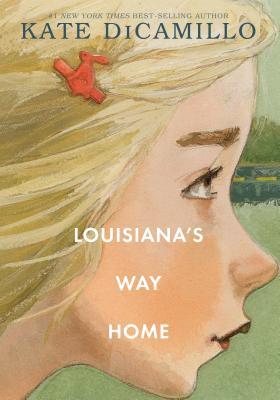
Louisiana's Way Home

Louisiana's Way Home. Kate DiCamillo. 2018. Candlewick Press. 240 pages. [Source: Library]

First sentence: I am going to write it all down, so that what happened to me will be known, so that if someone were to stand at their window at night and look up at the stars and think, My goodness, whatever happened to Louisiana Elefante? Where did she go? they will have an answer. They will know. This is what happened. I will begin at the beginning.

Premise/plot: The character of Louisiana Elefante was first introduced in a lovely little book called Raymie Nightingale. She was a sidekick to the main character. This book is set several years later and it is narrated by Louisiana herself.

Granny has decided that the time has come--the day of reckoning. She has decided that it is time to be moving on. Louisiana learns this the hard way--at 3AM--when she's packed up and put in the car. Soon Louisiana finds herself leaving Florida--not to mention her friends, her pets--behind and entering Georgia. Soon Louisiana finds herself behind the wheel--without a license--when Granny's toothache becomes too unbearable. Her first mission is to find a dentist. This is quickly followed up by finding a place to stay. And then there is her most familiar mission of all--a daily one--finding food to eat. Nothing comes easy for Louisiana--not anymore. (Not that life with Granny in Florida was super-easy, mind you.) But Louisiana finds friends in unlikely places...and her new friends may just be her saving grace.

My thoughts: I loved, loved, LOVED, loved this one. DiCamillo has written a gem of a book. I'm not sure what I loved most: the characterization, the narration, the quotability factor, or the compelling, oh-so-satisfying plot.

This is what happened. We stood on the side of the road. In Georgia. Just past the Florida-Georgia state line. Which is not at all--in any way--a line. Yet people insist that it exists. Think about that. (8)
If you have to choose between smiling and not smiling, choose smiling. It fools people for a short time. It gives you an advantage. (11)
I considered running down the highway, back to Florida. But I did not think I would be able to run fast enough. I have never been able to run fast enough. And by that I mean that no matter where I go, Granny seems to find me. Is that fate? Destiny? The power of Granny? (12)
You have to make small plans. That is one of the things I have discovered in this world. It is pointless to make big plans because you never know when someone is going to wake you up in the middle of the night and says, "The day of reckoning has arrived." Days of reckoning interfere with big plans. So I made small plans. The small plans were: Keep the car on the road. Find a dentist. Never forgive Granny. Although, when I think about it, never forgiving Granny would probably go in the "big plan" category. (34)
She had on her fur coat. Her hair was standing up straight on her head. Suddenly, I saw her like other people might see her and I will not lie to you: it scared me. How can I say this? She did not look trustworthy. She looked like somebody with a curse upon her head. Which, of course, was exactly the case. (46)
Your heart has to be involved with the music, or else there is no point. That is what Granny has always told me, and I believe it to be true. (73)
I sang as if the Blue Fairy from Pinocchio was smiling at me. I sang as if Beverly and Raymie and Archie and Buddy could hear me and would use the song to find their way to me. I sang as if I knew the name of the boy on the roof. I sang as if he knew my name, too. (77)
Whoever Reverend Frank Obertask was, he certainly believed in the power of the written word. And that was fine by me, because I believe in the power of the written word, too. (83)
Granny had always spoken poorly of bologna, but these bologna sandwiches tasted so good that it was just one more reason for me to doubt Granny and the truth of her utterances. And by that I mean this: If you are the kind of person who lies about something as small as bologna, what would stop you from lying about bigger, more important things? (102)
I didn't know if Granny would eat a bologna sandwich. In fact, a bologna sandwich might enrage her. Maybe I was hoping to enrage her. I don't know. But in any case, Burke went into the kitchen and came back out a minute later with two bologna sandwiches wrapped up in a paper towel. I was starting to see what kind of person he was. He was the kind of person who, if you asked him for one of something, gave you two instead. (108)
The next thing I remember is being carried. I smelled something sweet. I said, "What is that smell?" A man's voice answered me. He said, "That's cake, darling." I liked that answer very much. I think that "cake" is a very good word in general and that people should use it as an answer to questions more often. (134)
I ate the whole bowl of ice cream without once letting go of Grandfather Burke's hand. "That's the way to do it," he said. "That's just right." The peanuts on top of the sundae were particularly good. The house smelled like pineapple upside-down cake. Well, the whole world was upside down. But it was still spinning. Wasn't it? (180)
 "I want you to know something, Louisiana. We all, at some point, have to decide who we want to be in this world. It is a decision we make for ourselves. You are being forced to make this decision at an early age, but that does no mean that you cannot do it well and wisely. I believe you can. I have great faith in you. You decide. You decide who you are, Louisiana. Do you understand? (199)
It seems like a good thing to know the star that can keep you from being lost in this world. (216)


© 2018 Becky Laney of Becky's Book Reviews

Saturday, October 20, 2018

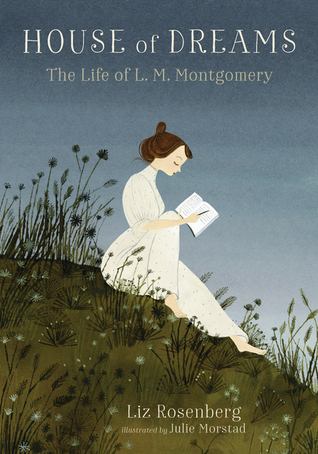
House of Dreams

House of Dreams: The Life of L.M. Montgomery. Liz Rosenberg. 2018. Candlewick Press. 352 pages. [Source: Library]

First sentence: On a late June afternoon in 1905, Maud Montgomery sat in her grandmother's kitchen, writing. She sat not at the kitchen table, but perched on top of it, her feet set neatly on a nearby sofa, her notebook propped against her knees. From here she could jump down if someone stopped by for their mail, as was likely to happen--for the kitchen doubled as the post office of Cavendish, a tiny seaside village on Prince Edward Island.

Premise/plot: House of Dreams: The Life of L.M. Montgomery is a new biography of Canadian author, Lucy Maud Montgomery. Montgomery is best known for the Anne series though she was also a poet and writer of short stories.

My thoughts: L.M. Montgomery is one of my favorite authors. Around the age of eleven (or so) I discovered the Anne and Emily books. It was LOVE. I reread these books often. (And I do mean often.) At some point I began reading her other books as well--Tangled Web, Blue Castle, various short story collections. I entertained the fantastical notion that if I had a real, live Anne Shirley in my life, my life would be so much better. Not only did I see Anne as a kindred spirit--but I imagined L.M. Montgomery to be one as well. 


I would not allow my eleven year old self to read this book. I wouldn't. There's a time and place perhaps for illusions to be shaken perhaps. I am not saying I regret reading the book as an adult.

L.M. Montgomery had mental health issues. She struggled throughout most—if not all of her life—with mental health. She was married to a minister who had severe mental health issues himself. He had several complete nervous breakdowns. Unfortunately, both Montgomery and her husband lived at a time when there was not much—if any—help for mental health disorders. They lived at a time where mental health issues brought SHAME and SCANDAL to a family. For a minister and his wife it would have been an impossible situation.

But even if she had come forward and sought help and sought help for her husband, would the medical community have been of any real good? I’m not convinced. What prescriptions Montgomery and her husband were taking—for various things—were (way) more harmful than helpful. Though they perhaps didn’t ever realize it.

We like to think that we know all there is to know--that medical science has made great advancements. That a doctor's advice is always good advice. That prescription pills are safe. That when a doctor prescribes something it will make us better--not worse. Only time will tell. It will always only be time that tells.

Still even if we don't know everything there is to know about every mental health disorder today--we know so much more than a hundred years ago. It can be outrageous to stop and think about what "treatments" were recommended for the mentally ill--even sixty or seventy years ago.

I do think it is important to talk about mental health. To be compassionate and empathetic--not only to those suffering directly from mental health disorders but also towards the caretakers--the friends and family of those impacted. It is nothing to be ashamed about. It shouldn't be something to hide, a burden one bears alone.

Did Montgomery commit suicide? Yes. No. Maybe. She was certainly VERY unhappy and life was a burden to her. She was worried and anxious about her oldest son. She was miserable with her husband. Recent injuries made it difficult for her to write by hand. She'd endured many losses in life. But did she overdose by pills intentionally or unintentionally? It could have been an accident. (She was taking SO many different prescriptions, and the combination would today be considered dangerous. Even if she was following doctor's directions precisely.) It could have been suicide. 

It wasn't Montgomery's mental health problems that troubled me so much as it was the breaking of the illusion that Montgomery was a [Christian] woman of faith. She may have grown up at a time and in a place where church attendance was a given for respectable families. Perhaps she even confessed/professed faith as child or teen. But by the time she was an adult, by the time she was a minister's wife, she had lost her belief in God. Or at least her belief in the God of the Bible. She denied there was a heaven or hell, a day of judgment. She believed instead in reincarnation. She maintained an appearance of orthodoxy--as did her husband--for appearances' sake. After all, would he be kept on as minister if he openly rejected God from the pulpit? But she held unorthodox views privately. Some of this creeps in subtly in her works.


© 2018 Becky Laney of Becky's Book Reviews

Monday, July 30, 2018

Bob The Railway Dog

Bob The Railway Dog: The True Story of An Adventurous Dog. Corinne Fenton. Illustrated by Andrew McLean. 2016. Candlewick. 32 pages. [Source: Review copy]

First sentence: In those hushed moments before sunset, a train crept, hissing and sighing, into Carrieton Station, South Australia. It was September 1884.

Premise/plot: Set in nineteenth-century Australia, this picture book tells the story of an adventure-loving dog named Bob who rode the trains and explored a country. Guard Ferry, his "owner," adopts him as a pup. Soon Bob is riding the trains with him. But Bob longs for more adventure, more trains, more people to love. The picture book is based on a true story.

My thoughts: I liked this one. If you enjoy nonfiction, history, dogs, or trains there is a good chance you'll enjoy this one too. I appreciated that it wasn't too text-heavy. This is still very much a story picture book.

Text: 4 out of 5
Illustrations: 3 out of 5
Total: 7 out of 10

© 2018 Becky Laney of Becky's Book Reviews

The Tudors

The Tudors: Kings, Queens, Scribes, and Ferrets! Marcia Williams. 2016. 48 pages. Candlewick Press.  [Source: Review copy]

First sentence: For thirty years, a great civil war raged across England. I was not alive to witness it, but it is still spoken of with awe.

Premise/plot: This nonfiction picture book was "written" by Arthur Inkblott and his ferret, Smudge. Its packed with information about Tudor England: the kings, the queens, famous folk, and common folk too. The subjects covered include:
  • The Wars of the Roses
  • The Battle of Bosworth Field
  • Who was Henry Tudor?
  • Henry VII rewrites History
  • A Royal Wedding
  • Money
  • Power
  • Christopher Columbus
  • Henry VII's Family
  • The Spare Prince
  • Henry VIII: The Headstrong
  • Palaces and Potties
  • The Field of the Cloth of Gold
  • Henry's Great Matter
  • Henry's Six Wives
  • The Death of Bluff King Hal
  • The Short Reign of Edward VI
  • Queen Mary I
  • Queen Elizabeth II
  • Mary, Queen of Scots
  • The Spanish Armada
  • Sir Francis Drake
  • Sir Walter Raleigh
  • William Shakespeare
  • The End of the Tudor Dynasty 
My thoughts: This one may be above my maturity level. In other words, Marcia Williams' biases are evident and they don't align with my biases. Perhaps many readers won't come to the book with opinions on these monarchs and the truth of their reigns. But I do. The Tudors are not my favorite. And Richard III has been WRONGED by Williams' text. That's all I have to say about that.

The font of this one is super-super tiny. And everything is very busy--the text is crammed as are the illustrations.

But it is mildly entertaining. I think my favorite bits focused on the commoners. 

© 2018 Becky Laney of Becky's Book Reviews

Thursday, July 05, 2018

The Princess in Black and the Mysterious Playdate

The Princess in Black and the Mysterious Playdate. (Princess in Black #5) Shannon Hale. Illustrated by LeUyen Pham. 2017. Candlewick Press. 96 pages. [Source: Review copy]

First sentence: It was a clear, crisp, comfortable afternoon. The Princess in Black and the Goat Avenger had just sent a monster back into the hole. The hole led to Monster Land. It was time for the victory dance. They slapped hands. They wiggled bums. They said "Callooo!" It was their thing.

Premise/plot: Princess Magnolia (aka the Princess in Black) has a playdate with Princess Sneezewort. But unbeknownst to the Princess a monster has followed her without detection. His intent to eat pets. If he can't have goats, why not pets? She's not in her kingdom; there is no monster alarm in Princess Sneezewort's castle. Yet she has a way of knowing when she's needed. So does Princess Sneezewort. Could this princess--who has a way of blending into her surroundings--have a secret of her own?

My thoughts: I enjoyed this one. I did. I do like the series as a whole. This was a good installment in the series. I appreciate series books. There's an age--or a stage--in reading where it's just pure HEAVEN to know that your favorite characters--your best friends and kindred spirits--appear in many, many books. That the fun does not have to come to an end as long as there's another book.

Shannon Hale is a fun and talented writer. LeUyen Pham has long been a favorite of mine!

© 2018 Becky Laney of Becky's Book Reviews

Thursday, June 14, 2018

Lighter Than Air

Lighter Than Air: Sophie Blanchard, the First Woman Pilot. Matthew Clark Smith. Illustrated by Matt Tavares. 2017. Candlewick Press. 32 pages. [Source: Review copy]

First sentence: It was November 1783. For months France had buzzed about the brothers Montgolfier and their mad dreams of floating bags in the sky. Now the moment had arrived.

Premise/plot: Lighter Than Air is a picture book biography of Sophie Blanchard. She came of age at a time when hot air balloons were brand new, awe-inspiring, and a true wonder. She wasn't alone in marveling at this new wonder that allowed mankind to take to the air. Everyone was mad for it. But Sophie wasn't content to watch from the ground. NO! She wanted to fly herself. She married a balloonist and was soon joining him on flights. But even that wasn't quite enough. She soon began taking solo flights. Each flight an adventure with some amount of risk and thrill. Some were fascinated by her exploits; others not so much! But whether they were saying nice things or mean things--she was being talked about.

My thoughts: I enjoyed this biography. I'd never heard of Sophie Blanchard before. Though to be honest I'd never heard of ANY hot air balloonists before. I couldn't have told you the first thing about their invention or early pioneers. The book packs a good amount of information in the narrative and even more in their author's note. (Although the author's note adds sadness as well. Looking at it glass half full one could say she died doing what she loved best.)

Text: 4 out of 5
Illustrations: 4 out of 5
Total: 8 out of 10

© 2018 Becky Laney of Becky's Book Reviews

Friday, May 25, 2018

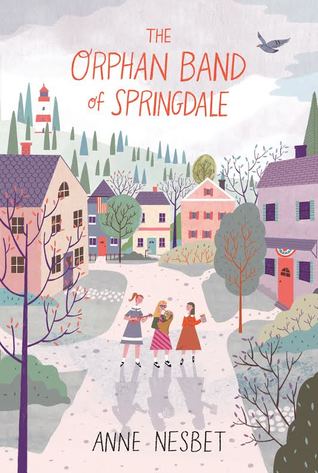
The Orphan Band of Springdale

The Orphan Band of Springdale. Anne Nesbet. 2018. Candlewick. 448 pages. [Source: Library.]

First sentence:  Gusta Neubronner hadn't expected to be on a bus in Maine when she lost her father. She hadn't expected to be sitting alone scrunched up next to the dark blue coat of a woman she didn't know, or to have her French horn case balanced between her ankles, or for the weight of a night's worth of not sleeping to be pulling at her eyelids and making her mind slow and stupid just at the moment when she needed to be even more alert than her usual quick-brained self.

Premise/plot: The Orphan Band of Springdale is set during World War II in the months leading up to Pearl Harbor, to America officially joining the War. It's set in a small town in Maine. Nesbit does a MARVELOUS job with the setting.

Gusta--or Augusta--is our heroine. She has gone to live with her grandmother. Her father has fled the country--he's being hunted down by officials who dislike his union leanings. (Remember this is when standing for 'the union' and workers' rights means being a communist). Her mother has sent her to her grandmother for safekeeping. She soon finds friends her own age--a cousin who lives near by and a houseful of foster children that her grandma is caring for. (Some are not truly orphans, just children whose parents can no longer care for them. Remember this is during the Depression.)

School is school. She loves some aspects of it; not all aspects of it. There are a few SNOBS in her class that assume the worst about her, that accuse her of being an alien, of being a foreign spy, of being THE ENEMY.

Gusta needs glasses. Since money is hard to come by and the need is pressing, Mr. Bertmann, the oculist offers her a deal. She'll work for him in the afternoons in exchange for her glasses. Part of her work will include taking care of pigeons.

The other story has to do with 'the band.'

My thoughts: The Orphan Band of Springdale is a character-driven historical novel with HEART. Some books are ALL about the journey and not the destination. Such is The Orphan Band of Springdale. (I loved spending time with Gusta and her friends Delphine, Bess, and Josie.) I loved her at home and at school. I loved her when she was trying to be brave and do the right thing. I loved her when she got into messes. I loved all the banter between the competing milk company kids. It's just a great coming-of-age story.

© 2018 Becky Laney of Becky's Book Reviews
Wednesday, December 13, 2017

The Nutcracker Mice

The Nutcracker Mice. Kristin Kladstrup. Illustrated by Brett Helquist. 2017. [October 24] 336 pages. [Source: Review copy]

First sentence: There were mice at the Mariinsky.

Premise/plot: The Nutcracker Mice is set in Saint Petersburg, Russia in 1892. It takes place mostly in the theatre. A new ballet is about to premiere, The Nutcracker. The humans and the mice are hard at work on their productions. The mice face a more difficult challenge. They fear mice will not come to see--pay to see--a play where mice are the villains and are killed. They also fear that mice that are interested in seeing the new ballet, would choose to see the humans--with their elaborate costumes and sets--perform for free. And then there's the challenge of staying alive in the first place--finding enough food and avoiding mouse traps.

The heroine of The Nutcracker Mice is a young mouse named Esmerelda. She befriends a young girl, Irina, the daughter of a janitor and costume maker. Esmerelda's quick-thinking may just save the day.

My thoughts: I really LOVED this one. I loved, loved, loved that Esmerelda and the mice decided to rewrite the Nutcracker, to adapt it to suit their audience. This one was just satisfying to read. I loved every minute of it. Much like I love every minute of the Nutcracker Suite. 

© 2017 Becky Laney of Becky's Book Reviews
Wednesday, November 22, 2017

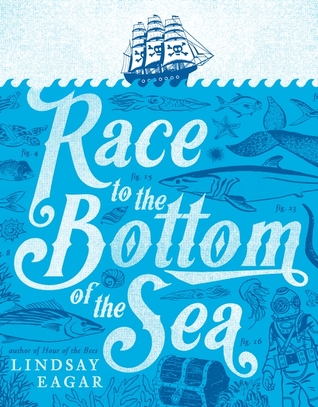
Race to the Bottom of the Sea

Race to the Bottom of the Sea. Lindsay Eagar. 2017. Candlewick Press. 432 pages. [Source: Review copy]

First sentence: The recipe in Fidelia Quail's observation book was for chum, and at eleven years old, she could recite it by heart.

Premise/plot: Love orphan stories? Love sharks? Love pirates? Love adventure stories? Love non-traditional narratives that jump back and forth in time? Love unhappy endings? Then have I got a book for you: Lindsay Eagar's Race to the Bottom of the Sea. Fidelia Quail is a clever, inventive eleven year old who is kidnapped by pirates just a few weeks after her parents death. Fun times, right? Merrick the Monstrous is on a mission--a quest. He only has a few weeks to live and he needs help reclaiming his greatest treasure--which is at the bottom of the sea. Can he force Fidelia to help him? Will Fidelia figure out how to make her water-eater work so she can breathe under water and dive to the bottom of the sea?

My thoughts: I don't love orphan stories, sharks, pirates, adventure stories, or narratives that jump back and forth in time. The fact that this book is ALL of those things at once didn't work in its favor. I loved Eagar's Hour of the Bees so my expectations were high--too high. I do think for the right reader this one could definitely work.

One problem I had with this one is establishing the world it was in. Was it a fantasy novel with made-up lands and seas, countries and nations? Was it set in the real world? And if so what time period? Whether it was set in a fantasy world or the real world--I had trouble "placing it" in terms of development. Fidelia comes from a science-loving, inventive family. And Fidelia herself made a submarine for her family to use. Her other project is a water-eater which would allow her to breathe under water if she could find a way to filter sea water into breathable oxygen. The diving equipment her family uses seems homemade. Their research however is funded by grants. There were elements that led me to think it was modern, and elements that made me think it wasn't. I spent almost all of the novel confused about very basic things.  

© 2017 Becky Laney of Becky's Book Reviews
Thursday, November 09, 2017

Brave Red, Smart Frog

Brave Red, Smart Frog: A New Book of Old Tales. Emily Jenkins. Illustrated by Daniel Eason. 2017. Candlewick. 104 pages. [Source: Review copy]

First sentence: There was once a frozen forest, cold as cold ever was.

Premise/plot: Brave Red, Smart Frog is a collection of fairy tales retold by Emily Jenkins. This collection features seven stories: "Snow White," "The Frog Prince," "Three Wishes," "Toads and Pearls," "Red Riding Hood," "The Three Great Noodles," and "Hansel and Gretel."

My thoughts: I LOVED, LOVED, LOVED this one. I loved the writing, first of all. I found it beautifully written. Here are some of the phrases and sentences that caught my attention.
His new wife had walked out of the winter forest one day and charmed him with beauty like an icicycle--sharp and slippery. She called herself January, and when she moved into the castle, she brought along nothing but an enchanted mirror. This new queen felt invisible without a reflection of herself nearby. (4)
There are so many ways to measure beauty, and so many ways to enchant a mirror. (6)
He stopped his horse and watched her breathing. Her eyelids fluttered. Prince Beacon liked Snow White's face for its courage and kindness, and he was also a curious fellow who liked most pretty girls and all new adventures. And so, he woke her up. Now, some kisses break enchantments. And other kisses begin them. Beacon's kiss was the second kind, not the first.(16)
I loved the selection of stories. I loved the variety of familiar and unfamiliar stories. I think my favorites were actually the new-to-me stories of "Toads and Pearls" and "Three Wishes."

© 2017 Becky Laney of Becky's Book Reviews

Friday, November 03, 2017

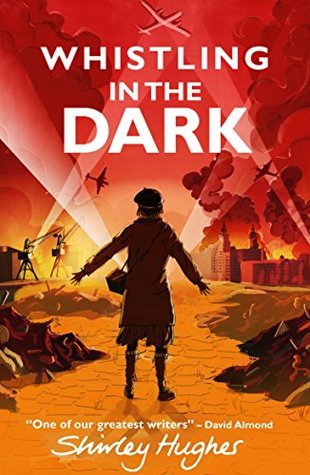
Whistling in the Dark

Whistling in the Dark. Shirley Hughes. 2015/2017. Candlewick. 240 pages. [Source: Review copy]

First sentence: Northwest England, autumn 1940.

Premise/plot: Joan Armitage is the heroine of Shirley Hughes' Whistling in the Dark. This one is set in Liverpool during the second world war. The book focuses on the daily experiences of life during the war through the eyes of a thirteen year old. Her father was a merchant marine; WAS. Now her mother is dating someone else, and only the youngest of the family, little Judy, is pleased. The rest of Joan's family (Brian and Audrey) agrees with her: he's trying WAY too hard to be trustworthy. There's drama at school and home.

Some of the drama concerns a Polish refugee, Ania, who joins Joan's class. Joan and her best friend, Doreen, do their best to help her feel welcome and safe. There are some in the class who target her for their bullying.

My thoughts: Whistling in the Dark is very much character-driven. All of the characters are developed. The community feels genuine. The details of daily lives abound. I found it a compelling read. It isn't an action-packed war drama where lives are at stake 24/7. It's much quieter than that. But I think it can be a thought-provoking read.

I admit that at first all I could think of was that somewhere in town, there was a tiny John Lennon.


© 2017 Becky Laney of Becky's Book Reviews

Thursday, November 02, 2017

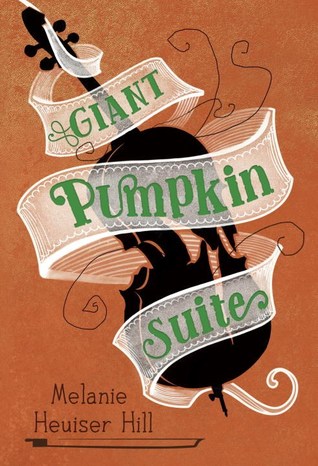
Giant Pumpkin Suite

Giant Pumpkin Suite. Melanie Heuiser Hill. 2017. Candlewick Press. 448 pages. [Source: Review copy]

First sentence: Rose's bow zinged off the cello strings. Thomas hit the button on his stopwatch and grinned.

Premise/plot: Rose and Thomas are fraternal twins, though you'd never be able to guess. She's very tall for her age; he is very short. She can't seem to stop growing; he can't seem to start. She's several grades ahead of him as well. What do you need to know about Rose? She LOVES, LOVES, LOVES playing the cello, loves and adores Bach especially. She also is EXTREMELY fond of Charlotte's Web. In fact, she reads it at least once a month, and has for years. She hates her height and her curly hair. We know a little less about Thomas, but what we do know is easy to love. He's kind, compassionate, curious, eager to help, excited about life, optimistic.

The book opens in May, I believe, Rose and Thomas come to the aid of their friend and neighbor, Mr. Pickering. He's fallen down the basement stairs. Fortunately, Thomas finds him soon after, and Rose calls 911. Mr. Pickering asks them to take care of a precious seed and get it planted for him. This seed is for a GIGANTIC pumpkin.

The good news: Pickering's life is never in danger. The bad news: The summer doesn't quite go as planned. It ends up being the best-worst summer ever.

Thomas is beyond excited about the pumpkin project. Rose is a little more hesitant to commit ALL her free time to a plant. Even if her music teacher asks her to practice less, practice outside, and to play Bach for the plant. There is a big Bach competition coming up and Rose is nervous and feeling the pressure.

The competition never happens--not for Rose. What will Rose gain by losing?

My thoughts: I really loved this one. I loved the focus on family. Rose's family is close. Rose and Thomas are being raised by their mom and grandma. I loved how supportive they are of one another. I also loved the focus on friendship. Mr. Pickering and Mrs. Kiyo are two elderly neighbors that also love having Rose and Thomas in their lives.

There is a family in the neighborhood as well--the Jacobis. Rose doesn't "like" any of the kids. Jesse and James are identical twins. Jane is a girl near her own age. Rose calls her CALAMITY Jane, but the nickname is a bit unearned. Jane and Rose both want to have the library's copy of Charlotte's Web checked out ALL THE TIME. So much so that the librarian has a system: one week Rose, one week Jane, one week on the shelf to have available for another patron. Speaking of the librarian, she LOVES musicals. As in SINGS at the library on the job. This librarian is like a second mother to Jane. But over the course of this best-worst summer, Rose is invited into the group.

The book has a community theme to it. And friendship. It encourages dreams, but also asks what are you willing to do badly out of sheer love for it?!

It is a long book. But it was a good long book. So I personally, as an adult, didn't mind that!

© 2017 Becky Laney of Becky's Book Reviews

Wednesday, October 18, 2017

Baby Goes to Market

Baby Goes to Market. Atinuke. Illustrated by Angela Brooksbank. 2017. Candlewick. 32 pages. [Source: Review copy]

First sentence: Baby goes to market with Mama. Market is very crowded. Baby is very curious. Baby is so curious that Mrs. Ade, the banana seller, gives Baby six bananas. Baby is so surprised. Baby eats one banana...and puts five bananas in the basket. Mama does not notice. She is busy buying rice.

Premise/plot: Come along with Mama and Baby for a BUSY, BUSY day at the market. This one is set in Nigeria.

My thoughts: I really enjoyed this one. The Baby is ADORABLE. It was fun to follow his story to see what gift he'd receive next. He would always eat *some* and then put the rest into his mama's basket. I enjoyed the text. I did. But I really loved, loved, loved the illustrations.

Text: 4 out of 5
Illustrations: 5 out of 5
Total: 9 out of 10

© 2017 Becky Laney of Becky's Book Reviews

Monday, October 02, 2017

Pop-Up Shakespeare

Pop-Up Shakespeare. The Reduced Shakespeare Co. Illustrated by Jennie Maizels. 2017. Candlewick. 64 pages. [Source: Review copy]

First sentence: Welcome to the world of William Shakespeare! William Shakespeare lived from 1564 to 1616 and is still, centuries later, thought to be the greatest playwright ever.

Premise/plot: This pop-up book was written by the Reduced Shakespeare Company and illustrated by Jennie Maiezels. One spread is dedicated to William Shakespeare himself. One spread focuses on Shakespeare's comedies. One spread focuses on Shakespeare's histories. One spread focuses on Shakespeare's romances. One spread focuses on Shakespeare's tragedies. Something is said about each and every Shakespeare play. The emphasis is sometimes more on what the plays have in common than on what makes each play unique.

My thoughts: I liked it. I like the idea of liking it anyway. Some pop-ups work better than others. The pop-up for the tragedies, for me, proves problematic in closing the book again. Sometimes it takes a few tries to get the pop-ups to lay flat again and fit together. The flaps on the front page--particularly on the bottom corner of the right hand page--absolutely refused to open. The flaps and pop-ups worked well for the most part, but be prepared to turn the book around a lot. Every inch of space in the book has teeny tiny print filled with information.

I would say this is definitely a picture book for older readers. I don't see how actual children could have any interest at all in Shakespeare and his plays. For that matter, the content of Shakespeare's plays wouldn't be suitable for children.

© 2017 Becky Laney of Becky's Book Reviews
Friday, September 15, 2017

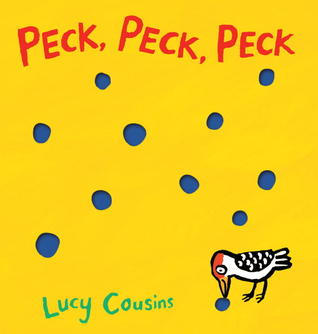
Peck, Peck, Peck

Peck, Peck, Peck. Lucy Cousins. 2013. Candlewick Press. 32 pages. [Source: Review copy]

First sentence: Today my daddy said to me, "It's time you learned to peck a tree." "Now hold on tight. That's very good. Then peck, peck, peck, peck, peck the wood." Peck peck peck.

Premise/plot: A young woodpecker experiences the joy of pecking for the first time. Not satisfied pecking trees or wooden things, our bird hero has a blast pecking everything.

My thoughts: This book was satisfying to read. Joy can be contagious. It was fun to see what he would peck, peck, peck next. His pecking was a bit out of control, yet he was born to peck! The illustrations are fun to look at with little ones. There's lots of opportunities to engage with the text and illustrations making the book more interactive. (How many holes did he peck on this page? He must have really loved jelly beans! What do you think his favorite flavor was? What will he peck next? Do you think he is getting tired?)

Even if you can't stand Maisy, you should try this book by Lucy Cousins.

Text: 5 out of 5
Illustrations: 4 out of 5
Total: 9 out of 10


© 2017 Becky Laney of Becky's Book Reviews

Friday, August 25, 2017

Books! Books! Books!

 Books! Books! Books! Explore the Amazing Collection of the British Library. Mick Manning. Illustrated by Brita Granstrom. 2017. Candlewick. 48 pages. [Source: Review copy]

First sentence: Welcome to the greatest library in the world! We're going to take you on an amazing tour of its treasures--including some that are so rare they are kept under lock and key.

Premise/plot: Mick Manning gives readers a tour of the British Library in his newest picture book, Books! Books! Books! The tour stops include: the St. Cuthbert Gospel, the Lindisfarne Gospels, Beowulf, the Magna Carta, Geoffrey Chaucer, the Klencke Atlas, Lady Jane Grey's Prayer Book, the cookbook collection, the medical book collection, William Shakespeare, Jane Austen, the Bronte Sisters, the Brothers Grimm, Charles Dickens, Leonardo da Vinci, Oliver Goldsmith, Charles Darwin, Alice's Adventures in Wonderland, the newspaper collection, George Frideric Handel, and Sherlock Holmes. As you can see, the tour includes individual works, genre collections, and author collections. This picture book for older readers actually has a narrative flow to it--a conversational flow to it. It is packed with facts and details. But it's not dry or boring.

My thoughts: I definitely enjoyed reading this one. It probably wouldn't surprise anyone if I said I loved, loved, loved it. I found it informative and fascinating. If you love books about books, it's a must-read! I also like the fact that by reading it one can get an idea of what kinds of special collections libraries can have.

It is a picture book for older readers. I might even say it's more for adults than kids.

© 2017 Becky Laney of Becky's Book Reviews
Thursday, August 10, 2017

Fiona's Little Lie

Fiona's Little Lie. Rosemary Wells. 2016. Candlewick. 32 pages. [Source: Review copy]

First sentence: Fiona wanted to be Felix's Birthday Elf so much she nearly fell off her chair.

Premise/plot: Fiona was supposed to bake birthday cupcakes for Felix for the school party. But. She forgot...and also lost the note the teacher sent home. The next day, she remembers--but it is too late. (Or is it?) What will Fiona say when everyone asks where the cupcakes are? Will she tell the truth? Or will she lie?

My thoughts: I liked this one. I didn't love it. I just don't like Felix as much as I like Max and Ruby (Ruby and Max). But it was a solid enough story about friendship.

Text: 3 out of 5
Illustrations: 3 out of 5
Total: 6 out of 10
© 2017 Becky Laney of Becky's Book Reviews