Showing posts with label 2017. Show all posts

Tuesday, September 26, 2023

163. The Great Halifax Explosion


The Great Halifax Explosion: A World War I Story of Treachery, Tragedy, and Extraordinary Heroism. John U. Bacon. 2017. 418 pages. [Source: Library] 

First sentence: On Thursday, December 1, 2016, the people of Boston slogged through a drizzly day with temperatures in the 40s--neither fall nor winter, the kind of cold that gets deep in your bones and stays there.

Premise/plot: Narrative nonfiction covering the Halifax Disaster of December 1917. The book provides context, context, more context. But there does seem to be a point--not details for the sake of details. For example, it provides several chapters on the history of Halifax--including Halifax's complex relationship with the United States. There's also context about the First World War (aka the War to End all Wars or The Great War). The book chronicles the disaster through the eyes of a dozen or so people. 

My thoughts: I definitely appreciated this one more than the first book I read on this topic. The first book I read, Shattered City, was a bit dry at times and the book wasn't always great at connecting the dots and showing the relevance or significance of the facts it was sharing. 

I don't know exactly why this topic/subject has become of interest to me. It was in a fiction book--Christian fiction--book I read earlier this year. I then came across a movie on Tubi. I'll probably read more on the subject--fiction or nonfiction. 

© 2023 Becky Laney of Becky's Book Reviews

Tuesday, May 02, 2023

90. The Choice


The Choice. Gillian McAllister. 2020/2017. 368 pages. [Source: Library]

First sentence: It starts with a selfie. He is a random; we are not even sure of his name. We are always meeting them whenever we go out. Laura says it's because I look friendly. I think it's because I am always daydreaming, making up lives for people as I stare at them, and they think I'm inviting them over to chat.

Premise/plot: Joanna Oliva has a choice to make--a big one. She's been followed home from the bar--or she thinks she has. Someone is in pursuit, she can hear his steady footsteps, getting closer, closer. What happens next is quick, fast, and life-changing. He falls--she pushes? Should she flee the scene? stay and help? Report the crime? Or try to cover it up? The novel alternates between her choice(s). One set of chapters is the 'reveal'--what happens when she reports the accident. The other set of chapters is the 'conceal'--what happens when she flees the scene and does not tell anyone about the accident. The facts do differ in the two stories--a bit. Because her choice will have consequences on the guy in question...

The book is told in first person narrative. The readers get to know Joanna's friends and family through both choices...

My thoughts: It is compelling without a doubt. I had to keep reading to figure out which choice--if either--was better or better for her. I don't know that the ending was ultimately satisfying to me. (The two choices lead to the exact same ending as the two Joanna's merge, if you will). But if you are looking for a book that's hard to put down to read in a single weekend, or perhaps even a single sitting, this one may satisfy. It is set in the UK. It's format is unique, I think.


© 2023 Becky Laney of Becky's Book Reviews

Wednesday, March 15, 2023

58. The Plot is Murder


The Plot is Murder. V.M. Burns. 2017. 254 pages. [Source: Library]

First sentence: "Victor Carlston, don't you think it's wicked to sit here enjoying yourself while your dearest relative lies at death's door?" "That's a good start," I said out loud, even though there was no one to hear.

Premise/plot: Samantha Washington, the protagonist, is a widow trying to live out her dreams. Her and her husband wanted to open up a mystery bookshop--that's a dream that is now her own. She's also writing her own mystery novel--a British cozy. There are two texts to follow. The first being Samantha's real life mystery. (A realtor turns up dead near her home/shop.) The second being Samantha's work-in-progress novel.

My thoughts: I didn't love this one. I liked it okay. I really liked (for the most part) Samantha's in-progress novel. I enjoyed this between-the-wars-British-cozy. It was enjoyable. I liked that Samantha's grandma (and her senior friends) help out in solving the real life mystery. The way these older ladies were able to source information was fun--reminded me of a skit or two on It's A Southern Thing's YouTube channel. It added some amusement. But overall, Samantha's real-life--despite the murder(s)--feels very ho-hum. I was always waiting for Samantha to start writing again. I wasn't really feeling much interest to her story. This is the first in a series. Not sure if I'll seek out the others or not.


© 2023 Becky Laney of Becky's Book Reviews

Saturday, February 04, 2023

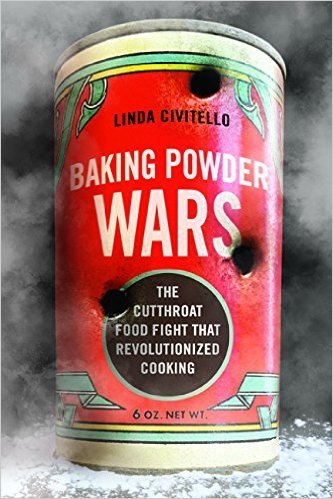
22. Baking Powder Wars


Baking Powder Wars: The Cutthroat Food Fight That Revolutionized Cooking. Linda Civitello. 2017. 264 pages. [Source: Review copy]

First sentence: Business is war. Cooking is chemistry. Food is political.

Premise/plot: At its simplest, Baking Powder Wars is just that a history of the evolution/revolution of baking powder. The book begins pre-baking-powder-era and tells the story of what once was, of how bread [and cakes, etc.] used to be made. It then goes step by step through its evolution/revolution. [If it sounds dramatic, well, it's for good reason. It's a story of industry, corporations, commercialization and advertising, espionage, bribery, politics...and plenty of homemaking and 'domestic arts.' It has some to do with the role of women inside the home, and the role of the home inside society. The author uses baking powder to tell the story of convenience, of our love affair with convenience--fast, easy, cheap, consistent. This book truly offers a little something to every reader. It's got recipes. It's got stories about cookbooks and the role they play in society. It's got tension--as companies (and families who own companies) BATTLE it out literally and figuratively for supremacy. You might think naturally this would involve advertising, media, and market space...but it includes actual politics and politicians. It's also a history of what we eat, where we eat, how we eat, etc. (Bread, quick bread, muffins, pancakes, doughnuts, cakes, cupcakes, etc.) What we eat has definitely evolved through the centuries. It isn't just a story of one product--but of many. (Think Bisquick, Martha White, cake-mixes, etc.)

My thoughts: Until the last little bit--second half of last chapter--this one was actually fairly absorbing. I found that while it covered many subjects and seemed to present facts and factoids almost at random, it was almost always interesting and entertaining. The last half of the last chapter brings readers "up to date" on the families who started the big baking powder companies. These "updates" had nothing to do with food, advertising, cooking, etc. Most of them had to do with RACING. And it was like WHY IS THIS IN HERE? DO I CARE ABOUT RACE CARS? NO, I DO NOT. But so much of this one was interesting to me. 

This one admittedly won't be for every reader. But for those who have an interest in the subject--be it food, cooking, baking, domestic arts, advertising and marketing, business, history of cookbooks, history of supermarkets, history of society/culture "becoming" modern and industrialized...I think this one has a little bit of everything.


© 2023 Becky Laney of Becky's Book Reviews

Friday, December 09, 2022

172. Prisoner of War


Prisoner of War. Michael P. Spradlin. 2017. 272 pages. [Source: Review copy]

First sentence: When my mom died, my home became a war zone. And my father was the enemy. Surly and resentful, he took out his anger on me. It's ironic that to escape one war, I ran away and found another. But it wasn't a war I chose. It was chosen for me.

Premise/plot: Henry Forrest enlists in the Marines though he is underage. With a little help from his grandfather, he lies about his age and joins up. [I believe he is fourteen, possibly fifteen.] He comes of age during the war. What he couldn't predict when he enlisted was that he'd end up a prisoner of war...

My thoughts: I don't read much world war II fiction set on the Pacific front. Well, in comparison to the European front, I should add. This one was heartbreaking and wonderful at the same time. I loved the relationships in this book. I loved Henry's relationships/friendships with his fellow marines and/or fellow prisoners. I loved, loved, loved the found-family aspect of this one. It kept some hope alive in the novel. I loved the ending.


© 2022 Becky Laney of Becky's Book Reviews

170. A Town Divided by Christmas


A Town Divided by Christmas. Orson Scott Card. 2017. 134 pages. [Source: Library] 

First sentence: When Spunky was invited to a meeting in The Professor's office, she didn't know what to expect. She had taken two classes from him, but she didn't major in genetics or even in a biological field--she was an economics post-doc, shopping for a tenured faculty position somewhere on plane Earth, preferably a place with flush toilets, clean water, and a good internet connection.  It didn't ease her confusion when she arrived at The Professor's office at the same time as Elyon Dewey.

Premise/plot: Spunky and Elyon--a reluctant pair--head to Good Shepherd, North Carolina, to do research. Can they find a gene [or genome???] to "prove" that some people are homebodies? This small town has a good track record. While plenty have left over the decades, almost all seem to come back home and settle down again. This "science" will involve getting genetic samples, data input, and interviews. [Elyon is not trusted with interviews.] Both will have to "settle" down in this super small town while they are working for The Professor. Both are a bit surprised with how things unfold...

Elyon who has very little social skills find himself falling in love with a young woman....and Spunky likewise is finding herself falling head over heels in love with someone as well. Everyone teases about how this is so similar to a Hallmark movie.

My thoughts: This one was an almost for me. Perhaps it would be more of a sell if it was actually a Hallmark movie. I didn't quite "get" the science-y grant side of this one. Elyon reminded me of Sheldon Cooper. Spunky and her love interest, Eggie, are Hallmark material.

I wish more had been about the two battling churches/battling nativities. We learn a little. But at least to my reckoning, this situation was never resolved--or resolved satisfactorily. Spunky and Elyon seem to learn a "secret" that no one else knows, but this doesn't lead anywhere. It's more of an afterthougt/aftertaste. There isn't any "love" or "forgiveness." Unless I fell asleep and missed it completely.


© 2022 Becky Laney of Becky's Book Reviews

Monday, November 21, 2022

156. The Dark Prophecy


The Dark Prophecy (The Trials of Apollo #2) Rick Riordan. 2017. 414 pages. [Source: Library]

First sentence: When our dragon declared war on Indiana, I knew it was going to be a bad day.

Premise/plot: The Dark Prophecy is the second book in the Trials of Apollo series by Rick Riordan. Apollo, the god, has been punished with mortality. He has lost all his powers and is semi-reliant on demi-gods (half-gods) for help. Apollo is joined on his semi-quest (no oracles means no official quests) by Leo and Calypso. (Characters we met in a previous series). These three are still trying to figure out which three emperors (well, Nero plus two others) are out to take over the world. 

My thoughts: I think my patience is wearing thin at this point. I don't remember disliking Lester/Apollo quite this much in the first book? Or maybe a little goes a long way? I don't know. It just seems so same-old, same-old, same-old and pointless. The quests always have a surface-level intensity that turns to nothing. Because no matter what, there's a small-ish victory at the end of each book--a brief pause of the action--and then the next book introduces a new "bigger" threat. It's never-ending.

Has anyone read all five books in the series? Does it improve?


© 2022 Becky Laney of Becky's Book Reviews

Friday, November 11, 2022

148. Making Bombs for Hitler


Making Bombs for Hitler. Marsha Forchuk Skrypuch. 2012/2017. 191 pages. [Source: Review copy]

First sentence: The room smelled of soap and the light was so white that it made my eyes ache. I held Larissa's hand in a tight grip. I was her older sister, after all, and she was my responsibility. It would be easy to lose her in this sea of children, and we had both lost far too much already.

Premise/plot: Lida, our protagonist, is a Ukrainian child sent to a work labor camp [concentration camp]. Having been warned that [younger] children are at greater risk, she ages herself by several years. Hoping that if she is perceived as old enough to work, to be useful, the greater the chance that she'll survive the Nazis. Most of the book describes her experiences with various jobs in that Nazi concentration camp. The book ends with her dealing with the aftermath of the war. It would be a mistake to think that survivors get a "happily ever after" starting the moment the camps are liberated. 

My thoughts: I am not doing justice to this compelling coming of age war novel. It was such an intense read. It was interesting--to me at least--to get an Ukrainian perspective. It is more common to see a Jewish perspective of the concentration camps perhaps. The novel opens in 1943. But don't expect a lot of dates. This one is a little vague on specific details. For example, while we spend almost all of the book with the characters in a work camp [concentration camp], readers never learn which camp. This isn't a deal breaker for me. It isn't. But I was curious. [Probably more curious than the intended original audience]. 

I would recommend this one. It is intense. But sometimes you just a book that will keep you on the edge of your seat, a book a little bit outside your comfort zone.


© 2022 Becky Laney of Becky's Book Reviews

Monday, October 17, 2022

129. The Jumping-Off Place


The Jumping-Off Place. Marian Hurd McNeely. Illustrated by William Siegel. 1929. 321 pages. [Source: Review copy]

First sentence: Down on their knees, a boy and girl were taking up the kitchen linoleum. It was a queer time to be at that work--half past eight in the evening--and there was an air of strangeness about the house; an unusual silence, a hollowness and a fragrance of crushed flowers in the air. 

Premise/plot: Four kids (Becky, Joan, Phil, and Dick)--doubly orphaned, first by their parents and then their uncle-guardian--set off for Tripp County, South Dakota, in 1910 to homestead on their Uncle's filed claim. And this is to be accomplished almost always on their own. Yes, there are supportive adults who share advice and sometimes an extra pair of hands, but, hundred percent of the blood, sweat, and tears of farming/homesteading will be on these four youngsters. (The oldest is sixteen or seventeen.) The book chronicles about a year's worth of time--give or take a couple of weeks. We definitely go through [late] spring, summer, fall, winter, and the beginning of another spring. Becky, the oldest sibling, I believe, becomes a "teacher" of sorts in a one-room schoolhouse. She isn't certified, but, she's a) willing b) gone through school herself so she's educated enough to teach younger ones c) wanting to go to "normal college" to get her teacher's certificate. There is the almost obligatory chapter where a blizzard strands kids at school. 

My thoughts: This one was published in 1929. It was recognized with a Newbery Honor in 1930. This book was published half a decade (at least) before Laura Ingalls Wilder began writing her children's stories about the homesteading life. (Some of Wilder's books would be set in South Dakota, though decades earlier.) The 1910 setting is interesting. We've got some modern touches--the kids have lived in a city and had city conveniences before--but we've got hints of the older 'pioneer' lifestyle as well. To original readers, 1910 wouldn't have seemed all that "historical" in all likelihood. Today's readers will definitely consider it 'historical' in nature. Perhaps a bit quaint and dated, perhaps outdated. 

Anytime you have an older book, you'll always have people curious about the content and if it is problematic. This one has at least one instance of the n-word--just so you know that up front. It is in relation to working hard and long hours in the field. The children obviously didn't see anything wrong with this word as a descriptor. (Modern readers, if this book has any, may not agree.) There was not really a presence--or notable presence--of Native Americans or "Indians" in this one. You could argue that their absence from the story raises its own issues. But you won't find any scenes like in Little House On the Prairie. So one could definitely look for ways to talk about context and content with children if you're reading this one with children. 


© 2022 Becky Laney of Becky's Book Reviews

Tuesday, January 25, 2022

16. The Chilbury Ladies' Choir


The Chilbury Ladies' Choir. Jennifer Ryan. 2017. 371 pages. [Source: Library]

First sentence: First funeral of the war, and our little village choir simply couldn't sing in tune. "Holy, Holy, Holy" limped out as if we were a crump of warbling sparrows.

Premise/plot: Set in a "little village" in England during the Second World War, The Chilbury Ladies' Choir focuses on the dramas--little and big--that beset the community. The chapters alternate narrators; some chapters are diary/journal entries while others are letters.

It opens with the funeral of Edmund Winthrop...which happens to be the choir's last performance for the war....if the vicar has any say in the matter. But the community comes together to form a LADIES choir arguing that music is needed now more than ever. The choir brings together some that otherwise might not socialize together.

My thoughts: I really loved this one. I'm not sure if it's merely "love" or if it is closer to love, love, love. Usually I am skeptical about novels with multiple narrators. They don't always work smoothly for me. It can be--at times--difficult to get to know the characters and to be able to distinguish voices/personalities. That was not the case with the Chilbury Ladies' Choir. I found the characters to be well developed and easy to distinguish. 

There are a handful of stories that add drama and melodrama to the quaint-ish homefront setting. 

Venetia, one of our heroines, is falling head over heels in love with a super-mysterious painter who is traveling through. He doesn't seem to be the right class for someone of Venetia's standing...but the heart wants what the heart wants. And EVERY male wants Venetia. (Venetia reminded me for sure of Scarlett O'Hara surrounded by her beaus. She is a TEASE who enjoys holding the hearts of all the guys in town.) But it was hard to hate her completely because of reasons....

Mrs. Tilling, our middle-aged nurse, is what I imagine a much younger Miss Marple to be. (That could just be me though). I love how observant and yet how compassionate she can be. No wonder so many seek her out to confide in! I really, really love her story overall. It was very satisfying!!!

Kitty is just a JOY to spend time with....she is our youngest narrator.


© 2022 Becky Laney of Becky's Book Reviews

Sunday, March 07, 2021

23. The Radium Girls


The Radium Girls: The Dark Story of America's Shining Women. Kate Moore. 2017. 479 pages. [Source: Review copy]

First sentence (from the prologue): THE SCIENTIST HAD FORGOTTEN ALL ABOUT THE RADIUM. IT WAS tucked discreetly within the folds of his waistcoat pocket, enclosed in a slim glass tube in such a small quantity that he could not feel its weight. He had a lecture to deliver in London, England, and the vial of radium stayed within that shadowy pocket for the entirety of his journey across the sea. He was one of the few people in the world to possess it. 

Premise/plot: The Radium Girls is nonfiction; it is a narrative account of the 'radium girls'--the women employed as dial painters whose exposure to radium (radium-based paint to be exact) proved costly and deadly. It is an account of the long, long, long, long BATTLE (yes, battle) for justice to be done.

There were several plants--or factories if you prefer--that employed women as dial painters. This is narrative focuses on three of them; readers are introduced to dozens of women; I wouldn't be surprised if it tells the story of three to four dozen women at least.

The story begins in 1917 in New Jersey and concludes (well, mainly concludes) in Illinois circa 1938. To read more about the Radium Girls (wikipedia).

 My thoughts: The Radium Girls was a POWERFUL read that resonated with me from start to finish. I am so thankful that I finally got around to reading it. If you've been meaning to read it too but have been putting it off, then I encourage you to give it a chance.

I loved that it was a PERSONAL read. The women aren't mere numbers or statistics. Their lives AND their deaths had meaning; and as I believe it is mentioned either in the movie or the book their bones still are speaking to us. Even those whose voices were never "heard" in life--due to injustice and indifference--can be heard now and for the next thousand plus years. The narrative's greatest strength is that it focuses on the personal, the intimate, the real.

The read was both FASCINATING and DEVASTATING. It is hard to imagine today that no one wouldn't know that radium was DANGEROUS and to be radioactive is a BAD, BAD thing. But so much of the book focuses on this struggle between those that put MONEY, MONEY, MONEY first and foremost and those that valued HUMAN LIVES and HUMAN DIGNITY over profit, wealth, fame.

I was shocked--should I have been shocked???--at the out and out LYING and CORRUPTION. The doctors that were being paid/employed by the factories could run all their tests, do their examinations, and then say YES, YOU ARE 100% HEALTHY. NO PROBLEMS. All the while, your teeth are falling out, your face is swollen, you can hardly stand up straight, you're losing weight. Sounds like the perfect state of health, right?! In other words a lot of GASLIGHTING going on. But that isn't being fair. Not all doctors said the women were in 100% health--the best state of health they could ever be in. Some were for team misdiagnosis. Like let's diagnose you with SYPHILIS. Because that will make you quiet for sure--if you believe it. Who wants to be known to be dying from that!

But I was also encouraged by those that stood up to the big guys--the giants--and faced near impossible odds. It wasn't easy for the lawyers to take on, take up, this GIGANTIC mess of a case.

I was surprised by the resilience and attitude of some of the women. Some relied on GOD and turned to prayer and other spiritual disciplines for support, comfort, peace. Others relied more on FAMILY and FRIENDS for comfort, support, guidance. While the book mentions a few women's nerves or state of mind seemed to be negatively effected by the diagnosis, I was surprised it wasn't more. It couldn't be *easy* on one's mental health to be diagnosed with a FATAL DISEASE with NO CURE and little proven treatment. The strength and courage it would take to face each and every day is not to be discounted. We're talking tremendous physical pain with no hope of relief. Not really. Every day would be a choice--to despair or to cling to hope.

It's impossible to read this novel and not turn introspective. WHY DO I COMPLAIN SO MUCH? 

I picked up Radium Girls after watching Radium Girls the film. I don't know that there is any connection whatsoever between the book and the movie--besides the name. The film is FICTIONAL through and through. The characters are probably composites drawn from real people but not actually based on any specific people. At least I found that to be the case. I could be wrong.

Quotes:

  • Radium. It was a wonder element; everyone knew that. Katherine had read all about it in magazines and newspapers, which were forever extolling its virtues and advertising new radium products for sale—but they were all far too expensive for a girl of Katherine’s humble origins. She had never seen it up close before. It was the most valuable substance on earth, selling for $120,000 for a single gram ($2.2 million in today’s values).To her delight, it was even more beautiful than she had imagined. 
  • Each dial-painter had her own supply. She mixed her own paint, dabbing a little radium powder into a small white crucible and adding a dash of water and a gum-arabic adhesive: a combination that created a greenish-white luminous paint, which went under the name “Undark.” The fine yellow powder contained only a minuscule amount of radium; it was mixed with zinc sulfide, with which the radium reacted to give a brilliant glow.The effect was breathtaking. 
  • It was a craze, no other word for it.The element was dubbed “liquid sunshine,” and it lit up not just the hospitals and drawing rooms of America, but its theaters, music halls, grocery stores, and bookshelves. It was breathlessly featured in cartoons and novels, and Katherine—who loved to sing and play piano—was probably familiar with the song “Radium Dance,” which had become a huge hit after being featured in the Broadway musical Piff! Paff! Pouf!
  • For sale were radium jockstraps and lingerie, radium butter, radium milk, radium toothpaste (guaranteeing a brighter smile with every brushing) and even a range of Radior cosmetics, which offered radiumlaced face creams, soap, rouge, and compact powders. Other products were more prosaic: “The Radium Eclipse Sprayer,” trumpeted one ad, “quickly kills all flies, mosquitoes, roaches. [It] has no equal as a cleaner of furniture, porcelain, tile. It is harmless to humans and easy to use.”
  • This was radium, the wonder drug, they were using. They were lucky, they thought, as they laughed among themselves and bent their heads to their intricate work. Grace and Irene. Mollie and Ella. Albina and Edna. Hazel and Katherine and Mae. They picked up their brushes and they twirled them over and over, just as they had been taught. Lip… Dip… Paint. 
  • The girls were covered in it: their “hands, arms, necks, the dresses, the underclothes, even the corsets of the dial-painters were luminous.”
  • They glowed like ghosts as they walked home through the streets of Orange. They were unmissable.
  • By the end of the year, one in six American soldiers would own a luminous watch—and it was the Orange girls who painted many of them. 
  • In September 1922, the peculiar infection that had plagued Mollie Maggia for less than a year spread to the tissues of her throat.The disease “slowly ate its way through her jugular vein.” On September 12, at five p.m., her mouth was flooded with blood as she hemorrhaged so fast that Edith could not staunch it. Her mouth, empty of teeth, empty of jawbone, empty of words, filled with blood, instead, until it spilled over her lips and down her stricken, shaken face. It was too much. She died, her sister Quinta said, a “painful and terrible death.” She was just twenty-four years old.
  • The year 1923 was when the Charleston dance craze took America by storm, and the Radium Dial girls swiveled their knees with the best of them. The luminous glow of the radium on their hair and undulating dresses made those parties even more special.“Many of the girls,” Catherine Wolfe recalled, “used to wear their good dresses to the plant so that they would become luminous when they went out to parties later.” 
  • From the very start, Grace bore her diagnosis bravely. She had a courageous spirit and refused to let Martland’s prognosis affect her life. She had always loved her life and, if anything, she now valued it even more highly. So she tucked the diagnosis away in her mind and then carried on. She didn’t stop work; she didn’t change her habits: she kept swimming, she kept socializing with her friends, and she kept on going to the theater. “I don’t believe in giving up,” was what she said. 


© 2021 Becky Laney of Becky's Book Reviews

Thursday, February 06, 2020

23. The Devouring

The Devouring (Billy Boyle #12) James R. Benn. 2017. 310 pages. [Source: Library] [Historical; Mystery; World War II]

First sentence: Light is faster than sound. Strange, the things you think about when you’re about to die.

Premise/plot: This is the twelfth Billy Boyle historical mystery. Billy and Kaz are undercover in Europe, currently in France but heading to neutral or “neutral” Switzerland. They will be investigating some crimes or suspected crimes, mainly of a financial nature. Their guide is a Sinti vigilante, Anton Lasho, who has on his own been seeking out all the Nazis he can and killing them, wherever, whenever. The resistance is not pleased. They prefer plans, organization, maximum impact. Not random murders with no tactical gains. Lasho goes with Kaz and Boyle, perhaps this will be a new beginning for a man who has seen to much during the war. Boyle and Kaz and their new associates have a difficult task ahead—and it seems their lives are in danger. New threats and risks abound as they investigate. Soon the two are trying to solve a murder...

My thoughts: I really love, love, love this series. I definitely found this a compelling addition to the series. I can’t say I love Lasho as much as Kaz in terms of being a sidekick. But I hope he’s back in future books. I hope he does begin working with them, for Eisenhower. 


© 2020 Becky Laney of Becky's Book Reviews

Monday, January 13, 2020

8. The No. 2 Feline Detective Agency

The No. 2 Feline Detective Agency. Mandy Morton. 2014/2017. 272 pages. [Source: Library] [Genres: Animal Fantasy; Mystery]

First sentence: Hettie Bagshot sat at her desk and stared at her phone, willing it to spring to life.

Premise/plot: It isn’t at all unusual for cats to star in mysteries, to “help” their humans solve mysteries. But this isn’t your usual mystery with a cat. There are no humans—only cats. Cats that walk, talk, run businesses, drive cars, cook and bake, drink tea, and...murder. Hettie and Tilly are a detective pair new to the field, their first case takes them to a senior living facility where a couple of graves have been robbed. Can these two find the missing bodies before the robber strikes again? Is all as it seems at this nursing home?! Are other cats in danger?!

My thoughts: I have very mixed feelings on this one. I do love mysteries. If this book starred humans as murderers and victims, I probably wouldn’t hesitate to zoom through it without much thought. But since it only stars cats in this alternate reality, I struggled. Why?! Because I love cats. I do. And I try my best to not read SAD books where cats (or dogs or really any pet) die. I wouldn’t describe this book as terribly sad, just terribly weird. Cats should not be plotting murders and killing each other. I did read this one at a quick pace, but I am not sure you could say I enjoyed it.


© 2020 Becky Laney of Becky's Book Reviews

Wednesday, November 06, 2019

World at War: Miss Kopp's Midnight Confessions

Miss Kopp's Midnight Confessions. (Kopp Sisters #3) Amy Stewart. 2017. 374 pages. [Source: Library]

First sentence: On the morning of her arrest, Edna Heustis awoke early and put her room in order.

Premise/plot: Miss Kopp’s Midnight Confessions is the third novel in Amy Stewart’s historical mystery series starring Constance Kopp. Kopp is kept busy in this one between her time as deputy sheriff, jail matron, and older sister. She becomes increasingly alarmed at several arrests of young women whose only crime is leaving home and living on their own—without their parents’ blessing. In the case of Edna, she’s over eighteen, working at a factory doing her part for the war, living in a respectable boarding house. Minnie Davis, on the other hand is under eighteen, living with a young man under the guise of being his wife. There is a phony marriage license. Though the stories are quite different, Constance feels for them both. Why should women be arrested for “immortality” but not the men? The real interest, however, comes in when she’s given an opportunity to practice what she preaches. Fleurette runs away to joins May Ward’s vaudeville troupe.

My thoughts: I missed Norma and Fleurette in the second novel. I did. So I was thrilled to see so much of them in this one. Kopp is not handling cases with dangerous, hardened criminals. Instead she is challenging the system. There’s a law in effect that is unjust or unfair. Kopp feels that if you are going to go after—arrest, send to trial, sentence, punish—immorality, then both parties not just the women should be targeted. To live on one’s own and work should not automatically be deemed immoral. Lives are being ruined because women often can’t hire a defense.

This one—out of the three I’ve read—has dealt most with the Great War. Edna is desperate to do something for the war effort. At first she thinks this means working in a factory. But then she hears about a project where women can go to France and volunteer for the Red Cross. It won’t be easy for Edna to get there, but her life has a new purpose.

The books still are based on true stories from the headlines.


© 2019 Becky Laney of Becky's Book Reviews

Thursday, September 12, 2019

Max Tilt: Fire the Depths

Max Tilt: Fire the Depths (Max Tilt #1) Peter Lerangis. 2017. HarperCollins. 368 pages. [Source: Library]

First sentence: Before the day he was abandoned, Max Tilt thought life was pretty much perfect.

Premise/plot: When Max’s mom gets sick, his parents leave him in the care of his older cousin, Alex, as they seek treatment out of town. The two (Max and Alex) soon discover that the parents have been horribly irresponsible. The electricity is turned off the second day, I think! The eviction notice has been served and is due to take effect within a week maybe two. Instead of contacting the parents (either Max or Alex’s), the two decide that by selling the contents of the home online and perhaps getting a part-time job they should be able to get the bills paid and stay in the home. One of the items they list brings trouble to their door! The item is an empty trunk that belonged to Jules Verne, THE Jules Verne. The two set out on a quest when they find a hidden text by Verne, the bad guys are never far behind. In fact, they end up keeping close company with the villains for most of the book. Can they best them by the end and get their hands on the lost manuscript?

My thoughts: I liked the premise of this one. Max and Alex are descendants of Jules Verne. They have inherited some of his things and discover a secret, hidden, mystery text. The descendants of Captain Nemo (or descendant) know about this mystery letter/manuscript and have been hunting for it. The two must battle it out in the book. Both claim that they want to save the world.

You have to suspend ALL your disbelief if you want to enjoy this one. It isn’t unusual for this sub genre. In fact it reminds me a bit of The Magician’s Nephew by C.S. Lewis. Two kids without much—if any—adult support set out to save the world. But it wasn’t the adventure quest that had me stumbling. It was the parents leaving Max in such a horrible position. How could they knowingly leave their son knowing that the electric bill is overdue?! Knowing that other utilities will soon follow?! Knowing that the family will be evicted in a few weeks?! It sounds like they are skipping town and abandoning Max. How could they not know about their unpaid bills?! How could they leave knowing?!

Perhaps they expected Alex to take Max home with her?!

I also wondered how the two made it to New York City since both had no money....

But the book did keep me reading. I have plans to read the second book in the series.

© 2019 Becky Laney of Becky's Book Reviews

Wednesday, June 12, 2019

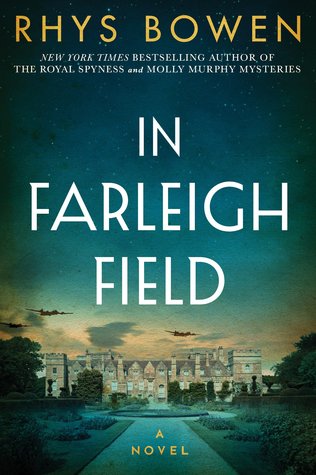
World at War: In Farleigh Field

In Farleigh Field. Rhys Bowen. 2017. Lake Union. 397 pages. [Source: Review copy]

First sentence: It had been unusually hot all summer.

Premise/plot: In Farleigh Field is a stand-alone mystery/suspense novel set in England during the second world war. It has multiple narrators. It follows the lives of the aristocratic Sutton family and their neighbors. There are five daughters--no sons. Olivia (aka Livvy), Margaret (aka Margot), Pamela (aka Pamma), Diana (aka Dido), and Phoebe (aka Feebs).

Before the war, Pamela was head over heels in love with a neighbor, Jeremy Prescott, who joined the RAF. While she was making heart eyes at Jeremy, Ben Cresswell, the vicar's son, was making heart eyes at her. Almost three years later and little has changed. Well. Both Ben and Pamela are working for secret government agencies. (MI5 and Bletchley Park). But Ben still hasn't come any closer to getting the girl to notice him in that way. Pamela still daydreams that if Jeremy returns alive from the war that they may get married and live happily ever after one day.

At the Farleigh estate a dead man in uniform is found--his parachute did not open. Who was this man? Was he British? Was he German? Why parachute there? Was he on a mission to talk to someone who lived at Farleigh or nearby? What was his mission? what was his message? Does his death mean that the threat is over? Or does danger still lurk?

Phoebe and Alfie (a boy evacuated from London and living with the groundskeeper) team up on the sly to try to solve the mystery.

Ben has official orders to investigate--undercover of course. He's to go back home and see what he can uncover. Everyone should be willing to talk to the vicar's son, after all. And he may be better able to uncover the truth than a stranger would.

My thoughts: I found this an incredibly suspenseful read. Perhaps a bit predictable here and there but in a satisfying way. When it went the way I predicted, I wasn't disappointed but elated.

I typically don't like novels with alternating narrators, multiple narrators. But this one worked well for me. I loved the changing perspectives. It was nice not only to get the perspectives of Ben and Pamela but the others as well. In particular, I liked spending time with the other Sutton sisters--Dido, Phoebe, and Margot. With Margot, we got a behind-the-scenes glimpse of life in occupied Paris.

I read this one in one sitting. It was GOOD.


© 2019 Becky Laney of Becky's Book Reviews

Thursday, June 06, 2019

The Lady of the Lakes

The Lady of the Lakes: The True Love Story of Sir Walter Scott. Josi S. Kilpack. 2017. Shadow Mountain. 336 pages. [Source: Library]

First sentence from the prologue: I believe in God and Christ and long-suffering, but I do not feel that all three must be so densely mashed together as they are for a Calvinist Sunday sermon.

First sentence from chapter one: Walter did not try to hide the fact that he watched the door with focused attention. Mina--his muse and his future--would be entering at any moment, and he was determined to be the first set of eyes she saw.

Premise/plot: This historical romance novel stars SIR WALTER SCOTT. The prologue is set in 1791 when Sir Walter Scott first meets the lovely Mina. The first chapter is set four years later, 1795.

For Walter Scott, it was LOVE at first sight. He wooed the young Miss Stuart with words, words, and more words. Their meetings were infrequent--private meetings especially--but his letters to her, well, they were something special. Was it love at first sight for Mina? Decidedly not. She fell for his words and perhaps not his person. After all, he couldn't dance. And Mina, well, she loved to be the belle of the ball. She loved to dance every dance. But his words, well, they captivated her....at least until they didn't.

Charlotte Carpenter is a French immigrant, an orphan, a spinster. She's "on the shelf" or "over the hill" at age twenty-five. She's under the care of a kind guardian--but kindness only goes so far when his wife is pressuring him to find her a match or else. Miss Carpenter rejects--perhaps rightfully so--the one match that is arranged for her. What she would like is to be an independent woman who has her own house/household, manages her own money/budget. She's not exactly penniless, but she's far from an heiress. No man is going to be hunting her down and marrying her for her fortune.

Charlotte and Walter Scott meet in 1797, one year after his heart has been crushed, obliterated by Mina. He is NOT looking for love. I repeat, he is NOT looking for love. Scott is convinced that LOVE has done him wrong. That he'll go down to the grave loving Mina and only Mina. That chapter in his life is over and done with. Woe to the friend, the companion, the brother that tries to "fix" or "mend" his heart. BEWARE. But Charlotte is unlike any woman he's ever met before. She's honest, genuine, forthright...true to herself. She isn't wearing a mask. Scott is CLUELESS, ABSOLUTELY CLUELESS, that he feels anything until the day she's set to leave town--her vacation being ended.

Scott follows her--of course, he does. But what he proposes next...well...it's a bit unconventional.

Will Walter and Charlotte make a match of it and get married?

My thoughts: I LOVED, LOVED, LOVED, LOVED this one. I tolerated Mina, I suppose. But I never saw Mina through Walter's eyes--never saw her as being the dazzling, oh-so-perfect, only-one-in-the-world-worth-having woman. I loved Charlotte. From the moment Charlotte is introduced in this one--and it's several years before they meet--I loved her. I loved her character and her sense. I loved her spirit or attitude. The scenes with Walter and Charlotte were my absolute favorite. I adored the last half of this one. It was enjoyable and satisfying.

I would definitely recommend this one. It is a clean read being in the "proper romance" publishing line. Though there is quite a steamy hand-holding scene when he removes a glove while they're listening to a musical concert.

© 2019 Becky Laney of Becky's Book Reviews

Tuesday, March 19, 2019

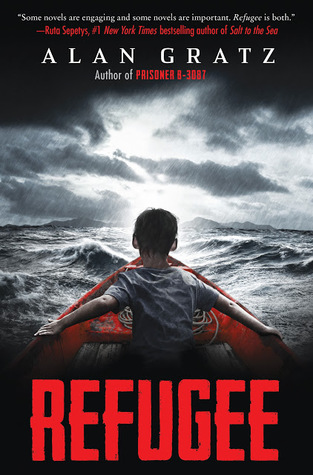
Refugee

Refugee. Alan Gratz. 2017. Scholastic. 352 pages. [Source: Review copy]

First sentence: Crack! Bang!

Premise/plot: Refugee has three narrators and three settings. Josef Landau's story takes place in Germany and at sea in 1939; Isabel Fernandez's story takes place in Cuba and at sea in 1994; Mahmoud Bishara's story takes place in Syria and surrounding regions in 2015. Refugee is about three families who had no choice but to flee their countries.

There are many stories about Jews trying to escape Hitler. Josef Landau and his family make it aboard a ship bound for Cuba. You would think that they'd feel safe and secure; confident that at last they've managed to escape Hitler. But Josef's father's time in a camp has made it impossible for him to trust. Josef wants to believe the best....

Isabel and her family have wanted to leave Cuba for years--probably as long as Isabel has been alive. But when protests take an ugly turn and Castro relents and 'allows' people to leave the island, her family jumps at the chance. (It may be her father's ONLY chance to survive. To return to Cuba would at the very least mean imprisonment if not death since he was an active participant in the violent protests.) But they know they are not safe until they've literally walked on dry land in the States. To be "rescued" at sea would be a cruel punishment.

Mahmoud's family is desperate to leave Syria. Many--if not most are. They have no choice but to leave everything behind and set out on a long journey to an uncertain future. Their goal is Europe--the European Union. So few countries in the world are accepting refugees...

These three stories share a common theme.

My thoughts: Refugee is an intense, compelling, engaging read. I read it one sitting; the book would not let me put it down. The situations are dramatic and tense. The characters are well drawn. You can't help getting emotionally involved in their lives and stories. Within a few chapters, how could anyone fail to be drawn into the story?

Refugee is a story that you know is intentionally written to get you to think or rethink where you stand on important issues of immigration and refugees. One could make the argument that it is an issue-driven novel, a "problem" novel.

Refugee is a story whose characters live and breathe. How could it be anything other than a character-driven novel? Or, for that matter how can it be anything other than a plot-driven novel? I mean the ACTION is packed into this one. Each story is a matter of life-and-death. Each chapter pushes you closer and closer. WILL THE FAMILIES FIND SAFETY? Will these characters that you've come to love SURVIVE?


© 2019 Becky Laney of Becky's Book Reviews

Thursday, November 22, 2018

Bah! Humbug!

Bah! Humbug! Michael Rosen. Illustrated by Tony Ross. 2017/2018. 192 pages. [Source: Library]

First sentence: "Your Scrooge mask?" Ray Gruber yelled as the family climbed into the car.

Premise/plot:  Harry Gruber is playing Scrooge in his school's production of Charles Dickens' A Christmas Carol. His father, Ray, a real-life Scrooge himself, is not pleased that he "has" to stop everything and attend the performance. Will Ray stop working long enough to watch his son shine as Scrooge? Will he tune in to the needs of his family? Or is he a lost cause?

My thoughts: This one was predictable. I won't lie. But it's predictable in a good way. It juxtaposes several stories. First, we have Rosen's adaptation of A Christmas Carol--the script Harry's performing. Second, we get a behind-the-scenes perspective as Harry is performing--on stage, off stage, in the audience. Third, we get to follow Ray as he undergoes a transformation not unlike Scrooge's.

I enjoyed this one and would recommend it.

© 2018 Becky Laney of Becky's Book Reviews

Wednesday, November 14, 2018

Me? Listen to Audio?! #41

The Shadow of A Doubt. (A Play) Edith Wharton. 1901.  Introduced by Laura Rattray. Adapted for radio by Melissa Murray. Directed by Emma Harding. BBC Radio 3. Aired October 2018. 1 hour and a half.

In 2017, two academics--Laura Rattray and Mary Chinery--discovered one of Edith Wharton's lost plays. "The Shadow of a Doubt" was written in 1901 but never performed on stage. It debuted on BBC Radio. And I believe there are current plans to stage it in 2019.

John Derwent has a new wife. Not everyone is pleased--some are quite skeptical. Is his second wife, Kate, as worthy as his first wife Agnes? Kate is from a different social class than his first wife. Kate was, in fact, the one who nursed his first wife during her last days. Some suspect that perhaps--just perhaps--Kate might have seen an opportunity and taken advantage of it. (Did she murder his first wife so she could step into her shoes and raise her child?)

Is she guilty? Is she innocent? Should her husband believe her beyond a shadow of a doubt--wholeheartedly giving himself to her? Or is he wise to hold back until he knows the whole story? Once he begins to doubt can he ever stop himself?

Can this marriage be saved?! Should it be saved?! At one point, Kate is in favor of separation--if her husband doesn't believe her, he doesn't believe her. She's not going to beg him to stay--not if he doesn't trust her. At another point, the father of the first wife--the grandfather of her step-daughter--is advocating for divorce and offering to bribe her with substantial amounts of money if she'll only agree to end the marriage permanently. But her biggest critic may end up being her biggest supporter....

I really enjoyed this one. I have not read any of Wharton's novels, but I have read quite a few of her short stories. I would love to see this one in print. But it made for a good listen. 

© 2018 Becky Laney of Becky's Book Reviews