Showing posts with label war. Show all posts

Monday, October 27, 2025

113. Standoff (Kidnapped from Ukraine #2)


113. Kidnapped From Ukraine #2 Standoff. Marsha Forchuk Skrypuch. 2025. 288 pages. [Source: Library] [realistic fiction, family, drama, war] [5 stars]

First sentence: The bed moved. I squinched my eyes shut and flipped to my side. Smack. Something hit my head. Was Dariia doing one of her silly tricks again? I reached over to push her away, but her side of the bed was empty.

Premise/plot: Standoff is the companion novel to Under Attack. Under Attack was the story of what happened to Dariia (and her mom). Standoff is the story of what happened to Rada (and her dad). The focus of both books is primarily on these twin sisters--Dariia and Rada. This family is literally torn apart, separated by the sudden onset of war. Since Rada's father is fighting in the resistance or army, she's in the care of neighbors at the shelter  at the Azovstal plant. Many have taken shelter, but, it's a hard, desperate struggle to survive. So many unknowns. Each day a struggle to survive--for food, for water, for warmth, for health. Will these sisters ever find one another again?!

My thoughts: Both books are intense and compelling. I do recommend both books. They are companion books. I think they could be read as stand alone books. I think they could be read out of order.


© 2025 Becky Laney of Becky's Book Reviews

Wednesday, January 15, 2025

5. Kidnapped From Ukraine Under Attack


5. Kidnapped From Ukraine Under Attack. Marsha Forchuk Skrypuch. 2025. 320 pages. [Source: Library] [5 stars, mg realistic fiction, mg fiction, survival, war stories]

First sentence: I was snuggled deep in my bed with my twin sister, Rada. We had heard that the Russians might be attacking, but I didn't believe it. Mariupol may have been a Ukrainian city, but everyone here could speak Russian. We weren't their enemies. 

My thoughts preview: I will want to read ANYTHING Marsha Forchuk Skrypuch writes. I will. She has proven she is a great writer over and over again. Though really all it took was one book to make me a forever fan.

Premise/plot: While Marsha Forchuk Skrypuch typically writes action-packed, dramatic historical fiction novels, this time she has written a contemporary, realistic novel that opens in February 2022 with the Russians attacking Ukraine. We see these dark days--dark but not so distant--through the eyes of a child, Dariia Popkova. (She's twelve. Perhaps (though fiction) she wouldn't appreciate being called a child.) When the attack begins--bombing--Dariia and her mother are out of the apartment and running a quick errand--picking up a few things from a corner market. So close to home yet so far when the attack begins. Soon the two find themselves unable to return home and reunite with their family because of the destruction and danger. This danger is unrelenting--there is little calm in the storm their lives become. As the two try to survive hour by hour, day by day, week by week--in the basement where they have found temporary refuge--they have both too much time and too little time to worry. 

Readers get to see everything through Dariia's eyes and it's not a comfy, cozy story with a few boo-boos. The whole novel is [realistically] intense.

My thoughts: What a novel!!!! Truly I cannot do the book justice. It's an incredible read from cover to cover. I am not surprised--I'd expect nothing less from Skrypuch. She excels at everything--writing, plotting, characterization. But it is the characterization that particularly wows me every time. Because though it shouldn't be rare, it mostly is. The depth of characterization is outstanding. It isn't just that there's depth and substance of the main character, but it is how expansive the characterization is. There's no shortcuts, no character too small to not get treated as important. It makes it impossible not to get invested and thoroughly absorbed in the story.


© 2025 Becky Laney of Becky's Book Reviews

Monday, September 27, 2021

125. Barefoot Dreams of Petra Luna


Barefoot Dreams of Petra Luna. Alda P. Dobbs. 2021. [September] 288 pages. [Source: Library]

First sentence: The smoking star lit the night sky as women wept, holding their babies close. Men kept quiet while the old and the weak prayed for mercy. It was on that night that all of us huddled under the giant crucifix, the night when everyone—everyone but me—awaited the end of the world. Everything was a sign to us mestizos, from eclipses to new moons to burned tamales in a pot. I learned early on that all signs were bad. When sparks flew out of a fire, it meant an unwelcome visitor would show up. A sneeze meant someone was talking bad about you. If a metate—a grinding stone—broke, it meant death to its owner or a family member. But the biggest sign of all was citlalin popoca, the smoking star. Papá’s big boss at the mine called it a comet.

Premise/plot: Barefoot Dreams of Petra Luna is set in Mexico in 1913. Petra Luna, our heroine, has made a promise to her father to keep the family together and safe. But some promises are hard to keep--no matter how big the heart. With the Revolution in progress, there is so much uncertainty from day to day to day. The family--Petra, her grandmother, her younger sister, her baby brother--is forced to flee their village with nothing but the clothes on their backs. Everything is gone; there is no assurance for tomorrow. Still, Petra dreams big dreams. She dreams of learning to read and write...of a better future. Most of all she dreams of the day when her father will find them again.

My thoughts: Absolutely beautiful and compelling. The writing is gorgeous. Truly a poetic work of art. I absolutely loved every bittersweet moment of this one. There's depth and substance. The characters are oh-so-human.

Quotes:

Promise. The word churned inside my head day and night. Six months ago, I had made the biggest promise ever when Papá was given the choice to join the Federales or be placed in front of a firing squad. On that day I had run across town looking for Papá, and when I found him, I knew he had chosen not to join. Papá stood against a wall blindfolded, his hands tied behind his back. He faced a line of soldiers with rifles aimed at him. All I heard next were my bare feet running across the line of fire toward Papá and my screams, begging to be shot along with him. I held on to Papá as two soldiers came to pull me away. I kicked with all my strength, and over my screams I heard Papá shouting for them to let me go, but the soldiers didn’t stop until Papá said he’d join their war. Before Papá was dragged away, I promised to take care of Amelia, Luisito, and our grandmother, Abuelita. He then swore to return.

The Federales were the army of the government, of our current president, Victoriano Huerta, whom Papá had called a tyrant. This was the second time they’d charged into our village. The first time, they’d shot men as old as sixty and boys as young as eight for not joining them. They’d dragged Papá away and had also shot one woman who’d protested against her sons’ forced conscription. They were monsters

I rushed into the burning hut, dropped to my hands and knees, and crawled across the long room. The smoke burned my eyes, and the flood of tears blinded me, but I pressed on. I felt my way around the floor, across the broken crates and pots, until my hand found it—my black rock. It was the only thing I had left from Papá.

I don’t want to grow any thorns,” said Amelia. “Thorns are ugly.”
“M’ija”—Abuelita wiped the corners of her mouth with her fingers—“your first breath was in the desert. The cord that connected you to your mamá was buried under a mesquite tree so that you’d always be part of this land. You already have thorns, and thorns are beautiful—they make you strong.” Abuelita spat out the chewed mesquite seeds. “Always be grateful for what you have. The day you take things for granted, your heart will swell with poison.”
Amelia looked down at her elbow and rubbed it. “You’re right, Abuelita. The other day I felt something prickly here, and I think—”
“Abuelita meant thorns in your heart, Amelia,” I said.
Abuelita nodded. “En tu corazón y en tu espírito.” She patted her chest, pointing to her heart and spirit inside her.

Are you scared, Petra?” Amelia whispered.
“Scared of what?”
“Of the Federales or of never seeing Papá again.”
“We’ll see Papá again,” I said. “And right now, I’m much too tired to worry about the Federales.”
“How about un apapácho?” said Amelia. “Are you too tired for that?”
Unlike me at her age, Amelia never asked for a story or a song before going to sleep. Instead, she’d ask for an apapácho. If I had to guess, I’d say apapácho was Amelia’s favorite word. It meant cuddling or embracing someone with your soul.
“Come here,” I said and stretched my arms around her. I squeezed her tight and used one hand to pat her back. And like Mamá, I ended the apapácho with a head rub and a kiss on the forehead.

I lay restless for most of the night. My feet, my back, and everything in between throbbed. I wanted to stretch out the pain, but my muscles cramped with every attempt. My mind stirred too. I thought about my promise to Papá and how it’d been a constant struggle to keep in Esperanzas. I was now in the middle of the desert with a little girl and a baby in tow and an old woman with rickety knees. How would I ever fulfill it? And my dreams of learning to read and write—those drew further away each day. By now they were as distant and unreachable as the stars above.

You’ve come to the right place,” said the priest. “You’ll be safe here.”
Abuelita kissed the priest’s hand. “Dios lo bendiga, Padre. God bless you.”
Suddenly, the sweet smell of pan pobre, poor bread, hit my nose. The scent awakened my stomach and tugged strongly at my heart. I looked around, sniffing the air, wondering where the smell came from. It was a scent that had always brought feelings of comfort and safety. I didn’t believe in signs, but if I did, I’d bet we were safe here.

I lay down and pulled out my black rock from the hem of my skirt. I brought it close to me. It was a piece of coal Papá had given me for my birthday two years ago. It was more than a black rock, though. It was a baby diamond.
“That’s how diamonds are born,” Papá had often explained. “When a piece of coal gets squeezed very hard for a very long time, it becomes a diamond.”

My name is Adeline. What’s yours?”
“Petra,” I said.
“My mamá says Spanish names always mean something. What does yours mean?”
“It means rock,” I said.
“Like the one you’re holding?”
I looked down at my black rock and put it back in its safe place.
“My name doesn’t mean anything,” said Adeline. “But my last name, Wilson, is the same as the American president’s. His name is Woodrow Wilson, but my papá says we’re not related.”
“Why didn’t you leave with your papá?”
“My papá worked at a silver mine,” said Adeline. “He was an engineer there, and when the bad guys came to his work, he had to leave fast before anyone saw him. Later, a man came to our house and gave us a letter from Papá telling us to leave and meet him in Texas. We took a coach and got here two days ago.”
“Do you have brothers and sisters?” I asked.
“No.” Adeline frowned. “It’s just me.”
Adeline continued to talk, and she talked a lot, but she also listened to everything I said. She shared her dreams of being an animal doctor, and I told her mine of learning to read and write. She told me stories she’d read about an orphan girl who lived with two evil sisters and another about a princess who’d been poisoned with an apple

Adeline handed me the slate before covering our legs with the ivory blanket. “My mamá told me that when good, hardworking people have dreams, it’s always nice to help make them come true.”
The slate had letters written on it already.
“What does this say?” I asked.
“That’s your name.”
I took a second look at the slate. The white, chalky letters looked strong and beautiful.

First, we’re going to learn to write your name,” said Adeline. “This is how you hold the chalk. Here, you try it.”
Adeline wrapped my finger around the white, blocky stick. My hand trembled as Adeline guided me to outline P-E-T-R-A across the slate. I sounded out each letter along with her as I traced it over and over. I struggled to hold the chalk straight at first, but by my fiftieth time, I was able to write my name all on my own, without tracing it.
“So?” Adeline asked as I erased my name. “What happens now?” Her tone was sad.
“I write my name all over again and keep practicing,” I said, steadying the chalk over the slate, pretending to have misunderstood Adeline. I was sure she meant what would happen after the church, but I didn’t want to think about it. Not right now. I wanted to keep chatting, to keep learning. I wanted to, for a moment, forget all my pain and anguish. My day with Adeline had been like a sweet siesta, and I refused to be awoken.
“No, I mean where will you go from here

After Adeline notated the champurrado recipe, she threw her arms around me. “Gracias, Petra.”
I didn’t tell Adeline, but recipes were also family secrets for us, and if Abuelita knew I’d just given two away, she’d probably have a patatús. I understood all about not sharing recipes, but after a long day with Adeline, she felt like a sister to me.
Suddenly, a tall, blond woman with striking blue eyes approached us.
“Petra,” said Adeline, standing up, “this is my mamá.”
I shot up and stood straight.
Adeline’s mamá smiled and brushed my hair back with her long, slender fingers. She said something in English, and I quickly turned to Adeline to learn what she’d said.

Abuelita pushed air through her nose. “Barefoot dreams,” she muttered and turned to her side, facing away from us.
“I’ll ask Adeline tomorrow,” I said to Amelia. “I’m sure she’ll say yes.”

I turned back to Abuelita. She had always scorned my talk of letters, teachers, or learning to read. Her words had never bothered me, but now that Mamá and Papá were gone, they stung.
“Why did you say ‘barefoot dreams’?” I asked.
Abuelita remained silent and still.
Amelia and I exchanged glances before she gently patted Abuelita’s back. “Abuelita, Petra wants to—”
Abuelita gave an exasperated sigh and turned to us.
“Wanting to learn to read is a big dream, and big dreams are dangerous,” said Abuelita. “You’ll do better when you accept things as they are, when you accept your lot in life.”
I closed my eyes for a moment. Those words—lot in life—always turned my insides; they made me feel sick.
“Petra, I know you mean well,” said Abuelita. Her tone had softened. “But dreams like yours are barefoot dreams. They’re like us barefoot peasants and indios—they’re not meant to go far. Be content with what you have.”
I thought back to my village, to Esperanzas. No one there knew how to read or write except for the well-to-do. That bothered me, but what angered me the most were people like Abuelita who simply accepted it.


Why hadn’t I been smarter? Why hadn’t I asked Adeline to teach me to write something more useful like train or station?
A heavy, invisible force pressed down on my shoulders. The force pushed through me, reaching my soul and sapping away my last shred of strength. I fell on my haunches and hung my head. I wanted to cry but had no tears. I wanted to scream but had no strength. Instead, I cracked open my mouth, and a small squeak escaped my lips. I’d been defeated. I would never fulfill my promise to Papá or shine like the diamond I longed to be. I’d remain a lump of coal for the rest of my life.

So, what now?” she asked. “Where do you go from here?”
“We’re going north, to el otro lado,” I said. “The other side.”
Marietta looked shocked. “The United States? Why?”
“It’s too dangerous here,” I said. “I was told we’d be safe across el Río Bravo.”
Marietta turned her gaze to the fire. She pressed her lips together and gave a subtle nod.
“Besides,” I said, “I want to learn to read and write, and there aren’t any schools here.”
“You know who Pancho Villa is?” asked Marietta.
I nodded. Papá had told me about him. Pancho Villa led the rebels in northern Mexico. Many folk songs called corridos were sung about him, his bravery, and his love for the poor. Even children’s riddles mentioned him. He was loved by many, feared by many, and was known to have a weak spot for children, especially poor ones.

Villa’s opening schools everywhere,” said Marietta. “He wants all kids to learn to read and write. Maybe you can go to one of his schools.”
I glanced over at Luisito, who slept on Abuelita’s lap, and then at Amelia, who yawned but still clapped. She swayed her bandaged feet from side to side. My family looked so peaceful and content, but how long would it last?
“How did you become a soldier?” I asked Marietta.
“It’s a long story,” she said.
I shrugged my shoulders, smiling.
“Where to start?” said Marietta. Her eyes locked on the campfire in front of us.
“It’d always been my papá and me,” she said. “My mother died giving birth, and I had no siblings. Since my papá never remarried, he focused solely on me and taught me everything he knew.” Marietta lifted her chin and her face lit up as she continued. “Papá was great. He was the best vaquero, cowboy, in the region. Everyone always brought horses for him to tame, and he trained them so well, you barely had to touch the reins to let the horse know what to do.”
Marietta sighed, and the glow in her eyes faded. “Almost three years ago, two Federales stopped at our home. I was preparing dinner when I heard a scuffle outside.

Marietta nodded. “After winning five battles as a captain, I unpinned my braids and let them loose. No one could believe it. But since I’d proven myself many times, they let me be. I went from Mario back to Marietta and still kept everyone’s respect.”
I was speechless. I wanted to be like Marietta. I wanted to learn things, to teach things. I wanted people’s respect.
“Why do you fight?” I asked. “To avenge your father’s death?”
“I did at first. I was outraged, but as time passed, I remembered talks I had with my father about the injustices in our lives. We both wanted a better Mexico. A Mexico that belonged to everyone, not just the rich, and especially not the foreigners.”
Marietta picked up a handful of desert dust and held it in a clenched fist in front of her. She released a thin, almost invisible trickle of sand through the bottom of her fist.

You probably won’t believe this,” said Marietta. “But a hundred years from now, Mexico will be unrecognizable. It’ll be such a rich, beautiful country that the gringos up north will be the ones crossing the river into Mexico for a better life.”
Marietta chuckled at her own words, and I smiled, hoping there was some truth to them. She remained quiet, staring at the campfire, then at me. “Petra, what do you want in life? Deep down inside your heart, what is it you want most?”
I looked up at the sky and thought about my answer. “I want peace,” I said. “I want peace for me and my family, and I want my papá back in our lives. I also want land, not much, just a small piece to live on. I want to go to school and for my sister and brother to go to school too.

Join us,” said Marietta.
“Join who, the rebels?”
Marietta nodded, “Yes. This army needs good, smart fighters like—”
“But I want peace,” I said, raising my voice. I quickly lowered my eyes, realizing I’d been disrespectful.
“I know.” Marietta nodded repeatedly. “Every soul in this camp wants peace. We’re all tired of fighting, but in order to achieve peace and attain the land and freedom we want, we need to fight.”

Someway, somehow, I hoped Papá could find us. I knew I would never see Esperanzas again, at least not the town I’d known since birth. Despite these harsh truths, I was hopeful to one day see Mexico flourish into a country full of peace and prosperity for the people who’d fought and given up so much for her. For now, I was eager to explore this new land, eager to meet its people and welcome new opportunities. Every struggle and challenge I’d grapple with and every failure and victory that lay ahead would dig deep into me and help chisel out my true character.
And I knew then, with all my heart, that one day I would burst with light and shine like the baby diamond I have always longed to be.

Author’s Note
The Inspiration for Barefoot Dreams of Petra Luna

I am blessed to have grown up listening to stories of my ancestors, especially stories of my grandmother, Güela Pepa, and my great-grandmother, Güelita Juanita. Both women grew up surrounded by harsh poverty and prejudice, but always faced adversity with bold spirits and resilience.
My great-grandmother, Juanita Martínez, inspired the core of Barefoot Dreams of Petra Luna. She, along with her family, escaped her burning village in 1913 during the Mexican Revolution. Unlike Petra, my great-grandmother was nine years old when she, her father, two younger siblings, and two cousins crossed the scorching desert by foot and reached the border town of Piedras Negras, Coahuila. At the border, their entry into the United States was denied along with hundreds of other refugees

I found an article that described my great-grandmother’s story. The event occurred in the early afternoon of October 6, 1913, and it wasn’t hundreds of people who’d tried to flee across like she’d stated, it was thousands. Over six thousand, to be exact. Everything else—the desperation, the pleading, and the rage of the Federales—was exactly as she’d recounted it.
Working on this book has fulfilled me in many ways, and despite my grandmother and great-grandmother no longer living, I feel closer to them than ever. Thanks to them and my mother, I learned stories that I would have never learned from books or school. Unfortunately, many stories like my great-grandmother’s or like Petra’s remain in the shadows. How do we fix this? I believe we fix it with curiosity. We need to be curious. We need to look to our ancestors and ask questions. We need to listen to their stories, write them down, on paper or on our hearts, and pass them on. By doing this, we bring stories of bravery, of humanity, and of great compassion to the light and, in turn, we learn more about ourselves and keep the bold spirits of our ancestors alive.


© 2021 Becky Laney of Becky's Book Reviews

123. Ground Zero


Ground Zero. Alan Gratz. 2021. [February] 336 pages. [Source: Library]

First sentence: Brandon Chavez was in trouble.*

Premise/plot: Ground Zero has two protagonists and two time periods. Brandon Chavez, one of our protagonists, is nine years old. He's accompanying his dad to work; his dad works at Windows on the World, a restaurant located on the 107th floor in the North Tower of the World Trade Center. The day is September 11, 2001. Reshmina, our other protagonist, is living in Afghanistan with her family in the present day.** Her twin brother, Pasoon, is wanting to join the Taliban. She is angst-y. She doesn't want him involved in the war...at all. She doesn't seem to think the Taliban or the Americans are the "good guys." There are no "good guys." When the fighting hits really close to him--literally--and brings her into contact with an injured American soldier (named Taz), Reshmina has some tough decisions to make. What she decides may decide the fate of her village and her family.

My thoughts: I spent most of the book wanting to curl up into a ball and moan. Reading it felt like I was continually getting punched in the gut again and again and again. With an occasional stab in the heart. If you are not mentally and emotionally bruised after reading this....tell me how you did that...I'm curious.

Both stories are incredibly intense. There's a definite sense of urgency both within and without (if that makes sense.) There is an urgency in the fictional story. In particular with Brandon's story. Readers most likely will know that it is literally a race against the clock once the first plane hits. Brandon, of course, like all the other characters doesn't realize this. His initial urgency is to get back to his dad--even if his dad is a dozen floors above him when the plane hits. There is urgency in the present day story as well as a battle unfolds and civilians are caught up in it. But there is also an urgency that the reader experiences. At least this reader experienced. Almost the equivalent of ripping a band-aid off. I couldn't allow a slower pace--I just couldn't handle it. The only hope for surviving the utter and complete heartbreak was to keep a steady pace. Page after page, keep turning, keep looking ahead. I couldn't imagine just reading this one chapter a day for weeks. (I read this in two days).

Both stories have substance and depth. Both unfold at a compelling pace. There is some emotional reward for investing in both stories. But for sensitive readers this might be too much to handle.


*The text literally says Brandon Chavez wn trouble. I did my best guess as a reader and interpreted that to mean Brandon Chavez was IN trouble. I suppose it could be "won" "win." But neither made sense in context.

**Before the withdrawal of American troops in Afghanistan. So before the summer of 2021.

© 2021 Becky Laney of Becky's Book Reviews

Monday, September 13, 2021

114. When Zachary Beaver Came To Town


When Zachary Beaver Came to Town. Kimberly Willis Holt. 1999/2003. 256 pages. [Source: Library]

First sentence: Nothing ever happens in Antler, Texas. Nothing much at all. Until this afternoon, when an old blue Thunderbird pulls a trailer decorated with Christmas lights into the Dairy Maid parking lot. The red words painted on the trailer cause quite a buzz around town, and before an hour is up, half of Antler is standing in line with two dollars clutched in hand to see the fattest boy in the world.Since it’s too late in the summer for firecrackers and too early for the Ladybug Waltz, Cal and I join Miss Myrtie Mae and the First Baptist Quilting Bee at the back of the line. Miss Myrtie Mae wears a wide-brimmed straw hat. She claims that she’s never exposed her skin to sun. Even so, wrinkles fold into her face like an unironed shirt. She takes her job as town historian and librarian seriously, and as usual, her camera hangs around her neck.

Premise/plot: In the summer of 1971, Zachary Beaver came to town; he came to Antler, Texas, a super small town. For better or worse, he came as a sideshow act--an act labeling him the fattest BOY in the world. Toby Wilson, Cal McKnight, and Tara Stalling are just a few among the many that have gathered together and payed a few bucks to see this 'fattest boy in the world' with their very own eyes. Days later it appears that Zachary has been abandoned there in town in his trailer...and thus begins an unforgettable summer.

My thoughts: I really loved When Zachary Beaver Came to Town. The characterization was amazing. We get to know what feels like the whole town. The characters have depth and substance. I cared about them all. It's not unusual to care about the main characters--but to care about all the characters, to feel that they are all "real" "breathing" "living" human beings...that is much rarer. The book is sad without drowning in sadness. I guess what I'm trying to say (and probably failing) is that the weight of the sadness is balanced with light, hope, and even humor. It is a book that celebrates FRIENDSHIP. And specifically how friends forgive each other and support each other. 

I also loved the writing.

Quotes:

Scarlett Stalling walks toward the line, holding her bratty sister Tara’s hand. Scarlett looks cool wearing a bikini top underneath an open white blouse and hip huggers that hit right below her belly button. With her golden tan and long, silky blond hair, she could do a commercial for Coppertone.
Scarlett doesn’t go to the back of the line. She walks over to me. To me. Smiling, flashing that Ultra Brite sex appeal smile and the tiny gap between her two front teeth. Cal grins, giving her the tooth, but I lower my eyelids half-mast and jerk my head back a little as if to say, “Hey.”
Then she speaks. “Hey, Toby, would ya’ll do me a favor?”

Sheriff Levi Fetterman drives by, making his afternoon rounds. He slows down and looks our way. His riding dog, Duke, sits in the passenger seat. Duke is Sheriff Levi’s favorite adoptee. Anytime someone in Antler finds a stray cat or dog, they call the sheriff to pick up the animal and take it to the pound. Sheriff Levi can’t bear to dump a dog, and because of that he has a couple dozen living on his one-acre place a mile out of town. However, cats are a different story. They go straight to the pound.
 
It seems weird, standing here, staring at someone because they look different. Wylie Womack is the strangest-looking person in Antler, but I’m so used to seeing his crooked body riding around town in his beat-up golf cart that I don’t think about him looking weird.
 
Dad might as well be from Pluto as from Dallas. People in Antler see it as the same thing. The funny thing is, now it seems like Dad belongs here more than Mom. I don’t think she ever counted on him settling in Antler when he passed through years ago, looking for a place to raise worms.
 

Mom is known as the singing waitress. She makes up songs for the customers, and if they’re a pain, she makes up songs about them. Her voice is high and strong with just the right twang. She may sing songs about honky-tonk angels while serving Bowl-a-Rama specials, but in her mind she’s probably on the stage of the Grand Ole Opry.
In the cafe, next to the picture of the Lord’s Supper, Ferris hung a huge banner above the soda fountain counter—Good Luck, Opalina!
Ferris comes out from behind the counter, limping to the door and turning the Open sign around to face the front. The talk around town is his limp was a self-inflicted wound so he didn’t have to serve in the Korean War. Ferris claims it was a pure coincidence that he was cleaning his gun the day before he was to report for active duty.
Before that happened, Ferris wanted to be a preacher. He even went a semester to a Bible college in Oklahoma. Now he never goes to church, but Mom says he knows the Bible from Genesis to Revelation.
 
Ferris’s chalkboard hangs near the kitchen window behind the counter. Today’s Special: Honey Fried Chicken, Corn Fritters, and Mustard Greens. Beneath the menu is the daily Bible verse. “It is an honor for a man to cease from strife: but every fool will be meddling.” Proverbs 20:3. Mom says some people wear their religion on their sleeves. Ferris posts his on the chalkboard.
Southern gospel music plays from the jukebox, but the sound of bowling balls hitting pins in the next room can still be heard. From the kitchen window, Ima Jean stares at us through her steamed-up cat-eyed glasses. With the back of her hand, she wipes them in a circular motion.
Ferris does a double take when he sees Dad. “How ya doing, Otto? Haven’t seen you in a long time.”
Dad nods toward Ferris. “Doing fine. Yourself?”
Ferris strokes his beard stubble. “Couldn’t be better. Sure do miss your woman, though.”
Dad glances at the Good Luck, Opalina! sign hanging over the counter.  

While we wait, Malcolm’s little brother, Mason, and four other chubby third graders show up with sticks in their hands. Unlike Malcolm, Mason is tough and the leader of his bully pack. Each kid takes a side of the trailer and starts hitting it with sticks. Over their pounding, Mason yells, “Hey, fat boy! Show your face!”
Something boils inside me. I remember when kids like them beat up on me just because they could. I wouldn’t snitch, and since Dad was against it, I wouldn’t fight back either. But today is different. Today we’re soldiers, fighting for Zachary.


© 2021 Becky Laney of Becky's Book Reviews

Tuesday, November 17, 2020

143. Talent


Talent. B. Lynn Goodwin. 2020. [November] 226 pages. [Source: Review copy]

First sentence: THIS IS THE DAY that could change my life. I’ve been living in the shadow of my big brother, Brian Mason, all of my life, but in five more minutes, I’m going to audition for San Ramos High’s spring production of Oklahoma! I’m reading for Ado Annie, who sings and dances and flirts, but if I don’t get it, maybe I can play Gertie or Ellen or somebody else with lines. 

Premise/plot: Sandee Mason stars in Talent a coming of age YA novel written by B. Lynn Goodwin. Sandee is in an in-between place when the novel opens. Her brother, Brian, is missing in action in Afghanistan. Her parents' attention is hit or miss. Especially her mother's. She misses him too. Every. Single. Day. Not a day goes by when she doesn't want him BACK. But is not knowing better than knowing if the knowing means the worst has happened? That's one of the questions explored in this one.

If you're not super drawn to books about missing soldiers, perhaps you'll be drawn to a secondary aspect of this YA novel: Sandee's interest and participation in HIGH SCHOOL DRAMA. Their school is doing a production of the musical OKLAHOMA. Will Sandee get a role? Or will she be part of the crew? Will the show go on when obstacles come up?


My thoughts: Talent is an interesting read. I can't say it's "enjoyable" because it's about some dark subjects. (Her missing brother, her friend's comatose sister (also a soldier), teen alcoholism, potentially unhealthy relationships). But I cared about Sandee and her problems. It is definitely a "problem novel." 

My least favorite part was her visit with the psychic. But that was minor overall. 

 I believe this one was first published in 2015 by Eternal Press. I'm not sure how widely available it was.  The page counts do differ, so perhaps this newly published version has been edited and isn't exactly the same?


© 2020 Becky Laney of Becky's Book Reviews

Monday, May 11, 2020

64. The Book Collectors

The Book Collectors: A Band of Syrian Rebels and the Stories that Carried Them Through a War. Delphine Minoui. Translated by Lara Vergnaud. 2020. [October] 208 pages. [Source: Review copy] [nonfiction; books about books; war stories]

First sentence: It’s a remarkable image. A mysterious photo that somehow escaped the hell that is Syria without a trace of blood or bullets. Two men in profile, surrounded by walls of books. The first one leans over a text, open to the middle. The second scans a shelf. They’re young, in their twenties, one sporting a hooded sweatshirt, the other with a baseball hat secured firmly on his head.

Premise/plot: Delphine Minoui shares her personal interactions with "a band of Syrian Rebels" who started an underground library in the midst of war. Their city under near-constant (daily) bombardment, these guys started collecting books from bombed out buildings, mending, and organizing along the way. The strangest thing may just be that before the war, these two founders weren't particularly readers. But the ideas within books, the words and stories uplifted, encouraged, gave hope. A community of readers formed--mostly men (though the men could take home books for their mothers, wives, sisters, etc.) and reading became an obsession. The author communicated with these men--the founders, the readers, via text, email, video chat, etc...for several years. This book tells their story.

It started with her seeing one photograph...but that was just the beginning:

If we look at this city only as it appears on a computer screen, we risk getting the story wrong. But looking away would condemn it to silence. Bashar al-Assad wanted to put Daraya in parentheses, to make it a footnote. I intend to make it the headline. To find other images, to fit them together with that first snapshot, the way you assemble the pieces of a puzzle.

I repeat my request: “I’d like to write a book about the library in Daraya.” A metallic clamor chokes the line. Another night full of this constant terror and danger—how ridiculous this project must seem to him. When the rain of bombs ends, his voice breaks through. “Ahlan wa sahlan!” Be my guest. Hearing his enthusiasm, I smile at my screen. Ahmad will be my guide. I will be his willing scribe. I make him a promise: one day, this book—their book—will join the other volumes in the library. It will be the living diary of Daraya


My thoughts: I LOVED, LOVED, LOVED, LOVED, LOVED this one. I would wholeheartedly recommend it to anyone who has ever loved the printed word on a page, to anyone who has ever found a home in the library. It is well-written, beautifully narrated. It is a personal story with so many feels. 


© 2020 Becky Laney of Becky's Book Reviews

Tuesday, March 19, 2019

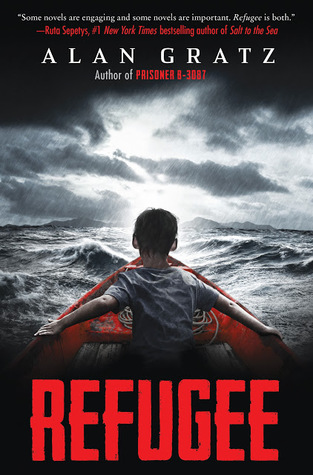
Refugee

Refugee. Alan Gratz. 2017. Scholastic. 352 pages. [Source: Review copy]

First sentence: Crack! Bang!

Premise/plot: Refugee has three narrators and three settings. Josef Landau's story takes place in Germany and at sea in 1939; Isabel Fernandez's story takes place in Cuba and at sea in 1994; Mahmoud Bishara's story takes place in Syria and surrounding regions in 2015. Refugee is about three families who had no choice but to flee their countries.

There are many stories about Jews trying to escape Hitler. Josef Landau and his family make it aboard a ship bound for Cuba. You would think that they'd feel safe and secure; confident that at last they've managed to escape Hitler. But Josef's father's time in a camp has made it impossible for him to trust. Josef wants to believe the best....

Isabel and her family have wanted to leave Cuba for years--probably as long as Isabel has been alive. But when protests take an ugly turn and Castro relents and 'allows' people to leave the island, her family jumps at the chance. (It may be her father's ONLY chance to survive. To return to Cuba would at the very least mean imprisonment if not death since he was an active participant in the violent protests.) But they know they are not safe until they've literally walked on dry land in the States. To be "rescued" at sea would be a cruel punishment.

Mahmoud's family is desperate to leave Syria. Many--if not most are. They have no choice but to leave everything behind and set out on a long journey to an uncertain future. Their goal is Europe--the European Union. So few countries in the world are accepting refugees...

These three stories share a common theme.

My thoughts: Refugee is an intense, compelling, engaging read. I read it one sitting; the book would not let me put it down. The situations are dramatic and tense. The characters are well drawn. You can't help getting emotionally involved in their lives and stories. Within a few chapters, how could anyone fail to be drawn into the story?

Refugee is a story that you know is intentionally written to get you to think or rethink where you stand on important issues of immigration and refugees. One could make the argument that it is an issue-driven novel, a "problem" novel.

Refugee is a story whose characters live and breathe. How could it be anything other than a character-driven novel? Or, for that matter how can it be anything other than a plot-driven novel? I mean the ACTION is packed into this one. Each story is a matter of life-and-death. Each chapter pushes you closer and closer. WILL THE FAMILIES FIND SAFETY? Will these characters that you've come to love SURVIVE?


© 2019 Becky Laney of Becky's Book Reviews

Wednesday, January 16, 2019

World at War: Winnie's Great War

Winnie's Great War. Lindsay Mattick and Josh Greenhut. Illustrated by Sophie Blackall. 2018. Little, Brown. 244 pages. [Source: Library]

First sentence: "Do you want to hear the story of your Bear?" I asked Cole one night while sitting on his bed.

Premise/plot: Winnie The Pooh by A.A. Milne was inspired by Christopher Robin Milne's love a real bear, Winnipeg, in the London Zoo. Lindsay Mattick and Josh Greenhut offer readers an imaginative glimpse into Winnipeg's life. Her story begins in a Canadian forest and ends in a London zoo. Along the way she makes many, many friends: some animal friends (squirrels, horses, a rat) and human friends as well (Harry Colebourn and others in the Canadian Army Veterinary Corps, zoo keepers and visitors). This one focuses on the war years--1914 to 1918.

My thoughts: I loved, loved, LOVED this one. It does have a sad chapter when Bear's mother is killed by a trapper. But. It also has plenty of wonderful moments.

I love that is based on a true story. Lindsay Mattick's great-grandfather was Harry Colebourn. He purchased a bear cub for $20 at a railway station in 1914. This bear became a mascot of sorts in his unit. Readers get a glimpse of what life was like for soldiers as they prepare for war. It was Harry's love for Winnipeg that led him to loan/give her to the London Zoo before being shipped overseas to Europe.

This one also celebrates storytelling. The framework is a mother telling her son bedtime stories.

Original audience born circa 2009 to 2012.

© 2019 Becky Laney of Becky's Book Reviews

Tuesday, May 08, 2018

Exo

Exo. Fonda Lee. 2017. Scholastic. 384 pages. [Source: Review copy]

First sentence: The boy was watching them. Donovan had seen him before: number 53 by his jersey, ginger-haired, stocky.

Premise/plot: Love science fiction? Looking to start a new series? Exo is a futuristic science fiction novel for young adults. It's set on Earth a hundred years after a successful alien invasion. There are a few stubborn humans still fighting for independence and freedom; humans who want their planet back. But Donovan, our hero, isn't one of them. He's an exocel; he's been hardened--quite literally--by alien technology, by Zhree technology. He can armor up and down in a second. His enemies claim the exos are not human at all, and that they are traitors. Soon after the novel opens, Donovan finds himself in trouble. He's been kidnapped by the enemy, by a terrorist group Sapience. He's not killed perhaps because of whose son he is. (His father is Prime Liason between the humans and the aliens. His mother, well, I'll leave that for readers to discover.) What will Donovan learn in his captivity? Will his allegiance be swayed?

My thoughts: I found this a quick read. I do enjoy science fiction. I'm not sure alien invasion is my absolute favorite and best sub-genre of science fiction. But I enjoyed this one. I did. I definitely liked Donovan. Science fiction can sometimes be action-driven or premise-driven. Science fiction can sometimes be so science-fiction-y that characterization just doesn't matter all that much. I would not say that is the case with Exo. Yes, there is plenty of action. But Donovan and his parents are definitely fleshed out well.

This is the first book. I would love to learn more about the aliens who have taken over Earth. Are they as benevolent and good as Donovan thinks? Are they keeping secrets from the humans? Is life truly better after the invasion? Do they truly know what is best for us?


© 2018 Becky Laney of Becky's Book Reviews

Tuesday, November 21, 2017

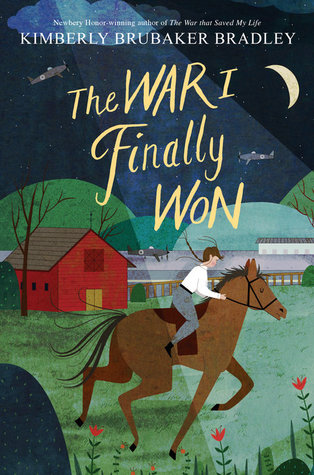
The War That I Finally Won

The War I Finally Won. (The War That Saved My Life #2) Kimberly Brubaker Bradley. 2017. 400 pages. [Source: Library]

First sentence: You can know things all you like, but that doesn't mean you believe them.

Premise/plot: The War I Finally Won is the sequel to The War That Saved My Life. The novel opens with Ada, the heroine, in the hospital. She is about to have surgery that will correct her club foot. Susan, her guardian for the war, is by her side. Susan has learned some news--for better or worse. Ada's mother is dead. She and Jamie are orphans. Susan, of course, has plans to adopt them forever and ever. But Ada isn't the trusting, optimistic sort. She has valid reasons; after all, her mother did lock her up and not let her out of the house, and did take out ALL her anger on her. Can Ada learn to love and be loved? Will Ada and Jamie make a new life together with Susan? Who else will join their family?

My thoughts: I loved, loved, loved both of these books. Even though there is a super-strong horse emphasis. Ada still loves Butter and finds riding her the best medicine in the world to heal her mentally, physically, emotionally. This is a fabulous coming-of-age story. And a great story about what makes a family. Ada's friendship with Maggie continues. And readers also meet a young Jewish girl named Ruth.

Definitely recommend both books to anyone and everyone who loves historical fiction.

© 2017 Becky Laney of Becky's Book Reviews

Friday, June 09, 2017

Dawn's Early Light

Dawn's Early Light. Elswyth Thane. 1934/2017. Chicago Review Press. 336 pages. [Source: Review copy]

First sentence: He stood remote and alone amid the cheerful bustle of the dock at Yorktown. Around his feet in their silver-buckled shoes was stacked enough luggage for two men. Behind him rose the proud, sharp prow and slender spars of the Mary Jones, which had brought him across the Atlantic from Southampton.

Premise/plot: Julian Day, one of our heroes, is a newly arrived Englishman. He's come to America, to Virginia, to be a school master. He becomes great friends with St. John Sprague. In fact he becomes almost one of the family--this in spite of the fact that he's on the 'wrong side' of the conflict or tensions. St. John is madly in love with Regina Greensleeves. Regina vows never to marry a man who'd fight against the King. This coming from the woman who'd flirt with any man within sight. (Think Scarlett O'Hara.) But St. John sees past the surface problems and is convinced he's the only man he'd be able to put her and keep her in place. (He may be right on that.) Julian, meanwhile, is blinded by two things: Regina's beauty AND Tibby's undying love for him. Who is Tibby? Well, she's a young girl, an abused and troubled girl, an impoverished girl who wants to be allowed to attend school with her twin brother. It's just not fair--she insists--that her brother gets an opportunity to go to school and she doesn't. After all, she's just as bright--if not more so--than her brother. After getting to know her better, Julian agrees. He becomes her greatest champion and supporter. It's no surprise that she loves, loves, loves, loves, LOVES him. But will he ever see her as a potential wife? It doesn't seem likely--at least not at first. But as the years go by, as the tensions turn into WAR, much changes.

My thoughts: I really loved this one. I love that it's a first in a series. I love that the series is a family saga that will span generations. I love that it's set in America. So often I'm drawn to books and series set in England, it is nice for me to be able to be swept away by American history. I love the historical aspects of it. I love that some of the characters interacted with real, historical people.

© 2017 Becky Laney of Becky's Book Reviews

Monday, January 02, 2017

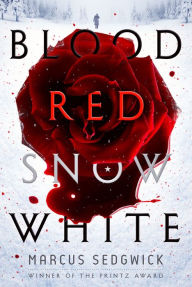
Blood Red Snow White

Blood Red Snow White. Marcus Sedgwick. 2016. 320 pages. [Source: Library; Audience: YA, Adult]

First sentence: The years slip away.

Premise/plot: Set during the Russian Revolution, Blood Red Snow White is narrated by Arthur Ransome, children's book writer and journalist. Though a fictionalized account it does have a historical basis. The writing is lyrical.

My thoughts: What a book!!!! This one should not be forgotten when Cybils comes around again next year. I love the writing. It is beautiful and amazing. The story itself is compelling; the details are fascinating.

The title brings to mind fairy tales. Ransome loved fairy tales, and even wrote a collection of Russian fairy tales for children. While this one is not a fantasy exactly, fairy tale lovers may find it well worth their time! It very much celebrates storytelling.

Favorite quotes:
Beyond the sunrise, halfway to the moon, and so very far away it would make your feet weep to think about it, lies a land vast in size and deep in sadness. (7)
The typewriter was a marvel of miniaturization, made from steel and rubber and ivory. A simple enough thing, though to him, a miracle in itself, for in that box was the potential to write everything that could ever be written. Every word, every sentence, every thought that could ever be, was waiting to be made from the machine in the box. Every single idea ever was in there. And that in itself was a wonderful idea. One day I'll write a story about a closed wooden box. (31)
Stories twist and turn and grow and meet and give birth to other stories. (41)
Language is a subtle but vicious killer. (119)

© 2017 Becky Laney of Becky's Book Reviews
Friday, December 09, 2016

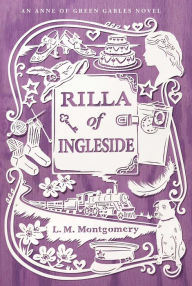
Rilla of Ingleside

Rilla of Ingleside. L.M. Montgomery. 1921. 277 pages. [Source: Bought]

First sentence: It was a warm, golden-cloudy, lovable afternoon. In the big living-room at Ingleside Susan Baker sat down with a certain grim satisfaction hovering about her like an aura; it was four o’clock and Susan, who had been working incessantly since six that morning, felt that she had fairly earned an hour of repose and gossip.

Premise/plot: Rilla of Ingleside chronicles "the great war" from the perspective of Rilla Blythe, Anne and Gilbert's youngest child. When the war begins, she's fourteen or so. But she grows up fast, in part because of the war, because of the changes the war brings, how it effects her family and community. And also in part because she takes on more responsibility. She not only does junior red cross work, I believe, but she fosters a 'war baby.' She takes on essentially a newborn baby 'orphaned' by the war. The mother has died. The father is a soldier--who knows where, who may or may not come back. She is to have 'the raising' of the baby to herself. Rilla is especially fond of Walter, her favorite brother, and Ken, the man she hopes to marry one day. The novel provides a behind the scenes glimpse of what daily life was like during the war, during that time period.

My thoughts: LOVE, LOVE, LOVE this one. It's such a solid and strong--and incredibly emotional--finish to a great series.
All cats are mysterious but Dr. Jekyll-and-Mr. Hyde—”Doc” for short — was trebly so. He was a cat of double personality — or else, as Susan vowed, he was possessed by the devil. To begin with, there had been something uncanny about the very dawn of his existence. 
“The only thing I envy a cat is its purr,” remarked Dr. Blythe once, listening to Doc’s resonant melody. “It is the most contented sound in the world.”
Dog Monday was the Ingleside dog, so called because he had come into the family on a Monday when Walter had been reading Robinson Crusoe. He really belonged to Jem but was much attached to Walter also. He was lying beside Walter now with nose snuggled against his arm, thumping his tail rapturously whenever Walter gave him an absent pat. Monday was not a collie or a setter or a hound or a Newfoundland. He was just, as Jem said, “plain dog” — very plain dog, uncharitable people added. Certainly, Monday’s looks were not his strong point.
“There’s no use thinking about what you’re going to do — you are tolerably sure not to do it.”
The new day is knocking at the window. What will it bring us, I wonder.

“What does it matter if there’s going to be a war over there in Europe? I’m sure it doesn’t concern us.” Walter looked at her and had one of his odd visitations of prophecy. “Before this war is over,” he said — or something said through his lips—”every man and woman and child in Canada will feel it — you, Mary, will feel it — feel it to your heart’s core. You will weep tears of blood over it. The Piper has come — and he will pipe until every corner of the world has heard his awful and irresistible music. It will be years before the dance of death is over — years, Mary. And in those years millions of hearts will break.”

“Susan, I keep thinking today of once when he cried for me in the night. He was just a few months old. Gilbert didn’t want me to go to him — he said the child was well and warm and that it would be fostering bad habits in him. But I went — and took him up — I can feel that tight clinging of his little arms round my neck yet. Susan, if I hadn’t gone that night, twenty-one years ago, and taken my baby up when he cried for me I couldn’t face tomorrow morning.”

Nobody missed Dog Monday at first. When they did Shirley went back for him. He found Dog Monday curled up in one of the shipping-sheds near the station and tried to coax him home. Dog Monday would not move. He wagged his tail to show he had no hard feelings but no blandishments availed to budge him. “Guess Monday has made up his mind to wait there till Jem comes back,” said Shirley, trying to laugh as he rejoined the rest.
A baby by day was dreadful enough; a baby by night was unthinkable.
Even the most thoughtful and watchful of parents do not see everything that goes on under their very noses.
I wonder if those of us who have lived half our lives in the old world will ever feel wholly at home in the new.

No matter how much we value what our lessons have brought us we don’t want to go on with the bitter schooling.
“I wonder,” said Miss Oliver, “if humanity will be any happier because of aeroplanes. It seems to me that the sum of human happiness remains much the same from age to age, no matter how it may vary in distribution, and that all the ‘many inventions’ neither lessen nor increase it.”
The job isn’t finished — it isn’t really begun. The old world is destroyed and we must build up the new one. It will be the task of years. 
“Is it Rilla-my-Rilla?” he asked, meaningly. Emotion shook Rilla from head to foot. Joy — happiness — sorrow — fear — every passion that had wrung her heart in those four long years seemed to surge up in her soul for a moment as the deeps of being were stirred. She had tried to speak; at first voice would not come. Then—”Yeth,” said Rilla.

© 2016 Becky Laney of Becky's Book Reviews

Saturday, October 29, 2016

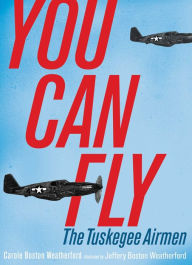
You Can Fly

You Can Fly. Carole Boston Weatherford. 2016. 96 pages. [Source: Library]

First sentence: No matter that there are only 130/ licensed black pilots in the whole nation. Your goal of being a pilot cannot be grounded/ by top brass claiming blacks are not fit to fly./ Your vision of planes cannot be/ blocked by clouds of doubt./ The engine of your ambition will not brake/ for walls of injustice--no matter how high.

Premise/plot: You Can Fly is a collection of poems--all written in second person, to you--about the Tuskegee Airmen. Readers can potentially learn a lot about flying and airplanes, the second world war, and race relations in the 1940s.

The perspective is unusual. But it oddly works for me.
You are in Class 42-C under all white command./ Your first lesson: to "Yes, sir!"/ and "Sir, no sir!" your officers.
The poems are still able to communicate a lot of details: names, places, dates, statistics, etc. Yet the poems are not dry and boring.
You love Hershey's bars,/ but letters from home are sweeter./ Hearing your name during mail call/ is like being lifted by a prayer.
My thoughts: I really enjoyed this one. I spent several years editing interviews for the Women Airforce Service Pilots. So while there are definite differences--big differences--between the two groups, it did give me an understanding or appreciation for training and flying at that time. My love of World War II is what led me to this one, not specifically the poetry. But the poetry is lovely I have to say!

It is a short, compelling read. It made me wish that MORE history subjects were covered through poetry. (Though not just any poetry would do, I suppose!)

I love the fact that it is just eighty pages. I do. In school, when I was on the younger side, when assigned to read a "nonfiction" book to give a report, I always looked for the SHORTEST book no matter the subject.


© 2016 Becky Laney of Becky's Book Reviews

Saturday, October 22, 2016

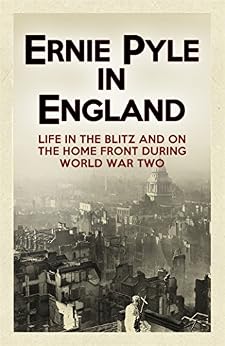
Ernie Pyle in England

Ernie Pyle in England. Ernie Pyle. 1941. 215 pages. [Source: Bought]

First sentence: A small voice came in the night and said, “Go.” And when I put it up to the boss he leaned back in his chair and said, “Go.” And when I sat alone with my so-called conscience and asked it what to do, it pointed and said, “Go.” So I’m on my way to London.

Premise/plot: Ernie Pyle in England was first published in 1941. It gathers together Ernie Pyle's newspaper columns from his time--three or so months--in England (and Ireland and Scotland). (He was an American journalist.) At the time the book was published, America had NOT yet entered the second world war.

My thoughts: WHY DID NO ONE TELL ME THIS BOOK EXISTED?! Seriously. I've gone all these years of my life not knowing about Ernie Pyle?!?!?! This one was a PERFECT fit for me. I love to read about England. (I do. I really do.) And I love to read about World War II. If you love history, this one may prove quite satisfying. And if you love human-interest stories, then this one will certainly satisfy!!!

I found it fascinating, entertaining, compelling, charming.

Quotes:
A ship carries people out of reality, into illusion. People who go away on ships are going away to better things.
Our bathtub has three faucets, one marked cold, and two marked hot. The point is that one is a little hotter than the other. I don’t know why it’s done this way. All I care about is that one or the other should give off hot water; and they really do — plenty hot. But our radiator does not have the same virtue. It is a centuries old custom not to have heat over here. All radiators are vaguely warm; none is ever hot. They have no effect at all on the room’s temperature. I’ve been cold all over the world. I’ve suffered agonies of cold in Alaska and Peru and Georgia and Maine. But I’ve never been colder than right here in this room. Actually, the temperature isn’t down to freezing. And it’s beautiful outside. Yet the chill eats into you and through you. You put on sweaters until you haven’t any more — and you get no warmer. The result is that Lait and I take turns in the bathtub, I’ll bet we’re the two most thoroughly washed caballeros in Portugal. We take at least four hot baths a day. And during the afternoon, when I’m trying to write, I have to let the hot water run over my hands about every fifteen minutes to limber them up. I’m telling the truth.
My new English friends wanted to know what America thought; and they told queer bomb stories by the dozen. “You’re a welcome sight,” they said. “We’ve all told our bomb stories to each other so many times that nobody listens any more. Now we’ve got a new audience.”
London is no more knocked out than the man who smashes a finger is dead. Daytime life in London today comes very close to being normal.
Some day when peace has returned to this odd world I want to come to London again and stand on a certain balcony on a moonlit night and look down upon the peaceful silver curve of the Thames with its dark bridges. And standing there, I want to tell somebody who has never seen it how London looked on a certain night in the holiday season of the year 1940. For on that night this old, old city was — even though I must bite my tongue in shame for saying it — the most beautiful sight I have ever seen. It was a night when London was ringed and stabbed with fire. They came just after dark, and somehow you could sense from the quick, bitter firing of the guns that there was to be no monkey business this night.
And Big Ben? Well, he’s still striking the hours. He hasn’t been touched, despite half a dozen German claims that he has been knocked down. Bombs have fallen around Trafalgar Square, yet Nelson still stands atop his great monument, and the immortal British lions, all four of them, still crouch at the base of the statue, untouched.
Londoners pray daily that a German bomb will do something about the Albert Memorial in Kensington Gardens. If you have ever seen it, you know why.
Apparently the national drink in England is a beef extract called Bovril, which is advertised everywhere, like Coca Cola at home. Yesterday I went into a snack bar for some lunch. I asked the waitress just what this Bovril stuff was, and in a cockney accent that would lay you in the aisle she said: “Why sir, it’s beef juice and it’s wonderful for you on cold days like this. It’s expensive, but it’s body-buildin’, sir, it’s very body-buildin’.” So I had a cup. It cost five cents, and you just ought to see my body being built.
If I were making this trip over again I would throw away my shirts and bring three pounds of sugar. 
You can hardly conceive of the determination of the people of England to win this war. They are ready for anything. They are ready to take further rationing cuts. They are ready to eat in groups at communal kitchens. Even the rich would quit their swanky dining rooms without much grumbling. If England loses this war it won’t be because people aren’t willing — and even ahead of the government in their eagerness — to assume a life of all-out sacrifice.
Don’t tell me the British don’t have a sense of humor. I never get tired of walking around reading the signs put up by stores that have had their windows blown out. My favorite one is at a bookstore, the front of which has been blasted clear out. The store is still doing business, and its sign says, “More Open than Usual.”
One of the few things I have found that are cheaper here than at home is a haircut. I paid only thirty cents the other day in the hotel barbershop, and since then I’ve seen haircuts advertised at fifteen cents. I’m going to get a haircut every day from now on — enough to last me for a year or two.
It was amazing and touching the way the Christmas spirit was kept up during the holidays. People banded together and got up Christmas trees, and chipped in to buy gifts all around. I visited more than thirty shelters during the holidays, and there was not a one that was not elaborately decorated.
I probably wouldn’t have slept a wink if it hadn’t been for the bathroom. I discovered it after midnight, when everybody else had gone to bed. The bathroom was about twenty feet square, and it had twin bathtubs! Yes, two big old-fashioned bathtubs sitting side by side with nothing between, just like twin beds. Twin bathtubs had never occurred to me before. But having actually seen them, my astonishment grew into approval. I said to myself, “Why not?” Think what you could do with twin bathtubs. You could give a party. You could invite the Lord Mayor in for tea and a tub. You could have a national slogan, “Two tubs in every bathroom.” The potentialities of twin bathtubs assumed gigantic proportions in my disturbed mind, and I finally fell asleep on the idea, all my fears forgotten.
It is hard for a Scotsman to go five minutes without giving something a funny twist, and it is usually a left-handed twist. All in all, I have found the Scots much more like Americans than the Englishmen are. I feel perfectly at home with them.
Pearl Hyde is head of the Coventry branch of the Women’s Voluntary Services. It was Pearl Hyde who fed and clothed and cheered and really saved the people of Coventry after the blitz. For more than a week she plowed around in the ashes of Coventry, wearing policeman’s pants. She never took off her clothes. She was so black they could hardly tell her from a Negro. Her Women’s Voluntary Services headquarters was bombed out, so she and her women moved across the street. Her own home was blown up, and even today she still sleeps in the police station. Pearl Hyde is a huge woman, tall and massive. Her black hair is cut in a boyish bob. And she has personality that sparkles with power and good nature. She is much better looking than in the film. And she is laughing all the time. She was just ready to dash off somewhere when I went in to see her, but she tarried a few minutes to tell me how good the Americans had been with donations.
It is against the law to leave a car that could be driven away by the Germans. You have to immobilize your car when you leave it, even though you might be walking only fifty feet away to ask a policeman for directions. In daytime, just locking the doors and taking the key counts as immobilization, but at night you have to take out some vital part, such as the distributor.

© 2016 Becky Laney of Becky's Book Reviews
Saturday, April 23, 2016

Churchill: The Power of Words

Churchill: The Power of Words. Winston S. Churchill. Edited by Martin Gilbert. Da Capo Press. 536 pages. [Source: Library]

Churchill: The Power of Words is a compelling read for anyone interested in history, British history in particular. It isn't a biography exactly. Instead it's a chronological arrangement of (select) quotes taken from his writings and speeches that give you a sense of who he was. Each quote is introduced by Martin Gilbert. On the top left-hand corner, readers find the year, and, on the top right-hand corner, readers find Churchill's age. I found this layout to be wonderful. There are no chapters, no natural stopping places. I tried to use years as goal-setters. But once World War II started, I found it too compelling to read it just a year at a time. I read greedily.

I found it fascinating and thought-provoking.

Favorite quotes:
One must never forget when misfortunes come that it is quite possible they are saving one from something much worse; or that when you make some great mistake, it may very easily serve you better than the best-advised decision. (1896) p. 14
As I think Ruskin once said, 'It matters very little whether your judgments of people are true or untrue, and very much whether they are kind or unkind,'... (1899) p. 29
What is the use of living, if it be not to strive for noble causes and to make this muddled world a better place for those who will live in it after we are gone? (1908) p. 63
We did not enter upon the war with the hope of easy victory; we did not enter upon it in any desire to extend our territory, or to advance and increase our position in the world; or in any romantic desire to shed our blood and spend our money in Continental quarrels. We entered upon this war reluctantly after we had made every effort compatible with honour to avoid being drawn in, and we entered upon it with a full realization of the sufferings, losses, disappointments, vexations, and anxieties, and of the appalling and sustaining exertions which would be entailed upon us by our action. The war will be long and sombre. It will have many reverses of fortune and many hopes falsified by subsequent events, and we must derive from our cause and from the strength that is in us, and from the traditions and history of our race, and from the support and aid of our Empire all over the world the means to make this country overcome obstacles of all kinds and continue to the end of the furrow, whatever the toil and suffering may be. (1914) p. 88.
To fail is to be enslaved, or, at the very best, to be destroyed. Not to win decisively is to have all this misery over again after an uneasy truce, and to fight it over again, probably under less favourable circumstances, and perhaps alone. (1915) p. 108
Before a war begins one should always say, 'I am strong, but so is the enemy.' When a war is being fought one should say, 'I am exhausted, but the enemy is quite tired too.' It is almost impossible to say either of these two things at the time they matter. (1918) p. 138
'What shall I do with all my books?' was the question; and the answer, 'Read them,' sobered the questioner. But if you cannot read them, at any rate handle them and, as it were, fondle them. Peer into them. Let them fall open where they will. Read on from the first sentence that arrests the eye. Then turn to another. Make a voyage of discovery, taking soundings of uncharted seas. Set them back on their shelves with your own hands. Arrange them on your own plan, so that if you do not know what is in them, you at least know where they are. If they cannot be your friends, let them at any rate be your acquaintances. If they cannot enter the circle of your life, do not deny them at least a nod of recognition. It is a mistake to read too many good books when quite young. A man once told me that he had read all the books that mattered. Cross-questioned, he appeared to have read a great many, but they seemed to have made only a slight impression. How many had he understood? How many had entered his mental composition? How many had been hammered on the anvils of his mind and afterwards ranged in an armoury of bright weapons ready to hand? Choose well, choose wisely, and choose one. Concentrate upon that one. Do not be content until you find yourself reading in it with real enjoyment. (1925) p. 178-9.
We are in the presence of a disaster of the first magnitude which has befallen Great Britain and France. Do not let us blind ourselves to that. It must now be accepted that all the countries of Central and Eastern Europe will make the best terms they can with the triumphant Nazi Power. The system of alliances in Central Europe upon which France has relied for her safety has been swept away, and I can see no means by which it can be reconstituted. (1938) p. 202
You must have diplomatic and correct relations, but there can never be friendship between the British democracy and the Nazi Power, that Power which spurns Christian ethics, which cheers its onward course by a barbarous paganism, which vaunts the spirit of aggression and conquest, which derives strength and perverted pleasure from persecution, and uses, as we have seen, with pitiless brutality the threat of murderous force. That Power cannot ever be the trusted friend of the British democracy. (1938) p. 203
Whenever we speak of 'bloodless war' it must not be supposed that it is not attended in every country in this anxious, melancholy time by strain, by loss, and, in some countries, by a very severe degree of privation and suffering among the mass of the population. Moreover, the bloodless war is becoming intensified. There is hardly a day when the papers do not show it is becoming intensified. The strains resulting from it will in this year, still more if it is prolonged, test not only the financial and economic strength of nations but the health of their institutions and the social structure of their civilization. (1939) p. 211-2
We must not underrate the gravity of the task which lies before us or the temerity of the ordeal, to which we shall not be found unequal. We must expect many disappointments, and many unpleasant surprises, but we may be sure that the task which we have freely accepted is one not beyond the compass and the strength of the British Empire and the French Republic... It is a war, viewed in its inherent quality, to establish, on impregnable rocks, the rights of the individual, and it is a war to establish and revive the stature of man. (1939) p. 224
Of all the wars that men have fought in their hard pilgrimage, none was more noble than the great Civil War in America nearly eighty years ago. Both sides fought with high conviction, and the war was long and hard. All the heroism of the South could not redeem their cause from the stain of slavery, just as all the courage and skill which the Germans always show in war will not free them from the reproach of Naziism, with its intolerance and its brutality. (1940) p. 233-4
Very few wars have been won by mere numbers alone. Quality, will-power, geographical advantages, natural and financial resources, the command of the sea, and, above all, a cause which rouses the spontaneous surgings of the human spirit in millions of hearts--these have proved to be the decisive factors in the human story. (1940) p. 236
You ask what is our policy? I will say: It is to wage war, by sea, land, and air, with all our might and with all the strength that God can give us; to wage war against a monstrous tyranny, never surpassed in the dark and lamentable catalogue of human crime. That is our policy. You ask, what is our aim? I can answer in one word: It is victory, victory at all costs, victory in spite of all terror, however long and hard the road may be; for without victory, there is no survival. Let that be realized; no survival for the British Empire, no survival for all that the British Empire has stood for, no survival for the urge and impulse of the ages, that mankind will move forward towards its goal. (1940) p. 243
We are moving through a period of extreme danger and of splendid hope, when every virtue of our race will be tested, and all that we have and are will be freely staked. This is no time for doubt or weakness. It is the supreme hour to which we have been called. (1940) p. 259
Never in the field of human conflict was so much owed by so many to so few. (1940) p. 264
We have but one aim and one single, irrevocable purpose. We are resolved to destroy Hitler and every vestige of the Nazi regime. From this nothing will turn us--nothing. (1941) p. 285
© 2016 Becky Laney of Becky's Book Reviews

Tuesday, April 05, 2016

War Dogs

War Dogs. Kathryn Selbert. 2016. [April 2016] Charlesbridge. 48 pages. [Source: Library]

First sentence: Rufus's best friend, Winston Churchill, is a busy man, but most days Rufus and Winston share a walk.

Premise/plot: Essentially, War Dogs is a picture book biography of Winston Churchill during the Second World War told from the point of view of his poodle, Rufus. The book has plenty of Churchill quotes throughout. These are set apart from the main text, and are easily identifiable. One of the quotes is:
The road to victory may not be so long as we we expect. But we have no right to count upon this. Be it long or short, rough or smooth, we mean to reach our journey's end. August 1940
My thoughts: I loved, loved, loved, LOVED this one. War Dogs would definitely be more of a picture book for older readers than a story you'd share aloud with preschoolers. But. I think picture books for older readers are important and necessary, and can be quite LOVELY. I do think that picture books can be for everyone--people for all ages. So I'd definitely recommend this one. It would be a great introduction--picture book introduction--to the Second World War, and to Winston Churchill in particular. So if you're a history lover or a dog lover, you should definitely consider picking this one up!!!

I love the text. I love the illustrations. I love how each quote is sourced. Not all picture book biographies show their work when it comes to research. This one does! (Can you tell that I tend to love research myself!)

Text: 5 out of 5
Illustrations: 4 out of 5
Total: 9 out of 10

© 2016 Becky Laney of Becky's Book Reviews
Friday, December 11, 2015

Adam and Thomas

Adam and Thomas. Aharon Appelfeld. Translated by Jeffrey Green. 2015. Triangle Square. 160 pages. [Source: Library]

Adam & Thomas by Aharon Appelfeld is newly translated into English by Jeffrey M. Green. And, if you're like me, and seek to read as many World War II books as possible in any given year, it's worth seeking out.

The book opens with Adam and his mother in the forest. She's leaving him, leaving him with a promise that she'll return when it's safe, but ultimately leaving him on his own. He doesn't stay on his own, however, for later that same day he finds another boy his own age whose mother had also brought him to the forest. His name is Thomas. The two boys are quite different from one another. But they're both Jewish, both seeking to escape the ghetto before it is liquidated, both unsure of the future. Though Adam is a positive thinker if ever there was one.

Can the two boys survive the horrors of both war and nature in the forest? Will they find enough food to eat in the forest? What about in winter? How will they stay warm? Dare they try to light a fire?

"Enjoyed" is such a wrong word given the context and content of this one. But I found it a quick, overall hopeful read. I liked Thomas and his dreams. I liked Adam and his resourcefulness and hope. I liked how these two made a point of helping others who fled into the forest to try to escape the Nazis.

I also liked Miro and Mina. Mina is another Jewish girl hiding out in the country. Miro is Adam's oh-so-loyal dog that tracks him down after several weeks or months and joins the boys in the forest.


© 2015 Becky Laney of Becky's Book Reviews
Saturday, November 14, 2015

Suess on Saturday #46

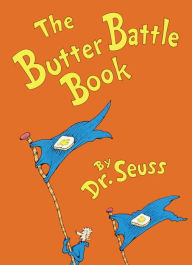
The Butter Battle Book. Dr. Seuss. 1984. Random House. 42 pages. [Source: Library]

First sentence: On the last day of summer, ten hours before fall...my grandfather took me out to the Wall. 

Premise: Readers learn about Yooks, the "good" guys who eat their toast butter side up, and the Zooks, the "bad" guys who eat their toast butter side down. The book is a dialogue between a grandfather and grandson. The grandfather is essentially explaining the war--and the wall--to his young grandson. It ends on uncertain terms.

My thoughts: The Butter Battle book is a great example of a picture book for older readers. It is one of the books my seventh grade English teacher read aloud. I also remember her reading What Was I Scared Of? aloud to us! The Butter Battle Book is NOT anything like The Cat in the Hat or Green Eggs and Ham. This isn't a happy-cozy story to read to preschoolers. There's nothing funny or amusing about war about escalating hostilities between two countries. The subject is serious, and, it's well-treated, in my opinion. 

Have you read The Butter Battle Book? Did you like it? love it? hate it? I'd love to know what you thought of it!

If you'd like to join me in reading or rereading Dr. Seuss (chronologically) I'd love to have you join me! The next book I'll be reviewing is You're Only Old Once.

© 2015 Becky Laney of Becky's Book Reviews