Showing posts with label international literature. Show all posts

Monday, July 21, 2025

78. Snowglobe 2


78. Snowglobe 2 (Snowglobe Duology #2) Soyoung Park. Translated by Joungmin Lee Comfort. 2021/2025. 438 pages. [Source: Library] [3 stars, YA Fiction, YA Speculative Fiction, YA Mystery]

First sentence: At once, all the lights go out and the TV goes dead. On the dark screen, ghostly afterimages linger for another moment before they, too, dissipate, plunging us into darkness. 

Premise/plot: Snowglobe 2 is the sequel to Snowglobe. Jeon Chobahm, our main character, has exposed the corruption of which she is aware. But there are more secrets--more impactful and unjust--to uncover and possibly expose. This time she has a team of support. [She is still living with her fellow Haeri clones, even Serin (the cranky one). Then there's her brother, Ongi, her director-friend, Hyang, and Miryu, a former actress.] The novel starts perhaps a bit slowly, but she soon realizes that she's in great danger and that she may be one of the few people who can change the world dramatically even if it means taking a lot of risks. 

My thoughts: Snowglobe 2 has a completely different vibe. The story is definitely unique and different from the first story. I felt the first story definitely focused more on the television aspect--the actors and directors, the entertainment industry, etc. I think the second story definitely focuses more on the corruption of leaders and politicians. Both deal with socioeconomic injustices--the haves and have nots if you will. The cast of characters is LARGE and at times difficult to keep up with. However, I did reread the first novel a few weeks ago. It could have been trickier if I hadn't. I liked the first book a bit more perhaps. But this one was good.


© 2025 Becky Laney of Becky's Book Reviews

Monday, June 23, 2025

61. Snowglobe


Snowglobe. (Snowglobe Duology #1) Soyoung Park. Translated by Joungmin Lee Comfort. 2024. 384 pages. [Source: Library] [YA Dystopian; New Adult]

First sentence: In the living room, Grandma is sunk in her chair in front of her favorite TV show, a heavy quilt draped over her lap. I look down at the weather ticker scrolling away along the bottom of the screen.

I read the description of this one and that was enough of a hook to get me. I'm not sure I could do the book justice by trying to summarize it. You should know it is set in a futuristic dystopia. The world building was FANTASTIC. The characters were well-developed, fleshed out. The plot was both simple and complex. 

It stars a sixteen year old, Jeon Chobahm, who wants to be part of their world--Snowglobe. The residents of Snowglobe seemingly have it all. The residents are actors, directors, celebrities if you will. They are the only people on earth to live in a warm climate. The rest of the world is in perpetual winter or ice age. Her dream is to be a director, to be direct one of the shows of Snowglobe. 

Be careful what you wish for. She'll be presented with an opportunity. Does she have the right to say no? Maybe? maybe not? Regardless, she does NOT want to miss this opportunity. She runs straight for it. It is only afterwards when she begins to suspect that the Snowglobe she knows through the screen isn't the real Snowglobe.

I am so glad I borrowed this one from the library. It was such a fascinating/engaging read. Usually dystopian novels require a LOT of suspension of disbelief. You almost read with an eye-roll. It may be very entertaining, but equally obnoxious. Some are so heavy-handed and ridiculous hitting you over the head with a couple of hammers that there's no fun to be had. This one I completely became absorbed in. I didn't feel manipulated or preached at.


© 2025 Becky Laney of Becky's Book Reviews

Wednesday, October 09, 2024

81. We'll Prescribe You a Cat

We'll Prescribe You A Cat. Syou Ishida. Translated by E. Madison Shimoda. 2023. 297 pages. [Source: Library] [novellas; international fiction; adult fiction; cats] [4 stars]

First sentence: Shuta Kagawa stood at the end of a shadowy alley, gazing up at a multipurpose building. After getting thoroughly lost, he had finally arrived. 

Premise/plot: We'll Prescribe You a Cat is a collection of loosely connected novellas. Each story features a character that is a little lost, a little out-of-sorts. The character is seeking--though word-of-mouth recommendations--a Clinic for the Soul. Each character believes it is a mental health clinic with doctors and nurses, etc. But the prescriptions ALL turn out to be CATS. Some "patients" are prescribed a cat for a week; others for two weeks. The twist is that this location can *only* be found by those in need. Most people can't find it, or see it. (Think Twilight Zone). 

My thoughts: I love the premise of this one. It is a collection of novellas. The first story by far is the best story (in my opinion). I really was LOVING the first two-thirds of this one. The last two or three novellas, however, left me a bit puzzled and confused. I certainly seemed to be missing the plot in making sense of the story. Perhaps because they were going for a reincarnation theme???? I honestly don't know. I really don't. But the premise is strong. There are cats everywhere. Certainly a good read.


© 2024 Becky Laney of Becky's Book Reviews

Monday, April 01, 2024

38. Snowglobe


Snowglobe. (Snowglobe Duology #1) Soyoung Park. Translated by Joungmin Lee Comfort. 2024. 384 pages. [Source: Library] [YA Dystopian; New Adult]

First sentence: In the living room, Grandma is sunk in her chair in front of her favorite TV show, a heavy quilt draped over her lap. I look down at the weather ticker scrolling away along the bottom of the screen.

I read the description of this one and that was enough of a hook to get me. I'm not sure I could do the book justice by trying to summarize it. You should know it is set in a futuristic dystopia. The world building was FANTASTIC. The characters were well-developed, fleshed out. The plot was both simple and complex. 

It stars a sixteen year old, Jeon Chobahm, who wants to be part of their world--Snowglobe. The residents of Snowglobe seemingly have it all. The residents are actors, directors, celebrities if you will. They are the only people on earth to live in a warm climate. The rest of the world is in perpetual winter or ice age. Her dream is to be a director, to be direct one of the shows of Snowglobe. 

Be careful what you wish for. She'll be presented with an opportunity. Does she have the right to say no? Maybe? maybe not? Regardless, she does NOT want to miss this opportunity. She runs straight for it. It is only afterwards when she begins to suspect that the Snowglobe she knows through the screen isn't the real Snowglobe.

I am so glad I borrowed this one from the library. It was such a fascinating/engaging read. Usually dystopian novels require a LOT of suspension of disbelief. You almost read with an eye-roll. It may be very entertaining, but equally obnoxious. Some are so heavy-handed and ridiculous hitting you over the head with a couple of hammers that there's no fun to be had. This one I completely became absorbed in. I didn't feel manipulated or preached at.


© 2024 Becky Laney of Becky's Book Reviews

Friday, December 08, 2023

188. What You Are Looking For Is In the Library


What You Are Looking For Is In the Library. Michiko Aoyama. Translated by Alison Watts. 2020/2023. 304 pages. [Source: Library] [adult fiction, realistic fiction, books about books, novellas]

First sentence: When Saya sends a text to tell me she has a new boyfriend, I instantly write back: What's he like? But all she replies is: He's a doctor.

Premise/plot: This newly translated novel contains five interconnected novellas. Different protagonists. Varied problems. But all come to the same community library and meet the same reference librarian. Each is recommended a list of books with one quirky book recommendation tagged onto the end that doesn't quite meet their stated search needs. Each receives a gift--something felted--from the librarian. All lives are changed, though perhaps not as dramatically as one might expect. The changes mostly come from within. 

This novella collection celebrates books, libraries, and LIBRARIANS. 

My thoughts: I definitely enjoyed this one. And it went a long way in helping me out of my slump. I don't know it I will stay out of my reading slump. I've been struggling the past few weeks with staying engaged with what I am reading. I loved the focus on BOOKS and reading. I thought the characters were well-developed within the novella format. In fact, you might argue that you learn more about these characters in under a hundred pages than you do some books in four hundred pages. 


© 2023 Becky Laney of Becky's Book Reviews

Wednesday, October 04, 2023

166. Before Your Memory Fades


Before Your Memory Fades. Toshikazu Kawaguchi. Translated by Geoffrey Trousselot. 2018/2022. 220 pages. [Source: Review copy]

First sentence: "Why are you in Hokkaido?" Kei Tokita's voice sounded tinny coming from the handset.

Premise/plot: Before Your Memory Fades is a book of connected novellas. It is the THIRD book in the Before the Coffee Gets Cold series. The premise of the series is that there is a cafe with special, 'magical,' powers. There is one chair that will allow the occupant to travel forward or backward in time. But there are rules, of course there are rules. They have to stay seated, of course. They have to return to the present before the coffee turns cold. They can only meet people who have visited the cafe. Nothing they do in the past (or the future) will effect the present. Each story focuses on a journey (to the past or to the future). The 'main' characters are the staff of the cafe AND cafe regulars. (Think the sitcom Cheers). One of the running elements of this one is that one of the characters is ALWAYS reading a book--it is a book of questions (100, I believe) that pose various questions each with the premise of if the world was ending tomorrow...would you choose answer 1 or 2. 

My thoughts: I picked this one up thinking it was book two. It wasn't. When did I realize this? Not until I was halfway through. Do I think it would have made more sense if I hadn't skipped book two (by accident)? Probably. Maybe. Do I think it would have been less confusing if I jotted down a list of characters? Definitely. Also I think if I had read the books--all three--in order and close together. I just had a hard time keeping track of the characters.

I liked the premise well enough. Though apparently there are two cafes with this magical ability? I had a hard time following some of the plot because the characters kept getting tangled up in my mind. 


© 2023 Becky Laney of Becky's Book Reviews

Thursday, December 01, 2022

164. Don Quixote


Don Quixote. Miguel de Cervantes Saavedra. Translated by Edith Grossman. 1605. 940 pages. [Source: Bought]

First sentence: Somewhere in La Mancha, in a place whose name I do not care to remember, a gentleman lived not long ago, one of those who has a lance and ancient shield on a shelf and keeps a skinny nag and a greyhound for racing.

Premise/plot: Don Quixote has an impossible dream. [That would be a short and sweet summary, though not particularly accurate.] In a world of his own making, Don Quixote IS a knight; a real-life, honest-to-goodness knight like those in his favorite books. Every day offers an opportunity for thrilling quests. The world may think him mad, foolish, insane, delusional, out of his wits. But to Don Quixote, he thinks the world is under an enchantment. They cannot see the truth. They are the fools for being blind to 'the truth' not he. 

Sancho Panza is Don Quixote's squire. Is he more or less foolish than his master? His dream is different than Quixote's dream. He isn't brave, dashing, daring, adventurous. In some ways, he's the exact opposite of Quixote in every way. But Quixote has promised that he'll give Sancho an insula to govern if he goes with him as a squire. And, I suppose, this hope of future power is his dream. Maybe. Mostly, I think Sancho Panzo dreams of a comfortable life--food to eat, soft bed to rest, and NO brutal beatings. 

These two are out on the road [except for when they are not]. Ever-restless [except for when they are not.] 

 My thoughts: The book is in two volumes. The first was published in 1605. The second was published in 1615. There are highs and lows in each volume. When it is good, it is very good. When it is dull, it is very dull, incredibly dull. 

There are dozens--if not hundreds--of asides. The narrative branches out into little side stories. These stories have very little if anything to do with the main narrative. Don Quixote keeps running into people who like to tell random stories. Sometimes not even their own stories. The main narrative is a platform of sorts for other stories the author wanted to tell/publish. 

At times this is a story easy to love. At other times, it's really not.

Quotes:

In short, our gentleman became so caught up in reading that he spent his nights reading from dusk till dawn and his days reading from sunrise to sunset, and so with too little sleep and too much reading his brains dried up, causing him to lose his mind.

The truth is that when his mind was completely gone, he had the strangest thought any lunatic in the world ever had, which was that it seemed reasonable and necessary to him, both for the sake of his honor and as a service to the nation, to become a knight errant and travel the world with his armor and his horse to seek adventures and engage in everything he had read that knights errant engaged in, righting all manner of wrongs and, by seizing the opportunity and placing himself in danger and ending those wrongs, winning eternal renown and everlasting fame.

“Oh, Señor!” said the niece. “Your grace should send them to be burned, just like all the rest, because it’s very likely that my dear uncle, having been cured of the chivalric disease, will read these and want to become a shepherd and wander through the woods and meadows singing and playing, and, what would be even worse, become a poet, and that, they say, is an incurable and contagious disease.”
 
According to what I have heard, true love is not divided and must be voluntary, not forced. If this is true, as I believe it is, why do you want to force me to surrender my will, obliged to do so simply because you say you love me?
 
“Even so, I want you to know, brother Sancho,” replied Don Quixote, “that there is no memory that time does not erase, no pain not ended by death.”
 
“Have I acted so badly with you, Sancho,” Don Quixote responded, “that you wish to see me dead so soon?” “That’s not the reason,” Sancho replied, “but I don’t like keeping secrets, and I wouldn’t want them to spoil because I kept them too long.”
 
“It is your fear, Sancho,” said Don Quixote, “that keeps you from seeing or hearing properly, because one of the effects of fear is to cloud the senses and make things appear other than they are; if you are so frightened, withdraw somewhere and leave me alone; alone I suffice to give victory to the army to whom I shall proffer my assistance.”
 
“Your grace, come back, Señor Don Quixote, I swear to God you’re charging sheep! Come back, by the wretched father who sired me! What madness is this? Look and see that there are no giants or knights, no cats or armor or shields either parted or whole, no blue vairs or bedeviled ones, either. Poor sinner that I am in the sight of God, what are you doing?”
 
Sancho came so close that his eyes were almost in his master’s mouth; by this time the balm had taken effect in Don Quixote’s stomach, and just as Sancho looked into his mouth, he threw up, more vigorously than if he were firing a musket, everything he had inside, and all of it hit the compassionate squire in the face.

You should know, Sancho, that a man is not worth more than any other if he does not do more than any other.

“I don’t know how you can speak of righting wrongs,” said the bachelor, “for you have certainly wronged me and broken my leg, which won’t ever be right again; and in rectifying my injuries, you have injured me so much that I’ll go on being injured for the rest of my life; it was a great misadventure for me to run across a man who is seeking adventures.”
 
“There’s no reason to waste time and money making that face,” said Sancho. “What your grace should do instead is uncover yours and show it to those who are looking at you, and right away, without any images or shields, they’ll call you The Knight of the Sorrowful Face; believe me, I’m telling you the truth, because I promise your grace, Señor, and I’m only joking, that hunger and your missing teeth give you such a sorry-looking face that, as I’ve said, you can easily do without the sorrowful picture.”
 
“Fate has willed that I cannot help listening to you, and so continue.”
 
If your misfortune were one that had all doors closed to any sort of consolation, I intended to help you weep and lament to the best of my ability, for it is still a consolation in affliction to find someone who mourns with you.
 
The Knight of the Forest, who heard the Knight of the Sorrowful Face speak in this way, did nothing but look at him, and look at him again, and look at him one more time, from head to toe;
 
A knight errant deserves neither glory nor thanks if he goes mad for a reason.       
 
The great achievement is to lose one’s reason for no reason, and to let my lady know that if I can do this without cause, what should I not do if there were cause?
 
“Do not waste your time, Señora, in offering anything to this woman, since it is her custom never to give thanks for anything that is done for her, and do not encourage her to respond, unless you wish to hear her tell a lie.”
 
The poet can recount or sing about things not as they were, but as they should have been, and the historian must write about them not as they should have been, but as they were, without adding or subtracting anything from the truth.
 
 “Trust in God, Sancho,” said Don Quixote, “that everything will turn out well and perhaps even better than you expect; not a leaf quivers on a tree unless God wills it.”
 
Historians who make use of lies ought to be burned.

History is like a sacred thing; it must be truthful, and wherever truth is, there God is; but despite this, there are some who write and toss off books as if they were fritters.

“There is no book so bad,” said the bachelor, “that it does not have something good in it.”

The best sauce in the world is hunger, and since poor people have plenty of that, they always eat with great pleasure.

“Once or twice,” responded Sancho, “if I remember correctly, I’ve asked your grace not to correct my words if you understand what I mean by them, and when you don’t understand, to say: ‘Sancho, you devil, I don’t understand you,’ and if I can’t explain, then you can correct me; I’m so plaint. . . .” “I do not understand you, Sancho,” said Don Quixote, “because I do not know what I am so plaint means.” “So plaint means,” responded Sancho, “That’s just the way I am.”

 
We must slay pride by slaying giants; slay envy with generosity and a good heart; anger with serene bearing and tranquility of spirit; gluttony and sleep by eating little and watching always; lust and lasciviousness by maintaining our fealty toward those whom we have made mistresses of our thoughts; sloth by wandering everywhere in the world, seeking those occasions when we may become famous knights as well as Christians.

 “Oh, well, if none of you understand me,” responded Sancho, “it’s no wonder my sayings are taken for nonsense. But it doesn’t matter: I understand what I’m saying, and I know there’s not much foolishness in what I said, but your grace is always sentencing what I say, and even what I do.” “Censuring is what you should say,” said Don Quixote, “and not sentencing, you corrupter of good language, may God confound you!”

“Is that the kind of talk appropriate to this place?” “Señor,” responded Sancho, “each person must talk of what he needs no matter where he is; here I remembered about my donkey, and here I talked about him; if I remembered about him in the stable, I’d talk about him there.”

“You cite so many witnesses, Sancho, and so many particulars, that I cannot help but say that you must be telling the truth. But proceed, and shorten the story, because you are on the way to not concluding for another two days.” “You’re on the way to not finishing your story until you’re in the next world.” “I’ll stop when I’m less than halfway there, God willing,”

Be a father to virtues and a stepfather to vices. Do not always be severe, or always mild, but choose the middle way between those two extremes; this is the object of wisdom. Visit the prisons, the slaughterhouses, and the market squares, for the presence of the governor in these places is of great importance: it consoles the prisoners, who can hope for a quick release; it frightens the butchers, who then make their weights honest; it terrifies the market women, and for the same reason.    

 And this doctor says about himself that he doesn’t cure diseases when they’ve arrived but prevents them so they won’t come, and the medicines he uses are diet and more diet until the person’s nothing but skin and bones, as if being skinny weren’t a worse ailment than having a fever.
 
“What did you get from your governorship?” asked Ricote. “I got,” responded Sancho, “the lesson that I’m not good for governing unless it’s a herd of livestock, and that the riches you can gain in governorships come at the cost of your rest and your sleep and even your food, because on ínsulas the governors have to eat very little, especially if they have doctors who are looking out for their health.”
 
Trying to restrain the tongues of slanderers is the same as trying to put doors in a field.
 
“You should know, Sancho,” said Don Quixote, “that love shows no restraint, and does not keep within the bounds of reason as it proceeds, and has the same character as death: it attacks the noble palaces of kings as well as the poor huts of shepherds, and when it takes full possession of a heart, the first thing it does is to take away fear and shame; lacking them, Altisidora declared her desires, which gave rise in my bosom to more confusion than compassion.”
 
I often stop to look at your grace from the tips of your toes to the last hair on your head, and I see more things to drive her away than to make her fall in love; I’ve also heard that beauty is the first and principal quality that makes people love, and since your grace doesn’t have any, I don’t know what the poor maiden fell in love with.”  
 

“Look, Sancho,” responded Don Quixote, “I say proverbs when they are appropriate, and when I say them they fit like the rings on your fingers, but you drag them in by the hair, and pull them along, and do not guide them, and if I remember correctly, I have already told you that proverbs are brief maxims derived from the experience and speculation of wise men in the past, and if the proverb is not to the point, it is not a maxim, it is nonsense.


© 2022 Becky Laney of Becky's Book Reviews

Wednesday, September 08, 2021

109. Before the Coffee Gets Cold


Before the Coffee Gets Cold. Toshikazu Kawaguchi. Translated into English by Geoffrey Trousselot. 2019. 213 pages. [Source: Review copy]

First sentence: "Oh, gosh, is that the time? Sorry, I have to go," the man mumbled evasively, as he stood up and reached for his bag.

Premise/plot: Before the Coffee Gets Cold is a collection of inter-connected short stories set in a special cafe. The stories are "The Lovers," "Husband and Wife," "The Sisters," and "Mother and Child."

So what makes the cafe so special? Well, there's one special chair--usually occupied by a GHOST--that allows the person to visit the past or future. Their visit will be a short one--the duration of a cup of coffee. They must return to the present....you guessed it...before the coffee gets cold...or there will be consequences. There are rules that make this "time travel" challenging. You have to stay seated in that exact chair. The person you're visiting must have visited the cafe at some point. And absolutely nothing you do in the past during your visit will change the present. Since a GHOST is occupying the one and only chair with magical time traveling capacities, you have to WAIT (no matter how long) for your turn.

Each person who travels in Before The Coffee Gets Cold is desperate. Can their be resolution and peace when the present can never be altered or changed?

My thoughts: I see there is a cat on the cover. I honestly don't remember a cat in the story?! Did I miss it?! Is it just their to tease us?! 

Anyway, I liked this one. I almost feel like every reader would have to read it twice--maybe even three times--to "get" it. I remember feeling the exact same when I watched the movie Inception for the first time. I went into it thinking the only thing linking the stories was the place and the element of time travel--but I was wrong. I didn't realize it in time to really appreciate it. But maybe YOU will--if you haven't read it yet. Don't be afraid to jot down notes--I wish I had.


© 2021 Becky Laney of Becky's Book Reviews

Monday, December 02, 2019

Nine Open Arms

Nine Open Arms. Benny Lindelauf. Translated into English by John Nieuwenhuizen. 2004/2014. 272 pages. [Source: Library]

First sentence: At the end of Sjlammbams Sahara stood a house. We weren’t the first to live there or the first to give it a name. We had no idea yet about Nienevee from Outside the Walls and Charley Bottletop. But if it hadn’t been so windy that day, we surely would have been able to hear them signaling to each other, drumming with their bones deep under ground.

Premise/plot: John Nieuwenhuizen has translated this Dutch coming of age novel into English. Nine Open Arms is a historical middle grade novel starring the Boon family. Primarily we spend time with three sisters (Fing, Jess, and Muulke), their father (Antoon), and their maternal grandmother (Oma Mei). There are nine in the family in all. But the brothers seem to hardly make an appearance or impression.

So the plot?! The Boon family is moving. Again. The father is trying a new venture. Again. This time it is making cigars. He believes this is it—no more worries, no more new beginnings. But the rest of the family might take a bit more convincing. Especially Oma Mei. She, among other things, is a story teller. But she has to be in the right mood to pull out her crocodile, to pull out a photograph, to share a story. But when she does...it’s something. Family stories. Community stories. So many they’ve not heard before.

So about a third of the plot is a story she tells about the previous owners of the house. This is set not in the 1930s (like most of the novel) but several decades earlier (1860s). This story is fascinating all the more so because of how it connects with the present.

My thoughts: I really loved this one. I did. I love Oma Mei. I love the three sisters. I love the complexity of the family relationships. I love, love, love the crocodile—the holder of all the family photographs. I love the mini-mysteries. I love the stories. It is definitely a character driven novel, but those are my favorite and best kind. I would highly recommend.


© 2019 Becky Laney of Becky's Book Reviews

Thursday, October 11, 2018

The Crocodile and the Dentist

The Crocodile and the Dentist. Taro Gomi. 1984/2018. Chronicle. 40 pages. [Source: Library]

First sentence: I really don't want to...but I have to.

Premise/plot: There are two sides to every story. Crocodile is TERRIFIED of the dentist. The dentist is TERRIFIED of Crocodile. Both are approaching this appointment with a definite "I REALLY DON'T WANT TO....BUT I HAVE TO." In fact, the dialogue is mirrored throughout the book. Will Crocodile and Dentist survive the dreaded dental visit?

This was originally published in Japan in 1984. This English translation is copyrighted 2018. I believe it has been translated into many different languages. 

My thoughts: I LOVED, LOVED, LOVED this one. It was very funny. I loved both points of view. I think many, many readers--of all ages--can relate to this one.

Text: 5 out of 5
Illustrations: 4 out of 5
Total: 9 out of 10

© 2018 Becky Laney of Becky's Book Reviews

Tuesday, June 05, 2018

Ethel and Ernest

Ethel and Ernest. Raymond Briggs. 1998. 104 pages. [Source: Library]

First sentence: Monday 1928. Tuesday. Wednesday. Ethel! For heaven's sake! Where ARE you? Coming Madam. Thursday. ETHEL! Friday. Saturday. How about coming to the pictures with me?

Premise/plot: Ethel and Ernest is a biographical graphic novel based on the author's own parents. It begins with their courtship in 1928 and ends with their deaths in 1971. Their courtship serves as a prologue. The novel is then broken down into decades: 1930 to 1940, 1940 to 1950, 1950 to 1960, 1960 to 1970, 1970 to 1971.
It is set in London, for the most part, with brief interludes in the countryside.

My thoughts: I recently watched the film adaptation of Ethel and Ernest. It was LOVELY, absolutely lovely. The film was intense and sweet. I don't mean just intensely sweet. It was dramatic but not melodramatic--at least not most of the time. When it ventured there--it was for humor. The book is essentially the same as the film. The film kept to the novel almost word for word most of the time with a few teeny-tiny changes here and there.

Ethel marries late in life--mid-thirties--and she desperately wants a child. You can feel her heartache as she cries out her frustration to her husband. You can feel her joy when she tells him her happy news a couple of scenes later. You can feel his heartache a couple of minutes later when the doctor tells him that that baby had better be the last--Ethel almost didn't make it. (Of course, a few minutes screen time can cover months--if not years.)

One of the melodramatic moments is when Ethel is having a hysterical fit after having her son's hair cut for the first time. It is something that doesn't become FUNNY funny until later in the film--the book. She's broken down when he's a toddler when he's given a short haircut, his curls are GONE. As he grow up--particularly as a teen boy and a young adult, she breaks down multiple times because of his long hair. She wants him to get a hair cut; she wants to see him with short, neat hair. She's always, always, always pushing a comb at him.

Providing drama for two sections of the novel at least are European tensions, the threat of war, and WAR itself. Ethel isn't one for paying attention to world politics UNTIL it invades her home. When the call to evacuate the children of London comes--it hits her hard. It hits both of them hard. One mustn't think that because Ernest doesn't cry--blubber like Ethel, if you will--that he doesn't feel things. Raymond goes off to the country. And the two are left behind with their world literally exploding around them.

The book doesn't just celebrate the BIG moments of life, but the little, everyday ordinary moments of life. The moments that you hardly think worth noting, worth appreciating. It is also great at capturing the little gestures of life. The little things Ernest does for Ethel and Ethel does for Ernest. The little things that glue this couple together in good times and bad. I think it is realistic in that aspect. Neither Ethel or Ernest are perfectly-perfect saints without any quirks or flaws. Ethel is Ethel; Ernest is Ernest; they grow together.

Though it's written by the son, I think he truly tries to keep the point of view of his parents.

The ending--particularly in the film watching it the first time--is crushing emotionally. Not because it's about manipulation but because it's honest and raw.

I think it would be fitting to end with the lyrics of Is It Already Time? I am familiar with the George Strait version. It was written by Aaron Gayle Barker.
The years have been so good to you and I my friend
They brought us to the Autumn wind and left the tears behind
And who'd have dreamed that love could grow so endlessly
And you'd have meant so much to me, is it already time?
And I will always love you so
We'll hold each other close until it's time to go
And we believed we had forever on our side
Is it already time?
And I will always love you so
We'll hold each other close until it's time to go
And we believed we had forever on our side
Is it already time?
And we believed we had forever on our side
Is it already time?

© 2018 Becky Laney of Becky's Book Reviews

Thursday, April 19, 2018

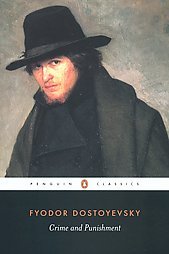
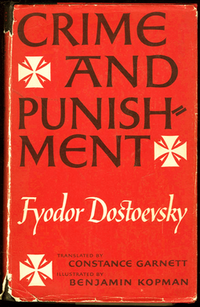
Crime and Punishment

Crime and Punishment. Fyodor Dostoyevsky. Translated by David McDuff. 1866/2002. 671 pages. [Source: Library]

First sentence: At the beginning of July, during a spell of exceptionally hot weather, towards evening, a certain young man came down on to the street from the little room he rented from some tenants in S--- Lane and slowly, almost hesitantly, set off towards K---n Bridge.

Premise/plot: Rodion Raskolnikov, the "hero" of Dostoyevsky's Crime and Punishment, has major issues. He's become convinced, mostly, that murder is justifiable if it's for the 'greater good' of mankind. He has thought a lot about this--even written an article about it. His abstract theory becomes his one consuming obsession.

Does he have what it takes to kill someone? More importantly perhaps, does he have what it takes to kill someone and get away it. In his mental state, he does not believe that the crime IS a crime. His "victim" (he doesn't see her as a victim) is a pawnbroker who "takes advantage" of the poor. The world would be a better place without her, wouldn't it? If it would be--and he is convinced it would be--it's the right thing to eliminate her. He plans everything out--to the best of his ability--but things don't go according to plan. He didn't plan on the victim's sister returning to their home mid-crime; he didn't plan on a second victim; he didn't plan on nearly being caught by young men who'd come to pawn their goods. He also didn't plan on his physical health coming unhinged just as his mental and emotional health was breaking down. Is his madness caused by illness? Is his illness caused by madness? Is his illness real or in his head? Is there a cure for what ails him?

His family--his mother and sister--come to St. Petersburg. His sister is newly engaged to a young man, a man Rodion disapproves of and despises. (It is mutual.) His mother is perhaps rightly worried about her son's well being. Fortunately one of Rodion's friends, Razumikhin, is there to provide comfort, support, and encouragement. 

Another family is central to the novel as well. Semyon Zakharovich Marmeladov is an out-of-luck drunk whom Rodion meets early in the novel. This drunk tells the tragic story of his tragic family to anyone and everyone who will listen; he tells it with drink in hand of course. Rodion witnesses his new friend's death and makes sure that he's taken to his own home to die. He meets the soon-to-be widow, Katerina Ivanovna Marmeladova, and more importantly one of his daughters, Sonya. (She's been "forced" into prostitution in an effort to keep her family alive. Her father is an incompetent drunk and her mother is dying of consumption. She has, I believe, three younger siblings.) Rodion gives the family money for the funeral. He's not trying to cause a scandal; he's moved with compassion--pity--for their plight. Sonya becomes one of the main characters of the book. She is also the first person to whom he confesses his crime. (At this point he still doesn't see it as a crime.)

Most of the novel is about the cat-and-mouse game being played by Rodion Raskolnikov and the detective Porfiry Petrovich. Rodion becomes suspicious that the detective suspects him and is trying to trap him. So he tries to stay a couple of steps ahead of him. Likewise, Porfiry KNOWS that Rodion suspects that he's suspected. He knows that Rodion is trying to stay a few steps ahead. He also knows that ultimately Rodion will fail and that justice will be done. It doesn't matter to him if the case is resolved today or next week or next month.

My thoughts: Are ideas dangerous? Can a germ--a seed--of an idea become dangerous and deadly? Do ideas have consequences? What if theories and ideas and philosophies are carried out in day to day life and bear fruit?

I don't always "like" unreliable narrators. I haven't decided if the category applies here or not. Is he mentally ill? Is he mad? Did he know right from wrong when he committed the crime? If he was insane--was the insanity long-lasting? or was it temporary? When did his madness start? And what caused it? Was the idea fermenting in his mind the root cause? Is there a cure for his madness? Even if he's punished by the state, will he ever admit moral responsibility? That is will he ever come to see his crime as a CRIME. Will he come to see that his idea of justifiable murder is reprehensible? Or will he continue to think that the only crime--the crime he's being punished for--is the crime of getting caught, the crime of being incompetent, the crime of being weak?

According to Wikipedia, Dostoyevsky was inspired by a French murderer, Pierre Francois Lacenaire.

I have shared quotes from the novel in my weekly 'My Victorian Year' posts. 

Here are my quotes from the last part of the book.
Power is given only to those who dare to lower themselves and pick it up. Only one thing matters, one thing: to be able to dare! (499)
All human beings need air, air, air...That above all else! (525)
There is nothing in the world more difficult than plain speaking, and nothing easier than flattery. If when a man is trying to speak plainly one-hundredth part of a false note creeps into what he is saying, the result is an instant dissonance, and following it--a scandal. In the case of flattery, however, even if everything in it, right down to the very last note, is false, it sounds agreeable and is received not without pleasure; even though it's a crude sort of pleasure, it's pleasure nevertheless. And no matter how crude the flattery may be, at least half of it always seems genuine. (568)
Everyone must look out for himself, and the best time is had by those who're best able to deceive themselves. (574)
But those people had the courage of their convictions, and so they were right, while I didn't, and consequently had no right to take the step I did. (649)

And here are my overall favorite quotes:
One can always forgive a man for telling lies; lying's a harmless activity, because it leads to the truth. (163)
"We've got facts," they say. But facts aren't everything: at least half the battle consists in how one makes use of them! (164)
Talking nonsense is the sole privilege mankind possesses over the other organisms. It's by talking nonsense that one gets to the truth! I talk nonsense, therefore I'm human. Not one single truth has ever been arrived at without people having talked a dozen reams of nonsense, even ten dozen reams of it, and that's an honorable thing in its own way; well, but we can't even talk nonsense with our own brains! Talk nonsense to me, by all means, but do it with your own brain, and I shall love you for it. To talk nonsense in one's own way is almost better than to talk a truth that's someone else's; in the first instance you behave like a human being, while in the second you are merely being a parrot. (242)
We've got accustomed to making do with other people's intelligence--we're soaked in it! (242)
The harmonious individual, it needs to be said, hardly exists at all. (270)
The living soul demands to live. (305)
It's impossible to leap over nature solely by means of logic! (305)
Pain and suffering are inevitable for persons of broad awareness and depth of heart. The truly great are, in my view, always bound to feel a great sense of sadness during their time upon earth. (315)

© 2018 Becky Laney of Becky's Book Reviews

Friday, January 19, 2018

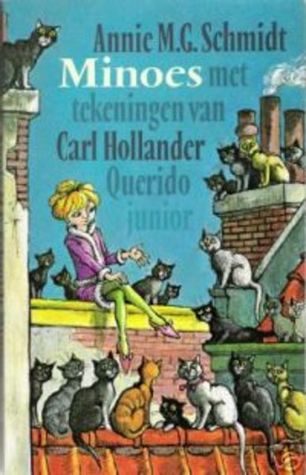
The Cat Who Came In Off The Roof

The Cat Who Came In Off the Roof. Annie M G Schmidt. Translated by David Colmer. 1970/2015. Random House. 160 pages. [Source: Library]

First sentence: "Tibble! Where's Tibble? Has anyone seen Tibble? The boss wants to talk to him. Where's he got to? Tibble!"

Premise/plot: Don't mistake Tibble for a cat; he's a very human reporter for a newspaper. If he can keep his job that is. Tibble's news stories don't qualify as "news" according to his boss. But his reporting takes a turn for the better after he befriends a young woman, Miss Minou. He first sees her up a tree. Up a tree?! Yes, she'd been chased there by a mad dog. And that isn't the only odd thing about Minou. She also likes to climb in and out of windows, hang out with cats on the roof, and sleep curled up in a box. The premise of this one: Minou used to be a cat; now she's a human. She can still communicate with cats--hence why Tibble is suddenly good at his job. All the cats in town are talking to Minou about their humans, what they see and hear.

My thoughts: The Cat Who Came In Off the Roof is newly translated into English; it was originally published in Dutch in 1970. This is an odd little fantasy for children. But overall I liked it.

Tibbles meets Minou when she "came in off the roof" and into his window. If Minou were still a cat, it wouldn't be odd that he takes in a stray. He keeps her because she's super useful to him. Not that knowing her is without risk: Minou doesn't make a good impression on most people. For one thing, she rubs herself against people--literally. Tibbles keeps trying to train her to be more human and less cattish.

I think this would make a lovely cartoon special. 

© 2018 Becky Laney of Becky's Book Reviews

Tuesday, December 05, 2017

The Librarian of Auschwitz

The Librarian of Auschwitz. Antonio Iturbe. Translated by Lilit Thwaites. 2017. 424 pages. [Source: Library]

First sentence: The Nazi officers are dressed in black. They look at death with the indifference of a gravedigger.

Premise/plot: Though it is a work of fiction, The Librarian of Auschwitz is based on a true story: the story of a super-small library and its young librarian, Dita. Block 31 is different, special, almost miraculous and too good to be true. Here Jewish children come together every day while their parents labor under the watchful eyes of their guards. School is forbidden; learning is forbidden. But. A school it is. There are teachers and teenage helpers. Dita is one of the helpers or assistants. She's also the librarian. For what is a school without a library? This library collection, like the school, is completely forbidden. It consists of EIGHT books plus additional living books. Dita's job is risky, but important. Block 31 exists for one reason only: to fool the world in case someone comes looking for answers. The Germans mistreat Jews? You've got to be kidding. Just look! Here's a camp of families. We even see that the children are taken care of during the day and laugh and play and sing. The prisoners are not fooled for a minute, but, the children are fortunate in some ways.

The book is an intense, important read.

My thoughts: I would definitely recommend this one! It is a powerful, memorable story. It is well-written. Here are two of my favorite quotes:
"A book is like a trapdoor that leads to a secret attic; You can open it and go inside. And your world is different" (193)
"Life, any life, is very short. But if you've managed to be happy for at least an instant, it will have been worth living" (289)
© 2017 Becky Laney of Becky's Book Reviews

Monday, November 13, 2017

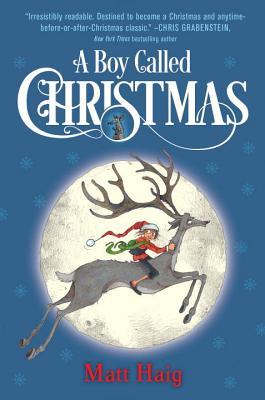
Boy Called Christmas

Boy Called Christmas. Matt Haig. Illustrated by Chris Mould. 2015/2016. Random House. 240 pages. [Source: Review copy]

First sentence: You are about to read the true story of Father Christmas.

Premise/plot: "Can you believe there was a time when no one in the world knew about him? A time when he was just an ordinary boy called Nikolas, living in the middle of nowhere, or the middle of Finland, doing nothing with magic except believing in it? A boy who knew very little about the world except the taste of mushroom soup, the feel of a cold north wind, and the stories he was told. And who only had a doll made out of a turnip to play with. But life was going to change for Nikolas, in ways he could never have imagined. Things were going to happen to him. Good things. Bad things. But if you are one of those people who believe that some things are impossible, you should put this book down right away. It is most certainly not for you. Because this book is full of impossible things."

I normally never share so long a quote. But this excerpt from the first chapter captures not only what the book is about, but also the spirit or style of it. And if that quote doesn't draw you in, then this probably isn't the book for you. Nothing I could add would change your mind.

My thoughts: I really enjoyed this one. I found it fun and charming. Nikolas was just your average poor boy UNTIL his father decides to leave him to go off on an adventure looking for ELVES. Nikolas was left to the care of his aunt. And this aunt is AWFUL. Eventually, he decides to run away and go on a quest to find his father. That adventure--full of misadventures--will prove to be his making.
 
This is a fun holiday-themed coming-of-age fantasy.

© 2017 Becky Laney of Becky's Book Reviews

Wednesday, November 01, 2017

Almost Autumn

Almost Autumn. Marianne Kaurin. Translated by Rosie Hedger. 2012/2017. Scholastic. 278 pages. [Source: Review copy]

First sentence: Summer is over.

Premise/plot: Almost Autumn is set in Oslo, Norway in 1942. The heroine is a young teenager named Ilse Stern. She has an older sister and a younger sister. The novel opens with Ilse sneaking out of the house wearing a white dress with red polka dots. It's clearly a summer dress, and it is almost autumn. But she's meeting a boy, Hermann Rod, and it's more important to be beautiful than warm. He breaks the date, and disappoints the girl. But he's broken the date for an important reason: he's part of the Resistance, and he's trapped hiding in a building waiting for the Nazis to disperse. She doesn't know this, of course, no one does. Hermann isn't going to to around telling everyone what he's doing when he's not at work--not even his parents, especially not his parents. Hermann struggles in this one: should he warn Ilse Stern and her family to flee for their lives and press on her the urgency of the matter, the seriousness of the situation, or does he wait until he knows more?

Hermann isn't the only one struggling, there are others as well. Isak Stern is struggling as well. Should he and his family stay? Should they try to sneak out of the country and into Sweden? How much time does he have before it becomes critical? He's reluctant to make such a drastic, dramatic decision. But time isn't on his side.

Another who is struggling is a taxi driver who lives in the same apartment building. One day he's hired by the Germans for a secret project. He knows that it is wrong on every level to be doing what he's doing. Some of the Jews he's transporting for round-up are his friends, his neighbors. But he goes along with it anyway. Yet is he beyond redemption? Will he always lose the struggle with his conscience?

My thoughts: Almost Autumn is a fictional account of the Holocaust from the point of view of Norwegian Jews. In October, Jewish men were arrested and rounded up. In November, Jewish women and children were arrested and rounded up. They were sent by ship to concentration camps.
"The German ship Donau sailed from Oslo on the afternoon of that same day [November 26, 1942] with 532 Norwegian Jews on board. Only nine of those were to survive Auschwitz." (276)

Almost Autumn is dramatic but not overly dramatic. I think it's well worth reading. It's not unusual for Holocaust books to be set in Germany, Poland, or Austria, but how many have you read set in Norway? Even if there were dozens, no two stories are the same.

© 2017 Becky Laney of Becky's Book Reviews

Monday, September 04, 2017

Espresso Tales

Espresso Tales (44 Scotland Street #2) Alexander McCall Smith. 2005. 345 pages. [Source: Library]

First sentence: It was summer. The forward movement of the year, so tentative in the early months of spring, now seemed quite relentless.

Premise/plot: Espresso Tales is the sequel to 44 Scotland Street. This novel was originally published serially in The Scotsman. One chapter per day. Imagine a soap opera in print with more wit than skin. I really enjoyed revisiting the characters. Most of the characters--though not all--were first introduced in 44 Scotland Street. There are some new characters introduced in this one.

My thoughts: One of the highlights for me is the character of Bertie. Bertie is being forced by his mother to do many things: saxophone lessons, Italian lessons, therapy sessions, etc. His mother has painted his room pink and insisted that he like it. She also makes him wear "crushed strawberry" colored dungarees. One of the funniest incidences in the book is when Tofu (a boy with vegan parents) offers to trade with Bertie. He really, really, really wants a hot dog. He's really to exchange his jeans for Bertie's awful dungarees. Of course, Bertie accepts that deal. But OH THE SCENE when Irene (his mother) finds out. Readers see a lot more of Bertie's father, Stuart, in this one. In another great scene, we see him put into practice his assertiveness training.

But there are so many characters in this one. I also love Domenica. Here's one of my favorite quotes.

"And what is wrong with being judgmental?" Domenica asked indignantly. "It drives me mad to hear people say: 'Don't be judgmental.' That's moral philosophy at the level of an Australian soap opera. If people weren't judgmental, how could we possibly have a moral viewpoint in society? We wouldn't have the first clue where we were. All rational discourse about what we should do would grind to a halt. No, whatever you do, don't fall for that weak-minded nonsense about not being judgmental. Don't be excessively judgmental, if you like, but always--always--be prepared to make a judgment. Otherwise you'll go through life not really knowing what you mean.

© 2017 Becky Laney of Becky's Book Reviews
Thursday, August 31, 2017

Yours Sincerely, Giraffe

Yours Sincerely, Giraffe. Megumi Iwasa. Illustrated by Jun Takabatake. 2017. 104 pages. [Source: Library]

First sentence: This is the African savanna, home to one bored giraffe.

Premise/plot: Giraffe, one of the heroes of the book, is BORED. One day he sees a sign advertising a new business. A BORED pelican has decided to start a mail delivery service. Giraffe decides he will write a letter, and the letter is to be delivered to the first animal pelican meets "on the other side of the horizon." Pelican delivers the letter, and Giraffe waits...and waits...and waits. Will Giraffe receive a letter in return? Will he find a friend? Will Giraffe and Pelican find relief from their boredom?

My thoughts: This one was originally published in New Zealand. It stars four characters: Pelican, Giraffe, Whale, and Penguin. I really enjoyed all four characters; each is special in his own way. The book includes the text of each letter, and the letters are quite amusing. For example, "When I read your letter, I learned for the first time that there is such a thing as a neck. I think maybe I don't have a neck. Or maybe I am all neck?" (54) Another favorite:
"You asked what I look like, but looking is a very odd thing....No matter whether the sea looks blue or green or orange, when I scoop up a bucketful the water becomes transparent. Isn't that strange? Perhaps it isn't looking that's strange, but the sea itself. Or maybe it's the bucket. But you asked what I look like. I think that I am mostly black and white. Even when I climbed into a bucket, my feathers did not change. So I think that must be right." (60-1)
I would definitely recommend this one!


© 2017 Becky Laney of Becky's Book Reviews
Saturday, August 26, 2017

The Secret Diary of Hendrik Groen

The Secret Diary of Hendrik Groen, 83 1/4 Years Old. Henrik Groen. Translated by Hester Velmans. 2017. 384 pages. [Source: Library]

First sentence: Another year, and I still don't like old people. Their walker shuffle, their unreasonable impatience, their endless complaints, their tea and cookies, their bellyaching. Me? I am eighty-three years old.

Premise/plot: This is the 'diary' of Hendrik Groen. The jacket flap reads, "There's not one sentence that's a lie, but not every word is true." The novel spans the year 2013, and readers should know it's set in the Netherlands. It was originally titled, "Attempts to Make Something of Life." Essentially, our hero is bored with life in his retirement home. He starts a club, the OLD BUT NOT DEAD CLUB. Membership is limited to only the best of the best, his closest friends--his friends with the best sense of humor, his friends that still find moments of joy despite the aches, pains, worries, and fears of life. Each member plans an outing for the group. I'm sure I'll accidentally leave out one of his friends, but to the best of my ability the members are: Evert, Edward, Ria, Antoine, Grietje, and most importantly Eefje.

My thoughts: Our hero challenges himself to write in his diary every day. The original title perhaps captures his ambitions better.
Live as if today were your last day. (129)
Maybe I shouldn't grumble so much. I should just work harder at making sure that every day is worth living. Or at least every other day. There have to be rest days too, just like the ones in the Tour de France. (140)
His diary entries record what he's done that day (if anything), who he spent time with, what made him happy--or sad, or mad, etc. Also what he's feeling or thinking. The novel covers such a wide range of emotions. The book is at time funny and at other times depressing.
We lose some capacities as we age, but being a busybody isn't one of them. (292)
I heard that, on the heels of hospital clowns for sick children, special clowns are being deployed to cheer up lonely old folks. I don't know what they're called or where they come from, but I should like to warn them in advance: if any clown arrives to brighten my day, so help me God, I'll use my last ounce of strength to bash his jovial skull in with a frying pan. (276)
Someone ought to bring a class-action lawsuit against the packaging industry for physical damage and mental distress. They have to be doing it on purpose. If they can send people to the moon, surely they ought to be able to come up with an easy twist-off lid. (157)
One of my favorite quotes is on the last page of the novel. But to share it would be to spoil the novel for everyone else. So I won't. But note to self: I really loved the last page even if I was getting ready to put the entire book in the freezer for the last hundred pages.

Another note to self: This one openly discussed the idea of assisted suicide and euthanasia as a great positive. I was really worried for a while that this would come to be the main theme of the book and that this would be a hammer-you-over-the-head issue book. It never became that. And thinking big picture, it would only be natural that on any given day in a year a person would be/could be depressed now and then.


© 2017 Becky Laney of Becky's Book Reviews

Friday, July 28, 2017

Bird, Balloon, Bear

Bird, Balloon, Bear. Il Sung Na. 2017. Random House. 32 pages. [Source: Library]

First sentence: It was Bird's first day in a new forest, and he was looking for a friend. It wasn't long before he spotted someone! But Bird was too shy to say hello. When he finally felt brave enough...

Premise/plot: Will Bear and Bird ever become friends? What is the fate of the red balloon? Essentially, Bird is very shy, and, while he really, really, really wants to make a friend and have a friend, he's a bit hesitant to make the first step. Bear is a great character who is very easy to be with. These two seem destined to watch a lot of sunsets together.

My thoughts: I like this one. I'm not sure I love, love, love it. But I do love the illustrations. They pair well with the simple story.

Text: 3 out of 5
Illustrations: 5 out of 5
Total: 8 out of 10

© 2017 Becky Laney of Becky's Book Reviews