Showing posts with label 1970. Show all posts

Friday, June 16, 2023

118. World's Fair 1992


World's Fair 1992. Robert Silverberg. 1970. 256 pages. [Source: Bought] [Adult science fiction]

First sentence: Against the night sky, the nearly completed World's Fair Satellite gleamed like a shiny new penny. You could see it even with low-powered field glasses as it moved in its stately orbit around the Earth: a giant copper-hued globe, the biggest space satellite ever constructed. The Fair's opening day--October 12, 1992--was only some six weeks away. And in very much less time than that, Bill Hastings was going to be up there to begin his year in space.

Premise/plot: Bill Hastings won an essay contest and his prize is a year in space. The year? 1992/1993. The job? He'll be an assistant working on the Mars Pavilion of the World's Fair. There are six or seven scientists--slightly different specialties--working there maintaining the exhibit. There are a handful of "Old Martians" on display. Some of the scientists are unhappy with the circumstances. But do the ends justify the means? Perhaps. (The ends being greater research opportunities. The means being "kidnapping" Martians from Mars and putting them on display for tourists to the World's Fair.) Hastings makes friends with the scientists. His essay topic was about possible life on Pluto.

My thoughts: If my summary seems odd, then there's a good reason. This book is a bit odd. The main conflict is one of ethics. Bill Hastings is observing other scientists wrestle with this dilemma. As they seek to colonize other planets. (And by colonize, I mean visit. I don't necessarily mean visit with the goal of setting up colonies....at least not right away). Perhaps I mean explore not colonize? (Colonization is such a loaded topic, a word with a lot of baggage--for better or worse. And this fair is celebrating Christopher Columbus "discovering" America and establishing colonies. So in part, I think there's a definite intention to address this topic. Hastings was not involved in any way with the decision to bring living Martians to the World's Fair to be exhibited. But he is involved when the powers-that-be decide to go to PLUTO and seek out "alien life" on Pluto to bring back to set up as an exhibit. And this is where the book, for me, starts to lose its way. The first half is a dull-ish read set on the World's Fair Satellite. There were conversations about Mars, Martians, science, etc. But essentially, dulls-ville. The second half is when Bill becomes a member of an exploring team on a mission to Pluto--the first manned mission to Pluto. The book ends soon after he returns. Bill has become disenchanted with the World's Fair by that point. 

I think the setting and initial premise had potential. I'm not sure it works as a novel written from one point of view. I could see it working as a shorter novella or even short story. Or I could see it working as a collection of short stories set at the World's Fair Satellite--stories with many perspectives or points of view. I could see it working as a mystery or thriller. For example, if the "evil" billionaire genius was the focus of an assassination, or assassination attempt. Or maybe if it was about Bill Hastings discovering something horrible about the World's Fair and working to bring it to light. 


© 2023 Becky Laney of Becky's Book Reviews

Tuesday, January 01, 2019

84, Charing Cross Road

84, Charing Cross Road. Helene Hanff. 1970. 97 pages. [Source: Library]

First sentence: Gentlemen: Your ad in the Saturday Review of Literature says that you specialize in out-of-print books.

Premise/plot: 84, Charing Cross Road is a collection of letters exchanged between the author, Helen Hanff, and a British book dealer, Marks & Company. The first letter is dated October 5, 1949, and the last is dated October 1969. Many of the letters are between Helene and Frank Doel. The letters focus mainly on books and authors--titles she's hoping to buy, titles she's enjoyed, titles she's hated. But the letters also include plenty of chit-chat as she gets to know the employees of the shop and the families of the employees as well.

The letters contain flashes of spirit that are charming.
October 15, 1951
WHAT KIND OF A PEPYS' DIARY DO YOU CALL THIS? this is not pepys' diary, this is some busybody editor's miserable collection of excerpts from pepys' diary may he rot. I could just spit. where is jan. 12, 1668, where his wife chased him out of bed and around the bedroom with a red-hot poker? where is sir w. pen's son that was giving everybody so much trouble with his Quaker notions? ONE mention does he get in this whole pseudo-book. and me from philadelphia. I enclose two limp singles, i will make do with this thing till you find me a real Pepys. THEN i will rip up this ersatz book, page by page, and WRAP THINGS IN IT. HH (31)
 May 11, 1952
Dear Frank:
Meant to write you the day the Angler arrived, just to thank you, the woodcuts alone are worth ten times the price of the book. What a weird world we live in when so beautiful a thing can be owned for life--for the price of a ticket to a Broadway movie palace, or 1/50th the cost of having one tooth capped. Well, if your books cost what they're worth I couldn't afford them! You'll be fascinated to learn (from me that hates novels) that I finally got round to Jane Austen and went out of my mind over Pride and Prejudice which I can't bring myself to take back to the library till you find me a copy of my own. Regards to Nora and the wage-slaves. HH (50)

My thoughts: What a lovely way to start a new year!!! This is a charming collection of letters. If you love books about books, or, if you love meeting other book lovers, then this is a true must read.


© 2019 Becky Laney of Becky's Book Reviews

Friday, January 19, 2018

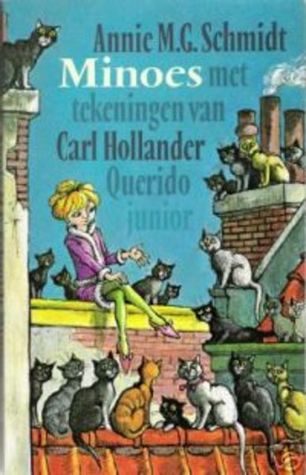
The Cat Who Came In Off The Roof

The Cat Who Came In Off the Roof. Annie M G Schmidt. Translated by David Colmer. 1970/2015. Random House. 160 pages. [Source: Library]

First sentence: "Tibble! Where's Tibble? Has anyone seen Tibble? The boss wants to talk to him. Where's he got to? Tibble!"

Premise/plot: Don't mistake Tibble for a cat; he's a very human reporter for a newspaper. If he can keep his job that is. Tibble's news stories don't qualify as "news" according to his boss. But his reporting takes a turn for the better after he befriends a young woman, Miss Minou. He first sees her up a tree. Up a tree?! Yes, she'd been chased there by a mad dog. And that isn't the only odd thing about Minou. She also likes to climb in and out of windows, hang out with cats on the roof, and sleep curled up in a box. The premise of this one: Minou used to be a cat; now she's a human. She can still communicate with cats--hence why Tibble is suddenly good at his job. All the cats in town are talking to Minou about their humans, what they see and hear.

My thoughts: The Cat Who Came In Off the Roof is newly translated into English; it was originally published in Dutch in 1970. This is an odd little fantasy for children. But overall I liked it.

Tibbles meets Minou when she "came in off the roof" and into his window. If Minou were still a cat, it wouldn't be odd that he takes in a stray. He keeps her because she's super useful to him. Not that knowing her is without risk: Minou doesn't make a good impression on most people. For one thing, she rubs herself against people--literally. Tibbles keeps trying to train her to be more human and less cattish.

I think this would make a lovely cartoon special. 

© 2018 Becky Laney of Becky's Book Reviews

Thursday, March 23, 2017

Trumpet of the Swan

Trumpet of the Swan. E.B. White. Illustrated by Fred Marcellino. 1970. 272 pages. [Source: Library]

First sentence: Walking back to camp through the swamp, Sam wondered whether to tell his father what he had seen.

Premise/plot: Louis is a trumpeter swan who can't trumpet. But with the help of his human friend, Sam, and his father (a cob) who steals a trumpet from a music store, his handicap is overcome. Sam helps him by taking him to school, to his public school and enrolling him in first grade. He learns to read and write. When he returns to his family it is with slate and slate pencil. His father thinking of his future happiness--how can he woo a mate without a voice of his own--steals a trumpet. Louis practices on his own before turning to Sam for advice and help. At this time Sam teaches him about money and working to earn it. Louis feels guilty that his trumpet is stolen and not paid for. Until this wrong has been righted, Louis is very active with the human world around him. He becomes a musician with an agent taking jobs in Boston and Philadelphia. But it is freedom and love he longs for most. Will Serena ever be his?!

My thoughts: I first read this one the summer before sixth grade. It was a great read. I don't know why it's taken me so long to reread it. Loved Sam and Louis. Louis's father was very amusing in his pontificating.

Curiosity is celebrated throughout the book. Sam is a curious person. Because of this quality he becomes a good friend and even at times a hero. He discovers his life's calling as well. Life is wonder-filled to him. He treasures what he sees and hears. His observations are kept in a daily journal. Seeing the world through the eyes of both Sam and Louis is a treat.

Quotes:
  • The world is full of talkers, but it is rare to find anyone who listens. (50)
  • "Great Caesar's ghost!" cried the teacher. "Look at those wings! Well, his name is Louis--that's for sure. All right, Louis, you may join the class. Stand right here by the blackboard. And don't mess up the room, either! If you need to go outdoors for any reason, raise one wing." (71)
  • "Sam, if a man can walk three miles in one hour, how many miles can he walk in four hours?" "It would depend on how tired he got after the first hour," replied Sam. (76)
  • Everyone is entitled to his likes and dislikes and to his prejudices. Come to think of it, I don't care for pistachio ice cream. I don't know why I don't like it, but I don't. (114) 

© 2017 Becky Laney of Becky's Book Reviews

Saturday, March 18, 2017

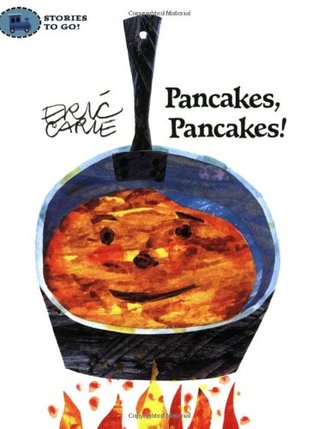
Pancakes, Pancakes!

Pancakes, Pancakes! Eric Carle. 1970. 36 pages. [Source: Library]

First sentence: Kee-ke-ri-kee crowed the rooster. Jack woke up, looked out the window and thought, "I'd like to have a big pancake for breakfast."

Premise/plot: Jack wants a pancake--a BIG pancake. His mom tells him he'll have to help her if he wants a pancake. This help will include cutting wheat, taking it to the miller in town, having it ground into flour, gathering an egg from a hen, milking a cow, churning butter, and getting a jar of jam from the cellar. Some of these tasks take time--a good deal of time--and effort. Will Jack enjoy the pancakes more for all the work he invested in it?!

My thoughts: I like this one. I like the text more than the illustrations. The book is a very old-fashioned look at how we "get" our food. Flour, eggs, and milk don't come from the store. Pancakes don't come from a mix or restaurant.

Text: 4 out of 5
Illustrations: 3 out of 5
Total: 7 out of 10

© 2017 Becky Laney of Becky's Book Reviews

Tuesday, December 20, 2016

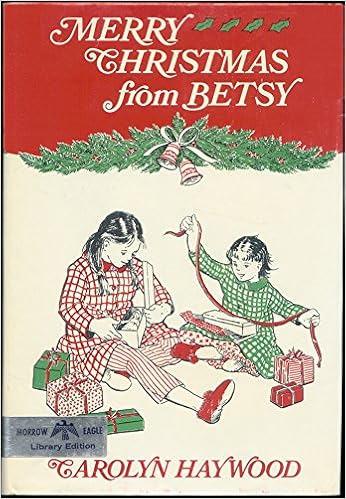
Merry Christmas From Betsy

Merry Christmas From Betsy. Carolyn Haywood. 1970/89. 192 pages. [Source: Bought]

First sentence: Thanksgiving was hardly over when Betsy and the rest of the children in the first grade began talking about Christmas.

Premise/plot: Merry Christmas From Betsy is a collection of the Christmas chapters from previous books in the Betsy series by Carolyn Haywood. The stories are sweet and charming and cute. The stories aren't all focused on Betsy either. Her younger sister, Star, who makes her arrival on Christmas Day as the "present that Betsy always wanted" is also a huge part of the book. Some stories focus on the anticipation of Christmas coming, others on Christmas Day itself. All are worth your time.

My thoughts: Really, really enjoyed this one! I haven't read all the Betsy books, but, the few I've read I've really enjoyed. I like spending time with Betsy, Star, their family, their friends.

© 2016 Becky Laney of Becky's Book Reviews

Tuesday, June 14, 2016

Fantastic Mr. Fox

Fantastic Mr. Fox. Roald Dahl. Illustrated by Quentin Blake. 1970. 96 pages. [Source: Library]

First sentence: Down in the valley there were three farms.

Premise/plot: Three farmers join together to hunt down and kill a fox that has been stealing from them. Farmer Boggis. Farmer Bunce. Farmer Bean. One raises chickens. One raises ducks and geese. One raises turkeys and apples. The story is told from the fox's perspective. Mr. Fox leaves his hole nightly to provide food for his wife, Mrs. Fox, and his four "small Foxes." Because Mr. Fox is great at what he does--fantastic even--all is well for a while until the farmers decide to camp outside his hole and WAIT FOR HIM.

My thoughts: I love this book. I LOVE, LOVE, LOVE it. Why didn't I ever read this one as a kid?!?! This one is short, but short in a just-right way. Each chapter is packed with delight. I would definitely recommend this one!  

© 2016 Becky Laney of Becky's Book Reviews

Thursday, April 28, 2016

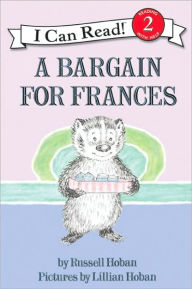
A Bargain for Frances

A Bargain for Frances. Russell Hoban. Illustrated by Lillian Hoban. 1970/1992. HarperCollins. 64 pages. [Source: Library]

First sentence: It was a fine summer day, and after breakfast Frances said, "I am going to play with Thelma." "Be careful," said Mother. "Why do I have to be careful?" said Frances.
"Remember the last time?" said Mother. "Which time was that?" said Frances. "That was the time you played catch with Thelma's new boomerang," said Mother. "Thelma did all the throwing, and you came home with lumps on your head." "I remember that time now," said Frances. "And do you remember the other time last winter?" said Mother. "I remember that time too," said Frances. "That was the first time there was ice on the pond. Thelma wanted to go skating, and she told me to try the ice first." "Who came home wet?" said Mother. "You or Thelma?" "I came home wet," said Frances.
"Yes," said Mother. "That is why I say be careful. Because when you play with Thelma you always get the worst of it."

Premise/plot: Poor Frances! Her mother was right. Again. Thelma had ulterior motives with wanting to play tea party with her friend, Frances. And Frances got tricked! Tricked into trading her money for Thelma's old tea set. Her ugly old plastic tea set. (A set so ugly that even Gloria sees it as junk.) Thelma then uses the money to buy a new tea set--the exact tea set that Frances had been saving for for months and months. Will Frances get even with Thelma? Can she outwit this trickster? Can this friendship be saved?!

My thoughts: I have enjoyed rereading the Frances books. Have you read any of these? Do you have a favorite? I think each book is made stronger by the fact that it is a series. That each book stars characters that you already know and love. Frances is a gem of a character. I love her VERY much. I love her songs. I love her imagination.

Text: 4 out of 5
Illustrations: 4 out of 5
Total: 8 out of 10

© 2016 Becky Laney of Becky's Book Reviews

Wednesday, April 13, 2016

Frog and Toad Are Friends

Frog and Toad Are Friends. An I Can Read Book. Arnold Lobel. 1970. HarperCollins. 64 pages. [Source: Library]

Frog ran up the path to Toad's house. He knocked on the front door. There was no answer, "Toad, Toad," shouted Frog, "wake up. It is spring!" "Blah," said a voice from inside the house. "Toad! Toad!" cried Frog. "The sun is shining! The snow is melting. Wake up!" "I am not here," said the voice. 

I love Frog and Toad. I do. I just love them. While this isn't my favorite-or-best Frog and Toad book, it is still worth reading. It contains five stories: Spring, The Story, A Lost Button, A Swim, and The Letter.

My favorites from the collection include "Spring" in which Frog tricks his friend into getting out of bed by changing his calendar and "The Letter" in which Frog cheers up his friend by sending him a letter in the mail.

All the stories highlight this special friendship--highlights each character's strengths and weaknesses. I would definitely recommend any Frog and Toad book!

© 2016 Becky Laney of Becky's Book Reviews

Saturday, July 18, 2015

Seuss on Saturday #29

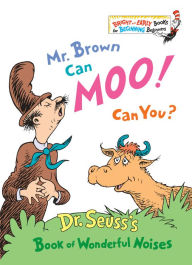
Mr. Brown Can Moo! Can You? Dr. Seuss. 1970. HarperCollins. 32 pages. [Source: Library]

First sentence:  Oh, the wonderful things Mr. Brown can do! He can go like a cow. He can go MOO MOO. Mr. Brown can do it. How about you?

Premise/plot: Mr. Brown knows so many wonderful noises. But do you? Mr. Brown shows little readers all the noises he can make, and, he challenges them to copy him.

My thoughts: I have to admit that Mr. Brown can Moo! Can You? is one of my favorite Seuss books. It is. I do have to say that the board book is very, very different from the original. I'm not saying to avoid the board book, mind you. Just be sure that you introduce little ones to the real Mr. Brown Can Moo! when they get a bit older. I don't know WHY they had to edit the board book edition so heavily. Sounds they eliminate in the board book:
  • eek eek = squeaky shoe
  • choo choo = train
  • blurp blurp = horn
  • slurp slurp = big cat drinking
  • sizzle sizzle = egg in a frying pan
  • grum grum = hippopotamus chewing gum
  • pip = goldfish kiss
Have you read Mr. Brown Can Moo? Did you like it? love it? hate it? I'd love to know what you thought of it!

If you'd like to join me in reading or rereading Dr. Seuss (chronologically) I'd love to have you join me! The next book I'll be reviewing is The Lorax.


© 2015 Becky Laney of Becky's Book Reviews

Sunday, June 14, 2015

The Summer of the Swan (1970)

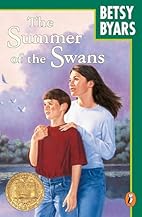
The Summer of the Swans. Betsy Byars. 1970. Penguin. 144 pages. [Source: Bought]

First sentence: Sara Godfrey was lying on the bed tying a kerchief on the dog, Boysie.

I'm so glad that Hope is the Word is hosting a Newbery Through the Decades reading challenge. June is the month dedicated to reading winners and honors from the 1970s. I may never have picked up Betsy Byars' The Summer of the Swans without a little extra motivation. And The Summer of the Swans? Well, it's compelling, very compelling.

Sara loves her brother Charlie. She does. But she doesn't always like him, or, like having to take care of him all the time. To be fair, Sara, on the day we meet her, is in a bit of a mood. This is one of those days when it seems almost every person in Sara's life is frustrating or annoying her. Sara's day will get worse before it gets better.

I really liked The Summer of the Swans. I liked the intensity of it. Charlie goes missing in the night, and that changes everything. Primarily we see this through Sara's perspective. Though we know that it is upsetting news to their Aunt Willie as well. Everyone in the neighborhood gets involved including a boy, Joe, that Sara really doesn't like or trust. Will Sara, however, change her mind about Joe after spending the day with him? after seeing the 'real' him? Will Charlie be found? Is he okay?

The Summer of the Swans won a Newbery in 1971.

© 2015 Becky Laney of Becky's Book Reviews

Thursday, June 11, 2015

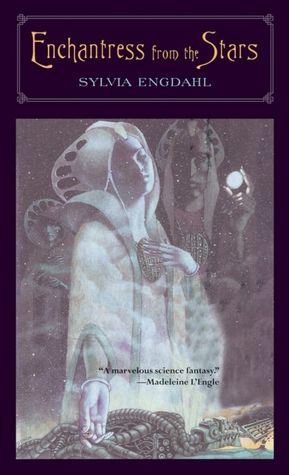
Enchantress From the Stars (1970)

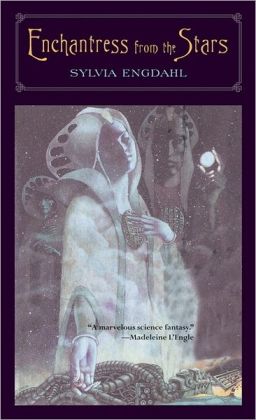
Enchantress from the Stars. Sylvia Louise Engdahl. 1970/2003. Penguin. 304 pages. [Source: Review copy]

From the prologue: The planet shines below us, cloud-flecked, dazzling against the dark backdrop of space. Down there it is cool and green and peaceful. In a little while we will take the ship out of orbit and leave this world behind, a mere speck in the vast currents of the universe. This world, which we call Andrecia--the third planet of a quite ordinary yellow sun...but that's just coincidence, of course. What difference does it make that just such a planet was my own people's ancestral home?

From chapter one: At the edge of the Enchanted Forest there lived a poor woodcutter who had four sons, the youngest of whom was named Georyn. They were able to earn a meager living by selling wood to the folk of the village, and although there was seldom more than dry bread or thin gruel on their table, they were not miserable.

I'm so glad I decided to reread Sylvia Engdahl's Enchantress from the Stars for my Newbery reading challenge. (It was a Newbery Honor book in 1971). I loved, loved, loved it the first time I read it. I loved it just as much the second time. (I love it when a book rereads well. Not all books do. That's one way you can distinguish between a good book and a great book.) I would definitely say it's a premise-driven book, but, that being said there is plenty of action and plenty of characterization. So it has many strengths.

Enchantress from the Stars is narrated, primarily, by a young woman named Elana. The novel is reflective, in a way, because the novel is an account of her first 'adventure' on another planet. She's writing her report, giving her side of the story. But this novel is more than just her side of the story. It ventures to include the perspectives of two others--a young man, the woodcutter's youngest son, Georyn, and a young medical officer named Jarel. Both Georyn and Jarel are from Youngling cultures. Georyn is a native to Andrecia; Jarel is from another planet, a planet in a different stage than Georyn's, but a great deal less advanced than Elana's. (He is with the Imperial Exploration Corps). Jarel is just one of many in the first ship sent to "colonize" this planet.

Elana is on a ship with several other agents--including her father--when they learn that Andrecia is being invaded, and a Youngling culture/civilization is being threatened. They can't directly intervene. And they definitely can't reveal themselves. But they can try to influence things subtly, indirectly. Elana is chosen--with some reluctance--to interact with the natives. Well, she's to interact with two brothers--Terwyn and Georyn. These two are on a quest--along with their older brothers--to KILL A DRAGON. Yes, they are on their way to get the king's blessing, the king's permission to enter the Enchanted Forest. They don't know what dangers they'll face, but they know the fiery dragon must be stopped. These brothers see Elana an an enchantress, a faery perhaps. They see her as having great power, great wisdom, great magic.

So Enchantress from the Stars reads as a fantasy novel--a fantasy novel in the style of a fairy tale. But. Of course it also reads as a great science fiction novel with space ships, etc.

What did I love about this one? Everything! I loved the premise. Just loved it! I loved the world-building, the setting, the atmosphere. I loved the storytelling. I loved the characterization!!! I loved Elana. I loved Georyn. I loved Jarel. I even cared a great deal about the Starwatcher and Evrek. I thought this book was just so well written.


© 2015 Becky Laney of Becky's Book Reviews

Wednesday, December 18, 2013

Charity Girl (1970)

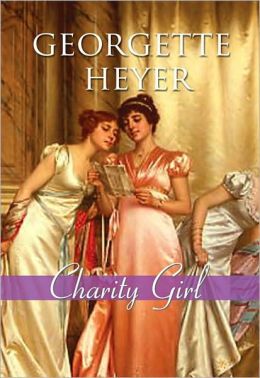
Charity Girl. Georgette Heyer. 1970/2008. Sourcebooks. 282 pages. [Source: Review copy]

Charity Girl is a pleasant but not outstanding historical romance. Viscount Desford (first name, Ashley) "rescues" a young "orphan" girl named Charity. Cherry has been staying with her aunt, but, she's had enough and is desperate enough to travel on her own to London in search of a grandfather she's never met. He takes her with him to London, drives straight to her grandfather's residence and discovers much too late that he has left town. He decides right then and there to take her to Henrietta's house and place her in her keeping. Henrietta is his good, good friend. The families, at one time at least, were hoping the two lifelong friends would make a match of it. He begins the search for the grandfather on his own. The whole book focuses in on his search to find her family, find someone who cares about her. Now and then readers learn of Henrietta and Cherry and what they've been doing, but, not that often. His adventures aren't packed with action and excitement so much as dialogue and travel updates. By the end, there is some life to be found in the novel. Cherry's father whom everyone believed to be dead returns and he's always a step or two before or a step or two behind Desford. I enjoyed this one well enough to keep reading. It wasn't a slow read for me. But it lacks some of the liveliness and fun of previous Heyer novels. It didn't WOW me.

© 2013 Becky Laney of Becky's Book Reviews
Thursday, February 23, 2012

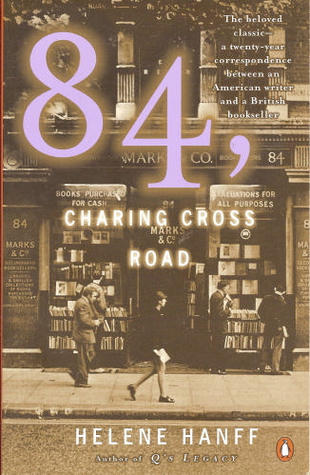
Enchantress from the Stars (MG)

Enchantress from the Stars. Sylvia Louise Engdahl. 1970/2003. Penguin. 304 pages. 

From the prologue: The planet shines below us, cloud-flecked, dazzling against the dark backdrop of space. Down there it is cool and green and peaceful. In a little while we will take the ship out of orbit and leave this world behind, a mere speck in the vast currents of the universe. This world, which we call Andrecia--the third planet of a quite ordinary yellow sun...but that's just coincidence, of course. What difference does it make that just such a planet was my own people's ancestral home?

From chapter one: At the edge of the Enchanted Forest there lived a poor woodcutter who had four sons, the youngest of whom was named Georyn. They were able to earn a meager living by selling wood to the folk of the village, and although there was seldom more than dry bread or thin gruel on their table, they were not miserable.

Oh, how I LOVED Enchantress from the Stars. It was one of those oh-so-magical-practically-perfect-in-every-way books for me. I know not every reader will feel the same connection, the same adoration for this as I do. But. It's one of those books that I could just gush on and on about!!!

What did I love about this one? Everything! I loved the premise. Just loved it! I loved the world-building, the setting, the atmosphere. I loved the storytelling. I loved the characterization!!! I loved Elana. I loved Georyn. I loved Jarel. I even cared a great deal about the Starwatcher and Evrek. I thought this book was just so well written.

Enchantress from the Stars is narrated, primarily, by a young woman named Elana. The novel is reflective, in a way, because the novel is an account of her first 'adventure' on another planet. She's writing her report, giving her side of the story. But this novel is more than just her side of the story. It ventures to include the perspectives of two others--a young man, the woodcutter's youngest son, Georyn, and a young medical officer named Jarel. Both Georyn and Jarel are from Youngling cultures. Georyn is a native to Andrecia; Jarel is from another planet, a planet in a different stage than Georyn's, but a great deal less advanced than Elana's. (He is with the Imperial Exploration Corps). Jarel is just one of many in the first ship sent to "colonize" this planet.

Elana is on a ship with several other agents--including her father--when they learn that Andrecia is being invaded, and a Youngling culture/civilization is being threatened. They can't directly intervene. And they definitely can't reveal themselves. But they can try to influence things subtly, indirectly. Elana is chosen--with some reluctance--to interact with the natives. Well, she's to interact with two brothers--Terwyn and Georyn. These two are on a quest--along with their older brothers--to KILL A DRAGON. Yes, they are on their way to get the king's blessing, the king's permission to enter the Enchanted Forest. They don't know what dangers they'll face, but they know the fiery dragon must be stopped. These brothers see Elana an an enchantress, a faery perhaps. They see her as having great power, great wisdom, great magic.

So Enchantress from the Stars reads as a fantasy novel--a fantasy novel in the style of a fairy tale. But. Of course it also reads as a great science fiction novel with space ships, etc.

Enchantress from the Stars won a Newbery Honor in 1971.

Read Enchantress from the Stars
  • If you love science fiction
  • If you love fantasy
  • If you love fairy tales
  • If you love adventures and quests
  • If you love great writing
  • If you love bittersweet love stories
  • If you're looking for a Newbery Honor

© 2012 Becky Laney of Becky's Book Reviews